Nationals Arm Race

"… the reason you win or lose is darn near always the same – pitching.” — Earl Weaver

Archive for the ‘mike rizzo’ tag

My Answers to Boswell’s Chat Questions 7/5/11 edition

13 comments

Here’s Boswell’s 7/5/11 chat.  As always, I read the question, write my own answer then interpret Boswell’s answer.  All questions are paraphrased from the chatroom for clarity here.

Q: Should the Nats move Espinosa to Short, making room for Rendon?

A: I believe the Nats may eventually consider moving Danny Espinosa to shortstop to make way for either Anthony Rendon but perhaps Steve Lombardozzi in the near future.  For the beginning of 2012 season?  I doubt it.  Yes, Ian Desmond has been hitting ridiculously badly, but he’s a plus defender at Short with an absolute gun of an arm.  He’s cut way down on errors and mental mistakes.  We all believe Espinosa can handle the position (he was a grade-A short stop at Long Beach State), but the right answer may be to give Desmond one more full season before pulling the trigger.  Any move would be done in a spring training presumably.  (Boswell more or less agrees, saying Lombardozzi will be a full time MLBer, Desmond moves too much in the box, and that Espinosa has better hands but not as much range).

Q: Did Harper skip high-A because of Potomac’s field situation?

A: Great question.  Personally I believe Potomac’s field disaster factored into the situation.  Perhaps part protection of Bryce Harper (who was promoted to AA over the weekend and went 2/3 in his AA debut), part penalization of the ownership/management of the  Potomac franchise (which they must believe has botched this badly, to be giving away home dates).  Of course there is the plain fact that Harper, despite his young age, held his own against AA-calibre talent and higher in 2010’s Arizona Fall League and he may just be ready for AA.  (Boswell punts on the question, quoting Rizzo who said “the field is fine, it had nothing to do with it.”  A non-answer.)

Q: What are the chances Michael Morse wins the “last man standing” all-star vote?

A: I’ll say slim, based on who he’s up against (here’s a link to the voting).  Ethier, Helton, Victorino, and Ian Kennedy are the candidates.  I’d guess that either Victorino or Helton wins, though Ethier is a deserving candidate.  Nobody’s heard of Michael Morse unfortunately.  (Boswell thinks Philly fans will vote in Victorino).

Q: Is Ryan Zimmerman’s new throwing motion working?

A: It seems not; if anything its causing even more problems.  Zimmerman used to make most of his errors on relatively routine throws over to first; if he’s making a throw under duress it is usually spot on.  So the new motion is designed to remove the scatter-arm throws.  But now, instead of making a routine throw and it getting into his head, he’s got this new motion into his head.  I can’t see how its an improvement.  For me when playing the answer was always to go to a side arm motion to gain accuracy but I was playing from middle-infield positions that didn’t require long, overhand throws like what the third baseman has to do.  (Boswell thinks it is working and that Zimmerman needs a bit longer to get comfortable with it).

Q: Was it too early, too late or the right time to promote Harper?

A: From a productivity standpoint it was probably too late; he clearly owned how-A pitching after just a few weeks.  But, from a “learning how to be a baseball player” standpoint its just right.  Finish out a half, a playoff-run, get a bunch of road trips in and get used to playing day after day.  Now he can move up and get challenged by better pitching.  Personally I would have put him in high-A for an incremental improvement.  Run him up to AA if he dominated in Potomac, else start him at AA next year with an eye to move him quickly to AAA.  I think there’s value in growing into your role.  (Boswell says it was the right time to promote, but not to which level, and then compares Harper’s minor league splits to A-Rods and Ken Griffey Jr’s).

Q: How much credit should we give Rizzo the GM for 4 specific moves that paid off (Ramos-Capps, Willingham trade, letting Dunn walk and failing to get Greinke)?

A: I give Rizzo some good, some bad for his moves over the past year or so.  The Ramos for Capps trade was spectacular.  The Guzman trade (something for nothing) was quality.  His purchase of Bixler has turned out well.  I think we got fleeced on the Willingham deal frankly and think this team could have used the offense.  Dunn was never going to stay here so I don’t know how much credit you can give Rizzo for purposely picking up the draft picks.  He overpaid badly for Werth (for reasons that have been discussed ad-naseum here and were bigger than just the player).  I liked the acquisition of Gorzelanny for what we gave up.  His two rule5 draft picks were garbage.  Cora and Nix on minor league contracts has turned out great.  He got a decent AA starter for Gonzalez but a middling low-A infielder for Morgan.  He wanted and was going to pay for Greinke, who i think is vastly over-rated, had one good season and is by no means an “ace” in this league.  He’s a solid guy but not a $100m pitcher.  (Boswell points out the Hanrahan-Burnett deal is looking bad for the Nats; I’ll defend the Nats there since Hanrahan was SO bad for us.  Boswell also mentions Aaron Crow for some reason; that non-signing was 110% on Bowden, not Rizzo).

Q: Are Nats buyers or sellers at the trade deadline?

A: This answer will vary day by day between now and 7/31 honestly.  If the Nats go on a 5 game losing streak they’re selling like mad. Right this moment, they’re probably doing nothing, stuck into inactivity by virtue of their .500 record and proximity to the wild card race.  (Boswell agrees, saying the team’s record on July 28th is what matters).

Q: Will the Nats over pay and sign Marquis and Livan for next season?

A: God I hope not.  Marquis should be jettisoned to make way for Strasburg’s return.  Livan is worth 1.5-2m/per, but not much more.  If he demands more cut him loose.  Livan at this point is merely a holding over pitcher until our farm system prospects pan out.  (Boswell seems to think that Detwiler could make an able replacement for Marquis, either this August/September or later on).

Q: Is Werth unable to get around on fastballs?

A: I don’t have enough video evidence to offer an opinion.  Boswell says he’s just trying too hard, his mechanics are out of whack.

Q: Thoughts on the all-star rosters?

A: Havn’t even looked at them.  Looking them up to comment here.  Don’t care really; the all-star rosters will always have too many Red Sox, too many Yankees and too many Asians from ballot-box stuffing.  I can’t stand the “every team must be represented” issue, which dilites the team and gives players cheap all star appearances.  I think the fact that the world series home field advantage depends on this exhibition is beyond ridiculous.  So doing a 2500 word column nit picking the all-star selections is just July column filler for most baseball writers.  For me its like complaining about the BCS: its never going to change.  Let other people bitch about the fact that Derek Jeter has basically been awful this year, not the best.

I will say that the manager’s selecting the pitchers is ridiculous.  Yes Vogelsong has had a great season but he’s not who the fans want to see in the all star game, nor is he one of the best 15 pitchers in the league.  Picking middle relievers?  Ridiculous as well.

(Boswell says he likes the rosters and won’t waste an answer on what could give him an easy column!)

Q: How much money is Pujols’ injury- and poor-performance season costing him?  Would he take a 1-year deal to regain value?
A: Great question.  I think Pujols poor season has already cost him a shot at a 10-yr/$300M contract that many spoke of.  He’s clearly going to lose years and value.  I think he deserves a 7yr deal that pays him more per-annum than A-rod, and it may be what he’s shooting for.  I do not think he’ll take a one-year deal.  Too much can go wrong, too risky.  Even if he doesn’t get the years and money he seeks, you cannot blow the opportunity to guarantee hundreds of millions of dollars.  (Boswell wouldn’t even give him 7 years right now).

Q: Could Lombardozzi come up and force a replacement of Desmond in 2011?

A: No way.  There’s little value in yanking Desmond in mid-august, forcing Espinosa to move to shortstop with no work all year and possibly disrupt a Rookie-of-the-Year season AND do the 40-man move to add Lombardozzi just for a few games in the bigs.   (Boswell answered by defending Desmond, calling him a 10-year career shortstop.  He needs to start hitting though).

Q: Comments on the Soriano “hit” that scored 2 runs?

A: An official scorer just can’t give Bernadina an error on a ball that drops in front of him, despite it clearly being a fielding mistake.  Its one more piece of evidence showing how inaccurate ERAs are for pitchers.  Zimmermann had Soriano popped up and was out of the inning; suddenly he’s given up 2 earned runs that he didn’t deserve.  To me, it looked like Bernadina lost the ball in the over-cast sky.  (Boswell points out that the play perfectly encapsulates why the team doesn’t think Bernadina is the long term answer in center.  Well, duh, I could have told you that was the case long before this play!)

Q: Why aren’t the Nats hitting?/How much accountability does Rick Eckstein have in this situation?

A: Honestly, I’ve never thought that a hitting coach really could impact what a major leaguer could do.  Be it out of respect, or lack thereof.  If everyone thinks Werth’s mechanics are out of whack, why hasn’t he fixed them?  Its an easy video fix right?

Werth is trying too hard.  Espinosa’s babip is awful.  Desmond just isn’t that good.  Morse is good but has holes that pundits/scouts like Keith Law think are going to get exposed.  Zimmerman is just getting back in the saddle.  Willingham and Dunn (despite what they’re doing in 2010) were stable, high OBP forces in this lineup and when they left, there was major disruption.  LaRoche has always been a slow starter, complicated (as we eventually found out) by a bad shoulder injury.  (Boswell ducked the question as I have, but gives some interesting analysis of just how not-so-bad the team really is offensively right now).

Q: Why is Nyjer Morgan suddenly good again?  Same question for Kearns, Felipe Lopez and (possibly) Werth?

A: Morgan needed a change of scenery, and has taken advantage of it.  Same goes for Hanrahan, and in that respect that trade has worked out well for Pittsburgh.  Kearns never wanted to be traded here; he is from Kentucky and liked it in Cincinnati.  Once he got his balloon payment here he never earned the contract.  Lopez is a special case; a good player with an awful attitude, and he’s earned a one-way ticket out of several towns by now.  I wouldn’t put Werth in any of these classes; he’s hard-nosed, plays hard, doesn’t play dirty, doesn’t show-boat, and takes his craft seriously.  (Boswell just says that change of scenery is sometimes good, without throwing (especially) Lopez under the bus).

Q: Why is Sean Burnett still on the roster?

A: True, his 2011 numbers have been pretty bad.  But one really bad game can make 3 weeks worth of good look awful.  Look at his game logs; he’s been pretty good lately except for one or two blow ups.  The team needs a loogy, Burnett actually gives them more than just a one-out guy, and he was pretty good last year.  Way too early to give up on him, to say nothing of the fact that there’s very little in AAA or even AA to replace him.  We’re still trying to replace our actual LOOGY Slaten, signing JC Romero and possibly looking at Severino or even Chico at some point.  (Boswell agrees).

Q: What are we going to do with Rendon?

A: Wait for him to prove he belongs, then find a spot.  He hasn’t signed yet, could get injured again and be a total bust, or he could hit like the 2nd coming of Alex Rodriguez in the minors and shoot up to earn MLB at bats inside a year.  If he forces his way onto the roster then you make room for him.  Install him at 2nd, move Espinosa to short.  Or, put Rendon in left and keep your current MI.  Maybe Zimmerman wants out of town after 2013 and Rendon naturally moves to third.  Maybe the entire team gets hit by a bus and we start over from scratch.  Way too much can happen with minor league prospects to make intelligent predictions til they get to AAA.  (Boswell’s answer rambled on about the state of the team … saying we’re much further along than intimated in the question).

Q: Why are the crowds booing Jayson Werth?

A: Probably because he’s in an extended slump, combined with a massive paycheck that most of us now have been told is vastly over-paying him.  Nobody likes it when an overpaid co-worker struggles with his assignments; it makes you really question why you’re working at that job in the first place.  Trust me, if he starts hitting the boo-ing will stop.   (Boswell kinda understands the crowd’s displeasure with Werth right now).

Q: Is Werth miscast as a team leader?

A: Perhaps.  I think clearly in Philadelphia he was one of many hitting cogs in a powerful lineup and they covered for each other.  Now, he’s much more in focus (especially with LaRoche’s issues and Zimmerman’s absence).  However, does he HAVE to be a leader by virtue of his contract?  No.  Zimmerman is a natural leader, as is Desmond.  We have veteran pitching that can take the media brunt.  But lets be honest; we don’t live in NYC with a 24-hour yankees news cycle.  There’s, what, 5 beat reporters in total for this team (Ladson, Goessling, Kilgore, Zuckerman and Comack), so that’s not a ton of people asking you questions night after night.  (Boswell agrees, Werth doesn’t have good media presence).

Q: Did the Lerner’s err in naming Davey Johnson as the new manager?

A: Can’t say just quite yet.  Johnson was clearly an excellent manager in his time.  Has the game passed him by?  Unlike in professional football, where clearly Joe Gibbs was exposed as being too old and too out of touch with the modern game during his return to the sidelines for the Washington Redskins, Baseball strategy and management moves at a slower pace.  Since Johnson last managed, there are no major changes in the rules of the game or the basic strategy.  If anything, the major change in the game lies in the renewed emphasis on defense and pitching in the steroid-less game.  Statistics and analysis has vastly increased in importance, but Johnson was already ahead of the curve in those departments when he was managing (and he was a Math major to boot, meaning he should not be wary of such heavy numerical analysis in the sport).  That all being said, only time will tell.  What was the team lacking under Riggleman that Johnson can bring to the table?  Perhaps the answer is basic; accomplishment and veteran respect.  (Boswell ridiculed the question and picked at its points, as opposed to talking about what Johnson may bring to the table).

Q: Do the Nationals ushers need to do more to enforce fan etiquette at the stadium?

A: Probably.  The questioner complains about people being allowed to move freely mid-inning.  I don’t notice a ton while I go to games, because our season tickets are relatively close to the field and the movement here and there isn’t too bad to notice.  We did experience a rather concerning issue on 7/4; we apparently had duplicate tickets to others that we found sitting in our seats.  We never really asked to see the tickets in question (not wanting to irk the woman sitting in our seats, who was clearly combative).  But the usher mentioned that the day before he saw no less than FOUR tickets issued for the same seat.  That doesn’t make any sense to me really; the seats are all season ticket-owned seats in the 100 sections.  Something weird is going on.  (Boswell says the questioner makes good sense).
Can’t Blame Him…

10 comments

What a deflating end to a great run of wins for the team. Photo credit unknown.

Jim Riggleman shocked the Natmosphere by abruptly resigning after today’s 1-0 win over Seattle (a win that gives the team 11 wins in their last 12 games and pushes them over .500 for the first time this late in the season since 2005).

I can’t blame him.  He’s more than proven his worth managing a team in the lower 1/3 of major league payroll, without its best pitcher all of 2011, missing Ryan Zimmerman for the bulk of the season and having to deal with the loss of his “other” major FA signing Adam LaRoche.  He’s worked a group of players that includes more than a few 2011 minor league free agents into the hottest team in baseball.  Mike Rizzo should have realized that picking up his option was the right thing to do.  The team let him toil as “interim manager” for months, even while vastly outperforming his predecessor (Manny Acta was 26-61 in 2009, then Riggleman went 33-42 with a group of players hampered by injuries late in the season).

Riggleman certainly has his detractors (small ball, quick hooks, sentimental pitching decisions all being mentioned) but I find it hard to believe there’s a manager out there who could have gotten more out of this group.

Flat out, the team should have picked up his 2012 option long before it came to this.

A disappointing piece of news.

Written by Todd Boss

June 23rd, 2011 at 4:36 pm

Nats at #6 take … Alex Meyer? Or Trever Bauer?

4 comments

Is Alex Meyers set to be our next 1st round draft pick? Photo: lex18.com

The consensus view on the draft and the Nationals Mike Rizzo‘s draft proclivities seems to fall along two lines of thought:

  • The 2011 draft is heavy on good college arms.  And…
  • Rizzo likes college arms.

So, the odds are he’s taking a college arm at #6.  Lets look at the top college arms available.  These are in rough order of their probable draft position.  All these pitchers are either college juniors or draft-eligible sophomores.

1. Gerrit Cole, Ucla.  Some concerns about his performance this year are knocking him from a consensus 1-1 position to possibly sliding to 5th (if you believe Keith Law‘s mock draft; see below).  If he got to the Nats, it’d be a steal.  But it comes with some concerns.  As in, how does a guy hitting 100mph only have a 9 k/9 rate?  Strasburg had comparable stuff and was striking guys out at nearly twice that rate.

2. Danny Hultzen, Uva.  Most have him going #3 overall to Arizona, some think Pittsburgh is getting scared off both Cole and Anthony Renden and will take him as a value pick, fast to the majors.  Despite his being a local guy, I’m not sure I want him if I’m the Nats.  Lefty, solid pitcher, fast to the majors sure.  But there’s some stories about his training methods and inflexibility to take coaching that are red flags in my opinion (see Trevor Bauer).  There’s also stories about a meddlesome father out and about, though I’d have a hard time that would translate to the pro game.

3. Trevor Bauer, Ucla.  Ucla’s “other” starter is actually going before Cole on some draft boards.  This, I don’t get.  He’s good, and he has a strong arm, but his ridiculous preparation methods and mid-inning throwing is so unorthodox that it may spell doom to whatever organization has to deal with him.  If he’s already telling people “don’t draft me if you want to change my preparation” then how will he ever take constructive criticism or coaching?  To say nothing of the 150-160pitch outings he’s frequently had this season.  He does have a ridiculous 189 Ks in 127 innings this year.  Here’s one scouting report on Bauer for your perusal.

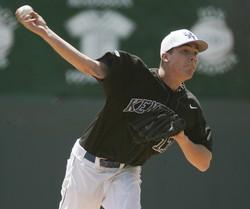
4. Alex Meyer, Kentucky.  Fangraphs.com scouted and did an extensive report on Meyer, his stuff, and his outlook just this week, reviewing his Florida start.  Rizzo likes big body, power arms out of college and Meyer absolutely fits that bill.  Here’s a profile at mlbdraftinsider.com.  Here’s another at mlb.com by Jonathan Mayo.  The major thing that scares me about Meyer is his sudden reversal of fortunes over his first two college seasons.  How does a guy have a 7+ era as a sophomore then suddenly start throwing lights out (2.94 era, 110ks in 101 innings) as a junior?  Who is the real Meyer?

5. Sonny Gray, Vanderbilt. Good stuff, good results, bad body.  Just as with pro quarterbacks, no GM likes to take a sub-6-foot right hander.  Most think he’s headed for the bullpen … if so how could you possibly draft him this high?  A top5 overall pitcher better have future Ace starter potential.

Anyone below this point isn’t going to get past the Nats, since Anthony Rendon probably goes 1st or 2nd and one of the big-time high school prospects (among them possibly Bundy, Starling or Archie Bradley) may go top 5 as well.  Of the arms below; if any of them fall to #23 we may snap them up despite really needing bats in the farm system.

  • Jed Bradley, Georgia Tech.  Good lefty, good league.  Some think he’s top3, others think he’s lasting til the teens.
  • Matt Barnes, UConn.  I’m sure he’s a great pitcher but playing in the Big East isn’t exactly like playing in the SEC.
  • Taylor Jungmann, UTexas.  Stock is falling.
  • John Stilson, Tamu.  lots of K/9 in a good league.  Unfortunately he just destroyed his shoulder and probably won’t even be drafted.  He’ll be lucky to recover from a SLAP tear.
  • Matthew Purke, TCU.  Has had injury concerns all year but has a top-5 talent arm.  I’d wonder if the Nats would roll the dice at #23 or possibly in the supplemental round on him.  Keith Law posted today (insider only) that his price tag won’t be worth what he has shown this year, and I’m guessing he returns to school for his junior year.  More likely he’ll play in the Cape, try to re-gain his mojo and earn his (likely) $6M demand.

Lots of draft pundits are putting the Nats onto Kentucky right-hander Alex Meyer at the #6 spot.  According to some reports, the Nationals were initially targeting him at #23, but a strong 2011 season has him shooting up the draft boards.  If not Meyer, a lot of other mock drafts have us on Trevor Bauer, which scares me for reasons mentioned above.

Here’s some good mock drafts to refer to:

Final thoughts

I think Meyer may end up being an overdraft, but its hard not to fall in love with a big body and a big arm.  You can’t teach MPH.  Bauer (as Passan says) may be Lincecum 2.0 and certainly has amazing k/9 rates this year, but i’d be afraid of his unconventionalism.  Videos of his mechanics aren’t that crazy, and he definitely has a great arm.  We’ll see if the Nats go this way or surprise everyone.

Broderick and Rodriguez are officially costing the team Wins

16 comments

Why exactly was Slaten left in to pitch 2+ innings last night? Photo Getty Images via zimbio.com

There’s no other way to put it, after watching the unfolding of last night’s bullpen meltdown; carrying Brian Broderick and Henry Rodriguez on this team is having the effect of shortening the bullpen from 7 guys to 5, and is costing this team wins by not allowing Jim Riggleman to put in the right guys at the right time.

WP Beat reporter Adam Kilgore put it more politely, calling the carrying of two essentially worthless pitchers an “unusual roster construction.”  You know what I call it?  A GM who is hand-cuffing his manager.

I have complained in this space several times (mostly summed up here in this March 2011 post) about the implications of the Nats having 3 of their 12 pitchers (Tom Gorzelanny in addition to Broderick and Rodriguez) be essentially “locked” onto the 25-man active roster.  Its one of my main criticisms of the Josh Willingham deal in general; see my post for more opinion but to have only a right handed reliever who your manager cannot use in return for your #5 hitter of the past two years is my definition of a trade failure).  Gorzelanny has pitched much better than anticipated and his roster spot hasn’t been questioned (though for me, that wasn’t always the case either).

To say nothing of this plain fact: If you can’t trust a reliever to come into a close game and get outs, then he should NOT BE ON THE ROSTER.  Its as simple as that.  And clearly neither Broderick or Rodriguez currently falls into that category.

What is the answer?  Mike Rizzo needs to do three things, almost immediately:

  1. Invent another “injury” and put Rodriguez back on the DL.  Send him to extended spring, put him back on rehab assignments and tell him he needs to either throw strikes or take a hike.
  2. Call St. Louis’ GM and work out a PTBNL trade for Broderick.  Enough is enough; he projects as a #5 starter (maybe) on a team that has 4 good starters.  Is he really part of the future for this team?  Is he going to be better than any of Detwiler, Maya, Meyers, Solis, or Peacock in 2012?  Because that’s who he’s competing with for rotation spots in 2012 (figuring that at least 3 are already spoken for in Strasburg, Zimmermann and Gorzelanny).  Trade for him so you can option him to Syracuse.
  3. With these two spots opened up, recall Collin Balester and call up Cole Kimball so you can actually have two useful guys in your pen who you can trust.  If you’re so in love with Rodriguez’s power, Kimball throws nearly as hard and has put up far better bb/9 numbers in AAA.  Balester has been in the majors before, put up great numbers in 2010 out of the pen, and can pitch long relief if needed as a former starter.

Its time for Rizzo to acknowledge his errors in roster construction and fix them.

(As an aside: Jim Riggleman is not totally without fault here: per Ben Goessling‘s report last night, “Todd Coffey and Tyler Clippard [needed] a night off and Drew Storen [was] being saved for a lead.”  Why let Sean Burnett stay in to get out one of Atlanta’s best hitters in Martin Prado?  Why not bring in Storen at this point and use him as the “fireman?”  Is it because he’s the “closer” and you save your closer for save situations?  I certainly hope this wasn’t his thinking.  A managers *should* use his best relievers in the highest leverage situations, and last night Storen should have been used to get out of a bases loaded jam against a tough right-handed hitter, instead of leaving in a lefty who has struggled lately.  But, this post is more about roster construction than reliever use, a topic for another day, and a larger issue in baseball in general).

How’s that Milledge trade looking now?

5 comments

This is the only time i’ve ever seen Burnett’s hat on straight. Photo: masnsports.com

6/30/2009: The Nationals and Pirates announce a trade:

  • Nyjer Morgan and Sean Burnett coming to Washington
  • Lastings Milledge and Joel Hanrahan going to Pittsburgh.

To Nationals faithful, the 6/30/2009 trade with the Pirates was a serious talking point.  It was the first major trade of the Mike Rizzo era after a contentious spring training that deposed Jim Bowden.  At the time of the trade, Milledge was sitting in AAA Syracuse after having hit .161 in April, and Hanrahan was busy compiling a 7.71 era while blowing as many saves (5) as he had successes as our closer.

We all know what happened next: Morgan came over, slotted into center field and had a career season.  And Burnett settled into the bullpen and gave us better-than-loogy performances that continue to today.  Milledge hit significantly better for Pittsburgh than had been hitting for us, and suddenly Hanrahan found the plate again and has morphed into a half-way decent late-inning option for the worst team in baseball.

At the time though, pundits far and wide talked about how the Pirates “fleeced” the Nats in the deal.  Here’s one take from a USA Today columnist, and here’s MLB Trade Rumor’s round up of the typical analysts and their comments like “easy win for the Pirates.”

I remember thinking at the time that baseball pundits seemed to constantly be in love with Lastings Milledge.  Nobody could see who he was as a player (immature, egotistical, uncoachable) or see his lack of accomplishments (he has a career 91 OPS+).  All they could see was his age and his “potential.”  (Hmm, reminds me of how Jim Bowden looked at *every* prospect)  Meanwhile, Hanrahan was somehow valued higher than Burnett despite the fact that he had a 1.9 whip for 2009 (as a closer!  That’s nearly two baserunners per inning for a guy you’re entrusting to finish wins) and he was a righty.  Burnett was an effective lefty and remains that way today.

Anyway.  When Milledge was non-tendered in December and then subsequently got into a massive brawl in the Venezuelan Winter League, I didn’t see any mea culpas from these pundits.  The Pirates, probably the worst-run team in baseball and with one of the smallest payrolls, didn’t want to gamble with a probably salary in the $1M range on Milledge turning it around for 2010.  He only lasted four at bats for the White Sox, who DFA’d him today.  He’s officially worn out his welcome for four teams now (New York, Washington and Pittsburgh and Chicago) inside of 5 seasons.

Of course, Milledge’s counterpart in the trade Nyjer Morgan was similarly jettissoned at the end of spring training when he lost out his starting center fielder job to Rick Ankiel.  Morgan was traded to Milwaukee for a low-A player (Cutter Dykstra) that Keith Law described as no better than an “organizational player.”  So now the trade looks more like Hanrahan for Burnett and Dykstra.  Who is winning now?  Burnett has been great for us, and while he’s not a 95-mph flame throwing back of the bullpen type he has been nothing but consistent, continuing to give better-than-loogy performances and now he seems slated as the closer-for-now.

There was so much vitriol in the blogosphere aimed towards the Nationals front office for this move that I feel like bringing it up.  I havn’t seen too many mea culpas out there from the same people who flamed the Nats at the time.

Written by Todd Boss

April 7th, 2011 at 3:51 pm

Ladson’s Inbox 4/1/11 edition

leave a comment

Is Ankiel the solution for the Nats in center field? Photo by Al Bello/Getty Images via federalbaseball.com

Editors note: I was out of town last weekend and had this queued up but never hit publish :-).

MLB’s Nationals beat writer Bill Ladson hasn’t done an inbox for a few weeks, probably because he’s been busy at spring training.  Now that the regular season has started and we’ve had some debatable 25-man roster decisions made, he has published another edition of his Inbox column.  Here’s how i’d answer the questions he selects…

Q: What are you most worried about with the Nationals in 2011?

A: I’d say, in order, offense, the starting rotation, center field, and the back end of the bullpen.  I feel like we took a step backwards in terms of offense, we have improved the rotation over last year but still would probably rank this rotation 28th or 29th in the league, that Rick Ankiel in center field doesn’t really help us a ton, and that Drew Storen had such a rough spring that our end-of-game scenarios may be challenging.

Q: How do you think the Nationals will fare this season in the National League East with their off-season signings?

A: Probably the same as last year; last place.  Philadelphia and Atlanta are probably playoff bound no matter how many injuries the Phillies sustain.  Florida is probably taking a step side ways, having lost Uggla but picked up Vazquez (honestly, I don’t see how their fans don’t revolt at their perennial 87 win team doesn’t spend the $10 needed to improve themselves to be a 92 win team and challenge for the wild card).  The Nats may finish above the Mets, if only because that franchise is in such disarray right now.  They’re eating more than $20M in salary for players they’ve already released, they made no significant off-season moves and there’s serious injury question marks around 4 of their 5 best paid players (Santana, Beltran, Bay and Francisco Rodriguz).  I can see that time imploding badly and the Nats sneaking ahead of them for 4th place, maybe.

Q: If Bryce Harper has an amazing year in the Minors, is there a chance he will get a Major League callup?

A: They shouldn’t … but they may.  I would not be surprised to see the kid rocket through low-A and high-A ball.  It would be purely a late-season revenue grab to call him up, but they need to be careful on his service time accrual.  If he plays 30 days in September we’d have to keep him down an extra 30 days in 2012 to ensure he doesn’t become a super-2.  For those not clear on the implications of super-2 screwup, read this bit about the mistake the Giants made with Tim Lincecum.

That being said, i’d love to see him playing in the bigs before his 19th birthday.  That’d be fantastic.  And he may very well earn it.  His weakness in the AFL and in spring training was offspeed pitches, but its hard to fault the kid for wanting to swing and make something happen in the limited time he’s seen.  Once a full season gets going and he’s getting 4 ABs every night, he will learn patience, he will earn walks as pitchers work around him, and he’ll pick his spots.  This, more than anything else, is the lesson he needs to learn to advance in the minors.

Q: Do we see a parallel developing between Roger Bernadina and Justin Maxwell? How long do we have to wait?

A: It isn’t a bad parallel to note.  Bernadina lost the LF job, then the CF job, then the 4th outfielder job to a non-roster invitee.  He’s burning his last option as we speak.  He has a career 80 OPS+.  I openly questioned in this space why he was the presumed starter in LF all off-season, and as it turned out I was right about Morse being the better player.  I think he’ll play out the string in AAA this year and get traded for a low-level minor leaguer at the end of spring training 2012, just as we did with Morgan and Gonzalez this week.

Q: What do you think of the job general manager Mike Rizzo and manager Jim Riggleman have done since they took over in 2009?

A: I think Rizzo has done a decent job with the major league team and a pretty good job with the farm system.  I feel like he’s tried a little TOO hard to rid the team of the non-defensive hitters Willingham and Dunn, and could have gotten more for them.  I understand the Werth signing but think (like the rest of baseball) that he overpaid and strangely backloaded the contract (why back load instead of front load?  We’re actually at LESS payroll this year than last, so we could be paying him $20M this year instead of $10M and still look like we’re treading water).  He’s definitely assembled a team in his vision; defensively gifted, a bullpen full of power arms.  Next step; power rotation.

Riggleman is doing the best with what he has; I don’t believe other managers could do much better.  Most people believe we have probably the 28th or 29th best collection of talent in the majors, but we’re achieving better than 29th place.

Q: Besides Harper, which rookie impressed you during Spring Training?

A: I cannot disagree with Ladson’s selection of Cole Kimball as “most impressive rookie.”  I would not be surprised to see him called up in 2011 and to start getting high-leverage appearances.

Thoughts on the Morgan trade

one comment

Nats fans have seen their last Nyjer Morgan tantrum

Just two days after it became rather clear that Morgan was not going to win the starting Center Field job, Rizzo dealt the player to Milwaukee for low-level infield prospect Cutter Dykstra and some cash.  Nice move by Rizzo, taking a guy we were probably going to release in a few days and getting something (anything) in return.  Dykstra is a younger player but he’s a 2nd round pick who has put up decent numbers in the lower minor leagues thus far.  Keith Law says he’s no more than an Organizational player, but something is better than nothing.

Morgan should be happy with the deal; he may not start in Milwaukee but at least he’s now on a contender instead of being a 30-yr old in AAA.

One could argue the Nats were a bit hasty on the decision; Morgan had turned around his spring, rebounding from a slow start to post a .241/.328/.315 line for the spring.  Perhaps giving him a month into the regular season to see if he could return to 2009 form would have been the right thing to do.  Unfortunately, a log-jam of outfielders in camp that were outperforming Morgan were pressing the team’s hand.

Morgan’s trade means we have no real lead-off hitter.  We probably go with Desmond but he only had a .308 obp last year.  We will replace Morgan in the outfield with a platoon between Rick Ankiel and Jerry Hairston, Jr, neither of which really is a long term solution.  We also seem set to keep Laynce Nix after his great spring, meaning that Bernadina loses the options game and will go to AAA.  My guess is that we’re keeping Nix solely to trade him and get something in value, and Bernadina should be right back up.

My guess on what happens next is something like the following: Ankiel struggles at the plate, we trade Nix and Bernadina returns to the majors as the 4th outfielder.  Then, Corey Brown recovers from his ankle issues, gets healthy in AAA, hits well and gets called up to be the new leadoff/center fielder around mid June.

One nice side-effect of the deal is the freeing up of a roster spot.  Since it is looking more and more likely that we’re keeping 2 and perhaps 3 non-roster invitees we need to make some 40man moves.  Gaudin and Nix, perhaps Stairs seem to have made this team.  We’re at 39/40 now with the Morgan move.  I can see Wang going to the 60-day DL to free up one spot but an extra spot for Stairs is tough.  Perhaps we 60-day DL Elvin Ramirez.  We could just return him flat out (though I’m not sure you are allowed to return an injured rule5 guy).  We could also look to DFA someone; Severino may be expendable with the acquisition of lefty specialist Lee Hyde.

The importance of Home grown Starting Pitching

5 comments

Clay Buchholz provided the best Wins/salary in the majors last year. Photo baseballrumormill.com

A few weeks back si’s Tom Verducci posted an article discussing the value of starters over closers.  One of the points that he made in the article related to the general fact that Ace Starters are more likely to be with the same team that developed them than being free agent acquisitions in the modern game.  In Verducci’s article, he analyzed the 20 best pitchers by ERA from last season and found that 13 of them are still with their original organization.  Furthermore, 10 of them were first round draft picks.

Modern baseball teams are being built more and more through the draft.  Last year’s World Series champions San Francisco featured 4 home grown starters, each of whom would slot in as the best or 2nd best pitcher on most every other rotation in the league.  Tampa Bay rode a slew of home-grown (and cheap!) starters to the 2nd best record in Baseball over the past 3 years.  And now we clearly see Mike Rizzo trying to build up his starting pitcher cache in the minors through mid-season trades and a focus on pitching in the past couple drafts.

I thought I’d take this point a bit further, as it relates to a topic that I have found more and more fascinating.  The New York Yankees and their $200M payroll struggled to find starting pitching in the off season and are now essentially conducting tryouts in spring training for the #4 and #5 starter spots in their rotation.  How did they find themselves in this predicament?  The answer is thus; it has been years since they developed a home-grown Ace starter.  Their best pitcher (CC Sabathia) was a (very) expensive Free Agent, their 2nd best a home grown rookie (Phil Hughes) and their third best (AJ Burnett) another pricey free agent.  Arguably it has been since either Chien-Ming Wang or possibly Andy Pettitte that the Yankees have developed a starter worthy of mention.  Now, the Yankees have certainly bought themselves a whole lot of offense that will mask their weaknesses in the rotation, but the fact remains that they could easily miss the playoffs in 2011 despite their payroll if the first three members of their rotation do not pitch well.

Lets look at the “Aces” in baseball, and take a look at their acquisition methods and their contract status.  Here, “Home Grown” means the team that developed the pitcher, not necessarily the team that drafted him.  When prospects get traded, I credit the acquiring team for developing and delivering the player to the majors.

  • Home Grown: Johnson, Hamels, Wainwright, Jimenez, Lincecum, Cain, Lester, Buchholz, Price, Verlander, Liriano, Felix Hernandez, Jered Weaver.
  • Free Agent Acquisition: Halladay, Lee, Carpenter, Sabathia.
  • Trade Acquisition: Oswalt, Santana, Greinke.

Of these 20 “Aces,” 13 are still with their developing organization.  Four Free Agent acquisitions for big money, and three traded Aces that cost their teams plenty (though in retrospect the Johan Santana trade isn’t looking that bad for the Mets).

Another side-point was Verducci’s findings that 10 of the top 20 pitchers by ERA last year were first rounders.  I find that piece of information really amazing, given the notorious “crapshoot” mentality of baseball Drafts.  Here’s a quick followup analysis of the Initial Acquisition method of my 20 “Aces” and determining draft or international free agent. Here, we’ll put “supplemental first rounders) into the “1st round” category.

  • Draft: 1st Rounder: Hamels, Halladay, Carpenter, Wainwright, Greinke, Lincecum, Cain, Buchholz, Price, Sabathia, Verlander, Jered Weaver.
  • Draft: top 5 rounds: Johnson (4th), Lee (4th), Lester (2nd).
  • Draft: 6th round or later: Oswalt (23rd).
  • International Free Agents: Santana, Jimenez, Liriano, Felix Hernandez.

So by my analysis, 12 of the best 20 pitchers in the game were first round picks.  Only Oswalt looks like a complete diamond in the rough find.  For all the talk about how the draft is a crap shoot (hey, Albert Pujols was a 13th round pick), it really seems apparent that these first rounders paid off handsomely.

Here’s one more look; of the 13 “home grown” aces, lets look at their current contract status.  All data per Cot’s fantastic salary database site.

  • Johnson: 4 years/$39M (2010-13)
  • Hamels: 3 years/$20.5M (2009-11), but he has a 4th arbitration year in 2012.
  • Wainwright: 4 years/$15M (2008-11), plus 2012, 2013 club options (this contract is in complete peril though, since the club can terminate at the end of 2011 when Wainwright is on the DL.  That essentially kills $21M guaranteed to Wainwright in 2012 and 2013.  Tough, tough break for the player).
  • Jimenez: 4 years/$10M (2009-12), plus 2013-14 club options (the club options are very reasonable for an Ace)
  • Lincecum: 2 years/$23M (2010-11), but these are just his first two arbitration years.  Two more to go to take him through 2013.
  • Cain: 3 years/$27.25M (2010-12)
  • Lester: 5 years/$30M (2009-13), plus 2014 club option
  • Buchholz: 1yr/$480K (est): Still on a pre-arbitration contract, possibly the best value in baseball right now.  Controlled through 2014 by the Red Sox.
  • Price: 6 years/$8.5M (2007-12).  Wait, actually THIS may be the best deal in baseball, since Buchholz will probably garner a massive first-year arbitration award in 2012 just as Price’s 6 year deal ends.  However, Price can void the contract and file for arbitration as soon as he becomes eligible, presumably for the 2012 season.
  • Verlander: 5 years/$80M (2010-14)
  • Liriano: 1 year/$4.3M (2011).  Still in his arbitration years, under club control through 2012.
  • Felix Hernandez: 5 years/$78M (2010-14)
  • Jered Weaver: 1 year/$7.37M (2011).  He lost his arbitration hearing this year after going “only” 13-12 but leading the league in strikeouts and coming in 5th in Cy Young voting.  Under club control through 2012.

And, adding in the non-home grown players for a complete picture of the future Ace starter FA market:

  • Halladay: 3 years/$60M (2011-13), plus 2014 option
  • Lee: 5 years/$120M (2011-15), plus 2016 option
  • Carpenter: 5 years/$63.5M (2007-11), plus 2012 club option
  • Sabathia: 7 years/$161M (2009-15) but he can opt out after the 2011 season
  • Oswalt: 5 years/$73M (2007-11), plus 2012 club option
  • Santana: 6 years/$137.5M (2008-13), plus 2014 club option
  • Greinke: 4 years/$38M (2009-12)

So, here’s a quick summary of when these Aces may hit the FA market:

  • After 2011: Wainwright (but he’ll be post-TJ surgery), Sabathia (probably)
  • After 2012: Cain, Liriano, Weaver, Oswalt, Carpenter, Greinke, Hamels
  • After 2013: Johnson, Lincecum, Santana (probably)
  • 2014 or Beyond : Jimenez, Lester, Buchholz, Price, Verlander, Hernandez, Halladay, Lee

Notice how teams are locking up these Ace pitchers for the long haul.  We’re likely to have perhaps just an injury reclamation project in Adam Wainwright and opt-out 100% certain to return to the Yankees Sabathia as the sole major  free agent candidates this coming off season.  I’ve read differing opinions on whether or not Sabathia opts out of his contract (he’d be abandoning $92M of guaranteed pay over 4 years) but I’d be surprised (shocked actually) if he did NOT opt out, especially if he has a third consecutive year of similar production to his first two for the Yankees.  You would have to think he could easily merit a contract north of Cliff Lee’s $24M/year for 7 additional years.  7yrs/$170M or so.

Lastly, lets look at the 8 playoff teams from last  year and investigate how many of their starters were home grown:

  • Giants: 4 of 5 homegrown (Lincecum, Cain, Sanchez, Bumgarner).  1 FA in Zito
  • Rangers: 3 of 5 home grown (Wilson, Hunter, Feldman), 1 trade acquisition (Lee), and one FA (Lewis)
  • Yankees: 1 home grown (Hughes) and 4 Free Agents (Sabathia, Burnett, Pettitte, Vazquez)
  • Phillies: 1 home grown (Hamels), 3 traded acquisitions (Halladay, Oswalt, Blanton) one FA (Moyer).
  • Rays: 4 home grown (Sheilds, Neiman, Price, Davis) one trade acquisition (Garza)
  • Twins: 3 home grown (Baker, Blackburn, Slowey) one FA (Pavano) and one trade acquisition (Liriano).
  • Braves: 3 home grown (Hanson, Jurrgens, Medlen/Minor), one FA (Lowe), one trade acquisition (Hudson)
  • Reds: 3 home grown (Leake, Bailey/Wood, Cueto), two trade acquisitions (Arroyo and Harang).

Six of the Eight playoff team used rotations that were mostly home grown.  Most of the trade acquisitions here were trading of prospects (either the acquiring team using prospects to acquire a proven Vet, as with Hudson, or the acquiring team acquiring and developing the player, as with Garza).

What is the lesson, after all this analysis?  Draft well, develop well, and then lock down your Aces for the long haul.  That is the pathway to success.  There are some exceptions of course (the Phillies have acquired 2 Aces by leveraging their very good farm system depth, and still have enough lower-level depth to rank among the best farm systems in baseball.  And the Yankees of course have bought themselves a good portion of their team).  But looking at the playoff teams last year, most of them were draft-heavy on starters.

Coincidentally; the Nats 2011 rotation by way of comparison?  2 drafted (Lannan, Zimmermann), 2 FAs (Livan and Marquis) and one trade acquisition candidate (Gorzelanny).  This would look far better of course if we were using two key drafted/developed players (Strasburg, Detwiler or even Maya).

Here’s hoping that the Nats’ higher-end starting pitcher draft picks (Strasburg, Zimmermann Solis, Cole, and Detwiler) become the core of our rotation for years to come.

Does Verducci’s article about Strasburg’s Mechanics worry you?

4 comments

This is an image I hope we don’t see again.

In an article that seemingly came out of nowhere, Si.com columnist Tom Verducci posted this missive on 3/8/11 with ominous warnings to Nationals fans everywhere.  He believes that Stephen Strasburg has a fatal flaw in his mechanics related to the timing of his stride forward off the rubber versus his release point that may continue to plague the pitcher even after his post Tommy John surgery recovery.

I say this article comes out of nowhere since I would have expected to see this posted back in August 2010, when every other pundit posted their own theories as to why “the best pitching prospect ever” suddenly blew out his elbow.  I reviewed some of those explanations at the time but thought (and still do think) that his injury was less about his release point and more about pitch selection.  I think that Strasburg (and more importantly his catchers) fell in love with his change-up after discovering what a devastating pitch it was (imagine facing a 91-mph screw ball that moves a foot into the right handed hitter).  Suddenly he was throwing a ton of circle changes and placing unexpected, here-to-fore unseen stress directly on his elbow ligament.  When a hurler goes from pitching one day a week in a protected environment where he can get by throwing mostly fastballs to overpower college hitters to suddenly throwing only about 58% fastballs (per Verducci’s research) at the Major league level every 5 days, sudden injury onset can occur.

Verducci touches on the preponderance of off-speed pitches Strasburg was throwing in the article but focuses on the “late cocking” of the arm as the primary culprit of the injury.  He then lists a number of pitchers who exhibit this same late arm cocking with (conveniently) a ghastly list of arm and shoulder injuries that followed.

Here’s my problem with this type of cherry picking of arm injuries; as Mike Rizzo pointed out in the article, you can probably find a similar subset of pitchers who exhibit the same late-cocking of the arm who have NEVER had an arm injury.  Rob Neyer posted a similar opinion in a Verducci-followup piece.  Similarly, those who subscribe to the “Inverted W” pitching mechanical flaw fail to point out that, while there are plenty of examples of pitchers who show the inverted W behavior (most notably in most examples is Mark Prior but Strasburg exhibits the same mechanics as well), there are also plenty of pitchers who do the same motion but who never have had a serious injury.  People always forget to mention this fact and their articles always come off with the message that “if you exhibit this, you are doomed.”

John Smoltz was listed as a pitcher who had this fatal mechanical flaw (he also has inverted W syndrome) and listed as an “example” of what can happen.  Yes Smoltz blew out his elbow in his early 30s and missed an entire major league season.  But he also pitched until he was 42, made over 700 major league starts, won 213 games and saved another 154 while he was in the closer role theoretically “protecting” his arm.  If Strasburg gives the Washington franchise those kinds of numbers between now and the year 2030 (when he too will be 42 years of age) I will never quibble.

For me, shoulder injuries are the injuries that you really worry about.  Look at Chien-Ming Wang right now; he’s throwing in the low 80s 2+ years on from shoulder surgery.  The Nats have taken fliers on several other post-shoulder injury starters over the past few years (Brian Lawrence, Ryan Drese, John Patterson) with limited success.  However, pitchers seem to be able to recover from Tommy John surgeries with much better regularity.  I realize our own Shawn Hill had the TJ surgery and never really came back, but the list of successful pitchers who have had the TJ surgery is long.  3 of the top 5 NL Cy Young candidates last year (Josh Johnson, Tim Hudson and now Adam Wainwright) have had the TJ surgery, as did 2009 NL cy Young winner Chris Carpenter.  Our own Jordan Zimmermann seems to be nicely recovering, although it is far too soon to conclude that his surgery was a success.

I sometimes wonder what modern medicine could have done with Sandy Koufax, who abruptly retired at age 30 after a Cy Young winning season where he made 41 starts and went 27-9.  His retirement reason was listed as “arthritis in his pitching elbow” and he had symptoms that included massive hemorrhaging in his arm; was this a condition that would be easily solved today?

For Strasburg, as with pretty much any baseball pitcher, in many ways every pitch could be your last.  Modern medicine can fix all kinds of injuries and modern technology can pin point the wheres and whys of why some guys may last and some guys may be flashes in the pan.  But in the end, some guys physiologically are more durable than others, some guys can throw a ball through a brick wall for 25 years (see Ryan, Nolan) and others break down after just a few professional games.  Lets just hope for the best once Strasburg comes back.

http://en.wikipedia.org/wiki/Tommy_John_surgery#List_of_notable_baseball_players_who_underwent_the_surgery

What about Maya?

3 comments

Maya in his first start for the P-Nats. Photo William Yoder/thenatsblog.com

I like to think i’m reading just about every bit of Washington Nationals news there is to be had during Spring Training.  I follow all the beat writers I know of plus try to read just about every columnnist or blogger that I know to be down in Viera.  But nobody is talking about Yunesky Maya.

We know, for example, that John Lannan bulked up over the off season, that Livan shot a 65 and plans on playing in the Senior Golf tour when he turns 50, that Marquis feels better, that Detwiler has new mechanics, that Wang is healthy and that Zimmermann is rearing to go.  But what about Maya?

Last we had heard, Maya had gone down to the Dominican Winter League (DWL), played for Leones del Escogido and pitched well.  Baseball America’s Lacy Lusk wrote a rather promising report in December (insider only, sorry), and Maya was named the league’s best pitcher at the Winter’s end.  He finished the DWL 4-2 with a 1.32era, striking out 42 batters in 41 innings pitched.  And according to reports he had his fastball up to 93mph.  Now, the DWL may be the “best” of the winter leagues but its talent level has dipped significantly over the past 10 years.  At best, i’d say its a AAA-level quality league.  So take the stats with a slight grain of salt.

This slight uptick in speed is important.  In my review of Maya’s first four starts (posted here last September) he was barely breaking 90, sitting in the 88-89 range and relying more on nibbling than going after hitters.  I feel the uptick in velocity is clearly a result of gaining arm strength over the course of throwing innings, indicating that he was rushed to the Majors last September.  Rizzo has all but admitted the team screwed up by rushing Maya through the minors, and his results showed.

However, if Maya can hump it up to 93 and combine it with the amazing arsenal of pitches he seems to have (in his MLB debut he showed at least EIGHT different pitches), I think he can be a very dangerous pitcher in this league. Which is why the team risked an $8M contract on him.

Now, what does this mean for the 2011 season?  So far, its hard to tell; Ladson posted a biopic piece today but I’ve yet to see any reports on how he looks during his mound sessions or how he’s throwing.  Perhaps its a language barrier issue; he doesn’t really speak English so interviews are difficult unless the interviewer also speaks Spanish.

I think he’s still bound for AAA to start the season, simply because he has options and certain guys (Gorzelanny in particular) do not.  But he may be first in line when someone gets hit by the injury bug.

Written by Todd Boss

February 25th, 2011 at 9:56 am