Nationals Arm Race

"… the reason you win or lose is darn near always the same – pitching.” — Earl Weaver

Archive for the ‘Draft’ Category

First Look; Nats top 10 rounds of 2013 Draftees

7 comments

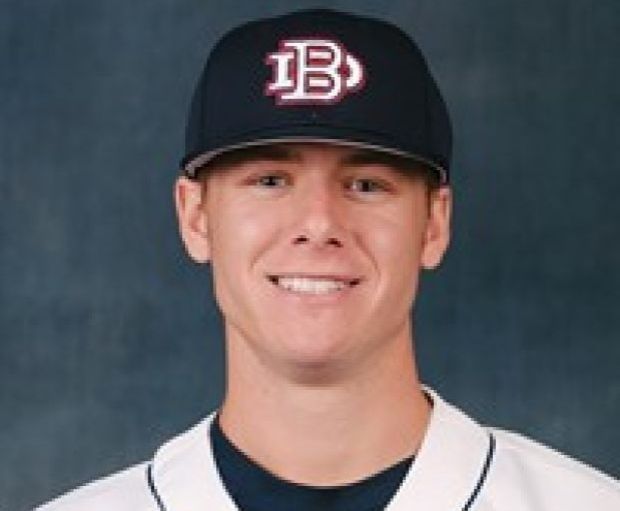
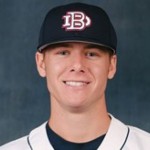
Meet Jake Johansen, the Nats 2nd round 2013 pick. Photo via DBU website

A quick glance on our high-end draftees from 2013 draft.  As with other posts, I’ll put in the Keith Law and Baseball America ranking after the player name where appropriate (though as we’ll see, Keith’s top 100 quickly runs out of names).

Two other blogs are doing a far more in-depth look at these picks than I am here; definitely see Ryan Kelley‘s fantastic scouting reports on each pick at BaseballNewsHound.com and see Ryan Sullivan‘s excellent draft day blog coverage at NatsGM.com for more and better in-sight than what I’ve got here.  Plus Tom Schad at MLB.com has posted nice per-player summaries for all the Nats picks.   I’m just looking for a quick hit observation on our new guys.

  • Rnd #1/#28 overall: In what would have been the Nats first round pick, the Cardinals selected Rob Kaminsky, a prep RHP from New Jersey.   However at that point in the draft high-end prep lefty Ian Clarkin, pre-draft top-10 pick LHP Sean Manaea from Indiana State University and highly-regarded Arkansas RHP Ryne Stanek (another guy who was seen as an upper-end 1st rounder earlier this year with fantastic stuff) were still on the board.   Don’t you think the Nats wouldn’t have minded a shot at Manaea or Stanek at above-slot and then punted on below-slot guys the rest of the way (kinda what they did in 2012 with Lucas Giolito and a senior-heavy first 10 rounds)?  Both Manaea and Stanek dropped just in the past few weeks because of short-term injuries and both seem like steals at the end of the 1st round.  Man I would have liked to see one of these two guys added to the farm system. Was this worth the Rafael Soriano signing?
  • Rnd #2/#68 overall: Jake Johansen, RHP from Dallas Baptist University.  Keith Law ranked #63, Baseball America ranked #180.  This is a classic Mike Rizzo pick; a big guy (6’6″) with a big arm (98-100mph on the fastball, sustained through out the game).  Its almost like they’re trying to replace Alex Meyer in the farm system.  Johansen’s college numbers leave something to be desired: 5.40 era this season, a career ERA > 6.00.  Some have pointed out he has a very high BABIP on the year and that his conference is a hitter’s paradise; fair counter points).  For a guy who throws so hard, he had surprisingly few Ks this year (75 Ks in 88 1/3 innings).   His size and profile seems to trend towards an automatic reliever, but the Nats profile him as a starter.  You can’t teach velocity right?  The Nats execs are already on record saying that they’re drafting the tools and they believe they can coach him up.  FederalBaseball has a nice writeup on him with good quotes and the Nats press release on the pick too.  Masn’s Byron Kerr‘s write-up is here.  Already some pundits questioning the pick (HardBallTalk).  My thought?  I would have liked to have drafted a polished guy with our highest pick, not a project.  6/8/13 update: already signed for slot value.  Wow that was fast.  Clearly smells like a pre-draft deal here.
  • Rnd #3/#105 Overall: Drew Ward, prep SS/3B from Oklahoma.  BA #88.  Prep 3B who’s graduating a year early and with an Oklahoma commitment.    I don’t think he graduated HS a year early so he could get to college; he’ll sign.  Nice FederalBaseball writeup about him.  Keith Law isn’t a fan.
  • Rnd #4/#136 Overall: Nicholas “Nic” Pivetta, RHP  from a New Mexico Juco.   BA #155.  The MLB scouting reports say he’s an upper 90s fastball in short spurts and may be headed for the bullpen.  Sounds like a Rizzo pick to me.  Are you sure we’re not drafting for need at the MLB level right now?  :-).  All signs point to reliever.  Maybe we’re so happy with our High-A rotation right now that we’re just focusing on relivers who can go straight to AA and matriculate up the ranks with our current set of starters?
  • Rnd #5/#166 Overall: Austin Voth, RHP from University of Washington.  BA #260.  Seems like an over draft, might be a signability pick, though Voth fits the profile of a good K/9 guy.  He was the University of Washington’s friday starter, he was 2nd in the Pac-12 in strikeouts to #1 overall pick Mark Appel and had pretty good stats for a sub-.500 college team.
  • Rnd #6/#196 Overall: Cody Gunter 3B/RHP from Texas Juco.   BA #249.  Could be another reliever, but likely was drafted to play the field.  MLB.com’s writeup on him is here.
  • Rnd #7/#226 Overall: James Yezzo, 1B from UDelaware.  BA #290.  You usually don’t like to draft 1B-only guys on NL teams, especially ones who are only 6’0″, but Yezzo clubbed his way to the CAA player of the year honor and hit .410 with power in a 3-big conference with some good baseball.
  • Rnd #8/#256 Overall: David Napoli, LHP from Tulane.   Not BA ranked.  A weekend senior starter for Tulane with a great BA against for one probable reason; he seems wild as heck.  33 walks in 66 innings and FOURTEEN Hbps this year.  He had a fantastic batting average against (.176) and was even better in H/9 against (5.32 hits per 9, 2nd in the NCAA this year), but that’s easier to do when you’re all over the plate.  Looks like a loogy to me; undersized (5’10” 180lb) and ok stuff (threw 87 in HS, reportedly can hit 93-94 in short stints).  We’ll see.
  • Rnd #9/#286 Overall: Jake Joyce, RHP from Virginia Tech.  Not BA ranked.  A prototypical round 6-9 pick; college senior, little leverage, will sign for below slot to save cash.  Per the MLB.com story on him, a nats executive knows the family and made the recommendation.  95 out of the pen for Va Tech; you just hope that a reliever in college is going to be successful in the pros.
  • Rnd #10/#316 Overall: Brennan Middleton, SS from Tulane.  Say hello to Auburn’s starting SS this year.

First 10 round summary:

  • Four college RHP who mostly project to relievers
  • One college LHP who definitely projects as a reliever
  • Three college infielders; a 1B, a SS and a 3B.
  • One prep 3B who may be a tougher sign with a college commitment

So far, pretty typical Rizzo draft; college heavy with a focus on power arms destined for the bullpen.  Is there one big name in this list to get excited about?  Unfortunately not so far, but not having a 1st rounder and a crack at a big name (as described in the “possible 1st round missed” bullet point will leave a draft class wanting.

Mid-spring update on local draft prospects

leave a comment

High Schools are heading into post-season tournaments and local prep players have had their chances to make impressions through the Spring HS season.  How are our local prep phenoms faring this year, and what players with Virginia ties may feature prominently in the upcoming MLB draft?

Note; it is difficult to find updated stats on Prep players.  I tried.  If you know where to find reliable prep hitting and pitching stats, let me know.  So there’s not much in the way of stats here unless they’re college players.  For all the players below I’ve listed if they appear in the latest top-100 draft prospect rankings from two reliable sources: Keith Law‘s top-100 draft list and BaseballAmerica’s top 100 list and top 250 list.  Instead of re-linking over and over, i’ll refer to these two lists in shorthand via the links here.

First, quick updates on the players mentioned in my March 2013 posting on 4 local players:

  • Andy McGuire: SS/3B: leading Madison HS in Vienna to a 19-1 record (with 19 consecutive wins) heading into the District tournament and a #1 local ranking by the Washington Post.  Madison is also an honorable mention in the latest USA Today national rankings.  I asked Law in his 5/16/13 chat about McGuire’s draft status (he’s regularly in the lower 50 of pundit’s top 100 draft prospects for this year, implying a mid 2nd round pick) but Law is “hearing” 4th round, which he’s surprised by and may indicate that McGuire will honor his U. Texas committment.  Draft Rankings: Law #74/BA #196.  6/6/13 update: some video of McGuire at this link; just watching him run and move and his body type I’m immediately thinking he’s going to struggle to stay at SS, echoing what scouts say.
  • Alec Grosser: RHP TC Williams: Nothing else has really popped up about Grosser after the initial flurry of articles, and he’s listed as “Signed” and committed to George Mason.  PerfectGame has his best measured fastball at 92, ranging 89-92.  That’s still pretty good and I’m guessing he’ll head to George Mason to see where his arm takes him.  His HS has not had the success one would expect with a dominant arm, sitting at around .500 heading into the post-season.  Not ranked by Law/BA #158.
  • Matt McPhearson: OF with Riverdale Baptist popped up on MinorLeagueBall’s Mid-Atlantic report recently with the note that he has “game changing” speed.  He’s still listed as a “Verbal” Commit to U. Miami.  I’ve seen him as a late 1st rounder on some mock drafts.  Here’s a good scouting report on him from BaseballHounds.com.  Lastly there’s some scouting video online of him, showing a good bat from the left-hand side and with some amazing speed stats: a verified 6.2 in the 60 yard dash and home-to-first in less than 3.8 seconds.  As the articles say; that’s Crazy fast.   He’s one of only three guys with an “80” scouting grade in this year’s class per Jim Callis (the other two being Jonathan Gray’s fastball, and Kris Bryant’s power, and those two guys are both going in the top 3 of the 2013 draft). The only knock on him may be his size (just 5’10”) but he profiles as a prototypical leadoff/center fielder.  Law ranked #62/BA #136.
  • Thomas Rogers, LHP injured all year is still verbally committed to UNC.  Nothing new to report.  Not ranked in either Law/BA’s lists.

A couple of new names that I’ve taken note of locally, by virtue of their college commitments to major Baseball programs:

  • Errol Robinson, SS from St. Johns, signed to play at Ole Miss.  He was #92 in BaseballAmerica’s top 100 pre-season draft prospects and had a nice Q&A with them in March 2013.  His PerfectGame profile and draft write ups indicate he’s a quick-bat SS who has the capability of going in the top 5 rounds.  NatsGM’s Ryan Sullivan scouted him about a week ago and wrote it up here.   Based on this interview (where he talks about how his Mom, Dad and sister all attended or currently are at Ole Miss), I’m pretty sure he’s going to honor his college commitment despite any potential drafting.   Not ranked in either Law/BA’s lists.
  • Alec Bettinger, a RHP with Hylton HS in Woodbridge, has a verbal commitment to UVA.  PerfectGame has him with about a 90 mph fastball.  He’s “small but athletic” per this MinorLeagueBall article (6’0″ 165lbs), which may have him leaning towards a future professional bullpen role.  6’0″ is really on the low-end for what scouts like to see in a starter (think Tim Hudson is considered undersized and he’s 6’1″ 175lbs), so it seems likely he’ll take his fastball to college to see how it develops.  Not ranked in either Law/BA’s list.

Other Virginia-connected big names being talked about in the draft (thanks to this MinorLeagueBall article and comments for crowd-sourced Virginia-connected names to target)

  • Conner Jones, RHP with Great Bridge HS, the HS of Justin Upton down in Chesapeake.  Jones is leading his HS to a current 19-0 record, good enough for being ranked 18th by USAToday/22nd by BaseballAmerica in the state title game.  He’s easily the best Virginia draft prospect this year and is the only guy that MLBDraftInsider.com has going in the top 50 of their mock drafts right now.  PG has him at 93mph with a UVA committment that he has told scouts he intends to honor, but he’s getting back-of-the-1st round notice for the upcoming draft.  As scouts have noted, these “verbal commitments” are pretty meaningless unless a player specifically fails to file one specific item prior to the draft (which automatically invalidates them; i can’t recall what it is right now but believe its a drug test).  So we’ll see.  Law ranked #29/BA ranked #33.
  • Bobby Wahl: RHP from Ole Miss, a good sized Righty who is Ole Miss’ Friday night starter and who hails from Springfield, VA (West Springfield HS).  He’s 9-0 with a 1.43 ERA on the season, quite a stat line considering who he’s typically going up against (the #1 starters of other SEC teams, easily the best baseball conference in the land).  Law ranked #66/BA ranked #36.  If he last til the late 2nd round as Law suggests, he could be right around where the Washington Nationals could draft him with their first pick (#68 overall).  However, John Sickels/MinorLeagueBall’s latest mock draft has Wahl going #31, more consistent with BA’s rankings.  It doesn’t seem likely he’ll fall to the Nats.
  • Austin Nicely, LHP from Spotswood HS in Grottoes, Virginia (way down I-81 by my alma Mater James Madison University).   PG has him as a lefty who throws 90 and is committed to UVA.  Law #78/Not in BA’s top 250, a huge disparity.
  • Chad Pinder, 3B Virginia Tech.  Described as a plus-defender, decent bat.  His season batting stats aren’t that impressive as compared to his teammates, so he must be some defender.  If he can really move to SS like the scouting reports say and still hit for average and some power, he’s a good 2nd-3rd round prospect.  Law ranked #86/BA ranked #53.
  • Jack Roberts, RHP from James River HS in Richmond, committed to UVA and per PG gets up to 92mph.   Big guy (6’4″ 200lbs) who I’d bet can add more velocity if he goes to college.   If he threw a couple ticks higher he’d probably be a big time prospect.  Not ranked in either Law/BA’s list.
  • Zach Rice, LHP from Suffolk (outside of Norfolk), tall lanky kid who slings it 89 from the left hand side.  Committed to UNC.  Worth mentioning since he’s been recruited by the best team in the country.  Not ranked in either Law/BA’s list.
  • Kyle Crockett, LHP from UVA.  He’s UVA’s closer (and a HS teammate of fellow draft prospect Chad Pinder).  He throws 90-92 from the left side but has impeccable control; he has just one unintentional walk in 43 innings this year while getting more than a K/inning.  Despite being used as a reliever, I can see someone moving him back to the rotation to see if his stuff can play for 6-7 innings at a time.  Not ranked by Law/BA #103.

Conclusion: Looking at this list, UVA stands to lose an awful lot of pitching recruits if these guys don’t honor their commitments.  Bettinger, Jones, Nicely and Roberts are all UVA commits.  But imagine that staff in a couple years if they all go to college.  Phew.

http://www.baseballamerica.com/draft/2013-state-draft-report-virginia/

Local HS players to keep an eye on this Spring

leave a comment

There’s not usually a lot of buzz around baseball prospects coming out of High School in the DC Metro Area, but this year we’re starting to hear things about a couple of local players.  Here’s a quick preview of these two local phenoms who may be making news in June’s Rule-4 draft plus links for a few other good local prospects.

  1. First is someone of particular interest to me, having graduated from James Madison High School in Vienna.  Senior shortstop Andy McGuire was named to Baseball America’s 3rd team pre-season All-American team and has routinely been placed on top 50 draft prospect lists (projecting perhaps as a 2nd rounder).  He was on the 2012 Under-18 USA team which won the world title last fall in Asia.  He’s committed to play for the University of Texas for now; we’ll see what happens if he gets offered a decent bonus by his drafting team.  He’s 6’1″ 190lb and some reports say he may not be able to stay at Shortstop (though I don’t see why when such athletic shortstops as Troy Tulowitzki and Ian Desmond are both taller and heavier and play premium defense at the position).  Obviously his value is higher at this position as opposed to moving to 2nd or 3rd.  He struggled last season with a hip issue that eventually required surgery; it should be interesting to see how he performs this spring and whether he can raise his draft stock enough to sneak into the first round.  If you’re interested in more information, Perfect Game has a ton of information on him here.
  2. Meanwhile, this AllMetSports.com article popped up this week about T.C. Williams hurler Alec Grosser, who showed up at a showcase game and was sitting in the low 90s, touching 94-95 with a wipeout slider and great movement.  Suddenly this unknown has put himself in a position to have nearly every team in the majors sending scouts and cross-checkers.  He has an ideal starter’s frame; 6’4″ and 195lbs with room to pack on muscle, which has scouts more than excited.  He’s committed to George Mason for now but has the whole spring to showcase his talents and possibly move up draft boards.

Other names from prominent teams who might be getting some draft buzz include:

  • Matt McPhearson, a speedy leadoff/lefty outfielder for local power Riverdale Baptist with a committment to college powerhouse Miami.  Scouting reports from PerfectGame.org say he could be drafted in the first 5 rounds.  Not a slap hitter but a line-drive hitter with some power for his size (5’10”).
  • Thomas Rogers, a senior LHP with defending Virginia state champ Lake Braddock could hit 89 from the left hand side before suffering a TJ injury; he’s committed to UNC and probably will end up there (instead of the draft) by virtue of missing most of his senior year on the mound.  If he can get that velocity back and perhaps hone it while at UNC he has a chance to be an impact player some day.

A good list of eastern regional prospects from Virginia and neighboring states can be found here, at the 2013 Rawlings/Perfect Game pre-season All Atlantic Region teams.  There’s plenty of guys in the area with college committments; the guys mentioned on above are the ones who sound like they’re possible draftees or who are committed to “marquee” college programs.

Written by Todd Boss

March 28th, 2013 at 5:23 pm

Nats Franchise Draft history; biggest, best, worst Draft Picks

10 comments

Face of the Franchise Zimmerman easily represents the best player drafted in the Washington era (by WAR). Photo team official

This is the Third in a long-delayed series of “Best of” posts, breaking down the transactions of both the club’s General Managers.  Previously:

1. Biggest/Best/Worst Trades in Nats History (March 2012)

2. Biggest/Best/Worst Free Agent signings in Nats History (November 2012).

Here’s Part 3: looking at the Biggest, Best and Worst Draft picks the team has made since arriving here in Washington.

Ground rules for this article:

1. Unlike the trades and free agent posts, assiging “credit” or “blame” for draft picks on the General Manager is not entirely straightforward.  Baseball teams rely heavily on Scouting Directors and their staffs when it comes to the draft, especially once you get past the first few rounds.  So, perhaps for the purposes of this article it is better to talk about the “Reign of Jim Bowden” and the “Reign of Mike Rizzo” instead of insinuating that every draft decision was made by the GM during these times.  Much like the President of the US gets credit/blame when  the US economy as a whole rises or falls (whether or not you’d like to argue that a president’s decisions can influence a multi-trillion dollar economy), so does the GM get the credit/blame for his staff’s draft picks.  Most baseball pundits that I’ve read generally say that the GM/Team Ownership is always directly involved in making any 1st round and supplemental first round picks (because of the money), and will be involved if over-slot bonuses come up in later rounds, but that by the 5th round or so the entire draft is being conducted without the GM’s involvement.  Which leads us to point #2…

2. Related to #1; Mike Rizzo, whom Bowden hired in July of 2006, may not have been the Scouting Director but he certainly had a say in the drafts (coming from a scouting background in Arizona).   I’ll list scouting directors tenure here as well, related to #1 and #2.  But, it probably isn’t going to be entirely fair to the GM to say that such-and-such a pick was “good” or “bad” if it was actually being done by his staff.

3.  It is entirely “hindsight is 20/20” in nature.  But, it is what it is.  If you draft a 1st rounder who flames out in low-A, he’s a failure.  If you draft a major leaguer in the 21st round, he’s a fantastic success.  Mostly here in judging the “best draft picks” I’m looking for value in later rounds.  As it turns out judging “worst” draft picks mostly will be around first round busts.

Just for review, here’s the tenure period of both GMs:

  • Nov 2004 – Mar 2009: Jim Bowden
  • Mar 2009 – present: Mike Rizzo

And here’s the tenure period of Scouting Directors during our time here in Washington:

  • Mid 2002 – Mar 2009: Dana Brown
  • Mar 2009 – Present: Kris Kline

The quintessential Nats Draft resource is the Draft Tracker Spreadsheet, initially created by NatsFarm.com’s Brian Oliver and now maintained by “SpringfieldFan. ” It has all our draft picks, where they came from and signing bonuses.  A file I’ve kept recently (The Draft Prospects Worksheet) is a file I started to create when the Nats started getting some upper-end draft picks as a way to track who we may take.  Lastly, you can query the entire amateur draft results per team at baseball-reference.com (the link will go to the 2009 draft by way of example).

Jim Bowden Tenure: Nov 2004 – Mar 2009

Bowden’s Biggest Draft Picks (in terms of dollars committed).

  • 2005 1st rnd: Ryan Zimmerman, $2.975M
  • 2007 1st rnd: Ross Detwiler, $2.1M
  • 2007 6th rnd: Jack McGeary: $1.8M
  • 2006 1st rnd: Chris Marrero: $1.6M
  • 2006 1st rnd: Colten Willems: $1.4M

Bowden’s Best Draft Picks

  • 2005 11th rnd: John Lannan out of Siena College.  A durable and servicable lefty starter with MLB average numbers out of a small college in the 11th round is a great find.
  • 2005 12th rnd: Craig Stammen out of Dayton.  He didn’t look as if he’d be successful until his transition to the bullpen, where his arm action and movement have baffled hitters during his shorter reliever stints.
  • 2006 41st rnd: Brad Peacock out of a Florida HS as a “draft and follow” guy (which enabled teams to take late round fliers on good talent, so this isn’t exactly the same as finding a true 41st round player who made the majors, since Peacock likely wouldn’t have been taken without the DDE rules in place and would have been an upper round draft pick the next season he was eligible).
  • 2007 2nd rnd: Jordan Zimmermann out of U Wisconsin Stevens Point (not because of his draft position, but because of the scouting out of such a small school).  Zimmermann survived TJ surgery and now looks like a hidden Ace in the making.
  • 2007 4th rnd: Derek Norris out of a Kansas HS: possibly the best HS player the team has drafted since arriving in DC.
  • 2008 10th rnd: Tommy Milone out of USC.  Rizzo may not have rated him, but he looks to be in Oakland’s rotation for many years to come.
  • 2008 16th rnd: Tyler Moore out of Mississippi State.  Scouts continually have downplayed Moore’s power; I have never read a scouting report on Moore that didn’t focus on “holes in his swing” or “defensive liabilities.”  All he’s done is mash the ball at every level he’s been challenged with in his career.
  • 2008 19th rnd: Steve Lombardozzi out of St. Petersburg JuCo.  Despite his pedigree (his father played in the Majors in parts of 6 seasons), Lombardozzi was lightly pursued and surprisingly signed as a late round JuCo draftee.  He’s scraped his way to the top though and could find himself starting if the team decides to move Espinosa.

Despite the issues at the top of the 2008 draft, it may have been Bowden’s best.  He took no less than 6 guys who now are on 25-man rosters in this league (Milone, Moore, Lombardozzi, Espinosa, and Crow).  2005 wasn’t bad either, with 7 guys that have MLB appearances (though only 3 remain with the team).

Bowden’s Worst Draft Picks

  • 2006: almost the entire draft.  Bowden blew the first 6 picks on high schoolers, the best of whom was Chris Marrero, who has contributed -0.7 WAR in his career thus far.  First round pick Colten Willems flamed out and just gave up playing in the middle of the 2010 season, Stephen Englund was released (but not before earning a 50-game suspension for Amphetemine usage), Sean Black didn’t sign and Stephen King has yet to succeed above A-ball despite being in his his 6th pro season (and, just for good measure, had his own 50-game drug suspension in 2009).  Only one player in the top 12 rounds of picks even played a day in the majors.  Just a complete debacle of a draft.
  • 2007’s high schoolers: Smoker, Souza, Burgess, and Smolinkski: all top 3 round picks, all busts.
  • 2007’s Jack McGeary, who insisted (admirably) on also going to college, but probably at the detriment of his baseball career.  I’m sorry; if someone pays you $1.8M dollars in cash, you probably should work for that money.   McGeary never was able to master anything above rookie ball and was so under-valued by the team that they failed to protect him in the minor league phase of the 2012 Rule 5 draft (where he was subsequently taken by Boston).
  • The 2008 Aaron Crow debacle.  Yes I know that this pick turned into 2009’s Drew Storen.  And yes I know that Crow has now been turned into a middle reliever while Storen has turned into an effective closer.  At the time, this move helped continue the “incompetent” labels that the organization was earning, as Bowden reportedly refused to negotiate with Crow’s agents and failed to do his due diligence before drafting the player.  Who is to say whether Crow’s electric arm wouldn’t have turned into a regular rotation member in our organization (Kansas City doesn’t exactly have a stellar record of developing pitchers).  In the end, getting Storen and also not losing the opportunity cost of missing a year’s development time of a first round pick (by virtue of the rest of the team being so awful) ended up not hurting the team.  But it still goes down as a draft failure for Bowden.

Mike Rizzo Tenure: Mar 2009 – present

Rizzo’s Biggest Draft Picks (in terms of dollars committed).

  • 2009 1st rnd: Stephen Strasburg: $7.5M bonus, 15.1M guaranteed
  • 2010 1st rnd: Bryce Harper: $6.25M bonus, $9.9M guaranteed
  • 2011 1st rnd: Anthony Rendon: $6M, $7.2M guaranteed
  • 2011 3rd rnd: Matthew Purke: $2.75M bonus, $4.15M guaranteed
  • 2011 1st rnd (supplemental): Brian Goodwin: $3M
  • 2012 1st rnd: Lucas Giolito: $2.9M
  • 2011 1st rnd: Alex Meyer: $2M
  • 2010 4th rnd: A.J. Cole: $2M
  • 2009 1st rnd: Drew Storen: $1.6M

As we saw with the Free Agent post, Rizzo clearly had more money to work with from Ownership than Bowden did.  Spending $2M on a 4th round pick (AJ Cole) would have been unheard of in the Bowden reign.

Rizzo’s Best Draft Picks

  • 2009 12th rnd: Nathan Karns out of Texas Tech: Karns got 4th/5th round money in the 12th round but has been bedeviled by injuries until this year.  By now we know what he’s capable of; our organization’s Minor League pitcher of the Year earned a spot on the 40-man roster and could be in line for a 2013 late season call-up.  It could be too-early to tell, but right now this is looking like one of Rizzo’s best.
  • 2009 22nd rnd: Danny Rosenbaum out of Xavier; despite the team not protecting him and losing him in Rule-5, he had come out of no-where to be one of our best pitching prospects.
  • 2010 12th rnd: Robbie Ray out of a Tennessee HS; he had a great debut and has been steadily rising up the ranks.  The team was able to buy him out of a committment to the University of Arkansas by offering 2nd round money.
  • 2010 22nd rnd: Cameron Selik as a U Kansas senior has made it to AA and looks like a great later-round steal, especially for a college senior this low in the draft.
  • 2011 5th rnd: Matt Skole out of  Georgia Tech looks like he could be an excellent hitting prospect and is making it into the top 5 lists of Nationals prospects.
  • 2011 1st rnd supp: Brian Goodwin out of a Miami JuCo looks more advanced than anyone would have thought at this point, and could be pressing for playing time in 2013.  I don’t normally give plaudits for 1st round talents, but the team aggressively pursued and captured Goodwin at a time when it looked like he was heading to UNC.

Rizzo’s Worst Draft Picks

  • 2009 2nd rnd: Jeff Kobernus out of Cal Berkeley.  Perhaps less because of his production (which was mostly poor for his career), but moreso because the decision not to protect him and value your investment in the player, leading to his departure in the 2012 rule-5 draft.  No worries for Nats fans: Rizzo drafted almost the doppelganger of Kobernus in 2012: again taking a 2nd baseman from California in the second round (Tony Renda).  Lets hope it works out better this time.
  • 2009 3rd rnd: Trevor Holder out of Georgia.  A blatant punt on the draft pick to save money, Holder was a college senior with zero leverage and should have been offered closer to $1,000 instead of the $200,000 he got.  Holder has struggled for years in our system.  He did have a decent 2nd half in Harrisburg, so there is hope yet.  But 3rd round picks should have more promise than Holder has shown.
  • 2010 3rd rnd: Rick Hague out of Rice.  He hasn’t lived up to his 3rd round billing yet, though (to be fair) he has struggled with some injuries.

Rizzo’s Too Soon to Tell Draft Picks

  • 2010 2nd rnd: Sammy Solis was looking promising out of U San Diego, but has been side lined by Tommy John Surgery.
  • The 2011 college-arm gamble: Rizzo drafted dozens of college players this draft, stocking the system with experienced amateurs.
  • 2012 1st: the Lucas Giolito gamble won’t play itself out for a couple of years, but it is safe to say Rizzo went “all in” on this player.  A 1-1 talent but damaged goods upon drafting, the team is putting a lot of faith into its experience in dealing with hurlers going through Tommy John.
  • 2011 3rd: Matt Purke got a MLB deal and a whole lot of money, and has done relatively nothing to earn it because of lingering shoulder injuries.  I’m listing him as too early to tell, but the signs are not good.


John Sickels Season Review of all Nats 2012 draft picks

11 comments

The Nats liked Mooneyham a lot more than pundits did. How did he do in his first pro season? Photo via mlbdraftcountdown.wordpress.com

John Sickels writes the very good blog located at www.minorleagueball.com.  He does profiles on Minor League players, reviews the day’s marquee Minor League games, and generally does a good job highlighting the guys down on the farm.

Late this past season he embarked on a project where he has reviewed the performance of EVERY draft pick, by round, from the 2012 draft.  This, as you might imagine, is one heck of an effort.  In fact, in one of his later posts, he admitted he may not have the sanity to continue this all the way through all 40 rounds of players.  In fact, he didn’t; he made it through 17 rounds and last posted on this thread 9/27/12.  So I’ve completed his quick-hit analysis/statistical summary for the rest of our picks who debuted this year.

Below is a cutting-n-pasting of Sickels’ round-by-round analysis of the Nats players taken.  I’ve put in links in the form of the “Round N” at each spot so you could read his original post.  The (YY) number is overall draft pick positioning.  Lastly, he started this series in mid-August, so I’ve updated the first several playerswriteups from Sickels’ to have season-ending stats, but his blurb is usually still accurate enough.  After round 17, I’ve filled in the details in Sickel’s style for the rest of our draftees.

(For draft reference, click here for the fantastic Nationals Drafttrack Google XLS, created by Brian Oliver and now maintained by “SpringfieldFan.”  Also, for 2012 draftee information, thanks to Sean Hogan‘s 2012 Nats draft pick blog research, which I’ve quoted at various places here.  He has the best available summary of each draftee’s information.


Round 1: (#16 overall) Lucas Giolito, RHP, Washington Nationals: Threw two innings in the Gulf Coast League on August 14th.  [Editors Note: obviously we all know by now that those two innings resulted in Giolito’s blowing the partially torn UCL, and he has subsequently had Tommy John surgery.  My thoughts on the pick and the resulting surgery have been published here before].

Round 2: (80) Tony Renda, 2B, Washington Nationals: .264/.341/.295 with 31 walks, 33 strikeouts, 15-for-18 in steals over 295 at-bats for Auburn in the NY-P. Controlling zone well, steady glove, but lack of pop is disappointing.  He did improve his average 30 points in the last few weeks of the season, finishing hot.

Round 3: (111) Brett Mooneyham, LHP, Washington Nationals: 2.55 ERA with 29/16 K/BB in 42 1/3 innings for Auburn in the NY-P, 36 hits. Just like in college: looks like a pitcher, good arm, but doesn’t dominate the way you think he should.  Like Renda, a couple of good late outings improved his peripherals.

Round 4: (144) Brandon Miller, OF, Washington Nationals: .292/.354/.549 with four homers, 10 walks, 36 strikeouts in 113 at-bats for Auburn in the NY-P. Small sample, but fits the scouting reports perfectly: he’s got a ton of power, but struggles for contact.

Round 5: (174) Spencer Kieboom, C, Washington Nationals: .258/.362/.305 with 19 walks, 24 strikeouts in 128 at-bats for Auburn in the NY-P. Has thrown out 44% of runners, but bat looks doubtful.

Round 6: (204) Hayden Jennings, OF, Washington Nationals: .192/.254/.231 with 11 walks, 70 strikeouts in 156 at-bats in the GCL. Has stolen 17 bases in 19 attempts, but his strikeout rate is obscene.

Round 7: (234) Robert Benincasa, RHP, Washington Nationals: 3.09 ERA with 32/3 K/BB in 23 1/3 innings for Auburn in the NY-P, 27 hits, 2.00 GO/AO. Slot bonus from college, could move quickly as reliever if healthy, just went on DL [Editor’s note: the DL trip seemed innocuous, a roster manipulation at season’s end].

Round 8: (264) Stephen Perez, SS, Washington Nationals: Below slot bonus for college infielder, awful hitter so far, .222/.252/.364 with four walks, 40 strikeouts in 99 at-bats between GCL and NY-P. Glovework also disappointing. Has good tools but didn’t play up to expectations in college at Miami, and hasn’t in pro ball so far either.

Round 9: (294) Derek Self, RHP, Washington Nationals: Below slot college pitcher, solid in pro ball so far, 3.27 ERA with 25/8 K/BB in 33 innings for Auburn in the NY-P, 32 hits, 14 saves. Good fastball/cutter combination.

Round 10: (324) Craig Manuel, C, Washington Nationals: College backstop with good defensive and intangible rep, bat questions kept him to a small bonus. So far, hitting .287/.376/.315 with 16 walks, 11 strikeouts in 143 at-bats for Auburn in the NY-P, with 41% of runners caught. If he had any power at all, he’d be a major sleeper.

Round 11: (354) Brian Rauh, RHP, Washington Nationals: Slot bonus for college pitcher, 3.99 ERA with 43/26 K/BB in 59 innings for Auburn in the NY-P and Hagerstown in the Low-A South Atlantic League. Held his own in pro ball although component ratios aren’t great.

Round 12: (384) Carlos Lopez, 1B, Washington Nationals: Below slot bonus college first baseman, solid slugger at Wake Forest but didn’t repeat success as a pro, .253/.332/.376 with three homers, 20 walks, 50 strikeouts in 170 at-bats for Auburn in the NY-P. Age 22.

Round 13: (414) Elliott Waterman, LHP, Washington Nationals: Slot bonus college pitcher from San Francisco, 4.97 ERA with 24/22 K/BB in 25 innings for Auburn in the NY-P, 31 hits. Held back by control issues at this point. Age 21.

Round 14: (444) Jordan Poole, OF, Washington Nationals: Another junior college guy, this one from Florida, name was called as a pitcher but he played outfield in pro ball, hit .205/.264/.295 with 10 walks, 58 strikeouts in 132 at-bats between GCL and NY-P. That won’t get it done.

Round 15: (474) Brandon Smith, OF, Washington Nationals: California prep didn’t sign, honored committment to Grand Canyon University.

Round 16: (504) Ronald Pena, RHP, Washington Nationals: Junior college pitcher from Florida, low 90s stuff, 6-4, 195 build, 12 innings with a 2.92 ERA and a 9/1 K/BB, five hits allowed between GCL and NY-P. Sleeper potential.

Round 17: (534) Blake Schwartz, RHP, Washington Nationals: College senior from Oklahoma City University, originally from Minnesota, performed well in pro debut with 3.05 ERA, 41/11 K/BB in 38 innings, 39 hits in the South Atlantic League. Considered a sleeper by some Midwestern scouts due to his command.

Round 18: (564) David Fischer, RHP, Washington Nationals: College senior from U-Conn, the lanky right handed hurler (6’5″, 175lb) struggled in his Short-A debut, posting a 4.96 ERA, 31/14 K/BB in 49 innings, 56 hits.  Fischer only had a GO/AO ratio of 1.11, so he needs to work on keeping the ball on the ground in 2013.  Considered a possible top-10 talent early in the 2012 college season, Fischer’s fastball sits 92-93 on a projectionable frame, but his off-speed pitches need work.

Round 19: (594) Brian Lippincott, 1B, Washington Nationals: a College senior from Concordia, this left-handed batting first baseman hit .281/.361/.374 with 16 walks, 29 strikeouts in 139 GCL at-bats.  This is decent but far less impressive than Lippincott’s college career, where he hit .494 his senior season to led all Division II batters.  He showed some power in college but relatively little in pro-ball; he’ll need to feature more power to stick at first base.

Round 20: (624) James Brooks, SS, Washington Nationals: a College senior from Utah hit .273/.345/.354 with 8 walks, 25 strikeouts in 99 GCL at-bats.  He was 1-32 in 10 games in Auburn before being dropped down to the Rookie League.  Perhaps the most interesting thing about Brooks is his birth place: Melbourne, Australia.  No word yet whether he’s under consideration for Australia’s 2013 WBC team.

Round 21: (654) Austin Chubb, C, Washington Nationals: College senior from Florida Southern hit .209/.260/.373 with 3 walks, 11 strikeouts in 67 GCL at-bats.  He hit left-handers to the tune of .400, but in a catcher-platoon, only catching every third day or so, he struggled to get going in 2013.   He only threw out 3 of 12 runners and allowed 2 passed balls in his 10 games behind the plate.   He’ll have to improve all around in 2013.

Round 22: (684) Will Hudgins, RHP, Washington Nationals: a College senior from Notre Dame (who hails from Richmond, so he has local roots) posted a 2.22 ERA, 31/6 K/BB in 44 2/3 innings, 41 hits split between GCL and AUB.  Decent numbers despite being a 22-yr old in rookie ball, he has some promise as he fills out and moves forward.  Perfect Game only has him with a mid-80s fastball but “with life;” I’m hoping that’s an old reading.

Round 23: (714) Casey Selsor, OF/LHP, Washington Nationals: this College Senior from UT-San Antonio was drafted ostensibly as an outfielder but threw 41 innings in rookie-ball while also getting a handful of at-bats/games in the field.  He did neither relatively well; posting a 6.10 ERA, 34/15 k/bb in those 41 innings giving up 50 hits and seven home runs.  While playing the out-field he was 1-6 in 3 games, hardly a judge-worthy sample size.  The Nats clearly like this guy, having drafted him in 2008 out of high-school, so count on him sticking around at least a couple years.   On the mound, he features as an undersized lefty (he’s only 5’10”) who throws upper 80s but with excellent secondary stuff.

Round 24: (744) Kevin Dicharry, RHP, Washington Nationals: College Senior from University of Texas missed most of his college career with shoulder issues (tendinitis) after an excellent freshman year.  His pro debut looked very promising; 2.84 ERA, 22/4 K/BB in 25 1/3 innings, 19 hits, zero homers allowed.  Dicharry was highly regarded nationally graduating high school (a 2nd team Rawlings All-American and a marquee part of Texas’ recruiting class) and this pick represents a great value pick for the Nats if Dicharry regains some of his past form.  He reportedly is showing a low 90s fastball, a tight curve and a good change this year, to go with his excellent control (nearly a 6-1 k/bb ratio).  A sleeper prospect if he stays healthy.

Round 25: (774) Freddy Avis, RHP, Washington Nationals: California prep didn’t sign, honored commitment to Stanford.

Round 26: (804) Skye Bolt, RHP, Washington Nationals: Georgia prep didn’t sign, honored commitment to UNC.

Round 27: (834) Cody Poteet, RHP, Washington Nationals: California prep didn’t sign, honored commitment to UCLA.

Round 28: (864) Hunter Bailey, SS, Washington Nationals: College senior from Oklahoma State hit .247/.345/.329 with 8 walks, 12 strikeouts in 73 GCL at-bats.  He clearly features as a low-power middle infielder glove and may struggle to stand out in the system.

Round 29: (894) Leonard Hollins, RHP, Washington Nationals: A JuCo 2-year graduate from Chipola college threw 9 no-hit innings in the GCL and then was jumped to low-A, where he posted a 4.50 ERA in 18 innings, 8/7 K/BB ratio, giving up 18 hits.   He’s a submarining right-handed reliever who had a tendency to pitch either a perfect 1-2-3 inning or give up a slew of hits.  He’s tough to get the ball in the air on though; a 3.50 GO/AO ratio in Hagerstown and zero homers given up in 27 IP in his pro debut across both levels.  He could be an intriguing, difficult-to-scout/hard to quantify reliever for the team moving forward.  A sleeper reliever prospect.

Round 30: (924) Robert Orlan, LHP, Washington Nationals: A junior draftee out of UNC, Orlan suffered an elbow  injury late in the college season and was immediately placed on the 60-day DL by the team.  No bonus information is given for the player, who likely signed with the team knowing that a year’s recovery from Tommy John would have cost him his entire senior year of college too.  He profiled as a top-15 round talent, a lefty with decent velocity (upper 80s coming out of HS, presumably more now) and a decent variety of pitches.  Another value pick by the Nats, who could get a later-round steal if Orlan regains some of his promise after injury recovery.

Round 31: (954) Michael Boyden, RHP, Washington Nationals: This college senior out of University of Maryland quickly was promoted out of the GCL and posted a 1.44 ERA in 25 innings of short-A.  His control was pretty bad though: 22/17 K/BB ratio in those 25 innings.  In college he reportedly showed 90-92 with flashes to 94, but dropped because of his size and control issues.  This local product (he grew up in La Plata, played a year at GW and finished at Maryland) likely gets lucky to be drafted by his local team, and we’ll see if his wildness causes some regression on these numbers in the future.

Round 32: (984) Michael Mudron, LHP, Washington Nationals: College senior from Cal State San Bernadino posted a 3.75ERA in 24 innings in the GCL, with a 27/8 K/BB ratio, 16 hits.  A decent K/bb ratio, decent numbers for Mudron (who is incorrectly listed on milb.com as a right-handed pitcher).  I cannot find any scouting information, but assume that he profiles as a lefty match up guy (though his 2012 splits showed little lefty-lefty matchup capability).

Round 33: (1014) Mike McQuillan, 2B, Washington Nationals: College senior from Iowa hit .268/.362/.430 in 149 ABs for Auburn after being promoted out of the GCL.  21 walks and 27 Ks in those 149 Abs.  He features as a classic undersize 2nd baseman with little pop, but if his OBP stays above .350 he should continue to rise in the system.

Round 34: Jake Jeffries, 2B: California Prep did not sign, honored commitment to Cal St. Fullerton.

Round 35: Corey Bafidis, LHP: Texas Weslylan junior opted to return for his senior season.

Round 36: Max Ungar, C: Maryland Prep did not sign, honored commitment to Denison.

Round 37: Tyler Watson, LHP: Texas Prep did not sign, honored commitment to Kansas.

Round 38: Jarred Messer, RHP: Mallone College (OH) junior opted to return for his senior season.

Round 39: Mitchell Williams, C: Georga Prep did not sign, honored commitment to the Marion Institute.

Round 40: Ricky Gutierrez, CF: Florida Prep did not sign, honored his football commitment to U-Conn.


There you have it; your 2012 draft class.  So far, there seems like there’s some definite sleeper potential in the lower rounds and some players who played above their draft position.  I can’t wait to see how the likes of arms Pena, Schwartz, Hudgins, Dicharry and eventually Orlan pan out.

Rule 5 Losses: odds of them coming back?

7 comments

Danny Rosenbaum gets drafted by Colorado in the Rule 5 draft. Photo Jeff Mankie via insidenova.com

The Rule 5 draft was conducted on 12/5/12, the last day of the Winter meetings, and the Nats farm system took a hit.

In the Major League Phase (full results from mlbtraderumors.com), we lost:

  • Danny Rosenbaum, who was drafted 3rd overall by the Colorado Rockies.
  • Jeff Kobernus, who was taken 7th overall by the Boston Red Sox, and immediately flipped to Detroit for a utility player.

Rosenbaum’s drafting isn’t a huge surprise, given his stature as the leading lefty starter prospect in our system and consistently being mentioned in top 10 lists and all-star teams.  Rosenbaum’s problem is that he projects as a classic back-of-the-rotation lefty; decent but not eye-popping velocity, good control, keeping the ball in the park and giving you consistent innings, and the Nationals current management has little use for such a player.  He projects almost exactly like John Lannan and Tommy Milone, two lefties that Rizzo didn’t covet and who were either flipped or non-tendered.  Now, before bemoaning Rosenbaum’s loss too much, the odds of him being returned seem nearly 100%: Colorado is absolute hell on pitchers.  He joins a team which lost 98 games and whose BEST starter last year posted a 4.43 ERA.  Colorado is stock piling young starter prospects, running them through an unconventional pitch count limit system, and (I guess) seeing who stands out.  Is Rosenbaum any better than the large handful of starters there already?  I don’t think so; I suspect he’ll be back.  Lets just hope he doesn’t return as damaged goods, as Brad Meyer was late last season.

Kobernus has to be excited; he goes from presumably being stuck in the minors for another year to getting a chance to make the 25-man roster team of the defending AL champs as a utility infielder.  Our 2009 2nd round pick signed an under-slot deal (as did nearly everyone else in that draft thanks to the monies paid to Strasburg and Storen) and has posted decent if not flashy numbers in a steady progression through the system.  In 2012 his slash line in AA was .282/.325/.333 and he was a mid-season all-star.  I guess the team decided it just didn’t need a middle infielder who had little to no power (his best OPS season was in 2011 where he just reached .700).  Can he stick in Detroit?  I suspect he could, given the role he’s asked to perform.  However, I worry that (much like Erik Komatsu in 2011, who it should be noted was NOT picked this year despite still being rule-5 eligible) he won’t be able to hit consistently enough to stay with the big team and may eventually be returned.

In the AAA phase, the team also lost:

  • Jack McGeary, taken by Boston.
  • Hector Nelo, taken by the Los Angeles Dodgers.

The departure of McGeary represents the end of a relatively tumultuous relationship between the one time upper-end prospect and team, and serves as a continuing cautionary tale of the risks behind drafting and paying high-end high school arms.  McGeary wanted to attend Stanford and worked out a part-time playing deal to allow him to attend school.  Admirable, but not exactly what a team expects for a $1.8M investment.  After a couple of years he decided to finally focus on baseball first, but blew out his elbow in June 2010.   His late 2011 return looked promising, but injuries cost him most of 2012 as well, pitching a grand total of 9 1/3 innings this year.   After 6 full pro seasons he had yet to advance further than Low-A.   Nats prospect fans have waited years and years for the likes of McGeary, Josh Smoker, Colton Willems and other top-5 talent High school arms to pan out, and have been left wanting.  Arguably the best HS arm the team has drafted since relocating to Washington is Patrick McCoy, a lefty with halfway decent numbers in AA this past year and who has been passed over in two successive rule 5 drafts.  At least the current regime seems to understand this; they’ve signed exactly three HS arms in the last three drafts combined and they’re all familiar names (Giolito, Cole, Ray).

Nelo ended the year as the AA closer, with pretty decent numbers, but himself was a 2011 minor league free agent and seemingly was considered nothing more than an organizational arm for the team.  He was a right handed reliever in a system filled with such players , and his departure shouldn’t be missed too much.


In the end, the Rule 5 draft was as we expected it; it was rather anti-climactic for Nats fans who thought we may get a new player or two to try out.  But as has been stated elsewhere, when the 25-man roster is nearly finalized for the 2013 season, there exists little need to experiment with a rule 5 draftee.

Nats 2012 Rule 5 Protection Analysis

6 comments

Is Nathan Karns a 40-man roster addition candidate ahead of the rule-5 draft? Photo Potomac Nationals official via milb.com

In part I on this topic yesterday, we talked about the Nats Rule 5 draft history.  Today we’ll talk about Parts II and III: who the Nats may think about protecting ahead of this year’s Rule 5 draft, and what the team may be seeking if they participated and drafted a player or two in the Rule 5 draft themselves.

Part II: Nationals Rule-5 Draft Protection Candidates.

I kvetched a little bit about this topic in this space earlier this off-season, talking about the lack of roster space for the upcoming Rule 5 draft.  I suspected that as a result of MLB deals given to guys like Anthony Rendon and Matthew Purke, in addition to the glut of guys we had to add mid season, we may be seeing some guys not getting protected this year that would be in other years.  As of today, the Nats 40-man roster sits at 36 players with a bit of immediate room to spare (we could non-tender the likes of John Lannan, Tom Gorzelanny or Jesus Flores (speaking of Rule 5 additions) in a pinch, and I think Carlos Rivero may be imminently DFA’d), but we also have several 25-man roster spots departing via free agency that need to be filled, quickly filling back in those empty spots.  So, perhaps the issue isn’t as bad as I thought it might be.

That being said, here’s a look at some of our Rule 5 eligible guys that may warrant protection.  For “official” opinions here’s Mark Zuckerman‘s Rule5 post, along with Adam Kilgore‘s version of the same analysis.  This is a combination of first-time eligible guys for the 2012 draft (mostly, guys who were college junior draftees from 2009 or high school draftees in 2008), prior year eligible guys who have suddenly worked their way onto the radar, and any International FA signing from 2008 or before (they are treated the same way as high school age draftees).  Working off a list that Luke Erickson posted LAST november, along with his post on the same topic this week, and of course referencing the two great nats farm system resources maintained by “SpringfieldFan” (and formerly by Brian Oliver): the Nats Draft Tracker and the Nats Big Board, here’s some thoughts on protection candidates:

Stronger Candidates to protect

  • Nathan Karns: he finally had an injury-free season, and he put up numbers as expected when the team gave him an above-slot deal in 2009.  He is older, and only projects as a AA starter in 2013, but he is an intriguing starter prospect for the Nats in 2014.
  • Destin Hood: I don’t think the team is ready to give up on the long-term 2008 2nd round project.  His numbers have been increasing as he reportedly is learning the game better.  I suspect the team protects him to protect their investment.
  • Danny Rosenbaum; the “Ace” of Harrisburg this year, and our furthest advanced legitimate starter prospect, Rosenbaum projects more like a Tommy Milone or John Lannan right now.  I’d suspect that the team may protect him, thinking that someone could stash him as a loogy for a year.  I’m not sure his ceiling is in the Nats rotation, but he could be a good trade candidate.  He hit the DL late last year, which makes it slightly less likely that a team would take a flier on him, but his track record warrants his mention.
  • Patrick McCoy: he just repeated AA and despite already being Rule-5 eligible last  year he improved on his numbers in 2012.  Why protect him?  Because this team needs a Loogy, and McCoy may be the leading lefty reliever in our upper-minor leagues.
  • Jeff Kobernus has put up consistent numbers his whole career, but still projects as a power-less middle infielder.  Would the team protect him, thinking he has a chance to become the next Steve Lombardozzi?  Would the team protect him just to protect their bonus money?

Weaker candidates to protect

  • Trevor Holder: a 3rd round pick roundly criticized at the time of being an underslot money saver, Holder had decent peripherals in high-A and AA this year.  But, he doesn’t seem to project as the dominant right-hander he was in college and seems likely to top out as an org-arm.  Despite his 3rd round pedigree, I don’t see a team taking a flier on him in rule-5.
  • Pat Lehman; a local guy (GWU), but despite having good numbers in AAA he remains a very common commodity; a right handed minor league reliever.  Even if he’s drafted, it isn’t that great a loss because of the depth we already have at the position.
  • Paul Demny; despite making the AFL team this year, I don’t quite see Demny as being a draft risk.  His ERA this year and in years past has been substandard.
  • Robert Gilliam; only really mentioned here since we just acquired him last off-season in the Gio Gonzalez trade and the team probably doesn’t want to lose him, but his 6.37 ERA in AA makes it extremely unlikely someone grabs him in the Rule 5.
  • Erik Davis: technically rule-5 eligible last year, he stepped up this year and put up pretty dominant AA numbers.  As with Lehman, he’s a righty reliever in AA so the odds of his getting picked (or protected) seem slim.

Players not worth protecting for various Reasons

Now, there’s a bunch of “good names” that are Rule 5 eligible in our system but who are not listed here, including guys who toiled as high as AA last year.  Anyone not listed here is probably not going to be missed, even if they are drafted.  Plus, the likelihood of a decent pitcher prospect who has never played above A-ball being drafted in rule-5 is extemely slim.  Most of the guys above are mentioned because of their capability to be “stashed” on a MLB roster.  This includes:

  • last year’s departures Brad Meyers (coming off injury) and Erik Komatsu (clearly been passed on the organizational OF depth chart).  Yes they got picked last year, but both got returned and I’d be surprised to see them picked again.
  • higher profile draft picks Josh Smoker and Jack McGeary: neither has advanced far enough in their careers to realistically stick with a MLB team.
  • Jeff Mandel may be an accomplished AAA pitcher, but I don’t think he’s anything more than that.
  • Rob Wort hasn’t advanced far enough up the chain to be considered.
  • Justin Bloxom could be a dark horse prospect next year, but only made it to AA the second half of last year.

Who would I protect, If I was the GM?  I’d protect Karns, Hood, Rosenbaum and McCoy right now, filling the four current openings on the roster.  If a move needs to be made (a FA signing or a trade), then you make one-for-one DFAs or non-tenders as needed.  You have 40-man room; might as well use it.  My order of protection is probably Karns, McCoy, Hood and Rosenbaum (from most important to least important to protect).  Odds are that the team only opts to protect a couple of guys to give immediate roster flexibility heading into the winter meetings.

Part III: Might the Nats participate in the Rule-5 draft this year?

This year’s Rule 5 draft has some intrigue for the team; unlike last year, we have definite holes in the bullpen and on the roster which can be “more easily” filled via the Rule 5 draft.  We need a lefty out of the bullpen, we need a backup middle infielder and we need a 5th starter.  The odds of finding the latter in the rule 5 draft are very slim, but the odds of finding one of the first two are better.  If you look at the last couple of Rule 5 drafts, nearly every player drafted is either a Pitcher or a Middle Infielder.  Most teams carry a second backup middle infielder who gets very little playing time, ideal for “hiding” rule 5 draftees.  And of course every bullpen has a “mop up” guy who pitches once or twice a week in low-leverage situations, also a great place to hide a rule-5 guy.

Besides, the “penalty” for drafting a guy and returning him is pretty small in baseball terms: $25,000 net (it costs $50,000 fee to select a player, then if you “offer” them back the original team has to refund $25,000 of that fee).   So I’d be surprised honestly if the team didn’t roll the dice with at least a flier on either of the two needs mentioned above.

Personally, I’m not a big fan of the Rule 5 draft any longer.  It was created as a way to liberate players who were stuck in farm systems behind established players (much the way that minor league free agency rules attempted to do the same), but now seems to be a cheap method of teams to get an extended tryout of players.  I’ve now come to believe that the draft is not necessarily in the best interests of the players or the teams; just read below for the organizational transaction chaos that followed players.  It also seems like a high number of players who get drafted in rule-5 immediately suffer season-ending injuries; coincidence or correlation?  If you’re a rule-5 drafted arm, the drafting team knows you must perform at a MLB level to stay in the organization.  Wouldn’t that imply there’s added pressure to compete, leading to overthrowing and arm injuries?  Plus, teams that lose players often get them returned damaged and having lost a season of service time.  I suppose players are the ones that are pro-Rule 5 draft, in that it immediately means a promotion to the 40-man roster, MLB service time and higher pay.

In the end, it makes for a good reason to write a 2,500 word blog post, and it may result in our team having new prospects to evaluate and dream about, so perhaps I protest too much.

Are you concerned about the state of the Nats farm system?

26 comments

Will Giolito become the Nats #1 prospect? Photo Eric Dearborn via Win For Teddy blog

I know it seems silly to criticize the team with the best record in the NL, but I thought the question was worth asking, given a couple things I read this week prospects related.  Given the drain of prospects in the last 6 months (through the Gio Gonzalez trade and through graduation to the majors for several of the team’s better prospects), its safe to say that our cupboard is relatively thin right now.  This point was highlighted to me by two recent online articles;

1. ESPN’s Keith Law posted a mid-season review of farm systems on the Rise or Fall (sorry, insider only), and stated the obvious about our system.  His summary: Yes we got Lucas Giolito but it was essentially at the expense of any other high-end talent in the 2012 draft.  And, a lot of our high-end guys are taking significant tumbles on boards due to lack of performance or injury (see later on for a look at our top 10 prospect performances).

2. Baseball America’s Jim Callis posted an updated Midseason top 50 prospects post 2012 draft and included where he’d put the top-end talents drafted (including international signees) in his weekly Ask BA feature on July 16th.   Of note to me was the fact that Washington, even with the signing of the high-end Giolito, does not have a SINGLE player in his mid-season 50.   Luckily for us, our NL East competition didn’t fare too much better, with a grand total of 5 players between our divisional rivals.  This compared to teams like Seattle (5), Kansas City (4), and the rich-keep-getting-richer Rangers with 3 guys likely to become impact players within a year or two.

Why is this a concern if the team is in first place?  Two primary reasons:

1. If you’re not going to matriculate your prospects and depend on them for production, then you need to utilize them in trade to acquire needed talent.  There’s plenty of trade rumors right now mentioning the Nats desires for a starter to cover for Stephen Strasburg‘s innings limit.  But who are we going to trade to acquire said pitcher?   I’d go as far as saying that there’s not one guy on our 2012 top 10 prospect list (not including Harper and Lombardozzi of course) who, at this point in 2012, could be the centerpiece of a marquee acquisition.  Who is trading for our #1 prospect Anthony Rendon right now? 

2. This team has a LOT of money committed to players over the coming years, and won’t be able to depend on hefty production from salary controlled guys forever.  They will need a stream of up-and-coming players to offer cheap alternatives to free agents and players who have become too expensive.  For example; in the year 2016 the team has $47M committed to just THREE players right now, before considering at least that much in arbitration for just Strasburg, Bryce Harper and Jordan Zimmermann.  $47M is nearly the team’s payroll just a few years ago!  Yes we will naturally grow payroll and revenues with success and the renegotiation of the MASN contract, but constructing a 25 man roster is about making choices.  The last thing we want is to see this team become the 2012 Philadelphia Phillies; a bloated, old team with a ton of injuries and the 2nd highest payroll in the league at $175M, but mired in last place.

For context of this discussion, here’s a list of Baseball America’s top 10 prospects for this team for 2011 and 2012 (compiled after the Gonzalez trade), and a status of where they are as of now:

Year Nats Rank Name, pos Status
2011 1 Bryce Harper, of In majors
2011 2 Derek Norris, c Traded
2011 3 Danny Espinosa, ss/2b In majors
2011 4 A.J. Cole, rhp Traded
2011 5 Wilson Ramos, c Out for Season (two knee surgeries)
2011 6 Sammy Solis, lhp Out for Season (Tommy John)
2011 7 Cole Kimball, rhp 60-day DL (shoulder surgery)
2011 8 Eury Perez, of .299/.325/.342 in AA Harrisburg in his 6th pro season
2011 9 Chris Marrero, 1b 60-day DL (torn hamstring)
2011 10 Brad Peacock, rhp Traded

That’s 2 guys who are starters in the Majors, 3 traded for Gonzalez, 4 guys on long term DL stints and Eury Perez with his meager .667 OPS in AA, in his 6th pro season.  How about 2012’s list?

Year Nats Rank Name, pos Status
2012 1 Bryce Harper, OF In majors
2012 2 Anthony Rendon, 3B Out for Season (broken ankle, his 3rd major leg injury in 4 years)
2012 3 Brian Goodwin, OF .324/.438/.542 in low-A.  Stellar season so far
2012 4 Alex Meyer, RHP 7-4, 3.10 Era, 1.13 whip and 107/34 k/bb in 90IP in low-A Hagerstown.  Just promoted
2012 5 Matt Purke, LHP Long term DL (Shoulder concerns); hasn’t thrown in 5 weeks.
2012 6 Sammy Solis, LHP Out for Season (Tommy John)
2012 7 Steve Lombardozzi, INF In Majors
2012 8 Destin Hood, OF .223/.296/.313 in AA Harrisburg, in his 5th pro season
2012 9 Chris Marrero, 1B 60-day DL (torn hamstring)
2012 10 Michael Taylor, OF .225/.314/.333 in High-A Potomac in his 3rd pro season

2012’s list includes 4 major injury concerns, two guys under-performing (Hood and Taylor), and two guys matriculated to the majors.  The two players putting up good statistical seasons may come with astericks though; Alex Meyer was compiling his stats in low-A, going against guys 2-3 years younger than himself.  His promotion to High-A was overdue and should be telling, to determine if his future lays as a dominant 12-6 starter or a high-leverage reliever.  Brian Goodwin’s excellent season is a great sign of things to come … but again, in Low-A.  I know he was a Juco signee, but he’s 21 now, turning 22 in November and is the same age as college juniors getting drafted now.  If he continues to produce upon promotion to better competition, I’ll feel better.

Now, I know there’s guys in our system who are coming back from injuries (i.e. Nathan Karns), or who are putting up good numbers despite being lower draft picks (i.e. Matt Skole, Cameron Selik, Danny Rosenbaum), and we have some guys who we acquired through trades and who are having surprisingly good seasons in the minors (i.e., Zach Walters, Ryan Perry and Corey Brown) but are these kinds of players going to step up and either be a) next year’s top prospects or b) eventual productive major leaguers?  I know we all love Rosenbaum for example, but most scouts think he’s a marginal prospect at best (and his lack of inclusion on our top 10 lists reinforces that notion).

This sudden lack of depth was one of the reasons I wasn’t the biggest fan of drafting Giolito.  With the new draft rules and specific limits on bonuses, combined with the significant injury issues we’ve had with high end draftees Rendon and Purke in 2011’s draft, I thought the team should have gone the safer route.  Yes I’m sure Mike Rizzo did a ton of due diligence and was confident in Giolito’s long term health.  But missing on three first rounders (or in Purke’s case, a first round talent given a significant bonus and a 40-man deal) could lead to a significant hole in player development for this team right at a time a couple of years from now when they desperately need a MLB-minimum impact guy.

Too many injury concerns in Nats recent drafts?

22 comments

As most Nats fans know by now, the team took a big risk and drafted prep RHP Lucas Giolito in the first round despite his having suffered a sprained Ulnar Collateral Ligament (that of Tommy John surgery fame) this spring.   Most pundits have stated the obvious; this is a high risk, high reward pick for sure.  Baseball America loves the pick, as did the notoriously prickly Keith Law.

The team left two rather big names on the board by making this pick, namely Chris Stratton and Devin Marrero.  Marrero’s stock has dropped considerably this season after mashing his first two years in college, while Stratton’s stock has risen mightily and seemed to fit Mike Rizzo‘s typical MO for drafting; big powerful college arms that are close to the majors.

Here’s the question; was this TOO much of a risk?  Anthony Rendon fell to us in 2011 after being the consensus 1-1 pick in his draft class for nearly two years after suffering multiple injuries in college.  And it didn’t take him but about a week of professional games before suffering yet another leg injury, one that (depending on who you ask) seems set to sideline him for the entirety of the 2012 pro season (with the off-chance of returning for the Arizona Fall League).  Meanwhile the team took an even bigger gamble on Matthew Purke, a lefty starter with shoulder concerns in college that have continued into the pros (he was kept in extended spring training for nearly 2 months, having only recently made his pro debut in low-A, where he promptly got hammered).  Small sample sizes, I know.  But stats are stats.

Giolito, if healthy, was in the mix for 1-1.  As was Purke.  As was Rendon.  All three fell because of injury concerns.  So clearly these are top-end talents, each individually worth the risk.  But all three within two draft classes?

There seem to be two common mantras in baseball drafting; You don’t draft for need, and Get the Best Player Available.  Right now the Nats need hitting, both at the MLB level and throughout its farm system.  Maybe the team didn’t like what it saw out of Marrero, or maybe the team is convinced that Giolito’s injury was nothing major and feels like they got a massive steal as the best player on the board at #16 overall.  Fair enough; i’m certainly not privy to Rizzo’s interviews or Giolito’s medical records.  But if none of these three guys pan out, the Nats are looking at a pretty gaping draft hole rising through its system within a few years.

Agree?  Disagree?

Written by Todd Boss

June 5th, 2012 at 1:31 pm

Nats Rule 5 Draft History

one comment

Jesus Flores remains our most successful Rule 5 Draftee. Photo Toni Sandys/Washington Post

The Rule 5 draft is being held on December 6th, 2012 at the annual Baseball Winter meetings.  Frequent readers of this and other Nats blogs are well aware of the Rule 5 draft; the Nats have been frequent participants in the Rule 5 draft process, somewhat to the ire of other teams (who I suspect lately have been “returning the favor” by taking players from us and sitting on them for a year, as mentioned below).

Most scouting pundits bemoan the changes made to the CBA, saying it gutted the Rule 5 draft, but it has still featured some pretty significant names even in recent years.  Guys like Dan Uggla, Johan Santana, Shane Victorino, Joakim Soria, Josh Hamilton, RA Dickey, Scott Diamond and Evan Meek are all example draft picks from the past few years.  So I believe the draft is still important and can lead to significant players changing hands.

I split this post into two parts: Below we’ll review the Nats Rule 5 draft history.  Then in Part II tomorrow we’ll talk about our own possible rule 5 players warranting protection, and then talk about what the Nats may be looking for in 2012’s rule 5 draft.

Part I. Nationals Rule-5 draft history

Baseball-reference (of course) has Rule 5 draft results from recent years.  Here’s a list of the Rule 5 drafts since 2005, with our players taken/received noted and with some thoughts on how the player turned out for either side.  Note i’m only doing this analysis for the major league section of the rule 5 draft; there’s just far too little eventual MLB success to be found in the AAA and AA sections of the Rule 5 draft to do the analysis.

2004 Rule 5 Draft (ahead of the 2005 season)

  • Tony Blanco: 1B; Drafted from Cincinnati.  He batted .177 as a 1st baseman backup while eating a roster spot all season, then we cut him from AAA after 2007.  He kicked around Colorado’s system for a year and has been playing in Japan ever since.  Verdict: failure.
  • Tyrell Godwin: CF, Drafted from Toronto.  Prior to the 2005 season, the team traded another minor leaguer to keep his rights, so this really played out less like a rule-5 pickup in that Godwin didn’t have to stick on the 25-man roster all year.  He played a grand total of 3 games for the Nats, kicked around AAA for a while an hung them up in 2007.  Verdict: failure.

2005 Rule 5 Draft

The Nats did not draft anyone, but had a player drafted themselves who went on a whirlwind tour of MLB organizations before getting returned mid 2006.   Chris Booker was rule-5 drafted by Detroit, who immediately sold him to Philadelphia, who then waived him in May of 2006 with the intent of returning him … except that Kansas City picked him up, hung onto him for a couple months and eventually returned him to Washington.  The Nats eventually called him up but he was relatively ineffective and he washed out of the game (likely due to injuries) after 2008.

2006 Rule 5 Draft

  • Jesus Flores, C, drafted from the New York Mets, stuck with the team all year despite having only played high-A ball in the minors.  Despite his downslide and injury issues, Flores remains the hopeful “found gold” prospect that can be had in the Rule 5 draft.  Verdict: success.
  • Levale Speigner RHP (a closer) was drafted from Minnesota and, as with Booker above, eventually was traded for by the Nats so they could keep him and stash him in the minors.  After some awful outings for the big team, he passed through waivers mid 2008 and was released from AAA in 2008, bounced around a couple other organizations, and retired after 2010.  Verdict: failure.

The Nats lost one player in this draft: Alejandro Machada was drafted by Minnesota just a month after the Nats had re-signed him to a minor league contract.  So Machada didn’t have to stay on their active roster.  And indeed he didn’t; he was injured all of 2007 and stayed with Minnesota’s AAA team until 2009, never again broaching the majors.

2007 Rule 5 Draft

  • Matt Whitney: 1B/3B, Drafted and then eventually returned back to Cleveland, who eventually made the former 1st rounder a ML free agent and we signed him after the 08 season.   We cut him after the 2009 season and he retired after 2010.  Verdict: failure.
  • Garrett Guzman: LF/RF: after Rule-5 selecting him, the team eventually traded a PTBNL for him to Minnesota, then we cut him outright and nobody picked him up.  He played two years of Independent ball and is out of baseball after 2010.  Guzman is more infamously known as the player who was caught having sex with an underage girl while playing for our AA team in Harrisburg in 2008, likely the reason why nobody picked him up after his DFA.  Verdict: failure.

2008 Rule 5 Draft

  • Terrell Young: Drafted with the #1 pick in the Rule 5 draft from Cincinnati.  He got hurt, never played for us, and was eventually returned to the Reds.   His injury was severe enough that he was out of baseball after being drafted; he has no professional games after 2008.  Verdict: failure.

2009 Rule 5 Draft

  • Jamie Hoffman; OF, Drafted with the #1 pick in the Rule 5 draft from Los Angeles Dodgers and immediately traded for Brian Bruney in a pre-arranged deal.  NY returned him to the Dodgers later that spring.   Bruney, meanwhile, immediately went to arbitration and lost with the team in the spring of 2010, was awful out of the gate, and the team outright released him before the end of May.   Verdict: failure, all the way around this transaction.

Zech Zinicola was drafted away from us by Toronto, who eventually returned him to the Nats without any Toronto appearances.  His selection was probably due to Dana Brown‘s recent hiring in Toronto, going from Washington’s Scouting Director to being a special assistant to the GM in Toronto.  Zinicola remains in our farm system to this day and likely is nothing more than an organizational arm.

2010 Rule 5 Draft

  • Elvin Ramirez RH reliever, drafted from the New York Mets: he was injured in spring training and spent the entirety of the season on the DL.  Interestingly, the team returned him to New York in October, long before they needed to, and with New York this year he made his way to the majors for some appearances.  If the team drafted him, why not keep him through spring training of 2012 to see if he was worth keeping?  It just seemed odd to give up on the draft pick while procedurally you could still keep him.   Verdict: failure.
  • Brian Broderick, RH Starting Pitcher, Drafted from St. Louis and stuck into the 2011’s bullpen as the long-man/mop-up guy.  He was awful, he was costing the team, and was eventually returned to St. Louis before May was out.   However, St. Louis waived him towards the end of last season and we picked him back up, so he sits on our AA roster now.  I project him to be one of our AAA starters in 2013.  Verdict: failure.

The Phillies drafted Michael Martinez away from the Nats, and he’s stuck on their roster both in 2011 and 2012 as a backup middle infielder.  His batting lines are awful though, and the Nats clearly have depth at middle infield, so losing this player was not that big of a deal.

2011 Rule 5 Draft

The Nats did not take anyone for the first time in years, but had two players themselves taken.  Neither player drafted was a surprise; I posted at the time that I thought both these players should have been protected.  Brad Meyers (RH starting pitcher) was drafted by the New York Yankees, but he suffered an injury in spring training and was DL’d all year.  He was recently returned to the franchise and looks set to be in our AAA rotation in 2013.  I think Meyers is a right-handed version of Tommy Milone and could feature for the big club in a pinch, but isn’t the big-time power arm that the team is looking for in a 5th starter.

Erik Komatsu was drafted by St. Louis (possibly in retaliation for our taking Broderick the previous year), made their 2012 opening day roster, played for a while before being waived, got picked up by Minnesota, and by Memorial day was returned to Washington in a whirlwind set of transactions.  I think he remains a minor league caliber player, with too little offense for a corner outfield position but not enough speed to play center.  He likely features in Syracuse’s outfield in 2013.

Summary: we’ve drafted 10 guys in the rule 5 draft since 2005, and I’d classify 9 of the 10 draftees as eventual failures.  Not a great track record.  Plus its safe to say that every player drafted FROM us has been a failure as well (the one exception perhaps being Martinez).  Clearly the Rule 5 draft isn’t a great way to reliably find players.

Part II tomorrow, just ahead of the 40-man deadline date ahead of the Rule 5 draft, where we’ll talk about who we may protect.