Nationals Arm Race

"… the reason you win or lose is darn near always the same – pitching.” — Earl Weaver

Archive for the ‘bryce harper’ tag

Nats Draft History; what were the rumors on draft day historically?

leave a comment

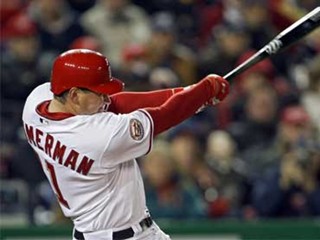
Zimmerman was the Nats first ever pick. Photo unknown credit via fantasyknuckleheads.com

Zimmerman was the Nats first ever pick. Photo unknown credit via fantasyknuckleheads.com

I thought I’d do a different take on the “history of Nats drafts.”  What was the mood/feel around the team approaching draft day year after year?  Who do we think they were focusing on as the big day rolled around and why?  We focus mostly on the first round pick, where so many of the mock drafts focus, but we’ll also mention significant moves further down.

To be honest, I didn’t really start closely following the draft and track who the Nats were “rumored” to be with until the 2008 draft.   So if you remember something differently than me, please feel free to chime in.  I also focus pretty heavily on the early picks here, simply because teams generally get the most value out of their 1st round picks, and the thought processes in taking the first round pick often is the focus of draft analysis and mock drafts posted head of each actual draft.

The Draft Tracker xls (created by Brian Oliver, now maintained by SpringFieldFan) is vital for any Nats fan interested in tracking the teams’ drafting history.

  • 2005: Nats picked 4th overall and did not have a 2nd or 3rd round picks (the 2nd round pick went to Colorado for the Vinny Castilla FA signing and the 3rd round pick went to Minnesota as compesation for the Cristian Guzman signing)).  The team was also under MLB control and was (presumably) given quite strict financial guidelines over signings.  Given those considerations, they knew they needed a splash with their #1 overall pick, they needed someone affordable and they needed someone that would speak to their new fan-base.  They wanted college draftees, quick to the majors.  The team was looking at the three top 3rd Basemen in the draft.  Ryan ZimmermanRyan Braun and Alex Gordon.  All three were playing at good schools with good numbers.  Gordon went 2nd overall to Kansas City and the Nats snapped up Zimmerman.  Zimmerman signed quickly for an acceptable amount ($2.9M as the 4th overall pick) and was playing in the majors by September.   Zimmerman’s selection made sense geographically (he grew up in Va Beach and attended UVA) and it made sense considering the talent available at the Nats pick.  MASN’s David Huzzard printed a retrospective of the 2005 draft ahead of 2014’s draft.
  • 2006Thanks to a couple of FA losses (Hector Carrasco and Esteban Loiaza), the team had two extra picks in the first two rounds.  The team had a roller coaster 2005; first place at mid-season and then a collapse as MLB refused to allow reinforcements.  By draft-day 2006 the team was firmly under the control of Jim Bowden, and his philosophy had always skewed towards “toolsy” players, potential over actual.   But the team didn’t have an owner yet, so were still operating under MLB’s guidelines.  These two facts were quite evident by looking at the haul the Nats had with their early picks.  6 picks in the top 4 rounds and they were all high school players.  Chris Marrero, Colten Willems, Stephen Englund, Sean Black, Stephen King and Glenn Gibson.    The team got Marrero for a relatively cheap $1.6M deal mid-way through the first round, failed to sign Black altogether, and got 5 of these 6 players to sign for around $5M all told.  The team on the field was under-performing thanks to a limited MLB-dictated budget, but Bowden was drafting for the longer run.  Unfortunately none of these high school players ever amounted to much of anything, with only Marrero ever reaching the majors and Willems retiring before ever advancing out of A-Ball.
  • 2007: The team had another haul of upper-end draft picks, thanks to their acquisition of Alfonso Soriano and his type-A free agency sending them both an extra first rounder and a supplimental first rounder.   The team took lefty Ross Detwiler from small school Missouri State with the 6th overall pick, a selection that has been lampooned based on who else was available at the time (Madison Bumgarner and Jason Heyward in particular), but literature from 2007 supports his selection at 6th overall.  After Detwiler, the nats spent their two supplimental first round picks on high school raw talents (as was Bowden’s custom), neither of which ever panned out (Josh Smoker and Michael Burgess).  This draft turned into one of the more productive in Nat history, with at least four current major leaguers picked (along with Detwiler, Stephen SouzaDerek Norris and especially 2nd round pick Jordan Zimmermann, so it is unfair to focus on the misses out of 2007.  This was easily Bowden’s best draft while in charge in Washington.
  • 2008: The year of Aaron Crow.  Crow had a strong summer and a strong spring and was the 2nd best college arm in the draft, no question.  There was apparently antagonism between Bowden and Crow’s agents from the moment that he was drafted, and the negotiations between the sides never really came together.  The signing deadline came and went with no signature, and Crow went to Indy ball before getting picked the following summer.  There was talk about how the Crow non-signing was purposeful; the Nats spent significantly less money in the draft in 2008 than they had in 2007 and the ownership group was still being labeled as “cheap.”  Either way, this lack of signing was one more bullet in the ammunition guns of opinion makers in the industry about the state of the Nationals organization under the leadership of Bowden.  This would serve to be his last draft; he was embroiled in the bonus scandal over the off-season and relinquished his job ahead of the 2009 season.
  • 2009: We all are quite familiar with the story by now; Stephen Strasburg was a laconic out-of-shape hurler in high school who barely merited a college spot, then re-made himself into the “greatest pitching prospect of all time” while at San Diego State.   Despite his reported bonus demands (he ended up with more than $15M deal) and his representation (Scott Boras), the Nats never seriously considered not selecting him with the first overall pick.  For me the big question was who the Nats were going to take at #10. I wanted another starter, and there were some significant college pitchers projected to be available at #9.  Kyle GibsonAlex White,  Tyler Maztek, Chad Jenkins and Tanner Scheppers were all left on the board to draft a Stanford reliever in Drew Storen.  Keith Law had Storen ranked as his 28th prospect, a guy who was clearly “good” but who was over-drafted by nearly 20 spots.  This had “signability pick” written all over it, a thought that was even more proven when the team drafted college senior Trevor Holder with their 3rd pick and signed him for 1/2 of slot.  Holder wasn’t even his team’s friday starter and had a 4.48 ERA.  So, the team got Strasburg and paid him significant money, and the 2008 draft misstep turned into an effective closer in Storen, so the draft wasn’t a disaster, but with a bit more money allocated (remember, this was the same year they were paying Guzman $8M to be a mediocre shortstop) the team really could have hit it out of the park.
  • 2010: After another 100+ loss season, the Nats were fortunate to have another no-brainer, consensus #1 overall pick in Bryce Harper.   But the real story of the 2010 draft was Mike Rizzo’s finally convincing the ownership group and Ted Lerner of the power of the over-slot pick.  The Nationals gave Harper a 40-man deal and a lot of guaranteed money … but they also bought two high-end high school arms out of their college commitments for 1st-2nd round money (A.J. Cole and Robbie Ray).  The Nats were quickly becoming a team that was ignoring the advice of the penurious commissioner Bud Selig, known for railing against teams and owners who ignored his “slot recommendations.”  The Lerners tried to be friends with Selig and play by the rules, only to watch other teams out-spend and out-sign them.  Remember this fact when we see the next CBA come out, assigning slot deals ahead of time and implementing draconian policies on teams that over-spend in the draft.
  • 2011: The Nats were looking at a handful of players with their #6 pick; George Springer, Sonny Gray, Taylor Jungman, Jackie Bradley, and the like.  In a pretty shocking draft-day shake-up, teams passed on former college player of the year Anthony Rendon and suddenly he fell into the Nationals’ lap.  The sliding of Rendon to the Nats was amazing; Rendon was considered a clear consensus 1-1 pick for nearly 2 seasons, and the pro track record of BA college players of the year is pretty solid.   The Nats had two extra first rounders (compensation for type-A FA Adam Dunn) and the selection of Alex Meyer with the #17 overall pick was a given; some pundits had the Nats taking him at #6 overall, so much they were enthralled with the huge right hander from Kentucky.   As with 2010, the team continued to write big checks to convince Brian GoodwinMatt Purke and Kylin Turnbull to leave school early.  The Purke pick in particular showed that the Nats were willing to spend money to get big-time players and were willing to risk the dice on injury concerns.  The Nats had no 2nd rounder (lost as compensation for Adam LaRoche but with three 1st/supp-1st rounders got plenty of cracks at top-end talent.
  • 2012:  The Nats had a mid-draft pick after their .500 record in 2011 and were focusing on arms.  By now, Rizzo’s drafting mentality has been made evident; he focuses on college players, and more specifically college arms, unless an outlier falls into his lap.  Well, the definition of a draft-day outlier fell into the Nats lap in 2012 when Lucas Giolito, a big-time prep prospect who was under consideration of being the first ever high school right handed pitcher to go 1st overall early in the process.  Giolito’s size, power and secondary offerings were the makings of a 1-1 pick, but his senior prep season was derailed by what was initially called an “elbow strain” but which turned out to really be a “small elbow ligament tear.”  Nonetheless, the Nats grabbed him, signed him for over-slot money (nearly $3M), and they had their man.  Years later, Rizzo revealed that the next guy on their draft board was St. Louis sensation Michael Wacha … a “what if” question for this team that may be asked for quite a while, given Wacha’s quick rise and overall dominance at such a young age.  The rest of the Nats draft class was entirely about saving dollars to over-pay Giolito and buy him out of his college committment (as is seen by the bonus figures and senior draftees for the rest of the first 10 rounds), and we’re already seeing the after-effects of this strategy; the team has already released 10 of its 2012 draft class after just two pro seasons, and outside of Giolito its hard to see any potential impact players out of the entire class.  The Nats may get a couple of RHP bullpen arms, but little else.
  • 2013: The team knew it didn’t have a first rounder thanks to its signing of Rafael Soriano (though to be honest, knowing that they were picking last thanks to their MLB-best record in 2012, they probably weren’t as reticent about losing that pick), and the new CBA had taken affect, meaning that the team had a very limited budget for signing players.  Their first pick wasn’t until the end of the second round, and they went with a big power college arm in Jake Johansen.  It was impossible to predict who would be available to the Nats at the 68th pick (their first pick), so the Nats draft philosophy seemed to revert to default; lots of college players, lots of college arms.  Of their first 15 selected players, just one prep player was selected (Drew Ward) and a number of their guys signed  for significantly under-slot to pay Ward and a couple of other players.
  • 2014: After a disappointing 2013 season, the team kept its first round pick in a draft that seems deep on college arms but thin in other areas (especially college hitters).  The Nats farm system, after years of drafting predominantly college arms for the past few drafts, has plenty of arms but is thin on hitters, leading some pundits to presume the Nats are looking at college bats.  But a couple of late spring elbow injuries on significant names (James Hoffman and Erick Fedde) also has other pundits thinking that the Nats will have no concerns about taking a pitcher who is known to need Tommy John surgery (given their handling of the likes of Strasburg, Solis, Zimmermann and their picking of Giolito in 2012).  Mock drafts frequently have the Nats selecting Fedde at #18.  And indeed that is who the Nats select.  A run on high-end college arms just prior to the Nats pick probably sealed their fate on taking Fedde.  They take a good balance of pitchers and hitters in the top 10 rounds, almost entirely out of the college ranks (as is their custom).  Like 2013 and 2012, they gambled on one prep player in the top 10 (this year Jakson Reetz) and bought a high-end prep prospect out of his college committment, but otherwise stayed the course drafting college players.

The following links were crucial to doing this post:

First Look: Nats top 10 draftees from 2014 Rule-4 Draft

15 comments

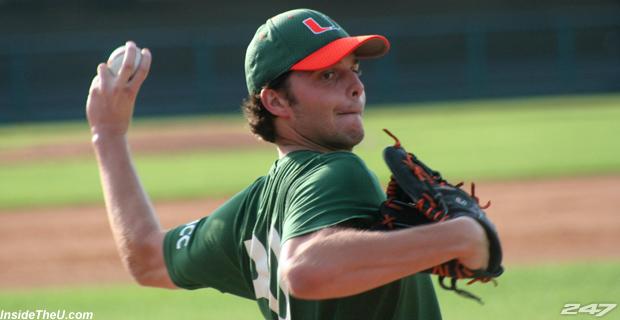
Suarez is the Nats 2nd round pick.  Photo via 247sports.com

Suarez is the Nats 2nd round pick. Photo via 247sports.com

As we did last year, here’s a quick introduction to the Nats top 10 picks for 2014.

A quick glance on our high-end draftees from 2014 draft.  I’ll put in the rankings from several prospect ranking shops (Keith LawBaseball America, MLB.com and MinorLeagueBall).  overall player ranking after the player name where appropriate (though as we’ll see, Keith’s top 100 quickly runs out of names).  Here’s a link to the draft order, and here’s a link to MLB.com’s fantastic draft tracker database for reference.

As he did last year, NatsGM.com‘s Ryan Sullivan is live-blogging and does a great job of pulling up stats on each of our picks.  I depend on his reports as well as those from the four links above to give a quick overview of our draftees.

Note: I wrote most of this over the weekend as the guys were picked; we’re already hearing plenty of rumors about signings.  I havn’t updated this post with such intel but I’m sure its readily available from Ladson and Kilgore and the like.

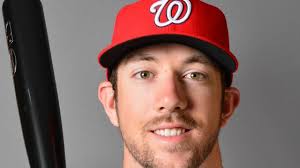
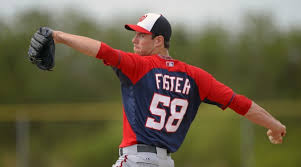
1st round/#18 overallErick Fedde, UNLV RHP (Law #27/BA #24/MLB #33/MinorLeagueBall #70).  Most of the credible mock drafts had the Nats drafting Fedde here, and that’s exactly what happened.  In my quickie preview post, I thought Fedde would be an overdraft and hoped that either Tyler Beede or Brandon Finnegan would drop.  Well, Beede went 14th and Finnegan went 17th.  I liked Touki Toussant as well as a prep HS that may drop to the Nats, but he went 16th.   I’m not sure I agree with pundits who say that Fedde was a “top 10 talent” prior to his injury; I still think this is an overdraft on Fedde given the fact that he’s rehabbing a blown UCL.  Look at the placement of Fedde on the four prospect ranking shops; that’s an awful lot of trust being placed into the hands of the surgeon, the rehab process, and the recovery.  That being said, looking at the next several players picked, there wasn’t a name that really stood out as someone that I would have rather had who at the same time was a prototypical Mike Rizzo pick  Maybe Connor Gillaspie would have worked (he went #20).  Ryan Sullivan thinks we got a steal here; i’m not so sure.  I think the Nats were looking at their board while the Giants were picking at #14, and then had their next best three names get snatched out from under them, leaving them taking a gamble on Fedde.

On the player himself; Fedde is tall (6’4″) but *skinny* (listed at between 165 and 180), sits 91-93 and touched 95 with excellent movement.  Secondary pitches can flatten out because of his lower arm slot, but he’s listed with a decent slider and decent change.   ESPN thinks he projects a 65 fastball and a 60 slider but needs to work on his command.  Very preliminary ceiling/projection is as a mid-rotation starter.   The thought is that he can fill out his frame and add velocity, though he’s done neither in his three college years.

He’s a Scott Boras client, he was a HS teammate of Bryce Harper, and he’s rehabbing a torn UCL, so he fits in nicely with the Nats on several levels.  It was easy to see why the mock drafts were all over the Nats taking Fedde.  In reality, I’ll bet the war room was rather dejected watching the three a-forementioned pitchers drop off the board in the 4 preceding picks to #18.

2nd round/#57 overall: Andrew Suarez, LHP from U-Miami (Law out of top 100/BA #75/MLB #86/MinorLeagueBall #103).   A re-draft (he was picked in the 9th round out of HS but chose to go to school), he suffered a torn labrum early in his college career but reportedly picked up velocity this past season and held it through most of the year.   Law alludes to other medical issues that clearly had him down on Suarez (Law ranked him lowest of my 4 resources).  He spent the year as Miami’s saturday starter (aka, their #2 starter).  BA mentioned him in their draft preview specifically because of his fantastic control; he had just a 1.34 BB/9 rate despite throwing a low 90s fastball that can reach 95.  He pitched a shut-out in game 1 of the Coral Gables regional, a 7-hit, 10K, 0 walk outing that matched his career high; nice way to finish off your college career (Miami was elminated from CWS play before Suarez could throw again).   Scouting reports say he profiles as a 4th starter.  (Note: my fingers just automatically typed Luis Suarez, aka Liverpool and Uruguay’s striker.  Part of me is in World Cup mode already).

3rd round/#93 overallJakson Reetz, prep Catcher from Nebraska (#38/#62/#40/#36).   A prep catcher isn’t who you normally expect to see this high on the National’s draft results, but his pre-draft rankings show that he’s clearly a steal at the mid-3rd round.  The question is; is he signable here?  $567k is his bonus slot figure; he might be a tough sign unless the Nats have a pre-draft deal with Fedde to save some money for a guy like Reetz.   His pedigree is good: MVP of the PG all-american game, member of the same world champion U-18 team that #1 overall pick Brady Aiken was on.   In prep games he was showing 91 from the mound and reportedly has a great arm, but some scouting reports say he may struggle to stay behind the plate.  As pointed out by NatsGM.com’s Ryan SullivanBA did a “day in the life” piece on Reetz that is worth checking out; once you watch this you’ll really like Reetz.  Last note: Keith Law even likes the pick and says he’ll sign.

4th round/#124 overall: Robbie Dickie, juco RHP from Blinn college in Texas (na/210/179/173).  95-97 on the gun, led his team to the Juco World Series, but he may project as a reliever thanks to questionable mechanics.   Quite a pop-up guy, but an over draft based on the rankings in the major publications.  He’s committed to Texas State if he doesn’t sign, which isn’t exactly a baseball powerhouse, so is this a value/slot saving pick?

5th Round/ #154 overall: Drew Van Orden, a senior RHP from Duke (na/395/na/na).  Good numbers on the year as Duke’s Friday starter (6-5, 3.19 ERA, more than a k/inning).  He finished off his college career with a 5-hit complete game shutout over Georgia Tech in the ACC tournament, Duke’s only win in their post-season tournament.  I like his pedigree despite the fact that he’s a senior 5th round pick with zero leverage.  Who are the Nats saving all this money for?  Update: Van Orden quickly signed, terms undisclosed.

6th Round/#184 overall: Austen Williams, junior RHP from Texas State ( na/#276/na/na).  Nats clearly saw something in Williams that other draft pundits did not; even MinorLeagueBall (who ranked to 350) didn’t have him listed.  Texas State’s friday starter continues a long trend of the Nats plucking talent out of Texas.  Williams posted solid numbers as Texas State’s Friday starter (8-3, 3.65 era, good K/9 rates).  I’m sure he’ll take a bit more than slot to sign, but the Nats should have some pennies saved.

7th Round/#214 overall: Dale (D.K.) Kerry, a senior Center fielder from the U of Miami (na/#332/na/#133).  MLB’s scouting report on him says he’s a great athlete and he has a “4th outfielder” projection.  Sounds like the perfect senior 7th round draft pick to me (sarcasm).  Ryan Sullivan is more bullish on him than I.

8th Round/#244 overall: Jeff Gardner, senior corner OF from Louisville (na/498/na/na).  He may be a senior, but he’s also the clean-up hitter for a CWS-bound team and had great stats on the year (.321/.403/.538 with 9 homers).   Not a bad find for the 8th round.

9th Round/#274 overall: Austin Byler, junior 1B from Nevada (94/123/166/271).  Well, now we see why the Nats are saving their pennies; getting Byler here is a find.  He should have been taken in the 3rd or 4th round if you believe the pundits, and he may take an over-slot deal to buy him out of his senior year.  He’s got serious power (he led his conference in homers and is an offensive threat) and would be a great find if he signs.

10th Round/#304 overallMatthew Page, senior RF from Oklahoma Baptist (na/na/na/na).  A d-2 pick for a team that a) loves guys from the south west already and b) has shown itself more than willing to gamble on non D-I players.  I can’t imagine he’ll be expensive to sign.  He’s also the first player the Nats have picked that didn’t appear anywhere on any of the draft previews.

Summary: Through the first 10 rounds the Nats picked 5 pitchers and 5 hitters for good balance.  Of these 10 players selected, 9 are college.  So, in other words, this is exactly the type of draft we expect to see out of a Rizzo-run organization (with the possible exception of perhaps predicting a few more arms). 

Of these 10 draftees, I’d say that at least 5 are “expected under slot guys” (Dickie, Van Orden, Kerry, Gardner and Page).  You have to think the team may play some slot hardball with Fedde.   Suarez and Williams should sign for about slot.  That leaves two guys who may take over-slot deals to sign; the sole HS draftee in Reetz and the decently ranked Byler.  I’ll bet it works out and all 10 guys sign.


Some useful draft links for you:

When Zimmerman comes back …

16 comments

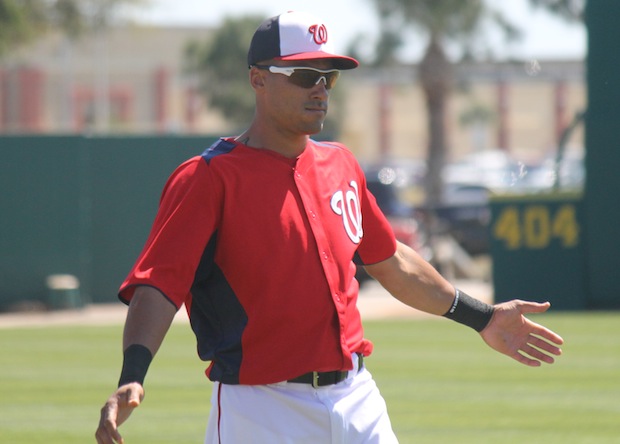
Zimmerman the outfielder?  Photo unknown via fantasyknuckleheads.com

Zimmerman the outfielder? Photo unknown via fantasyknuckleheads.com

… do you just go ahead and start fielding the lineup that we’ll be trotting out in 2015 anyway?

Leave Rendon at 3rd, leave Espinosa at 2nd, install Zimmerman at 1st and trade Adam LaRoche to a team that needs a first baseman?

Perhaps a couple weeks into the season you could have made that argument.  But there’s a few problems with this scenario:

  1. LaRoche is easily the team’s best hitter right now with a slash line better than the coveted .300/.400/.500.  You don’t trade the best hitter off of your offensively struggling team.
  2. Nobody makes trades 8 weeks into the season.  And most of the possible trade candidates for LaRoche (Baltimore, New York, Milwaukee, Pittsburgh) don’t make as much sense now as they may have a few weeks ago.
  3. Espinosa is starting to remind the team again why they demoted him last year, with his average now slipping towards Mendoza line territory.
  4. Despite the Nats awful stretch, they’re only 2.5 games out of first in the NL East, and that’s during a stretch when the meat of their order has been missing.  Its far too early to wave any white flags and/or start dismantling the team.

I’m sure part of LaRoche would love to get traded; it frees him of any qualifying offer complication this coming off-season, where at age 34 he’s likely looking at his last final grasp at a multi-year deal.  But the other part of LaRoche wants to stick with a winner, a team that gives him the best shot at getting back to the post-season (he’s only got a handful of games in his 11 year career playing in October).  On the other hand … the Nats would be crazy to give LaRoche a Q.O., so maybe the team is thinking, “hey, we need to move LaRoche and get *something* for him before we let him walk and get nothing for him.”

More likely the team is actually thinking this: “We were good enough to win last year, we’re good enough to win this year … so we’re keeping the band together until the bitter end, division title or not.”


Or, do you take interest in the fact that Zimmerman has been taking a ton of fly-balls and stick him in left?  I like this move: Zimmerman comes back, and you leave the infield as-is, stick him in left field and you’re a stronger lineup.  Zimmerman’s “yips” will disappear in Left Field; every throw he’ll make will either be a lob back into the infield after a single, or a max-effort peg to either 2nd or home that won’t allow him time to “think” about the throw.  Jon Heyman is now reporting that Zimmerman is being set-up to be a multi-positional player and his fly ball workouts were not (as Zimmerman claimed multiple times) just a “workout” routine.

(side note: I now exactly what Zimmerman is going through; as a 15-yr old middle infielder I tore my rotator cuff.  After rehab, I returned and found that I struggled to make simple throws from second base or short stop.  I had the yips myself.  I eventually moved into the outfield to finish off my career in a rather frustrating fashion.  After years of playing softball in my 20s, where nearly every infield throw is max-effort, I had regained a ton of my confidence and could return to playing middle infield on the diamond … but I still struggle on specific plays.  When I first came back I caught … and (like Sasser) struggled making the throw back to the pitcher sometimes.  Making a double-play turning toss from ss->2nd?  I sieze up every time and have resorted to flipping the ball under-handed.  It is a very frustrating situation to deal with.  Zimmerman acknowleding his issue and trying to do what’s best for the team by limiting his arm exposure shows great character).

Of course, then, when Harper comes back … what do you do?

Maybe you frigging finally sit Denard Span and his middling OBP (which was raised 40 points by his recent outburst and 4-4 game) and stick Harper in center.   I’ve had it with our lead-off hitter making outs nearly 8 out of 10 times up.  Yes Span is a plus defender in center and inarguably saves runs.  No, Harper would not be as good as Span in the field.   But at this point, replacing Harper’s production for Span’s in the lineup makes this a better team.

In reality, if Espinosa is still hitting in the low .200s and everyone’s coming back, then he’ll be the one that makes way.  I don’t think I like Zimmerman for 2nd base like other pundits do. For one, the guy’s too big for 2nd and I don’t think he’s mobile enough to play that position at this point in his career.  But mainly, if he’s got a hitch in his throw from 3rd, he’ll have it even worse from 2nd, where a ton of throws are very casual/toss it over throws and you can go completely mental.   There’s a reason that the famous cases of “baseball yips” are either 2nd basemen (Steve SaxChuck Knoblock) and catchers (Mackey Sasser).  These two positions make a lot of unpressured throws, and guys can get “yippy.”

So that means Rendon back to 2nd, Zimmerman back to 3rd, and the fanbase back to holding its collective breath everytime he gets a grounder.  At least until spring training 2015, when this all goes away by itself when LaRoche hits free agency and Zimmerman permanently attaches a 1st basemen’s glove to his left hand.

I’ll give credit where credit is due though on Zimmerman taking fly-balls and apparently being amenable to trying out the outfield: seeing a gold-glove winning veteran on a 9-figure deal trying a new position mid-career, perhaps acknowledging that he has a problem is refreshing.  Remember the nightmare we had with Alfonso Soriano moving to left field?  And word came out recently that Rickie Weeksrefused to consider” a position switch from 2nd to left, a rather disappointing turn of events for his team, who are paying the underperforming infielder $11M to ride the pine this year.  Instead Zimmerman looks to be doing the team-first thing, working out at a new position where he can get back into the lineup AND not hurt the team anymore.  It isn’t unheard of for hall-of-fame calibre players to move positions (see Yount, Robin), nor is it unheard of to see plus-defenders try alternate positions for the betterment of the team (see the likes of Manny Machado and Jurickson Profar, both fantastic fielding shortstops who are playing other positions to allow entrenched veterans who may not necessarily be better fielders stay at short).  Heck, look at what Rendon did; he was a third baseman all the way … and he made the move to 2nd and has done reasonably well there.

We’ll see what happens when Zimmerman gets off the d/l.


Nationals 2014 Walk-on music review

16 comments

At the home opener, when Nate McLouth came to bat we were stopped in our tracks by his walk-up music: “Kyrie” by 80’s band Mister Mister.  My wife and I immediately thought this was a rather odd choice.

It made me wonder: should we critique every one of the Nats’ batter’s walk-up songs?  Of course we should!

Thankfully, the team lists each player’s 2014 walk-up music for us on their official MLB.com page.  And, here’s some research by fellow blog DistrictSportsPage on this year’s walk-up songs (and 2013’s walk-up songs) for comparison purposes (note; the official website list isn’t accurate according to those actually listening to and Soundhounding the songs).

Here’s some thoughts on each player’s selection (we’re only going on their primary/1st at bat selection).  We’ll list this in the rough batting order and then tack on the bench guys.  And I’ll give my personal, baseless, unscientific “grade” for the song from a crowd-involvement and song-selection standpoint.

Starters

  1. Denard Span: “Gotta Have It” by Kanye West/Jay-Z.  Fitting song to start; last year he used a selection of hip-hop songs, but not really a big crowd involver.  Grade: D
  2. Bryce Harper: “Flower” by Moby.  A repeat from last year.   Interesting selection for the young Harper; he doesn’t seem to be the typical Moby fan, but the song is catchy and unique.  He also uses a slew of different songs from many other genres for subsequent at-batss.  Grade: B-
  3. Ryan Zimmerman: “This Is How We Do It” by Montell Jordan.  His 2014 actual song differs from the official website; I like this pick.  A familar song, if not a big sing-along song.  Grade: B-
  4. Adam LaRoche: “The Only Way I Know” by Jason Aldean and Eric Church.  Also fitting; LaRoche is a ranch-owning, game-hunting good ole-boy.  And he’s buddies with the singer Aldean.  So he continues to use his songs as he did in 2013.  Grade C+
  5. Jayson Werth: “Warehouse” by Dave Matthews Band.  This is the crowd-favorite where everyone calls out, “Wooh!” after each interlude.  Of course, I can’t figure out where in the song that occurs from the video.  Werth also uses “Werewolves of London” periodically (of course).  Brilliant.  Grade: B+
  6. Ian Desmond: “One Sixteen” by Trip Lee (feat. KB & Andy Mineo).  Does not seem fitting for him, but clearly he likes this genre of hip-hop/rap since his alternates from last year are by and large the same kinds of songs.  Unfortunately for Desmond I’m a middle-aged white guy and can’t stand modern hip-hop.  Grade: D
  7. Anthony Rendon: “No Competition” by Bun B. Feat. Raekwon & Kobe.  Eh.  Don’t like it, don’t get it.  I will say this: I liked his song from last year moreso (“Still D.R.E.” by Dr. Dre/Snoop Dogg, which you’d recognize if you ever saw the movie Training Day).   Grade: D
  8. Wilson Ramos: Wepa” by Gloria Estefan.  I’m not sure if he’s still using this (its a holdover from 2013) since he got hurt so quickly, but its got a good dance beat and latino flavor.   No offense to Lobaton’s selections, but lets hope we’re hearing more Gloria Estefan sooner than later.  Grade: B.

Bench Guys

  • Nate McClouth: “Kyrie” by Mister Mister.  Man, I’m sorry. I know Michael Morse made retro 80’s songs hip with his selection of “Take On Me” (by the way, being in the stadium when 40,000 people were “singing” gave me goose-bumps that I still get thinking about it to this day), but this song is awful.  You gotta find something else.  How about some Kenny Loggins or the Top Gun theme, if we’re stuck in the 80s?  Grade: F
  • Danny Espinosa: “Outside” by Staind.  Big fan, especially after his 2013 choice as well (from Cage the Elephant).  Grade: B
  • Jose Lobaton: “Mi Chica Ideal” by Chico & Nacho.  Fast, catchy.  Can’t argue with it.  Grade: B
  • Kevin Frandsen: “Snow (Hey Oh)by Red Hot Chili Peppers.   You’ve heard this song, even if you have no idea who RHCP is (hint: they were a serious underground 80s sensation but are now totoally mainstream and played the Superbowl Halftime show this year and actually wore clothes!)   I like it; even if it seems a bit slow-paced.  Grade: B-
  • Tyler Moore: “Drivin’ Around Song by Colt Ford feat. Jason Aldean (at least according to the Nats website; he hasn’t had a home AB yet).  We see Moore’s heritage here; Mississippi born and bread.  Loves his country music.  Grade: C
  • Scott Hairston: “Blue Sky” by Common.  Not my cup of tea; not really a crowd-engager either.  Grade: D
  • Sandy Leon: I have no idea; has anyone seen an at-bat by him yet?  They never got his song from last year either.  Grade: Inc

What would I use as walk-up music?

Not that I’ve ever thought about this in my life or anything.  But i’d definitely go with something from my head-banging days in high school.  I (fortunatley or unfortunately depending on your point of view) grew up in the 80s, so we listened to glam rock, heavy metal and the like.  I’d probably go with one of these three options:

  • “Home Sweet Home” by Motley Crue (who is on their farewell tour this summer; tickets going fast!)
  • The Final Countdown” by Europe (simply because this is a huge running joke amongst my friends and my wife and I)
  • Something harsh from Metallica.  I’d have to do some digging for a good riff that wasn’t already taken by someone more famous like Mariano Rivera.  🙂


I’m tempted to do this same analysis for the pitchers … and maybe I will.  But for some reason “walk on” music for pitchers isn’t as meaning ful.  Well, except for Tyler Clippard‘s epic “Peaches” walk-up song by the Presidents of the United States a few years back.  Ok, we’ll do a part-2 of this post for the pitchers…. stay tuned.


Nats run themselves out of the home opener

14 comments

Desmond's ill-timed steal affects home opener.  Photo Drew Kinback/Natsnq.com

Desmond’s ill-timed steal affects home opener. Photo Drew Kinback/Natsnq.com

I like Matt Williams.  I thought he was the obvious choice for manager of this team, and I thought he made a great change of pace from Davey Johnson‘s laissez-faire approach.

But, man, I’m seeing some warning signs thus far through four games in some of his decisions.   Base running and lineup construction specifically.

The Nats made not one, not two, but THREE critical base-running errors in Friday’s home opener 2-1 loss to Atlanta.  Lets see if we can correctly second-guess these moves:

1. Gee, I wonder what would happen if I sent a guy with 20 speed (Adam LaRoche) home when a guy with an 80 arm (Andrelton Simmons) is getting ready to make the relay?    Oh, you think the 20-runner gets thrown out by 15 feet?  Check.  This isn’t on Williams of course … but if he holds LaRoche the team has 2nd and 3rd with one out (run expectancy: 1.44) versus just Zimmerman on third with two outs (RE: .385).  That’s huge.  If LaRoche stays put the team is almost guaranteed a run and perhaps more (a single scores two).  What happens?  Bryce Harper strikes out to end the inning.

2. One on, one out, and Harper gets thrown out trying to steal second on such an obvious steal attempt that the Braves pitched out and one of the lesser defensive catchers in the game (Evan Gattis) had Harper so dead to rights that he stopped running to second.  He was out by 20 feet.   This wouldn’t have led to much of anything likely .. but come on.  Maybe Harper gets to third on Ian Desmond‘s subsequent single up the middle.

3. The most egregious, the most obvious bone-headed running error though was the one that changed the game most.  After Desmond’s ground rule double (an opinion here: why was this call missed in the first place?  Every frigging little leaguer in the country knows the universal thing to do when a ball gets stuck in the fence; you raise your hands and its an automatic ground rule double.  Have MLB umpires just forgotten this?  Why did we need a 5-minute replay, arguments from both managers and a complete waste of time to determine this??), Desmond INEXPLICABLY tried to steal third and was again thrown out by 15 feet.   Why would you possibly try to steal third there?   You’re on second base with none out; RE of 1.1.  Your hitters have three shots to get a single to drive you in from there.

This steal completely changed the course of the game; instead of having a guy on second with none out, who you could bunt to third with Lobaton and then sac fly with Nate McCloud and voila; game tied.  Nope; instead Lobaton walks, McClouth feebly flies out (also removing the starter Jordan Zimmermann in the process) and opportunity wasted.

Just dumb, all around.

One last thing: why the F is Harper batting 6th??   He’s got the most power on the team, in arguably.  He’s one of the better hitters on the team.  The 6-hole bats approximately 30 times less per season than each subsequent position above it.  It just doesn’t make sense to be batting him behind guys who hit .220 last year.  I just don’t get it, and i’m not the only one out there who’s noticing this as well.  There’s a ton of science behind lineup construction that goes against conventional thinking, and hitting Harper 6th just invites criticism needlessly.  Hit the guy 4th and leave him there.

I won’t bother to comment on Harper taking strike-3 down the frigging middle of the plate in the 8th; that was pretty inexplicable to me too.  And I’ll give Williams a pass for yanking the effective Zimmermann after just 81 pitches; he was sick yesterday and the Desmond CS basically forced the move.

Nats have to play smarter.

Grr.  Great day at the ballpark wasted.

DC-IBWA pre-season predictions for Nats 2014 individual leaders

4 comments

Happy Opening day!

Every season David Nichols (editor in chief of DC Pro Sports Blog) organizes the unofficial DC Chapter of Nats bloggers to do some surveying about will happen, and then a post-mortem about what happened.

For 2014; here’s how the DCIBWA members voted in total.

And here’s how I voted:

1. Who will lead the Nats in home runs in 2014?  Hard not to go with the kid Bryce Harper.  I’ll predict he manages to stay healthy, stop running into walls, and hits 32 bombs out of mostly the middle of the order.  Last year’s leader was Ryan Zimmerman, who I like for 20-25 homers again but not as many as Harper.

2. Who will lead the Nats in RBI?  I’m going with Ryan Zimmerman here, mostly because I feel like he’s going to be the beneficiary of many guys getting on base ahead of him and will have plenty of RBI opportunities.  Last year’s leader was Jayson Werth by a hair; something tells me he’s more of a table-setter this year (a #2 hitter) rather than a middle of the order bat.  I could be wrong though.  (Insert obligatory argument about lineup construction and dazzle us with your proof of why your best hitter should be batting 2nd while the 3rd place hitter should be one of your lesser batters…)

3. Who will lead the Nats in stolen bases?  I’ll go with 2013 leader Ian Desmond again; Denard Span is the obvious choice here but he seems to have lost a step.  All in all, speed on this team seems to be lacking on this team; will Matt Williams be a more- or less-aggressive manager on the basepaths?

4. Who will lead the staff in wins?  Stephen Strasburg, who I feel is destined for a break-out season with no leashes and no afterthoughts of his injury.  He’s two years removed from TJ recovery; when 2013 staff wins leader Jordan Zimmermann was in his 3rd year back he went 19-9 and got Cy Young votes.  I predict a 20 win season for Mr. Strasburg, some serious consideration for a Cy Young, and a significant arbitration fight next off-season.

5. How many games will Ryan Zimmerman play first base?  I’ll go with 10-12, maybe fewer.  Perhaps once a week he’ll go over to the other corner.  Something tells me that Adam LaRoche in a contract season will step it up and make it really tough to take his bat out of the lineup.  And something else tells me that Zimmerman may return to his plus-defense now that his shoulder issues are seemingly behind him, and we’ll be talking about how we can stick with him at 3rd for the long haul when the season is over.  (I may be eating my words on Zimmerman here; he’s already shown some air-mailing tendencies during Spring; such a shame that his arm is affecting his overall defense so badly).  For what its worth, Zimmerman has played a grand total of 2 innings at first this spring.

6. Who starts more games: Ross Detwiler, Taylor Jordan, Tanner Roark, Ross Ohlendorf?  Tanner Roark.  The winner of the 5th starter spot will pitch to a relatively non-descript league average for months, while the loser (Taylor Jordan) toils in obscurity in Syracuse, waiting for Roark to fail or someone to get hurt.  Ross Ohlendorf‘s trip to the 60-day D/L means he’s likely a non-factor for the first half, and Ross Detwiler‘s trip to the bullpen looks permanent.  (When I wrote the first draft of this in Mid Feb, it was Detwiler).  Even given what has transpired at the end of spring (Fister’s D/L trip meaning both guys are in the rotation), I feel like Roark is going to stick when Fister comes back.

7. Who will get more at bats for the Nats this season: Danny Espinosa or Jamey Carroll?  Danny Espinosa obviously, since Carroll has already been released.  But even in my first draft of this post in Feb, I was predicting that Espinosa would win the backup middle infielder battle with Jamey Carroll.  I just didn’t think the team was ready to punt on a former 20-home run guy with superior defense.

8.  Which minor leaguer are you most interested in keeping tabs on this season?  Instead of copping out and saying an obvious name from our consensus top 3 prospects (Giolito, Cole and Goodwin), I’m going to throw out a couple other names that really intrigue me.  Matt Skole lost all of 2013 by virtue of a freak injury but impressed last year; i’d like to see him bash his way into consideration for a call-up.  I’d like to see what 2013 draftee Austin Voth can do in a full season; I like this guy as a sleeper, a potential Tim Hudson-esque mid-rotation starter who doesn’t get a ton of credit because of his size but suddenly is posting double-digit wins for your team.  I’d like to see what Matthew Purke does this year; the shine is off this guy; I’d really like to see him put himself back into relevance with this organization.  Like everyone else Stephen Souza has really elevated his status; what can he bring to the table if he gets an opportunity?  And lastly we now know that fireballer Blake Treinen is in the AAA rotation; is he a behind-the-scenes important piece of rotation depth for this farm system now?

9.  Who will reach majors first: Sammy Solis, A.J. Cole, Lucas Giolito or Matt Purke?   Well, this one is easy to me; Sammy Solis is on the 40-man, is 25, and is already being talked about as being a potential loogy in 2014.  After that I’d predict Purke (also by virtue of  his 40-man placement); if Purke shows the team something or anything this year, he could earn a Sept 1 call-up to help in the pennant race.  After that say Cole since he will be put on the 40-man this coming off-season (if not before) and then Giolito last; he’s not rule-5 eligible til 2016 and would have to pitch his way into relevance before then (much like Taylor Jordan did in 2013).

10. How many all-stars will the Nats have? Who?  I’ll predict three: Strasburg, Desmond and Harper.

11. Total wins and what place in the division?  94 wins, 1st place in division.  This could trend higher with every new Atlanta injury.

Essay: What should be the single most important development for the Nats this season?

Hitting in the clutch.  The 2013 team to score 80 fewer runs than the magical 2012 team despite a lineup that seemed better on paper.  A lot of this regression was due to the drop-off in bench production, but an awful lot of it was due to coming up weak in the clutch.  In high-leverage batting situations (as defined by fangraphs), the Nats were dead last in 2013.  This team needs to do better all the way up and down the lineup.  We need Harper healthy.  We need Span producing like he did in September.  I’d like to see something better out of LaRoche in 2014.  Give us that and all these great pitchers will look that much better.


My 2014 Fantasy Baseball Team

2 comments

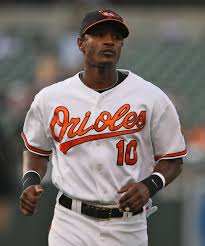
Adam Jones; my #1 fantasy draft pick in 2014.  Photo unk.

Adam Jones; my #1 fantasy draft pick in 2014. Photo unk.

As with years past … feel free to skip this post if you don’t care about fantasy.  I know for certain that reading about someone elses’s fantasy sports team can be a bit grating.  But, if you do play fantasy i’m sure you’ll at least appreciate reading the selections and then looking at the team’s strength analysis at the end.

I’ll include a jump line so your RSS feeds aren’t blown out either.

Read the rest of this entry »

Ask Boswell 3/24/14 edition

32 comments

Should this man be on this team?  Photo Nats official 2014 via rantsports.com

Should this man be on this team? Photo Nats official 2014 via rantsports.com

Despite there being just a scant week until games start … i’m at a loss for content here!  Fear not; Mr. Tom Boswell always chats on mondays.  Here’s the 3/24/14 edition.  This was a monster chat; he took questions for 3.5 hours.

Q: Steven Souza just had a monster spring: Does he need a year at Syracuse or can the Nats use him now?

A: Some guys here love Steven Souza.  But he’s an outfielder in a system that already has 5 multi-million dollar outfielders under contract, so he’s not going to break camp with the team.  He’s  yet to play above AA and could use some seasoning against the near-MLB quality AAA starters.  But the Nats didn’t put him on the 40-man roster for the heck of it; you have to think he’s going to feature this year to cover for injuries.  He needs some positional flexibility.  He’s listed as a third baseman as well; another position we don’t really need any cover for right now.  Souza’s problem is that he’s a corner player (LF/RF/3B/1B) on a team with a bunch of them already.  So he’s going to have to out-hit a starter to get ABs.  Boswell says the same thing I do about not ever playing above AA.  Lets see how he does in upstate NY in April.

Q: Is Moore going to lose out on his spot to Peterson?

A: I’ve said it before and I’ll say it again: if a guy already is on the 40-man (Tyler Moore), then the odds of someone who is NOT currently on our (full) 40-man (aka Brock Peterson) beating out an established 40-man player AND dislodging an existing guy off the 40-man roster seems rather remote.  Besides, are we even sure Moore is making the 25-man roster at this point?  The team already has 5 OFers and needs another guy who can play middle infield, not a guy who can only play a corner.   Peterson is a 1B/OF type, much as Moore is.  Maybe this is all a precursor towards moving Moore to a team that covets him (Houston).  Boswell agrees that Moore is “on the bubble” and then notes that 1B competition after LaRoche is gone will be quite interesting.

[Interlude: someone asked a question about what “Cybermetrics” was.  WAR, OPS and WHIP].  Boswell answered it well, getting in his own dig at WAR while he was at it.

Q: Will Lobaton’s throwing arm add to an already-weak area?

A: Maybe; but I’m not sweating the throwing arm mechancis of our once-a-week catcher.  I’m more worried about whether Doug Fister is going to be ready for 4/1.  Boswell points out that Lobaton’s pitch framing is one of the best … and that if your backup catcher has just one weakness then you’re doing a-ok.  

Q: Who’s the 5th starter going to be?

A: Now I’m flip-flopping again, trying to read the tea-leaves, and I’m guessing Taylor Jordan wins it.  Ironically it will come down to Tanner Roark‘s flexibility; he’ll head to the pen to be the 7th man and he’ll be happy about it.  If Roark were to win the spot, Jordan would be heading to AAA to keep starting and we’d be basically auditioning a kid in the #7 spot (since it seems like Ryan Mattheus is heading to the D/L and Christian Garcia just hasn’t shown he’s got the stuff).  I’m ok with this configuration.   Boswell uses my previous arguments in saying that Roark deserves it and should have it on merit.  We’ll see.  

Q: Are you worried about the back of the Nats bullpen with Storen and Soriano’s shaky spring training stats?

A: Yes.  Short Sample Sizes, Spring Training stats, blah blah.  Soriano has looked awful, Storen not much better.  The Bullpen was the weakest part of this team last year and these guys are making too much coin to be just so-so.  Problem is, if Soriano blows a bunch of saves and loses the closer job, you might as well just release him because his non-closer splits show what a moper he can be.  This is an area to keep an eye on early in the season.  Boswell seems to think Soriano will be fine but worries about Storen.

Q: Are the Nationals vindicated in “Shutdown gate” now that Medlen is going in for a second TJ?

A: Phew,  I tell you this is a topic I’ve avoided because I want to keep my blood pressure down.  But others have certainly chimed in on it (Ted Leavengood at Seamheads.com opined on 3/18/14, as did Thom Loverro in the WashingtonTimes on 3/13/14 and Rantsports.com’s less than cordial website posted its own opinion in the same timeframe).  You’ll notice that nowhere in this list are the blowhards at NBCSports’ HardballTalk, some of the more loud and ardent critics of the Nationals 2012 decisions.  I wonder why; its like it is in the Newspaper business; nobody notices when you print a retraction of a 20-point headline and bury it on page 12 a few days later; all people remember is the headline.

I think honestly my opinion is in line iwth Loverro’s; we won’t really know if the Strasburg plan or the Medlen plan is really “the best” course of action until both guys are retired.  If Strasburg breaks down again, he’ll be in the same place as Medlen.  Yes the Nats plan looks better now that we have Strasburg going on opening day and the Braves will be lucky to have Medlen back and healthy this time next year.  But it still doens’t prove anything about pitcher mechanics and proclivity to injury (another topic that makes my blood boil; people just spouting off internet theories about biomechanics and presenting themselves as experts on the topic … another topic for another day).

An important note from another questioner on the same topic: all four guys going in for their 2nd TJ surgery this spring (Medlen, Brandon BeachyPatrick Corbin and Jarrod Parker had their first TJ surgery AFTER both Strasburg and Jordan Zimmermann‘s surgeries.  The Nats approach seems to be more and more vindicated by the year.

Boswell doesn’t really bite at the offer to say “I told you so” but offers a link to a paper at NIH on the topic.

Q: Does Espinosa beat out Rendon?

A: No.  Yes Espinosa is superior defensively; you don’t need the second coming of Mark Belanger at second.  Boswell agrees.

Q: Did Rick Shue really make that big of a difference on this team?

A: Looking at splits both pre- and post- Rick Eckstein/Rick Shue hiring/firing, you would be inclined to say yes.  Was this causation or correlation?  Who knows.  Boswell doesn’t address the second part of a two-part question.

Q: Is the game of baseball headed for disaster thanks to big market dominance, over-emphasis on the teams in the 4 biggest cities and declining popularity?

A: I sense this questioner has a bit of bias.  Yes baseball’s ratings are miniscule when compared to Football’s; ask yourself how Football’s ratings would look if there was a game every night.  Baseball attendance dwarfs any other sport and is rising.  There’s national emphasis on “national” teams sure … but I’ve heard cogent, well put arguments that baseball itself is now basically a regional sport.  A strong sport with strong local ties that don’t translate nation-wide.  As compared to the NFL, where if the superbowl is Green Bay vs New England people tune in because they associate those teams with their star quarterbacks, not with their geography.

The thing that I worry about is the incredible revenue disparities we’re starting to see.  I do believe that the RSN monies that large market teams are pulling in will eventually give way to some sort of small-market owner revolt as the playoffs become the same teams year after year.  Sort of like what we see in European Soccer leagues.  Nobody wants to see that.

Boswell notes some stats about attendance, calls the game booming and also repeats my “regional points.”

Q: How important at the two early-season series versus Atlanta (April 4-6 at home and then April 11-13 away)?

A: I’d like to be a cynic and say something pithy like, “a game on April 5th counts the same in the standings as a game on September 30th.”  But in this case, I think a new manager, a weakened rival and a team that got its *ss handed to them last year by Atlanta will want to make a statement.  It could be damaging if the Braves somehow come in here and take 2 of 3.  Boswell does talk about the opportunity to put pressure on the Braves early.

Q: Is this the year Strasburg puts it all together?

A: It seems like it; he’s in the same place Zimmermann was in 2013 in terms of surgery recovery; I’d love to see him win 20 games.  Boswell drinks the kool-aid and then points out the excellent Adam Kilgore piece in the WP a few days ago on Strasburg; its worth a read.

Q: Who do you think has the most upside between Brian Goodwin, Eury Perez and Michael Taylor? Are the Nats still high on Destin Hood? 

A: A prospect question!  I’d go Goodwin, Taylor then Perez at this point. But if Goodwin plateaus again this summer Taylor will surpass him.  I think Perez has peaked as a late-innings defensive replacement/pinch runner at this point and may be trade-able/DFA able sooner than later.  Hood’s time with the organization is running out; he’s entering his 7th minor league season after hitting just .224 with no power in AA last year.  I’m thinking he’ll repeat and then hit free agency.  Too bad.  Boswell doesn’t sound like he likes any of these guys.

Q: Between the Morse trade (Cole, Krol, Treinen), the Guzman trade (Roark), and the Capps trade (Ramos), plus a few others, it seems like the Nats have made some really good trades. Umm, please tell me that the people who scouted these players before any of us had heard of them are well compensated.

A: Yeah, the Nats pro scouting squad has definitely done some great work as of late.   Boswell notes that scouts are not paid a ton … but that the Nats raided other teams for quality guys by giving them more respect and input in this org.  

Q: Every year the number of pitchers requiring Tommy John surgery seems to be higher than the year before. It has to be clear at this point that the innings limit (alone) is not the answer. When does baseball finally figure this out?

A: Well, what’s the answer then?  You can look at literally every pitcher and find a fault or two with his mechanics; this guy has the “inverted W,” this guy subluxes his shoulder, this guy’s arm isn’t in the right position when he lands, this guy’s arm is too high, this guy’s arm is too low.  Nobody can define what “perfect mechanics” are.  I started pulling up video/images of the career MLB leaders of innings pitched and, guess what, those guys don’t have perfect mechanics either.  Don Sutton?  7th all-time in baseball IP and basically 2nd if you take out knuckleballers and dead-ball guys … and he has a perfect inverted-W in his motion.

What is the answer?  I wish I knew; i’d be the most in-demand pitching consultant on the planet.  When fully 1/3rd of major league pitchers have had Tommy John surgery, and that numbers seems to be rising, maybe the answer is found by looking at the evolving role of pitchers.  Velocity is king now: 30 years ago if someone threw 90 it was special; now its mediocre.  Relievers especially; think about how power arms in the bullpen are coveted now.  Is it possible that the answer to all these arm issues is simply that guys are just trying to throw too hard these days?  That’s not much of an answer though.  We can talk about youth development, over-throwing as kids, AAU/travel leagues and 10year olds going from playing 18-20 little league games to 45 travel-league games a year.  But I’m not sure that’s entirely it; baseball recruits from the Dominican Republic basically did nothing for years except play sand-lot baseball from sun-up to sun-down and that doesn’t seem to affect their longer term injuries….

Or does it?   I wonder if there’s any correlation to the “nature” of a players youth development versus future injury?  American system versus Japanese versus a developing latino country like Venezuela/Puerto Rico or the D.R.?  Excellent post topic.

Boswell totally punts on the question; maybe since there’s no real answer.

Q: Given what Souza has been doing lately, should we focus less on “age appropriateness” in the minors?

A: No.  I think Souza is the exception, not the rule.   If you’re in  your mid 20s and you’ve yet to succeed beyond high A … that’s pretty indicative of what your ceiling may be.  Simple as that.  Boswell points out that Roark is 27 and is a classic “late bloomer.”

Q: Does the news that Scherzer and Desmond declined long-term deals portend eventual trouble for the likes of Strasburg and Harper?

A: No; i think those guys were already going to be trouble.  What’s the common denominator here?  Two words: Scott Boras.  Scherzer == Boras client.  Strasburg?  same.  Harper?  Same.  Desmond isn’t a Boras client but he’s gotta be looking at some of the monster SS deals out there and saying, I’m going to hit the FA market to see what’s out there.  Can’t blame him.  The 2016 off-season is going to be an interesting one for this team.  Boswell mentions the Elvis Andrus contract, as I have many times, as a game-changer for Desmond.


Ask Boswell 3/10/14

25 comments

How bad is Fister's injury? Photo via wp.com

How bad is Fister’s injury? Photo via wp.com

Another week, another Boswell chat (this time 3/10/14).  Not much reaction to my big rotation rankings post yesterday; maybe 4800 words is too many 🙂  Here’s about a 1000 instead about Nats stuff instead of overall baseball stuff.

Q: Interested in your thoughts on the Fister  elbow inflammation? 

A: I’d say that I’m cautiously concerned about Doug Fister.  It wasn’t a grimace-induced injury like what happened to Kris Medlen.  You could easily explain this away as a typical spring training injury.  I think the best answer is “we just have to wait and see.”  If Fister misses his next start … and isn’t throwing between starts, watch out.  As we have already learned … he’s already feeling good enough to throw today (Tuesday 3/11/14) so maybe it was just a scare.  Boswell accuses the Nats of being “underly worried” about its players’ ST maladies in the past, and then says we’ll have to wait and see.  He does also reference Medlen though.

Q: Does Ross Detwiler being the only lefty in the 5th starter competition give him any advantage?

A: Maybe.  Maybe a little.  I wouldn’t mind having a 2nd lefty starter instead of a 4th righty starter, but the real reason Ross Detwiler will win the 5th starter role will come down more to options and performance versus his handedness.  This is well-worn territory though (see previous Boswell chat here and rotation projections here) so we won’t go into it greatly.  Boswell has a good point; Detwiler’s being left-handed is a disadvantage b/c the team knows they can stick him in the pen and he’ll instantly be a valuable reliever.  And then I believe Boswel predicts that Tanner Roark is winning the 5th starter spot and Detwiler is heading to the pen.  Wow.

Q: Is MLB stalling on the MASN issue b/c they’re waiting for Peter Angelos to die?

I didn’t want to phrase this “question” this way, but it was the most succinct.  Answer is, “No even the bastards that run MLB aren’t that crass.”  At least not overtly.  I think the real answer is that Bud Selig realizes just how impossible this situation is (and, frankly, the SF-Oakland-San Jose issue as well) from a legal standpoint and he’s going to just keep on waiting for one side to call out “chicken” and propose something.  We talked more at length about this issue a month ago when the Jonah Keri revalation surfaced, and (of course) nothing new has happened since.  Boswell does call this an “ultra cynical” view. 

Q: Why was Matt Skole cut so quickly?

A: Because he needs at-bats, and he’s not going to get as many of them the further we get into spring training as the veterans want 3ABs/game instead of one.  He wasn’t going to make the team; why does anyone care when he was “cut” from the major league squad?  I dunno; the whole “cuts issue” in spring training is faintly ridiculous for me anyway; is the guy on the 40-man roster?  No?  Then he’s not making this team out of Viera.  This isn’t the cattle-call that we had for pitchers in 2008 when “cuts” actually meant something closer to when your high school team had cuts.  Boswell agrees … and then gushes about Stephen Souza.

Q: Does Strasburg’s new slider put undue stress on the elbow?

A: What google article did this guy find that told him that??  I’ve never bought that argument and here’s why: I never really learned how to throw a curve ball.  I didn’t really realize this until I was an adult, but the “curves” I always thought I was throwing as a kid?  Yeah; they were sliders.  I held the ball with a curve grip and just let it tumble out of my arm, bringing my arm across my body without snapping my wrist.  And lemme tell you what: throwing a slider in this fashion was a heck of a lot easier on my arm than it was to violently snap my wrist and throw a curve ball, as I learned later on.  Personally I’ve always thought the adage, “sliders hurt your arm” was B.S.   Boswell hedges, saying that there’s different ways to throw a slider.

Q: Does it seem to you that Tanner Roark doesn’t get the respect his stats would seem to deserve?

A: Yes, absolutely.   I wish I had a nickel every time I heard someone completely discount his 50+ innings of stellar work last September and invent some reason why some minor leaguer with 12 innings of experience (ahem, Christian Garcia) should be in the MLB bullpen instead of Roark.   Why does this keep happening?  Probably because he was an afte- thought, a lowly right-handed middle reliever without an eye-opening velocity or pitch.  All he does is command his fastball, keep it low and earn grounders.  Yes Detwiler (his 5th starter competition) was a first rounder … but I think at this point in everyone’s development, the team wants the best 25 guys on the field and aren’t really that concerned about how much bonus money they were paid 8 years ago.  I think we should all look up the definition of “sunk cost” and move on.  Boswell thinks Roark is a classic late bloomer.

Q: Bryce Harper said that, with a healthy knee, he should be able to stay in on left handed pitching. What type of performance should we expect to see with him against lefties, that will be indicative of a breakout season from him?

A: I hope this is true; he was pretty bad last year against lefties.   I couldn’t easily find his lefty splits for just April before his injuries … that’d be an interesting split.  I have no idea if this is true; it could be.  Something tells me his knee pain was worse than he really let on about, all season.  Boswell points out Bryce’s rookie season splits against lefties were better.

Q: What is going to happen with Tyler Moore this year?

A:  At this point I have no idea; maybe just PH duties off the bench and occasional mop-up duty?  We’ve covered this territory many times before.  Does it make sense to keep a third outfielder on the bench over a utility guy?  Not to me … if I was constructing this team i’d be sending Moore to AAA or looking for a trade and keeping another guy who can play infield.  Boswell thinks a trade to a second division team that can start him is in order.

Q: If “the window” is only open for a short time, how do you justify not finding a way to keep Strasburg going in 2012?

A: (the question was a bit longer but basically calls out Boswell for advising a double standard in terms of approving the Stephen Strasburg shutdown but also urging the Nats to “hurry up” and take advantage of this current “window” of opportunity).  Another topic that’s well-oiled; the Strasburg shutdown.  Honestly I don’t think the Nats truly feel that they have a finite “window” right now; yes there’s a huge transition year after 2016 … is that the end of a window or merely a way to move onto the next phase?  Boswell points out some facts supporting the Nats 2012 shutdown decision … it is nice to hear someone arguing FOR the health of a player.

National High School Baseball Powers

4 comments

(Useless blog information: this is my 700th post!)

USA Today just came out with their pre-season 2014 top -25 High School Baseball rankings (to go along with Baseball America’s pre-season top 50 and Maxpreps.com’s top 100 pre-season rankings), and a number of familiar national High Schools are on the various lists.  I thought it was a good time to publish the review of Local and National high school baseball powers that I’ve had in draft status for a while.

I touched on the topic of High Schools who consistently generate talent briefly in January 2013, when I penned a post delving into the best players the State of Virginia has produced.  If you’re interested in the best producing Virginia High Schools there’s a section in that January 2013 post on the topic.  Despite having some significant talent come out of the state recently, there is no high school in our area that comes close to producing what some of these schools in Florida, California and Texas do.  At the bottom here I’ll talk briefly about significant local schools.

Lets take a look at some of these baseball factories and look at some of the big-time talent they’ve produced lately.  I’ll freely admit that this is mostly analysis of teams that have been good lately … but i’ve tried not to fall into the habit of picking a team that just happens to be good now by looking at the performances of these teams over the past 4-5 years.  Suffice it to say; one class of great players can make a team very highly ranked for a year or two, but you need to consistently develop players to constantly be considered among the best programs in the country.

Here we go.  In each case if they’re pre-season ranked I’ll use a quick short-hand so as not to repeat typing the same things over and over.  (X,Y,Z) after each high school mean’s the team is pre-season ranked by in order by USA Today, Baseball America and Max Preps.

  • Archbishop McCarthy HS, Southwest Ranches, Fla (#1,7,1); They have won four consecutive Florida 6a titles and are the 2014 preseason#1 ranked team by USA-Today   They’ve had no less than eight draftees in the last four drafts, including two first rounders (presumptive 3B starter in Detroit Nick Castellanos and Nick Travieso in 2012).  This is a seriously good baseball program.
  • Harvard-Westlake HS in Studio City, California (Los Angeles) (7,8,7).  Alma Mater of our own Lucas Giolito, but was also home to another 2012 first round pick Max Fried.  Can you imagine a high school team with two first round pitching prospects?  Also the alma mater of current MLBers Josh Satin and Brennan Boesch, both of whom were drafted out of Cal-Berkeley, and 2013 2nd round pick Austin Wilson out of Stanford.  A good pedigree of recent high-end talent.
  • The Woodlands HS in The Woodlands, Texas (#29,NR,NR). Alma Mater to 2011 #2 overall pick Jamison Taillon and 2011 3rd round pitcher Bryan Brickhouse.  More recently, home to 2013 3rd rounder Carter Hope.   All three of these guys were big-time right-handed pitching prospects.  Also home to two current MLBers: Kyle Drabek (a 2006 1st round pick) and Paul Goldschmidt (an 8th round pick after going to college).   They’re a bit down this year, but have been highly ranked for years.  Defending Texas 5-A champs, no small feat.
  • American Heritage HS, Plantation, Fla. (#3,24,14).  Began gaining notice after producing both #3 overall 2008 pick Eric Hosmer and (former) Nats prospect Adrian Nieto in 2008; since has produced another 6-8 draft prospects.  Enters 2014 with a preseason #3 ranking from Usa-Today and should match up well with Archbishop McCarthy (if they are scheduled to play).
  • Owasso (Okla.) HS. (#4,4,2) 2014 Preseason USA-today #4 team who went 36-0 last season and returns seven starters.   Recent alumni include two first round draftees in St. Louis’ Pete Kozma and the likely more impactful Dylan Bundy, Baltimore’s #1 prospect, who reached the majors by age 20 and is currently rehabbing a Tommy John injury.
  • Barbe HS, Lake Charles, LA (#8,6,6).  Getting some pre-season 2014 credit thanks to a slew of Division 1-signed talent; had three players drafted from its 2010 team.  Of local interest to yours truly because Lake Charles is where my wife hails from and where we go married.
  • Bishop Gorman HS, Las Vegas: (#12,13,9) his sports powerhouse is also routinely nationally ranked in Football and Basketball, and has matriculated a handful of local players lately (including supplemental 1st rounder Joey Gallo in 2012).   They were the defending Nevada state champions seven times before losing in the final last year.  This is not however the alma-mater of our own Bryce Harper: he went to Las Vegas HS, which doesn’t have nearly the alumni pedigree as Gorman.
  • Archbishop Moeller HS, Cincinnati (#17,30,10).  Moeller has a very rich history; its alums include Buddy Bell and his sons, Ken Griffey Jr and Barry Larkin.  They’ve had at least 11 alumni play pro-ball.  And they’re back in the national scene, ranked #17 pre-season by USA-Today for 2014.
  • Rancho Bernardo, San Diego: (NR, #3, #24): this school’s nickname is “the Factory,” so I had to put it in here.  Home to 3 current major leaguers (including Cole Hamels) and a whole slew of recent draftees.
  • Venice (Fla.) HS (#15,1,4).  A johnny come-lately to the party: they’re also a defending Florida state champ (in a different class than Archbishop McCarthy) and are the #1 ranked pre-season team by Baseball America.  Not a ton of alumni history here, but they are #1 in one of the three main publications i’m using as reference here.
  • Broken Arrow (Okla.) HS (NR,#15,NR): Broken Arrow had three members of its 2011 team picked, including upper 1st round talent Archie Bradley.  They’ve had a few MLB alumni and are routinely in the latter stages of the Oklahoma state tournament.
  • St. Francis HS Mountain View, CA (#27,2,12): some interesting spread between the three rankings for St. Francis, based in Mountain View, CA.  They have a slew of alumni currently playing college or pro ball and are #2 in Baseball America’s pre-season rankings for 2014.
  • Seton Hall Prep, West Orange NJ: (NR on any 2014 list) the rare cold-weather school with significant pro matriculation.  Detroit’s Rick Porcello hails from Seton Hall Prep, though the most famous New Jersey native in the majors (Mike Trout) attended a different HS (Milleville HS) and is the first player from his HS to make the majors since the 1940s.

Some of the all-time great producing High Schools not already mentioned:

  • Hillsborough HS in Tampa (NR on any 2014 list) boasts 41 pro alumni and 10 with MLB experience, including Gary SheffieldDwight GoodenCarl Everett and former Nat Elijah Dukes.
  • Jesuit HS, Tampa: (#26,NR,NR).  Another high school in Tampa that has a huge alumni base in pro ball; 10 major leaguers and 74 players in pro-ball (per baseball cube).
  • Lakewood HS in Orange County (NR on any 2014 list) has 57 pro alumni and 12 MLB experienced players, though not nearly of the name quality of Hillsborough’s graduates.  However, it has had a great run as of late, having graduates play in three straight World Series.
  • Sarasota HS in Florida (#37,NR,NR) also boasts 57 pro player alumni, 14 MLB pros including our own Ian Desmond.
  • There’s a HS in Oakland called McClymonds that has two Hall of Fame alumni (Frank Robinson and Ernie Lombardi), a host of other famous names from 60s and 70s but which hasn’t generated a pro player since the mid 1970s.  Per its wikipedia page it only has about 250 students now; I wonder if they even still field a baseball team.
  • Polytechnic HS in Long Beach (NR on any 2014 list) has 47 pro alumni but an astonishing 18 guys with MLB experience, headlined by Hall of Famer Tony Gwynn and possibly future hall of famer Chase Utley.
  • Mater Dei HS, Santa Ana, Calif. (NR on any 2014 list): 9 major leaguers among at least 40 pro alumni, including Washington’s Danny Espinosa.
  • Special Mention: the Puerto Rican Baseball Academy is technically a high school and easily has the highest number of drafted players (111 in baseball Cube’s records).  Most recently, 1-1 pick Carlos Correa is an alumni, though he’s one of just two 1st rounders out of this school that I can see.


DC Area Local

Its hard to say if there’s a local “baseball factory” school; certainly one does not exist like the Florida and California schools mentioned here.  But there are a couple of programs in the DC area who play significant schedules and who recruit heavily in the baseball circles:

  • Riverdale Baptist HS, Upper Marlboro MD.  They have quite a few players in the NCAA ranks but few who have lasted long in the pros.
  • St. John’s HS (Washington, DC); they’ve had some recent draft success and have sent players to good schools.

Past these two schools, it does seem like certain local public programs are always doing well.  Dematha is getting some national ranking mentions pre-season but doesn’t have the baseball pedigree that they have in Football and Basketball.  Vienna programs Oakton and Madison HS are constantly in the mix locally and state-wide, a product of a fabulous youth program that feeds into both those schools.  Finally, the two largest schools in the area (Lake Braddock and Robinson) routinely advance far in the regional tournaments, thanks in part to an enrollment that rivals some colleges.  But they’re hardly “factories” like the above school, nor do they put out the kind of upper-end players that Florida and California schools can.


For some historical perspective, here’s a slew of links to pre- and post-season rankings that i’ve collected for the past few years, with #1 national team and any local schools noted.

Other useful links for High School baseball analysis;

Did I miss any?  Please discuss.

Post-publishing Update Mar 2015: digging around thebaseballcube.com, I found this link of historical rankings of HS by BA over the years.  Will use this link if I ever re-visit this post.