Nationals Arm Race

"… the reason you win or lose is darn near always the same – pitching.” — Earl Weaver

Archive for the ‘ross detwiler’ tag

What I’d like to see the Nats do at the trade deadline…

10 comments

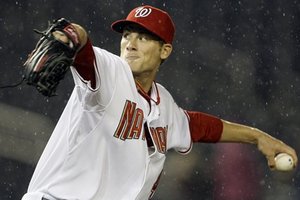
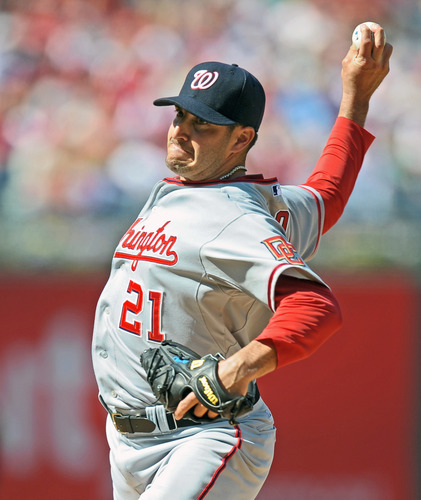
Will Sunday's start be Jason Marquis' last in a Nats uniform? Photo Drew Hallowell/Getty Images

I’m a realist.

The Nats are not going to catch the Braves for the NL Wild Card.  Given that situation, I believe the team needs to cash in on its expiring veterans and trade them.  Some of our vets should go before the 7/31 non-waiver deadline, others probably would pass through waivers (as Cristian Guzman did in 2010) and could be moved for low-level prospects closer to the end of the season.

That being said, as a follower of the minor league rotations and as a fan looking forward to the future of this team, I’d rather see our prospects and “what-ifs” now instead of following guys as they play out the string in August and September.  Here’s a list of moves I’d like to see and who should replace them.

  1. Jason Marquis.  We trade him for whatever he can get and we shoudn’t get too hung up on his return value.  According to mlbtraderumor’s estimates of the current Elias rankings, Marquis isn’t even close to being a type-B free agent, thus he nets us no comp picks at the end of the season if/when he signs elsewhere.  We should trade Marquis and immediately make room in the rotation for one Chien-Ming Wang, who makes (presumably) his last rehab start today 7/24 and needs to immediately come up and join the 25-man roster.
  2. Livan Hernandez.  Some say we keep the old veteran, and I can certainly see that argument.  However, his up-and-down season has frustrated many, and we’ve got a starter in Ross Detwiler who could/should immediately take his rotation spot.  Hernandez, according to the above Elias rankings, believe it or not is right on the cusp of type-B status, which could net a supplemental first rounder for whoever has him at the end of the season.  But that’s a risky proposition; odds are he’d accept arbitration and the guaranteed payday from the offering team, negating the possible comp pick.
  3. Laynce Nix: the slugging left fielder has been a great find for this team, going from minor league signee to starting left fielder.  But, there isn’t going to be room for him in 2012, with LaRoche coming back and Morse likely moving back to left field.  We could keep the outfielder as a 4th, but a player like Rick Ankiel or Roger Bernadina makes more sense as a 4th outfielder since they can play all three OF positions and have decent speed on the basepaths.  We should trade him now while his value is high.  This is complicated lately by his achilles tendon injury, so the odds are that he’s staying put.  Another point against; if Nix goes, who replaces him on the roster?  We don’t really have a ready-made, deserving AAA outfielder that we could call up.  We could bring up Chris Marrero, put him at first and put Morse back in left, a move that doesn’t have any 40-man roster impact.
  4. Todd Coffey: the middle relief righty has struggled lately but still has value for teams looking for bullpen support.  Flip him and bring up the deserving, long toiling and local product Josh Wilkie.
  5. Ivan Rodriguez: the Giants continue to need catching depth, they love veterans and Pudge would have a likely playoff run with a trade.  We could continue with Jesus Flores in a backup role, now that it seems that the word has gotten out that his arm is shot and he’s no longer earning trade value playing full time in AAA.  Of course, as we speak Pudge is on the DL so any trade before the deadline is likely off.
  6. Any one of the rest of our one-year FA backups: Cora, Hairston, Stairs, and Ankiel.  All four of these guys likely pass through waivers and would serve as excellent role players for teams on a playoff push.  Cora and Hairston could be replaced by Brian Bixler or Steve Lombardozzi easily enough, while Stairs or Ankiel, if moved along with Nix, would probably necessitate the return of a MLB-ready outfielder.

Who do I think we should NOT move, unless we get excellent value coming back?

  1. Ian Desmond: his name keeps appearing in trade rumors, with conflicting reports.  Some say we’re “actively shopping” him, others say that he’s a “core piece” and won’t be moved.  We’d be selling low on Desmond, given his precipitous drop in offensive production this year.  However, if the team long term wants to move Espinosa to short and make room for the likes of Lombardozzi or (eventually perhaps) Anthony Rendon, then striking while the iron is hot and people are asking for Desmond makes sense.
  2. Tyler Clippard: I posted on the topic of Clippard’s name appearing in trade rumors earlier this week.  My arguments are there in greater detail; we should only move him if we’re “wowed” by the return.
  3. Drew Storen: can’t see how we’re even considering moving him; he’s under club control through 2015, is a poster child for excellent drafting and quick rise to the majors, and is quickly becoming an excellent closer.  He’s 25/28 in save opportunities as a 23-yr old this year; you don’t trade these guys, you build around them.

Anyone else not already mentioned is either untradeable (Werth, LaRoche), untouchable (Zimmermann, Zimmerman, Espinosa, Ramos), or somewhere in the realm of club-control guys (Bernadina, Lannan, Gorzelanny as examples) who aren’t worth as much to other teams as they are to us.

Lastly, here’s some player targets we’ve heard that the Nationals are interested in.

  1. BJ Upton: Upton is enigmatic to say the least; his numbers put him at a barely greater than average mlb player, but he gets steals and hits for some power and plays a declining CF (don’t believe me?  Look at his uzr/150 ratings drop for 4 straight seasons here, culminating with a negative score for 2011 so far).  Is he the solution for our leadoff/center field spot?  Perhaps.  But I don’t want to give up the farm for a guy we’ll only control for one more year (he’s entering his 3rd arbitration year in 2012).
  2. Michael Bourn: he’s a far lesser version of Upton; far less power but more speed, and 2011 is the first time he’s been above 100 OPS+ in his career.  We’d be buying high for sure.  Somehow he makes more than Upton in the same 2nd year arbitration situation.
  3. Colby Rasmus: i’d love to get him, he’d be a monster in center field.  He’s young, he produced excellently in 2010, and seems to be perpetually in his manager’s doghouse.  The latest  rumors though have him going elsewhere, not to the Nats.  Plus, I’m not quite sure why the Cards would trade him in the first place; the guy’s making the MLB minimum and batting in the middle of their order.
Nats Rotation Cycle #20: good/bad/soso

2 comments

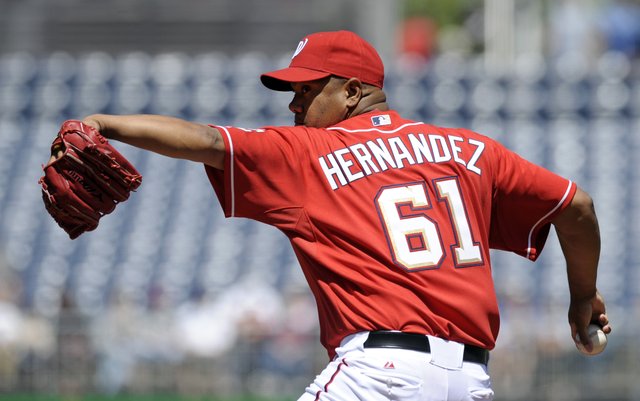
Is Livan Hernandez pitching his way out of the Nats rotation? Photo: AP

The All-star break comes in-between rotation cycles 19 and 20 for the squad.   At this halfway point, only two of our starters have made all 19 starts (Livan and Lannan).  Zimmermann missed a start when the Pittsburgh “rainout” in May and Marquis missed a start to serve out his suspension for the beanball series in Arizona.  Gorzelanny missed the first rotation through, then missed another 4 starts to injury (those being taken by Maya).  Lastly the rescheduling of Zimmermann’s missed start into a 4th of July doubleheader called for a spot start from Detwiler.  That’s 19+19+18+18+13+4+1 = all 92 starts so far this year.  You have to think that the consistency out of the rotation is one of the big reasons this team is doing so well.

The all-star break also gives the squad a chance to slightly re-order its rotation, since most of the guys will be on major rest.  You can’t take your #1 starter and have him become the #5 though b/c of days rest.  But the team does seem to be slightly modifying its order.  We’ll go out in the 2nd half with Livan, then Lannan, then Gorzelanny, then Marquis and with Zimmermann 5th.  The move of Zimmermann to 5th seems like yet another attempt to preserve his arm, despite what Johnson is telling the press.  He seems set to hit his 160 innings limit in mid-August now, by which point we should start seeing alternatives in the rotation.

Good

  • John Lannan evened both his W/L record and the team’s season record to .500 with a 5 2/3 inning, 2 run outing against the Braves on Saturday 7/16.   It wasn’t the cleanest outing for Lannan (5 hits and 4 walks in less than 6 innings) but he worked around the baserunners and kept the potent Atlanta offense off the board for the most part.
  • Jason Marquis gave his team exactly what it needed on 7/18 (box/gamer): lots of quality innings to rest a bullpen that was shredded by Gorzelanny’s injury and (in my opinion) mismanagement by Davey Johnson (see bullet points below).  Marquis went 8 strong innings, giving up only 6 hits and striking out 9.

Bad

  • Livan Hernandez kicked off the 2nd half with an awful performance in Atlanta on 7/15 (box/gamer).  He only lasted 4 innings, giving up 8 hits and 6 runs (3 earned).  The Braves hitters were tattooing his pitches, which he regularly was floating over the plate.  As the TV announcers said, Hernandez is a guy who depends on working the corners and keeping his pitches under control.  Friday he was routinely hanging curveballs over the plate and missing his spots and it showed.   I wonder at what point the team gives up on the Hernandez experiment; his inconsistency on the mound has to be baffling and he’s now thrown enough lemons to make him the worst of our starters statistically.  I can see Livan getting moved for a low-end prospect and one of our promising starters from AAA getting plucked to finish out the season.
  • Jordan Zimmermann had an uncharacteristically bad outing on 7/19, getting touched for 6 runs in 5 innings against the lowly Astros to take the loss (box/gamer).  These are not the kind of innings we want out of Zimmermann before he gets shut down in August.

Mediocre/Inconclusive

  • Tom Gorzelanny only lasted 2 innings in his 7/17 start (box/gamer) against the Braves before twisting his ankle on a play at the plate, putting the bullpen into all-hands-on-deck mode.  For the most part, the bullpen was ineffective, with Henry Rodriguez giving up the lead, Sean Burnett looking horrible, and Tyler Clippard striking out 4 in 2 innings but giving up a game-tying homer in the 8th.  It remains to be seen if Gorzelanny is going on the DL, but the injury didn’t seem that bad.

Starter Trends

Lhernandez    great,bad,good,bad,(break),bad
Lannan    good,good,bad,incomplete,(break),good
Gorzelanny    bad->dl,bad,good,good,(break),incomplete
Marquis    bad,great,bad,soso,(break),good
Zimmermann     good,great,good,good,(break),bad

Relievers of Note and other News

  • The JC Romero experiment didn’t last very long; he was released on 7/13 after putting up good numbers in AAA.  Goessling guesses that perhaps he had an out clause in his contract calling for his release unless he was promoted.  I’m surprised he wasn’t kept around a bit longer, given Doug Slaten‘s continued DL stint and Sean Burnett‘s troubles.
  • Ben Goessling reports on one of Chien-Ming Wang‘s latest rehab starts on 7/14, 6 shutout innings with zero walks and where he hit 94mph in Harrisburg.  I’m beginning to think that Wang’s actually healthy again and that the team may start looking to move Jason Marquis or Livan Hernandez sooner than later to make room for him.
  • Ross Detwiler looked nearly as bad in relief as Livan did during his start on 7/15, requiring 47 pitches to get through 2 innings.  This was a perfect opportunity to shut down an offense that perhaps wasn’t in need of scoring any more runs on the night (especially behind Tim Hudson) but he continued to allow the game to get out of control.  If Detwiler doesn’t put something together this season, the team is going to have a very difficult decision on its hands.  He’s out of options (Gee, thanks for the 2007 callup Jimmy Bowden!) and clearly would be given a flyer by another team (as a first rounder lefty starter who reaches 94mph).
  • Speaking of Detwiler, why exactly do we have him as the “long man” in the bullpen if he’s not available as that long man because the team wants to keep him on some sort of “every 4 days” starting-esque schedule?  The Long man needs to be available for exactly the kind of situation we faced on 7/17, when Gorzelanny came out after 2 innings.  Instead its all-hands on deck since Detwiler had pitched two days prior.  In this situation i’d far far rather still have Miguel Batista, who ably fit this role in 2010 and wouldn’t have cost a ton of money for 2011.
  • Chien-Ming Wang‘s next start will be in AAA, per Bill Ladson‘s published report on Sunday.  This should be the best test yet for Wang’s recovery.  He’s looking like a good bet to join the rotation when he’s done with rehab.

Nats Rotation Cycle #18: good/bad/soso

leave a comment

Is Marquis hurting his trade value? Photo Drew Hallowell/Getty Images

The 18th Rotation cycle will be interesting; a day-night doubleheader, then two straight day games for a team that plays most of its games at night, may prove challenging for the Nats, especially considering that the Cubs are completely used to playing day games.  This review will include 6 games, since we’ll need an extra pitcher by virtue of the saturday double-header.

Good

  • Livan Hernandez pitched a typically crafty game in the 7/2 day-game (box/gamer), allowing 2 runs on 6 hits in 7 complete innings with a couple of walks and 6 strikeouts.  He left with a ND.
  • John Lannan pitched pretty well in the 7/2 night-cap (box/gamer), going 7 innings, giving up 3 runs on 6 hits.  He walked no-one but only struck out one batter.  He sat at 80 pitches upon his removal in a Loss situation.
  • Ross Detwiler‘s first MLB start since last September went pretty well on 7/5 (box/gamer).  5 1/3, 4 hits, 2 runs (both on a 2-run homer in his final inning), 0 walks and 1 strikeout (he also hit a batter).   He was only at 78 pitchers mid-way through the 6th when Johnson went to his bullpen immediately after the 2-run homer.  The 3-2 lead held on for the win however.  For me a very good appearance for Detwiler (in contrast to Maya’s 4 starts up here).

Bad

  • Jason Marquis was shelled for 7 runs (6 earned) on 8 hits while only retiring four batters on 7/3 (box/gamer) and game more reminiscent of his performances in the beginning of last year pre-surgery.   After a fantastic May and early June, Marquis has now gotten more or less pounded in 3 of his last 5 starts and his trade value has to be plummeting by the week.

Mediocre/Inconclusive

  • Jordan Zimmermann certainly wasn’t helped by some “questionable” defense, including a routine fly ball that fell to earth and scored two runs instead of ending an inning, in 7/4’s scorching win over Chicago (box/gamer).  The play in question is yet another piece of evidence why ERAs are misleading; instead of getting a quality start, Zimmerman’s line on the day goes 6ip, 8hits, 4runs, 1 walk and 5 Ks.   If that line reads 6ip, 7hits, 2 runs, 1 walk and 5Ks it looks a lot better right?
  • Tom Gorzelanny fell victim (again) to the long ball against the cubs on 7/6 (box/gamer), giving up 4 runs in 6 innings on two bombs given up to Carlos Pena and Aramis Ramirez.  Both were no-doubters on bad mistakes over the plate.    Luckily the cardiac kids pulled out a victory later on in the game.  Gorzelanny has now given up FOURTEEN homers in 77 innings over 13 starts.  One every 5.5 innings, or just about one per start.  The league average (per b-r.com anyway) is 18 per 180 innings or one every 10 innings.

Starter Trends

Relievers of Note and other News

  • Chien-Ming Wang threw his 2nd rehab start on 7/2, this time in high-A for Potomac.  As Adam Kilgore reports, he pitched 4 scoreless inning, allowing 1 hit and 2 walks.  He reportedly hit 91mph, which is great news.  I pulled the Pitch f/x data from Wang’s 2007 season prior to his injury to try to get a feel for what he was capable of back then.  Here’s the data from June 6th, 2007, one of Wang’s best games that season.  Average fastball of 94, peaks of 97, with great separation between his fastball and his change-up.  I didn’t realize he threw that hard (if you believe the Pitch f/x data; it is spotty that early in the system’s history).  If the goal is to get his speed back to 94-97, he’s got a long way to go.
  • After seemingly turning the page on his struggles this season, Sean Burnett has failed in his last two outings, including blowing 7/2’s game with a poor 8th inning.  The team is in desperate need of lefty relievers through-out the system, so its doubtful that Burnett’s job is in immediate jeopardy.  However the acquisition of JC Romero last week plus the possible conversion of former MLB starter Matt Chico to a reliever (he’s currently rehabbing in the GCL and has been alternating between starting and relief appearances) seem to indicate the team is exploring its loogy options.
  • Tyler Clippard is the Nationals lone 2011 all-star (Pending Michael Morse‘s runoff vote), a validation of his dominance over the past couple years in a non-closer role.  Some may have an issue with Clippard’s selection, but in a league that mandates at least one representative from each team he’s as good as picking Morse, Storen or Espinosa in my book.
  • Not that he’s a National, but Kerry Wood certainly looked out of sorts on 7/4.  1ip, 3 walks, 3 Ks, a hit batsman, a wild pitch and a blown save.  Ironically, most of this was done without anyone warming up in the bullpen, and only after Wood walked in the tying run in the 8th did the cubs manager scramble to get someone up.  Awful managing on the day, frankly.  The first batter Woods airmailed 4 pitches to should have been enough evidence.
  • The day after his good spot start, Johnson announced that Detwiler would be staying on the MLB roster and replaces Collin Balester for the time being.  This is in line with Johnson’s previously stated desire to have a 6th starter/long man in the bullpen.  But the usage of Detwiler remains to be seen.  Per Zuckerman’s article, Johnson will try to use Detwiler only every 4th-5th day (as a starter would do) and perhaps use him in a single inning situation during his “throw” days in between starts.
  • Craig Heist of WTOP tweeted (h/t to Craig Calcaterra here) that the Yankees are interested in Sean Burnett.  This gives me an “a-ha” moment, since I was at the 7/4 game and ran into a Yankees scout who was trying to be incognito.   At the time, I couldn’t figure out who on either team the Yankees may have been looking at; the starters that day were Zimmermann (untouchable) and Coleman (replaceable). Our biggest trade chips are Marquis and a bunch of under-performing vets.  The Cubs are filled with overpaid, under-performing guys on large contracts. The Nats have almost nothing in the way of lefty relievers in the organization right now; we’d be hard pressed to move Burnett despite his struggles this year.  Would we be selling low on Burnett based on his struggles in 2011?
http://mlb.mlb.com/mlb/gameday/index.jsp?gid=2011_07_02_pitmlb_wasmlb_1&mode=recap&c_id=was&partnerId=rss_was

Minor League Rotations Cycle #14: good/bad/soso

8 comments

A.J. Cole has quietly begun to dominate low-A ball. photo: AP

(Programming Note: as you may have noticed, i’m about 3 versions of this recurring post behind.  A long weekend away and then two weeks of quick deadlines at work and todo items at home have conspired against these posts.  I hate it when life interferes with blogging!  Anyway, I’ve kept up-to-date the trends, copied over some of the “news and notes” from the older posts and will just pick up with the 14th cycle).

The time has come to add in Short-A (starting 6/17) and GCL (6/20).  There’s 15 arms assigned to the Auburn Doubledays, and it will take a bit to determine who the starters are.  I’ll do a couple of quick posts with predictions versus actual rosters (though predicting the short-season squads is really difficult, since most of the guys there are 2011 draftees).  As always, Sue Dinem has a nice post highlighting where the Auburn roster guys came from (2010 assignment or 2011 draftee).  Lastly, Byron Kerr highlighted the opening day for the Auburn affiliate.

Here are the daily links from NationalsProspects, for reference below:

Good

  • Brad Meyers rebounded from a string of sub-par to bad starts to take the win on 6/16.  Line: 7IP, 7H, 2ER, BB, 4K, HR.  Meyers has (to this point) kept up his unbelievable k/bb ratio (39 to 4 in AAA, 77 to 4 on the season), but has been struggled in AAA thus far (a 4.80 era and well over a hit per inning).
  • Tanner Roark also rebounded on 6/16, putting in a quality start (2er in 6ip).   He still seems to have taken a severe step backwards this year (with a 6.00 era on the season) and may be pitching his way out of the team’s long term plans.
  • AJ Cole struck out 9 in 5 innings on 6/16, giving him 40 (against 8 walks) in 32 low-A innings thus far.  I’ll take that from a 19yr old.
  • Ryan Demmin‘s return to starting pitching on 6/17 for Auburn went well; 5IP, 3H, 1R, 1ER, 3BB, 4K.  He washed out of Potomac’s bullpen earlier in the year; lets see if he can stick in Auburn’s rotation.
  • Collin Bates may not have started 6/17’s Auburn game, but he went 4 innings and clearly seems in competition for the rotation (so i’ll grade him here).  Results?  Pretty dominant: 4IP, 2H, 0R, 0BB, 3K.    Lets see if he gets a start the next time through the rotation.
  • Brad Peacock got a bit unlucky on 6/17, turning 4 hits over 7 innings into 3 runs, but another 7Ks to pad his gaudy season numbers helped him to the victory.   Honestly, I’m not sure what he really has left to prove in AA; why do we keep Stammen in the AAA rotation if he’s being used out of the pen when he gets called up?
  • Paul Demny had his best outing of the year on 6/18, pitching 5 innings of one-hit ball before making way for his bullpen.
  • Erik Arneson put up good numbers for Harrisburg (this time) on 6/19: 3 hits and 7 Ks over 6 innings.  As i’ve said before, Arneson seems to have picked the short straw and seems to be the organization’s go-to spot starter.

Bad

  • Evan Bronson got hit very hard on 6/16 on the day he seemingly took over Mitchell Clegg‘s rotation spot, giving up 11 hits in 5 and a third.
  • An ugly outing for Craig Stammen, perhaps jet-lagged from his brief callup on 6/18.  Line: 3IP 6H, 5ER, BB, 2K, 2HR.
  • Carlos Martinez got a spot start to cover for a Harrisburg doubleheader on 6/18, and in doing so became the 12th starter used in AA.  The result?  He showed why he’s not in the rotation, getting peppered for 6 hits and 3 runs over 4 innings.
  • Wirkin Estevez had an interesting game in Auburn’s 2nd game of the season on 6/18: 3⅔ IP, 9H, 6R, 6ER, BB, 6K.   9 hits but 6 Ks in less than 4 innings?   Estevez pitched well in the DSL last year, but history has shown that it may not translate to the continental pro game.
  • Yunesky Maya returned to Syracuse from a 4-game stint in the bigs, and must have been depressed for his 6/19 start.  He gave up 10 hits over 5 innings.  Unfortunately, I think he better get used to living in upstate New York for a while.  Amazingly he was in line for the victory by virtue of his team’s offense.
  • Pedro Encarnation‘s first short-A start was not terrible, but wasn’t great; 3/ 2/3 innings, 3 runs, 4 walks. I’m surprised he’s in the short-A rotation, given that he’s not really shown us much during his first two pro seasons.
  • A bad short-A start for Kelvin Lopez, another guy who wasn’t exactly great for us in the GCL last year.  Line: 3⅓ IP, 5H, 3R, 3ER, 2BB, 3K.

Mediocre/Inconclusive

  • Shane McCatty had a run of the mill spot-start on 6/16: 4ip, 5 hits, 3 runs (2 earned).  It is the 2nd time in 2 weeks that one of the lesser bullpen arms in Hagerstown has been pressed into action.  Maybe they should have kept Garrett Mock down there for the playoff push.
  • Tommy Milone had a poor start (by his standards) on 6/17, giving up 7 hits and 5 runs (4 earned) in less than 6 innings.  He continues his mastery of the strike zone though, now standing at 82ks against 5 walks on the year.  Unfortunately, his ERA has been creeping up over the past few starts, leaking runs here and there.  I still think the team could make use of him in the rotation if the need arises, this year.
  • Erik Davis obviously was around the plate on 6/17, giving up 10 hits to go against 8Ks (and 0 walks) in a 6 inning effort.
  • Robbie Ray wasn’t quite as dominant as we’ve come to expect on 6/17, but only gave up one run through 5 to take a no-decision.  He gave up quite a few hits and didn’t have nearly the dominant K rates as he has in previous games.  He’s still been amazingly dominant considering his age and his lack of pro experience.
  • Trevor Holder‘s performance on 6/18 was probably better than his box score showed: 7 hits and 3 runs over 6 and a third, but all three runs came on one big homer.  It was enough to cost him the loss.
  • Taylor Jordan had a quality start on 6/18, but nothing special.  6ip, 3 runs, a couple of Ks.  He’s continued to get wins for Hagerstown with decent numbers and not-very-dominant stuff.  But he has a sub 3.00 era and doesn’t walk a ton of guys.  I don’t know how much upside that means.
  • Sammy Solis piched out the string for a Hagerstown team that was eliminated from the first half playoffs on 6/19: 4 innings, couple of earned runs, 5 ks.  Nothing bad, but nothing special.
  • Another mediocre (for him) start for Ross Detwiler on 6/20: 6⅔ IP, 3H, 2R, 2ER, 4BB, 3K.  I continue to maintain he’s injured in some way or another and trying to pitch through it.
  • Nathan Karns had an up-and-down rehab start in GCL (season opener on 6/20).  2⅔ IP, 1H, 0R, 2BB, 2K.  Its usually difficult to tell who the “starters” are in GCL, but we’ll do our best.

Relievers of Note and other Thoughts

  • Mark Zuckerman reports that Chien-Ming Wang is (finally) ready to leave extended spring training and go out on a rehab assignment.  This means he’s going to supplant a starter, somewhere in the system.  I’d guess he’s going to Potomac to start, as they seem to have the least-performing collection of starters right now and he’d completely overmatch the younger hitters in low-A.  The implication of his going out on a rehab assignment is this: he only gets 30 days in the minors (probably about 6 starts) before the Nats have to make a decision on what to do with him.  He has no minor league options, so in 30 days he either joins the 25-man roster, goes back on the DL or is DFA’d.  After all we’ve invested in him (and for the sake of his career), I’m hoping he still has something left.
  • The rotation in Harrisburg has proved challenging to keep up with; they’ve now used 11 different starters and we’re only about a 1/2 of the way through the season.  At the time of this writing I can’t tell any longer who is really in the rotation.  Tatusko seems back, but Arneson has pitched well out of the bullpen (though only mediocre as a spot-starter).  I guess its a good problem to have, as they’ve rolled to 10 straight wins recently and are getting pretty dominant performances out of 3/5ths of their rotation nearly every time out.
  • Jimmy Barthmaier got slaughtered out of the pen on 6/1, which broke up a decent string of appearances for him lately.  He’s got ugly season-long numbers, is old for AA, and may be on his way out.
  • Hagerstown relievers Shane McCatty and Ben Graham both got torched in a very odd 6/1 Hagerstown game.  Its the 3rd such god-awful outing for McCatty this year, sprinkled around decent ones.  Same story for Graham.  Both guys really aren’t getting the k/9 rates they need as bullpen options in the low-minors to have any shot of moving up.
  • Christopher Manno numbers, as of June 1st: 25 1/3 innings, 0 earned runs, 8 hits, FOURTY strikeouts against eight walks.  As frequent commenter Mark L might say, “what does this guy have to do to get promoted??”  He proved later on in the month that he is human (giving up a few runs here and there towards the end of the first half), but he still has dominant numbers and merits a promotion.
  • Ryan Mattheus looks like he’s fully recovered from 2009 Tommy John surgery, with 24 Ks in 21 innings and only 10 hits allowed through AA and AAA stints on the season.  If anything his numbers have improved at AAA.  His problem is 40-man status; he passed through waivers and was retained by the club, and I’m guessing they won’t want to put him back on until completely necessary (perhaps 9/1 callup?).  Update: he got his long awaited shot at the majors, having been added to the 40-man on 6/10/10. He replaces Cole Kimball, who has “right shoulder inflammation” (as nearly every major league pitcher does) and went on the 15-day DL. Kimball has been pretty effective thus far, but is walking guys far too often and the rest may do him some good.
  • Not that Bryce Harper is involved with the pitching in Hagerstown, but I thought i’d take a quick look at how he’s faring with his latest outburst.  As of 6/3, here’s his ranks in the entire Sally League in various categories: 6th in batting average (.346), 3rd in OBP (.432), t-1st in homers, 1st in RBI, 1st in Total bases, 3rd in OPS (1.055), and he’s even t-14th in stolen bases.  Not a bad set of rankings considering he’s like the 2nd youngest guy in the league.
  • Brad Peacock is starting to get noticed by some of the ESPN scouts.  Jason Grey featured Peacock on 6/2 from an NL-only fantasy perspective, noting he’s at 95mph with a “good” curve and a developing change-up.  That’s not going to be enough to be a major league starter.  Grey’s espn colleague Keith Law took a Peacock-related question on 6/2, noting that Peacock really is a one-pitch pitcher without an above-average 2nd pitch according to most scouts he’s asked about.  Neither of these reports is really that positive about Peacock’s future unfortunately.  My guess is that he will probably be told to start really working on his change-up, which reportedly has good velocity delta but not much movement and not much command.  You would have to think Peacock needs good command of that third pitch to have any shot at being a starter.
  • Interesting Harrisburg moves last week: Oliver Perez going to the DL, with Arneson continuing his pin-ball assignments throughout the organization, coming back down from Syracuse.  He seems to be the designated spot-starter/moving man this season. Erik Davis was on the DL for a quick trip and regains his rotation spot, but it remains to be seen what the rotations look like after this shakes out.
  • What is going on with Bobby Hansen??  He hasn’t appeared in a game for Hagerstown since 6/1, but isn’t on the DL.  He seems to have given his rotation spot to Sammy Solis … but hasn’t appeared since.  He wasn’t Hagerstown’s worst starter and had pretty good numbers as a 21-yr old in low-A.  Is he hurt?  Is he in the dog house?  Has he gone and hooked up with the manager’s daughter?
  • Tom Milone is starting to get noticed by the national press.  Rob Sickels had a feature on him on 6/20, as did Rob Neyer on sbnation.com
  • The busleaguesbaseball blog featured Auburn on 6/20.
  • 9-lives pitcher Garrett Mock was placed on the 7-day DL in Harrisburg after two brutal starts there.   As of 6/21, here’s the list of pitchers on the 7-day DL in AA: Mock, Perez, Atilano and Chico.  In other words, a collection of guys who are all way too old for AA and are closer to their outright release than making it back to the big club.
  • We may soon see a whole slew of 2011 draftees taking over rotation spots in Auburn.  Some of the “starters” we have there have not exactly impressed during their pro careers, and in some cases makes you wonder how they still have jobs.

Trends

Top 3 deserving promotion: Peacock, Ray, Milone
Top 3 whose jobs are in jeopardy: Mock, Holder, Grace

Did the team waste $8M on Maya?

9 comments

Are we about to see the last of Yunesky Maya? Photo: Al Bello/Getty Images via thenatsblog.com

In 5 starts last year; Yunesky Maya was 0-3 with a 5.88 era, a 1.577 whip and a very bad 69 ERA+.  The team lost all 5 games he pitched and he didn’t come close to even recording a quality start.

He was any one of a number of excuses.  He was “rusty.”  He was “rushed to the majors.”  He was “homesick” and he “missed his family.”  He was suffering from a “lack of competition.”  All those points were true.  The real test for Maya would be spring training 2011.

He failed to make the rotation out of the spring this past March, but you can’t fault him there.  The only rotational guy really in any jeopardy of not making the rotation (by virtue of contract or option status) was Jordan Zimmermann, and even then it was only if he was hurt.  So he (by some accounts) sulked to AAA and got pounded his first few starts before sucking it up and starting to pitch like a pro.  Because of Detwiler‘s sudden lack of performance in AAA, Maya was first to be called up to make a spot start when Gorzelanny got hurt.

All the 2010 excuses are now out the window.  He’s had a full spring, he’s rested, he should be in playing shape, and he had a bunch of AAA starts.  So, what happened?

He got lit up.  Again.

  • 5/29: 6 hits and 2 walks in 4 2/3 innings.  His team bailed him out for a ND.
  • 6/3: another 6 hits and 3 more walks in 4 innings plus.  His bullpen failed him and made his line look worse than it was, but still.  He took a loss and dropped his era to 8.00.
  • 6/8: He actually looked great.  6ip, 4 hits, 1 run, albeit against a weaker hitting San Francisco team.  He got an early hook and his bullpen blew the game for him.
  • 6/14: The coup-de-grace.  Finally going against a decent hitting team (St. Louis), Maya got pounded like a bullpen pitcher.  Only a 6run 7th inning from his offense bailed him out and gave him a ND.

Those first two starts were against San Diego and Arizona, two of the weakest hitting teams in the league.  He was clearly nibbling at the strike zone instead of commanding his pitches.  His one quality start was against San Francisco, also a weak hitting team (man that NL west just can’t hit!).  But notice what happened when he went up against a lineup of proven hitters: Pujols homer, Berkman homer, Rasmus rbi-double.  Thank god Holliday is hurt.

With Gorzelanny having finished a rehab start and looking to come back, Maya has been optioned back to AAA.

One of the reasons we drafted Maya was because of his reported “93-94” mph fastball.  That, as it turns out, as proven to be a complete myth.  Here’s his pitch f/x links for his 2011 starts:

  • 5/29: 89.24mph average, a MAX speed of only 91.7.  He only looks like he even broke 90mph a handful of times on the night.
  • 6/3: 88.7 average and ONLY 89.4 as a max.  89.4 as a max fastball for a right-handed starter in the major leagues?
  • 6/8: 88.6 average, 90.6 max.  And this was his best game.
  • 6/14: 89.1 average, max of 91.1.  The announcers said he had no movement, his fastball was flat, he was missing out over the plate and he had no control.

Yeah, he throws a gazillion different pitches.  Pitch f/x distinguishes between 6 of them, but he varies his arm slot on his fastballs and curves for even more variety.    But clearly he’s not throwing 93-94.  Whoever quoted that speed was probably on a fast gun at a stadium or was working on commission.

He’s had two shots at the big leagues and has badly underperformed both times.  If he had better stuff or commanded his pitches better, then his lack of velocity wouldn’t matter as much (see Hernandez, Livan as Exhibit 1-a).  But he doesn’t (have command), so he can’t (get around a lack of velocity).  Unfortunately for Maya and the team, it looks like his contract may be a bust.  When he goes back to AAA, it may be for good.  Perhaps he’ll make for a long-man/mop-up guy at some point.  But his career as a prospective Nationals starter seems done.

Is John Lannan slowly endangering his rotation spot?

12 comments

Maybe its the 2011 haircut that is the source of Lannan’s mediocre start. Photo: Luis M. Alvarez/AP via www.timesunion.com

In his latest outing (5/16 against the Pirates), John Lannan worked around 11 base-runners in 6 and a third innings and only gave up 2 runs (one being inherited and allowed to score by Cole Kimball).  Four walks conspired to cause Lannan grief all afternoon, as well as only throwing 54 of 101 pitches for strikes.  However in the end, it was a quality start and kept the team in the game.

But are we seeing a gradual breakdown in Lannan overall?  After getting sent down in 2010, he had masterful numbers upon his return (6-3 record with a 3.42 era and 1.24 whip in his last 10 starts in 2010).  But he has not been able to carry these numbers into 2011.  Right now, his season long 2011 numbers are WORSE than his combined stats from last year, and despite only really having one egregiously bad outing (2ip, 6runs) his supporting stats are getting to be really concerning.  Here’s what concerns me specifically:

  • 1.615 whip.  That’s just way too many base-runners.
  • 26ks and 22bbs in 47 IP.

Perhaps I’m being nit-picky; his ERA (4.53) is almost exactly in line with his FIP and xFIP (4.50 and 4.56 respectively) meaning he’s pitching exactly as expected.  His BABIP is .323, meaning he’s been unlucky and is due for a regression of seeing-eye singles costing him hits and base-runners.  His game scores throughout the season have been relatively consistent (mostly 40s and 50s; his high on the season has been 54 and his 5/16 game was a 51).

But, more importantly, even if Lannan is the first in line to be replaced out of our current rotation, we don’t really have anyone in AAA quite yet deserving of the promotion.

The incumbent seemed to be Ross Detwiler, but he’s really struggling so far this year in AAA.  $8M man Yunesky Maya started slow and is coming around, but I want to see more Ks out of him.  Tom Milone‘s k/bb ratio is fantastic but he’s not on the 40-man (though we seem to have an empty spot right now, so perhaps that’s a non-issue).  Newly promoted Brad Meyers needs a few more AAA starts for seasoning but the evidence is there (especially after he dominated AA early in the season); his problem is lack of 40-man status as well.  Lastly Craig Stammen believe it or not may have the best case of them all; best whip, decent numbers, and outside of one bad start has been solid, but he seems to have the least “investment” of any of the starters in Syracuse and seems more likely destined for the bullpen than the MLB rotation.

Interesting decisions lay ahead, especially if Lannan has a couple bad outings in a row.  Remember; Lannan has minor league options (two of them if I read his transactions correctly).  It isn’t really a good statement to option a former opening day starter, but the team has to do what is best.

Written by Todd Boss

May 17th, 2011 at 7:34 pm

Broderick and Rodriguez are officially costing the team Wins

16 comments

Why exactly was Slaten left in to pitch 2+ innings last night? Photo Getty Images via zimbio.com

There’s no other way to put it, after watching the unfolding of last night’s bullpen meltdown; carrying Brian Broderick and Henry Rodriguez on this team is having the effect of shortening the bullpen from 7 guys to 5, and is costing this team wins by not allowing Jim Riggleman to put in the right guys at the right time.

WP Beat reporter Adam Kilgore put it more politely, calling the carrying of two essentially worthless pitchers an “unusual roster construction.”  You know what I call it?  A GM who is hand-cuffing his manager.

I have complained in this space several times (mostly summed up here in this March 2011 post) about the implications of the Nats having 3 of their 12 pitchers (Tom Gorzelanny in addition to Broderick and Rodriguez) be essentially “locked” onto the 25-man active roster.  Its one of my main criticisms of the Josh Willingham deal in general; see my post for more opinion but to have only a right handed reliever who your manager cannot use in return for your #5 hitter of the past two years is my definition of a trade failure).  Gorzelanny has pitched much better than anticipated and his roster spot hasn’t been questioned (though for me, that wasn’t always the case either).

To say nothing of this plain fact: If you can’t trust a reliever to come into a close game and get outs, then he should NOT BE ON THE ROSTER.  Its as simple as that.  And clearly neither Broderick or Rodriguez currently falls into that category.

What is the answer?  Mike Rizzo needs to do three things, almost immediately:

  1. Invent another “injury” and put Rodriguez back on the DL.  Send him to extended spring, put him back on rehab assignments and tell him he needs to either throw strikes or take a hike.
  2. Call St. Louis’ GM and work out a PTBNL trade for Broderick.  Enough is enough; he projects as a #5 starter (maybe) on a team that has 4 good starters.  Is he really part of the future for this team?  Is he going to be better than any of Detwiler, Maya, Meyers, Solis, or Peacock in 2012?  Because that’s who he’s competing with for rotation spots in 2012 (figuring that at least 3 are already spoken for in Strasburg, Zimmermann and Gorzelanny).  Trade for him so you can option him to Syracuse.
  3. With these two spots opened up, recall Collin Balester and call up Cole Kimball so you can actually have two useful guys in your pen who you can trust.  If you’re so in love with Rodriguez’s power, Kimball throws nearly as hard and has put up far better bb/9 numbers in AAA.  Balester has been in the majors before, put up great numbers in 2010 out of the pen, and can pitch long relief if needed as a former starter.

Its time for Rizzo to acknowledge his errors in roster construction and fix them.

(As an aside: Jim Riggleman is not totally without fault here: per Ben Goessling‘s report last night, “Todd Coffey and Tyler Clippard [needed] a night off and Drew Storen [was] being saved for a lead.”  Why let Sean Burnett stay in to get out one of Atlanta’s best hitters in Martin Prado?  Why not bring in Storen at this point and use him as the “fireman?”  Is it because he’s the “closer” and you save your closer for save situations?  I certainly hope this wasn’t his thinking.  A managers *should* use his best relievers in the highest leverage situations, and last night Storen should have been used to get out of a bases loaded jam against a tough right-handed hitter, instead of leaving in a lefty who has struggled lately.  But, this post is more about roster construction than reliever use, a topic for another day, and a larger issue in baseball in general).

Age Analysis of all Nats Minor League Pitchers

14 comments

Despite being in our system for years, Ross Detwiler is still “really young” for AAA. Photo: Haraz Ghanbari/AP via federalbaseball.com

Following up on a previous post discussing the “age appropriateness” of pitchers in the minor leagues, I thought it would be interesting to look at the pitching staffs at the Nationals various affiliates and take a look at the ages.  NOTE: I did most of this analysis prior to the promotions of AJ Cole and Robbie Ray to Hagerstown.  I’ll put in notes about them in the appropriate section.

To review, based on dividing the ages of every pitcher in each league into quartiles, and then naming the quartiles, here’s our starting point:

AAA AA High-A Low-A
Really Young 25.22 or younger 24.11 or  younger 22.33 or younger 21.56 or younger
Young 25.22 – 26.61 24.11 – 25.05 22.33 – 23.50 21.56 – 22.52
Old 26.61 – 28.47 25.05 – 26.32 23.5 – 24.45 22.52 – 23.33
Really Old 28.47 or older 26.32 or older 24.45 or older 23.33 or older

Here’s an affiliate-by-affiliate look at the pitching staffs, their ages and how that age is “ranked.”  Syracuse first:

Syracuse Collin Balester 6/6/1986 24.91 Really Young
Syracuse Adam Carr 4/1/1984 27.09 Old
Syracuse Ross Detwiler 3/6/1986 25.17 Really Young
Syracuse Lee Hyde 2/14/1985 26.22 Young
Syracuse Cole Kimball 8/1/1985 25.76 Young
Syracuse Jeff Mandel 4/30/1985 26.02 Young
Syracuse J.D. Martin 1/2/1983 28.34 Old
Syracuse Yunesky Maya 8/28/1981 29.69 Really Old
Syracuse Brad Meyers 9/13/1985 25.64 Young
Syracuse Tom Milone 2/16/1987 24.22 Really Young
Syracuse Garrett Mock 4/25/1983 28.03 Old
Syracuse Craig Stammen 3/9/1984 27.16 Old
Syracuse Josh Wilkie 7/22/1984 26.79 Old

Not surprisingly, several names (Martin, Mock) are included as being “old” for the level.  Maya is a special case of course.  Ironically, a lot of these players are young or really young for the level.  Of note would be Tommy Milone, who is the 23rd youngest pitcher in the International league (out of 193 pitchers) and is holding his own in the rotation.  Ironically, Ross Detwiler “seems” to be much older than he really is, since his name has been in the minds of Nats fans for years, but he’s still quite young even for AAA.  Brad Meyers recent promotion counts him in the younger category as well, a good sign for our continued player development.

Trivia: The youngest pitcher in the International League was (at the time of this analysis) Julio Teheran, uber-Braves prospect who turned 20 in April and is seemingly ready for his MLB debut.  The rich get richer.  In fact, he did get promoted and made a start on Saturday 5/7 for Atlanta.  Meanwhile the oldest pitcher in the International league is Mark Hendrickson, who last appeared in a minor league game in 2003.  He didn’t make the Orioles’ roster out of spring and is trying to hang on.

Here’s Harrisburg:

Harrisburg Erik Arnesen 3/19/1984 27.13 Really Old
Harrisburg Luis Atilano 5/10/1985 25.99 Old
Harrisburg Jimmy Barthmaier 1/6/1984 27.33 Really Old
Harrisburg Matt Chico 6/10/1983 27.90 Really Old
Harrisburg Erik Davis 10/8/1986 24.57 Young
Harrisburg Carlos Martinez 3/30/1984 27.10 Really Old
Harrisburg Shairon Martis 3/30/1987 24.10 Really Young
Harrisburg Ryan Mattheus 11/10/1983 27.49 Really Old
Harrisburg Patrick McCoy 8/3/1988 22.75 Really Young
Harrisburg Brad Peacock 2/2/1988 23.26 Really Young
Harrisburg Hassan Pena 3/25/1985 26.11 Old
Harrisburg Ryan Tatusko 3/27/1985 26.11 Old
Harrisburg Cory VanAllen 12/24/1984 26.36 Really Old

What is concerning here is the number of “Really Old” pitchers we have on the staff in Harrisburg.  Luckily they’re all relievers, not considered key prospects going forward.  The best starter in AA (Brad Peacock) is quite young for the level (22nd youngest of 166 hurlers in the league).  Other starters in Harrisburg are on the “right side” of the median, including Davis and MartisTatusko is getting too old for the level (hence my prediction that he’d be promoted prior to the season), and probable rotation replacement member Arneson is definitely too old for the level to be considered a prospect.

Interesting trivia; the oldest pitcher in the Eastern league is one Kei Igawa, who also holds the distinction of being (in my opinion) the worst FA starting pitcher ever signed based on dollars per win for the life of his contract plus posting fee.  Meanwhile the youngest AA pitcher is Detroit Tiger’s 2009 1st round pick Jacob Turner, who is holding his own after getting drafted out of high school.

Here’s Potomac:

Potomac Evan Bronson 2/13/1987 24.22 Old
Potomac Mitchell Clegg 12/22/1986 24.37 Old
Potomac Paul Demny 8/3/1989 21.75 Really Young
Potomac Marcos Frias 12/19/1988 22.38 Young
Potomac Trevor Holder 1/8/1987 24.32 Old
Potomac Patrick Lehman 10/18/1986 24.55 Really Old
Potomac Adam Olbrychowski 9/7/1986 24.66 Really Old
Potomac Daniel Rosenbaum 10/10/1987 23.57 Old
Potomac Cameron Selik 8/25/1987 23.70 Old
Potomac Josh Smoker 11/26/1988 22.44 Young
Potomac Joe Testa 12/18/1985 25.38 Really Old
Potomac Dean Weaver 5/17/1988 22.97 Young
Potomac Rob Wort 2/7/1989 22.24 Young

By virtue of the number of college pitchers we’ve drafted in the past couple of  years, we have a stockpile of these guys who now make our Potomac roster seem relatively old.  Our ace in Potomac Danny Rosenbaum is almost exactly the median age of pitchers in his league (he’s listed as “old” but missed the cutoff by a few days).  Same with newly promoted Cameron Selik, who now pitches in a league where he’s almost exactly the average age.  Potomac’s 2nd most effective starter this season has been Paul Demny, who is the 15th youngest pitcher of a 112 in the league.  Its great to see such a youngster pitching so effectively.  Meanwhile Mitchell Clegg and Trevor Holder are relatively old for the level already and are struggling this year, a sign they may be moved to the bullpen or be defined as “non-prospects” sooner or later.

Lastly, here’s Hagerstown pre Cole and Ray:

Hagerstown Paul Applebee 5/17/1988 22.97 Old
Hagerstown Sam Brown 6/10/1987 23.90 Really Old
Hagerstown Wilson Eusebio 8/20/1988 22.71 Old
Hagerstown Matthew Grace 12/14/1988 22.39 Young
Hagerstown Ben Graham 11/23/1987 23.45 Really Old
Hagerstown Bobby Hansen 12/17/1989 21.38 Really Young
Hagerstown Neil Holland 8/14/1988 22.72 Old
Hagerstown Chad Jenkins 3/12/1988 23.15 Old
Hagerstown Taylor Jordan 1/17/1989 22.30 Young
Hagerstown Christopher Manno 11/4/1988 22.50 Young
Hagerstown Shane McCatty 5/18/1987 23.97 Really Old
Hagerstown Christopher McKenzie 12/6/1989 21.41 Really Young
Hagerstown Matt Swynenberg 2/16/1989 22.21 Young

All things considered, we’re fielding a relatively young-for-the-level pitching staff in Hagerstown.  The two youngest starters (Bobby Hansen and Chris McKenzie) are right at the 25th percentile cusp (so they’re still young for the league but not amazingly so).  That being said, Hansen is probably Hagerstown’s 2nd most effective starter after Taylor Jordan, and they’re both young for the league.  Even the two oldest starters in Hagerstown (Matt Grace and Paul Applebee) are both right around the median age for pitchers in the league.  Selik was very old for the league before earning his promotion, possibly a sign that his age allowed him to dominate younger guys.  Only the bullpen guys are “old” or “really old” for the league, and even they are not “overly” old.

AJ Cole and Robbie Ray, named to the team over the weekend, become the 3rd and 6th youngest pitchers in the league.  This is all the more interesting considering Ray’s sterling 5/9 debut.

Summary

The younger guys we have in Syracause are for the most part the prospects; the older guys are mostly organizational arms not likely to feature in the majors.  We are definitely “old” in both Harrisburg and Potomac, all the more concerning since both staffs are struggling.  I like how young we are in Hagerstown, considering just how well that team is playing (19-10, 1/2 game out of first having played a ton of away games so far).

What would the Nats look like without FA signings?

2 comments

Commenter Mark L, in response to my statement that (paraphrased) the 2011 Nationals cannot afford to keep rule 5 picks on this team, pointed out that the team really has little chance of competing in 2011 and thus it is really the perfect time to be keeping and testing rule5 guys.

In theory I agree with this premise w.r.t. keeping rule 5 guys.  We’re not going to win the pennant in 2011.

I think in reality though the team has gone mostly backwards since arriving here in 2005 and cannot afford to ever seem as if they’re not trying to make progress.  I blame a lot of that on Bowden’s obsession with former Reds and tools-y players who became such a nightmare to integrate as a team that Acta had to be scuttled as a manager in favor of the more old-school Riggleman. The team lost the entirety of good will and excitement that came with a new stadium and the Lerners as owners had to be shocked at how quickly they destroyed their season ticket base (most observers believe they’ve lost more than half their season ticket holders just from 2009!). So the team is just not in a position to play for the future any more; they have to appear to be improving the team even marginally for the next few years to put themselves in a better position financially.

If the team was really playing for 2013 (as, say, the KC Royals clearly are), they’d never have even brought in the likes of Ankiel, Coffey, Hairston, basically every mid-career veteran and go completely with a lineup of prospects and these rule5 guys.   Arguably they wouldn’t have spent the money on Werth either.  What would the 25-man roster really look like without any FA signings?  Lets take a look:

  • Catchers: Pudge, Ramos (remember, they *had* to get Pudge b/c of the state of their catcher depth pre 2010).  If you like, you can replace Pudge with someone like Flores or even Maldonado, since Norris is not ready for the majors in 2011.
  • Infield: Marrero, Espinosa, Desmond, Zimmerman backed up by Gonzalez and Lombardozzi.  This would have required a serious leap of faith on the readiness of Marrero for 2011, and we’d be rushing Lombardozzi to the majors.  Perhaps we would have replaced Lombardozzi with Bixler.
  • Outfield: Bernadina, Morgan, Burgess, Morse and CBrown.  I know Burgess was traded, but perhaps the team keeps him and installs him in right field knowing they wouldn’t have Werth.  Perhaps Burgess and Morse compete for right field and we bring up newly acquired CBrown as the 5th outfielder.
  • Starters: Maya, Detwiler, Livan, Lannan, Zimmermann.  I leave Livan in here if only because we signed him to such a sweetheart deal.  If we don’t count Livan, we’re looking at someone like Stammen, Mock, Detwiler or Chico in that 5th spot.  Or perhaps we use Broderick as the 5th starter instead of putting him in long relief.
  • Relievers: Storen, Clippard, Burnett, Slaten, Broderick, HRodriguez and Carr/Kimball (with ERodriguez on DL).  Our bullpen would have hard throwers at the back end and we’d immediately give AFL hero Kimball or Carr a shot.

Of this active roster, 17-18 would be on pre-arbitration salaries and the total payroll would probably be in the $28-30M range for the entire team. It’d be the “right” thing to do but the town would absolutely howl in protest.

I dunno. I go back and forth as a fan. Part of me says screw 2011, play the kids, see what they can do this year and regroup for 2012 when you can have a very good Strasburg-Zimmermann 1-2 punch to go along with general improvement across the rest of our younger guys.  The other part of me says that incremental growth in terms of wins and respectability for this team is just as important in terms of attracting free agents and enabling the team to make a quick leap in a couple years. If this team can win 75 games this year, Strasburg comes back and probably improves the team 5 wins just by himself, we acquire an incrementally better #3 pitcher and hope that Maya, Detwiler and our rising AAA guys become real major league options. If you’re a 81 win team a couple of key free agent signings coupled with the natural rise of our core up and coming players can improve the team 10-12 wins very quickly. Suddenly we’re a 90 win team and still have a manageable payroll to augment and take the next steps to rise above Atlanta and Philadelphia in the division.

That’s “the plan,” right?

The importance of Home grown Starting Pitching

5 comments

Clay Buchholz provided the best Wins/salary in the majors last year. Photo baseballrumormill.com

A few weeks back si’s Tom Verducci posted an article discussing the value of starters over closers.  One of the points that he made in the article related to the general fact that Ace Starters are more likely to be with the same team that developed them than being free agent acquisitions in the modern game.  In Verducci’s article, he analyzed the 20 best pitchers by ERA from last season and found that 13 of them are still with their original organization.  Furthermore, 10 of them were first round draft picks.

Modern baseball teams are being built more and more through the draft.  Last year’s World Series champions San Francisco featured 4 home grown starters, each of whom would slot in as the best or 2nd best pitcher on most every other rotation in the league.  Tampa Bay rode a slew of home-grown (and cheap!) starters to the 2nd best record in Baseball over the past 3 years.  And now we clearly see Mike Rizzo trying to build up his starting pitcher cache in the minors through mid-season trades and a focus on pitching in the past couple drafts.

I thought I’d take this point a bit further, as it relates to a topic that I have found more and more fascinating.  The New York Yankees and their $200M payroll struggled to find starting pitching in the off season and are now essentially conducting tryouts in spring training for the #4 and #5 starter spots in their rotation.  How did they find themselves in this predicament?  The answer is thus; it has been years since they developed a home-grown Ace starter.  Their best pitcher (CC Sabathia) was a (very) expensive Free Agent, their 2nd best a home grown rookie (Phil Hughes) and their third best (AJ Burnett) another pricey free agent.  Arguably it has been since either Chien-Ming Wang or possibly Andy Pettitte that the Yankees have developed a starter worthy of mention.  Now, the Yankees have certainly bought themselves a whole lot of offense that will mask their weaknesses in the rotation, but the fact remains that they could easily miss the playoffs in 2011 despite their payroll if the first three members of their rotation do not pitch well.

Lets look at the “Aces” in baseball, and take a look at their acquisition methods and their contract status.  Here, “Home Grown” means the team that developed the pitcher, not necessarily the team that drafted him.  When prospects get traded, I credit the acquiring team for developing and delivering the player to the majors.

  • Home Grown: Johnson, Hamels, Wainwright, Jimenez, Lincecum, Cain, Lester, Buchholz, Price, Verlander, Liriano, Felix Hernandez, Jered Weaver.
  • Free Agent Acquisition: Halladay, Lee, Carpenter, Sabathia.
  • Trade Acquisition: Oswalt, Santana, Greinke.

Of these 20 “Aces,” 13 are still with their developing organization.  Four Free Agent acquisitions for big money, and three traded Aces that cost their teams plenty (though in retrospect the Johan Santana trade isn’t looking that bad for the Mets).

Another side-point was Verducci’s findings that 10 of the top 20 pitchers by ERA last year were first rounders.  I find that piece of information really amazing, given the notorious “crapshoot” mentality of baseball Drafts.  Here’s a quick followup analysis of the Initial Acquisition method of my 20 “Aces” and determining draft or international free agent. Here, we’ll put “supplemental first rounders) into the “1st round” category.

  • Draft: 1st Rounder: Hamels, Halladay, Carpenter, Wainwright, Greinke, Lincecum, Cain, Buchholz, Price, Sabathia, Verlander, Jered Weaver.
  • Draft: top 5 rounds: Johnson (4th), Lee (4th), Lester (2nd).
  • Draft: 6th round or later: Oswalt (23rd).
  • International Free Agents: Santana, Jimenez, Liriano, Felix Hernandez.

So by my analysis, 12 of the best 20 pitchers in the game were first round picks.  Only Oswalt looks like a complete diamond in the rough find.  For all the talk about how the draft is a crap shoot (hey, Albert Pujols was a 13th round pick), it really seems apparent that these first rounders paid off handsomely.

Here’s one more look; of the 13 “home grown” aces, lets look at their current contract status.  All data per Cot’s fantastic salary database site.

  • Johnson: 4 years/$39M (2010-13)
  • Hamels: 3 years/$20.5M (2009-11), but he has a 4th arbitration year in 2012.
  • Wainwright: 4 years/$15M (2008-11), plus 2012, 2013 club options (this contract is in complete peril though, since the club can terminate at the end of 2011 when Wainwright is on the DL.  That essentially kills $21M guaranteed to Wainwright in 2012 and 2013.  Tough, tough break for the player).
  • Jimenez: 4 years/$10M (2009-12), plus 2013-14 club options (the club options are very reasonable for an Ace)
  • Lincecum: 2 years/$23M (2010-11), but these are just his first two arbitration years.  Two more to go to take him through 2013.
  • Cain: 3 years/$27.25M (2010-12)
  • Lester: 5 years/$30M (2009-13), plus 2014 club option
  • Buchholz: 1yr/$480K (est): Still on a pre-arbitration contract, possibly the best value in baseball right now.  Controlled through 2014 by the Red Sox.
  • Price: 6 years/$8.5M (2007-12).  Wait, actually THIS may be the best deal in baseball, since Buchholz will probably garner a massive first-year arbitration award in 2012 just as Price’s 6 year deal ends.  However, Price can void the contract and file for arbitration as soon as he becomes eligible, presumably for the 2012 season.
  • Verlander: 5 years/$80M (2010-14)
  • Liriano: 1 year/$4.3M (2011).  Still in his arbitration years, under club control through 2012.
  • Felix Hernandez: 5 years/$78M (2010-14)
  • Jered Weaver: 1 year/$7.37M (2011).  He lost his arbitration hearing this year after going “only” 13-12 but leading the league in strikeouts and coming in 5th in Cy Young voting.  Under club control through 2012.

And, adding in the non-home grown players for a complete picture of the future Ace starter FA market:

  • Halladay: 3 years/$60M (2011-13), plus 2014 option
  • Lee: 5 years/$120M (2011-15), plus 2016 option
  • Carpenter: 5 years/$63.5M (2007-11), plus 2012 club option
  • Sabathia: 7 years/$161M (2009-15) but he can opt out after the 2011 season
  • Oswalt: 5 years/$73M (2007-11), plus 2012 club option
  • Santana: 6 years/$137.5M (2008-13), plus 2014 club option
  • Greinke: 4 years/$38M (2009-12)

So, here’s a quick summary of when these Aces may hit the FA market:

  • After 2011: Wainwright (but he’ll be post-TJ surgery), Sabathia (probably)
  • After 2012: Cain, Liriano, Weaver, Oswalt, Carpenter, Greinke, Hamels
  • After 2013: Johnson, Lincecum, Santana (probably)
  • 2014 or Beyond : Jimenez, Lester, Buchholz, Price, Verlander, Hernandez, Halladay, Lee

Notice how teams are locking up these Ace pitchers for the long haul.  We’re likely to have perhaps just an injury reclamation project in Adam Wainwright and opt-out 100% certain to return to the Yankees Sabathia as the sole major  free agent candidates this coming off season.  I’ve read differing opinions on whether or not Sabathia opts out of his contract (he’d be abandoning $92M of guaranteed pay over 4 years) but I’d be surprised (shocked actually) if he did NOT opt out, especially if he has a third consecutive year of similar production to his first two for the Yankees.  You would have to think he could easily merit a contract north of Cliff Lee’s $24M/year for 7 additional years.  7yrs/$170M or so.

Lastly, lets look at the 8 playoff teams from last  year and investigate how many of their starters were home grown:

  • Giants: 4 of 5 homegrown (Lincecum, Cain, Sanchez, Bumgarner).  1 FA in Zito
  • Rangers: 3 of 5 home grown (Wilson, Hunter, Feldman), 1 trade acquisition (Lee), and one FA (Lewis)
  • Yankees: 1 home grown (Hughes) and 4 Free Agents (Sabathia, Burnett, Pettitte, Vazquez)
  • Phillies: 1 home grown (Hamels), 3 traded acquisitions (Halladay, Oswalt, Blanton) one FA (Moyer).
  • Rays: 4 home grown (Sheilds, Neiman, Price, Davis) one trade acquisition (Garza)
  • Twins: 3 home grown (Baker, Blackburn, Slowey) one FA (Pavano) and one trade acquisition (Liriano).
  • Braves: 3 home grown (Hanson, Jurrgens, Medlen/Minor), one FA (Lowe), one trade acquisition (Hudson)
  • Reds: 3 home grown (Leake, Bailey/Wood, Cueto), two trade acquisitions (Arroyo and Harang).

Six of the Eight playoff team used rotations that were mostly home grown.  Most of the trade acquisitions here were trading of prospects (either the acquiring team using prospects to acquire a proven Vet, as with Hudson, or the acquiring team acquiring and developing the player, as with Garza).

What is the lesson, after all this analysis?  Draft well, develop well, and then lock down your Aces for the long haul.  That is the pathway to success.  There are some exceptions of course (the Phillies have acquired 2 Aces by leveraging their very good farm system depth, and still have enough lower-level depth to rank among the best farm systems in baseball.  And the Yankees of course have bought themselves a good portion of their team).  But looking at the playoff teams last year, most of them were draft-heavy on starters.

Coincidentally; the Nats 2011 rotation by way of comparison?  2 drafted (Lannan, Zimmermann), 2 FAs (Livan and Marquis) and one trade acquisition candidate (Gorzelanny).  This would look far better of course if we were using two key drafted/developed players (Strasburg, Detwiler or even Maya).

Here’s hoping that the Nats’ higher-end starting pitcher draft picks (Strasburg, Zimmermann Solis, Cole, and Detwiler) become the core of our rotation for years to come.