Nationals Arm Race

"… the reason you win or lose is darn near always the same – pitching.” — Earl Weaver

Archive for the ‘Nats in General’ Category

Nats Franchise FA history; biggest, best, worst deals

23 comments

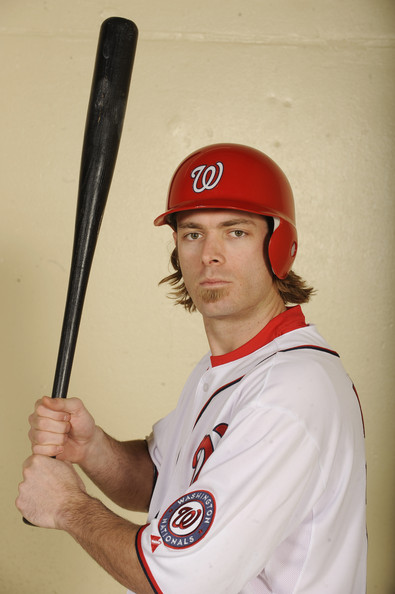
Jayson Werth is certainly our most expensive FA, by a considerable sum. Photo Mitchell Layton/Getty Images NA

The second in a series: The first looked at the Biggest/Best/Worst Trades of the Washington Nationals era and was posted in late March.  Yes, it took me 8 months to return to this series, despite writing most of this post in July.  Here in Part 2, we’ll look at the biggest, best and worst Free Agent signings in the tenures of both Jim Bowden and Mike Rizzo. In the last section we’ll look at Draft picks.

Ground rules for this article:

1. When considering a Free Agent we’ll only consider the FIRST signing in this list.  So, for guys who have signed multiple one-year free agent contracts in a row (guys like Rick Ankiel and Chien-Ming Wang), we’ll only consider them as a single signing.  For others who signed here and then left, only to come back (example: Livan Hernandez) we’ll consider them as separate signings.

2. We are considering extensions given to existing players (since they don’t fit elsewhere).  You can consider an extension just a pre-emptive free agent contract.

3. We’re mostly focusing here on Major League free agents; each year we sign many minor league FAs ahead of camp.  If a Minor League FA signing ends up having a decent impact on the major league team, we’ll note him (good recent example being Laynce Nix).

Just for review, here’s the tenure period of both GMs:

  • Nov 2004 – Mar 2009: Jim Bowden
  • Mar 2009 – present: Mike Rizzo

The team has made dozens and dozens of signings: I won’t try to go through them all here.  For those interested, here’s my List of Free Agents from over the years (also available on the links section to the right of this blog).  I put up a similar notes file (List of Trades and Trading Partners) from the first post of this series, also available in the list of resources on the right-hand side of the blog.

Jim Bowden Tenure: Nov 2004 – Mar 2009

Bowden’s Biggest Free Agent Signings

  • 2006: Nick Johnson 3yr $16.5M
  • 2007: Austin Kearns 3yr $16.5M
  • 2008: Cristian Guzman 2yr $16M
  • 2009: Adam Dunn 2yr $20M

I wonder sometimes if Bowden doesn’t sit in his ESPN office as he writes his blogs and ask himself what he could have done here had he had more money to spend.  Look at this list; Bowden’s biggest deal in 5 off-seasons was a 2yr/$20M contract for a slugger who really had nowhere else to go that off-season.  Jayson Werth will make more than that annually starting in 2014.

Bowden’s Best Free Agent Signings

  • 2006: Brian Schneider 4yr extension, $2.9M
  • 2007: Ronnie Belliard 1yr ML deal
  • 2007: Dmitri Young 1yr ML deal
  • 2008: Willie Harris 1yr $800K
  • 2009: Adam Dunn 2yr $20M

Bowden’s 2007 off-season was pretty amazing, looking back.  He assembled a team on the backs of Minor League Free Agents galore, one of which (Dmitri Young) ended up being our lone All-Star.  The team went 73-89 and gave 145 of its 162 starts to guys who aren’t even in the league any more (exceptions: Joel Hanrahan‘s 11 starts with 6.00 ERA and late-season call up John Lannan‘s 6 starts as a 22-yr old).  He was the master of the scrap heap and spun a team that should have lost 100 games into a respectable 73 win team.  Too bad that luck ran out in 2008 as the team bottomed out.  But you have to hand it to Bowden for these three 2007 signings; Hanrahan didn’t really pay off for the Nationals, ever, but did enable us to eventually get Sean Burnett, a valuable member of the team’s bullpen these last few years.

All things considered, I’d have to say that Adam Dunn may have been his best FA signing.  Dunn’s bat was mostly wasted during his two years here, considering the unbelievably bad pitching staffs that Bowden assembled.  But the combination of Zimmerman-Dunn-Willingham was a pretty fearsome 3-4-5.  Ironically, NOT re-signing Dunn may also have been one of Rizzo’s best non-moves, considering Dunn’s amazing 2011 collapse and the subsequent rise of Michael Morse (who would have continued to be a bit player if the Nats still had Dunn in LF).

Bowden’s Worst Free Agent Signings

  • 2007: Austin Kearns 3yr $16.5M
  • 2008: Paul Lo Duca 1yr $5M
  • 2008: Rob Mackowiak 1yr $1.5M
  • 2008: Johnny Estrada 1yr $1.25M
  • 2008: Cristian Guzman 2yr extension $16M
  • 2009: Daniel Cabrera 1yr $2.6M

2008 was as bad as 2007 was good for Bowden.  Nearly every move he made back-fired, some spectacularly.  Paul Lo Duca hadn’t been signed for a week when his name showed up prominently in the Mitchell Report; he was released before July.  Rob Mackowiak and Johnny Estrada were just stealing money; its still not clear what Bowden saw in these guys.  I hated the Kearns deal, never understood what Bowden saw in the guy.  Daniel Cabrera was so bad for us it was almost comical, and it was a relief when we DFA’d him after 8 starts.

But the worst FA signing has to the Guzman extension.  He seemed decent enough after coming back from an injury that cost him all of 2005 and most of 2006, but Bowden inexplicably extended him for 2 years for the same amount of money that he had earned the previous four … and almost immediately his production tailed off.   Its not that Guzman was that BAD in 2009 and 2010, its just that he was so vastly overpaid for what he gave the team.  We flipped him for two minor league pitchers, he promptly hit .152 in 15 games for Texas and he was out of the league.

Mike Rizzo Tenure: Mar 2009 – present

Rizzo’s Biggest Free Agent Signings

  • 2010: Ryan Zimmerman 5yr $45M
  • 2011: Jayson Werth 7yr $126M
  • 2012: Ryan Zimmermann 8yrs $100M
  • 2012: Gio Gonzalez 5yr $42M

Its ironic that I had to remove three deals from this list (LaRoche, Jackson, Marquis) that would have qualified for Bowden’s “biggest deal” list.  That’s because the size of these deals are just dwarfing what the team was willing to do under Bowden.  Lots of pundits have (and continue to) criticized the Jayson Werth deal, and it routinely appears on anyone’s list of “Worst Baseball Contracts.”  And his 2011 season confirmed just how bad this may have turned out for Washington.  But a bounceback 2012, which featured Werth putting up a 125 OPS+ despite missing a ton of time with a broken wrist, showing the flexibility of batting lead-off when the team needed him, plus providing the veteran leadership and professionalism that this young team needs certainly would earn back some of that contract value.  In hindsight, I think the team made this deal as a strawman, to send a message to the rest of the league that we were NOT a low-budget, poorly run team, and to pave the path back to respectability in the minds of other professionals out there that Washington can be a destination franchise.

Rizzo’s Best Free Agent Signings

  • 2009: Julian Tavarez 1yr ML
  • 2009: Joe Beimel 1yr $2M
  • 2010: Livan Hernandez 1yr ML 900k
  • 2011: Jerry Hairston 1yr $2M
  • 2010: Matt Capps 1yr $3.5M
  • 2010: Joel Peralta 1yr ML
  • 2011: Todd Coffey 1yr $1.35M
  • 2011: Laynce Nix 1yr ML

In terms of impact-per-dollar, I think the first Livan Hernandez year of his return was probably the best FA signing that Rizzo has done.  Hernandez went 10-12 with a 3.66 ERA and a 110 ERA+ for less than a million dollars on the FA market.  That’s roughly $90k a Win, when most teams are paying more than $1M/win for free agent starting pitching.   However clearly Rizzo’s most shrewd FA deal was the Matt Capps signing.  He took Capps off the scrap heap; he was released by Pittsburgh after a horrid 2009, and his half season of excellent relief for us turned into Wilson Ramos and a minor leaguer (Joe Testa), returned in trade from Minnesota.  I will also mention that the value that minor league signings Julian Tavarez, Joel Peralta, and Laynce Nix gave the team was also fantastic, considering where these players were in their careers prior to joining us.

Rizzo’s Worst Free Agent Signings

  • 2010: Yunesky Maya 4yr $8M
  • 2010: Ivan Rodriguez 2yr $6M
  • 2010: Jason Marquis 2yr $15M
  • 2011: Matt Stairs 1yr ML
  • 2012: Brad Lidge 1yr $1M
  • Chein Ming Wang: all of them.

2010, Rizzo’s first FA class, didn’t turn out very well did it? Yunesky Maya has been a pretty big disappointment, giving the team just one MLB win for an $8M investment.  Ivan Rodriguez just proved to be slightly too old to be worth the starter money he was paid; you could argue that the leadership he provided was worth the money.   And Jason Marquis, bought as a stop-gap for a failed farm system, was god-awful in 2010.  I won’t completely kill Rizzo for the Brad Lidge experiment; it was worth a $1M flier to see if he had anything left in the tank.  Matt Stairs would have been another fine, low-cost experiment except for the fact that the team kept giving him at-bats for weeks/months after it was clear he was washed up.

For me the worst FA signing was related to the money poured down the Chien-Ming Wang rathole for three years running.  The Nats ended up investing $8M total over three years to get 16 starts, 6 wins and a 4.94 ERA.

Rizzo’s Too Early to Tell Free Agent Signings

  • 2011: Jayson Werth 7yr $126M
  • 2012: Ryan Zimmermann 8yrs $100M
  • 2012: Gio Gonzalez 5yr $42M

So far, Werth’s contract is trending as an over-pay, Zimmerman’s as an injury concern, and Gonzalez trending as a complete steal (21 wins for $8.4M AAV in 2012?  That’s a fantastic return for the money).  Pundits have stated that the Nats have “two 9-figure contracts but zero 9-figure players” (I read it at the time of the Zimmerman signing but cannot find the link).  I think that’s slightly unfair to these players, but until Zimmerman can stay healthy enough to produce at his 2009 level, you have to admit that he may be overpaid as well.  Perhaps Zimmerman’s brittle health issues can be alleviated if he makes the move to 1B, where he can continue to play gold glove calibre defense but have less of a tax on his body.  This analysis obviously does not take Zimmerman’s “value” to the franchise into account, which may be unfair when considering this contract (nobody really said Derek Jeter‘s latest contract was a massive overpay considering his service to the Yankees,  his “stature” as the captain and his eventual Hall of Fame induction; for the Yankees to cut him loose would have been a massive public relations gaffe).

Coincidentally, I didn’t view the contracts of guys like LaRoche, Jackson, or Morse as being specifically “good” or “bad.”   I think LaRoche’s one bad/one good season plus Jackson’s MLB average season was just about on-par with expectations for their contracts.  Morse’s 2011 production was pre-contract, so we’ll see how his 2013 goes.

Thoughts?  Any FA signings or extensions out there that stick in your minds that you thought should be mentioned?

Possible 2013 WBC Nationals participants?

leave a comment

Harper makes perfect sense to represent the US in 2013 WBC. Photo GQ magazine Mar 2012

I read a quickie piece with some Mike Rizzo quotes from the Washington Time’s beat reporter Amanda Comak on November 11th, 2012 and there was an interesting tidbit at the bottom: per Comak,  Rizzo has not been approached yet about any Washington Nationals participation in the WBC, but would approach each request on a “case-by-case basis” to determine what is in the best interests of the team.  This got me thinking about possible Nats representatives on 2013 WBC teams.

Lets take a quick look at the Nationals representatives on WBC teams from the past, talk about whether its really in the best interests of the team to even let these guys play, and then talk about who may be candidates for the 2013 WBC regardless.

(Note: I’ve added updates highlighted in red since the original 11/21/12 publication date on players mentioned here).

Washington has sent a decent number of players to play in the WBC over the years, with very mixed results for the team’s interests.  In 2006 the team sent seven different players to the inaugural WBC:

  • Luis Ayala for Mexico
  • Chad Cordero, Gary Majewski and Brian Schneider for team USA
  • Ronnie Belliard, Alberto Castillo, and Wily Mo Pena for the Dominican Republic.

The tournament was marred for the team by a blown UCL ligament to Ayala, who had undergone elbow surgery earlier in the off-season but pitched for his home country anyway.  The team did not want Ayala to participate in the inaugural event, did not want him used by the Mexican team, and team officials were “livid” by the injury, which cost Ayala the season and cost the team its 8th inning setup guy.  Ayala recovered to pitch again in 2008 but was never as effective, and was shipped out in 2009 for a PTBNL.  Coincidentally, I suspect the team still harbors some ill-will towards Ayala to this day.  Meanwhile the other two relievers who participated both experienced regressions in form; Cordero’s ERA nearly doubled (from 1.82 to 3.19) from his breakout 2005 season while Majewski’s numbers dipped slightly before he was traded in the big Cincinnati deal of 2006.

In 2009, the team had 5 participants:

  • Pete Orr playing for Canada
  • Joel Hanrahan and Adam Dunn playing for the USA
  • Saul Rivera and Ivan Rodriguez playing for Puerto Rico.

The WBC seemed to energize particularly Dunn, who enjoyed playing in a post-season atmosphere for the first (and only) time in his career.  Nobody suffered any injuries, but Hanrahan in particular may have been affected by his lack of a proper spring training; he posted a 7.71 ERA for the team while losing the closer spot and was shipped to Pittsburgh.  Ironically, Rivera also experienced a huge regression of form, going from a 3.96 ERA in 2008 to a 6.10 ERA in 2009 and was eventually released.

This begs the question; do we even WANT our pitchers playing on this team?  The first two WBCs have shown pretty distinctly that our pitchers have regressed greatly after playing.  This only makes sense: the spring training routines are greatly impacted to play in this event.  We may see a ton of front-office resistance to specific guys (especially those coming off injury) playing in the 2013 event.  Which could affect the eligibility of some specific players for 2013.

Now, which Nats may play for the 2013 teams?  First off, looking at the Nationals 40-man roster, we have become an amazingly heavy USA-born team (we’ll get to non-40man roster players in a moment). Thanks to the Nats big board resource (originated by Brian Oliver and now maintained by “SpringfieldFan”), which has the country of origin for players, here’s a breakdown of the home-country of our current 36 active (as of November 15th, 2012) roster players:

  • USA: 27 (would be 29 if adding in our rule-5 avoidance players)
  • Venezuela: 5 (Jesus Flores, Sandy Leon, Wilson Ramos, Henry Rodriguez, and Carlos Rivero)
  • Cuba: 1 (Yunesky Maya)
  • Columbia: 1 (Jhonatan Solano)
  • Dominican Republic: 1 (Eury Perez)
  • Netherlands (via Curacao): 1 (Roger Bernadina)

As you can see, the massive bulk of our team is USA born, and essentially our entire post-season starting roster was USA born as well.  That doesn’t necessarily mean that these USA-born players will actually play for team USA (Alex Rodriguez played for Puerto Rico despite being born and raised in Miami, and our own Danny Espinosa is eligible to play for Mexico by virtue of his first-generation born in the US status), but almost all of these guys will be up for consideration for the USA team.  And this only accounts for our 40-man players; as we’ll see below there’s plenty of lower-minors players from smaller countries that will participate.

Who from the Nationals franchise may make a 2013 WBC roster?  First off, thanks to James Wagner‘s 11/15/12 NatsJournal post we already know of three WBC participants; Solano is on the Columbian team, minor leaguer Jimmy Van Ostrand is on the Canadian team, and A-ball catcher Adrian Nieto is on the Spanish team.  Curacao qualifies to play with the Netherlands, and I’d guess that Bernadina would make a great choice considering the lack of Dutch players in baseball (Baseball Continuum’s projections agree.  And as of 12/4/12 he’s officially been listed as a Netherlands participant).. Venezuela is already qualified for the main draw and has a relatively strong possible team.  The Baseball Continuum blog posted an early projection of the Venezuelan team and listed Flores as a likely participant (specifically mentioning that Ramos wasn’t considered due to injury recovery; I’d suspect these two players to switch based on Ramos’ recovery and Flores’ awful 2012).   If Henry Rodriguez was healthy i’d guess he would be on that list too, but his season-ending surgery probably precludes his participation.  The Dominican Republic has perhaps the strongest depth and has no need for the recently called up Perez among its outfield depth.  Maya’s defection eliminates him from discussion for the Cuban team.  (12/4/12 update): Chien-Ming Wang has been announced as a member of Chinese Taipei’s team (for the purposes of this article I investigated all 2012 Nats).

Which leaves our large contingent of American players.  A couple of writers have started postulating on these rosters (David Schoenfield‘s very early guess as to a potential USA roster is here, Baseball Continuum’s latest projection is here).  So using these two posts as a starting point, lets go position-by-position and give some thoughts as to who may get some consideration.  Keep in mind the WBC rosters are generally very reliever heavy, since no starter is going to be “allowed” to pitch a complete game in March.

(Note: I’m still considering our Free Agents as “Nats players” for the purposes of this analysis, since this really goes position by position from our 2012 team to find candidates).

  • Catcher: Kurt Suzuki isn’t nearly in the class of the likes of Buster Posey, Brian McCann, Joe Mauer, or Matt Weiters.  There are a ton of quality american backstops right now.
  • First Base: Free Agent Adam LaRoche probably faces far too much competition from the likes of Prince Fielder, Paul Konerko, Adam Dunn, Allen Craig, Eric Hosmer, and Mark Teixeira to make this team.  If it were me, I’d go with Fielder and Teixeira.  But, LaRoche’s great 2012 season and his Gold Glove recognition may get him a spot.  He is a FA though, so i’d guess he won’t commit until he signs and gets the go-ahead from his new team.  Or, perhaps he uses the WBC to showcase himself?  Not likely needed; he should sign long before the WBC kicks off in March.
  • Second Base: Danny Espinosa is a decent player, but not in the same league as  Shoenfield’s projection of Dustin Pedroia and Ben Zobrist.  Brandon Phillips is also in the mix for the team.
  • Shortstop: Ian Desmond‘s breakout 2013 season may get him some consideration.  There’s not a lot of American quality short stops out there.  Troy Tulowitzki is the obvious leading choice (as was Derek Jeter in the first two WBCs), but is he ready to come back from injury?  Looking around the majors there are a couple other possibilities (JJ Hardy, Brendan Ryan, Jimmy Rollins and Brandon Crawford all could be alternatives as well).   I think Desmond’s combination of offense and defense, combined with Tulowitzki’s injury recovery could get him on the team.
  • Third Base: Ryan Zimmerman cannot break the hegomony of David Wright and Evan Longoria right now, even given Longoria’s injury struggles this season.  Chase Headley and David Freese are also in the 3b mix.  12/4/12 update: Apparently Wright is committed, Longoria is out due to injury recovery and Headley “was not asked,” so perhaps Zimmerman is back in the mix.
  • Outfielders: I think Bryce Harper is a natural to make this team, not only on talent but also because of the brand-name recognition (and TV ratings and fan interest) it would generate.  Same goes for Mike Trout.  Otherwise there’s a slew of top-end american players who can man the outfield and they read like the top of the MVP boards: Braun, Kemp, McCutchen, Stanton, Hamilton, and Granderson are all candidates to make this team.  12/6/12 update: Scott Boras has stated that Harper will skip the WBC to focus on his sophomore season.
  • Starters: The two logical Nats candidates to be considered would be Gio Gonzalez and Stephen Strasburg.  But lets be honest; there is no way in hell Strasburg would be allowed to play.  Could Gonzalez make this team?  Given the depth of American starter talent right now (just off the top of my head: Verlander, LincecumCain, Hamels, Halladay, Kershaw, Lee, Weaver, Sabathia, Medlen, and so on) perhaps this will be a selection of attrition moreso than a selection of availability.  So if a number of the older guys on this list beg out, perhaps Gio gets his shot.  The WBC’s location in San Francisco has already lead to Ryan Vogelsong committing to play in his home town, and could lead to other Bay Area players signing up.  I’m not sure any of the rest of our starters are really candidates, given the reputations of the above list plus the reliever-heavy nature of the roster.
  • Relievers: our two most well known relievers (Tyler Clippard and Drew Storen) are possibilities; would the Nats block Storen based on his 2012 injury?  Craig Stammen‘s breakout 2012 season could get him looks, based on the reliever-heavy needs of the team.  Normally Sean Burnett may be in the loogy mix, but there’s better lefty relievers out there AND Burnett’s FA status may lead him to bow out to curry favor to his new team (Schoenfeld lists Burnett as a possible member back in July, before knowing he’s declared free agency).  The question is, would you take Clippard/Storen against the likes of this list of quality american back-of-the-bullpen arms: Kimbrel, Ventors, Marshall, League, Janssen, Papelbon, Hanrahan, Motte, Boggs, Bailey, Reed, and Nathan?  Possibly, considering that a lot of these guys probably bow out.  We’ve sent multiple relievers to each of the past two WBCs and its likely going to be the same thing this year.

Summary: here’s my guesses as to which Nats (and recent ex-Nats) will play in the WBC:

  • Venezuela: Ramos
  • Spain: Nieto
  • Canada: Van Ostrand
  • Columbia: Solano
  • Netherlands: Bernadina
  • Chinese Taipei: Wang
  • USA: Harper, Desmond, Gonzalez, Clippard.  Perhaps Zimmerman and Stammen.

March 2013 update: here’s the post-WBC actual list of participants when all was said and done, helped by  the list of rosters via Wikipedia.  MLB reports that nine (9) Nationals are participating in the classic, though the below list (excluding Wang) totals more.  They’re not counting Solano/Columbia, having lost in the preliminaries.

  • Columbia: Jhonatan Solano (AAA/Mlb in 2012)
  • Spain: Adrian Nieto (low-A in 2012)
  • Canada: Jimmy Van Ostrand (AA in 2012)
  • Italy: Matt Torra, Mike Costanzo (both AAA in 2012, Washington MLFA signings for 2013)
  • Netherlands: Roger Bernadina, Randolph Oduber (high-A in 2012)
  • Chinese Taipei: Chien-Ming Wang (former Nat, non-signed FA for 2013 start of season)
  • USA: Gio Gonzalez, Ross Detwiler
  • Dominican Republic: Eury Perez (3/4/13 addition to DR team)

Nats 2012 Rule 5 Protection Analysis

6 comments

Is Nathan Karns a 40-man roster addition candidate ahead of the rule-5 draft? Photo Potomac Nationals official via milb.com

In part I on this topic yesterday, we talked about the Nats Rule 5 draft history.  Today we’ll talk about Parts II and III: who the Nats may think about protecting ahead of this year’s Rule 5 draft, and what the team may be seeking if they participated and drafted a player or two in the Rule 5 draft themselves.

Part II: Nationals Rule-5 Draft Protection Candidates.

I kvetched a little bit about this topic in this space earlier this off-season, talking about the lack of roster space for the upcoming Rule 5 draft.  I suspected that as a result of MLB deals given to guys like Anthony Rendon and Matthew Purke, in addition to the glut of guys we had to add mid season, we may be seeing some guys not getting protected this year that would be in other years.  As of today, the Nats 40-man roster sits at 36 players with a bit of immediate room to spare (we could non-tender the likes of John Lannan, Tom Gorzelanny or Jesus Flores (speaking of Rule 5 additions) in a pinch, and I think Carlos Rivero may be imminently DFA’d), but we also have several 25-man roster spots departing via free agency that need to be filled, quickly filling back in those empty spots.  So, perhaps the issue isn’t as bad as I thought it might be.

That being said, here’s a look at some of our Rule 5 eligible guys that may warrant protection.  For “official” opinions here’s Mark Zuckerman‘s Rule5 post, along with Adam Kilgore‘s version of the same analysis.  This is a combination of first-time eligible guys for the 2012 draft (mostly, guys who were college junior draftees from 2009 or high school draftees in 2008), prior year eligible guys who have suddenly worked their way onto the radar, and any International FA signing from 2008 or before (they are treated the same way as high school age draftees).  Working off a list that Luke Erickson posted LAST november, along with his post on the same topic this week, and of course referencing the two great nats farm system resources maintained by “SpringfieldFan” (and formerly by Brian Oliver): the Nats Draft Tracker and the Nats Big Board, here’s some thoughts on protection candidates:

Stronger Candidates to protect

  • Nathan Karns: he finally had an injury-free season, and he put up numbers as expected when the team gave him an above-slot deal in 2009.  He is older, and only projects as a AA starter in 2013, but he is an intriguing starter prospect for the Nats in 2014.
  • Destin Hood: I don’t think the team is ready to give up on the long-term 2008 2nd round project.  His numbers have been increasing as he reportedly is learning the game better.  I suspect the team protects him to protect their investment.
  • Danny Rosenbaum; the “Ace” of Harrisburg this year, and our furthest advanced legitimate starter prospect, Rosenbaum projects more like a Tommy Milone or John Lannan right now.  I’d suspect that the team may protect him, thinking that someone could stash him as a loogy for a year.  I’m not sure his ceiling is in the Nats rotation, but he could be a good trade candidate.  He hit the DL late last year, which makes it slightly less likely that a team would take a flier on him, but his track record warrants his mention.
  • Patrick McCoy: he just repeated AA and despite already being Rule-5 eligible last  year he improved on his numbers in 2012.  Why protect him?  Because this team needs a Loogy, and McCoy may be the leading lefty reliever in our upper-minor leagues.
  • Jeff Kobernus has put up consistent numbers his whole career, but still projects as a power-less middle infielder.  Would the team protect him, thinking he has a chance to become the next Steve Lombardozzi?  Would the team protect him just to protect their bonus money?

Weaker candidates to protect

  • Trevor Holder: a 3rd round pick roundly criticized at the time of being an underslot money saver, Holder had decent peripherals in high-A and AA this year.  But, he doesn’t seem to project as the dominant right-hander he was in college and seems likely to top out as an org-arm.  Despite his 3rd round pedigree, I don’t see a team taking a flier on him in rule-5.
  • Pat Lehman; a local guy (GWU), but despite having good numbers in AAA he remains a very common commodity; a right handed minor league reliever.  Even if he’s drafted, it isn’t that great a loss because of the depth we already have at the position.
  • Paul Demny; despite making the AFL team this year, I don’t quite see Demny as being a draft risk.  His ERA this year and in years past has been substandard.
  • Robert Gilliam; only really mentioned here since we just acquired him last off-season in the Gio Gonzalez trade and the team probably doesn’t want to lose him, but his 6.37 ERA in AA makes it extremely unlikely someone grabs him in the Rule 5.
  • Erik Davis: technically rule-5 eligible last year, he stepped up this year and put up pretty dominant AA numbers.  As with Lehman, he’s a righty reliever in AA so the odds of his getting picked (or protected) seem slim.

Players not worth protecting for various Reasons

Now, there’s a bunch of “good names” that are Rule 5 eligible in our system but who are not listed here, including guys who toiled as high as AA last year.  Anyone not listed here is probably not going to be missed, even if they are drafted.  Plus, the likelihood of a decent pitcher prospect who has never played above A-ball being drafted in rule-5 is extemely slim.  Most of the guys above are mentioned because of their capability to be “stashed” on a MLB roster.  This includes:

  • last year’s departures Brad Meyers (coming off injury) and Erik Komatsu (clearly been passed on the organizational OF depth chart).  Yes they got picked last year, but both got returned and I’d be surprised to see them picked again.
  • higher profile draft picks Josh Smoker and Jack McGeary: neither has advanced far enough in their careers to realistically stick with a MLB team.
  • Jeff Mandel may be an accomplished AAA pitcher, but I don’t think he’s anything more than that.
  • Rob Wort hasn’t advanced far enough up the chain to be considered.
  • Justin Bloxom could be a dark horse prospect next year, but only made it to AA the second half of last year.

Who would I protect, If I was the GM?  I’d protect Karns, Hood, Rosenbaum and McCoy right now, filling the four current openings on the roster.  If a move needs to be made (a FA signing or a trade), then you make one-for-one DFAs or non-tenders as needed.  You have 40-man room; might as well use it.  My order of protection is probably Karns, McCoy, Hood and Rosenbaum (from most important to least important to protect).  Odds are that the team only opts to protect a couple of guys to give immediate roster flexibility heading into the winter meetings.

Part III: Might the Nats participate in the Rule-5 draft this year?

This year’s Rule 5 draft has some intrigue for the team; unlike last year, we have definite holes in the bullpen and on the roster which can be “more easily” filled via the Rule 5 draft.  We need a lefty out of the bullpen, we need a backup middle infielder and we need a 5th starter.  The odds of finding the latter in the rule 5 draft are very slim, but the odds of finding one of the first two are better.  If you look at the last couple of Rule 5 drafts, nearly every player drafted is either a Pitcher or a Middle Infielder.  Most teams carry a second backup middle infielder who gets very little playing time, ideal for “hiding” rule 5 draftees.  And of course every bullpen has a “mop up” guy who pitches once or twice a week in low-leverage situations, also a great place to hide a rule-5 guy.

Besides, the “penalty” for drafting a guy and returning him is pretty small in baseball terms: $25,000 net (it costs $50,000 fee to select a player, then if you “offer” them back the original team has to refund $25,000 of that fee).   So I’d be surprised honestly if the team didn’t roll the dice with at least a flier on either of the two needs mentioned above.

Personally, I’m not a big fan of the Rule 5 draft any longer.  It was created as a way to liberate players who were stuck in farm systems behind established players (much the way that minor league free agency rules attempted to do the same), but now seems to be a cheap method of teams to get an extended tryout of players.  I’ve now come to believe that the draft is not necessarily in the best interests of the players or the teams; just read below for the organizational transaction chaos that followed players.  It also seems like a high number of players who get drafted in rule-5 immediately suffer season-ending injuries; coincidence or correlation?  If you’re a rule-5 drafted arm, the drafting team knows you must perform at a MLB level to stay in the organization.  Wouldn’t that imply there’s added pressure to compete, leading to overthrowing and arm injuries?  Plus, teams that lose players often get them returned damaged and having lost a season of service time.  I suppose players are the ones that are pro-Rule 5 draft, in that it immediately means a promotion to the 40-man roster, MLB service time and higher pay.

In the end, it makes for a good reason to write a 2,500 word blog post, and it may result in our team having new prospects to evaluate and dream about, so perhaps I protest too much.

Nats Arbitration Decisions/Non-Tender deadline 2012; my predictions

10 comments

Tyler Clippard faces what could be a very interesting arbitration case this offseason. Photo Jonathan Newton/wp.com

Once the dust settled on this year’s Super-2 cutoff (and we discovered that Drew Storen will be arbitration eligible this year while Ryan Perry will not), the Nats will have no less than TEN arbitration-eligible players this off-season, setting the stage for some non-tender decisions, some possible contract extensions, and (hopefully not) some arbitration cases.  The Non-tender deadline isn’t until November 30th, but its never too soon to talk about what the team may do.

Here’s the 10 players eligible, a discussion as to what kind of salary they may obtain and whether or not the team will even tender a contract.  Note: the salary estimates are from mlbtraderumors Matt Swartz‘s arbitration projections model, with my own thoughts adjusting up or down based on opinion and noted as such).  Arbitration salaries essentially try to project the full FA value of a player and then award 40%/60%/80% of that FA salary in each of the three typical arbitration years.  For guys getting a 4th, I generally assume they’re getting nearly 100% of their FA value in the last year.

Locks to get a Contract Tender

  • Ian Desmond. 1st year Eligible/$3.2M estimate: Breakout season in 2012 will earn him plenty of dollars in his first and subsequent arbitration cases.  $3.2M equates to nearly a $10M/year full FA value, probably fair for now but could escalate if Desmond continues to provide Gold Glove calibre defense to go along with middle-of-the-order power.  It may be slightly early to think about a longer-term contract extension for Desmond; I’d want to wait and see if his 2012 production continues into 2013.  Remember; he’s just one year removed from a time when most Nats fans wanted him replaced.
  • Drew Storen: 1st year Eligible/$1.7M estimate: Storen will get a 4th year of eligiblity by virtue of a quick call-up after getting drafted.  $1.7 over 4 arb years equates roughly to a FA value of $7M/year, which seems a bit low for a good closer.  I’d guess Storen could get slightly more money, though the team probably argues that his injuries in 2012 prevented him from giving full value, and is probably why he’s estimated at $1.7 instead of nearer to the $4M that Chad Cordero got his first arb year with this team.  Rizzo has dangled Storen in trade talks in the past, but seems likely to keep him (at the possible expense of Clippard) for the coming season.
  • Craig Stammen: 1st year Eligible/$900k estimate: Another super-2 guy who was incredibly valuable to the team this year.  I’d guess he’ll get more than 900k despite his role as a middle reliever, since 900k is barely more than the typical veteran minimum (which is roughly $800k, what Mark DeRosa made in 2012).  Though, 900k equates to roughly a $3.5M FA value, which seems high for the kind of middle relief right-hander that are a dime a dozen in this league.  I’d guess Stammen is the right kind of guy for the team to buy out a couple of arbitration years, much as they did with Sean Burnett a couple years ago.   But, being a fungible middle-relief arm, don’t look for anything other than a 2 year deal so the team is protected in case of injury.
  • Jordan Zimmermann: 2nd year eligible, $4.9M estimate: Another super-2 guy who will get a 4th year of arbitration, this estimate also seems low considering the season that Zimmerman just put in.  It also roughly equates his FA value at roughly $10M a year, which I’d guess is also undervaluing Zimmermann.  Ask yourself; if he was on the open market, you’d have to think he’s getting more than $10M/year (point of comparison: Kyle Lohse turned down a 13.3M qualifying option and may get 4/60; who would you rather have?)
  • Tyler Clippard: 2nd year eligible, $4.6M estimate: I see this estimate as high frankly, as being too much of a raise over his 2012 salary of $1.625 despite his being the closer most this year.  Clippard said it himself; its better to be the closer, get the saves and get the salary.  But $4.6M for a setup guy is way too hefty.  If Clippard comes in this high with his demand, look for an ugly arbitration hearing.  Honestly, I could see Clippard being a trade candidate and making this arbitration decision someone else’s headache, and the team goes into 2013 with Storen firmly entrenched as the closer with the likes of Mattheus, Garcia and Henry Rodriguez vying for the 8th inning role.
  • Ross Detwiler: 1st year eligible, $2.2M estimate: This seems right in line with what Jordan Zimmermann got last year ($2.3M in his first eligible year).  A successful young starter going through this process the first time.
  • Roger Bernadina: 1st year eligible, $1.1M estimate: A year ago I thought Bernadina was going to get DFA’d at the end of spring training.  Now I wonder if he’s got enough value to be flipped in trade after a standout season for this team as its 4th outfielder.  $1.1m is very reasonable for a 4th outfielder with his defensive skills, so don’t be surprised to see Bernadina remain in this role with the team for several years.

Most likely Non-Tender candidates

  • Jesus Flores: 4th year eligible, $1.2M estimate.  Flores represents an interesting test case.  Clearly he no longer has a 25-man catcher spot, having fallen behind both Wilson Ramos and Kurt Suzuki on the depth chart.  The team also has shown itself to have decent rising catcher depth in the likes of Sandy Leon and Jhonatan Solano.  And Flores really regressed this year both offensively and defensively, so much so that the team had to go out and acquire Suzuki late in the season.   So I completely understand those that think that Flores is a non-tender candidate.  BUT, you don’t just cut loose valuable commodities, and a healthy catcher who can serve as a backup in the majors is still worth keeping.  That being said (as I reported in an earlier post), Flores seems to have achieved 5 service years, meaning that despite his option availability he’d have to agree to be assigned to AAA.  Which means his flexibility is completely compromised for this team in 2013.  The only remaining reason to sign him would be as insurance in case Suzuki or Ramos get hurt in spring training.  If he doesn’t get traded in the next two weeks, look for a non-tender.
  • Tom Gorzelanny: 4th year eligible, $2.8M estimate.  I’m not sure I agree with the MLBtraderumor estimate here, because the likelihood of players getting pay DECREASES in arbitration is pretty slim.  Its not like Gorzelanny posted a 6.00 ERA in 2012 after all.  Gorzelanny made $3M in 2012, where he predominantly served as our long-man/mop-up guy out of the pen.   The question the team has to ask itself is this; is $3M too expensive for the last guy out of the pen?  I believe it is, and thus I believe Gorzelanny is destined to get non-tendered.  I believe the team likes him but his salary isn’t matching up to his role any longer, so I see him being forced to take a significant salary cut if he wanted to stay here.  Were I the Nationals, I’d rather take a shot at a MLB-minimum guy (or even a rule-5 guy) in that mop-up role.  The only thing that gives me pause in declaring that the team is ready to cut ties with a lefty reliever is the apparent sky-high cost of lefty relievers on the market; Jeremy Affeldt just signed a 3 year $18M deal to stay with San Francisco.  Would this contract convince the Nats management that perhaps Gorzelanny is a player worth hanging on to?
  • John Lannan: 3rd year eligible, $5M estimate.  There are two schools of thought with Lannan in the Natmosphere right now.  One group believes that the team will let Edwin Jackson walk, Lannan will naturally take his place as the 5th starter and the team won’t pursue any starter talent in trade or in free agency.  The other school of thought (and the one to which I subscribe to) states that Mike Rizzo values power arms and doesn’t rate Lannan at all, that $5M (which I think is a low estimate if he were to actually reach arbitration) is far too expensive for a soft-tossing 5th starter, and that the team will be actively searching for a 5th power arm to replace Jackson in the rotation.  I think the team would rather take that $5M+ and use it to pay an acquisition versus continuing to fund Lannan’s sub 100 ERA+ exploits.  This opinion ignores the rising cost of lefty starters, and the relative dearth of quality starts on the FA market, so perhaps the Nats hang on to him one more year.

Having so many arbitration eligible guys means that the Nats payroll will take a significant hit.  Assuming that the team tenders the above 8 players (including Flores), here’s what the payroll implication will be:

Player 2011 salary 2012 estimate
Desmond $512,500 $3,200,000
Storen $498,750 $1,700,000
Stammen $485,000 $900,000
Zimmermann $2,300,000 $4,900,000
Clippard $1,650,000 $4,600,000
Detwiler $485,000 $2,200,000
Bernadina $493,500 $1,100,000
Flores $815,000 $1,200,000
subttl $7,239,750 $19,800,000
Gorzelanny $3,000,000 $2,800,000
Lannan $5,000,000 $5,000,000

The team needs to plan on paying more than twice it did in 2013 for the services of the top 8 arbitration eligible players in 2012.  Most of that money can be made up by non-tendering both Gorzelanny and Lannan … except that those players would need to then be replaced on the roster.   Still, getting these 8 players for less than $20M a year while the Yankees owe Alex Rodriguez $28M for 2013 alone sort of puts things in context.  It is a good problem to have, having to pay your arbitration-eligible stars more and more each year.

Nationals Players’ Service Time and Option Status for 2013

15 comments

Jesus Flores achieved 5 full years of service time in 2012, complicating his roster status going forward. Photo Toni Sandys/Washington Post

In the process of opining on some preliminary Nats hot-stove moves this coming off-season, I found myself asking certain service-time/options questions about players on the 40-man roster.

So, I took the time to create a Spreadsheet of all Nats 40-man roster players with Options status for the coming season (well, actually update a version I had of this information from last year).  I also tried to update everyone’s service time to what it should stand at at the end of the 2012 season (though honestly some of the service time calculations, especially for someone bounced up and down this year like Corey Brown, can be tricky).

I know that Luke Erickson‘s Nats Big Board has an “Options Status” tab, and I didn’t mean to circumvent the work there; i’m just not sure whether it has been updated for the coming season.  The big board Options tab also has some helpful links to decipher some of the options ramifications, especially the tricky 4th option (which will notably come into play for several of our guys very soon, as discussed below).

Nonetheless, if I have the Options statuses and Service time calculations correctly done, there are some interesting roster management moves on the horizon.  The below analysis includes a disputed 4th option for Ryan Perry; I’m pretty confident I’m correct in determining his option status but will caveat that opinion (and this whole article) by reminding the reader that I’m not in fact a professional baseball executive and may have a couple of these calculations wrong.

Here’s a full list of our current 36 40-man players (this is where we stand as of today, post FA declarations of our seven free agents plus the reverting of our former three 60-day DL guys to the 40-man roster).  I’ve got these players divided into four categories, with some discussion after each:

Category 1: Vets who can refuse demotion (5 or more years of service)

Players in this category and their service time at the end of 2012:

Name Svc Time First Added to 40-man Option Years Used # Ops Left
Gorzelanny, Tom 5.16 Sept 2005 2006, 2008, 2009 0
Flores, Jesus 5.079 Dec 2006 2008, 2011 1
Suzuki, Kurt 5.113 Jun 2007 none 3
Tracy, Chad 7.000 Nov 2004? ? ?
Zimmerman, Ryan 7.032 Sep 2005 none 3
Morse, Michael 5.114 Nov 2004 2005, 2006, 2007 0
Werth, Jayson 9.102 Nov 2002? ? ?

Discussion: Most of the guys on this list are no-brainer core pieces of the team in 2013 and beyond, but two names in particular raise interesting questions.  First Tom Gorzelanny has now achieved enough MLB time so that he cannot be sent down without his permission, but that was largely irrelevant based on his lack of options anyway.  He remains a non-tender candidate because of his expected raise from his 2012 $3M salary given his role as long-man/mop-up guy for the team (well, that is unless you’ve seen the price of left-handed relief on the FA market this off-season … maybe he’s NOT a non-tender candidate).  The bigger surprise on this list is Jesus Flores, who I believe achieved his 5th full service year in 2012 and now (despite having a minor league option left) can refuse an assignment to AAA.  This represents an interesting decision for the team, who clearly has Suzuki and Ramos as its #1/#2 catchers.  Most think he’s also a clear non-tender candidate for 2013, but I tend to think that he’s a valuable commodity worth tendering a contract.  Despite his poor batting in 2012 (slash line of .213/.248/.329) there is a market for backup catchers in this league, especially ones that once showed the hitting promise that Flores has (a slash line of .301/.371/.505 in the early part of 2009 prior to his injuries).  Maybe this service time issue becomes the straw that breaks the camel’s back of his tendering decision; if we tender him, we’ll immediately have to trade him because he’ll likely refuse an assignment and be declared a free agent if he doesn’t make the 2013 team.  Perhaps the team cuts bait on him before having their hand forced.

Category 2: Players with Options but who are entrenched on the 25-man roster for 2013

Name Svc Time First Added to 40-man Option Years Used # Ops Left
Gonzalez, Gio 3.162 Aug 2008 2009 2
Mattheus, Ryan 1.111 June 2011 none 3
Storen, Drew 2.140 May 2010 none 3
Strasburg, Stephen 2.118 Aug 2009 2010 2
Zimmermann, Jordan 3.154 Apr 2009 2010 2
Ramos, Wilson 2.047 Nov 2008 2009, 2010 1
Desmond, Ian 3.027 Nov 2008 2009 2
Espinosa, Danny 2.033 Sep 2010 none 3
Lombardozzi, Steve 1.023 Sep 2011 none 3
Harper, Bryce 0.152 Aug 2010 2011, 2012 1
Moore, Tyler 0.113 Nov 2011 2012 2

Discussion; the likelihood of seeing any of these guys optioned to the minors in 2013 seems slim; mostly they are starters and key players for the team going forward.  That being said, John Lannan‘s surprise demotion in 2010 while he struggled was enabled by his options availability, and a struggling player like Moore or Lombardozzi could be sent down to make room if need be.

Category 3: Players whose Options almost guaranteed to be used in 2013

Name Svc Time First Added to 40-man Option Years Used # Ops Left
Kimball, Cole 0.138 Nov 2010 2011, 2012 1
Maya, Yunesky 0.070 July 2010 2010, 2011, 2012 1?
Perry, Ryan 2.142 Apr 2009 2009, 2011, 2012 1?
Purke, Matthew 0.000 Aug 2011 2012 2
Leon, Sandy 0.096 May 2012 2012 3
Solano, Jhonatan 0.092 Nov 2011 2012 2
Marrero, Chris 0.033 Nov 2010 2011, 2012 1
Rendon, Anthony 0.000 Aug 2011 2012 2
Perez, Eury 0.030 Nov 2011 2012 2

Discussion; This list is where some of the 4th option availability comes into play.  First Yunesky Maya has already used 3 options but clearly isn’t in the plans of the team for 2013 (the final year of his 4yr/$8M wasted contract).  But, if I read the options rules correctly his lack of achieving 5 professional seasons will give him a 4th option, which is likely to be used for 2013.  The same goes with Ryan Perry, who was drafted in 2008 but made the Tiger’s MLB roster in 2009, nearly out of Spring Training, meaning he’s just finishing his 4th professional season.  This means (as was pointed out by a reader a few posts ago) he’s eligible for a 4th option, which is likely to be used as Perry continues to remake himself as a starter.  (Note: the 4th option validity for Perry has been questioned here and there and revolves around 2010, when I don’t believe he was optioned).  I see him being in the AAA rotation and serving as injury insurance for the MLB rotation.  Marrero and Kimball are both in the same boat; they both missed all (or most) of 2012, burning an option in the process, and unless the organization makes the decision to designate them to make room on the 40-man they will each burn their last minor league option in 2013.  The rest of these players are working their way up the minor league system, or in the case of Matthew Purke, hopefully working their way back into 100% health.

Category 4: Players with Options available, jeopardizing their 25-man status in 2013

Name Svc Time First Added to 40-man Option Years Used # Ops Left
Christian Garcia 0.027 Sep 2012 none 3
Lannan, John 4.045 July 2007 2010, 2012 1
Stammen, Craig 2.160 May 2009 2009, 2011 1
Brown, Corey 0.059 Nov 2010 2011, 2012 1

Discussion: I probably should have put Stammen into the 2nd category of players, based on his breakout 2012 performance.  Lannan is a likely non-tender after getting the surprising option to Syracuse in 2012 and demanding a trade; however if he’s offered arbitration he can have the same thing happen to him again in 2013, serving as a multi-millionare AAA starter/insurance policy.  The question is whether or not the team wants to spend money in that fashion.  It remains to be seen what the team does with Garcia; numerous reports talk of him converting to a starter.  If so, his options availability would allow the team to send him to AAA to hone his craft were he to not be ready for a rotation spot out of spring training.  Lastly Brown seems stuck in 4-A status right now, having cleaned up in AAA but struggled at the MLB level.  Perhaps he’s also a “guarantee” to be optioned in 2013 and belonging in the 3rd category; I put him here only because the Nats outfield situation remains in so much flux.  If LaRoche walks, Morse likely moves to first, Moore likely starts in left (absent another FA outfielder signing or other acquisition), Bernadina continues as the 4th outfielder and the team may possibly need a 5th outfielder candidate.  Brown is a lefty though, and the team has already invested in a lefty bench bat in Chad Tracy, so perhaps this works against him.  There’s so much yet to be decided though, its hard to guess how it will shake out.

Category 5: Players with no options left

Name Svc Time First Added to 40-man Option Years Used # Ops Left
Clippard, Tyler 3.148 May 2007 2007, 2008, 2009 0
Detwiler, Ross 3.002 Sept 2007 2008, 2009, 2011 0
Rodriguez, Henry 2.114 Nov 2007 2008, 2009, 2010 0
Rivero, Carlos 0.000 Nov 2009 2010, 2011, 2012 0
Bernadina, Roger 3.146 Oct 2007 2008, 2009, 2011 0

Discussion: The main player that has a worry here is Carlos Rivero, claimed off waivers from Philadelphia and who burned his last option in 2012 without even getting a Sept 1 call up.  He had a decent season in AAA (.303/.347/.435) but seems to be without a position (he played 3rd primarily in AAA and doesn’t seem to have another position).  I’m guessing he’s DFA’d this off-season and the team attempts to re-sign him to a minor league contract.  Henry Rodriguez‘s lack of options has resulted in some dubious DL-trips several times for this team, as he clearly could use some minor league time to fix his Jeckyl-and-Hyde performances.  But he can’t be optioned, so in some ways the team is stuck.  Honestly, I think its just a matter of time before they run out of patience and DFA him as well.

Thoughts?  Corrections?  Any and all feedback is welcome.

MLB 2012-13 Off Season calendar

2 comments

Just as an FYI, I’ve created a link to a spreadsheet of key events, dates and deadlines for this coming MLB off-season.   A quick summary of those dates is listed below.  With the new CBA and new rules regarding contracts and options, I still have some guesses as to when the exact date for some contract specific items are.  Feel free to comment/provide feedback if you know the exact date.

Bolded/Italicized Events are post-2012 season awards, official or otherwise.

Date Event Nats Specific Impact
Oct 19th, 2012 MLB Comeback Players of the Year AL and NL Adam LaRoche possibly getting some votes?
Oct 23rd, 2012 Sporting News Comeback Players of the Year AL and NL Dunn, Posey winners
Oct 25th, 2012 Fielding Bible Awards given
Oct 28th, 2012 Roberto Clemente Award given Zimmerman nominated
Oct 28th, 2012 Last actual day of 2012 World Series; official end of 2012 season n/a
Oct 29th 2012 Official start of FA period (12:01am the day after the last game of the WS) LaRoche, Jackson, Burnett, Gonzalez, Duke, DeRosa
October 30th, 2012 Rawlings AL & NL Gold Glove Announcements Desmond, LaRoche are finalists
Nov 1st, 2012 Team and player options must be decided three days after the end of the World Series.  10/31/11 at midnight LaRoche, Burnett have options from the Nats.
Early November? Clubs have to re-set their 40-man rosters, moving all 60-day DL players back to active.  Happened in the past about 11/9.  May be changed date w/ new CBA
Nov 2nd, 2012 5pm: Deadline to make Qualifying offers for your own Fas (average of top 125 salaries or $13.3M for 2012).  5 days after end of WS Nats likely to make Qos to both Jackson and LaRoche, neither of whom is likely to take the deal and thus guaranteeing the Nats draft pick compensation if we lose both guys.
Nov 2nd, 2012 HoF “Veterans Committee” releases ballot.  Officially announced12/3/12
Nov 3rd, 2012 5 days after WS ends: Free agent filing period and exclusive negotiating window ends at 12:01 a.m. ET. Free agents can sign with any team. LaRoche, Jackson, Burnett, Gonzalez, Duke, DeRosa
Nov 3rd, 2012 Free Agency granted to all eligible Minor League free agents (5 days after the end of the WS).  Eligibility done on service time; 6 years ML service for college draftees or 7 years ML service for HS draftees or free agents under the age of 18. http://www.baseballamerica.com/blog/prospects/2012/11/minor-league-free-agents-2012/ has full list; notable names include Arneson, Pucetas, Severino, VanAllen
Nov 4th, 2012 Wilson Defensive Player of the Year awards, given by MLB to best defensive player on each club. Adam LaRoche wins the award for the Nationals.
Nov 5th, 2012 MLBPA announces “Players Choice” awards: Player of the year, Comeback Player of the year, etc No Nats awarded MLBPA’s version of the BBWAA awards.
Nov 7th, 2012 BBWAA Award Nominees announced on MLB networks
Nov 7-9, 2012 GM Meetings, Palm Springs, California for 2012 Rizzo may be laying groundwork for big FA signings.
Nov 8th, 2012 Last day for players to accept arbitration from current club. Would the Nats offer arbitration to its Fas?
Nov 8th, 2012 Louisville Slugger Silver Slugger Awards LaRoche, Desmond likely candidates.
Nov 9th, 2012 12 Days after WS ends: Players must accept or reject Qualifying Options LaRoche only Natioanls FA to get a QO.
Nov 12th, 2012 AL, NL Jackie Robinson Rookie of the Year Awards Harper or Willey?  We’ll see if Harper’s great finish gets him the award.
Nov 13th, 2012 AL and NL Manager of the Year Johnson should get the NL manager of the year for the Nats winning 17 more games than 2011.
Nov 14th 2012 AL and NL Cy Young Gio Gonzalez in the discussion but likely to lose out.
Nov 15th 2012 AL and NL Most Valuable Player No real Nats MVP candidates; perhaps LaRoche gets some top 5 votes.
Nov 15-18th, 2012 WBC Qualifier #4, Taiwan (Chinese Taipei, New Zealand, Phillipenes, Thailand)
Nov 15-19th, 2012 WBC Qualifier #3, Panama City (Brazil, Columbia, Nicaragua, Panama)
Mid November, 2012 Sporting News Executive of the Year announced I think Mike Rizzo is NL GM of the year.
Mid November, 2012 Owners Meetings, ? Location for 2012
Nov 20th, 2012 Day to file reserve lists for all Major and Minor League levels.  In other words, Last day to add players to 40-man to protect them from the Rule5 Draft A host of rule-5 eligible decisions pending for Nats; Rosenbaum, Karns, Kobernus, Hood, etc.
Nov 30th, 2012 Midnight: Deadline for teams to Tender contracts to arbitration eligible players.  If not tendered, those players immediately become free agents. Lannan, Gorzelanny, Flores possible non-tenders here.
Early December, 2012 Last day to request outright waivers to assign player prior to Rule 5 Draft
Dec 3rd-6th, 2012 Winter Meetings, Nashville, TN for 2012
Dec 3rd, 2012 HoF “Veterans Committee” officially releases ballot that was made public 11/2/11.
Early December, 2012 Baseball America announces its Executives of the Year
Dec 4th, 2012 MLB Balloting results announced for Hall of Fame Ford C. Frick Award for excellence in baseball broadcasting
Dec 6th, 2012 Rule 5 Draft.  Occurs at Winter meetings Nats are likely to at least participate in the Rule5 draft, but their draft position leaves them picking last of the 30 teams.  A utility infielder or a bullpen arm could be had here.
Dec 31st, 2012 Deadline for BBWAA ballots for HoF voting.
Jan 9th, 2013 Hall of Fame BBWAA voting announced; the HoF class of 2013.
Jan 5-15, 2013 Salary arbitration filing period Nats could have as many as 10 arbitration cases to settle (but more likely 7 or 8).
Mid January 2013 Salary arbitration figures exchanged
Feb 1-21, 2013 Salary arbitration hearings (actual hearing date per player picked at random)
Mid February 2013 Mandatory Spring Training reporting date for Pitchers and Catchers
Mid February 2013 Voluntary Spring Training reporting date for non-pitchers and catchers
Early March 2013 Contracts of unsigned players who are not yet eligible for Arbitration may be renewed
Mar 2-5, 2013 WBC First Round, Pool B in Taiwan (Korea, Netherlands, Australia, tbd)
Mar 2-6, 2013 WBC First Round, Pool A in Japan (Japan, Cuba, China, tba)
Early March 2013 First Spring Training Game for the Nats
Mar 7th-10th, 2013 WBC First Round, Pool C in Puerto Rico (Venezuela, Puerto Rico, Dominican Republic, tba)
Mar 7th-10th, 2013 WBC First Round, Pool D in Phoenix (USA, Mexico, Italy, tbd)
Mid March 2013 Last day to place a player on unconditional release waivers and pay 30 days termination pay instead of 45 days.
Mar 17th-19th, 2013 WBC Championship round, San Francisco, CA
Late March 2013 Deadline to request unconditional release waivers without having to pay the player’s full salary
March 31st, 2013 2013 Season Opener
April 1st, 2013 Traditional Opening Day (Cincinnati) Nats open at home to Miami
April 15th, 2013 Jackie Robinson Day

September callups and the pending Nats Roster crunch

6 comments

Cole Kimball (remember him?) could be a victim of a roster crunch this off-season. Photo Rob Carr/Getty Images via zimbio.com

I took this discussion out of the comments section of the Giolito post in August and made it a separate discussion item, since the situation only got more “dire” with the 9/3/12 call-ups of both Christian Garcia and Zach Duke.

Before getting into the below analysis, let me say this: I’m absolutely supported all of the 40-man additions or the 9/1 call-ups; they were all required, important moves and, especially with the early-season catcher crunch, were vital to ensuring the continued success of the team through the September push.  Adding these two latest arms to a well-used bullpen, plus the 9/1/12 call-ups of of eventual 5th starter John Lannan, catcher depth in Sandy Leon and defensive replacement/pinch runner Eury Perez signal that this team used every avenue in its arsenal to win down the stretch and secure not only a playoff entry, but the #1 seed.

Garcia and Duke were new 40-man additions; to make room at the time the club put Henry Rodriguez on the 60-day dl (apropos since he just had season-ending elbow surgery).  The 40-man roster was filled to a full 40 active players, with an additional three on 60-day DL (Kimball and Ramos joining H-Rod on the 60-day list).

So, why am I worried about a future 40-man roster crunch?  Because with all these additions, we’re going to have to make some tough choices once it comes time to protect guys from the rule-5 draft.  Some have said that the expected Free Agents and Non-Tenders will immediately ease the roster crunch, but I’d counter that these players will have to immediately be filled through free-agency and aren’t going to offer the relief one may expect.

Lets do some analysis for the 43 guys (40 on 40-man plus 3 60-day DL) we’re talking about.   Here’s how these 43 guys are categorized in terms of contract status for next year:

  • Seven (7) guys under contract for next year.  Werth, Zimmerman, Morse, Gio Gonzalez, Maya, Tracy, Suzuki.
  • Eighteen (18)  guys who are pre-arbitration; Strasburg, Rendon, Purke, Harper, Espinosa, Ramos, Henry Rodriguez, Lombardozzi, Marrero, Mattheus, Kimball, Moore, Perez, Rivero, Solano, Garcia, Leon, Brown.  Some of these are non-tender candidates; we’ll get to them below.
  • Nine (9) guys who are arbitration-eligible but who are (in my opinion) not in Non-Tender jeopardy: Zimmermann, Clippard, Flores, Desmond, Storen, Bernadina, Detwiler, Stammen, Perry.  Both Perry and Storen may or may not actually hit Arbitration status per Cots, but the logic still stands that they’d be tied to the team regardless.  Are any of these guys non-tender candidates?  See below.  [Editor’s Note] we now know that Storen DID hit super-2 status, while Perry missed out on arbitration for the year.  Most of this post was written prior to this knowledge.
  • Four (4) pure FAs that immediately come off books: Mike Gonzalez, Jackson, Wang, DeRosa.
  • Two (2) more guys with mutual options that, as it turned out, declined their side and became free agents anway (LaRoche and Burnett).
  • Three (3) easy Non-tender guesses: I think the team non-tenders Gorzelanny, Lannan and Duke (but looks to bring Gorzelanny back as a long-man).  There are other possible non-tenders on this roster; we’ll talk about them later on.

So, on the day the FA’s clear and the 60-day guys get put back on the 40-man we’ll be at 43-6 FAs = 37 players.  So, assuming both 43-6 FAs=37 to start, perhaps down to 34 at the non-tender deadline. That leaves 6 spots opened up … but if my scenario plays out as described above with 6 FAs and 3 non tenders, that includes no less than FIVE of our primary 25-man roster all season. Which means most likely we’ll be active in the FA market looking for replacements for those five guys. First example: Who replaces Edwin Jackson? The next guys in line are Lannan and Wang; both likely gone. After that is perhaps Perry or Maya, both on 40-man but so far both proven not to be able to get out MLB hitters. So we’re going to be looking for another starter. Same goes with replacing Burnett and Gonzalez as lefties out of the pen, and replacing DeRosa as mlb-veteran utility infielder.

My point is that, yeah we have a lot of guys getting cut but we can’t just leave those spots open on the 40-man; we’ll need to immediately fill them with MLB deals in free agency. So we go from 34 open spots probably almost immediately to 38 or 39 with these eventual FA  replacement signings…. and boom, you have your roster crunch when it comes to rule5.

I have a draft version of the 2012 rule 5 pre-draft recommendations and it could get ugly, but to do some quick analysis here’s the Draft Tracker google xls: https://docs.google.com/spreadsheet/ccc?key=0AmkEIm1TLiXQdGhVRjRfNW81SG8xRlROQ1ZxZzNfbUE&hl=en#gid=0.  Yellow shaded cells are 2012 R5 eligible but don’t forget 2011 R5 guys who have stepped up and may need protecting. At first glance in the conversation to be protected has to include: Kobernus, Rosenbaum, Karns, Hood, and Demny. I’m not saying they all need to be protected, but some of them may.

My point is this; if the team wants to protect more than 1-2 guys, they’re looking at a one-for-one replacement on the 40-man roster.  Maybe they do DFA Marrero and Kimball, but they probably don’t want to.  Marrero is only 24.  Kimball was relatively successful before going down with shoulder surgery and is the kind of reliever that Rizzo loves.

This is the essence of the “roster crunch” that this team faces this off-season.

How does Nats-Cards NLDS Game 5 rate historically?

7 comments

How “good” of a game historically speaking was Game 5 of the Nats-Cards NLDS?  How will this game be remembered historically?

I realize of course how difficult it is to objectively view the Nats meltdown in Game 5 from a baseball stand-point for Washington fans.  It was too much of a gut-punch game, too sudden, too unbelievable of a collapse by our closer Drew Storen.  And we’re all immediately on the defensive because the inevitable back-seat driver columns from hither and yon about how Stephen Strasburg would have won the series for us in the face of more than enough evidence to the contrary (as in, how exactly would Strasburg have factored into a 2-run lead given up by our closer in Game 5?)  But I wonder if this game goes down into the pantheon of great games, or if it will remain known as just an amazing collapse by Nats bullpen.

I touched on the topic of “Greatest Games” last fall, when I wrote in this space that I thought game 6 of the 2011 World Series was instantly among the best games of our lifetime.  The trap that we all fall into as sports fans is to immediately assume that the player or game we are watching today is immediately “better” than historical figures in each sport.  I see far too many articles in the sportswriting world that immediately declare that Such-and-Such a sports news item is the “worst trade” or “best game” ever played.   Strasburg is “the best pitching prospect the game has ever seen,” that is until the next “best there ever was” guy shows up.  We’re prone to hyperbole to get hits and sell papers, unfortunately.  But Game 6 last year was different; as I was watching it I was saying to myself that it was the best game I’d ever witnessed.

In that same post I also reviewed MLB Networks’ fantastic “Best 20 games of the last 50 years” series for context.  Going back to that list, the breakdown of games is as follows:

  • Regular Season: one game
  • Regular Season One-Game playoffs: Two games; from 1978 and 2009, both classic games.
  • Divisional Series: One game: the 1995 Seattle-New  York series with a walk-off win.
  • League Championship Series: Seven Games
  • World Series: Nine of the twenty games.

So, only one game of the 20 best from the last half century occurred in a Divisional Series, and it featured an upset over the historical Yankees and an amazing walk-off win at home with the crowd going wild.  I think baseball historians don’t give as much credence to divisional series games, no matter what the context of the game.  The Cardinals in Game 5 of this year’s NLDS may have just overcome the largest deficit in any elimination game in the history of the sport … but there was no walk-off win, no home crowd going berserk at the end.  In the Seattle/New York ALDS game on the top 20 list, two moments of individual brilliance by Hall of Fame quality players led to the win.  In the Nats-Cards game, two no-name middle infielders from St. Louis poked run-scoring singles to spoil a 2 run ninth inning lead against a young team with no post season experience and no baseball history.

So, perhaps thankfully, Drew Storen isn’t going to be unfairly remembered in the same vein as Bill Buckner and Steve Bartman; singular people unfairly blamed by an entire fan-base for failures by their team unfairly (If you think Buckner was solely responsible for the Red Sox collapse in that game, you need to watch the ninth inning again and pay attention to how badly Calvin Schiraldi pitched in the 10th.  And if you think Bartman is responsible for the Cubs pitchers giving up EIGHT runs in an inning, or blowing a 2-run lead in the 6th inning of game 7, then I’d suggest you check the game footage to prove that Bartman was in the stands and not on the field).  This game will stick in Nats fans memories for quite a while of course, but at least we won’t be seeing our failures on highlight shows for decades to come.

Written by Todd Boss

October 31st, 2012 at 10:54 am

We miss you; How Oakland’s Gio Gonzalez haul did in 2012

3 comments

We miss you Tommy; Glad to see you're doing well. Photo AP/Ben Margot via dailyrepublic.com

Nationals farm system observers certainly knew we gave up a ton of talent to acquire Gio Gonzalez back in late 2011.  Most of the pundits I read at the time thought the Nats overpaid for a high-walk guy who overly benefited from playing in the “pitcher friendly” Oakland Coliseum (I say that in quotes since the multi-year park factors for that stadium can be nearly neutral depending on which statistic and which time period you choose).  We know what we’ve gotten in Gonzalez so far; a gregarious, pro-team guy who pitched lights out in 2012, increasing his K/9 and decreasing his BB/9 from both last season and from his career norms and who led the majors in wins.  He struggled in the playoffs of course, but his 21 wins were a big reason we were in the playoffs in the first place.

How about our 4 former Nats?  How are they doing so far?  In rough order of impact:

1. Tommy Milone: 13-10 with a 3.74 ERA and 1.279 whip in 31 starts after winning Oakland’s #5 starter job out of camp.   His debut was a sterling 8-inning 3 hit gem, and his season was a series of sterling outings interrupted by blow-out starts.  Scouts routinely pegged him as a 4-A starter, with not enough stuff to last in the majors, but he got results for us last year and continued to get results this year.  He helped lead Oakland to an improbable AL West crown and was the team’s #2 starter in the playoffs.  For a guy that I thought was a 4-A starter, Oakland has to be happy to have him on their squad.

2. Brad Peacock: Oakland is keeping him as a starter for now, and he toiled the entire season in AAA in Sacramento.  However, Peacock took a significant step backwards in 2012, posting a 12-9 record with an astounding 6.01 ERA.  Even accounting for the known hitters parks in the Pacific Coast League, to go from a 3.19 ERA in Syracuse to nearly double that in Sacramento spells issues.   I still think he’s bound for a middle-relief role on account of his only really having two pitches, and on account of the amazing starter depth Oakland possesses in their system.  But, starter or reliever, Peacock has to pitch better in 2013.

3. Derek Norris returned to the hitting form that we all knew and loved a couple years back once he reached Oakland’s AAA squad.  He hit .271/.329/.477 in about a half season in Sacramento and was then called up.   His MLB numbers weren’t great (.201/.276/.349) but he’s young and the team traded away its 6 year starter in Kurt Suzuki (to the Nats as we all know; sending Oakland yet another catcher prospect in the process) so Norris could be getting his chance sooner than later.

4. AJ Cole, the “gem” of the trade completely melted in the High-A California league, with a 0-7 record and a 7.82 ERA in 8 starts.   He returned to form upon his return to low-A, going 6-3 with a 2.07 ERA in 19 starts in the Midwest league.  All is not lost; he’s only 20, and there’s no shame in a 20-yr old failing at his first shot at high-A (where you see a lot of college draftees in their second pro year).


One year later, how does this trade look for both teams?  My trade reaction post from December 2011 talked about how this trade would come down to how closely the four traded guys came to matching their “ceilings.”  One year later, I think its safe to say that Milone has surpassed his ceiling, Peacock is in danger of never even fulfilling his “floor,” Norris is somewhere in the middle and its just way too early to judge Cole.

Meanwhile Gonzalez has surpassed what anyone could have hoped for in his first season; I thought he was a #2 starter but he put in an “Ace” year.  He may not win the Cy Young but he’ll be in the top 3 in voting.  He’s clearly a great clubhouse guy, a skill that you cannot put a dollar figure on.

I think both teams probably do this deal again.  There were no “winners” and “losers” thus far; both teams got exactly what they wanted out of the trade.

Written by Todd Boss

October 15th, 2012 at 3:20 pm

Game 5 Recap: Leaky bullpen and a Gutwrenching Ninth

13 comments

Not the best outing for Storen. Photo Andrew Harnik/washingtontimes.com

What a gut-wrenching game.

It started out as great as you could hope; scoring 3 runs in the first inning and igniting the largest crowd in Nats history.  The offense finally strung together a series of big hits from the top of our order against the same pitcher (Adam Wainwright) who shut us down so easily in the first game of the series.  The Nats offense woke up again in the 3rd and bounced Wainwright (the same guy that pundits expected to completely shut the team down again).  You can’t blow a 6-0 lead, can you?  Here’s a stat; on the Season the Nats were exactly 45-6 when scoring 6 or more runs.  But they’ve also coughed up larger leads; they blew a 9 run lead in Atlanta in July in a game that looked eerily similar to last night’s game; get a big lead, your starter gives up a few innocuous runs, then the bullpen slowly leaks runs until its all over.

Gio Gonzalez wasn’t really that effective, all told.  His final line: 5ip, 5 hits, 4 walks and 3 runs (all earned).  In the first inning he honestly looked startled on the mound, scared to be there.  He scuffled through the first inning looking tentative and got bailed out by some slightly over-aggressive hitting from the top of St. Louis’ order.  He did pitch with better confidence the next couple of innings (who wouldn’t with a 3-0 first inning and 6-0 third inning lead?).   He was definitely commanding his curve ball far better than in game 1 and was keeping St. Louis at bay.  However a lead-off walk burned him in the 4th for the first run, and then a complete meltdown in the 5th from Gio turned into two more runs.   His 5th inning line is as ugly as it gets for a starter; Double-Single-Walk-run scoring wild pitch-walk-walk to force in a run before finally getting the 3rd out.

Here’s where the bullpen just failed to get the job done.  Edwin Jackson walks the lead-off guy and he scores, making it 6-4.  The Jordan Zimmermann experiment from game 4 couldn’t be replicated, costing the team a run.  I can’t second-guess the move though; it had worked so well the night before.  Tyler Clippard gives up a home-run to Daniel Descalso to make it 6-5.  And of course we know what happened to Drew Storen, who picked a really bad time to match his career worst outing, giving up 4 runs on 3 hits and 2 walks in the 9th.  And the big hits didn’t come from the middle of St. Louis’ order; it was Descalco and Pete Kozma of all people getting the clutch hits.

My dad pointed out an interesting question; Storen was sharp last night but not tonight; could it be because he threw three straight games?  Storen had appeared in 3 straight games twice before this season but didn’t pitch full innings each time.  In this series he threw an inning each in games 1, 3,4 and 5.  His pitch count by game?  10,11, 26, and last night’s 33 pitch debacle.  Dad’s specific complaint was about the use of Storen in the blow-out game 3.  Why waste an inning there when you pretty much well know you’re going to need your 8th and 9th inning stars both subsequent nights?   Is it possible that Storen was just a bit gassed from the cumulative effects of a 26 pitch outing the previous night AND having pitched three consecutive days?

Another pet peeve of mine; how do you let Descalso steal second base un-challenged in the 9th?  Yes there’s two outs, but that put him in scoring position to tack on an extra run on the subsequent single.  If you hold that guy on, maybe you throw him out and get the 3rd out right there before the Cards get the lead.  He certainly doesn’t score on a single to RF.  This isn’t a problem just with Storen; the Nats pitching staff is notoriously bad at holding runners.  In the end, that extra run didn’t really matter … but it could have mattered if Suzuki threw the guy out before the go-ahead single, right?

There’s not much else to say in the way of analysis; the Nats should have been able to hold onto a 6 run lead, and Storen just had a bad night.  The fact that it came in such an important game is a shame.  If we want to look at a critical issue with the pitching staff on the night, it is probably this; the Nats pitchers put the Cards lead-off guy on in SIX of the nine innings, and that runner scored 5 of those times.  They got the lead-off hitter on base every inning after the 3rd.  That’s just a failure to execute by your pitching staff.  Of course it’s also a testament to the hitting ability of this St. Louis team up and down the lineup.

There goes the season; I had tickets for Game 1 of the NLCS.  I guess we have to wait til next year.