Nationals Arm Race

"… the reason you win or lose is darn near always the same – pitching.” — Earl Weaver

Baseball’s Unwritten Rules in question Again

6 comments

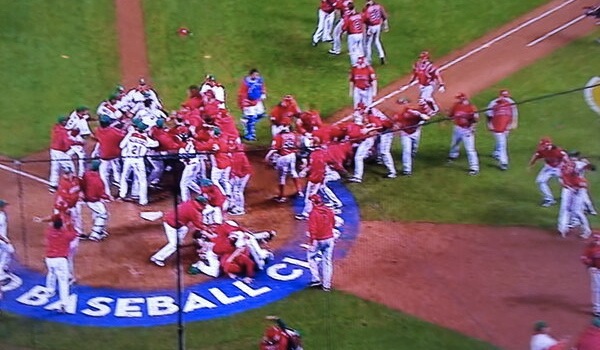
The nasty WBC brawl resulted from several breaches of “Baseball Etiquitte.” PHoto topsy.com

We all by now have heard about the Mexico-Canada brawl over breaches of  “Unwritten Rules” of the game.   This brought back into play a post I wrote mostly in May of 2011 on the same topic.

Now, the WBC’s pool play requires Run Differential to be brought into play, so you can kind of understand the “bunting with a huge lead” breach that led to the brawl.  But that fight was simmering all game as one small situation after another (mostly involving the Canadian catcher Chris Robinson, a career minor leaguer in the Baltimore organization) kept raising the level of irritation on the behalf of the Mexican team.  It had all the classic signs of a brawl-to-be: the “better” team (Mexico) was losing while not trying as hard, and was getting more and more irritated with the scrappy team taking the game too seriously and playing too hard.  Take out slides at 2nd base, bunting in non-bunt situations.  Eventually a guy gets hit and a very serious fight takes place.  You had a player in Robinson taking the game too seriously versus a bunch of MLBers for Mexico perhaps not taking the game as seriously.

What did I think of the bunt?  I thought it was in bad form frankly.  Yes the run differential counts … but I don’t believe Canada was in a situation where things would have come down to run differential.  I think Robinson had been “over-playing” the whole game and wanted to get one last dig in.

Back to my original May 2011 article on the topic; ESPN has a feature called “Player X,” wherein an anonymous professional athlete in one of the major sports pens an article from time to time writes an article about topics that may not otherwise be written about.  Because of his anonymity, he can name names and call out fellow professionals without the normal press-overreaction.

In May of 2011, a post was written about “Baseball’s Unwritten Rules” (it may be insider-only, I’m sorry).  Being that this is a topic I’ve written about in the past (see this June 2009 post on my previous blog), I found it relatively interesting.  I wrote the June 2009 post right after a very infamous “unwritten rule” was broken, specifically bunting to break up a no-hitter/perfect-game.  In fact Player X recounts another such situation where Curt Schilling had a perfect game broken up by a bunt single.

Years ago, after a long back-and-forth email conversation related to this same topic with a friend of mine (who wasn’t necessarily a baseball aficionado but did have some thoughts on the issue) I came up with this list of “unwritten rules.”

Unwritten professional Etiquitte rules of baseball

  • Don’t bunt to breakup a no-hitter or perfect game in the later innings
  • Don’t ever peek at the catcher’s sign or position
  • Don’t dive after an outside pitch when ahead by a sufficient amount
  • Don’t steal catchers signs overtly from 2nd base.
  • Don’t show up the pitcher after hitting a HR (standing there, bat twirl, etc)
  • Don’t overly try to break up a double play in a regular season/non-pressure situation
  • Don’t purposely turn a double into a single if you are close to a cycle.
  • Don’t try to show up a slower player by attempting to throw him out at first on a sharp single to right.

With a comfortable lead (a sliding scale; 10 runs or more at anytime, perhaps 7 runs in the late innings, fewer runs in the Majors):

  • Don’t bunt for a hit
  • Don’t steal
  • Don’t attempt to break up a double play
  • Don’t advance on a passed ball
  • Don’t take any extra bases that you can’t jog to.
  • Don’t swing for the fences on a 3-0 pitch
  • Don’t swing for the fences generally

Apri 2018 Update: after a curious complaint from the Minnesota Twins about a bunt attempt against their shift while down 7 runs, former Oriole’s closer Gregg Olsen had a great set of tweets about his interpretation of the unwritten rules of the game.  Going through them one by one, here they are (with duplicates of those above noted).  Olsen keeps adding more throughout the month  via his twitter account.

  1. There is no bunting for a hit in the 9th inning (only 9th). If the shift is deployed, then this rule is void.
  2. Thou shall not say “No hitter” in the midst of a no hitter. Really becomes taboo after the 5th inn., when you start to see teammates avoiding said pitcher like the plague.
  3. If you hit one of mine, I hit an equal or greater one of yours.
  4. Unless you are the pitcher, do not set foot on the mound.
  5. Do not make the first or third out at 3rd. Yer already in scoring position, don’t be greedy.
  6. If you are hit intentionally, after your pitcher hit 1 of theirs OR you have an idiot who showboats a HR, don’t start a fight. Just run down to 1st base, take 1 for the team
  7. Do not run up the score on an opponent. This means halting all stolen bases, it does not mean to stop hitting/pitching/playing defense. “Calling off the dogs” happens at the manager’s discretion. EVERYONE has a different threshold.
  8. Stealing signs is OK, just don’t get caught. Some books say sign stealing is taboo but it’s not. If your signs are easy enuf to steal, it’s YOUR fault.  If you get caught sign stealing, someone gets hit. If you get caught, it’s YOUR fault.
  9. Do NOT stand in the home plate circle (Dirt area surrounding home plate) when a pitcher is warming up! Do not even get w/in 10 feet of said circle.  You may get hit during warmups if you are on the dirt
  10. Nothing that happens in the clubhouse, leaves the clubhouse. These signs are posted in every clubhouse.  “What you see here, what you hear here, what happens here, STAYS HERE!”
  11. Do not show up the other team or a player. This means admiring HR’s, doing happy dances after K’s.  “Act like you’ve done it before”.
  12. If your pitcher gives up a bomb (long HR), make an effort to appear like you are trying to chase it down. Don’t just stand there and watch it fly over your head.
  13. Don’t touch other people’s stuff. Do not try on someone else’s glove. Do not mess with people’s personal clothes, game spikes etc.
  14. Do not eat or drink (alcohol) during the game. The alcohol part seems obvious. That’s a big NO-NO.  Don’t eat during the game – take care of your business before the game. No one wants to see you eating a sandwich in the 5th inn (snacks OK).
  15. Under no circumstances are you to ever try to injure an opponent. No matter what has happened, NOTHING is worth jeopardizing another player’s career.
  16. Honor other’s superstitions. Do not mess with peoples superstitions. You don’t have to agree with them but don’t mess with them.
  17. Do not play catch on the infield, any part of it. Warmups or catch is done in the OF or near the dugout. This one is truly unwritten. You will never hear it discussed but all baseball people know it.
  18. Do not peek in to the catcher’s signs if you are hitting. Do not even try to see where he is set up.  This will result in an immediate HBP.
  19. Always take a strike in the 9th inning until the tying run comes to the plate.
  20. There is no stealing on 3-0 counts.
  21. Rookies are to be seen, not heard. This game owes you nothing. Don’t act like you’ve been there cuz you haven’t. No one is entitled to be a Big Leaguer.
  22. Rookies don’t pay for anything. No one wants to hear them but like them or not, some vet took care of you. Pass it on.
  23. As a pitcher that is getting pulled from the game, always HAND the ball to your manager while you wait for him ON the mound.
  24. As a coach that has to cross the field to get to his coaches box, please don’t run across the field to get to your position. Run behind the catcher and umpire. And DON’T hold up the inning because you’re late.
  25. Don’t not swing so hard that you fall down (literally) or fall across home plate.
  26. Do not look at the umpire for an explanation of a ball or strike.  Bad things happen, man. Bad things.
  27. Do not step on the chalk. You will see all kinds of non chalk steppers; the stride overs, the hop overs and the defiers. The Defiers step on the chalk just to freak everyone out.
  28. No matter how bad you pitched, a pitcher MUST stay in the dugout until the inning ends. You have to wait to snap.
  29. Respect the game. Respect your elders. Respect your coaches. Respect your opponents.  Bottom line is, this game has been played for 140 years (Let that sink in). The game will be played with or w/out you tomorrow.

Most of these “unwritten rules” fall into two main categories:

  1. Don’t embarrass the other team if you already have a big lead.
  2. Don’t embarrass another professional at any point.

In the Canada-Mexico game, we saw several of these rules being broached.  But would you classify a WBC game in the same manner as a playoff game?  If so, then hard take out slides at 2nd and catcher-collisions at home ARE warranted.  But I get the impression that these MLB-heavy teams are still struggling whether to treat WBC games as exhibitions (it is Spring Training after all) or as serious competitions.  Certainly nobody wants to get hurt and cost themselves a roster spot or significant time off the season.  Meanwhile for a team of lesser players/career minor leaguers, the WBC is their shot at the title, their chance to face Major leaguers for perhaps the first, last and only time.  Guys for spain who have never pitched about AA suddenly are throwing to MVP-calibre stars.  That has to be a rush … and leads to situations where more “unwritten rules” may be broached.

By the way, Baseball isn’t the only sport with “unwritten rules.”  Think about an NBA player purposely trying to get a triple-double when his team is up by 20 late in a game.  Or an NFL team going for two points in the fourth quarter with a 4 touch down lead.  Or a soccer player trying a “Paneka” penalty while already leading by 3 goals.  All of these are broaches of each sports’ etiquitte and may end up causing repercussions.

What do you think?  About the Canada-Mexico situation, about unwritten rules in general?  I know many people are flat out against them, others think they’re completely understandible.  Did I miss any “rules” in my list above?
Written by Todd Boss

March 12th, 2013 at 9:52 am

WBC First Round Review

5 comments

I have to admit: I’m much more interested in the World Baseball Classic this year than in the first two iterations.  I don’t know why; perhaps its because I’ve become much more interested in prospects over the past few years, and the WBC rosters for the lesser teams are filled with minor league prospects.  I’m definitely watching the games though and have been really enjoying the competitions.  Here’s a quick review of the first rounds in all the pools (note that in the Far East the 2nd round is well underway; we’ll talk about that in a subsequent post).

These Pools are listed in their order of finish.  Here’s a Fangraphs.com summary of the two Far East pool first rounds.  And here’s the overall bracket for the tournament.

Pool A: Cuba, Japan, China, Brazil.

No real surprises here: the Brazilian team was expected to finish dead last while international powerhouse Cuba and two-time defending champion Japan advanced relatively easily.   Cuba continues its stellar international record with a head-to-head win against Japan to win the group (and as discussed here previously, could be a juggernaut if the defected Cubans could participate as well).  The bigger surprise here was China beating out Brazil for the automatic spot in the 2017 classic.

Pool B: Chinese Taipei, Netherlands, South Korea, Australia

A rather big upset here: South Korea finished 3rd and 2nd in the first two WBC tournaments, but fell behind the Netherlands on Run Differential after all three teams finished pool play 2-1.  Some have complained about the seedings; clearly by the results of the first two WBC events putting South Korea, Cuba and Japan in the same bracket seems unfair.  The Netherlands is filled with players from baseball-playing Dutch colonies such as the Netherlands Antilles, Curacao and Aruba, though it also has a number of players from the Dutch professional league Honkbal Hoofdklasse; either way it was not expected to advance against a traditionally strong Korean team playing so close to home.  Former Nat Chien-Ming Wang pitched well for Taiwan, bolstering his attempts to make a comeback after several disappointing seasons with Washington.  Our own Roger Bernadina started and played well for the Netherlands as they played their way into the 2nd round.

Pool C: Dominican Republic, Puerto Rico, Venezuela, Spain

There was no surprise who came in dead last (Spain), but I for one was shocked that a stacked Venezuelan lineup couldn’t come out on top of the Puerto Rican team.  Meanwhile the starting lineup for the D.R. looked closer to a MLB all-star lineup, and their dominance showed.  They’ve under-achieved in every tournament thus far and I look for the D.R. to go far in this tournament.  It was nice to see former Nats farm hand and prospect-watching favorite Christopher Manno pitching for Spain, even if he didn’t fare that well.

Pool D: USA, Italy, Canada, Mexico

For a while on Sunday, it looked like the USA was closer to finishing dead last (and having to qualify for the next tournament) than winning it, but that’s the surprises involved in pool play.  After getting completely out-played by Mexico in the opener, the USA squeaked by Italy on the strength of 4 scoreless, nearly flawless innings from Ross Detwiler before turning it on late to beat Canada.  Meanwhile, the “Italian” team (I put that in quotes since i’d challenge someone to find more than a handful of the Italian team that actually speaks the language) surprises everyone by finishing second.  Meanwhile, Mexico finishes dead last behind a surprisingly good Canadian team (whose 3-4-5 hitters batted something like .450 for the tournament) and faces qualification for the next tournament.  An interesting pool all around, which could have looked very differently with just a few runs here or there.

Brackets for the Semi final rounds (some of which have already started as of the time of this writing):

2nd Round Pool 1: Netherlands v Cuba, Japan v Chinese Taipei

2nd Round Pool 2: Italy v Dominican Republic, USA v Puerto Rico

Pool 1’s favorites have to be Japan and Cuba, while Pool 2’s favorites have to be USA and the Dominican Republic.  But, the Netherlands and Italy have played far above their supposed skill level thus far and we could be in for more shocks.

Written by Todd Boss

March 11th, 2013 at 9:26 am

Why I’d support a Universal DH

12 comments

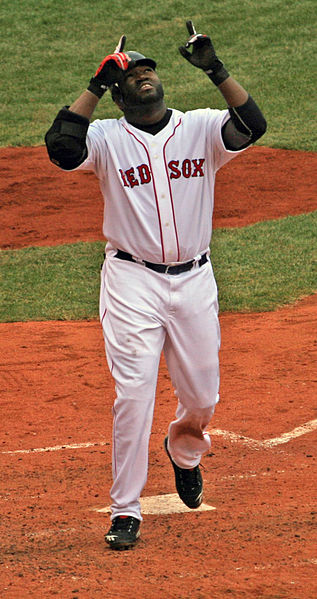
Yes, I’d like to see more DHs like David Ortiz in the league. Photo wiki/flickr user Toasterb

Every once in a while, during a period of time where there’s a relative dearth of topics I’d like to blog about, I scroll through dozens of draft posts and starter topics I’ve got saved and find one worth expanding on.  And sometimes one of these random drafts written months or years ago suddenly becomes topical because two hard-ass old-school managers decide to one-up each other in a meaningless spring training game.  Further, seeing this random post on Beyond the Box Score, referring to a Joel Sherman article in the NY Post on the topic spurred me into action to dust off this post and put it up for your perusal and criticism.

Summary: Despite mostly considering myself to be a baseball purist, I support going to using full-time Designated Hitter in both leagues.  Here’s a few reasons why:

1. Standardize rules between the leagues.  It is rather ridiculous that in 2013 half of a major US professional sport plays by such vastly different rules than the other half.  It would be as if the NFC in football was forced to attempt 2-point conversions after every touchdown while the AFC forced the use of a point-after attempt instead.

Here’s another interesting observation; i’m pretty sure that the National League is the ONLY baseball league in the country that requires its pitchers to hit.  The DH is in use in the minors, in college ball, in HS and AAU ball, and even in lower-level youth leagues (not that anyone would actually use it down that low, when your pitcher is usually your best hitter).

2. Improve the fan experience. As has been more eloquently stated elsewhere, fans would rather see a power hitter batting in the middle of the order than see a feeble .180-hitting starting pitcher batting 9th flail at a 95mph fastball for the 3rd out of each inning.  Scoring would rise, and more offense means more excitement for the fans.  Forcing pitchers to bat (and, more often than not, bunt) forces managers into a small ball mentality that is counter to most advanced metrics that advocate never trading an out for a base.

3. Let NL fans see more AL Stars in Interleague play.  Related to #2; right now in interleague games AL DH’s mostly have to sit, or if they do play another starter has to sit.  As an NL home city fan when the Red Sox come to town I don’t want to see Jon Lester hit; I want to see David Ortiz hit.

4. Artificially limiting NL Starting Pitchers.  Lack of DH in the NL means that managers are forced to remove starters too early, too often, in order to continue rallies in the middle innings.  I’ve even seen people advocate starters getting yanked in the 2nd or 3rd innings of games in certain situations.  I’d rather see my starter go as long as he can instead of having the one-out matchup styles of some bullpen managers start in the 5th inning of an (inevitably) 4 hour game.

5. More hitters get longer careers as their defensive skills wane.  Right now there’s a number of halfway decent hitters who are older and thus defensive liabilities who have basically been forced out of baseball that could fit in nicely with one of the 15 NL teams that don’t use a DH.  If you don’t think the player’s union wouldn’t mind 15 additional jobs for career-twilight veterans (who are mostly at the upper ends of the pay scales), you’re crazy.  This is essentially why I think the players union would support a universal DH.

6. Double switches juggled lineup spots is overrated.  Purists love it of course, but purists also want baseball to still have the pennant winners immediately advance to the World Series and cringe at divisional play, wild cards and the expanding post-season.  But expanding and increasing popularity of the sport means reaching out and appealing to the masses, and the masses interests are the same as purists.  One of the big reasons purists maintain support for the DH is because of the notion that these double switches and earlier pitcher man management makes for a better managed game and forces NL managers to be “better.”  That’s great and all … but I buy tickets to watch the players play, not to watch some overweight aging manager waddle out to the mound in the 5th inning so he can get a lefty-lefty matchup.

7. NL Teams are at a disadvantage in every inter-league game right now, because they build their rosters for the NL style of play while AL teams are afforded a blank line-up spot for a no-defense slugger all season.  AL teams are also allowed to “rest” players and just bat them over the course of the greuling 162-game schedule by virtue of the DH, while NL players get no such luxury, meaning you can make the argument that AL teams have a slight advantage in the World Series against their NL counterparts (not that we actually see this advantage … but in theory it exists).  You can make the counter-argument that AL pitchers are ill-prepared to bat as compared to their NL counter-parts, to which I’ll say that a .180 hitting pitcher is only slightly better than a .120 hitting pitcher.

8. Interleague every day means that the #7 issue is exacerbated.  This is the gist of the Sherman post; now that Houston is in the AL and there’s 15 teams in each league, there’s inter-league games every day.  Which also means that NL teams are even more disadvantaged since they can no longer do roster-maintenance just ahead of known interleague stretches.  Likewise, AL teams now have to have their pitchers take BP all throughout the season.  Its just a bad strategic situation all around.

9. Pitcher Specialization leading to worse hitting Pitchers.  Related to Point #1 (where the MLB NL is the sole league in America that “forces” pitchers to hit), we’re in the midst of an obvious shift in pitcher specialization, both in the majors (bullpen specialized roles) and during development.  More and more, kids are identified as superb pitchers early in their amateur careers (in many cases early in high school) and literally stop hitting.  At age 15-16.  If you’re a grade-A pitching prospect, do you think you want to jeopardize your draft status or your full-ride by screwing around on the base-paths in some meaningless AAU game?  I think not.  So these kids who havn’t worked on their hitting since their sophomore year in HS then get drafted or go to college, play years of Div-1 or minor league ball, maybe make it to the majors at age 24-25 …. and they havn’t faced live pitching regularly in a decade!  Is that what *anyone* really wants?

10. Baseball needs to spur offense: every one knows that the proliferance of upper 90s bullpen arms and the cracking down on PEDs has inevitably led to less offense in the game.  Joe Sheehan had a fun stat that pointed out that fans in 2014 were less likely to see a “ball put in play” than at any point since the dead ball era, thanks to the massive spike in strikeouts in the game.  Adding a DH and eliminating a position that league-wide bats about .122 would help.

Its time.  End the DH.  I was hoping for a resolution in the last CBA, but we have to wait a bit longer.


post-publishing edit: for context here was the 2019 slash lines for Pitchers in baseball: Here’s the link: Major League Total Stats ” 2019 ” Pitchers ” Dashboard. they slashed a collective .128/.160/.162 with a staggering 43.5% strikeout rate and a -18 wRC+. 43% strikeout rate! Why do baseball fans advocate to keep this, at the same time when they’re probably complaining about … how often baseball players strike out right now. By way of comparison, here’s the DH slash line for 2019: .252/.339/.467 for a wRC+ of 110.

Written by Todd Boss

March 8th, 2013 at 9:12 am

What could a full Team-Cuba look like without Politics?

one comment

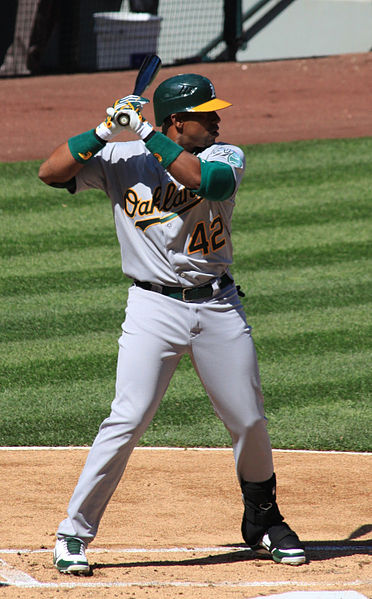
Team Cuba looks good so far; imagine them with Cespedes and all their other MLB stars. Photo wiki/flickr hj_west

I just finished re-reading The Duke of Havana, a great book about the back story of Orlando “El Duque” Hernandez, his rise to the top (and subsequent political fall from grace) in Cuban professional baseball, his escape from his home-land, his rise with the 1998 New York Yankees, and the general politics/life of typical Cubans in the post-USSR era.  Despite the crushing effects of the Fidel Castro regime in Cuba over the last 40 years, the island continues to produce MLB-quality baseball players.  Of course, thanks to the lack of diplomatic relations between the two countries, when it comes time for the World Baseball Classic, we can’t see a unified Cuban team.   Cubans who have escaped to play in America can never go back, and (as detailed in the book), often times leave behind wives, children and family who are subsequently pressured politically by Castro’s hacks.

I wondered what could an all-Cuba team really look like, if MLB players and other expatriots were allowed to re-unite with the current set of known Cuban amateur stars?  Using some of the same methods as in my “All Virginia” post, by searching for those born in Cuba along with some well-known Cuban Americans (per the politics link above), here’s a possible WBC roster of maximum strength for Team Cuba:

Manager: Fredi Gonzalez of the Atlanta Braves.  We’d get Cuban hall-of-famer Tony Perez out of semi-retirement (he was coaching at a small college in Georgia recently).

Positional Players:

  • C: Yasmani Grandal or J.P. Arencibia
  • 1B: Kendrys Morales or Gaby Sanchez
  • 2B: Yunel Escobar or Sean Rodriguez
  • 3B: Yonder Alonso
  • SS: Yuniesky Betancourt or Alexei Ramirez (2006 WBC Team Cuba member)
  • LF: Yoenis Cespedes (2009 WBC team member)
  • CF: John Jay (parents born in Cuba, emigrated to US before birth)
  • RF: Leonys Martin (2009 WBC team member) or Dayan Viciedo

Reserves: Yasiel Puig, Jorge Soler, Alberto Castillo, Jose Iglesias, Juan Miranda, Adeiny Hechavarria, Brayan Pena, Eddy Rodriguez

Best Cuban amateurs (aka, the leading defection candidates): Alfredo Despaigne (just named MVP of round 1 of pool play), Alexei Bell, Yulieski Gourriel,  Jose Abreu (the consensus #1 Cuban amateur prospect right now).

Thoughts: There’s some talent in this lineup; Cuba has developed some power hitters over the past few years but seems to specialize more in middle infielders (most of these reserves are middle infield prospects).  But a potential 3-4-5 of Morales-Cespedes-Alonso is nothing to shake a stick at.  I think this team could score some runs and would be excellent defensively.

Starting Pitchers

  • Gio Gonzalez
  • Jose Contreras
  • Livan Hernandez
  • Yunesky Maya (2006 and 2009 WBC team member)
  • Orlando “El Duque” Hernandez we’ll get him out of retirement; i’m sure he can still throw)

Relievers

  • Aroldis Chapman (2009 WBC team member)
  • Francisely Bueno
  • Raul Valdez
  • Danys Baez (retired in 2011)

Thoughts: So, we’re a little light on pitching, it seems.  We make use of Gonzalez’ first generation in USA status to steal him away from Team USA.  But after him the starting pitching gets light (even if you push Chapman into a starting role as Cincinnati is looking to do in 2013).   Contreras is a career 101 ERA+ guy, Livan may not have a job in 2013 and all nats fans can speak to what Maya brings to the table at this point.  I threw in El Duque despite him probably being close to 50 at this point (B-R lists his birthday in 1965); he was always in great shape and probably could throw a few junk balls up there right now.

Miscellany: Here’s links to Cuba’s 2006 WBC roster, their 2009 roster and their 2013 roster.  And here’s as complete a list of Cuban defectors as I can find on the internet.


7th Bullpen arm competition getting interesting

3 comments

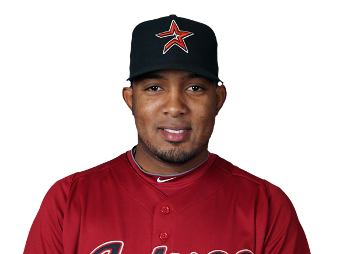
Is Abad in line to make this team? Photo Houston 2012 official via espn.com

By and large the entire 25-man roster is mostly set for this team.  Only an injury is likely to change the names of our bench or our rotation.  The biggest spring training competition remains the name of the 7th man out of the bullpen.  And we got some interesting notes this week that may illuminate who that name may be.

Just for review, I’m considering these 6 guys locks to make the team, either due to their contract, their option status or their earning the spot: Soriano, Clippard, Storen, Mattheus, Stammen and Duke.

The leading candidate for the 7th spot has always been Henry Rodriguez: he has no options, the GM loves his arm and when he’s on, he is the embodiment of “unhittable.”  But there’s a slew of possible issues with Rodriguez, not the least of which is the fact that he’s not yet recovered from his off-season surgery.

I had been advocating (partly out of fond memories, partly for self-interest since I know his cousin and think I could swing some free tickets) for Bill Bray to make the team as a 2nd lefty out of the pen and a LOOGY-focused guy.  However, he struggled in his ST appearances and he was sent to minor league camp yesterday (3/3/13).  Davey Johnson was quoted as saying that Bray’s mechanics are still not right, and it seems more likely now that he’ll be working in Syracuse for at least the beginning of the season.

Meanwhile, Christian Garcia has succummed to yet another injury, this one a “partial tear” in his forearm that (so far) won’t be treated surgically.   For a guy who has already had 3 arm surgeries, you have to wonder if he’ll ever be healthy enough to pitch for this team.  For what its worth, apparently the words “partial tear” are the same thing as “strained tendon” in this case, so perhaps it isn’t as bad as it sounds.  In any case, i’m guessing this little setback makes it certain that Garcia is not going to be the 7th guy out of the pen.

Meanwhile, out of nowhere Non-roster/Minor league signing Fernando Abad has looked pretty good so far; in 3 appearances he’s given up just 1 hit and 2 walks against pretty decent competition (B-r rates his opposition as an 8.3, where 10=all major leaguers).  Abad doesn’t have the greatest MLB numbers (5.09 ERA for Houston in 2012), but has looked decent in small samples so far this spring.

We’ll see how things play out from here.

Mike Trout’s 2013 Salary Debate

6 comments

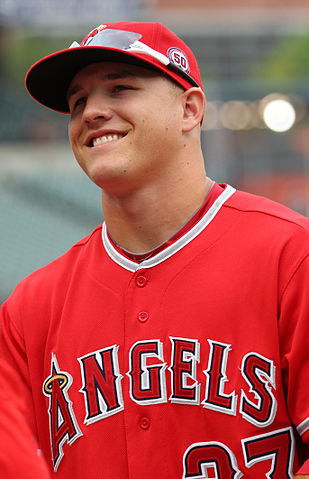
Trout curiously penny-pinched by his team in salary assignment. Photo wiki/flickr Keith Allison

The Los Angeles Angels could have “assigned” any salary they wanted to Mike Trout, per the guidelines set forth by the CBA for pre-arbitration MLB players.  They chose to give Trout a nominal raise ($20k), paying him barely more than the MLB minimum for 2013.

Trout, to his credit, has taken the high road.    Trout’s agent Craig Landis has not, ripping the team for the move, which resulted at the end of a “negotiation” whereby the Angels basically told Landis they were done talking and summarily “assigned” a salary for 2013.

Were the Angels entirely within their right to do this?  Yes.

Is $510,000 an amazing amount of money regardless?  You bet.

Does this number have any effect on the 9-figure salary Trout will eventually merit?  Not in the least.

Did the Angels needlessly look to save a few thousand dollars with the ONE guy on the team who they shouldn’t have low-balled after his historic 2012 season?  Absolutely.

There’s ample precident for teams to pay pre-arb guys more than they need to in order to show good faith.  Just a couple of recent examples: Craig Kimbrel went from $419k to $590k after winning the Rookie of the Year in 2011.  Tim Lincecum went from $405k to $650k after winning the Cy Young.   Grant Brisbee posted a few more 1st-2nd year salary jumps for the last 10 years of Rookie-of-the-Year award winners to further illustrate the point; Trout has the 2nd lowest raise by any of the last 10 RoY winners (unsurprisingly, the penurious Marlins gave Chris Coughlan a lower raise after he won).  What Trout did was arguably more impressive than what either Kimbrel or Lincecum did; he unanimously won the Rookie of the Year and came in 2nd in MVP voting (a disputed MVP vote since Trout’s season from a statistical basis was one of the best in the history of the game).

Why antagonize your best player, your most important guy going forward, in order to save $100k??   This is the same team that is going to pay Vernon Wells $24.643 Million to be their 4th outfielder.  Jeff Miller, columnist for the Orange County Register, put it better than I could online; every one of his points is valid.

I just hope the Nationals never stoop to this sort of behavior just to save a few thousand dollars on a team worth hundreds of millions.

Written by Todd Boss

March 5th, 2013 at 8:43 am

R.A. Dickey’s knuckleball POV style

2 comments

R.A. Dickey's knuckleball illustrated as best as I've seen it. Photo via wiki/flickr user dbking

From Dirk Hayhurst‘s blog (whose books you should absolutely order; they’re good reading), here’s a 1:35 minute video of R.A. Dickey‘s knuckleball being shot from directly over the shoulder of his bullpen catcher.

Serious question; how do you possibly hit this?  He throws it in excess of 80mph and it moves this violently?  Amazing.  Its no wonder he won the Cy Young last year, and I can’t see him being appreciably different in 2013.

Written by Todd Boss

March 4th, 2013 at 1:15 pm

Posted in Majors Pitching

Tagged with ,

The better the pitcher … the smaller the strike zone?

4 comments

I'm surprised Chapman has ever had a strike called... Photo via wiki/flickr SD Dirk

Thanks to Rob Neyer, who pointed out this interesting study done at BaseballAnalytics.org by writer David Golebiewski, which showed how the faster the fastball, the LESS likely it was to be called a strike for “in-zone” pitches.  And its a significant margin (see the link for the percentages): a guy who throws 86-88mph gets nearly 10% more called strikes within the zone than a guy who throws 98mph.

That’s amazing.

The called-strike rate is also larger for out-of-zone strikes for softer-tossing pitchers, by about a 5% margin.  And to further add insult to injury, the missed strikes are more prevalent to left-handed hitters than to righies.

Both Neyer and Golebiewski imply that the reason for this phenomena is physical limitations in the Umpire, who struggles to “see” a 98mph fastball and thus misses it.  This leads (in comments sections) to inevitable calls for automated strike zones and the use of pitch f/x instead of humans.

I have a possible different theory; one that any of us that play amateur baseball can readily attest to; I believe that in the amateur game (whether it be little league or adult amateurs) a guy who throws harder is naturally given a smaller zone, while a softer-tossing guy generally gets a larger zone.  Not because the umps can’t see the ball, but because umps make the assumption that velocity equates with talent, and thus give the softer-tossing guy more benefit of the doubt when it comes to the strike zone.

Thoughts?  Maybe Mike Rizzo shouldn’t be spending as much time filling his rotation with power arms, if they have smaller strike zones as a result.  Or, more to the point, maybe this is all the argument we need to give Henry Rodriguez his walking papers.

Written by Todd Boss

February 28th, 2013 at 11:37 am

Great article about PED usage from a former player

leave a comment

Posted yesterday 2/26/13 at BaseballProspectus.com from former player Eric Knott, who had a couple of cups of coffee over an 11 year professional career, including a stint with Montreal in 2003.

I’ve read some people who have claimed that “there’s no definitive proof that Steroids help baseball players.”  But I scoff at those claims; time and again we’re reading missives from former players brave enough to speak out who talk of utility infielders suddenly hitting 15 homers, and of middling relief pitchers suddenly adding 5mph to their fastballs and rocketing up the farm systems.

Knott’s article is no different.  You can claim stories like his and others are just coincidence, but it doesn’t take a huge leap of faith to connect the dots between steroid use, leading to increased strength and muscle mass, leading to increased power or velocity.

Also interesting is Knott’s take on “greenies” versus his opinions on Steroid use.  Clearly he differentiates between these two drugs despite both now being considered “performance enhancing.”

A good read.

Written by Todd Boss

February 27th, 2013 at 2:55 pm

Observations of Nats from early televised ST games

2 comments

Carlos Rivero looks like a valuable utility guy so far this spring. Photo Brad Barr/US Presswire via bleacherreport.com

I have to admit, I’ve thoroughly enjoyed the two Nats spring training games that managed to find their way to MLB Network TV thus far (NatsJournal live blogs for the 2/23 game here and 2/25 game here).  Not so much because we got to see Harper, Strasburg and Gonzalez … we all know what these guys can do.  No; I’m interested in seeing the young guys, the guys who we rarely get to see play.  This year’s spring training is a week longer, meaning that there’s going to be an awful lot of playing time devoted to these AA and AAA guys who got spring training invites, and that’s many more looks at the likes of Matt Skole, Chris Marrero, and Carlos Rivero.

It is also good to see some of these arm prospects that we’ve been hearing so much about, and it has been instructive to see some of the minor league veterans invited to spring training.  Some observations on our guys (arms then bats):

  • Stephen Strasburg‘s first 7 pitches on 2/23/13; all fastballs, all 96-97.  Clearly he was working on his spots.  I’m not sure he threw a change-up the entire outing.  As is always the case in spring training, guys work on pitches, work on location, and stats are meaningless.  He gave up a wind-aided homer to a guy who’s hit like 1 his entire career; no cause for concern.
  • Gio Gonzalez was amped up; he over threw his fastball in the first and (if you believe the broadcast) reached 97 in the second.  He struggled with his release point clearly.  However, his curve looked in mid-season form, breaking sharply and serving as a nice out pitch against the few regulars that the Mets did bat on 2/25/13.
  • Bill Bray looked, well, awful.  His mechanics were always odd-looking, but he got hit hard by the Mets lineup of rag-tag regulars.  Not a good start for Bray’s spring.
  • Cole Kimball back on the hill …. where was his fastball?  It generally was coming in 90-91.  That’s clearly a step back from 2011, when he was averaging 93 and peaking at 95.8.  Lets hope this is Kimball working himself in slowly and not a permament velocity loss from his shoulder surgery.  Either way, he’s not going to displace his RHP competitors for the bullpen spots unless he can hump it up a bit more.
  • Pat McCoy was scheduled to throw 2/23, and I would really have liked to see him, but the Mets were ahead in the 9th and didn’t need to bat.  I’m convinced that McCoy could be a sleeper candidate for a left-handed specialist in this organization, if the cattle-call of guys we’ve signed to ML deals falls through.
  • Ross Ohlendorf put in two clean innings, but I don’t like what I see from him necessarily.   Not a lot of velocity (90-91) but a big guy (6’4″) who gets downward plane on his fastball.  But he just seems very “hittable.”  His numbers from the last two years in the majors show it; ERAs of 8.15 and 7.77 in 18 starts.  Not good.
  • Nathan Karns: the beat reporters raved about his performance overall; 2 innings, 3 Ks against a MLB-heavy part of the Mets order.  It was great to finally see Karns throw; he has easy arm action, runs the ball in 94-95, and spotted the ball on the corners well.  What I didn’t see was anything resembling a quality second pitch.  He attempted a number of sliders (I’m guessing sliders; they were generally 84-86, which would be a very hard curve) and he couldn’t get over-top of them at all.  He did throw one particular breaking pitch that was sharp and nasty.  I didn’t see anything resembling a 3rd or 4th pitch though.  Is he destined for the bullpen?  That’s not the worst thing in the world; to be the next Ryan Mattheus, a hard-throwing 7th inning right hander.

Now for thoughts on our minor league hitters:

  • Eury Perez is, well, really fast.  If he turns out to be anything close to a servicable hitter, he’s got leadoff/center fielder written all over him.  The question could become; which speedy CF prospect do we hope for more; Perez or Brian Goodwin?  Denard Span‘s contract has a convenient option for 2015, just about the time that Goodwin is likely ready for the majors on a full-time basis.  Of course, that being said Perez is further along than Goodwin (who likely starts 2013 at AA).  Goodwin has power to go with his speed, while Perez seems to have very little power.  Which would you prefer to be the longer-term CF solution?
  • I like Matt Skole; sweet swing, not overpowered by facing MLB pitching.  It makes you wonder about scouting sometimes; how come guys like Skole and Tyler Moore get no love from scouts?  Its like a 30-home run minor league guy is somehow a liability.  Of course, Skole’s problem is the same as Anthony Rendon‘s; positional blockage at 3B.  Yes Skole was playing low-A as a college junior when he hit 27 homers … but if you’ve seen Hagertown’s stadium, you know its a monster park to hit balls out of.  27 homers is no mean feat down there.   I’ll be curious to see if Skole can hit with that kind of power at High-A or AA (wherever he starts 2013).
  • Chris Marrero has looked pretty good, making good solid contact a number of times.  I don’t like his haircut though :-).
  • Carlos Rivero is impressing me; he’s playing the outfield (after having played first SS and then 3B in the minors).  He has good hands, is a big guy, and seems like he can be a servicable backup utility guy who can fill in at any corner.  He’d be more flexible Moore or Chad Tracy in this respect (when judging our projected utility guys) but of course needs to show he can hit at the same levels.  Still, he is likely to be a numbers game victim unless someone like Bernadina gets hurt this spring.