Nationals Arm Race

"… the reason you win or lose is darn near always the same – pitching.” — Earl Weaver

Chasing Saves: a cautionary tale for GMs

6 comments

Mariano Rivera’s success has led to a generation of closer-chasing in MLB. Photo wikipedia

One of the mantras we hear from Fantasy Baseball experts is “Don’t chase Saves.”  Closers are so hit-or-miss in this league, that on draft day trying to chase mediocre closers usually turns into wasted draft picks as these guys frequently get hurt or under-perform and get replaced.  Well, its not that much better in “real” baseball, where teams best laid plans for closers often backfire mightily.

In fact, check out this link on RotoAuthority.com, which charts the Opening day and Closing Day 2012 closers for all 30 teams.  In summary:

  • Only 10 of the 30 MLB teams kept the same closer wire-to-wire.
  • 14 of the 30 teams had a different guy in the closer role by season’s end.  That’s half the league!
  • The other 6 teams had the same guy at season’s start and end, but went through personnel changes in between.  This includes our own Nats, who started with Drew Storen, he got hurt, Tyler Clippard took over and stayed in the role after Storen got back, then Clippard melted in September and Storen took back over the role.

By my observations, as of June 15th 2013 here’s the same stats for this year:

  • 22 of 30 teams have same guy as start of season
  • 8 teams have already made a switch (Boston, Detroit, Arizona, Oakland, Chicago Cubs, Cleveland, St Louis, Los Angeles Dodgers)

So what’s the point here?  Teams need to re-think they way they grow, acquire and pay for “Saves.”  Lets look at how far one particular organization has gone “Chasing Saves” and pursuing a Closer.  I present you the Boston Red Sox, normally considered a very forward-thinking, analytical organization but which seemingly has a very large blind spot for the mytical “shutdown closer” position.  As of the publishing of this article (June 14, 2013):

  • Current Closer: Andrew Bailey, for whom they traded 3 players to the Oakland A’s in 2011 to obtain.  Two minor league prospects and one Josh Reddick, who hit 32 homers last year.
  • Acquired last off-season to be their 2012 closer: Mark Melancon, for whom they traded two good prospects to the Houston Astros in 2011; Jed Lowrie and Kyle Weiland.   Lowrie is now posting a nifty 126 ops+ for the Athletics (to whom he was flipped by Houston for even more prospects).  Melancon had two bad outings at the beginning of 2012, was banished to the minors and eventually flipped for ….
  • Former 2013 closer: Joel Hanrahan, for whom they traded 4 players to the Pittsburgh Pirates last December.  Including Mark Melancon, who is repaying the Pirates for their patience in him by posting a .072 ERA in 25 innings thus far this year.  Hanrahan just had Tommy John surgery and is out for at least a  year.
  • [Post-post update]; By the end of June, Bailey allowed 4 homers in 5 games, hit the D/L and on July 22nd was announced as undergoing season-ending surgery. and is being replaced by … somebody.  By Mid July it seemed clear that it was Kenji Uehara, a free-agent signing last off-season.  So for all their trades, they end up using a minor FA signing as their closer.

So for the record that’s 9 guys traded away (including at least two effective hitters) in the past two off-seasons to chase one (in my opinion) relatively meaningless statistic.  And basically all they have to show for it is Andrew Bailey no longer pitching the 9th for them.

Of course, maybe the joke’s on me, since the Red Sox are in first place at the time of this writing.

But for an organization that used to be known for doing smart things (including the smart move of allowing long-time closer Jonathan Papelbon be overpaid by someone else on the FA market), these moves are just dumb.   Find a hard throwing guy in your system, make him the “closer,” repeat as necessary.  That should be the strategy.


And oh, by the way, I don’t exempt our own team from this.  Rafael Soriano was an unneeded purchase who (as we’ve seen by the unwarranted shot at Bryce Harper) could be more trouble than he’s worth.  But hey, its not my money right?  At least the Nats didn’t trade good prospects to acquire him (like Boston has done over and again).


This argument leads into an oft-repeated discussion in this space about the ridiculousness of the Save statistic and how frequently closers are preserved for “Save Situations” despite their leverage rating.   Lets look at a couple of very specific mathematical arguments against overpaying for closers:

1. Joe Posnanski and others have shown how useless closers are.  Teams are winning games at basically the same percentage now in the closer era that they were 50 years ago, without highly paid specialized closers.  Some quick percentages:  For the latest decade teams won 95.2% of games in which they led going into the 9th.  In the 60s, 70s and 80s that same percentage varied between 95.6-94.8%.   Can someone explain to me how the proliferation of highly paid closers in the last 20 years of the game has basically helped teams …. win the exact same number of games they used to before closers, matchup bullpen roles and Loogys existed??

2. Any old mediocre reliever is going to end up being a relatively effective closer.  Proof?

Lets say an average reliever has a 4.50 era or so (which in today’s game frankly is a stretch, given what we’ve talked about before and the advantages that relievers have over starters; they can go max effort for shorter time periods and they don’t have to face batters more than once).  That means he gives up one run every two innings.  Now lets say that you used this pitcher with his 4.50 era in every closing situation you face in a given year.  A save situation can be a lead held by 1, 2 or 3 runs.

So, out of these three scenarios your 4.50 ERA pitcher can give up his run every other start and still “save” 5 out of 6 games.

  • 1 run lead: gives up 0 runs; save
  • 1 run lead; gives up 1 run: blown-save
  • 2 run lead: gives up 0 runs; save
  • 2 run lead: gives up 1 run: save
  • 3 run lead: gives up 0 runs: save
  • 3 run lead: gives up 1 run: save.

And then even in those blown-save situations, extra inning affairs are basically coin flips anyway historically, which means that teams are going to win half those games anyway.  So you’re basically going to win 5.5 out of every 6 games.   5.5 out of 6 is 91%.  So historically even my normal case scenario undervalues the ability of teams to win these games.

And this scenario really undervalues what kind of reliever you’re actually going to put into the role.  Every team has a handful of relievers in their bullpen with ERAs in the 3-3.50 range; that’s 1-1.5 runs better than my “mediocre pitcher” example over the course of a couple weeks (assuming closers get about 9 innings of work every two weeks).  With even this marginal improvement you’re going from 91% to closer to the historical 94-95% of games won.


Want some more food for thought on closers?   Here’s your current top 5 closers in the league by number of saves, along with their acquisition method, salary and general statement about their careers thus far:

  1. Jason Grilli – 23 Saves.  36yrs old.  $2.25M.  He was flat out released in July 2011 by Philadelphia and signed as a Minor League FA by Pittsburgh.  He’s a 36 year old journeyman on his 7th pro organziation with a 106 career ERA+.
  2. Jim Johnson – 23 saves.  30yrs old.  $6.5M.  He’s a home-grown middle reliever thrust into the closer role last year when the O’s got fed up with FA closer Kevin Gregg.
  3. Mariano Rivera – 23 saves.  43yrs old.  $10m, taking a discount from his $15M/year deals since 2008 b/c of knee issue.  Home-grown player who converted to relief after bombing out as a failed starter at age 25.
  4. Joe Nathan – 20 saves.  38yrs old.  $7M, taking a discount from his last contract value of $11.25M/year after significant arm injury.   Failed starter with San Francisco, traded to Minnesota in the AJ Pierzynski deal and has flourished as a closer.
  5. Addison Reed – 19 saves.  24yrs old, $520k (20k above MLB minimum).  3rd round draft pick by the White Sox out of San Diego State, where he was a career relief pitcher after not having ever pitched until his Junior year of HS.

The next few guys are Kimbrel (655k), Mujica ($3.2M).   But you’ve also got guys out there closing like Wilhemlsen, who didn’t even make the majors until he was 27 and was out of the game working as a bartender for 6 years.

The point?  You shouldn’t pay for a high end closer; you find someone internally who looks like a good option on the cheap and go with them.  You can find someone in your farm system, or on waivers, or working in a bar who can be an effective closer.  Find someone who can throw 1mph for 20 pitches a few nights a week; they’re going to give you as good of a chance to win as throwing the last guy out of the bullpen out there with a 3 run lead in the 9th.


One last bit of observation:  Lets look at Dennis Eckersley‘s career.  As a starter: good, not amazing.  A couple years with a smattering of Cy Young votes.  One 20-game winning season but another season where he 9-13 with a 5.61 ERA.  He converts to a closer and immediately his ERA plummets, his K/9 jumps up, his ERA+ numbers rise to stupid levels.  One year (1990) as a 35-yr old he allowed just 5 earned runs and just 3 unintentional walks on the year through 73+ innings.

So, how is it that a 4th starter during his 20s can suddenly become a lights out Hall-of-Fame closer in his mid-30s while doubling his k/9 rates at a time when he should have been regressing as a player?  The answer is easy; relievers only have to face part of the lineup once a night, don’t need 4 pitches and can basically get by with a gimmick pitch.  And, since they’re only throwing 15-20 pitches a few nights a week instead of 100-110 pitches every 4 days, they don’t need to “save their arm for the whole night” and can go with max effort during their outings with no long term effects.

That’s a lot of loosely tied together points to my main theory: If I were the GM of a team, the absolute last thing I’d pursue on the FA market was a high-priced closer.  I don’t think the “closer” role is going away (players know that Saves translate to Dollars in arbitration and on the FA market), but I’m hoping we’ll see less Dusty Baker-esque management techniques and more Joe Maddon.
Time to pull the plug on Haren yet?

17 comments

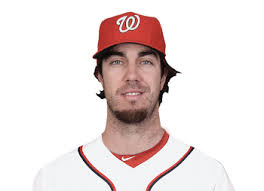
How much longer is Haren going to be wearing this hat? Photo nats official via espn.com

The Nats management waited and waited, but finally gave in and dealt with season-long performance issues in Henry Rodriguez, Zach Duke, Danny Espinosa and Tyler Moore in the first two weeks of June, DFA-ing or demoting as needed and bringing in replacements to try to do a better job and turn this season around.

So, when will it be time to talk about the train-wreck season that Dan Haren is having?  For $13M, here’s what the team has gotten in his first 12 starts, including June 12th’s meltdown:

  • a 4-8 Record with a 5.70 ERA and a 67 ERA+ (his ERA is 6th worst in baseball for qualified pitchers).
  • A 6-10 team record in games in which he’s started
  • a league leading 17 home runs allowed

A quick glance at his advanced stats doesn’t give much credence to any apologists that may try to excuse his line either; his BABIP is slightly elevated but not overly so (.320) and his FIP is still an unsightly 5.06 (5th worst among qualified starters).  Only his expected xFIP and SIERA numbers are relatively respectable, but xFip is just an estimator stat and often times never comes to pass, since it assumes silly things like the fact that Haren can’t possibly keep giving up this many home runs… an assumption that continued to be disproven as he gave up two more in his most recent loss in Colorado.

Game-Log analysis: Haren has yet to have a start where he shut out the opponent.  He’s only got 5 quality starts out of 12.  In half his starts he’s allowed 4 or more runs (not good when your team’s offense is only scoring 3.4 runs a game).  Haren’s only really had a couple of starts that were “grade A” in my book (his best start of the year was an 8 inning 4 hit performance in Atlanta of all places).  In his defense, he has gotten awful run support (2.84 runs per start), heavily indicating team losses every time he pitches.

I’ll admit it; I talked myself into the Haren deal big time after it was announced.  I ignored his 2012 struggles, looked back to the near Cy Young guy he was in 2009 and thought this was the move that could push the Nats to a 105 win team.  Now clearly whatever excuses we made for his performance in 2012 (back injury leading to diminished velocity leading to loss of his sinker leading to crummy numbers) seem like they’re covering up for an aging sinkerballer who never had lights out velocity and who now looks dangerously close to extinct as his very-hittable fastball flattens out and gets hit harder and harder.

So what’s the answer here?

Don’t talk to me about his salary; that $13M is out the door already.  Kaput.  Gone.  Look up the definition of a “Sunk Cost” in economic terms.  If you were worried about $13M in annual salary then you shouldn’t have bought a $15M a year closer who isn’t exactly a complete shutdown guy (Tyler Clippard has almost identical stats this year to Rafael Soriano for a third of the price and he didn’t cost us a 1st round draft pick, which as it turned out could have been spent on one of two pre-draft top-10 talents).  The decision needs to be made; do you still want to try to “win now” in 2013 as all the other off-season moves seemed to indicate?  Because the solution likely is going to be a bit more money and a few more prospects.

Short term (as in, the next week): see how Ross Ohlendorf does in his spot start (Answer: uh, he did awesome, holding a good hitting team to two hits through 6 in the best hitters park in the league).  If he’s anything remotely close to effective, I think you look at an invented D/L trip for Haren and send him on a rehab assignment tour of the minors.

Mid-term (as in, for the next couple weeks): do we have anyone else in the minors worth checking out?  Not on the 40-man and not with enough experience.  Maybe we give Danny Rosenbaum a shot if another spot-start is needed after Detwiler and Strasburg come back.

Longer term (as in, the next two months); Look at the trade market and look at who may be available leading up to the trade deadline.  We’re already seeing some teams completely out of it and clearly some guys will be available:

  • The Cubs probably will look to move Scott Feldman and especially Matt Garza.
  • The Astros probably will cash in on Lucas Harrell and Bud Norris (nobody’s likely interested in Erik Bedard at this point).
  • The Marlins would listen for offers for Ricky Nolasco, though perhaps not intra-division.
  • The Mets aren’t winning this year and could be moving Shawn Marcum (though perhaps not intra-division).
  • I think eventually Seattle becomes a seller: Joe Saunders and Aaron Harang should be dangled.
  • I also think San Diego eventually realizes they’re not going to win the NL West: Edinson Volquez, waiver pickup Eric StultsClayton Richards and our old friend Jason Marquis all make for possible trade candidates.

A few other poorly performing teams are probably going to be too stubborn to wave the white flag, which cuts down on the number of guys that will be available (see the Los Angeles Angels, the Los Angeles Dodgers, Toronto specifically).

The only problem with a trade market move is this: all these teams are going to want prospects back.  And the Nats prospect cupboard has been cleaned out recently to acquire all these fools who are underperforming so far in 2013.  I’m not an opposing GM, so I can’t say for sure, but from a quick look at the Nats best prospects in the minors right now (basically in order: Giolito, Goodwin, Cole, Karns, Garcia, Skole, Purke, Solis, Perez, then guys like Hood, Taylor, Walters, Ray and Jordan round out the list) and I see a lot of injured guys or players on injury rehab, backups or guys barely above or still in A-ball.  I’m not trading a valued asset for an injury-risk guy who has never gotten above AA.  Who on this list is going to fetch us a quality major league starter?

Maybe we trade Haren along with a huge chunk of his remaining salary and multiple prospects to one of these teams in order to get one of these 5th starters back.  But that’d be an awful trade when it was all said and done (about as awful as, say, the Giants trading Zack Wheeler to the Mets for 2 months of Carlos Beltran in a failed effort to make the playoffs in 2012; with all the Giants 2013 pitching issues do you think they wish they had Wheeler back right now??)

Or, it very well may be that the Nats are stuck; we knew going into the season we had no starter depth and those MLFAs we did acquire (Ohlendorf and Chris Young basically) probably aren’t the answer.  But something has to give; we can’t give away every 5th start like we seem to be doing now and claw back into the NL East race.

CWS Super Regional Results and CWS Field

leave a comment

Here’s a quick look at the College Baseball Super Regionals, which finished up on 6/11/13 due to the crazy rain the east coast has seen.

Previous Links on the CWS this year:

  • My original Field-of-64 thoughts are here.
  • My Regional review and super-regional preview is here.
  • My favorite no-frills just data College Baseball site is d1baseball.com, where I go for all the results

Super-Regional Results (in the order in which these teams line up for the CWS)

  • #1 UNC d #16 South Carolina: UNC looked like a vulnerable #1 seed after getting blown out 8-0 to force a 3rd Super Regional game, but squeaked out the 5-4 victory on  tuesday to become the last team to advance and complete the CWS field.
  • #9 NC State defeated Rice: NC State rocks some 1980’s style uniforms and squeaks past Rice in 2 straight to punch its CWS ticket.
  • #12 UCLA defeated #5 Cal State Fullerton: UCLA wins a tight  regional in 2 straight to advance.
  • #4 LSU defeated Oklahoma: LSU gets a win over 1st round draftee Jonathan Grey and then blitzes Oklahoma in the second game to advance.
  • #11 Mississippi State upsets #6 Seed UVA two straight on the road.   They didn’t seem that troubled by UVA’s squad frankly; was UVA overseeded?  Or is the SEC just that deeper a conference?
  • #3 Oregon State v #14 Kansas State overcomes a first game loss to take the set 4-3 on Monday.
  • #10 Indiana defeated #7 Florida State: Indiana was never scared of a Florida State team that blized through its own regional and went punch for punch in this high scoring regional, winning 2 straight in Tallahassee to advance.  This is the first time a Big 10 team has made the CWS since 1984.
  • #15 Louisville defeated #2 Vanderbilt; this may have looked like an upset by the seedings, but Louisville’s two dominant starters controlled Vanderbilt’s offense for most of these two games and Louisville advances.

So, at the end of the Super Regionals only 3 of the 8 national seeds advanced, but they’re 3 of the 4 favorites heading into the tournament.  To me the only significant upset in the super regionals was Vanderbilt getting beat, though they’ve shown a propensity to falter early when seeded well (see 2007 when they entered the tournament as the #1 overall seed and had ace David Price but lost in their own regional to Michigan).

CWS Preview (reminder of format: each of these four groups will play a double elimination mini-tourney amongst themselves to arrive at a finalist for the Championship 3-game set):

Conference Distribution:

  • Big 10: Indiana, Regular and Post Season Champ
  • Big East: Louisville: Regular Season Champ
  • Pac-12: Oregon State, Regular Season Champ.
  • Pac-12: UCLA: 3rd Place Regular Season
  • ACC: UNC: 1st Place Coastal Division Regular Season, Post Season ACC Champ.
  • ACC: NC State: 2nd Place Atlantic Division Regular Season
  • SEC: LSU: 1st Place Western Division regular season, Post Season SEC champ
  • SEC: Mississippi State: 3rd place Western Division regular season

Two teams each from the 3 power baseball conferences and then the undisputed champs of two lesser conferences.  There’s some good distribution of conference champions in the CWS; 5 of the 8 teams are their conference’s Regular Season champions.  Non Regular Season champs UCLA and NC State advance in at the expense of perennially over-seeded Rice and Cal-State Fullerton.   Mississippi State advances in a SEC-ACC showdown over UVA that was probably closer on paper than their ranks and seeds may have indicated.

Fun Fact: Speaking of the ACC; A member of the ACC (not counting Miami, who wasn’t in the ACC at the time of their recent victories) has not won the College World Series since Wake Forest’ 1955 victory.   Despite being considered the best or 2nd best conference out there.  And honestly, I don’t see an ACC team winning this year either; UNC may be the #1 seed but they’ve struggled the whole post season.

  • Pot 1: UNC, NC State, UCLA, LSU
  • Pot 2: Mississippi State, Oregon State, Indiana, Louisville

CWS Predictions:

  • In Pot 1, We get a fun intra-state opening game of UNC-NC State (they split the regular season matchups and then UNC beat them in the ACC tournament).  LSU should take out a weaker UCLA, giving us a great potential UNC-LSU winners bracket showdown.  Frankly, I think LSU easily advances when all is said and done; they should have been a higher seed after winning the SEC championship over Vanderbilt, they’ve showed they can beat one of the best arms in the country in Jonathan Grey, and I think they’ve got what it takes to win it all.
  • Pot 2 has three unexpected teams and a clear favorite in Oregon State.   I’ll take Oregon State to hold serve against Mississippi State and I’ll take Louisville in the opener over surprising Indiana.  After that, I think Louisville continues to lean on their two big starters and eventually advances to the title game.

In the title game I’ll take LSU over Louisville; after watching LSU in the super regional I think they’re the best team playing the best ball right now heading into Omaha.

Click here for the complete CWS broadcast schedule.

Written by Todd Boss

June 12th, 2013 at 8:21 am

Posted in College/CWS

Tagged with ,

MLB Draft Results for Players with Local Ties for 2013

5 comments

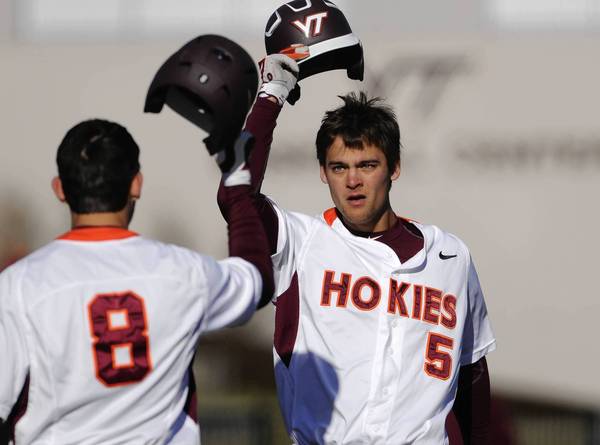
Virginia Tech’s Chad Pinder represents the highest ranked Virginia-tied player in the 2013 draft. Photo via dailypress.com

After checking in with some local prep players early in March 2013, and then taking a more in-depth look at all the local player draft prospects (with a focus on any Virginia-based player) in May, here’s how the draft ended up working out for these and a few other Virginia players (table in order of overall draft position).

Couple of useful links while reading here: Total Team Bonus Pool limits for 2013 draft and Slot Bonus Values for the first 10 rounds of picks.

(Sorry for the formatting of this table at the blog itself: it looks fine in the WordPress editor and in the RSS feed)

Player Name Pos Current School Klaw Rank BA rank Coll Cmmt Drafted #overall Drafting Team
Chad Pinder 3B Virginia Tech 86 53 n/a 2nd-Supp 71 Oakland
Kyle Crockett LHP UVA >100 93 n/a 4th 111 Cleveland
Matt McPhearson OF Riverdale Baptist (Upper Marlboro) 62 136 Miami 4th 120 Arizona
Bobby Wahl RHP Ole Miss (from West Springfield) 66 36 n/a 5th 161 Oakland
Jimmy Reed LHP U Maryland (From Gaithersburg, MD) >100 >500 n/a 6th 185 St. Louis
Alex Murphy C Calvert Hall College HS (Frederick) >100 >500 Wake Forest 6th 189 Baltimore
Tyler Horan OF Virginia Tech >100 293 n/a 8th 252 San Francisco
Jake Joyce RHP Virginia Tech >100 >500 n/a 9th 286 Washington
Austin Nicely LHP Spotswood (Grottoes) 78 342 Virginia 10th 287 Houston
Ryan Cordell OF Liberty >100 196 n/a 11th 340 Texas
Alec Grosser RHP TC Williams (Alexandria) > 100 158 George Mason 11th 343 Atlanta
Conner Jones LHP Great Bridge (Chesapeake) 29 33 Virginia (strong) 21st 628 San Diego
Scott Silverstein LHP UVA >100 >500 n/a 25th 745 Toronto
Andy McGuire SS/3B Madison HS (Vienna) 74 196 Texas 36th 1069 Colorado
Jack Roberts RHP James River (Richmond) >100 360 Virginia
Thomas Rogers LHP Lake Braddock (Fairfax) >100 >500 North Carolina
Errol Robinson SS St. Johns (DC) >100 >500 Ole Miss (strong)
Alec Bettinger RHP Hylton (Woodbridge) >100 >500 Virginia
Zach Rice LHP Suffolk (Norfolk) >100 >500 North Carolina

Note that this is not an exhaustive list of Virginia or Maryland-tied players who were drafted; it is merely a list of some of the more notable names in the state pre-draft.   You can surf to MLB’s excellent Draft Tracker tool for the 2013 draft and query by state, which gives you any player who has a connection to a state (whether they’re from the state or attend college there).

Some thoughts here:

  • We continue to see the drastic effects the new draft bonus limits have on team’s decisions.  No longer are you seeing any high-end high schoolers taken with speculative picks in the 4th-10th round (much as the Nats picked and signed the likes of A.J. Cole and Robbie Ray).  Now, if a high schooler projected to go in the first few rounds falls … he may as well fall all the way out of the draft.  Consider what happened to Andy McGuire; pre-draft ranked relatively highly by pundits and projected as a 4th rounder by Keith Law.  What happened?  He falls to the 36th round where Colorado makes a (frankly) wasted pick on him.  So McGuire is clearly going to school.
  • Continuing on this theme, the number of college seniors and slot-signing players in the 4th-10th rounds continued to be high.  A number of Virginia-based college players went in this range despite not even being in the BA top 500 list.
  • Conner Jones is going to get his wish to go to school, falling from his end-of-1st round projection all the way to being a 21st round pick.  The lesson; the penalty for picking and missing on an upper-end pick is no longer just “saved” money but “lost” bonus money, so these tough-sign high schoolers went from first three rounds to nothing.
  • Bobby Wahl reportedly set out his bonus demands early ($1.5M or he returns for his senior season per Keith Law), dropping him from a worst-case end-of-2nd round projection all the way to the 5th.  Will Oakland find the money for him or will he go back for his degree?  Likely the latter.  Post-script: Wahl signed for $500k.
  • A couple of local prep players did get picked relatively high; Matt McPherson went in the 4th round to Arizona; will he take that slot money ($425k) or will he honor his University of Miami commitment?   And TC Williams hurler Alec Grosser was selected in the 11th round, which has a slot value of $100,000 unless Atlanta coughs up additional dollars saved elsewhere.  McPherson may want to take the money but Grosser likely could earn himself some cash by gong to school.  Post-script: both guys signed above slot deals; McPhearson for $500k and Grosser for a hugely overslot $400k.
  • The collection of high-profile Virginia hurlers who went completely unselected (the bottom names in the list above) includes a couple of guys whose lack of being picked surprised national pundits.
  • Lastly thought on all these highly regarded prep arms not being drafted: both the University of Virginia and North Carolina made out like bandits with this draft result.  All four major local UVA pitching recruits (Austin Nicely, Conner Jones, Jack Roberts and Alec Bettinger) are almost guaranteed to be going to college.  And UNC’s Thomas Rogers and Zach Rice will join that squad for the next three years.   The ACC should have some pretty significant pitching battles if these guys live up to their scouting reports.   Post-script: only Nicely ended up signing, for a big overslot $610k deal with Houston.

Virginia Region and State High School Results and Recaps

leave a comment

We posted at the end of the District tournaments on May 23rd the results of the Virginia local district championships.  I admittedly took a larger interest this year because of the success of my own alma mater high school Madison, and followed the subsequent regional and state tournament closely.  Here’s a recap of those two tournaments, which culminated with the State final being played yesterday 6/9/13 in Chantilly.

The Regional tourney kicked off May 24th with this slate (home teams are the higher seeds, here’s the bracket):

  • T.C. Williams (11-10) @ Oakton (17-4): a tough matchup for Oakton if TC Williams throws their ace Alec Grosser.
  • Stone Bridge (11-11) @ Yorktown (17-5)
  • Stuart (15-6) @ Langley (13-9)
  • Robinson (10-12) @ South County (14-8)
  • Edison (12-10) @ Madison (21-1)
  • Chantilly (11-12) @ Lake Braddock (17-4): Lake Braddock has high-end pitching prospect Thomas  Rogers finally back from TJ surgery, adding a surprise element to this storied franchise and defending State champ.
  • West Potomac (12-8) @ Centreville (15-4)
  • Marshall (8-14) @ W&L (13-10); also a tougher matchup here if Marshall throws its lefty ace Mitch MacKeith

5/24/13 results: first round done, here’s the Northern Region tourney first round results:

  • Oakton d T.C. Williams 9-1 (I guess Grosser wasn’t a factor)
  • Stone Bridge d Yorktown 1-0 (an upset per seedings and records)
  • Langley d Stuart 8-2 (Stuart’s great season comes to an end)
  • South County d Robinson 6-1 (a traditional power ends a disappointing season)
  • Madison d Edison 13-1 (a predictable blow-out for the region’s #1 seed)
  • Lake Braddock d Chantilly 8-2 (Chantilly’s cinderella run ends)
  • Centreville d West Potomac 8-2 (no upsets here, setting up an interesting quarter final match)
  • Marshall d Washington & Lee 7-0 (an upset by record but perhaps not by overall capabilities)

2nd round Matchups on Monday 5/27/13

  • Oakton v Stone Bridge: Oakton beat Stone Bridge 6-2 earlier in the season and is favored here.
  • Langley v South County: no prior meetings between the teams, but South County is streaky and has one 5 straight.  Close game.
  • Madison v Lake Braddock: close matchup by record, no prior meeting but Madison has the advantage playing at home.
  • Centreville v Marshall: Centreville beat Marshall away 8-4 to open the season; Centreville favored here.

5/27/13 Results: Big upsets in the Regional quarters:

  • Lake Braddock takes out #1 Seed Madison 9-6 on home turf behind Thomas Rogers, recovered from TJ Surgery.
  • South County edges Langley 4-3 in 13 innings.  Wow.
  • Oakton steamrolls Stone Bridge 13-5, is now the new favorite to win the region with Lake Braddock.
  • Marshall edges out Centreville 5-4, continuing their cinderella run.

Regional Semis on 5/29/13 are set: Its now looking like and Oakton-Lake Braddock regional final.  5/29/13 results: Indeed both Oakton and Lake Braddock won easily and both advance to the State tournament.

  • Oakton d South County 8-1
  • Lake Braddock d Marshall 16-5

Regional Final: predicting Oakton but wouldn’t be surprised either way.  5/31/13 result: Lake Braddock batters its way to another Regional crown 14-7.

With the Regional losses for both Great Bridge and Madison, both teams have now dropped out of top-25 rankings in BaseballAmerica and USAToday‘s early June rankings.   Great Bridge and now Lake Braddock are Honorable Mentions in USAToday, implying a top 50 national ranking for now.

Virginia AAA State Tournament: with the 5/30/13 Regional results, the 8 participants in the state tournament are now known.  From each of the four State Regions:

  • Northern Region (Fairfax, Arlington counties): Lake Braddock, Oakton
  • Northwest Region (Loudoun, Prince William, Fauquier counties): Hylton, Patriot
  • Central Region (Richmond): Douglas Freeman, Hanover
  • Eastern Region (Norfolk/Va Beach): Kellam,Great Bridge

Weird how Great Bridge loses early in its own district tournament but still advanced to the Regional tournament, which it subsequently looks to win.

State Quarter finals to be held Tuesday 6/4/13: Lake Braddock v Patriot, Oakton v Hylton, Freeman v Great Bridge and Hanover v Kellam.  The semis and final are at Westfields High School friday and saturday June 7-8th.

6/4/13 State Quarter final results: local teams and the favorite go through to the semis.  Results:

State Semis are Friday 6/7/13 at 3pm and 7pm.

Semis and Final ResultsBoth NoVa local teams were beaten in the State Semis, setting up a Great Bridge-Hanover state final and two of the best arms in the state.  In the state final, Richmond area Hanover prevailed over a Conner Jones-less Great Bridge 3-1.  Despite a 5-run lead on Friday night against Lake Braddock, Great Bridge left Jones throw 2 2/3 innings in the semi, leaving him ineligible to appear in the championship.   This seemed like rather questionable strategy, considering the way Hanover used their ace Casey to save the friday night game and to pitch the bulk of the state championship game.  If you’ve never heard of Casey, you will next year.  Only a junior, he’s already up to 93 on the gun, was a PerfectGame pre-season undergrad All-American and has an early UVA commit.  I’m sure about this time next year we’ll be hearing about Casey’s draft value much as we’ve heard about Jones’ all this spring.

Congrats to Hanover and Derek Casey for a 2013 Virginia State Baseball Title.

Written by Todd Boss

June 10th, 2013 at 10:17 am

First Look; Nats top 10 rounds of 2013 Draftees

7 comments

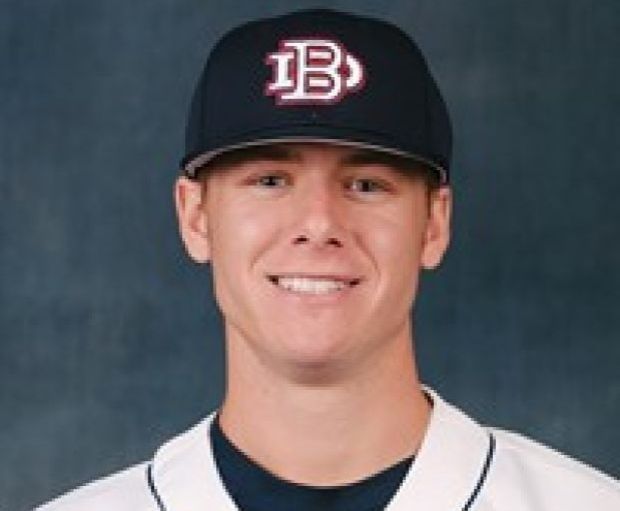
Meet Jake Johansen, the Nats 2nd round 2013 pick. Photo via DBU website

A quick glance on our high-end draftees from 2013 draft.  As with other posts, I’ll put in the Keith Law and Baseball America ranking after the player name where appropriate (though as we’ll see, Keith’s top 100 quickly runs out of names).

Two other blogs are doing a far more in-depth look at these picks than I am here; definitely see Ryan Kelley‘s fantastic scouting reports on each pick at BaseballNewsHound.com and see Ryan Sullivan‘s excellent draft day blog coverage at NatsGM.com for more and better in-sight than what I’ve got here.  Plus Tom Schad at MLB.com has posted nice per-player summaries for all the Nats picks.   I’m just looking for a quick hit observation on our new guys.

  • Rnd #1/#28 overall: In what would have been the Nats first round pick, the Cardinals selected Rob Kaminsky, a prep RHP from New Jersey.   However at that point in the draft high-end prep lefty Ian Clarkin, pre-draft top-10 pick LHP Sean Manaea from Indiana State University and highly-regarded Arkansas RHP Ryne Stanek (another guy who was seen as an upper-end 1st rounder earlier this year with fantastic stuff) were still on the board.   Don’t you think the Nats wouldn’t have minded a shot at Manaea or Stanek at above-slot and then punted on below-slot guys the rest of the way (kinda what they did in 2012 with Lucas Giolito and a senior-heavy first 10 rounds)?  Both Manaea and Stanek dropped just in the past few weeks because of short-term injuries and both seem like steals at the end of the 1st round.  Man I would have liked to see one of these two guys added to the farm system. Was this worth the Rafael Soriano signing?
  • Rnd #2/#68 overall: Jake Johansen, RHP from Dallas Baptist University.  Keith Law ranked #63, Baseball America ranked #180.  This is a classic Mike Rizzo pick; a big guy (6’6″) with a big arm (98-100mph on the fastball, sustained through out the game).  Its almost like they’re trying to replace Alex Meyer in the farm system.  Johansen’s college numbers leave something to be desired: 5.40 era this season, a career ERA > 6.00.  Some have pointed out he has a very high BABIP on the year and that his conference is a hitter’s paradise; fair counter points).  For a guy who throws so hard, he had surprisingly few Ks this year (75 Ks in 88 1/3 innings).   His size and profile seems to trend towards an automatic reliever, but the Nats profile him as a starter.  You can’t teach velocity right?  The Nats execs are already on record saying that they’re drafting the tools and they believe they can coach him up.  FederalBaseball has a nice writeup on him with good quotes and the Nats press release on the pick too.  Masn’s Byron Kerr‘s write-up is here.  Already some pundits questioning the pick (HardBallTalk).  My thought?  I would have liked to have drafted a polished guy with our highest pick, not a project.  6/8/13 update: already signed for slot value.  Wow that was fast.  Clearly smells like a pre-draft deal here.
  • Rnd #3/#105 Overall: Drew Ward, prep SS/3B from Oklahoma.  BA #88.  Prep 3B who’s graduating a year early and with an Oklahoma commitment.    I don’t think he graduated HS a year early so he could get to college; he’ll sign.  Nice FederalBaseball writeup about him.  Keith Law isn’t a fan.
  • Rnd #4/#136 Overall: Nicholas “Nic” Pivetta, RHP  from a New Mexico Juco.   BA #155.  The MLB scouting reports say he’s an upper 90s fastball in short spurts and may be headed for the bullpen.  Sounds like a Rizzo pick to me.  Are you sure we’re not drafting for need at the MLB level right now?  :-).  All signs point to reliever.  Maybe we’re so happy with our High-A rotation right now that we’re just focusing on relivers who can go straight to AA and matriculate up the ranks with our current set of starters?
  • Rnd #5/#166 Overall: Austin Voth, RHP from University of Washington.  BA #260.  Seems like an over draft, might be a signability pick, though Voth fits the profile of a good K/9 guy.  He was the University of Washington’s friday starter, he was 2nd in the Pac-12 in strikeouts to #1 overall pick Mark Appel and had pretty good stats for a sub-.500 college team.
  • Rnd #6/#196 Overall: Cody Gunter 3B/RHP from Texas Juco.   BA #249.  Could be another reliever, but likely was drafted to play the field.  MLB.com’s writeup on him is here.
  • Rnd #7/#226 Overall: James Yezzo, 1B from UDelaware.  BA #290.  You usually don’t like to draft 1B-only guys on NL teams, especially ones who are only 6’0″, but Yezzo clubbed his way to the CAA player of the year honor and hit .410 with power in a 3-big conference with some good baseball.
  • Rnd #8/#256 Overall: David Napoli, LHP from Tulane.   Not BA ranked.  A weekend senior starter for Tulane with a great BA against for one probable reason; he seems wild as heck.  33 walks in 66 innings and FOURTEEN Hbps this year.  He had a fantastic batting average against (.176) and was even better in H/9 against (5.32 hits per 9, 2nd in the NCAA this year), but that’s easier to do when you’re all over the plate.  Looks like a loogy to me; undersized (5’10” 180lb) and ok stuff (threw 87 in HS, reportedly can hit 93-94 in short stints).  We’ll see.
  • Rnd #9/#286 Overall: Jake Joyce, RHP from Virginia Tech.  Not BA ranked.  A prototypical round 6-9 pick; college senior, little leverage, will sign for below slot to save cash.  Per the MLB.com story on him, a nats executive knows the family and made the recommendation.  95 out of the pen for Va Tech; you just hope that a reliever in college is going to be successful in the pros.
  • Rnd #10/#316 Overall: Brennan Middleton, SS from Tulane.  Say hello to Auburn’s starting SS this year.

First 10 round summary:

  • Four college RHP who mostly project to relievers
  • One college LHP who definitely projects as a reliever
  • Three college infielders; a 1B, a SS and a 3B.
  • One prep 3B who may be a tougher sign with a college commitment

So far, pretty typical Rizzo draft; college heavy with a focus on power arms destined for the bullpen.  Is there one big name in this list to get excited about?  Unfortunately not so far, but not having a 1st rounder and a crack at a big name (as described in the “possible 1st round missed” bullet point will leave a draft class wanting.

May 2013 Monthly review of Nats rotation by Opponent

leave a comment

Welcome to the Majors Nathan Karns. Photo perfectgame.org

Continuing a monthly series of look-backs at our starters (here’s Apr 2013 post), here’s a monthly glance at how our .500 team is doing from a Starting Pitching standpoint.  As with last month, we’ll have “Grades” per outing, the team’s performance per opposing starter sliced and diced a few ways, and other per-starter stuff that I like to track.

MLB Rotation Per-Start Grades for May:

  • Strasburg: C-,B-,A,A-,A+,C/inc
  • Gonzalez: C+,A+,C+,A,D-
  • Zimmermann: A+,A,A-,A,B+,D+
  • Haren: A+,D+,A-,F,C+,B+
  • Detwiler: C-,B,D-/inc -> D/L
  • Duke: F
  • Karns: D+

Discussion: Nats Pitcher YTD Stats from Baseball-Reference are here

Strasburg has stepped up his game after his well-documented 4-unearned run meltdown and has dominated his last three starts before straining his Lat on 5/31 (hence the “incomplete” grade).  Gonzalez remains up-and-down, as he was in April/  He’ll be excellent and then less than mediocre start to start.  Zimmermann‘s 6 run 7th in Baltimore is the only blip on an otherwise fantastic month which has put him into Cy Young contendor status.  Haren‘s up and down starts finished off with a heroic effort in Baltimore on 5/30/13, pitching into the 8th and giving up just two runs to one of the more potent offenses in the league.  Detwiler‘s month was cut-short by his injury and subsequent D/L trip.  Lastly the Nats one known glaring weakness heading into this season (Starting pitching depth) has been exposed with the two spot starts we’ve gotten from Duke and Karns.  I know Karns’ grade isn’t that fair considering the circumstances (MLB debut, hot night, tough hitting team), but his stat-line is what it is.


May Performance By Opponent Starting Pitcher Rotation Order Number

A look at the opposing team’s rotation ranked 1-5 in the order they’re appearing from opening day.

Starter # Record Opposing Starter in Wins Opposing Starter in Losses
1 3-4 Samardzija, Volquez, Hamels Burnett, Kershaw, Cain, Hammel
2 4-2 Maholm, Rodriguez, Sanchez, Bumgarner Jackson, Greinke
3 2-3 Medlen, Fister Feldman, Stults, Tillman
4 1-0 Kendrick
5 3-1 Locke, Beckett,Teheran Vogelsong
5+ 2-3 Smith, Gausman Cashner, Pettibone, Garcia

Thoughts; as always, not all opposing team #1 starters are the same.  But, the Nats actually fared pretty durn well against opposing #1 and #2 guys in May.  Where they struggled were against the #3 starters in May; you cannot lose to the likes of Scott Feldman, Eric Stults and Chris Tillman.  They also struggled with what I call “5+” starters; guys who were call-ups to replace opening day starters.  Sometimes a 5+ is a rising ace prospect (theoretically a Kevin Gausman or perhaps a Matt Harvey in the end of 2012) and sometimes they’re a 4-A guy (Jonathan Pettibone).  But usually you expect a winning record there.


May Performance By Opponent Starting Pitcher Actual Performance Rank Intra-Rotation

A ranking of opposing teams’ rotations by pure performance at the time of the series, using ERA+ heavily.

Starter # Record Opposing Starter in Wins Opposing Starter in Losses
1 1-3 Bumgarner Burnett, Kershaw, Cashner
2 6-2 Samardzija, Sanchez, Medlen, Fister, Kendrick, Locke Greinke, Tillman
3 3-2 Maholm, Rodriguez, Beckett Feldman, Pettibone
4 1-3 Teheran Cain, Stults, Garcia
5 2-3 Volquez, Hamels Hammel, Jackson, Vogelsong
5+ 2-0 Smith, Gausman

On the bright side; going 6-2 against the opposing team’s 2nd best starter isn’t bad.


May Performance By Opponent Starting Pitcher League-wide “Rank”

A team-independent assignment of a league-wide “rank” of what the starter is.  Is he an “Ace?”  Is he a #2?

Starter # Record Opposing Starter in Wins Opposing Starter in Losses
1 1-3 Hamels Kershaw, Greinke, Cain
2 4-0 Bumgarner, Samardzija, Sanchez, Medlen
3 3-2 Fister, Maholm, Volquez Burnett, Tillman
4 3-3 Kendrick, Rodriguez, Beckett Cashner, Hammel, Jackson
5 4-5 Locke, Smith, Gausman, Teheran Feldman, Pettibone, Stults, Garcia, Vogelsong

I like this table the best; It usually shows where a team really is over- or under-performing.  There’s no shame in going 1-3 against the league’s best hurlers.  And its fantastic to see the team going 4-0 against that collection of league-wide #2s.  It is downright awful to see the team go 4-5 against this collection of #5 starters.


May Records by Pitching Advantage

Start-by-start advantages in my own opinion and then looking at the results.

Wash 9-5 Strasburg-Hamels, Zimm-Maholm, Stras-Volquez, Zimm-Kendrick, Gonzalez-Rodriguez, Zimm-Beckett, Stras-Locke, Gio-Smith, Stras-Teheran Zimm-Tillman, Gio-Hammel, Stras-Jackson, Gio-Feldman, Zimm-Stults
Even 2-4 Gonzalez-Bumgarner, Zimm-Sanchez Strasburg-Cain, Detwiler-Burnett, Haren-Cashner, Haren-Garcia
Opp 4-4 Haren-Medlen, Karns-Gausman, Detwiler-Samarzija, Haren-Fister Haren-Kershaw, Detwiler-Greinke, Haren-Pettibone, Duke-Vogelsong

In other words, the team when 9-5 when I thought Washington had the pitching advantage, 2-4 when I thought the pitching matchup was even, and 4-4 when I thought the opposing team had the advantage.  This is about what I expected, perhaps wanting to see a slightly better record in our advantage’d starts.  The Strasburg-Edwin Jackson loss hurt, as did the Zimmermann-Stults loss.


May matchup analysis

Looking at the opposing starter rank that our guys are going up against to see how their competition fares.

Nats Starters Opponents matchup analysis Nats Record under starter
Strasburg Three #1s, One #2, Two #5s 4-2
Gonzalez One #1, Two #2s, a #3 and a #5+ 3-2
Zimmermann Two #2s, Two #3s, a #4 and a #5 4-2
Haren One #1, Two #3s, and Three #5+ 2-4
Detwiler Two #1s, One #2. 1-2
Duke One #5 0-1
Karns One #5+ 1-0
total record 15-13

Detwiler’s turn now basically matches up with the opposing teams’ best guys, while Haren is getting more and more #5 and #5+ guys but continues to struggle.

First Look: Ian Krol

15 comments

Krol fired in some fastballs in his MLB debut. Photo unknown via theviewfromsw.com blog

One of the exciting aspects of the roster shakeup lately is the introduction of two new pitchers to the MLB bullpen that we’ve seen very little of (unless of course you live in Harrisburg, PA and stop by the Senators games all the time).  So lets take first look at newly promoted 22-yr old LHP Ian Krol.

A quick introduction: Krol was the PTBNL in the Michael Morse trade, coming over from the Oakland organization after a relatively tumultuous minor league tenure (he missed the entirety of the 2011 season after an elbow injury and then being suspended for an offensive tweet; ah a sign of the times).  After returning to the fold in 2012 he was relatively awful as a California league starter (not really that surprising; look what happened to A.J. Cole when he went there), then was bumped up to finish the season as a AA reliever with poor numbers in a short sample size in the Texas league.  Even for an organization like Oakland, apparently that was enough; they made him available in trade and he turned into the PTBNL.

He arrived in Washington and has immediately been significantly more effective as a reliver here: his AA numbers have been eye opening; 26IP, 14 hits allowed, only 2 earned runs for an ERA of 0.69, and a K/BB ratio of 29/7.  I thought these numbers would earn him a promotion mid-season; I didn’t think we’d be seeing him in the MLB bullpen in June.

Lets look at his performance in the 6/5/13 debacle loss to the Mets.   He pitched the 6th inning and faced the top of the order.  He gave up a fluke single when Daniel Murphy flailed his bat at an outside fastball and dinked the ball into LF, but otherwise he struck out the side, punching out the 3-4 hitters for New York with relative ease.   He threw 23 pitches, 19 of them fastballs.  Per his Pitch F/X data, his fastball averaged 95.28 and peaked at 96.88 on the night, quite a heavy ball from the left-hand side.  He has a relatively deceptive release point which makes that fastball look even faster.  A lot of the swings he got were very, very late.  With this kind of fastball and short-term effectiveness, he can easily serve as the “Loogy” that many pundits have been saying this bullpen needs.  He has clean mechanics, did not lose velocity pitching from the stretch, and didn’t seem like he was throwing with max effort.

Now, on the downside, the 4 pitches Krol threw that were not his fastball left something to be desired.  He attempted three curveballs and all three of them seemed almost to slip out of his hand and flayed way to the left-hand side of the plate.  In fact he nearly hit Lucas Duda with one attempt.  He also attempted one changeup that he managed to bounce about 5 feet from home plate for a wild pitch (I’m sure that’s going to end up on the weekly “wildest pitches” video on one national baseball blog).   So we now see some evidence of why he has been moved to the bullpen; no decent or trustworthy secondary pitches.

On the bright side, a 95mph left-handed fastball with deception is going to be darn hard to hit even if the hitters know its coming.  In this respect, he’ll make a good short-stint reliever even if he can’t trust his secondary stuff.  On the downside, the scouting reports are going to get out and eventually hitters will know to sit on a FB.  Even if a ball comes in at 100, MLB hitters can hit it.  So Krol is going to have to show he can throw a curve or change with effectiveness and control to stick.

That being said, it was pretty exciting to see a youngster like Krol punch out three pretty good hitters.  The one bright note on a crummy night for the Nats.

Written by Todd Boss

June 6th, 2013 at 7:57 am

So, while I was out…

4 comments

Rodriguez DFA long overdue. Photo via humorfeast.blogspot.com

What a great time to have a 30-hour server outage.  Just as soon as the hammer drops on the Nationals Roster my site went kaplunk and I couldn’t post or host comments.  Grrr.  Moving the site next month to some place more stable.

So, focusing on the obvious, the Nats made a series of moves that some argue were overdue by about a couple years.  Some quick thoughts (since by now everyone’s weighed in so my comments are nothing obvious):

1. Henry Rodriguez DFA 16 walks in 18 innings this year in almost entirely low-leverage situations.  Long overdue move; if you can’t rely on a reliever, you need someone else.  I think the team hung on to him for far too long, and I struggled with  the acquisition to begin with as has often been repeated here.  Will he catch on with another team?  Probably; 100mph fastballs don’t grow on trees.    He can go be someone else’s Steve Dalkowski.

2. Zach Duke DFA: you had to see this coming; the Nats are paying the price for not tendering Tom Gorzelanny and thinking they could get by with Duke in that spot.  I did too; he was decent in AAA and great in September 2012.  But he’s been god-awful this year, and it looks like Rizzo is going to start spinning arms through the bullpen to find someone that can stick.  Unlike Davey Johnson, I don’t believe he’s going to get picked up off waivers and he’ll likely take his AAA assignment.

3. Danny Espinosa to the D/L and then (by assumption of his locker being cleaned out) banished to the minors: it was a-coming.  If he was hitting .230 with power and walks, he could have stuck on.  But you just cannot cost a struggling offense the kind of at-bats he was.  He’s got more than 1500 MLB plate appearances now; is this who he is?  I think Espinosa’s 2013 season may end up with him spending the rest of the year in AAA relearning how to hit before the team has to make a hard decision next year.

4. Anthony Rendon back up and at 2b: had to happen.  He’s ready for the MLB.  He had nothing left to prove by slicing up AA.  Can he play second?  Yeah I think he can; it isn’t rocket science.  If Rendon played shortstop in HS, he can make that transition.  Stick him at 6th or 7th in the order and let him play.

5. Ian Krol: this move came out of nowhere for me.  Suddenly mr “we don’t need a left handed reliever” Mike Rizzo has two of them in his bullpen.  He’s also managed to already call up both guys added to the 40-man roster last fall ahead of the rule-5 draft.  I’m sure both Krol and Erik Davis will struggle here and there, but should hold their own in short stints.

Summary: like the moves.  It is almost as if the Nats fanboy blogosphere got to play GM for a day and rid the team of all its issues in one fell swoop.  The timing couldn’t be better; 6 games against non-descript teams and even more non-descript starters.  Lets hope the combination of new blood and bad opponents sparks this team.

2013 CWS Regional Results & Thoughts

leave a comment

The 2013 College World Series is through its Regional weekend, and by and large the selection committee’s work was justified with just 2 non-Regional hosts advancing to this coming weekend’s Super Regional CWS play-in tournaments.

(My original Field-of-64 thoughts are here.  My favorite no-frills just data College Baseball site is d1baseball.com, where I go for all the results).

Regional thoughts, one by one (in order of national seeds).  Note that officially there are no 9-16 seeds, but for convenience they’re listed here based on which of the 1-8 national seeds they’ll play in the Super Regionals.

  1. #1 overall seed UNC advances by the absolute skin of their teeth, with Florida Atlantic forcing the monday winner-take-all game and then UNC winning 12-11 in 13 innings.  What an amazing game this final must have been; UNC took a 6-2 lead into the 9th inning only to have Florida Atlantic score six runs to take an 8-6 lead.  UNC then rallies for 2 runs in the bottom of the 9th to force extra innings.  Florida Atlantic then scored THREE runs in the top of the 12th only to have UNC rally to tie it and force a 13th inning.  Holy cow.  Can you imagine being at this game?
  2. #2 overall seed Vanderbilt survives a scare from ACC power Georgia Tech, who forced a monday playoff before Vandy won handily to advance.
  3. Oregon State held serve by winning a couple of close games and then taking out Texas A&M to advance.
  4. LSU beat in-state rival Louisiana-Lafayette to advance.
  5. Cal State Fullerton reversed a trend of early tournament upsets and swept two games from Arizona State to advance.
  6. UVA won a couple of nail biters before blowing out Elon to advance.
  7. Florida State looked the most impressive of any National seed, outscoring its opponents 32-4 en route to its advancing.
  8. Oregon couldn’t hold off traditional power Rice and was upset in its own regional.
  9. NC State held off a pesky William & Mary to advance.
  10. Indiana easily advanced over Austin Peay.
  11. Mississippi State held off a surprising Central Arkansas to take its regional.
  12. UCLA won a tough regional filled with Southern California heavyweights.
  13. Oklahoma upset regional host Virginia Tech, which couldn’t overcome the only 1-4 seed upset we saw on the first day of regionals.
  14. Kansas State battered its way to a regional title, beating each of the three teams in its group along the way.
  15. Louisville made a statement on its selection as a regional host, mowing down two big-time programs en route.
  16. South Carolina won a delayed sunday game to advance over Liberty.

Only two Regional upsets: Rice over #8 Oregon and Oklahoma over #13 Virginia Tech.   And neither of these could really be considered that big of an upset; Rice was ranked 16th in the final USA Today coaches poll and Oklahoma was ranked ahead of Va Tech in that same coaches poll.  The Baseball America guys in their podcast talked about how “Chalk” they were predicting the Regionals to be and they were mostly right.

Surprising/Over achieving Regional losers: You have to start with Central Arkansas, the only 4th seed to make it to the championship game.   A number of #3 seeds beat out their #2 seed bretheren to force their way to the regional finals; Liberty, William & Mary, San Diego, Oklahoma State and Elon.   Connecticut getting a win over nationally ranked Virginia Tech was a surprise.  Columbia’s win over New Mexico was astounding.  And Valparaiso beat a tough Florida team and had a pair of one-run losses in its regional.

Disappointing teams: besides the two Regional hosts which lost (Oregon and Virginia Tech), Clemson under achieved in a regional some thought they’d win.  Ole Miss couldn’t handle CAA upstart William & Mary and it cost them in the tournament.  Alabama couldn’t handle in-state rival Troy when push came to shove.  New Mexico did not live up to its lofty BA ranking, finishing last in its regional.  Coastal Carolina did not live up to its at-large bid, probably exacerbating complaints out of the Campbell camp.  And despite all the howls of protest over the Mercer and South Alabama seedings, neither could overcome tiny Central Arkansas to give a weaker regional host any pressure.

Super Regional Matchups

This coming weekend the “round of 16” or Super Regionals are on tap.  Here’s the schedule; all games are at the higher seed (meaning the only last minute travel change involved NC State being handed a super-regional).

  • #1 UNC hosts #16 South Carolina
  • #9 NC State hosts Rice
  • #5 Cal State Fullerton hosts #12 UCLA
  • #4 LSU hosts Oklahoma
  • #6 UVA hosts #11 Mississippi State
  • #3 Oregon State hosts #14 Kansas State
  • #7 Florida State hosts #10 Indiana
  • #2 Vanderbilt hosts #15 Louisville

Psuedo Predictions: Its hard to pick against any of the top 4 teams; there’s a distinct gap between them and the 5th ranked teams in the country.  But Vanderbilt looked a bit rattled while Louisville looked confident and I wouldn’t be that shocked at an upset there.  Cal State Fullerton/UCLA matches up frequent competitors on the Regional stage and could go either way.  I like UVA’s chances of advancing to the CWS.  Florida State seems likely to continue bashing its way to the CWS and could be a dangerous lower seed.

Picks: UNC, Rice, UCLA, LSU, UVA, Oregon State, Florida State, Vanderbilt.

Written by Todd Boss

June 4th, 2013 at 8:04 am

Posted in College/CWS

Tagged with