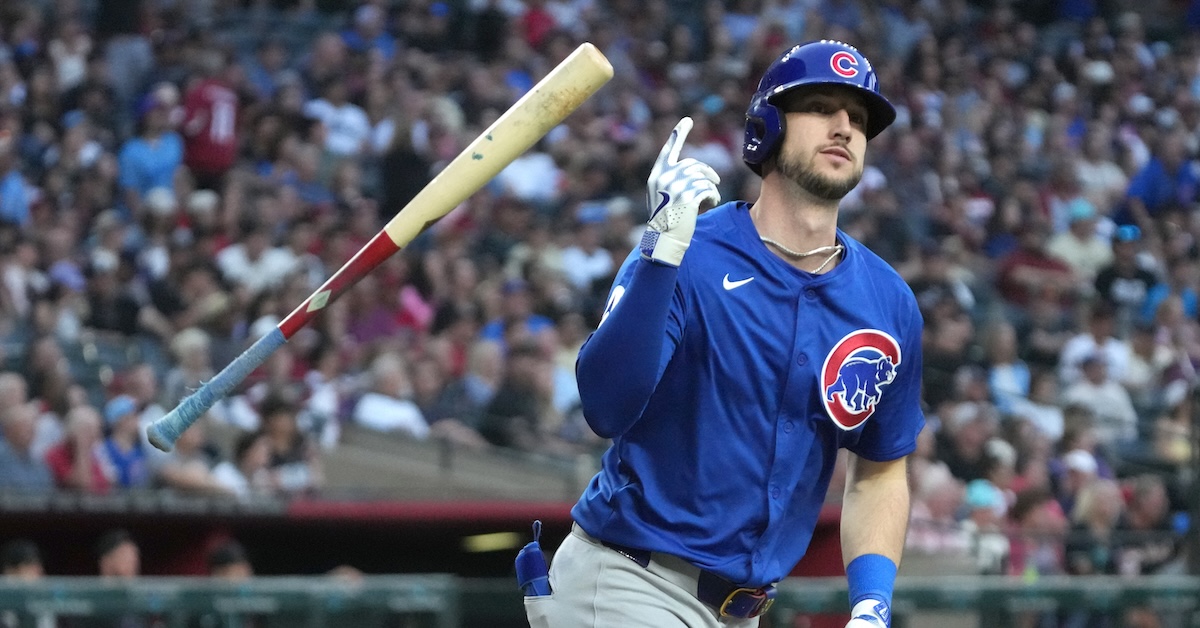
Just as spring training started, the final Qualifying-offer Attached Free Agent still on the market (Zac Gallen) finally signed, completing this year’s slate of QO-attached players.
As I’ve done in the past, let’s take a quick peek at the system and the players that tested it this year, talk about the impact the signings will have on the 2026 draft, and opine in general about how short sighted the entire system continues to be.
Here’s a quick overview of the 13 players who took Qualifying Offers this past off-season and what happened:
| Year | Player | Old Team | New Team | Draft Pick Forfeited | Signing Date | New Contract | AAV change | Q.O. Screw the player? |
|---|---|---|---|---|---|---|---|---|
| 2025 | Kyle Tucker | Chicago Cubs | Los Angeles Dodgers | 3-108, 4-138 | 1/15/2026 | 4yr/$240M | 37.795 | No |
| 2025 | Bo Bichette | Toronto Blue Jays | New York Mets | none | 1/16/2026 | 3yr/$126M | 19.795 | No |
| 2025 | Framber Valdez | Houston Astros | Detroit | 2-69 | 2/6/2026 | 3yr/$115M | 16.125 | No |
| 2025 | Kyle Schwarber | Philadelphia Phillies | Philadelphia Phillies | n/a | 12/9/2025 | 5yrs/$150M | 7.795 | No |
| 2025 | Shota Imanaga | Chicago Cubs | Chicago Cubs | n/a | 11/18/2025 | 1yr/$22.205M | 8.955 | No |
| 2025 | Ranger Suarez | Philadelphia Phillies | Boston Red Sox | 2-62, 5-0159 | 1/14/2026 | 5yr/$130M | 3.795 | No |
| 2025 | Dylan Cease | San Diego Padres | Toronto | 2-73, 5-178 | 11/26/2025 | 7yr/$210M (with deferrals) | 7.795 | No |
| 2025 | Edwin Diaz | New York Mets | Los Angeles Dodgers | 2-74, 5-179 | 12/9/2025 | 3yr/$69M | 0.795 | No |
| 2025 | Trent Grisham | New York Yankees | New York Yankees | n/a | 11/18/2025 | 1yr/$22.205M (with deferrals) | 17.205 | No |
| 2025 | Michael King | San Diego Padres | San Diego Padres | n/a | 12/19/2025 | 3yr/$75M | 2.795 | No |
| 2025 | Zac Gellen | Arizona Diamondbacks | Arizona Diamondbacks | n/a | 2/13/2016 | 1yr/$22.205M | 0 | Sort of |
| 2025 | Brandon Woodruff | Milwaukee Brewers | Milwaukee Brewers | n/a | 11/1/2025 | 1yr/$22.205M | 13.455 | No |
| 2025 | Gleyber Torres | Detroit Tigers | Detroit Tigers | n/a | 11/1/2025 | 1yr/$22.205M | 7.205 | No |
The 2025 QO class differed from many of the previous classes in that many ended up resigning with their original team. Of the 13 who filed initially:
- 4 took the QO
- Another 3 resigned with their original teams.
Of the remaining 6 players who did move teams and burn draft picks, for the most part they signed massive deals. Tucker: $60M aav. Bichette? $42M AAV. Valdez? $38M AAV. Schwarber signed a 5yr $150M deal to be an aging DH in Philly.
So, I ask you. Who is this system protecting, exactly? Every one of the 13 guys who filed signed for an AAV of at least the QO offer itself, and there’s only one of the 13 players who you can legitimately say was ‘screwed” by the QO this off season (Zac Gellen, who ended up returning to his original team and signed for the QO figure, albeit with deferrals).
Some of the players getting offered QOs were just stupid: Trent Grisham had a walk-year AAV of just $5M; he probably couldn’t wait to sign the QO at $22M to more than quadruple his salary to stay with the same team, and thus enter FA next season completely unrestricted. Same with Brandon Woodruff; he increased his year over year salary by $13M with this little one-year QO pillow contract.
Meanwhile, big market teams made a mockery of the system. The Dodgers signed two QO attached players and thus forfeited their 2nd, 3rd, 4th, and 5th highest draft picks. Other teams who didn’t seem to care about the picks lost? The Mets, Boston, Toronto, and Detroit; basically three of the biggest spenders in the game plus a Detroit team who knows full well this is a make-or-break season with Skubal going into his final season.
All in all, 11 draft picks were forfeited by the various teams, which countered a few comp picks but which definitely will result in the Nats getting cracks at slightly better players than they would have otherwise. The Nats ended up gaining a few slots in their 3rd round and higher thanks to forfeited 2nd rounders, and move up a bit more in the 5th an beyond as well. Will drafting 77th overall in the 2nd make a difference versus drafting 81st? Perhaps. Not as much as if we had retained 3rd overall, but those are the breaks.
All that said, I just have to say… what are we doing here?
I understand the original concept of the QO system and what it tried to fix. If you remember, there used to be “Class A” and “Class B” free agents that would cost their signing teams higher or lower draft picks depending on their value (Class A picks would cost a team its 1st round draft pick, as the Nats did a number of times (we gave up a 17th overall pick in 2016 to sign Daniel Murphy, we gave up a 30th overall pick to sign Max Scherzer in 2015, and the one that continues to get me, we gave up 28th rounder in 2013 to sign Rafael Soriano). The main problem with this A/B system was that certain types of players (mainly decent relievers) would get tagged with a Class A label, and no team wanted to give up a 1st rounder for a middle reliever.
However. What this system does now is basically “protect” a very, very small class of players who mostly don’t need protecting. Kyle Tucker was always going to sign for a massive amount of money; he didn’t need “protection” from a Qualifying Offer. Nor did most of the players in this system this year.
I think this system exposes a pretty severe flaw in the MLBPA’s general approach to labor issues. As a union, they focus way, way too much on the issues facing its veterans and not nearly enough on its younger players. The guy about to sign a 9-figure deal who has opt outs and hotel suites negotiated into his contract doesn’t need Union protection; its the 6year player getting taken to arbitration over $100k who has one shot at a decent FA contract.
In the last CBA negotiations, the Union used the QO system more as a bargaining chip than something it really wanted. MLB owners want an international draft and pinned that to the QO system. The union, even as short sighted as it sometimes appears, does know that an international draft has a likely severe impact on Latin American markets (just as baseball managed to kill baseball development in Puerto Rico), so we continue to have the system today. Is the draft pick penalty enough? Apparently not when the smartest team in the sport (The Dodgers) willfully blow their entire 2026 draft to sign two marquee FAs with QOs attached.
I dunno. I sense we’re in for a long off-season of labor issues anyway, having nothing to do with the QO and having everything to do with revenue sharing, salary caps, and RSN collapses. I’m not sure this QO system is going to be a priority to fix. But if the Union can trade QOs for maybe getting to FA a year earlier or more realistic salaries in arbitration, maybe its worth pursuing.