Nationals Arm Race

"… the reason you win or lose is darn near always the same – pitching.” — Earl Weaver

Archive for the ‘jayson werth’ tag

Ladson’s Inbox: 11/16/12 edition

2 comments

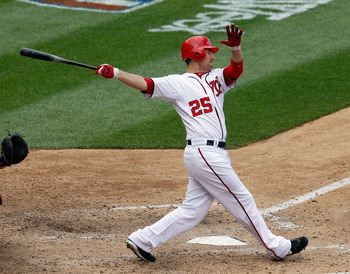
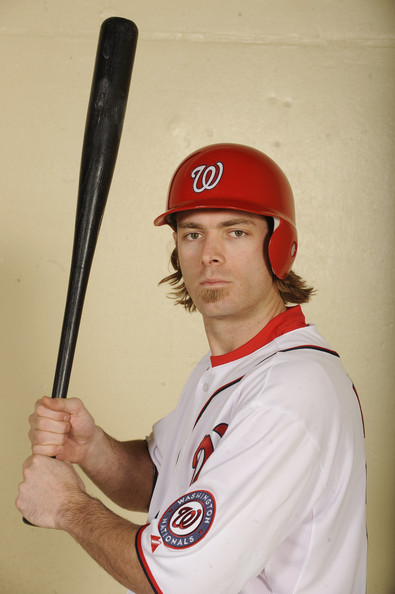
Werth; the most expensive lead-off hitter in the majors? Photo Mitchell Layton/Getty Images NA

Another edition of mlb.com Nats beat reporter Bill Ladson‘s inbox for 11/16/12.  As always, I write my responses before reading his and edit some questions for clarity.

Q: Why are the Nats looking for a lead-off batter when Jayson Werth appeared to do the job very well in 2012? Do the Nats think someone can do that job better, or do they think Werth belongs elsewhere in the batting order?

A: A decent question, which the questioner answered him (her?) self, frankly.  From quotes I read from Davey Johnson at the time, when Jayson Werth came back from the wrist injury the team was missing any reasonable lead-off option and Johnson asked Werth if he’d do it.  He enthusiastically said yes.  My personal opinion is that Werth’s wrist injury probably wasn’t entirely healed to his liking, thus sapping his power stroke and making it easier for him to focus on contact hitting and OBP from the lead-off spot than it would be for him to return to his middle-of-the-order power.  He couldn’t have had a better lead-off hitter-esque split from his time there; .309/.388/.450 when hitting from the #1 position this season.  That is fantastic.  But realistically the Nats need to find another, proper lead-off hitter for two main reasons (one practical, one political); Practically; Werth is a bigger, better hitter than a lead-off guy and needs to be in the middle of the order, driving in runs with his power potential.  Politically; you don’t spend #126M on a lead-off guy.  I hate to say it, but it is what it is.  I wish the Nats had a better internal lead-off option; Danny Espinosa is the natural person to install there.  Switch hitter, a very good hitter in the minors.  But so far in his career he’s incredibly strike-out prone, his average is disappointing and his lefty/righty splits are awful (as addressed in a separate question further down).  The reason the “Nats want a lead-off-centerfielder” rumors won’t go away is directly tied to this fact.  Ladson agrees, mentioning frequent FA target Michael Bourn and Angel Pagan as options.

Q: Given Roger Bernadina’s improved hitting this past season, is there any possibility that the Nats may try him as a leadoff hitter?

A: Roger Bernadina absolutely turned a corner professionally in 2012, increasing his OPS+ figure fully 30 points from 2011 and posting a split line of .291/.372/.405.  Yeah, that’d be a fantastic line to have at lead-off.  I’ll freely admit that I thought Bernadina was closer to a DFA than he was to a valuable spot on this team last spring training.  We already know just how good a center-fielder he is defensively, and he’s lefty so he puts another lefty bat in the lineup and would allow the team to move Bryce Harper deeper into the order.  Imagine a lineup of Bernadina-Desmond-Zimmerman-Harper-Morse-Werth-Espinosa-Suzuki; LRRLRRSR, giving good lefty-righty balance through the lineup.  This lineup of course assumes Adam LaRoche departs as a FA (which I think is likely).  Now, do I think this is going to happen?  No.  I believe the team views Bernadina as a 4th outfielder, a super-sub, defensive replacement for later innings and he thrived in that role last year.  But that being said, if the FA market proves too costly (or if the Nats choose to go all-in on a SP and leave the batting lineup as-is), this is absolutely a viable option to try in 2013.  Ladson agrees with my sentiments; the Nats view Bernadina as a 4th outfielder.

Q: What do you think of Tony Beasley taking over as Nats manager after Davey Johnson calls it quits? Beasley has the experience. He just needs a chance.

A: Honestly I’d expect Mike Rizzo to bring on-board a more experienced skipper if/when Johnson hangs them up.  Perhaps someone from his Arizona days.  How many teams really promote from within for on-field management?  Ladson thinks Randy Knorr is the heir-apparent.

Q: Why don’t the Nats consider left-hander John Lannan a No. 4 or 5 starter in ’13? Lannan showed he can pitch well in the past.

A: Man, how many times have I answered this question?  Lannan is a league-average pitcher, posting a career ERA+ of 103.  He isn’t a fireballer and rarely “dominates” a game.  Mike Rizzo wants power arms and just doesn’t rate Lannan.  He’ll look here and high for a harder-thrower for the 5th starter spot and is likely to roll the dice with hurlers Ryan Perry or Christian Garcia before he goes with Lannan next year.  Besides; Lannan would need to be tendered a contract and likely earns at least a nominal raise over the $5M he earned for toiling in AAA last year.  It just is not good value to pay $5M for a 5th starter when you’ve got MLB-minimum guys that can possibly do the job just as well.  Look for Lannan to get non-tendered and be pitching for a 2nd division team in 2013.  Ladson mirrors exactly what I wrote here.

Q: What are the chances of our GM, Mike Rizzo, going after a shutdown closer?

A: Zero.  Rizzo (rightly so in my mind) doesn’t rate closers on the open market as worthwhile investments.  I agree; I think relievers are fungible assets that are to be used and discarded as needed.  Now, if a former closer can be had on the open market cheap, Rizzo absolutely will bring them in.  He’s done this more than once in the past; Brad Lidge in 2012, Matt Capps in 2010.  Lidge didn’t work out at all but he only cost the team $1M.   Capps turned out fantastically, made the all-star team and was flipped for Wilson Ramos in what I think is Rizzo’s best trade (well, the Gio Gonzalez trade wasn’t half bad either).  The pickings on the closer FA market are slim, but I could see the team taking a flier on an injury reclamation project like Ryan Madson or Brett Myers.  Perhaps even re-signing Capps, who lost his closer role and could be inserted in middle-relief.  We do have bigger priorities though; namely replacing our 3 lefty specialists (Tom Gorzelanny is still tied to the club but isn’t a guarantee to get tendered).  Ladson says the team has a shutdown closer in Drew Storen and will focus elsewhere.

Q: Is Danny Espinosa really a switch-hitter? He is just horrible from the left side. Why doesn’t he just bat from the right side?

A: Great question, one that I’ve asked many times myself.  His career splits lefty/righty are pretty telling. .227/.306/.393 from the left side, .276/.346/.467 from the right.  He’s an all-star caliber hitter from the right-side only, posting a 124 OPS+.  I privately wonder if the team isn’t going to make the decision for him, and a full spring training just hitting from the right-side could be in order.  Of course, his value as a right-handed only hitter is greatly diminished.  Plus there’s a life-time of adjustments to be had; if you’ve been facing right handed arms from the left side your whole life, who is to say that you won’t similarly struggle once you’re seeing breaking pitches from the other side?  A tough call.  My gut says he sticks it out and the team shows the same patience with him that they showed with Desmond, who rewarded the team with a breakthrough 2012.  Ladson reports that Johnson has “all the confidence in the world” in Espinosa.  Looks like 2013 is a make-it or break-it year for  him.

Q: Can Zach Duke start for the Nationals? How does he compare with Zack Greinke?

A: Wow; comparing Zach Duke (a minor league FA signing this year with a career 49-74 record) to Zack Greinke (inarguably the top FA pitcher on the market with a Cy Young to his name) is sort of like comparing a fast-food joint to a steak-house.  There is no comparison; Duke is going to be lucky to get a guaranteed contract while Greinke is likely to get a nine-figure deal.  Can Duke start for this team?  Well, assuming the team resigns him (he’s a free agent) he’s not even as good as Lannan, who they could lock up for 2013 if they choose.  And (as discussed above) if the team doesn’t rate Lannan they certainly wouldn’t rate Duke.  I don’t think Duke even could feature as a LOOGY; he likely seeks another shot at starting in 2013 somewhere.  Ladson agrees, albeit without the hyperbole of my answer.

Q: What will the Nats do with Yunesky Maya? He appears he found himself while pitching a full season with Triple-A Syracuse.

A: I’d hardly say 11-10 with a 3.88 ERA in AAA is “finding himself.”  I’ll admit Yunesky Maya had some decent starts down the stretch, but he also had some awful ones.  Just like he did all season.  Maya got two shots in 2010 and 2011 to stick in the majors and failed both times.  I don’t think he’ll get a third.  Look for the Nats to obtain a 4th minor league option on Maya by virtue of his having fewer than 5 pro seasons and him spending 2013, his last of a 4yr $8M contract, as starter insurance in Syracuse again.  Ladson states that Maya is rule-5 eligible; Uh, perhaps you need to read up on the purpose of that draft Bill.  Its for NON 40-man roster guys.

Q: What’s up with Chris Marrero? Haven’t heard anything about him replacing Adam LaRoche at first base.

A: Another lost season for Chris Marrero, who spent a huge amount of time recovering from an off-season hamstring injury and ended up playing just 37 games in Syracuse after several rehab stops in the lower minors.  Zero home runs in AAA for the year.  I hate to say it, but Marrero has been passed by on the depth chart for first base, and the team would absolutely look at Michael Morse first and Tyler Moore second to man first base at the major league level before giving Marrero a shot.  His positional inflexibility really hurts him, in that he’s not showing the kind of power you need to at the position to get promoted upwards.  He’s still young though (born in 1988, he’s only 24).  Maybe he’s worth including in trade to another club.  Ladson didn’t say much; i’m not sure he really knows what the team plans for Marrero either.

Ladson’s Inbox: 11/5/12 edition

one comment

Would you bring back Johnson after his mis-steps managing the bullpen in the NLDS? Photo Getty via mlb.com

Welcome to another edition of MLB.com Nationals Beat reporter Bill Ladson‘s inbox, posted 11/5/12.  As always, I answer in this blog before reading his answer and sometimes edit the questions for clarity.

Q: Could the Nationals put a package of players together to pry away left-hander David Price from the Rays?

A: Unlike last off-season, when the Nats sent a bevy of top-end prospects to Oakland for Gio Gonzalez, I don’t perceive that the Nats have the depth of prospects nor the will to trade their biggest prospect names (Rendon, Meyer, Goodwin) in order to acquire David Price.  Tampa would likely want a combination of both prospects and MLB players, and you have to wonder if the Nats would be willing to ship so many pieces for Price (no matter how good a pitcher he is).  Now having said that about this theoretical trade, why do people think Tampa is actually LOOKING to move Price?  Yes they’ve been said to be looking to trade arms for bats this off-season, but they are far more likely to move James Shields if they’re looking to save money.  Shields has two more options at somewhat reasonable money ($9M for 2013, $12M for 2014) while Price is more than likely to only rise a few million above his 2012 salary of $4.35M.  Ladson says the Nats would have to deal a lot to Tampa to get Price and are more likely to go after Grienke.

Q: Do you expect Nationals to go after outfielder Josh Hamilton, who is a free agent?

A: I do not.  Josh Hamilton is injury prone (in his 5 seasons in Texas he’s only played more than 150 games once), is on the wrong side of 30, is prone to disappear at the plate for weeks on end, is going to command far more money than the team should be spending, and of course has the well-documented past daemon issues to constantly contend with.  I think Hamilton needs to stay with an AL team so that he can DH and continue to bat while he saves his body from the field.

Just see Philadelphia and New York Yankees rosters for prime examples of what happens when you guarantee $20M/year to guys in their 30s.  You end up with an expensive, aging and inflexible roster.  The Nats should do their best to avoid these kinds of contracts.  And I think Hamilton is going to age badly and be the kind of slugger who suddenly “loses it” once they hit their mid 30s.  Ladson essentially agrees.

Q: If the Nationals stay healthy, do you think they could win the World Series for the next several years?

A: “For the next several years?”  That’s a heady prediction; teams that win 3 World Series in short-orders are considered dynasties in the history of the sport.  Now, had this question been phrased, “do you think they could win the World Series within the next several years?”  I’d unequivocably say Yes.   They have a young talented core of starters all locked up for several years, they have a solid backbone of guys up the middle, they don’t really have any major trouble spots on the roster, and they have the payroll flexibility to adjust.

The real issue with guaranteeing World Series victories is the following (borrowing from Billy Beane); baseball playoffs are really such a crapshoot.   Anything can happen in a short series; how do the Tigers go from sweeping the Yankees to being swept them selves by the Giants?   I think Nats fans should hope for a continued streak of playoff appearances with the hopes that one of these years they put it together consistently through several short series and win a title.  Ladson also thinks they’re destined to win a title.

Q: Why are so many fans intent on trading Michael Morse? I don’t get it. He is one year removed from being team’s MVP in 2011.

A: I don’t know if fans WANT to trade Michael Morse as much as they’re resigned to the understanding that Morse represents a deviation from the way that Mike Rizzo wants to put teams together.  He’s clearly a defensive liability in left field, but the only other spot he can play (1B) is presumably being offered right now to Adam LaRoche for the next few years.  Therefore, I think the team looks to move Morse while he still has some value so they can put a better defender in left.

Now, is this what I’d do?  No not really; I’d probably let LaRoche walk, install Tyler Moore at first full time and leave Morse in left.  That takes away a huge middle-of-the-order lefty bat and leaves the team very right-handed (Zimmerman, Werth, Moore, and Morse are all RH), meaning Bryce Harper probably moves from #2 to #5 in the order to balance.  I’ve said it a million times; you can “hide” poorer defensive players in left field in this league, and in fact you have to in order to get enough bats in the lineup.

There’s no reason to think there’s any antipathy towards Morse; he’s clearly a clubhouse positive, he’s bright and cheery and seems to be a great teammate, and of course he’s got the best walk-on music (and subsequent crowd sing-along) on the team.  How can we want to get rid of that?

Ladson seems to think that fans were angry with Morse because of some extra bases taken by the Cards on hits down the line.  I don’t see that at all; yes he was slow to getting to those balls, but if you look at replays of all the doubles down the LF line you’d be hard pressed to find a ball that you’d immediately say, “See a better fielder throws the guy out at 2nd.”

Q: Has the organization soured on Danny Espinosa? And do you see Anthony Rendon on a fast track?

A: Two parter.  I don’t think the organization has “soured” on Danny Espinosa, no.  Why else would he get 160 games last year?  He’s a fantastic defensive player, covered more than ably at Short for Desmond and has 20-20 capabilities.  Now, that being said he’s a massive strike-out liability and really disappointed in the post season.  I think the organization, much as they did with Desmond, is showing some patience with their young middle infielder.  Desmond broke-out in his 3rd full pro season and perhaps so will Espinosa.  But, he needs to make some adjustments.  Perhaps its time to abandon switch hitting?  And his K rate must drop.

There are possible moves to be made though involving Espinosa, if it came to it.  He’s a natural short-stop, and his batting would be far more acceptable were he playing short.  We could move Espinosa to a team looking for a SS, install Lombardozzi at 2nd base and hope that he improves on his .317 OBP enough to be a decent lead-off options in the years to come.

Anthony Rendon should be on the fast track, absolutely.   The interesting question will be “where will he play” if he does push through to the majors?   Can’t play 3rd, could play 2nd but that leads to issues with Espinosa.  Could play LF, but see the previous Morse question.  Honestly, we should probably just wait to deal with this particular issue for that time at which Rendon is actually pushing for a MLB job.  This, by the way, is also another reason why I think re-signing LaRoche is foolish; I think the team needs to plan for the inevitable move of Ryan Zimmerman off of 3rd and to 1st Base, where his scatter-arm is no longer the major liability it is becoming.  Rendon makes for a natural 3rd replacement for Zimmerman, who can move to 1st and probably own the gold glove there for the next 5 years.

Ladson says the team hasn’t yet soured on Espinosa, and implies that something is afoot with either Espinosa or Lombardozzi this coming off-season.

Q: Why are you for keeping Davey Johnson around? Do you think that it’s smart to have your closer pitch the ninth inning of a game your team is losing by eight runs?

A: Wow, a shot across the bow of Davey Johnson for the little-mentioned usage questions surrounding Drew Storen in the NLDS.  Storen threw a meaningless inning in the game 3 blowout, meaning that he ended up pitching in three straight games.  My dad in particular believes this is the primary reason Storen was so wild in the game 5 meltdown, and puts the usage question directly on Johnson.  And I tend to agree.

That being said, Johnson is still a manager worth keeping around.  I just think he needs to learn from his mistakes in terms of bullpen usage in the coming seasons.

Ladson says he does not question Storen’s usage in game 3, but does question two critical non-moves in game 5 that many have mentioned; not using Mattheus and not walking Kozma.  Both are very fair points.


Ladson’s Inbox: 10/22/12 edition

15 comments

LaRoche's status with the team will dictate a number of cascading roster moves. Photo Rob Carr/Getty Images via bleacherreport.com

I havn’t seen mlb.com beat reporter Bill Ladson do an inbox response since February.  So I was excited to see one pop in this past Monday, 10/22/12.  As a reminder, I write my response before reading his, and sometimes edit questions for clarity.

Q: What are the Nationals’ plans for Tyler Moore? He is a power hitter who deserves to play every day. If Adam LaRoche returns next year, where does Moore fit in?

A: Tyler Moore indeed had excellent numbers in limited action, getting called up at the end of April to cover for a dearth of outfielders on the Nats roster.  His slash line was .263/.327/.513 for an OPS+ of 124 with 10 homers in 156 Abs.   Thats a homer ever 15.6 ABs and correlates to nearly a 40 homer pace for a full season of roughly 600 at-bats.  That is of course if you believe in what we saw in 2012 versus the continued lack of respect for Moore from the scouting pundits (who think his minor league power numbers were more a function of age than talent, and who continued to think that Moore had too many holes in his swing to be an impact MLB player).

Unfortunately though for Moore, if Adam LaRoche is re-signed there may not be an immediate place for Moore in the lineup.  LaRoche can only play 1B, Michael Morse is signed through 2013 and has become a club and fan favorite in LF.   Those are basically the only two positions Moore can play.

I think the better question here is, “Will the Nats extend Adam LaRoche?”  Because that’s the question that drives several other roster moves for 2013.  If LaRoche comes back and the team favors giving Moore more playing time, maybe they package Morse in trade.  Perhaps Moore sits and waits for another injury to give him playing time; LaRoche was incredibly healthy in 2012 and could regress for 2013.  Or, perhaps LaRoche (as basically the leading 1B power hitter on the FA market) will get a 3-4 year deal (likely) and the Nats won’t over-pay for his decline years, will install Moore at first and keep Morse in left.   Honestly, I think this last scenario is what plays out, and we’ll see Moore as your starting first baseman in 2013.

Ladson basically echos exactly what I say above.  Glad we’re on the same page.

Q: Do you think the Nationals will go after Michael Bourn this offseason?

A: No no no!  As I opined on September 13th, after seeing yet another Jim Bowden article intoning last off-season’s mantra of “the Nats need a center fielder,” the Nats HAVE a center fielder, and a darn good one, in Bryce Harper.  Harper finished the season with the 4th best UZR/150 for any CF with 500+ innings, even better than the vaunted defensive wizard Mike Trout.  It took about 5 games for his arm to be respected league wide, and he’s only 19 and will only get better.  Why would we possible move Harper off CF in the next 4-5 years?  Yes, eventually we expect a bulked up power hitting Harper to move to a corner spot, but not at age 20.  Besides, if Harper moves off CF … who makes way in left or right?  Do you move Jayson Werth to left field?  If so, then what happens to Michael Morse?  Do you move him?  Harper’s defensive value is wasted in right field.  Werth’s defensive value (while inarguably slipping) is also wasted in left field, where you can “hide” a poor defensive player who is plus-plus power.

*sigh* I wish this rumor would go away.  I’m pretty sure the Yankees never said to Mickey Mantle at age 19, “Hey Mick!  We like you in center but we to move you to a corner outfielder so we can sign a sub-average hitter to lead-off and play in your position.”  Of course not, so why would the Nats do so?

Unfortunately Ladson perpetuates the ridiculous myth himself and says he thinks the team goes after Bourn and puts Harper in LF.  Just ridiculous.

Q: Any news on Cole Kimball’s recovery?  Will we see him in a Nats uniform in 2013?

A: Shoulder injuries in power pitchers are never an easy recovery.  That’s why we never really saw Kimball in the summer and why he’s currently in the AFL getting some extra time on the hill.  As of this writing he only has 3 2/3 innings, so not much to go by.  We are seeing some reports that he looks decent.  2013 prognosis?   He faces an uphill battle to make the bullpen; there’s several right handers that are now clearly ahead of him on the depth chart.  Storen, Clippard, and Stammen are locks (if not traded).  Rodriguez has no options.  Mattheus has pitched his way onto this team.  That’s your 5 righties out of the pen (Davey Johnson likes 2 lefties).   And we havn’t even talked about Christain Garcia, who pitched well enough to make the post season roster.   So the answer may be that Kimball starts in AAA and waits for an opportunity.  Ladson says he thinks Kimball can make the 2013 bullpen.  How exactly?  Who is he going to be ahead of?  Not much provided in the way of deep analysis, Bill.

Q: Do you think there is any chance the Nationals bring up Corey Brown to play center and bat second?

A: No.  Brown looks to me like the definition of a 4-A guy, and will be stashed in AAA as outfield depth until further notice.  Batting second?  Really?  We’re currently batting Werth at leadoff despite his having middle-of-the-order power.  What makes anyone think Brown deserves to bat anywhere in this lineup, let alone ahead of the power guys?  And, if Brown makes the 25-man roster which outfielder does he replace?  Certainly not the starters in Morse, Harper and Werth.  Certainly not Roger Bernadina, who more than earned his stay.  And certainly not above Moore.   Ladson agrees.

Q: What do you think about the addition of Kurt Suzuki to the roster?

A: Somewhat of a panic/reactionary move at the time, but it has worked out great for both sides.  Jesus Flores wasn’t stopping the one-way street for opposing base-runners, and we needed more of a plus-defensive guy behind the plate.  Flores did himself  no favors batting .213 either.  Suzuki immediately upped his batting stroke too,  batting .267 here after hitting just .218 in Oakland in 2012.  Clearly Suzuki and Wilson Ramos are your two catchers heading into 2013.  What do we do with Flores?  Do we dare non-tender him and give him away?  Do we tender him and try to trade him?  I’d hope for the latter, thinking that even a .213 hitting catcher has value in this league.  I hate to say it, but Ramos can’t stay on the field and we needed the insurance.  Ladson agrees, but doesn’t mention Flores’ fate.

Q: The Shark, aka Roger Bernadina, had a career year and will probably get a raise this offseason. Do you think the Nats are going to try to move him, or can we expect to see The Shark with the team next year?

A: Great question.  Do we sell-high on Bernadina and make-do with a 4th outfielder like Corey Brown or Eury Perez in 2013?  We could, if it brought us back something worth having.  We do have some rising quality OF depth that would replace Bernadina (Brian Goodwin comes to mind, perhaps even Anthony Rendon if he hits his way to the majors in 2013).    Ladson thinks Bernadina will be back.  I have no problem with that; he hit great this year, knew his role and is fantastic defensively.

Q: Do you think Davey Johnson is the best manager in Nationals/Expos history? Felipe Alou is tough to beat, but Davey has my vote on this one.

A: Why not Jim Fanning?  He led the franchise to its only prior post-season appearance.  I dunno; what exactly makes a “good” manager?  I think Johnson has absolutely done better with this team than anyone thought, so yeah that makes him a great manager (and my favorite for winning NL Manager of the Year).  Best ever for the franchise?  Why do people think Felipe Alou was so great?  His last three Expos teams each lost 90 or more games.  Who can really talk intelligently about how well Buck Rodgers mangaged the team in the mid 1980s?  The team improved 19 wins from 1978 to 1979 under Dick Williams.  Those are good managers too.  Ladson thinks Johnson is the best ever but says Alou was great.  I don’t get it.

Roster Construction Analysis of 10 Playoff Teams; 2012 edition

5 comments

Justin Verlander is one of the most important home-grown players in the 2012 playoffs. Photo unk via rumorsandrants.com

Every year I do a bit of “Team Construction” analysis to kind of gauge the trends in roster construction.  Last year’s post is here, and the links to the side have the underlying spreadsheet of player acquisition methods so you can see the pure details.  This topic was also covered in-depth by John Sickels on his minorleaguebaseball.com blog for another viewpoint.

Borrowing from last year’s post, there are four main ways teams can acquire players:

  1. Draft: The player is with the original team that drafted him.  In the case of international free agents, if they’re signed as 16-year olds they are considered in this category as well (i.e., Ichiro Suzuki is not a developed player, but an international Free Agent).  It could be better defined as “Club developed players.”  Simple examples for the Nats: Stephen Strasburg and Bryce Harper.
  2. Traded MLBers: The player was acquired by the team by virtue of trading an established MLB player.  Most of the time these days, this means the player was acquired as a prospect (since most trades seem to be of the prospect-for-established player kind).  Example for the Nats would be Michael Morse, who was acquired by our trading an established MLB player in Ryan Langerhans for Morse while he was still (essentially) a minor leaguer.
  3. Traded Prospects: The player was acquired by the team by virtue of trading prospects.  This is essentially the reverse of #2.  The Nats key example is Gio Gonzalez.
  4. Free Agent: The player was acquired in free agency.  This category also includes two other types of acquisitions: waiver claims and cash purchases.  These three categories are lumped together since all three indicate that a team has acquired a player with zero outlay in terms of development or prospects.  Examples for the Nats: Edwin Jackson, Adam LaRoche.

Here is the summary of roster construction and “Construction Strategy Category” that we’ll talk about next.  Note that I only count the “core players” on a team for this analysis.  The core players is defined as the 5-man starting rotation, the setup and closer, the 8 out-field players, and the DH for AL teams.  I didn’t extend this all the way to the 25-man roster, figuring that these core 15 players are the main reasons teams win and advance.  That and huge chunks of the bullpen and the bench are either fill-in FAs or draftees and it would skew the analysis of how teams really got to the playoffs.  Here’s the summary (the table is sorted by count of Draftees):

Season Team Drafted/Developed Traded Prospects Traded MLBs FA/Waivers Ttl Constr Method
2012 Atlanta 11 1 3 0 15 #1
2012 St. Louis 9 0 2 4 15 #1/#4
2012 Washington 8 3 1 3 15 #2
2012 San Francisco 8 2 2 3 15 #2
2012 Cincinnati 8 2 3 2 15 #1
2012 New York Yankees 5 2 1 8 16 #4
2012 Detroit 5 5 2 4 16 #2/#4
2012 Texas 4 2 7 3 16 #3/#4
2012 Baltimore 3 1 8 4 16 #3
2012 Oakland 2 1 7 6 16 #3

So, what are the four construction methods I’ve identified? Again borrowing from last year’s version of this post, they are (with this year’s examples).  The complication this year is that some of the 10 playoff teams don’t fall neatly into one specific category.

Method #1: Build from within 100%: (Cincinnati, Atlanta).   Atlanta, amazingly, didn’t use a single Free Agent among its core 15 this year.  They made a couple of key trades to acquire a few starters, but the rest of their lineup is home-grown draftees.  That may change next year as they try to replace Chipper Jones, Michael Bourn and possibly Brian McCann, who may leave via free agency.  Meanwhile Cincinnati has just a couple of free agents and mostly rely on guys they’ve grown as well.

Method #2: Ride your developed Core and use your prospects to acquire big names: (Washington, San Francisco and Detroit to an extent): The Nats have transformed themselves over just a couple of seasons, relying less on FAs to plug holes caused by an awful farm system to having most of their core team developed at home (See the table further below to follow the transformation of our team over the past few seasons).  Those spots they couldn’t depend on have been filled by trades (three guys acquired by flipping prospects for them; in addition to Gonzalez Kurt Suzuki and Tyler Clippard also count here).  San Francisco has seen their payroll skyrocket as they extend their home-grown talent, but for the most part they have stayed true to the team development concept.  Their one major Free Agent (Barry Zito) is notoriously one of the worst contracts in baseball and it is somewhat surprising to even see him on the post-season roster.  He wouldn’t be if Tim Lincecum was pitching in 2012 like he has regularly done in previous seasons.  Detroit was entirely in method #2 until they decided to spend money like the Yankees; we’ll revisit in #4.

Method #3: Go Young and grow up Strong (Baltimore, Oakland and Texas to an extent): Baltimore acquired a massive chunk of their rosters by flipping major leaguers for prospects and watching them blossom into a surprise playoff team.  Oakland has made a habit of getting rid of guys before they hit arbitration; fully 7 of their squad was acquired this way.  The difference is that Oakland has been forced to buy a big chunk of their core group on the FA market, depending on cast-offs like Brandon Inge and Jonny Gomes to plug leaks and get production on the cheap.  I’m guessing that Oakland will transform more into Category #1 as the vast amount of prospects they’ve landed lately continue to matriculate.  Lastly Texas was entirely in this category before they dropped major money on the likes of Adrian Beltre and Yu Darvish, transforming them into a spending power to go with their still-excellent farm system.

Method #4: Spend what it takes to win: (New York fully with St Louis, Texas and Detroit partially here): The Yankees are the class-A example of this method (along with Boston and the Dodgers frankly), but the spending that St. Louis, Texas and Detroit cannot be overlooked.  The Yankees more and more are depending on expensive FA purchases to replace what their farm system is not developing, and the problem is only being brought into more focus this off-season.  Their 3 primary starters are FA acquisitions, their biggest FA is looking like a contract catastrophe, and their developed guys are not stepping up and taking over major roles (especially on the pitching staff).  The other three teams mentioned here are mostly built on home-grown talent, but have spent so much money on the FA market lately that they are broaching into the upper echelons of MLB payroll.  St. Louis is almost entirely built from within (as noted by other columnists doing this same type of analysis) but still has depended on a couple of key FAs to advance as far as they have.

Conclusions:

  • There’s no real formula to building a playoff team, as we see from the spread of the 10 teams among the four methods defined.
  • I think its safe to say that the most difficult methods to depend on are #1 and #3.  You need to have a very good farm system to depend on the #1 method to work for you, and over the past few years only a couple of teams really have had success using this method (Atlanta and Tampa Bay).  Kansas City has tried #1 for years and has gone nowhere.  The #3 method is also frought with issues, since it requires a ton of patience from your fan base and may not be sustainable.  Would anyone be surprised if both Oakland and Baltimore collapsed next season?  Probably not; you really need to build on a base of players once you’ve established yourself as a good team and continue to augment, either through trade or through FAs.  But even that can be dangerous; just ask Philadelphia this year, owners of the 2nd biggest payroll in baseball and just a 3rd place team.
  • Is Category #1 and #3 the same?  No, not really. #1 teams rely much more heavily on personally developed prospects, while #3 teams purposely set out to acquire prospects in trade to combine with their own development mis-fortunes.  If Baltimore had a better farm system, they wouldn’t have needed to jettison so many established MLBers to acquire prospects, and they’d probably be closer to a #2 team (a wealthy team who supplements developed players with key FAs, much like what Washington is doing).
  • Oakland is really a unique case; they do develop players but get rid of them because of a self-imposed incredibly restrictive salary cap.  Imagine what Billy Beane could do with that team if he could have purchased just $30M of players on the open market (which would have still left Oakland in the bottom third of payroll).
  • Buying your way to a team (method #4) can work, but only if you have nearly unlimited money and everything goes right for you.  There’s almost no excuse for a $175M payroll to get beat to the playoffs by a $55M payroll team (Oakland).  That is unless you overpay for poor FA targets, install the wrong manager and saddle yourself with the worst clubhouse in baseball.  In case you were wondering, the 2012 Boston Red Sox were a classic case of why money cannot buy happiness, and why unlimited funds do not necessarily guarantee playoff baseball.  The Angels are another example; owing most of their season’s turnaround and success to Mike Trout and his MLB minimum salary providing nearly 10 WAR despite having the 3rd largest payroll in baseball and having just purchased the games pre-emminent hitter in Albert Pujols.
  • Frequent commenter Clark has a good point; classifying Mark Teixeira and Raul Ibanez as the same type of player (acquired via free agency) is a bit mis-leading.  Clearly a $150M player isn’t the same as a $1M player.  But, for the purposes of analyzing how much of your team is “bought” versus “developed” the point remains the same whether its a bargain basement guy or a $20M/year player.

So, if I had just purchased a new team, what construction method would I follow?  I guess it depends; if I thought I had a patient fan base, I’d probably do exactly what is going on in Houston.  I’d gut the MLB roster, trade every tradeable asset and start over payroll-wise.  I’d follow strategy #1 until I was at least competitive, and then i’d probably switch over to a #2 strategy or a #3 strategy, depending on just how good my developed players were.  You hope for #3; it implies you’ve got so much in-house talent that all you need to do is keep extending your key guys and you’ll keep winning.

I don’t think #4 is a sustainable way of building rosters.  The Yankees have gotten away with it for years, but only because they initially had a banner crop of developed players (the “core four”) to depend on up their spine.  Would anyone be surprised if the Yankees fail to make the playoffs next year?  Alex Rodriguez looks incredibly old, Derek Jeter just broke his ankle, they’re losing a number of hitters to FA and they only have a couple of starters locked up.  Where’s their starting pitching for 2013?  And what happens if they finally get hit with injuries to their rotation to the extent that Boston did this year?  I think this is why you see $80M payroll teams beating out $170M payroll teams all the time; teams get bloated, they over pay their own players and suddenly are old, inflexible and unable to adjust financially to buy what they need.

Lastly, here’s what the Nats roster has done over the past few seasons:

Season Team Drafted/Developed Traded Prospects Traded MLBs FA/Waivers Ttl Constr Method
2010 Washington (end of 2010) 7 1 2 5 15 #2
2011 Wash (2011 opening day) 6 2 1 6 15 #2
2011 Wash (primary Roster for season) 6 2 2 5 15 #2
2011 Wash (end of season) 9 1 2 3 15 #2
2012 Washington (playoff roster) 8 3 1 3 15 #2

The team has been slowly replacing Free Agents with home-grown or acquired talent, and as we all know is well on its way towards a strong, home grown team.  This year’s core team only uses 3 pure FAs: Adam LaRoche, Jayson Werth and Edwin Jackson.  We could very well see LaRoche replaced outright with the home grown Tyler Moore, and if the team replaced Jackson with someone like John Lannan (not that we’ll possibly see that happen), we could be down to just one FA in the core squad.

Game 4 Recap: Detwiler defines the word Irony with 6 strong innings

11 comments

Detwiler shuts down the Cards in Game 4. Photo Haraz Ghanbari/AP via federalbaseball.com

The movie The Matrix has been on the movie channel rerun cycle lately, so if I may quote the character Morpheus, “Life it seems is not without a sense of irony.”  The irony of Ross Detwiler being the guy who bails out the Nats with his stellar Game 4 outing is this; had Stephen Strasburg been active, it would most likely have been Detwiler who would have made way in the rotation.  Instead he (finally) gave the Nats an effective start, going 6 innings, allowing just 3 hits and an un-earned run in the Nats 2-1 walk-off win.

Using a sinking fastball with great effect, Detwiler controlled the powerhouse St. Louis offense and kept the ball on the ground; 11 of his 18 outs recorded were ground ball outs.  He was slightly wild on the night (3 walks and only 59 of his 104 pitches for strikes) but umpire Jim Joyce‘s wide and varying strike zone helped both pitchers put up excellent lines on the night.  Detwiler, the least experienced of any of our starters and a guy who most thought wouldn’t even be in the rotation this year (I certainly didn’t think so as spring training unfolded), was the one guy who has stepped up and pitched to his capabilities.

The game of course will be remembered for Jayson Werth‘s fantastic 13 pitch at-bat, culminating with a walk-off home-run off Lance Lynn for what had to be one of the more memorable games in the team’s brief history.  Good for Werth and great for this team.  I’ve already got the image saved as an iconic moment in this franchise.

Other odds-and-ends:

  • Thanks for pre-empting the game for an HOUR, TBS.  This was an unanticipated problem of trying to DVR the game and watch it later.  In addition to avoiding all social media, news sites and phone alerts so as not to have the game outcome spoiled, now I may have to start taping on multiple channels.  So I completely missed the first four innings.   Hence not so much analysis of Detwiler’s outing.
  • How about Jordan Zimmermann in the first relief appearance of his major league career?  He was throwing harder than I’ve ever seen him throw; touching 97 on more than a few occasions.  His mph was no stadium gun hype either: pitch f/x shows a max of 97.2 and an average of 96.73 for Zimmermann.   Meanwhile, here’s the pitch f/x data for his start on 10/8: average 94.08, max of 95.6.    That’s 1.6 mph more on his max effort fastball.  He absolutely mowed down the heart of the St. Louis order (aided again by a questionable strike 3 call on Matt Holliday that just left him laughing).  I figured Zimmermann was going for more than an inning, with Davey Johnson perhaps thinking the game might go long.  Instead, it seems he was playing the odds that Craig Stammen wasn’t up for the task.
  • Meanwhile, how about 9 straight punch outs to end the game?  It was refreshing to “remember” what the back-end of this bullpen is capable of.

This is the Nats pitching effort we’ve been accustomed to, and have waited for all series.  Now, suddenly, would you bet against this team in Game 5?  We have talked a lot about momentum and how the Nats had little heading into the post-season; they’ve certainly got it now.  Adam Wainwright should regress back towards the mean from his Game 1 start, and Gio Gonzalez should “egress” back towards his form of the bulk of the season.  Game 5 could be a pretty special experience.

NLDS Game 1 Recap: Gonzalez the Escape Artist

10 comments

The team escaped Game 1 with a victory despite Gonzalez’s struggles. Photo Joy Absalon/US Presswire via usatoday.com

Nats take Game 1 of the NLDS 3-2.

You know your pitcher is having a rough day when the score line reads “2-0-0.”  As in, 2 runs, 0 hits and 0 errors.  That was the score at the end of the second, an inning in which Nats starter Gio Gonzalez had walked no less than four batters, thrown a wild pitch and given up a sac fly for the second run despite giving up zero hits.

TBS broadcast a stat showing Gonzalez’s ERA on various days of rest; the key stat was that he had a 5.80 ERA when he had more than 5 days rest.  His days rest entering Game one of the playoffs?  Nine days.  He last threw in Philadelphia on September 27th.

Being able to rest your starters and “set up” your post season pitching rotation can be a blessing and a curse.  Today it was a curse; clearly Gonzalez was overthrowing, missing his spots, and his pitching line showed it.  He didn’t trust his curve early, was relying solely on his fast ball and couldn’t locate it to his desire.  To his credit he settled down for a couple innings, got a couple of very timely plays in the field, and exited having given up a sole meaningless hit to go with seven walks in 5 innings.  To me it looked like he was over-throwing, that he was “too strong.”  Starters are creatures of habit; throw one day, rest the 2nd, toss the 3rd, bullpen work the 4th, rest the 5th and then repeat.  When too many extra days are thrown in, younger guys can get off schedule.

In the first inning I thought perhaps Gonzalez was trying to “save” his curve for later in the game; a great strategy for professional pitchers who can do it.  Instead of showing guys your whole arsenal the first time through the order, pound them with fastballs and make them hit your pitch.  Then, in their 2nd and 3rd at bats mix in curves and off-speed stuff as out pitches as needed.  If you play your cards right, you can work through each hitter’s 3 at-bats keeping them off-balance and suddenly you’re deep into the 6th or 7th inning as a starter.   As it turned out, he wasn’t trusting his curve at all, and suddenly he was pressing to hit his spots.

Craig Stammen escaped an incredible jam in the bottom of the 7th, having loaded the bases with none out.  Usually that situation has a run expectancy of somewhere greater than 2 runs but the Nats defense came through; an Ian Desmond force out at the plate for the first out then a clutch 5-4-3 double play to end the inning.  Despite Tyler Moore‘s late inning heroics, this was the key of the win.

Adam Wainwright showed exactly why he’s a Cy Young candidate when he’s healthy; his curve-ball was absolutely fantastic on the night.  The already-strike-out prone Nats fanned 10 times, many times on a fantastic curve that Wainwright was controlling and commanding to the outside corner.  I was surprised when he got the hook despite being on 100 pitches; as it turned out he probably wasn’t going to finish 7 complete regardless.  You can’t really fault the bullpen management by Cards manager Mike Matheny; he had his 8th inning guy on the mound (Mitchell Boggs) and the Nats beat him.

Other thoughts from watching the game:

  • I scoffed aloud when the TBS announcing crew spoke of Ryan Zimmerman‘s defensive prowness and said that “he rarely makes throwing errors.”  Really?  I know they don’t watch Nats games normally but the narrative behind Zimmerman’s throwing issues on non-pressure plays is well documented in DC.  He had 12 throwing errors on the year, and his 19 total errors tied him for 3rd in baseball.  Sure enough, a throwing error in the bottom of the 8th put the lead-off guy on board and caused the inning to be far more stressful than it needed to be for Tyler Clippard.  Guy on first with nobody out?  Roughly an 85% chance he scores.  For years I’ve defended Zimmerman and talked of the ridiculousness of “wasting” his defense by moving him to first, but the fact remains that every time he fields a routine ground ball I’m waiting for him to air-mail the throw.  When Anthony Rendon is ready to hit at the major league level, I think the talk is going to be about Zimmerman moving to first and not Rendon moving to another position.
  • For as clutch as Moore, Ian Desmond and Kurt Suzuki were on the day, Jayson Werth and Danny Espinosa were the opposite.  TWICE Werth squandered bases-loaded situations with two outs, leaving a total of 7 guys on base.  He may be our current lead-off hitter, but he’s normally a middle-of-the-order bat and he needs to capitalize on situations like that.  In Werth’s defense (no pun intended), the over-the-shoulder grab was a game-saver in its own right, so on a day when he disappointed at the plate he made up for it in the field.  Meanwhile it was not really shocking that Espinosa whiffed over and over; he led the NL in strikeouts on the season and was batting from his clearly weaker side.
  • How about Tyler Moore?  A fantastic job of hitting, hitting a pitcher’s pitch and not trying to do too much with it.  The old “game winning RBI” stat went the way of the Edsel, but tonight the clubhouse knows exactly who won that game.
  • Here’s to the return of “Clip-Store-and-Save.”  Clippard escaped Zimmerman’s throwing error in the 8th and Drew Storen dispatched two of the best St. Louis hitters in a 1-2-3 ninth.  The team has to feel great about its bullpen on the night.  No worries about using your 3 best guys; they’ll all be able to go tomorrow then get a travel day of rest.
  • The ridiculousness of the Hold stat: Boggs was credited with both a “Hold” and the Loss.  How is that possible?  Because he put on the go-ahead run that Mark Rzepcynski eventually allowed to score.  I think the Hold stat would carry more weight if it was withheld from relievers who don’t actually “hold” the game at bay and who contribute to the blown save and (if applicable) eventual loss.
  • The sideline reporter couldn’t help but compare the handling of Wainwright to Stephen Strasburg; both had Tommy John surgery last year.  He said the Cardinals “trusted” Wainwright more and let him pitch 200 innings.  But they didn’t really talk about the real difference: Wainwright is into the club option portion of his FA contract and is no sure thing to stay with the team beyond 2013.  He’s also 30.  Compare that to Strasburg; he’s 23 and is under team control for at least four more seasons, and is likely to be offered a multi-year contract that buys out those arbitration seasons and a couple of FA seasons beyond that (similar to the deal Gonzalez signed).  The point is; the Nats know they’ve got this guy for years to come and clearly played it conservative with his re-hab.  Why this point is glossed over by pundits and bloggers is beyond me.  Every time I hear some know-it-all say things like, “there’s no proof that letting him pitch more than 160 innings will harm him” my blood boils.  Well, there’s no proof to the other side either!  The fact is you can either be reckless with your major investment and overuse him, or you can play it safe and hope for the best.  There’s no guarantees in life and thus there’s no guarantee that Strasburg won’t blow out his elbow again in 2013.  But on this point I can guarantee; had the team continued to ride Strasburg down the stretch, push his innings to 190-200, and then he re-injures himself in the last week of September?  You can guarantee all those know-it-alls would immediately be clucking their tongues about how the Nats “mis-used” Strasburg and should have played it safer.  I don’t envy Mike Rizzo this post-season, because unless the Nats win the world series there’s going to be the inevitable stories about how the Nats would have won had they kept their Ace in the rotation.  To borrow a quote from Major League, “Well, I guess then there’s just one thing left to do … win the whole !?@& thing.”  (link NSFW)

Great comeback by the Nats, snatching a win in a game they probably should have lost.  They now have the split in St. Louis and are in a commanding position to win this short series.

Jimmy Rollins; time for Philadelphia to sleep in the bed they’ve made.

4 comments

Courtesy of Nat Enquirer; this video of Jimmy Rollins classlessly giving the Nats zero credit for having the best record in the majors in 2012.

Specifically, “With us healthy, they’re a second-place team. But we weren’t.”

But that’s the problem that Rollins needs to understand; when you build your team on the backs of aging players … you’re NEVER going to be as healthy as you expect to be.  There’s a reason the Nats didn’t lose ONE start to injury all year; our pitchers are younger and healthier.  Philadelphia has built a rotation of aging stars and free agents.  Cliff Lee missed 3 starts this year, Cole Hamels missed a couple, and Roy Halladay missed 7 or 8.  Those guys are 33, 28 and 35 this year.  They’re not getting any younger and likely will miss starts again in 2013.

How about Philadelphia’s positional players?  Ryan Howard only played 71 games.  Chase Utley only 83.  Placido Polanco just 90.   Carlos Ruiz missed all of August.  Maybe you can argue that the two big names from this list should start 2013 healthy and that may make a difference.  Fair enough, except that Howard is 32, Utley is 33, and both now have a slew of injuries on their resume.  Nobody should assuming those guys are playing 150+ next year.

Meanwhile, Washington had a TON of time lost to injuries in its offense.   Desmond missed a month.  Morse missed two.  Werth missed half the season.  Zimmerman lost a few weeks.  And we went through no less than SIX catchers on the season.  And the team persevered, struggled offensively most of the early part of the year, and maintained its lead.

Philadelphia made its choices, signing major dollar contracts to extend its own guys and to buy its rotation and its key bullpen members.  And now you have to live with those decisions, which leave you with an aging roster overpaying for the decline years of your players.  Meanwhile Washington rode the wave of 100-loss seasons, committed to building its farm system, didn’t overpay for Free Agents, and now sits with one of the youngest teams in baseball (3rd youngest pitching staff and youngest on-field staff), with a below-average payroll and the best record in the majors.

Sour Grapes Jimmy Rollins.  You should get used to 3rd place because its probably where the Phillies reside for the next several years, until you can jettison your ill-signed contracts and start over.

Who still thinks the Nats will pursue a CF in the off-season?

24 comments

Harper has turned into a very good defensive CF. Photo Gary Vasquez/US Presswire via Natsinsider.com

Jim Bowden was the latest pundit to repeat the often-mentioned mantra “The Nats need a Center Fielder,” but this isn’t entirely a “pick on Jim Bowden” post.  Most pundits think the Nats are still in love with BJ Upton or newly in love with Michael Bourn and will aggressively pursue one or the other this coming off-season.  Now, that tired statement may have been true in the 2011 off-season, but anyone who still prints this now hasn’t been watching what has been going on in the Nats outfield this season.

To put it simply; Bryce Harper has turned into a very good defensive center fielder.  And there’s no reason to move him off the position for a number of years.

It only took about a week for rumors of Harper’s arm to circulate around the league; within a week or so 3rd base coaches were already playing it conservatively and refused to challenge his arm.  It only took a couple of Sportscenter highlight throws from the outfield to earn that praise.  Harper has 3 outfield assists on the year and probably won’t get too many more given the reputation he’s already earned.

But his arm is just one part of the equation.  Click here for the advanced fielding measure “UZR/150” for all 2012 center-fielders with at least 500 innings played.  Harper currently possesses a 28.6 UZR/150, good for 2nd in the league and far above vaunted defensive outfield wizard (and fellow Rookie phenom) Mike Trout.  In fact, he’s just ahead of Bourn and only behind reserve outfielder Craig Gentry.  To put this into english; right now Harper is just about the best defensive center field in the league.  He’s very fast, shows great range on the ball, and his errors have generally been on over-aggressive throws instead of dropped balls.

By way of UZR/150 comparison, Bourne is clearly a top defender, but the other rumored target Upton actually boasts a -1.3 UZR/150 right now, indicating that he’s actually costing his team runs.

The common narrative is that the Nats want a lead-off/center fielder type so they can move Harper to one corner and Jayson Werth the other and have a plus outfield all the way around.  But lets face it; that’d be a monumental waste of Harper’s defensive talents right now.  An .850 OPS hitting center fielder with 30 homer capabilities is one of the rarest commodities in baseball, and usually good ones only come around once in a generation.  We already knew Harper was such a generational talent, but even I was surprised to see just how well statistically he has played CF thus far.  Do the Nats need a prototypical lead-off hitter?  Yes …. but not as long as Werth is willing to be in that role.  Here’s a fact; Werth has an OBP of .426 hitting lead-off this year, which would be the 2nd best OBP in the league (behind the amazing Joey Votto) if he qualified.  When you have almost an entire lineup of guys who have 20-hr power, someone has to bat lead-off.

The other problem with the “Nats get a free agent CF” scenario is that it leaves no room in the outfield for Michael Morse.  Buying another outfielder pushes Morse to 1B, which pushes Adam LaRoche out the door.  Now, this scenario may happen regardless (LaRoche absolutely should parlay his 2012 season into a multi-year FA deal, or at least explore the possibility), but I’d rather have the positional flexibility to give someone like Tyler Moore more starts, or to give the resurgent Roger Bernadina starts against right-handed starters, or even keep LF the rotating door between Moore, Bernadina and Lombardozzi so that all three valuable players can get playing time.  And if you don’t think the team really wants to give Moore playing time, then you havn’t been paying attention to his season.

Lastly there’s this: spending money on an unneeded CF means less money to spend on pieces that we WILL need; money towards either Edwin Jackson or his rotational replacement, money towards some bullpen reinforcements, or perhaps money to extend a trade target that we leverage to free up some positional log-jams (middle infield for example, between our current starters and the upper-end reinforcements on the way in the high minors).

There’s been comparisions of Harper to the vaunted Mickey Mantle in the past; if Harper sticks in CF for the next decade, those comparisons will just be all the more viable.

Repost: Are the Nats suddenly a 100-win team? With this offense, yes.

7 comments

The return of Michael Morse has energized the offense. Photo Jacqueline Martin via federalbaseball blog

(Editor note; I attempted to publish this last Friday, then the server immediately went down all weekend.  Wanted to re-post it to get commentary from typical readers.  All numbers below were as of last friday, before the wild 4-game series against Atlanta).

There’s been lots of press this week, and to an extent all season, about Stephen Strasburg‘s innings limit.  Mike Rizzo came out this week and said (paraphrasing) that there’s not a hard-and-fast 160ip limit, but that he will be shut down, and it will be Rizzo’s decision when Strasburg doesn’t pass the “eye test.”

Nats pundits are already discussing this impact on a playoff race, who the replacement may be (with John Lannan getting an early audition during this weekend’s double header), and whether we should flip someone out of our “thinned” farm system for a rental SP like Zack Greinke or Ryan Dempster (I put “thinned” in quotes out of deference to those that don’t share my glass-is-half empty opinion on the state of our farm system right now as posted here earlier this week).

Inarguably, this team will be a worse team without Strasburg.  We’d be weaker in September once he got shut-down and we’d be hampered in a short series without our staff Ace.  I’m not worried about September though; remember last year?  Some teams were fielding 40-man roster specials, with lineups that mostly started the year in AAA.  And I’m not entirely worried about how we’d look in a playoff series, since playoff rotations go 4 deep (meaning whatever question mark we’re throwing out there as a 5th starter in September is in the bullpen in October), and a rotation of Gonzalez, Zimmermann (who, amazingly, is tied for the NL lead in pitcher bWAR right now), Jackson and Detwiler getting the game 4 start is still pretty durn good.

But, here’s some interesting stats that should give you (and anyone in baseball frankly) some pause; this team is positioned to get significantly better from here on out, despite the looming loss of Strasburg and despite the fact that they’re already in first place.  Why?

Because the offense is really starting to heat up.

Here’s some stats to give context: based on the Team Scoring page at baseball-reference.com, here’s the Nats scoring-based records:

  • When the Nats score 0,1,2 or 3 runs, they are 14-28, for a .333 W/L percentage. This is pretty common; even last year’s 102-win Philadelphia team rarely won when scoring 3 or fewer runs.
  • When the Nats score 4 or more runs?  They are 39-9 this season, a .795 W/L percentage.
  • Taking this a step further, when the nats score 5 or more runs, they’re 29-6, a .828 W/L percentage.

(For context, a record of 100-62 equates to a .617 W/L percentage).

Perhaps the above states the obvious; most teams have pretty good records when they score a bunch of runs.   For comparison sake’s, here’s the same analysis for the team with the best record in baseball, the Yankees:

  • Scoring: 0,1,2,3 runs: 5-23 for a .178 W/L
  • 4+ runs: 52-12, .813 w/l
  • 5+ runs: 44-10, .815 w/l

The Yankees and their superior offense leads to a ton of wins once they get above 4-5 runs.  The difference between the Yankees and the Nats is our current ability to win a pretty sizeable number of games when scoring 3 or fewer runs.  This difficulty in winning close games and depending on bashing your way to victory has been a theme for the Yankees for a few years now, and is one of the reasons they have only won one World Series since 2000 despite being in the playoffs nearly every year (only one missed playoff appearance during that span).  They are susceptable to getting shut down by a good rotation in a short series.  But I digress…

Getting back to the theme of this post: Here’s a look at the monthly W/L records for the Nats, along with average Runs scored and Runs Allowed (through July 19th’s game):

Month W/L W/L pct RS RA
April 14-8 0.636 3.36 2.68
May 15-13 0.535 4.21 3.85
June 15-11 0.576 4.46 3.73
July 9-5 0.642 4.78 3.57
season 53-37 0.588 4.166 3.488

Look specifically at the average number of Runs Scored by this team.  It is distinctly trending up; from 3.36 RS/game in April to a massive 4.78 RS/game so far in the month of July.   That’s almost 1 and a half more runs they’re scoring a game right now as compared to April (when their 14-8 record was mostly on the backs of one of the best opening months of starting pitching seen in the Majors since the dead-ball era).

Some reasons for this outburst of runs?

  1. Ryan Zimmerman‘s cortisone shot on June 24th: he had a .589 OPS in June (which should have been even worse, but he finished the last week of June on a tear, going 11-32 with 5 extra base hits after getting his shot), but has a blistering 1.280 OPS so far in July.
  2. The top of the order stepping it up: Danny Espinosa is hitting .327 in July and Lombardozzi is hitting nearly as well.
  3. The resurgence of Roger Bernadina, hitting at a .375 clip so far in July and leading to the DFA of Rick Ankiel (my wife’s favorite player; I havn’t broken the news to her yet).

Meanwhile, the rest of the sluggers in the lineup (Harper, LaRoche, and Tyler Moore doing his best effort to prove scouting pundits wrong who thought he couldn’t hack it against MLB pitching) are for the most part churning along and providing pop in front of and behind the 3-4-5 hitters in the order.

And, this offense could only get better when Jayson Werth returns.  Remember; he was quietly having a solid year at the plate, with an .810 OPS and a 121 OPS+.  You insert Werth and suddenly this team is rock solid and full of power from position 2-7.  You’d have to sacrifice Bernadina and Moore to the bench primarily, but they’re great insurance in case Werth’s wrist betrays him.

They’re averaging 4.78 runs a game, and on the season they’re 39-9 when they score 4 or more runs.  That spells a pretty serious run I expect this team to make in the next month and a half, especially against a slate of opponents that are mostly .500 or below.  Right now, sitting at 53-37 they’re on pace for a 95 win season … but, amazing as it is to say it, this team easily has the capability of reaching 100 wins if their offense continues its upward trend.

Rays not exactly Fundamental

2 comments

After watching the Nats take 2 of 3 from the Rays this week, I’m left with one major thought: The Rays are one of the worst fundamental baseball teams I’ve seen play here.  For all the rumors of how Joe Maddon is a genius, his team certainly made mistake after mistake defensively.  Just in the 3rd inning of the game tonight they made three basic defensive mistakes:

BJ Upton failed to properly prepare himself to throw home after catching a sac fly and was (for some inexplicable reason) surprised to see Danny Espinosa tagging up and scoring easily.

Carlos Pena took a cut-off throw and failed to pay any attention to Ian Desmond, who alertly scampered to 2nd base without a throw.

Matt Moore didn’t pay frankly any attention to Espinosa while on second base, allowing a double steal to occur, both runners of which eventually scored and proved to be the lead-changing runs that turned the game.

The Rays are the 2nd worst team in terms of errors in the league.  There’s specific questions about the constant shifts put in play by Maddon against players not necessarily known as pull hitters.   Their current third basemen situation is atrocious; a throwing error in the first game, a simple catch missed in the 2nd game (when Bryce Harper ran from 2nd on a ball to the shortstop) and a fielding error in the 3rd game.  Yes I know they’re missing Evan Longoria … but the Nats are missing their highest paid player right now too in Jayson Werth.  And, they clearly are pushing the limits of the rulebook as evidenced by the Joel Peralta pine-tar incident.

The Rays were probably lucky to avoid the sweep frankly; they got a win with their ace David Price giving up 4 runs in 7 innings while our soon-to-be-demoted #5 starter Chien-Ming Wang conspired to give away a game possibly for the last time for this team as a starter.

Seems to me the Rays need to tighten up their professionalism.