Nationals Arm Race

"… the reason you win or lose is darn near always the same – pitching.” — Earl Weaver

2016 MLB Rotation Rankings 1-30

58 comments

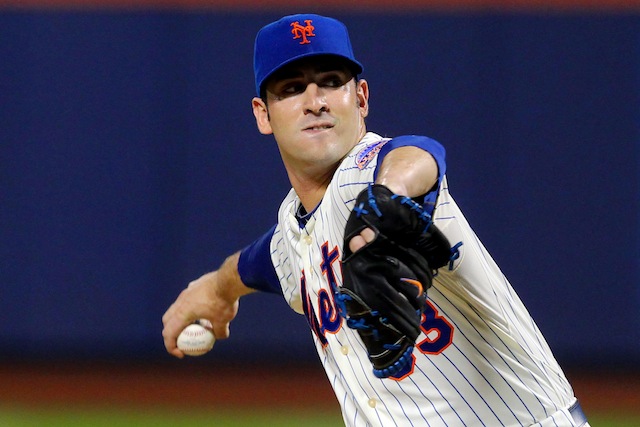
The best pitcher on the best rotation in the league. Photo: Brad Penner-USA TODAY Sports

The best pitcher on the best rotation in the league. Photo: Brad Penner-USA TODAY Sports

I’m returning to a fun post that I did in 2013 and again in 2014 (but couldn’t find the time to do while switching jobs in 2015): Ranking the MLB rotations 1-30 ahead of the new season.  I normally wait to do this post until all the significant starter free agents have signed; when Yovani Gallardo signed, he was the final QO-attached starter who might make a difference in a team’s ranking, so it was time to publish.

This is not a scientific analysis necessarily; i’m not looking at PECOTA or ZIPS to project war to do my rankings.  Rather, this is an eye test of the guys projected to pitch 1-5 for each team in the coming season.  So feel free to disagree.  For what its worth, I am pretty confident in my top 10 and my bottom 5 rotations … but am not exactly going to argue vehemently that the rotation i’ve got ranked 22nd is appreciably better than the one I have ranked 24th.

At the bottom i’ve put links to other pundit’s rankings, which are similar but different.

As always, I show my work; here’s the rotation ranks worksheet that I use to track rotation players.  As an added bonus to what is shown below, the worksheet color codes new acquisitions, puts in “depth” for each team and tracks who the team lost from last  year.  it also has a list of as-of-yet-unsigned hurlers, though none would move the needle if/when they sign for 2016.

I’ll put these into sections and put in comments as we go.

Team Rank Projected 2016 Rotation 1-5
New York Mets 1 Matt Harvey, Jacob deGrom, Noah Syndergaard, Steven Matz, Bartolo Colon
St. Louis 2 Adam Wainwright, Michael Wacha, Carlos Martinez, Jaime Garcia, Mike Leake
San Francisco 3 Madison Bumgarner, Johnny Cueto, Jeff Samardzija, Matt Cain, Jake Peavy
Cleveland 4 Corey Kluber, Carlos Carrasco, Danny Salazar, Trevor Bauer, Cody Anderson
Washington 5 Max Scherzer, Stephen Strasburg, Joe Ross, Gio Gonzalez, Tanner Roark

Discussion 1-5: My top 5 is pretty similar to other people’s top 5 rotations.  I don’t think anyone would argue against the Mets being at #1; if Zack Wheeler comes back healthy he can replace either the ageless Colon or the oft-injured Matz and perhaps even improve what is clearly the class of the league.  I have St. Louis #2 since everyone seems to forget just how good they were last  year; yes they lose Lynn but they gain back Wainwright.

I could see why people could argue against having both San Francisco and Cleveland higher than Washington, and indeed over the course of the winter I had Washington above both.  But I’m convinced that both of SF’s new acquisitions Cueto and Samardzija will completely thrive playing in the NL West, and you can do worse than Cain/Peavy as your 4/5.   They have some depth in case those two veterans get hurt and I see SF as a sneaky NL West challenger in 2016.

Cleveland you say?  Kluber is a former Cy Young winner who hasn’t forgotten how to pitch, Carrasco and Salazar are two of the best young arms in the league (I’m seeing Carrasco in particular going very high in fantasy ADP rankings for 2016), and their 4/5 are comparable to Washington’s back end.  If you wanted to argue that man for man Washington was just ahead of Cleveland i wouldn’t disagree; i’ve been burned over-ranking DC’s rotation in the past so perhaps I was gun shy this time around.

Team Rank Projected 2016 Rotation 1-5
Chicago Cubs 6 Jake Arrieta, Jon Lester, John Lackey, Jason Hammel, Kyle Hendricks
Arizona 7 Zack Greinke, Shelby Miller, Patrick Corbin (TJ), Robbie Ray, Rubby De La Rosa
Los Angeles Dodgers 8 Clayton Kershaw, Scott Kazmir, Alex Wood, Kenta Maeda, Mike Bolsinger
Seattle 9 Felix Hernandez, Taijuan Walker, Hisashi Iwakuma, Nate Karns, Wade Miley
Chicago White Sox 10 Chris Sale, Jose Quintana, Carlos Rodon, John Danks, Erik Johnson

Discussion 6-10: So, is Washington > than the Cubs?  I think so: I don’t view Lester as a real #2 any more, Lackey is approaching retirement and their 4/5 are basically 5th starters easily found on the waiver wire; i’d take the Nats’ 3-4-5 over the Cubs any day.  Still, Arrieta‘s 2nd half was legendary and it is possible that Lackey puts up a 3-win season, so they’re still quite good.  Both Arizona and the Dodgers are propped up by virtue of their Aces; the back side of both rotations looks downright scary.  In fact, you can say the same for Seattle and the White Sox too; all four of these teams have league-wide top end Aces and then 5th starters who seem like they could be replaced by someone in AAA.  That’s really the difference between these teams and the top 5 ranked teams; its the back of the rotations, not so much the front.

I could be slightly wrong about Seattle’s depth; if Iwakuma is really hurt and if Felix‘s decline phase has really started, then Seattle’s a notch down.  If Rodon takes the step forward that he can, then the White Sox can really become a force of a rotation quickly.

Team Rank Projected 2016 Rotation 1-5
Pittsburgh 11 Gerrit Cole, Francisco Liriano, Jeff Locke, Jon Niese, Ryan Vogelsong
Houston 12 Dallas Keuchel, Collin McHugh, Lance McCullers, Mike Fiers, Scott Feldman
Boston 13 David Price, Clay Buchholz, Rick Porcello, Eduardo Rodriguez, Roenis Elias
Tampa Bay 14 Chris Archer, Jake Odorizzi, Erasmo Ramirez, Drew Smyly, Matt Moore
Detroit 15 Justin Verlander, Jordan Zimmermann, Anibal Sanchez, Daniel Norris, Mike Pelfrey

Discussion 11-15: So again looking at edge cases, I have the likes of Seattle and Chicago > Pittsburgh based on the strength (or lack there of) of the back-end of Pittsburgh’s rotation; NieseVogelsong??  Really?  I just have a hard time believing that Pittsburgh is going to reach 90 wins with this 2016 rotation.  Houston is one Cy Young winner and four guys who look like 4-A replacements.  I like the Price signing … but Price is not exactly Kershaw-esque when it comes to putting up constant shut-down performances; Price gets just lit up some times.  Last year he had outings where he gave up 10 hits/8 runs in 2+ innings and a 13-hit 6 1/3 outing.  75% QS rate, which sounds good but isn’t in the 82-85% range like Kershaw and Arrieta.  My point is this: Price goes to the AL East, to pitching in a hitters park, and he can take some big numbers.  The rest of Boston’s rotation is weak too; would you trust Buchholz at this point?  Porcello is their #3 and he’d be in the Syracuse if he played for us.

In fact, Maybe I have Tampa and Detroit too low; Tampa in particular could be a monster if Moore comes back strong and Archer is as good as he could be.  If Verlander can capture his 2nd half form … then Detroit could take a big step up too.

Team Rank Projected 2016 Rotation 1-5
Texas 16 Yu Darvish (TJ), Cole Hamels, Derek Holland, Martin Perez, Nick Martinez
Miami 17 Jose Fernandez, Wei-Yin Chen, Jared Cosart, Tom Koehler, Adam Conley
Kansas City 18 Yordano Ventura, Edinson Volquez, Danny Duffy, Ian Kennedy, Chris Young, Kris Medlen
Los Angeles Angels 19 Garrett Richards, Jered Weaver, Andrew Heaney, Matt Shoemaker, ?
New York Yankees 20 Masahiro Tanaka, CC Sabathia, Michael Pineda, Nathan Eovaldi, Ivan Nova

Discussion 16-20: Texas is an interesting one; Darvish won’t be ready for opening day, but if he comes back this ranking could rise.  Likewise, I might have Miami too low considering that Fernandez is one of the top pitchers in the game; i just don’t trust the rest of their rotation, and the Chen signing made zero sense for a team that can’t seem to decide if they’re trying to win or not.  The strength of Kansas City’s pitching staff isn’t their starters; its the bullpen (best in the league along with the  Yankees), and the Kennedy signing seemed to make no sense.  Thanks to two early ST injuries, I literally have no idea who the Angels 5th starter is going to be now … perhaps they should now be lower.  Lastly you have the Yankees: every guy in their rotation seems like a huge question mark; Tanaka has a torn UCL, Sabathia is a shell of who he once was, Pineda had a shoulder injury that cost him all of 2012 and half of the next two seasons, Nova just came off of Tommy John surgery, and Eovaldi (himself on his 2nd elbow ligament) can’t find the plate.  If these guys are ranked 20th … imagine what’s coming below.

Team Rank Projected 2016 Rotation 1-5
San Diego 21 James Shields, Andrew Cashner, Tyson Ross, Robbie Erlin, Colin Rea
Toronto 22 Marcus Stroman, Marco Estrada, R.A. Dickey, J.A. Happ, Drew Hutchison
Oakland 23 Sonny Gray, Jesse Hahn, Chris Bassitt, Kendall Graveman, Rich Hill
Baltimore 24 Ubaldo Jimenez, Chris Tillman, Yovani Gallardo, Miguel Gonzalez, Kevin Gausman
Atlanta 25 Julio Teheran, Matt Wisler, Manny Banuelos, Bud Norris, Williams Perez

Discussion 21-25: As with all the edge cases, perhaps you can squint at San Diego and say they could be ranked higher.  Perhaps; but take any of those 5 guys at this point and put them in a hitter’s park and they’re not half as good.  I like Stroman (former Nats draft pick!) but the rest of the Toronto rotation looks like guys who are just holding on.  I’m not sure even Oakland’s management knows who some of their rotation candidates are.

I might be selling Baltimore a bit short; I’ve just never been convinced that Jimenez can repeat his earlier glory, and Baltimore’s notoriously awful coaching staff has seemingly ruined yet another young vibrant arm in GausmanAtlanta’s rotation may not look that great right now, especially considering that they’re purposely tanking in 2016 … but they have a couple of sleeper potentials and their prospect depth (including two high end hurlers in Michael Foltynewicz and Aaron Blair) put them above the bottom 5.

Team Rank Projected 2016 Rotation 1-5
Philadelphia 26 Aaron Nola, Jeremy Hellickson, Charlie Morton, Vincent Velasquez, Brett Oberholtzer
Cincinnati 27 Anthony DeSclafani, Michael Lorenzen, Raisel Iglesias, Brandon Finnegan, John Lamb
Minnesota 28 Phil Hughes, Ervin Santana, Ricky Nolasco, Kyle Gibson, Tommy Milone
Milwaukee 29 Matt Garza, Wily Peralta, Jimmy Nelson, Taylor Jungmann, Zach Davies
Colorado 30 Jorge De La Rosa, Chad Bettis, Jordan Lyles, Jon Grey, Tyler Chatwood

Discussion 26-30: The bottom 5 rotations feature two teams clearly tanking (Philly and Cincy) who are throwing out mostly kids and 4-A one-year acquisitions.  Its telling that these two rotations are better than the bottom 3 rotations, each of which belongs to a team that just seems to have no idea how to build a modern rotation.  Minnesota has for  years favored soft-tossers and not pursued high-end arms and now they have a relatively highly paid rotation of guys who, well, are not effective.  Milwaukee is in the same boat, having shelled out money for Garza just to watch him implode.

Lastly we come to Colorado, who still is searching for a strategy upon which to build a rotation.  The latest seems to be to pursue high velocity fastball guys who can just throw their ball through the light air and fool hitters.  But they’re not there yet and their Ace for 2016 is a 35yr old with a career 4.55 ERA.  Its not looking pretty in Colorado for 2016 and the fact that they havn’t sold off all their quality outfielders for parts speaks to the incompetence and indecision of their front office.   You’re not going to win in 2016; you’re in a division with the Dodgers, Giants and Diamondbacks, all of which spent big (either last off-season or before) and are putting out quality lineups.

—-

Some other pundit’s rotation ranks for 2016 for comparison purposes.

http://espn.go.com/blog/buster-olney/insider/post?id=12054
http://www.sbnation.com/mlb/2016/1/12/10755692/baseball-rotation-rankings-mlb

All 30 MLB teams’ starting rotations, ranked


http://www.sportsonearth.com/article/164500586/top-10-pitching-staffs-major-league-baseball


2016 Draft Order Finalized: Nats impact

10 comments

One additional consequence of the final Qualifying Offer-attached free agent coming off the board (Ian Desmond) is the finalization of the top of the 2016 Rule 4 (aka Amateur) draft.

Baseball America has the final order here, along with bonus pools.   I had been keeping a working draft order myself where I kept track of the original positions and how much everyone’s picks “moved up” with all the lost picks.  That XLS can be found here in Google Docs.

Here’s the first round and the compensation pick rounds:

Orig First Round Updated First Round Team Notes
1 1 Philadelphia Phillies 1st 10 picks protected
2 2 Cincinnati Reds 1st 10 picks protected
3 3 Atlanta Braves 1st 10 picks protected
4 4 Colorado Rockies 1st 10 picks protected
5 5 Milwaukee Brewers 1st 10 picks protected
6 6 Oakland Athletics 1st 10 picks protected
7 7 Miami Marlins 1st 10 picks protected
8 8 San Diego Padres 1st 10 picks protected
9 9 Detroit Tigers 1st 10 picks protected
10 10 Chicago White Sox 1st 10 picks protected
11 11 Seattle Mariners
12 12 Boston Red Sox
13 Arizona Diamondbacks Lost for signing Zack Greinke
14 13 Tampa Bay Rays
15 Baltimore Orioles Lost for siging Yovanni Gallardo
16 14 Cleveland Indians
17 15 Minnesota Twins
18 Washington Nationals Lost for signing Daniel Murphy
19 San Francisco Giants Lost for signing Jeff Samardzija
20 16 Los Angeles Angels
21 17 Houston Astros
22 18 New York Yankees
23 Texas Rangers Lost for signing Ian Desmond
24 19 New York Mets
25 20 Los Angeles Dodgers
26 21 Toronto Blue Jays
27 Kansas City Royals Lost for signing Ian Kennedy
28 Chicago Cubs Lost for signing John Lackey
29 22 Pittsburgh Pirates
30 23 St. Louis Cardinals
QO Round QO Compensation Round
31 24 San Diego Padres confirmed for Justin Upton; costs Detroit 3rd round pick
32 25 San Diego Padres confirmed for Ian Kennedy: costs Kansas City 1st round pick
33 26 Chicago White Sox confirmed for Jeff Samardzija: costs San Francisco 1st round pick
34 Seattle Mariners Would have been comp for Hisashi Iwakuma; Cancelled contract with LAD, re-signed w/ Seattle
35 27 Baltimore Orioles confirmed for Wei-Yin Chen: costs Miami 2nd round pick
36 Baltimore Orioles would have been comp for Chris Davis: re-signed, no compensation pick
37 Baltimore Orioles would have been comp for Matt Wieters: took QO, no compensation pick
38 28 Washington Nationals confirmed for Ian Desmond: costs Texas 1st round pick
39 29 Washington Nationals confirmed for Jordan Zimmermann: costs Detroit 2nd round pick
40 Houston Astros would have been comp for Colby Rasmus: took QO, no compensation pick
41 30 Texas Rangers confirmed for Yovani Gallardo: Costs Baltimore 1st round pick
42 31 New York Mets confirmed for Daniel Murphy: costs Washington 1st round pick
43 32 Los Angeles Dodgers confirmed for Zack Greinke: costs Arizona 1st round pick
44 Los Angeles Dodgers Would have been comp for Howie Kendrick: re-signed, no compensation pick
45 Los Angeles Dodgers Would have been comp for Brett Anderson: took QO, no compensation pick
46 Toronto Blue Jays Would have been comp for Marco Estrada: re-signed, no compensation pick
47 Kansas City Royals Would have been comp for Alex Gordon: re-signed, no compensation pick
48 Chicago Cubs Would have been comp for Dexter Fowler: re-signed, no compensation pick
49 33 St. Louis Cardinals confirmed for John Lackey: costs Cubs 1st Round Pick
50 34 St. Louis Cardinals confirmed for Jason Heyward: costs Cubs 2nd Round Pick

There’s additional movement in the 2nd and 3rd rounds, but most of the key moves were in the top 50 picks.

Nationals Impact:

  • We gave up what was originally the 18th overall pick and what would eventually be the 16th overall 1st round pick to sign Daniel Murphy.  Arguable whether that was worth the signing; not the point of this post.
  • The Nats now have the 28th and 29th overall picks in the draft as compensation for the loss of Jordan Zimmermann and Ian Desmond.  Those picks have moved up fully 10 slots thanks to forfeited picks above them.
  • The Nats 2nd round pick is now 58th overall, up from 76th overall when the draft board first was published.
  • The Nats 3rd round pick is now 94th overall, up fully 20 slots from its original spot.
  • The Nats 4th round pick is 124th overall, and subsequent picks will be that slot number plus 30 for each round.  So 124th, 154th, 184th, etc.

So, despite giving up our first rounder the team has three picks in the first 58 spots.  Not too bad.

Who has interesting looking drafts coming up?

  • Cincinnati has the most bonus money, just slightly more than Philadelphia, thanks to getting an additional Competitive Balance pick at the end of the 1st round.  So Cincinnati drafts #2, #35, #43 and #79.
  • San Diego gets the #8, #24, #25, #48 and #71 picks thanks to QO compensation and competitive balance picks.
  • Atlanta gets #3, #40 and #44 overall and has the 4th largest bonus pool.  In a draft like this is shaping up to be (top heavy but no clear cut #1), this could be a pretty good spot to be in; not having to blow extra dollars on a 1-1 pick but still getting a 1-1 quality player.
  • the Los Angeles Dodgers somehow keep a ton of good picks; drafting now #20th, #32 and #36 overall.  And it could have been even better had they gotten two more QO comp picks.
  • Chicago Cubs; on the other end of the spectrum, the Cubs have gone completely all-in, forfeiting their 1st rounder, their comp pick and their 2nd rounder in FA signings. They have just $2.245M in bonus money, or less than the Nats gave Erick Fedde.
  • Close to them is Detroit, who keeps their protected 1st rounder but blow their 2nd and 3rd rounders; so they draft 9th overall … and then not again until #115.


Written by Todd Boss

March 2nd, 2016 at 3:45 pm

Qualifying Offers; Are they Working (updated for 2016)

10 comments

Desmond gets a Q.O. ... and gets screwed. Photo Drew Kinback/Natsnq.com

Desmond got a Q.O. … and gets screwed. Photo Drew Kinback/Natsnq.com

When former Nat Ian Desmond signed, he became the final Qualifying Offer-attached player to come off the Free Agency board for the pre-2016 season.  So its time to publish our recurring “Are Qualifying Offers working” post.  We first visited this topic ahead of the 2014 season and again prior to the 2015 season.

I don’t think i’m “burying the lede” by saying that, No, Qualifying Offers are not working (at least as far as the players are concerned).  But lets look at the results of this past off-season’s free agents with compensatory draft pick attachments and do some analysis (fyi, from here on out “Qualifying Offer” will be abbreviated QO):

Here’s my QO Worksheet in Google Docs, which tracks all the QO-offered candidates going back to 2012 and is the basis of a lot of this analysis.

Here’s some summary stats for this year’s QO candidates:

  • 20 Free Agents were offered QOs heading into this past off-season.  That’s a significantly higher number than in any of the year’s past (9 after the 2012 season, 13 after 2013 and 12 after 2014)
  • 3 Took the QO to remain with their original team (Brett Anderson, Colby Rasmus and Matt Wieters).  This represents the first time that anyone has actually taken a QO and, frankly, was something I never though we’d see.  The players union has convinced players to not act rationally to such an extent that I was sure that there was an unstated agreement to never take a QO.   After all was said and done though, I’m sure there’s probably 4-5 more players who probably wish they HAD taken the QO.  As it stands, Anderson, Rasmus and Wieters all get huge raises and nice healthy “pillow contracts” to re-establish value for the following off-season.
  • 3 more eventually Re-Signed with their QO-offering team (Chris Davis, Marco Estrada and Alex Gordon).  I’d only qualify one of these three as really being a significant re-signing; Estrada’s 2015 salary was $3.9M and he declined a $15.8M QO.  I guess you could argue that Gordon’s market was depressed by the QO … but I also think he was reticent to “leave home” and leave a team at the top of the game.
  • 9 guys who got paid just as they would have anyway; 5 of which got many millions more in AAV than their walk year contract.  But these are also the marquee FAs of this past off-season, so QOs were meaningless in the equation.  We’re talking about Zack Greinke (6/$205M), Chris Davis (7/$161M), Jason Heyward (8yr/$184M), Justin Upton (6/$132M) and Jordan Zimmermann (5yr/$110M).
  • 8 of the 20 players who ended up taking LESS in AAV with their new contract.   Now, two of these players (Estrada and Ian Kennedy) may have taken less in AAV but both ended out well on the “plus side” of the free agent accounting; Estrada signed a 2yr/$26M deal (career earnings prior to this point: just over $10M) while Kennedy signed an astounding 5yr/$70M deal after completing a mediocre season in San Diego that had me personally predicting he may be still unsigned in June.  But the other Six?  Well they’re the QO system victims…
  • 6 Players who were clearly negatively affected by the QO and have a serious beef with the system.  Lets look at them one-by-one
    • Dexter Fowler: Walk year of $9.5M salary, after a media-misstep re-signs with his original club for 1yr/$8M with a $5M buyout (so $13M guaranteed) and a team-affordable option year for next year.  Now, you could argue that Fowler took a “home team discount” to stay with what everyone is calling the best team in the majors and I wouldn’t argue.  But Fowler was just the kind of mid-level veteran who frankly never should have declined the QO in the first place.
    • Yovani Gallardo: Walk year of $13M salary, a guy who just badly over-estimated his market after posting mediocre numbers in Texas.  Ends up with a sh*tty franchise (Baltimore) who hemmed and hawed with his medicals (as they’ve done in the past) and he ends up with just a 2yr/$22M contract.
    • Hisashi Iwakuma had a walk year of $7M and who probably wouldn’t be on this list were it not for his own medical issues causing the Dodgers to balk at a 3yr deal; he goes back to Seattle on a discounted 2yr/$20M deal.  I guess its arguable whether the QO really was affecting this guy; it didn’t seem like he wanted to even explore the market outside of a handful of west coast teams.
    • Howie Kendrick languished on the FA market until the end of January before decamping back for his old team, signing for just 2yrs/$20M.  Another guy who just never was going to be worth giving up a 1st rounder.
    • Daniel Murphy ended up taking $3.3M/year in AAV less than the QO value with Washington; it remains to be seen whether the Nats vastly over-paid for a poor defensive 2B whose value seems to be entirely propped up by a fantastic 2015 post-season.
    • Last, but not least, Ian Desmond who managed to leave more on the table (in terms of delta in his new contract AAV versus what he gave up in QO guaranteed salary) than ANY OTHER player in the history of the system.  His 1yr/$8M deal is 7.8M less than his QO; that’s more “lost money” than even Kendrys Morales, Nelson Cruz, or Stephen Drew left on the table … and a couple of these guys didn’t sign until May or June!  And this doesn’t even mention the 9-figure extension he turned down a couple years ago.

There have been plenty of lamenting pieces on Desmond in the last few days; i hope he’s not reading about how everyone is calling him a dummy for leaving $100M on the table between his spurned 7-year Washington deal and his declined QO.  He just got unlucky; he had an awful walk year, he fell squarely into the “mid-level veteran not worth giving up a draft pick” category, and he hit the off-season at a time when a huge number of teams are, to use a word, tanking.  Half the teams in the NL and a couple more in the AL are in positions where they’re not spending extra dollars in FA and are depending on in-house options for SS; combine that with those teams who already have quality short stops and you suddenly have a completely dried-up market for Desmond.  Take a quick peek at the RotoWorld depth charts for the NL and look at the guys who are slated to start … and then ask yourself if Desmond is a better option.

I still can’t quite figure out specifically why the White Sox didn’t sign him; who is their slated starter at short?  They had a protected 1st rounder and are not quitting on 2016, so instead of getting a quality guy like Desmond they’ve signed Jimmy Rollins as a MLFA/NRI and that’s who might be the starter?   The Mets are another obvious team that may be wishing they’d signed Desmond when it becomes more apparent that the guy they actually signed (Asdrubal Cabrera) can no longer play SS .. or hit for that matter.  Anyway…

I think Desmond has gotten pretty sh*tty representation, honestly.  He should have signed the extension and not held out for an Elvis Andrus contract that was never going to happen.  And he should have read the tea-leaves, seen how the market was looking, seen how teams are hoarding 1st round draft picks, seen how his .233 BA was going to hamper his market and just taken the QO to try for a bounce-back season.

There’s lots of people talking about the QO system and what to do with it; i’m guessing its going to be front and center in the next CBA.  But how do you compensate teams for losing FAs?  I don’t have a good option and I don’t think the “just sever ties between FA and the draft” is the answer either.  I guess we’ll see some creative solutions proposed as we get closer to the CBA negotiations.

Ladson Inbox 2/26/16

3 comments

Future $400M Dodger? Photo GQ magazine Mar 2012

Future $400M Dodger? Photo GQ magazine Mar 2012

I guess Bill Ladson only gets questions during spring training.  After not doing an inbox for practically all of last season, its 3 in 3 weeks!  Since these are such good conversation starters, lets see how I would have answered his questions.

Q: Most believe the Nats have no chance of keeping Bryce Harper once he becomes a free agent. Your thoughts? 

A: Unfortunately, I’m also in that camp.  I believe Bryce Harper and his aggressive agent Scott Boras will take him to free agency with the idea of getting the largest contract in history.  And, when push comes to shove, I just can’t see how Washington is going to have the stomach to compete with the big-money teams (namely, the Dodgers and Yankees) and commit the kind of dollars that he’s going to command.  Certainly not with the MASN hamstringing.  I mean, lets be honest with ourselves; its taken years just to get the two parties to agree on whether the Nats are going to get $34M (what the O’s want to pay), $53M (what the first arbitration panel apparently agreed upon) or $109M (what the Nats requested) on the first reset of the agreement.  Meanwhile the Dodgers are getting somewhere between $240M-$280M a year in their RSN deal … potentially FIVE TIMES what the Nats are getting paid.  I’m sorry; but the team that can afford to just throw money at players is the team that is going to be able to promise $40M/season.  There’s just no way even a “rich” team like Washington is going to compete.  Enjoy him while you can and hope the team does the smart thing and really, really tries to win a World Series while they still have him.  Ladson thinks the team is going to wait and will “try to extend him” before he hits free agency.  Yeah, right.  How many players Boras has represented have taken extensions versus going to free agency? 

Q: What are the chances that Ian Desmond returns to the Nationals this year?

A: Well, I think the chances seem like they’re nil.  The Nats made their offers (a multiyear extension AND a qualifier) and Desmond turned them both down.  I’m shocked that he’s the last man standing in the Qualifying Offer class (I would have bet money it would have been Ian Kennedy), and i’m shocked that he hasn’t found a job yet.

Now, that being said, a better question might be “Should the Nats think about bringing him back??”  You’ve just hired a player’s manager who likes veterans in Dusty Baker.  They’ve constructed their roster with a clear intention of sending future SS-in-waiting Trea Turner back to the minors for seasoning, meaning that Danny Espinosa seems like the starting shortstop (career BA: .230).  At this point, given the steal of an offer you might be able to get Desmond for (Fowler was given a gift of a contract from Chicago, guaranteeing $13M when he probably wasn’t going to get that in terms of AAV on the open market), maybe he’s worth considering.  Yes we’d be giving up the supp-1st rounder we stand to gain.  But you can just give him another QO next season if he rebounds and puts himself in line for another big pay day.  Or maybe you assume the next CBA (which will be signed sometime this year since the current deal expires 12/1/16) gets rid of the Q.O. entirely, since it is killing players and FA market values for certain types of players.  Actually this latter argument perhaps supports the Nats wanting to keep the pick, since it may very well go away (or perhaps the system is modified to just give all teams giving away significant FAs supplemental first rounders, not that I have any idea how you’d figure out who was deserving of a pick).  I think the team has made the decision that he’s on the decline, that they’ve dodged a huge bullet by him turning down 7yrs/$105 or whatever it was, and they’re ready to move on.

Ladson has sources in the Org that say its a “long long long shot.”  Baker says Espinosa looks like he’s in “mid-season form” at the plate (wow; does that mean he’s only striking out every OTHER time up and still hitting .230?)

Q: What do you think Baker will bring to the Nationals this year?

A: I think Dusty Baker brings harmony and respect to the clubhouse in ways it was clearly not present under Matt Williams.  No more arbitrary scheduling, lack of communication, lack of awareness of what’s going on with his players.  I’m a big advocate of hiring contrasting styles in managers when one guy clearly grinds his way to a failure, and Baker is a great example of it.  I was completely pro-Bud Black because of his pitching experience, but the team has more than made up for it with the hiring of Mike Maddox and we’re going to be a much better team for it.

Ladson mentions a very important word: Charisma.  Baker brings a ton of experience, charisma and humor to the clubhouse; again going towards one of the big, embarrassing issues from last year (clubhouse chemistry).

Q: Can you predict the Nationals’ rotation on Opening Day?

A: Barring injury, it has to be (in order) Scherzer, Strasburg, Gonzalez, Ross and Roark.  I’m not going to predict Arroyo beating out Roark at this point unless Arroyo looks completely healthy, he’s actually pitching well and Roark falls apart in Spring Training.  If there’s an injury, I look at Arroyo as the first man up, then Cole in terms of rotation coverage.  If we have to dig any deeper than that … watch out.  I like Voth but i’m not sure he’s ready for prime time.  I don’t trust Taylor Jordan any longer.  Lucas Giolito may start his career a ton earlier than anyone thought if injuries take out too many of our starters.

Ladson says its a no-brainer right now with the assumed 5 above.

Q: Why did the Nationals let Yunel Escobar get away? He was a consistent hitter.

A: Escobar was a consistent hitter last year yes (.314 BA, which was 50 points higher than the two previous seasons and 30 points higher than his career average), but hit an “empty” .314 (just 9 homers and a .415 slugging, also a huge improvement over previous seasons and his career high).  Unsaid is Escobar’s significant defensive issues (awful defensive stats, though to be fair genius skipper Williams had him playing out of position the entire season).  I think the Nats “sold high” on Escobar, traded from depth to a certain extent and got a player (Trevor Gott) in trade that they really needed to help bolster the bullpen.  Ladson doesn’t mention the “selling high” part of his offense; only mentions his defensive issues.

Q: What was it that made the front office sour on Drew Storen? The kid is one of the premier closers in the game, yet the team always seemed to be looking for someone better.

A: An excellent question.  I’m not sure it was the “front office” as much as it was the “impulsive owner” who soured on Storen.  He had two well publicized post-season failures, which led the normally sane and intelligent GM Rizzo to twice acquire and over-pay an aging “proven closer” to replace Storen.  The first time, Rafael Soriano eventually was supplanted by his own failures and Storen’s consistency, the second time the team inexplicably replaced him with Papelbon in the middle of perhaps Storen’s finest season.  Is Storen one of the “premier closers” in the game?  No.  I’d say he’s middle of the road and could likely tick off at least 15 guys who will be more highly valued in fantasy than Storen were he to win the Toronto closing job.

The crummy part of the deal was the fact that Storen was the one who needed to be traded by virtue of Papelbon making himself essentially untradeable.  I tell you what; Papelbon better be a frigging all-star this year to make up for what’s happened.  Ladson mentions the two blown post-season games and says he needed a change of scenery.  Both true.


Ladson’s Inbox 2/21/16

17 comments

We need Rendon to hit in 2016. Photo Nats Official via espn.com

We need Rendon to hit in 2016. Photo Nats Official via espn.com

Wow, no inboxes for months and suddenly two in two weeks??  It must be spring training! This is great!  MLB.com’s Nats beat reporter Bill Ladson on 2/20/16 has published more reader questions.  Here’s how I would have answered them.

Q: Without a doubt, Bryce Harper will be the best hitter on the Nationals this year. Who do you see as being the second-best hitter on the team?

A: Anthony Rendon.  If this team is going to win in 2016, Rendon needs to return to form.  Everyone else at this point in the lineup will be a table setter for Rendon and Harper.  Ladson says Zimmerman, who I admit i’ve begun to lose faith in.

Q: How does the front office justify bringing back Jonathan Papelbon after what happened last year with Harper? Papelbon has proven time and again that he is not a good teammate, yet he’s back for 2016?

A: I guess the questioner didn’t know that Papelbon was still *signed* for 2016.  So it wasn’t so much about “bringing him back” on purpose as it was the team “not being able to get rid of him.”  I put the Papelbon acquisition as one of the worst of the Mike Rizzo tenure; not so much for who we gave up (a good but not game changing prospect in Nick Pivetta) but for the incredible mis-calculation of the acquisition’s affect on the rest of the team.  I’m sure the team desperately tried to move him in the off-season but (with echos of “Lerner’s are cheap” abounding) probably weren’t willing to dump him for no return.  So here we are; its 2016 and Papelbon is here in lieu of the home grown popular (and team union rep) Drew Storen.

I’ll bet Rizzo doesn’t make this mistake again.

Nonetheless, Papelbon said the right things in his first media interviews since the interview, actually managing to appear humble and contrite while talking about how he was in the wrong and flat out apologizing to the fans.  I say good for him; even I couldn’t help but applaud his performance last last week.

Ladson says the team “made a good decision” in not moving Papelbon; yeah right.  If they could have gotten *anything* for him he’d be gone.  You worry about “finding a closer” in the current bullpen?  Uh, how about anyone?  We don’t need to go into more historical reviews of the uselessness of closers vis-a-vis teams holding leads after 8 innings.

Q: Why did the Nats not re-sign Craig Stammen? Before last year, I thought he did a great job as a middle reliever.

A: It all came down to risk mitigation.  Stammen absolutely did a great job for this team for many years … but he’s got a lot of innings, is coming off of a season-long injury, has (to be fair) rather funky mechanics, and the team just couldn’t justify guaranteeing him what probably would have been $2.5M or so for the unknown.  The industry felt the same way: Stammen ended up with a non-guaranteed minor league deal with Cleveland instead of either a major league deal or anything of significant value.  Trust me I was bummed; we met Stammen years ago at a golf event and he was awesome; hate to see these long-time Nats leave.  Ladson basically says the same thing.

Q: Don’t you think it’s time to improve left field? Jayson Werth is not the player he used to be. He makes a lot of money and doesn’t provide much in return.

A: And do what with Werth?  Magically trade him for valuable assets and get his payroll off your books?  The asker clearly thinks that the rest of the league are run by morons and the Nats can just magically get rid of the likes of Werth for value.  Yes he’s costing you more than 10% of your payroll.  It is what it is; veteran FA contracts all end up like this.  Honestly, I think Werth still has a ton of value if you use him properly; that means batting lead-off where you take advantage of his high pitches-per-plate appearance and high OBP.  We’ll see if Dusty Baker thinks outside the box like this (doubt it).  Ladson says Werth is a comeback player of the year candidate.

Q: What are the chances the Nationals make a trade for someone like Carlos Gonzalez to protect Harper in the lineup?

A: I like Carlos Gonzalez … but his home/away splits are pretty distinct.  .972 OPS in Denver, .758 OPS elsewhere last year.  I’m not sure he’s anything more than a mediocre outfielder if he’s not playing half his games at altitude.  Besides, the team made its play for the outfield when they acquired Ben RevereLadson thinks Rizzo could still “make a deal for a slugger” during Spring Training if he doesn’t like what he sees.  Uh; trading season is over, dude.  How many big-time sluggers can you think of that moved in spring training?

Q: A prime component of the Mets’ rotation is the ability to throw hard and get a bunch of strikeouts, but how unique is the Nationals’ rotation and how could it help them win the NL East next season?

A: Indeed, the Mets have a plethora of big-time arms throwing big-time heat.  But the Royals buzzed through their staff with ease in the World Series.  Why?  Because the Royals were the best team in the league for not taking a strikeout and putting the ball in play.  So once it became apparent that the Mets starters couldn’t close out games by themselves, the Royals (with their superior bullpen) outlasted them.  So Ks are important but not the end-all/be-all.

What makes the Nats rotation unique?  Two part answer for me: they (still) have one of the best 1-2 punches in the league in Scherzer and Strasburg.  What other 1-2 starters would you take over them?   So then past their 2 aces, they have three other guys who are dangerously under-rated.  Gonzalez was a Cy Young finalist just a couple years ago and he still has the same stuff.  Ross is a complete find, a guy who would be most teams’ #2 starter this year despite just having a handful of MLB starts.  And (as often repeated) Roark was a 5-win guy two years ago.  So the potential is there for this to be a top rotation end-to-end.

How does the Rotation help them win the NL east?  By staying healthy, pitching to potential, and outlasting the Mets own powerful rotation when its crunch time.

Ladson doesn’t really give much of an answer here.  He just says what he’d like to “see” each of our starters do this year.


College Baseball Kickoff – Opening Weekend review and some pre-season ranking lists

12 comments

UVA's Connor Jones kicked off this year with a gem. Photo via UVA sports

UVA’s Connor Jones kicked off this year with a gem. Photo via UVA sports

Welcome to the 2016 College Baseball Season!  Despite there still being snow on the ground here,  D1 programs all over the country played their first series this past weekend.

I know; I’m one of the few guys out there (at least in DC blogger-land) covering the College game.  So i’m ok if you keep moving on.  I probably got really turned onto the College game as I started to really look at the college arms the Nats were drafting, and the focus the Mike Rizzo establishment puts on college players.  Its a very “Billy Beane-esque” strategy; college players have more ABs, more consistent stats and more experience playing against “known quantities” of talent (especially those guys in the top baseball leagues like the SEC and ACC).  Now with two very good local programs (UVA and UMD) and a ton of local guys who i’ve been following long enough to track them from HS draft prospect to College draft prospect, I continue coverage of the College game.

Quick rundown of the top local prospects first weekend in action;

  • UVA’s Connor Jones threw 7 shut-out innings in a UVA win over Kent State.
  • Maryland’s Mike Shawaryn gave up 2 runs on 3 hits in a loss at Alabama
  • UVA’s Matt Thaiss went 6-13 in the kickoff tournament down in Myrtle Beach.
  • Ole Miss’ Error Robinson (a dc-native but quickly rising on the draft boards) went 2-for-7 with 3 walks and 4 runs in a their opening series sweep against FIU.
  • UNC’s J.B. Bukauskas had 9 Ks in 4 2/3’s innings but got a hook after showing some wildness in an eventual UNC loss.

I have a comprehensive post about all DC-area prospects coming, headlined by these four guys but also including all the local prep and college players, which we’ll post once HS season starts up.

Meanwhile, here’s some pre-season top-X lists for the new year: you’re going to see the same 4 teams at the top of every list.  There’s only 5 or so main sites covering the game, so we’ll go back to these blogs and sites constantly.  D1baseball.com and BaseballAmerica.com are the leaders but the other Collegiate Baseball sites are good as well.

  • D1Baseball’s pre-season top 25: Florida, Louisville, TAMU, Vandy, Oregon State.
  • Baseball America’s pre-season top-25: Florida, Louisville, TAMU then surprisingly UVA #4.
  • College Baseball Daily pre-season top 25 from 2/1/16: Louisville #1, TAMU #2, Vanderbilt #3 and Florida #4.  Virginia #8, Maryland #22.
  • College Baseball Central’s pre-season top 25 January 2016: Florida #1, Louisville #2
  • Collegiate Baseball News pre-season top-40 announced in Dec 2015.  Florida #1, Louisville #2, which isn’t surprising since both teams have multiple pre-season first team all-americans on their team.  Local teams mentioned: UVA #9, Maryland #28.
  • NCBWA (National Collegiate Baseball Writers Association)’s pre-season top-30: Florida, Louisville, Vandy and TAMU.

And here’s some pre-season All-America lists.  You’ll recognize a lot of these names if you’ve followed any pre-2016 draft coverage, and this list will eventually comprise a huge percentage of the first round draft this coming June.

  • Collegiate Baseball News announced in Dec 2015 their pre-season All Americans and it contains a whole slew of names in contention for 1-1 in 2016.  A.J. Puk, Alec Hanson, Corey Ray along with other big-time names such as Kyle Funkhouser, Nick Banks.  Maryland’s Mike Shawaryn is a 1st teamer, UVA’s Connor Jones and the Navy’s Luke Gillingham a 2nd-teamer, and Matt Thaiss (UVA), Charley Gould (W&M) and Michael Morman (Richmond) are 3rd teamers.
  • D1Baseball.com’s pre-season all American list: the two aces for local college teams UVA and UMD are listed (Jones and Shawaryn).   UVA’s Thaiss is a 2nd teamer.  D1baseball also has a list of the Top 300 College draft prospects for 2016.
  • BaseballAmerica’s pre-season All American team is here.  No local guys on 1st team, Shawaryn, Jones and Pavin Smith are on the 2nd and 3rd teams.
  • USA Baseball pre-season Golden Spikes watch list: includes most major D1 prospects and local guys Shawaryn, Jones, Thaiss and Gillingham.

A full overview of D1Baseball’s coverage is here.  BaseballAmerica’s College index is here.


Spring Training 2016 NRI discussion

36 comments

Arroyo could be a surprise NRI making the 25-man roster. Photo via google images

Arroyo could be a surprise NRI making the 25-man roster. Photo via google images

We discussed Non-Roster Invitees (NRI) last year (link to 2015’s post) at the behest of reader forensicane, and it was such a good topic that, upon seeing yesterday’s announcement from the various Nats beat writers (here’s James Wagner from the WP’s post), I thought I’d put up a post where we could discuss.

Reminder from last year; there were 20 NRIs; two made the 25-man roster out of spring (Dan Uggla and Clint Robinson), two others eventually got added and called up (Rafael Martin and Emmanuel Burriss) and two others were young catchers since added to the 40-man (Spencer Kieboom, Pedro Severino), so these are not throw-away players.  The odds of several of these names playing a part in this team’s future is high, even past the obvious candidates (i.e. those listed at or near the top of prospect lists).

Like last year, we’ll go by position and discuss their chances for making the team, staying with the franchise, and (depending on their roster status) their future plans with the team in general (the below format is cut-n-pasted from Wagner’s post).

Catchers (1)

  • RHH Jhonatan Solano

Discussion: Solano, the long time Nats-farm hand, returns to the fold after being released ahead of an options crunch in Nov 2014 and spending 2015 toiling for Miami’s AAA team alongside his brother.  He did get 20 MLB at bats in 2015 … and went 1-for-20.  He’s back, though his odds of breaking ahead of any of the four catchers we have on the roster seems very slim right now, even given the known offensive limitations of both MLB-projected catchers.  Now, were one of Ramos  or Lobaton go down with injury … that might open things up.  Would you rather depend on one of the two rookies on the 40-man as your backup or at least go with someone like Solano, who has at least a few MLB at bats over the past few years under his belt?  Neither A or B are good options, and you might think that the “Jonathan Lucroy to Washington” future plan may pick up speed at that point.

Odds of any of these NRIs making the 25-man roster: Negligible unless there’s an injury.

Future plans: Solano back to AAA once again as depth if there’s an injury; he may be flat out released if not since both Severino and Kieboom seem destined to head to AAA to split catching duties.


Infielders (4)

  • RHH Jason Martinson
  • RHH Brendan Ryan
  • RHH Scott Sizemore
  • LHH Matt Skole

Discussion: The team is quite familiar with both Martinson and Skole; both being draft picks and both being relatively close to the end of their tenure here.  Martinson has quietly climbed the ranks but hit just .218 in AAA last year; what he has though is power.  21 homers and corner infield capabilities (he was a SS coming out of college but quickly moved to 3B).  I view him as “Tyler Moore” insurance and the team likely has him at camp to see if he’s at all a possible option in case something bad happens.  Skole has long been a personal favorite, a former Nats minor league player of the year whose promising career was derailed by a season-long injury in 2013.  He took a big step back in 2015, not making the AAA team out of spring but eventually getting there mid-season.  He also has power (20 combined homers last year) but from the left hand side while also playing corner infield.  I view him as “Clint Robinson” insurance.

Meanwhile, both Ryan and Sizemore seemingly are competing for the second “backup utility infielder” role on this team, one that without any other moves would go to someone like Wilmer Difo or perhaps Danny Espinosa were the team to decide to go with Trea Turner from day one.  I don’t see that happening; I think Difo showed he needs more seasoning, I think the team wants a veteran at short and either Sizemore or (more likely) Ryan makes this team as the 2nd utility guy.

Odds of any of these NRIs making the 25-man roster: High: I think Ryan breaks camp with the team.

Future plans: Martinson and Skole back in AAA, Sizemore may have an opt-out but may not since he was in AAA most of last year.


Outfielders (4)

  • LHH Tony Campana
  • RHH Chris Heisey
  • RHH Reed Johnson
  • LHH Logan Schafer

Discussion: Schafer was brought in presumably to compete with Matt den Dekker as a speedy CF-capable 5th outfielder type.  Problem is that Schafer can’t hit: career .212 hitter with a meager career .319 slugging.   Campana?  Same story; the 5’8″ backup outfielder didn’t even appear in the majors last year and has just one homer in 477 career MLB appearances.  den Dekker showed some promise at the end of last season and seems like he’s the first guy to get called up if/when there’s an injury in the outfield.

So lets talk about the two guys who do have some consideration.  The team knows exactly what it has with Johnson: an aging scrappy veteran who can play a corner OF and be a good clubhouse presence.  Sounds like Jayson Werth minus 6 inches of height and $120M of contract.  I think they invited him just as saying “thanks and sorry about last year.”   Meanwhile, some are talking about Heisey having a shot at this roster: I think maybe.  If the team is looking to upgrade the Tyler Moore “right-handed pinch hitter off the bench” role, then Heisey is his competition.  He’s somewhat accomplished; he has never really started in his career but hit 18 homers as a part-timer in Cincinnati a few years back.  But his bat has been just as meager as Moore’s lately: he hit just .223 combined across several AAA levels last year.  Of course, all of those figures are better than what Moore has done lately, and Heisey likely is cheaper than Moore for 2016 (Moore signed a pre-arb deal of $900k but of course could be released mid-spring training without the Nats having to pay a ton of his guaranteed salary).

The question becomes; is Heisey’s positional flexibility (he’s an OF who can play CF in a pinch while Moore can basically only play 1B) going to win out over Moore’s long tenure with the team?  Maybe.

Odds of any of these NRIs making the 25-man roster:  Pretty good: Heisey seems like he could beat out Moore for the RH bench bat.

Future plans: we don’t have a ton of depth at the OF position in AAA; i’m sure one or both of Schafer/Campana could stick around.  Johnson could elect to retire if he doesn’t make the team at his advanced age.  Heisey could stick around or could have an opt-out if he doesn’t make the squad.


Starting Pitchers (6)

  • RHP Bronson Arroyo
  • RHP Paolo Espino
  • RHP Lucas Giolito
  • RHP Taylor Hill
  • LHP Aaron Laffey
  • RHP Austin Voth

Discussion: Thanks to FA departures and starter conversions, the Nats now have just seven starters on their 40-man roster.  Scherzer, Strasburg, Gonzalez*, Ross, Roark, Cole, Jordan.   Where as last year the team could afford to send a 5-win starter to the mop-up role, this year they’re one injury from really having to answer some very serious questions.  Which is probably why they have signed Bronson Arroyo honestly; despite throwing up low-to-mid 80s heat, he has remained relatively effective deep into his 30s.

In reality though, the Nats real SP depth is seen directly in the NRIs; in order Giolito, Voth and Espino.  These three guys are who this team likely turns to if the injury bug really bites the projected rotation.  I’m on record saying that Giolito is going to be up in 2016; might as well get him used to seeing MLB hitters (or close to it, depending on when they give him innings).  In reality, nobody on this list projects to have a shot at cracking the 2016 rotation save for injury.  The big question really comes down to Arroyo versus Roark for the 5th spot.  Is it likely that Roark gets dumped back to the bullpen again, causing a cascading series of bullpen moves (Petit to middle relief, Treinen likely to AAA)?  Not that likely but you never know, and Dusty Baker certainly goes way back with Arroyo.  I think its a certainty that the NRI prospects don’t break camp with the squad … but Arroyo could have a shot.

Can’t wait for Spring Training games though to get a glimpse of Giolito on the mound…

Odds of any of these NRIs making the 25-man roster: Decent for Arroyo.

Future plans: Four of these six NRIs will form the bulk of the Syracuse rotation (Espino, Hill, Laffey, Voth), to be joined with Cole and Jordan for the core rotation in upstate NY.  I’ve projected Giolito to start back in AA and prove he can dominate that level before moving up and bumping someone like Laffey or Hill from the AAA rotation.  That leaves Arroyo; if he doesn’t make the team, I’m guessing he’s opting out instead of lowering himself to riding buses in AAA.


Relief Pitchers (5)

  • RHP Michael Brady
  • LHP Sean Burnett
  • RHP Erik Davis
  • RHP Nick Masset
  • RHP Wander Suero

Discussion: While the 40-man roster of starters is thin (7), the Nats now have no less than thirteen (!) relievers on their 40-man roster.  That’s a lot of arms.  Only 7 of them are making the MLB bullpen, and for the most part you can ink in the opening day rotation by looking at the acquisitions the team has done since July of last year.  So not a lot of room in the inn for NRI relievers.  Davis gets the invite despite getting dumped off of the 40-man roster probably as one last ditch effort to show the MLB staff he can still pitch.  Long time Nat Burnett returns to the fold coming off of a second TJ, probably given the NRI for sentimental reasons more than anything.  Brady and Masset are new acquisitions (one by trade, one by MLFA) who both project to be Syracuse middle relief (where my pre-season analysis also showed a massive glut of arms), while Suero’s callup seems like an audition to be added to the 40-man roster ahead of next off season’s rule 5 draft, since Suero just finished his 6th pro season and will be exposed next December.

Odds of any of these NRIs making the 25-man roster: Nil: the Nats have way too many relievers already and none of these guys projects to be better than what we already have on the 40-man.

Future plans: Brady, Davis, Masset to AAA, Suero to AA, Burnett opts-out looking for a MLB loogy job after proving he’s healthy again on the Nats spring training meal money dime.


Summary

I think there’s a good chance of at least one and perhaps two NRIs to make the 25-man roster.


Ladson’s Inbox 2/12/15

5 comments

What will Treinen give this team in 2016? Photo via zimbio.com

What will Treinen give this team in 2016? Photo via zimbio.com

Happy Valentines Day 2016!  And what better way to celebrate it than an Inbox from MLB.com’s Nats beat reporter Bill Ladson.  Here’s how I would have answered his questions had someone bothered to ask me.  As always, I write my answer before reading his, and edit questions for clarity.

Q: What is the biggest change the Nationals must make to be competitive in the NL East?

A: Well first, lets be honest.  There’s really only 2 teams even *trying* in the NL East 2016, so calling it “competitive” is sort of like claiming that the Washington Generals were “competitive” with the Harlem Globetrotters all those years.

For me the biggest thing the Nats need to do is just stay frigging healthy.  If Harper plays another full year maybe he doesn’t do another 10-win season, but you have to think he’ll be quite good.  Rendon was one of the NL’s top players two years ago; no reason not to think he could return to form.  Strasburg needs to be the guy all year in 2016 that he was in August and September of last year.  Werth and Zimmerman are both seemingly on the down side of their careers but there’s no reason they can’t be valuable contributors if they can stay on the field.  If all of that happens, then this team suddenly is the 95-98 win juggernaut that everyone thought they’d be in 2015.

Ladson mentions the Bullpen and team defense.  I guess he’s bought into the Royal’s plan as the way of winning going forward.

Q: What will Blake Treinen‘s impact be on the team be this year? It seems like he has the talent to make an impact on the team.

A: Well, right now Treinen is probably the “last guy in” to the bullpen; if the Nats were to acquire another RH middle reliever, Treinin likely gets bumped to AAA.  That’s because lefties hit him for an astounding .934 OPS last year.   His K/9 jumped dramatically his 2nd year in the pen .. but so did his BB/9.  Its pretty astounding to me that a guy with his kind of stuff (upper 90s sinking fastball with so much  movement that commentators think he’s throwing circle changes) struggles the way he does.  So my answer to the question is “minimal unless he can get lefties out with more regularity.”  Ladson basically says the same thing with the same observations.

Q: Do you expect Lucas Giolito with the big league club in 2016 or will he get a full season in Syracuse?

A: Something tells me that we may see Giolito in the majors this year, yes.  He didn’t light AA on fire last year … so I see him starting the season there (and not AAA).  I also see him quickly earning a promotion to AAA or perhaps straight to the majors, just like the team did with Joe Ross last year.  Or, consider what the team did with Jordan Zimmermann, who jumped straight from AA to the majors (albeit after spending most of the 2008 season in AA).

Why do I think Giolito is going to appear in the majors this year?  Because this is our last year with Strasburg before he signs a $200M contract somewhere.  And this is  one of our last couple years with Harper before he signs a $500M contract.  And when you have two of the marquee players in the game … you try to win at all costs.  This is the criticism of the Angels right now with Mike Trout and if the Nats go cheap or don’t use everything in their disposal to try to win a championship while they still have Harper, then it’ll be the same situation with the Nats.  So if one of our starters goes down and A.J Cole or Austin Voth can’t cut the mustard, then I expect Giolito to be on the MLB team without too much delay.

Ladson says it depends on how he looks in Spring Training.  I dunno about that; when scouts talk about how he has two grade 70 pitches already … what else is there to see?  I’m sure he’ll look awesome against AAA players and other re-treads in the later innings of ST games, will go to AA with the missive of “working on something” in particular, and will be up soon.  Ladson also says he “has no limits” in terms of innings; that too I think is BS.  He’ll be limited to no more than a 20% increase year over year.  He threw 117 innings last year; don’t expect him to throw much more than 140-150 innings.

Q: What kind of season do you expect from Gio Gonzalez?

A: I think we’ll see a slight improvement for Gonzalez over 2015’s campaign for reasons as frequently pointed out by JohnC: his peripherals were crummy, lots of bad luck on balls in play, and the defense behind him was rather subpar.  I’m thinking something like 13-9, 3.45 ERA, 1.30 whip.  Not bad for a 3rd or 4th starter.  Ladson implies that this could be Gio’s “last year” because he’s entering his option years.  Uh Bill, are you seeing what mediocre starting pitchers are going for on the FA market?  Gonzalez’s options are each at $12M for the next two years.  Jon Lackey is older and lesser, and just signed a 2yr/$32M deal.  Who would you rather have?

Q: Do you expect a significant contribution from any of the players signed to Minor League contracts?

A: A couple of the MLFA signings come to mind as possible contributors, absolutely.  Reed Johnson, Brendan Ryan, and Bronson Arroyo could all be surprising players come spring training, and an injury or two could open the way for their place on the opening day roster absolutely.  Just look at what happened to this team last spring, with a slew of guys on the opening day D/L and both MLFAs and non-tender candidates not only making the team but contributing the entire season (see Robinson, Clint and Moore, Tyler).  Ladson mentions one other guy Chris Heisey who could also factor in.

Q: I’m asking for a prediction: Who do you think will be the starting shortstop between Danny Espinosa, Trea Turner and Stephen Drew?

A: I’m going with Danny Espinosa honestly; the way the roster has been constructed its clear to me Turner is starting the season in AAA and Drew will be the utility infielder.  If Espinosa hits .200 in April though, all bets are off.  I know many will say that it should be Turner … bit if its Turner, then that leaves a veteran like Moore or Drew on the outside looking in.  Ladson says Turner; well see!


Verducci effect for 2016 announced

8 comments

Snydergaard vastly increased his workload in 2015; will it hurt him in 2016?  Photo tucson.com

Snydergaard vastly increased his workload in 2015; will it hurt him in 2016? Photo tucson.com

This year’s installment of si.com’s Tom Verducci‘s “Year After Effect” (which he’s trying to use as the title instead of the eponymous “Verducci Effect” that i’ve grown used to using) was published this week and he’s definitely gone conservative in his ominous predictions.  In year’s past he’s used a 20% year over year increase and listed many candidates … now he’s down to just a handful a year with a more conservative 30% workload increase.  For 2016, he’s identified 5 candidates for his watch list.

Here’s some posts on this same topic from year’s past: 2013 year after effect and 2014 year after effect (I somehow forgot to do this post last year).  In the 2013 post, there’s some counter-arguments to whether or not his observation actually exists, with research on all pitchers who qualified for the thresholds he laid out at the time.  I won’t go into the same arguments made there; what I will do is point out the actual results of his predictions (Link to my working XLS showing all the core numbers referenced here):

  • 2013: 11 candidates mentioned, 5/11 regressed or got injured the following year (but, it should be noted, that another 3 of the candidates he mentioned have completely fallen off a cliff in subsequent years).  8/11 candidates showed regression: 72% prediction rate.
  • 2014: 10 candidates mentioned; 8/10 regressed and more shockingly 6/10 had arm injuries.  80% prediction rate.
  • 2015: 14 candidates mentioned (only 5 “main” ones were on his true watch list): 11 of those 14 regressed or got hurt.  One of the 14, Marcus Stroman missed the whole season with a knee injury but counts as a non-regression candidate, so frankly its 11 of 13 guys who actually pitched all year.  84% prediction success rate.

So for me, his analysis is less about running pure numbers to find candidates and more about giving context to the pitchers he selects.  Mostly they’re starters (not relievers), mostly they’re young and mostly they’re guys who had to pitch high leverage innings on top of vastly increased workloads.

So who’s listed this  year?  Basically five young pitchers who had massive innings spikes and four of which pitched into the post-season.

2016 Candidate Name/Team Age as of Jan 2016 2015 IP 2015 IP delta 2015 ERA 2015 FIP 2015 xFIP 2015 SIERA
Lance McCullers, Houston 21 164 59 1/3 3.22 3.26 3.5 3.57
Noah Snydergaard, NY Mets 22 198 2/3 65 2/3 3.24 3.25 2.91 2.95
Luis Severino, NY Yankees 21 161 2/3 48 2/3 2.89 4.37 3.72 3.84
Carlos Martinez, St. Louis 23 179 2/3 52 2/3 3.01 3.21 3.28 3.44
Tyler Duffey, Minnesota 24 196 46 2/3 3.1 3.24 3.64 3.83

I’d be most worried about McCullers (who is super  young and showed some fatigue down the stretch) and Severino (also very young but who also had significantly softer advanced stats than his ERA showed) in terms of regression in 2016.  Snydergaard seems big enough to perhaps withstand the added workload.  Martinez was a surprise reason why St. Louis’ rotation was so good last year; can he make the jump too?

Curious why he didn’t put in Matt Harvey, especially after all the BS about innings limits.  He had 178 IP in 2013, Zero in 2014 and then 189 1/3 regular season and another 26 2/3rds in the 2015 post-season.  That’s 215 innings the year after surgery.  I’d be pretty worried if I was Mets fans … but hey, flags fly forever!


Written by Todd Boss

February 10th, 2016 at 11:10 am

Nats Arbitration Review 2016

24 comments

No arbitration hearings for the Nats this year (thankfully).  Here’s a quickie spreadsheet look at our Arb-eligible guys, my quick guesses at their salary, MLBtraderumors.com’s guess and what they eventually settled on:

Player 2015 Salary Todd’s Guess mlbtraderumors estimate Actual
Strasburg, Stephen $7,400,000 $12,000,000 $10,500,000 $10,400,000
Ramos, Wilson $3,550,000 $4,700,000 $5,300,000 $5,350,000
Rendon, Anthony $1,800,000 $4,000,000 $2,500,000 $2,800,000
Espinosa, Danny $1,800,000 $3,200,000 $2,700,000 $2,875,000
Lobaton, Jose $1,200,000 $1,500,000 $1,500,000 $1,378,500
Moore, Tyler $518,200 $1,200,000 $1,000,000 $900,000
Revere, Ben $4,100,000 $6,600,000 $6,700,000 $6,250,000
sums –> $33,200,000 $30,200,000 $29,953,500

So, one thing I notice here is just how amazingly close MLBTradeRumors’ estimates are.  $100k off for Strasburg, $50k off for Ramos.  Across 7 players they were within $250k total.  Pretty good stuff.

Rendon’s sub-par 2015 really hurts him; I was way off base thinking he’d jump to $4M in his first year of arbitration.

Strasburg’s figure seems crazy low; on the open market you have to think he’s worth $18M or more.  All the more reason the Nats need to win now with him, since they’re basically getting at half price.


Written by Todd Boss

February 1st, 2016 at 4:26 pm