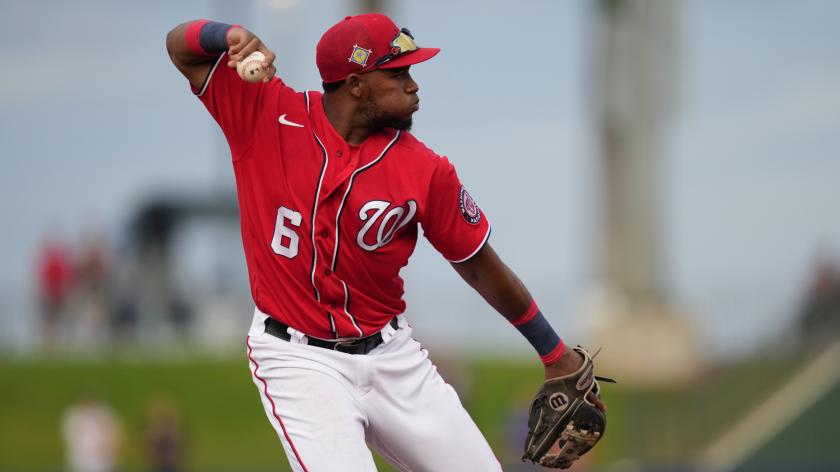
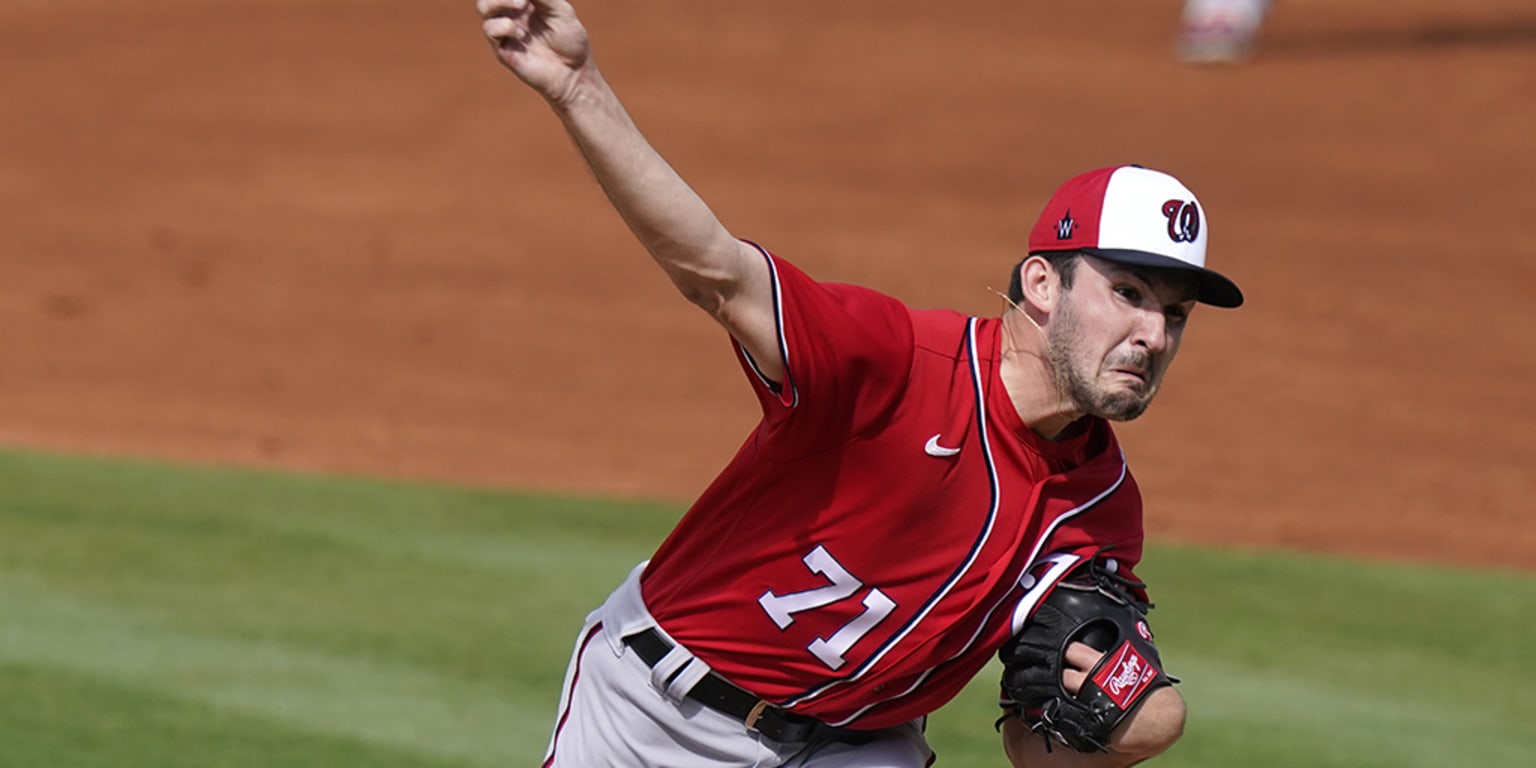
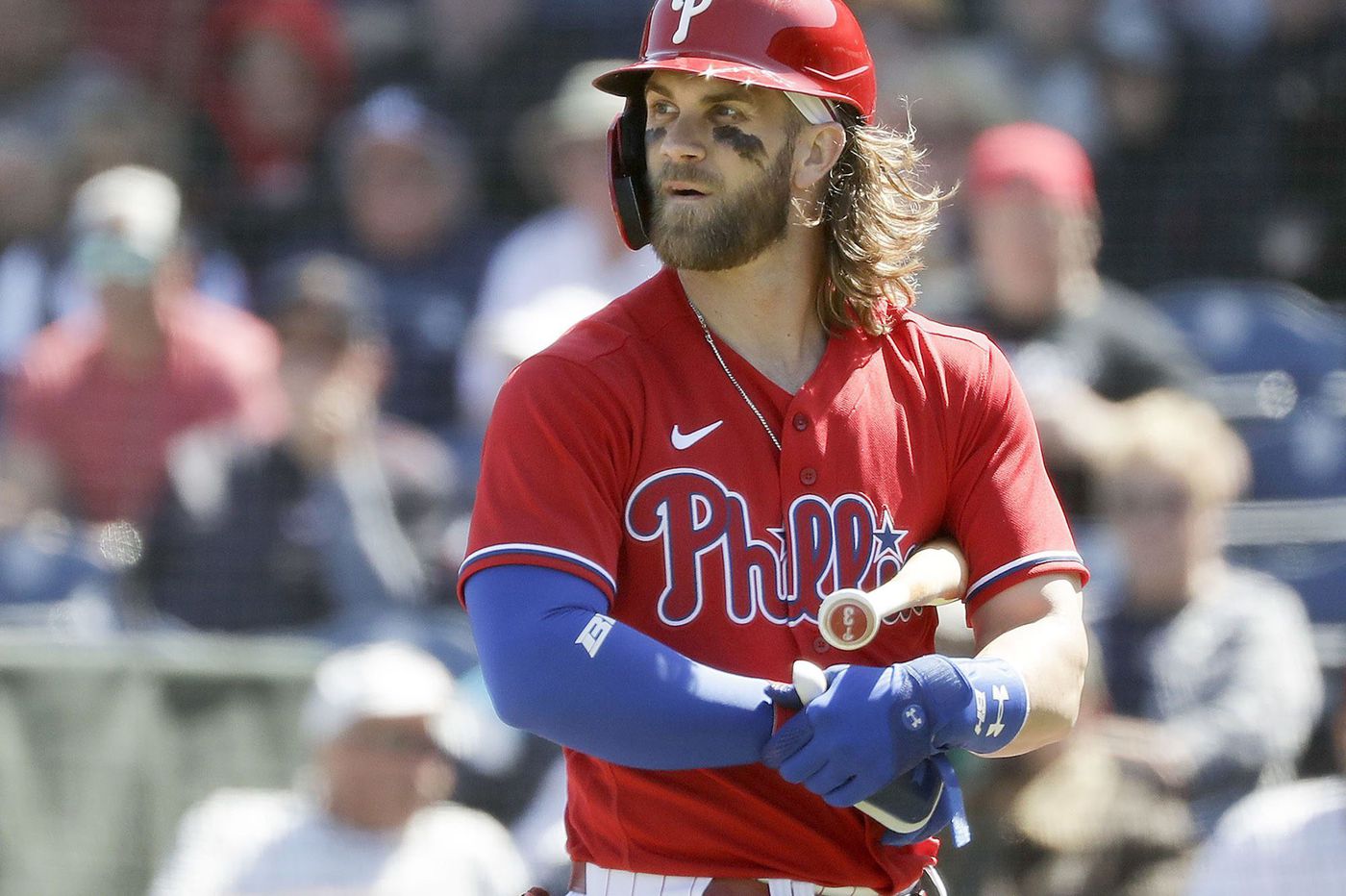
Maikel Franco makes the team as an NRI and will start at 3B. Photo via nbcsports.com
Thanks to the compressed Spring Training in 2022, we never did the navel gazing “which NRI may make the team?” after the team announced all its NRIs and MLFA signings.
But, now that the dust has settled, we did want to identify the NRIs and note which of them actually did make the team to have continuity with this analysis year over year.
Why do we care about NRIs? Because there’s a high likelihood we’ll see these guys either make the roster or get called up later on this year. And this year is no different. Since the 2015 season (not including 2022):
9 NRIs have made the 25-man roster straight out of Spring Training (and Guthrie technically made it 10 since he got called up a few days later and was always intended to be the 5th starter in 2017). Basically every year an NRI has made the roster for six seasons running.
29 NRIs eventually played for the MLB team at some point that same season they were in spring training.
So its likely that we’re going to see a lot of these NRIs at some point in the future. Like, on average at least 4-5 of these NRIs are going to play for this team in 2022.
Infielders: Cluff, Franco, Noll, Sanchez, Dee-gordon, Urena, Young
Outfielders: Parra
So, Opening day NRIs to make roster and the circumstances behind each
Anibal Sanchez; 3rd starter. It became clear early in spring that Strasburg wasn’t going to be ready and we needed another starter that we weren’t necessarily counting on. Several of the existing starters on the 40-man roster (Lee, Romero, Carrillo) really had no realistic shot of making a MLB roster, which left just six healthy starters on the entire 40-man roster from which to choose. Sanchez pitched here before and signed on as a MLFA with the NRI, and he ended up winning a spot easily in the rotation.
Victor Arano, rhp reliever. When Harris couldn’t answer the call, there was a major spot opened up in the back half of our bullpen, and Arano siezed it. Arano was a pretty adept MLFA signing; the guy has a career 159 ERA+ and dominated for the Phillies as an 8th inning guy in 2018. He outpitched a slew of RHP relievers on our 40-man to earn a spot, essentially beating out Gabe Klobotis for the spot.
Dee Gordon-Strange, 2B and OF. When it became clear Garcia wasn’t making the team, the middle infield situation cleared up a bit. Then, When Adrianza got hurt, it became clear the team needed another middle infielder. Gordon-Strange’s positional flexibility will likely keep him on the roster for a bit.
Maikel Franco, 3B. This one is pretty clear. Kieboom hurts his elbow, the team needs a 3B, and they just happened to have one on a MLFA/NRI deal.
Which of the rest of the NRIs might we see this year? Quick speculation, but i’ll bet we see at least a couple more of the RHP relievers (Edwards, Garrett), perhaps a return for Baldonado, maybe a middle infielder like Cluff, certainly Parra at some point, and then Cavalli halfway through the season.
Vaquero is here, and here to stay. Photo via TalkNats.com
In our continuing series of reviewing/reacting/criticizing Nats prospect lists as they’re released, today we got a big one. The MLBpipeline.com team (which includes senior prospect analysts Jim Callis, Jonathan Mayo, and Sam Dykstra) has released their updated top 30 rankings for our system.
Back to MLBPipeline’s list, which is perhaps the most respected source out there. Here’s the link to the story and the list itself.
Lets do some reactions.
At the top, Ruiz is graduated, so they go Cavalli-House at 1-2 like everyone else.
They’ve got our next two significant arms at 3-4 (that being Henry/Rutledge). Law had them 3-4 as well, just in the reverse order. Notably, no other shop has these two arms as high, most pushing them down in to the 6-9 range. Which tells you what I think about this source versus others.
MLBpipeline is one of the first to rank Vaquero legitimately; they’ve got him 5th as a starting point in the system. The only other shop to even bother attempting to rank him immediately post signing was ProspectsLive (who had him 4th).
Next three are our tertiary tier of RHP starters; in order Lara, Carrillo, Adon. No quibbling here; all three could serve as really useful arms in our system in one fashion or another. Having these three guys in the 6-8 range is completely reasonable.
They’re high on Daylen Lile, having him at #10. But their scouting report is a little dour, projecting him as a bat first spray hitting 4th outfielder.
Antuna: down at #12. Finally a realistic ranking of a career .238 hitter who projects as a corner OF with no power.
Quintana continues to be all over the map: they have him #15; he’s been as high as #7 (Keith Law) and as low as #24 (Baseball America).
Boissiere comes in at #17 … after missing BA’s entire top 30.
Lucius Fox is #23 … one of the few times we’ve ever had a waiver claim be ranked in our prospects list.
Several recently drafted players are in the 20s but entirely missing from BA’s list, guys like Saenz and White.
Mason Denaburg gets #30 treatment, but Seth Romero is nowhere to be seen.
Notable missing players
Holden Powell‘s injuries have dropped him off the radar; he needs a bounce back 2022.
Daniel Marte: completely off the radar too.
Tim Cate: completely unranked but is as high as #12 on Law’s list. Interesting how little he’s rated.
Riley Adams: nowhere to be seen despite being #11 on BA’s list. I guess a backup catcher who we all think is going to play every 4th day is not a prospect.
Mason Thompson; another guy who BA had just outside their top 10 … then suddenly he wasn’t there at all. Did he graduate rookie eligibility? I can’t tell.
Update post publishing: per commenter, Adams and Thompson have graduated … which makes you then ask, “well why the hell is he on BAs’ list?” And the answer there is … well, because i don’t know. It’d be super helpful if baseball-reference.com would have listed them as having graduated (since that’s my primary source for determining that). I’ll update my docs.
Law is the first pundit to put House as our #1 prospect. By the time he’s done, House may end up eclipsing our current record holder for most #1 listings (Lucas Giolito). Photo via primetimesportstalk.com
February is definitely prospect month, and one of the leading analysts out there is The Athletic’s Keith Law. On Monday 2/7/22 he released his system ranks, and then on XXX he released the NL East team’s prospect rankings, including our weary Nationals.
First, a couple thoughts on his system rankings. Law’s approach to evaluation definitely prioritizes ceiling over floor, and definitely discounts things you can find in abundance (RH relievers) versus scarcity (Catchers, top-end SPs, Shortstops, etc). And when it comes to evaluating entire systems, I feel like he goes well deeper than the best 3-4 guys in a system. So there’s some wild variations between his system rankings and a place like Baseball America’s, which ill go into briefly here.
Law’s top 5 systems: LA Dodgers, Seattle, Arizona, Tampa, Toronto. BA’s top 5 systems: Seattle, Tampa, Pittsburgh, Baltimore, Kansas City.
Not too far off … until you see where BA ranked Law’s #1 team (they had LA 8th) and where BA had Toronto (19th!). That’s some wild variation. They also wildly disagreed on some middle of the road teams, for similar reasons. I sense that BA is star-driven, Law’s is depth-driven. That being said … both shops had the exact same bottom 7 teams, just in slightly different order.
Washington comes in at #27 for Keith, #26 for BA coincidentally. Law does not include Ruiz as a prospect because he’s exhausted his rookie status per the new rules … this is something BA didn’t bother to adjudicate yet (nor any other prospect ranking shop), so I wonder if that didn’t ding the system a peg or two. Otherwise, Law’s evaluation of our system is this: improved from dead last last year, but two of our best arms got hurt, otherwise might be better.
OK, lets get to the individual players, which was released on 2/14/22. I know the Athletic is behind a paywall, so i’m going to be respectful of that and not post his list 1-x. You can glean the rankings though from my comments here.
Law’s methodology, which I always seem to need to repeat, is as follows: he’s more ceiling than floor. He could care less about fantasy. He discounts relievers. He is skeptical of bad mechanics in pitchers. He is definitely more “conservative” in projections of players. He is skeptical of 16-yr old DSL players and often waits until they perform in a domestic league. So, with those observations … here’s some thoughts on his player rankings.
(Reminder: no Ruiz, who likely was our #1)
#1: House. First time a pundit has named House #1. Says he hits the ball harder than any player in the 2021 draft (prep or college), is almost guaranteed to move to 3B at his size, but he has a chance to basically be Aaron Judge but on the dirt. Yeah. Sign me up.
#2 Cavalli. Law notes his struggles at AAA, but also isn’t that concerned. He thinks Cavalli’s worst-case scenario (barring a massive arm injury of course) is a workhorse #2 or #3 starter for the next decade. Sign me up.
He’s somewhat bullish on Rutledge (#3), but is worried about effort-full short arm action continuing his litany of injuries as we saw in 2021. Don’t be surprised if he’s converted to a reliver if he has another 30-inning season, though if the dude can’t even throw 30 innings without getting hurt … he’s not going to cut it as a reliever either.
#4 is Henry … upside of a #2 starter if his elbow holds up. We’ll see in 2022 how well it can hold up.
He loves #5 Adon, noting the same thing i’ve noticed; easy arm action. Its like we’re looking at a young Livan Hernandez.
He’s very high on Roismar Quintana, ranking him #7 when other shops have him well lower (BA had him #25).
He’s a bit lower on both Antuna and Lara than other places, which i’m in agreement with on both cases. Antuna at #8 is about where i’d like to see him. He was surprised Lara got to the majors and sees him as a #4 starter
Interestingly, Law’s top 10 and BA’s top 10 (excluding Quintana) have the exact same names, just in slightly different orders. There’s a bit more variations when looking at some of the more bloggier/fantasy focused sites we have lists for (Prospects1500.com, ProspectsLive.com, Prospects361.com), but so far the two biggest/most professional pundits are pretty aligned.
Law is one of the higher guys on Lile, having him at #11. I’m concerned that Lile can’t project as a center fielder at 6’0″, which means he’s gonna have to mash as a corner OF to be of any value. It means he’s gonna have to add power to his frame and power to his game.
He’s highest man so far on Tim Cate, at #12, noting that he may be headed to the pen based on his inability to get AA hitters out this year.
Jake Irvin at #14 (remember him?) Irvin’s been away so long that BA didn’t even have him in their top 40 (!!), and only one of other blog sites even mentioned him (Prospects1500 at #36). Law clearly remembers him, and expects him to come back. He may be the only one.
Perhaps an indictment of the system … or perhaps a sneaky good find, but he has Lucious Fox, our waiver claim from last fall, at #15. He thinks Fox could literally make it to the majors this year as a utility infielder backup.
At #19 and #20 he has two guys who basically sound the same: Evan Lee and Mitchell Parker. Both lefties, both with fantastic K/9 rates despite middling velocity, both have to have everything go right to turn into a 5th starter in the bigs. I guess there’s worse things to have in your system.
In his Honorable Mention section, he did call out some fan favorites, including T.J. White (reminding us that White was incredibly young for the class, getting drafted two weeks before turning 18, which means we basically got a high school Junior who put up those numbers), Boissiere, Barley, Brzycky, etc.
Notable names not on Law’s list:
Seth Romero, who he called out as someone who has completely fallen out of consideration specifically.
He also does not have our new $3.9M guy Cristian Vaquero, perhaps because of the timing of the signing and perhaps because we have zero to go on except a large bonus figure and huge hype (remember this when you see other shops rank the guy #4).
He does not have guys like Mason Thompson, Riley Adams, or Donovan Casey. Perhaps because they project as spare parts (middle reliever, backup catcher, 4th outfielder), as opposed to scarcity positions (starting C, starting pitcher, SS, CF).
All in all, a solid list with solid analysis.
New Feature: trying to build an all-prospects future team just based on a pundit’s rankings. Here’s what we’d have here:
Catchers: Ruiz and Riley Adams I suppose
Starting Rotation: Grey, Cavalli, Henry, Lara, Adon, Irvin and Saenz as a swingman/depth
Yasel Antuna continues to be a darling of the BA rankings. Photo via CurlyW blog
One of the biggest prospect evaluation shops has dropped its big publication; lets do a reaction to Baseball America’s handbook release and its ranking of our top 40 (!) prospects. I can’t recall the last time they extended out past 30, so bravo to them for doing a deep dive into a shallow pool of Nationals prospects.
Thanks to Luke Erickson over at Nationalsprospects.com for the data. See Part 1, Part 2, and Part 3 for the full list of the 40 players. Here’s the full list in order 1-40:
So, first things first: the top 10 in the handbook are the exact same top 10, in the same order, as the BA top 10 they released back in October 2021. I reacted to that list at length last October, so I won’t repeat my criticisms too heavily here. I will say this: clearly to me the BA boys had their list back then and have not done much in the way of additional analysis, because this new list does not include our shiny new IFA Cristian Vaquero. And honestly, its a pretty big omission given the fact that he signed several weeks ago. I suppose it implies that the handbook went to print a couple of months ago … but in today’s media landscape it seems like a pretty bad miss. In the world of blogging and internet-driven media, delays due to book binding and printing can make information “dated” pretty quickly.
Anyway, one with the observations.
Same 1-3 as everyone else. Ruiz over Cavalli, which I’m ok with.
We’ve covered Antuna at #4 at length; my stance is pretty clear.
The Arms at 5-8 are all pretty defensible and are mostly in line with what we’ve been seeing.
Rutledge remains in their top 10, despite his 2021. This, believe it or not, is considered “low” on Rutledge as compared to most of the other shops so far. How are they so high on Antuna but are low-man on Rutledge?
So, here we go with the guys ranked 11-40.
#11: Mason Thompson. Seriously? A 5.74 ERA in AAA in 2021, then after we acquired him his MLB stat line was as follows: 4.15 ERA., 5.71 FIP, 21/14 K/BB in 21 innings to a 99 ERA+. Ok great: a below league average RH middle reliever. Is that a near top 10 prospect? I mean, Andres Machado had a far better season in 2021 as a RH middle reliever: he was never ranked in our top 10 as a prospect. We cycle in and out failed starters as 6th inning RH relievers all the time; they’re one of the most fungible assets in the game. If we’re valuing near replacement level players so highly, then why aren’t all our backup AAA catchers ranked in the top 10 too? (Ahem, see next).
#12 Riley Adams: not even ranked in the top 30 by some shops (including Fangraphs), but #12 in our system. I mean, if the value of a prospect is so heavily skewed towards MLB-readiness, why not just rank our entire AAA team in our top 10?
Lots of variation of opinion on De La Rosa: some have him top 10, others in the mid-teens. BA comes in at #14.
Jackson Cluff at #16, whereas he wasn’t even in the top 50 of prospects1500. Wow. That’s a lot of juice on one month-long AFL stretch, especially considering how mediocre his 2021 regular season was.
Tim Cate at #19; they still have some faith, at least more than other shops.
Romero and Denaburg together at #27 and #28: fitting. The two worst 1st round picks in our history (well, except maybe for Aaron Crowe) are still hanging on the outskirts of the top 30.
One of the few shops to give any love to our pair of former Oakland High-A starters Shuman and Guasch, coming in at #31 and #33.
T.J. White: #34. Wow. Other shops have him in the upper teens. Where’s the love for a high draft pick who actually hit this year? Why would this guy be so low, as compared to De La Rosa, who is basically the same age and was badly outperformed?
This is the first list naming Dustin Saenz to any spot; he was a 4th round Lefty out of TAMU who only threw a handful of pro innings in 2021; not much to go on. A 4th round SEC hurler should have more expectations.
Coming in at #40 is Holden Powell. Again, curious. If they like relievers so much, why not give Powell (or Cronin or a few others) more credit?
Guys completely unranked of note: Vaquero as previously mentioned. Jake Alu, Yoander Rivero. Both Irvin and Schaller are completely out of the rankings now due to lost injury seasons.
I dunno. Maybe this list isn’t too bad. Outside of a couple of curious spots in the top 10, the rest of the list is more or less pretty defendable.
More prospect rankings are coming this week, so stay tuned. Keith Law is releasing all his data this week and we’ll have a reaction piece because I like his analysis.
Henry all the way up to #4 on this list. Photo via mlb.com
With the absence of MLB news (we’re not to mid Feb yet, so no chance we’ll have a new CBA), there still is some analysis to be had. We’re getting into the meat of the Prospect ranking season, and that means more lists being released.
Today, we have Prospects1500.com and their writer Colin Coulahan with perhaps the most aggressive prospect list out there: a top 50 for the Nats system. BA goes 10 deep, Fangraphs goes 30 deep, but these guys go 50 deep. Every list, they add in several guys who have never been ranked before, and this time is no different.
Here’s a link to the raw list, which I highly recommend visiting for the video embeds of key players. If you’ve never seen video on our top guys, this is the place to go. Also online, they don’t just list 1-50, they have tiers built in that kind of serve as predictors of future production. I probably push back on some of the players he lists in Tier 3 (expectation of making the majors) as being a little too rosy, but I like who he has listed in the first two tiers as being a pretty good predictor of the future.
Anyway, here’s some thoughts on the list with an eye-squint towards players they have much higher or lower than the consensus of other shops right now.
Top 3 are as expected and the same as everyone else. Put a dotted line between these three guys (Ruiz, Cavalli, House) and the rest of the system right now b/c they’re head and shoulders above everyone else at this point. These three, by the way are also the only 3 guys making the BA top 100. They came in at #11, #27 and #59 respectively in the entirety of the minors. So far, so good on the House drafting.
They have Cole Henry all the way up at #4 on the strength of his AFL performance. Bravo. Fangraphs had him all the way down at #13 in September. Lets hope he stays healthy and becomes part of a future Nats rotation. I like him as a sneaky-good #3 starter for a good team; imagine him pitching this way in a rotation along side Strasburg, Corbin, and Cavalli.
Antuna pushed down to #8; they’re still decently bullish on the player, but at least acknowledge that he’s going through a position change. At least they don’t have him in “future all star” ranking territory like BaseballAmerica did in October. I’m on record frequently in this space as questioning the continued prospect love for Antuna, especially now that he’s proven without a doubt he can’t play the dirt. Now he’s a corner 6’0″ outfielder with middling power and a career .684 minor league OPS.
What a rise for Joan Adon: they’ve got him at #11 and BA had him at #7; last year he was in the 20s or lower.
A caveat in the post says it was written just before the official signing of Cristian Vaquero. They would have had him in the #14-15 range apparently. That’s fair as a starting point; i probably would have had him a bit higher but sight unseen its hard to quibble with a mid-range ranking like this.
Evan Lee on the list at #16; he wasn’t even on Fangraph’s top 30. This is probably due to his K/9 rate in the AFL and his placement on the 40-man roster, but still seems awfully high.
Definitely high on #19 Brandon Boissiere, our 2021 3rd rounder who projects as a low-power 1B who hit .200 in 25 games in Low-A this year. Why would you rank Boissiere above, say, Ricardo Mendez, who plays CF, out hit Boissiere this year, earned a promotion to high-A, and is the same age?
Aldo Ramirez: all the way down to #21 on this list but top-10 on others. Interesting.
First time prospect mentions for three guys in the mid 20s: Yoander Rivero, Jacob Young, and Ivan Murzi. All three were hitters in the FCL or Low-A this year. Rivero hit .270 as a SS in the FCL with 3 homers and had more walks than strikeouts (a rarity in the game today). Murzi was a backup catcher in the FCL who got 34 at bats in 2021 and barely hits: not sure why he’s even this high. Young was a 7th rounder this year who hit .200 and had a lower slugging than his OBP in low-A. Strange placement for Murzi and Young honestly: there’s probably 10 guys I rate higher than either in the system or ranked below them.
Seth Romero, all the way down to #30. And that’s before his DWI arrest. He continues to be a train wreck, and the Nats executives can’t do a thing about it because he’s on the 40-man and thus he’s locked out. Romero is now #1 on my “Next player to get released when the team needs 40-man room” list. I think his time with the team may now be complete. Is this the worst ever 1st round pick by this team? Great post idea; maybe i’ll write that up for when he gets released.
Speaking of failed 1st round picks, Mason Denaburg comes in at #38 on this list. It is hard to believe that he was as high as the #2 ranked prospect in our system in January of 2021 in one publication.
Tim Cate: all the way to #40. Which is way, way too low, even if he did struggle this year. I mean, a 24-yr old lefty starter in AA with top tools has to rank better than a guy with 20 pro ABs. The fallacy is this: even if you thought Cate sucked in 2021, he’s a lefty who can go straight to the bullpen, focus on two pitches in stead of four, and become an effective MLB reliever almost immediately.
There’s a huge discrepancy between where Prospects1500 has some veteran prospects like Drew Millas and Drew Mendoza, buried in the 40s, versus where other shops have them. Just a month ago Fangraphs had Millas #12 overall, and still had Mendoza with some value. I think this ranking is a little to punitive for their bad 2021 seasons.
There’s no real reason to quibble about the rest of the players ranked in the 30s and 40s; some of them i’d never heard of. Could anyone tell me when we acquired #46 Miguel Gomez or how he performed this year?
Ranking a thin system to the 50th player is tough, but this is a good way to get recognition for some lower-level guys who may matriculate forward. Thoughts?
Andry Lara is rising up the prospect boards. Photo via mlb.com
Since I love prospect lists, I’ll write a reaction piece to every Nats prospect list ranking that I see this off-season. What else are we gonna talk about during the lockout?
We already saw the Baseball America top 10 list, which I found laughable for a number of reasons. Let’s see how Prospects361 and its author Rich Wilson did.
Prospects361 does seem to have a fantasy focus, which means we’ll see some oddities in the rankings. Fantasy focused sites generally over-rank several types of players:
relievers who have closer ability (since “saves” are generally one of the 5 prime pitching fantasy categories)
very, very young prospects and/or brand new prospects which get snapped up in Dynasty leagues
positions that are scarce (SS, C, 3B to a certain extent)
The same top 3 as nearly every other pundit shop right now, though he has Cavalli over Ruiz. That’s surprising since most legit ranks have Ruiz over Cavalli given Cavalli’s well known challenges, plus Ruiz is a catcher.
He has Andry Lara a bit higher than most others at #4, but I don’t think its unwarranted. The guy as an 18yr old pitched well in the GCL, which is now a much, much older league than it used to be. He may have had a 4.54 ERA, but his peripherals were pretty good.
Sigh; Yasel Antuna at #5. He’s still listed as a SS, which we know isn’t gonna happen as Antuna has already been banished to the OF. My concerns with Antuna being this high are well documented. All i’ll say is this: he better be one hell of a better hitter than he’s shown in 2022.
Even after his crap season, Jackson Rutledge sits above Cole Henry, which is laughable at this point. Perhaps he made this list before seeing anything that Henry was doing in Arizona.
He’s definitely high on Armando Cruz, One homer and a .232 BA in 177 DSL at bats this year after signing a ridiculously high signing bonus ($3.9M). So far, bust potential.
He’s about where the industry is on the guys in the 10-13 range, so no comment there.
Quintana: he’s definitely high on this guy. Quintana barely played this year due to an apparent injury, so this ranking and his potential is entirely that; potential.
Lastly, and I hate it when prospect ranking shops do this, he lists a player we’re only rumored to be signing in Vaquero. This is entirely fan service to dynasty fantasy players looking for some deep round pickup.
Omissions:
No mention of Joan Adon, who BA had #7. Now, i’m also on record being somewhat skeptical of Adon being a 7th ranked prospect, but i’m ok with him being a bit further down in the 13-15 range.
Slightly surprised there’s no Matt Cronin at the edges of his roster, given that Cronin is a closer candidate. It might be due to Cronin’s injury this year.
Evan Lee gets protected; will he be an impact player? Photo via U of Arkansas
The 2021 rule-5 prediction season is over. I predicted we’d protect Tim Cate and Donovan Casey as “locks,” then listed several others as possibles, led by Evan Lee. In the end, the team protected Casey and Lee, but not Cate. And then on the even of the annual meetings, the owners locked out the players, the major league component of the meetings were cancelled, and the rule-5 draft was “postponed indefinitely.”
So, it remains to be seen if Rule-5 will ever matter again. Or if it even happens for this year.
That being said …. Here’s a fun trip down memory lane to show my history of my predicted Rule-5 additions (with links to each prediction piece), along with the Actual players the team protected (with links as well).
2012: Predicted Karns and McCoy, with Hood and Rosenbaum as maybes. Actual: Karns and Davis. I think we were all surprised by Davis’ inclusion, despite his good AA numbers that year.
2011: Predicted Norris as a lock, guessed strongly on Moore, Meyers and Komatsu. Actual: Norris, Moore, Solano, Perez. This was poor analysis on my part; I did not consider the IFAs newly eligible.
2008: I might be wrong, but I don’t see any evidence of the team protecting *anyone* prior to the Rule-5 draft. A bit of an indictment of the farm system at the time, I’d say 🙂
Here’s a better question; does Rule-5 matter? The Rule-5 draft used to occur one year earlier into a player’s career, which led to drastically better talent being available. Now though, many pundits (even scouting-heavy ones like Keith Law) don’t even follow it because the Rule-5 rarely leads to impact players changing teams.
So, how many of the above players who were added to “save” them from the Rule-5 draft actually turned into impactful players for the Nationals? Lets work backwards:
2021: Casey and Lee: Obviously it is too early to tell, but we can project their immediate 2022. Casey likely serves as AAA OF depth in the near term of 2022. He is 6th on the depth chart right now, but could supplant the 5th man on that chart (Andrew Stevenson) with a good spring. Lee is now the 14th reliever or the 11th starter on our 40-man roster depth chart (meaning, he’s behind someone like Cade Cavalli who clearly would get called up before Lee if the need arose), and seems like a long shot to even get to AAA in 2022 given how many lefties we’ve signed recently. My guess is that he’ll start the season in the AA rotation, and might get pushed to the bullpen later in the season if the team needs it and is competing since he’s a lefty with big K/9 numbers.
2020: Adon, Antuna: Adon toiled in the lower minors for most of the year, made it to the majors for a spot start and looked solid. Is it sustainable? We’ve argued about Adon’s 2021 season here already. Right now i’ve got him 8th on our depth chart, behind a likely non-tender in Erick Fedde, which might actually push him further up the chain sooner than later. Meanwhile, Antuna has been a disaster, is now moving off of SS and hit .230 in High-A with none of the power he’d need to present with his move to a corner OF position. The team seems to be clinging to the guy simply based on his massive IFA signing bonus. Apologists for Antuna point out that, hey, he was really good for a few weeks in August; that’s wonderful. He’ll be out of options before he’s useful to this team.
2019: Braymer; already been DFA’d and outrighted after struggling; might be a 4-A org-guy as a ceiling.
2018: Bourque: got shelled in AAA in 2019, waived in 2020, then left the team as a MLFA.
2017: Gutierrez, Jefry Rodriguez. Gutierrez never really did anything for us and was traded to KC in the Kelvin Herrera deal. Rodriguez threw a bunch of mediocre starts and was flipped to Cleveland in the Yan Gomes deal; he’s now back with us as a MLFA for 2022.
2016: Voth, Bautista, Marmolejos, Read and Skole. A ton of guys; anyone impactful? Voth has competed for the 5th starter job for years but has a career 83 ERA+ and might be a non-tender candidate. Bautista never did much for us: 33 career MLB plate appearances. Read had a PED suspension and a handful of MLB games. Marmolejos was a 1B-only guy who showed some gap power in AA but never above it. Skole was inexplicably protected as an age 26 corner infield guy whose profile seemed to mirror dozens of veteran free agents readily available on the market; he hit .222 in 2017 and then hit MLFA.
2015: Kieboom, Bostick, Lee: This was Spencer Kieboom, the catcher, not his younger brother Carter, who remains on the 40-man as we speak. Kieboom was a AAA catcher who was worth protecting but he played just a handful of games in his MLB career. Chris Bostick didn’t last the full 2016 season before being DFA’d. Nick Lee lasted even less, getting DFA’d in July.
2014: Cole, Goodwin, Difo, Grace. All four players ended up playing in the majors for various lengths … but all four were role players for this team. AJ Cole was tried out as a 5th starter season after season, finally flipped to the Yankees when he ran out of options. Goodwin was another guy who couldn’t seem to break our outfield, but who has had spells of starting with some success elsewhere. Difo was our backup IF for years, and Matt Grace pitched in the Washington bullpen for years before getting outrighted and leaving via MLFA in 2019.
2013: Solis, Barrett, Taylor. Sammy was good until he wasn’t, and his time with the 2018 Nats was his last. Barrett remains with the team after multiple surgeries, but is a MLFA this off-season and may be forced into retirement after so many injuries. Michael A. Taylor is an interesting one; he had a 2.7 bWAR season for the Nats in 2017, nearly a 20/20 season when he finally got full time playing time in CF. He won a Gold Glove this year for Kansas City, one season after we DFA’d him because we all thought Victor Robles was a better option.
2012: Karns and Davis. Karns had one good year as a starter in the majors … for Tampa. Career bWAR: 3.0. Davis pitched a little for the team in 2013, then got hurt, then never made it back to the majors.
2011: Norris, Moore, Solano, Perez. This was a big year; Norris was a big part of the Gio Gonzalez trade and made the all star team in 2014 for Oakland, but didn’t play much afterwards. Tyler Moore was great in his first year as our backup 1B/bench bat type, but never replicated his 2012 season. Jhonathan Solano was always our 3rd catcher and saw sparing duty until he got cut loose. Eury Perez played in just a handful of games for us before getting DFA’d and claimed by the Yankees in Sept 2014.
2010: Marrero, Carr and Kimball. Marrero was a 1st rounder who “had” to get protected to protect the team’s investiment; he just never could get above AAA. Adam Carr and Cole Kimball were both relievers who looked promising after their 2010 minor league seasons but did relatively little afterwards: Cole never made the majors, while Kimball hurt his shoulder and never recovered.
2009: Jaime, Thompson and Severino. three pitchers, none of whom did much. Jaime was a 2004 IFA who has a grand total of 13 MLB innings. Thompson was waived a year after being protected. Severino got a cup of coffee in 2011 then hit MLFA.
2008: Nobody added. Not one eligible pick or signing from the 2004/2005 draft was considered worthy of protecting.
Conclusion: So, after more than a decade of rule-5 additions, who would you say is the most impactful player we’ve ever added? Brian Goodwin? Michael A. Taylor? Sammy Solis?
Two backup outfielders and a middle reliever. Not much of an impact. At the end of the day, Rule-5 is about protecting edge-of-the-40man roster guys, most of whom barely make the majors. So, yeah, maybe it doesn’t matter.
Is this the end of the road for Fedde with the Nats? Photo via minorleagueball.com
12/1/21 is the non-tender deadline for this year. It also happens to be “National MLB lockout day” as the existing CBA expires between the owners and players … but for the purposes of this post, we’ll assume that some normal baseball transactions will occur. and because of this uncertainty, the two sides agreed to move up the non-tender deadline a couple of days so as to at least not leave a bunch of edge-of-the-roster guys hanging for months.
(Like a lot of our posts, they’re recurring features. Here’s links to prior years: 2020, 2019, 2018, 2017, 2016, 2015, 2014, 2013, 2012, 2011. I’m not sure why i didn’t do it last year, or in 2016, but we’re back).
As of 11/19/21, when the Nats protectedDonovan Casey and Evan Lee ahead of the rule-5 draft, the 40-man roster sat at 39 players. The team’s off-season moves included a waiver claim (Francisco Perez), a re-signing (Alcides Escobar), the returning of three players to the active roster off the 60-day DL (Strasburg, Harris, JRoss), and the two Rule-5 protections.
This doesn’t leave much room for a number of FA moves we think the team needs to make this off-season. Luckily, we have a slew of guys who are “Non-Tender candidates.” We also have a slew of guys who are out of options, or who are on the edges of the roster right now who could make way if/when we need space to sign guys. For today though we’re talking about the non-tender candidates. “Non-tender” candidates are arbitration-eligible players who need to be “tendered” a contract offer by 11/30/21, which is thus a promise to enter into arbitration at a later date to negotiate a 2022 salary.
We have at least 6 and likely 10 arbitration candidates on the roster (more on this later), many of them coming off off really poor seasons. For the arbitration salary estimates we’ll use a combination of the predicted Arb salaries from MLBtraderumors.com, the projected salaries from Cots/Fangraphs, and my own opinion. Lets run through all 10 players and give some opinions on tendering.
Juan Soto. Arb2, projected salary $16-$17M. He made $8.5M this year, finished 2nd in MVP voting, and is already being linked in the sport to a potential $500M contract. Tender Decision: Obviously he will be tendered.
Josh Bell Arb3, projected salary $10-$11M. He made $6.35M this year. He’s given the Nats everything they could have hoped for after trading for him and hoping for a bounce-back from his awful 2020. Tender Decision: an obvious tender.
Victor Robles: Arb1, projected salary $1.5-$1.75M. Yes, he ended the year in AAA. He’s still considered a valuable piece and there’s no way they cut him loose at this point to save $1.5M. Goes into 2022 though behind Lane Thomas on the depth chart and might be competing with Stevenson for the 4th OF job (which has cascading considerations .. see below for more). Tender Decision: tender him.
Ok, so that’s the end of the tender locks. The rest of these guys each have a mostly legitimate reason not to tender. We’ll go one by one by rough projection of 2022 salary and make some guesses.
Joe Ross; Arb3: $2.5-$3M projected. He made $1.5M this year. He sat out 2020, pitched in the rotation for most of 2021 to a 98 ERA+ … then tore his UCL in Mid August. Awesome. So we have a 5th starter who has already had Tommy John surgery sitting on a known second UCL tear, but which apparently doesn’t require surgery. Tender Decision: Do you tender the guy a contract? I wouldn’t: i’d non-tender him and immediately offer him a non-40 man minor/major split deal with an opt-out/call up guarantee for when he projects to be healthy. And if i’m Ross i’d take it, because nobody else would offer him anything different.
Erick Fedde, Arb1: $1.9-$2M. Fedde has now pitched in 75 games across 5 seasons for this team. They tried him as a reliever in 2019 and he was awful (more walks than Ks). They’ve used him as a starter and his career starting ERA is 5.32. I think he’s 7th or 8th on our starter depth chart right now, and that’s before looking at AAA and seeing the guys who are there who i’d rather see on the mound. He has no options and has not proven he’s worth carrying even if he doesn’t make the rotation in 2022. Tender Decision: Non-tender him
Wander Suero: Arb 1, projected $900k-$1M salary. Suero basically doubled his ERA and FIP in 2021 versus 2020, tough to do. He went from being a serviceable middle reliever to a guy getting demoted to AAA. It was a weird season; he had three very consistent performances in the three years prior. Was he hurt? Was it something mechanical? Either way, his track record buys him a roster spot for 2022, especially since he’ll be relatively cheap. Tender Decision: tender a contract and hope for a return to previous levels of performance.
Then, the Nats have four players who all are right around the typical Super-2 cutoff date. All four of these players have 2 years and between 125 – 135 days of service. If the Super-2 cutoff comes in at 2years 136 days … all four of these guys will remain under team control and get paid the MLB min. For the purposes of this discussion though, lets assume they all get super-2 status. Post publishing update: just i posted this, MLB announced the Super2 cutoff at the very low 2years, 116 days (the 2nd lowest cutoff in the last decade), so all four players below are eligible.
Austin Voth: Arb1. Proj Salary: $1M. Unlike his fellow 5th starter competitor for the past few years, Voth was actually put into the bullpen this season … and he wasn’t good. 5.34 ERA, 4.90 FIP, 1.48 whip. Way too many walks, way too many homers. He’s got just as poor a career stat line as Fedde, but it likely doesn’t cost half as much to retain him since the league thinks he’s a reliever now++. But, it isn’t so much about the salary as it is the roster space at this point. Voth has no options remaining either, and has not made enough of a case to guarantee a bullpen spot in 2022. Tender Decision: non-tender him.
Andrew Stevenson: Arb1, projected salary $900k. His 2020 glittering stat line is gone; he slashed .229/.294/.339 in 109 part time games this year. He’s now 5th on the OF depth chart and has no options. It seems like his time as a major leaguer might be done. Tender Decision: non-tender.
Ryne Harper, Arb1. Projected salary: $800K. After awful stats in 2020 post acquisition (we got him from Minnesota for Hunter McMahon in a rare prospect-for-prospect trade), he did pitch reasonably well in 2021. His peripherals were not great, but he kept guys off base and was good. He also has options remaining, meaning he can run between AAA and the majors all they want. I see no reason to cut him loose, especially given his low projected salary, Tender Decision: tender him.
Tanner Rainey Arb1. Projected salary: $800K. What in the heck happened to Rainey in 2021? How do you go from a 170 ERA+ season to a 55 ERA+ season? Something seems amiss. Unfortunately, he’s out of options, meaning he’s got next year’s spring training to figure it out or get DFA’d. He’s got too good of a track record and too big of an arm not to gamble on especially since his projected salary is peanuts. Tender Decision: tender him.
My conclusion: Non-tender Ross, Fedde, Voth, and Stevenson, clearing up 4 roster spots. Offer all four minor/major combo deals to try to resurrect their careers. I doubt any would take it save Ross.
Post-publishing update! On 11/30/21 the Nats non-tendered Harper, Suero, and Ford. Ford was not arbitration eligible, but was a curious roster claim last season who was near the top of my “Next Nats 40-man roster guy to get cut when they needed to make a move.” I was completely off on my predictions.
Normally i take pride in being able to predict the 8 major post-season awards MLB gives out. This year I kind of got a time crunch right when the prediction piece had to go out and gave it a quick guess instead of doing deep analysis. how did I do on predictions nonetheless?
AL MVP: predicted Ohtani, actual Ohtani unanimously.
AL Cy Young: predicted Robbie Ray, actual Ray with 29 of 30 1st place votes.
AL Rookie: predicted Arozarena, actual Arozarena with 22 of 30 1st place votes.
AL Manager; Predicted La Russa, actual Kevin Cash of Tampa.
NL MVP: predicted Bryce Harper, actual Harper with 17 of 30 first place votes.
NL Cy Young: predicted Corbin Burnes, actual Burnes in a very close vote.
NL rookie: predicted Jonathan India, actual India with 29/30.
NL Manager: predicted Gabe Kaper SF Giants, actual Kapler.
So, I got 7 of 8 right. Not bad.
Current and former Nats are all over this year’s awards. Harper wins MVP, Ray wins Cy Young. Soto finished 2nd in MVP voting, Scherzer finished 3rd in Cy Young, Lucas Giolito got a 3rd place Cy Young vote, Trea Turner was 5th in NL MVP.
Speaking of Bryce Harper; he wins his 2nd MVP award. Certainly it wasn’t nearly as dominant a season as he had in 2015, but it was still a highly impressive season. He now has 40 career bWAR at the end of his age 28 season and two MVP awards. The list of players who have won 2 or more MVPs (and who are not PED-associated) and are not in the Hall is pretty small: Juan Gonzalez, Dale Murphy, Roger Maris. One more MVP and Harper basically guarantees himself inclusion into the hall.
I mention this because as he stands now he’s already the 45th ranked RF in baseball history by JAWS, and he’s signed for 10 more years in a hitter’s park. The mean career bWAR for all inducted right fielders in the Hall is just 72 bWAR; Harper’s already well past the halfway point and is now basically entering his prime slugging years in his late 20s/early 30s.
There seems to be a lot of antagonism towards Harper; constant droning that he’s overrated or that he didn’t deserve the contract he got. Maybe you can be “over-rated” when you’ve got just one monster MVP quality season .. but two? His career OPS+ is now 142, just a couple points below none other than Albert Pujols. So, at some point the narrative has to change about Harper right?
Donovan Casey is a possible Rule-5 addition … any others?
Its our Annual rule 5 protection analysis post!
Every time I re-do a post that I know i’ve done in the past, I scan back to get the last few links. For this piece; this is one of the longest running posts I do. Here’s links to past years posts on this topic: 2020, 2019, 2018, 2017, 2016, 2015, 2014, 2013, 2012, 2011, 2010. We have managed to do this post every year, without fail, since the blog started. That might be the sole recurring piece that I can say that about on this blog. We also do a post-mortem post comparing our predictions to actual roster additions; we’ll post that the day after the roster additions occur.
Each year, around the 20th of November is the “Day to file reserve lists for all Major and Minor league levels” for MLB teams. In other words, this is the day that players need to be added to 40-man rosters to protect them against the rule 5 draft, which occurs a couple weeks later at the winter meetings. 2021 is an odd year of course, since 12/1/21 is the day the Collective Bargaining Agreement (CBA) expires between the MLBPA and the owners, and unless there’s an agreement in place (highly doubtful) many pundits believe the MLB-component of the winter meetings may not occur as the owners seem likely to lock out the players. So, this may be academic for now; if there’s no meeting, there’s no rule-5 draft. Maybe they’ll re-do the entire CBA and eliminate the entire concept of rule-5 with some hard deadlines for free agency (instead of the wishy washy service time clock that is annually abused by teams to screw over players’ earning potential). But for now, we’ll assume that we’re going to have a Rule-5 draft, eventually.
Here’s the “rules/guidelines” for rule 5 eligiblity for 2021: any 4-year college-aged draftee from 2018 or before who isn’t already on the 40-man roster is Rule-5 eligible this coming December, and any high-school aged draftee/International Free Agent from 2017 or before is newly eligible this year, assuming they were at least 18 as of June 5th of that year. There’s always a couple of guys who have specific birthdays that move them up or down one way or the other; i’ll depend on the Roster Resource rules and the Draft Tracker for exact details, but apologies in advance if I miss someone. Also, thanks to the 2021 season sell-off, we’ve acquired a ton of new players, and hopefully I havn’t forgotten anyone in this analysis.
Group 1: Newly Eligible 2018 draft College Players this year worth consideration for protection:
Hitters:
Gage Canning, 5th rounder in 2018. Started the year in High-A, promoted to AA. Hit decently for the year, but he’s undersized (5’10”) without a ton of pop (just 5 homers this year) and little speed (just 2 SBs this year). I don’t think he’s a prospect going forward, and he’s not a candidate to be protected.
Cody Wilson, 13th rounder in 2018: hit a combined .124/.225/.164 across three levels in 2021 as a backup CF. Not a prospect.
Jacob Rhinesmith, 18th rounder in 2018: hit .250/.340/.398 across High-A and AA this year; nothing spectacular. 9 homers and 9 SBs in 107 games. Org guy.
Onix Vega, 20th round catcher from 2018: hit .233 in Low-A this year, not a prospect at this point nor a candidate to get rule-5 drafted.
Cole Daily, 22nd rounder from 2018: hit just .193 across several levels as he was bounced around to provide middle infield cover for the lower minors. Not a prospect.
Kyle Marinconz, 24th rounder from 2018. Like Daily, hit poorly across a couple of levels as he moved around to provide middle infield cover. Not a prospect.
Pitchers
Tim Cate, 2nd rounder from 2018. 5.31 ERA in 21 starts in AA this year. Cate presents a conundrum for the team in general, and for this exercise. He got hit badly this year, and his peripherals weren’t that great (81/37 K/BB in 96IP). Despite this, BaseballAmerica listed Cate as having both the best Curve and best Control in the system with their recently released prospect rankings (side note: how does a guy who walked 37 in 96 have the “best control” in the system? Really? Baseball America’s output for the Nationals this year was, as I noted in a previous post, really questionable analysis). Nonetheless, he’s a 2nd rounder with a significant bonus figure investment (frustrating those of us who studied Economics and can express what a “sunk cost” is better than most Baseball GMs with ivy league degrees), and it wouldn’t surprise me in the least to see the team protect him under the guise that he could feature almost immediately in 2022 as a MLB reliever.
Reid Schaller, 3rd rounder from 2018: decent numbers as a middle reliever in High-A and AA this year. 48/24 K/BB in 44 innings. Not exactly the numbers that you’d expect to see someone get plucked for a MLB pen next year, so the risk of his getting selected is not high. If he was left handed, maybe we have a different conversation.
Jake Irvin, 4th rounder from 2018. spent all of 2021 recovering from Tommy John surgery, not a candidate to be drafted. Hope he recovers and shows us something in 2022.
Andrew Karp, 6th rounder from 2018: was pretty solid all year as kind of a middle to long reliever in High-A … but that’s just it; he’s 26 and was in high-A all year. Definitely “old for the level.” He hadn’t pitched since 2018, so this was a good return to the field. I’m thinking Karp could be a solid bullpen piece for this team by mid to late 2022; is that worth protecting? Would a team grab him for their MLB bullpen next year? Doubtful, but we’ll list him as a secondary candidate.
Chandler Day, 7th rounder in 2018: never assigned in 2021, spending the entire season either in XST or secretly released unbeknownst to us. Either way, not a prospect nor a candidate to be protected right now.
Frankie Bartow, 11th rounder from 2018: 5.40 ERA as AA’s closer once Matt Cronin got hurt. Averaged a K an inning, so not blowing them away. Not considered a prospect by any scouting shop either, so not likely to be a candidate to protect.
Evan Lee, 15th rounder from 2018. Eye-opening numbers as a full-time LHP starter in High-A this year: in 21 games/20 starts he posted a 4.32 ERA 1.31 whip but more importantly 104/32 Ks in just 77 innings. This earned him a last minute spot in the AFL this fall, likely for the team to see how he fares against better competition. He has not fared well, posting an ERA north of 7.00 as of this writing. So he presents another interesting case: would you want to keep a lefty with major strike-out capabilities, even if they were “only” in High-A? I think his placement in the AFL and his lefty arm means he’s going to be protected.
Carson Teel, 16th rounder from 2018: had a decent 2021 season, earning a promotion from AA to AAA as a long man/spot starter. 4.40 combined ERA, didn’t blow people away but definitely did not put up the same kind of numbers he did in 2019 in High-A. Has never been considered a prospect (has never appeared on any prospect list for this team), so is probably considered an org-arm of sorts. I can’t see him getting protected, nor selected.
Ryan Tapani, 21st rounder from 2018: like Teel, decent numbers from 2021 as a multi-inning middle reliever in AA. Nothing special; zero prospect buzz about him. It seems like he’s a decent org-arm middle reliever righty that may just play out the string for us in the high minors next year. Not a candidate to be protected or selected.
Group 1 Rule-5 Protection Candidates: Cate (Maybe), Karp (doubtful), Lee (Maybe)
Group 2: Newly Eligible 2017 High School-age drafted players under consideration for protection
This section is always easy, since we rarely draft HS kids.
Justin Connell, 11th rounder from 2017: starting corner OF for high-A this year, showed some speed (21 SB) and some plate discipline (hitting .293). Has never really been a prospect with buzz, certainly did not show any reason he’d be a threat to get picked, but did show some promise for 2022.
Group 2 Rule-5 Protection Candidates: none.
Group 3: Newly Eligible 2017 signed IFAs under consideration for protection:
For the most part, nearly all these 2017IFA under-age signings are now in the age 21 range and if they’re still with us, they’re in the lowest parts of the minors, meaning by default they are not really candidates to get drafted. But we’ll run through them nonetheless:
Viandel Pena, SS. Hit .214 in Low-A. Not a candidate to get drafted.
Ricardo Mendez, OF. The only guy in this section who has matriculated out of Low-A. Slashed . 287/.343/.440 between low and high-A in 2021 in his age 21 season, promising but not world beating. Not a candidate to get drafted, but someone who might continue to prosper next year.
Geraldo Diaz, C. hit .217 as a backup catcher in Low-A in 2021. Not a candidate to be drafted.
Leandro Emiliani, hit .165 between the GCL and Low-A in 2021. Not a candidate to get drafted.
Pedro Gonzalez, SP. was in the opening day rotation for Low-A, demoted after giving up 19 runs in 9 innings. Ended the year struggling in the FCL. Not a candidate to get drafted.
Karlo Seijas, SP. somehow stayed in the Low-A rotation the entire season, making 22 starts and pitching to a 6.84 ERA. Not a candidate to get drafted.
Carlos Romero, RP. Pitched as a swing-man in Low-A, posted a 5.00 ERA and a 1.63 whip. Not a candidate to get drafted.
Jorge Hurtado, OF. Hit .164 in the complex league. Nobody’s banging down the door for him right now.
Andry Arias, OF. had decent numbers in FCL. But he’s 21 in the FCL: not a candidate.
Jose Ferrer, RHP. Had great numbers in 2021 … in the FCL. 2.78 ERA and 47/9 K/BB in 35 IP. That sounds great. He just finished his age 21 season, and he’s not a realistic candidate to get picked, but I’d like to see him move forward a couple levels in 2022.
Group 3 Rule-5 Protection Candidates: None.
Group 4: Rule-5 Eligible Drafted hold-overs of note: these are players who were rule-5 eligible previously but who put together a nice 2021 and might need additional thought. They’re sort of organized by draft year, from 2017 to earlier. Note; draft signings from 2015 hit 6-year MLFA this off-season, so they’re not listed here).
Donovan Casey, acquired from Los Angeles as the 4th prospect in the big Scherzer/Turner deal. He tore up Harrisburg, then struggled in AAA. He’s got solid power, could be a good corner OF guy. Is he worth protecting? Possibly. I’d protect him and have him compete with Yadiel Hernandez next spring for the starting LF job.
K.J. Harrison, acquired from Milwaukee in 2018 for Gio Gonzalez. Catcher/1B guy who played part time in AA this year. So-so numbers, not someone who is threatening to get drafted.
Jacob Condra-Bogan, acquired from Kansas City in 2018 for Brian Goodwin. Never made it out of XST this year, meaning he’s either hurt or has already been cut loose. Not a candidate to protect.
Cole Freeman, 4th rounder from 2017. Light hitting 2B in AA this year, no real push made for promotion. Not a candidate to protect.
Alex Dunlap, 29th rounder from 2017. Hit .181 as a 3rd catcher backup between AA and AAA. Not a candidate to protect. Notable that a 29th rounder made it to AAA; that’s quite a feat.
Jackson Tetreault, 7th rounder from 2017. Made his way all the way to AAA, but pitched the most in AA, posting a 3.74 ERA in 10 starts with middling K/BB numbers. Is that worth protecting? Would someone look at Tetreault’s 2021 and say, “wow he could be our 5th starter right now?” Probably not since he didn’t have a 12 K/9 rate as a RHP starter. But he’s posted consistent numbers every year in the minors. Never gotten much prospect buzz. Probably considered an Org arm by the industry, but I’ve always liked him.
Alex Troop, 9th rounder from 2017. He missed nearly all of 2018 with injuries, so he’s gotten a late start. He pitched primarily in High-A this season with solid numbers, and could be a sneaky decent org-arm for us in 2022. But not a candidate to protect.
Jackson Stoeckinger, 12th rounder from 2017. Never assigned to a team in 2021, which means he’s either hurt or has already been released. Either way, not getting protected.
Nick Banks, 4th rounder from 2016. Struggled when he got to AAA, bounced between AA and AAA as kind of an OF filler guy, which is the definition of an “org-guy” in some respects.
Armond Upshaw, 11th rounder from 2016. Promoted to AA this year, where he hit .186. Not a candidate to be protected.
Andrew Lee, 11th rounder from 2015. Made his way to AAA this year, where he got shelled. He served as a swing man for most of the year in AA, kind of a typical org-arm kind of guy. No prospect buzz, not a candidate to be protected.
Ike Schlabach, MLFA from 2021 but a 2015 draft pick. Unclear if he’s rule-5 eligible, or why he didn’t return to MLFA at the end of the season, but he pitched decently in high-A and earned a AA promotion, but not well enough to be in danger of drafting.
Matt Merrill, a 2020 MLFA originally drafted in 2017 by Houston. He pitched to a mid 4s era in low-A this year and is not a candidate to get picked.
Group 4 Rule 5 Protection candidates: Casey (maybe), Tetreault (unlikely)
Group 5: IFAs: 2016 and older
Israel Pineda, C. Pineda might be the highest ranked prospect on this list, a guy who was once listed in the top 10 for the system but who has stepped back. He hit just .208 this season in High-A, but is in the AFL to get some seasoning. He’s played in just a few games so far, since catchers split time, but it seems unlikely he’ll be protected despite his past prospect pedigree.
Jordy Barley, SS, trade return from San Diego for Daniel Hudson. A 2016 IFA, he’s a SS with the best SB speed in the system, but barely hit above the Mendoza line after coming over mid-season. He hit a lot better for San Diego earlier this year. He does have some pop though and is a player to watch; is he a protection candidate? Not likely. Could someone take a flier on him and have him ride the bench as a backup infielder/pinch runner all year? Maybe, I suppose.
Wilmer Perez, C. mostly a backup Catcher in high-A, hit .206. Not a candidate.
Jose Sanchez, SS. Hit .232 as the part time SS in low-A. Not a candidate.
Alfonso Hernandez, SP. Perhaps the best pitcher who started the season in Low-A, then held his own in High-A. Pitched mostly as a starter, 119/33 in 102 innings. Not bad. He’s someone to look for in 2022, but not a threat to get plucked for now.
Niomar Gomez, SP. Threw just 6 innings in 2021. Unclear if hurt from the beginning of the season or not.
Juan Diaz, RP. 2016IFA but a mid-season MLFA pickup who was assigned to the DSL despite being 23. Not a candidate.
Omar Meregildo, a 2015 IFA. Hit .234 but with some power as a 3B for high-A.
Gilberto Chu, a 2015 IFA. Decent numbers as a swing man in high-A.
Gilbert Lara, a 2014 IFA. Made his way to AAA as a 3B through social promotion, but hit only .233 on the year.
Malvin Pena, a 2014 IFA. 5.81 era as a middle reliever across three levels.
Francys Peguero, a 2013 IFA. Toiled in the high-A bullpen as a 26yr old. Not a candidate.
Richard Guasch, RHP, traded to us by Oakland in the Gomes/Harrison deal. The Cuban was signed in 2018 and was a started all year in High-A. He pitched well, and should be a good piece to watch for going forward, but is not a candidate to get drafted.
Group 5 Protection Candidates: Pineda (not likely), Barley (not likely)
Group 6: Former 40-man guys who have been outrighted previously
Jake Noll, 7th rounder from 2016. Hit very well in AAA, solid power. But he’s already been outrighted off the 40-man once. Roster resource lists him as having an option remaining (which is true), but he’s not currently on the 40-man, so I still sense he’s R5 eligible. Either way, the demand for someone like Noll seems limited; he played a lot of 1B this year and put up good numbers … but not good enough to command a RH bench bat position-limited spot. He can play 2B/3B as well; is that enough for someone to grab him?
Sterling Sharp, 22nd rounder from 2016. Already rule-5 drafted once, then returned to the team by Miami He pitched to a 4.97 ERA in AAA this year. There’s plenty of game tape on him, so if someone wants another crack at him it doesn’t seem like the team would stand in his way.
Ben Braymer, 18th rounder from 2016. Made it to the 40-man roster in 2020 against all odds as an 18th rounder, but then got shelled this year in AAA, which led to a DFA and outright. He did not impress in 2021, but he is a lefty starter. Is that worth putting him back on the 40-man for? I don’t think so.
Austen Williams, 6th rounder from 2014. Got hurt, then was outrighted off the 40-man and remains in the system. He spent all of 2021 in XST. Obviously not a candidate to get selected.
Group 6 protection candidates: none.
So, who would I protect?
Summary of above:
Group 1: Cate (Maybe), Karp (doubtful), Lee (Maybe) Group 2: none Group 3: none Group 4: Casey (maybe), Tetreault (unlikely) Group 5: Pineda (not likely), Barley (not likely) Group 6: none
—
So, who would I would protect? As I write this, the Nats 40-man sits at 34 of 40, with 3 slots needed for the three 60-day DL guys to return later this month. So they have 3 slots remaining for Rule 5 candidates plus off-season signings (which they’ll need to do), so I’m guessing Rule-5 additions will be limited. That being said, I think there’s a couple of spots that could be opened up pretty quickly on the 40-man, especially around non-tender candidates (which we’ll get to later this year). I think all the above points to just 2 rule-5 additions, leaving the team with one free spot to make a quick waiver claim if needed between now and the non-tender deadline:
I predict we protect:
Tim Cate
Donovan Casey
I would consider protecting, in order of likelihood:
Evan Lee
Jordy Barley
Israel Pineda
Jackson Tetreault
Andrew Karp
Post Publishing Results: the team added Casey and Lee, but not Cate. See https://www.mlbtraderumors.com/2021/11/nationals-select-donovan-casey-evan-lee.html