Nationals Arm Race

"… the reason you win or lose is darn near always the same – pitching.” — Earl Weaver

Archive for the ‘Hall of Fame’ Category

Are players from the 1980s under-represented in the Hall of Fame?

13 comments

Can Jack Morris eventually be the first "1980s Starter" to make the Hall? Photo John Iacono via si.com

First off: I’m not a “small hall” guy.  (How can you, when looking at the litany of obscure players the Veteran’s Committee has already enshrined while the current ballot has literally a dozen names that you can make an argument for?)  So naturally I want to see enshrinement for a larger number of the “marquee” names in baseball’s history.  I view the Hall of Fame as a museum dedicated to the game, and recognizing all the eras of the game for better or for worse.  I’m for expanding the current ballot and If I had a vote i’d be maxing out the 10 names with a desire to put a couple more guys on.

I’m also distinctly of the opinion that maybe the era of baseball just prior to today’s is underrepresented in Cooperstown.  Specifically, my theory is that the massive boom in offense that the game has seen in the last 20 years coupled with a distinct shift in the way pitching staffs are managed has led to voters and fans to discount and dismiss the accomplishments of players specifically from the 1980s.

MLB.com has a show called “Prime 9,” where they list the best 9 players/teams related to certain topics.  Recently they showed the “Best 9 players of the 1980s” by position, and it led me to use that list as a starting point for a discussion of marquee players from the 1980s and to decide whether or not the decade is under represented in Cooperstown.

Here’s Prime 9′s top player by position and their Hall of Fame status.  Throughout this entire article, Blue == Hall of Fame players while Red == non-Hall of Fame Players.

  • RF: Dwight Evans: fell off HoF ballot on his 3rd attempt in 1999.  Max votes: 10.4% in 1998.
  • CF: Dale Murphy: fell of HoF ballot on his 15th attempt this year in 2013.  Max votes: 23.2% in 2000.
  • LF: Rickey Henderson: 1st ballot HoFamer in 2009 with 94.8% of the vote.
  • SS: Cal Ripken Jr: 1st ballot HoFamer in 2007 with 98.5% of the vote.
  • 3B: Mike Schmidt: 1st ballot HoFamer in 1995 with 96.5% of the vote.
  • 2B: Ryne Sandberg: 3rd ballot HoFamer in 2005 with 76.2% of the vote.
  • 1B: Don Mattingly: on current ballot, his 13th attempt.  Max votes: 28.2% in 2001, his first year on the ballot.
  • C: Gary Carter: 6th ballot HoFamer in 2003 with 78% of the vote.
  • SP: Jack Morris: on current ballot, his 14th attempt.  Max votes: 67.7% this year.

Four of the Nine players listed as “Best of the Decade” are not in the Hall of Fame.   I think there’s something wrong here.  I know Morris is incredibly polarizing and probably never gets in, while the other three guys (Evans, Murphy, Mattingly) each had knocks against them related to durability and peak that prevented them from being enshrined.  Perhaps these are future Veteran’s committee picks.

I know the above list is arguable; perhaps those players aren’t necessarily the “best” at their positions for the decade.  So lets talk about the leading candidates per position who didn’t make the Prime-9′s list, and their own HoF status.  The MLB show didn’t distinguish between SP and RPs so I’ve separated them out below, nor did they distinguish between the OF positions like they did for the team selected above.

I’ve included the guys in the above “Prime 9″ list in the lists below for ease of analysis by position.

(Coincidentally; as you read the vote percentage totals, keep in mind that a voting percentage of less than 1% means that the player got only a handful of votes from the 500+ votes tallied each year, a woefully small number).

Outfielders:

  • Dwight Evans: fell off HoF ballot on his 3rd attempt in 1999.  Max votes: 10.4% in 1998.
  • Dale Murphy: fell of HoF ballot on his 15th attempt this year in 2013.  Max votes: 23.2% in 2000.
  • Rickey Henderson: 1st ballot HoFamer in 2009 with 94.8% of the vote.
  • Andre Dawson: 9th ballot HoFamer in 2010 with 77.9% of the vote.
  • Tim Raines: on current ballot, his 6th attempt.  Max votes: 52.2% this year.
  • Dave Parker: fell of HoF ballot on his 15th attempt this year in 2011.  Max votes: 24.5% in 1998.
  • Fred Lynn: fell off HoF ballot on his 2nd attempt in 1997.  Max votes: 5.5% in 1996.
  • Kirk Gibson: fell off HoF ballot on his 1st attempt in 2001 with only 2.5% of the voting.
  • Dave Winfield: 1st ballot HoFamer in 2001 with 84.5% of the vote.
  • Kirby Puckett: 1st ballot HoFamer in 2001 with 82.1% of the vote.
  • Tony Gwynn: 1st ballot HoFamer in 2007 with 97.6% of the vote.
  • Pedro Guerrero: fell off HoF ballot on his 1st attempt in 1998 with only 1.3% of the voting.
  • Jim Rice: 15th ballot HoFamer in 2009 with 76.4% of the vote.
  • Daryl Strawberryfell off HoF ballot on his 1st attempt in 2005 with only 1.2% of the voting.
  • Jack Clarkfell off HoF ballot on his 1st attempt in 1998 with only 1.5% of the voting.
  • Andy Van Slyke: fell off HoF ballot on his 1st attempt in 2001 without receiving a single vote.

This makes for 16 total outfielders on the “Best of the decade” list.  Of those 16 outfielders, 10 are not in the Hall of Fame.  Would you say that the position is under-represented in the Hall if only 6 outfielders from an entire decade of the sport are enshrined?   Maybe, maybe not.   To say nothing of the fact that 2 of these 6 HoFame 80s outfielders (Rice and Dawson) were heavily criticized upon enshrinement for being voted in based on remnants of “old man” statistics.

Jack Clark you say?  50 Career WAR.  That’s nothing to shake a stick at.  Higher than a number of Hall of Fame hitters.  I remember him being more of a power hitter than he turned out to be.  He just couldn’t stay healthy; only 5 seasons where he played close to a “full season” in 18 years in the league.   I remember him fondly from my childhood; my family is from San Francisco and I always rooted for the Giants as a kid.

Middle Infielders:

  • Cal Ripken Jr: 1st ballot HoFamer in 2007 with 98.5% of the vote.
  • Ryne Sandberg: 3rd ballot HoFamer in 2005 with 76.2% of the vote.
  • Garry Templetonfell off HoF ballot on his 1st attempt in 1998 with only 0.4% of the voting.
  • Ozzie Smith1st ballot HoFamer in 2002 with 91.7% of the vote.
  • Alan Trammellon current ballot, his 12th attempt.  Max votes: 36.8% last year.
  • Robin Yount1st ballot HoFamer in 1999 with 77.5% of the vote.
  • Lou Whitaker: fell off HoF ballot on his 1st attempt in 2001 with only 2.9% of the voting.
  • Dave Conceptionfell of HoF ballot on his 15th attempt this year in 2008.  Max votes: 16.9% in 1998.

Lots of baseball pundits have lamented Whitaker’s fate, while plenty others vociferiously argue for Trammell, who had the misfortune of being both the 2nd best offensive SS (to Ripken) and the 2nd best defensive SS (to Smith) of his era simultaneously, thus being overshadowed by both.   Conception was about an equal at the plate to Ozzie Smith but only about half the Gold Gloves, but still seems like he deserved a bit more credit than he got in the voting.

Third Basemen

  • Mike Schmidt: 1st ballot HoFamer in 1995 with 96.5% of the vote.
  • Wade Boggs: 1st ballot HoFamer in 2005 with 91.9% of the vote.
  • George Brett: 1st ballot HoFamer in 1999 with 98.2% of the vote.
  • Paul Molitor: 1st ballot HoFamer in 2004 with 85.2% of the vote.
  • Terry Pendleton: fell off HoF ballot on his 1st attempt in 2004 with only 0.2% of the voting.
  • Tim Wallachfell off HoF ballot on his 1st attempt in 2002 with only 0.2% of the voting.
  • Buddy Bellfell off HoF ballot on his 1st attempt in 1995 with only 1.7% of the voting.

Four first ballot hall of fame 3rd Basemen played in the era (even if most consider Molitor primarly a DH later in his career) which is saying something considering there are only 12 full time 3rd baseman in the Hall from all of history.  The all-star game starters for the entire decade were almost entirely Schmidt, Boggs and Brett.  The others I fully acknowledge are “stretches” but did each have several all-star appearances during the decade.

First Basemen

  • Don Mattingly: on current ballot, his 13th attempt.  Max votes: 28.2% in 2001, his first year on the ballot.
  • Steve Garvey: fell of HoF ballot on his 15th attempt this year in 2007.  Max votes: 42.6% in 1995.
  • Eddie Murray: 1st ballot HoFamer in 2003 with 85.3% of the vote.
  • Keith Hernandez: fell off HoF ballot on his 9th attempt in 2004.  Max votes: 10.8% in 1998.
  • Mark McGwireon current ballot, his 7th attempt.  Max votes: 23.7% in 2010.

Not much to say here: There seemed to be a definite lack of quality first basemen for the decade; only one is enshrined in the Hall.  Many of the all-star 1B appearances early in the decade went to aging stars Rod Carew and Pete Rose, who by that point in their long careers had been moved to first base for defensive purposes. McGwire’s issues are obvious (and he’s clearly more well known for his exploits in the 1990s, so its arguable if he even belongs in this 1980′s centric discussion).

Catchers

  • Gary Carter: 6th ballot HoFamer in 2003 with 78% of the vote.
  • Carlton Fisk2nd ballot HoFamer in 2000 with 79.6% of the vote.
  • Lance Parrishfell off HoF ballot on his 1st attempt in 2001 with 1.7% of the voting.
  • Benito Santiagofell off HoF ballot on his 1st attempt in 2011 with 0.2% of the voting.
  • Darrell Porterfell off HoF ballot on his 1st attempt in 1993 with zero (0) votes.
  • Tony Penafell off HoF ballot on his 1st attempt in 2003 with0.4% of the voting.
  • Bob Boonefell off HoF ballot on his 5th attempt in 2000. Max votes: 7.7% in 1996.
  • Terry Kennedyfell off HoF ballot on his 1st attempt in 1997 with exactly one (1) vote.

Yes, I’m really stretching for 1980s catchers.  Basically Carter made the all-star team every year for the NL while Fisk made half the All Star Starts for the AL during the same time.  The backups were generally catchers having a decent first half, many of whom never made an other all-star team.  Boone was better than you remember, hence his hanging around the bottom of the ballot for a few years.

Closers/Relievers

  • Lee Smith: on current ballot, his 11th attempt.  Max votes: 50.6% in 2012.
  • Bruce Sutter: 13th ballot HoFamer in 2006 with 876.9% of the vote.
  • Dennis Eckersley:  1st ballot HoFamer in 2004 with 83.2% of the vote.
  • Rich Gossage: 9th ballot HoFamer in 2008 with 85.8% of the vote.
  • Jeff Reardonfell off HoF ballot on his 1st attempt in 2000 with 4.8% of the voting.
  • Tom Henkefell off HoF ballot on his 1st attempt in 2004 with 0.6% of the voting.
  • Dan Quisenberryfell off HoF ballot on his 1st attempt in 1996 with 3.8% of the voting.
  • Kent Tekulvefell off HoF ballot on his 1st attempt in 1995 with 1.3% of the voting.
  • Willie Hernandezfell off HoF ballot on his 1st attempt in 1995 with 0.4% of the voting.

I’m not going to vociferously argue for Relievers/Closers to be inducted, since I think they’re mostly overrated in terms of their contributions to wins.  But I will say that a couple of these guys were far better than you remember.  Take Tom Henke: career 157 ERA+, which was better than either Sutter or Gossage PLUS he had more career saves (311 for Henke compared to 310 for Gossage and 300 for Sutter).   How exactly are two of these three guys Hall of Famers while Henke got exactly 6 votes out of 515 his first time on the ballot?   These voting patterns just seem drastically inconsistent.


All the above though pales in comparison to what we’re about to see.

Starters

  • Jack Morris: on current ballot, his 14th attempt.  Max votes: 67.7% this year.
  • Steve Carlton: 1st ballot HoFamer in 1994 with 95.6% of the vote.
  • Dave Stewart: fell off HoF ballot on his 2nd attempt in 2002.  Max votes: 7.4% in 2001.
  • Frank Violafell off HoF ballot on his 1st attempt in 2002 with 0.4% of the voting.
  • Rick Sutcliffefell off HoF ballot on his 1st attempt in 2000 with 1.8% of the voting.
  • Dave Steibfell off HoF ballot on his 1st attempt in 2004 with 1.4% of the voting.
  • Bob Welchfell off HoF ballot on his 1st attempt in 2000 with 0.2% of the voting.
  • Brett Saberhagen: fell off HoF ballot on his 1st attempt in 2007 with 1.3% of the voting.
  • Orel Hershiser: fell off HoF ballot on his 2nd attempt in 2007.  Max votes: 11.2% in 2006.
  • Dwight Goodenfell off HoF ballot on his 1st attempt in 2006 with 3.3% of the voting.
  • Mike Scott:  fell off HoF ballot on his 1st attempt in 1997 with 0.4% of the voting.
  • Rick Reuschelfell off HoF ballot on his 1st attempt in 1997 with 0.4% of the voting.
  • Fernando Valenzuelafell off HoF ballot on his 2nd attempt in 2004.  Max votes: 6.2% in 2003.
  • Nolan Ryan: 1st ballot HoFamer in 1999 with 98.8% of the vote.
  • Denny Martinez: fell off HoF ballot on his 1st attempt in 2004 with 3.2% of the voting.
  • Bert Blyleven14th ballot HoFamer in 2011 with 79.7% of the vote.
  • Jimmy Keyfell off HoF ballot on his 1st attempt in 2004 with 0.6% of the voting.
  • Ron Guidryfell off HoF ballot on his 9th attempt in 2002.  Max votes: 8.8% in 2000.
  • John Tudor: fell off HoF ballot on his 1st attempt in 1996 with 0.4% of the voting.
  • Roger Clemenson current ballot, his 1st attempt.  Max votes: 37.6% in 2013.

Here is where I think I really have a problem with the Hall of Fame treatment players in the 1980s; I think the entire generation of Starting Pitchers has been generally underrated and overlooked.  Look at this list of pitchers and look at the number of guys who failed to even stay on the ballot for more than one season.  Meanwhile, you can argue that the three guys who ARE on this list who are in the Hall of Fame (Carlton, Ryan and Blyleven) all actually “belong” to the 1970s; they just happened to have longer careers that bled into the 1980s.  Clemens appears here because his late 80s debut was so strong but clearly he’s a player of the 90s, and his reasons for non-inclusion thus far are obvious.

Do you mean to tell me that NONE of these other 1980′s starters merits inclusion to the Hall of Fame?  That an entire decade of starting pitchers doesn’t historically merit inclusion?  I’m not going to argue that all (or most) of these players belong, but it is kind of shocking that so many of the leading pitchers of that era were given so little consideration.

My biggest beef may be with Saberhagen.  Here’s the side-by-side stats of Saberhagen and a Mystery pitcher we’ll identify in a moment:

Wins Losses IP K’s ERA ERA+ bWAR
Saberhagen 167 117 2562 2/3 1715 3.34 126 56
Mystery Player 165 87 2324 1/3 2396 2.76 131 50.3

Pretty close, no?  Saberhagen contributed more WAR and was nearly this player’s equal in ERA+, which adjusts to the eras.  Mystery player’s W/L record is better … but then again, havn’t we learned that wins and losses are meaningless stats now?   A couple more facts here: Saberhagen won two Cy Young awards while the Mystery player won Three.  Saberhagen led the league in ERA just once while Mystery player did it 5 years in a row.

The Mystery player here (if you havn’t already guessed) is none other than Sandy Koufax.  Now, I’m certainly not saying that Saberhagen is the equal of Koufax, certainly not when you look at Koufax’s last 5 seasons or his 4 no-hitters.  My point is this: Koufax was a first ballot hall of famer … and Saberhagen got 7 votes out of 545 ballots.   Saberhagen may not be a Hall of Famer but he deserved to be in the discussion longer than he was.

Others have mentioned the lack of support for Dave Steib, who had a relatively similar statistical case to Saberhagen.  Similar career bWAR (53.5), similar ERA+ (122), and similar injury issues that curtailed his career.  Steib’s award resume isn’t as impressive (zero Cy Youngs but 7 All-Star appearances in his first 11 seasons), and he was basically done as an effective player by the time he was 33.

There are some other surprises on this list too.  Jimmy Key you say?  Go look at his career stats and you’ll be surprised just how good he was.  186-117, a 3.51 ERA (which sounds mediocre) but a career 122 ERA+.  A couple of stellar seasons (two 2nd place Cy Young votes).   I’m not saying he’s a hall of famer, but I am saying that he was better than you remember.  There’s absolutely pitchers in the Hall with worse ERA+ than Key’s.


Coincidentally, you can make the argument that many of these players really “belonged” to a different decade, if you wanted to really just focus this discussion on the 1980 decade.

  • Fisk, Boone, Conception, Parker, Lynn, Rice, Garvey, Carlton, Ryan, Reuschel and to a certain extent Winfield were really players who mostly “belong” in the 1970s.
  • Blyleven and Brett’s careers equally spanned both the 70s and 80s.
  • Gooden, Van Slyke, Puckett, McGwire, Clemens and Pendleton had careers that started the late 80s but who flourished mostly in the 1990s.

But, I think the point is made, especially when it comes to pitchers.  So I left all these players in.


Here’s a couple other ways to look at the best players of the 1980s.  Here’s a list of the top 20 positional players by “Win Shares” for the decade (data cut and pasted from an online forum).  As with above, blue=hall of famer while red indicates not.

1. Rickey Henderson 289
2. Robin Yount 274
3. Mike Schmidt 265
4. Eddie Murray 250
5. Tim Raines 246
6. Dale Murphy 244
7. Wade Boggs 237
8. Dwight Evans 230
9. George Brett 229
10. Keith Hernandez 221
11. Pedro Guerrero 221
12. Cal Ripken 219
13. Alan Trammell 219
14. Gary Carter 215
15. Jack Clark 213
16. Lou Whitaker 205
17. Andre Dawson 204
18. Ozzie Smith 204
19. Paul Molitor 198
20. Dave Winfield 193

Most HoFame pundits lament the lack of support for Raines specifically, but it is interesting to see how high up both Murphy and Evans fall on this list.

Now, here’s Pitcher WAR accumulated in the 1980s.  I took this data from a posting on BeyondtheBoxScore blog back in 2010, who was arguing (of course) why Jack Morris didn’t deserve to be in the hall of fame.  However, the table here also illustrates nicely who were really the best pitchers of the decade, and most of these guys are in the list above.

Rank Name bWAR From To Age Wins Losses
1 Dave Stieb 45.2 1980 1989 22-31 140 109
2 Bob Welch 35.1 1980 1989 23-32 137 93
3 Fernando Valenzuela 34.8 1980 1989 19-28 128 103
4 Bert Blyleven 34 1980 1989 29-38 123 103
5 Orel Hershiser 32.8 1983 1989 24-30 98 64
6 Roger Clemens 32.3 1984 1989 21-26 95 45
7 Nolan Ryan 30.8 1980 1989 33-42 122 104
8 Dwight Gooden 30.2 1984 1989 19-24 100 39
9 John Tudor 29.7 1980 1989 26-35 104 66
10 Bret Saberhagen 29 1984 1989 20-25 92 61
11 Charlie Hough 28.7 1980 1989 32-41 128 114
12 Jack Morris 27.9 1980 1989 25-34 162 119
13 Mario Soto 27.3 1980 1988 23-31 94 84
14 Teddy Higuera 27.3 1985 1989 26-30 78 44
15 Rick Sutcliffe 26.7 1980 1989 24-33 116 93
16 Rick Reuschel 25.7 1980 1989 31-40 97 82
17 Steve Carlton 25.6 1980 1988 35-43 104 84
18 Ron Guidry 25.5 1980 1988 29-37 111 72
19 Frank Viola 25.1 1982 1989 22-29 117 98
20 Dan Quisenberry 24.6 1980 1989 27-36 53 43
21 Mark Gubicza 24.6 1984 1989 21-26 84 67

I’m not sure why he ran this list to 21 players; perhaps he really likes Mark Gubicza.

Notice the same 3 names appear here as appeared above for Hall of Fame starters.  Also notice the surprisingly high appearances of players like Soto and Higuera; I didn’t even include them in the above analysis, perhaps providing my own bias because certainly I wouldn’t have included these two in any conversation about the best pitchers of the 80s.  But the point is now made statistically; of the 20 best pitchers by WAR for the entire decade, only 3 are enshrined in the Hall.

I havn’t done this analysis for other decades but I’d be surprised if other decades were so underrepresented.  Think about how many obvious hall of famers pitched in the 1990s;  Just off the top of my head: Clemens, Mussina, Maddux, Glavine, Smoltz, Johnson, Pedro, Schilling and perhaps eventually Hoffman and Rivera.   Maybe guys like Cone and Pettitte deserve more thought.  Lee Smith is still on the ballot.  That’s a lot of names for one decade as compared to what’s happened to the 1980s guys.


So, after all this, do we think the 1980s players are underrepresented in the Hall?  I count 17 positional players, 3 relievers and 3 starters from the era.  Perhaps the answer is, “there’s plenty of positional representation but the Starters are not fairly represented.”

Why are there so few starters from this era enshrined?  Did we just see a relatively mediocre time period in baseball with respect to starting pitchers?  Did we just get unlucky with the longevity and injury issues related to the best pitchers of the era (Hershiser, Saberhagen, Steib)?  Did changes in bullpen management that came about in the 90s (lefty-lefty matchups and more specialized relievers) combined with increasing awareness/sensitivety to pitch counts (100 pitches and you’re out) contribute to this fact?   If you’re a starter and the assumption is that you’re pitching 9 innings no matter what your pitch count is, you’re going to approach the game differently and pitch with a different level of effort than if you knew you were getting the hook after 100 pitches and/or in roughly the 6th or 7th inning.  Did this contribute to more mediocre-appearing ERAs for starters of this era?  Is that a good argument to use, as compared to 90s’ and modern pitchers who go all-out for 7 innings and then sit (versus starters of the 90s, who would often face the 3-4-5 of the opposing team a FOURTH time in the late innings while sitting on 140 pitches)?

What do you guys think?

Here’s a hypothetical story … what do you think?

13 comments

Here’s a hypothetical situation.

You’re a professional worker.  You could be an Accountant, an Engineer, a school teacher or (like myself) an IT consultant.  Feel free to substitute whatever profession you work in for the sake of this hypothetical situation.

Lets say, for the sake of argument, that you went to college or some advanced prepatory school for your profession.  And you trained for several years before “going pro” and getting a job.

Then lets say that you have worked in your job for 10-15 years now (maybe longer).  In that time, you’ve obviously become quite an expert in what you do.  In fact, you’re so good at what you do that you’ve been specifically picked by the absolute leading, best employers in your field.  If you’re an accountant, perhaps you’ve been named to the president’s budget team.  If you’re a school teacher, you just won state teacher of the year.  If you’re an IT worker, you were named to the White House’s Chief Technology Office.  You’re inarguably one of the elite members of your profession, one of the few hundred or so absolute best, most highly skilled persons at what you do.

Now imagine this; a 23 year old ivy league graduate in a field completely unrelated to yours (lets say he’s an Economics major, since this will make sense later on) starts working in your office.   He has NEVER worked in your field; he went to school and developed a mathematical model of behaviors that was designed to simulate the work that you do.  Despite having zero days of experience doing what you do (teaching, accounting, IT development), he’s now sitting in your office telling you that all the methods that you’ve used to evaluate and perform your job are outdated and inadequate.   This is the same job which (as discussed above) you’re undoubtedly the most qualified for in the entire country and you are recognized industry wide by all your peers as being one of the best in the business.  Furthermore, this ivy league graduate is regularly posting to his internet blog and has no qualms about calling you an outright Idiot for continuing to do work in the way you’ve done it for the past X number of years.

Would you say the above hypothetical situation correctly describes how career Baseball men (be them Writers or GMs or Scouts or even the players themselves) consider Sabrematricians?  Is that a fair hypothetical description?

I say this because the last week has seen an ungodly amount of negative articles in the baseball blogosphere from people who think its ok to denigrate and outright call writers names who vote for certain Hall of Famers that these sabrematricians don’t believe meet their own standards of entry, or who chose to vote or not vote for another guy based on a vague “character clause” in their organization’s charter (which, remember, for the most part which these same blogosphere guys are NOT members of).

How would you feel if you were the career baseball man at this point?   Lets say you’re a baseball writer who covered the game day in-day out for 40 years.  How exactly would YOU react to the name calling that goes on in the baseball blogosphere?

Its embarassing.  Its infuriating.  And while I don’t entirly mean to imply that the hypothetical ivy league graduate’s model is inaccurate … it also does not and cannot replicate a lifetime of experience in the field.   In reality neither side is 100% right or 100% wrong … clearly some statistical analysis and some progress is a good thing and has been happening in sports for a while.  But why is it ok for someone who has never covered the game to so harshly criticize a career baseball writer for stating his professional opinions?

I just don’t get the negativity and hate sometimes on the internet.  Is it the anonymous nature of the medium?  I’ve always been realtively open with who I am and what I believe and I’ve never anonymously posted something just to get a rise out of people.  I’ve always used my real name, given out my real email address, and welcomed feedback.  But am I in the minority?

And this is just talking about baseball!  Heaven help those people who want to talk about politics or current issues or things that *really* get people’s blood boiling.  My facebook feed is full of people so completely opposed to someone else’s opinions on certain issues that they can no longer have civil conversations about it.  Have we always been this polarized as a society?  Is this a function of the rise of the internet age, where social interactions are being replaced by chat rooms and wall postings?  Where the removal of face to face conversations means the rise of bluntly stated opinions given without any consideration for the consequences of those words in a mixed crowd?

I dunno.  Just something to think about.

Written by Todd Boss

January 11th, 2013 at 4:55 pm

HoF Post mortem/Is the Hall in trouble?

13 comments

Biggio has to wait for enshrinement to the HoF. Photo Karen Warren/Houston Chronicle

Obligatory HoF Reaction post.

I wasn’t going to write one.  But email/text conversations later I thought it may just be easier to write a thousand words on the topic.

As the front page of the BBWAA site says, “No players elected for the first time since 1996.” Also for only the 8th time in the history of balloting, no player was elected this cycle by the electorate.

We all knew this day was coming.  You can google articles from nearly 5 years ago when the whole slew of these first time players were first known to all be eligible on this ballot and know this day was coming.  And now here we are.

My interpretation of the results for the major players kind of goes like the following:

  • Craig Biggio was “penalized” by some voters for not being a “First Ballot Hall of Famer” calibre player.  Therefore lots of voters who have annointed themselves the keepers of this title skipped voting for him this year.  Much like what happened to Roberto Alomar (who went from 73% to 90% from 1st ballot to 2nd) we probably see Biggio get > 90% next year.  He’s clearly a hall of famer, but clearly not a first balloter in some eyes.
  • Jack Morris is screwed.  He only rose from 66% to 67%, indicating to me that enough people have bought into the anti-Morris narrative that has been so fully expoused by sabre-tinged writers to outlast the old-school guard of baseball writers who covered Morris and remember him as I do.
  • Piazza and Bagwell both are side effects of the PED argument, but clearly get more credit for possibly being clean than the next two names.  But enough people are believing that “back acne” proves PED usage for Piazza, and “muscles” proves PED usage for Bagwell, so both will likely struggle to get to 75% for a few years.
  • Clemens and Bonds: both getting almost identical vote totals in the 36-37% range despite both being amongst the best who ever played indicates a clear statement being made by the older voters, who clearly are penalizing these guys for their alleged/accused/leaked grand testimony involving PEDs.  I’ll bet though that both players will get significantly more votes in subsequent years and probably eventually make it.
  • Sosa and McGwire: probably both never get in, since both are in the 12-16% range.  Writers clearly believe both guys were 100% the product of andro and steroids, and thus artificially gained their accomplishments.
  • Bernie Williams and Kenny Lofton both amazingly will fall off the ballot.  I don’t think either are HoFamers but I also thought they deserved to hang around on the ballot for a while (kind of like a Dale Murphy or a Don Mattingly) to discuss.
  • Tim Raines and Lee Smith are probably never getting in; their vote totals don’t seem to be changing much, and a slew of more deserving names are coming in the next 5 years.
  • Edgar Martinez, TrammellMcGriff, Walker, Mattingly: they’re all marginal candidates for different reasons, and they all seem likely to die on the ballot in the 30-40% range.  I like Martinez for the Hall; in a sentence if you elect the best relief pitchers, how can you not elect the best designated hitters?
  • Palmeiro sealed his fate the moment he tested positive.  It doesn’t matter if he broached magical barriers of 500 (homers) and 3000 (career hits).  He’ll never get in.
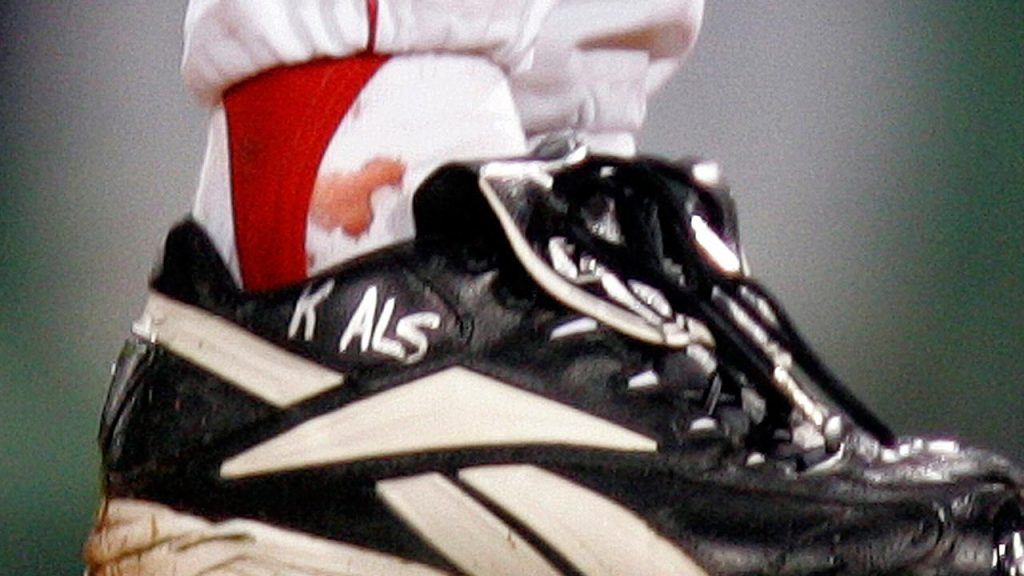
  • Lastly, the interesting case of Curt Schilling.  38.8% on the first ballot.  What does this mean?  He’s definitely never been accused of PEDs, had a great peak, was absolutely one of the best pitchers in the game for at least a short amount of time, has 3000 Ks but not 300 wins (or close to it), had an iconic moment in the bloody sock game, and was on two different WS winning teams.  A 127 career ERA+ puts him career 48th, even or ahead of plenty of hall of famers.  Why so few votes?  What statement is being made here?  I’m not sure entirely.  Maybe this is a combination of the “not a first ballot hall of famer” denials AND some sense of outrage against the outspoken Schilling from older media members who covered him and still vote primarily with their egos.

Back to the question of the article; is the HoF in trouble?  Well, yes and no.

No because I think Biggio will be elected next year, along with two more big names who have never had a schred of PED accusations (Maddux and Glavine).  And you can see guys in each of the subsequent years easily being elected (Randy Johnson and Pedro Martinez in 2015, Ken Griffey Jr in 2016, Pudge and Manny in 2017 unless there’s still PED outrage at that point.  And that ensures there’s ceremonies with who should be absolute no-brainer electees each year for the next few years.

But, Yes because Cooperstown and the Hall itself are not always profit making endeavors, and having an election year without any recently retired players is going to mean a massive drop in income for the town and the hall.  Reportedly the museum has lost money in 8 of the last 10 years.  That coupled with the continued recession, and we could see some serious financial hardship in upstate New York in 2013.  Will it be enough that the BBWAA agrees to one of the litany of election system changes being proposed on the internet?  Maybe, maybe not.  But if this continues into 2013, yeah we may see something change.  Perhaps a panel of judges versus the BBWAA electorate (similar to what the NFL does) makes sense in the long run.  The point is that the HoF NEEDS to have a compelling election class in order to stay profitable, and may change its entry mechanisms to guarantee attendance (and thus revenues) each year.

One thing I do agree with; I think writers who purposely send in a blank ballot should be removed from the voting system.  You just can not look at this list of players and tell me there’s not at least ONE deserving candidate.  A blank ballot does nothing but hurt the chances of legitimate players to be honored and should be interpreted as a writer who does not take the process seriously.

Murkier are my thoughts on entrance requirements to the BBWAA in general.  Should we allow in all these internet baseball writers?  I think that a lot of the moral outrage and indignance expressed by frequent baseball bloggers over the BBWAA and the “old school” writers is simply mis-placed jealousy that they (the internet blogger) are not eligible to vote.    There is a section of the BBWAA constitution that talks about internet writer acceptance and the requirements don’t seem that unfair.  The intent of the organization is to find people who “cover the game” but also people who actually “attend the games,” interview players and coaches, and are generally members of the traditional media.  People who have access and who understand more than the average baseball blogger, who interprets box scores and statistics websites to pass judgement.  I’m ok with the limitations set out as thus.

Two other quick thoughts:

  • Yeah, we should probably increase the 10-player limit.
  • Yeah, we should probably force writers to reveal their ballots (much as the major awards now do).

Until next year.  One thing is certain; much like relief over the end of the election news, I’m relieved that no more HoF articles will be appearing.

How good is an “All Virginia” team?

16 comments

Is Virginia Native Justin Verlander the best ever player from the State? Photo unknown via rumorsandrants.com

Recently, I read a pundit who talked about how a huge percentage of baseball prospects come from relatively few states; California (mostly Southern California at that), Texas, Florida and Georgia.  The Baseball America guys once talked about an “All North Carolina” team and how good it would be (BA is based in Durham, NC).  It got me thinking: how good of a team could you put together of prospects with ties to Virginia?   Having grown up in Virginia and having had the opportunity to play with and against a number of guys with pro ties over the years, I thought it’d be interesting to put together the “All Virginia Team.”

Using mostly the handy Baseball-reference pages, I looked up players who were either born in Virginia, went to a Virginia-based high school, or played baseball at one of Virginia’s universities.  There’s also the fantastic Baseball Cube website (www.thebaseballcube.com) that has very in-depth player databases searchable by high schools that shows every player on a professional or NCAA team by school, which sometimes has better records than B-R.com.  The players here had to be active in the Majors in 2012, though as it turned out there’s enough guys with Virginia ties to make a full starting team.  Feedback is welcome.

Here’s a roster:

Backups: Brandon Guyer OF (HS in Herndon, college at UVA), Rich Thompson OF (college at JMU), Jeff Baker Util (HS at Garfield in Woodbridge), Brandon Snyder IB/OF (HS at Westfields in Chantilly).  Erik Kratz C (college at Eastern Mennonite)

Ok, so we’re a little weak up the middle.  Zimmerman played SS in college but I can’t find a legitimate shortstop out there.  Rhymes was just signed by the Nats to a minor league deal and isn’t likely to make the opening day 25-man roster save for injury.  Inge hasn’t caught regularly in a few years.  But how about the hitting prowness of this lineup?   BJ Upton-Cuddyer-Zimmerman-Wright-Justin Upton-Reynolds is a pretty powerful group.  Coincidentally, I put in Kratz because I find it amazing that someone who played baseball at Eastern Mennonite is actually in the big leagues.  By B-R’s records, he’s the SOLE alumni of that university to have ever even played professional baseball.

Starting Pitchers:

  • Justin Verlander (born outside of Richmond, HS in Goochland, college at ODU)
  • Mat Latos (born in Alexandria)
  • Daniel Hudson (born in Lynchburg, HS in Virginia Beach, college at ODU)
  • Joe Saunders (born in Falls Church, HS at West Springfield, college at Va Tech)
  • Tim Stauffer (college at University of Richmond)

Backup starters: Danny Hultzen (born and raised in Bethesda, college at UVA); an exception to my “active in 2012″ rule but clearly the most high-profile tied-to-Virginia prospect in the game right now.  John Maine (born in Fredericksburg, HS in Stafford) had a decent stint starting for the Mets, but he’s yet to get back to the majors after a shoulder surgery in 2010).

A pretty good 1-2 punch, including arguably the best pitcher in the game.  Hudson has some potential.  Saunders is more of an innings eater lefty, but he’s made a pretty good career for himself already.  Stauffer had elbow surgery in August 2012 and probably isn’t ready for opening day, but he’s the best I could find.

Relievers:

Backup Relievers: BJ Rosenberg (born in Newport News), Jeremy Jeffres (born and HS in South Boston), Clay Rapada (born in Portsmouth, HS in Chesapeake, college at Virginia State).

Not bad depth here; I suppose Marshall could close, Bray be the loogy, Camp be an 8th inning guy, Eppley a 7th inning type and the rest be middle men.  I like how Sean Camp was born, raised, went to high school and played baseball in college without ever leaving Fairfax.


Other random Virginia School trivia:

What’s the best producing college in Virginia?   Pretty easily its UVA, with 117 pro players in B-R’s database and 30 guys reaching the majors.  Virginia Tech, ODU, Richmond and VCU are all grouped a bit behind UVA in terms of pro player development.  Amazingly little Liberty University has matriculated 59 players to the pro ranks.

At current, UVA has 6 active alumni in the majors.  William & Mary, ODU and Richmond have 2 each, and a slew of lesser baseball-playing universities have one each (all of which are mentioned above).

What’s the best producing High School in Virginia?  Pretty clearly the high schools in the Virginia Beach/Chesapeake area have been producing some serious baseball talent lately, but even the Upton brothers ended up going to different high schools.  Both Virginia HS in Bristol and First Colonial HS in Virginia Beach list 8 pro player alumni with 2 pros each.

Closer to home in Northern Virginia: Garfield has 7 total players with Pro experience in the database, 3  of which have MLB experience.  Robinson HS in Fairfax has 6 pros/3 MLB experince.  Fairfax HS also has the same; 6 pros, 3 with MLB experience.

Of course, these numbers pale in comparison to some of the baseball factories in the major baseball-producing states Florida and California.   Hillsborough HS in Tampa boasts 41 pro alumni and 10 with MLB experience, including Gary Sheffield, Dwight Gooden, Carl Everett and our own Elijah Dukes.  Lakewood HS in Orange county has 57 pro alumni and 12 MLB experienced players, though not nearly of the name quality of Hillsborough’s graduates.    Sarasota HS in Florida also boasts 57 pro player alumni, 14 MLB pros including our own Ian Desmond.  There’s a HS in Oakland called McClymonds that has two Hall of Fame alumni (Frank Robinson and Ernie Lombardi), a host of other famous names from 60s and 70s but which hasn’t generated a pro player since the mid 1970s.  Lastly Polytechnic HS in Long Beach has 47 pro alumni but an astonishing 18 guys with MLB experience, headlined by Hall of Famer Tony Gwynn and possibly future hall of famer Chase Utley.


Who is the Greatest player to have Virginia Roots?   You could make arguments for Verlander, Wright, Zimmerman or the Upton brothers (probably in that order), but how about one Lou Whitaker, born in Brooklyn but somehow ended up matriculating from HS in Martinsville, Virginia, where he was drafted in the 5th round by Detroit.  Billy Wagner (born in Tannersville, HS in Tazewell and college at Ferrum) is another guy from Virginia with a long, successful career.  Long-time Oriole Al Bumbry was born in Fredericksburg, went to HS in King George and attended Virginia State.

However, there’s only one Hall of Famer with Virginia Roots that I can find: Eppa Rixley, born in Culpepper, HS in Charlottesville and he pitched for UVA before being signed as a free agent by Philadelphia.  He ended up pitching 21 years in the majors and was selected to the Hall of Fame by the Veteran’s committee in 1963 shortly after he died.


(Editor’s Note: you may feel free to stop reading now; Below here is all pretty obscure stuff and only probably interesting to myself and my dad, or people who happen to grow up in the area and are familiar with Vienna baseball.  In fact, I kind of got into a rat-hole of reminiscing for this section, thinking back to the good old days.  I won’t be offended :-) .

My Personal experiences growing up and playing in Northern Virginia: I played Vienna youth leagues from 1977 til 1989, played in Vienna Babe Ruth and graduated from James Madison HS in Vienna in 1989 for reference.

The best player from Northern Virginia in my youth experiences was one Pete Schourek, who was two years older than me and graduated from Marshall HS in 1987.  An enduring memory from my youth was watching Schourek blast a home-run to the townhouses beyond the RF fence at Marshall against Mike Nielsen (the ace of my own high school) in 1987.   Schourek turned down a scholarship offer to Auburn and took 2nd round bonus money from the Mets.   Schourek’s career lasted 10 years in the majors and his best season was an 18-7 year that resulted in a 2nd place Cy Young finish.  The word at the time was that the Dodgers wanted to draft him as a hitter; his power from the left-hand side was quite superior.  I often wonder if his would have made it as a hitting prospect; he had such natural lefty power in high school.

Other notable pro players from the 3-4 year period right around my draft year who I played against at various points:

  • A.J. Hernandez, who was the star of the local Herndon/Reston/McLean Babe Ruth all-star teams that had Vienna’s number year after year in the late 80s.   He played one year of low-A ball.
  • David Carroll, a tall, rangy left-hander who dominated Chantilly baseball for years.  He was a 6th round pick in 1991 and made it to AAA before washing out.  We played against Carroll’s teams in the Credit Union in the early 90s.
  • Lonnie Goldberg, who was on the same HS team as Schourek at one point; played at George Mason, drafted in the later rounds and played 5 seasons of minor league ball.
  • Bill Pulsipher, who was a dominant player in the area and was drafted in the 2nd Round by the Mets in 1991 out of Fairfax HS.  He made the Mets rotation by age 21 and looked decent before getting injured and spending the rest of his MLB career struggling in the bullpen.  His b-r.com page shows his drive; he was still playing professaional Indy ball as late as 2011.  His 1991 Fairfax HS team also had one Brian Buchanan, who was a 1st round draft pick after attending UVA and played 5 years in the majors.  Imagine; one high school team with a 1st and a 2nd round draft pick in this area.  Amazingly Fairfax HS didn’t win anything more than its District during this time.
  • Robin Jennings: a 1990 graduate of Annandale who did a year of community college and the got drafted under the old Draft-and-Follow rules by the Cubs.   He played in parts of four major league seasons spread across 12 minor league seasons, including his last minor league season with the Washington organization in 2007 at the age of 35, fully 4 years after last appearing in a uniform.

Goldberg and Schourek, along with Marshall’s #2 pitcher Steve Makranczy led Marshall to back-to-back state championship games in the late 80s.  Steve played on a number of fall teams with me and still plays in the local DCMSBL league.  Schourek still suits up for teams in the Industrial League, and according to a couple of random friends, plays in an ultra-competitive basketball league along side other former Division 1 players in the area.

Speaking of my own HS of the time; I was always amazed we didn’t fare better.  Thinking back to 1988, my HS started an entire team of guys who either went pro or played division 1 somewhere.  The 3 leading pitchers played at Radford, BYU and GMU respectively, our starting catcher went to BYU.  Our 1B played at William & Mary.  Our middle infield combo both played at UVA.  Our 3rd baseman was a full ride player at NC State.  In the OF, one guy played at GMU and went pro, another guy played at Montomery College.  That’s a LOT of talent on one HS team for this area, and they never advanced in the Regional tournament.

The best local player of my draft year (1989) was a fellow by the name of Doug Newstrom, born in Quantico and who went to HS at W.T. Woodson in Fairfax.  He went to Arizona State and was a 7th round pick after his Junior year but never made the big leagues.  Newstrom was the cornerstone of a Woodson team that went undefeated in 1989 and won the state championship (they also won in 1990). My personal experience playing against Newstrom; the fall-league baseball teams of that time period were essentially city-specific all-star teams of the guys who didn’t play football, and the competition was great.  The Woodson varsity team to-be in the spring of 1989 got all their guys together to get a “test run” of their team and they romped to the fall league 16-18yr old championship game.  Our Vienna-based team was a rag-tag collection of guys who attended Madison, Marshall, Oakton, Paul VI and O’Connell but who had Vienna zip codes, but we were good and we also reached the championship game.  It was on a cold November day at Falls Church High School.   We faced off against Woodson’s ace (Mark Bauch, the same guy who would go 13-0 the following spring en route to the Virginia State championship) and promptly knocked him out in the first inning without retiring a batter, racing to a 6-0 lead.  Our pitcher (Jeff Ford, who attended Oakton and played college ball at a small school somewhere) tried to keep the Woodson team at bay throughout the 7 inning game, but they fought back.  In the bottom of the 7th trailing 6-5 and with two outs, the Woodson team put a couple guys on and Newstrom came to bat.  Newstrom connected on a towering drive to right field; I thought he had just hit a walk-off homer.  Our right fielder (Steve Paasch, another Oakton graduate) reached over the RF fence, jumped and caught the ball for the 3rd out and the championship.  It was one of the two or three best games I was ever a part of.

Best player from my high school Alma Mater (James Madison HS in Vienna): probably one Mike Wallace, who was picked straight out of high school, was in the majors by 22, and out of the majors by 26.  Wallace seems like he should have played longer; he was a lefty with decent numbers both in the majors and in his final seasons in the minors.  But he was retired at 28.  He signed on with MASN as a baseball pundit in 2011.  However it is worth mentioning one Jay Franklin, who graduated from Madison HS in 1971 and was the 2nd overall pick in that year’s baseball draft.  He tore up the Northwoods league and earned a call-up to the majors as an 18 year old.  I’m guessing he got hurt though, because he missed the entire 1972 season.  He appeared in four more minor league years before retiring at age 24, having just reached AAA.  Another guy who seems like he should have played longer.

Baseball-reference.com’s records are somewhat spotty on my high school; they list only 7 pro players and 2 major leaguers from my HS, but we know there are several more with pro experience, just counting guys I’ve directly played with (among others; Chris Burr and Billy Emerson).  BaseballCube lists 28 guys in their database, though not all played pro.   David Driver with The Vienna Patch did an article on Wallace in October 2012 and discussed several other Madison grads who have made the majors, some of whom are not correctly attributed in B-R.com either.   One such player is Jim McNamara, who I’m familiar with because he used to substitute teach while I was attending the high school and he was famous for being manipulated into wasting an entire period talking about his baseball playing days instead of teaching any material.

Best player ever from my college Alma Mater (James Madison University): probably one Billy Sample, born and raised in Roanoke and who played at JMU from 1974-1976.  He was drafted in the 10th round, played for a decade or so and hung ‘em up in 1986.  Mike Venafro was born in Takoma Park, went to Paul VI in Fairfax and then JMU before putting together a 7-year career in the majors, retiring back in 2006.  JMU is actually a pretty decent baseball school; we’ve made the NCAA tournament 11 times and several times recently, and made the College World Series in 1983 (getting blasted by eventual champion Texas and Stanford for a 2-and-out appearance; the wikipedia page is funny, JMU has no “notable players” listed.  Coincidentally; look at some of the talent playing in that tournament: Bonds, Schiraldi, Clemens, Larkin, Sabo, McDowell, Incavilia.  Three future Hall of Famers).   However I can only find one JMU alumni who appeared in the majors in 2012; the aforementioned Rich Thomas, who appears to be a 4th/5th outfielder.

Best player I played with or against post youth/High School: After high school we played in a local amateur league for a year, then put together an entry into the Credit Union, which was a powerful amateur league in the area (which is now part of the Industrial League).  After a brief baseball hiatus spent mostly playing softball (there was no 19+ league in DCMSBL at the time; you had to be at least 30 to play in the league for many years), I’ve been playing consistently in the DCMSBL since 1998.

In the early 90s, we had a local guy named Kevin Gallaher pitch for us periodically.   He had Vienna roots, went to O’Connell and then played at St. Bonaventure (none of which btw is on his baseball-reference page but is on his baseball Cube page).   I got to catch Gallaher here and there and he had pretty good stuff.  Apparently his stuff got better his senior year at college and he was a non-drafted FA signee.  Gallaher made it to AAA before calling it quits at age 29.   His next move: to appear on the reality TV show “Married by America” (it didn’t work out: his bride-to-be left him at the alter).

In the Credit Union, we played against some serious talent, but I was too young to remember most of them.  A couple notable names that I do remember were Steve Norwood, brother of the infamous Buffalo Bills kicker Jeff Norwood, who played alongside his father Del Norwood on the Apple team.  Norwood was a local legend, a longtime coach at W&L in Arlington (he won 10 straight district titles in the 60s and 14 overall at the school; the field is named after him) and had to be in his 70s at the time but could still throw a knuckle-ball by the semi-pro calibre players of the Credit Union.   Local legend amateur player Pete Groves pitched against us in the league; he now leads the Fedlock teams that have won many national MSBL titles (he supposedly reached AAA but I can’t find any records of him playing pro).  We picked up a random guy off a wait list named John Bonfield who had pitched at Yale; he was one of the better pitchers i’ve ever played along side.  He could throw 8 different pitches but had a failing for “enforcing the unwritten rules of the game” at the most unideal time.  He once purposely hit a guy who he thought was stealing signs with the bases loaded in a close game.

In MSBL, the best players I played against didn’t necessarily have direct professional ties.  The Gouveia siblings (brothers of former Redskin Kurt Gouveia were feared sluggers in the league).  Garland Cooper was competitive against players half his age; he played in the Valley league but never pro.  Ira Holland (who played college at  Howard and was drafted before returning to school) was probably the most feared hitter in the league in the early 2000s; guys from that era still ask us about him.  The ace pitcher of my current team Jason Martino signed out of HS but only played one year of rookie ball before getting set aside by his drafting team.

Anyway; if you’ve read this far, I hope you enjoyed my own little personal history of playing ball in this area.

Obligatory Class of 2013 Hall of Fame opinion piece

8 comments

Roger Clemens; is he a Hall of Famer or an opportunity for writers to make a PED statement? Photo unknown.

Obligatory Class of 2013 Hall of Fame opinion piece.

The 2013 Hall of Fame class ballot was released in Late November, on BBWAA’s site.   Here’s the 2013 class on Baseball-Reference.com, along with relevant career stats and past voting results.

As we’re about to read, over and over again from every writer in the Baseball world, this is the Steroid-era ballot.  Several of the biggest names of the era are on the ballot.  Just in case you were wondering who has or hasn’t been officially linked to PEDs, here’s a handy guide for your ethical dilemma.

My Previous posts on the same topic:

I typed up such exhaustive opinions on a number of candidates from the two previous versions of these posts, that I won’t repeat them here.  Instead i’ll just state below, of the returning candidates this year here’s who I’d vote for and who I wouldn’t in list form.

Returning Candidates I’d vote for:

  • Jeff Bagwell
  • Jack Morris
  • Tim Raines
  • Mark McGwire
  • Edgar Martinez

Returning Candidates that I would NOT vote for (my reasons mostly are stated in the 2012 class post referenced above):

  • Bernie Williams
  • Alan Trammell
  • Lee Smith
  • Larry Walker
  • Rafael Palmeiro
  • Don Mattingly
  • Fred McGriff
  • Dale Murphy

New Candidates in 2012 that I’d vote for, with some  discussion; Unlike a lot of opinions I state, my thoughts on the Hall of Fame have always been more driven by how a player “seems” to be in the pantheon of baseball history.  I don’t like to get into the same stats-driven discussions that other writers do.  So and so had a career WAR of X, or a career ERA+ of Y, which makes him better than this other guy.

  • Barry Bonds: A transcendent player before any use of “the cream” or “the clear,” this 7-time MVP is clearly in the pantheon of the greatest players of all-time.  The best 5-tool player since Willie Mays, the only thing that should have been standing in the way of unanimous voting is Bonds’ surly nature towards sports writers (several of whom would have “penalized” him by omitting him from first ballot status).
  • Roger Clemens: replace “7-time MVP” with “7-time Cy Young winner” and the Bonds argument essentially repeats itself with Clemens.  Normally we’d be talking about his place as one of the greatest right handed pitchers to ever play the game.  Instead we’re talking about how much of his later career was enhanced by virtue of foreign substances.
  • Mike Piazza: One of the best 3 hitting catchers of all time (Johnny Bench being the best, with Yogi Berra in the discussion), his purported “back acne” proof of steroid use likely costs him votes.  Which is just ridiculous, but that’s the nature of this ballot and the next 15 year’s worth of ballots unfortunately.
  • Curt Schilling: his career accomplishments don’t include a Cy Young award, but that wasn’t for lack of trying; he just happened to pitch in the same ERA as Randy Johnson and Johan Santana in his prime power.  But Schilling was a game-changing starter, an Ace who could get you the win.  He was one of the biggest “big game” pitchers out there.  And, his legendary playoff performances push him over the top for me.  Some will argue against him b/c he “only” had 216 wins or he “only” had a career 3.46 ERA.  He passes the eye test for me.
  • Craig Biggio: he wasn’t the flashiest player, but then again you can’t judge middle infielders the same way as you judge power hitters.  Biggio hit the 3,000 hit plateau, was a good combination of power (291 career homers) and speed (414 career SBs), and showed good defense (several Gold Gloves).  For one of the last career one-team guys, he makes the cut for me.

New Candidates that I would NOT vote for:

  • Sammy Sosa: 600+ career homers, and I can’t help but think that a good number of those were either PED or corked-bat assisted.  That’s probably completely unfair, but you can make a good argument that more than 150 of his career homers were likely “surplus” to his legitimate career capabilities.  He averaged 37 homers/season as he approached his prime, then suddenly averaged 60/season for four seasons.  Clearly Bonds’ 73-homer season is attributable to a single-season PED spike, but Sosa made a career of it.  There’s just no way for me to distinguish who the real Sosa was (he had a 99 OPS+ the year before his power spike) versus the PED enhanced version.
  • Kenny Lofton: I know lots of people view Lofton in the same breath as Rickey Henderson in terms of quality lead-off hitters, but to me he was just a vagabond who kept looking for work year after year.  He played for 12 teams by the time he hung them up.  Perhaps I’m not really “remembering” his time in Cleveland, where he stole a ton of bases and set the table for that powerful lineup.   He had a handful of gold gloves, a handful of all-star appearances.  I may be under-appreciating him a bit, but when I hear his name I don’t knee-jerk Hall of Famer.
  • Everyone else first time eligible, the best player of which is probably David Wells.  Wells basically had two good seasons (the only two times he received any Cy Young consideration) and otherwise was a rubber-armed hurler who prided himself on making 35 starts despite being in god-awful shape (as noted extensively in Joe Torre‘s book The Yankee Years).

I’d be shocked if anyone else on the first time eligible list got enough votes to even stay eligible for 2014′s ballot.

Critics may state that my fake ballot has some inconsistencies; how can I support a vote for Biggio but not for Trammell?   How can you vote for McGwire but not Sosa?  How can you vote for Edgar Martinez but not Larry Walker?  How can you vote for *any* PED guys but shun Sosa and Palmeiro?  How can you support Morris but not support Wells?   All these are good points; good arguable points.  Maybe if I had an official ballot I’d have a more serious discussion with myself about these points.  All the above thumbs-up/thumbs-down opinions are mostly knee jerk, did the guy “feel” like a hall of famer as opposed to a full statistical analysis.   As I covered in my Jack Morris piece, I think its ok to have slightly lesser players who contributed more to the baseball pantheon than slightly better players statistically who had no real lasting impact on the game.

And for now, that’s good enough for me and my fake Hall of Fame ballot.

Jack Morris, Statistics and the meaning of the Hall of Fame

10 comments

Its Hall of Fame ballot time. Let the Jack Morris arguments start-up again. Photo John Iacono via si.com

(coincidentally, this is the exact same picture and exact same caption as I used last year.  Nothing w/r/t Morris has changed).

Every year about this time comes the inevitable Jack Morris battles when it comes to deciding whether or not he’s a Hall-of-Famer.  Those who argue against him (and argue they do, rather loudly, as exemplified by writers such as David Schoenfield, Rob Neyer, and Joe Posnanski and easily found at nearly any baseball blog, almost all of which are extremely anti-Morris) typically point at Morris’ career ERA, his ERA+, his career WAR and then argue that he was actually a mediocre pitcher.  They have all sorts of arguments against “pitching to score” and even make arguments that middling starters from the 90s are actually “better” than Morris.

My one overriding opinion on the whole “Hall of Fame” worthiness argument is that the stat-inclined seem to be missing the whole point of the “Hall of Fame.”  It isn’t defined as the “Hall of the Best  Statistically Significant players above some arbitrary benchmark.”  If it were, then arguments comparing Morris to Rick Reushel or Brad Radke (both of whom have higher career WARs than Morris) would be important.  (side note: Ironically, this is the same distinction that these people generally also miss when talking about the “Most Valuable Player” award; it isn’t the “Best Player” its the “Most Valuable,” and therefore you can’t just give me a gazillion stats that tell me why Mike Trout had a better season than Miguel Cabrera and call me an idiot for saying that Cabrera was the MVP this year.  How can you be the MVP of a 3rd place team that would have still been a 3rd place team with or without you?  How can you be the “most valuable” player in the league but have zero impact on your team’s standings or the playoffs?  But I digress).

No; its the Hall of FAME (emphasis mine).  It should be the Hall of the most FAMOUS people in the game’s history.  And inarguably Jack Morris is more famous than either Reushel or Radke (since these two pitchers are often used in comparison).  And since its baseball writers themselves that a) remember Morris as being better and more famous than he was according to specific career-measuring stats like WAR, and b) do the voting themselves, its likely that Morris may very well get into Cooperstown despite other people feeling that he’s a lesser pitcher.  Its why a pitcher like Catfish Hunter has been elected already, despite his having even worse career numbers (in the sabre-slanted statistical categories that the new-wave know-it-all bloggers constantly refer to) than Morris.  I can’t recall ever reading one single article talking about how bad it is that Hunter is in the hall of fame, but it seems that EVERY single baseball blogger and columnist out there under the age of 30 has written multiple times about how its the death of the legitimacy of the Hall of Fame if Morris makes it in.  I just don’t get it.

A lot of these arguments seem to be driven by one stat: Career WAR.  People look at that one overriding stat and make their arguments.  My biggest problem with career WAR is its “accumulator nature.”  It rewards a healthy, mediocre pitcher who makes a ton of starts and accumulates a ton of strikeouts and wins and innings pitched. Meanwhile a better pitcher with a higher peak who ends his career earlier won’t “score” as high in career WAR.

The two pitchers in particular i’m looking at in the above paragraph are Bert Blyleven (career bWAR of 89.3) and Pedro Martinez (career bWAR of 80.5).  There is not one person in their right mind that would say with a straight face that Blyleven was a “better” pitcher than Martinez.  But, if you look at the WAR without context you’d argue that was the case.

Blyleven during his career, for those of us actually old enough to have seen him play, was a mediocre pitcher.  Plain and simple.  In 22 seasons he made 3 All Star teams and received Cy Young votes only 4 times, never coming close to sniffing the award.  Morris on the other hand, received Cy Young votes in 7 of his 18 seasons and started the All Star game 3 times.  Morris STARTED more all-star games than Blyleven ever made.  Blyleven was traded for relative nobodies a number of times in his career, and the prevailing press of the day referred to him as a middling pitcher.  Only after he’s retired, when we “discovered” statistics like ERA+ and FIP and realized he was better than his numbers at the time indicated did we make the push for him into the HoF.

Why do I point out All Star appearances and Cy Young voting?  Because in the context of the Hall of Fame discussion, they’re important.  You can quibble about the meaning of all star appearances (certainly they’ve been diluted in the last 20 years) and cy young votes all you want, but the fact is this: if you REALLY want to know who the writers felt were the best players of their day, then all star appearances and Cy Young/MVP voting is vitally important.

But here’s my main point: why can’t the Hall recognize BOTH the likes of Blyleven (better than people realized at the time) AND also recognize Morris (overrated statistically but still historically significant and thus “famous” enough for enshrinement)?  Why do people devote so much time towards disparaging the case for Morris?  Yes, Morris gets undue credit for his fantastic 1991 World Series Start, for leading the 1984 Tigers, for leading the 1980s in Wins.   If you ask any player or manager in the game at the time, they’d likely tell you Morris was one of the best.   But these are all the same aspects that make him “Famous” and thus a likely candidate for the Hall of FAME.  These are the same reasons why a fine pitcher like Curt Schilling, who also was part of some iconic moments in the game’s history, also should be in Cooperstown (in my opinion).

I just feel like the nature of sports writing has come to the point where people use statistical measures as the be-all, end-all proof of everything in baseball.  And then they forget that the game is played by humans, that there are ALWAYS some things that cannot be measured, and just because some statistic has been cheapened in today’s game (I’m thinking of the pitcher Win) does not mean it was always cheapened.  I know there’s people out there who wrote doctoral thesises about how Morris never “pitched to score.”  But how do you measure a pitcher who knows he’s gotta go 9 innings, who knows he’s not getting pulled in the 6th inning for a lefty-on-lefty matchup, who knows he’s more likely to throw 160 pitches than 95?  I absolutely think there’s something in the “pitching to score” arguments, if only because I have played with pitchers who absolutely would coast through games when they got a lead, or who would “take innings off” against in order to preserve their arm to go 9 full innings.  Unless you had a biometric measure on every single pitch Jack Morris ever threw, correlated to the weather, the score, his team’s bullpen status and his manager’s whims, you can NOT tell me that Morris did or did not pitch to score, let up with a big lead, or cruise through innings knowing he may have to go 9 on a 100 degree day.  Just because you can’t prove something mathematically doesn’t mean it still doesn’t exist.  Tom Verducci did an excellent piece recently on Morris and his innings pitched and complete games in context, somewhat related to this topic.

Morris comes from a transitionary time in baseball, before specialized relief pitchers, before the power of the 90s and before PEDs.  He comes from a time severely under-represented in the Hall (think of players like Dale Murphy, Alan Trammell, Denny MartinezOrel Hershiser and Bret Saberhagen: these were the stars of the 80s and some of them barely got 2% of the HoF vote), a side-effect of the ridiculously talented players we saw in the 90s and thus victims of the inevitable comparisons, falling wanting.  He holds an important place in the history of the game, in the narrative of the 1980s, and of the fantastic 1991 World Series.  Cooperstown is a museum, not a spreadsheet.

Call me ignorant, call me old school.  Whatever.  Maybe I’m just tired of the negative rhetoric.  I say “Elect Jack Morris.”

MLB 2012-13 Off Season calendar

2 comments

Just as an FYI, I’ve created a link to a spreadsheet of key events, dates and deadlines for this coming MLB off-season.   A quick summary of those dates is listed below.  With the new CBA and new rules regarding contracts and options, I still have some guesses as to when the exact date for some contract specific items are.  Feel free to comment/provide feedback if you know the exact date.

Bolded/Italicized Events are post-2012 season awards, official or otherwise.

Date Event Nats Specific Impact
Oct 19th, 2012 MLB Comeback Players of the Year AL and NL Adam LaRoche possibly getting some votes?
Oct 23rd, 2012 Sporting News Comeback Players of the Year AL and NL Dunn, Posey winners
Oct 25th, 2012 Fielding Bible Awards given
Oct 28th, 2012 Roberto Clemente Award given Zimmerman nominated
Oct 28th, 2012 Last actual day of 2012 World Series; official end of 2012 season n/a
Oct 29th 2012 Official start of FA period (12:01am the day after the last game of the WS) LaRoche, Jackson, Burnett, Gonzalez, Duke, DeRosa
October 30th, 2012 Rawlings AL & NL Gold Glove Announcements Desmond, LaRoche are finalists
Nov 1st, 2012 Team and player options must be decided three days after the end of the World Series.  10/31/11 at midnight LaRoche, Burnett have options from the Nats.
Early November? Clubs have to re-set their 40-man rosters, moving all 60-day DL players back to active.  Happened in the past about 11/9.  May be changed date w/ new CBA
Nov 2nd, 2012 5pm: Deadline to make Qualifying offers for your own Fas (average of top 125 salaries or $13.3M for 2012).  5 days after end of WS Nats likely to make Qos to both Jackson and LaRoche, neither of whom is likely to take the deal and thus guaranteeing the Nats draft pick compensation if we lose both guys.
Nov 2nd, 2012 HoF “Veterans Committee” releases ballot.  Officially announced12/3/12
Nov 3rd, 2012 5 days after WS ends: Free agent filing period and exclusive negotiating window ends at 12:01 a.m. ET. Free agents can sign with any team. LaRoche, Jackson, Burnett, Gonzalez, Duke, DeRosa
Nov 3rd, 2012 Free Agency granted to all eligible Minor League free agents (5 days after the end of the WS).  Eligibility done on service time; 6 years ML service for college draftees or 7 years ML service for HS draftees or free agents under the age of 18. http://www.baseballamerica.com/blog/prospects/2012/11/minor-league-free-agents-2012/ has full list; notable names include Arneson, Pucetas, Severino, VanAllen
Nov 4th, 2012 Wilson Defensive Player of the Year awards, given by MLB to best defensive player on each club. Adam LaRoche wins the award for the Nationals.
Nov 5th, 2012 MLBPA announces “Players Choice” awards: Player of the year, Comeback Player of the year, etc No Nats awarded MLBPA’s version of the BBWAA awards.
Nov 7th, 2012 BBWAA Award Nominees announced on MLB networks
Nov 7-9, 2012 GM Meetings, Palm Springs, California for 2012 Rizzo may be laying groundwork for big FA signings.
Nov 8th, 2012 Last day for players to accept arbitration from current club. Would the Nats offer arbitration to its Fas?
Nov 8th, 2012 Louisville Slugger Silver Slugger Awards LaRoche, Desmond likely candidates.
Nov 9th, 2012 12 Days after WS ends: Players must accept or reject Qualifying Options LaRoche only Natioanls FA to get a QO.
Nov 12th, 2012 AL, NL Jackie Robinson Rookie of the Year Awards Harper or Willey?  We’ll see if Harper’s great finish gets him the award.
Nov 13th, 2012 AL and NL Manager of the Year Johnson should get the NL manager of the year for the Nats winning 17 more games than 2011.
Nov 14th 2012 AL and NL Cy Young Gio Gonzalez in the discussion but likely to lose out.
Nov 15th 2012 AL and NL Most Valuable Player No real Nats MVP candidates; perhaps LaRoche gets some top 5 votes.
Nov 15-18th, 2012 WBC Qualifier #4, Taiwan (Chinese Taipei, New Zealand, Phillipenes, Thailand)
Nov 15-19th, 2012 WBC Qualifier #3, Panama City (Brazil, Columbia, Nicaragua, Panama)
Mid November, 2012 Sporting News Executive of the Year announced I think Mike Rizzo is NL GM of the year.
Mid November, 2012 Owners Meetings, ? Location for 2012
Nov 20th, 2012 Day to file reserve lists for all Major and Minor League levels.  In other words, Last day to add players to 40-man to protect them from the Rule5 Draft A host of rule-5 eligible decisions pending for Nats; Rosenbaum, Karns, Kobernus, Hood, etc.
Nov 30th, 2012 Midnight: Deadline for teams to Tender contracts to arbitration eligible players.  If not tendered, those players immediately become free agents. Lannan, Gorzelanny, Flores possible non-tenders here.
Early December, 2012 Last day to request outright waivers to assign player prior to Rule 5 Draft
Dec 3rd-6th, 2012 Winter Meetings, Nashville, TN for 2012
Dec 3rd, 2012 HoF “Veterans Committee” officially releases ballot that was made public 11/2/11.
Early December, 2012 Baseball America announces its Executives of the Year
Dec 4th, 2012 MLB Balloting results announced for Hall of Fame Ford C. Frick Award for excellence in baseball broadcasting
Dec 6th, 2012 Rule 5 Draft.  Occurs at Winter meetings Nats are likely to at least participate in the Rule5 draft, but their draft position leaves them picking last of the 30 teams.  A utility infielder or a bullpen arm could be had here.
Dec 31st, 2012 Deadline for BBWAA ballots for HoF voting.
Jan 9th, 2013 Hall of Fame BBWAA voting announced; the HoF class of 2013.
Jan 5-15, 2013 Salary arbitration filing period Nats could have as many as 10 arbitration cases to settle (but more likely 7 or 8).
Mid January 2013 Salary arbitration figures exchanged
Feb 1-21, 2013 Salary arbitration hearings (actual hearing date per player picked at random)
Mid February 2013 Mandatory Spring Training reporting date for Pitchers and Catchers
Mid February 2013 Voluntary Spring Training reporting date for non-pitchers and catchers
Early March 2013 Contracts of unsigned players who are not yet eligible for Arbitration may be renewed
Mar 2-5, 2013 WBC First Round, Pool B in Taiwan (Korea, Netherlands, Australia, tbd)
Mar 2-6, 2013 WBC First Round, Pool A in Japan (Japan, Cuba, China, tba)
Early March 2013 First Spring Training Game for the Nats
Mar 7th-10th, 2013 WBC First Round, Pool C in Puerto Rico (Venezuela, Puerto Rico, Dominican Republic, tba)
Mar 7th-10th, 2013 WBC First Round, Pool D in Phoenix (USA, Mexico, Italy, tbd)
Mid March 2013 Last day to place a player on unconditional release waivers and pay 30 days termination pay instead of 45 days.
Mar 17th-19th, 2013 WBC Championship round, San Francisco, CA
Late March 2013 Deadline to request unconditional release waivers without having to pay the player’s full salary
March 31st, 2013 2013 Season Opener
April 1st, 2013 Traditional Opening Day (Cincinnati) Nats open at home to Miami
April 15th, 2013 Jackie Robinson Day

Johnny Damon: Hall of Famer? Not for me

5 comments

Johnny Damon during his Boston reign. Photo unknown via metsmerized.com

With recent news that Johnny Damon has convinced another team (for 2012 its the Cleveland Indians) to give him more at-bats so that he can continue his march towards the magic 3,000 hit plateau, and with today’s Rob Neyer column that already assumes Damon is a hall of famer and asks, “Which cap will be on his Cooperstown plaque,” I have this to say:

How is it possible that Johnny Damon is a hall of fame player?

Here’s a few metrics for you:

  • All Star Apperances: TWO!  Two times he’s been considered amongst the best 60 or so active players.
  • Top 5 MVP votes: Zero
  • Top 10 MVP votes: ZERO
  • Top 20 MVP votes (as in, one of the 32 writers involved threw him a 10th place vote here and there): 4 times.
  • Career OPS+: 105.  As in, compared to his fellow players he’s only about 5% better at the plate.
  • Career OPS: .789, below the .800 line of respectability for modern day hitters.
  • Defensive awards: Golden Gloves and Silver Sluggers: Zero.

I’m sorry, but in what world is this a hall of fame career?  Damon is the epitome of an accumulator, averaging nearly 700 plate appearances and 188 hits per year over his career and staying relatively healthy (never playing less than 140 games per year since his debut in 1996).  105 OPS+!  If he was a gold-glove calibre middle infielder maybe that’d be acceptable, but he’s a sub-par defensive outfielder who has never sniffed a defensive award.

I also go back to my tried-and-true argument related to All Star appearances and MVP voting; how can a player possibly be considered one of the greatest players of all time if he rarely, if ever, was considered one of the best players of his own time, on a year to year basis?  Great players earn all star appearances even in down years, while middling players never earn them.

For everyone who has vehemently argued against Jack Morris, essentially on the strength (weakness) of his career ERA (and by implication, ERA+) … I wonder who hypocritically is arguing FOR Damon.  Oh wait; Rob Neyer is.

Am I crazy?  Who out there thinks that Damon is worthy of a copper plaque in Cooperstown?

(caveat: after reading the comments in the Neyer article, it occurred to me it was possibly a spoof.  As in, an entire tongue-in-cheek article.  If so, my reading comprehension skills are at fault and I rescind this criticism.)

Written by Todd Boss

April 17th, 2012 at 6:58 pm

Nats Off-season News Items Wrap-up 2/19/12 edition

2 comments

RIP Gary Carter, one of only two Montreal Expos enshrined in Cooperstown. Photo via garycarter.org

This is your semi-weekly/periodic wrap-up of Nats and other baseball news that caught my eye.  I try to publish this about weekly or if it gets up to about 1500 words, so that it’s not to voluminous.

Nationals In General

  • Mark Zuckerman writes about a favorite topic of mine w/r/t the current Nats 40-man roster and its construction.  See here for a similar discussion of the 2011 Nats (along with analysis of the 8 playoff teams) from last October.  Clearly the more players you’re using as your “primary 15″ that were developed in house, the better you’re doing as a player development machine.  But there’s also the measure of cashing in those prospects in order to acquire resources.  (Coincidentally the “primary 15″ of a team means its 8 starters in the field, 5 rotation members, setup man and closer).  By last year’s end, the Nats were starting 9 of these 15 as players developed in house and were down to just three acquired via FA/Waivers.  That’s a massive step up from just a few years prior, when most of the team was FA/Waiver pickups.  We’ll revisit this topic once the 25-man rosters for teams are finalized and play starts in April.
  • The Washington Franchise leads the league in employment of Negative WAR players over the past decade.   A staggering 31% of our players in this time have shown negative WARs per season.   This is not surprising given what we know of the construction of the first few iterations of the Nationals; Zuckerman has done studies in the past related to the staggering number of players the Nats have played at the MLB level who, after leaving us, never appeared in a major league game again.   The last time Zuckerman did this study that I could find was Nov 2010, when he identified 59 such players just since 2005.  I don’t know what percentage that is of all players who appeared for us in that time-frame, but it seems high.  (note: I just did some analysis and will return with a blog posting on this topic soon).
  • Back to the negative war topic, here’s a list of such negative WAR seasons for the 2011 iteration of the team: Alex Cora, Jesus Flores, Chris Marrero, Steve Lombardozzi, Matt Stairs, Livan Hernandez, Doug Slaten, Brian Broderick, Yuniesky Maya, Collin Balester and Chad Gaudin.  That’s 11 of the 44 players who appeared in the majors for us last year, or exactly 25%.  So we’re not exactly out of the woods yes; clearly we continue to employ a ton of players who end up hurting the team.  (For the record I used bWAR instead of fWAR for this, since its a bit easier to see that data.  But i’d guess the analysis would come out the same for either measurement method).
  • Another article on Edwin Jackson and pitch-tipping.  Is it possible that a player could play for years and never have a hitter teammate tell him he’s tipping his pitches?  I think it depends on what team the pitcher plays for.  Mike Mussina infamously was told he tipped his change up once he moved to the Yankees, and he made the adjustment that enabled his stellar 2006 season.  Maybe the team should have just kept its mouth shut about their thoughts and not told every reporter in every press conference that they think their new $11M pitcher is flawed.

Free Agents/Player Transaction News

  • Interesting thoughts on whether “4-A” players really do exist and how to quantify them from Fangraphs.com.  Read through the comments for some better thoughts.  For me, this issue touches on two opinions I’ve been growing.  1st; yes there does exist 4-A players; the Nats have shown to have a slew of them recently.  Guys whose minor league performance literally disappears upon reaching the majors.  I don’t know how to quantify it but there’s clearly guys who bounce freely between the two levels and seem destined to max out as such a 4-A player.  2ndly: Is AAA now a “lesser” league than AA?  Perhaps not with all systems (for example, Tampa Bay insists all their prospects play full seasons at each level, as does Atlanta), but for the Nats we’ve seen some interesting promotion behavior lately.  Stephen Strasburg got hit harder in AA than in AAA during his brief minor league apprenticeship, but the difference is rather slight.  But watching the games you got the distinct feeling that his AA competition was getting decent wood on the bat, while in AAA it was like he was pitching to little leaguers.  This goes to my theory that AAA is morphing into a “spare parts” league, where teams stash backup utility players (mostly catchers, middle infielders, relief pitchers) who are on the 40-man and can quickly be recalled to fill a spot, while AA is the place where your rising prospects play full seasons in preparation for promotion to the majors.  Jordan Zimmermann never pitched a AAA inning, rising from a full season in Harrisburg straight to our rotaton.  Strasburg probably could have done the same.  Will we see Bryce Harper jump straight from AA to the Majors or will the strategy of Mike Rizzo going forward be more Tampa-esque, requiring each prospect to “master” each level rising upwards?
  • A surprise team lands Yoenis Cespedes, namely the penny-pinching Oakland A’s in a 4yr/$36M deal.  4 years and $36M!?  That’s more than they will spend in payroll on their entire TEAM in 2012.  Maybe.  That’s a lot of cash for a completely unproven, if talented player who I’d say is not entirely MLB ready.

General Baseball News

  • Excellent article on the Demise of the Spitball and other Doctoring techniques from Grantland’s Jonah Keri, whose writing I’ve always liked and who is working on a historical retrospective on the Montreal Expos franchise.   Keri’s article talks about the Kenny Rogers pine-tar incident in the 2006 World series, but I don’t consider that “doctoring” the baseball.  That was simply using pine-tar to get a better grip on a cold, wet night.  Not that its legal; just different from the more conventional definition of a “spitball.”   Keri’s conclusion as to why the spitball has disappeared is attributed to the invention of the modern split-fingered fastball (attributed to Bruce Sutter) and to the lack of proper teachers (the craft of doctoring the ball has been handed down generation to generation by pitching coaches).  But honestly I believe the decline is more attributable to two other factors; the lingering stigma of getting caught being higher now post-PED era than every before, and the fact that the true “spitball” is damn difficult to throw (imagine trying to “throw” a baseball with the same motion you might use to squirt a pumpkin seed from your fingers?  That’s what throwing a spitball is like to a certain extent).
  • In typical modern day sabrematrician blogger nerd fashion, someone at a stats-oriented site goes about attacking another writer’s observation column.  In this case, it is someone at Baseball Prospectus attacking the Verducci Effect.  I can’t argue with his stats (other than to quibble with the lack of publication of his control group for comparison), but I suspect he misses the point.  I don’t think Verducci passes this list off as a statistical study; i think its passed off as a subjective list of candidate pitchers who HE THINKS may regress.  See, there’s the rub.  He’s already done the breakdown from the “control” group of pitchers who may be candidates for his study but whom he thinks may not be in jeopardy.  So I’m presuming that, because of this pre-selection and expression of opinion this is no longer a statistical study but an opinion piece.  I’d liken it to analyzing statistically the results of an amateur scout’s player recommendations; sure you could run one in order to judge a scout’s prognostication ability, but there’s so much variation in what happens to players once they sign that it wouldn’t be meaning ful.  I guess my take away is this: Verducci does a pretty durn good job of predicting red-flags for these pitchers (84% over the past 5 years), that maybe we should just recognize his study for what it is, and not overanalyze it to try to discredit it.
  • A nice article about another favorite topic of mine: the relationship between Wins and salary.  The familiar narrative is that payroll discrepancies are killing modern baseball, and to a certain extent I do agree; its no coincidence that the high payroll Yankees have only missed one playoff appearance in the nearly-20 years since the wild card era began.  But the ratio of wins to salary is dropping.  Why?  Because several teams have sacrificed several seasons to basically reset and start over.   Tampa Bay and Texas are the best recent examples, but we’re also seeing remnants of this theory here in Washington and starting anew in Houston and Chicago.
  • Nice little Intro to Sabremetrics from Espn-W.  The author doesn’t go into the real in-depth stats that a lot of people are gravitating to but does cover the basics.  OPS, Fip, UZr, wOBA, Vorp and WAR.  Now if we could only decide on a standard WAR.  :-)
  • Another classy move from baseball’s classiest organization; the Miami Marlins.  Yeah, lets un-retire the number of a former employee who died tragically since, well, he didn’t work for the current ownership group.

General News; other

  • Excellent article at Grantland.com on the Effects of CTE and the possible future (end?) of Football as we know it.  This is something I have been saying for a while and agree with; the increased awareness of concussions and their relationship to the longer term effects (the affliction known as Chronic Traumatic Encephalopathy or CTE) may soon start to really change the way that people think about the sport.  More to the point, as a parent does the thought of repeated concussions inflicted on your young football-playing son give you pause?  It would for me.  Read this article and it makes some very good points.  90,000 recorded pre-collegiate concussions per year?!


What does it really mean to be “In the Hall of Fame?”

one comment

Here's a question for you; Is Pete Rose "in" the Hall of Fame? Photo unknown via luminousroc.com

(Editor’s note: I wrote this more than a month ago but got sidetracked.  So apologies for the content being a bit dated).

A post-mortem thought to the overwhelming number of baseball columns, blog postings and sabrematrician rants against Jack Morris but emphatically for Jeff Bagwell in the weeks swirling around the 2012 Hall of Fame elections.

What exactly does it mean to be “in” the Hall of Fame?

Yes, I know what it really means; if you’re elected to the HoF,  you get a bronze plaque in the Hall of Fame gallery, listed among all others that have been elected and selected over the course of the past 80 years or so.  (Of course, if you go an look at the names on the plaques I’ll challenge you to recognize all the names enshrined; there’s been so much revisionist history of players from the 1930s done by veterans committees, as well as an almost apologetic enshrinement of nearly every halfway decent Negro Leagues player from the early part of the century, that the actual “Hall” contains mostly names that are unknown to most mainstream baseball fans.  But I digress…).

But here’s the thing; for all that is spoken about the fact that Shoeless Joe Jackson and Pete Rose “are not in the hall of fame” …. they really are!  Both players have their images and discussion of their impact on the game in the various decade-specific exhibits, and nearly every other player who has been of significance has a picture or part of an exhibit at some point within Cooperstown’s walls.  Both players are bio’d, discussed and have their accomplishments documented.

So, in some ways I don’t really “get” the argument.  All these players we argue about endlessly ARE in the Hall of Fame.  As is Mark McGwire, Barry Bonds and most of the steroid-era players by virtue of their mention in the “Records” exhibit about 2/3 of the way through the museum.

For me, the Hall of Fame is a museum dedicated to the history of the game; certainly that’s how its set up and configured (If you’ve never been … you’d probably be surprised if you visited).  All these aforementioned players are a part of that history, whether we like it or not.  And the Hall recognizes that, not shying away from listing players who have known warts or who have had their candidacy for the enshrinement section banned by a current or former Baseball Commissioner.

Maybe all these arguments surrounding whether or not Player X belongs “in the Hall of Fame” need to be tempered, or at least modified to say “in the specific enshrinement exhibit.”

Written by Todd Boss

February 16th, 2012 at 7:04 pm