Nationals Arm Race

"… the reason you win or lose is darn near always the same – pitching.” — Earl Weaver

Archive for the ‘jack morris’ tag

Opening Day Starter Trivia

leave a comment

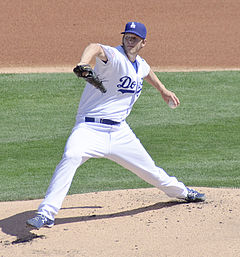
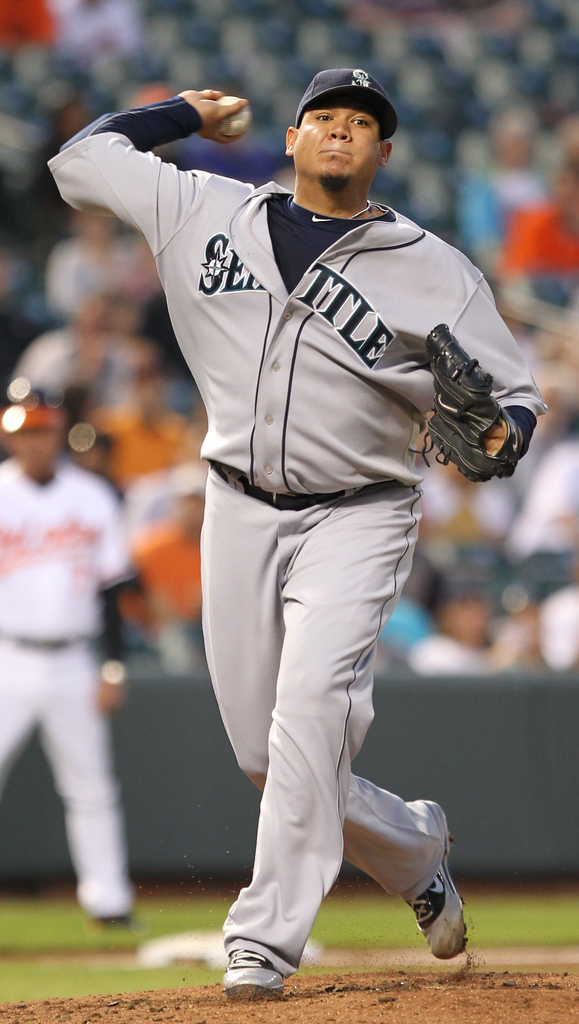
Sabathia is your current Active leader in Opening Day starts. Photo wiki/flickr chris.ptacek

One of my favorite annual trivia questions amongst my baseball buddies revolves around Opening Day Starters.  With another Opening Day in the books, here’s some useless trivia related to Opening Day starters for my readers.  I’ve uploaded my little Opening Day Starters spreadsheet to Google Docs and created a link in the “Nationals Arm Race creation” section along the right.

Current Active Leaders in Opening Day Starts

10 Roy Halladay
10 CC Sabathia
9 Mark Buehrle
6 Bartolo Colon
6 Derek Lowe
6 Tim Hudson
6 Felix Hernandez
6 Justin Verlander
5 Aaron Harang
5 Josh Beckett
5 Jered Weaver
5 James Shields
4 Jake Peavy
4 Barry Zito
4 Tim Lincecum
4 Yovanni Gallardo

Those players bolded in the list above had 2013 opening day starts and added to their totals.  Roy Halladay’s difficult spring training cost him his shot at Opening Day and thus CC Sabathia moves into a tie for first.  Mark Buehrle has given over the reigns of opening day starter possibly for good, based on his standing in the Toronto rotation (4th starter?).

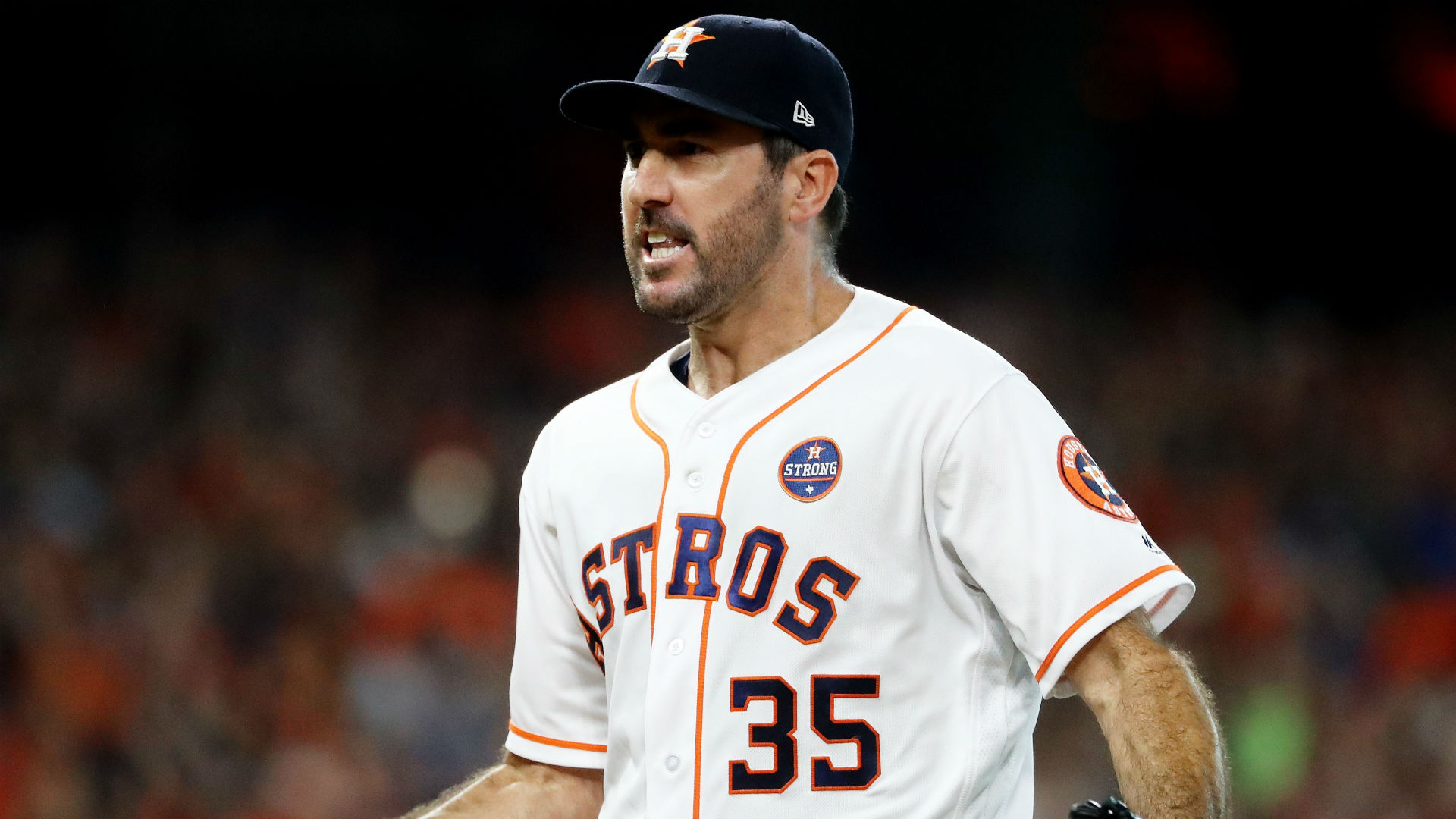
Felix Hernandez and Justin Verlander have chances to broach the all-time records (see below) based on their ages, their current counts and their new long-term contracts.

Current Active Leader in consecutive Opening Day Starts: Verlander with 6 straight.

Most ever Opening Day Starts all-time: Tom Seaver with 16 in his career.

Most ever Consecutive Opening Day Starts: Hall of Fame lightning rod Jack Morris, who made 14 straight such starts.

Number of first-time opening day starters in 2013: no less than 13 first timers this year, nearly half the league.   Some guys got deserved first-time opening day starts (Jeff Samardzija, Matt Cain, and R.A. Dickey), some guys got Opening Day starts mostly out of attrition of other worthy pitchers (Jon Niese, Bud Norris, A.J. Burnett, Vance Worley and Jhoulys Chacin) and some guys are taking over as the new big-dog of their rotations (Brett Anderson, Chris Sale).

Who seems most likely to break Seaver’s Record at this point? Sabathia, who already has 10 opening day starts, is clearly the #1 in New York, is only 32 and still has five years on his current deal.  Question is, if he renews past 2017, can he still earn the #1 spot?   Meanwhile Hernandez already has 6, just signed a deal that takes him through 2019 with a relatively easy option for 2020.   That’s 8 more seasons on his existing 6 opening day starts and he’d only be 34 years of age.   He could be the standard holder if he stays healthy and continues to pitch like an ace.

Are players from the 1980s under-represented in the Hall of Fame?

13 comments

Can Jack Morris eventually be the first "1980s Starter" to make the Hall? Photo John Iacono via si.com

First off: I’m not a “small hall” guy.  (How can you, when looking at the litany of obscure players the Veteran’s Committee has already enshrined while the current ballot has literally a dozen names that you can make an argument for?)  So naturally I want to see enshrinement for a larger number of the “marquee” names in baseball’s history.  I view the Hall of Fame as a museum dedicated to the game, and recognizing all the eras of the game for better or for worse.  I’m for expanding the current ballot and If I had a vote i’d be maxing out the 10 names with a desire to put a couple more guys on.

I’m also distinctly of the opinion that maybe the era of baseball just prior to today’s is underrepresented in Cooperstown.  Specifically, my theory is that the massive boom in offense that the game has seen in the last 20 years coupled with a distinct shift in the way pitching staffs are managed has led to voters and fans to discount and dismiss the accomplishments of players specifically from the 1980s.

MLB.com has a show called “Prime 9,” where they list the best 9 players/teams related to certain topics.  Recently they showed the “Best 9 players of the 1980s” by position, and it led me to use that list as a starting point for a discussion of marquee players from the 1980s and to decide whether or not the decade is under represented in Cooperstown.

Here’s Prime 9’s top player by position and their Hall of Fame status.  Throughout this entire article, Blue == Hall of Fame players while Red == non-Hall of Fame Players.

  • RF: Dwight Evans: fell off HoF ballot on his 3rd attempt in 1999.  Max votes: 10.4% in 1998.
  • CF: Dale Murphy: fell of HoF ballot on his 15th attempt this year in 2013.  Max votes: 23.2% in 2000.
  • LF: Rickey Henderson: 1st ballot HoFamer in 2009 with 94.8% of the vote.
  • SS: Cal Ripken Jr: 1st ballot HoFamer in 2007 with 98.5% of the vote.
  • 3B: Mike Schmidt: 1st ballot HoFamer in 1995 with 96.5% of the vote.
  • 2B: Ryne Sandberg: 3rd ballot HoFamer in 2005 with 76.2% of the vote.
  • 1B: Don Mattingly: on current ballot, his 13th attempt.  Max votes: 28.2% in 2001, his first year on the ballot.
  • C: Gary Carter: 6th ballot HoFamer in 2003 with 78% of the vote.
  • SP: Jack Morris: on current ballot, his 14th attempt.  Max votes: 67.7% this year.

Four of the Nine players listed as “Best of the Decade” are not in the Hall of Fame.   I think there’s something wrong here.  I know Morris is incredibly polarizing and probably never gets in, while the other three guys (Evans, Murphy, Mattingly) each had knocks against them related to durability and peak that prevented them from being enshrined.  Perhaps these are future Veteran’s committee picks.

I know the above list is arguable; perhaps those players aren’t necessarily the “best” at their positions for the decade.  So lets talk about the leading candidates per position who didn’t make the Prime-9’s list, and their own HoF status.  The MLB show didn’t distinguish between SP and RPs so I’ve separated them out below, nor did they distinguish between the OF positions like they did for the team selected above.

I’ve included the guys in the above “Prime 9″ list in the lists below for ease of analysis by position.

(Coincidentally; as you read the vote percentage totals, keep in mind that a voting percentage of less than 1% means that the player got only a handful of votes from the 500+ votes tallied each year, a woefully small number).

Outfielders:

  • Dwight Evans: fell off HoF ballot on his 3rd attempt in 1999.  Max votes: 10.4% in 1998.
  • Dale Murphy: fell of HoF ballot on his 15th attempt this year in 2013.  Max votes: 23.2% in 2000.
  • Rickey Henderson: 1st ballot HoFamer in 2009 with 94.8% of the vote.
  • Andre Dawson: 9th ballot HoFamer in 2010 with 77.9% of the vote.
  • Tim Raines: on current ballot, his 6th attempt.  Max votes: 52.2% this year.
  • Dave Parker: fell of HoF ballot on his 15th attempt this year in 2011.  Max votes: 24.5% in 1998.
  • Fred Lynn: fell off HoF ballot on his 2nd attempt in 1997.  Max votes: 5.5% in 1996.
  • Kirk Gibson: fell off HoF ballot on his 1st attempt in 2001 with only 2.5% of the voting.
  • Dave Winfield: 1st ballot HoFamer in 2001 with 84.5% of the vote.
  • Kirby Puckett: 1st ballot HoFamer in 2001 with 82.1% of the vote.
  • Tony Gwynn: 1st ballot HoFamer in 2007 with 97.6% of the vote.
  • Pedro Guerrero: fell off HoF ballot on his 1st attempt in 1998 with only 1.3% of the voting.
  • Jim Rice: 15th ballot HoFamer in 2009 with 76.4% of the vote.
  • Daryl Strawberryfell off HoF ballot on his 1st attempt in 2005 with only 1.2% of the voting.
  • Jack Clarkfell off HoF ballot on his 1st attempt in 1998 with only 1.5% of the voting.
  • Andy Van Slyke: fell off HoF ballot on his 1st attempt in 2001 without receiving a single vote.

This makes for 16 total outfielders on the “Best of the decade” list.  Of those 16 outfielders, 10 are not in the Hall of Fame.  Would you say that the position is under-represented in the Hall if only 6 outfielders from an entire decade of the sport are enshrined?   Maybe, maybe not.   To say nothing of the fact that 2 of these 6 HoFame 80s outfielders (Rice and Dawson) were heavily criticized upon enshrinement for being voted in based on remnants of “old man” statistics.

Jack Clark you say?  50 Career WAR.  That’s nothing to shake a stick at.  Higher than a number of Hall of Fame hitters.  I remember him being more of a power hitter than he turned out to be.  He just couldn’t stay healthy; only 5 seasons where he played close to a “full season” in 18 years in the league.   I remember him fondly from my childhood; my family is from San Francisco and I always rooted for the Giants as a kid.

Middle Infielders:

  • Cal Ripken Jr: 1st ballot HoFamer in 2007 with 98.5% of the vote.
  • Ryne Sandberg: 3rd ballot HoFamer in 2005 with 76.2% of the vote.
  • Garry Templetonfell off HoF ballot on his 1st attempt in 1998 with only 0.4% of the voting.
  • Ozzie Smith1st ballot HoFamer in 2002 with 91.7% of the vote.
  • Alan Trammellon current ballot, his 12th attempt.  Max votes: 36.8% last year.
  • Robin Yount1st ballot HoFamer in 1999 with 77.5% of the vote.
  • Lou Whitaker: fell off HoF ballot on his 1st attempt in 2001 with only 2.9% of the voting.
  • Dave Conceptionfell of HoF ballot on his 15th attempt this year in 2008.  Max votes: 16.9% in 1998.

Lots of baseball pundits have lamented Whitaker’s fate, while plenty others vociferiously argue for Trammell, who had the misfortune of being both the 2nd best offensive SS (to Ripken) and the 2nd best defensive SS (to Smith) of his era simultaneously, thus being overshadowed by both.   Conception was about an equal at the plate to Ozzie Smith but only about half the Gold Gloves, but still seems like he deserved a bit more credit than he got in the voting.

Third Basemen

  • Mike Schmidt: 1st ballot HoFamer in 1995 with 96.5% of the vote.
  • Wade Boggs: 1st ballot HoFamer in 2005 with 91.9% of the vote.
  • George Brett: 1st ballot HoFamer in 1999 with 98.2% of the vote.
  • Paul Molitor: 1st ballot HoFamer in 2004 with 85.2% of the vote.
  • Terry Pendleton: fell off HoF ballot on his 1st attempt in 2004 with only 0.2% of the voting.
  • Tim Wallachfell off HoF ballot on his 1st attempt in 2002 with only 0.2% of the voting.
  • Buddy Bellfell off HoF ballot on his 1st attempt in 1995 with only 1.7% of the voting.

Four first ballot hall of fame 3rd Basemen played in the era (even if most consider Molitor primarly a DH later in his career) which is saying something considering there are only 12 full time 3rd baseman in the Hall from all of history.  The all-star game starters for the entire decade were almost entirely Schmidt, Boggs and Brett.  The others I fully acknowledge are “stretches” but did each have several all-star appearances during the decade.

First Basemen

  • Don Mattingly: on current ballot, his 13th attempt.  Max votes: 28.2% in 2001, his first year on the ballot.
  • Steve Garvey: fell of HoF ballot on his 15th attempt this year in 2007.  Max votes: 42.6% in 1995.
  • Eddie Murray: 1st ballot HoFamer in 2003 with 85.3% of the vote.
  • Keith Hernandez: fell off HoF ballot on his 9th attempt in 2004.  Max votes: 10.8% in 1998.
  • Mark McGwireon current ballot, his 7th attempt.  Max votes: 23.7% in 2010.

Not much to say here: There seemed to be a definite lack of quality first basemen for the decade; only one is enshrined in the Hall.  Many of the all-star 1B appearances early in the decade went to aging stars Rod Carew and Pete Rose, who by that point in their long careers had been moved to first base for defensive purposes. McGwire’s issues are obvious (and he’s clearly more well known for his exploits in the 1990s, so its arguable if he even belongs in this 1980’s centric discussion).

Catchers

  • Gary Carter: 6th ballot HoFamer in 2003 with 78% of the vote.
  • Carlton Fisk2nd ballot HoFamer in 2000 with 79.6% of the vote.
  • Lance Parrishfell off HoF ballot on his 1st attempt in 2001 with 1.7% of the voting.
  • Benito Santiagofell off HoF ballot on his 1st attempt in 2011 with 0.2% of the voting.
  • Darrell Porterfell off HoF ballot on his 1st attempt in 1993 with zero (0) votes.
  • Tony Penafell off HoF ballot on his 1st attempt in 2003 with0.4% of the voting.
  • Bob Boonefell off HoF ballot on his 5th attempt in 2000. Max votes: 7.7% in 1996.
  • Terry Kennedyfell off HoF ballot on his 1st attempt in 1997 with exactly one (1) vote.

Yes, I’m really stretching for 1980s catchers.  Basically Carter made the all-star team every year for the NL while Fisk made half the All Star Starts for the AL during the same time.  The backups were generally catchers having a decent first half, many of whom never made an other all-star team.  Boone was better than you remember, hence his hanging around the bottom of the ballot for a few years.

Closers/Relievers

  • Lee Smith: on current ballot, his 11th attempt.  Max votes: 50.6% in 2012.
  • Bruce Sutter: 13th ballot HoFamer in 2006 with 876.9% of the vote.
  • Dennis Eckersley:  1st ballot HoFamer in 2004 with 83.2% of the vote.
  • Rich Gossage: 9th ballot HoFamer in 2008 with 85.8% of the vote.
  • Jeff Reardonfell off HoF ballot on his 1st attempt in 2000 with 4.8% of the voting.
  • Tom Henkefell off HoF ballot on his 1st attempt in 2004 with 0.6% of the voting.
  • Dan Quisenberryfell off HoF ballot on his 1st attempt in 1996 with 3.8% of the voting.
  • Kent Tekulvefell off HoF ballot on his 1st attempt in 1995 with 1.3% of the voting.
  • Willie Hernandezfell off HoF ballot on his 1st attempt in 1995 with 0.4% of the voting.

I’m not going to vociferously argue for Relievers/Closers to be inducted, since I think they’re mostly overrated in terms of their contributions to wins.  But I will say that a couple of these guys were far better than you remember.  Take Tom Henke: career 157 ERA+, which was better than either Sutter or Gossage PLUS he had more career saves (311 for Henke compared to 310 for Gossage and 300 for Sutter).   How exactly are two of these three guys Hall of Famers while Henke got exactly 6 votes out of 515 his first time on the ballot?   These voting patterns just seem drastically inconsistent.


All the above though pales in comparison to what we’re about to see.

Starters

  • Jack Morris: on current ballot, his 14th attempt.  Max votes: 67.7% this year.
  • Steve Carlton: 1st ballot HoFamer in 1994 with 95.6% of the vote.
  • Dave Stewart: fell off HoF ballot on his 2nd attempt in 2002.  Max votes: 7.4% in 2001.
  • Frank Violafell off HoF ballot on his 1st attempt in 2002 with 0.4% of the voting.
  • Rick Sutcliffefell off HoF ballot on his 1st attempt in 2000 with 1.8% of the voting.
  • Dave Steibfell off HoF ballot on his 1st attempt in 2004 with 1.4% of the voting.
  • Bob Welchfell off HoF ballot on his 1st attempt in 2000 with 0.2% of the voting.
  • Brett Saberhagen: fell off HoF ballot on his 1st attempt in 2007 with 1.3% of the voting.
  • Orel Hershiser: fell off HoF ballot on his 2nd attempt in 2007.  Max votes: 11.2% in 2006.
  • Dwight Goodenfell off HoF ballot on his 1st attempt in 2006 with 3.3% of the voting.
  • Mike Scott:  fell off HoF ballot on his 1st attempt in 1997 with 0.4% of the voting.
  • Rick Reuschelfell off HoF ballot on his 1st attempt in 1997 with 0.4% of the voting.
  • Fernando Valenzuelafell off HoF ballot on his 2nd attempt in 2004.  Max votes: 6.2% in 2003.
  • Nolan Ryan: 1st ballot HoFamer in 1999 with 98.8% of the vote.
  • Denny Martinez: fell off HoF ballot on his 1st attempt in 2004 with 3.2% of the voting.
  • Bert Blyleven14th ballot HoFamer in 2011 with 79.7% of the vote.
  • Jimmy Keyfell off HoF ballot on his 1st attempt in 2004 with 0.6% of the voting.
  • Ron Guidryfell off HoF ballot on his 9th attempt in 2002.  Max votes: 8.8% in 2000.
  • John Tudor: fell off HoF ballot on his 1st attempt in 1996 with 0.4% of the voting.
  • Roger Clemenson current ballot, his 1st attempt.  Max votes: 37.6% in 2013.

Here is where I think I really have a problem with the Hall of Fame treatment players in the 1980s; I think the entire generation of Starting Pitchers has been generally underrated and overlooked.  Look at this list of pitchers and look at the number of guys who failed to even stay on the ballot for more than one season.  Meanwhile, you can argue that the three guys who ARE on this list who are in the Hall of Fame (Carlton, Ryan and Blyleven) all actually “belong” to the 1970s; they just happened to have longer careers that bled into the 1980s.  Clemens appears here because his late 80s debut was so strong but clearly he’s a player of the 90s, and his reasons for non-inclusion thus far are obvious.

Do you mean to tell me that NONE of these other 1980’s starters merits inclusion to the Hall of Fame?  That an entire decade of starting pitchers doesn’t historically merit inclusion?  I’m not going to argue that all (or most) of these players belong, but it is kind of shocking that so many of the leading pitchers of that era were given so little consideration.

My biggest beef may be with Saberhagen.  Here’s the side-by-side stats of Saberhagen and a Mystery pitcher we’ll identify in a moment:

Wins Losses IP K’s ERA ERA+ bWAR
Saberhagen 167 117 2562 2/3 1715 3.34 126 56
Mystery Player 165 87 2324 1/3 2396 2.76 131 50.3

Pretty close, no?  Saberhagen contributed more WAR and was nearly this player’s equal in ERA+, which adjusts to the eras.  Mystery player’s W/L record is better … but then again, havn’t we learned that wins and losses are meaningless stats now?   A couple more facts here: Saberhagen won two Cy Young awards while the Mystery player won Three.  Saberhagen led the league in ERA just once while Mystery player did it 5 years in a row.

The Mystery player here (if you havn’t already guessed) is none other than Sandy Koufax.  Now, I’m certainly not saying that Saberhagen is the equal of Koufax, certainly not when you look at Koufax’s last 5 seasons or his 4 no-hitters.  My point is this: Koufax was a first ballot hall of famer … and Saberhagen got 7 votes out of 545 ballots.   Saberhagen may not be a Hall of Famer but he deserved to be in the discussion longer than he was.

Others have mentioned the lack of support for Dave Steib, who had a relatively similar statistical case to Saberhagen.  Similar career bWAR (53.5), similar ERA+ (122), and similar injury issues that curtailed his career.  Steib’s award resume isn’t as impressive (zero Cy Youngs but 7 All-Star appearances in his first 11 seasons), and he was basically done as an effective player by the time he was 33.

There are some other surprises on this list too.  Jimmy Key you say?  Go look at his career stats and you’ll be surprised just how good he was.  186-117, a 3.51 ERA (which sounds mediocre) but a career 122 ERA+.  A couple of stellar seasons (two 2nd place Cy Young votes).   I’m not saying he’s a hall of famer, but I am saying that he was better than you remember.  There’s absolutely pitchers in the Hall with worse ERA+ than Key’s.


Coincidentally, you can make the argument that many of these players really “belonged” to a different decade, if you wanted to really just focus this discussion on the 1980 decade.

  • Fisk, Boone, Conception, Parker, Lynn, Rice, Garvey, Carlton, Ryan, Reuschel and to a certain extent Winfield were really players who mostly “belong” in the 1970s.
  • Blyleven and Brett’s careers equally spanned both the 70s and 80s.
  • Gooden, Van Slyke, Puckett, McGwire, Clemens and Pendleton had careers that started the late 80s but who flourished mostly in the 1990s.

But, I think the point is made, especially when it comes to pitchers.  So I left all these players in.


Here’s a couple other ways to look at the best players of the 1980s.  Here’s a list of the top 20 positional players by “Win Shares” for the decade (data cut and pasted from an online forum).  As with above, blue=hall of famer while red indicates not.

1. Rickey Henderson 289
2. Robin Yount 274
3. Mike Schmidt 265
4. Eddie Murray 250
5. Tim Raines 246
6. Dale Murphy 244
7. Wade Boggs 237
8. Dwight Evans 230
9. George Brett 229
10. Keith Hernandez 221
11. Pedro Guerrero 221
12. Cal Ripken 219
13. Alan Trammell 219
14. Gary Carter 215
15. Jack Clark 213
16. Lou Whitaker 205
17. Andre Dawson 204
18. Ozzie Smith 204
19. Paul Molitor 198
20. Dave Winfield 193

Most HoFame pundits lament the lack of support for Raines specifically, but it is interesting to see how high up both Murphy and Evans fall on this list.

Now, here’s Pitcher WAR accumulated in the 1980s.  I took this data from a posting on BeyondtheBoxScore blog back in 2010, who was arguing (of course) why Jack Morris didn’t deserve to be in the hall of fame.  However, the table here also illustrates nicely who were really the best pitchers of the decade, and most of these guys are in the list above.

Rank Name bWAR From To Age Wins Losses
1 Dave Stieb 45.2 1980 1989 22-31 140 109
2 Bob Welch 35.1 1980 1989 23-32 137 93
3 Fernando Valenzuela 34.8 1980 1989 19-28 128 103
4 Bert Blyleven 34 1980 1989 29-38 123 103
5 Orel Hershiser 32.8 1983 1989 24-30 98 64
6 Roger Clemens 32.3 1984 1989 21-26 95 45
7 Nolan Ryan 30.8 1980 1989 33-42 122 104
8 Dwight Gooden 30.2 1984 1989 19-24 100 39
9 John Tudor 29.7 1980 1989 26-35 104 66
10 Bret Saberhagen 29 1984 1989 20-25 92 61
11 Charlie Hough 28.7 1980 1989 32-41 128 114
12 Jack Morris 27.9 1980 1989 25-34 162 119
13 Mario Soto 27.3 1980 1988 23-31 94 84
14 Teddy Higuera 27.3 1985 1989 26-30 78 44
15 Rick Sutcliffe 26.7 1980 1989 24-33 116 93
16 Rick Reuschel 25.7 1980 1989 31-40 97 82
17 Steve Carlton 25.6 1980 1988 35-43 104 84
18 Ron Guidry 25.5 1980 1988 29-37 111 72
19 Frank Viola 25.1 1982 1989 22-29 117 98
20 Dan Quisenberry 24.6 1980 1989 27-36 53 43
21 Mark Gubicza 24.6 1984 1989 21-26 84 67

I’m not sure why he ran this list to 21 players; perhaps he really likes Mark Gubicza.

Notice the same 3 names appear here as appeared above for Hall of Fame starters.  Also notice the surprisingly high appearances of players like Soto and Higuera; I didn’t even include them in the above analysis, perhaps providing my own bias because certainly I wouldn’t have included these two in any conversation about the best pitchers of the 80s.  But the point is now made statistically; of the 20 best pitchers by WAR for the entire decade, only 3 are enshrined in the Hall.

I havn’t done this analysis for other decades but I’d be surprised if other decades were so underrepresented.  Think about how many obvious hall of famers pitched in the 1990s;  Just off the top of my head: Clemens, Mussina, Maddux, Glavine, Smoltz, Johnson, Pedro, Schilling and perhaps eventually Hoffman and Rivera.   Maybe guys like Cone and Pettitte deserve more thought.  Lee Smith is still on the ballot.  That’s a lot of names for one decade as compared to what’s happened to the 1980s guys.


So, after all this, do we think the 1980s players are underrepresented in the Hall?  I count 17 positional players, 3 relievers and 3 starters from the era.  Perhaps the answer is, “there’s plenty of positional representation but the Starters are not fairly represented.”

Why are there so few starters from this era enshrined?  Did we just see a relatively mediocre time period in baseball with respect to starting pitchers?  Did we just get unlucky with the longevity and injury issues related to the best pitchers of the era (Hershiser, Saberhagen, Steib)?  Did changes in bullpen management that came about in the 90s (lefty-lefty matchups and more specialized relievers) combined with increasing awareness/sensitivety to pitch counts (100 pitches and you’re out) contribute to this fact?   If you’re a starter and the assumption is that you’re pitching 9 innings no matter what your pitch count is, you’re going to approach the game differently and pitch with a different level of effort than if you knew you were getting the hook after 100 pitches and/or in roughly the 6th or 7th inning.  Did this contribute to more mediocre-appearing ERAs for starters of this era?  Is that a good argument to use, as compared to 90s’ and modern pitchers who go all-out for 7 innings and then sit (versus starters of the 90s, who would often face the 3-4-5 of the opposing team a FOURTH time in the late innings while sitting on 140 pitches)?

What do you guys think?

HoF Post mortem/Is the Hall in trouble?

13 comments

Biggio has to wait for enshrinement to the HoF. Photo Karen Warren/Houston Chronicle

Obligatory HoF Reaction post.

I wasn’t going to write one.  But email/text conversations later I thought it may just be easier to write a thousand words on the topic.

As the front page of the BBWAA site says, “No players elected for the first time since 1996.” Also for only the 8th time in the history of balloting, no player was elected this cycle by the electorate.

We all knew this day was coming.  You can google articles from nearly 5 years ago when the whole slew of these first time players were first known to all be eligible on this ballot and know this day was coming.  And now here we are.

My interpretation of the results for the major players kind of goes like the following:

  • Craig Biggio was “penalized” by some voters for not being a “First Ballot Hall of Famer” calibre player.  Therefore lots of voters who have annointed themselves the keepers of this title skipped voting for him this year.  Much like what happened to Roberto Alomar (who went from 73% to 90% from 1st ballot to 2nd) we probably see Biggio get > 90% next year.  He’s clearly a hall of famer, but clearly not a first balloter in some eyes.
  • Jack Morris is screwed.  He only rose from 66% to 67%, indicating to me that enough people have bought into the anti-Morris narrative that has been so fully expoused by sabre-tinged writers to outlast the old-school guard of baseball writers who covered Morris and remember him as I do.
  • Piazza and Bagwell both are side effects of the PED argument, but clearly get more credit for possibly being clean than the next two names.  But enough people are believing that “back acne” proves PED usage for Piazza, and “muscles” proves PED usage for Bagwell, so both will likely struggle to get to 75% for a few years.
  • Clemens and Bonds: both getting almost identical vote totals in the 36-37% range despite both being amongst the best who ever played indicates a clear statement being made by the older voters, who clearly are penalizing these guys for their alleged/accused/leaked grand testimony involving PEDs.  I’ll bet though that both players will get significantly more votes in subsequent years and probably eventually make it.
  • Sosa and McGwire: probably both never get in, since both are in the 12-16% range.  Writers clearly believe both guys were 100% the product of andro and steroids, and thus artificially gained their accomplishments.
  • Bernie Williams and Kenny Lofton both amazingly will fall off the ballot.  I don’t think either are HoFamers but I also thought they deserved to hang around on the ballot for a while (kind of like a Dale Murphy or a Don Mattingly) to discuss.
  • Tim Raines and Lee Smith are probably never getting in; their vote totals don’t seem to be changing much, and a slew of more deserving names are coming in the next 5 years.
  • Edgar Martinez, TrammellMcGriff, Walker, Mattingly: they’re all marginal candidates for different reasons, and they all seem likely to die on the ballot in the 30-40% range.  I like Martinez for the Hall; in a sentence if you elect the best relief pitchers, how can you not elect the best designated hitters?
  • Palmeiro sealed his fate the moment he tested positive.  It doesn’t matter if he broached magical barriers of 500 (homers) and 3000 (career hits).  He’ll never get in.
  • Lastly, the interesting case of Curt Schilling.  38.8% on the first ballot.  What does this mean?  He’s definitely never been accused of PEDs, had a great peak, was absolutely one of the best pitchers in the game for at least a short amount of time, has 3000 Ks but not 300 wins (or close to it), had an iconic moment in the bloody sock game, and was on two different WS winning teams.  A 127 career ERA+ puts him career 48th, even or ahead of plenty of hall of famers.  Why so few votes?  What statement is being made here?  I’m not sure entirely.  Maybe this is a combination of the “not a first ballot hall of famer” denials AND some sense of outrage against the outspoken Schilling from older media members who covered him and still vote primarily with their egos.

Back to the question of the article; is the HoF in trouble?  Well, yes and no.

No because I think Biggio will be elected next year, along with two more big names who have never had a schred of PED accusations (Maddux and Glavine).  And you can see guys in each of the subsequent years easily being elected (Randy Johnson and Pedro Martinez in 2015, Ken Griffey Jr in 2016, Pudge and Manny in 2017 unless there’s still PED outrage at that point.  And that ensures there’s ceremonies with who should be absolute no-brainer electees each year for the next few years.

But, Yes because Cooperstown and the Hall itself are not always profit making endeavors, and having an election year without any recently retired players is going to mean a massive drop in income for the town and the hall.  Reportedly the museum has lost money in 8 of the last 10 years.  That coupled with the continued recession, and we could see some serious financial hardship in upstate New York in 2013.  Will it be enough that the BBWAA agrees to one of the litany of election system changes being proposed on the internet?  Maybe, maybe not.  But if this continues into 2013, yeah we may see something change.  Perhaps a panel of judges versus the BBWAA electorate (similar to what the NFL does) makes sense in the long run.  The point is that the HoF NEEDS to have a compelling election class in order to stay profitable, and may change its entry mechanisms to guarantee attendance (and thus revenues) each year.

One thing I do agree with; I think writers who purposely send in a blank ballot should be removed from the voting system.  You just can not look at this list of players and tell me there’s not at least ONE deserving candidate.  A blank ballot does nothing but hurt the chances of legitimate players to be honored and should be interpreted as a writer who does not take the process seriously.

Murkier are my thoughts on entrance requirements to the BBWAA in general.  Should we allow in all these internet baseball writers?  I think that a lot of the moral outrage and indignance expressed by frequent baseball bloggers over the BBWAA and the “old school” writers is simply mis-placed jealousy that they (the internet blogger) are not eligible to vote.    There is a section of the BBWAA constitution that talks about internet writer acceptance and the requirements don’t seem that unfair.  The intent of the organization is to find people who “cover the game” but also people who actually “attend the games,” interview players and coaches, and are generally members of the traditional media.  People who have access and who understand more than the average baseball blogger, who interprets box scores and statistics websites to pass judgement.  I’m ok with the limitations set out as thus.

Two other quick thoughts:

  • Yeah, we should probably increase the 10-player limit.
  • Yeah, we should probably force writers to reveal their ballots (much as the major awards now do).

Until next year.  One thing is certain; much like relief over the end of the election news, I’m relieved that no more HoF articles will be appearing.

Obligatory Class of 2013 Hall of Fame opinion piece

8 comments

Roger Clemens; is he a Hall of Famer or an opportunity for writers to make a PED statement? Photo unknown.

Obligatory Class of 2013 Hall of Fame opinion piece.

The 2013 Hall of Fame class ballot was released in Late November, on BBWAA’s site.   Here’s the 2013 class on Baseball-Reference.com, along with relevant career stats and past voting results.

As we’re about to read, over and over again from every writer in the Baseball world, this is the Steroid-era ballot.  Several of the biggest names of the era are on the ballot.  Just in case you were wondering who has or hasn’t been officially linked to PEDs, here’s a handy guide for your ethical dilemma.

My Previous posts on the same topic:

I typed up such exhaustive opinions on a number of candidates from the two previous versions of these posts, that I won’t repeat them here.  Instead i’ll just state below, of the returning candidates this year here’s who I’d vote for and who I wouldn’t in list form.

Returning Candidates I’d vote for:

  • Jeff Bagwell
  • Jack Morris
  • Tim Raines
  • Mark McGwire
  • Edgar Martinez

Returning Candidates that I would NOT vote for (my reasons mostly are stated in the 2012 class post referenced above):

  • Bernie Williams
  • Alan Trammell
  • Lee Smith
  • Larry Walker
  • Rafael Palmeiro
  • Don Mattingly
  • Fred McGriff
  • Dale Murphy

New Candidates in 2012 that I’d vote for, with some  discussion; Unlike a lot of opinions I state, my thoughts on the Hall of Fame have always been more driven by how a player “seems” to be in the pantheon of baseball history.  I don’t like to get into the same stats-driven discussions that other writers do.  So and so had a career WAR of X, or a career ERA+ of Y, which makes him better than this other guy.

  • Barry Bonds: A transcendent player before any use of “the cream” or “the clear,” this 7-time MVP is clearly in the pantheon of the greatest players of all-time.  The best 5-tool player since Willie Mays, the only thing that should have been standing in the way of unanimous voting is Bonds’ surly nature towards sports writers (several of whom would have “penalized” him by omitting him from first ballot status).
  • Roger Clemens: replace “7-time MVP” with “7-time Cy Young winner” and the Bonds argument essentially repeats itself with Clemens.  Normally we’d be talking about his place as one of the greatest right handed pitchers to ever play the game.  Instead we’re talking about how much of his later career was enhanced by virtue of foreign substances.
  • Mike Piazza: One of the best 3 hitting catchers of all time (Johnny Bench being the best, with Yogi Berra in the discussion), his purported “back acne” proof of steroid use likely costs him votes.  Which is just ridiculous, but that’s the nature of this ballot and the next 15 year’s worth of ballots unfortunately.
  • Curt Schilling: his career accomplishments don’t include a Cy Young award, but that wasn’t for lack of trying; he just happened to pitch in the same ERA as Randy Johnson and Johan Santana in his prime power.  But Schilling was a game-changing starter, an Ace who could get you the win.  He was one of the biggest “big game” pitchers out there.  And, his legendary playoff performances push him over the top for me.  Some will argue against him b/c he “only” had 216 wins or he “only” had a career 3.46 ERA.  He passes the eye test for me.
  • Craig Biggio: he wasn’t the flashiest player, but then again you can’t judge middle infielders the same way as you judge power hitters.  Biggio hit the 3,000 hit plateau, was a good combination of power (291 career homers) and speed (414 career SBs), and showed good defense (several Gold Gloves).  For one of the last career one-team guys, he makes the cut for me.

New Candidates that I would NOT vote for:

  • Sammy Sosa: 600+ career homers, and I can’t help but think that a good number of those were either PED or corked-bat assisted.  That’s probably completely unfair, but you can make a good argument that more than 150 of his career homers were likely “surplus” to his legitimate career capabilities.  He averaged 37 homers/season as he approached his prime, then suddenly averaged 60/season for four seasons.  Clearly Bonds’ 73-homer season is attributable to a single-season PED spike, but Sosa made a career of it.  There’s just no way for me to distinguish who the real Sosa was (he had a 99 OPS+ the year before his power spike) versus the PED enhanced version.
  • Kenny Lofton: I know lots of people view Lofton in the same breath as Rickey Henderson in terms of quality lead-off hitters, but to me he was just a vagabond who kept looking for work year after year.  He played for 12 teams by the time he hung them up.  Perhaps I’m not really “remembering” his time in Cleveland, where he stole a ton of bases and set the table for that powerful lineup.   He had a handful of gold gloves, a handful of all-star appearances.  I may be under-appreciating him a bit, but when I hear his name I don’t knee-jerk Hall of Famer.
  • Everyone else first time eligible, the best player of which is probably David Wells.  Wells basically had two good seasons (the only two times he received any Cy Young consideration) and otherwise was a rubber-armed hurler who prided himself on making 35 starts despite being in god-awful shape (as noted extensively in Joe Torre’s book The Yankee Years).

I’d be shocked if anyone else on the first time eligible list got enough votes to even stay eligible for 2014’s ballot.

Critics may state that my fake ballot has some inconsistencies; how can I support a vote for Biggio but not for Trammell?   How can you vote for McGwire but not Sosa?  How can you vote for Edgar Martinez but not Larry Walker?  How can you vote for *any* PED guys but shun Sosa and Palmeiro?  How can you support Morris but not support Wells?   All these are good points; good arguable points.  Maybe if I had an official ballot I’d have a more serious discussion with myself about these points.  All the above thumbs-up/thumbs-down opinions are mostly knee jerk, did the guy “feel” like a hall of famer as opposed to a full statistical analysis.   As I covered in my Jack Morris piece, I think its ok to have slightly lesser players who contributed more to the baseball pantheon than slightly better players statistically who had no real lasting impact on the game.

And for now, that’s good enough for me and my fake Hall of Fame ballot.

Jack Morris, Statistics and the meaning of the Hall of Fame

10 comments

Its Hall of Fame ballot time. Let the Jack Morris arguments start-up again. Photo John Iacono via si.com

(coincidentally, this is the exact same picture and exact same caption as I used last year.  Nothing w/r/t Morris has changed).

Every year about this time comes the inevitable Jack Morris battles when it comes to deciding whether or not he’s a Hall-of-Famer.  Those who argue against him (and argue they do, rather loudly, as exemplified by writers such as David Schoenfield, Rob Neyer, and Joe Posnanski and easily found at nearly any baseball blog, almost all of which are extremely anti-Morris) typically point at Morris’ career ERA, his ERA+, his career WAR and then argue that he was actually a mediocre pitcher.  They have all sorts of arguments against “pitching to score” and even make arguments that middling starters from the 90s are actually “better” than Morris.

My one overriding opinion on the whole “Hall of Fame” worthiness argument is that the stat-inclined seem to be missing the whole point of the “Hall of Fame.”  It isn’t defined as the “Hall of the Best  Statistically Significant players above some arbitrary benchmark.”  If it were, then arguments comparing Morris to Rick Reushel or Brad Radke (both of whom have higher career WARs than Morris) would be important.  (side note: Ironically, this is the same distinction that these people generally also miss when talking about the “Most Valuable Player” award; it isn’t the “Best Player” its the “Most Valuable,” and therefore you can’t just give me a gazillion stats that tell me why Mike Trout had a better season than Miguel Cabrera and call me an idiot for saying that Cabrera was the MVP this year.  How can you be the MVP of a 3rd place team that would have still been a 3rd place team with or without you?  How can you be the “most valuable” player in the league but have zero impact on your team’s standings or the playoffs?  But I digress).

No; its the Hall of FAME (emphasis mine).  It should be the Hall of the most FAMOUS people in the game’s history.  And inarguably Jack Morris is more famous than either Reushel or Radke (since these two pitchers are often used in comparison).  And since its baseball writers themselves that a) remember Morris as being better and more famous than he was according to specific career-measuring stats like WAR, and b) do the voting themselves, its likely that Morris may very well get into Cooperstown despite other people feeling that he’s a lesser pitcher.  Its why a pitcher like Catfish Hunter has been elected already, despite his having even worse career numbers (in the sabre-slanted statistical categories that the new-wave know-it-all bloggers constantly refer to) than Morris.  I can’t recall ever reading one single article talking about how bad it is that Hunter is in the hall of fame, but it seems that EVERY single baseball blogger and columnist out there under the age of 30 has written multiple times about how its the death of the legitimacy of the Hall of Fame if Morris makes it in.  I just don’t get it.

A lot of these arguments seem to be driven by one stat: Career WAR.  People look at that one overriding stat and make their arguments.  My biggest problem with career WAR is its “accumulator nature.”  It rewards a healthy, mediocre pitcher who makes a ton of starts and accumulates a ton of strikeouts and wins and innings pitched. Meanwhile a better pitcher with a higher peak who ends his career earlier won’t “score” as high in career WAR.

The two pitchers in particular i’m looking at in the above paragraph are Bert Blyleven (career bWAR of 89.3) and Pedro Martinez (career bWAR of 80.5).  There is not one person in their right mind that would say with a straight face that Blyleven was a “better” pitcher than Martinez.  But, if you look at the WAR without context you’d argue that was the case.

Blyleven during his career, for those of us actually old enough to have seen him play, was a mediocre pitcher.  Plain and simple.  In 22 seasons he made 3 All Star teams and received Cy Young votes only 4 times, never coming close to sniffing the award.  Morris on the other hand, received Cy Young votes in 7 of his 18 seasons and started the All Star game 3 times.  Morris STARTED more all-star games than Blyleven ever made.  Blyleven was traded for relative nobodies a number of times in his career, and the prevailing press of the day referred to him as a middling pitcher.  Only after he’s retired, when we “discovered” statistics like ERA+ and FIP and realized he was better than his numbers at the time indicated did we make the push for him into the HoF.

Why do I point out All Star appearances and Cy Young voting?  Because in the context of the Hall of Fame discussion, they’re important.  You can quibble about the meaning of all star appearances (certainly they’ve been diluted in the last 20 years) and cy young votes all you want, but the fact is this: if you REALLY want to know who the writers felt were the best players of their day, then all star appearances and Cy Young/MVP voting is vitally important.

But here’s my main point: why can’t the Hall recognize BOTH the likes of Blyleven (better than people realized at the time) AND also recognize Morris (overrated statistically but still historically significant and thus “famous” enough for enshrinement)?  Why do people devote so much time towards disparaging the case for Morris?  Yes, Morris gets undue credit for his fantastic 1991 World Series Start, for leading the 1984 Tigers, for leading the 1980s in Wins.   If you ask any player or manager in the game at the time, they’d likely tell you Morris was one of the best.   But these are all the same aspects that make him “Famous” and thus a likely candidate for the Hall of FAME.  These are the same reasons why a fine pitcher like Curt Schilling, who also was part of some iconic moments in the game’s history, also should be in Cooperstown (in my opinion).

I just feel like the nature of sports writing has come to the point where people use statistical measures as the be-all, end-all proof of everything in baseball.  And then they forget that the game is played by humans, that there are ALWAYS some things that cannot be measured, and just because some statistic has been cheapened in today’s game (I’m thinking of the pitcher Win) does not mean it was always cheapened.  I know there’s people out there who wrote doctoral thesises about how Morris never “pitched to score.”  But how do you measure a pitcher who knows he’s gotta go 9 innings, who knows he’s not getting pulled in the 6th inning for a lefty-on-lefty matchup, who knows he’s more likely to throw 160 pitches than 95?  I absolutely think there’s something in the “pitching to score” arguments, if only because I have played with pitchers who absolutely would coast through games when they got a lead, or who would “take innings off” against in order to preserve their arm to go 9 full innings.  Unless you had a biometric measure on every single pitch Jack Morris ever threw, correlated to the weather, the score, his team’s bullpen status and his manager’s whims, you can NOT tell me that Morris did or did not pitch to score, let up with a big lead, or cruise through innings knowing he may have to go 9 on a 100 degree day.  Just because you can’t prove something mathematically doesn’t mean it still doesn’t exist.  Tom Verducci did an excellent piece recently on Morris and his innings pitched and complete games in context, somewhat related to this topic.

Morris comes from a transitionary time in baseball, before specialized relief pitchers, before the power of the 90s and before PEDs.  He comes from a time severely under-represented in the Hall (think of players like Dale Murphy, Alan Trammell, Denny MartinezOrel Hershiser and Bret Saberhagen: these were the stars of the 80s and some of them barely got 2% of the HoF vote), a side-effect of the ridiculously talented players we saw in the 90s and thus victims of the inevitable comparisons, falling wanting.  He holds an important place in the history of the game, in the narrative of the 1980s, and of the fantastic 1991 World Series.  Cooperstown is a museum, not a spreadsheet.

Call me ignorant, call me old school.  Whatever.  Maybe I’m just tired of the negative rhetoric.  I say “Elect Jack Morris.”

Predicting the End-of-Season Awards: how’d we do?

leave a comment

Cabrera wins the AL MVP as expected; can the blogosphere now declare peace? Photo AP via sportingnews.com

Here’s a wrap up of the end of season awards.  I posted my predictions here in Mid October.   The dream of going 8-for-8 is over.  Read on for a summary of my predicions versus actual results.

  • AL MVP:  Prediction: Miguel Cabrera.  Winner: Cabrera.  Trout 2nd, Beltre a distant 3rd.
  • AL Cy Young: Prediction: David Price. Winner: Price.
  • AL Rookie of the Year: Prediction: Mike Trout. Winner: Trout, Unanimously.
  • AL Manager of the Year: Prediction: Buck Showalter.  Winner: Bob Melvin.
  • Sporting News AL GM: Prediction: Billy Beane.  Winner: Beane.
  • Sporting News AL Comeback player of the Year: Prediction: Adam Dunn.  Winner: Dunn.  Note that there are now also MLB and Players Choice versions of this award, and they do not always agree with Sporting News’ picks.  But SN is the oldest version so I’ll continue to guess based on it.
  • NL MVP: Prediction: Buster Posey. Winner: Posey.  Braun 2nd, McCutchen 3rd.
  • NL Cy Young: Prediction: R.A. Dickey. Winner: Dickey.
  • NL Rookie of the Year: Prediction: Bryce Harper.  Winner: Harper.
  • NL Manager of the Year: Prediction: Davey Johnson.  Winner: Johnson.
  • Sporting News NL GM: Prediction: Mike Rizzo. Winner: Rizzo, who technically came in 2nd to Beane as Sporting News only awarded one Executive of the year award.
  • Sporting News NL Comeback player of the year: Prediction: Buster Posey.  Winner: Posey.

My Final Prediction results: 7 of 8 of BBWAA awards predicted correctly, 11 of 12 including Sporting News awards.

Discussion (here’s a link to all the 2012 post-season BBWAA voting with totals from Baseball-Reference.com, plus i’ve included links to the voting and ballots where I could below).

  • AL MVP: Cabrera wins over Trout; let the internet wars begin!  The only thing that surprised me here was the relative landslide victory Cabrera had; he got 22 of the 28 first place votes, far more than I thought he’d get.  This result shows what a lot of holier-than-thou bloggers need to wake up and understand; the MVP is NOT the award for the best player.  Clearly these people (often rather rudely) do not understand the difference between stats-based analysis and context.  Trout played for a 3rd place team; had he never played for the Angels this season … they still would have finished third.  Like it or not, voters start their MVP lists by grabbing the best player on the playoff teams, and adjust accordingly.  The solution to these arguments may be to create a hitting version of the Cy Young so that Trout can get his deserved due for his fantastic 2012 season.
  • AL Cy Young: Price wins in a very close race over Justin Verlander, who had almost identical (and slightly better) sabremetric numbers to his dominant Cy Young last year and was the odds-on favorite of the Sabr-nerd crowd to win.  I predicted Dickey not because he was inarguably the better pitcher; I predicted he’d win because voters sometimes like to give these awards to the fresh new candidate, and I saw that happening here.  Price and Verlander split the first and second place votes almost down the middle, except for one random first place vote that went to Fernando Rodney.  The Rodney vote, combined with both Los Angeles voters giving 2nd place votes to Jered Weaver, is the margin of loss for Verlander.  Still, this was the closest Cy Young voting race in the history of the award.
  • AL Rookie of the Y ear: No doubt here; Trout becomes just the 8th unanimous RoY pick in baseball’s history, and deservedly so.  Yoenis Cespedes second, Yu Darvish third.
  • AL Manager: My first miss on BBWAA awards in three years.  The criticism of this award is that it is less about who actually manages their team the best; it really is given to the team that “surprised” baseball pundits the most.  In retrospect, for all the reasons I predicted Billy Beane would get the executive award I should have given more thought to Melvin winning the Manager award.  Showalter’s Orioles certainly surprised, and you can squint and say that their record in one-run games is entirely on the manager.  But there’s no mistaking that the Athletics out-played their potential far more distinctly than the Orioles did.
  • AL Executive: No surprise that Beane picks up this award, after flipping 3/5s of his rotation, signing the cuban defector Cespedes and getting Josh Reddick in trade, putting together a team that I thought could lose 110 games but instead won the AL West over two of the most bally-hoo’d teams in the majors.  For all the people that chastised Beane for Moneyball, he has risen again after his early career success.
  • AL Comeback player: I really struggled to pick a winner, thinking that Dunn’s pseudo-rebound from 2011’s disaster was a good enough example, and I got lucky.  SN picked Dunn while other AL comeback awards out there went to Fernando Rodney.
  • NL MVP: Posey takes this race in a landslide, getting 27 of the 32 first place votes.  I’m really glad to see Braun get 2nd place despite the stigma surrounding his negated PED test last off-season; he won my “Modern Triple Crown” and was the best hitter in the league.  Chase Headley gets deserved recognition and a 5th place vote.  Several Nats got votes as expected, but none were factors in the race itself.
  • NL Cy Young: this race wasn’t as close as I thought it may be, but Dickey beats out Clayton Kershaw for many of the same reasons Price beat out Verlander.  Our own Gio Gonzalez comes in a close third; as it turns out, one reporter in St Louis completely left him off his ballot, purportedly because Gonzalez didn’t broach 200 innings.  Which makes no sense, since this same reporter gave his 5th place vote to a reliever.  *sigh* I hate hypocrites
  • NL Rookie of the Year: Harper won a very close race over Wade Miley and for good reason; on September 1st you would have said that Miley was the easy RoY candidate.  A strong finish combined with Harper’s narrative and probably some east-coast bias gave him the award.   One writer completely left Miley off his ballot, but that wouldn’t have made a difference in the voting totals in the end.  Another side note: have you ever even heard of the two Washington BBWAA chapter members?
  • NL Manager: Johnson picks up the “manager of the most surprising team” award relatively easily; there really weren’t any other contenders once Pittsburgh collapsed mid-season.
  • NL Executive: Rizzo’s Gio Gonzalez trade, Jackson signing and Harper call-up all led to a 17-game improvement and the major’s best record, earning him 2nd place in the overall executive award voting (to Beane) and thus the highest ranking NL executive.
  • NL Comeback player: Posey was really a no-brainer, and won the award as expected.

I’ll say this in conclusion; the Trout-Cabrera arguments were the most one-sided, rude and biased I’ve seen yet in the whole “new school” trend of baseball writing.  Even more ridiculous than the Jack Morris antagonists.  And I’m thankful that, after today, I won’t have to read one more “Why Trout is the MVP” article.

Johnny Damon: Hall of Famer? Not for me

5 comments

Johnny Damon during his Boston reign. Photo unknown via metsmerized.com

With recent news that Johnny Damon has convinced another team (for 2012 its the Cleveland Indians) to give him more at-bats so that he can continue his march towards the magic 3,000 hit plateau, and with today’s Rob Neyer column that already assumes Damon is a hall of famer and asks, “Which cap will be on his Cooperstown plaque,” I have this to say:

How is it possible that Johnny Damon is a hall of fame player?

Here’s a few metrics for you:

  • All Star Apperances: TWO!  Two times he’s been considered amongst the best 60 or so active players.
  • Top 5 MVP votes: Zero
  • Top 10 MVP votes: ZERO
  • Top 20 MVP votes (as in, one of the 32 writers involved threw him a 10th place vote here and there): 4 times.
  • Career OPS+: 105.  As in, compared to his fellow players he’s only about 5% better at the plate.
  • Career OPS: .789, below the .800 line of respectability for modern day hitters.
  • Defensive awards: Golden Gloves and Silver Sluggers: Zero.

I’m sorry, but in what world is this a hall of fame career?  Damon is the epitome of an accumulator, averaging nearly 700 plate appearances and 188 hits per year over his career and staying relatively healthy (never playing less than 140 games per year since his debut in 1996).  105 OPS+!  If he was a gold-glove calibre middle infielder maybe that’d be acceptable, but he’s a sub-par defensive outfielder who has never sniffed a defensive award.

I also go back to my tried-and-true argument related to All Star appearances and MVP voting; how can a player possibly be considered one of the greatest players of all time if he rarely, if ever, was considered one of the best players of his own time, on a year to year basis?  Great players earn all star appearances even in down years, while middling players never earn them.

For everyone who has vehemently argued against Jack Morris, essentially on the strength (weakness) of his career ERA (and by implication, ERA+) … I wonder who hypocritically is arguing FOR Damon.  Oh wait; Rob Neyer is.

Am I crazy?  Who out there thinks that Damon is worthy of a copper plaque in Cooperstown?

(caveat: after reading the comments in the Neyer article, it occurred to me it was possibly a spoof.  As in, an entire tongue-in-cheek article.  If so, my reading comprehension skills are at fault and I rescind this criticism.)

Written by Todd Boss

April 17th, 2012 at 6:58 pm

What does it really mean to be “In the Hall of Fame?”

one comment

Here's a question for you; Is Pete Rose "in" the Hall of Fame? Photo unknown via luminousroc.com

(Editor’s note: I wrote this more than a month ago but got sidetracked.  So apologies for the content being a bit dated).

A post-mortem thought to the overwhelming number of baseball columns, blog postings and sabrematrician rants against Jack Morris but emphatically for Jeff Bagwell in the weeks swirling around the 2012 Hall of Fame elections.

What exactly does it mean to be “in” the Hall of Fame?

Yes, I know what it really means; if you’re elected to the HoF,  you get a bronze plaque in the Hall of Fame gallery, listed among all others that have been elected and selected over the course of the past 80 years or so.  (Of course, if you go an look at the names on the plaques I’ll challenge you to recognize all the names enshrined; there’s been so much revisionist history of players from the 1930s done by veterans committees, as well as an almost apologetic enshrinement of nearly every halfway decent Negro Leagues player from the early part of the century, that the actual “Hall” contains mostly names that are unknown to most mainstream baseball fans.  But I digress…).

But here’s the thing; for all that is spoken about the fact that Shoeless Joe Jackson and Pete Rose “are not in the hall of fame” …. they really are!  Both players have their images and discussion of their impact on the game in the various decade-specific exhibits, and nearly every other player who has been of significance has a picture or part of an exhibit at some point within Cooperstown’s walls.  Both players are bio’d, discussed and have their accomplishments documented.

So, in some ways I don’t really “get” the argument.  All these players we argue about endlessly ARE in the Hall of Fame.  As is Mark McGwire, Barry Bonds and most of the steroid-era players by virtue of their mention in the “Records” exhibit about 2/3 of the way through the museum.

For me, the Hall of Fame is a museum dedicated to the history of the game; certainly that’s how its set up and configured (If you’ve never been … you’d probably be surprised if you visited).  All these aforementioned players are a part of that history, whether we like it or not.  And the Hall recognizes that, not shying away from listing players who have known warts or who have had their candidacy for the enshrinement section banned by a current or former Baseball Commissioner.

Maybe all these arguments surrounding whether or not Player X belongs “in the Hall of Fame” need to be tempered, or at least modified to say “in the specific enshrinement exhibit.”

Written by Todd Boss

February 16th, 2012 at 7:04 pm

Nats Off-season News Items Wrap-up 2/11/12 edition

2 comments

Mr. Jackson Comes to Washington. Photo unknown via sportsbank.com

This is your semi-weekly/periodic wrap-up of Nats and other baseball news that caught my eye.  I try to publish this about weekly or if it gets up to about 1500 words, so that it’s not to voluminous.

Apologies for the delay on this; life sometimes intervenes into blogging :-) .  Most of this news is at least a week old.

Nationals In General

  • John Lannan presses his luck, goes to arbitration with the team and “loses,” meaning he’ll only get $5M in 2012 instead of the $5.7M he was seeking.   I thought $5M was rich frankly; using my 40/60/80% theory on arbitration salaries (as in, your first year arbitration salary is roughly 40% of your open market free agent value, 2nd year 60% and so on…) I thought Lannan’s salary would be roughly $4.8M (equating to an $8M salary on the open market).  Still, he nearly doubles his 2011 salary of $2.75M despite having a sub .500 record (yes I know that’s relatively meaning less but still).
  • In the out of nowhere department, Edwin Jackson signs with the Nats.  1yr, $11M (with $2M deferred to 2013).  Scott Boras finds employment for another client in Washington DC.  Mike Rizzo immediately had to comment on the future of John Lannan, who clearly seems like the odd-man out despite being guaranteed a $5M salary in 2012.  I should do a more in-depth post on this situation … Rizzo mentioned at the press conference a “flaw” in Jackson’s delivery that they’ve identified; its not often you invest $11M into a guy just to say he’s flawed.  But the splits are pretty obvious: As noted by Joe Lemire with no-one on base the league had an astounding .868 OPS (slash line: .339/.390/.478) against Jackson but with runners on that figure dropped to .665 (slash line: .239/.292/.373).  However most every other pitcher in the league experiences the reverse of this situation, faring better out of the wind-up than from the stretch.  Maybe Jackson needs to pitch from the stretch all the time…. For context, a Batting Average Against (BAA) of .239 for an entire season would have ranked Jackson around 30th for all qualified Starters in the league, better than supposed Aces Matt Garza and Zack Greinke.  Maybe we didn’t get a 4th starter; maybe we got something close to a #2 starter in disguise.
  • Very good Nats starting pitching option analysis post Jackson acquisition from David Shoenfield, who does some trade analysis for Lannan and comes up with some good options.  And Joe Lemire does a 5-point analysis of the Nats and concludes
  • Si.com’s very detailed article on Venezuelan baseball, safety concerns and details on the Wilson Ramos kidnapping case.
  • A link to try out for the Racing Presidents.

Free Agents/Player Transaction News

  • Reports from both Craig Calcaterra and Jon Heyman that JD Drew may retire based on the lack of interest this off-season.  See, I have a big problem with this.  Drew’s career numbers are very under-rated; he’s got a career .873 OPS and a career 125 OPS+.  Yes he tailed off badly in 2011, and has struggled with injuries the past several seasons; but look at his OBP  figures; he could be the solution to the Nats outfield problem!  I think I need to write a post on this.

Hall of Fame leftovers

  • More interesting Jack Morris articles; this one talking about the fact that he was the “winningest pitcher” of the 80s.  Which he was, by a fairly large margin (20 wins if memory serves).  Here’s the pertinent fact: EVERY single pitcher who has led a “decade” in wins is in the Hall of Fame, prior to Morris and the 80s.  The leader for the 90s was Greg Maddox, who may become the first unanimous first ballot hall of famer (unless of course someone makes a “statement” vote by mailing in a blank ballot or something stupid).  The leader for the 2000 decade?  Andy Pettitte, who I think will struggle to make the Hall just as Morris has.  Now, does this mean that Morris and Pettitte are automatically hall of famers by virtue of leading their decades?  No, probably not, but just because a pitcher is a “borderline” candidate doesn’t mean they don’t deserve consideration.  I’ll bet we’ll be arguing about Pettitte the same way we’re arguing about Morris in about 10 year’s time.  The other interesting takeaway from this article was this google doc spreadsheet, where someone went through and calculated the leader of every 10-year period to see how the “leader of the decade” worked on rolling 10 year scales.  You’re hard pressed to find a non-hall of fame pitcher on this rolling scale no matter what the 10 year period.
  • An interesting article that says that certain legendary hitters are “overrated” when looking at career WAR.  This is something I’ve been saying for years, especially with those that think Bert Blyleven is one of the best pitchers ever to play the game.  WAR is an accumulator stat, overrating mediocre-but-extremely-healthy players who rack up a ton of stats over time.  My simple case in point: Blyleven’s career WAR of 87.6 ranks him 44th of all time, while Pedro Martinez’s career WAR is 73.5.  Anyone who looks at me with a straight face and says that Blyleven therefore is a better pitcher than Martinez needs to consider both this article and my statement.  Stats are what they are; they are tools that help people analyze and consider behaviors.  They’re not be-all, end-all statements.
  • The above article led me to create this interesting trivia question; what baseball player has the highest career WAR but who is not enshrined in the Hall of Fame (counting these caveats; the player can’t be currently active, pre-Hall of Fame eligible or currently ON the hall of fame ballot)?  The answer is Bill Dahlen, with a career WAR of 75.9 and who played from 1891 to 1911.  He played mostly short stop, which explains why his WAR is so high considering his career OPS+ of 109.  Pete Rose, coincidentally, is just behind him on the career WAR leaderboard and would probably be most people’s guess.

General Baseball News

  • Adam Dunn talks about his “one stupid year” in 2011 to the Chicago Sun-Times (h/t to Craig Calcaterra).  I do feel sorry for Dunn, who seems to have caught a perfect storm of adjustments (switching leagues, switching teams, switching positions, moving cities and going to a unique on-field manager just to name a few) just at the wrong time, leading to his historically bad season.  I hope he figures out what he needs to do to return to his prior form.
  • Interesting NYTimes article by Tyler Kepner (h/t to Calcaterra again) on the Identity Fraud problem for baseball players in the DR.  This of course is a follow up to the latest scandal, this time involving all-star Cleveland pitcher Fausto Carmona, or as we now know his real name to be Roberto Hernandez Heredia.  He paid off someone 3 years younger to assume his identity, and was outed when he stopped paying the bribe.  (side note: if you pay someone to help you do something illegal … chances are you’ll probably be outed on your illegal behavior 100% of the time if you remove the sole incentive for keeping that person quiet.  Duh).   Anyway; the interesting takeaway here was the anonymous quote that more than “a dozen such cases” could soon get exposed.  I hate anonymous quotes like this, but on this topic it isn’t surprising.  Age disputes have dogged Albert Pujols for years (though I doubt them personally; if he really is 2-3 years older than he says, then he would have been a MUCH bigger prospect out of high school).
  • An article at Cleveland.com (but which is of severe interest to Washington fans as we re-negotiate our MASN deal) talking about Regional Sports Network TV money highlights an interesting point that nearly every team in a major market soon will have tens of millions more dollars in their pocket, thanks to renegotiated TV deals.  We squawk about how the big market teams over spend now?  How about when suddenly teams that are “mid-market” but spending $100M on payroll get an extra $30-$40M to play with?  I wonder if the solution for the betterment of the sport (considering that a team in a small market like Milwaukee only gets about $12M total in TV money) is going to be to go to a NFL-style TV revenue model where all 30 teams share the same pool equally.  That last sentence of course will never happen; the Steinbrenner family isn’t about to give up HUNDREDS of millions of dollars of their own money to help tight-fisted owners in other cities pad their bottom line.
  • I hate seeing this story blown so far out of proportion: Josh Hamilton had “a few drinks” at a bar and now there’s headlines talking about a “relapse” and holier than thou stories about how this is going to cost him tens of millions of dollars.  This post on sbnation.com asks the right question; “Is this any of our business?”  I had 3-4 drinks one night at dinner last week; am I I a relapsed alcoholic?  Of course not.  I guess this is the price of fame.

General News; other

  • Months ago, when Tyler Hamilton had his gripping appearance disclosing all sorts of supposedly incriminating facts about Lance Armstrong on 60-minutes I had a rather heated discussion over email with some fellow sports-fanatic fans talking about whether that interview was really “proof” of Armstrong’s having cheated his way to 7 tour de France wins.  I guess not: Federal prosecutors closed the inquiry into Armstrong after a 2-year witch hunt.  I was much more vehement on this topic before but my general stance is this; Armstrong took hundreds of drug tests in his life and never ONCE tested positive.  There’s allegations of cheating by former teammates who themselves lied about cheating (and were eventually caught), and there’s allegations of covered-up tests (which can’t be corroborated), and there’s rumors and innuendo.  But nowhere, ever, has anyone actually found anything close to concrete “proof” that Armstrong cheated.  So to anyone who still thinks he’s a cheater, I’ll say this: “Innocent until proven guilty.”  And nobody will ever find any proof, because (as is noted in this column) if Jeff Novitzky couldn’t find the proof, nobody will.
http://espn.go.com/mlb/story/_/id/7533216/edwin-jackson-agrees-washington-nationals

Nats Off-season News Items Wrap-up 1/14/12 edition

5 comments

I'm looking for a contract "This Big!" Photo unknown via iusport.com

This is your semi-weekly/periodic wrap-up of Nats and other baseball news that caught my eye.

Nationals In General

  • Talk about rumors that just won’t go away: Nationals apparently remain the favorites for Prince FielderKen Rosenthal says the sameBuster Olney has a nice overview with pros/cons laid out.  For me (as discussed in the comments of the previous posts), I think he’d be a mistake for 8-10 years, but an absolute steal for 3.  Here’s some thoughts from Tom Verducci, who thinks the Nats are his destination.  And here’s a post that says one of the 3 candidates for Fielder I identified in this space a few days ago (Toronto), is out of the running.
  • Imagine a lineup that goes like this: Espinosa-Werth-Zimmerman-Fielder-Morse-Ramos-Desmond-Cameron to open the season, and then potentially inject Bryce Harper hitting behind Morse and replacing Cameron in the outfield.  That’d be 5 straight home-run hitting threats in the middle of your order, with good L-R balance.  I know he’d be expensive, but that’s a 95 win offense.  It’d be even better if we got a one-year stop gap hitter to open the year playing RF and who we could flip in trade if Harper comes up sooner than later.
  • From Jdland.com: the concrete factory across the street from Nats park is finally coming down!
  • Whoops: Zech Zinicola hit with a 50-game suspension for non-PED drug abuse.  Sounds like Marijuana to me.  I wouldn’t be surprised to see the Nats release him after this, his 2nd transgression.
  • John Sickels‘ new rankings of the Oakland A’s top 20 prospects, post trades this off-season.   6 of the 10 top were acquired in the Trevor Cahill and Gio Gonzalez trades, while three more represent Oakland’s #1 draft picks in 2011 (Sonny Grey) and 2010 (Michael Choice) and 2009 (Grant Green).  Say what you will about Billy Beane, but he’s clearly building a big-time farm system for the future right now.
  • A nice review of the Nationals 2012 outlook from seamheads.com.
  • We lost Doug Slaten.  Now he can go be horrible for Pittsburgh.
  • Good news on both Sammy Solis and Bobby Hanson from Byron Kerr.
  • Adam Kilgore says the team is still talking to Rick Ankiel about coming back as a 4th OF… I wouldn’t be totally opposed to that; he’s essentially the same player we got in Mike Cameron, right?  Only difference seems to be lefty versus righty.
  • Fun little position-by-position exercise: ranking the NL east teams position by position from David Shoenfield.  I must admit though I think he was a bit generous with his Nats rankings in some cases.

Free Agents/Player Transaction News

  • MLBTraderumors is great; they’ve created arbitration tracking pages that will “keep score” of all the cases coming up in Jan-Feb.
  • If you believe Jim Bowden, the Rangers are playing hardball in their Yu Darvish negotiations.  If this falls through … look for pandemonium both on the Prince Fielder front and with Darvish next year when he’s an unrestricted FA and could attract interest from pretty much every team in the league.
  • Makes sense: Marlins plan to aggressively pursue Yoenis Cespedes.  Getting the latest big name Cuban defector can only be a good thing for the franchise as they try to re-build a fan base in a heavily latino/cuban community.
  • Well, the  Yankees shored up their rotation in one 3 hour period on Friday night; trading for Michael Pineda and then signing Hiroki Kuroda.   They went from having three question marks in their rotation to now wondering if AJ Burnett can hold onto the 5th rotation spot.  Wow.  Here’s Keith Law’s analysis, predictably giving the “edge” to the Mariners in the deal despite the obvious fact that Pineda is MLB proven while the other three guys in the deal, aren’t.

Hall of Fame items

  • Mike Silva becomes one of the very few BBWAA writers with a HoFame vote to publish support for Jack Morris.  I’m sure I’ll be seeing the inevitable Craig Calcarerra blog posting questioning Silva’s IQ for doing so.
  • David Shoenfield has a little missive on the HoFame, voting procedures and comments on how few players are getting elected these days.
  • Chris Jaffe does an excellent job predicting HoFame votes every year; here’s his guess on 2012’s election.  Bad news for Bagwell and Morris, good news for Larkin though.
  • Other interesting HoFame notes: one site in particular collects ballots; here’s a summary of the 80-some ballots she has right now.  Very good support for Larkin.
  • No Bagwell votes here; prepare for the ridiculing.  Danny Knobler and Scott Miller.
  • I think i’m just about fed up with bloggers who see everything in modern baseball through little spreadsheets of data and who never even saw Jack Morris and Bert Blyleven tell me I’m an idiot because i think the former is a better pitcher than the latter.  At some point statistics are just that; numbers that prove or disprove whatever your theories are.  You can’t just ignore 20 years of performance and context of playing in the league by boiling down thousands of innings pitched into one number, whether it is ERA+ or WAR or whatever.   For me, when you talk about whether a player is a Hall of Famer, you look at individual season accomplishments.  Morris basically had 15 seasons of full time pitching.  In 5 of those seasons he was a top-5 vote getter in the Cy Young; that means in 5 seasons those people who covered baseball that season considered him among the best 5 pitchers in his league.   In another two seasons he didn’t finish top 5 but still received votes.  He was god-awful his last two seasons, lowering his career totals.  And there’s dozens of examples of him completing games despite having given up 3-4 runs and sitting on 140 pitches.  Maybe Morris just needed to pitch in the current era, where he would be taken out in the 7th on a pitch count and then replaced by specialized relievers.  Meanwhile Blyleven, in 21 full seasons of starting made exactly TWO all-star games and received comparable Cy Young support 3 times.  I’ll ask again; how can you be considered one of the best of all time if nobody who covered you day in and day out during your career thought you were even among the best of your day??
  • Jorge Posada announces his retirement; the inevitable “Is he a Hall of Famer” articles start.  Immediate gut reaction from me: yes he’s a HoFamer.  Unlike some of his Yankees dynasty team members (Bernie Williams, Andy Pettitte) Posada seems a bit more transcendent in terms of talent and legacy.  A quick glance though at his career stats show some of the problems with his eventual candidacy.  He’s a late bloomer; not playing a full-time season til he’s 25.  However for the 10 seasons he had from 25 to 35 he was fantastic; 5 all-stars, 5 Silver Sluggers and two top-6 MVP votes.  After he turned 35 though he struggled with health and had a relatively poor final season at the plate.  He has no gold gloves and had a reputation for having a very weak throwing arm but had a 121 OPS+ for his career (a great offensive player for a catcher).  His compareables in b-r are heady company (including Carlton Fisk and Gabby Hartnett).  I guess we’ll see in 5 years’ time.
  • Jan 9th 2012: the wait is over.  Only Larkin elected, Morris and Bagwell vote totals rise but still not close.
  • Spreadsheet of all published/known hall of fame votes, with links to explanations.  Interesting to say the least; several blank ballots and several very odd ballots to say the least.

General Baseball News

  • Buster Olney continues his rankings of the top 10s of baseball; this time with lineups.  Predictably its very AL East heavy. Previously he had done rotations, bullpens, infields and outfields.  Links to other lists available from this article (ESPN insider only; consider spending $2/month for it; its worth it).
  • Buster, after finishing the above rankings, publishes his preliminary 2012 top 10 Power Rankings.  Rays #1, Nationals essentially #11/”Best of the Rest.”  Boy this team’s reputation has come a long ways in just a few short years.
  • Jeff Passan’s A-to-Z discussion on Baseball this off season and in 2012.  I link it since I like most everything Passan writes.
  • Joe Torre joins an ownership group chasing the LA Dodgers … but not the one that Stan Kasten is heading.  Bad move; I think Kasten’s a shoe-in to be Selig’s pick.
  • This could have a bigger effect than the loss of Albert Pujols: St. Louis pitching coach Dave Duncan is taking a leave of absence from the team to care for his ailing wife.  Duncan has been such a miracle worker for reclamation project starters over the past few years that its hard to imagine the Cardinals pitching staff not to take a dent.
  • The Chicago Cubs franchise potentially takes another hit: Starlin Castro reportedly accused of sexual assault.  Castro returned home for the off-season and isn’t in the country; could this incident prevent him from getting a work visa in 2012?
  • Jonah Keri takes on one of my favorite topics; calling out Billy Beane and showing how he’s closer to being an incompetent GM than he is to his vaunted reputation as the game’s best GM.
  • Great article on Baseball Prospectus about SLAP tears in baseball players (normally pitchers).  The article is very heavy on medical jargon but talks about the different types of tears and surgical remedies.  This is the injury that Chris Carpenter had and recovered from (though I’m pretty sure he ALSO had Tommy John surgery too).
  • Nice book review for “A Unique Look at Big League Baseball.”

Collegiate/Prospect News

  • 2012 AL rookie of the year favorite Matt Moore, profiled at seedlingstostars.com.  This is part of a series of prospect reviews, counting down to #1 and Moore is ranked #4 … but the author immediately caveats it by saying that any of the top 4 could be #1.  I talked about Moore after his playoff start on this site, coming away with a Wow factor that I havn’t had since Strasburg.
  • Scout.com’s top 100 Prospect list for 2012Bryce Harper #3 behind Moore and Mike Trout.  Can’t argue there.  Other Nats on the list include Anthony Rendon (#56).  AJ Cole (#76) and Brad Peacock (#85) would have made us a bit more respectable pre-Gonzalez trade.  Here’s hoping that the Nats “other” big prospects (Meyer and Purke in particular) turn in stellar 2012’s and beef up our presence on the national prospect scene again.

General News; other

  • Article on 10 “trendy sports medicine” fixes.  Including some exotic baseball remedies we’ve heard about recently.
http://sportsillustrated.cnn.com/2012/writers/tom_verducci/01/13/ryan.madson.prince.fielder/index.html