Nationals Arm Race

"… the reason you win or lose is darn near always the same – pitching.” — Earl Weaver

Archive for August, 2025

Fun Thought Exercise on Minor League Expansion impact of MLB Expansion

4 comments

Happy Labor Day weekend!

We’ve touched on Expansion a couple times in the past few weeks in this space, and in the comments we’ve talked about a couple of interesting “what-ifs” related to the side effects of Expansion, namely:

  • What happens if we put MLB teams into existing AAA markets?
  • How would two new MLB teams build out their affiliate farm systems?

I’ve given these topics some thought in the past, but never put pen to paper in this space, so what better time than the present. First, I did a little XLS work to build what i’m calling the MLB Pyramid. I cross-referenced all full season minor league teams to their Metropolitan Statistical Areas (MSAs) to see where there’s under-served markets that might be suitable for eventual minor league team relocation.

Here’s that spreadsheet, and then here’s some quick macro market analysis.

First off, if you’re looking at the Google XLS link, here’s a guide to the color coding:

  • i’ve got the markets that currently have a MLB team highlighted in Yellow.
  • Then, I’ve highlighted the 6 leading expansion markets that keep getting bandied about in Green.
  • lastly, i’ve highlighted in Red the Markets that either have NO baseball, or which clearly don’t have a big enough team right now.

You can filter on the level to find the 30 teams in each level if you want to see them in one place, which is a fun exercise. If you filter on MLB though the count isn’t 30 since several markets have 2 teams and I don’t have Canadian teams here.

So, what does this pyramid tell us? Some interesting information.

MLB Market Consideration Thoughts

  • The largest area w/o a MLB team technically is Riverside, but as part of the larger LA market it won’t get a third team. Just like Brooklyn won’t get a 3rd team, despite NY being the largest MSA in the country.
  • Orlando is thus the largest stand-alone MSA without a MLB team. And, it doesn’t have ANY organized full season baseball. It doesn’t even have a spring training facility. Is it fair to characterize Orlando as basically a city serving its two massive theme parks, and as such one that cant’ really support 80 home dates of a baseball team? Maybe, maybe not; it hosts an NBA team just fine.
  • The two leading expansion cities per the tea leaves (Nashville and Salt Lake) trail a slew of other markets, and if a team went into SLC it’d immediately be the smallest market in the sport, well behind even Milwaukee. This is problematic, but unavoidable; no matter where you put a team it’s going to be a “small market” and not able to immediately compete with the Houstons and Philadelphias of the world.

Ok, so lets assume Nashville and Salt Lake City get MLB teams. Guess what? Both cities have established AAA teams. So, what happens to them? Well, it depends.

  • The team could just dissolve, though this seems highly unlikely given that AAA teams are worth around $50M right now.
  • More likely, the AAA team would relocate. When the last round of expansion happened in 1998, both Denver and Phoenix had existing AAA teams. What happened to them? Well, initially the Denver Zephyrs moved to New Orleans and the Phoenix Firebirds moved to Tucson. Interestingly, both of those teams have since moved; New Orleans’ franchise is now in Wichita, while Tucson’s moved to Reno.
  • Ironically, New Orleans and Tucson now are amongst the largest markets in the country without affiliated baseball of any sort, and could both be targets for a new AAA team if/when the existing teams have to relocate.

Where else would a new AAA team make sense? Well, scanning down the markets:

  • If Orlando and Portland don’t get teams, they’d both make good AAA sites. Portland has had AAA baseball in the past, though area residents don’t speak fondly of the experience.
  • San Jose remains a major, growing market that’s further from the San Francisco ballpark than Nationals park is from Camden Yards, yet the Giants maintain territorial control.
  • Several AAA teams technically live in the same MSA as their MLB teams: Atlanta, Minnesota, Seattle, and Houston’s AAA teams play in Gwinnett, St. Paul, Tacoma, and Sugar Land respectively. However, neither Nashville or Salt Lake are “big” enough to have both a MLB and a AAA team in the same spot.

If, for some reason, MLB went into two totally blank markets instead (say, Orlando and Raleigh), then there’s zero impact to any existing AAA or other team, and you’d have to basically come up with brand new AAA teams from existing markets. What do you do then?

  • If you wanted to “promote” an existing AA market to AAA, there’s a couple that make a lot of sense. San Antonio and Richmond both have AA teams now but are more than big enough to support AAA baseball. Richmond was a AAA affiliate for decades before the Braves bought the team and moved it to an Atlanta suburb, while San Antonio is technically in the market for a MLB team itself and could more than support AAA.
  • However, if you made Both Richmond and San Antonio AAA markets, you’d screw up the AAA league structure, giving both the International and Pacific Coast league odd numbers of teams. PCL has two divisions of 5, while IL has two divisions of 10, so this might be problematic unless you moved one to the other. And there’s zero teams in either league who geographically make sense to move.
  • If you wanted two to IL (which would give it 22 teams, and would make for more unbalanced divisions) you’d probably go Richmond and Hartford.
  • If you wanted to go two to PCL markets you could probably promote San Antonio and one of Tulsa/Little Rock, which would give PCL two divisions of 6, which is nice and neat.

MLB teams want their AAA franchises to be somewhat close, and putting two teams in the Texas/Oklahoma area kind of splits the difference between an eastern and western team. So that works.


If you displace two AA markets with AAA teams, then you’ve got further cascading franchise disposition to deal with. Here’s the fun part; we still have to “find” markets for two more AA, High-A, and Low-A teams, in addition to two more spring training facilities (one in Florida, one in Arizona). What would that look like? Lets take a look.

AA Minor league expansion

In the lower leagues, we get a lot more geographically focused. AA has three leagues: the Eastern League, the Southern League, and the Texas League. So, there’s really no west coast leagues out there. Furthermore, if you look at where the High-A leagues are (East Coast, Upper Midwest, and the Northwest), there’s really only one option: you have to move two High-A South Atlantic teams into the AA Eastern League:

  • Wilmington and Brooklyn’s teams are in the biggest High-A markets and make the most sense given the geographic layout of the Eastern League. There’s AA teams that span from New Hampshire to Richmond, and putting these teams right in the middle makes sense.
  • There’s North Carolina markets that are tempting, like Raleigh or Greensboro, but these teams are probably irked by the trip south to Richmond as it is.

High-A expansion

Again, since the three High-A leagues are so geographically clustered (Carolina, California, and Florida), the only real option is to take two Low-A teams in the Carolina League and move them into the South Atlantic league. There’s several decent options; two teams in the Charlotte suburbs, Charleston (which used to be High-A before the re-org), Myrtle Beach (same), Columbia, South Carolina, or even Fredericksburg. These were all solid High-A markets before getting “demoted” and some could get the call.

Low-A expansion and below

Because we’ve poached so many east coast teams, we’d have to basically “find” two new markets somewhere in the mid-Atlantic coast to replace the two lost Low-A franchises.

Both would make sense in Virginia; one in Charlottesville, one in Ashburn/Leesburg? Or, you could go find some closed Short-A teams that make sense (though many of them are now lost to time).

Lastly, some teams have rookie teams outside of their complexes; if these two teams wanted to go that route they could put teams in two non-served western markets Casper WY and Fort Collins.


Anyway, this kind of empties the notebook on a text file I’ve had sitting around for a decade. Thoughts? Interesting?
Written by Todd Boss

August 29th, 2025 at 12:33 pm

John Smoltz’s ideas for Expansion are awesome

19 comments

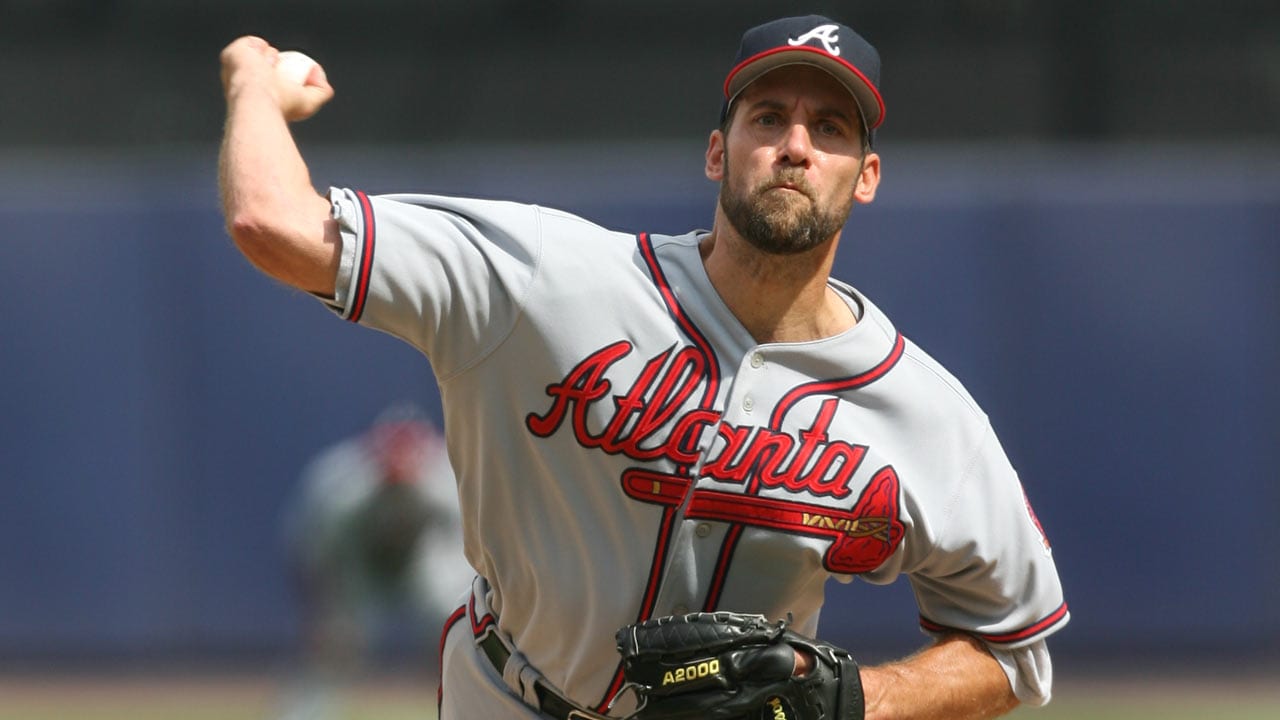
Hall of Famer and big baseball thinker John Smoltz. Photo via Atlanta Parent

We talked about Manfred’s expansion floating last week, and lots of pundits out there are doing the same thought exercises related to where two new teams might pop up (Salt Lake City and Nashville … or maybe Portland and Charlotte), and then how we’d realign to go to an NFL-style 8 division format.

However, I got fed a little interview with John Smoltz, hall of fame Braves pitcher and now excellent broadcaster, and he had some awesome ideas.

Here’s his proposal:

Fewer Divisions, not More.

Don’t go 8 divisions of 4 teams each … go 4 divisions of 8 teams each. Then, keep the divisional focus in scheduling and make the adjustments so you’re more geographically sound. So, borrowing from my previous post, we could combine some of my proposed divisions to look something like this

  • AL East/Southeast: Boston, Toronto, New York, Baltimore plus Kansas City, Colorado, Houston, Texas
  • AL Central/West: Minnesota, Detroit, Cleveland, Chicago and Seattle, Salt Lake City, LA, Oakland/Las Vegas
  • NL East/Southeast: Philly, Pittsburgh, New York, Washington and Miami, Tampa, Nashville, Atlanta
  • NL Central/West: Milwaukee, Chicago, Cincinnati, St. Louis and LA, Arizona, San Diego, San Francisco

Honestly, i’d just abandon the geographical terms and go with some NHL-style division names. I’d probably pick four historical names for the divisions with ties to one of the teams in that division.

  • the AL Ruth Division for the AL East
  • the AL Cobb Division for the Central/West
  • the NL Aaron Division for the NL East division
  • the NL Mays Division for the NL Central/West

Each team in these divisions play each other in 3 home/away series (that makes for 18 games * 7 opponents = 126 games), then you get one 3-game set against each team in opposite AL division alternating home/away year by year (8*3 = 24 games), then that leaves 12 games/4 series that can either go against your designated NL rival or maybe like the NFL you rotate around chunks of the opposite league and play exactly 4 of them each year on a rotating basis. Something like this.

However, this isn’t the awesome part.

Declare First Half and Second half winners!

Brilliant. Winners of both halves get byes in the October playoffs, then are joined with Wild Cards determined somehow (that’s the hard part).

The real brilliance is this: by having a first half and a second half, you get stuff we don’t have now:

  • A playoff race from Mid June to Mid July that we don’t have now with real implications.
  • Another playoff race at the end of the year which we have now. We have a playoff race now of course in September, but this one won’t have the same feel since the first half winners won’t be part of it necessarily.
  • Teams that finished dead last in the first half don’t have to “give up” at the trade deadline and can regroup. This is his big reason: he’s tired of seeing teams give up in July.
  • If a team wins both halves, they get a playoff bye or some other incentive.
  • Wild Cards can be given based on several factors; 2nd place teams in the races, or if a team manages to have the best overall record but doesn’t win either half they are guaranteed a playoff spot as well.

Let’s assume that we want the same number of playoff teams that the 32-team expansion/NFL style schedule dictates; that being 6 teams. Here’s how this could look:

  • AL East 1st Half Winner
  • AL East 2nd Half Winner
  • AL West 1st Half Winner
  • AL West 2nd Half Winner
  • Two AL Wild Cards: the two teams with the best full season records, or perhaps the two teams with the best individual half records.

Playoffs could go like this

  • Two best half records get byes. If they’re the same team, go to next best team.
  • If same team wins both halves, you’d go with 2nd best team.
  • Wild cards play into the two lowest ranked half winning teams.

It would take some noodling to figure out the wildcards honestly. Maybe you just go 1st half winner versus 2nd half winner and eliminate wildcards … though this is a revenue non-starter since playoffs generate so much cash for the owners.

Some thoughts.

what do you th ink? Do you like half winners?

Written by Todd Boss

August 24th, 2025 at 10:36 am

MLB Expansion is coming … along with even more realignment tumult?

8 comments

A 40-year sustained record of … destruction of the sport, Manfred and Selig

MLB’s commissioner has long been on the record saying that, once the league resolved the two big stadium issues it has had (Oakland and Tampa Bay), that they’d pursue expansion. He’s been saying this for years, and as recently as mid-2023 intimated the same. In fact, I wrote a big chunk of this article in February of 2024, the last time Manfred really went off on this topic. However, His most recent comments on the topic, made this week at the LLWS, included another hyper-parsed comment related to expansion giving the league a chance to “geographically realign,” code-word for “big time changes” that has the industry buzzing … and not in a good way.

With Tampa Bay now having a $1.3B plan for a new stadium in St. Petersburg, and with Oakland’s move to Las Vegas approved and a $1.5b stadium approved, we’re getting really close to the point where all 30 existing teams play in “acceptable” stadiums (ignoring for the moment the fact that Kansas City and the White Sox are now both clamoring for new stadiums). Manfred just stated that he wants to retire in 2029 AND have expansion plans in place before he retires … so we kind of have a roadmap for expansion.

So lets talk about MLB expansion. The league has sat at 30 teams for decades, which has lead to weird divisional alignments for all this time, for unbalanced schedules where there’s interleague play every day, and for odd wild-card scenarios. The NFL has 32 teams and a very neat eight division structure that MLB seems to want to emulate. Furthermore, Manfred’s latest claims, coupled with some recent Media landscape changes, has another interesting wrinkle: the possible alteration of the league structure of Baseball to move more towards an “Eastern” and “Western” league structure. This is how the NBA and NHL do things, and it cuts down on cross-country travel significantly for teams. So, we’re now talking about the possible death of the American and National leagues, which have been around for 120+ and 140+ years respectively. This is no light talking point.

Why does a geographically balanced schedule appeal to Manfred and the owners? Well, it certainly could cut down on travel costs. Here’s a quick example of an NBA team’s schedule: They play 82 games a year (which you could neatly double to see what an MLB team might look like):

  • You play the four teams in your division four times each: 16 games
  • You play the other ten teams in your conference at least three times each 30 games
  • You play a select few conferences teams one additional time: 6 more games.
  • You play the opposite conference two times each: 30 games

So, out of the 82 games, teams only travel across the Mississippi river 15 times, and many of those trips are planned out so that teams hit multiple non-conference opponents in a row. For example, when looking at the Washington Wizards 2025-26 schedule, you’ll see trips like what they take between March 25th-March 30th, where they play at, in order, Utah, Golden State, Portland, and Los Angeles. On another trip in Jan 2026, they’ll play in order at Phoenix, at LA, at Sacramento, and at Denver in a row. That’s basically every West Coast game done in two 6-day trips. MLB would LOVE to be able to do this, instead of forcing the Nats to do what they do now: a 4-game trip just to Denver then home, then a week in Seattle & Arizona, then 9 days in California in June, then 3 days in San Francisco in August, etc.

I looked at the topic of expansion more than a decade ago in this space, noting that adding 2 teams made more sense than mass realignment. At the time, I noted that the two biggest markets without baseball were Portland and San Antonio/Austin, while pointing out the challenges that Montreal/Vancouver would face, and kind of passing over Charlotte/Research Triangle.

So, a decade later, who are the leading candidate cities? Things have changed. We now have some familiar names from consideration and a couple new ones. ESPN just did a very nice deep-dive into all these areas that’s worth reading, if you want to really hear the pros and cons of each market.

Here’s the list, in likely order of getting a team (Note: in a first draft of this article done several years ago, las Vegas was the #1 option … now they’ve gotten a team, so we’ve moved to the next two.

  • Nashville
  • Salt Lake City
  • (seemingly a gap)
  • Portland
  • Austin/San Antonio
  • Charlotte
  • Raleigh/Durham
  • Montreal
  • Vancouver
  • Orlando
  • Sacramento
  • San Jose
  • Mexico City

So here’s some thoughts on each:

  • It seems like the front runners are Nashville for sure and either Portland or Salt Lake City right now, altogether for a bunch of independent reasons. One in the East, one in the West. One in the kind-of-underserved NC/TN middle Atlantic area to serve the fan base between DC and Atlanta, and one in an underserved sports market Portland/SLC. Jeff Passan’s recent analysis gives a deep dive into why SLC is in the mix suddenly. Nashville and Salt Lake City are both ranked in the 20s in terms of MSA and TV markets, which makes them “small markets” if they get teams … but there are no big cities anymore.
  • Portland could be the #1 alternative to SLC as the ‘west coast’ selection, and would solve a bunch of issues in that city … but there are ownership group concerns. It also barely has baseball now; it doens’t have a minor league team in the city itself, and the area only supports a High-A team and some wood-bat summer teams.
  • Salt Lake, it should be noted, is smaller than Milwaukee, the current 30th ranked team in the sport. Would that be a factor?
  • The San Antonio/Austin would seem like a shoe-in, given that its a huge market and in a baseball hotbed, but seems too close to Houston. Plus … is it in San Antonio or in Austin? You can’t stick a team in some dinky town like New Braunfels or San Marcos and cater to both markets … no a stadium has to be center-city to take advantage of the downtown culture in order to be successful in the modern game.
  • Charlotte and Raleigh/Durham are great choices but seem to be “behind” Nashville for whatever reason. Charlotte has the NFL and NBA, has Nascar, has a ton of money. It’s also the biggest US market w/o baseball by population. Nobody would be surprised if it supplanted Nashville as the “east coast” expansion team.
  • Montreal, for reasons I don’t really understand, continues to be thrown about as a possible location despite reams of evidence that it can’t/won’t support baseball. However, it remains in the discussion b/c it is, by far, the largest population market in the US or Canada without MLB baseball.
  • Vancouver doesn’t really seem to be in the discussion right now but are listed as an option in some places. I’ve seen people push back on Portland in Quora answers … and every argument anti-Portland people make works for Vancouver as well.
  • Tampa and Miami barely draw, and Orlando is primarily a tourist town, so i’m not sure who would want to put another team there.
  • I just can’t imagine Sacramento supporting a team; California’s government has proven to be very anti-public stadium funding, and they’d have to build something out of scratch in a market that basically exists to support the state government. It is on this list though b/c Sacramento is the largest market by DMA (tv rankings) w/o the sport.
  • San Jose is completely blocked by San Francisco’s territory rights, as the Supreme Court told us a decade ago before it got even more conservative in the last presidential term. Nevermind that downtown San Jose is more than 55 miles away from Oracle Park in Downtown San Francisco along a corridor that’s amongst the heaviest traveled in the US. Distance from Downtown Baltimore to Nats stadium? 38.3 miles.
  • Lastly I laugh at anyone who thinks that Mexico City could support a team, given that the median income in Mexico is a 6th of what it is here (somehow I don’t think MLB players in Mexico are going to accept being paid in pesos).

So, some navel gazing; what would 32 team divisions look like with two new teams in Nashville and Salt Lake City? It’d look pretty cool I think, if you’re not blowing up the leagues.

Current AL Divisional makeup:

  • AL East: Boston, Toronto, New York, Baltimore, Tampa
  • AL Central: Minnesota, Detroit, Cleveland, Chicago, Kansas City
  • AL West: Houston, Texas, Seattle, Los Angeles, Oakland/Las Vegas

So, you have to pull a team out of the East to make an “AL Southwest” division to go with Nashville. The obvious choice is Tampa. But, you also have two teams in the AL West that are in Texas while the rest are on the coast. That seems to imply that they’d make more sense to pair with this new group while Portland heads into a division with Seattle for rivalry purposes. But that leaves too many teams in the AL.

Meanwhile, here’s current NL Divisions:

  • NL East: Philly, Atlanta, Washington, New York, Miami
  • NL Central: Pittsburgh, Milwaukee, Chicago, Cincinnati, St. Louis
  • NL West: LA, Arizona, San Diego, San Francisco, Colorado

Atlanta and Miami are kind of isolated from the Northeast corridor teams and make sense to yank out. Pittsburgh could move to create an in-division rivalry with fellow Pennsylvania state. But how do you balance this out?

Divisional Scenario #1: Here’s some proposed eight team divisions that prevents any teams from having to move from AL to NL:

  • New AL East: Boston, Toronto, New York, Baltimore. Classic rivalries maintained, little impact.
  • New AL Southeast: Tampa, Kansas City, Houston, Texas. You move KC to be closer to the Texas teams. Tampa the outlier, but this is least impact to the existing AL.
  • New AL Central: Minnesota, Detroit, Cleveland, Chicago. Minimal impact.
  • New AL West: Seattle, Salt Lake City, LA Angels, Oakland/Las Vegas. You have your new Northwest rivalry and all the teams are in the same time-zone, which you can’t say now.
  • New NL East: Philly, Pittsburgh, New York, Washington: you move Pittsburgh to create a new cool rivalry with Philadelphia and these teams can all take the train to play each other.
  • New NL Central: Milwaukee, Chicago, Cincinnati, St. Louis; minimal impact, keep century-old rivalries alive.
  • New NL Southeast: Atlanta, Miami, Nashville, Colorado; this would be perfect except for Colorado, which is difficult to place anywhere.
  • New NL West: LA, Arizona, San Diego, San Francisco; all four now in the correct time zone

Divisional Scenario #2: Now, if you weren’t opposed to having some AL->NL movement, you could put both new teams in the AL, move some teams to the NL, and create some better geographic divisions like this:

  • New AL East: Boston, Toronto, New York, Baltimore.
  • New AL Central: Minnesota, Detroit, Cleveland, Chicago
  • New AL Southwest: Kansas City, Colorado, Houston, Texas. Colorado is forced to move to the AL, but gets the best ever regional travel schedule its ever had.
  • New AL West: Seattle, Salt Lake City, LA, Oakland/Las Vegas
  • New NL East: Philly, Pittsburgh, New York, Washington
  • New NL Southeast: Miami, Tampa, Nashville, Atlanta. Tampa is forced to move to the NL, but you get a division where all four teams are on the same Interstate (I-75).
  • New NL Central: Milwaukee, Chicago, Cincinnati, St. Louis
  • New NL West: LA, Arizona, San Diego, San Francisco

I love this second scenario honestly. Minimal teams changing leagues (just two newer teams in Tampa and Colorado having to move leagues) and a ton of improvements in geographic rivalries.


Divisional Scenario #3: Manfred’s East/West conference layout, destroying current leagues, may look something like the following. First, we squint at the map of the teams to figure out the 16 teams in each conference:

  • Eastern Conference: Boston, Toronto, NYY, Baltimore, Philly, Pittsburgh, NYM, Washington, Detroit, Cleveland, Miami, Tampa, Nashville, Atlanta, Cincy, Milwaukee
  • Western Conference: LAA, LAD, Arizona, San Diego, San Francisco, Seattle, Salt Lake, Oakland/Las Vegas, Colorado, Houston, Texas, Kansas City, St. Louis, Minnesota, Chicago, Chicago

So, right off the bat, you have an issue here: The two Chicago teams in the “Western conference” seems silly. But, if you look at the distribution of teams geographically … you have to draw the line at Chicago. And, if you were giving up on leagues, might as well give up on divisional splits too:

  • New Eastern Division 1: New York, New York, Boston, Toronto
  • New Eastern Division 2: Baltimore, Washington, Pittsburgh, Philly
  • New Eastern Division 3: Miami, Tampa, Atlanta, Nashville
  • New Eastern Division 4: Cleveland, Detroit, Milwaukee, Cincinnati
  • New Western Division 1: Houston, Texas, Colorado, Kansas City
  • New Western Division 2: LA, LA, San Diego, Arizona
  • New Western Division 3: SF, Oakland/Las Vegas, Seattle, Salt Lake City
  • New Western Division 4: St. Louis, Minnesota, Chicago, Chicago

Can you imagine the two New York teams, or the two Chicago teams, playing each other 18 times a year? Can you imagine us playing Baltimore 18 times a year? Can you imagine having both NY teams, Boston, and Toronto in one division, ensuring that the likelihood of two of them missing the playoffs every year is high? Does this alignment ensure Atlanta wins the next 20 divisional titles out of that group?

A final thought; when MLB introduced simple rule changes to improve the sport’s presence on TV, purists lost their minds. Imagine the fight baseball will have with the soul of its purist fanbase if/when they push to eliminate divisions or leagues? I just can’t imagine the damage they’ll do to the fan base if they decided to blow up 140 years of history so the owners can save a few bucks on airline fuel.

Conclusions: Do I “want” expansion? Sure. Two more teams means more MLB opportunities for players plus another dozen minor league teams, which turns into hundreds more jobs for players. It also opens the door for new markets, more fans, better reach, etc. I have a whole detailed analysis of how we’d come up with two new sets of minor league teams for two expansion clubs that will wait until we’re closer to it.

Do I want the elimination of leagues to do “geographic realignment?” Of course not. We live in 2025, not 1925; these players travel on private jets, not coal-fired overnight trains. But I do think my #2 scenario above makes the most sense (moving Colorado and Tampa leagues and adding two new teams) is the best.

Written by Todd Boss

August 20th, 2025 at 9:50 am

Harper curses out the Commissioner – is he right?

8 comments

This is probably what Manfred wishes Harper had looked like during their clubhouse confrontation. Photo via GQ Magazine

I wrote this post the day the event happened, but we’ve had one thing after another and now its 3 weeks on. None the less, it’s still a topic i’m pretty passionate about, so lets post this.

So, the MLB commissioner (who works for the owners, lest we forget) is apparently making the rounds of MLB clubhouses to start putting a little nugget into the players’ minds ahead of the next collective bargaining session, and that nugget is simple: the sport needs a Salary Cap. He’s doing this to provide “cover” for the high likelihood of a lockout at the end of the 2026 CBA, one which baseball insider Ken Rosenthal already puts as a 90% likelihood.

And, when Manfred went to the Phillies clubhouse, one filled with veterans and highly-paid superstars, Bryce Harper told him to get the f*ck out.

Now, Harper is a lightning rod in the sport, and has been since he was 16. He’s hot headed, he gets ejected a lot. He’s been in fights on the field. So, I can understand if you immediately thought it was one more example of him being a hot-head. But, in this instance Is Harper right?

Yeah he is, because as usual the commissioner being disingenuous and is selling something that the owners want, and which won’t help the players as much as he’s claiming.

First, lets lay down some basic Macro Economic facts about Baseball.

So, the players are currently getting paid right around 40% of total revenues in combined salary. If you want to add in a few more million per team to cover its 150 or so minor leagues collectively, fine, but it doesn’t really change the overall economic argument.

The other three major leagues in North America all have salary caps (as the commissioner will remind you), but the other three also have defined percentages of revenues that go to the players AND they have salary floors. Lets go league by league:

The NBA has a soft cap with exceptions and taxes built in:

  • their CBA calls for players to get 51% of “basketball related income” or BRI
  • In 2024, the salary cap is $140M
  • in 2024, the salary floor is $126M
  • But, teams can go over the cap to sign their own players and are then taxed at differing levels going north at $170M and upwards in a very complex system that is covered well on this wiki page.

Not for nothing, but there’s a NBA salary FLOOR of $126m, for basically 12 active players a night. Meanwhile, there’s 12 of the 30 MLB teams that aren’t spending that much right now … for 26 guys.

The NFL has a hard cap system in place:

  • The hard cap in 2024 was $255M, which is increasing to $279M for 2025.
  • There is a defined salary cap floor; 89% of the cap over a rolling four year period.
  • The split between owners and players is supposed to be 50/50, though tactics by the owners now have that at more like a 52/48% to the players. Still a lot more than 40%.

Lastly, the NHL also has a hard cap with a floor and a defined revenue split in place:


So, Mr. Manfred, you want a salary cap in MLB? Fine. But it should come with two stipulations:

  • if there’s a cap, there needs to be a floor.
  • if there’s a cap, it needs to come with a defined percentage of revenues to the players that’s adjusted annually to league revenues.

Good luck pitching that to owners, because there’s no way they’ll agree to it. The Owners want to have their cake and eat it too, per normal. Which is why it’ll never happen voluntarily, and why we probably face a work stoppage after this CBA expires as the owners push for it.

Let’s say for sake of argument that the players demand 50% of revenues. Only seems fair right? Every other pro league in the continent basically has a 50/50 split, and without the players there’s no game. Lets forget for a moment that only 1 or 2 teams make their books public (Toronto and Atlanta as publicly traded teams); the rest have private books where they claim they’re losing millions while watching their franchise values grow exponentially over time. Some teams own their own RSNs and net hundreds of millions more in revenues that are completely off the books and out of the public eye. In all likelihood the quoted annual revenue figure is an estimate and is likely low, but for the sake of the rest of this article I’m going to trust the $12.1B revenue figure for the industry.

Lets do some simple arithmetic:

  • 50% of $12.1B in revenues is $6.05B
  • If the players were given 50% of revenues, then $6.05B split into 30 teams = an average payroll of $201M per team.
  • Right now, the average payroll in the league is $163M. The median team income is even lower thanks to massive spending at the top; just $142M.
  • Only 10 teams out of the 30 even hit $200M this year, and 5 teams don’t even hit $100M.

You want a salary cap? Fine: then basically every team needs to increase its payroll right now around $40M to make up for the missing money across the entire industry. That would instantly make up the $1.2B gap between a 40% revenue split and a 50% revenue split. Commit to an NFL-style rolling four-year salary floor structure where teams have to spend 89% of the salary cap over a rolling period; this would theoretically allow teams to purposely spend less to rebuild, but then would force them to catch back up and play by the rules. But, if the teams attempt to cheat (ahem Miami), then that money still has to be paid to the players somehow, and there needs to be enforced penalties that actually hurt the team.

Does anyone here think any small market team like Pittsburgh, or Miami, or Tampa, or wherever the Athletics are right now are onboard for an average payroll of $200M? Or, even to be forced to increase spending $40M right now? Of course not. Which is why a salary cap without a floor or a revenue split is NEVER going to be fair to the players.

By the way, none of this is news. This payroll discrepancy issue has been the case ever since the Luxury tax went into effect. An entire generation of middle-aged players on the wrong side of 30 suddenly disappeared out of the game once the luxury tax started because it gave cover to teams to basically stop spending. Multiple times there’s been grievances filed by the MLBPA against teams for not even spending their revenue sharing dollars, and one team (Miami) has been so audacious in their skirting of the rules that they don’t even bother to try to adhere to the guidelines. There’s basically no penalties being levied for teams that are cheating, and at the end of the day the collective payroll of the players takes the cut.

Meanwhile, every time a player actually gets paid … the next chorus of “players are overpaid” nonsense comes from a certain part of the fan base, who have been conditioned by ownership over decades of labor fights to look at these 8-figure deals (while simultaneously looking at their own 5-figure salaries) and blame players for being “greedy” every time this issue comes up. If you’ve ever said to yourself, “why does Juan Soto need $70M/year?” then you’re buying into the owner’s game as well. You can’t look at one individual player’s contract; you have to look at the industry as a whole, and owners have short-changed players billions of dollars of salary over the past decade. Billions and Billions of dollars.

(Also, if you want to complain about baseball players being “overpaid” just go take a look at the NBA per-season salaries … and take a look at the number of guys making $30M/year or more who literally you couldn’t pick out of a lineup. There’s 60 players in the NBA making $30M/year or more, which is more than double that of the current MLB despite having a fraction of the players. Except … this is what the players there deserve, since the league makes so much money. This is where dozens more baseball players should be).

So, when Manfred comes to peddle his nonsense, the players absolutely should tell him to “get the f*ck out” unless he wants to have a legitimate conversation about how a cap, and a floor, and a revenue split, would be discussed.

Written by Todd Boss

August 18th, 2025 at 2:33 pm

MLB Pipeline updates its top 30 post Draft

44 comments

Your new #1 Nationals prospect, Eli Willits. Photo via MLBpipeline/Getty Images

The third of the “big 3” scouting/prospect ranking shops (BA, Fangraphs, and MLBpipeline) updated and published its system top 30s this week, so following on similar analysis with the other two shops published, I thought i’d put out a review. So, here’s a look at how Mayo/Callis and the team at the MLB Pipeline shop viewed our draft haul, along with some tweaks they made while they had our system cracked open this month.

Click here for the updated list. Top 30+ list is in a table below.

RankFirst NameLast NamePosition
1EliWillitsSS
2TravisSykoraRHP (Starter)
3JarlinSusanaRHP (Starter)
4LukeDickersonSS/CF
5AlexClemmeyLHP (Starter)
6LandonHarmonRHP
7SeaverKingSS
8EthanPetry1B/OF
9CoyJamesSS
10CadeCavalliRHP (Starter)
11JakeBennettLHP (Starter)
12CalebLomavitaC
13RobertHassell IIIOF (CF)
14ChristianFranklinOF (CF)
15AngelFeliz3B/SS
16Sean PaulLinanRHP (Starter)
17MiguelSime Jr.RHP
18RonnyCruzSS
19EriqSwanRHP (Starter)
20YohandyMorales3B
21JacksonKentLHP (Starter)
22AndryLaraRHP (Starter)
23YoelTejeda Jr. RHP (Starter)
24BrayanCortesiaSS
25DanielHernandezC
26SamPetersonOF (CF)
27CristianVaqueroOF (CF)
28MarconiGermanSS
29RandallJoshRHP (Starter)
30TylerStuartRHP (Starter)
31VictorHurtadoOF
32BeeterClaytonRHP (Reliever)
33CaydenWallace2B/3B
34KevinBazzellC/3B
35KevinMadeSS
36Sir JamisonJonesCA
37MarquisGrissomRHP (Reliever)
38ElijahGreenOF (CF)
39AndrewPinckneyOF (Corner)
40OrlandoRibaltaRHP (reliever)

Wait, you said MLB top 30; why are there 40 names on this list? Well, because between the draft and the trade deadline we managed to add 10 players to our top 30 list (plus an 11th who now sits in the mid 30s), and I just tacked on the next 10 players who used to be ranked a month ago to get our “top 40” instead of the top 30.

I suppose the biggest point here is this: we added 10-11 names to our top 30 prospect list within a couple weeks of each other, replacing 7-8 names who we’ve graduated this year, which is great news. Not all of these guys are going to pan out, but they’re ranked higher than the names we used to have in these spots for exactly one reason: they’re better players. If we “hit” on these 2025 draft picks in particular, we may be sitting pretty at some point soon.

The MLBpipeline team didn’t do a ton of fiddling around with the existing players ranked in the top 20 (so, for example, no dropping Sykora based on new TJ news), but in the 20-30 range we did see some movement up or down, which I’ll highlight below.

So, here’s some commentary, mostly on the 10-11 new guys:

  • First, a quick overview of the prospects who have graduated this year: in rough order of where they were ranked: Crews, House, Lile, Lord, Henry, Rutledge. And we’re darn close on Hassell and Ribalta. So, not a bad year for “using” the farm system.
  • Willits enters our system as its #1 ranked prospect, immediately supplanting both Sykora and Susana. Would I have ranked him above a healthy Sykora? No. But this is pretty consistent with where other shops are putting Willits. Fangraphs had him below both Sykora and Susana, others all have him starting #1 for us.
  • Here’s where Willits is being ranked in the entire minors before he plays a game: MLBPipeline #18, Baseball America #30, Fangraphs #44, Keith Law #48. So, yeah this is a big-time prospect.
  • 2025 Draftees Harmon (3rd rounder), Petry (2nd rounder) and James (5th rounder) all pop into our top 10 list as a starting point. This is more aggressive than where BA or Fangraphs put these other three guys. The final 2025 draftee getting a $2M bonus was NYC hurler Sime, coming in at #17.
  • Our Trade deadline netted us 10 prospects, six of which appear in the top 30-35 range on MLB’s list. The highest ranking is AAA OF Christian Franklin, who comes in at #14 in the system.
  • Linan, Cruz, and Swan all pop in to our rankings in the 16-19 range as a starter.
  • Kent got moved up roughly 8 spots in the new rankings, a nod to his decent pro debut in High-A.
  • The team moved up Brayan Cortesia a few spots to account for his .327/.447/.374 line in the DSL as of this writing.
  • Sam Peterson is starting to get some notice, sitting #26 now, but with the influx of players below him this indicates a roughly 12-13 spot rise this year.
  • Vaquero’s .914 OPS month has bought him some prospect love: he still sits in the low 20s but has maintained that spot with all the acquisitions.
  • A debut for DSL star Marconi German, who has 8 homers and 26 SBs in 47 DSL games this year.
  • Tyler Stuart takes a dive; he was #15 a few weeks ago, got TJ surgery, now he’s #30.

In the 31-40 range i just tacked on players who were in the top 30 before all the trade and draft acquisitions, but who are now moved out. Here’s some notables:

  • Hurtado now at #31; the $2.8M signing is being outshined by Marconi and Cortesia as he repeats DSL.
  • the final trade acquisition who was ranked at all is Better, showing up now at #32 after getting pushed down by our 5 draftees.
  • Cayden Wallace, who I ranked #7 pre-season, now is #33 on this list. Phew.
  • Kevin Bazzell, who we drafted last year to some promise, has done so little this year that he’s now out of the top 30.
  • Elijah Green now sits at #38 on this list.
  • Is Andrew Pinckney “only” the 39th best prospect in the system? A 24yr old in his second AAA season, who can play CF and might finish the season with 20 homers? What am I missing here?

Written by Todd Boss

August 12th, 2025 at 2:44 pm

Posted in Draft,Prospects

What Mock Draft Pundits are Best?

2 comments

I had a great idea this draft cycle. How do we tell which mock draft pundits actually do the best job of predicting the draft? Since I’ve got such hyper coverage of the draft going back a few years, this post circles back to the past few drafts, posts the actual top five players picked, then posts the final mock draft predicted top 5 from major pundits to see who is getting these things right. For the most part I have the same 8 pundits who do mocks going back to 2020.

I’ll include links to past content from this blog, which generally had links to the mock drafts leading up all the way to draft day. In each section there’s:

  • Actual Draft top 5 link, which goes to baseball-reference.com’s draft database for that year.
  • The Major Pundit final mock post here on nationalsarmrace.com from the day of the draft.
  • Then, pundit by pundit a direct link to their final mocks published.

2025 Draft: Actual top 5: Willits, Bremner, Anderson, Holliday, Doyle

Major Pundit final mocks

  • Keith Law/The Athletic: 7/12/25 final mock: Anderson, Hernandez, Arquette, Holliday, Willits (3/5)
  • Jim Callis/MLBPipeline 7/13/25 Final Mock: Anderson, Doyle, Hernandez, Holliday, Willits (4/5)
  • Jonathan Mayo/MLBPipeline: 7/13/25 Final Mock: Anderson, Doyle, Hernandez, Holliday, Willits (4/5)
  • Baseball America Staff. Final Mock 7.0 7/13/25: Anderson, Doyle, Hernandez, Holliday, Willits (4/5)
  • ESPN/Kiley McDaniel: Mock 3.0 7/10/25: Anderson, Doyle, Hernandez, Holliday, Willits (4/5)
  • Fangraphs/Eric Longenhagen: 2025 Mock 7/13/25: Willits, Doyle, Holliday, Anderson, Carlson (4/5)
  • Mike Axisa/CBSSports First Round Prediction 7/13/25: Anderson, Doyle, Irish, Holliday, Willits (4/5)
  • BleacherReport/Reuter: 7/12/25 final mock: Anderson, Doyle, Arquette, Holliday Willits (4/5)
  • Prospects 1500: Final Mock 7/13/25: Anderson, Arnold, Hernandez, Holliday, Willits (3/5)
  • Prospects Live Final Mock 7/12/25: Anderson, Doyle, Hernandez, Holliday, Arnold (3/5)
  • Baseball Prospect Journal: Mock 4.0 7/20/25: Anderson, Arnold, Arquette, Holliday, Willits (3/5)

What Happened? Well, the ONLY pundit to have the Nats taking Willits 1-1 in the end was Longenhagen, but then the rest of his top 5 was way off. Willits was in nearly everyone’s top 5, but primarily going 5th to the Cards. Mostly everyone had Holliday-Colorado, but Bremner at #2 was a massive shock. The Nats parting ways with their GM a week before the draft seemed to grease the skids to go with youth versus polish, and hence the near consensus 1-1 Anderson slipped to the Mariners, who were probably shocked and ecstatic at the development. Guys frequently mentioned in the top5 all spring who slipped out: Arquette slipped to #7, Hernandez to #6, and Arnold all the way to the Athletics at #11.

Who was Closest? Longenhagen the only one to get Willits right. Most of the pundits got 4 of the top 5 right ultimately, but not in the correct order. Nobody had Bremner in the top 5.


2024 Draft: Actual top 5: Bazzana, Burns, Condon, Kurtz, Hagen Smith.

Major Pundit final mocks:

  • The Athletic/Keith Law’s Final Mock 7/14: Bazzana, Condon, Burns, Montgomery, Caglianone. (3/5)
  • MLBPipeline/Jim Callis Final Mock 7/14: Wetherholt, Condon, Burns, Bazzana, Griffin (3/5)
  • MLBpipeline/Mayo Final Mock 7/14: Wetherholt, Condon, Burns, Bazzana, Montgomery (3/5)
  • Baseball America/Collazo Final Mock 7/14: Wetherholt, Condon, Burns, Bazzana, Caglianone (3/5)
  • ESPN/KIley McDaniel Final Mock 3.1 7/14/24: Bazzana, Condon, Burns, Wetherholt, Caglianone (3/5)
  • Fangraphs/Longenhagen Mock 7/11/24: Bazzana, Condon, Burns, Montgomery, Caglianone. (3/5)
  • CBSsports/Mike Axisa: Final Mock 7/14/25: Bazzana, Condon, Smith, Montgomery, Caglianone (3/5)
  • BleacherReport/Reuter final mock 7/13/24: Bazzana, Condon, Burns, Montgomery, Caglianone. (3/5)

What happened? Bazzana surprised many and took a haircut off the 1-1 draft slot, but word had gotten out by draft day so the best connected pundits knew. Everyone had Condon & Burns , though not in the right order. Oakland at #4 was “on” Kurtz for a while, then the industry thought they backed off, but they picked him anyway, and nobody had him in their mocks. The joke is on the industry; Kurtz is destroying MLB pitching this year for the Athletics and had a famous 4-home run game a few weeks ago. Lastly the Smith pick was a shock to everyone. Montgomery and his broken leg was in most people’s top 3; he ended up slipping past the Nats to #12.

Who was Closest? So, most everyone got 3 out of 5, with nearly everyone having the same three names at the top. Props to those who didn’t have Wetherholt going 1-1 as the “winners” of this mock draft cycle.


2023 Draft: Actual top 5: Skenes, Crews, Clark, Langford, Jenkins.

Major Pundit final mocks (I did not do a mock draft collection in 2023)

  • The Athletic/Keith Law Final Mock: Langford, Skenes, Crews, Clark, Gonzalez (4/5)
  • MLBPipeline/Jim Callis Final Mock: Langford, Skenes, Crews, Clark, Jenkins (5/5)
  • MLBpipeline/Jonathan Mayo Final Mock: Langford, Skenes, Crews, Clark, Gonzalez (4/5)
  • Baseball America/Carlos Collazo final Mock 7/9/23: Langford, Skenes, Crews, Clark, Jenkins (5/5)
  • ESPN/KIley McDaniel final mock v3.1 7/9/23: Langford, Skenes, Crews, Clark, Gonzalez (4/5)
  • Fangraphs/Longenhagen mock v2.0 7/9/23: Langford, Skenes, Crews, Jenkins, Clark (5/5)
  • CBSsports/Mike Axisa: final mock 7/9/23: Crews, Skenes, Langford, Clark, Teel (4/5)
  • BleacherReport/Joel Reuter final mock 7/8/23: Skenes, Crews, Langford, Clark, Gonzalez (4/5)

What happened? The industry was convinced that the cheapskate Pirates were shying away from bonus demands from Crews/Boras and wanted a bat over an arm, leading them to Langford. Instead, on draft day Pittsburgh stayed true to their board and took the consensus 1-1 pick in Skenes, which then cascaded Crews to us at #2. Langford blew through the minors and looked like a steal for Texas as #4.

Who was Closest? Several pundits got the top 5 right, but only Bleacher Report had Skenes correctly going 1-1. Interestingly, the player most missed with (Gonzalez) fell to 15th in the draft (??), a weird set of events.


2022 Draft: Actual top 5: Holliday, Jones, Rocker, Johnson, Green

Major Pundit final mocks

  • Keith Law final mock 7/16/22: Holliday, Jones, Green, Collier, Nats take Parada (3/5)
  • MLBpipeline Callis final mock 7/17/22: Jones, Holliday, Green, Johnson, Nats take Parada (4/5)
  • MLBpipeline Mayo final mock 7/17/22: Jones, Holliday, Parada, Johnson, Nats take Lee. (3/5)
  • Baseball America: Final Mock 7/15/22: Holliday, Jones, Parada, Johnson, Nats take Green. (4/5)
  • ESPN McDaniel mock 3.0 7/15/22: Jones, Holliday, Parada, Collier, Nats take Berry. (2/5)
  • Fangraphs/Longenhagen: mock 7/17/22: Johnson, Jones, Holliday, Neto, Nats take Parada (3/5)
  • CBSsports Mike Axisa final mock 7/14/22: Johnson, Jones, Holliday, Collier, Nats take Green (4/5)
  • Bleacher Report/Reuter: 7/16/22 final mock: Jones, Holliday, Johnson, Collier, Nats take Parada (3/5)

What happened? Most of the pundits got this relatively close, though there was a lot of mention of Kevin Parada in the top 5 (he ended up going 11th). Everyone had Holliday-Jones going 1-2. Some had Brooks Lee or Cam Collier in the top 5: Lee slipped to 8th while Collier went 18th (how do you go from a top 5 pick to 18th?)

Who was Closest? Baseball America was probably the closest here, getting four of the top 5, correctly predicting 1-2, and getting the Nats’ Green pick.


2021 Draft: Actual top 5: Davis, Leiter, Jobe, Mayer, Cowser. Nats at 11 get House.

Major Pundit final mocks

  • The Atlantic (Keith Law) Mock 7/9/21: Mayer, Rocker, Leiter, Davis, Watson. Nats land Jobe (3/5)
  • MLBPipeline (Callis) Final Mock 7/10/21: Mayer, Leiter, Jobe, Davis, Watson. Nats take Bednar. (4/5)
  • MLBPipeline (Mayo) Final Mock 7/10/21: Mayer, Leiter, House, Davis, Watson. Nats get Madden (3/5)
  • Baseball America v7.0 day of: Mayer, Watson, Jobe, Leiter, Lawlar. Nats take Madden (3/5)
  • ESPN/McDaniel: 7/11/21 mock: Mayer, Leiter, Jobe, Davis, Watson. Nats take Madden (4/5)
  • Fangraphs/Longenhagen day-of Mock 3.0: Mayer, Leiter, Jobe, Davis, Lawlar. Nats go Madden (4/5)
  • CBSsports (Axisa) Mock 7/9/21: Mayer, Lawlar, House, Leiter, Davis. Nats take Jobe (3/5)
  • Bleacher Report (Reuter) mock 7/11/21: Meyer, Lawlar, Jobe, Leiter, Cowser. Nats Madden (3/5)

What happened? Pittsburgh got a big haircut off of Henry Davis at 1-1, which threw off everyone’s mock draft. Then, Rocker inexplicably slipped to #11 and the Mets, where he infamously didn’t sign due to arguments about medicals. For whatever reason, House slipped all the way to the Nats at #11 and we nabbed him, in a series of moves similar to the Rendon draft. Ty Madden, who many of the pundits had the Nats taking at #11, didn’t go until the 32nd overall pick and just made his MLB debut.

Who was Closest? Jim Callis, Longenhagen and McDaniel hit on their first four picks, just getting them in the wrong order. Props to Reuter for being the only one to mention Cowser who goes 5th


2020 Draft: Actual top 5: Torkelson, Kierstad, Meyer, Lacy, Martin. Nats at #22 get Cavalli.

Major Pundit final mocks

What happened? In the weird Covid year, most all the pundits were really “on” this draft, getting 4 of the top 5 correct. Everyone missed on the Orioles taking Kierstad at #2 and for good reason: He took $1.5M or so off his asking price, a deal no one could have known about.

Who was Closest? Nearly all our major pundits got 4 of 5 this year.


Final scores? Adding up top-5 performance for the last six drafts:

  • Keith Law/The Athletic: 20/30.
  • Jim Callis/MLBPipeline 24/30
  • Jonathan Mayo/MLBPipeline: 21/30
  • Baseball America/Collazo 23/30
  • ESPN/Kiley McDaniel: 21/30
  • Fangraphs/Eric Longenhagen: 23/30
  • Mike Axisa/CBSSports 21/30
  • BleacherReport/Reuter: 21/30

So there you have it: Jim Callis is the best, closely followed by the BA’s Collazo and Fangraphs Longenhagen. Keith Law brings up the rear, having missed out on one fewer top-5 pick than the collection of Mayo, Axisa, and Reuter. Of course, it bears noting that the entire spread is 4 picks across 6 drafts, so maybe this isn’t as conclusive as I’m making it sound 🙂

Written by Todd Boss

August 11th, 2025 at 8:10 am

Posted in Draft,Prospects

August Check-in with our top Prospects and Intro to Trade acquisitions

31 comments

Yohandy isn’t playing much at the hot corner, but he’s certainly been hot at the plate. Photo via Baseball prospect Journal

Here’s the four month check-in with all our top 20 (and some) prospects. This mostly does a July focus on the prospects being mentioned, but sometimes mentions season-long stats, which are as of 8/1/25 as best as possible.

This is our prospects as I ranked them prior to the season: If i was to re-rank prospects today a big chunk of these guys would be graduated or moved. Plus, we picked up at least six guys who will feature in our top 30 at the trade deadline; i’ll put those after the top 20 in a special section to highlight their pre-Nats stats.

#1. Dylan Crews OF (CF): Missed all of May and all of June with oblique issue, but is finally doing a rehab assignment in AAA and should be back soon. Was not hitting well before hand. Temperature: on ice, 2026 possibly a lost season.

#2 Travis Sykora RHP (Starter): What a turnaround; in a month’s time he went from a promotion to AA to needing Tommy John surgery. Temperature: on ice til 2027.

#3 Brady House 3B: Is now firmly entrenched as the 3B starter, improved his slash line in July to .270/.276/.392. Only walked once in the month; that has to improve. Needs more power too but he’s trending well. Temperature: Hot for making majors, warming up in the MLB.

#4 Jarlin Susana RHP (Starter). Seems to have dodged the TJ bullet so far with his UCL Sprain; done a few rehab starts and should be back in full-time action in AA by mid-August. Temperature: hopefully warming up soon.

# 5 Seaver King SS. Another awful month for King: .221/.282/.286. I just can’t help but think that he’s been over promoted. Yeah he was a 10th overall pick, from a big conference. But he’s just not cutting it in AA. It sure looks like we got screwed in this draft: Konnor Griffin (taken just before King) is now the #1 prospect in the entire minors per Baseball America and MLBpipeline. Rainer (taken just after us): #34 by MLBpipeline in Detroit’s system. Montgomery (the guy I really wanted): #26, in AA as well, .800 ops for the season jumping up 3 levels instead of getting over-promoted to AA before he was ready. *sigh*. Temperature: cold.

# 6 Yohandy Morales 1B got hot in a hurry in AAA: .292/.360/.510 slash in July. Nice. If he could present as a legitimate 1B/DH type in the majors, we could stop buying veteran retreads and hope they turn into a trade asset. His picture reminds me of the great Michael Morse, by the way. Temperature: warming up nicely.

#7 Cayden Wallace 2B/3B: improved in July from an awful June but is still bad: .219/.301/.356. MLBPipeline has dropped him 20-some spots in their rankings, and I can’t believe i ranked him #7 in the system this spring. Phew. Temperature: ice cold.

# 8 Cade Cavalli RHP (Starter): 0-5 with a 7.50 ERA, a 1.71 WHIP and a .340 BAA. We’re running out of excuses for Cavalli upon his return from 1.5 years off. Tommy John recovery isn’t 100% guaranteed. Temperature: Not impressing.

#9 Alex Clemmey LHP (Starter): only made 3 starts in July thanks to going to the Futures game. He took a small step back in those three starts but still was solid for the month. I wonder why the team hasn’t promoted him this year; its not like Wilmington is in a playoff race. Temperature: staying hot.

# 10 Robert Hassell III OF (CF): After getting demoted from MLB after his initial call up, Hassell didn’t do what many do (which is struggle, pout, or otherwise underperform): no: he frigging tore up AAA this month: .341/.439/.473. This has earned him a return to the majors and more playing time. Can’t ask for anything more. Temperature: scorching in July, now back in the show.

#11 Caleb Lomavita C: Not a great july: .246/.269/.338. First full pro season as the full time C in Wilmington may be wearing on him. Temperature: cool.

# 12 Luke Dickerson SS: has hit a wall in Low-A: he slashed just .197/.244/.276 for the month. He’s still starting, despite the promotion of rising prospect Angel Feliz. After such a promising start I sure hope he’s not hitting a wall already. Temperature: cold

# 13 Andry Lara RHP (Reliever): has been kept on the 26-man roster as the “Tanner Rainey” of 2025: the 8th guy out of 8 who only goes into the game if the team is winning or losing by more than 6 runs. Lots of “8-GF in an 8-1 loss” type logs. And he’s getting hit. While in AAA in July he wasn’t exactly Sandy Koufax either. Eh: he’s still only 22. Temperature: cold.

#14 Tyler Stuart RHP (Starter): He left his 6/28/25 start without getting out of the first, and it was announced this week he’s undergone Tommy John. Poof: see you in 2027. Temperature: on ice for a while.

#15 Daylen Lile OF (CF): he’s now exhausted rookie status with more than 150 PAs, and he’s holding down a starting job in the Nats outfield. He now has a 97 OPS+ for the season. Can’t argue with that for a 22yr old. Temperature: hot for getting there, warming up a bit.

#16 Kevin Bazzell C: finally found his footing at the plate this month: .288/.383/.327. Where’s the power? Zero homers this season in Low-A as a college Jr draftee from a big school. The team is keeping him as the Catcher nearly full time; just a few DH games so far. Temperature: warming.

#17 Jake Bennett LHP (Starter): They babied the hell out of him in his come back, but he’s now off rehab starts and back in AA where he belongs. First two AA starts? Not good. Shelled. He needs more time.. Temperature: cold for now, hopefully warms up.

#18 Brad Lord RHP (Starter/Reliever): basically the Nats’ 2nd best pitcher this year, and now with Soroka traded and Williams hurt will be in the rotation going forward. 18th rounder; in the rotation. Temperature: Red Hot all around.

#19 Angel Feliz SS: struggled in the last month of the FCL season (.191/.304/.294) but promoted up to Low-A nonetheless. He’ll split time at SS with Dickerson the rest of the way. Temperature: cooled off

#20 Andrew Pinckney OF (CF or corner): had a very solid AAA month: .284/.363/.556. 6 homers in 21 games. He can play any of the three OF positions and has essentially split his time almost equally amongst the three this season for Rochester. Is there something here? Temperature: warming


In honor of the trade deadline. here’s the 10 prospects we’ve acquired with their season stats and levels. They’re listed in rough order of their prospect ranking:

  • Linan, Sean Paul: SP: Age 20. 3-3, 2.78 ERA, 1.09 whip as a starter in low- and high-A.
  • Franklin, Christian: OF (CF) Age 25, .265/.393/.427 in AAA. 8 HR, 12 SB playing CF fulltime
  • Swan, Eriq: SP Age 23 4-3, 4.43 ERA, 1.38 whip as a starter in High-A. 77/46 K/BB in 69ip.
  • Cruz, Ronny: SS Age 18. .270/.314/.431 in AZL. 6 triples, 2 homers; lots of gap power.
  • Randall, Josh: SP Age 22. 5-5, 3.92 ERA, 1.32 whip in Low-A this season.
  • Beeter, Clayton: RP Age 26: 3.10 ERA in AAA as a setup/closer type: 33/16 K/BB in 20 ip.
  • Sales, R.J.: SP Age 22: 4-3, 2.71 ERA, 1.12 whip in 16 Low-A starts.
  • Eder, Jake RP (lefty): Age 26: 4.91 ERA in 8 MLB appearances this season.
  • Martinez, Browm, OF, Age 18, .404/.507/.632 slash line in 18 games this year but on 60-day dl
  • Brown, Sam: 1B age 23: .243/.350/.358 as a full-time 1B in AA this year.

The first 6 of these 10 guys are already in our top 30 on both BA and MLBpipeline lists. I like Sales and Martinez for the back-end of that list at some point. Eder might be a 4-A lefty reliever, and Brown might be a throw in. But we got 10 guys into the system in a week, which is great.


Notables #20 and above by the level they mostly played in July 2025

In MLB:

  • Six of the Eight relievers we now have in our MLB bullpen were Washington grown: Rutledge, Henry, Ferrer, Brzycky, Ribalta, and Lara. That’s awesome. We complain a lot about not developing players, and yeah its “just the bullpen,” but this is meaningful.
  • Seven of the eight relievers in the bullpen were in the minors for this team at some point this year and have been promoted up. That’s also great to see; the farm is working.
  • Now, have they been awesome? No, not really.

in AAA:

  • He was a MLFA in the off-season, so not entirely a “prospect” but Nick Schnell had himself a month in AAA: .385/.449/.854 (!) for an ops of 1.303. He hit 11 homers in the month. Wow. Where does this guy fit into the OF hierarchy?
  • #31 Chapparo hit just .203 for the month but still managed to slug his way to an OPS of .849.
  • #32 Baker still hanging around: he hit over .300 for the month again. He’ll get his shot.
  • #28 Alvarez: I know he isn’t sexy, but he seems to deserve a shot. Maybe the next time we need a starter we can add him to see what he can do.

In AA:

  • #101 Brandon Boissiere certainly is putting a kickstart into his career: .324/.444/.432 for the month in AA after putting up a couple years of mendoza line BAs.
  • #25 Made: remember when i was all excited b/c he hit the crap out of the ball one month? July: .156/.239/.297. Ouch.
  • I was so down on Riley Cornelio last off-season I didn’t even have him in my top 100. Now? He might be the Nats minor league pitcher of the year. July in AA: 4 starts, 1.66 ERA, 0.88 whip, .147 BAA. He’s a top 25 prospect right now, might get better.

In High-A:

  • #39 Sam Peterson got promoted and was basically High-A’s best hitter in June. Then, he was also the best Wilmington hitter in july, going /317/.446/.600 in that hitter’s death park in Delaware.
  • SS Courtland Lawson (born in Reston!) had a nice month, slashing .297/.358/.446 … but one has to wonder what the plan is here? He was in AA all last year, barely hit, got demoted to high-A to make way for 1st rounder King, and now he’s 25 and still in A-ball in his 4th pro season.
  • #79 Gavin Dugas went just 5-63 for the month (.079 BA) and, well, might be in serious trouble as a 25yr old in A-ball who was a $20k senior sign.
  • #42 Cranz has picked up where he left off in Low-A. Maybe we try him as a starter?

In Low-A:

  • #87 Jorgelys Mota was hitting .400 for the month and starting to push his way into top 30 area in BA and MLB when he hit the DL this month.
  • Holy cow, Vaquero is hitting! .329/.361/.553 with 3 homers and a ton of XBH for the month.
  • #67 Yoel Tejeda Jr and Davian Garcia (who I didn’t even rank in my top 100 pre-season) both pitched their way out of Low-A as 2024 draft picks. Garcia has the bigger draft bonus as a 6th rounder but Tejeda has had a great season too. Both now showing up in the 25-30 range of prospect lists and will finish out the year in High-A.
  • #23 Elijah Green is back in full-season ball after destroying the FCL. Still only hitting .220 but his Ks are down. Not sure where they can go with this guy.

In FCL:

  • The FCL is over; lots of these guys only got 5-6 innings for the month so difficult to pass judgement. Most of the guys moved up at the end of the season were more age based than performance based: the likes of Johnson, Farias, Otanez, Kane, and Montero were all 23 and still in Rookieball, so they had to move up.
  • Last month’s darlings Sir Jamison Jones and Dashyll Tejada both struggled to finish out FCL. Wish the season was longer.

In the DSL, we can’t really do monthly splits so here’s a quick look at the six hitters in my top 100 pre-season. Then I’ll add in the guys newly impressing and starting to pop up in top 30 lists.

  • #22 Victor Hurtado is still not hitting, slashing just .223/.370/232 for the year.
  • #29 Brayan Cortesia is still crushing: .344/.459/.400.
  • #37 Daniel Hernandez continues to be highly regarded on major prospect shops but it isn’t showing on the field: ..215/.270/.252.
  • #66: Rony Bello has taken a nose dive since a strong start: .224/.333..343.
  • #70 Hector Liriano: hitting .185 as a 1B? that’s not going to cut it.
  • #103 Juan Obispo has maintained his solid line all season: .317/.388/.450.

Meanwhile, Marconi German, a 2025IFa, has exploded onto the scene: .282/.485/.538 so far this year in DSL with 7 homers as the starting SS for the team. He might be the find of the season.

On the pitching side, our DSL’s rotation ace Juan Reyes continues to lead the staff in whip despite being a starter: 9starts he’s got a 2.51 ERA and a shutout this season.


That’s July.

Written by Todd Boss

August 5th, 2025 at 10:08 am

Posted in Prospects

Nats Rotation End of July 2025 Check In

14 comments

Cornelio is having himself a great 2025. Photo via Nats Player Dev Twitter account.

This is the 4th such review of all our rotations, checking in on the latest month’s worth of production and doing some analysis. Given that the trade deadline just passed, as we go level by level I’ll discuss who is gone, who we added, and guess what may happen next.

Each team section analysis will have the same items: current rotation, changes in the last month, observations, next guy to get promoted (if its in the minors), next guy to get cut, and then a few comments about relievers.

All stats are as of 7/31/25.

Important links for this analysis:


We’ll start with the Majors.

  • Opening Day 2025: Gore, Irvin, Parker, Soroka, TWilliams
  • End of April 2025: Gore, Irvin, Parker, TWilliams, Lord
  • End of May 2025: Gore, Irvin, Parker, Soroka, TWilliams (back to the original)
  • End of June 2025: Gore, Irvin, Parker, Soroka, TWilliams
  • End of July 2025: Gore, Irvin, Parker, Lord, Ogasawara

Changes since end of last Month: Two big changes: Williams got hurt, hit the DL and was announced to need a “brace” procedure: boom done for the year. He was replaced in the rotation by Lord, completing Lord’s amazing journey to the major league rotation as an 18th round pick. Then at the trade deadline we moved Soroka. This led to the recall of Ogasawara, who will take up the 5th starter spot. It was either Ogasawara or Cavalli, who has done nothing to impress since getting off the DL.

Rotation Observations: Gore’s July was .. not good. Ironic in that he started to get trade buzz just as he was driving production wise. 6.75 ERA for the month, but he didn’t get moved so now he can focus on being good the rest of the year so we can trade him this coming off-season. Irvin improved but still had a 4.55 ERA month. Parker had a 6.04 ERA in 4 July starts. Lord is being eased back into starting so is only going 3-4 innings a start, so we’ll withhold judgement. Ogasawara remains tbd.

Next guy to get cut/demoted: Ogasawara; I can’t imagine he’ll hang in the rotation and we may see Cavalli or a call-up at some point soon.

Bullpen comments: Our bullpen is now almost entirely guys who we’ve promoted from our minor leagues this season. Here was our opening day bullpen versus today (this includes 8/1 callups Ribalta, Loutus)

  • Opening Day: Finnegan, Lopez, Sims, Ferrer, Poche, Salazar, Ribalta, Lord
  • 8/1 post trade deadline: Ferrer, Henry, Rutledge, Pilkington, Brzycky, Loutus, Ribalta, Lara.

What churn. Finnegan traded, Lopez released, Sims released, Poche released, Salazar demoted, and Lord to the rotation. We still have a few 40-man options in AAA (Thompson, Beeter, and Eder), so I’d imagine we’ll be seeing the new guys next.


AAA Rochester

  • Opening Day 2025: Alvarez, Lara, Ogasawara, Choi, Solesky
  • End of April 2025: Alvarez, Lara, Solesky, Shuman, Cavalli (rehab)
  • End of May 2025: Alvarez, Solesky, Shuman, Cavalli, Sampson
  • End of June 2025: Alvarez, Solesky, Shuman, Cavalli, Sampson
  • End of July 2025: Alvarez, Solesky, Cavalli, Conley, tbd (was Ogasawara)

Changes since end of last month: Shuman was dumped out of the rotation (as predicted last month) for Ogasawara, Sampson was demoted to AA after getting hurt and spending some time on the DL. Ogasawara as of this writing hasn’t been replaced on the AAA roster, nor have the other promotions (I have Rochester at just 24 of 28 slots). I’d guess either Shuman back or Sampson promoted back to AAA as the 5th guy.

Rotation Observations: Ogasawara had a couple of clean starts in July after coming off DL. Alvarez and Conley’s month was 4.00 era-ish and decent if not spectacular peripherals. Solesky struggled badly; ERA above 9.00, whip above 2.00. The big news is that Cavalli just doesn’t seem to have it right now; 7.50 ERA in 5 July starts. He gave up 33 hits in 24 innings; that’s just not good enough. If he’s working on something fine, but if this is what we have, that’s not good.

Next guy to get Promoted: Though Cavalli is the sole starter on the 40-man, if a need pops up I’d add and Promote either Alvarez or Conley. Conley is 30 with no MLB time so that’d be a great story, but Alvarez deserves it too.

Next guy to get cut/demoted: Solesky; the MLFA who we got out of indy ball got crushed this month, and with some upwards pressure bubbling up from the lower levels, he may get slid out of a job.

Bullpen comments: Bravo to Pilkington for finally getting promoted after being excellent all season. Same with the likes of Loutus and Brzycky. As for the rest of the bullpen … not much good to report.


AA Harrisburg

  • Opening Day 2025: Shuman, Luckham, Saenz, Susana, Atencio
  • End of April 2025: Luckham, Saenz, Susana, Choi, Soroka (rehab)
  • End of May 2025: Luckham, Saenz, Choi, Cornelio, Conley (with multiple Gomez openers)
  • End of June 2025: Luckham, Choi, Cornelio, Conley, Stuart with Lara, Sykora coming in at end of month.
  • End of July 2025: Luckham, Choi, Cornelio, Bennett, Huff/Schultz openers (with Sampson, Sykora, Lara each getting 1 start)

Changes since end of last month: A busy month for the AA rotation: Conley got promoted, and he was mostly replaced by Bennett. Stuart pitched for a month and then hit the 60-day DL (not good). He was mostly replaced by a couple of relievers doing “opener” gigs. At the end of the month Sampson returned from AAA D/L to make a start. Lastly, the big news: Sykora made one July 5th start, hit the DL, and now he needs Tommy John. Dagger.

Rotation Observations: Susana is doing rehab starts after 2 months of radio silence; so we’ll see what happens. Luckham and Choi struggled badly in July. Bennett’s introduction to AA has not started smoothly. Sampson’s one start isn’t enough to go on, and at 33 it’s kind of ridiculous for him to be in AA. The bright spot? Frigging Riley Cornelio, who continues to tear through the minors in 2025. 1.66 ERA and 0.88 whip in AA in July. I’ve been questioning this guy for two years; suddenly he’s one of our system’s best arms. Bravo.

Next guy to get Promoted: I got the Conley promotion right from last month; this month I’d say that Sampson needs to go back up just based on age/experience. But on performance, its Cornelio. I don’t know if he’s ready yet, perhaps he continues for another month and finishes things out in AA with an eye towards starting next season in AAA.

Next guy to get cut/demoted: The answer for the 2nd month in a row is Rule-5 guy Choi. Though Luckham may have reached his ceiling as a player.

Bullpen comments: Erick Mejia’s journey back to the majors as a reliever looks great in AA: a spotless month; 7 games, 8ip, 1 hit. I’d put him in AAA right now. Junior Santos also had a zero ERA for the month, and Thomas Schultz looks great. If they move a couple of the AAA guys up, I could see a few of these AA studs moving up in turn.


High-A Wilmington

  • Opening Day 2025: Clemmey, Cornelio, Kent, Sthele, Tepper
  • End of April 2025: Clemmey, Cornelio, Kent, Sthele, Arias
  • End of May 2025: Clemmey, Kent, Sthele, Sykora, Bennett, Stuart (rehab) plus a bunch of spot starts
  • End of June 2025: Clemmey, Kent, Sthele, Bennett, and four rehab stars from Ogasawara/Lara
  • End of July 2025: Clemmey, Kent, Sthele, Tolman, Susana rehab starts plus Tejada and Garcia late.

Changes since end of last month: Bennett made 3 more dominant starts and finally got pushed up to AA where he belongs. To take his place the team moved up both Tejada and Garcia from Low-A.

Rotation Observations: As noted, Bennett posted a 1.45 ERA in 3 starts and got moved up. Clemmey continues his great season: 2.81 ERA in his 3 starts in July. Kent showed a bit of fatigue in his first pro season, driving up to a 4.85 ERA for the month. Tolman continues to be excellent and I’m not sure why he’s not permanently installed in the rotation. Garcia and Tejada’s intro to High-A wasn’t pretty; they have the rest of the season to figure it out for 2026.

However, we’re about to see some major changes here, because the team acquired THREE new High-A starters in Randall, Swan, and Linan. By my count, there’s now at least 10-11 guys on the Wilmington roster who are “starters” … which is twice what we have room for.

Next guy to get Promoted: We got Bennett right from last month; Next we’ll see Susana returned from “rehab” to AA. If it was me i’d probably move up Tolman, who’s lefty, 25 and can be both a starter and a reliever.

Next guy to get cut/demoted: For the second month, nobody really. Sthele pitched well for the month, Kent isn’t going anywhere despite having a 4.60 ERA for the season (maybe the answer is, Kent gets an invisible “injury” and gets shut down to make room for the new guys).

Bullpen comments; nobody really notable pushing for a promotion right now.


Low-A/Fredericksburg

  • Opening Day 2025: Polanco, Meckley, Tejeda, Roman, DGarcia
  • End of April 2025: Polanco, Meckley, Tejeda, Roman, DGarcia with Bennett making his 2025 debut
  • End of May 2025: Polanco, Meckley, Tejeda, Roman, DGarcia with two “rehab” starts from Bennett/Sykora
  • End of June 2025: Polanco, Meckley, Tejeda, Roman, DGarcia, Romero
  • End of July 2025: Polanco, Meckley, Romero, Sullivan, Johnson

Changes since end of last month: After months, we got some movement here. Tejeda and DGarcia (finally) moved up, Roman (finally) axed from the rotation with his 8+ seasonal ERA. They were replaced with Sullivan off the DL and Johnson finally getting promoted up from the FCL despite being 23.

Rotation Observations: Tejeda and Garcia were excellent in July and were worthy to move up. Polanco was solid again but now faces a huge crush of starters in our Low- and High-A teams. Sullivan’s debut was excellent, which is nice to see. Johnson’s 2nd low-A start was bad. Lastly Romero got hit.

However, the team has created a crush here by promoting the FCL’s two best guys at the end of the month in Farias and Feliz (the FCL season ended on July 30th), plus added Sales in the trade window. So Low-A now has 8 guys for 5 spots. (post-publish correction, thanks FredMD; the Nats promoted Angel Feliz the SS, not Jose Feliz the pitcher).

Next guy to get Promoted: They moved up Tejeda and Garcia … now there’s no room in High-A even if someone in Low-A deserved it.

Next guy to get cut/demoted: We got Roman right from last month: i’d guess the team moves Johnson to the bullpen and might sideline Romero to make room for the new additions.

Bullpen comments: They finally promoted Cranz and Aldonis. Baldo need to go next; he’s 25 and isn’t being challenged in Low-A.


FCL/Rookie

  • Opening day: Feliz, Portorreal, Farias, Johnson, Rehab starts
  • End of May 2025: Feliz, Portorreal, Farias, Johnson, Lunar
  • End of June 2025: Feliz, Portorreal, Farias, Lunar, Sullivan (rehab)
  • End of Season/End of July 2025: Feliz, Portorreal, Farias, Lunar, Johnson

Changes since end of last month: The season ended with Sullivan back in Low-A and Johnson doing the last few starts.

Rotation Observations: Sullivan overpowered rookie ball as expected. Feliz finished off an excellent FCL season with another month of sub 2.00 ERA. Portorreal was solid but didn’t earn the promotion at the end of the season. Lunar struggled. Lastly Farias had another iffy month but got moved up to low-A nonetheless, perhaps to see if he can cut it in Low-A the rest of the way in a sink or swim move.

Next guy to get Promoted: Sullivan and Farias got moved up at the end of the season in kind of age-related moves. Feliz should have moved up based on performance.

Next guy to get cut/demoted: n/a; end of season.

Bullpen comments: they moved up Kane as they should have. Nobody else in the FCL bullpen really pitched much worth of analysis in July.


DSL/Rookie

  • Opening day: JReyes, De La Cruz, Robles, Carrasco, Mejia
  • End of June 2025: JReyes, De La Cruz, Robles, Carrasco, Torrellas
  • End of July 2025: JReyes, De La Cruz, Robles, Torrellas, Carela

Changes since end of last month: Carrasco moved to the bullpen, replaced by Carela. Only 7 guys have made starts this year for DSL.

Rotation Observations: There’s no splits for DSL guys, so i can’t isolate July versus the whole year. Reyes and Carela have the best season numbers so far, both with sub 3.00 ERAs. Reyes is a 23IFA and is already 20 so no surprise here. Robles and De La Cruz have both been ok but wild. Torrellas needs more time.

Next guy to get Promoted: Reyes: he was a 23IFA and is a 20yr old in DSL: time to come stateside. This is exactly what I wrote last month and it remains true. This is a perfect example of why the loss of Short-A is troublesome.

Next guy to get cut/demoted: The two moved out of the rotation so far this year (Mejia and Carrasco) are both 25IFAs, where as everyone else in the rotation right now is a 23 or 24IFa.

Bullpen comments: Juan Lopez remains the only reliever that looks like he could move stateside right now, but with FCL done it won’t happen until next spring.

Written by Todd Boss

August 2nd, 2025 at 10:23 am

Nats do surprisingly well at Trade Deadline

5 comments

Alex Call was probably the biggest surprise mover at the deadline. Photo via Federal Baseball.

The 2025 Nats trade deadline has come and gone, and I have to admit, I’m surprised at how “well” the team did in moving its assets. In five separate deals the team moved nearly every one of its expiring contracts or useful-but-spare parts pieces and netted a ton of actual prospect depth along the way.

Earlier this month I previewed what we had to offer teams, and I went over a rather pessimistic take on what I thought we’d get in return for players. As it turned out, of everyone discussed, the only three non-injured guys we didn’t manage to move were Salazar, Bell, and deJong (none really a surprise given their overall performance for the season), and then on top of that we managed to move an outfielder in Alex Call who, while we like him, was certainly spare parts given the massive amount of OF depth we have in the system (in no particular order, Wood, Crews, Young, Lile, Hassell, Pinckney all at AAA or higher).

Lets take a quick run through the moves and talk about the value of the prospects we got back, which now populate a big chunk of our top 30 on the MLBpipeline board. As the day progressed and as of right now, our Big Board is updated with all transactions, with all newly acquired players assigned to their new levels.

Executive Summary: we traded 6 guys off the active roster, got back 10 prospects, 6 of which now sit in our top 30 as per mlbpipeline’s rankings. As I list them below i’ll put their new spot in our top 30.

Trade #1: Amed Rosario traded to NYY for #24 RHP reliever Clayton Beeter, OF Browm Martinez. Beeter is a former 2nd rounder, setup type guy, 40-man roster already, and is in AAA now but may get called up since we suddenly have some bullpen spots open. Big arm, lots of Ks, lots of walks. Martinez is the proverbial lottery ticket, an 18yr old in DSL who we immediately put onto the 60-day DL upon acquisition.

Trade #2: Chafin & Garcia traded to LAA for LHP reliever Jake Eder, 1B Sam Brown. Neither Eder or Brown are top 30 prospects; Brown in AAA with some MLB time this year, while Brown is repeating AA this year. Still, not bad return for two guys we signed off the veteran/MLFA heap in May and July respectively.

Trade #3: Mike Soroka traded to CHC for #11 OF Christian Franklin, #13 SS Ronny Cruz. Franklin heads to AAA, is an undersized corner type (similar to Lile) and adds to our existing OF depth, kind of surprising acquisition given what we already have in that regard. Cruz seems to be the prize, a 3rd round prep kid drafted last year, given decent money and who has solid power grades despite being a SS.

Trade #4: Kyle Finnegan traded to Det for #23 RHP starter Josh Randall and RHP starter RJ Sales. Randall is the prize; a 3rd rounder starter who heads to High-A sinker/slider guy with a 4.18 ERA this year in Low-A and who had just been moved up to High-A (he was assigned to Wilmington for us). Sales was a 10th rounder last year who doesn’t have he same upside, though he has far better numbers in Low-A this year than Randall and reports to our Low-A directly.

Trade #5: Alex Call traded to LAD for RHP starter #10 Sean Paul Linan and RHP starter #12 Eriq Swan. Linan seems to be the prize here, a 20-yr old IFA with really good K numbers in High-A this year to go along with a 2.65ERA. They even called him up for 2 spot starts in AAA (he got shelled). But don’t sleep on former 4th rounder Swan, a strong arm type who’s relatively new to pitching but has effortless upper 90s velocity.

So, to summarize, here’s where these 10 guys are reporting:

  • AAA: OF Franklin, RHP reliever Beeter, LHP reliever Eder
  • AA: 1B Brown
  • High-A: three new SPs Randall, Swan, Linan
  • Low-A: new SP Sales
  • FCL: SS Cruz
  • DSL: OF Brown

Possible Minor League impacts:

AAA: Beeter and Eder are both 40-man guys and we’re suddenly down a bunch of players at the MLB level so they may get callups soon. With Call’s trade, Hassell likely gets called up so Franklin can go right into starting lineup in Rochester.

AA: Brown joins a team that just promoted 1B only Boissiere and who has 1B-only Naranjo on the roster as well; not too much playing time to split when you have three primary 1Bs. Naranjo may be odd-man out, either going back to High-A or getting released since he’s a MLFA with little investment.

High-A: Three new SPs, all of whom are decent prospects, will stress that rotation as it is made up right now, especially since the team just promoted both Tejada and Garcia. There’s just not enough innings to go around in Wilmington right now and something will have to give. Kent isn’t going anywhere, though he’s showing signs of fatigue. Tolman is kind of a swingman type but has great numbers. Sthele is a fan favorite but may be topped out and could move to the pen. They’ve already moved out Arias and Caceres. Should be interesting to see how this rotation shakes out.

Low-A: Also just added three new arms via promotion in Sullivan, Farias, and Feliz and now they have 8 starters for 5 spots. There’s not an obvious existing candidate to dump out of the rotation to make way necessarily.

FCL: well, we just assigned our $8.2M SS Willits to FCL; Cruz isn’t playing above him. We also have $2.5M SS Coy Jones there. Maybe Cruz and Jones become 2B and 3B and get SS time here and there.

DSL: Brown immediately to 60-day DL, a curious acquisition to get someone who’s hurt upon arrival.


Judgement: love the pouring in of arms. Six arms, some of whom immediately help in the bullpen, others who might stick as starters or who add to the roster of possible relievers. Why has our bullpen been so bad lately? Because we have not had the pipeline of starters-turned-relievers that we need from the last few drafts. Now we have a bunch more candidates for that.

All in all, a solid trade deadline haul.

Written by Todd Boss

August 1st, 2025 at 11:20 am