Nationals Arm Race

"… the reason you win or lose is darn near always the same – pitching.” — Earl Weaver

Archive for the ‘chipper jones’ tag

Roster Construction Analysis of 10 Playoff Teams; 2012 edition

5 comments

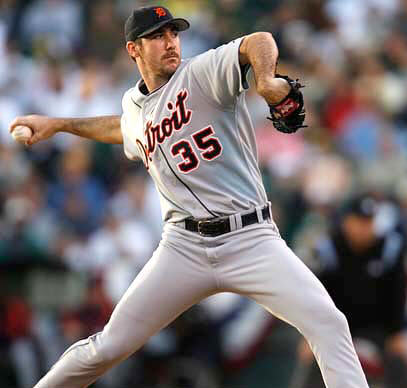
Justin Verlander is one of the most important home-grown players in the 2012 playoffs. Photo unk via rumorsandrants.com

Every year I do a bit of “Team Construction” analysis to kind of gauge the trends in roster construction.  Last year’s post is here, and the links to the side have the underlying spreadsheet of player acquisition methods so you can see the pure details.  This topic was also covered in-depth by John Sickels on his minorleaguebaseball.com blog for another viewpoint.

Borrowing from last year’s post, there are four main ways teams can acquire players:

  1. Draft: The player is with the original team that drafted him.  In the case of international free agents, if they’re signed as 16-year olds they are considered in this category as well (i.e., Ichiro Suzuki is not a developed player, but an international Free Agent).  It could be better defined as “Club developed players.”  Simple examples for the Nats: Stephen Strasburg and Bryce Harper.
  2. Traded MLBers: The player was acquired by the team by virtue of trading an established MLB player.  Most of the time these days, this means the player was acquired as a prospect (since most trades seem to be of the prospect-for-established player kind).  Example for the Nats would be Michael Morse, who was acquired by our trading an established MLB player in Ryan Langerhans for Morse while he was still (essentially) a minor leaguer.
  3. Traded Prospects: The player was acquired by the team by virtue of trading prospects.  This is essentially the reverse of #2.  The Nats key example is Gio Gonzalez.
  4. Free Agent: The player was acquired in free agency.  This category also includes two other types of acquisitions: waiver claims and cash purchases.  These three categories are lumped together since all three indicate that a team has acquired a player with zero outlay in terms of development or prospects.  Examples for the Nats: Edwin Jackson, Adam LaRoche.

Here is the summary of roster construction and “Construction Strategy Category” that we’ll talk about next.  Note that I only count the “core players” on a team for this analysis.  The core players is defined as the 5-man starting rotation, the setup and closer, the 8 out-field players, and the DH for AL teams.  I didn’t extend this all the way to the 25-man roster, figuring that these core 15 players are the main reasons teams win and advance.  That and huge chunks of the bullpen and the bench are either fill-in FAs or draftees and it would skew the analysis of how teams really got to the playoffs.  Here’s the summary (the table is sorted by count of Draftees):

Season Team Drafted/Developed Traded Prospects Traded MLBs FA/Waivers Ttl Constr Method
2012 Atlanta 11 1 3 0 15 #1
2012 St. Louis 9 0 2 4 15 #1/#4
2012 Washington 8 3 1 3 15 #2
2012 San Francisco 8 2 2 3 15 #2
2012 Cincinnati 8 2 3 2 15 #1
2012 New York Yankees 5 2 1 8 16 #4
2012 Detroit 5 5 2 4 16 #2/#4
2012 Texas 4 2 7 3 16 #3/#4
2012 Baltimore 3 1 8 4 16 #3
2012 Oakland 2 1 7 6 16 #3

So, what are the four construction methods I’ve identified? Again borrowing from last year’s version of this post, they are (with this year’s examples).  The complication this year is that some of the 10 playoff teams don’t fall neatly into one specific category.

Method #1: Build from within 100%: (Cincinnati, Atlanta).   Atlanta, amazingly, didn’t use a single Free Agent among its core 15 this year.  They made a couple of key trades to acquire a few starters, but the rest of their lineup is home-grown draftees.  That may change next year as they try to replace Chipper Jones, Michael Bourn and possibly Brian McCann, who may leave via free agency.  Meanwhile Cincinnati has just a couple of free agents and mostly rely on guys they’ve grown as well.

Method #2: Ride your developed Core and use your prospects to acquire big names: (Washington, San Francisco and Detroit to an extent): The Nats have transformed themselves over just a couple of seasons, relying less on FAs to plug holes caused by an awful farm system to having most of their core team developed at home (See the table further below to follow the transformation of our team over the past few seasons).  Those spots they couldn’t depend on have been filled by trades (three guys acquired by flipping prospects for them; in addition to Gonzalez Kurt Suzuki and Tyler Clippard also count here).  San Francisco has seen their payroll skyrocket as they extend their home-grown talent, but for the most part they have stayed true to the team development concept.  Their one major Free Agent (Barry Zito) is notoriously one of the worst contracts in baseball and it is somewhat surprising to even see him on the post-season roster.  He wouldn’t be if Tim Lincecum was pitching in 2012 like he has regularly done in previous seasons.  Detroit was entirely in method #2 until they decided to spend money like the Yankees; we’ll revisit in #4.

Method #3: Go Young and grow up Strong (Baltimore, Oakland and Texas to an extent): Baltimore acquired a massive chunk of their rosters by flipping major leaguers for prospects and watching them blossom into a surprise playoff team.  Oakland has made a habit of getting rid of guys before they hit arbitration; fully 7 of their squad was acquired this way.  The difference is that Oakland has been forced to buy a big chunk of their core group on the FA market, depending on cast-offs like Brandon Inge and Jonny Gomes to plug leaks and get production on the cheap.  I’m guessing that Oakland will transform more into Category #1 as the vast amount of prospects they’ve landed lately continue to matriculate.  Lastly Texas was entirely in this category before they dropped major money on the likes of Adrian Beltre and Yu Darvish, transforming them into a spending power to go with their still-excellent farm system.

Method #4: Spend what it takes to win: (New York fully with St Louis, Texas and Detroit partially here): The Yankees are the class-A example of this method (along with Boston and the Dodgers frankly), but the spending that St. Louis, Texas and Detroit cannot be overlooked.  The Yankees more and more are depending on expensive FA purchases to replace what their farm system is not developing, and the problem is only being brought into more focus this off-season.  Their 3 primary starters are FA acquisitions, their biggest FA is looking like a contract catastrophe, and their developed guys are not stepping up and taking over major roles (especially on the pitching staff).  The other three teams mentioned here are mostly built on home-grown talent, but have spent so much money on the FA market lately that they are broaching into the upper echelons of MLB payroll.  St. Louis is almost entirely built from within (as noted by other columnists doing this same type of analysis) but still has depended on a couple of key FAs to advance as far as they have.

Conclusions:

  • There’s no real formula to building a playoff team, as we see from the spread of the 10 teams among the four methods defined.
  • I think its safe to say that the most difficult methods to depend on are #1 and #3.  You need to have a very good farm system to depend on the #1 method to work for you, and over the past few years only a couple of teams really have had success using this method (Atlanta and Tampa Bay).  Kansas City has tried #1 for years and has gone nowhere.  The #3 method is also frought with issues, since it requires a ton of patience from your fan base and may not be sustainable.  Would anyone be surprised if both Oakland and Baltimore collapsed next season?  Probably not; you really need to build on a base of players once you’ve established yourself as a good team and continue to augment, either through trade or through FAs.  But even that can be dangerous; just ask Philadelphia this year, owners of the 2nd biggest payroll in baseball and just a 3rd place team.
  • Is Category #1 and #3 the same?  No, not really. #1 teams rely much more heavily on personally developed prospects, while #3 teams purposely set out to acquire prospects in trade to combine with their own development mis-fortunes.  If Baltimore had a better farm system, they wouldn’t have needed to jettison so many established MLBers to acquire prospects, and they’d probably be closer to a #2 team (a wealthy team who supplements developed players with key FAs, much like what Washington is doing).
  • Oakland is really a unique case; they do develop players but get rid of them because of a self-imposed incredibly restrictive salary cap.  Imagine what Billy Beane could do with that team if he could have purchased just $30M of players on the open market (which would have still left Oakland in the bottom third of payroll).
  • Buying your way to a team (method #4) can work, but only if you have nearly unlimited money and everything goes right for you.  There’s almost no excuse for a $175M payroll to get beat to the playoffs by a $55M payroll team (Oakland).  That is unless you overpay for poor FA targets, install the wrong manager and saddle yourself with the worst clubhouse in baseball.  In case you were wondering, the 2012 Boston Red Sox were a classic case of why money cannot buy happiness, and why unlimited funds do not necessarily guarantee playoff baseball.  The Angels are another example; owing most of their season’s turnaround and success to Mike Trout and his MLB minimum salary providing nearly 10 WAR despite having the 3rd largest payroll in baseball and having just purchased the games pre-emminent hitter in Albert Pujols.
  • Frequent commenter Clark has a good point; classifying Mark Teixeira and Raul Ibanez as the same type of player (acquired via free agency) is a bit mis-leading.  Clearly a $150M player isn’t the same as a $1M player.  But, for the purposes of analyzing how much of your team is “bought” versus “developed” the point remains the same whether its a bargain basement guy or a $20M/year player.

So, if I had just purchased a new team, what construction method would I follow?  I guess it depends; if I thought I had a patient fan base, I’d probably do exactly what is going on in Houston.  I’d gut the MLB roster, trade every tradeable asset and start over payroll-wise.  I’d follow strategy #1 until I was at least competitive, and then i’d probably switch over to a #2 strategy or a #3 strategy, depending on just how good my developed players were.  You hope for #3; it implies you’ve got so much in-house talent that all you need to do is keep extending your key guys and you’ll keep winning.

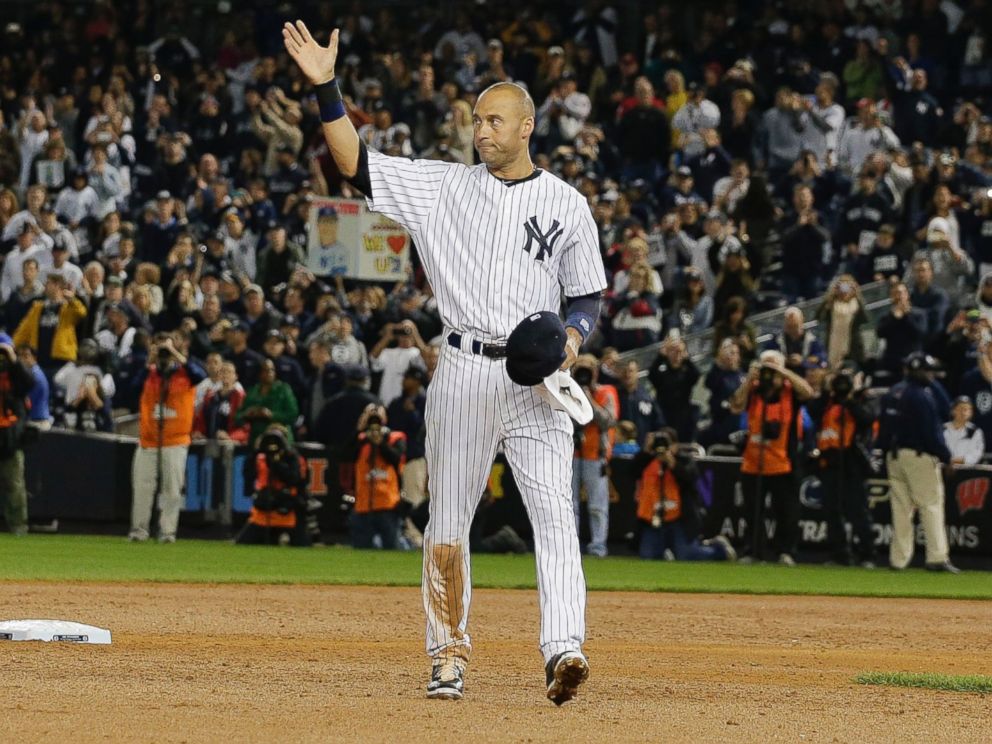
I don’t think #4 is a sustainable way of building rosters.  The Yankees have gotten away with it for years, but only because they initially had a banner crop of developed players (the “core four”) to depend on up their spine.  Would anyone be surprised if the Yankees fail to make the playoffs next year?  Alex Rodriguez looks incredibly old, Derek Jeter just broke his ankle, they’re losing a number of hitters to FA and they only have a couple of starters locked up.  Where’s their starting pitching for 2013?  And what happens if they finally get hit with injuries to their rotation to the extent that Boston did this year?  I think this is why you see $80M payroll teams beating out $170M payroll teams all the time; teams get bloated, they over pay their own players and suddenly are old, inflexible and unable to adjust financially to buy what they need.

Lastly, here’s what the Nats roster has done over the past few seasons:

Season Team Drafted/Developed Traded Prospects Traded MLBs FA/Waivers Ttl Constr Method
2010 Washington (end of 2010) 7 1 2 5 15 #2
2011 Wash (2011 opening day) 6 2 1 6 15 #2
2011 Wash (primary Roster for season) 6 2 2 5 15 #2
2011 Wash (end of season) 9 1 2 3 15 #2
2012 Washington (playoff roster) 8 3 1 3 15 #2

The team has been slowly replacing Free Agents with home-grown or acquired talent, and as we all know is well on its way towards a strong, home grown team.  This year’s core team only uses 3 pure FAs: Adam LaRoche, Jayson Werth and Edwin Jackson.  We could very well see LaRoche replaced outright with the home grown Tyler Moore, and if the team replaced Jackson with someone like John Lannan (not that we’ll possibly see that happen), we could be down to just one FA in the core squad.

MLB Post Season Predictions

17 comments

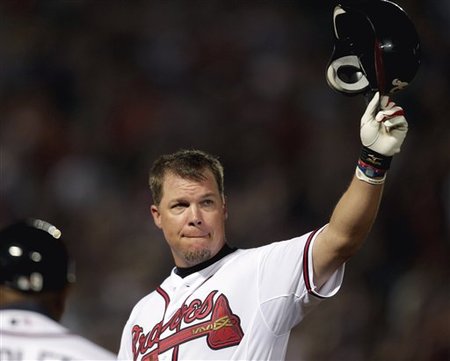
How far will Atlanta get in Chipper Jones' swan song? Photo Thearon Henderson/Getty Images via nytimes.com

Everyone has to do a prediction piece, right?

First, a re-cap.  Here’s my predictions at the beginning of the season for how the divisions would shape up;

  • AL East: New York Yankees
  • AL Central: Detroit
  • AL West: Los Angeles Angels
  • AL Wild Cards: Tampa, Texas

AL Narrative: 2/3 for divisional winners and 3/5 for playoff teams.  Not bad.  Oakland and Baltimore shocked everyone, as did the Angels’ failure to really play to their talent/salary.

  • NL East: Philadelphia
  • NL Central: Milwaukee
  • NL West: San Francisco
  • NL Wild Cards: Atlanta, Cincinnati

NL Narrative: 1/3 on divisional winners, 3/5 on playoff winners.  It was hard to see Philadelphia falling to third place, just as it was hard to see Washington improve 17 games from 2011.


Now for the playoffs:

  • AL Wildcard: Texas over Baltimore
  • ALDS: Texas over New York Yankees
  • ALDS: Detroit over Oakland
  • ALCS: Texas over Detroit

AL Narrative: Texas loses the AL title on the last day of the season, but I still think they’re the best AL team.  This is the wake-up call they need to power through the playoffs.  The Yankees are given a huge disservice to have to face Texas on the road right out of the gate; a matchup I don’t think they can win.  Detroit could get the ALCS win but I don’t doubt it; Texas owned them this season (winning 3 of 4 in Detroit and 7 of 10 overall).   Oakland are red-hot but can’t match up with Detroit’s pitching.

  • NL Wildcard: Atlanta over St. Louis
  • NLDS: Atlanta over Washington
  • NLDS: Cincinnati over San Francisco
  • NLCS: Atlanta over Cincinnati

NL Narrative: Atlanta throws unbeatable ace Kris Medlen to win the play-in game, then promptly takes the first two games of the NLDS on the heels of their sweep of the Nats in mid September.  The Nats can’t overcome Medlen’s only NLDS start and lose the series when they can’t sweep a 3-game set here in Washington next week.  Meanwhile San Francisco’s bats go quiet against Cincinnati and the Reds club their way into the NLCS.  Medlen gets two starts in the NLCS, shortening the series to the point where Atlanta cannot be beaten.

World Series: Atlanta beats Texas.  Story book ending for Chipper Jones, and another heartbreak for Texas as they lose their third consecutive World Series.  Texas just isn’t as strong pitching-wise as they were last year, don’t have enough lefties to shut Atlanta down, and I don’t think Yu Darvish will be up to the challenge.  Meanwhile Medlen continues his other-worldly streak of starts; Atlanta has now won 23 consecutive games which Medlen has started (12 this year and another 11 to close out 2010).  There’s no reason not to think that streak won’t continue into the post season; he’s given up a grand total of NINE earned run in his 12 starts this season.

This isn’t the most positive prediction for the post-season for the home team, but the Nats sputtering end to the season does not inspire confidence.  Swept in Atlanta, splits with Milwaukee and then pounded in St. Louis means they’re walking a tightrope in the post-season.  If they get a win in Atlanta, they may win the NLDS.  But the 2-away/3-home structure really works to the detriment of the higher seed; its relatively easy for a team to win 2 straight at home … while its relatively difficult to win 3 straight at home.  But that’s the predicament the Nats may face when they return to Washington.  And get ready for the inevitable “You shouldn’t have shut down Strasburg” pieces, because they’re a-coming unless Washington wins the World Series.  In fact I’ll bet writers already have them penned and in the can, ready to publish (kind of like obituaries for old movie stars that are in hospice).

However, if somehow Atlanta blows the wild-card game I reserve the right to completely re-do these predictions :-)

Written by Todd Boss

October 4th, 2012 at 5:18 pm

Baseball Salary Cap needed? Small payroll teams competing in 2010

one comment

Sports writers and baseball analysts have been beating the drum for years for some sort of payroll system modifications in baseball.   Especially in recent years with the dominance of the Yankees and Red Sox, who have been 1-2 in total salary for a while and have both made the playoffs more often than not in the past decade.  Last year was especially bad, when most of the playoff spots went to big market, big teams.  Great for playoff rankings, bad for most of the teams in the league.   The Yankees spent nearly SEVEN times as much in payroll entering 2010 than Pittsburgh; how can that be equitable?

Well, don’t look now but if the season ended today, as pointed out in this USAToday Article, only two of baseball’s top 10 salaried teams would qualify.  Most of baseball’s current 8 playoff teams are from middle-of-the-road payrolls.  There are two notable outliers: Texas comfortably currently sits atop the AL West with the 27th largest payroll and San Diego, with the 2nd LOWEST payroll in the majors, leads the NL west.  (See this google xls I put together briefly to show teams by record rank, playoff position and salary at the beginning of the season).

Each time a team like Tampa, San Diego or Texas competes well with the big boys, it makes it harder to implement some sort of reform.  Especially since you can look at each of the top tier payroll teams that are NOT in playoff contention right now and excuse their season.

  • #2. Boston: still have the 5thbest record and would be leading most any other division.  Lots of injuries, transition year away from expensive older vets like Ortiz and Lowell, $10M in dead money.  Theo keeps talking about a transition year; he’s biding his time before he can re-do the team in the image of the 04 and 07 teams.
  • #3: Cubs: over paid for Soriano, Zambrano underperforming, Fukodome bad signing.  Just not well constructed team.  Hendry on the GM hot seat.
  • #4: Philadelphia: great team, killed by injuries and inconsistent pitching.  You wonder how badly the Lee trade bungling will hurt them in years to come.  I still think they’ll overtake Atlanta, especially now that Chipper is done for the season.
  • #5: Mets: how does Minaya still have a job?  They seem to spend money because they have it, not because they acquire good players.  Oliver Perez, Jason Bay god awful signings, and just Santana and Beltran cost more than the San Diego Payroll annually.
  • #6: Tigers: you have to hand it to the Tigers owner, who purposely over spent b/c his town was so badly hurt in the economic crash.  But he has some very expensive players tied up (Cabrera, Verlander, Guillen) for a number of years and their role players aren’t good enough.  Dark Days ahead for Detroit.

So, the #1 payroll team has the best record and the #30 payroll team has the worst record.   But the teams in between aren’t acting like we expect.  Is this Moneyball re-incarnated?  Well no.  Billy Beane’s teams success in Oakland was less about his OBP-centric stats drafting and more about the three starting pitchers (ZitoHudson, Mulder) his teams were graced with (as pointed out in this excellent Buzz Bissinger article).  What it does point out is that good GMs (even the wealthy ones in NY and Boston) are starting to value the draft pick and the young player and are becoming better and better at drafting them.  San Diego and Texas both kept payroll low, traded away vets, accumulated draft picks.  Texas easily has the best farm system in the majors and now has a powerhouse team for very little money.  This is exactly the same blueprint practiced for years by Florida and Tampa, though Texas has shown they are not afraid to buy talent at the deadline (something the panhandle state teams never do and thus one of the reasons why neither team really has any appreciable fan following).

So, what should base ball do?

1. Should there be a salary cap?  Well, yes I think so.  I think the Yankees have a totally unfair player advantage over the rest of the league and it shouldn’t be possible to have 4 times the payroll of a team within  your own division.  But i have no idea how to implement it.

2. Should there be a salary floor?  Well, no.  Because teams like Texas, Florida, San Diego, Tampa and (in years past) Oakland have consistently shown that you can build great cheap teams by depending on player development, drafting and having an entire team of pre-arbitration or arbitration-eligible guys.  You can’t force a team to spend money just to achieve an arbitrary salary floor.  Plus you have to allow teams to blow things up and start over (essentially what Toronto is doing now) and try to build for the long run.