Nationals Arm Race

"… the reason you win or lose is darn near always the same – pitching.” — Earl Weaver

Archive for the ‘Majors Pitching’ Category

What about Maya?

3 comments

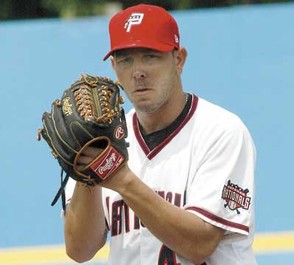
Maya in his first start for the P-Nats. Photo William Yoder/thenatsblog.com

I like to think i’m reading just about every bit of Washington Nationals news there is to be had during Spring Training.  I follow all the beat writers I know of plus try to read just about every columnnist or blogger that I know to be down in Viera.  But nobody is talking about Yunesky Maya.

We know, for example, that John Lannan bulked up over the off season, that Livan shot a 65 and plans on playing in the Senior Golf tour when he turns 50, that Marquis feels better, that Detwiler has new mechanics, that Wang is healthy and that Zimmermann is rearing to go.  But what about Maya?

Last we had heard, Maya had gone down to the Dominican Winter League (DWL), played for Leones del Escogido and pitched well.  Baseball America’s Lacy Lusk wrote a rather promising report in December (insider only, sorry), and Maya was named the league’s best pitcher at the Winter’s end.  He finished the DWL 4-2 with a 1.32era, striking out 42 batters in 41 innings pitched.  And according to reports he had his fastball up to 93mph.  Now, the DWL may be the “best” of the winter leagues but its talent level has dipped significantly over the past 10 years.  At best, i’d say its a AAA-level quality league.  So take the stats with a slight grain of salt.

This slight uptick in speed is important.  In my review of Maya’s first four starts (posted here last September) he was barely breaking 90, sitting in the 88-89 range and relying more on nibbling than going after hitters.  I feel the uptick in velocity is clearly a result of gaining arm strength over the course of throwing innings, indicating that he was rushed to the Majors last September.  Rizzo has all but admitted the team screwed up by rushing Maya through the minors, and his results showed.

However, if Maya can hump it up to 93 and combine it with the amazing arsenal of pitches he seems to have (in his MLB debut he showed at least EIGHT different pitches), I think he can be a very dangerous pitcher in this league. Which is why the team risked an $8M contract on him.

Now, what does this mean for the 2011 season?  So far, its hard to tell; Ladson posted a biopic piece today but I’ve yet to see any reports on how he looks during his mound sessions or how he’s throwing.  Perhaps its a language barrier issue; he doesn’t really speak English so interviews are difficult unless the interviewer also speaks Spanish.

I think he’s still bound for AAA to start the season, simply because he has options and certain guys (Gorzelanny in particular) do not.  But he may be first in line when someone gets hit by the injury bug.

Written by Todd Boss

February 25th, 2011 at 9:56 am

Wainright’s injury a blow to the Cards…

leave a comment

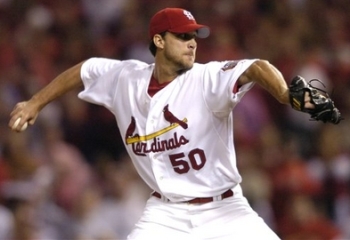
Not that I necessarily believe in the “Inverted W” theory of pitching mechanics … but Adam Wainwright certainly shows it. Photo: talksportsphilly.com

2/24/11 update: Wainwright is officially getting Tommy John surgery.  As other leading baseball columnists have mentioned, this could have some serious repercussions on the Cardinals both this season and in the future.

You hate to hear injury reports a week into spring training, but they’re starting to roll in.  Vincent Padilla is going to be out for an unspecified amount of time for elbow surgery (though this doesn’t hurt the Dodgers as much as an injury to someone like Kershaw or Billingsly would have), and now it looks as if St. Louis’ starter Adam Wainwright may have blown an elbow tendon.   I had not read previously the “slightly torn elbow ligament in 2010” item with regard to Wainwright.  Either way, the loss of Wainwright for the season adds to a growing list of concerns for the St. Louis franchise.

Just off the top of my head:

  • LaRussa‘s anti-union comments irritating his vets
  • LaRussa refusing to play Colby Rasmus for large stretches last year.
  • The team in general inexplicably not winning the NL Central last year despite having 3 of the best pitchers in the NL and a pretty good offense (6th in runs scored).
  • The team blatantly lowballs Pujols in FA talks.  By all accounts he was offered a contract that would have only made him about the 5th or 6th highest paid player.  Why in the world would your talks with Pujols not START with A-rod’s per-season figure?  Ok, perhaps 10yrs $300M is ridiculous but would you sign on for something like 7yrs $210M with 2 options based on performance year to year at the end of the deal?
  • Wainright’s injury: I havn’t seen confirmation yet of Tommy John, just seen news that says “significant elbow injury.”  There’s just no pitchers out there to be had as a replacement (just ask the Yankees) either.
  • St. Louis’ farm system has been down recently.  Most scouting establishments ranked it 29th or 30th in 2010 but in the 18-20 range for 2011.  So there’s not a lot of hope coming up.

The Cardinals under achieved as a team in 2010 (winning 86 but having a Pythagorean win total of 91) WITH Wainwright pitching at a Cy Young level.  Without him, the Cards could be sinking back to the middle of the pack, leaving the division for Cincinnati and Milwaukee to battle it out.

Rough waters ahead for the Cardinals.

Written by Todd Boss

February 23rd, 2011 at 2:03 pm

Whose Rotation Job is really at stake?

7 comments

If Maya really turns it on this spring ... will he be in the rotation? Photo via thenatsblog.com

Most Nats pundits (including this one, as posted here) seem to think the Nats opening day rotation is a foregone conclusion.  Livan Hernandez is getting the ball opening day, then will be followed in some order (probably close to the following order to break up Lefty-Righties) Jordan Zimmerman, John Lannan, Jason Marquis, and then newly acquired former Cub Tom Gorzelanny.  MLB beat writer Bill Ladson believes Yunesky Maya will win the spot and Gorzelanny will pitch out of the bullpen, but for the most part this is the agreed-upon opening day rotation.

This leaves 2-3 leading starter candidates (possibly $8M signee Yunesky Maya, former #1 draft pick Ross Detwiler and former 19-game winner Chien-Ming Wang) to fend for AAA or rehab starts.  Some even put non-roster spring training invitee Chad Gaudin into the mix (personally I do not; the last time he was a full time starter was in 2009 pitching in the cavernous San Diego park and he put up a horrible 5.13 era).

The question is; is JUST the #5 spot open for competition?  Here’s some quick thoughts and stats on the “leading 5” guys.

1. Livan Hernandez had a renaissance season, and a historic one among the opinions of the FIP/saber metric guys.  At various times during the season there was nearly a point and half gap between Livan’s actual ERA and his expected fielder-independent-pitching values.  This gap is normally attributed to “luck” by stat heads, who insist that pitchers eventually return to the mean.  By the time the season was over Livan had regressed backwards somewhat but still finished with an inexplicable gap between his actual and expected values.  ERA of 3.66, FIP of 3.95 and xFIP of 4.76 with a BABIP of .293.

Can he do it again in 2011?  He’s a year older and theoretically a year closer to obsolescence, but he isn’t the type of pitcher who ages badly.  He only throws mid 80s to begin with, and a combination of easy arm motion and zero injury history leds credence to his statement that he wants to be the “Jamie Moyer” of right-handers.   There’s no reason to think he won’t repeat his 2010 performance … until you look at his 2007-9 pitching stats.  There may be worry here after all.  He’s a survivor though and I can’t see him getting demoted out of this rotation.

2. Jordan Zimmermann has a lot of expectations on his arm this year.  We know what we get with him; mid 90s fastball, good movement on his off speed stuff, about 8.5 k/9.  What we don’t know is whether or not he’s closer to Matt Cain or if he’s closer to Garrett Mock.  Its hard to analyze his two MLB seasons because of the arm injury; in 2009 he was clearly hurt during his last few starts and he was clearly rusty at the end of 2010.  His 2nd game back he struck out 9 and only gave up one hit through 6 complete … and then got hammered in three straight games. He finished the season strong though; putting in a couple of really nice performances in late sept/early october (his last two game scores were both 60+)

Which Zimmermann will we see in 2011?  We are all optimistic that he’s healthy, that his time has come, and that he’ll be the strong #2 that we expect.  But temper your expectations; he’s yet to pitch a 100 innings in a season (and only maxed out at 134 in his only full professional season to date, 2008).  Until I see an injury-free, dominant season he’s just another prospect.

3. Jason Marquis.  His contract ($7.5M for 2011) earns him a spot right now, not his performance.  He was pretty good for Colorado in 2009, and decent in Chicago the two years before that.  Suddenly he gets to Washington and he forgets how to pitch.  Was it all the bone chips in his elbow or were there other things going on?

After his return post surgery in August, he had 10 starts.  Isolating just for those 10 starts (a neat little feature at baseball-reference.com, frankly) we discover that he was 2-6 with a 4.29 era and a mediocre 1.50 whip.  Most of that damage was done in an ugly game in Philly where he only retired one batter.

So, the question is, Is Marquis back to his 2007-2009 form?  If he isn’t, and he starts putting up lines like he did on April 18th of last year (7 batters up, 7 batters scored for an infinite ERA on the day) how short is his leash?

4. John Lannan.  Staff Aces usually don’t get sent to AA to work on their mechanics mid-season, but something was clearly amiss with Lannan’s game.  His last four starts prior to being sent down were awful; in one game he gave up 4 walks and 10 hits in fewer than 5 innings.  Luckily, Lannan’s time in the minors seemed to help; he only had two “bad” starts after returning in August and in his last 10 starts posted a 6-3 record with a 3.42 era and 1.24 whip.  These numbers easily eclipse his career numbers and eclipse his rather consistent numbers for the whole of 2008 and 2009’s seasons.

The question is (as it is with most of our starters): what version of Lannan are we getting?  Is it June 2010 Lannan or is it July 2009 Lannan (a day he shut out the Mets on 7 hits).  Lannan has one option remaining, so we could send him back down again if the train runs off the tracks.  More likely is that Lannan has figured out what was wrong and will be our most consistent starter for the 3rd year out of 4 running.

5. Tom Gorzelanny.  Cut loose by the Cubs for a relative bargain (one higher end but stalled prospect, one decent mature arm and one rough higher-ceiling youngster).  Why?  Partly because he was probably 6th or 7th in line for rotation spots on the North Side (Dempster, Zambrano, Garza, Wells and Silva followed by a promising rookie Coleman).  He’s not bad; 2010’s 7-9 season featured a 4.09 era but a bloated 1.496 whip for a slightly better than league average 106 era+.  He would have been our 2nd or 3rd best starter last year.

But which Gorzelanny are we getting?  2010’s version of passable production or 2008’s god-awful 6.66 era season with Pittsburgh?  There isn’t much wiggle room for him; he’s out of options and he’d block another deserving bullpen candidate if he falters.


Best Case for the team: Hernandez continues to pitch like its 1997, Zimmermann pitches league average or better and doesn’t get hurt, Lannan continues where he left off last fall, and Marquis/Gorzelanny product up to their capabilities.

Possible real-world case: We get career-norm results out of Livan, Lannan and Marquis (our leading vets), but Zimmerman suffers an elbow strain and Gorzelanny gets bumped to the bullpen in the spring training, giving both Maya and Detwiler immediate rotation spots.

Worst Case: Marquis gets released, Gorzelanny gets shelled, and Zimmermann gets hurt.  We’re calling up Maya, Detwiler and rushing Wang back from rehab.  And our safety net includes 3 guys we DFA’d over the winter and the likes of Stammen, Balester and Mock.

Lets hope we get some best case spring training results.

Written by Todd Boss

February 22nd, 2011 at 4:45 pm

Posted in Majors Pitching

Pettitte was a very good pitcher… but no Hall of Famer

one comment

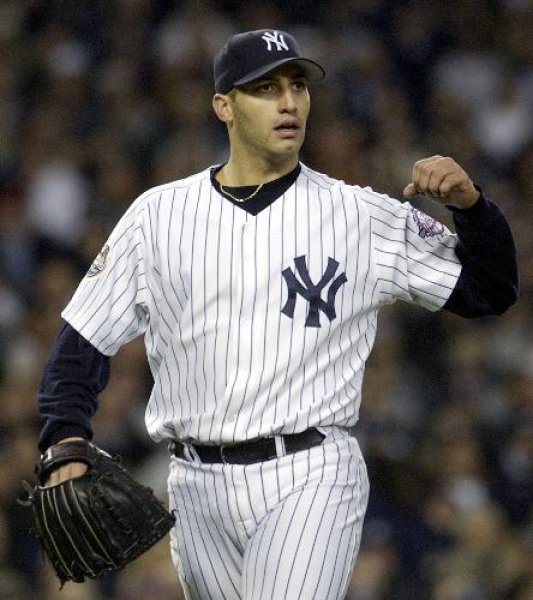
Pettitte stares down another hitter. Photo noahhunt.org

Andy Pettitte‘s retirement (see my previous post for thoughts on its effect on the Yankees season) has lead to a series of inevitable posts about his Hall of Fame worthiness.  Si.com’s Joe Sheehan wrote this opinion piece after Pettitte’s retirement, saying that “Modern era of baseball demands Cooperstown find place for Pettitte.”  I won’t really go into his arguments except to say that he believed that Bert Blyleven was “wildly overqualified” for the hall, a position that I “wildly” disagree with and posted as much here about a month ago.  So its doubtful that I’d agree with his sentiments.

(Note; for the purposes of this article we will ignore the fact that Pettitte’s chances of getting voted into the hall in light of his PED usage admissions are somewhere between zero and nil anyway, and just think of his career in its merits).

So far, from what I’ve seen from the baseball columnists who have opined on the subject, there seems to be about a 50-50 split pro and con for the Hall.  Joe Lemire seems to agree with Pettitte’s own assertion that he is not Hall-worthy, Buster Olney thinks he’s a borderline candidate but th inks that he may be a Veteran’s committee inductee some day, and Jayson Stark thinks he’s not quite Hall worthy.

For me, Pettitte is NOT a Hall of Famer.  His career numbers show him to be a consistent hurler who was essentially a very good #3 pitcher on a number of very good Yankees teams.  He finishes his career with a 240-138 record, a career 3.88 era, 1.357 career whip and a 117 career ERA+.  His season-ending accomplishments include:

  • 3rd place in his Rookie of the Year voting (losing out to Marty Cordova and Garrett Anderson)
  • 5 years (out of 16) receiving Cy Young votes, though only one of those 5 years was actually meaningful in terms of the voting.  He finished 2nd to Pat Hentgen in the 1996 voting.
  • 3 all star appearances.

His enduring legacy is his post season career, where he has more appearances and more wins than any other pitcher.  He pitched in the post season in 13 of his 16 professional seasons, had 42 starts altogether, and compiled a 19-10 record with a 3.83 era and 1.304 whip.  These numbers are more or less in line with his career numbers, indicating that he was a good pitcher but not great.

I would be a stingy hall voter.  For me the qualifications of a Hall of Fame pitcher include all the analysis of career achievements, but also some semantical arguments:

  • Was the pitcher ever the best player on his team for a consistent period of time?  (no)
  • Was the pitcher a guaranteed shut-down hurler who was worth the price of admission? (no)
  • Was the pitcher regularly an all star and frequently STARTED the all star game? (no)
  • Were you, as a fan of the opposing team, ever “scared” to hear that Pettitte was going against your team? (not really).

At the bottom of Pettitte’s B-R page, his Hall of Fame Monitor score puts him at 42 .. which is better than Jack Morris but below the 50 range that generally qualifies a player as a HoFamer (this is Bill James‘ concoction and the one overall HoF score that I agree with).  But also more telling is the list of pitchers that Pettitte is most like.  Top two: David Wells, Kevin Brown. .  Ironic that these guys were also middle-of-the-rotation Yankees hurlers who gained many wins by virtue of being along for the ride on one of the best teams ever constructed (the late 1990s Yankees teams).

Bottom line; Pettitte was a good teammate and by all accounts a nice guy who made an awful lot of money in his career and goes down as one of the most decorated Yankees ever.  But he’s not one of the BEST ever.

Pettitte’s retirement spells doom for the Yankees season

one comment

Pettitte is done ... leaving a massive hole in the Yanks rotation. Photo: noahhunt.org

One of the last major off-season issues to resolve prior to the beginning of spring training (the status of lefty Andy Pettitte) was resolved with the pitcher announcing his retirement earlier this week.

The retirement leaves the Yankees rotation in serious trouble.  Pettitte may have only given the 2010 team 21 starts but he went 11-3 in those starts and was the Yank’s 2nd best pitcher.  They failed to acquire any of the marquee free agents or trade targets in the off-season and are going into 2011 with this as a rotation: Sabathia, Burnett, Hughes, Nova, and Mitre.  The problem is that after Sabathia, every one of these guys has serious question marks;

  • Hughes may have gone 18-8 but his accompanying numbers (4.19 era, 1.28 whip) only rated a 102 era+ for the season.  That’s essentially league average.  He benefited from some pretty amazing run support that probably cannot be sustained in the long term.  It was also his first year starting full time.  He has a great pedigree (1st round pick in 2004) and has pitched well.  But he may be a candidate for the Verducci effect of quickly increasing workload.  The Yanks have been burned in the past by young starters blowing out their arms (Wang).
  • Burnett may be the latest in a long line of quality pitchers who just cannot perform in the spotlight.  He was relatively awful in 2010; 10-15, 5.26 era, 1.511 whip.  Most teams would put up with this in a 5th starter if the guy was a promising rookie … but Burnett is a highly paid supposed ace starter.  He’s never been a complete lights out starter, sports a career 110-100 record and should never have been given a $84M contract to begin with.
  • Mitre is a 29-yr old journeyman pitcher with a career 13-29 record.  And he’s slated to be the Yankees #4 starter.
  • Nova looks like he could be a ok back of the end starter prospect … but he owns a grand total of 3 career major league starts.  And he’s slated to be the #5 starter.

New York has signed a couple of MLB veterans in Freddie Garcia and Bartolo Colon to minor league deals, and they may provide insurance/competition for Mitre and Nova in the spring.  But there is a reason these guys couldn’t catch on with even the worst teams out there; they’re more likely to put up a 6.00 era than a 3.00 era.  Perhaps Garcia’s decent 2010 season may land him a rotation spot, but Colon hasn’t pitched in the majors in over a year and was awful then.

Now, the Yankees are still one of the best offensive teams in the league and can slug their way to a number of 8-6 wins … but in a division where Boston has restocked and looks dominant and Tampa has a rotation that New York only wishes it had, 3rd place looks like it is in the Yankees future.  Writer Jon Paul Morosi thinks that the Yankees won’t miss Pettitte, but i think he’s crazy.  His article seems to just assume that a Fausto Carmona trade is a done deal (despite the fact that the Yankees have swung and missed on every pitcher acquisition this off-season).  He also assumes that 3 prospects that nobody has heard of (Dellin Betances, Manny Banuelos or Andrew Brackman) will magically come to the rescue.  Banuelos and Betances each are grizzled minor league veterans with 3 AA starts to their credit, and Brackman isn’t that far ahead of them (he was 5-7 with a 3.01 era in 15 AA starts in 2010).  Yeah; not exactly Jeremy Hellickson-esque prospects waiting in the wings.

2/7/11 update: Seth Livingstone at USA Today wrote about this same topic and reviewed some other possible prospects in the Yankees system that may be better options than the three mentioned above.

There are definitely some arms to be had in the trade market.  Joe Blanton is probably available, the Braves may have an extra starter in Kenshin Kawakami if their up and coming prospect Mike Minor blows it out in the spring, the Dodgers have 6 starters for 5 slots and may give up Vicente Padilla once the season starts, and even the Washington Nationals may have an extra arm or two worth gambling on (Maya, Wang and Detwiler are all slated to start in the minors right now).

Without a move though, I say “Welcome to 3rd place” and only the 2nd time you’ve missed the playoffs since the wild card era.

Rotation Predictions for the National’s System 2011

7 comments

Your 2011 Opening Day starter. Photo: AP/Washington Times.

I started this blog to talk about the Nationals pitching staffs on the various levels, since that’s always been my obsession with this franchise.  However time constraints and the off season have limited my posts and analysis.  Today, for the first time in quite a while, I’m going to write about that which this blog supposedly focuses on: Nationals pitching.

Initially I was going to do an in-depth review of all 5 minor league pitching staffs for 2010 with detailed predictions for 2011.  Now that we’re 3 weeks away from pitchers and catchers reporting … I’m giving up on finding the time 🙂

However, here’s my thoughts on who I would be putting into the rotations of each level to start 2011.  These rotations cascade downwards from the top obviously, and assume no injuries.


Washington Nationals/MLB

Prediction Livan, Zimmermann, Lannan, Marquis and Gorzelanny in that order.

Despite some people (Ladson, Bill) thinking that we acquired Gorzelanny to be a middle reliever, in my mind Rizzo made the acquisition because he doesn’t trust either Maya or Detwiler in the #5 slot.  And I wouldn’t either; In 5 starts last year at the MLB level Maya looked outmatched and unable to keep MLB hitters at bay.  I like Yunesky Maya and think he can be a competitor in this league.  He was probably rushed through the minor leagues last summer and wasn’t ready for what he saw in September.  However, he fared very well in the Dominican Winter league (named best pitcher) and could change some opinions by beating out Gorzelanny for the #5 spot.

Meanwhile Ross Detwiler looks like a busted #1 pick, not able to stay healthy long enough to make an impression and (thanks to an incredibly questionable decision to call him up in Sept 2007) he’s quickly running out of options.  He’s in a similar boat as Madison Bumgarner; a lanky lefty who throws across his body with some pace, making consistency difficult and making his breaking pitches too horizontal.  Personally, i’d suggest packaging him in a trade and making the argument that he’s still a #1 overall pick who hasn’t gotten opportunity here.  Unfortunately competing GMs know what we know and probably are not giving up decent talent to get him.

This isn’t the greatest rotation in the league (most pundits easily put it in the bottom 5 right now), but it is an improvement over 2010’s opening day rotation (Lannan, Marquis, Stammen, Livan and Mock in case you forgot or blocked it from your memory).  If Wang can somehow show he’s healthy and productive, then our 2012 potential rotation of Strasburg, Zimmermann, Lannan, Wang and decent FA could be halfway decent.


Syracuse/AAA

Prediction: Maya, Detwiler, Arneson/Stammen, Tatusko, Roark.

Syracuse ended 2010 with this rotation (ages next to names): Chico 27, Arneson 26, Kown 28, Martis 23, Mock 27.

What a difference a couple weeks makes in terms of predicting a rotation.  We have DFA’d Martis, released Martin and outrighted ChicoKown is pushing 30 and was already a minor league free agent signing to begin with.  Mock continues to have a future in this organization by virtue of his live arm, but he’s never put it together at the MLB level and nobody seems to know if it is as a reliever or a starter.  For now I’m predicting that he ends up either being converted to a reliever or outrighted off the 40-man.

The AAA rotation probably ends up being a mix of promotions from AA and spring training losers from MLB.  I’m going under the assumption that Atilano gets DFA’d in the next week or so to make room for signings as they become official, and i’m assuming that Stammen is being converted to a middle reliever and is out of the starter mix.  Additionally, Mandel clearly has been converted to a reliever and looks set to stay there.

Arneson may be an odd-man out here as well; he’s not on the 40-man and has survived a rule 5 draft or two.  If the Nats want to keep Stammen as a starter, I could see Stammen taking Arneson’s place here.

Lastly, the two promotions from last year’s AA rotation are the two hurlers Tatusko and Roark we got from Texas in the Guzman trade.  Both came over from Texas’ incredibly strong AA affilliate and both continued dominating in the Eastern League.  In 6 starts , Tatusko had a 1.72 era, a 9k/9 ratio and a 1.17 whip.  Roark’s numbers were slighly worse but still better than anyone else on our AA squad.  The only problem is that both guys are “old” for AA and may be quickly moving from “prospect” to “organizational arm.”  I’d like to see what both guys can do in AAA.

We have a couple of additional names that may show up in this mix.  Brian Broderick was a rule-5 pickup from St. Louis that seems to be a long shot to crack either the MLB rotation or the bullpen.  However in this day and age, it seems that most rule5 guys are eventually acquired instead of returned, so I can see a lower-end prospect trade for the guy if he sufficiently impresses during spring training.  Also, Ryan Mattheus seems to be a favorite of the organization as well, and has signed a more-than-minimum deal for 2011.  Chuck James signed on as a minor league free agent and bounced around multiple levels of our system, always pitching fantastically, but never sniffed a call up or even a second contract.  I’d be curious to see where he ends up in 2011.

2/4/11 update: We have re-signed both JD Martin and Matt Chico and invited them to spring training, which may indicate that they could factor into the AAA rotation discussion.  The question may be; is it better to give Roark and Tatusko starts at the AAA level to see what they can do, or should we have open competition to see who shakes out?  I think we know what we have with both Martin and Chico (as does the rest of the league, since no one claimed them upon release and nobody gave them a major league deal).  We’ll see what happens.


Harrisburg/AA

prediction: Meyers, Peacock, Milone, Lehman and Holder

Harrisburg ended 2010 with this rotation: Peacock 22, Milone 23, Thompson 23, Roark 24, Tatusko 25.

Other notable names in the rotational mix for Harrisburg in 2010 include Mandel (promoted to AAA and converting to a reliever), Brad Meyers (injured after starting the season incredibly hot), Andrew Kown (moved up to AAA but probably not being retained), and Chuck James (who signed a minor league deal and pitched great, but does not seem likely to be retained).

Aaron Thompson (bounty for the Nick Johnson Trade) never lived up to his expectations as a Florida #1 draft pick and was DFA’d earlier this off season.  He got picked up by Pittsburgh (as did Scott Olsen) and that may be a better place for him to attempt to advance his career.

I believe we’ll see 3/5th of the starting 2010 rotation starting in Harrisburg in 2011, based on age and the log jam of hopefuls in AAA.  I like Meyers and hope to see him continue to dominate AA and have a healthy season.  We’ll see the two best starters from last year’s Potomac team (Lehman and Holder) moving up to start in AA.  I’d like to see Holder (who was considered a reach of a draft pick in 2009 by most pundits) to succeed and show his worth in 2011. This seems like a pretty strong group and will join some serious batting firepower coming up from high-A for the Harrisburg team in 2011.


Potomac/High-A

prediction: Frias, Rosenbaum, Bronson, Fabian, Applebee

Potomac ended the 2010 season with this rotation: Lehman 24, Holder 23, Frias 22, Alaniz 26, JJones 28

Potomac’s rotation was all over the map in 2010 due to injuries and promotions.  Jaime started the year
on the DL, Morris, Rosenbaum and Fabian ended the  year on the DL, which forced the continued use of
minor league retread Jones and effective but old Alaniz in starting roles.  We’ve moved AJ Morris (who
would have been Potomac’s ace last year) in this offseason for Gorzelanny, leaving open some opportunities.
And we gambled taking Jaime off the 40-man roster and lost, with Arizona quickly claiming him.  That move was necessary but probably a mistake, as Jaime was a live armed guy who at one point was a top 10 Baseball America system prospect for us.  Ah well; we had to keep a spot open for JD Martin you realize!

I’m predicting that Lehman and Holder move up to AA to start based on their age and time in the minors.
Neither guy really dominated the Carolina league last year but Lehman features a very good K/9 ratio and
Holder is a very high draft pick that the team isn’t about to give up on.  That leaves high-A holdovers from
2010 Frias, Fabian and Rosenbaum to lead the line.  Frias’ numbers were not great, but he was only 22.
Rosenbaum was effective before going down with injury.  The others (Bronson, Fabian and Applebee)
earn the spots more through a slight gap in the prospect line between the low-end leagues and high-A.

I’m not as confident with these predictions, and we very well may end up seeing Lehman and Holder starting
out the season in High-A again, with the plan to quickly move them up to AA.


Hagerstown/Low-A

Low-A prediction: Solis, Clegg, Demny, Ott/Jenkins, Grace

Hagerstown ended the 2010 season with this rotation: Low-A: Demny 21, Hicks 20, Bronson 23, Applebee 22, Ott 22.

Other notable names in the 2010 mix included McGeary (tommy john surgery; what a mess for this guy.  First round talent, bought him out of his Stanford commitment only to watch him struggle at every level.  You have to wonder if he’ll ever return), Clegg (who was 9-3 and pitching very well for a 21st rounder before DL), Smoker (another Bowden toolsy draft pick whose career seems to be in the toilet), and Sammy Solis (two spot starts after signing in mid august as a high-profile 2nd rounder).

We have traded Hicks, who didn’t have the greatest numbers last year but was only 20 pitching in a full season.  I’ve got Bronson and Applebee in the high-A rotation for now.

I think Solis’ success in the AFL may earn him a spot in high-A to start; if so switch Solis and Applebee.
Clegg has a chance to quickly move up the ranks as well and may be in line for a quick promotion.  Demny was young for low-A last year and had a decent first full season; i’ll bet he starts in low-A again and moves up mid-season.  Lastly, Ott came up late last year and had two unremarkable starts but there isn’t much else to compete with him, unless one of the college-guys from short A has an amazing spring and beats him out.   Jenkins possibly could  be in the mix here, being a lefty with good K/9 rates and being a bit too old to stay in short-A.  Finally, i’m predicting that 2010 draft pick Grace gets a look.  He was an 8th round pick out of UCLA and didn’t have the best numbers in the GCL … but he is a lefty, he doesn’t walk a ton of people and he could be a sleeper.

I have seen a couple of sites that believe we’ll be starting both A.J. Cole and Robbie Ray in full season Hagerstown.  I have a very hard time seeing that; both basically lost the entirety of 2010 in terms of professional development by waiting until August 15th sign, meaning that they both got minimal innings.  I think they stay in Florda as camp breaks and start in the GCL.  See below…


Short-A (Vermont last year, Auburn this year) and GCL/extended spring

Prediction: Cole, Ray, Hanks, Meza, KLopez, King, Encarnation and 3-4 starters that we draft in 2011.

Vermont ended 2010 with this rotation: Jenkins 22, Hansen 21, Swynenberg 21, Jordan 21, McKenzie 21/Bates 22
The GCL ended 2010 with this rotation: Hanks 20, Meza 20, KLopez 20, King 20, Encarnacion 21

There was not a whole lot to like about Vermont’s 2010 rotation.  The four guys who got the most starts
all had almost identical numbers in terms of ERA, Whip and K/9 (for me the three numbers most worth
looking at for minor leaguers).  They were all in the mid 4s in ERA with decent K/9 rates.  It is hard to see
any of them really having an impact; i’ll guess that most of them get converted to middle relief and move up
to comprise Hagerstown’s bullpen or repeat the Short-A season to determine if they have a future in professional baseball in general.

Meanwhile the GCL saw a very high number of starts go to rehabbing starters in 2010.  By my count, 14 of the 56 starts in GCL last year were either rehab starts or “extended spring training” starts for guys that
were headed for upper levels.  This may have been due to the lack of young starting pitcher prospects available to us, since the starts we did get from prospects in the GCL (Hanks, Meza, KLopez, King) were as unimpressive as the starts we got out of Vermont.

In many ways both rotations really depend on who we draft in June, since both leagues essentially start just after the draft.  The higher-end/older draft picks fill up the short-A roster, while the younger/lower-end draft picks form the GCL roster.  I’m guessing that both the starlet high school arms out of 2010’s draft (Cole and Ray) start in extended spring and then move up to short-A when they’re ready.  I do not believe they’ll start in Hagerstown based on the lack of professional innings in 2010.  They’ll be initially supplimented by the four 20-yr olds in GCL last year until solutions make themselves apparent.  If guys like Meza, King, Lopez and Encarnation do not improve, they’ll soon be converted to relievers or outright released to make room for the next set of draft picks.


Thats it.  From an organizational perspective, it seems that outside of Ray and Cole we have very few starter prospects anywhere below low-A, and that our pipeline seems thin right now.  Perhaps something to think about during the 2011 draft, which is very college-arm heavy and we have 3 early draft picks. Hopefully we identify some fast-moving arms and continue the improvement of the system in general.
Written by Todd Boss

February 4th, 2011 at 3:14 pm

Gorzelanny trade thoughts…

5 comments

The Nats' newest #5 starter, Tom Gorzelanny. AP Photo/Mark J. Terrill

Love the Trade to get Tom Gorzelanny.  The three guys we gave up were all marginal prospects in the grand scheme of things.  Burgess was a Bowden toolsy draft pick who has moved slowly through the farm system and now is completely blocked for the next 7 years or so by Werth and Harper.  I really liked AJ Morris when we drafted him (he was a 4th rounder but was fantastic in college, giving Mike Leake his only loss of the 2009 season) but he’s already lost his starter status and seems like a middle relief guy at best.  Lastly Graham Hicks was probably the 2nd or 3rd best pitcher in Hagerstown this year and has some promise.

Gorzelanny’s numbers are not fantastic, but you wouldn’t expect them to be for a 5th starter from a team that lost 90 games last  year.  He had a 106 era+ for the season pitching out of a hitters park in Chicago.  He probably has the inside track on the 5th starter spot here in DC by virtue of his acquisition.  If the season started tomorrow you have to think the rotation would be going Livan, Lannan, Zimmermann, Marquis and GorzelannyMaya and Detwiler are starting in AAA save an injury, and Wang has a bit more time to rehab.

Meanwhile, AAA is looking jammed.  We already had Atilano, Martin, Mock and Martis as returning rotation starters in AAA.  Chico is down there as well, having passed through waivers to be reassigned.  Maya and Detwiler are going to need places to pitch.  Plus we have some older prospects from last year’s AA team (Roark and Tatusko) who really need to be pitching in AAA to see if they’re MLB candidates.

All in all, a competent pitcher to compete for a spot in the rotation and who may help out the rotation in the short term.  And not for a lot of money (probably something close to Lannan’s $2.75M deal for 2011).

2011 Hall of Fame Ballot: No to Bert Blyleven

19 comments

Blyleven throws his trademark Curveball. Image courtesy of http://cheapseatchronicles.blogspot.com

Apparently, from the looks of the baseball blogosphere lately, it is part of my duty as a baseball blog writer to put in my 2 cents on the 2011 Hall of Fame ballot.

On Jan 5, 2011, Hall of Fame BBWAA voting will be announced and we’ll have an entire week of blog postings doing post-vote analysis.  Its a great little way to fill the time in-between insignificant FA signings but before pitchers and catchers report.  However I have so tired of hearing about Bert Blyleven from every blogger on the planet that I had to write my own post specifically about him.

Bert Blyleven got 74.2% of vote in his 2nd to last year on the ballot in 2010 and the groundswell of stat nerds who think he was one of the best pitchers ever (despite his having a middling career that was more about longevity and accumulation rather than achievement) has officially reached a crescendo.

He pitched 22 seasons but only ever received Cy Young votes in 4 seasons.  That means, on a season to season basis his name came only even came into the conversation of being one of the game’s best 4 times in 22 seasons.  Even more of an indictment, he only made 2 all star teams in his career!   How can someone be considered one of the best who ever played the game if he was rarely even considered one of the best 25-30 players on a year to year basis?  The reason the lack of all star appearances matters is because it is as good of an indicator of his stature within the game as exists.  Jack Morris was the STARTER in several all star games, was a top-5 cy young candidate over and again, and was perceived to be among the best pitchers of his decade.  Blyleven was always just considered to be a decent pitcher with a great curveball.

He never led league in Wins or Era.  Only once he led in ERA+ and one other time Whip.  Lots of Blyleven apologists discount the Wins (obviously) since they’re a team stat, but nobody points that out when looking at Steve Carlton‘s 27-10 record for the god-awful 1972 Phillies.  They talk about how amazing a pitcher Carlton was; a Hall of Famer.  But when Blyleven pitched year after year and only reached 20 wins once; that was all his teams’ fault.

The big stat-nerd argument for Blyleven is his career Strikeouts, yet he only ever led the league in Ks once despite having 3700 for his career.  Blyleven accumulated exactly 3701 Ks in 4970 innings.  That’s a K/9 of only 6.7.  And in the one year he led the league in Ks, he averaged 6.3 K/9.  That’s only slightly better than the Nat’s own Craig Stammen‘s 2010 totals, by way of comparison.  Just because someone pitches a gazillion innings and accumulates a ton of Ks doesn’t mean he’s one of the all time best.  3701 Ks in 4900 innings means a career 6.7 K/9 rate.  That’s mediocre!

Go look up where his K/9 ranks in the all time list on baseball reference.  He’s just ahead of Doug Davis and just behind Barry Zito.  Yeah, that’s hall of fame company.

Blyleven is the epitome of an “accumulator.”  He played long enough to accumulate stats that reached one of the magical baseball marks (500 homers, 3000 hits, 3000 Ks, 300 wins) that some sportswriters seem to think indicate automatic inclusion to the Hall.  However, I offer the comparison of Jamie MoyerMoyer sits at 267 career wins and wants to keep playing.  It is not inconceivable that he returns from injury and gets a few more career wins.  Now ask yourself a hypothetical question; if Moyer had 300 wins, would he be a hall of fame pitcher?  I would hope your answer would be “absolutely not.”  He just pitched long enough to reach the magical threshold number.

All this hype about Blyleven is sabre-matrician stat nerd revisionist history hoopla who pay ZERO attention to what actually happened on the field during his era and just look at stats.  Well, the game isn’t played in the stat books; its played on the field.  And on the field Morris was far superior to Blyleven, and on the field Blyleven belongs in the hall of “good,” not the hall of fame.

I have never understood the fanatical desire of the modern blogger to get Blyleven into the hall of fame.  In my book he’s not a Hall of Famer now, he has never been, and I think he’ll immediately be the most mediocre player in the hall when inevitably he earns his spot this year.

Written by Todd Boss

December 24th, 2010 at 1:09 pm

Not sure I agree with Nat’s latest 40-man decisions

leave a comment

The Nats lucked out and get to retain Chico's services after his DFA. Photo: Commons.wikimedia.org

The signings of Chien-Ming Wang and Rick Ankiel of last week forced the hands of the Nats, putting them 2 players above the 40-man limitation on the aptly named 40-man roster.

(Coincidentally, there was some confusion, based on the announcement of the resigning of minor leaguer Ryan Mattheus, about whether or not he was also on the 40-man, but beat writer Zuckerman cleared the situation up in his post yesterday:

For those wondering whether they needed to drop another person to make room for right-hander Ryan Mattheus, a club official explained that while Mattheus did sign a major-league contract this fall, he did so before getting outrighted to Syracuse. Basically, he’s a minor-leaguer not on the 40-man roster with a major-league contract.

Thus, we only had to clear TWO spots not three, as was speculated all week in the blogger community).

To make room on the roster, the Nats DFA’d Matt Chico and Aaron Thompson this week.  Chico made his way through the waivers process and was assigned to AAA, but we found out this morning that Thompson was claimed by Pittsburgh and we have lost our trade “bounty” for Nick Johnson from a couple years back.

Now, not that Thompson’s performance in the minors the last couple years merited his place in the future plans of the Nationals (he was pretty much awful in AA this year: 4-13 with a 5.80era, 1.59 whip and a 95/53 k/bb ratio in 136 2/3 innings) but I find the choices of players DFA’d curious.  Left handed pitchers are the hardest positions to fill, and yet we’ve released two of them.

Why risk two left-handed pitchers, one of which is still quite young and was once a coveted prospect, instead of players on the roster who clearly guys who are no longer in the plans of the team?

Cases in point:

1. Justin Maxwell.  He’s 27, he’s never come close to putting up decent numbers in the majors (career slash line: .201/.319/.379 in 260 PAs), and he’s now 8th out of 8 outfielders on our 40 man outfielder depth chart (in rough order: Werth, Morgan, Bernadina, Morse, Ankiel, Harper, CBrown and him).  Are we expecting Maxwell to make the team out of spring training?  Do we really think he’s going to beat out Bernadina, Morse, or Ankiel?  Didn’t we just acquire Brown from the A’s to eventually compete for and/or win the left fielder job?

I like Maxwell; he’s a local guy and has shown flashes of brilliance.  But he’s too old to make sense in Syracuse and its time to move on.

2. JD Martin: He will be 28 by next spring training and has career major league numbers of 6-9, 4.32 era, 1.396 whip and a 96 era+.  Not bad (actually better numbers than guys like Mock, Stammen and Detwiler) but nothing special.  He is a soft-tossing slightly built right handed pitcher in a league that is trending towards large bodied, power throwing right handers as the norm.  What exactly does Martin have that can’t be easily replicated from any AAA rotation in the minors?

And more importantly (as with Maxwell) where exactly does Martin fit into the plans for the rotation next year?  I have him ranked either 13th or 14th out of our 14 Starters right now (in rough order of value to the team Strasburg, Zimmermann, Lannan, Marquis, LHernandez, Maya, Stammen, Detwiler, Martis, Mock, Atilano,Wang, Martin, Broderick).  In other words, he’s going to have trouble cracking the AAA rotation (by my guesses, Chico, Mock, Atilano, Martis and Detwiler right now).

Dropping guys off the 40-man is always a risky affair.  Earlier this off-season lots of blogger noise was heard from the curious dropping of Juan Jaime, who was subsequently claimed by Arizona.  At the time we still had several players who we KNEW we were not going to offer arbitration (specifically Wil Nieves), so why drop a young hard-thrower?  That move didn’t make sense then and doesn’t make sense now.

Today’s moves cost us a prospect needlessly.  Lets hope the team picks the right players the next time they make a move.

Written by Todd Boss

December 24th, 2010 at 12:01 pm

The reported price for Greinke (updated)

one comment

Zack Greinke at the Royal's photo day 2010. Photo by Harry How/Getty Images North America

12/19/10 update: this article is essentially moot: Zack Greinke was dealt to Milwaukee along with infielder Yuniesky Betancourt for four players (outfielder Lorenzo Cain, shortstop Alcides Escobar and pitching prospects Jake Odorizzi and Jeremy Jeffress (who played HS ball in South Boston ironically enough).  I’m not familiar enough with the Milwaukee prospects to offer opinion one way or the other; here’s some opinions on the trade from FanGraphs, Ken Rosenthal, Jerry Crasnick, Joe Sheehan, and Keith Law.  Also from beat writers Kilgore and Zuckerman.

And, according to Jon Heyman via twitter, the Nats were close to a deal for Greinke in a deal that may or may not have included Storen and Espinosa.  Read more below.

—-

About 6 weeks ago the question of a possible Nat’s trade for Zack Greinke came up in a Keith Law chat (link is ESPN insider only) and the trade proposal was Zimmermann, Espinosa, Burgess and Detwiler.  I wrote about this theoretical deal at the time, saying it was too much to give up.

A glass-is-half empty analysis of these four players (which was apparently the opinion of Law, since he thought this would be a good deal for Washington) is something along the lines of the following: Zimmermann is promising pitcher but has yet to really produce consistently at the major league level.  Espinosa is also promising but is replaceable by our up-and-coming 2nd base prospects Lombardozzi and KobernusBurgess has been solidly improving as he’s progressed through the system but he’s still the toolsy/high promise player that Jim Bowden adored but which has never really panned out.  Lastly Detwiler has shown flashes of dominance but lost pretty much the entirety of 2010 to injury and is getting pushed further and further down the rotation depth chart.

The glass-is-half full opinion of these four players is simple: they represent the bulk of our farm system’s player development over the past few  years.  These four players represent the absolute cream of our drafting crop over the past few  years; a #1, a supplemental #1, a #2 and a #3 round draft pick.

Now today, we are hearing the TRUE bounty that Greinke would cost, and it is similarly heavy.   Greinke has hired new agents and apparently demanded a trade.  He also has a limited clause in his contract that allows him to block trades to certain teams, and the Nats are on that list.  According to Buster Olney though, the Royals and Nats have been talking and he discovered the actual price it would take (another ESPN insider link): Zimmerman, Espinosa and new closer Drew Storen.  On 12/24/10, KLaw reported that the offer was Zimmermann, Storen, Norris.  Wow that would have been quite the bounty.

This trade option replaces the unknown players (Detwiler and Burgess) with the known quantity (Storen), and only seems slightly less palatable than the Law chat proposal.  Can the Nats possibly give up 3 of their planned “starting 14” players (the 8 out-field players, the 5 rotation guys and the closer) next year for Greinke?

Here’s my problem: Greinke had the makings of looking like an otherwise solid pitcher with a one-year wonder season that won him the Cy Young in 2009.  Is he really an “Ace” in this league?  His 2010 season was unremarkable (an ERA+ of exactly 100, meaning he performed at the mlb average), but now scouts are surmising that he was tired of his team going nowhere and he was “bored” most of the year.  But the fact remains there is no guarantee he returns to his 2009 performance.

If i’m Rizzo, I say no to this deal.

One last note about possibly overvaluing “prospects.”  Storen, Espinosa and Zimmermann are not prospects; they’ve graduated to becoming “promising young players.”  They have all made the majors, they’ve all competed at the highest levels and the Nats have a decent idea of what they can do.  Guys like Detwiler (because of his injury history) and players who have never reached the majors (Burgess as mentioned in this post) are the real “prospects” in question.  Teams and Fans overvalue prospects in a pseudo-parental relationship because they’ve watched the players grow up and grow.  But as Rosenthal pointed out (in the linked article above), prospects mostly flame out or don’t become major leaguers.  That’s the difference; teams MUST be willing to part with prospects to get real players.