Nationals Arm Race

"… the reason you win or lose is darn near always the same – pitching.” — Earl Weaver

Archive for the ‘Majors Pitching’ Category

Nats 2011 Bullpen Prediction with latest acquisitions

4 comments

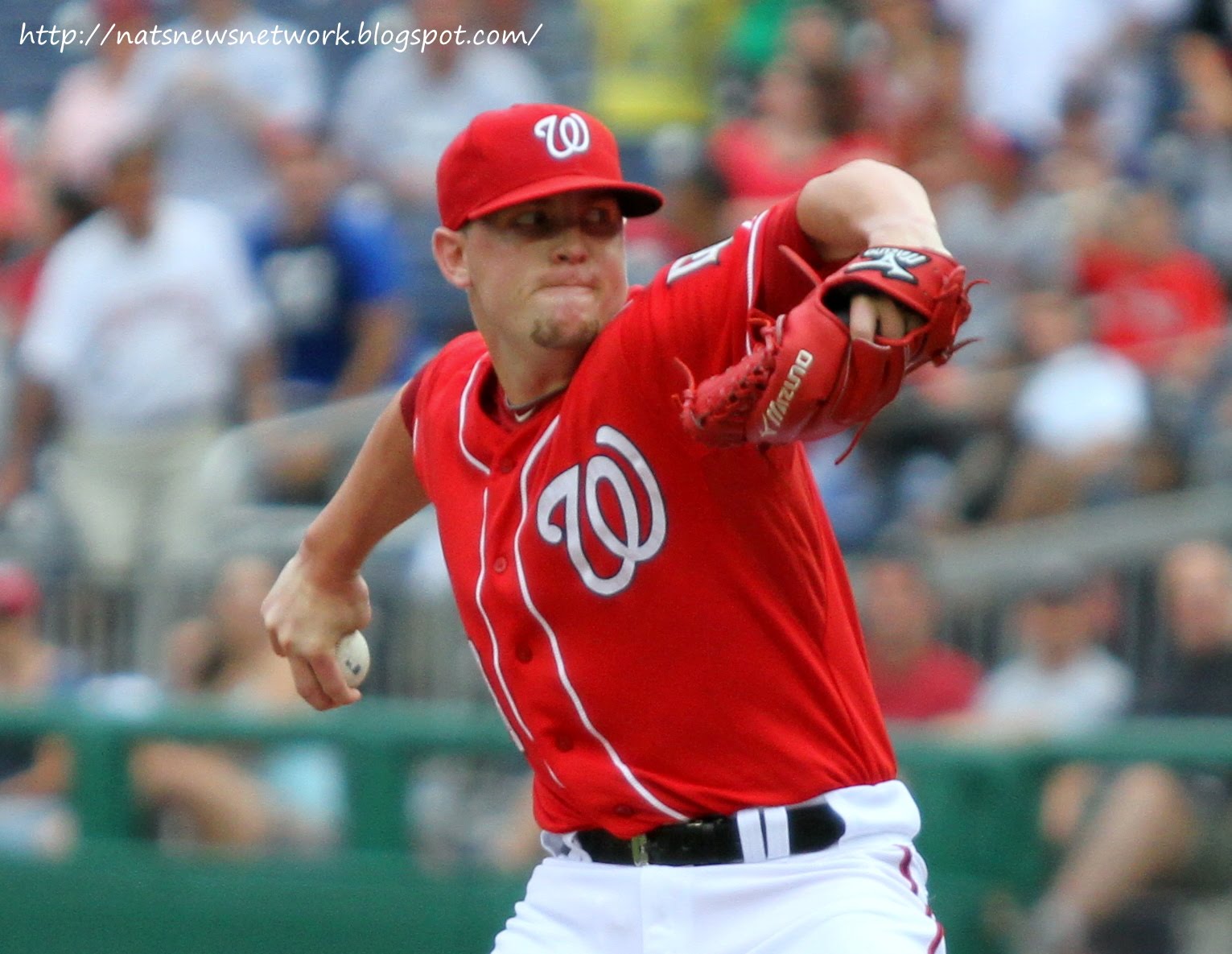
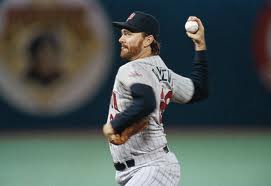
Drew Storen firing one in there. His motion kinda reminds you of the Chief's doesn't it? Photo: Photo 2010 © Cheryl Nichols Photography/ Nationals News Network.

With the Josh Willingham trade netting Henry Rodriguez, a back-of-the-bullpen power arm, coupled with another bullpen arm picked up in the rule-5 draft (Elvin Ramirez), how is the bullpen competition shaping up for the 2011 team?

Here’s how things stand right now: I’m using a standard 7-man bullpen to start (even though we started 2010 with 8 guys out there due to a quirk in the schedule that allowed us a week before needing Livan’s 5th starter services).  This bullpen configuration means roughly a closer, 2 setup guys, a loogy, a longman and two right handers.

  • Closer: Storen

It looks to me like, absent a FA signing, that Drew Storen is entering 2011 as the closer.  There are a couple possible closers still on the FA market but each has some draw backs.  Rafael Soriano is a type A free agent and I can’t quite see the Nats giving up their 2nd rounder for him.  Kevin Gregg is a type B and could still be an option.  He had good numbers for Toronto last year but  has bounced around and may be destined for a setup role (especially after seeing some closer candidates sign on with teams that already have closers established, like what Bobby Jenks just did).  Brian Fuentes also makes for a possible candidate, and is two years removed from a 48-save season in Los Angeles.  But, he doesn’t really feature a power arm and may be destined for an 8th inning support role like what George Sherill has become.  Former Nat Jon Rauch is available and had good numbers for Minnesota, but he should be a setup guy.  Lastly guys like Octavio Dotel,
Trevor Hoffman, and  may be closer to retirement than closer roles in the majors.

  • Setup/8th Inning: Clippard, Burnett

Nothing shocking here; the two pillars of the bullpen will continue to trade 8th inning responsibilities based on match-ups, and could also form a closer-by-committee with the youngster Storen.

Now, here’s where it gets interesting.

  • Righty competition: ERamirez, HRodriguez, Kimball, Carr, Wilkie

I’ve listed rule5 pickup Elvin Ramirez and newly acquired Henry Rodriguez as the two favorites for right handed options out of the bullpen by virtue of their contract statuses.  If Ramirez doesn’t stick, we have to return him (or at the very least work out a trade with New York to retain him.  Meanwhile. Rodriguez is out of options and would have to pass through waivers to return to the minors.  Attempting to do this would pretty much defeat the purpose of trading Willingham away, so he’s likely to stick all year.  Kimball and Carr both featured in the AFL and were both 40-man additions to protect them from the rule-5, but unless one or both of them beat out Ramirez and force the Nats to consider his return, both guys are looking at AAA to start the season.  Wilkie‘s lack of 40-man standing and his safely passing through two straight years of rule5 drafts may indicate that he’s reached his peak as a player.  Perhaps he could earn a mid-season or Sept 1 call-up.

  • Loogy competition : Slaten, Severino

Despite adding Atahualpao Severino to the  40-man to protect him, I cannot see him beating out the very effective Doug Slaten as our loogy specialist.  Now, Burnett certainly can perform this role as well but he’s more valuable than just serving as a one-batter guy, hence the need for a specialist.

  • Long man: Balester, Stammen

Despite all the more advanced stats showing that Craig Stammen was far more effective a starter than his “traditional numbers” showed (he had the 2nd best xFIP to Strasburg of any of our starters last year), it seems that his future is in the bullpen.  There’s just too many starters in competition for not enough spots and he’s clearly lagging behind guys who I already believe will start in AAA.  2011 will be his last option year, so this is a make or break year for him.  Meanwhile, speaking of options, I believe that Balester is OUT of options (he was brought up in mid 2008, then split both 09 and 2010 between the majors and minors).  If he is indeed out of options he may very well get the long man job by default coming out of spring training.  If he under-performs, it might spell the end of his nats career (similar to what happened to Jason Bergmann last year).

  • AAA/Minors: Mattheus, Bisenius
  • 40-man Relievers already released post 2010: Walker, English, Peralta, Batista

I was happy to see both Mattheus and Bisenius return to the Nats fold after getting shuffled off the 40-man.  Mattheus has struggled with injuries and still could be a future option, and Bisenius seems to be a blogger favorite.

I was NOT so happy to see that Joel Peralta‘s fine 2010 was not enough to earn him arbitration offers from the Nats, and word came down today that he has signed with Tampa Bay, who desperately needs relievers for a bullpen that was entirely composed of 2010 Free Agents.  I understand Washington’s decision NOT to get committed to a mid-30s reliever who seemed to have a career year, but we couldn’t spend $1M on the guy?  I could see us re-signing rubber-armed Miguel Batista to compete for a righty slot in the spring.  Walker and English are both injury rehab risks and probably sign minor league contracts, with us or someone else.

So; your 2011 bullpen: Storen, Clippard, Burnett, ERamirez, HRodriguez, Slaten and Balester.

Compare this to the 2010 opening day bullpen: Capps, Bruney, Clippard, Burnett, English, Bergmann, Walker, Batista.

Improved?  Even ff Ramirez and Rodriguez don’t pan out, I like 2011 better.

Henry RodriguezHenry Rodriguez

Written by Todd Boss

December 16th, 2010 at 7:53 pm

Posted in Majors Pitching

The Rich get Richer; Lee to Phillies

one comment

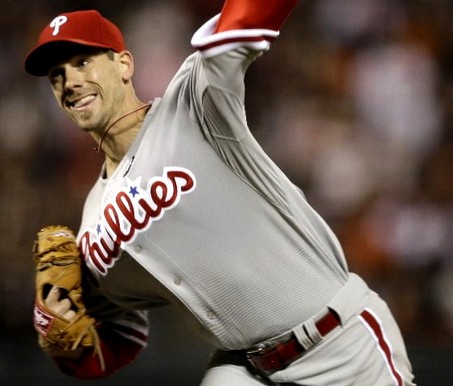
Heeeee's back! Photo: AP via lehighvalleylive.com

Talk about a shock.  Everyone in the baseball world had Cliff Lee going to the Yankees (with a small minority believing that the lack of income taxes in Texas would keep him with the Rangers).  Now, news has broken that Lee is returning to the Phillies in a relatively affordable deal (all things considered).  5years, $120 (average annual value of $24M) with a 6th year easily attained.  He turned down longer deals from New York (reportedly 6years $132M with a 7th year player option at $16M) and Texas (a similar 6year deal with player option for 7th) to return to Philly, where he really enjoyed the clubhouse culture and the city.

Immediate thoughts (echoed in texts to Philadelphia friends earlier today):

  1. The Phillies are *really* stacked.  A rotation where Roy Oswalt is your 4th starter??  That’s sick.  Though they’ll probably line up the rotation to go R-L (Halladay, Lee, Oswalt, Hamels).  Their 5th starter is now either Blanton or Kendrick, meaning they have spare parts to trade to teams needing pitching.
  2. Lee joins a team that won 97 games last year and significantly improves the rotation.  Does this mean the Phillies are on their way to 105-106 wins?  Perhaps; Lee is such an upgrade over the starter he’s basically replacing in the rotation (Jamie Moyer), but the Phillies have lost Jayson Werth in the middle of their order.  Ibanez isn’t getting any younger and its no guarantee super-stud prospect Dominic Brown can provide the offensive replacement they need.  But, baseball is becoming a pitcher’s game and the Phillies just bought the biggest arm out there.
  3. Phillies GM Ruben Amaro re-acquires the same guy he mortgaged his upper farm system for two years ago.  Only this time for no prospects lost (just his 1st round draft pick).  I know that nobody will be saying this, but clearly the return of Lee means that the Phillies screwed up royally by letting him go in the first place.  Luckily nobody will care as long as they’re still winning, still making the playoffs and still competing for the world series.  And, in the end it may not matter because reports from scouts say that the Phillies lower farm teams (rookie and low-A) are stacked with talent and the team will naturally replace some of these aging free agents (guys like Polanco, Ibanez, perhaps even Victorino) with cheaper alternatives and keep payroll in check.
  4. The Yankees are in seriously big trouble.  Their entire off-season depended on upgrading a very vulnerable rotation with Lee.  Right now their rotation has one sure thing (Sabathia), one retirement question mark (Pettitte), one promising rookie with little track record (Hughes), one possible massive FA bust (Burnett) and … who knows?  I don’t think a trade for Greinke or Garza is possible for the Yankees; Greinke may not be the best fit in NY and Tampa may not be wise to trade Garza intra-division.  Plus, do the Yankees even have prospects worthy of tempting these two teams?  Joe Lemire posted very similar thoughts to mine vis-a-vis the yankees today as well.
  5. Lee’s contract, tacked onto the massive contracts for Howard and Halladay may very well serve as a boat anchor for this team in a few years.  I’ve posted in the past about free agent pitcher contract values and clearly a $24M/year AAV is going to be incredibly difficult to earn.  Even if Lee wins 20 games in every season of the contract the Philles are still not getting good value on their money.  Cot’s site isn’t fully updated for even Howard’s extension but the Phillies right now have about $80M committed in 2013 to FOUR players (Howard at $20M, Halladay $20M, Lee $24M and Utley $15M).  That’s not exactly a lot of flexibility of one of those guys gets badly injured.

Since this is a Nats blog, how does this affect us?  Besides the obvious (the Phillies clearly will be that much more tough to beat for a divisional title for the next few years), this move means the Nats may have a much tougher time acquiring Greinke or Garza.  Both Texas and New York now will bet the farm on those two starters, and the Nats will not be willing to match the prospect drain that Kansas City and Tampa Bay (respectively) will be demanding in return.

And lastly the really obvious; competing in the NL East just got that much harder for this team.  If the Phillies are going to act like the Yankees in acquiring high-end FA an Payroll … the Lerners better start acting more like Boston and less like Baltimore.  $60M in payroll isn’t going to cut it anymore; try $120M.  The Werth signing in many ways seemed like a desperation signing, a quick attempt to regain some fan interest in this town and offset the loss of Adam Dunn.  But Werth alone isn’t going to help this team.  We need more hitting, better pitching, better players.  Honestly we really just need time to get our high-end prospects though the system … but can we wait until 2013 to compete?

The team is entering its 7th year in Washington, a team notorious for NOT supporting its professional teams unless they’re successful.  Baseball isn’t like football, where national TV contracts and salary caps essentially mean a team can compete equally whether they’re in New York or Kalamazoo.  In baseball you have to generate your own revenue and make your own luck.  You have to spend money or spend time (and risk alienating the entire fan base) while getting better.  For the Nats, who wasted 3 years of good will and a brand new stadium being stingy and thinking that the product on the field didn’t matter … they have no choice.  They need to be successful NOW to stem the flow of season ticket cancellations and attempt to be relevant in this town.

Vazquez and Webb: Do we really want them?

2 comments

A younger, thinner, harder throwing version of Javier Vazquez. Photo courtesy of baseball.dailyskew.com

11/28/10 update: possibly obsoleting much of this, the Marlins have reportedly signed Vazquez to a one year deal.

As the FA hot stove gets hotter, more and more players have the “Nationals” name attached to them as intereted parties.  None more so than Javier Vazquez and Brandon Webb.  The question we as Nats fans should have is the following: Are Vazquez and Webb really worth going after?

Javier Vazquez, despite being the answer to one of my favorite trivia questions ever (what major league player has the highest scoring Scrabble last name?) seems to be more famous for the players he’s been traded for over the years (he was the primary chip in trades involving Nick Johnson, Randy Johnson, Chris Young, and Melky Cabrera) than he has been for his pitching.  At age 34 he’s 152-149 for his career for a barely-better than average 105 era+ value.

He has shown that he can be great (2009 for Atlanta) and he can be mediocre (his two seasons in NY and two other seasons in Chicago).  He’s never missed a start in the majors, though the Yankees took him out of their starting rotation towards the end of last season for a bit after a series of poor outings.

Question is: rumors abound that he’s lost his velocity.  Is this true?  Lets take a look at Pitch F/X.  Here’s samples from three games last year (the box score is linked to the date and the Pitch FX data is linked to a mentioning of speed):

1. June 6th: probably his best game of the year.  7 innings, 1 hit, 9ks (though 4 walks).  Again his avg fastball is around 89 but he maxed out at 91.7.

2. July 26: a decent performance middle of the season.  About the exact same figures as on 6/6; 89.22 average, 91.6 max.

3. Sept 29: his final appearance of the year, a loss against Toronto where he got shelled.  Here he was averaging
89, max of barely 90 on his fastball.  Hmm.  not good.

Now Lets look at 2009, when he finished 4th in Cy Young voting (which really means, he received one vote from one of the stat nerd voters who decided NOT to vote for Carpenter because he missed a few starts).  Here’s a random game from the middle of the season.

1. June 11: Vazquez goes 8 innings, gives up 2 hits and strikes out 12 hapless Pirates.  Interesting: he was
throwing an average of 91.43, max of 93.5.

So, his average fastball MPH has dropped nearly 3.5 mph between mid 2009 and the end of 2010.  Not good.  This did not go without notice in the NY press and blogsFederal Baseball pulled out some great links and wrote a similar article to this a few days ago.

Here’s one last visual aid; Fangraphs historical pitch velocity maps. In the mid-late 2007 he was averaging 93-94 with peaks of 97-98.  Now, he’s spent an entire year averaging 88-89 with peaks of no more than 92-93.  That’s a significant drop off and may be indicative of Vazquez’s utility as a power pitcher coming to an end.  The same thing happened to Livan Hernandez and he adjusted, but clearly Livan isn’t the ace starter that the Nats really kinda need.

—————————–

So, how about Brandon Webb?  We’re already reading how Rizzo likes Webb dating to his AZ days and we’re seeing pundit predictions and beat writer stories that Webb is coming to the Nats on a one-year reclamation project.

Webb’s history over the last 2 years:
– Made opening day start 2009, shoulder hurt, went on DL with Bursitis, surgery in august.
– Tried comeback 2010, never got off DL.  Pitched in the instructional league after the end of the season.  In those three instructional league games, here’s his performance summary:

  • 9/29/10: 1 inning, fastball at 81mph.
  • 10/2/10: 81-84mpg
  • 10/7/10: 2 innings, fastball low-80s, top mid-80s.

Webb got 2 innings in his last of three Instructional league start and was, per this report, was sitting “in the low-80s and topped in the mid-80s.”    Stated another way, “Webb has thrown in front of scouts multiple times, according to several reports, and in his most recent session his fastball reached four or five miles per hour below his typical velocity.”

Perhaps this is just a tentative guy, trying to work his way back.  In fact, if he was indeed pitching at just 90% of his effort after so long a time off, then mid 80s is just fine.

Webb was never a terribly hard thrower.  His fangraphs velocity chart from his healthier 2007 and 2008 show a consistent mid-to-upper 80s (88.5), with peaks into the low 90s.  His strength is in a serious sinker, that batters drive into the ground and cannot hit hard, consistently.

Conclusion:
– Take a flier on Webb.  I’d go 1yr $5M with $1M incentives at 15,20,25 and 30 games started to push total value to 1yr $9M.  And i’d get a club option at $10M for a second year.
– Stay away from Vazquez.  He’s trending downwards and is in Jose Contreras territory.

Coming soon: similar thoughts about Carl Pavano and Jorge de la Rosa.

Greinke Trade Question

2 comments

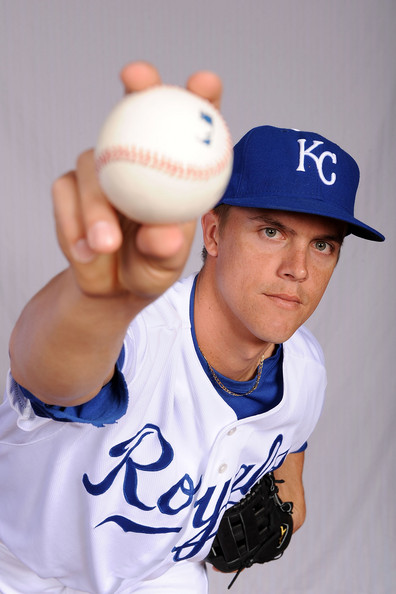
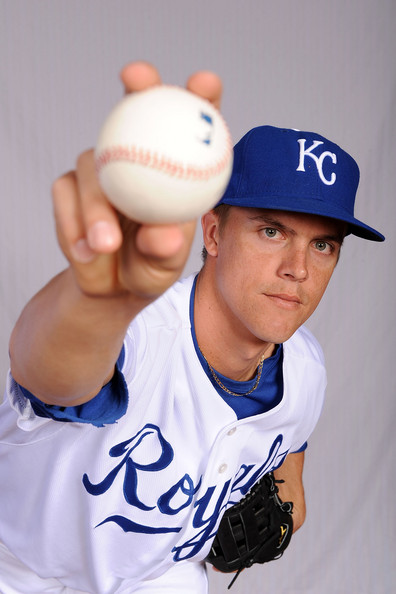
Zack Greinke at photo day 2010. Photo by Harry How/Getty Images North America

I have kind of a love-hate relationship with Keith Law sometimes.  I think he’s a pretty darn good talent evaluator and there’s a reason he had a front office job (and now the scouting analysis job).  He even once responded to an article follow-up email I sent him where I thought he was bashing Bowden’s moves a bit to heavily (ironic in that i’m now clearly on the anti-Bowden track as he was all along).  However, I think he over-analyzes and is a bit TOO stat heavy sometimes, and I believe he over-values certain players.

In yesterday’s chat on ESPN (insider only, apologies), there were a few Washington related questions.  Here was one that I couldn’t quite believe though:

Joseph (Sacramento, CA) asks, “J.Zimmermann, Espinosa, Burgess, Detwiler for Greinke? Does this work for both sides?”

Klaw answer: “It certainly works for Washington.”

Jordan Zimmermann, Espinosa, Burgess and Detwiler for Greinke straight up.  I say, no way.  I have to disagree with Law here.

That’s trading your current #2 pitcher, your anticipated starting 2nd baseman, your best OF prospect not named Bryce Harper, and a prospect lefty starting pitcher/former 1st round draft choice (who may not have great MLB stats but is a lefty who throws mid 90s) for a potential #1 starter.  I say Potential because, if you look at Greinke’s career numbers they’re not exactly overwhelming.  Yes he had a phenomenal 2009.  What happened in 2010?  Era+ of 100 means he was MLB average.  The years before he was a good but not overpowering starter on a bad team (putting up ERA+ figures of 126 and 124; good but not great).   There’s no promise of Greinke returning to that form (though the move to the NL will certainly help).  Is he a Ron Guidry or Rick Sutcliffe pitcher (guys who had one fabulous year and then came back down to earth)?

I think I’d be interested in Greinke (who wouldn’t?) but at a lesser price.  I’d trade Zimmermann and Espinosa for him.  Justification; Zimmermann is indeed a #2 starter quality guy but would be expendable with Greinke in the fold.  Espinosa shows great promise and I like him, but we also have a couple of high-profile 2nd basemen prospects in the minors that would feature soon (Lombardozzi or Kobernus).  Perhaps I’m as guilty as Law in overvaluing our own prospects, but to me Greinke isn’t good enough to merit the trade.  If it was a better “Ace,” someone with a repeated track record of success (Felix Hernandez, Lincecum, Halladay), the haul would be easily worth it.

But for Greinke, all 4 of those guys is too much.

Interesting thoughts about the Giant’s roster construction…

one comment

As I watch the NLCS and its surprising results so far (Cody Ross with a Reggie Jackson-esque performance thus far, Roy Halladay getting beat, etc), you can’t help but notice some interesting items about the Giants roster and its makeup.

1. The Giants THREE highest paid players (Zito, Rowand, Guillen) are not even on the post season roster, and their 4th highest paid player (Renteria) is not the starter at short.

2. The position players that the Giants are depending on are all either developed internally (Posey, Sandoval) are retread/journeyman free agents on one-year deals (Torres, Uribe, Huff, Fontenot) or total reclamation projects (Burrell who was DFA’d earlier this season and Ross who they got on waivers).

3. Almost their entire pitching staff is home grown. Lincecum, Cain, Sanchez, Bumgarner plus setup/closer
combo of Romo and Wilson are all original SF draft picks. Only #5 Starter Zito is an (infamous) FA acquisition.

Here’s a quick table of Giants “primary starters” player acquisition methods:

SF (postseason 2010) acquisition method
Buster Posey Draft
Aubrey Huff FA
Freddy Sanchez Trade Prospects
Pablo Sandoval FA (intl)
Juan Uribe FA
Pat Burrell FA (dfa’d)
Andres Torres FA
Cody Ross Waivers
Tim Lincecum Draft
Matt Cain Draft
Jonathan Sanchez Draft
Madison Bumgarner Draft
Barry Zito FA
Sergio Romo Draft
Brian Wilson Draft
Drafted/Developed 8
Traded Prospects 1
Traded MLBs 0
FA/Waivers 5

By way of comparison, the Nationals opening day roster featured only FOUR such home grown players (Zimmerman, Desmond, Lannan and Stammen).

The Giants list their 2010 payroll at $96M, of which $42M is allocated to those 3 guys not even rostered.  Imagine what this team would look like if that $42M was properly allocated.

I think what this shows is that, with enough development time and effort put into your pitching staff you can get to the playoffs even with near replacement players in most of your fielding positions. Hope for the Nats, since this seems to be the direction Rizzo is going with his 2009 and 2010 pitcher heavy drafts. 8 of the first 11 picks in 2009 were arms, and while only 4 of 2010’s top 10 picks were arms there was significant funds paid to Solis, Cole and Ray.

Can the Nats turn these two drafts (plus other prospects) into a Giants-esque rotation? Strasburg, Zimmermann, Solis, and Cole all project to be #1 or #2 starter quality per scouting reports. Those four, plus live arms in the pen like Storen, Holder and Morris could be our future. 3-4 years out future, but still promising.

Or am I too rosy glasses colored?

4 Starts but 1 area of concern for Maya

one comment

When the Nationals signed Cuban defector Yunesky Maya in July, we thought we were getting a seasoned international competitor, a professional pitcher who would be the next in a good line of comrades who have made an impact in the majors.

After watching and commenting on  his MLB debut, I was impressed.  Maya wasn’t overpowering but showed a great variety of pitches and a fearlessness on the mound.

However, his fourth start yesterday (box/gamer) demonstrated the same issue that plagued him in his first three starts; the big inning.  In each start now, he’s had one bad inning amongst several good ones.  Yesterday he was unlucky to give up an unearned run in the 3rd, but then gave up 4 runs in the 6th and was yanked.  The crushing blow was a no-doubter homer from Atlanta’s shortstop Alex Gonzalez on a first pitch hanging curveball.  Suddenly the Nats are down 5-0 and have given up 4 runs in an inning, a relatively insurmountable score because of the “big bang” theory of baseball scores (see this Boswell chat for more details, but analysis of box scores over the years shows that in more than half of baseball games, the winning team scores more runs in ONE inning than the losers score the entire game).

This is why these big innings are troubling.  You give up 3 or 4 runs in an inning with an offensively challenged team like the Nats (playing yesterday without Espinosa, Zimmerman, and without original #5 hitter Willingham) are almost always going to lose.  Sure enough, Derek Lowe shut them down for 6 relatively innocuous innings and the Nats never scored at all.

I was at the game yesterday, which makes analysis of Maya’s stuff rather difficult.  All we can see is the mph on the pitch to guess whether it was a fastball, curve or change.  Maya didn’t seem to be throwing hard (averaging 88-89, maxing out 91 or so per yesterday’s pitch f/x data), and certainly wasn’t getting strikeouts (1 K in 25 batters faced, not even getting his counterpart on strikes).  His pitching coach was interviewed though and commented that Maya has found MLB hitters to be far more patient than in Cuba or International competitions, and that MLB umpires are not giving him pitches on the corners.  He seems to be nibbling, not throwing strikes or trusting his stuff.  It also goes without saying that he is still in early season/spring training mode, having only made his professional debut for us on August 13th.  Still, it is hard not to be concerned about his performance thus far.  Did we waste $6M on him?

Side note about the unearned run in the 3rd: Gonzalez made a fantastic diving stop with guys on 1st and 2nd and 2 outs, only to see Kennedy failing to cover 2nd base for the easy force out.  Possibly a mental error but more likely a result of the exaggerated pull shift the Nats employed on Atlanta’s catcher McCann.  So he forced a throw to first from his knees that short-hopped Dunn.  Dunn ineptly missed the throw, it got by him and a run scored. This error was then attributed to Gonzalez, who gets penalized AFTER making a great play and to try to make up for his teammate’s mental error.  A better first baseman makes that play easily.  This is just another example of how unfair our basic fielding stats are these days and how you just can’t measure some things in a box score.

On the same play, as the ball was getting past Dunn, the Atlanta runner running from first (Heyward) blew through the stop sign and was thrown out by 20 feet …. so he did what came naturally to major leaguer,s recently; he tried to bowl over our catcher (Ramos) instead of sliding or giving himself up.  Ramos pulled an “ole” move, kinda dodging the collision attempt and getting the tag in.  I realize that in some cases a catcher blocking the plate gives the runner little choice but to try to dislodge the ball by barreling into the opposing player.  But on a play like this I think the choice to try to deliberately harm the catcher needs some league retribution.  Heyward, to his credit immediately apologized to Ramos for his decision, which probably prevented further retribution.

Lastly, read this nugget in Nats News Network, where Riggleman has said that Olsen takes too long to warm up and thus can’t really be used out of the bullpen.  In other words, be prepared for a non-tender on December 1st.

Maya’s MLB debut thoughts…

2 comments

Though not nearly as heralded as Strasburg or Zimmermann‘s debuts this season, Cuban FA signing Yunesky Maya had his MLB debut last night against the Mets at the stadium.  He took the loss 4-1 (gamer/box), with the Nats struggling against fellow MLB Debutante Dillon Gee.  Maya’s insertion into the September rotation spells the probable end of Scott Olsen‘s Washington career and represents the possible 5th of 5 starters the Nats are looking at for their 2011 rotation.

Unfortunately, nerves and overthrowing seem to have gotten the better of Maya, as the Mets tagged him early and hard in the first.  Maya was visibly nervous, breathing heavy and breathing hard before his first pitch.  It is probably hard to overestimate what we were witnessing here; a player who risked his livelihood and his family’s well being back in Cuba to defect to chase his dream.  Perhaps the culmination of the situation over came him.  Whatever the cause, the first four Mets hitters all got solid wood on the ball, with Ike Davis absolutely tattooing a ball to dead center for a quick three runs.

From my viewpoint, Maya was struggling early with his “height” on his fastballs (certainly the gopher ball to Davis was belt high and went a long way).  He also couldn’t get “on top” of his curve, which looked closer to an euphus pitch than a sharp breaker.  Masn showed his velocity as maxing out at 94, but Pitch f/x showed a max of 91.5 (further proof that stadium guns are “juiced”).

After giving up a run-scoring single to the opposing pitcher in the top of the 2nd however, Maya looked like a different guy.  He has an abbreviated motion that has a similiar (but less exaggerated) leg kick to Cuban compatriot Orlando “El Duque” Hernandez, and seems to have the same arsenal of pitches.  Per the MASN broadcasters he has 5 pitches (fast, curve, change, sinker, and a slider), but he demonstrated several others.  He changed speeds on all his pitches, moving his 4-seam fastball in and out.  He had good movement on the fastball (after the 1st anyway) and worked inside on hitters fearlessly. In the 3rd-5th innings he was on top of his curve and it demonstrated pretty significant 12-6 movement.  On a couple of occasions the hitter patently gave up on a curve that started at or above their head, only to watch it break into the strike zone.  He showed a sharp slider that he struggled to control most of the night.  He had a conventional changeup but also showed what had to be a split-fingered changeup that would dive down with great movement.  Finally he showed some variety by throwing both his slider and fastball from a near sidearm arm angle.

So, if you’re counting pitch varieties I saw: 4-seam fastball, sidearm fastball,  2-seam fastball, conventional changeup, split-fingered changeup, 12-6 curve, conventional slider and a sidearm slider.

Maya started out the game by working fastballs to hitters, but by the end was throwing an array of offspeed stuff to then setup a sneaky fast 4-seamer.  It makes you wonder if he was being told by the dugout to work that way.  Clearly he was more effective throwing more junk (ala Livan Hernandez) and you have to wonder if he changed tactics on the fly.  In this regard, I was very surprised to see the rookie Wilson Ramos behind the plate; why wouldn’t you start the future hall of famer with a new guy making his debut?  You’d get a better game called and have quicker adjustments on the pitch calling once it became apparent what the guys’ strengths were that night.  Curious.  In any case, after the first four guys hit the ball hard, he didn’t give up a well hit ball the rest of the night.  Lots of popups, lots of groundballs.  He’s not a strikeout pitcher; just a guy who throws a bunch of pitches well and keeps you off balance at the plate.

Verdict; I like what this guy brings to the table.  The scouting reports say that he “knows how to pitch” and that became pretty apparent as he mowed through the mets lineup the 2nd and 3rd time through.  He retired 11 of the last 12 batters he faced (only blemish being a walk to the guy who mashed a ball out, obviously pitching him carefully).  He looked fearless, threw his pitches well and I can’t wait to see his next start.

Coincidentally, Maya represents the 14th pitcher to start a game for us this year.  That “leads” the majors in a rather dubious categoryand goes a long way towards explaining how the Nats season has gone.

In other pitcher news, Detwiler pitched 2 innings with little fanfare; he threw easily and loosely, gave up some hits but worked through 2 innings decently enough.  He’s got his hands full though next spring when it comes time to displace one of the 5 current starters.  Lastly Balester pitched 2 strong with 3 Ks; he makes perfect sense as a long man out of the bullpen and I think his days of starting are over.

Olsen (possibly) closes his Nats Career last night…

leave a comment

Well, Adam Kilgore beat me to the punch on this post earlier today, but I’ll still post my sentiments.

Scott Olsen put in yet another forgettable performance last night (gamer/box), lasting only 5 outs while giving up NINE earned runs in an ugly outing.  His era rose from 4.91 to 5.88, his whip rose from 1.43 to 1.53 and his ERA+ dropped from an already mediocre 84 to 70.  He drops to 3-8 on the season and the team is 5-10 in his starts.

The problem with Olsen is that his “highs” are not balancing out the lows.   In 15 starts he’s pitched into the 7th inning twice (including one gem against Atlanta where he gave up 2 hits in 7 1/3 inning) but he’s had “meltdown” games no less than five times.  (“meltdown” being defined as a game where the pitcher gives up at least as many runs as innings pitched).

Olsen arrived to the team with a history and a less-than-stellar fitness routine (he was a half-a-pack a day smoker).  We havn’t heard a single peep about any attitude or smoking issues this year and I was impressed that he accepted last year’s non-tender and subsequently signed on for less than what he would have earned in arbitration to start the  season.  I’m less impressed with the results for this team.

Thankfully for Olsen, he won’t earn an outright release in the next few weeks, probably just getting sent to the bullpen or just shelved as Yunesky Maya gets called up to naturally make the 9/7 start on a normal 4 days rest.  But, with an expected crowded race for next year’s rotation, he’s quickly earning himself a non-tender after the season is over.

Written by Todd Boss

September 2nd, 2010 at 1:33 pm

Did Chapman really throw a ball 105mph?

one comment

Chapman is amazing. Photo via wiki/flickr SD Dirk

Chapman is amazing. Photo via wiki/flickr SD Dirk

(Editor’s Note: This post was originally published on 9/2/2010, edited several times since, including links to the 105.1 pitch later in 2010 and him hitting 105.1 again in 2016, plus 2020 and 2022 readings and addition of additional links).

If you believe twitter and these published reports, Cincinnati’s Cuban prospect Aroldis Chapman “sat” at 103 and hit 105mph in his final AAA appearance before getting called up for the 9/1/2010 roster expansion.  I had a hard time believing it; the picture in the Yahoo looks doctored frankly, and stadium guns are notoriously “jacked up” to get the crowds excited and to spark interest in hard throwers.

There are two kinds of radar guns used by stadiums and scouts today.  A “fast” gun measures the speed of the pitch as it leaves the hand of the hurler while a “slow” gun measures its speed by the time the pitch crosses the plate.  For obvious reasons you’ll take the “fast” reading if you’re trying to hype the player, and you take the “slow” reading if you’re trying to evaluate the pitcher.  Oh, and you take readings over and again, compare first inning to last inning, etc.  My thoughts were that Chapman was on a fast gun that was over-exaggerated to add a couple MPHs (case in point; Jordan Zimmermann‘s radar readings on the telecast two nights ago put him at 96mph when his pitch f/x maximum was 94).  Click here for an excellent overview of the way we’ve measured velocity has changed over the years.

Now, that being said, check out the Pitch F/X data from Chapman’s first appearance in the majors on 8/31/2010, and his second appearance on 9/1/10. In his major league debut he threw 6 fastballs with an average of 100.65 and a max of 102.7mph.  This in and among itself would have been amazing and would have tied the fastest ever recorded pitch f/x data (that of Joel Zumaya hitting 102.7 in a game in June 2009)

However, look at the data from 9/1/10. He threw 7 fastballs that AVERAGED 102.11 mph with a peak of 103.9mph.  103.9!!


Before talking about new records, lets talk about history.

Now, I know there’s a ton of links out there talking about what the fastest ever reported pitch is on record (see links here or here at HardBalltimes or this google cache’d document as well as wikipedia or Guinness Book of World records links).

  • Walter Johnson was known for his power in the early part of the century; his fastball was estimated to be in the upper 90s by lore, and 91mph by testing.  Its a shame that modern technology didn’t exist back then.
  • Bob Feller being “recorded” using primitive measures in the 107mph range.
  • Steve Dalkowski’s legendary velocity being claimed at 110mph.
  • Nolan Ryan‘s “record” of 100.9mph has stood as some sort of altar to the speed ratings for years and years.

Lets discuss some of these points.

Bob Feller: So, what is the “proof” that Feller threw 107.6 in 1946?  Well, its complicated.  This ESPN article covers it: basically Feller threw a ball through a Lumiline Chronograph device, which hyper-accurately measured speed at the time.  His best measure was 98.6mph … but modern pitches are measured at the point of release, not where it crosses the plate.  So, you have to estimate how much velocity was lost from the point Feller tossed the ball to the device.  If you look at the photo (in the ESPN article), Feller was not throwing from the mound, but somewhere well forward of it.  So, to standardize speeds to some point closer to the release point of the pitch, we have to estimate the percentage loss of Feller’s pitch from an estimated delivery point based on a photo, then back into a number.  Some estimate this to be in the 103 range, others claim 107.6, which would imply he was throwing off the mound and experiencing the full expected velocity loss (which is clearly not true from the photo).  So I’d believe Feller was throwing roughly 103-104 based on where he released the ball … but its an estimate.  Add back 1mph for every 7 feet, and Feller seems to be standing at about 35 feet, so add perhaps 5mph to his 98.6 and you get the 103-104 rough estimate.

Coincidentally; the new standard is speed of the pitch measured at 50 feet from home plate.  This standardizes to allow for different release points by pitchers of different heights.

Steve Dalkowski: rumors of 110mph were mostly lore, but attempts were made to measure Dalkowski’s velocity.  Famously, he was measured at 98.6 at a military base in the 1960s, but there were some interesting caveats to that test.  According to this NYtimes article, the day Dalkowski attempted this test, he had thrown a 150-pitch start the DAY BEFORE, then had such a hard time throwing a baseball through the measuring device (he was notoriously wild) that it took him “dozens” of attempts before finally registering one pitch at the 98.6mph level.  It was the only known measurement of his arm ever done, and one has to think that (similarly to Ryan’s 100.9 speed below) he’d gain several mph just to standardize the speed to today’s 50-foot guidelines, and, frankly,  his arm was probably toast during the test.

(Side Note: if you’ve never heard of Dalkowski … his wikipedia page is a pretty good read).

Nolan Ryan: How about proof that Ryan threw 108.1, as is throw around the internet?  Well, It comes from the famous 100.9 reading he put up in a start in 1974.  However, that was reading was made using technology that, again, measured the speed closer to the plate than we currently do.  Per this article (which summarizes findings from a documentary called Fastball), the radar technology measured 100.9 ten feet from home plate, meaning we have to back up to the 50 feet estimate.  So, if the speed was measured at 10 feet, and we normally measure at 50 feet, we should add back “40 feet” of velocity loss, at around 1mph per every 7 feet, so call it somewhere between 5-6 mph … and we’re somewhere in the range of 106-107mph.  Not 108.1 as everyone claims; that’s adding back too much velocity and/or giving Ryan 10 feet more of credit (the measurement at the plate versus 10 feet in front).  These are still estimates of course; these speeds are also affected by the weather at the time (it was in Sept of 1974 in Anaheim … was that a humid day, an arid day?  Anaheim’s typical September weather is humid, hot; was it really humid that night?  Was it relatively dry?  That makes a huge difference in aerodynamics of a baseball and potential velocity loss.  So … we’ll never know.

Coincidentally, these velocity loss estimates are best documented by a physicist at the University of Illinois named Dr. Alan Nathan.  He estimates that baseball pitches lose 9-10% of their velocity from the point of release to the plate.  Example; if you release a ball at 100mph, it will generally measure at 90-91 by the time it crosses home plate.  Or, to put it easier … a pitch loses about 1MPH every 7 feet.

Other rumors and records for fast pitches suffer from perhaps hype and estimates, not science.  Zumaya reportedly hit 104.8 in the first game of the 2006 ALCS, but it was on the stadium gun, not Pitch F/X.  Ryan and Goose Gossage both reportedly hit 103mph in the 1978 All-Star game.  Stephen Strasburg reportedly could hit 102 as an amateur but rarely goes about 97 post-arm injury.  Justin Verlander may not have the triple-digit records but amazingly maintains his upper-90s throughout games, often hitting 100mph in his last inning of work.

I think Chapman’s speed last night is the new standard.  And a pretty amazing accomplishment.

Post publishing Editors notes: Chapman set a new MLB record on 9/24/10, after this article’s initial posting, throwing a documented 105.1mph.  He also threw a ball at 104.6 on 7/28/14.  Not quite as fast as his best ever … which I’m guessing even Chapman doesn’t think he’ll ever beat, since he got the reading tattooed on his wrist.  Then on 7/19/16,  years after his first record, he tied it again, throwing another ball 105.1.  Here’s the StatCast link for this pitch.  Coincidentally, this 105.1 pitch is now officially registered at 105.8 by MLB, because the technology we use now standardizes the pitch speeds at a specific distance, and Chapman’s 105.1 was measured further down from where we now standardize.

As of this writing, the Guinness Book of World records recognizes Chapman and 105.8 as the world records.

Post-posting related link: BA’s J.J. Cooper posted this Q&A session on 4/28/15 talking about Chapman and 101+ MPH pitches.

Jan 2017: Boston pitching prospect Michael Kopech, who is renowned his velocity, hit 110 MPH during a “max velocity” workout early in spring training by crow hopping.  Impressive, but not the same as throwing off a mound.  Holy mackerel!  How long before this kid gets to the majors and has a gun on him??

May 2018: we may have a new gold standard; Jordan Hicks threw a reported 105.1 MPH fastball, but Pitch FX shows it at 106.1.  (Unfortunately the PitchFX data at BrooksBaseball site now does not work, so my “evidence” is gone).  However, subsequent reporting on this pitch have lowered it to the mid 104s, so it remains unclear what its real velocity was to this day.

May 2022: University of Tennessee’s Ben  Joyce threw a pitch recorded at 105.5 in a college game.  Does Tennessee have Pitchfx?  Was this a juiced gun?  We’ll have to see.

Written by Todd Boss

September 2nd, 2010 at 12:21 pm

Zimmermann’s 2nd start back…

leave a comment

At the risk of sounding TOO optimistic (like perhaps the ever rosy Thomas Boswell in today’s WP column), Jordan Zimmermann looked awfully good last night in his 2nd start back (gamer and box score from nationals.com).  He went 6 complete innings, gave up 1 hit (a double by Sanchez that was erased on a great outfield assist from Bernadina), struck out 9 and finished on 86 pitches before being lifted.  He could have gone more, but why would you at this point in the season with a guy coming back from injury?

Zimmermann’s effort is probably the 2nd best/2nd most dominant pitching performance of the year (behind Strasburg‘s 14k debut 6/8/10) from any Nats starter.  Per the pitch f/x data he hit 94 once, touched 93 a few times and averaged 91.79 on his 65 fastballs on the night.

(side note; just goes to show you can NOT trust the stadium Guns, ever, as they had Zimmermann on 96 in the first inning several times, which means that the stadium gun was at least 3mph faster than reality).

It is hard to gauge the breakdown of pitches though; per the f/x data he only threw one changeup, yet was quoted in the gamer as saying that his changeup felt great.  I’m guessing that some of the pitches classified as “sliders” were in reality changeups, and that the variation of speeds between his slider and curve screwed up the pitch classification.  Either way, his curve was definitely faster and less loopy than his previous start.  By pounding so many fastballs he showed that he has dominant enough stuff to challenge a pretty decent hitting Marlins team.  Zero walks and 86 pitches to finish 6 innings means he had pretty good control.

Unless the Nats are specifically NOT calling changeups after what happened to Strasburg?  That’d be a bad precedent.

On the season, Zimmermann now has 13ks and 1 walk in 10 innings.  That’s something to build on.  I’ve always thought that best-case Zimmermann had the capabilities to be a great #2 starter on a good team, and performances like last night are indicitave of that and much more.

Written by Todd Boss

September 1st, 2010 at 9:31 am