Nationals Arm Race

"… the reason you win or lose is darn near always the same – pitching.” — Earl Weaver

Archive for the ‘Baseball in General’ Category

What are non-MLB associated baseball league talent equivalents?

61 comments

We all know how good Yu Darvish’s stats are in Japan, but how good is the competition? Photo unknown via beatofthebronx.com

Editor’s Note: this post was originally published in January of 2012: I have updated it as I have received new information several times since.  But some of the information and statements may be dated based on when it was initially written (like the Yu Darvish comment in the intro).  Over the years I’ve also added in more leagues and more details on existing leagues, including Wood bat leagues and Independent leagues.


I’ve always wondered, since we hear so much about players’ tearing up winter leagues or hear wonderful stat lines from players coming over from foreign countries (as we are now in the Yu Darvish mania).  So what is the talent-equivalent of the various leagues outside of the conventional MLB-AAA-AA-A-rookie levels?  I did a bit of digging around, asking questions and came up with the following approximations.  Feel free to debate if you think otherwise.

Foreign Pro Leagues

  • Japan: the Nippon Professional Baseball League rates, by various accounts, as a mid AAA-level talent league.  Baseball Prospectus’ Clay Davenport did a stat-heavy analysis in 2002 and concluded that the NPB was at least AAA level, perhaps close to MLB level.  However, the prevalence of mediocre players from the US going to Japan and being super-stars seems to indicate that Japan is no better than AAA, and may be a bit weaker.  And, not to claim this is about talent levels per race, but there have only been a very small number of Japanese-born players who were really impact players upon arriving here.
  • Cuba: per Dave Cameron (mentioned in a chat, need the link) the “general consensus” is that the Cuban pro league is about a High-A level of talent.  I wonder if it isn’t higher though, given the immediate impact that a number of Cuban ex-patriots have had immediately upon their arrival in the US (Yasiel Puig, Jose Abreu being exhibits 1 and 1-a).  I wonder if this will start rising now that the embargo has eased and the Cuban government has begun allowing its players to legally play elsewhere.
  • Taiwan/China: Taiwan had its own thriving baseball league for a bit, but merged it into the main Chinese league in 2003.  Given the small numbers of Taiwanese-born players who have made it to the majors, and the fact that the league serves mostly as a feeder into the Japanese league, its safe to say that the Chinese league is no better than a high-A level of talent.
  • Korea: As with the Chinese leagues, Korea mostly feeds into the Japanese league.  High-A talent levels.  Might be on the rise though, as more and more 4-A/AAA veterans decamp for Korea instead of Japan.  That may be driven more by money than by competition though.
  • European Leagues: Believe it or not, there are thriving baseball leagues all throughout Europe.  They even have multiple levels of play in certain countries (the Netherlands in particular).  However, based on the levels of talent of players that typically play in Europe, its hard to put the talent levels at anything close to our own Rookie leagues.  In fact, I’d suspect that most European pro teams are no better than a low division 1 college baseball program (such as GW or Catholic U’s teams).
  • Mexican Summer League: listed as a AAA-quality league in places like Baseball-Reference, but studies have shown it isn’t anywhere close.  A-level talent.
  • Leagues elsewhere: there’s leagues just about every where else; wikipedia searches turn up baseball leagues in Australia, Asia, the far pacific.  I didn’t do any research here, assuming that these leagues are one slight notch above amateur leagues in the US.

Winter Leagues

Davenport also did a bit of analysis on the various winter leagues in 2004; I’ve taken his recommendations and adjusted them based roughly on observation over the past few years, since the winter leagues have been shifting in terms of talent attracted in recent years.

Most players who go to winter leagues fall into one of three categories:

  1. Natives of the country looking to provide support for their home town teams and home leagues (the Nats own Ramos, Flores, Pudge, Severino and Perez being good examples)
  2. Players looking to get in additional work after an injury-filled year curtailed their seasons.
  3. Players looking to work on a new pitch, a new swing or some other experimental part of their game.

So, the talent levels in these various leagues are usually all over the road.

  • Dominican Winter League: Seemingly the “best” winter league, having the most ex-patriots playing in the US.  Davenport’s studies from earlier in the decade showed that the talent level is roughly equivalent to AAA talent, an opinion that I still maintain.  Our own Yunesky Maya tore up the DWL last winter, but struggled to be just a serviceable pitcher in Syracuse all year.
  • Puerto Rico Winter League : seems to be the 2nd strongest Winter League, but with slightly fewer MLBers than in the DWL.  So we’ll call it AAA level, but weaker.
  • Venezuela Winter League: The talent levels have dropped for a while, ever since political turmoil has taken over the country.  This is highlighted especially close to home in 2011 with the Wilson Ramos kidnapping case.  However, Nats farmhand Ryan Tatusko was kind enough to provide his opinion on the talent level and calls it “AAA talent.”   I think at best its a low AAA, as the league is clearly lower quality than Puerto Rico.  This last season’s version of the VWL seemed to be more talented that past versions though; perhaps this league is looking to challenge the DWL for pre-eminence in the winter leagues.
  • Mexican Winter League: Its really hard to tell; the winter leagues are quite a bit better than the summer league, at least per Davenport’s studies.  Now?  I’d guess the MWL has degraded a bit and is probably on a par with Venezuela in terms of talent.  AA-level at best.

Other US-based Professional Leagues

  • Arizona Fall League: the AFL rates somewhere between a AA and AAA level by and large, though for several reasons it rates as a very heavy hitter-league (pitcher workloads and ball-parks mostly).  Most of your pro teams send their top prospects from levels below AA and a number of AA and AAA (and even some guys who have MLB experience).  All told, that equates with a “good” AA league.  And since AA leagues are morphing into being populated with a team’s best prospects while AAA leagues are becoming repositories for “spare parts” for the MLB team, more and more the lines are blurred between AAA and AA in terms of “which team could really beat the other.”  Nationals fans saw this pretty clearly during Stephen Strasburg‘s minor league career; he was hit in AA but absolutely dominated AAA teams that seemed to be populated with backup catchers and backup infielders.
  • Independent Leagues: generally rates somewhere around an A-ball or slightly higher equivalent, depending on the league.  They’re usually full of guys who got cut from the MLB rosters and a collection of older veterans trying to hang on.  So, the younger players are (arguably) below rookie-league/short-A levels but the veterans are probably in the AAA level, bringing an average to somewhere in the A-ball range.  Maybe that’s overrating the talent level in these leagues: if the guys typically playing there were that good … they’d still be on affiliated low-A and/or rookie league teams.   Here’s some quick estimates by league:
    • Atlantic League: High AA
    • American Association: High A
    • Can-Am League: High A
    • Frontier League: Low A

College Leagues

  • Regular NCAA Division I College Teams are probably not even as good as a Rookie league team, when balancing the entirety of the roster’s depth.  I had this debate with my father recently, noting that the best Div-1 team in one recent year (South Carolina) was led by a pitcher (Mike Roth) who was a 31st round draft pick in 2011.  College teams only have 11.7 scholarships to use to field a team.  A good chunk of college teams are guys on partial scholarships or are complete walk-ons.  Good college teams may each have a number of pro prospects, but usually only 1 or 2 legitimate prospects.  On the flip side, even a rookie-level team is ENTIRELY comprised of players who were drafted, and will include high school players who signed in lieu of going to college because they were considered good enough at the time to risk signing.  A college team may use a hot pitcher to beat a pro team in a theoretical 3-game series every once in a while, but a team full of professional hitters are eventually going to utterly dominate typical college bullpens, Sunday starters and mid-week players.
  • Top end NCAA Division 1 College Teams, as in teams that are populated with a ton of future Pro talent, are likely the equivalent of the Advanced Short season Short-A leagues like the NY Penn league.  The absolute best Div-1 teams (like a friday night match-up between nationally ranked SEC teams) may broach the equivalent of low-A teams, as discussed in this 2015 Kiley McDaniel chat here.   When a college junior is highly drafted, most scouts advise that they go to at least high-A as a first stop, often saying that they’d be wasting their time in Low-A.  Does this imply that high-end Division 1 teams are more the equivalent of Low-A teams?  It seems so, at least at the upper cream of the crop level.  Consider the talent level on the 2014-2015 Vanderbilt team with multiple first round picks, or the 2018 Florida/Oregone State teams (each of which had 3 first rounders); I’d guess that team on a whole could easily compete with some short-league teams comprised mostly of 20th and 30th round college draftees and perhaps higher.  (Post publishing update May 2016: this question came up in quora.com and LA Dodger’s pitcher Brandon McCarthy provided a great answer not to terribly different from mine here.  He thinks the best Div-1 teams would have a chance in a 7-game series against a low-A team, but would probably fall short due to pitching depth.
  • Juco, Division II, Division III: Generally speaking a notch below the low-end Division I teams for obvious reasons.  Perhaps you could make an exception for some of the higher-end Juco leagues out there (like the league that Bryce Harper played in for one year to establish draft eligibility) and claim they’re of a low-division I quality, but that might be a stretch in the grand scheme of things.  So if these leagues aren’t even as strong as a low Division I team, they’re not even close to a pro-level quality.  (Post-publishing update Apr 2016); read the excellent commentary from former Juco player James  Pidutti, who gives some great context for the wide variety of talent in the Juco ranks these days).


Summer Wood-Bat Leagues

We have a thriving college wood bat league industry going on, with college players scattering all over the continent to play summer league baseball with wood bats.  Some of these leagues are better than others; you can write a whole analysis just to try to rank the leagues (in fact, I have, but I’ve yet to publish it because I’m not sure I have it exactly right), so I’ll just use general groupings to try to rank these leagues.

  • Cape Cod League: By far the most dominant wood bat league.  These teams are basically Division I all star teams of players, and the numbers speak for themselves.  1100 alumni have played in the majors (about one out of every seven current major leaguers).  More than  half of the first round draftees last  year were Cape Cod players.  They are the self-proclaimed “greatest amateur league in the world” and there’s no argument.  So how would a Cape Cod team fare when stacked up against a pro league?  I’d put these a step above the best division 1 teams and say these are High-A equivalent teams.
  • Northwoods League: After a step down from Cape Cod is Northwoods, who just had their 141st alumni debut in the majors.  The calibre of players is significantly lower than in the Cape: a quick gander at the rosters for 2015 found just a handful of players from “power conference” teams on each roster.  So I’m putting these teams at the same level as a “run of the mill” Division I team, or below a Rookie League team.
  • The next tier of collegiate leagues, including Coastal Plains, New England Collegiate, West Coast, California Collegiate and the Alaska League: less talent than in Northwoods and thus even further away from any pro level.
  • There are many more college leagues not mentioned here that probably rate as having even less talent than the already named leagues.  That includes our local leagues the Cal Ripken League and the Valley League.

Semi-Pro and Amateur Teams

I’m guessing that when the old Class-B/Class-C/Class-D leagues died out in the 50s, those players then began percolating into what we now see as an improved and thriving College baseball industry, Semi-Pro leagues scattered around the country, and the (now) official Indy league designation.  I always attribute the death of these low-class leagues to the advent of Television, which replaced the (usually) one source of nightly entertainment for small towns across America, which before the mid 50s would have been baseball.

Here in the DC area, there’s a “semi pro” league that is the combination of two long-standing leagues (the “Industrial League” and the “Credit Union” league) that features very good baseball.  Ex division-1 players, ex Pros, good baseball.  Back in the 50s this probably was a class-D level league (assuming that class-B was what has become the rookie leagues and class-C has morphed into the Independent leagues).

Summary

Here’s a table summarizing the above data, along with some clarifications from the comments after-the-fact, in order of best to least quality.  (Note; the cut-n-paste below is from 2012; see the descriptions above for some updates to league talents…).

League US Pro Equivalent Estimate
Japan (NPB) Mid AAA
Dominican Winter League Mid AAA
Puerto Rican Winter League Mid-Low AAA
Venezuelan Winter League Low AAA/High AA
Arizona Fall League Low AAA/High AA
Mexican Pacific (Winter) High AA
Atlantic League (Ind) High AA
Mexican Summer High-A/Low AA
Cape Cod League High-A
Cuba High-A
Taiwan/China High-A
Korea High-A
American Association (Ind) High-A
Can-Am League (Ind) High-A
Frontier League (Ind) Low-A
Top Division I (SEC) Short-A
Other Independents Rookie Ball
Division I run of the Mill Below Rookie Ball
Northwoods League Below Rookie Ball
European (Dutch, Italian) Low Division 1
Other upper Tier Wood Bats Low Division 1
Other Foreign (eg Australia) Div II/Div III
Juco Div II/Div III

Do you agree/disagree with these ratings?  Please feel free to comment and discuss.


Ladson’s inbox: 1/4/12 edition

9 comments

Will Steve Lombardozzi get a shot at sticking on the 25-man roster? Photo via Syracuse Chiefs

Another edition of mlb.com beat reporter Bill Ladson‘s inbox, dated 1/4/12.  As always, I write my response before reading his, and sometimes edit questions for clarity.

Q: How many wins do you expect the Nationals to have this year? Will a full season of pitchers Stephen Strasburg and Gio Gonzalez translate into a spot in the playoffs?

A: Tough question; If you believe the statistical measurement Wins Above Replacement (WAR), then Mark Zuckerman made a very convincing argument that this team is already 11.7 wins better than 2011 without adding anyone else.  However; even best laid plans don’t pan out.  There are always regressions, injuries and setbacks that you can count on.  So to say that the Nats will win 90 games is probably incredibly optimistic.  However; if this team is really an 85 win team, then they’re going to be in the Wild Card race and may be buyers instead of sellers, and could get pushed over the top.  I’ll say, right now pre Prince Fielder nonsense this is an 88 win team.  Ladson says 85 wins but Fielder would turn them into a competitor for the NL East title.

Q: How do you think the bullpen is shaping up? Will Se an Burnett stay or should we be looking for another lefty? Will Tyler Clippard earn closing opportunities in 2012?

A: Our 2011 bullpen was the strength of the team and it comes back mostly in tact.  We have yet to replace Todd Coffey, who was serviceable in 2011, but we look to be stronger in the “long man/spot starter” role.  Kimball is hurt but Mattheus was pretty good in 2011.   Burnett is signed through 2012 so he’s not going anywhere; do we need another lefty if we have both Gorzelanny and Detwiler projected in the bullpen?  I’m sure either one could prepare on a rotating basis for a one-out role.  Clippard is the set-up guy; he and Storen seem set in their roles and that’s great, since I think Clippard is a better pitcher and is getting the more high-leverage appearances.  Not much to add from Ladson.

Q: What is the situation with Rick Ankiel? Will he be coming back to the Nationals?

A: Ankiel‘s not coming back; if the team wanted a plus defender who couldn’t hit, they can find him much cheaper.  Kinda like Mike Cameron.  Its too bad; he was so good in CF but so bad at the plate.  Ladson thinks the team could still be interested in Ankiel as a 4th outfielder.

Q: There is no doubt the Gonzalez deal helps the Nationals right now. But do you think they should have dealt their prospects for a center fielder?

A: It seems like Mike Rizzo cashed in his prospects on a deal he couldn’t turn down, taking advantage of Billy Beane‘s firesale in Oakland to get a pretty good pitcher.  Did he *need* another starter?  Maybe, maybe not.  Does he *need* a center fielder?   Yeah he does.  He also needs a lead-off hitter.  And a better short-stop.  But you can’t solve all your problems at once.  I like Gonzalez; like what we got and think it was a good return on the prospects we gave up.  I’m ok living with Werth for a year in CF and buying someone on the open market next off-season.  Ladson agrees.

Q: Are there any potential trade suitors for Jesus Flores? He shouldn’t be the Nationals’ backup catcher.

A: Well, the second we traded Derek Norris, Flores became that much more important to this team.  Yes he’s our backup, and yes we think he could start elsewhere, so perhaps at some point (if we feel confident that Ramos look strong) we can flip Flores and use Solano for backup purposes at the MLB level.  But suddenly we may be looking at needing to develop more catcher depth.  Ladson is right in saying that Flores is a project, and that we’d be selling low by trading him now considering his injury past.

Q: With the bench still something of a question mark, will Stephen Lombardozzi be given a shot to crack the roster? If he plays well, what chance is there that he will start playing every day?

A: I suppose; I wasn’t incredibly impressed with Lombardozzi‘s Sept 2011 call-up.  I thought he looked beyond over-matched at the plate.  I’d like to see if he could actually be a good middle infielder and not top-out as a Brian Bixler utility infielder.  The team needs a 2nd utility infielder after DeRosa and Lombardozzi could fit the bill.  Start?  Hmm; Desmond isn’t going to be allowed to hit .220 forever, so yes its conceivable that at some point if Desmond doesn’t start hitting he’ll get replaced in the field, and it’d be great if the team had someone like Lombardozzi to step up.  Ladson says its a long-shot.

Q: Why is right-hander Yuniesky Maya still with the Nationals?

A: Two words: guaranteed contract.  Clearly he’s not the guy that the team thought he was; we have two more years for him to toil in AAA and serve as a spot starter/emergency backup.  Its too bad; he has the arsenal and the moxie but not the stuff to survive.  Ladson calls him a disappointment.  Clearly.

Ask Boswell 1/3/12 edition

4 comments

The Fielder-to-the-Nats rumors just won't die. Photo unknown via baltimoresportsreport.com

Happy New Year!  Here’s Tom Boswell‘s weekly Monday chat done today Tuesday 1/3/12. With the Redskins season mercifully over, I’d expect a bunch of questions related to post mortem-ing the team, but there’s also been a flurry of baseball moves.

Of the baseball questions he took, here’s how I’d have answered them.  As always, questions are edited for clarity and I write my own answer prior to reading his.

Q: Hey Bos, I don’t think the Nationals should sign him for top dollar. I don’t even think they should sign him for the right price and years. BUT, I think the Nats would be foolish not to CONSIDER signing him for the right price and years.

A: That’s crazy; for the right price and years, Prince Fielder is one of the best 10 hitters in the game.  This team needs offense, not more pitching.  It needs a big bopper in the middle of the order (ala Adam Dunn) and lineup protection for Zimmerman and Werth.  Its no coincidence that Zimmerman’s two best offensive seasons were with Dunn protecting him in the 4-hole, nor that our best offensive season in years came in 2009 with our 3-4-5 hitters all successful.  Now; do I want Fielder for 8-10 years?  No; nor does anyone else apparently.  Boswell intimates that the (cheap) Lerners are choosing between Fielder and Zimmerman.  He just can’t get off his ridiculous column of last week.

Q: What are your thoughts on the Gio Gonzalez trade? It seems like it was a pretty high cost to give up both Cole and Peacock.

A: I’ve posted my thoughts in this same space.  Short version: I like the trade for who we got based on our prospects not entirely fulfilling their promise.  Boswell says the trade should work for both sides but also talks about how difficult it was to get approval for the trade and the symbolism involved.

Q: So, are the Nats in on Fielder or not? Did Boras and Fielder meet with Rizzo and the Lerners in DC? What about a long term, Matt Moore type deal for Zimmermann (Jordan)? Who penciled in at CF?

A: So many questions.  My guesses: Nats are in on Fielder since the years may be dropping.  Boras definitely met with Rizzo/Lerners.  Its pre-mature to sign Zimmermann to a Moore deal (that deal may still backfire for Tampa; he’s only thrown a few MLB innings), and Mike Cameron is your opening day CFer.   Boswell doesn’t answer any of these questions, but gives out a great link at jdland.com pertaining to the removal of the eye-sore gravel factory!

Q: Why go for Gonzalez and not go for Fielder? You’re either all-in or not.

A: A fair question; I think the team looked at its 2012 rotation and saw weakness at the back end, as well as some innings limitations throughout, and thought it needed a guy who they could count on for innings.  Initially it was Buerhle but they got out bid, and lucky for them they ended up with a better player.  The prospects we gave up were significant … but then again, there’s a lot of people who say “there’s no such thing as a pitching prospect.”  Meaning, they’re high risk, high reward.  We traded 3 guys who may never amount to anything for a guy in Gonzalez who we KNOW what he is, right now. Boswell does some “big body” slugger analysis and seems to be talking himself into Fielder.

Q: Are the Nats really crazy (my opinion) enough to bring Bryce Harper up before May and risk losing him a year early to free agency? Granted a center field of Roger Bernadina and Mike Cameron or a similar right-handed batter is less than compelling, but what’s six weeks or so in the grand scheme of things? Basing so much of their strategy on Werth being the centerfielder for the season or more (not that he isn’t capable, a gamer, and all that) also seems high risk. What are the smart moves here?

A: Well put question.  I agree; 6 weeks over the course of 7 years is nothing, especially since it saves the team millions and millions by keeping Harper in the minors.  I’m ok starting the season with Cameron in center, Werth in right and Harper in AA.  Likewise, I’m also ok starting with Werth in center, a FA to be named in right, with an eye towards Harper in July.  Boswell agrees, but can’t help himself and does a ton of WAR analysis on young players.

Q: For those of us who read your stuff regularly and respect what you have to say, you owe us an explanation. What happened between your chat on December 19 and your column published less than 48 hours later that caused you to so radically change your view from “Rizzo has the authority to make to make deals” to “the cheapo Lerners just don’t get it.” And please don’t insult the intelligence of your readers by trying to say the two positions were totally consistent.

A: Wow.  Demanding a complete mea culpa from this ridiculous column (see my reaction to it).  Lets see what he says: Boswell says the facts changed between his chat and his column and then the deal.

Q: With the issues of the other NL east teams (some of which are pretty arguable in the question), does Fielder make the Nats a contender for the next 3 years?

A: Undoubtedly yes.  Mark Zuckerman did a nice little WAR analysis, showing how, without any more moves, the team could very well be a 90-91 win team in 2012.   With Fielder, we’d be closer to a 96 win team most likely.  Boswell agrees w/ the question, saying though that he thought the team wouldn’t contend til 2013.

Q:Who is the Nats CF in 2013?

A: Who possibly knows.  Upton will be a FA.  So will Michael Bourn.  Harper could (should?) be playing CF; he’s athletic enough and it would greatly enhance his value.  Werth can man RF for the time being and then we can find a bopper to play LF if Morse moves to 1b.  Or we buy Fielder, Morse stays in LF for a while and you’re set.  Boswell says Werth only goes to CF if Harper comes up… but I think it should be the reverse frankly.


Final word: there was a fantastic piece of analysis phrased in the form of a question, where a chatter did a good piece of investigative work and discovered that Oakland’s foul grounds perhaps costs Gonzalez 6-13 runs over the course of his career, or a run every 15th start or so.  Further proof in my mind that Oakland’s park effects are overstated.  Its a must read.  About 60% down in the chat.

Nats Off-season News Items Wrap-up 12/31/11 edition

5 comments

Its Hall of Fame ballot time. Let the Jack Morris arguments start-up again. Photo John Iacono via si.com

This is your semi-weekly/periodic wrap-up of Nats and other baseball news that caught my eye.  With the approaching Hall of Fame nonsense, er I mean news cycle approaching, I’ll throw in a HoFame section.

Nationals In General

  • Transcribed from a radio interview by Tim Dierkes, here’s Mike Rizzo on CF and 1B.  This is the first time I’ve seen Rizzo mention NEXT year’s FA class in terms of looking for talent and it makes you wonder if we don’t already have our entire primary starting 15 set (8 out-field players, 5 starters and setup/closer) for 2012.   I can live with Jayson Werth in CF, since it opens up lots of FA possibilities in RF.  In fact, I smell a separate post coming…
  • Former Nat Lastings Milledge is going to Japan to try to resurrect his baseball career.
  • Scouting-specific SeedlingsToStars.com site looks at Anthony Rendon.
  • The USA Today does an in-depth, position-by-position overview of the team and where it stands.
  • Another Tom Boswell article that I disagree with; he thinks Prince Fielder isn’t “right” for the Nats.   I’m sorry; but Fielder is a run creating machine (he created 35 more runs last year than Michael Morse, by way of comparison, which roughly equates with his 5.2 Wins Above replacement value).  Yes we have LaRoche who is plus defense, but is he going to come back to 2010’s form or is he going to be a lost cause again?  Meanwhile, Fielder looks set to take a shorter term deal and re-try his hand at the FA market when he hits 30.  Wouldn’t you sign him for 3yrs $70M?  You put Fielder at 1B, keep Morse in Left, groom Bryce Harper to play center and keep Werth in right.   For the next 3 years.  How difficult is that?  Boswell talks about where to put Rendon; well; you put him wherever you have a need.  Put him at 2nd and move Espinosa to short.  Or you trade someone to free up room.  This team’s problem isn’t the need for a lead-off slap hitter; we need a big run producer in the middle of the order.  Someone to replace what Adam Dunn gave us for two years.
  • Ryan Tatusko posts his 2011 recap of his minor league season plus his time in the Venezuelan Winter League.  I wish more players were as blogger-friendly as Tatusko.

Hall of Fame Specific

  • A pro Edgar Martinez take with the important quote, “There is a position called DH…”  I have changed my own stance on this issue in recent years, especially when considering relief pitchers as hall of fame worthy.  If you argue that a closer and his 60-70 innings is somehow more valuable to a team than a designated hitter’s 650 at bats, then I’d have to disagree.  On my hypothetical ballot, Martinez is in.
  • Excellent review of active MLB players under HoFame consideration by Fangraph’s Dave Cameron.   Also, the comments discussion brings up a number of other players.  He uses primarily career WAR to determine the player’s value, which I’m somewhat hesitant about (in most cases WAR is an accumulator stat, as a mediocre player who stayed very healthy will have a higher WAR than an excellent but shorter-lived career).
  • This article really got to me, to the point where I commented on both the original post by Jay Jaffe at Baseball Prospectus and the discussion at TangoTiger‘s InsideTheBook.com blog.  Jaffe’s hall of fame measuring system (called JAWS) somehow has determined that Brad Radke, the middling pitcher for the Twins who had basically one standout season in his career, was a BETTER player career-wise than Jack Morris.  How would any sane baseball observer possibly come to this conclusion?  This is where the modern blogger’s over-reliance on statistics really gets to me.  I have not read into why this system ranks Radke so high while ranking Morris so low but suspect it is due to a reliance on the same calculations that go into the ERA+ statistic (of which Radke’s career ERA+ of113  is better than Nolan Ryan‘s career era of 112).

Free Agents/Player Transaction News

  • Oakland continues to dismantle itself: Boston trades OF prospect Josh Reddick and two other players to Oakland for closer Andrew Bailey and outfielder Ryan Sweeney.  This is after Boston acquired Mark Melancon earlier in the off-season; they now have completely remade the back side of their rotation.  Clearly the team is moving Daniel Bard to the rotation, having just traded for his replacement.   Reddick was clearly seen as surplus to requirements, despite putting together a decent 2011 season, but you have to wonder if the team is going to be satisfied with Sweeney starting in RF.
  • Keith Law makes a good point during his analysis of the Bailey move, saying that adding Bailey is a far better move than paying Jonathan Papelbon $50M.  I agree completely and think that anyone who pays $10M+ per year for a guy who throws 70 innings and who only really has about 50% “high leverage” plate appearances (see last year’s splits for Mariano Rivera and Papelbon to see that 57% of Rivera’s plate appearances were in “high” leverage situations as a high, while Papelbon was at 47%) is just wasting money.  Find a hard thrower in your organization (say, like Drew Storen for the Nats), install him as the closer as a rookie, then ride him til free agency and then cut him loose and start over.  Relievers are fungible talents, they come and go, mostly are failed starters since they don’t need the full repertoire of pitches to be successful, and are cheaper to come by.
  • (hat tip to ck of the Nats Enquirer): The Baltimore Sun reports that Scott Boras and Prince Fielder were in the Baltimore/DC area to meet with an owner not named Peter Angelos.  More links on the topic from Federal Baseball.  Gee, I wonder who it could be?  Why would those two fly HERE and not directly to the city of the owner in question, unless the owner of the team in question was either a) the Nationals, or b) an owner of a MLB team who lives in this area but owns a team based elsewhere, or c) an owner of another team just happened to be in DC for some odd reason (odd because Congress is out of session, which would seem to eliminate most any possibly lobbying reason).  Don’t get me wrong; I think Adam LaRoche can contribute in 2012 and it seems ludicrous to think he can’t at least get close to his 2010 numbers, but Fielder is a 5+ WAR player who probably makes us the favorite for the NL wild card if we sign him, right now.

General Baseball News

  • Wow, two LOOGY articles in the same day.  Bill James answered a question about the evolution of the LOOGY and posted this link describing its birth (apparently by Tony LaRussa in the 1991 season).  I also never knew that the term “LOOGY” was coined by none other than Rob Neyer.  And TangoTiger points to some of the same research.  Mid 30s lefties everywhere have LaRussa to thank for their extended careers.
  • Could you imagine this happening in today’s game?  The first intentional pitch would have resulted in ejections.  Certainly modern umpires would not let a pitcher throw pitch after pitch at an opposing batter.  Clearly these umpires let this game get out of hand.
  • Will MLB step in?  USAToday’s Seth Livingston thinks that the Oakland payroll dumping trades this off-season may get the attention of the front office.  Hard to see why; according to Cot’s the Athletics are only signed up for around $17M of guaranteed contracts in 2012 right now, before a slew of arbitration cases.  They non-tendered 3 of their 10 arbitration cases but kept a couple of their more expensive guys (Cot’s thinks they had 14 arbitration-eligible players; I havn’t cross-referenced outrights and DFAs but know they had 10 arb tender decisions).  Of those they did tender, they have since traded away Sweeney, Gonzalez, Bailey, Breslow and Cahill.  Geeze.  Baseball-Reference thinks they’ll get to $50M in payroll; I wonder if they’ll get to $35m frankly.  And, its looking more and more like this could be something like a 50-win team.  Things could get ugly in the Bay area in 2012.
  • This would be a loss for us prospect hounds: Keith Law is reportedly interviewing for a front-office position with the Houston Astros.  Law takes a very specific, opinionated viewpoint towards player development, drawing from his experiences in the Toronto organization (which itself during his time took a rather college-heavy approach to the draft which ultimately wasn’t as successful as the team wanted, ultimately contributing to the end of JP Ricciardi‘s reign.
  • An interesting exercise; USA Today builds an unbeatable MLB team for the median MLB payroll.  Honestly though, I’m not sure just how challenging this exercise is.  If you gave me $86M (the median payroll they used) you should be able to put together TWO such teams.  There’s enough pre-arbitration and arbitration-controlled talent in the league to be able to do the same task for something approaching a $20M payroll.  A future blog post?  🙂
  • Follow-up on Alex Rodriguez‘s experimental Germany treatment; this op-ed piece from Jeff Passan on the blurry line between PEDs and legitimate surgical procedures.  The article has a very in-depth description of the A-Rod procedure and raises the question as to what defines a Performance Enhancing Drug?  I have had similar discussions; why are Steroids “bad” but Cortisone “good” in terms of usage?  What do Cortisone shots do?  They enable a player to play through pain that otherwise may keep him out.  Uh … isn’t that the definition of a “performance enhancing” substance??  Steroid’s aren’t illegal; they’re just controlled.  But so is cortisone; you can’t just inject yourself with the stuff without a doctor’s order.  Passan takes things one step further, comparing the healing effects of HGH with these new treatments that A-Rod and Bartolo Colon got and makes a very good point; the WADA uses 3 categories to define a doping drug and everything we’ve described here can be argued to fit those criteria (except that only HGH and Steroids have been determined to be “bad” by the powers that be).  There’s something inconsistent here.

Collegiate/Prospect News

  • Seedling to the Star’s scouting report on Braves phenom prospect Julio Teheran.  Teheran’s stock has slipped somewhat in the past two years, especially given the inevitable comparisons to fellow pitching prospect phenom Matt Moore.  While Moore’s 2011 MLB debut was nothing short of amazing (including his 7 innings of shutout ball in the playoffs), Teheran posted a 5.03 ERA in about 20 MLB innings throughout 2011.  It was bad enough to probably rule Teheran out of the 2012 rotation plans and send him back to repeat AAA.  But if he can put things together, he’ll join an arsenal of young arms in Atlanta that seems set to be their next wave of starters in the ilk of John Smoltz and Tom Glavine.


General News; other

  • Baseball meets modern America: Joe Maddon and the rising Latino population in his home town of Hazelton, PA, as written by Joe Posnanski.
  • 67-56?  I’ve never seen a football game with such a ridiculous scoring line.


2012 Hall of Fame Ballot thoughts

8 comments

Can we please elect one of the best hitters of the last 30 years? Photo via bill37mccurdy.wordpress.com

On November 30th, the BBWAA announced the 2012 official Hall of Fame ballot.  Let the cavalcade of Hall of Fame opinion pieces begin! (just a few early examples here, here, and here).

We all knew who was eligible for this ballot, thanks to the excellent work at baseball-reference.com.  All the anticipated ballots are available for perusal along with statistical summaries of each player’s career and a few Bill James-inspired metrics created to give simple statistical measures of Hall-worthiness.

2012’s ballot is the last year before the Steroid accused superstars start becoming eligible (Bonds, Sosa, Piazza, and Clemens are all on the 2013 ballot for the first time, in addition to Schilling and Biggio) and the narrative about Hall of Fame voting turns to morality voting for the next decade or so.  Gee, I can’t wait.  All these players played in an era where there was no testing against PEDs and no MLB-specified rules against PEDs, but voters continue to penalize these players as if testing WERE being done, as if there WERE rules at the time they played.  Meanwhile nobody talks about the PEDs that were prevalent for the last 30 years or so (amphetamines, or “greenies” in baseball parlance), and many players from the latter part of this decade freely talk of playing on speed.  Frankly, it isn’t fair.  We didn’t penalize Bob Gibson and put an asterick next to his accomplishments for pitching in a pro-pitcher, massive ballpark era did we?  No; that was the game at the time.  We don’t talk about how baseball fields used to be caverns with 480 foot distances and 30 foot walls, making triples far more common than homers.  No; that was the game at the time.  And frankly. the steroid era will eventually be remembered for what it was.  Sometimes I think the anti-PED crowd is just a bunch of middle-aged white guys who are really peeved that an arrogant black ballplayer in Barry Bonds broke the cherished home run records of storied players from their youth (Babe Ruth and the far more likeable Henry Aaron).  But I digress.

That being said, I like doing these Hall of Fame blog posts, if only because I usually disagree with the rest of the baseball blog-o-sphere on what really constitutes a Hall of Famer.  I’ve been watching baseball long enough to form my own independent opinions on players and not depend on revisionist historians turning mediocre players into other-worldy hall-of-fame electees (see Blyleven, Bert and my stated opinions on his Hall-worthiness ahead of the 2011 ballot, and especially read the comment section where people refuse to address any aspect of Blyleven’s playing career and only use statistics to canonize him).

Notwithstanding that comment, I believe we’re being too parsimonious with Hall of Fame elections.  Nate Silver from the NY Times wrote on this same topic in January of 2011, pointing out another interesting fact about the Hall of Fame (namely that roughly 13% of active major leaguers at various points in the 1930s and 1940s are now in the Hall).  I’m not advocating that we need to be looking at 10% of current active major leaguers for the hall, but I am advocating that we be less “parsimonious” with the voting.  This may seem contradictory to my opposing the candidacy of Blyleven; not so.  There are a number of very deserving candidates who are not getting the votes they need.  There seems to be several reasons for this:

  • Players whose accomplishments in the pre-Steroid era are being discounted for the lack of “big numbers” (Larkin, Raines, Trammel, McGriff to certain extents).
  • Players who toiled in the Steroid era are either users/suspected users (McGwire, Palmeiro), or are being caught in the steroid web (Bagwell).
  • Players who are suffering from a conflict of opinion in the voter base for various reasons (Smith, Morris, Martinez).

I’m not sure how to resolve any of these situations frankly.  But I’d hate to have these players languish on the ballot and age off of it and have to wait for some nebulous Veterans committee to enshrine them after they’re dead (see Santo, Ron).  Some people advocate modifying the voting methodology, but in reality there’s no easy fix.

Back to the 2012 ballot: the only candidate eligible for the first time this year worth any discussion is Bernie Williams.   For me, Williams was a nice player who retired early instead of facing the inevitable end of his Yankee career.  He was part of a great core group of home-grown Yankees that formed the core of the late 90s dynasty team and will certainly be remembered as a great franchise player.  That’s not enough; he was never the best player on his own team, he never sniffed an MVP vote and he never accumulated enough production to warrant being a focal point in the opposition.  He had a great 5-year run … but if we were electing people on 5-year runs then Juan Gonzalez would already be in.

For the rest of the remaining candidates, I’ll borrow some from last year’s version of this post.  I’m not going to go into major statistical analysis for each candidate (that analysis is freely available on most every major baseball blog site out there), but will state my opinion with a few choice links.  On my hypothetical ballot I’d vote for:

  • Jeff Bagwell: a career 149 OPS+.   That’s a career averaging nearly 50% better hitting than the average MLBer.  That he’s being lumped in with actual PED users without a shred of proof has become the latest hall of fame “cause” on the internet, starting with this excellent article accusing BBWAA writers of “plagiarism” (when I think he really means laziness, frankly).  At least I support this one.  Here’s an excellent case for Bagwell.  You won’t find anyone penning a “case against” him that doesn’t claim that he’s a PED user without the proof.
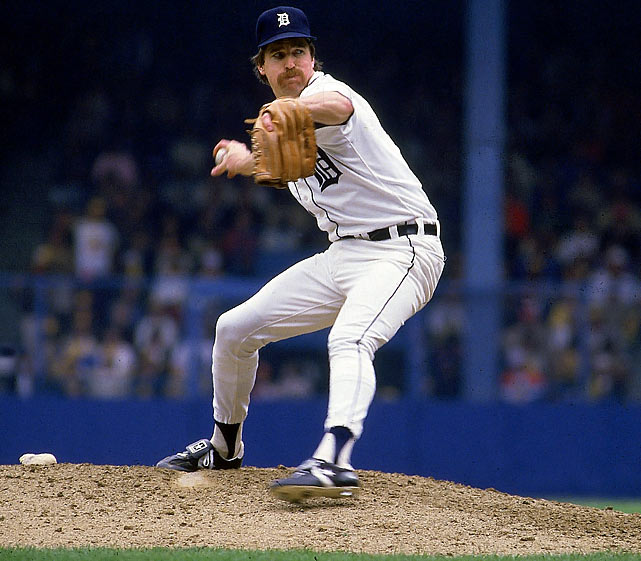
  • Jack Morris.  The “anti” sabrematrician selection.  Here’s a link to the most canonical case against Morris, as well as Joe Posnanski‘s anti Morris (and anti-other) rant.  And here’s a case for Morris from former Washington Post writer Richard Justice, now with MLB, which goes a lot towards my way of thinking about the guy.  Lots of people seem to be spending as much time arguing AGAINST him as they did arguing FOR Blyleven.  I wonder why that is?  Maybe there really just is a kind of pitcher who you had to see in context versus looking at his stats after the fact.  Nolan Ryan “only” had a 112 ERA+ for his career and was barely a .500 pitcher, yet was a first ballot overwhelming hall-of-famer.  There’s some disconnect here.  For me, the vote for Morris is about the “feeling” of a dominant pitcher, just as Blyleven was about the “feel” of a mediocre pitcher, no matter what his eventual career stats looked like.  For people who say this is fallacy, I say this: judgement of a player can not ONLY be done by looking at his stats.  Morris had a reputation for “pitching to score,” though sabrematricians have attempted to debunk that pitching-to-score exists for some time (see this link on baseball prospectus, then note at the bottom that despite 3500 words he says “none of this proves it doesn’t exist.”) but he also had a reputation for being the “Best pitcher of the decade.”  Bill James published a list of factors to consider, when evaluating a player’s candidacy, and the one takeaway I got from that list was (paraphrased) whether or not a player was the best on his team, the best in his league, a guy that the other team was afraid of.  Morris was that, for a period of more than 10 years.  His last two seasons took him from a 3.70 era to a 3.90 career era, and may have pushed him over the edge to his current stat-nerd polarizing stance.  For me, he was THE pitcher of the 80s, led one of the most dominant teams ever (the 1984 Tigers) and pitched a 10-inning complete game win in one of the best games ever played.  Those things stand for something, and should add up to more than a clinical analysis of his era+.
  • Barry Larkin: lost in the shadow of Ozzie Smith for so long, that people forget that he was an excellent defender AND a great hitter.  Long overdue for enshrinement.  Here’s a pretty stat-heavy analysis FOR him.
  • Tim RainesCase for.  Its hard to find cases against.  Raines, like guys like Trammell and Larkin, played in the shadow of Rickey Henderson for so long and was always judged to be 2nd best.   But his accomplishments, especially during the earlier part of his career, should be enough to get him into the Hall.
  • Mark McGwire: He was a lock before the PED ensnarement.  I say “ensnared” despite him using a completely legitimate supplement at the time.   He didn’t try to hide it either.
  • Edgar Martinez: I recently watched one of the games from the great series “MLB’s greatest games” of the last 50 years, and one of the games was the great game 5 playoff in 1995 between the Mariners and the Yankees.  David Cone in that broadcast said that Martinez was “the best right handed hitter he ever faced.”  And it struck me; Martinez indeed was one of the most feared hitters of his day.  Look at his career: he didn’t play a full season til he was 27 and he played a ton of DH.  He also retired with a career slash line above the mythical .300/.400/.500 targets.  For those that discount his heavy use at DH I ask one simple question: if you think Martinez didn’t contribute that much by just being a DH, then how can you possibly support the inclusion of a one-inning relief pitcher/closer?  Who do you really think contributes more, a DH with his 650 PAs or a relief pitcher with 60-some innings in a season?   In reality, you can’t.  It just takes an uber-DH like Martinez to press the issue.

Specific Names i’d leave off and why:

  • Alan Trammell: I just don’t think he was a dominant enough player to warrant inclusion.  I’d place him well behind his peers at shortstop for the ERA.  There’s plenty of support for him in various forums though, with good arguments for him.
  • Lee Smith: My tried and true argument; closers are incredibly overvalued, and especially closers with lifetime ERAs in the 3.00 range and with a career whip that’s closer to a league average than it is to dominant.  Sorry; Smith isn’t a HoFamer for me.
  • Larry Walker: the whole “he played in Colorado” angle probably isn’t as true as we think, but he still enjoyed a bump in his stats because of it.  Otherwise he’s in the hall of Good, not the Hall of Fame.
  • Rafael Palmeiro: its less about his idiotic stance in front of congress as it is about his method of “accumulating” his way to historic numbers.  Much like the discussion we’ll eventually have about Johnny Damon (who is only a few hundred hits away from 3000 but clearly isn’t a transcending player), Palmeiro was always a good, solid guy but never that much of a game changer.
  • Don Mattingly: I would love to vote for Donny Baseball, but being the Captain of the Yankees just isn’t enough (well, unless you’re a NY writer).  Retired too early, not enough power for a first baseman, peaked at 25 and struggled into his 30s.

Let the comments calling me an idiot for supporting Jack Morris begin.

Nats Off-season News Items Wrap-up 12/28/11 edition

2 comments

Just how bad is Alex Rodriguez’s knee? Bad enough for an experimental treatment in Germany. Photo John Munson/The Star-Ledger via nj.com

This is your semi-weekly/periodic wrap-up of Nats and other baseball news that caught my eye.

Nationals In General

  • Per CBS’s Danny Knobler (who really needs a new profile picture), the Nats had to out-bid the Red Sox for Gio Gonzalez‘s services, possibly indicating why the price in prospects went so high.
  • Buster Olney ranks the current 10 best rotations in the game after all our recent FA moves and trades.  Philly is still #1, but surprisingly LA Angels have not risen to #2.  Honestly I think the Angels have supplanted the Rays at the near-top.  And, amazing of amazing, he has the Nats at #8.  Here’s a direct quote from the article: “It’s possible that a year from now, we will view the front three of the Washington rotation as the best in the majors.”  That is high-praise indeed; perhaps THREE years from now when we have the likes of Solis, Meyer and Purke shaken out into possible MLB starting roles … but a year from now there will still be the stud 1-2-3 punches in LA, Philly and SF.
  • The next day, Olney ranks the current 10 best bullpens and, again, the Nats come in 8th.  They were 5th in the MLB in bullpen ERA last year and may need one more arm to continue that trend.
  • John Sickels‘ has published his preliminary Nats top 20 prospect list (I may have linked this in the last article frankly).   This was posted just prior to the Gio Gonzalez trade, meaning that his #3, #4, #6 and #9 prospects are now playing for Oakland.   The list is considerably thinned now, of course, but what we got in return may make everyone forget what we gave up.

Free Agents/Player Transaction News

  • Carlos Beltran signs with the St. Louis Cardinals, probably pushing Lance Berkman to the Albert Pujols vacated first base position with Beltran playing RF.  Its a good signing for St. Louis, who obviously is taking a step back offensively but Beltran should help soften the blow.  What gets me though is the price Brian Sabean paid for a couple months of Beltran, only to decide in the off-season that he wasn’t worth signing.

General Baseball News

  • Great article on Brian Cashman, the Yankees, payroll and their direction over the past few years from Jonah Keri on Grantland.com.  Whereas most teams operate on payroll budgets, the Yankees never really have before … but they do seem to be targeting the luxury tax threshold now.  Not that any team with a $189M payroll can be really that “constricted,” but the fact remains the Yankees have only won the world series once in the past decade.  This same topic covered here as well by Bob Klapish.
  • Oakland reportedly granted permission to move to San Jose.  This certainly affects the Giants and their market, though probably not as much as people may think.  When the team moved from Candlestick into the city, the move was a significant distance more than just the 7 miles and 15 minutes added onto the drive for most suburban fans.   Now those fans in the far southern parts of the Bay area, the affluent areas closer to Stanford, Sunnyvale and deep in Santa Clara county will be just a few minutes (against the majority of traffic) from an Athletics stadium, even if its built north of San Jose in Milpitas.
  • Of course, the A’s have been in a dismaying sell-off of talent so far this off-season, and don’t have a starting outfielder under contract, so they could be severely struggling until they do secure a new stadium.  Ken Rosenthal talks about this topic here; noting that Billy Beane has taken one look at his division rivals Texas and Los Angeles and concluded that the A’s are a lost cause in 2012.  Now they’re so young and weak that they may very well lose 110 games.
  • Side effect of all the action in the AL west this off-season; does anyone doubt that the AL wild card, long the property of the also-ran in the AL East, may suddenly belong to the AL west titans for the forseeable future?  Texas and Los Angeles look to feast on the incredibly weak Athletics and the still-not-contender status Mariners and could easily take 14 of 18 from these teams (in much the same way that the 103 loss 2009 Nats went 3-15 on the year versus Philadelphia).  Meanwhile, New York has done little to address its needs this off-season, nor has Boston (except to swap relievers but do relatively little to address injuries to its pitching staff).  Tampa continues to be who they always are; a young cheap team meticulously assembled to sneak up on team with 5 times their payroll … but all these teams seem set to beat each other up while their wild card contenders in the west get fat on easy teams.  Perhaps its only a one-year issue; the addition of a second wild card really lowers the difficulty bar for most of these franchises.
  • Boy, if you didn’t think the Mets franchise was in serious financial trouble, check out this article and the high lighted quote from Craig Calcaterra.  Quick calculations show that the team owes around $900 million on various loans coming due in the next few years.  I don’t see how this team could possibly stay solvent for the next 5 years.  But then the question becomes; how do you possibly pay off this much debt on a franchise that you couldn’t possibly argue is even worth $900M?
  • Phew; The Yankees have to be concerned reading this news item: Alex Rodriguez went to Germany to get experimental treatment on his knee.  In case you had forgotten, this is the same guy the team still owes $143M in salary plus a likely $24M more in homer-plateau reaching incentives that he seems relatively likely to reach.

Collegiate/Prospect News

  • Updated 2012 draft order from PerfectGame.org.  This also has a significant amount of interpretation of the new draft and compensation rules in the new CBA, and is honest in admitting that there are some things we just don’t know.  As it stands now, the Nats draft 16th overall and then not again til #80 overall because of the massive number of supplemental first round picks.
  • We have lots of family that went to UCal-Berkeley, so I always take interest in stories about the school.  This article talks about some larger fiscal problems in the State of California, ones that led to the disbanding of their baseball program and the subsequent fund-raising efforts that resurrected it (a good thing, since they made the CWS this year).  We talk a lot in politics about education and funding, but to see tuition rising 18% in one year in California public schools, with more budget cuts set on the horizon, is kind of depressing given the state of our economy in general.
  • One of the few local area Div1 baseball programs George Washington announced their spring baseball schedule.  A three-game set in mid-march versus Georgetown is the local highlight here; one game in Arlington then two at Georgetown’s home field in Bethesda (Shirley Povich stadium).  They have home-and-homes with George Mason but not JMU this year, and have a mid-week visit to the slaughter in UVA.  GWU plays in the A-10 in baseball; a pretty weak baseball conference but with some interesting teams nonetheless.


General News; other

  • Wow, i’m hoping this guy lost a bet.
  • Kobe Bryant; how about a little discretion buddy?  The “proof” is a little lacking though.  This website did the same thing with all of Tiger Woods‘ alleged affairs.


Where would 2011 WS Game 6 rank all time?

12 comments

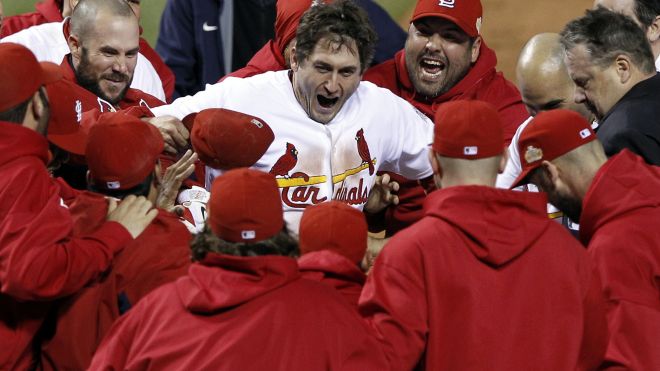
David Freese's name will go down in history for his historic Game 6 performance. Photo AP/Jeff Roberson via foxnews.com

(This post was inspired by the very last question in David Shoenfeld‘s 12/20/11 chat, asking where this game ranks among the greatest ever games played).

For those of you with the MLB network (channel 213 on DirecTV), the series they featured this year profiling the “Greatest 20 games of the last half century” was my favorite bit of sports programming since the 30-for-30 series on ESPN debuted.  Bob Costas and Tom Verducci hosted and did 1-2 hour reviews of these 20 games and brought in guest hosts for each game in the form of actual players and managers who participated in the games themselves.  These guest hosts provided fantastic commentary on the state of the dugouts at each critical juncture as well as first hand knowledge of their own thought processes throughout.  If you haven’t seen the series, I highly suggest setting your DVR and watching them.

Now the interesting question: where would Game 6 of our most recent World Series have ranked, if it were a candidate to be included?

For me, game 6 was absolutely the most entertaining game I’ve ever witnessed, in person or on TV.  It wasn’t the best played game (with errors and questionable manager decisions and no less than three blown saves) but it was amazingly entertaining, suspenseful, and with a story-book ending that was almost out of a movie script.  But does it rank with the best game list that MLB network came up with?

First, here’s their list, counted down from 20 to 1 (with captions borrowed from the MLB link above and augmented by me):

  • No. 20: May 17, 1979: Phillies @ Cubs; Phils, Cubs combine for 45 runs.  This is the only regular season game on the list and for good reason; the first inning alone had 13 runs scored.
  • No. 19: Oct. 4, 2003: Giants @ Marlins; Ivan Rodriguez tags out Eric Snow as he tries to bulldoze Pudge at the plate to end the game and send the Marlins to the World Series.
  • No. 18: Oct. 12, 1980: Phillies @ Astros; Phils win battle in 10th to win the NLCS with an epic comeback over Nolan Ryan.
  • No. 17: Oct. 17, 2004: Yankees @ Red Sox; Dave Roberts‘ stolen base and David Ortiz‘s walk-off homer cap the Boston win, an epic part of the Boston comeback from 3-0 down in the 2004 ALCS.
  • No. 16: Oct. 6, 2009: Tigers @ Twins; Twins win a game 163 sudden death playoff game for the AL Central title.
  • No. 15: Oct. 8, 1995: Yankees @ Mariners; Edgar Martinez hits “The Double” to get a walk-off win in the ALDS, capping a 10th inning comeback as a young Ken Griffey Jr absolutely flies around the bases to score from first.
  • No. 14: Oct. 23, 1993: Phillies @ Blue Jays; Joe Carter‘s walk-off WS homer foils a great Philly comeback.
  • No. 13: Oct. 26, 1997: Indians @ Marlins; Edgar Renteria wins it for Fish in a World Series game 7 classic.
  • No. 12: Oct. 31, 2001: D-backs @ Yankees; Tino Martinez ties it with a 2-out, 2-run homer in the bottom of the 9th and Derek Jeter hits first November homer and earns himself the nickname for which he’s continued to be known.
  • No. 11: Oct. 2, 1978: Yankees @ Red Sox; Bucky Dent‘s improbable 3-run homer caps a massive October collapse for Boston and continues the legendary rivalry between the teams.
  • No. 10: Oct. 15, 1988: Athletics @ Dodgers; Injured slugger Kirk Gibson hits a pinch hit walk-off home run off of the dominant Dennis Eckersley for one of the most magical home runs in baseball history.
  • No. 9: Nov. 4, 2001: Yankees @ D-backs; Luis Gonzalez floats a ball over the drawn-in infield against Mariano Rivera to win a classic Game 7.
  • No. 8: Oct. 12, 1986: Red Sox @ Angels; Dave Henderson hits an improbable 3-run homer in the 9th to help Boston come back from 1-out away from elimination to eventually beat the Angels in the 86 ALCS.
  • No. 7: Oct. 14, 2003: Marlins @ Cubs; The infamous Steve Bartman game, which overshadowed an utter collapse by Mark Prior, Alex Gonzalez, the Cubs bullpen AND Kerry Wood the following day to continue the Cubs curse that lasts til today.
  • No. 6: Oct. 16, 2003: Red Sox @ Yankees; Aaron Boone suddenly homers off Tim Wakefield in extra innings to end a classic ALCS game 7 between the bitter rivals.
  • No. 5: Oct. 15, 1986: Mets @ Astros; Mets win in 16 as Jesse Orosco put in the relief performance of a lifetime.
  • No. 4: Oct. 14, 1992: Pirates @ Braves; the injured Sid Bream barely beats Barry Bonds‘ throw to score the series winner and effectively send the Pittsburgh franchise into a 20 year tailspin.
  • No. 3: Oct. 25, 1986: Red Sox @ Mets; Probably the most “infamous” game of all time, especially to Boston fans, as Bill Buckner‘s error follows a series of mishaps by the Red Sox pitching staff to turn a 10th inning 2 run lead into a game 6 loss.
  • No. 2: Oct. 27, 1991: Braves @ Twins; Jack Morris‘  seminal performance; a 1-0 10 inning shutout over the Braves in perhaps the best Game 7 of any World Series ever.
  • No. 1: Oct. 21, 1975: Reds @ Red Sox; the game forever known for Carlton Fisk waving his walk-off homer fair, but which should be known for the unbelievably clutch Bernie Carbo 8th inning homer to tie the game and enable the extra inning fireworks.

(A quick glance at the top 20 list above has one glaring game that I’d honestly replace immediately; the Bartman game was more iconic for the individual play and not for the game itself, which ended up being a blowout when all was said and done.  Nearly every other game on this list featured late game comebacks and walk-off hits).

The earliest game on this list is 1975 and if the moniker “last 50 years” is true then the classic Bill Mazeroski homer game from game 7 of the 1960 World Series must not have been eligible.  Because certainly it should have been in the top 5 otherwise.  A quick note about this game; click on the link for the box score to imagine just how amazing this game must have been.  Recap:

  • Pittsburgh jumps to a 4-0 lead early.
  • Yogi Berra and Mickey Mantle help spark a 4-run rally in the 6th to take a 5-4 lead.
  • The  Yankees extend their lead to 7-5 in the top of the 8th.
  • The Pirates rally for FIVE runs in the bottom of the 8th for a 9-7 lead.
  • The Yankees’ two hall of famers Berra and Mantle manage to drive in the tying runs in the top of the 9th to make it 9-9.
  • Mazeroski blasts a walk-off homer on a 1-0 count to lead off the bottom of the 9th and win the world series.

Where to put 2011’s game 6?  I think I’d place it right around the #4 spot.  David Freese‘s heroics will soon settle into place as one of the legendary performances in post season history.  I can’t dislodge the current top 3 games on MLB’s list.  Its a common folly for the immediate labeling of recent events as “the best ever” without standing the test of time, but in this case I feel comfortable in the statement that this game is one for the ages, absolutely.

Nats Off-season News Items Wrap-up 12/25/11 edition

5 comments

Welcome to Washington Mr. Gonzalez. Photo by Thearon W. Henderson/Getty Images via cbssports.com

This is your semi-weekly/periodic wrap-up of Nats and other baseball news that caught my eye.  No better time than today to publish, since there’s not much else going on Christmas day.

Nationals In General

  • Bus Leagues Baseball profiles Matthew Purke, with a nice scouting report and recap of his journey to the Nats franchise.
  • Nice little bench move here: Nats claimed infielder Carlos Rivera from Philadelphia’s waivers and stuck him on the 40-man.   He theoretically can play both SS and 3b, though reports are that his SS defense is suspect.  I’m not going to nit pick moves like this and the Mike Cameron signing; our farm system kind of has a gap in terms of player development from the last Bowden draft years, so we are missing these roster-augmentation players that otherwise would be filled from within.  Soon though with the college-heavy drafts of the past couple years we should have all the spare parts we need sitting in AAA so that we’re not signing mid 30’s utility players and claiming mediocre players.
  • Welcome to 2012’s version of Jerry Hairston; Mark DeRosa to sign with the Nats and be our super utility guy.  Can’t argue with the move; he fills a need, is willing to be a bench player, and can play a bunch of positions.
  • Congrats to ex Nat Jason Marquis, who looks to sign a deal with Minnesota.  I’m glad he’s landed on his feet after a freak fractured tibia just after we traded him last year.
  • Obviously the big news this cycle is the Gio Gonzalez move.  Frequent readers here saw a very healthy discussion in the past week in this space.  I’ll post some reaction links here not posted elsewhere: Buster Olney‘s blog (the take away for me is how badly Oakland’s fans seem to be reacting), Jim Bowden‘s video reaction and his description how the deal went down (the interesting takeaway being how the 2nd player thrown into the deal from Oakland’s side turning the tide).  Keith Law values our prospects highly and says we overpaid.  Another prospect-heavy analyst John Sickels analyzes our outgoing prospects (surprisingly Sickels says the A’s got “fair value” instead of calling it a loss for the Nats as Law did).  Here’s Tim Brown‘s reaction, plus Ken Rosenthal‘s original report.  Lastly, fangraph’s David Fung graphically analyzes projected WARs and determines that we gave up nearly twice the value in future production, which involves quite a leap of trust that all four of these guys pan out to their potential.  Lastly, here’s Baseball Prospectus’ take on both sides; not nearly as glowing for the 4 prospects gained as I thought they would be.

Free Agents/Player Transaction News

  • Roy Oswalt is considering one-year deals, immediately bringing nearly every MLB team into the discussions.  I’d love to have him on the Nats but suspect that he may end up in a situation that makes it easier for him to get one more relatively lucrative FA contract.  I.e., an easier division that’s closer to home.  Imagine him in San Diego against weaker NL west teams.  With the Gonzalez signing though, my guess is that we’re out of the FA pitcher race.
  • Interesting take on the Yu Darvish bidding results and the Toronto loss from Buster Olney (insider only), intimating that all the talk about the Toronto interest was overblown.
  • Great points by David Schoenfeld on espn, pointing out another similar article on Grantland, talking about the “Prospect Mania” that has become the norm in baseball over the past 10 years.  Ironically, this same issue was seen in our Gonzalez deal; are our prospects really that good, or are we over-valuing them and their potential?

General Baseball News

  • College Baseball Newspaper announces its pre-season Collegiate All American team.  From first glance, Florida looks really strong (4 guys on the first team, another four on the 2nd team, wow).  South Carolina returns two all-american starters, virtually guaranteeing weekend series wins all year.  Finally Texas has 2 first team, 3 second teamers just in its rotation.  Too early to predict Florida versus Texas in the Omaha final in June 2012?
  • George Washington, a lesser Div-1 baseball program that has given the Nats some later-round org players in recent years, is renovating Barcroft park in South Arlington, where they play their home games.  They’re putting in artificial turf, nicer facilities and a nicer snack bar.  Nice.  It was already a nice place to see good collegiate baseball; now it should be this much better.
  • Documentation/Actual testimony from a player who won an appeal of his PED positive test.  Latest rumor I read about Ryan Braun is that he was taking something for an STD.  I can’t find a link so perhaps its just that; a ridiculous rumor.
  • Good, non-hysterical analysis of the new CBA’s winners and losers from Basball America’s J.J. Cooper and Jim Callis. Callis continues with this analysis of the impact on big and small market teams.
  • Man, I can’t wait to see this soap opera in Spring Training; former Marlins manager says that Hanley Ramirez won’t go to third easily.
  • Nice shirt, Mike Napoli.  (NSFW, in other words, “Not Safe for Work.”)  Not really; you can barely see the “R-rated” part.
  • I wonder why they left the field?  A current picture of Detroit’s old stadium.  We were in Detroit 3yrs ago and drove by this stadium as it was only in partial de-construction.
  • LA Dodger’s plans to sell dealt a blow by a bankrupcy judge.  Or were they?  I’m not entirely clear how this ruling affects anything frankly.  As long as Frank McCourt is removed from the picture, I think everyone will be happy.

General News; other

  • Categorize this in the “people who don’t have a sense of humor, ever” department: Pat Robertson found the hilarious Tim Tebow skit on SNL last weekend “disgusting.”  Hey Pat; I find your opinions on race, discrimination, acceptance, tolerance, and your stated stances on the reasons that Hurricane Katrina, the Haitian earthquake and 9-11 happened to be “disgusting” as well.
  • This link was ironic for me, in that my family just had the same discussion about what is the best Xmas movie of all time.  Jim Caple presents a 64-team bracket for Xmas movies.  I think the selection committee screwed over “Scrooged,” giving it only a 9 seed.  In another bracket, its a regional winner :-).


Nats Off-season News Items Wrap-up 12/21/11 edition

2 comments

Can’t wait for the first Darvish-Pujols matchup when Texas visits Los Angeles. Photo unknown via beatofthebronx.com

This is your semi-weekly/periodic wrap-up of Nats and other baseball news that caught my eye.

Nationals In General

  • John Sickels does in-depth system reviews, but allows his readers to pipe in about the prospects down on the farm.  Here’s the discussion on the Nats, which (as is apt to happen) devolved into arguments about Bryce Harper.  Still, lots of the usual suspects piped up and offered opinions.  Here’s a link to his preliminary list of Nats prospects.
  • In case you havn’t seen enough scouting reports on our precocious star, here’s another from the blog prospectjunkies.com.  I will say it was refreshing to see this author go out of his way to dispell the whole “Harper is a brat” storyline that most lazy sportswriters pen, without having ever interviewed or even *seen* the guy.
  • I hope this isn’t our starting CF for 2012; Nats sign Mike Cameron to a minor league contract.  I actually don’t mind this deal; yes he’s old and yes his production slipped badly in 2011, but he’s still a high-end defensive player.  Maybe he’s just a cheaper version of Rick Ankiel.  Odds are, as posted elsewhere, that Cameron is a half-season option just holding court until Harper is promoted sometime in June.  Works for me.
  • Hmm.  Reports from Ken Rosenthal that the team is “pushing hard” for Gio Gonzalez, offering Billy Beane a “4 for 1” deal.  Not sure I like hearing that; while he’s got decent stats two years running, there’s some chinks in that armor.  He lead the league in walks last year and gives them up at nearly a walk every other inning.  His ERA jumps nearly a point when he pitches away from the friendly confines of Oakland’s pitcher-friendly stadium.  He’s not an “Ace.”  What four players are we talking about giving up?  If this is anything like the Mat Latos deal, it probably would be something like Detwiler, Norris, a major league arm and a lower minor league arm.


Free Agents/Player Transaction News

  • First Reports on the winning Yu Darvish bid?  $48M.  No, wait, then it was even higher than Dice-K’s bid.  I privately thought he’d eclipse Daisuke Matsuzaka‘s record of $51M (and change) from 2005.   Another nugget from this article; Darvish wants a 5yr/$75M contract.  That’s $120M+ for this guy.  Does anyone still want to argue that he’s worth $120M, when the absolute best FA pitcher purchase in recent years (Cliff Lee) himself got 5yrs/$120M guaranteed from Philadelphia?
  • Who won the Darvish sweepstakes?  First thought to be Toronto, then Texas.  On 12/20 we were confirmed: Texas won with a $51.7M bid.  The AL West is turning into a shootout.
  • Breaking news over the weekend: Cincinnati gets Mat Latos for a package of prospects that includes their uber rising star Yonder Alonso, another 1st rounder in Yasmani Grandal and former ace-pretender Edinson Volquez.  That’s an awful lot for a guy who, while certainly is “good,” isn’t among the elite pitchers of this league.  That seems like more than what Zack Greinke fetched, and he as a Cy Young award to his credit.  It also begs the question; why does San Diego need Alonso?  They already traded for a top-end 1B prospect, Anthony Rizzo.  Alonso was blocked in Cincinnati by Joey Votto and was clearly on the trading block, but San Diego is a curious spot.   Oh I see now: he’s officially listed as a left fielder now.  Except that scouts openly scoff at his abilities to play anywhere but 1b or DH.  The Padres can always put together a competent pitching rotation by virtue of their park; if some of these hitters pan out they could be a very good team, quickly.  Meanwhile Cincinnati gets a good pitcher who hopefully wasn’t under-exposed by pitching in the cavern in San Diego but who most say is a legit front-of-the-rotation ace.  Update: now we’re hearing that Rizzo is in play possibly for Matt Garza.  That’s probably Theo Epstein trying to get his boy back.

General Baseball News

  • An excellent take at Grantland from Jonah Keri, another favored writer, on Steroid use in baseball, inspired in the post Ryan Braun mania.  As it has turned out, Braun’s case isn’t about Steroids, but he does dispute the notion frequently posted on the internet that “no positive test has ever been appealed successfully.”  In reality, according to both players and well-connected writers, no “leaked” positive test has ever been appealed, and that initial positives have been overturned on more than a few occasions.  Here’s a player who says he successfully appealed a positive test himself.  He also links to very interesting articles on testosterone and false positives, one of which (If i’m reading it correctly) notes that about 1 in 4 positive tests is actually a false positive.  I can’t believe any official test is that inaccurate, so perhaps its either old technology or i’m mis-interpreting the story.  Subsequent reports show that Braun’s test was from medication taken for a “personal issue.”  Sounds like Viagra, doesn’t it?
  • Another takeaway from Keri’s article is another pet peeve of mine; the notion that Matt Kemp was a “more worthy” MVP candidate than Braun but that Braun won the award because “his teammates were better.”  That’s one take on the award, IF you interpret the “MVP” to be given to the “best player” in a particular year.  But that’s not the definition of “Most Valuable Player” that most writers adhere to.  Simply put, how can you be the “Most Valuable player” to your team if your team stinks?  If your team already has a losing record, and the star player wasn’t there, wouldn’t that team just have a WORSE losing record?  To me, that’s the essence of the MVP argument; you simply cannot be the most valuable player on a bad team, unless your season is so historically amazing that it stands out on its own merit.  If we want to “invent” a new award, say the “Cy Young” of hitters (almost an uber “Silver Slugger”) so that we can properly award a guy like Kemp, I’d be for it absolutely.  In fact, it would pretty much end these ridiculous arguments that will only continue to get louder as more and more stat-heads who never actually watch games but just interpret advanced statistical tables on websites as if baseball players were robots playing in a nil-gravity vacuum gain admittance to the BBWAA and start voting on these awards themselves.
  • Yet another excellent Grantland.com article, this time analyzing whether or not the Economics of Moneyball still exist.  After this article published, I saw some criticisms of the statistics used on more stat-heavy blogs like Fangraphs.  Not sure why; the article makes sense to me.
  • I sometimes take issue with Craig Calcaterra‘s stuff on Hardballtalk, but his opinion on ESPN Legal Analyst Lester Munson‘s love affair with the abject failure of the Barry Bonds case is spot on for me.  Bonds was convicted of one really shaky obstruction of justice count after years and MILLIONS of dollars of expenses, and was sentenced to 30 days of home confinement.  The prosecutors who led this monstrosity need to be fired, frankly.
  • Ugh.  Bill Conlan of the Philadelphia Daily News, a hall of fame baseball writer, resigns ahead of child molestation charges being filed.  Interestingly, it is the rival Philly newspaper, the Philadelphia Inquirer, filing the charges.

General News; other

  • I like Grantland, and I like stuff that Chuck Klosterman writes.  Here, he writes about the “Triangle Offense” that we’ve heard so much about from Phil Jackson during his time with the Bulls and Lakers.  My takeaway; the Triangle is dying out because (according to Jackson) the league is dominated by me-first scorers (whether they be slash and burn or 3-point specialists) and because the Triangle is considered really complex.
  • Kobe Bryant‘s wife is leaving him, reportedly because she caught him cheating.  Really??  What, that whole incident in Colorado wasn’t evidence enough?
  • In case you somehow missed the front page of cnnsi.com this week, yet another example of the absolute hypocritical nature of the NCAA is on display once again: a former St. Joseph’s basketball player is being held hostage by an (apparently) petulant basketball coach who refuses to grant his waiver to play for another school.  Coaches can change schools like they’re changing suits, but if a player changes they have to get approvals from their releasing school (a conflict of interest if there ever was one) and approval from the NCAA, AND then have to give up a year of eligibility.  How is this possibly fair?  Coaches can coach for 50 years and don’t lose any eligibility; players can only play for four (five if they red-shirt) but have to give up 25% of that time if a situation isn’t right for them.  Every time I read something about college athletics like this (or the UKentucky/Oliver case, or the Colorado WR/snowboarder case, or the entire player images case) I’m more and more infuriated and hope that the organization has to face congressional review.  More links on the topic: lawsuit threatened.  Possibly “the other side” to the story here.  There’s other interesting links to twitter comments and blog op-ed pieces throughout.  Another opinion here.

Ask Boswell 12/19/11 edition

3 comments

Would Adam Jones solve our CF issues? Photo unknown via blog.prorumors.com

Here’s Tom Boswell‘ weekly Monday chat on 12/19/11.  Of the baseball questions he took, here’s how I’d have answered them.  With a Redskins unexpected win, I’d think this will be heavy on football, but I thought the same about last week as well.  There were a TON of baseball questions.  Maybe the town is tiring of Redskins coverage, now that they’re eliminated from the playoffs.

As always, questions are edited for clarity and I write my own answer prior to reading his.

Q:  Have you heard anything about the possibility of Da Meathook (Dmitri Young) returning to the Nats to be a role player and mentor?

A: No chance.  Dmitri Young was a Jim Bowden reclamation project and no matter how that story may play in the “feel good” category, Rizzo has gone to great pains to rid most of this roster of Bowden players.  It is good to see Young losing weight and looking better though.  Boswell says little chance, that Young really is a DH/PH now and we’re in the wrong league.

Q: Should the Nats consider Carlos Beltran?

A: Again, hard to see.  Beltran was decent in 2011, his first healthy season since 2008.  Ironic that it happened in his walk year.  But he’s already been moved out of CF, and was not really that good defensively in RF.  He’ll want a longer term deal … but we have a certain upper-end RF prospect named Harper coming up who would be blocked.  Beltran makes no sense for us.  Boswell says no chance, then opines on the lack of movement out of the Nats front office.

Q: What do you make of the Nats (non) moves?  Are the Lerners still “cheap?”

A: It was always going to be a weak FA market, and with the Marlins suddenly throwing ridiculous money around and outbidding the team for its targets, it does look as if the team isn’t doing much.  The price of #1/#2 starters has just gotten out of control this off-season (see the unbelievable haul that a low-end #1 guy in Mat Latos just got), so I sense the team is re-evaluating.   Boswell says you can’t be “cheap” after signing a guy to $126M contract.

Q: Does Rizzo deserve an F for the off-season so far? Missed out on Buerle and no CF either.

A: Man, people are impatient.  Maybe the team underbid on Buehrle, but they were NEVER going to go 4yrs and $56M dollars on the guy.  I’m sorry; he’s a #3 pitcher, a soft-tossing lefty who never gets hurt.  That’s NOT an ace, that’s not worth $13M a year.  As for CF, there’s no good FAs out there, so it was always going to be a trade.  Last time i checked its only December and the off-season is only half-way done.  I’d rather stand pat than make a panic buy.  Boswell says Rizzo needs to be judged 5 years down the road on his 2011 draft signings.

Q: Have we seen the last off-season addition?

A: I don’t think so, but the likelihood of seeing a “major” acquisition now seems thin.  It is what it is; 2012’s FA crop was weak and everyone got bid up.  Notice how the Yankees and Red Sox didn’t get anyone either, and BOTH those teams desperately need starting pitching.  Boswell takes his third question on the same topic and just says that if the team hits better they’ll be better next year.  duh

Q: Do you think Endy Chavez could be a decent short-term filler for the Nats in centerfield, or maybe resigning Rick Ankiel, who played pretty well turing the final two months of last season?

A: Well, its too late for Chavez, who signed a deal over the weekend with Baltimore.  I wouldn’t be opposed to re-signing Ankiel but ONLY as a 4th outfielder.  Boswell agrees.

Q: Who’s going to spend the most time in center for the Nats this year? 1. Werth, 2.Cespedes, 3. Ankiel (if he returns), 4. Bernadina (ugh) or 5. someone else?

A: I’ll go with Werth first, but say “someone else” if Rizzo makes his desired trade.  Holding out hope for Upton or Bourjos or someone like that.  Boswell exactly writes what I wrote.

Q: If the Nats are able to sign or trade for a CFer and they bring up Bryce Harper during the season, does Adam LaRoche become the odd man out this season?

A: If Nats get a CFer, then yes eventually it will come down to either Morse or LaRoche making way.  As of now, its hard to see Morse leaving, but you never know in this game.  Morse could break a leg and LaRoche could come back 110% in his walk year, and in June we’ll be singing a different tune.  Boswell thinks LaRoche is mr. comeback in 2012 and will “make the team glad they have a club option.”  Wow, that’s a statement.

Q: Should the Nats really wait til NEXT off-season to hit the FA market?

A: Yes.  Yes.  Yes.  The 2013 FA pool is so much better than this years, that it almost doesn’t make sense to compete and over-pay.  As a longer term fan of this team, I would support and argue for such a move.  Play the kids in 2012 and figure out what you have, then go on a spending spree to make a pennant-contender in 2013.  Boswell says this is exactly what Davey Johnson is advocating.

Q: What are the odds that the Nats do right by the fans and sign Zimm to a Tulo type deal before Spring Training? After watching the Pujols intro in LA, if we have to endure a similar scene w/ Ryan I plan on marching to Nats Park and burn my jersey at the main gate.

A: Lots of repeat questions today.  This question was the Question #1 from last week’s boswell Chat.   Short answer; Nats don’t pursue long term deal with Zimmerman til after next season.  Boswell changes his stance from last week and says the team MUST get it done before the 2012 all-star break.  Why?  Still disagree here.

Q: Is the reluctance to sign Fielder just about money? He is clearly an upgrade over LaRoche at the plate and would instantly upgrade the offense.

A: I’d be reluctant for several reasons.  Money (its a lot), wasted money (on LaRoche), his conditioning (abhorrent for an athlete) and his defensive inadequacies.    He does mash though.  Boswell likes Laroche, says Morse is a good 1B as well, and doesn’t advocate spending $200M on one position.

Q: Remember the knock on Mike Rizzo was that he would have trouble with some of the non-baseball aspects of a GM job (i.e. media)? We’re a few years in and while the Nats are greatly improved, I’m skeptical of Rizzo. He seems like he’s playing out of position — strong on scouting, not so much on other stuff. Does it even matter given the ownership?

A: I still think Rizzo was partly responsible for the Riggleman situation, and should have done a better “people management” job than he did.  But otherwise I don’t have an issue with Rizzo’s performance.  The team has completely turned around in just 2 years under his command; what else do you want out of a GM?  3 great drafts, a 20game improvement on the field?  Are we getting spoiled here?   Boswell agrees, and says that the Werth contract still weighs on him.

Q: Thoughts on the Mat Latos trade? Seems the cost of quality SP is especially high this year—whether you’re Roy Oswalt or the ChiSox looking to trade Danks, the Nats are going to have to spend or give up real value to add that piece to their rotation. Any new developments?

A: The Latos deal is shocking; he’s not exactly a Cy Young candidate in my mind; just a very good, young pitcher.  The Reds gave up two developed #1 draft picks (including a very quick to the majors guy in Yonder Alonso), plus an established (albeit injured) Volquez and another guy for Latos.  That’s a really expensive trade.  Latos better work.  How does that affect the Nats?  It probably scares the crap out of them.  Boswell quotes Jim Bowden’s analysis (?!) and says the Padres may have swindled the Reds here.

Q: Would you be interested in Adam Jones if you were the Nats and who would you be willing to give up?

A: Jones is an interesting candidate.  Good bat but not the best in the field.  I didn’t even consider him a trade candidate in my CF analysis piece but maybe he is.  O’s need pitching, so maybe there’s a fit there.  But, the O’s may not have a ready-made replacement for Jones, who is 25 and still under club control for 2 more years.  So he won’t be cheap.  I’d give up a Detwiler or a Milone but not much more.  Boswell agrees with the trade needs, but says Angelos would never trade with Washington on the off-chance that the Nats looked like they “took” him in a deal.

Q: It’s Opening Day 2012 in DC. Sellout crowd, beautiful weather. Perfect day for baseball. Who’s playing CF for the Nats, & who’s hitting leadoff. For that matter, since I’ve asked you to consult your crystal ball, what’s the pitching rotation?

A: Another repeat question.  Your CF is Werth, with a yet-to-be named 1-yr FA playing in RF.  Rotation is Stras-Zimmerman-Lannan-Wang-Detwiler.  Leadoff is (still) Desmond, because the team hasn’t done anything to replace him.   But i’m still holding out hope that the team a) signs Oswalt and b) trades for Upton.  So we’ll see.  Boswell thinks Harper’s making the opening day roster, and Milone is #5 starter.  I wouldn’t be surprised.