Nationals Arm Race

"… the reason you win or lose is darn near always the same – pitching.” — Earl Weaver

Strasburg-Cole matchup and a history of #1 vs #1 picks

leave a comment

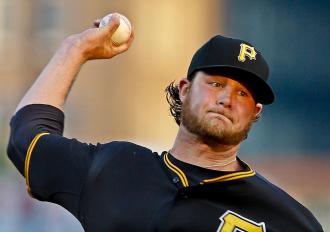
Gerrit Cole won the latest installment of #1 versus #1 overall drafted pitchers.  AP Photo via sporting news.

Gerrit Cole won the latest installment of #1 versus #1 overall drafted pitchers. AP Photo via sporting news.

I saw a cool stat while idly watching a Nats-Pittsburgh game a few weeks back.  The match-up between Stephen Strasburg and Gerrit Cole was the 11th time ever that #1 overall picks faced each other in baseball history.

What a great stat.  So naturally I wanted to look up the other ten.  I was hoping that I could find this data in the Baseball Reference Play Index, but couldn’t find it, so I went with a “brute force” method of finding the 11 matchups by scouring b-r.com’s play index data for each of the handful of pitchers entire career game logs.

The draft has existed since 1965.  In that time just 17 pitchers have been drafted #1 overall (including this year), and a few of them barely had careers.  Thus the rarity of this occurence.  While researching this article, I found myself looking more closely at all seventeen #1 overall picks, but moved that to a subsequent post, so look out for that in the future.

Meanwhile, here the 11 matchups are, in descending chronological order:

  • 11th: Stephen Strasburg vs Gerrit Cole 5/24/14: Strasburg gives up 3 in 7 while Cole gives up 2 in 6 and gets the win.  Pittsburgh d Washington 3-2.
  • 10th: David Price vs Luke Hochevar 8/21/12.  Seven years have passed since the last 1/1 matchup by this time.  Here, both pitchers threw 8 shutout innings (Hochevar giving up just 1 hit) and Kansas City prevailed by getting a run in the 10th.  This game was likely the greatest game Hochevar ever pitched (game score of 87), slightly better than a 3-hit shutout he had in 2009.   Hochevar was pretty-well awful as a starter for years with Kansas City but transformed himself into a great middle reliever in 2013; he suffered a blown elbow and had Tommy John surgery in March.
  • 9th: Kris Benson vs Paul Wilson 5/16/05:  Nearly a decade has passed since we had a #1 vs #1 matchup.  Here, neither guy was pitching terribly well in 2005, but Benson got the better of Wilson on the day.  Benson gave up just 2 runs in 7+ innings while Wilson got beat around for 7 runs in 5 1/3.   After the game, Wilson hit the disabled list and eventually had shoulder surgery for labrum and rotator cuff issues, which cost him the rest of 2005 and all of 2006, and he never appeared in another game.  So Wilson’s last ever MLB appearance was his sole #1 versus #1 matchup.
  • 8th: Ben McDonald vs Tim Belcher 6/27/96: McDonald was enjoying a nice bounce-back season after leaving his original team (Baltimore), and threw a nifty 7ip/3hit/1 run performance to beat Belcher’s Royals.
  • 7th: Ben McDonald vs Tim Belcher 4/11/94: McDonald was off to a great start for Baltimore, while Belcher was not for Kansas City.  Odd how these two guys both met up again, both with new different teams.   McDonald again threw 7+ innings of 2 run ball to beat Belcher on the day.
  • 6th: Ben McDonald vs Mike Moore 9/2/92: Their second meeting in two weeks, McDonald threw 6 innings but Moore threw 9 innings of 1 run ball; the game was won in the 10th by Baltimore.
  • 5th: Ben McDonald vs Mike Moore 8/23/92: Moore again got the better of McDonald, who gave up 6 in 6 for the loss.
  • 4th: Andy Benes vs Tim Belcher 4/8/92: Benes got the better of Belcher on the day, though both pitched well.
  • 3rd: Ben McDonald vs Mike Moore 5/7/91: McDonald hit hard early and Moore gets a win over his fellow #1 overall pick.
  • 2nd: Mike Moore vs Floyd Bannister 6/24/1988.  Moore pitched a 4-hit shutout to beat Bannister and the Royals in a rematch of their first 1-1 meeting four years prior.  Bannister gave up 7 runs (4 earned) in 3 2/3’s innings to get knocked out in the first ever matchup of former #1 overall picks.
  • 1st: Mike Moore vs Floyd Bannister 6/27/84: The first ever meeting between #1 overall picks took nearly 20 years to occur, thanks to just a couple of pitchers being taken first overall in the first two decades of the draft and thanks to bad timing.  This meeting was nothing to write home about though; neither guy pitched that badly, but neither figured in the decision after each gave up 3-4 runs in 5 innings.

Mike Moore appeared in 5 of the 11 one-vs-one matchups and his teams were 4-1 in these five games.   Bannister’s teams went 1-1 in his two appearances.  Ben McDonald also appeared in 5 of the 11 one-vs-one games and his teams went 3-2 in the games.   Belcher’s 3 games all resulted in losses for his team, despite (arguably) Belcher having the most accomplished career of any #1 overall drafted pitcher.   There’s only been 3 such meetings in the last 20 years, all featuring more recently drafted pitchers.

I also found these games where two former #1 overall picks both appeared, but one (or both) was in relief:

  • Kris Benson vs Andy Benes 7/20/02: Benson got the start and the win while Benes pitched 3 innings of mop-up duty as St. Louis fell behind by 10 runs.
  • Tim Belcher vs Matt Anderson 9/7/00: Belcher got the start and the win with 6ip/3er, while Anderson pitched the last out of the 8th for the losing team.
  • Tim Belcher vs Matt Anderson 7/14/98: Belcher got the start and got blasted; Anderson pitched the 7th and got a hold.
  • Mike Moore vs Floyd Bannister 6/12/92.  Moore got punched out of the box early and Bannister picked up the victory by pitching the 14th inning.
  • Ben McDonald vs Floyd Bannister 5/17/91: McDonald started and pitched a complete game win while Bannister relieved the losing starter in the 5th.
  • Mike Moore vs Floyd Bannister 4/17/91.  By this time in their careers, Bannister was relegated to the bullpen, but they did “face” each other in this game.  Moore threw 7 innings of 1-run ball for the victory.

Just for completion sake, who are the 6 pitchers not mentioned already who were picked #1?  That would be 2014’s Brady Aiken, 2013’s Mark Appel (neither of which has appeared in a major league game yet, obviously), along with Bryan Bullington (who bounced around the league for a few years but never matched up with any of his fellow draft picks), Brien Taylor (the 1991 #1 overall pick who never made it above A-ball), and David Clyde (who was the first pitcher to go #1 overall but didn’t last long enough to get any matchups with subsequent picks).

Stay tuned for a look at all seventeen of these guys, their stories and their careers in a future post.

Nats Draft History; what were the rumors on draft day historically?

leave a comment

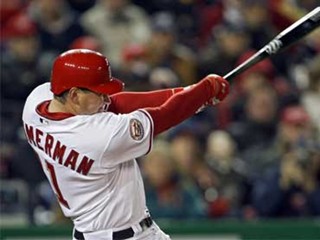
Zimmerman was the Nats first ever pick. Photo unknown credit via fantasyknuckleheads.com

Zimmerman was the Nats first ever pick. Photo unknown credit via fantasyknuckleheads.com

I thought I’d do a different take on the “history of Nats drafts.”  What was the mood/feel around the team approaching draft day year after year?  Who do we think they were focusing on as the big day rolled around and why?  We focus mostly on the first round pick, where so many of the mock drafts focus, but we’ll also mention significant moves further down.

To be honest, I didn’t really start closely following the draft and track who the Nats were “rumored” to be with until the 2008 draft.   So if you remember something differently than me, please feel free to chime in.  I also focus pretty heavily on the early picks here, simply because teams generally get the most value out of their 1st round picks, and the thought processes in taking the first round pick often is the focus of draft analysis and mock drafts posted head of each actual draft.

The Draft Tracker xls (created by Brian Oliver, now maintained by SpringFieldFan) is vital for any Nats fan interested in tracking the teams’ drafting history.

  • 2005: Nats picked 4th overall and did not have a 2nd or 3rd round picks (the 2nd round pick went to Colorado for the Vinny Castilla FA signing and the 3rd round pick went to Minnesota as compesation for the Cristian Guzman signing)).  The team was also under MLB control and was (presumably) given quite strict financial guidelines over signings.  Given those considerations, they knew they needed a splash with their #1 overall pick, they needed someone affordable and they needed someone that would speak to their new fan-base.  They wanted college draftees, quick to the majors.  The team was looking at the three top 3rd Basemen in the draft.  Ryan ZimmermanRyan Braun and Alex Gordon.  All three were playing at good schools with good numbers.  Gordon went 2nd overall to Kansas City and the Nats snapped up Zimmerman.  Zimmerman signed quickly for an acceptable amount ($2.9M as the 4th overall pick) and was playing in the majors by September.   Zimmerman’s selection made sense geographically (he grew up in Va Beach and attended UVA) and it made sense considering the talent available at the Nats pick.  MASN’s David Huzzard printed a retrospective of the 2005 draft ahead of 2014’s draft.
  • 2006Thanks to a couple of FA losses (Hector Carrasco and Esteban Loiaza), the team had two extra picks in the first two rounds.  The team had a roller coaster 2005; first place at mid-season and then a collapse as MLB refused to allow reinforcements.  By draft-day 2006 the team was firmly under the control of Jim Bowden, and his philosophy had always skewed towards “toolsy” players, potential over actual.   But the team didn’t have an owner yet, so were still operating under MLB’s guidelines.  These two facts were quite evident by looking at the haul the Nats had with their early picks.  6 picks in the top 4 rounds and they were all high school players.  Chris Marrero, Colten Willems, Stephen Englund, Sean Black, Stephen King and Glenn Gibson.    The team got Marrero for a relatively cheap $1.6M deal mid-way through the first round, failed to sign Black altogether, and got 5 of these 6 players to sign for around $5M all told.  The team on the field was under-performing thanks to a limited MLB-dictated budget, but Bowden was drafting for the longer run.  Unfortunately none of these high school players ever amounted to much of anything, with only Marrero ever reaching the majors and Willems retiring before ever advancing out of A-Ball.
  • 2007: The team had another haul of upper-end draft picks, thanks to their acquisition of Alfonso Soriano and his type-A free agency sending them both an extra first rounder and a supplimental first rounder.   The team took lefty Ross Detwiler from small school Missouri State with the 6th overall pick, a selection that has been lampooned based on who else was available at the time (Madison Bumgarner and Jason Heyward in particular), but literature from 2007 supports his selection at 6th overall.  After Detwiler, the nats spent their two supplimental first round picks on high school raw talents (as was Bowden’s custom), neither of which ever panned out (Josh Smoker and Michael Burgess).  This draft turned into one of the more productive in Nat history, with at least four current major leaguers picked (along with Detwiler, Stephen SouzaDerek Norris and especially 2nd round pick Jordan Zimmermann, so it is unfair to focus on the misses out of 2007.  This was easily Bowden’s best draft while in charge in Washington.
  • 2008: The year of Aaron Crow.  Crow had a strong summer and a strong spring and was the 2nd best college arm in the draft, no question.  There was apparently antagonism between Bowden and Crow’s agents from the moment that he was drafted, and the negotiations between the sides never really came together.  The signing deadline came and went with no signature, and Crow went to Indy ball before getting picked the following summer.  There was talk about how the Crow non-signing was purposeful; the Nats spent significantly less money in the draft in 2008 than they had in 2007 and the ownership group was still being labeled as “cheap.”  Either way, this lack of signing was one more bullet in the ammunition guns of opinion makers in the industry about the state of the Nationals organization under the leadership of Bowden.  This would serve to be his last draft; he was embroiled in the bonus scandal over the off-season and relinquished his job ahead of the 2009 season.
  • 2009: We all are quite familiar with the story by now; Stephen Strasburg was a laconic out-of-shape hurler in high school who barely merited a college spot, then re-made himself into the “greatest pitching prospect of all time” while at San Diego State.   Despite his reported bonus demands (he ended up with more than $15M deal) and his representation (Scott Boras), the Nats never seriously considered not selecting him with the first overall pick.  For me the big question was who the Nats were going to take at #10. I wanted another starter, and there were some significant college pitchers projected to be available at #9.  Kyle GibsonAlex White,  Tyler Maztek, Chad Jenkins and Tanner Scheppers were all left on the board to draft a Stanford reliever in Drew Storen.  Keith Law had Storen ranked as his 28th prospect, a guy who was clearly “good” but who was over-drafted by nearly 20 spots.  This had “signability pick” written all over it, a thought that was even more proven when the team drafted college senior Trevor Holder with their 3rd pick and signed him for 1/2 of slot.  Holder wasn’t even his team’s friday starter and had a 4.48 ERA.  So, the team got Strasburg and paid him significant money, and the 2008 draft misstep turned into an effective closer in Storen, so the draft wasn’t a disaster, but with a bit more money allocated (remember, this was the same year they were paying Guzman $8M to be a mediocre shortstop) the team really could have hit it out of the park.
  • 2010: After another 100+ loss season, the Nats were fortunate to have another no-brainer, consensus #1 overall pick in Bryce Harper.   But the real story of the 2010 draft was Mike Rizzo’s finally convincing the ownership group and Ted Lerner of the power of the over-slot pick.  The Nationals gave Harper a 40-man deal and a lot of guaranteed money … but they also bought two high-end high school arms out of their college commitments for 1st-2nd round money (A.J. Cole and Robbie Ray).  The Nats were quickly becoming a team that was ignoring the advice of the penurious commissioner Bud Selig, known for railing against teams and owners who ignored his “slot recommendations.”  The Lerners tried to be friends with Selig and play by the rules, only to watch other teams out-spend and out-sign them.  Remember this fact when we see the next CBA come out, assigning slot deals ahead of time and implementing draconian policies on teams that over-spend in the draft.
  • 2011: The Nats were looking at a handful of players with their #6 pick; George Springer, Sonny Gray, Taylor Jungman, Jackie Bradley, and the like.  In a pretty shocking draft-day shake-up, teams passed on former college player of the year Anthony Rendon and suddenly he fell into the Nationals’ lap.  The sliding of Rendon to the Nats was amazing; Rendon was considered a clear consensus 1-1 pick for nearly 2 seasons, and the pro track record of BA college players of the year is pretty solid.   The Nats had two extra first rounders (compensation for type-A FA Adam Dunn) and the selection of Alex Meyer with the #17 overall pick was a given; some pundits had the Nats taking him at #6 overall, so much they were enthralled with the huge right hander from Kentucky.   As with 2010, the team continued to write big checks to convince Brian GoodwinMatt Purke and Kylin Turnbull to leave school early.  The Purke pick in particular showed that the Nats were willing to spend money to get big-time players and were willing to risk the dice on injury concerns.  The Nats had no 2nd rounder (lost as compensation for Adam LaRoche but with three 1st/supp-1st rounders got plenty of cracks at top-end talent.
  • 2012:  The Nats had a mid-draft pick after their .500 record in 2011 and were focusing on arms.  By now, Rizzo’s drafting mentality has been made evident; he focuses on college players, and more specifically college arms, unless an outlier falls into his lap.  Well, the definition of a draft-day outlier fell into the Nats lap in 2012 when Lucas Giolito, a big-time prep prospect who was under consideration of being the first ever high school right handed pitcher to go 1st overall early in the process.  Giolito’s size, power and secondary offerings were the makings of a 1-1 pick, but his senior prep season was derailed by what was initially called an “elbow strain” but which turned out to really be a “small elbow ligament tear.”  Nonetheless, the Nats grabbed him, signed him for over-slot money (nearly $3M), and they had their man.  Years later, Rizzo revealed that the next guy on their draft board was St. Louis sensation Michael Wacha … a “what if” question for this team that may be asked for quite a while, given Wacha’s quick rise and overall dominance at such a young age.  The rest of the Nats draft class was entirely about saving dollars to over-pay Giolito and buy him out of his college committment (as is seen by the bonus figures and senior draftees for the rest of the first 10 rounds), and we’re already seeing the after-effects of this strategy; the team has already released 10 of its 2012 draft class after just two pro seasons, and outside of Giolito its hard to see any potential impact players out of the entire class.  The Nats may get a couple of RHP bullpen arms, but little else.
  • 2013: The team knew it didn’t have a first rounder thanks to its signing of Rafael Soriano (though to be honest, knowing that they were picking last thanks to their MLB-best record in 2012, they probably weren’t as reticent about losing that pick), and the new CBA had taken affect, meaning that the team had a very limited budget for signing players.  Their first pick wasn’t until the end of the second round, and they went with a big power college arm in Jake Johansen.  It was impossible to predict who would be available to the Nats at the 68th pick (their first pick), so the Nats draft philosophy seemed to revert to default; lots of college players, lots of college arms.  Of their first 15 selected players, just one prep player was selected (Drew Ward) and a number of their guys signed  for significantly under-slot to pay Ward and a couple of other players.
  • 2014: After a disappointing 2013 season, the team kept its first round pick in a draft that seems deep on college arms but thin in other areas (especially college hitters).  The Nats farm system, after years of drafting predominantly college arms for the past few drafts, has plenty of arms but is thin on hitters, leading some pundits to presume the Nats are looking at college bats.  But a couple of late spring elbow injuries on significant names (James Hoffman and Erick Fedde) also has other pundits thinking that the Nats will have no concerns about taking a pitcher who is known to need Tommy John surgery (given their handling of the likes of Strasburg, Solis, Zimmermann and their picking of Giolito in 2012).  Mock drafts frequently have the Nats selecting Fedde at #18.  And indeed that is who the Nats select.  A run on high-end college arms just prior to the Nats pick probably sealed their fate on taking Fedde.  They take a good balance of pitchers and hitters in the top 10 rounds, almost entirely out of the college ranks (as is their custom).  Like 2013 and 2012, they gambled on one prep player in the top 10 (this year Jakson Reetz) and bought a high-end prep prospect out of his college committment, but otherwise stayed the course drafting college players.

The following links were crucial to doing this post:

Final 2014 Prep Baseball Update: Virginia States

2 comments

Prep tournament Baseball updates so far in 2014:

Now we’re to the last of the local state tournaments; the Virginia State finals, which took place this past weekend at various locations around the state.  The finalists in all Virginia regionals qualified for the “final four” in each classification.  Here’s what we’re looking at by Virginia classification (all VHSL conference and regional playoff brackets here, and the State playoffs ( final four brackets are here).

Before getting to the tournament results, it is of note that the Washington Post released its All-Met teams for the year, and most of the first and second team players have been mentioned in this blog here and there for their leadership on championship teams across the local region.  All Met player of the year should be no surprise: Jacob Bukauskus, who was also one of three local players named to the Louisville Slugger All-American teams.  Bukauskas, Cody Morris of the Maryland 3-A champion Reservoir and WCAC/DCSAA champion St. John’s A.J. Lee were named to the first and/or second all-american teams.  Other local accolades announced: the 5-A North All-Region team.


Virginia State Tournament Finals

In each state semi-final each regional winner plays the runner-up from the other regional.  These games are set for Friday June 13th with the state championships the following day (except when rain pushed games to sunday 6/15).  The 6-A and 5-A tournaments are being played in Northern Virginia (at Lake Braddock and Robinson).  4-A and 3-A is being played at Liberty University.   And 2-A/1-A is being played in Salem and at Radford University.


6-A State Finals

  • 6-A North: Winner Chantilly (17-7), runner-up McLean (15-11)
  • 6-A South: Winner Western Branch (24-2), runner-up Cosby (23-1)

6-A State Bracket.  My prediction was a 6-A South regional final rematch between Virginia’s two nationally recognized powers with Cosby getting revenge for their 6-A south regional loss.

6-A State Finals Results:  In the first 6-A semi, McLean pushed nationally ranked Western Branch but ended up losing 5-4.   In the second 6-A semi, Chantilly pulled off a stunner and beat Cosby 3-2, beating 32nd round pick and UNC commit Hunter Williams behind a complete game from Eason Recto (committed to Cornell).  In the 6/15 final, Chantilly once again punched above their weight and scared a tougher team, but in the end lost 6-4 to Western Branch.

6-A State champ: Western Branch (Chesapeake) with a 26-2 record on the season.


5-A State Finals

  • 5-A North: Winner Stone Bridge (23-1), runner-up Freedom-South Riding (13-13)
  • 5-A South: Winner Douglas Freeman (25-1), runner-up Hickory (17-7)

5-A State Bracket. My 5-A prediction was seeing Freeman riding roughshod over the Bukauskas-less Stone Bridge team in the final.

5-A State Finals Results: In one semi, Freeman pounded the over-matched Freedom team 7-0 while Hickory blitzed Stone Bridge 9-1 behind junior Connor Eason‘s gem (early UVA commit), setting up an all 5-A south final.  In the 6/15/14 5-A final, Hickory got revenge against Freeman and took their first state title by outlasting Freeman 6-4 in 10 innings.  Hickory, fyi, is the alma mater of Mets 3rd baseman David Wright and veteran utilityman Scott Sizemore.

5-A State champ: Hickory (Chesapeake) with an 19-7 record.


4-A State Finals

  • 4-A North: Winner Millbrook (23-1), runner-up Sherando (16-7)
  • 4-A South: Winner Hanover (19-2), runner-up Grafton (19-6)

4-A State Bracket: My 4-A Prediction: Hanover blitzes their way to a repeat state title over Winchester’s Millbrook squad and leaves people wondering if they could have won the larger classifications as well.  4-A Results: Sure enough, the two regional champions both advanced easily to the 4-A final, with Millbrook defeating Grafton 10-3 and Hanover defeating Sherando 6-2.  In the 6/14 final, Hanover’s Derek Casey made quick work of Millbrook, capping off an undefeated prep career (27-0) with Hanover winning its second consecutive state title 7-1.

4-A State champ: Hanover (Mechanicsville/Richmond), 21-2 on the season


Virginia Smaller Classifications

  • 3-A: Regional Champs LoudounValley, Tunstall and runner-ups Poquoson, William Byrd.  Uneducated prediction: Loudoun Valley wins the title.  In the semis, Loudoun Valley squeaked by William Byrd 3-1, setting up a 3-A East rematch with Poquoson, who downed Tunstall.   In the final, Loudoun Valley won their first baseball title since 1972 with a 9-1 blitzing of regional foe Poquoson behind a complete game 4-hitter from Jack DeGroat.  Loudoun Valley finishes the year 25-3.
  • 2-A: Regional Champs Strasburg, Virginia High and runner-ups Madison County, Randolph-Henry.  Uneducated prediction: Strasburg wins the title.  Results: Virginia High advanced to the final behind a no-hitter from Austin Miles and a blitzing 12-0 over Madison County.  Meanwhile Strasburg advanced by beating Randolph-Henry 6-1. In the 2-A final, Virginia High won its first state title since 1966 by beating Strasburg 7-2.  Virginia High finishes the year 25-4.
  • 1-A: Regional Champs Northumberland, Honaker and runner-ups William Campbell, Auburn.  Uneducated prediction: Honaker wins the title.  Results: the two regional champs advanced easily to the state final, where Northumberland easily beat the previously undefeated Honaker 9-3 for the state title.  Northumberland finishes the year 23-2.

2014 Virginia State HS champs:

  • 6-A: Western Branch (Chesapeake) d Chantilly 6-4.
  • 5-A: Hickory (Chesapeake) d Douglas Freeman (Richmond) 6-4.
  • 4-A: Hanover (Mechanicsville/Richmond) d Millbrook (Winchester) 7-1.
  • 3-A: Loudoun Valley (Purceville) d Poquoson (Newport News) 9-1.
  • 2-A: Virginia High (Bristol) d Strasburg 7-2.
  • 1-A: Northumberland (Patuxent River) d Honaker (South of Roanoke) 9-3

A good year for Chesapeake Schools, who took both the biggest classification titles.  Hanover out of Richmond “defends” its state title, though in the 4-A classification, leading many to wonder if they could have competed in the higher classifications.  The best performance by a local team remains Purceville’s Loudoun Valley, winning the state 3-A title.  With apologies of course to Chantilly, who surprised this observer by knocking off Cosby prior to pushing Western Branch despite hits un-lofty record.  I think its safe to say we’re all bummed that Bukauskas couldn’t finish out the year; I would have liked to have seen him against the two down-state 5-A powerhouses.


Recent Virginia AAA HS champs:

2013: Hanover d Great Bridge. Hanover’s super-junior Derek Casey (committed to UVA) outlasts Great Bridge and their 1st round talent Connor Jones (now attending UVA after spurning a likely late 1st round draft position).  DC Local teams Lake Braddock and Oakton beaten in the semis.

2012: Lake Braddock d Kellam 4-0. Lake Braddock lost to West Springfield in the regional title game but then ran to a state championship.

2011: Great Bridge d South County in the state final, giving the powerful South County its first and only loss on the season after starting the season 28-0.  Lake Braddock was the regional finalist and lost to Great Bridge in the state quarters.

2010: West Springfield d Woodbridge in the final, giving Woodbridge its only loss on the year. WT Woodson regional finalist.

Complete history of Virginia HS Champions: from VHSL’s website.  Covers all sports.


Maryland

See the previous posts for a full run-down on the Maryland regional and state tournaments, which ended 5/24/14.  Here’s your 2014 state champs in Maryland:

  • 4-A Champion: Chesapeake beat Sherwood 2-0.
  • 3-A Champion: Reservoir beat North Harford 2-0.
  • 2-A Champion: Southern beat Parkside 3-2.
  • 1-A Champion: Smithsburg blanked Sparrows Point 9-0


DC

See the previous post for a more complete run-down on the DCSAA tournament.  One last game remained for the DC public schools:


Private

All private leagues in the DC, VA and MD areas are complete at this point.  See previous posts in this series for more detail.

  • WCAC:  St. Johns over O’Connell.
  • IAC: St. Albans over Georgetown Prep
  • MAC: Flint Hill regular season champ.
  • VISAA: Division I:  Liberty Christian (Lynchburg) over Charlottesville’s St. Anne’s-Belfield.
  • MIAA: A-classification: Spalding  d Calvert Hall.  B-Classification: St. Mary’s d Annapolis Area Christian.  C-Classification: St. Johns d Chapelgate Christian

National High School Baseball Ranking Lists:

  • Baseball America’s High School top 25 (5/20/14 ranking)
  • USA Today High School top 25 (5/25/14 rankings)
  • USA Today’s Virginia-only rankings (5/25/14)
  • MaxPreps top 25/top 50 lists (5/22/14), which has a hand-picked and a computer/power ranking list.

Resources:

  • Washington Post’s AllMetSports section with standings and schedule results.
  • InsideNova.com‘s coverage of high school sports.
  • The Connection family of newspapers has a sports section that is rarely updated, but it does do some coverage.
  • MaxPreps.com also has some non-paywall HS information that comes in handy too.
  • Nvdaily.com (Strasburg) has some results for some of the teams in the smaller conferences/outskirts of DC, generally in the Strasburg area.
  • WinchesterStar (Winchester) has results for Winchester teams but its pay-only.
  • The Daily Progress (Culpeper local paper) also has some scores for schools in its areas.
  • Fredericksburg.com has some local coverage of Fredericksburg and Woodbridge teams.
  • Richmond Times-Dispatch has a HS scoreboard.
  • Hampton Roads Pilot (Hampton Roads) has scores for teams in the Chesapeake/Norfolk/Va Beach area.  They also have their own top-10 rankings for area teams.
  • The Baltimore Sun’s high school page has information on some of the programs outside the DC area mentioned in the Maryland section (and here’s the updated Baltimore top-20, akin to the AllMetSports top-10 list).
  • I use perfectgame.org to look up high-end HS prospects.
  • VHSL’s and MPSSAA home pages for playoff brackets and updates for VA and MD respectively.
Local 2014 Draft Prospects: Post-draft summary

2 comments

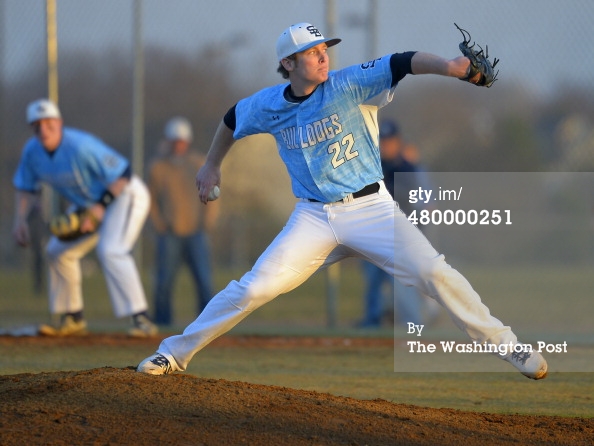
Jacob Bukauskas was among the area's highest ranked draft prospect. Where'd he go? John McDonnell/Washington Post via getty images

Jacob Bukauskas was among the area’s highest ranked draft prospect. Where’d he go? John McDonnell/Washington Post via getty images

We started looking at DC-local draft prospects early this spring with a comprehensive pre-season review of all local draft prospects.  Then at mid-spring season we took at look at just the best local prospects.   Now that the Rule 4 draft has occurred, lets talk about some of these big-time names from DC/MD/VA and who went where.

I’ll list these players with local ties in the order they were drafted, which it should be noted, turned out to be vastly different from their pre-draft ranking order.  Like with other posts, I’ll put in rankings for the player from four reputable ranking sources pre-draft for prospects: Keith LawBaseball AmericaMLB.com and MinorLeagueBall (though, as we’ll see by the rankings below, I’m not sure I think MinorLeagueBall’s rankings are worthy; they’re *way* off on some players who went in the upper rounds).  After the 10th round, we’ll just focus on “name players” or high schoolers who got previous mention; lets be honest, the odds of a high school star being bought out of his college commitment drastically drops after just the first few rounds.

Editor’s note: post-signing deadline I updated this with signing status and bonus for first 10 rounds of picks.  Actual bonus tracker from MLB.com here, slot values for each pick here.

The MLB Draft Tracker is the best tool out there for finding info on players and is used heavily here.

  • 1st Round/#19 overall by Cincinnati: Nick Howard, UVA rhp reliever (Law #63/BA #25/MLB #31/MinorLeagueBall #40).  Jim Callis reports that Howard’s stock was rising fast ahead of the draft, and MlbDraftInsider predicted an early 2nd round pick for Howard.  Shocking everyone, he went right after the Nats picked at #19 in the first round.  A surprise pick; he was projected to be just the third UVA player selected and perhaps a 2nd rounder.   He was a Sunday starter for UVA but moved to the bullpen in 2014 and showed a significant strike-out tool (he had a 15.88 K/9 rate on the year, albeit in just 28 innings closing games for UVA).  I wonder if Cincinnati is thinking they can move him back to a starting role, because drafting a reliever this high is (in some pundit’s minds) a waste of a first round pick.  Signed for $1.995M, $100k under slot.
  • Supp-1st Round/#37 overall by Houston: Derek Fisher, UVA OF (#15/#31/#26/#31).  Keith Law video breakdown.  Law predicted back of first round despite his ranking him as the 15th best prospect.  Scout.com predicted the same.  MlbDraftInsider predicted mid-first round.  They were all wrong; Fisher lasted until the mid supplemental 1st round, and odds are that Houston got a steal of a player here.  Fisher’s production was hampered by a broken hamate bone this season, causing him to miss time and lose power, so this pick was projecting his excellent sophomore season.  I think Houston will find a quick-to-the-majors corner outfielder who can slot nicely into a #2 or #6 slot.  Signed for $1.534M, exactly slot.
  • Supp-1st Round/#38 overall by Cleveland: Mike Papi, UVA 1B/OF (#43/#43/#45/#81.  Keith Law video breakdown.  Law predicted mid 2nd round.  MlbDraftInsider predicted early 2nd round.  But Papi’s strong finish clearly jumped him on Cleveland’s board, who nabbed him in the supplemental first round.  He profiles as a professional hitter, lots of line drives, lots of walks (I think of Nick Johnson).  Signed for $1.25M, about $250k under slot.
  • 2nd Round/#45 overall by Chicago Cubs: Jake Stinnett, SR RHP from U of Maryland (#51/#67/#72/#213??).  Stinnett clearly made himself a ton of money with his showings at the ACC tournament (8ip, 3 ER and 10ks versus UVA) and the CWS regional (8ip, 3runs against ODU).  He is the first college senior off the board, to a team (the Cubs) that is trying to rebuild itself, so one may wonder if this is a pre-negotiated/below-slot deal with a guy who won’t have a ton of leverage so that the Cubs can throw extra cash later on.  Either way, Stinnett was likely to go in the 2nd round regardless, so the Cubs don’t do much of an over-draft here.  Signed for exactly $1M, about $250k under slot.
  • 3rd round/#78 overall by Chicago Cubs: Mark Zagunas, C from Virginia Tech ((Law out of top 100/#111/#149/#106).  Zagunas profiles as a Jason Kendall like catcher; good defense, contact hitter who doesn’t strike out a ton.  But Law thinks he projects as a backup catcher and thinks this is a bit of an over-draft.  No matter; Zagunas became one of the first players to sign when he took an under-slot deal over the weekend.  Signed for 615K, about $100k underslot.
  • 3rd round/#83 overall by Toronto: Nick Wells is a LHP from Battlefield HS in Gainesville (Law out of top 100/#119/Out of MLB’s top 200/#343) who has a College of Charleston commit and who sits low-90s on the gun.  He’s popped up from being just a good HS pitcher to being a potential 3rd-4th rounder.   Slot is $661k.  Might be signable; that’s a lot of money.   Battlefield lost in the 6-A north regional quarters to McLean; i’m not sure which game Wells pitched (perhaps their first round game, a 4-0 win).  UPdate: named to Baseball America’s 2nd team All-American team for 2014.  Signed for $661k, exactly slot.
  • 4th Round/#111 overall by Seattle: Ryan Yarbrough, a senior LHP from ODU (na/#407/na/na) who I hadn’t seen on any pre-draft rankings.   I was surprised to find him at least on BA’s list.  He was a weekend starter (some Friday, some Saturday) for ODU this year but struggled to a 6-7, 4.50 ERA on the season.  In the CWS regional he pitched in relief in the first of their two-and-out losses to Maryland.  No offense to Yarbrough, but a 4th round senior draftee (slot value $471k) who likely is an org-arm more befitting of a mid-20s round pick looks like a complete money-saving move by Seattle to free up cash for other picks.  Signed for just $40k, more than $430k under slot.  Seattle went WAY over-slot with its 1st rounder and supp-2nd rounder and needed to make up for it with a ton of under-slot guys.
  • 4th Round/#116 overall by Milwaukee: Troy Stokes from Calvert Hall College in Baltimore (na/#316/na/#260).  He profiles as an undersized lead-off/CF and is committed to Maryland.  I can see him signing for slot frankly based on this draft position.  Maryland loses a recruit that could have really helped them.  Signed for $400k, about $50k underslot.
  • 4th Round/#127 overall by Tampa Bay: Blake Bivens is an RHP from George Washington HS (aka GW-Danville near the NC border) (na/#124/na/#140).  He’s committed to Liberty but has been consistently 90-93 on the gun with reports of good secondary stuff.  Projected as possible 3rd-4th rounder and indeed that’s where he went.  GW-Danville is a 4-A school that got upset in their conference semis, hence his absence from the prep radar.  His slot value is $404k; is that enough to get him out of going to Liberty?  I would think so, even given Liberty’s run to the CWS this year we’re not talking about a big-time program (though, that being said, I don’t know jack about Bivens personally, and he might be quite religious, which would explain his commitment to small-school liberty despite his talents).  Named to Baseball America’s 3rd team all-american.  Signed for $462k, about $60k above slot.
  • 7th Round/#213 overall by Kansas City: Brandon Downes, CF from UVA.  I’d accuse this of being a money-saving senior sign draft pick, but Downes is a junior.   Slot is $176k; if he gets slot he may sign.  That’s a lot of money.  Signed for $150k, about $25k under slot.  Not bad for a senior sign.
  • 7th Round/#222 overall by Oakland: Brandon Cogswell, ss/2b from UVA (na/228/na/268).  MLB’s profile projects him as either a 2nd baseman or a utility guy professionally.   I wonder if he’ll sign; slot figure is $164k and he’s a college junior.  Maybe this is a peak for him.  Signed for $200k, about $35k over slot.
  • 8th/#226 by Houston: Bobby Boyd, an undersized junior CF from West Virginia U (not ranked on any list) but who hails from Silver Spring and who went to St. Johns.   Completely unnoticed by any pre-draft ranking team; is this a punt of a draft pick?  .356 average (good) but just a .389 OBP (bad … just 10 walks all year).  Signed for $140k, about $20k under slot.
  • 8th/#250 by Detroit: Artie Lewicki, UVA’s mid-week/4th starter who got a ton of work in the ACC and regional tournaments.  A nice senior draftee for Detroit.  Signed for $60k, about $90k underslot.


  • 10th and 14th rounds: the only two JMU players were taken; Ty McFarland and Chris Huffman.  McFarland is a senior third baseman and son of the longtime JMU coach Spanky McFarland while Huffman is a junior RH who may opt to return in hopes of a bigger bonus next year.
  • 15th/#454 by Washington: Ryan Ripken, 1B from Indian River CC but more famous for being the son of Cal Ripken, Jr.  You can’t help but make mention of this pick, not only because it was the Nats, but because of who it is.  I can’t find much of any scouting reports on the guy.  MLB.com has a story with some more data.
  • 17th/#540 by Washington: Alec Keller, a senior CF out of Princeton but who went to Douglas Freeman in Richmond.   I had never heard of Keller, but then again I didn’t really start following prep baseball closely until recently.  Of interest; perfectgame lists him at 5’6″, 110lb but mlb.com lists him at 6’2″, 200lbs.  That’s one heck of a college growth spurt :-).  I hope Keller gets some playing time in Viera and earns another summer of pro ball.
  • 20th/#600 by Arizona: Jacob Bukauskus, RHP from Stone Bridge HS in Ashburn.  Keith Law video breakdown.   The local area’s top ranked prospect, projected as a mid-to-late first round pick, goes 600th overall.  Bukauskas had informed all interested teams that he’s honoring his commitment to UNC.  the thought was that a team might draft him early 2nd round and offer him a huge-overslot deal (as Law thought would happen, with a potential $2M bonus).  Alas it did not, and this 20th round pick seems like a waste of a pick frankly.  In late May he was named the Gatorade State player of the year.  Baseball America 1st team All-American for 2014.  Stats for the season: 7-0, 0.00 ERA.  Word came out during the regional tournament that Bukauskas was being shut-down due to shoulder tendinitis; this likely was the reason he didn’t get drafted earlier.  It looks like he’s getting his wish and going to school.  UNC must be ecstatic.
  • 20th/#614 by Boston: Devon Fisher is a catcher from 6-A south champions and state favorite Western Branch HS (Portsmouth).   UVA commit.  Projects as a 4th rounder, not picked til the 20th.  Another likely victim of the new draft rules; in years past a saavy team like Boston would just throw $1M at him in the 20th and he’d sign.  Instead UVA likely gets a big-time player coming to school.  Update: Fisher signed with Boston instead of going to UVA.
  • 21st/#634 by Washington: Connor Bach, SR LHP from VMI.   I had no recollection of him previously, but NatsGM Ryan Sullivan reports that he played in the Cal Ripken league and left an impression.
  • 22nd/#675 by St. Louis: Derek Casey is an RHP from Hanover HS (Mechanicsville) with a UVA commit.  93-94 on the gun.  Projects as possible 3rd rounder.  Casey led Hanover to the 2013 AAA Virginia state title and Hanover is the favorite to win the 4-A title this year.  Another great sign for UVA; Casey likely is going to school.
  • 32nd/#958 by San Francisco: Hunter Williams is a two-way lefty player from Cosby HS in Chesterfield, VA who has skills both on the mound at at the plate.  He’s limited to first base in the field, which may make it tougher for him to get drafted and developed.  91 on the gun.  UNC commit, it should be interesting to see which way he focuses.   Projects as a 4th-5th rounder.
  • 35th/#1050 by Arizona: Justin Morris is a C from DeMatha HS who plays for the 2013 PerfectGame national champions EvoShield Canes traveling team (east-coast based travel team with a ton of big-time names matriculating these days).  He’s a Maryland commit but didn’t improve his draft stock much throughout the year.  He was #295 on minorleagueball’s pre-season list but doesn’t get picked until garbage time in the draft.  Pre-season PG all-Atlantic 1st  team.
  • 35th/#1054 by Washington: Flint Hill’s Tommy Doyle, a UVA commit who I didn’t think was a draft prospect, but who the Nats picked up in the 35th round likely to curry favor to a local interest.
  • 40th/#1096 by Milwaukee, Taylor Lane, a shortstop from Chesapeake but attending HS in Florida at the IMG academy.  Florida commit.

Local Names of note not drafted at all:

  • Charlie Cody is a 3B from the same Great Bridge HS in Chesapeake that just graduated Connor Jones.  He’s committed to UVA.  His stock seems to have dropped this spring and he’s joining Jones at UVA; he did not get picked at all.
  • Jeff Harding is a senior RHP from the Cambridge-South Dorchester school that just made it to Maryland 1-A’s state semis (after winning the title last year).  He’s committed to South Carolina.  I thought he’d at least get a late-round courtesy pick, but I guess not.
  • Brodie Leftridge is an OF from Highland MD who played for St. Johns in DC with a Tennessee commit.
  • Zach Clinton is a RHP from Forest, VA, plays for Liberty Christian HS (the Virginia state private schools champ) and is committed to Liberty.  On 5/27/14 he was named the co-state player of the year for private schools (along with Tommy Doyle).  No love from MLB teams though; he went undrafted and looks like he’s heading to his home town college.
  • Hunter Taylor, a C from Nandua HS in Olney, VA.  Named to the Baseball America 2nd team all-American list, was not drafted.  Committed to South Carolina.
  • Pavin Smith is a big lefty 1B/OF two-way player from Florida who will attend UVA after not signing.  It seems like he could slot right into the departing Mike Papi/Derek Fisher lineup holes.
  • Bennett Sousa is a LHP from Florida who now will attend UVA.  93mph, seems like he will slot into their rotation in a year’s time.

Summary: UVA has a ton of players drafted (no less than 8, and 7 of them likely are signing).  But they have a ton of commits from major names who didn’t get drafted and/or who got drafted so late that they stand little chance of signing.  Devon Fisher, Derek Casey, Tommy Doyle and Charlie Cody are all UVA commits likely going to school.  UNC also makes out like a bandit, getting both Bukauskas and Williams to school.  And Maryland looks like it will get at least two very decent players coming to school in Morris and Harding.


Some useful draft links for you:


First Look: Nats top 10 draftees from 2014 Rule-4 Draft

15 comments

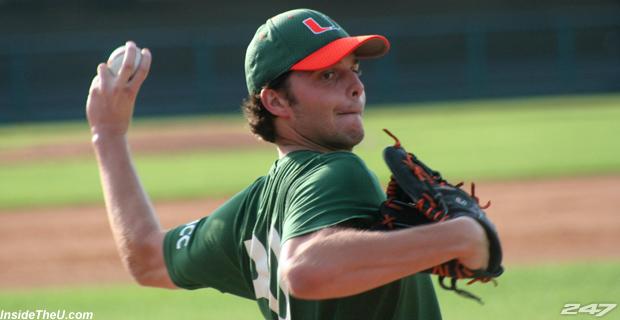
Suarez is the Nats 2nd round pick.  Photo via 247sports.com

Suarez is the Nats 2nd round pick. Photo via 247sports.com

As we did last year, here’s a quick introduction to the Nats top 10 picks for 2014.

A quick glance on our high-end draftees from 2014 draft.  I’ll put in the rankings from several prospect ranking shops (Keith LawBaseball America, MLB.com and MinorLeagueBall).  overall player ranking after the player name where appropriate (though as we’ll see, Keith’s top 100 quickly runs out of names).  Here’s a link to the draft order, and here’s a link to MLB.com’s fantastic draft tracker database for reference.

As he did last year, NatsGM.com‘s Ryan Sullivan is live-blogging and does a great job of pulling up stats on each of our picks.  I depend on his reports as well as those from the four links above to give a quick overview of our draftees.

Note: I wrote most of this over the weekend as the guys were picked; we’re already hearing plenty of rumors about signings.  I havn’t updated this post with such intel but I’m sure its readily available from Ladson and Kilgore and the like.

1st round/#18 overallErick Fedde, UNLV RHP (Law #27/BA #24/MLB #33/MinorLeagueBall #70).  Most of the credible mock drafts had the Nats drafting Fedde here, and that’s exactly what happened.  In my quickie preview post, I thought Fedde would be an overdraft and hoped that either Tyler Beede or Brandon Finnegan would drop.  Well, Beede went 14th and Finnegan went 17th.  I liked Touki Toussant as well as a prep HS that may drop to the Nats, but he went 16th.   I’m not sure I agree with pundits who say that Fedde was a “top 10 talent” prior to his injury; I still think this is an overdraft on Fedde given the fact that he’s rehabbing a blown UCL.  Look at the placement of Fedde on the four prospect ranking shops; that’s an awful lot of trust being placed into the hands of the surgeon, the rehab process, and the recovery.  That being said, looking at the next several players picked, there wasn’t a name that really stood out as someone that I would have rather had who at the same time was a prototypical Mike Rizzo pick  Maybe Connor Gillaspie would have worked (he went #20).  Ryan Sullivan thinks we got a steal here; i’m not so sure.  I think the Nats were looking at their board while the Giants were picking at #14, and then had their next best three names get snatched out from under them, leaving them taking a gamble on Fedde.

On the player himself; Fedde is tall (6’4″) but *skinny* (listed at between 165 and 180), sits 91-93 and touched 95 with excellent movement.  Secondary pitches can flatten out because of his lower arm slot, but he’s listed with a decent slider and decent change.   ESPN thinks he projects a 65 fastball and a 60 slider but needs to work on his command.  Very preliminary ceiling/projection is as a mid-rotation starter.   The thought is that he can fill out his frame and add velocity, though he’s done neither in his three college years.

He’s a Scott Boras client, he was a HS teammate of Bryce Harper, and he’s rehabbing a torn UCL, so he fits in nicely with the Nats on several levels.  It was easy to see why the mock drafts were all over the Nats taking Fedde.  In reality, I’ll bet the war room was rather dejected watching the three a-forementioned pitchers drop off the board in the 4 preceding picks to #18.

2nd round/#57 overall: Andrew Suarez, LHP from U-Miami (Law out of top 100/BA #75/MLB #86/MinorLeagueBall #103).   A re-draft (he was picked in the 9th round out of HS but chose to go to school), he suffered a torn labrum early in his college career but reportedly picked up velocity this past season and held it through most of the year.   Law alludes to other medical issues that clearly had him down on Suarez (Law ranked him lowest of my 4 resources).  He spent the year as Miami’s saturday starter (aka, their #2 starter).  BA mentioned him in their draft preview specifically because of his fantastic control; he had just a 1.34 BB/9 rate despite throwing a low 90s fastball that can reach 95.  He pitched a shut-out in game 1 of the Coral Gables regional, a 7-hit, 10K, 0 walk outing that matched his career high; nice way to finish off your college career (Miami was elminated from CWS play before Suarez could throw again).   Scouting reports say he profiles as a 4th starter.  (Note: my fingers just automatically typed Luis Suarez, aka Liverpool and Uruguay’s striker.  Part of me is in World Cup mode already).

3rd round/#93 overallJakson Reetz, prep Catcher from Nebraska (#38/#62/#40/#36).   A prep catcher isn’t who you normally expect to see this high on the National’s draft results, but his pre-draft rankings show that he’s clearly a steal at the mid-3rd round.  The question is; is he signable here?  $567k is his bonus slot figure; he might be a tough sign unless the Nats have a pre-draft deal with Fedde to save some money for a guy like Reetz.   His pedigree is good: MVP of the PG all-american game, member of the same world champion U-18 team that #1 overall pick Brady Aiken was on.   In prep games he was showing 91 from the mound and reportedly has a great arm, but some scouting reports say he may struggle to stay behind the plate.  As pointed out by NatsGM.com’s Ryan SullivanBA did a “day in the life” piece on Reetz that is worth checking out; once you watch this you’ll really like Reetz.  Last note: Keith Law even likes the pick and says he’ll sign.

4th round/#124 overall: Robbie Dickie, juco RHP from Blinn college in Texas (na/210/179/173).  95-97 on the gun, led his team to the Juco World Series, but he may project as a reliever thanks to questionable mechanics.   Quite a pop-up guy, but an over draft based on the rankings in the major publications.  He’s committed to Texas State if he doesn’t sign, which isn’t exactly a baseball powerhouse, so is this a value/slot saving pick?

5th Round/ #154 overall: Drew Van Orden, a senior RHP from Duke (na/395/na/na).  Good numbers on the year as Duke’s Friday starter (6-5, 3.19 ERA, more than a k/inning).  He finished off his college career with a 5-hit complete game shutout over Georgia Tech in the ACC tournament, Duke’s only win in their post-season tournament.  I like his pedigree despite the fact that he’s a senior 5th round pick with zero leverage.  Who are the Nats saving all this money for?  Update: Van Orden quickly signed, terms undisclosed.

6th Round/#184 overall: Austen Williams, junior RHP from Texas State ( na/#276/na/na).  Nats clearly saw something in Williams that other draft pundits did not; even MinorLeagueBall (who ranked to 350) didn’t have him listed.  Texas State’s friday starter continues a long trend of the Nats plucking talent out of Texas.  Williams posted solid numbers as Texas State’s Friday starter (8-3, 3.65 era, good K/9 rates).  I’m sure he’ll take a bit more than slot to sign, but the Nats should have some pennies saved.

7th Round/#214 overall: Dale (D.K.) Kerry, a senior Center fielder from the U of Miami (na/#332/na/#133).  MLB’s scouting report on him says he’s a great athlete and he has a “4th outfielder” projection.  Sounds like the perfect senior 7th round draft pick to me (sarcasm).  Ryan Sullivan is more bullish on him than I.

8th Round/#244 overall: Jeff Gardner, senior corner OF from Louisville (na/498/na/na).  He may be a senior, but he’s also the clean-up hitter for a CWS-bound team and had great stats on the year (.321/.403/.538 with 9 homers).   Not a bad find for the 8th round.

9th Round/#274 overall: Austin Byler, junior 1B from Nevada (94/123/166/271).  Well, now we see why the Nats are saving their pennies; getting Byler here is a find.  He should have been taken in the 3rd or 4th round if you believe the pundits, and he may take an over-slot deal to buy him out of his senior year.  He’s got serious power (he led his conference in homers and is an offensive threat) and would be a great find if he signs.

10th Round/#304 overallMatthew Page, senior RF from Oklahoma Baptist (na/na/na/na).  A d-2 pick for a team that a) loves guys from the south west already and b) has shown itself more than willing to gamble on non D-I players.  I can’t imagine he’ll be expensive to sign.  He’s also the first player the Nats have picked that didn’t appear anywhere on any of the draft previews.

Summary: Through the first 10 rounds the Nats picked 5 pitchers and 5 hitters for good balance.  Of these 10 players selected, 9 are college.  So, in other words, this is exactly the type of draft we expect to see out of a Rizzo-run organization (with the possible exception of perhaps predicting a few more arms). 

Of these 10 draftees, I’d say that at least 5 are “expected under slot guys” (Dickie, Van Orden, Kerry, Gardner and Page).  You have to think the team may play some slot hardball with Fedde.   Suarez and Williams should sign for about slot.  That leaves two guys who may take over-slot deals to sign; the sole HS draftee in Reetz and the decently ranked Byler.  I’ll bet it works out and all 10 guys sign.


Some useful draft links for you:

CWS Super-Regionals recap and CWS field

leave a comment

We’re through the initial field of 64, through the regional play, and now we’re through the super regionals.  Here’s a review of the action from the 6/6/14 weekend and a look at our CWS field of eight for 2014.

From a draft perspective, the super-regionals feature a number of high profile guys, as noted by MLB.com’s Joey Nowalk here.  Tyler Beede, Max Pentecost, Brandon Finnegan, UVA’s trio of 1st-2nd rounders (Derek FisherMike Papi and Nick Howard) and Maryland’s ace/2nd rounder Jake Stinnett are all names to watch.  Lots of good pitching in this super-regional.

Here’s how the super-regionals went down: we’ll look at these regionals in the original order of the top 8 national seeds.  Blue identifies the super-regional winners.

  • UC Irvine at #16 Oklahoma State: In Stillwater UC Irvine once again proved doubters wrong, sweeping two games quickly on the road to qualify for Omaha.
  • College of Charleston at Texas Tech: Texas Tech squeaked by Charleston 1-0 in the opener despite a stellar performance from local kid Taylor Clarke (8ip, 5 hits, 1 run).  Texas Tech won the 2nd game of the regional by the same score; Charleston’s pitching staff gave up 2 runs in 18 innings and lost both games.  Texas Tech to Omaha.
  • #3 Virginia hosting Maryland: Maryland (behind 2nd round pick Stinnett) shocked UVA in the opener 5-4, putting 5 runs on Virginia’s ace Nathan Kirby and knocking him out in the 5th.  Does Maryland have the pitching though to hold off the consensus CWS favorites?  Not in the 2nd game; Uva roared back to win 7-3 and force the tiebreaking game.  There UVA continued to batter the Maryland pitching staff and advanced to Omaha 11-2.
  • Stanford at #13 Vanderbilt: Vanderbilt destroyed Stanford in the opener (they were up 10-0 by the end of the 3rd) but Stanford took game 2 to force a super-regional tie-breaker.  In game 3 Vanderbilt jumped all over Stanford’s starter en route to 5 first inning runs and an eventual easy win.
  • Kennessaw State at #12 Louisville: Louisville outmatched the upstart Kennessaw State team and won two straight to return to Omaha.
  • #6 Louisiana-Lafayette hosting #11 Ole Miss: In game one Louisiana-Lafayette’s offense put 9 runs up in the first 3 innings and held on for a 9-5 win.  But Ole Miss fought back to win game 2 and force the tiebreaker.  In the deciding game, Ole Miss broke open a close, rainy game with 4 in the ninth to advance 10-4.
  • #7 TCU hosting Pepperdine: TCU got 6 decent innings out of its ace (and first round pick) Finnegan and held on for a 3-2 opening win.  Pepperdine forced the tiebreaker with its own 3-2 win in game 2.  In the decider, TCU won a back-and-forth affair by taking the lead with 2 runs in the top of the 9th and survived a rally to advance.
  • Texas hosting Houston: Texas took both games from Houston 4-2 and then 4-0 to qualify for Omaha.

CWS Field: UC Irvine, Vanderbilt, Louisville, and Texas on one side, Texas Tech,Virginia, Ole Miss and TCU on the other.

Interesting field; There’s just 2 national seeds left in this field (and just four overall), the lowest number of advancing seeds in the history of the tournament.  Its very much tilted to the lower side, with the two remaining national seeds in one bracket.

Quick predictions: Vanderbilt on one side, UVA on the other with Virginia as national champs.  Why not, eh?

Prep Baseball Update: Virginia Regionals

leave a comment

Here’s the next big update on the state of High School baseball in the area.  We previously talked about Maryland Regionals and Virginia regular season play wrapping up, then we posted after Maryland states and Virginia conference play had mostly finished up.  In these posts we also covered some private school tournaments and the DC tourneys as much as we could.

Now we’re through the Virginia regional tournaments and its time to check in.  The state semi-finals are set in all six divisions.  Lets recap the regionals.


Virginia

There’s been little national recognition of any of Northern Virginia’s powerhouses (Madison, Stone Bridge, Hylton, Osbourn Park or Battlefield) in any of the national high school rankings this year, but schools in Richmond and Norfolk have taken turns cycling in and out of the various top 25/top 50 lists.

At some point or another, Cosby HS (Midlothian, in the western Richmond suburbs), Woodside (Newport News), Douglas Freeman (Richmond), Western Branch (Chesapeake), Hickory (Chesapeake) and Great Bridge (Chesapeake) have all gotten national attention from the various national ranking lists in 2014.  It will be interesting to see how the Northern Virginia powers match up with these southern schools in the state tournament.  But, thanks to the re-classifications of schools we aren’t going to get the big-time match-ups we wanted to see in states.  Cosby, Western Branch, and Woodside are 6-A schools, while Freeman, Great Bridge, and Hickory are 5-A schools.  Last year’s AAA state champ Hanover is a 4-A school now and will face pretty light competition while returning its ace Derek Casey (UVA commit) from last year’s state champ. All these aformentioned teams have qualified for the regional tournaments, so we may get some juicy match-ups between northern Virginia powerhouses and the nationally-recognized southern Virginia schools in the State playoffs.  Only the regional champ and finalist qualify to the state final four.

With apologies to the smaller schools, we’re going to mostly focus on the 6-A and 5-A playoffs here.  All conference, regional and state brackets here at VHSL’s site.  Records listed for teams are as they were heading INTO the game being described, not afterwards.


6-A North Regionals Playoff Bracket is here.  Here were your qualifiers:

  • Concorde: Oakton (regular season and tourney champ), Chantilly, Westfield, Herndon
  • Liberty: Madison (regular season and tourney champ), Langley, Washington & Lee, McLean
  • Potomac: West Springfield (regular season and tourney champ), West Potomac, South County, Annandale
  • Cedar Run: Osbourn Park (regular season champ), Battlefield (tourney champ), Patriot, Osbourn

Regional schedule is: first round 5/30/14, quarters 6/2/14, semis 6/4/14 and final 6/6/14, each game at the higher seed’s home field.

In the 6-A North Regional first round on 5/30/14, two Conference champions were upset and the power of the Cedar Run teams was put into question.  Annandale upset Osbourn Park and McLean upset Oakton behind a 1-hitter from Va Tech commit Joey Sullivan.  Meanwhile Patriot was blasted by West Potomac 8-2.  Cedar Run’s lone winner was Battlefield, where 3rd round pick Nick Wells (College of Charleston commit, featured here in Allmetsports as a potential 3rd-4th rounder) threw a 4-hit shutout to beat South County.  The other two #1 seeds survived (Madison getting by Herndon 6-3 and West Springfield pounding Osbourn 15-3).   The rest of the regional quarter finalists slate was filled by Langley and Chantilly (a 10-0 winner over hapless Washington & Lee).

In the 6-A North Regional Quarter finals on 6/2/14, Chantilly blanked Annandale 4-0, West Springfield handled Langley 5-2 and Madison squeaked by West Potomac 7-6 in a 12-inning thriller.  However it was the last quarterfinal that gave the biggest surprise: little known McLean and its .500 record got into the regional tournament by virtue of a big upset in the conference tournament, and continued its upsetting ways, beating a well-regarded Battlefield team 7-5.

In the 6-A north regional semis, Chantilly (15-7) upset West Springfield (15-5) 4-1 behind a big night from their ace Easton Recto.  Meanwhile, conference foes McLean (14-10) and Madison (21-2) squared off for the 3rd time this season, and McLean scored the unlikely upset 5-1 behind senior Ace and Va Tech bound Joey Sullivan‘s masterful pitching.  Madison had swept the season series against McLean by a combined score of 19-4, but McLean came up big once again.  I guess it is safe to say that Madison’s record was overstating its quality.

6-A North regional final: Chantilly (16-7) destroyed McLean (15-10) by the score of 12-0 in a pretty unlikely final.   Chantilly batted around in the first inning and never looked back.  Neither team had *ever* won a regional baseball crown, and McLean has *never* made a state baseball tournament prior to this year. Quite a turnaround from a team that (by conference seed) shouldn’t have even been in the regionals.


6-A South Regional Playoff Bracket is here.  Unlike the 6-A north, just the conference finalists qualified.  Here were your qualifiers:

  • Conference 1/Coastal: Grandby (regular season champ), First Colonial (tourney champ)
  • Conference 2/Monitor-Merrimac: Western Branch (regular season and tourney champs), Woodside
  • Conference 3: Cosby (regular season champ), James River
  • Conference 4: Hylton (regular season and tourney champ), Riverbend

Regional schedule is: Western Branch vs First Colonial, Grandby-Woodside, Cosby-Riverbend and Hylton-James River.  In the 6/2/14 quarter finals, all four conference champions advanced (a slight surprise to this witness, who thought that Woodside was a bit better, and who thought that Hylton may have had a hard time with their southern virginia opponents.  Western Branch beat First Colonial 6-1, Grandby beat Woodside 2-1, Hylton beat James River 9-0 behind a shutout from Sewanee-bound Austin Magestro, and Cosby beat Riverbend 7-2).

In the 6-A south regional semis, Western Branch (22-2) blanked Grandby (18-4 record) by the score of 6-0, while the undefeated Cosby (22-0) blitzed Woodbridge powerhouse Hylton (19-2) by the score of 11-6.  We expected a Cosby-Western Branch matchup and we got it.

6-A South regional final: Western Branch (23-2) blitzed Cosby (23-0) by the score of 8-1 in a matchup of nationally recognized power houses.  I fully expect to see this rematch in the state final in a week’s time, given the weakness of the 6-A North teams.


5-A North Regional: Regional playoff bracket is here.   Here were your qualifiers (not all conference contributed equal numbers of teams)

  • Conference 13/Capitol: Marshall (regular season and tourney champ), Edison, Stuart , Lee
  • Conference 14: Stone Bridge (regular season and tourney champ), Freedom – South Riding, Tuscarora
  • Conference 15: Potomac (regular season and tourney champ), North Stafford, Brooke Point
  • Conference 16: Halifax (regular season champ), Patrick Henry – Ashland (tournament champ)

Regional schedule is: first round/play-in 5/30/14, quarters 6/2/14, semis 6/4/14 and final 6/6/14, each game at the higher seed’s home field.

In the 5-A North Regional first/play-in round on 5/30/14, Patrick Henry – Ashland, North Stafford, Freedom-South Riding and Edison all earned the right to play conference champions in the regional quarter finals.  North Stafford destroyed Stuart 10-0 and faces regional favorite Stone Bridge in what could be an interesting quarter final.  Marshall faces the unknown Patrick Henry, while Potomac likely will not be challenged by Freedom.

In the 5-A North Regional Quarter finals on 6/2/14, more surprising results.  Conference chaps Marshall, Stone Bridge and Halifax each advanced to the regional semis, but little known Freedom-South Riding pulled a monumental upset over a Potomac team that I thought could challenge for the regional title.

Just after the quarters, Stone Bridge got a huge piece of bad news when ace Jacob Bukauskas was shutdown due to elbow tendinitis.  Too bad for people who were hoping for one more shot to see him throw live.

In the 5-A North Semis, Stone Bridge (21-1) outslugged Marshall (14-6) by the score of 12-5, while Freedom-South Riding (12-12) upset conference 16 champion Halifax County (Unk record) by the score of 7-2.

5-A North regional final: Stone Bridge (22-1) eased by conference foe Freedom-South Riding (13-12) by the score of 2-1  in a Conference 14 rematch.  Stone Bridge had already beaten Freedom three times this season, each time the score got closer, so a 2-1 nail-biter wasn’t unexpected.  Stone Bridge showed how quality they are even without their Ace.


5-A South Regional: Playoff Bracket is here.  Here were your qualifiers:

  • Conference 9/Atlantic: Maury (regular season champ), Kellam (tourney champ) (Norfold/Va Beach)
  • Conference 10:  Great Bridge (regular season and tourney champ), Hickory (both teams from Chesapeake)
  • Conference 11: Douglas Freeman (regular season champ and tourney champ), Mills Goodwin (both teams in Richmond)
  • Conference 12: Matoaca (regular season champ and tourney champ, Prince George (Teams from Chesterfield and Petersburg, both in South Richmond)

The 5-A south regional faces a tough schedule; 3 games in 4 days starting on 6/3/14.  In the quarters, both Richmond teams advanced, with Freeman pounding Prince George 12-4 and Goodwin giving Matoaca just their second loss on the year in a 4-1 win.   Meanwhile the Tidewater quarters featured some interesting results, with Hickory blasting Maury 16-1 and Kellam upsetting Great Bridge 4-2.  Both Hickory and Kellam were the 2nd seeds out of their conference, and just one conference champion advanced out of the 5-A south quarters.

In the 5-A South Semis, Mills Godwin (18-5)  got another crack at Douglas Freeman (23-1) in a rematch of the Conference 11 final, but was crushed 9-1.  In the other regional semi, Hickory (16-6) outlasted Kellam (18-5) in a wild 11-10 game.

5-A South regional final: Douglas Freeman (24-1) beat Hickory (17-6) by the score of 6-4 with a 6-run sixth inning comeback.


Virginia Smaller Classifications:  Conference and Regional brackets available from VHSL’s site.

  • 4-A: One interesting note about the 4-A tournament is the fact that 2013 AAA state champion Hanover (Mechanicsville/Richmond) is now a 4-A school and is a clear 4-A state favorite right now.  They enter regionals with a 17-2 record.  Most of the 4-A regional-qualified schools closer to DC are based out of Winchester (Sherando, Millbrook) or Culpeper/Fredericksburg (Eastern View, Chancellor).  In the 4-A North semis, Conference 21 foes Sherando and Millbrook both advanced to force a 5th rematch on the year (Millbrook has won all four meetings).  In the 4-A South semis, Hanover and Grafton advanced.  In the 4-A North Regional finals, Milbrook beat Sherando for the fifth time this season 6-5, while in the 4-A south regional finals defending state champ Hanover handled Grafton 2-0.
  • 3-A: As with ther 4-A schools, the 3-A regional qualifiers close to DC area generally from the Culpeper area (Kettle Run, Culpeper, William Monroe) or points further remote, but Loudoun Valley HS (in Purceville) won the 3-A east and looks to be a state favorite.
  • 2-A: No DC-local schools (George Mason the only one) qualified for regionals.  Strasburg won the 2-A east regional and enters the state tournament with a 23-1 record.
  • 1-A: No DC-local schools are in the smallest 1-A classification.

Recent Virginia AAA HS champs:

2013: Hanover d Great Bridge. Hanover’s super-junior Derek Casey (committed to UVA) outlasts Great Bridge and their 1st round talent Connor Jones (now attending UVA after spurning a likely late 1st round draft position).  Lake Braddock and Oakton beaten in the semis.

2012: Lake Braddock d Kellam 4-0. Lake Braddock lost to West Springfield in the regional title game but then blitzed to a state championship.

2011: Great Bridge d South County in the state final, giving the powerful South County its first and only loss on the season after starting the season 28-0.  Lake Braddock was the regional finalist and lost to Great Bridge in the state quarters.

2010: West Springfield d Woodbridge in the final, giving Woodbridge its only loss on the year. WT Woodson regional finalist.

Complete history of Virginia HS Champions: from VHSL’s website.  Covers all sports.


Maryland

See the previous post for a full run-down on the Maryland regional and state tournaments, which ended 5/24/14.

  • 4-A Champion: Chesapeake beat Sherwood 2-0.
  • 3-A Champion: Reservoir beat North Harford 2-0.  State final winning pitcher Cody Morris named Maryland Gatorade player of the year.
  • 2-A Champion: Southern beat Parkside 3-2.
  • 1-A Champion: Smithsburg blanked Sparrows Point 9-0


DC

See the previous post for a more complete run-down on the DCSAA tournament.  One last game remained for the DC public schools:


Private

Most all private leagues in the DC, VA and MD areas are complete at this point.  See previous posts in this series for more detail.

  • WCAC:  St. Johns over O’Connell.  St. Johns junior P/SS Nick Lee named DC Gatorade player of the year.
  • IAC: St. Albans over Georgetown Prep
  • MAC: Flint Hill regular season champ.
  • VISAA: Division I:  Liberty Christian (Lynchburg) over Charlottesville’s St. Anne’s-Belfield.
  • MIAA: A-classification: Spalding  d Calvert Hall.  B-Classification: St. Mary’s d Annapolis Area Christian.  C-Classification: St. Johns d Chapelgate Christian

National High School Baseball Ranking Lists:

  • Baseball America’s High School top 25 (5/20/14 ranking and final HS top 50 ranking 6/3/14).  Cosby finishes at #12, Western Branch #28, Madison #40.
  • USA Today High School top 25 (6/5/14 rankings).  Freeman #21, but no mention of Cosby
  • USA Today’s Virginia-only rankings (5/25/14); these are very old and only have about 2/3s of the regular season listed.
  • MaxPreps top 25/top 50 lists (5/22/14), which has a hand-picked and a computer/power ranking list.  Cosby, Stone Bridge and Freeman mentioned.

Resources:

  • Washington Post’s AllMetSports section with standings and schedule results.
  • InsideNova.com‘s coverage of high school sports.
  • The Connection family of newspapers has a sports section that is rarely updated, but it does do some coverage.
  • MaxPreps.com also has some non-paywall HS information that comes in handy too.
  • Nvdaily.com (Strasburg/Winchester) has some results for some of the teams in the smaller conferences/outskirts of DC.
  • The Daily Progress (Culpeper local paper) also has some scores for schools in its areas.
  • Fredericksburg.com has some local coverage of Fredericksburg and Woodbridge teams.
  • Richmond Times-Dispatch has a HS scoreboard.
  • Hampton Roads Pilot (Hampton Roads) has scores for teams in the Chesapeake/Norfolk/Va Beach area.  They also have their own top-10 rankings for area teams.
  • The Baltimore Sun’s high school page has information on some of the programs outside the DC area mentioned in the Maryland section (and here’s the updated Baltimore top-20, akin to the AllMetSports top-10 list).
  • I use perfectgame.org to look up high-end HS prospects.
  • VHSL’s and MPSSAA home pages for playoff brackets and updates for VA and MD respectively.

Who are the Nats targeting at #18 plus Mock Draft review of top5 picks

25 comments

Lots of pundits think the Nats are taking Fedde at #18.  Photo via chicagonow.com

Lots of pundits think the Nats are taking Fedde at #18. Photo via chicagonow.com

The annual amateur/Rule-4 draft is upon us.  Wendy Thurm posted a nice overview of the festivities, kicking off today, June 5th.   Who is going at the top, and who do we think the Nats are going to take with their first round draft pick (#18 overall?)

Lets check in with some experts and pundits.  Unlike in years past, there’s no real consensus #1 overall pick this year thanks to a host of factors.  But the top-5 is relatively consistent no matter who the pundit.  We’ll talk about predictions for the first few picks plus who they think the Nats will end up with.  (Link to the draft order for the first few rounds to show all the missing picks and supplemental additions from MLB.com).  Note that all the Keith Law and Jim Bowden links are ESPN insider.  Profiles on the frequent top-5 picks and the names being associated with the Nats potential picks are below the list of pundit’s mock drafts:

  • MLBDraftInsider’s Chris Crawford has done a host of Mock Drafts this spring (the sixth version dated 5/28/14 and the “near final” version on 6/2/14, his penultimate mock on 6/3/14, his “really final” board on 6/4/14 and his “final mock ever” on 6/5/14)  and in his last mock has come down on the Nats taking Hoffman. Predicted top 5 in final mock: Aiken, Rodon, Nola, Conforto, Gordon.  Same movements that Law is projecting at the final minute.
  • ESPN’s Keith Law put out his first mock draft on 5/16/14, his second on 5/27/14, his third on 6/4/14 and his final/last on 6/5/14 and had the Nats on Erick Fedde, calling it a “lock” in the industry.  Top 5 in the latest mock: Aiken, Rodon, Nola, Conforto, Gordon (only list on here without Kolek in top 5).
  • MLB.com’s Jonathan Mayo posted a mock on 5/16/14, another on 5/30/14.  One last one 6/5/14.  In his latest he went Aiken, Jackson, Rodon, Kolek, Gordon.  He has the Nats taking Jeff Hoffman, saying that it could come down to “financials” and who is willing to go over-slot.
  • MLB.com’s Jim Callis posted his latest mock on 5/23/14 and one last one 6/5/14.   He went Aiken, Jackson, Rodon, Gordon, Kolek.  He has the Nats on Hoffman as well, but in the description basically says he says Hoffman could go top 10 and/or the Nats could take Fedde.
  • MinorLeagueBall’s Matt Garrioch posted his first mock draft early (3/10/14), his second on 5/19/14.  His top 5: Rodon, Kolek, Aiken, Jackson, Gordon.  He has the Nats on Kyle Schwarber.
  • ESPN’s Jim Bowden posted his Top-10 picks on 5/28/14, trying to think like the GM of each top-10 picking team, and went Rodon, Aiken, Kolek, Jackson and wildcard Freeman.
  • BaseballAmerica’s John Manuel has posted mock drafts on 5/9/14, 5/16/14 and v3.0 on 5/25/14 and his final the day of the draft 6/5/14.  His top 5 in his most recent mock: Aiken, Rodon, Kolek, Conforto, Gordon, with the Nats on Fedde.
  • GradingontheCurve’s Shaun Kernahan put up his mock draft 5/29/14.  He went Aiken, Rodon, Kolek, Jackson, Gordon with the Nats on Gatewood.
  • MinorLeagueBall did a community Mock Draft on 5/30/14 (so, not full of expert opinion but interesting nonetheless to see what the crowd-sourced opinion on players is).   They went Aiken, Jackson, Rodon, Kolek, Gordon with the Nats taking Conforto.  Based on where Conforto is now being projected, there’s little chance he survives to #18.
  • BaseballInstinct’s Thomas Belmont has a top-200 draft board that isn’t a mock draft but lists top 5 as Aiken, Jackson, Kolek, Rodon and Toussant.  #18 is Grant Holmes, who I would be surprised if the Nats picked despite his pedigree.  He posted his mock draft on 6/4/14 where he follows his board, but I have a problem with his rankings considering what the professional reporters above are showing for top 5 and for the Nats.
  • PerfectGame’s Patrick Ebert posted a bunch of mock drafts; in his last one on 6/4/14, he went top-5 of Aiken, Rodon, Kolek, Gordon, Nola with the Nats on Bradley Zimmer.
  • Si.com’s Dave Perkin (a former professional scout who does some writing) posted a last-minute mock 6/5/14 online.    He goes Aiken, Rodon, Kolek, Freeland, Jackson with the Nats on Beede.  I like this scenario.

How do I think the top 5 will go?  I like Aiken #1, Rodon to the Marlins (for the cuban-american/quick to the majors factors), then Kolek.  From there I have no idea; the Cubs by all accounts want a college arm but the next best one (Nola) isn’t worth the #4 spot.  Maybe they take a college bat (Conforto?), maybe they go BPA.  I’m guessing they bite the bullet and play the hand that they’ve been dealt and get Jackson or Gordon 4th, with the other going 5th.

ACTUAL DRAFT RESULTS: Aiken, Kolek, Rodon, Schwarber and Gordon.  Who was closest?   hard to tell; Schwarber came out of nowhere, and nearly everyone had Rodon before Kolek.

A quick overview of the names in discussion for top 5 selection:

  • Carlos Rodon: lhp from NC State; was the heavy consensus 1-1 overall pick all winter, but a rough spring and high pitch counts have dropped him on most people’s mock boards.  Scout.com has a detailed scouting report and video.  Scouting Video from Keith Law.
  • Brady Aiken is a prep lhp from San Diego who could be just the third high school pitcher ever picked #1 overall.  Scout.com has a detailed scouting report and video.  Keith Law scouting video.
  • Alex Jackson is a prep C also from the San Diego area.  Scout.com has a detailed scouting report and video.  Scouting video from Keith Law.
  • Tyler Kokek is a prep RHP from Texas with big time stuff; 100mph velocity on his fastball.  Scouting video from Keith Law.
  • Aaron Nola is a polished RHP friday starter for LSU who may not overpower you with velocity, but is a good pitcher.  Scouting Video from Keith Law.
  • Nick Gordon is a prep SS from Florida.  Scouting Video from Keith Law.
  • Michael Conforto is a junior OF from Oregon State.
  • Kyle Freelan is a lhp junior starter from Evansville.  He has good velocity, a good slider and great control.
  • Max Pentecost is a C from Kennesaw State who may be a stretch to go top-5 but should be top-10.
  • Touki Toussaint is a prep RHP from Miami, FL who is considered the second best prep RHP arm behind Kolek; he doesn’t quite have the velocity but he has better secondary stuff.

MLB.com reports that seven of these guys will be in-studio during the draft (all high schoolers), including a couple that may drop out of the first round (could be a bit embarassing for both them and MLB).

The names associated/predicted with the Nat’s #18 overall pick:

  • Erick Fedde was UNLV’s friday starter before going down with the dreaded Tommy John injury, diagnosed on 5/10/14.  Before his injury Fedde was projected in the same general area where the Nats are picking … which makes me question this prediction.  I could understand if Jeff Hoffman falls (a projected top -5 pick) to #18 grabbing him … but here I don’t know if I’d agree with picking a guy who you won’t see for a year and a half in uniform.  Though that being said, BA had Fedde ranked #8 in their top-200 pre-injury draft rankings, so perhaps grabbing him at #18 could be appropriate.
  • Tyler Beede: RHP Vanderbilt starter, who was a projected top-10 pick thanks to his amazing sophomore season (14-1, 2.32 ERA and a Golden Spikes finalist), before a rough season (7-7, 3.49 ERA and 92/41 k/BB in 91 innings) dropped his draft status.  He turned down a big bonus out of HS as a Toronto 1st rounder and that apparently (combined with unknown/unstated “make-up” issues) has him dropping fast.  Personally, I think he could be a steal at #18.  BA’s Aaron Fitt profiled Beede on 5/29/14.  Scouting Video from Keith Law.
  • Kyle Schwarber, C/1B power hitter from Indiana.  Listed as 6’0″, 240.  .340/.450/.623 on the year with 12 homers, 27/41 K/BB ratio in 215 ABs.  Great numbers if he’s really a catcher; some listed him as C, others at 1B.  Question: Big10 baseball isn’t exactly the SEC; are his stats padded thanks to playing a bunch of weak programs all year?
  • Jeff Hoffman was ECU’s friday starter and a consensus top-5 predicted pick (perhaps as high as #3) before being felled by TJ surgery (diagnosed on 5/8/14).  I think he’s a huge long-shot to make it to #18 because Toronto picks twice in the top 11 picks and it makes complete sense for them to use their 2nd pick to take Hoffman, save some slot money and basically temper their draft risk by virtue of having a second high pick.  Scouting Video from Keith Law.
  • Jacob Gatewood is a prep SS from Fresno, California who has a ton of power for a middle-infield bat (he won the prep home run derby held during last year’s all-star game festivities), even if he has to move off Short to 3B.  Gatewood gets some mention as a potential Nats pick, but this seems very much out of Mike Rizzo‘s style.  I cannot see the Nats taking a high school player unless someone falls to them unexpectedly.  Scouting Video from Keith Law.
  • Casey Gillaspie is a 1B from Wichita State with huge power numbers in 2014: .389/.520/.682 with 15 homers and 28/58 K/BB ratio in 211 ABs.  But, like with Schwarber, do you draft a guy who is already locked into first base?  Are his numbers a mirage thanks to the weaker Missouri Valley Conference?
  • Michael Chavis is a prep OF/3B from Georgia who Crawford has the Nats taking in his mock draft … but which I cannot believe will happen.  I just don’t see Rizzo taking a HS player, practically ever, unless there’s huge upside or value.
  • Brandon Finnegan: friday LHP starter for national seed TCU.  Undersized but a big-time arm.  Not the prototypical pick for Rizzo (he likes big, tall guys).
  • Grant Holmes is a big RHP prep pitcher from South Carolina who likely goes before #18, but if he’s sitting here he could get a look.
  • Bradley Zimmer is an OF with a brother already in pro ball from San Francisco.

Who do I like for the Nats at #18?  Honestly, I think picking TJ surviver Fedde at #18 might be an overdraft.  Now, if Hoffman fell there I’d grab him … but most pundits put Hoffman at #11 (Toronto’s extra 1st rounder).  I’d love to take a crack at Tyler Beede; he was so good last  year and I don’t think he’s forgotten how to pitch.  I like Finnegan too.  Maybe they go with a college bat.  But one thing seems certain; I just cannot see one of these HS names at #18.  I think they’ll take someone whose quicker to the majors.

ACTUAL DRAFT RESULTS: In what may have been the worst kept secret of the draft, Nats take Fedde.


CWS Regional Results w/ Draft Prospect highlights

leave a comment

College Baseball’s Field fo 64 was winnowed to just 16 over the 5/30/14 weekend, setting up Super Regionals to be played the weekend of 6/13/14.  Here’s a recap of the action.  There were a TON of upsets all throughout the weekend.

MLB.com/Cash Kruth posted a nice summary of top100 draft prospects in action over the past weekend; using that as a guide as well as focusing on some other big time names and local teams here’s a recap of the weekend’s action.

We’ll review the 16 regionals in order of the national seeds.  Blue is the host city and Red is the winner.

  1. In the Corvalis regional (host/seed: Oregon State) the #1 overall seed survived a nail-biter against North Dakota State in a game where they threw their 3rd string arm (Andrew Moore, who struck out 14 in his 8 innings).  They will be tough to beat with their two aces (Jace Fry and Ben Wetzler, who both sport 11-1 records with sterling ERAs on the season) going in the next to games, irrespective of who they play.  However day 2 featured a shocker: UC Irvine destroyed the #1 overall seed 14-2, getting to Fry for 6 runs in 6 innings.  Huge upset there.  Oregon State now will need to advance out of the loser’s bracket and stretch their pitching staff to advance.  On 6/1/14 Oregon State got by UNLV behind Wetzler’s complete game 4-hit, 1-run, 10-K outing and then blanked UC Irvine in the first game of the regional final behind a nifty 2-hit shutout from long-man/4th starter Scott Schultz.  In the do-or-die game on 6/2/14, the #1 seed’s luck ran out as UC Irvine cobbled together innings and held off Oregon State’s offense 4-2.
  2. In the Gainesville regional (host/seed: Florida): Long Beach State beat UNC behind sophomore Andrew Rohrbach‘s 8 shut out inning effort; he allowed a run in the 9th before getting pulled.  UNC sophomore Trent Thornton gave up 6 runs in less than four innings and UNC couldn’t come back.  And in the night cap perhaps the biggest upset of day one occurred when dangerous 4th seed College of Charleston beat the #2 overall seed/host Florida 3-2.  Local kid Taylor Clarke started for Charleston but was removed mid-way in the 5th thanks to uncharacteristic wildness; he had walked five and put 12 guys on-base but survived with only 1 run allowed.  The shocks continued in day 2 as UNC neatly dispatched Florida 5-2, eliminating the #2 overall seed.  College of Charleston took care of business over Long Beach State to take control of the regional, and ended up advancing on 6/1/14 when they beat Long Beach a second time.  Huge upset of Florida, even if Charleston was badly under-seeded.
  3. In the Charlottesville regional (host/seed: Virginia): UVA blitzed Bucknell to open the tournament behind 7 shutout innings from mid-week starter Artie Lewicki, a strategic move leaving UVA’s ace All-American Nathan Kirby to pitch in the winner’s bracket game on 5/31/14.  There they face Arkansas, who squeaked out a win over local favorite Liberty.  In day 2, Liberty went two-and-out while UVA shut out Arkansas behind Kirby’s 8-inning 1-hit gem 3-0.   Arkansas worked their way to the final of the regional, but there they ran into UVA’s saturday starter Brandon Waddell, who threw 6 2/3rd mostly clean innings while UVA exploded for 6 in the third to put the regional away 9-2.
  4. In the Bloomington regional (host/seed: Indiana): Stanford opened with an upset win over Indiana State behind a complete game 4-hit, 1-run performance from freshman Cal Quatrill while host Indiana cruised to a win.  In the winner’s bracket game Indiana took control of the regional with a win over Stanford.  Stanford stormed back from the loser’s bracket and took out Indiana in the first game of the regional final, forcing one extra game on 6/2/14.  Indiana ended up losing the winner-take-all game in pretty heartbreaking fashion, losing 5-4 to the Pac-12 team when Stanford scored 2 runs in the bottom of the 9th to advance.
  5. In the Tallahasse regional (host/seed: Florida State), Kennesaw got the first win of the tournament when sophomore Travis Bergen threw 8 2/3 shutout innings over Alabama and beating their Ace Spencer Turnbull.  Then the most surprising result of the day occurred in the night-cap when Georgia Southern embarrassed Florida State 7-0 in a game where they outhit the national seed 16-2 and their hurler (junior lefty Sam Howard) threw a 2-hit shutout.  Howard is a relative unknown, not even on MinorLeagueBall’s top 350-list of draft prospects; he made himself some money today.  On day 2, Alabama put Florida State two-and-out in a shock 6-5 win, while little known Kennesaw State scored 8 runs in the 11th inning to out-last Georgia Southern in a weird-looking box score 13-5.  Kennesaw’s big-time prospect (and likely upper-first round pick) Max Pentecost went 4-5 in the game with two walks to power his team.  On Sunday Alabama stormed back, blanking Georgia Southern and then beating Kennesaw State to force the extra do-or-die game.  However in the winner-take-all match Kennesaw State advanced over their SEC rival
  6. In the Lafayette regional (host/seed: Louisiana-Lafayette): Mississippi State beat San Diego State to open the regional and then in a huge upset Lafayette and their huge offense was shutout by little-known Jackson State 1-0.  Louisiana-Lafayette faces an up-hill climb now.  Louisiana took care of business over Stephen Strasburg‘s alma-mater in the elimination game and gets another shot at Jackson State, who couldn’t match up with their SEC opponent in the winner’s game.  Lafayette stormed through the elimination games, showing the offense they’re known for, beating Jackson State 11-1 and then Mississippi State 14-8 to force the extra 6/1/14 game.  Louisiana-Lafayette made up for their earlier mis-steps by taking an early 4-0 lead and holding on for a 5-3 victory to advance.
  7. In the Fort Worth regional (host/seed: TCU), hosts TCU had to go to 11 to get their opening win (with 1st round talent Brandon Finnegan striking out 12 in 7+ innings), after which they’ll face upstart Sam Houston State.  In the winner’s bracket game, TCU advanced 3-2 over Sam Houston in a TWENTY-TWO inning game, the 2nd longest game in NCAA  history.  On 6/1/14, Sam Houston got back to the regional final but TCU held on to win the regional and advance.
  8. In the Baton Rouge regional (host/seed: LSU) the seeds held to form on day one, with Houston and LSU advancing.  On day 2, LSU took charge with an 5-1 defeat over Houston.  Meanwhile, Houston worked its way back through the loser’s bracket and outlasted LSU in extra inning to force the extra winner-take-all game on 6/2/14.  There, Houston blitzed LSU 12-2 to get the upset regional win.
  9. In the Houston regional (host/seed: Rice): local team George Mason held the lead over Rice in the 8th inning but senior lefty starter Jared Gaynor fell apart in the 8th, let in 6 runs and Rice won 7-2.  Rice moves on to play powerhouse Texas while George Mason will have to contend with SEC team Texas A&M to survive.  There GMU didn’t have the horses and was eliminated 7-3 by TAMU, while Texas handled Rice in extras.   On 6/1/14, Rice was eliminated in extras, and then TAMU forced an elimination game on 6/1 over Texas, but that was as close as TAMU got, as Texas took the winner-take-all game 4-1.
  10. In the San Luis Obispo regional (host/seed: Cal Poly): Cal Poly (behind Matt Imhof) and Pepperdine advanced to setup an all-California mid-major winner’s bracket game.  There, Pepperdine’s ace LHP Aaron Brown (a likely 4th-5th rounder) pitched a gem to upset Cal Poly 2-1.   Sacramento State embarrassed Pac-12 power Arizona State in the loser’s bracket final, setting up a rematch with the host for the right to go after Pepperdine.  Cal Poly made its way back to the regional final and a rematch with the Waves, but were handled 10-6 late sunday night and Pepperdine advances.
  11. In the Oxford regional (host/seed: Ole Miss): Ole Miss’s starting shortstop has some DC roots: Errol Robinson was featured over the weekend.  the 5/30/14 games were rained out, forcing a delayed start.  On Saturday 5/31/14 the two top seeds easily advanced to the winner’s bracket game.  There Ole Miss held on for a 2-1 victory and will face Washington again in the regional final on 6/1/14.  There, Ole Miss took another low-scoring/extra innings game to win the regional 3-2.
  12. In the Louisville regional (host/seed: Louisville): Louisville and Kansas advanced on day one.  Louisville took care of business over Kansas in day 2, setting up a re-match between Kansas and Kentucky to try to oust Louisville out of the loser’s bracket.  Kansas got the better of Kentucky in their elimination game, but was handled 4-1 by Louisville in the regional final.
  13. In the Nashville regional (host/seed: Vanderbilt): Oregon just destroyed Clemson to open the regional 18-1 and then host Vanderbilt similarly destroyed Xavier 11-0 (with 1st round talent Tyler Beede throwing 8 shutout innings and striking out 14) to setup an intriguing winner’s bracket game.   Vanderbilt controlled Oregon on day two while Xavier surprised Clemson.   Oregon made their way to the regional final, but were beaten again 3-2 by a Vanderbilt team that won its 3 regional games by a combined score of 21-4.
  14. In the Columbia Region (host/seed: South Carolina): Maryland scored 3 in the bottom of the 9th (two by virtue of bases-loaded HBPs, including the walk-off winning run) to upend ODU in the opener, bailing out their ace Jake Stinnett‘s good but not good-enough 8-inning 3 earned run performance.    They next face host South Carolina.  In day-2 ODU unfortunately went two-and-out at the hands of Campbell but the big news was Maryland’s upsetting of #15 seed South Carolina 4-3.  Maryland is now in a great position to advance out of the regional where they could play local rival UVA in the super regional.  On 6/1, South Carolina fought their way back to the regional final, where they were pounded 10-1 by Maryland for the regional upset.  Not only was this a regional upset … but this was the first time South Carolina had lost at home in something like 27 games.  In the Baseball America CWS preview, they didn’t even bother talking about this series because “South Carolina doesn’t lose at home.”  Well, South Carolina lost twice to Maryland and the Terps are moving on.
  15. In the Coral Gables regional (host/seed: Miami), host Miami struggled mightily with the below .500 Bethune-Cookman team, winning 1-0 on a walk-off wild pitch in the 9th.   They face Texas Tech next, who also struggled (comparatively speaking) with the scholarship-less Ivy league champs from Columbia.  In the winner’s bracket game Miami’s offense was exposed again as Texas Tech shut them out 3-0 to take the driver’s seat.  Miami blitzed Bethune-Cookman to make it back to the regional final, where they were losing 1-0 in the 8th inning when play was suspended on 6/1/14.  Things got no better and Texas Tech finished off Miami 4-0 on 6/2/14.  All three of Florida’s seeds are now eliminated, a huge surprise.
  16. In the Stillwater regional (host/seed: Oklahoma State): Cal State Fullerton showed why they were likely under-seeded with an opening 5-1 win over Nebraska, though they depended on a grand-slam to take the lead for good.  Meanwhile host Oklahoma State rolled to an easy victory over small school Binghamton.  In the winner’s bracket on day 2, Oklahoma State put some doubters at bay by winning a slugfest over Fullerton 13-7 to take over the driver’s seat.  Fullerton beat Nebraska to get another shot at the Cowboys, but were beaten by Oklahoma State in the regional final 6-4.

Summary of Regionals statistically:

  • 9 seeds/hosts upset, while just 7 seeds/hosts advanced out of 16.  This includes your overall #1, #2, #4, #5 and #8 seeds eliminated, some two-and-out.
  • 4 number of #2 seeds advancing, 4 number of #3 seeds and 1 #4 seed (College of Charleston) advanced to the super regionals.
  • 7 = number of regionals forced into the “extra” deciding game.
  • 9 number of #4 seeds who didn’t finish 4th in their regional (Georgia Southern, Xavier, Youngstown State, Bucknell, Campbell, Jackson State, Sacramento State, Bethune-Cookman and College of Charleston)
  • 13 = the number of extra inning games (out of 103 total played this weekend), including a 22-inning monster between TCU and Sam Houston State.  The TCU regional featured 3 extra-inning games plus a 2-1 9-inning game.
  • Biggest upsets: clearly the two Florida national seeds (#2 Florida and #5 Florida State) getting blown out and going winless in their regionals.  But the fact that all three Florida hosts were upset is pretty amazing.  Oregon State losing as the #1 overall seed is pretty shocking (even if some thought they were over-seeded).
  • Most surprising regional winner: Has to be Kennessaw State, despite its upper first round talent Penecost.  College of Charleston may have been the only #4 seed to advance, but many thought they were at least a #3 seed and maybe even a weak #2.   These were the two highest RPI teams advancing, both in the 50s.
  • The #1 ranked RPI team (UVA) and the #1 ranked Baseball America team (Louisiana-Lafayette) both advanced and are on the same side of the potential CWS bracket.
  • Exactly ONE Regionals that went pure chalk; the Ole Miss Regional.  Every other regional featured some sort of upset.
  • My predictions: just 6 out of 16 predicted correctly.  There were just a ton of upsets this weekend.

Conference Breakdowns of the teams in the Super Regionals:

  • 2 ACC teams (out of 7 that made full field).
  • 2 SEC teams (out of 10 that made full field).  This is pretty amazing; the SEC had 10 teams and 5 hosts and just two advanced.
  • 4 Big-12 teams (out of 5 that made full field).  This is the big news for me; four of the Big-12’s five teams won their regional and the lone outlier (Kansas) finished 2nd to Louisville.
  • 1 Pac-12 teams (out of 5 that made full field).  Very poor showing for the Pac-12 this year.
  • 1 Big-West teams (out of 4 that made full field).  And the Big West advancer was a shock upset in UC Irvine.
  • Both American Athletic Conference teams advanced (Louisville and Houston)
  • The remaining 4 are from one-bid conferences: Kennessaw State (Atlantic Sun), Louisiana-Lafayette (Sun Belt), Pepperdine (West Coast), and College of Charleston (CAA).

(Link at CollegeBaseballBlog that has the full field conference breakdowns)

Super Regional Matchups:  With all these upsets, figuring out the hosts was tough.  The 8 hosts were announced late 6/2/14.

  • UC Irvine at #16 Oklahoma State
  • College of Charleston at Texas Tech
  • #3 Virginia hosting Maryland
  • Stanford at #13 Vanderbilt
  • Kennessaw State at #12 Louisville
  • #6 Louisiana-Lafayette hosting #11 Ole Miss
  • #7 TCU hosting Pepperdine
  • Texas hosting Houston

Super Regional Predictions:  Clearly we’ve under-rated the Big-12 teams, and now they’re hosting four super-regionals.  In each case the’re hosting an up-start/regional upset winner.  I like all four to advance to Omaha.  I think I like the two SEC teams as well; I like Ole Miss upsetting Louisiana-Lafayette.  UVA won’t be beat and for me is the clear CWS favorite right now (The BA guys liked UVA as their pre-tournament favorite despite their losses in the ACC and their dropping in the final top 25 ranking).  Lastly I think Louisville can hold off the surprising Kennessaw State.

Predictions: Oklahoma State, Texas, Louisville and Vanderbilt for one side of the CWS.  UVA, Ole Miss, TCU and Texas Tech on the other.  A very Texas CWS ahead.

College Baseball Daily’s predictions: Oklahoma State, Texas, Louisville, Stanford, UVA, Louisiana-Lafayette, TCU and Texas Tech (with some disagreement here and there).


Resources: d1baseball.com has all the regional results on one page. Their live scoreboard is great and is up-to-the-minute all throughout the weekend with links to the ESPN box scores.

When Zimmerman comes back …

16 comments

Zimmerman the outfielder?  Photo unknown via fantasyknuckleheads.com

Zimmerman the outfielder? Photo unknown via fantasyknuckleheads.com

… do you just go ahead and start fielding the lineup that we’ll be trotting out in 2015 anyway?

Leave Rendon at 3rd, leave Espinosa at 2nd, install Zimmerman at 1st and trade Adam LaRoche to a team that needs a first baseman?

Perhaps a couple weeks into the season you could have made that argument.  But there’s a few problems with this scenario:

  1. LaRoche is easily the team’s best hitter right now with a slash line better than the coveted .300/.400/.500.  You don’t trade the best hitter off of your offensively struggling team.
  2. Nobody makes trades 8 weeks into the season.  And most of the possible trade candidates for LaRoche (Baltimore, New York, Milwaukee, Pittsburgh) don’t make as much sense now as they may have a few weeks ago.
  3. Espinosa is starting to remind the team again why they demoted him last year, with his average now slipping towards Mendoza line territory.
  4. Despite the Nats awful stretch, they’re only 2.5 games out of first in the NL East, and that’s during a stretch when the meat of their order has been missing.  Its far too early to wave any white flags and/or start dismantling the team.

I’m sure part of LaRoche would love to get traded; it frees him of any qualifying offer complication this coming off-season, where at age 34 he’s likely looking at his last final grasp at a multi-year deal.  But the other part of LaRoche wants to stick with a winner, a team that gives him the best shot at getting back to the post-season (he’s only got a handful of games in his 11 year career playing in October).  On the other hand … the Nats would be crazy to give LaRoche a Q.O., so maybe the team is thinking, “hey, we need to move LaRoche and get *something* for him before we let him walk and get nothing for him.”

More likely the team is actually thinking this: “We were good enough to win last year, we’re good enough to win this year … so we’re keeping the band together until the bitter end, division title or not.”


Or, do you take interest in the fact that Zimmerman has been taking a ton of fly-balls and stick him in left?  I like this move: Zimmerman comes back, and you leave the infield as-is, stick him in left field and you’re a stronger lineup.  Zimmerman’s “yips” will disappear in Left Field; every throw he’ll make will either be a lob back into the infield after a single, or a max-effort peg to either 2nd or home that won’t allow him time to “think” about the throw.  Jon Heyman is now reporting that Zimmerman is being set-up to be a multi-positional player and his fly ball workouts were not (as Zimmerman claimed multiple times) just a “workout” routine.

(side note: I now exactly what Zimmerman is going through; as a 15-yr old middle infielder I tore my rotator cuff.  After rehab, I returned and found that I struggled to make simple throws from second base or short stop.  I had the yips myself.  I eventually moved into the outfield to finish off my career in a rather frustrating fashion.  After years of playing softball in my 20s, where nearly every infield throw is max-effort, I had regained a ton of my confidence and could return to playing middle infield on the diamond … but I still struggle on specific plays.  When I first came back I caught … and (like Sasser) struggled making the throw back to the pitcher sometimes.  Making a double-play turning toss from ss->2nd?  I sieze up every time and have resorted to flipping the ball under-handed.  It is a very frustrating situation to deal with.  Zimmerman acknowleding his issue and trying to do what’s best for the team by limiting his arm exposure shows great character).

Of course, then, when Harper comes back … what do you do?

Maybe you frigging finally sit Denard Span and his middling OBP (which was raised 40 points by his recent outburst and 4-4 game) and stick Harper in center.   I’ve had it with our lead-off hitter making outs nearly 8 out of 10 times up.  Yes Span is a plus defender in center and inarguably saves runs.  No, Harper would not be as good as Span in the field.   But at this point, replacing Harper’s production for Span’s in the lineup makes this a better team.

In reality, if Espinosa is still hitting in the low .200s and everyone’s coming back, then he’ll be the one that makes way.  I don’t think I like Zimmerman for 2nd base like other pundits do. For one, the guy’s too big for 2nd and I don’t think he’s mobile enough to play that position at this point in his career.  But mainly, if he’s got a hitch in his throw from 3rd, he’ll have it even worse from 2nd, where a ton of throws are very casual/toss it over throws and you can go completely mental.   There’s a reason that the famous cases of “baseball yips” are either 2nd basemen (Steve SaxChuck Knoblock) and catchers (Mackey Sasser).  These two positions make a lot of unpressured throws, and guys can get “yippy.”

So that means Rendon back to 2nd, Zimmerman back to 3rd, and the fanbase back to holding its collective breath everytime he gets a grounder.  At least until spring training 2015, when this all goes away by itself when LaRoche hits free agency and Zimmerman permanently attaches a 1st basemen’s glove to his left hand.

I’ll give credit where credit is due though on Zimmerman taking fly-balls and apparently being amenable to trying out the outfield: seeing a gold-glove winning veteran on a 9-figure deal trying a new position mid-career, perhaps acknowledging that he has a problem is refreshing.  Remember the nightmare we had with Alfonso Soriano moving to left field?  And word came out recently that Rickie Weeksrefused to consider” a position switch from 2nd to left, a rather disappointing turn of events for his team, who are paying the underperforming infielder $11M to ride the pine this year.  Instead Zimmerman looks to be doing the team-first thing, working out at a new position where he can get back into the lineup AND not hurt the team anymore.  It isn’t unheard of for hall-of-fame calibre players to move positions (see Yount, Robin), nor is it unheard of to see plus-defenders try alternate positions for the betterment of the team (see the likes of Manny Machado and Jurickson Profar, both fantastic fielding shortstops who are playing other positions to allow entrenched veterans who may not necessarily be better fielders stay at short).  Heck, look at what Rendon did; he was a third baseman all the way … and he made the move to 2nd and has done reasonably well there.

We’ll see what happens when Zimmerman gets off the d/l.