Nationals Arm Race

"… the reason you win or lose is darn near always the same – pitching.” — Earl Weaver

Ladson’s, er I mean Collier’s Inbox 12/22/16

4 comments

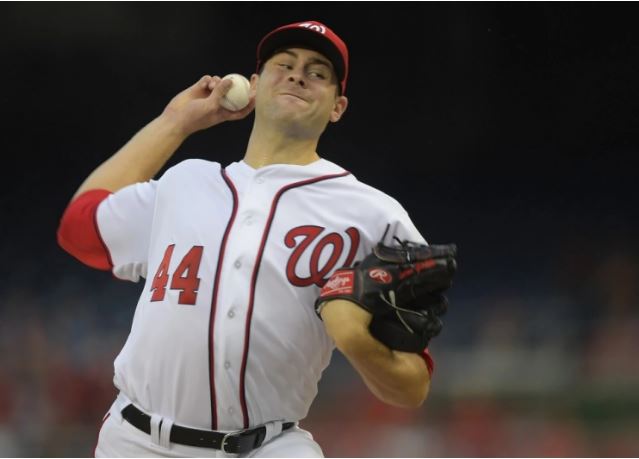
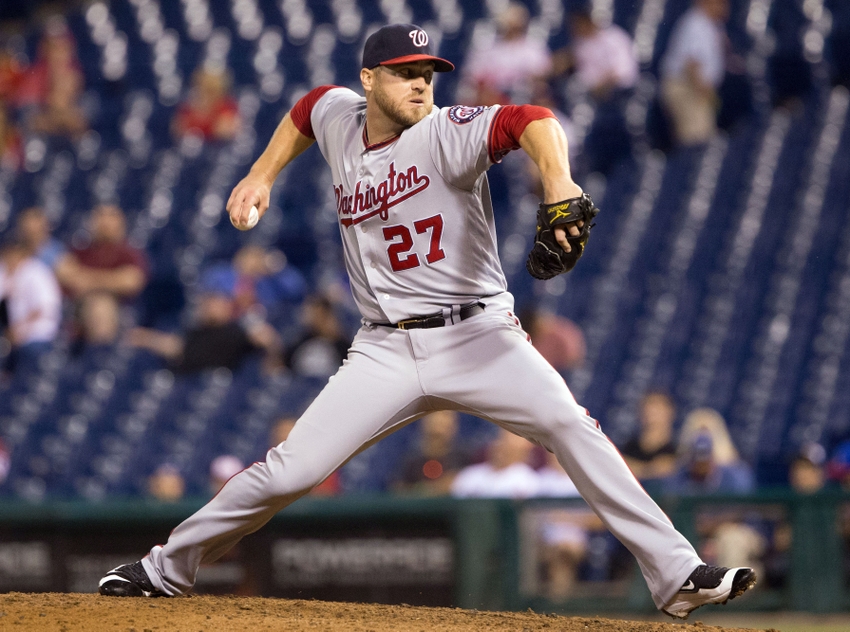
Kelley may be first in line for in-house closer options. Mandatory Credit: Bill Streicher-USA TODAY Sports

Kelley may be first in line for in-house closer options. Mandatory Credit: Bill Streicher-USA TODAY Sports

I was excited to see an “Inbox” in my MLB.com RSS feed for the Nats today, and assumed it was venerable long time Nats beat reporter Bill Ladson poking his head up post winter-meetings to do some work.

But no!  Its a new guy: Jamal Collier, listed as “Nationals Beat Reporter.”  I don’t think Ladson has been replaced; maybe the Nats are big time now and need more beat reporters!

Nonetheless, Collier did an inbox.  Here’s how I would have answered his questions.  I love these inboxes because they’re great debate points for the comments, with people asking questions (some good, some dumb) that we all ask ourselves from time to time.  Here we go.  As always, I write my answer to the question before reading his and edit questions for clarity if needed.


Q: Last year, general manager Mike Rizzo had a Plan A and Plan B, but he seemingly settled for Plan C more than once. What are Plans B and C this year?

A: If Mike Rizzo had to fall back to plan “C” last year (presumably Daniel Murphy in lieu of the litany of bats that he missed on), then that’s a heck of a plan C.  This year he didn’t miss on a big acquisition; the Adam Eaton trade is by far the “biggest” he’s ever made in his Nats career, eclipsing the big Gio Gonzalez trade in terms of significant prospects dealt and impact players brought back.  Yeah he missed on Sale .. but he didn’t *need* Sale, and he made it clear he was only shooting for him because of the rarity of a true Ace getting dealt.

Rizzo really had a short “to-do” list this off-season: resolve CF or SS one way or another, get a Catcher, and get some bullpen help, up-to and including a closer.  He’s done two out of three, “missing” out on vastly overpaying for a 50-IP “proven closer” to the big-spending clubs.  Is that the worst thing in the world?  I don’t think so.  I’m guessing his “plan B and C” for closer now is to buy a couple of former closers off the FA market and see how they look side by side with in-house options like Koda Glover and Shawn Kelley.  I’m ok with that; as I’ve mentioned time and again, the Nats organizational chasing of over priced closers has cost us more than a few good prospects in the last few  years, and yet we’re still sitting here thinking we have a closer problem.  I also wouldn’t be shocked if Rizzo calls up one of his favorite trading partners and moves another prospect or two for a mid-range closer.

We havn’t traded with Billy Beane in a few weeks; maybe we make a move for his closer.  Does Oakland even have one?

Collier basically says what I said, then throws out the names we keep hearing about in terms of closer trades (David Robertson, Alex Colome) and FA options (Greg Holland).


Q: With Jayson Werth‘s contract ending soon, who do you see as emerging leaders in the clubhouse? Max Scherzer? Anthony Rendon? Bryce Harper? Others?

A: To be a leader you kind of have to be guaranteed to be around for a while.  Certainly that’s not Harper, who (lets be honest) is likely gone in 2 years.  Rendon isn’t far behind.  The three guys on the longest deals are Ryan ZimmermanMax Scherzer and Stephen Strasburg.  Zimmerman is the guy who would make the most sense but he seems like a background guy.  Its hard for a starting pitcher to be a “leader” since he’s only doing it every 5 days, but Scherzer is the best possible candidate based on his gregariousness.  Strasburg has always been reserved; he’s not a good candidate.

Truth be told … this clubhouse is going to do a serious turnover in the 2018-2019 time-frame, and a whole new slew of guys will be defining the makeup; only the two SPs are really going to be there for it.  I’d say Scherzer is going to define the soul of this team for the next generation.

Collier makes a great point; new acquisition Adam Eaton is a big presence in the clubhouse, will be around longer than practically any other bat in the clubhouse, and is in a position to take the reigns.


Q: Will the Nats get free-agent catcher Matt Wieters and then use their extra catchers to get Robertson from the White Sox as closer?

A: This theory doesn’t make a ton of sense to me; if the Nats buy Wieters, aren’t they killing Derek Norris‘ trade value?  They not only tendered but signed a deal with Jose Lobaton for 2017 … he’s now got 5 years (and was out of options), so he can’t get sent down … so do they plan on just lighting that money on fire?

Plus, the assumption that they can just flip their spare parts for a quality reliever is foolish.  What did we trade to acquire Norris?   Pedro Avila, a guy who pitched in low-A last year.  Now, I know the White Sox don’t exactly have awesome options at catcher, but in today’s reliever market why would anyone think we could get a bonafide closer for a couple of backup catchers?

Collier expresses the same doubts I do about the acquisition and the trade.


Good thoughtful answers from Collier.  I say this of course because he agreed with me 🙂

By the way, this is probably the last post before Xmas, so If I don’t see you Happy Holidays.

Top 10 Arms; Starters and Relievers separately ranked

29 comments

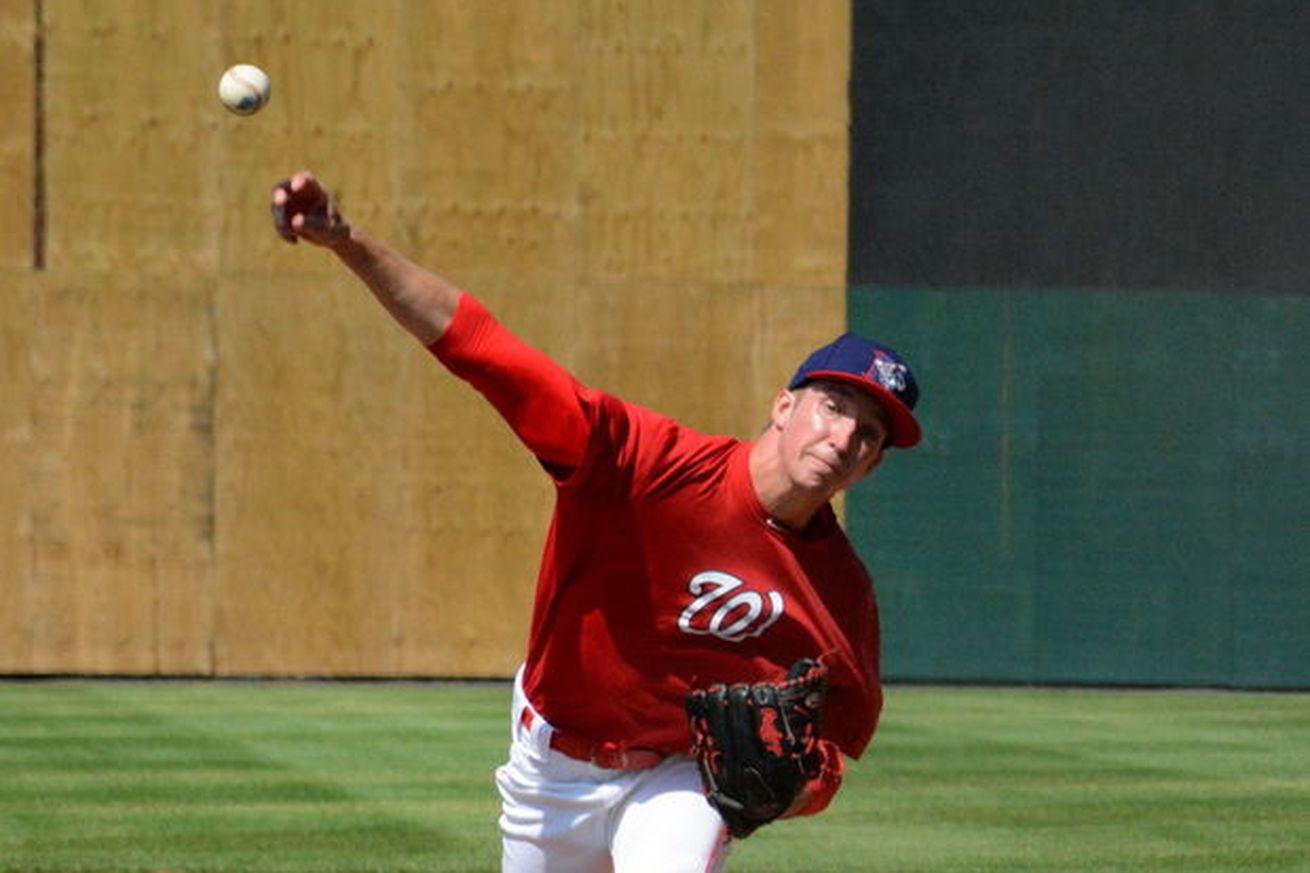
Fedde probably #1 arm in the system ... and its tough after that. Photo via minorleagueball.com

Fedde probably #1 arm in the system … and its tough after that. Photo via minorleagueball.com

Every year, Luke Erickson over at NationalsProspects.com does a crowd-sourced ranking of the Top 10 “bats” and “arms” in the Nats farm system (link to the “Arms” post)

This year, I had such a hard time deciding upon my top 10 arms for Luke’s survey that I thought it would be worth doing my own post on the subject, temporarily stealing Luke’s idea.  I think its an interesting time for our farm system arm development; we’ve spent the off-season trading away a significant amount of arm depth, and what we have left made it kind of tough for me to even find 10 “arms” that were worth ranking.  Furthermore, how do you really compare starters and relievers?  Isn’t a mediocre starter prospect who has reached AAA better than a high-end reliever prospect in the lower minors?   Is our best reliever prospect (Koda Glover) a “better” or “worse” prospect than a really good-looking starter who is in A-Ball (like a Tyler Watson?)  How do you compare a good starter prospect in A ball with what looks like an org-arm in AAA?  Its potential versus reality, ceiling versus floor.  In the end, you have to make kind of a rolling judgement call to put PlayerA above PlayerB … leading to excellent arguments in the comments section.

So, taking these thoughts into account, here’s my top 10 ranked Arms, splitting guys into starters and relievers.  My rules: a “starter” is someone who was “predominantly” a starter this year.  A reliever is someone who, well, was a reliever and wasn’t getting starts unless there was some weird situation going on.  And since the lowest levels generally were doing tandem starting, if you were clearly a “pitch every 5th day” guy even if you weren’t starting, then i’m calling you a starter for these purposes.  This only comes into play with a couple of guys who were in and out of rotations this year; i’ve put them into the Relievers section.

My Nats top 10 Starters:

1. Erick Fedde: He’s clearly come back from TJ, dominated for most of 2016, and probably debuts in the later half of 2017.
(1a. A.J. Cole, if you still think he’s got prospect status.  He exhausted his rookie status by service time in 2016 … but has yet to reach 50 IP in the majors, so Baseball America qualifies him as a prospect still.  I don’t view him as a prospect anymore; to me he’s a 6th starter/long-man candidate for 2017).
2. Austin Voth: he’s more than earned it, has nothing to prove in AAA, and frankly should have gotten a 40-man addition last September and gotten innings instead of Mat Latos.
3. Tyler Watson: had a great season competing against guys well older than him; could be looking at a jump to high-A in 2017 and he’s yet to turn 20.  I like his potential.
4. Weston Davis: I’m going with Davis over the more highly regarded (on prospect lists) Baez because of a slightly cleaner stat line.  Davis had a nice 2.67 ERA in Short-A as a 20-yr old.
5. Joan Baez: Full year starting in Low-A as a 21-yr old, good K/9 numbers, some wildness.  A step-up to High-A will clear the waters on him.
6. Matthew Crownover: great in Low-A, struggled in High-A.   Should be in the Potomac rotation for 2017, may turn into a useful lefty reliever if he can’t maintain stats as a starter.
7. Jesus Luzardo: entirely based on pre-draft reputation; hopefully he comes back strong, but he’s several years away from even doing what Watson is doing.
8. Tyler Mapes: the fact that a 30th round draft pick is on this list is, well, the obvious evidence of the current thin-ness of our pitching depth.  I love what Mapes has done, don’t get me wrong, but does anyone really expect him to  become an impact player in the majors?
9. McKenzie Mills: I could see Mills a bit higher here, but honestly anyone in the 6-10 rank here could be argued to be higher or lower.
10. Andrew Lee: solid for Hagerstown before hitting the D/L.  His spot here is assuming he didn’t blow out his rotator cuff or something that affects him longer term.

Honorable Mentions: Kyle McGowin, Yonathan Ramirez, Carlos AcevedoJaron LongAusten Williams, Jefry Rodriguez.  I could probably see arguments for Ramirez above perhaps Lee or Mills, but barely.  I don’t really bother looking at GCL or DSL guys, so if you want to argue that someone who got 40 innings of complex ball is better than someone who put up stats in an A-ball league … well i’m going to argue with you :-).

So, clearly there’s a huge gap between the AAA-calibre guys at the top and Watson, both in terms of service time and in career minor league achievement.  Our trades have resulted in this gap.  There also seems to be a pretty significant potential gap right after Baez; you go from prospect to lottery tickets and org-guys pretty quickly it seems.  Prior to these trades, I would likely have had Giolito 1, Lopez 2, Dunning right after Voth and perhaps Avila in discussions for being at the #10 spot.  Still, that’s half of your best starter prospects gone in a couple of weeks.

Nats top 10 Relievers; these are going to be more heavily aligned towards guys who are near the top of the system, for obvious reasons.  If you’re in A-ball and already a reliever … you’re in trouble unless you’re striking guys out at 12 K/9 clip … and we seem to have a habit of trading those guys (Hearn, Sanchez).
1. Koda Glover: for obvious reasons.  Despite how much we’ve talked about him this year, he’s only got 19 MLB innings and still has rookie status by service time.  We were mostly mystified by his drop-off of talent, until learning that he tore his hip labrum.  I, like many others, like him for a future closer.  Grow ’em, don’t buy ’em.
2. Austin Adams: our return bounty for Danny Espinosa: he had 61 Ks in 41 AA innings in 2016.  That’s 13.3 K/9.  That’s crazy.
3. Bryan Harper: he was clearly moving himself ahead of other lefty options in AAA before getting hurt; lets hope he recovers from TJ and puts himself back on the map.
4. Jimmy Cordero: pretty solid AA numbers for two seasons running; i’d like to see him in AAA to see if he’s a bullpen option in the mold of an Aaron Barrett/Craig Stammen role.
5. Matt Grace: may be on the downslope of his Nats career, given that he wasn’t depended upon in 2016 and the Nats felt the need to flip a future Hall of Fame prospect to acquire a 5-week loogy rental.  But he’s still an effective AAA reliever, which the rest of the guys below him cannot say.
6. Trevor Gott: our return bounty for Yunel Escobar was relatively effective for AAA this year, had good MLB numbers, but is anyone counting on him competing for the 2017 MLB bullpen?  He and Grace are my “first two guys to go” off the 40-man if we need room right now.
7. Andrew Robinson: this MLFA signing put up great AA numbers and seems to be sticking around; I think he competes for the AAA bullpen.
8. Wander Suero: Another guy who put up nice AA numbers for the team this year as a RH middle reliever.  He’s a bit old (25) and has been around the system forever (IFA signing in 2010), but should feature in AA or AAA this year.
9. Ryan Brinley: others have him higher based on his High-A dominance; he’s another Tyler Mapes-esque draft success story, a 2015 27th rounder who has rocketed up the system.   I’d like to see what he can do in AA in 2017.
10. John Simms: another one of the Nats great 11th round picks, he really may be a starter, but for now he’s here.  If he was being counted as a starter he’d probably be around the same ranking in the above list.
Honorable Mentions: Nick Lee, Mariano Rivera Jr., Grant Borne, Taylor Guilbeau, Steven Fuentes, Tommy Peterson, Jorge Pantoja: all guys who put up decent numbers for A or AA teams.
What do you guys think?  Did I miss anyone egregiously?

Updated Master Prospect List in Google XLS

23 comments

The official Logo of the St. Louis Prospects. Apropos to this post.

The official Logo of the St. Louis Prospects. Apropos to this post.

Since we’ve been talking a lot about prospects, i thought i’d note that I’ve been catching up the Master Prospect rankings list (here’s the direct Google xls link) that I maintain.  Major edits lately:

  • I’ve noted those who have lost Rookie status in 2016: Trea Turner and Wilmer Difo, even if Baseball America and MinorLeagueBall insist on ranking him.  I’m not sure what to do with A.J Cole in this regard, nor Pedro Severino.  Koda Glover still seems to be a “prospect” by everyone’ standards so he’s still ranked.
  • I’ve noted those traded in 2016: Taylor Hearn, Max “future hall of famer” Schrock, Chris Bostick
  • I’ve noted those former “prospects” who were DFA/Waived/released in 2016: Abel de los Santos, Matthew Spann, Cutter Dykstra
  • I’ve noted those post-2016 MLFAs who at some point were ranked: Erik Davis, Paolo Espino, Kevin Keyes, Jason Martinson, Drew Vettleson, Neil Holland, Michael Brady.  If they re-sign, i’ll un-do the “out of the system” categorization.
  • Lastly, we’ve noted those prospects traded in the Winter Meetings: Dane Dunning, Lucas Giolito and Reynaldo Lopez
  • I’ve now put in a couple of the early rankings from major pundits that have come out post-2016: BA top 10, minor league ball top 30, MLBpipeline’s top 30 as of the end of the 2016 season, and JP Schwartz’ post-2016 list.  We expect a ton more to hit in the Jan/Feb time-frame.

The Spreadsheet now has more than 100 “lists” from various sources dating to the beginning of the Nats franchise (Nov 2004 BA list, ahead of 2005 system).

Each off-season I generally expect to get 7-8 rankings lists from what I call the “major pundits” who follow prospects:

  • Baseball America/BA Prospect Handbook (J.J. Cooper, John Manuel, formerly Aaron Fitt)
  • Baseball Prospectus (Chris Mellon/Jason Parks/Ezra Wise):
  • MLB/MLBpipeline.com (Jim Callis/Jonathan Mayo/Mike Rosenbaum)
  • MinorLeagueBall.com (John Sickels/Nick Melotte)
  • Fangraphs (Dan Farnsworth, formerly Marc Hulet/Kiley McDaniel)
  • ESPN (Keith Law)
  • Prospect Digest ( Joseph Werner)
  • TopProspectAlert.com (J.P. Schwartz)

I’ve seen other pundits rankings in the past but not consistently year over year like the above seven lists.  If you know of any pundits who i’m missing, please let me know.

This year we’ll start to see a new #1 prospect in Victor Robles, after seeing 47 straight lists with Giolito ranked #1.  Robles becomes the 11th distinct player to be ranked #1 in our farm system at any point.

Enjoy!


2016 Season Statistical review of the 2012 Draft Class

24 comments

Its Giolito and ... well that's about it. (Photo by John McDonnell / The Washington Post)

It (was) Giolito and … well that’s about it. (Photo by John McDonnell / The Washington Post)

Fifth in our set of Draft class Reviews for the 2016 season.  First was the 2016 class, then the 2015 class then the 2014 class, then the 2013 class.

Web links to use while reading:

This review is especially important to follow because the high-school age draftees in this 2012 class are Rule-5 eligible this coming off-season.  Not that there’s that many of them, but we’ll put a pin in this post when we eventually do Rule-5 Analysis later this month.

With out further ado…


Round 1: (#16 overall) Lucas Giolito HS RH Starting pitcher: 6.75 ERA in 21 1/3 MLB innings, 6-5 with a 2.97 ERA mostly in AA but with 7 starts in AAA.  116/44 K/BB in 115 1/3 minor league innings.  I feel, much like the 2016 presidential election, that most of us are girded in our opinions on Giolito at this point.  I think Giolito’s entire season was tainted by the stories of mechanical tweaks done by some ne’er-do-weller in Viera, and his results on the field showed.  He struggled with command and hit-ability during his brief time with the MLB team, and his velocity was down from where we were “expecting” it to be.  Its important to remember that he just turned 22, that he lost a significant amount of development time because of his TJ surgery, and that we should be patient.  But he definitely has a “todo list” for 2017.  I’m projecting that he starts in AAA until he proves that he can command his fastball.   Matriculated to Majors.  Post-writing update: Giolito headlined a trade for Adam Eaton, heading to the White Sox.  On his way out the door, word was leaked to multiple reporters that the Nats had “soured” on Giolito, questioning his toughness and his ceiling.  Luckily for Giolito, the White Sox pitching coach (Don Cooper) is quite well regarded, so if there’s someone out there that can “fix” whatever’s wrong with him, its Cooper.  I’ve updated the summary for his departure, which significantly thins this draft class.

Round 2(80) Tony Renda, Coll Jr 2B: Traded to the Yankees on 6/11/15 for David Carpenter.  Renda then was included in the package that the Yankees sent to Cincinnati for Aroldis Chapman.  For Cincinnati, Renda got 67 ABs this year and hit .183.  Post-writing updatehat tip to commenter KW, Renda was outrighted to AAA earlier this month.   He may have matriculated to the majors, but its safe to classify him as a AAA-ceiling player now.

Round 3(111) Brett Mooneyham, Coll Jr LH starting pitcher: Released him on 6/3/15.

Round 4: (144) Brandon Miller Coll Sr Corner OF: Voluntarily retired on 7/10/15.

Round 5: (174) Spencer Kieboom, Coll Jr C: Slashed .230/.324/.314 in 309 ABs for AA Harrisburg.  61/43 K/BB in 94 games splitting time behind the dish, 5 homers, 0 SB.   Kieboom didn’t have the best numbers hitting in AA; he’s known for his defense.  He became the final nats 40-man call-up when Wilson Ramos tore his ACL and got exactly one MLB at-bat (and thus permanently qualifying him for the MLB health plan for the rest of his days).  He’s a catcher on the 40-man roster; he’s going to play in 2017.  The question is where; right now depending on whether the team acquires another catcher, Pedro Severino may get pushed back to AAA, which may very well keep Kieboom in AA starting.  Only makes sense.  But if the team decides to keep Severino up, then Kieboom moves up too.  Trending steady.  Post-writing updatethe team went and acquired Derek Norris, which now pushes Kieboom to 4th out of 4 on the depth chart, almost guaranteeing that he’ll be in AA again (you can’t have both Severino and Kieboom splitting time in AAA; that makes no sense).   I don’t think this necessarily changes his projection, since Jose Lobaton hits so poorly, but he does have to climb over Severino if he wants to matriculate permanently.

Round 6: (204) Hayden Jennings, HS OF/CF: Released in May 2014.

Round 7(234) Robert Benincasa, Coll Jr. RH relief pitcher:  1-1 with a 4.50 ERA in 21 appearances and 30 relief innings for AA.  35/14 K/BB in 30 IP, 1.50 whip, 4.69 fip, .329 babip for AA.  Benincasa threw a few outings in Potomac but we’re just focusing on AA numbers here.  He repeated AA for the third successive season and had good K/9 numbers but not much else in support.  I’m guessing he sticks around for one more season, likely in the AAA bullpen, and plays out the 6-year string before hitting MLFA after next season.  Unless he runs into a numbers game; there’s likely at least three 40-man roster guys that will get pushed to the AAA bullpen, limiting jobs for org-arms like Benincasa.  He could be a release candidate before the full season squads break next spring.  Trending down.

Round 8: (264) Stephen Perez, Coll Jr. SS: Slashed .249/.351/.342 playing middle infield for  Harrisburg.  59/47 K/BB in 301 ABs, 5 homers, 12SB.  Perez was a Ben Zobrist-like player for AA, getting PT at all four infield positions plus left field.  His slash figures were definitely an improvement over prior seasons, and may have stabilized his chances of moving up.  All of the middle infielders for AAA this year are FAs (I believe) so there’s room for him to move up.  I don’t view him as anything other than an org-guy though, and (like Benincasa above) seems likely to play out his contract and hit MLFA next season.  Trending Steady.

Round 9: (294) Derek Self, Coll Sr. RH relief pitcher: 4-2 with a 4.10 ERA mostly with AA Harrisburg.  43/18 K/BB in 52 2/3 innings, 1.48 whip, 3.98 whip, .333 babip.  Self started the year briefly in Potomac’s bullpen but quickly returned to AA, where he spent most of the year.  He got a 9/1 call-up to fill a bullpen spot in AAA.  He improved his ERA over last year’s AA session and continues to hang on despite his lack of draft pedigree.   I don’t see that he’s earned a promotion to AAA, and with a potentially packed AAA bullpen he may be back in AA again or to be a release candidate at this point.  He turns 27 in January; I think the team knows what they have with him by this point.  Trending down.

Round 10(324) Craig Manuel, Coll Sr C:  Released 4/2/16 after (presumably) failing to win the backup catcher job at either Potomac or Harrisburg.  Time ran out for the locak product (born in Rockville, MD).

Round 11(354) Brian Rauh, Coll Jr RH starter/reliever:  Missed the entire 2016 season due to injury.   Borrowing from last year’s analysis, if he’s healthy expect him to contend for the AA rotation in 2017.  If he’s not healthy, he’s a release candidate at this point.   Trending down.

Round 12(384) Carlos Lopez, Coll Sr 1B: Released on 6/30/15.

Round 13: (414) Elliott Waterman, Coll Jr LH reliever: Released on 3/15/14

Round 14: (444) Jordan Poole, Juco-2 corner OF: Released him on 3/14/14 

Round 15: (474) Brandon Smith, OF: Didn’t sign.  Attended Division II Grand Canyon University, where he played four years.  He hit a robust .348/.402/.478 as a junior but wasn’t drafted, then slumped to hit just .233 his senior year.  Again not drafted, might be done with baseball.

Round 16: (504) Ronald Pena, Juco-2 RH starter/reliever: threw just 8 innings for Low-A Hagerstown before hitting the D/L in late April; he got another few innings in GCL rehab sessions but it was a lost season for Pena.  I’d say he’s a release candidate unless the team likes something they see, but he’s now thrown just 18 innings in two seasons and the two A-ball full season squads seem pretty full.   Trending Down.

Round 17: (534) Blake Schwartz, Coll Sr RH Starting pitcher: Retired on 4/24/15.

Round 18: (564) David Fischer, Coll Sr RH reliever: Released on 7/3/14 

Round 19: (594) Bryan Lippincott, Coll Sr 1B: Retired ahead of the 2014 season

Round 20: (624) James Brooks, Coll SR SS/3B: Released May 2013.

Round 21: (654) Austin Chubb, Coll Sr C: Released ahead of the 2015 season.

Round 22: (684) Will Hudgins, Coll Sr RH reliever: Suddenly retired 7/12/13 per his Twitter account.

Round 23: (714) Casey Selsor, Coll Sr LH Starter/Reliever: Released on 3/20/14.

Round 24: (744) Kevin Dicharry, Coll SR RH pitcher: released 7/1/13

Round 25: (774) Freddy Avis, RHP: didn’t sign.  Attending Stanford, where in 2013 he appeared in exactly one game and pitched 2 innings before suffering a season-ending injury.  That injury never got better and he retired from baseball altogether in March of 2015.

Round 26: (804) Skye Bolt, RHP: didn’t sign.  Attended UNC, had an excellent college career and was a 4th round pick in 2015 by the Oakland A’s.   Hit .231 for Oakland’s low-A team this year.

Round 27: (834) Cody Poteet, RHP: didn’t sign.  Attended UCLA and got drafted (like Bolt) in the 4th round of the 2015 draft by the Marlins.   Was 4-9 with a 2.91 ERA starting in the Sally league this year.

Round 28: (864) Hunter Bailey, Coll Sr SS/2B:  Released May 2013.

Round 29: (894) Leonard “LJ” Hollins, Juco RH reliever: Released 7/2/14.

Round 30: (924) Robert “R.C.” Orlan Coll Jr LH Starter: 5-6 with a 3.93 ERA relieving and sometimes closing for High-A Potomac.   46/46 K/BB ratio in 52 2/3 innings (no, that wasn’t a typo).  1.61 whip, 5.16 fip, .250 babip.   I’m not quite sure what happened to Orlan’s control, since it looked just fine in 2015 (85/28 K/BB ratio in 72 relief IP).   The Virginia product (UNC by way of Deep Run HS in Glen Allen, VA) definitely needs to get his walks under control to keep moving up, but is a potential lefty reliever in a system that could use one.  I’ll say Trending Steady and project him for the AA bullpen.

Round 31: (954) Michael Boyden Coll Sr RH reliever: Released Jan 2014.

Round 32: (984) Michael Mudron, Coll Sr LH reliever: Released Jan 2014.

Round 33: (1014) Mike McQuillan, Coll Sr 2B/3B: Released 3/26/15.

Round 34: Jake Jefferies, 2B: didn’t sign.  Attended Cal State Fullerton and subsequently drafted again by the Nats in the 39th round in 2015.  As we found out in our 2015 post, he was released in July 2016.

Round 35: Corey Bafidis, LHP: didn’t sign but Washington picked him in 2013.  As we learned in the 2013 post, he got released in July 2014.

Round 36: Max Ungar, Cdidn’t sign.  Went to the Charles E Smith Jewish Day school in Bethesda and attended Division III Denison, where he did seem to ever play.  A quick google search found him on linkedin; he graduated in 2016 and now works in the DC area.  I’ll venture a guess that this was a “favor pick” to someone with ties to the organization.

Round 37: Tyler Watson, LHPdidn’t sign.  Attended Kansas U for a year, then bounced to McLennan Community College in Waco, TX and and got drafted by the Angels in the 38th round of the 2014 draft.  He had a 3.42 ERA for the Angels’ low-A squad in 2016.  This is *not* the same Tyler Watson, by the way, that the Nats drafted in the 2015 draft.

Round 38: Jarred Messer, RHPdidn’t sign.  Graduate from Malone college and has pitched the last three years with the Kansas City T-Bones in the independent American Association, going 4-5 in 2016.

Round 39: Mitchell Williams, Cdidn’t sign.  Attended the Marion Military Institute in Alabama, for which I cannot find any stats.

Round 40: Ricky Gutierrez, CFdidn’t sign.  Presumably playing football for U-Conn, as per the Draft Tracker.


Trending Summary:

  • Matriculated to Majors: (2); Giolito, Renda
  • Trending Up (0):
  • Trending Steady (3): Kieboom, Perez, Orlan
  • Trending Down (4): Benincasa, Self, Rauh, Pena
  • Did Not Sign in 2012 (11): Smith, Avis, Bolt, Poteet, Jefferies, Bafidis, Ungar, Watson, Messer, Williams, Gutierrez
  • Released/Retired (20): Mooneyham, Miller, Jennings, Manuel, Lopez, Waterman, Poole, Schwartz, Fischer, Lippincott, Brooks, Chubb, Hudgins, Selsor, Dicharry, Bailey, Hollins, Boyden, Mudron, McQuillan
  • Traded (2): Renda, Giolito

Executive Summary

We have speculated that this would be a one-player draft, and we’re getting closer to that reality.  Only Giolito is “succeeding” right now, and there’s rather fierce debate about his “ceiling.”   Renda technically has matriculated to the majors as well, but his .183 BA there isn’t exactly all-star calibre (and he was just outrighted, meaning he may be downgraded to “peak before majors” in future versions of this post).  Kieboom is on the 40-man roster but is 3rd out of 3 4th out of 4 on the Nats Catcher depth chart and may not even play in AAA next  year.   The only other two guys remaining from this draft class even projected to be trending steady are both clearly org-guys who are playing out the string (Perez, Orlan).  Of the 8 remaining players from this draft, Giolito is on the 40-man and no one else merited any discussion for Rule 5 protection this coming December.

If there was some complaint about the 2013 draft class … then how do you feel about this one?   I remember arguing in this space about whether a one-man draft could be a success if that one player was a perennial all-star (as Giolito projected to be for a while) and there was differing opinions on the subject.  Well, now that there’s questions about what Giolito will eventually be, now how do you feel about this draft class?

2016 Season Statistical review of the 2013 Draft Class

34 comments

Austin Voth remains the "class" of the 2013 draft class. Photo mlb.com official

Austin Voth remains the “class” of the 2013 draft class. Photo mlb.com official

(Coming back to this series post Winter Meetings hoopla).  Fourth in our set of Draft class Reviews for the 2016 season.  First was the 2016 class, then the 2015 class then the 2014 class.

Web links to use while reading:

This review is especially important to follow because the college-age draftees in this 2013 class are Rule-5 eligible this coming off-season.  I think its a big reason why several of these guys are in the AFL right now, and their performance may or may not influence the team’s decision to protect or leave exposed.  We’ll put a pin in this post when we eventually do Rule-5 Analysis later this month.

With out further ado…


Round 1: forfeited w/ Rafael Soriano signing, which as I noted in this June 2013 post cost the Nats a shot at one of several highly regarded pitchers drafted just behind our vacated spot (the Cardinals actually took Kaminsky, but I doubt the Nats would have; i think they would have taken Manaea).  Here’s a quick summary of 2016’s season for the guys I liked at the time in that spot (Rob Kaminsky, Sean Manaea, Ryne Stanek, Ian Clarkin):

  • Kaminsky:  11-7 with a 3.28 ERA in a full season starting for AA in his age 22 year.  Was flipped in 2015 to Cleveland from St. Louis (his drafting team) in the Brandon Moss deal.
  • Manaea: 7-9 with a 3.86 ERA in 24 starts for Oakland this year.  Was flipped in 2015 to Oakland from Kansas City (his drafting team) in the Ben Zobrist deal.
  • Stanek: split time between AA and AAA, was removed from the rotation and struggled in relief.
  • Clarkin: went 6-9 with a 3.31 ERA in High-A as a 21-yr old after losing all of 2015 to injury.

I’ve more than said my peace on how much I disagreed with the Soriano signing and its opportunity cost.  Lets move on.

Round 2Jake Johansen, Coll Sr. RHP (Starter, now a Reliever) Dallas Baptist U. 4-1 3.19 ERA across 3 levels in 2016.  29/22 K/BB in 36 2/3 mostly middle relief innings.  1.64 whip.  Johansen started the year in Potomac, walked 11 guys in 6 appearances and was dumped back to XST.  Once the GCL started he threw a few innings in Florida before joining Hagerstown for the rest of the year.   He had 11 appearances and 19 IP in Low-A with good numbers … but at this point in his career (he’ll turn 26 in a couple of months) and given where he was drafted, the fact that he can’t seem to cut it anywhere above Low-A ball seems like a pretty succinct judgement of the pick.  I’m guessing he hangs around until he hits 6-years in the system, but any hopes of him turning into even a marginal middle reliever seem shot.  If he was anything other than a big-bonus 2nd rounder he would have likely been released already.  He’s toiling in the AFL and (as of this writing) had only given up one run in 9 innings, but had a measly 3 punch-outs against the elite hitters of the minors.  With any luck, this confidence boost will carry over into 2017.   Trending Down.

Round 3Drew Ward, HS 3B.  Slashed .252/.348/.412 across 2 levels, ending the year in Harrisburg.  121/56 K/BB in 408 ABs, 14 homers.   Ward’s age 21 season went pretty well; he started the year in Potomac but posted an .868 OPS there in 53 games to force his promotion to AA.  He hit just .219 once he got there though, which means we’re likely seeing him back there in 2017.  His strikeout rate remains a problem: 121 Ks in 408 Abs is a 30% clip.  But the team clearly rates him; he’s in the AFL for the 2nd straight off-season and is hitting .327 against the best the minors has to offer.  And he was a 21 yr old in AA; lots of 21 yr olds are still in Short-A.  He’s also starting to get some prospect notice; generally getting ranked in the 12-15 range in the system.  I’m going to say Trending Up … lets hope he can put up .800 OPS figures in AA in 2017.

Round 4Nick Pivetta, Juco RHP (starter) New Mexico Juco.  Traded 7/28/15 to Philadelphia for Jonathan Papelbon.  He had a solid year starting between AA and AAA and could feature for the Phillies as a 9/1 callup next year.  For all of us that can’t stand these moves for closers (see above lost 1st rounder), this may have the jeopardy of haunting us for years if Pivetta becomes a regular rotation member of an NL East rival.  Maybe they’ll leave him off their 40-man roster this coming off-season and we can Rule5 draft him 🙂

Round 5Austin Voth, Coll Jr RHP (starter) UWashington: 7-9, 3.15 ERA in 25 starts for AAA Syracuse.  133/57 K/BB in 157 IP, 1.24 whip, 3.53 FIP, .279 BABIP.  Another year, another solid season for Voth.  I’m not sure what else there is for him to accomplish in the Minors at this point; he seems to be the pitcher that he is.  His BABIP was in-line with his career numbers, he’s slightly regressed in a K/9 rate since arriving at AAA, and his ERA seems to be in line with his career numbers.  As discussed in this space earlier this year, I’m not quite sure why the team didn’t add him at the 9/1 roster expansion date; clearly they’re going to add him ahead of Rule-5 (which they did) but instead chose to leave him on the sidelines while they had September tryouts for Mat Latos.  Clearly he’s behind several of his AAA rotation mates on the depth chart, but I feel like he could still be a valuable rotation member for the Nats or someone else.  Given our starter depth, one has to think he’s trade bait at this point (he’s behind Lopez, Giolito and Cole clearly).  He seems like the kind of guy a team like Oakland would love.  Trending Up.  Post writing update: with the firesale of Nats SP candidates, Voth suddenly is like 2nd in line for getting MLB starts, so we look forward to seeing him in a Nats uniform at some point in 2017 and seeing if he’s the 2nd coming of Tanner Roark … or if he’s more like Taylor Jordan.

Round 6Cody Gunter, Juco 3B/RHP (reliever) from Greyson College: 0-0 in 2/3rds of an IP for GCL before getting shutdown for the season.  He looked halfway decent for Auburn in 2015 while converting from his drafted position (3B) to the mound, but 2016 is a big step-back.  I don’t know what to expect in 2017; perhaps a shot at the Hagerstown pen or an outright release.  Trending Down.

Round 7Jimmy Yezzo, Coll Jr 1B from UDelaware.  Released on 7/22/15.  Played a full season with the Washington PA team in the Indy Frontier League, hitting .220.

Round 8David Napoli, Coll Sr LHP (relief) from Tulane.  Released 3/16/16 after four seasons where he never got above A ball.

Round 9Jake Joyce, Coll Sr RHP (reliever) from Va Tech.  Released in 7/7/14.

Round 10Brennan Middleton, Coll Sr SS/2B from Tulane. Released on 6/30/15.

Round 11John Simms, Coll jr RHP (starter) from Rice. 8-5, 3.30 ERA in 29 games (11 starts) for AA.  79/28 K/BB ratio in 92 2/3rds innings, 1.08 whip, 3.84 fip, .254 babip.  Simms was the opening day starter for Harrisburg in 2016, but never seemed destined for the rotation; he was mostly a long reliever/spot starter, never throwing even 90 pitches in an outing.  He did not go to the AFL this year after going last year; what is his planned usage going forward?  His numbers look good; is he destined to move up to AAA and be a 6th starter again?   He seems to be able to compete, so we’ll see how he does against more veteran/mature competition in 2017.  Trending Steady.

Round 12Andrew Cooper, Juco RH relief pitcher from Sierra College.  Released on 1/12/16, not even getting a chance to compete for a spot in the High-A bullpen.  Seems like the team let him try to earn his way up on the field and it never happened.

Round 13John Costa, Juco RH relief pitcher from Palm Beach CC.  Released 4/1/15.

Round 14David Masters, Juco SS/3B from Central Arizona College: Slashed just .174/.259/.280 with 56/23 K/BB in 236 ABs in High-A.  6HR, 1SB.  Masters seemed to play every other day in a utility role for Potomac, posting anemic batting stats but staying with the team the whole year.  I thought he was in trouble after hitting just .226 LAST year but he stuck around the whole season.   I said this last season, but it seems like Masters isn’t long for the organization.  Trending down.

Round 15Isaac Ballou, Coll Sr OF/CF from Marshall (via Germantown, MD). Slashed .255/.332/.386 mostly for AA Harrisburg.  77/42 K/BB in 373 AA at-bats, 6hr, 7SB.  Ballou split time between the corner OF spots and had a couple of stints covering for Syracuse.   Ballou didn’t stick as a starter in AAA, instead repeating AA for the most part.  Depending on how the MLB roster numbers shake out, he may have the same issue in 2017.  Trending Steady.

Round 16Willie Allen, Juco Corner OF from Oklahoma/Newtown, MA.  Did not sign; transferred to Lewis-Clark State (ID), where he played for a  year in 2015, then has apparently disappeared.  He was not on their 2016 roster, and he does not appear to still be playing.

Round 17Geoff Perrott, Coll Sr C from Rice.  Retired 1/5/2015

Round 18Cory Bafidis, Coll Sr LH relief pitcher from Texas Wesleylan.  Released 7/7/2014.

Round 19Niko Spezial, Coll Sr LH relief pitcher from Wake Forest.  Released 5/28/14.

Round 20Brenton Allen, Coll Jr Corner OF from UCLA.  Released 6/21/14.

Round 21Justin Thomas, Coll Sr LH relief pitcher from Southern Arkansas. 3-2, 4.75 ERA while repeating High-A.  36/21 K/BB in 47 1/3 relief innings, 1.37 whip, 4.50 fip, .281 babip.  Last year I liked Thomas and thought he’d easily move up to AA.  Didn’t happen; he repeated Potomac and his numbers went down.  His lefty-lefty splits aren’t especially good, which precludes his value as a lefty specialist, so I wonder what his role is going forward at this point.  I’d guess he’ll compete for AA spot but may be a release candidate.  Trending down.

Round 22Cody Dent, Coll Sr SS from UFlorida. Released 7/15/16 after getting demoted out of High-A and hitting just .195 as a 24-yr old in low-A.  Even his pedigree (he is the son of legendary Bucky Dent) couldn’t save him.

Round 23Garrett Gordon, Juco Corner OF.  Released in 3/26/15.

Round 24Matthew DeRosier, Juco RHP (starter/reliever) from Southwestern College (CA).  3-3, 4.54 ERA in 14 low-A starts before hitting the D/L on 6/30/16 for the rest of the season.  59/18 K/BB in 67 1/3 innings, 1.32 whip, 3.25 fip, .325 babip.  DeRosier was in the opening day rotation for Hagerstown and lasted there for 3 months before getting hurt.  DeRosier was a young JuCo signee; he just finished his 4th pro season but he turned 22 in July, so we’re not too worried that he’s still in Low-A.  But he needs to start making some progress before he ages out of the system.  His FIP is better than his ERA, but we have no idea what the injury was.  I’d guess he’ll compete for the Potomac rotation in 2017.  Trending Steady.

Round 25Travis Ott, HS LH starting pitcher.  Traded 12/17/14 along with Steven Souza in the Trea Turner/Joe Ross deal.  Repeated Short-A for the *third* year and was phenomenal in 2016.  Why keep him there?  I know Tampa is “conservative” when it comes to promoting pitching prospects, but keeping a talented HS pitcher in the same classification for three years running seems dumb.

Round 26Garrett Hampson, HS SS from Reno, NV.  Did not sign; honored commitment to Long Beach State.  Had a monster collegiate career and was drafted in the 3rd round by Colorado.  Signed a $750k bonus and had an .845 OPS in Short-A Boise.   Could be one that got away.

Round 27Bryce Harman, HS LH starting pitcher from Richmond, VA (Byrd HS).  Did not sign; honored commitment to East Carolina University.  Hit .242 his Junior year starting and was not drafted.

Round 28Joey Webb, Coll Sr LH relief pitcher.  Released 6/25/15.

Round 29Mike Sylvestri, Coll Sr RH relief pitcher.   Retired on 6/13/14.

Round 30Ryan Ullmann, Coll Sr RH Starting pitcher.  Released 6/25/15.

Round 31Willie Medina, Coll Sr SS.  Released in Jan 2015.

Round 32Pat Boling, Coll Jr LHP: Did not sign, chose to return to U. of Georgia for his senior season.  He posted a 4.94 ERA his senior year, was not re-drafted, and does not appear he played any independent ball.

Round 33Andrew Dunlap, HS C/RHP from Houston.  Did not sign.  Honoring a commitment to Rice University.  He has struggled to find the field for Rice, not playing in 2014 or 2015 and hitting .197 in limited PT his junior year in 2016.

Round 34Jake Walsh, Coll Sr LH relief pitcher. Released 3/16/16, before the season started.  This one I still do not get to this day.   Look at his minor league numbers: he has a career 1.65 ERA!!   All his peripherals look good.  I just don’t get this at all.  I thought he’d be at least in the AA rotation in 2016; instead he’s out of the game.

Round 35Lukas Schiraldi, Juco RHP from Texas.  Did not sign; instead transferred to U Texas.  Drafted in 2014 in the 15th round by Seattle; in 2016 he struggled with the jump to High-A (with the caveat that he’s in the California league).

Round 36Reid Humphreys, HS SS from Missouri.  Did not sign.  Honoring commitment to Mississippi State.  Drafted in the 7th round in 2016 by Colorado, signed for $227k, and threw a few games in the rookie league.  Btw, he converted to the mound in college and is now a RHP reliever.

Round 37Karsten Whitson, RH starting pitcher from Florida.  Did not sign, returned to U Florida for his senior/4th year.  Was drafted by Boston in 2014 as an 11th rounder (likely bonus; max of $100k), released on 3/9/16.  An ignominious ending to a career that started with him declining 1st round money.  As Keith Law says: “Always take the money.”

Round 38Caleb Hamilton, HS SS from Washington State.  Did not sign; honoring commitment to U of Washington.  He was drafted in the 23rd round this year by Minnesota and signed.  He  hit .207 for their rookie league team.

Round 39Robbie Tenerowicz, HS 2B/SS from California.  Did not sign; honoring commitment to UC Berkeley.  He was drafted in the 27th round this year by Tampa Bay and signed.   He hit .291 with some pop for their rookie league team.

Round 40Shaun Anderson, HS RH starting pitcher from Florida.  Did not sign; honoring commitment to U of Florida.  At Florida he was a significant part of their pre-season #1 team, serving as the closer.  He was drafted in the 3rd round by Boston, signed for $700k, and then gave up 12 hits and 9 runs in his Short-A debut.  He’ll try it again fresh in 2017.


Trending Summary:

  • Trending Up (2): Voth, Ward
  • Trending Steady (3): Simms, Ballou, DeRosier
  • Trending Down (4): Johansen, Gunter, Masters, Thomas
  • Did Not Sign in 2013 (11): Allen, Hampson, Harman, Boling, Dunlap, Schiraldi, Humphries, Whitson, Hamilton, Tenerowicz, Anderson
  • Released/Retired (17): Yezzo, Napoli, Joyce, Middleton, Cooper, Costa, Perrott, Bafidis, Spezial, Allen, Dent, Gordon, Webb, Sylvestri, Ullmann, Medina, Walsh
  • Traded (2): Pivetta, Ott

Executive Summary

Wow; this class is really looking poor.  Just two players who I still think are trending up in Voth and Ward.  And even though I rate Voth, I sense he’s perhaps he’s limited to being a 4-A/5th starter.  As noted before, no 1st rounder and a blatant fail on Johansen the 2nd rounder have made this class look pretty weak.  It’d look a bit better if Ward (3rd rounder) turned out, but the cashing in of the 4th rounder (Pivetta) for a short-term head case rental looks equally wasteful in hindsight.

On the bright side … it makes Rule 5 decisions pretty easy.  We’ll circle back to this post when we do the Rule5 analysis, but right now the only candidate here worth protecting is Voth.  (Update post-writing: we were right; the only one added was Voth and nobody here got drafted).


So I guess LA is where we send unwanted infielders…

44 comments

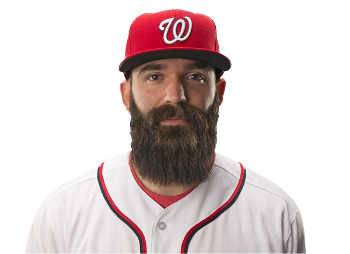
We'll need a new leader in the clubhouse for best facial hair now. Photo Nats 2016 official

We’ll need a new leader in the clubhouse for best facial hair now. Photo Nats 2016 official

Woke up this morning to hear about a move that most of Nats town either was pining for or at least was expecting; Danny Espinosa was traded to the Los Angeles Angels for two RH pitching prospects in Austin Adams and Kyle McGowin.

So, I guess the Angels is where we trade unneeded infielders now; this trade is almost identical in structure and timing to last year’s Yunel Escobar trade.  And if you wanted to send a player as far away from the NL East as you could, I suppose the Angels is just about the furthest possible team that you could send him.

Espinosa may be happy to be out of town (as evidenced by his skipping the Nats winterfest event this weekend, either because he was reading the writing on the wall or because he knew he had just been “layered” on the depth chart), but he’s going to a team where Escobar and Andrelton Simmons are already ahead of him on the infield depth chart.  I suppose he slides into 2nd for LA, making a pretty awesome DP combo in terms of defensive capabilities.  Also, he’s an Orange County native and can probably live in his own home and commute to Anaheim, so that’s a nice silver lining for the infielder.

Meanwhile, what are the Nats getting back?  Lets take a quick look;

  • Austin Adams posted very solid late-inning reliever numbers for AA for the 2nd year running (odd; why wasn’t he promoted to AAA this year?).  Salient numbers for me: 61/24 K/BB in 41 innings.  That’s a heck of a K-rate.  He was just added to the Angels’ 40-man roster so this is a 40-man neutral trade.  I’m guessing we install Adams as the closer in Syracuse for 2017 and he may get a shot to pitch in the majors quickly.   In fact, if you look at the Nats current bullpen depth, he may now very well be the 4th or 5th best RH reliever (though i’d expect more moves to acquire a true “closer” and another veteran RH arm in the ilk of Matt Belisle before the off-season is done).
  • McGowin is a starter whose AAA numbers look awful … because remember the PCL is anemia to pitchers.  His AA numbers weren’t necessarily dazzling either, so he may be organizational depth and seems an obvious candidate for the Syracuse rotation in 2017.  I’ll be curious to see what he can do in a set of ball-parks not in the PCL.

Verdict on the Trade; we got about what I thought we’d get; one starter, one reliever prospect.   GMs aren’t dumb anymore (well, can’t really speak for Colorado’s GM right now but…) so trading Espinosa AFTER we had clearly replaced him cost us leverage.  Neither guy we got is a significantly ranked prospect …. but minor league relievers are never ranked highly, and Adams buttresses an area of need for this team, so in that respect its a good trade.

25-man roster implications: Difo is now the sole backup we have that can play middle infield in a pinch, meaning I’d anticipate another veteran MIF signing soon.  Like others I’d love to get Stephen Drew back, but he really improved his value in 2016 and may be looking at more significant jobs than being a backup to two of the more promising middle infield players in the game.

Written by Todd Boss

December 11th, 2016 at 8:08 am

Nats Rule-5 Draft History; updated for 2016

27 comments

Jesus Flores remains our most successful Rule 5 Draftee. Photo Toni Sandys/Washington Post

Jesus Flores remains our most successful Rule 5 Draftee. Photo Toni Sandys/Washington Post

The Nats for years were heavy participants in the Rule-5 draft, thanks to some pretty awful teams and some shrewd scouting.  I first did this history post in November 2011, updating in in January of 2014 and here I update it for the last couple of draft results and drafted player disposition updated for the latest season.

Borrowing a chunk of the text for the previous years from the previous post, here’s a list of the Rule 5 drafts since 2005, with our players taken/received noted and with some thoughts on how the player turned out for either side.  Even though there wasn’t any 2016 Rule 5 action for the team, I’ve added a bunch of updates for all the recently involved players, updating their career dispositions.

Note: this post used to be to pass judgement on our Rule-5 picks, so when you see “Verdict: Failure” that’s what it means.  Its been so long since we tried to draft someone that I forgot what it was like.


2016 Rule 5 Draft (ahead of the 2017 season)

Full draft results here for the 12/8/16.  For the sixth straight year, the Nats did not take anyone in the major league phase.  For the third time in a row, we did not have anyone taken either.  Lets pause to congratulate the team for its excellence in player analysis.

In the minor league phase, the Nats did not take anyone, but did have one player taken: RHP reliever Philp Walby was taken in the “AAA phase” by Toronto.  We acquired Walby on 5/31/16 as a MLFA from the New York Yankees and he pitched quite ably for us in Hagerstown, with more than a K/inning.  He was in his age 24 year though, so clearly “old for the level” and i’m guessing Toronto is banking on him being able to compete in the upper levels immediately.  Its notable that milb.com never even bothered to get him in the Hagerstown Suns hat for his profile :-).

(These minor league acquisitions are essentially $12,000 purchases and the drafters now own these contracts; I’m not entirely clear on the rules that drive them, nor how the players are determined to be eligible, but suffice it to say that Walby isn’t exactly a high-end prospect on our collective radars.)


2015 Rule 5 Draft (ahead of the 2016 season)

This occurred on 12/10/15.  The Nationals did not take anyone in the major league phase, nor did they have anyone taken.

In the minor league phase, the Nationals selected 3B Zack Cox from the Miami organization. He was entering his age 27 season, is a former 1st round pick and has bounced around AA and AAA the last four seasons.  He seemed like good AAA 3B insurance for the ever-injured Anthony Rendon, but Cox never even made it to Syracuse, getting released on 4/2/16 and never picking back up with another franchise.


2014 Rule 5 Draft (ahead of the 2015 season)

For the first time since their arrival in DC, the Washington Nationals neither took a player in Rule-5 nor had one taken.


2013 Rule 5 Draft (ahead of the 2014 season)

The team did not select anyone in the major league phase.  We did lose one player in the MLB phase:

  • Adrian Nieto was the 2nd overall pick in the major league phase, by the Chicago White Sox.  As commenters at the time noted, it seemed like an odd pick for the White Sox, who had a couple of younger developing catchers in their system.  Meanwhile Nieto had never played above A-ball but did hit .285/.373/.449 prior to the 2014 season.  Those are pretty good numbers for a catcher … even if he’s an old 24 in A-Ball.  I didn’t even mention him in my own pre-Rule5 analysis piece at the time, but amazingly he stuck on the White Sox roster for the entire 2014 season, hitting .236/.296/.340.  The White Sox sent him to AA for 2015, he elected FA (presumably after being DFA’d) and signed as a MLFA with Miami for 2016.  After playing sparingly for New Orleans in 2016, he is a MLFA as we speak.

In the minor league phase, the Nats took a couple of players for organizational depth: Theo Bowe, a AA outfielder from Cincinnati and Martires Arias, a low-A right-hander from the New York Mets.  Neither player really panned out: Bowe was left in XST the entire year and Arias was released before the season started.


2012 Rule 5 Draft

Again, the team did not select anyone but got poached for four players in the major and minor phase.

  • LHP Danny Rosenbaum was drafted by Colorado to take part in their unique rotation experiment (where guys work up to a certain pitch count each night).  Rosenbaum didn’t make the Rockie’s pitching staff out of spring training (somewhat an indictment of Rosenbaum’s skills; Colorado’s rotation was one of the worst in the majors in 2013) and he was returned to Nats.  Rosenbaum toiled in AAA for the Nats for the 2013 full season.  He was the AAA opening day starter in 2014 but blew his UCL and had TJ Surgery.  In Jan 2015 the team flipped him to Boston for Dan Butler, and he got roughed up in Boston’s system (0-8, 5.81 ERA).  He was released on 3/28/16 and may be done playing.
  • Utility player Jeff Kobernus was drafted by the Boston Red Sox, traded to Tigers and then eventually returned to Nats.  Kobernus turned out to be quite the speedster, stealing nearly a base every other game in the minors and earned a call-up to the big team in 2013.  He struggled with injury, spending a chunk of 2014 on the 60 day D/L and had just a handful of MLB atbats.  The team released him mid spring training 2015, he picked up with the San Francisco organization and played near his home town in San Jose in 2015, struggling in High-A ball.  Kobernus never signed after the 2015 season and may be done playing.
  • In the minor league phase, Nats draft bust Jack McGeary was taken by the Red Sox.  He threw 21 ineffective innings in short-A and low-A for Boston in 2013.  He’s from Boston, so it was a nice gesture, but it just doesn’t look like he’s ever going to recover from his arm issues.  Hey, at least he got his Stanford education and his bonus money.  He signed as a MLFA with the Los Angeles Dodgers organization for 2014, struggled again in A-ball, and did not sign for 2015.
  • The Dodgers poached Hector Nelo from the Nats AA team and stuck him on their own AA team … where he promptly made the all-star game again and had another excellent season.  I’ll be honest; I do not know the minor league rule-5 protection rules, but I wonder why an all-star player was exposed, no matter what his age.  Nelo struggled in 2014, was released and looks like he’s out of affiliated ball.  So perhaps the team was a year early but still right in exposing him to Rule 5.

2011 Rule 5 Draft

The Nats did not take anyone for the first time in years, but had two players themselves taken.  Neither player drafted was a surprise; I posted at the time that I thought both these players should have been protected.

  • Brad Meyers (RH starting pitcher) was drafted by the New York Yankees, but he suffered an injury in spring training and was DL’d all year.  He was returned to the Nats and subsequently missed all of 2013 too.  I listed him as a “release candidate” in my 2014 rotation projections, not knowing if he was healthy or if he could win a AAA rotation spot that year; he ended up making 6 starts in AA and was released.  He’s now out of baseball.
  • Erik Komatsu was drafted by St. Louis (in retaliation for our taking Broderick the previous year?), made their 2012 opening day roster, played for a while before being waived, got picked up by Minnesota, and by Memorial Day was returned to Washington in a whirlwind set of transactions.  He got hurt in 2013 and played just a few games for the Nats AA and AAA teams, then was released on 5/9/14.  He signed immediately with the Angels, bounced to Milwaukee, was a MLFA after the season and did not play in organized ball in 2015.

2010 Rule 5 Draft

  • Elvin Ramirez, RH reliever, drafted from the New York Mets: he was injured in spring training and spent the entirety of the season on the DL.  Interestingly, the team returned him to New York in October, long before they needed to, and with New York in 2012 he made his way to the majors for some appearances.  The Mets eventually sold him to the Angels, then he bounced around in MLFA to Pittsburgh and Cincinnati, and in 2015 was playing in the Mexican league.  Verdict: impatience leading to failure.
  • Brian Broderick, RH Starting Pitcher, Drafted from St. Louis and stuck into the 2011′s bullpen as the long-man/mop-up guy.  He was awful, he was costing the team wins, and was eventually returned to St. Louis before May was out.   However, St. Louis waived him towards the end of 2012 and we picked him back up.  I projected him to be one of our AAA starters in 2013 but he struggled and ended the season in AA and was cut loose.  He pitched in Indy ball in 2014, well enough to get a MLFA contract in 2015, spending the whole year in the Royal’s AAA team.  He did not sign or play for 2016 and may be done. Verdict: failure for the Nats, jury still out for the player.

The team lost one player in the 2010 draft:

  • The Phillies drafted Michael Martinez away from the Nats, and he stuck on their roster as a backup middle infielder.  His batting lines were awful though, and the Nats clearly had depth at middle infield at the time, so losing this player was not that big of a deal.  Martinez has continued to hit sub .200 but has bounced from Philly to Pittsburgh to Cleveland, splitting time between AAA and the major league rosters providing MIF cover.

2009 Rule 5 Draft

  • Jamie Hoffman; OF, Drafted with the #1 pick in the Rule 5 draft from Los Angeles Dodgers and immediately traded for Brian Bruney in a pre-arranged deal.  NY returned him to the Dodgers later that spring.   Bruney, meanwhile, immediately went to arbitration and lost with the team in the spring of 2010, was awful out of the gate, and the team outright released him before the end of May.   Verdict: failure, all the way around this transaction.

The team lost one player in this draft:

  • Zech Zinicola was drafted away from us by Toronto, who eventually returned him to the Nats without any Toronto appearances.  His selection was probably due to Dana Brown‘s hiring in Toronto, going from Washington’s Scouting Director to being a special assistant to the GM in Toronto.  Zinicola remained in our farm system until 2013, when he was released.

2008 Rule 5 Draft

  • Terrell Young: Drafted with the #1 pick in the Rule 5 draft from Cincinnati.  He got hurt, never played for us, and was eventually returned to the Reds.   His injury was severe enough that he was out of baseball after being drafted; he has no professional games after 2008.  Verdict: failure.
  • Ricardo Nanita, selected in the minor league phase, played most of 2009, then went to the Mexican league, then got picked up by Toronto in minor league free agency and has been there ever since, playing all of 2013 in Buffalo.   Verdict: failure.

The team lost two players in the minor league phase:


2007 Rule 5 Draft

  • Matt Whitney: 1B/3B, Drafted and then eventually returned back to Cleveland, who eventually made the former 1st rounder a ML free agent and we signed him after the 2008 season.   We cut him after the 2009 season and he retired after 2010.  Verdict: failure.
  • Garrett Guzman: LF/RF: after Rule-5 selecting him, the team eventually traded a PTBNL for him to Minnesota, then we cut him outright and nobody picked him up.  He played two years of Independent ball and was out of baseball after 2010.  Guzman is more infamously known as the player who was caught having sex with an underage girl while playing for our AA team in Harrisburg in 2008, likely the reason why nobody picked him up after his DFA.  Verdict: embarrassing failure.

The Nats lost one player of note in the minor league phase in this draft:

  • Brett Campbell was drafted by Milwaukee in the AAA phase of the rule-5 draft.  Milwaukee released him in spring training of the subsequent 2008 season and Campbell never played another inning of pro baseball.  This seems especially odd to me: he was drafted in 2004 and rose all the way through the Nats system to debut in the majors by Sept of 2006.  He pitched in just two games in 2006, and returned to the minors in 2007.  Was he hurt?  He was only 26 when he apparently hung them up.  Oddity.

2006 Rule 5 Draft

  • Jesus Flores, C, drafted from the New York Mets, stuck with the team all year despite having only played high-A ball in the minors.  Despite his eventual injury issues that plagued him for the better part of 3 seasons, Flores remains the best example of a “found gold” prospect that can be had in the Rule 5 draft.   After the Nats DFA’d him last off-season, he bounced around both LA and Tampa’s AAA teams in 2013 but did not appear in the majors. Verdict: success.
  • Levale Speigner RHP (a closer) was drafted from Minnesota and, as with Booker above, eventually was traded for by the Nats so they could keep him and stash him in the minors.  After some awful outings for the big team, he passed through waivers mid 2008 and was released from AAA in 2008, bounced around a couple other organizations, and retired after 2010.  Verdict: failure.

The Nats lost one player in this draft:

  • Alejandro Machada was drafted by Minnesota just a month after the Nats had re-signed him to a minor league contract.  So Machada didn’t have to stay on their active roster.  And indeed he didn’t; he was injured all of 2007 and stayed with Minnesota’s AAA team until 2009, never again broaching the majors.

2005 Rule 5 Draft

The Nats did not draft anyone, but had a player taken who went on a whirlwind tour of MLB organizations before getting returned mid 2006.

  • Chris Booker was rule-5 drafted by Detroit, who immediately sold him to Philadelphia, who then waived him in May of 2006 with the intent of returning him … except that Kansas City picked him up, hung onto him for a couple months and eventually returned him to Washington.  The Nats eventually called him up but he was relatively ineffective and he washed out of the game (seemingly due to injuries) after 2008.

2004 Rule 5 Draft (ahead of the 2005 season)

  • Tony Blanco: 1B; drafted from Cincinnati.  He batted .177 as a 1st baseman backup while eating a roster spot all season, then we cut him from AAA after 2007.  He kicked around Colorado’s system for a year and has been playing in Japan ever since.  Verdict: failure.
  • Tyrell Godwin: CF, drafted from Toronto.  Prior to the 2005 season, the team traded another minor leaguer to keep his rights, so this really played out less like a Rule-5 pickup in that Godwin didn’t have to stick on the 25-man roster all year.  He played a grand total of 3 games for the Nats, kicked around AAA for a while an hung them up in 2007.  Verdict: failure.

Summary: we’ve drafted 11 guys in the MLB phase Rule 5 draft since 2005, and I’d classify 10 of the 11 draftees as eventual failures.  Not a great track record.  Plus its safe to say that most every player drafted FROM us has been a failure for the drafting team.  Clearly the Rule 5 draft isn’t a great way to reliably find players.  Why do we do so much analysis on it?  I dunno, because its fun?  Because its December and we’re desperate for Baseball news?  Fair enough 🙂

Huge Over-Pay for Eaton

64 comments

Eaton should be this excited moving to a playoff contender. (AP Photo/Paul Sancya)

Eaton should be this excited moving to a playoff contender. (AP Photo/Paul Sancya)

There is no such thing as a pitching prospect.”

So said Joe Sheehan, more than 13  years ago on Baseball Prospectus.

Well, the Nationals just traded three very, very good pitching prospects for one very good outfielder in a move that was shocking to baseball insiders, let alone Nats fans.

In case you’re not sure what we’re talking about: Nats acquired Adam Eatonhe of the 6-win 2016 season and his ridiculously team-friendly contract (he’s signed with options through 2021 for just a measly $38.4M).  In return we gave up three of our four best starting pitching prospects in the form of Lucas GiolitoReynaldo Lopez and 2016 1st rounder Dane Dunning.

To put things in a different way: we just acquired 5 years of Eaton for a combined potential of nearly *twenty* years of  rotation pieces for the south siders.  We likely made their rotation for the next decade with this move, even if you take an entirely pessimistic viewpoint of the ceilings of all three of these players.

For me; it was too much to pay (in case you couldn’t tell how I felt from the title of the post).  The Nats just traded away literally all their near-to-the-majors starter depth in a complete win-now move that, while I’ve been advocating for it, seemed like an overpay.  I could see/make the argument for Giolito and Dunning, or Lopez+Dunning, but all three seems gratuitous.  Ironic because i’ve just beek talking about not over-valuing your prospects.

The best case scenario for these three arms is a #1, #2 and #5 starter for years to come.  But since best case is never going to happen, lets take some worst-case scenarios for these three guys we just traded.  I know Giolito’s critics are large here, but bear with me:

  • Giolito never harnesses his control and turns into essentially Alex Meyers.
  • Lopez never develops a secondary pitch and is turned into a late-inning 100-mph reliever
  • Dunning’s craftiness only takes him as far as a 5th starter or middle-relief guy for a middling team.

Still, that’s three major league arms, cost controlled first round talents with their bonus money already paid for.  The reality will be somewhere in the middle.

What this deal says is the high price of a good contract.  Eaton is getting paid absolute peanuts compared to the value he’s producing, he plays (or can play) a valuable position, and that’s really what the cost was all about.  If Eaton was on a $18M/year contract he’s only costing one of those three arms in return.

The last time the Nats did this big of a prospects-for-players deal it was the Gio Gonzalez move.  And at the time I wasn’t nearly as negative towards the price as I am for this one.

Fallout/other observations from this deal:

  • The White Sox have now gone from having a farm system ranked in the 22-23 range to inarguably the #1 farm system in the game.  In like two days.
  • Lots of head scratching amongst baseball insiders, MLB.tv announcers, prospect guys.
  • Interesting that literally as soon as this trade occurred, you started seeing people “in the know” talking about how the Nationals had “soured” on Giolito.  I’m sure we’ll hear more about it soon; whispers about work ethic and approach.  Where were these comments yesterday?
  • Get ready for spot-starts from A.J. Cole and Austin Voth; you don’t get through modern baseball seasons on 5 starters anymore, and we don’t exactly have the most reliable rotation.
  • I suspect Danny Espinosa (who is now patently surplus to requirements) gets flipped for hopefully an optionable starter to give us some more depth.  I like Voth and am excited to see what he can do … but i’m not trusting him to give this team 4-5 starts and compete.
  • Our respectable farm system is now gutted: no matter what you think of these three arms heading the other way, they were #1, #3 and #6 prospects in our system.  We have mortgaged the future for the present in a large way.

Nats new Lineup:  Eaton (CF), Turner (SS), Harper (RF), Murphy (2B), Rendon (3B), Werth (LF), Zimmerman (1B),  Norris (C).  Decent lefty-righty balance which could be stretched a bit if you broke up Harper & Murphy.  Eaton makes a bit more sense at leadoff since Turner has proven to have a bit more power than we thought, and Eaton is a lefty, but I could see them switched and then going Harper-Rendon-Murphy or something like that so you don’t have 3 lefties in a row.  But this is now a pretty fast lineup at the top.

So, what say you?


Winter Meetings Rumor Frenzy … and an unnecessary bomb dropped on the Nats about Harper

103 comments

This is what Harper may want his agent to do with a baseball right now. Photo GQ magazine Mar 2012

This is what Harper may want his agent to do with a baseball right now.   Or maybe not.  Photo GQ magazine Mar 2012

Bryce Harper is not a Free agent for two more seasons.  So why the F is everyone writing glaring headlines about him right now??

I thought the Bob Nightengale article was a complete hack job against the Nationals, completely unnecessary and taking gratuitous shots at the organization over a situation that could go a dozen different ways between now and November, 2018 when he’s ACTUALLY a free agent.  And then the subsequent Jeff Passan article that followed it a complete over-reaction, basically pulling one potentially innocuous quote out of Nightengale’s article to write a 1,000 words chastising the entire Nats organization.  Was it really that slow of a news day in the National Harbor that these were the stories that had to be written yesterday??

I have never really liked Nightengale’s style of reporting; he was the one that trashed Adam LaRoche earlier this year by quoting a bunch of unnamed members of the White Sox front office, essentially enabling them to write their version of the narrative of that situation without having to put their name on it, but the Passan article caused me to lose a bit of reporting respect for him too.  Passan’s passing judgement on the entire Nats organization by virtue of one anonymous quote from an unnamed Nationals Executive who commented that the Nationals were “not prepared” to meet a 10yr/$400M contract.

Here’s a thought: stop quoting anonymous people who probably just threw out a line passing you in the hallway, or who have an axe to grind and are too chicken-sh*t to put their name behind their words, and put some journalistic integrity behind your reporting.

OF COURSE the Nationals are “not prepared” to meet a $400M contract demand.  Who is??  Are the Yankees, given the massive luxury taxes now built into future CBAs?  Are the Dodgers, who just got told to cut their debts or risk further penalties?  Are the Cubs, who just won a World Series on the backs of a bunch of pre-arb sluggers and reasonably priced arms?   What other organization in baseball has the financial where-with-all??  Certainly not the Nationals, who (thanks to a short-sighted deal and a ridiculously argumentative owner in Baltimore) are stuck in one of the worst RSN deals in the majors and thus are missing out on literally tens of millions of dollars of revenue?  How does any team commit a quarter of their payroll to one player in the modern age, especially one that has shown himself to be as injury-prone as Harper?

Harper is a great player.  Is he worth being compensated as easily the highest paid player in the game?  Not in my book.  He’s not better than Trout or Kershaw.  He’s not nearly durable enough to merit that kind of commitment from a sane organization and that puts him behind some of his other compatriots right now (Manny Machado for example).  He’s a product of his headline inducing agent Scott Boras and these two writers (well respected and nationally known) fell for it.  Again.  I’m sure he’ll get some ridiculous contract in 2018, but its no small secret that it probably won’t be the Nationals.

Can we go back to arguing about whether we should be saving a 19-yr old who has never played above A-ball instead of acquiring a recent NL MVP or a guy who has finished in the top 5 of Cy Young voting five straight years??


Written by Todd Boss

December 6th, 2016 at 9:38 am

Thoughts on the new CBA and what it reportedly contains

6 comments

ESPN’s Jayson Stark posted some of what he’s hearing in the new Collective Bargaining Agreement (CBA), struck late on 11/30/16 so as to beat the 12/1 deadline.  And so far, I like what the two sides have agreed upon.  Post-publishing updateCraig Calcaterra also posted a reaction and listed other new items in the CBA that Stark didn’t have; i’ll tack them on as we find them out to this post.

Going over the main issues and changes that we’ll see, here’s some thoughts issue-by-issue:

  • Luxury Tax increases: this is as close as the league has to a “salary cap” and it has served more or less as one, as we’ve seen the historically profligate Yankees curb their spending recently so as to get under the tax.  That hasn’t stopped the Dodgers from spending $250M-$300M, but even that will come under fire due to a newly discovered “debt ratio” issue.  Nonetheless, an increase of the tax is favorable to the players.
  • Elimination Modificatino of the Qualifying Offer: thank goodness!  Finally no more ridiculous QO system, which has done nothing to help small market teams and had the effect basically of destroying the markets of a few key players over the years (Ian DesmondKendrys Morales, etc).  Instead, only teams above the luxury tax will lose picks (good) and teams losing players will still get draft pick compensation (good).  Details still coming out but the picks that are in jeopardy seem to be non 1st round picks, which means teams won’t be as beholden to them, helping out the players and preventing some of the QO-attached nightmare situations we’ve seen.
  • No more Home field advantage determined by the All Star Game: finally.  The elimination of perhaps the dumbest thing Baseball has done in the last 30 years.
  • Banning of Smokeless tobacco: Really, why is this an issue?  I don’t get it; are they banning cigarettes too?  This seems like a petty restriction on what adults do to their bodies that has no bearing on the game.  I guess its all about optics.
  • Slight lengthening of the regular season: gives a few extra days off here and there.  We’re already playing the world Series into November, what’s a few more days?
  • More day games on getaway days: Like this; I wish there were more day games.  Why are nearly all of Washington’s Saturday games night games?  Families with small children are basically shut out of 6/7ths of the team’s games because of this.
  • Minimum Salary Increases: probably only fair, as we learn more and more about how little some guys get paid versus what they accomplish on the field in the modern day economics.
  • Revenue Sharing issues: details yet to emerge, but we do know that Oakland was specifically mentioned as losing their revenue sharing.  This seems odd to me; why single out Oakland and not other teams that seem to be abusing the system as well (ahem, Miami)?  I wonder if this leads to a change of ownership in Oakland, a change of direction, a more forceful attempt to relocate, etc.
  • Increased Drug Testing to include HGHthis was probably inevitable, as both sides support cleaning up the game for separate reasons.  Who is against drug testing?  
  • Domestic Violence Policy: this was bound to be included too, given the spate of DV issues we’ve seen in the last year among prominent athletes.  Only comment here is … why just DV?  Why not have a blanket policy for all sorts of infractions?  DUIs, assults, etc?
  • Minimum Disabled List Stay Reduced From 15 to 10 Days: I like this rule in that it seems that many injuries are either hidden or just buried thanks to the 15-day limit.  A shorter limit should help get players back faster.

There’s apparently significant changes that have not been disclosed yet that may be of real interest, especially to this writer and the readers here:

  • Changes to the Rule 4 Draft: changes coming, maybe more slotting dollars, perhaps even trading of draft picks.  This would be great.
  • Regular Season Games outside US: like in London.  Why not?
  • Service-time rules: Probably in response to the Kris Bryant-like burying of players for 2 weeks in April, or related to the Super-2.  But the problem with any hard deadline is this: no matter when you put the deadline, there’s always a way to delay to get around it.  I like Keith Law‘s proposals that basically give teams an extra year of “restricted free agency” instead of dealing with service time manipulations.
  • MLB expansion: we havn’t talked about expansion here in a while.  I posted in July 2015 asking why people thought Montreal was still a viable expansion market, but the last time I really analyzed expansion was in July of 2011, when I postulated that it may be easier logistically to expand from 30->32 instead of realigning the leagues to have 15 & 15 and have interleague every day.  At the time I postulated that Portland and San Antonio would make sense as expansion markets, and it was super-fun doing realignment scenarios with 8 divisions and 2 new teams, but the issues facing expansion detailed in that July 2011 post are significant and remain (basically TV contracts and market viability).  I remain pessimistic that there’s any shot of expanding baseball unless you eliminate anti-trust exemption and get rid of the RSN TV market lockdowns that exist currently.
  • Replay: hopefully they can make it faster, smarter.  The current system is just dumb; close play on the field, manager sends someone to the clubhouse to decide if they’re challenging … it all takes too much time.
  • Pace of game: hopefully this includes a two-batter minimum for relievers.  We’ll see.  
  • Ways to discourage tankingnot sure how you fix this.  The discrepancy between free agent salaries and pre-arb prices is so amazingly large that it makes more sense to just bottom out and start over rather than attempt to re-tool.  

Major things that were NOT apparently addressed in the CBA but which would be nice to see (this is also from my personal “Commissioner for a day” type post)

  • No International Draft: I think this is a win for the game, but the fact that the owners pushed for it is a concern for the next CBA.  I still don’t understand why owners can’t see the forest for the trees; if they implement an international draft so as to save a few million dollars of bonus money, they risk losing entire countries of development for players.  Its so shortsighted.  I hope the players continue to fight against it.
  • Roster Expansion: lots of talk of a 26th player, but that would have flied in the face of the Pace of Game changes that we hope to see; we want to see fewer relievers, not more.
  • Limitations on 9/1 Roster Expansion: I’d like to see some sort of game-day limit of active players instead of having unbalanced rosters; why would the Nats on Sept 15th have 5 more players at their disposal than their opponent who chose not to call up extra guys?  Makes no sense.
  • Elimination of the DH and/or Universal DH: i’m on record being pro Universal DH despite being in an NL town.  But its a religious argument at this point so i’m more just for standardizing rules.
  • Revamp All-Star Game to be full of actual Stars: as in, eliminate the “one player per team” requirement and just put the best players on the team for this exhibition.
  • Forcibly fix the MASN issue: The current situation is ridiculous, with a team that already got a sweetheart deal reneging on the terms of an agreement and fighting rulings more on technicality grounds and less on their merits.  Enough is enough.  I read somewhere a very interesting opinion that stated that MLB is just waiting out Peter Angelos, that when he dies they’ll make it a part of the transfer of the ball club to give up their MASN share.  Makes sense and is the kind of dirty long-play thing that Bud Selig would have been in favor of. 
  • Eliminate TV markets/Anti Trust exemption: I think the time has come for teams to have the flexibility to move where they can be financially viable.  This goes for Tampa and Oakland immediately, but possibly to other teams down the road.

I may updated this post as more official details come out to offer more opinions, but so far I like all the changes that i’ve heard.  What do you guys think?

Written by Todd Boss

December 1st, 2016 at 10:18 am