Nationals Arm Race

"… the reason you win or lose is darn near always the same – pitching.” — Earl Weaver

Gold Glove Awards review with Advanced Metrics

2 comments

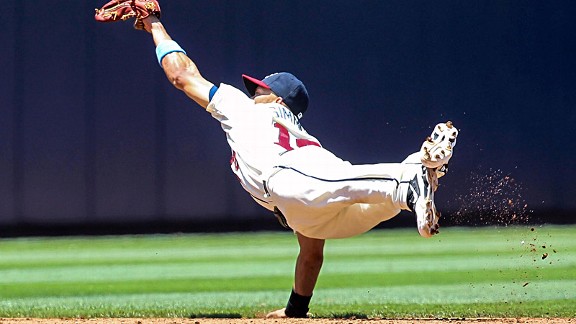
Andrelton Simmons put up what most consider the best defensive season of 2013.  Photo via espn.go.com

Andrelton Simmons put up what most consider the best defensive season of 2013. Photo via espn.go.com

The recent years have been a rise in all sorts of statistical analysis in the game of baseball (as we all know), and one of the more important areas of research has been the measurement and tracking of defensive metrics.  The data we have at our disposal is not yet infallible, but the data has opened our eyes to the real impact that some major leaguers have on the defensive side of the ball.

We’re all quite familiar with the WAR-based arguments that have completely consumed last year’s AL MVP award voting as an example of modern statistics helping to shape the selection of a traditional award winner.  However, up until 2013, the Gold Gloves remained an award that was given out without practically any consideration given to any advanced metric, and the awards have been embarassed in recent years with some amazingly inept selections.  The two most laughable selections of recent memory were Rafael Palemeiro in 1999 (given a Gold Glove for his play at 1B despite the fact that he only played 28 games in the field that  year) and Derek Jeter in 2010 (a year in which he posted a -5.1 UZR/150, was dead last among all 59 AL shortstops in Total Zone Total Fielding and had the selection was openly mocked by the normally staid Baseball-Reference.com website).   Even the more defensible gold gloves over the past few years have been considered “wrong” by the stat-crowd, to the point where a number of national writers openly mock the awards and go out of their way to “ignore” th em.

This concerns me as a fan, and as someone who is keenly interested in the Hall of Fame merits of players.  I absolutely believe that when it comes time to judge players on the whole of their careers, that individual awards such as the Gold Gloves, MVP and Cy Young awards matter.  I want these awards to be relevant and properly awarded.

Two things have happened lately that give me hope:

  1. Bill James and a varied panel of baseball writers, statisticians in the field and former players now vote on The Fielding Bible awards each year.  The 2013 Fielding Bible awards are not league specific; they recognize the best in the majors at each position each year.
  2. The Gold Glove award committee for the first time in 2013 has incorporated a statistical element to the traditional surveying of players and coaches to choose the award winners.

(All winners/leaders listed below are on one common Google XLS here.  Listed are the winners of the GGs, Fielding Bibles, and then the leaders in each league by position of these Defensive stats: UZR/150, DRS, FRAA, and Total Zone.  I haven’t gone into the various definitions and pros/cons of these stats; I have a planned off-season defensive statistical overview post where I’ll go into greater detail).

First off, if you believe that the Fielding Bible panel has picked the best possible awardees, then you’ll be happy to note that every Fielding Bible award winner also received a Gold Glove this year.  Here’s the Fielding Bible winners by position for 2013:

Pos Fielding Bible Winner
C Yadier Molina, STL
1B Paul Goldschmidt, ARI
2B Dustin Pedroia, BOS
SS Andrelton Simmons, ATL
3B Manny Machado, BAL
LF Alex Gordon, KC
CF Carlos Gomez, MIL
RF Gerardo Parra, ARI
P R.A. Dickey, TOR

Now, here’s the Gold Glove winners, with the Fielding Bible award winners bolded:

Pos AL GG Winner NL GG Winner
C Salvador Perez, KC Yadier Molina, STL
1B Eric Hosmer, KC Paul Goldschmidt, ARI
2B Dustin Pedroia, BOS Brandon Phillips, CIN
SS J.J. Hardy, BAL Andrelton Simmons, ATL
3B Manny Machado, BAL Nolan Arenado, COL
LF Alex Gordon, KC Carlos Gonzalez, COL
CF Adam Jones, BAL Carlos Gomez, MIL
RF Shane Victorino, BOS Gerardo Parra, ARI
P R.A. Dickey, TOR Adam Wainwright, STL

As you’ll see below by looking at the various defensive metrics out there, most of the Gold Glove winners were merited.  In fact, there only seems to be one egregiously bad selection here (which we’ll get to below).  Nearly every other winner was at the top of one or more of the advanced metrics available by position for his league:

UZR/150 leaders per league (again, with Fielding Bible winners bolded):

Pos AL UZR/150 NL UZR/150
C
1B Mike Napoli, BOS Anthony Rizzo, CHC
2B Ben Zobrist, TBR Darwin Barney, CHC
SS Yunel Escobar, TBR Andrelton Simmons ATL
3B Manny Machado, BAL Juan Uribe, LAD
LF David Murphy, TEX Starling Marte, PIT
CF Colby Rasmus, TOR A.J. Pollack, ARI
RF Shane Victorino, BOS Gerardo Parra, ARI
P

Defensive Runs Saved leaders per league:

Pos AL DRS NL DRS
C Salvador Perez, KC Wellington Castillo, CHC
1B Mike Napoli, BOS Anthony Rizzo, CHC
2B Dustin Pedroia, BOS Darwin Barney, CHC
SS Pedro Florimon, MIN Andrelton Simmons, ATL
3B Manny Machado, BAL Nolan Arenado, COL
LF Alex Gordon, KC Starling Marte, PIT
CF Leonys Martin, TEX Carlos Gomez, MIL
RF Shane Victorino, BOS Gerardo Parra, ARI
P

FRAA Leaders per league:

Pos AL FRAA NL FRAA
C
1B Eric Hosmer, KC Paul Goldschmidt, ARI
2B Ian Kinsler, TEX Donovan Solano, MIA
SS Nick Franklin, SEA Andrelton Simmons, ATL
3B Manny Machado, BAL Nolan Arenado, COL
LF Andy Dirks, DET Carl Crawford, LAD
CF Alejandro De Aza, CWS Brandon Barnes, HOU
RF Shane Victorino, BOS Hunter Pence, SF
P R.A. Dickey, TOR Andrew Cashner, SD

And lastly here’s the Total Zone Total Fielding leaders:

Pos AL Total Zone Total Fielding NL Total Zone Total Fielding
C Matt Wieters, BAL Yadier Molina, STL
1B Mike Napoli, BOS Paul Goldschmidt, ARI
2B Dustin Pedroia, BOS Brandon Phillips, CIN
SS Jayson Nix, NYY Andrelton Simmons, ATL
3B Manny Machado, BAL Juan Uribe, LAD
LF Alex Gordon, KC Chris Heisey, CIN
CF Jacoby Ellsbury, BOS Denard Span, WAS
RF Shane Victorino, BOS Norichika Aoki, MIL
P R.A. Dickey, TOR Patrick Corbin, ARI

So, after looking at all these leaders, lets talk a bit about the Gold Gloves and ask ourselves whether they did a good job representing the best defenders this year.  Position by position:

CatcherSalvator Perez is as good an AL pick as any; the only other AL catcher in the mix is Matt Weiters.  On the NL side, Jadier Molina has earned his reputation and backs it up on the metrics side.  His only challenger being the little known Wellington Castillo from Chicago.

1st Base: Hosmer and Goldschmidt seem as good of picks as any; only Mike Napoli and Anthony Rizzo seemed close in either league.  Napoli may have been a better pick than Hosmer on the weight of the evidence.

2nd Base: There’s several decent candidates who were not honored, but I don’t think anyone is arguing vehimently against either Pedroia or Phillips as the winners.  Darwin Barney may be the most egreiged candidate.

Shortstop: the amazing Andrelton Simmons led every possible statistical category; there was no chance he was losing.   J. J. Hardy‘s selection wasn’t bad per se, but as you can see from the above tables four different AL shortstops led each of the four statistical measures.  None of them was Hardy though, making you wonder if his gold glove was slightly on reputation.

3rd Base: One day Manny Machado will move back to short (maybe) and challenge Simmons for the title of “Best Shortstop in the Game.”  But for now he has to settle for easily being the best defensive 3B in the game.  As with Simmons, Machado led every possible defensive measure at his position.  On the NL side, the choice of Nolan Arenado was a sound one, with only Juan Uribe really challenging him.  Thankfully the award didn’t go to someone like David Wright or our own Ryan Zimmerman based on reputation.

Left FieldAlex Gordon was a sound choice; the NL choice of Carlos Gonzalez may have been a disservice to one Starling Marte.  However, picking individual positions for the OF is somewhat tough, especially for the corners.  Fangraphs lists RF winner Gerardo Parra as a left-fielder for some reason.

Center FieldCarlos Gomez is a great pick (and is one of the reasons I posted my “Why no MVP support for Gomez” post in this space, which by the way, got almost no reaction from the readership…).   Adam Jones was nearly dead last in some of these range metrics and unfortunately has gotten this award via reputation (and his arm; still one of the best) as opposed to performance.   Jones is clearly the “Derek Jeter” of 2013, and the voters really erred badly on his selection.   Its hard for me to say who I would have preferred; Jacoby Ellsbury is the biggest name among the four guys who led the four different defensive numbers, but Ellsbury’s arm is weak (nearly last of any CF in the league) and a better candidate would have been Leonys Martin.

Right FieldGerardo Parra and Shane Victorino are the leading candidates for their leagues and both selections are warranted.  I know that Hunter Pence led the NL in FRAA, but his arm is awful (one of the worst of any RF in the league), so that has to count against him.   In fact, Victorino was as good as or better than Parra in most of these metrics (with the exception of Arm; Parra has one of the better arms in the league).  I’m guessing its arm strength that tipped the Fielding Bible balance to Parra.

Conclusion: I think the Gold Gloves did a pretty good job in 2013 of identifying the best overall defenders at each position.  With one significant exception (Adam Jones).  I think its time the sportswriters who have been purposely ignoring the awards come back into the fold.

 

2013-14 Off-season Baseball Calendar

leave a comment

Now that the WS is over, the official off-season begins.  Since a number of key dates related to player movement are based on the end of the world series, now we can officially list the key upcoming dates.

This document is also available in the links section to the right-hand side of the blog (see the 2013-14 MLB Off Season Calendar link).  I’ve uploaded it to Google XLS.  A few of the dates listed here are estimates or based on the day they occurred last year.  The XLS has urls to back up some of these dates.

Date Event Nats-specific Impact/Winners/Notes
Sept 29th, 2013 Last day of regular season No Nats post-season for 2013
Oct 1st, 2013 Beginning of 2013 Post season (NL WC game).  End of Year BBWAA award ballots due (prior to beginning of post season) Some Nats may get some mentions
Oct 21rd, 2013 Sporting News Comeback Players of the Year AL and NL Mariano Rivera and Francisco Liriano winners
Oct 27th, 2013 Roberto Clemente Award given Carlos Beltran 2013 winner; Zimmerman best Nats candidate
Oct 28th, 2013 Fielding Bible Awards given No Nats mentioned
Oct 29th, 2013 Rawlings AL & NL Gold Glove Announcements Span, Desmond finalists but no awards
Oct 30th, 2013 Last actual day of 2013 World Series; official end of 2013 season Boston wins Game 6 and takes the 2013 WS 4-2
Oct 31st, 2013 (WS end + 1) Official start of FA period (8am CST the day after the last game of the WS)
Nov 2nd, 2013 (WS end + 3) Team and player options must be decided three days after the end of the World Series.  (this may be WS + 5 by 2013)
Nov 2nd, 2013 Clubs have to re-set their 40-man rosters, moving all 60-day DL players back to active. Nats currently sit at 39/40 with two 60-day DL guys; someone has to get dropped unless the FA’s don’t count against this list.
Nov 2nd, 2013 HoF “Veterans Committee” releases ballot.
Nov 4th, 2013 (WS end + 5) 5pm: Deadline to make Qualifying offers for your own Fas (average of top 125 salaries or $14.1M for 2014).  5 days after end of WS was 13.3M for 2013.  Nats highly unlikely to offer Qos to their two Fas.
Nov 4th, 2013 (WS end + 5) End of “Quiet Period.”  Teams have “exclusive” negotiating rights with their own free agents during this period.
Nov 4th, 2013 (WS end + 5) 5 days after WS ends: Free agent filing period and exclusive negotiating window ends at 12:01 a.m. ET. Free agents can sign with any team. Haren, Tracy only Fas for Nats in 2013.
Nov 2013 est MLB Comeback Players of the Year AL and NL
Nov 4th, 2013 (WS end + 5) Free Agency granted to all eligible Minor League free agents (5 days after the end of the WS).  Eligibility done on service time; 6 years ML service for college draftees or 7 years ML service for HS draftees or free agents under the age of 18. Plenty of significant, long-serving Nats farm hands hitting MLFA this year.
Nov 4th, 2013 Wilson Defensive Player of the Year awards, given by MLB to best defensive player on each club. Span or Desmond likely in the mix but unlikely to win
Nov 5th, 2013 MLBPA announces “Players Choice” awards: Player of the year, Comeback Player of the year, etc
Nov 7th, 2013 BBWAA Award Nominees announced on MLB networks
Nov 8th, 2013 Sporting News Executive of the Year announced
Nov 6th, 2013 Louisville Slugger Silver Slugger Awards Desmond, Harper may get some attention here.  Werth also
Nov 11-13, 2013 GM Meetings, Orlando, FL for 2013
Nov 11th, 2013 (WS end + 12) 12 Days after WS ends: Players must accept or reject Qualifying Options No Nats likely getting Qos
Nov 11th, 2013 AL, NL Jackie Robinson Rookie of the Year Awards Roark get some honorable mention votes?
Nov 12th, 2013 AL and NL Manager of the Year
Nov 13th 2013 AL and NL Cy Young Zimmermann may get some top-5 votes but not likely.  Strasburg?  Doubtful
Nov 14th 2013 AL and NL Most Valuable Player Werth may get some top-10 votes
Nov 14-15th, 2013 Owners Meetings, Chicago for 2013
Nov 20th, 2013 Day to file reserve lists for all Major and Minor League levels.  In other words, Last day to add players to 40-man to protect them from the Rule5 Draft
Dec 2nd, 2013 Midnight: Deadline for teams to Tender contracts to arbitration eligible players.  If not tendered, those players immediately become free agents.   This is the non-tender deadline for arbitration eligible players No real non-tender scares for this year’s arbitration eligible list of Nats.
Dec 2nd, 2013 Last day for teams to offer 2014 contracts to unsigned players.  (same thing as the non-tender deadline above?)
Dec 9th, 2013 Last day to request outright waivers to assign player prior to Rule 5 Draft
Dec 9th-12th 2013 Winter Meetings, Lake Buena Vista/Orlando, FL
Dec 3rd, 2013 HoF “Veterans Committee” officially releases ballot that was made public ??????
Early December, 2013 Baseball America announces its Executives of the Year
Dec 4th, 2013 MLB Balloting results announced for Hall of Fame Ford C. Frick Award for excellence in baseball broadcasting
Dec 4th, 2013 MLB announces winners of 21 “GIBBY” awards (greatnest in Baseball yearly awards)
Dec 12th, 2013 Rule 5 Draft.  Occurs at Winter meetings
Dec 31st, 2013 Deadline for BBWAA ballots for HoF voting.
Jan 9th, 2014 Hall of Fame BBWAA voting announced; the HoF class of 2014.
Jan 15th, 2014 Salary arbitration filing period
Jan 18th, 2014 Salary arbitration figures exchanged
Feb 1-21, 2014 Salary arbitration hearings (actual hearing date per player picked at random), Phoenix AZ
Feb 12th, 2014 Voluntary Spring Training reporting date for Pitchers, Catchers, Injured players
Feb 15th, 2014 Voluntary Spring Training reporting date for non-pitchers and catchers
Mar 2-11th, 2014 Contracts of unsigned players who are not yet eligible for Arbitration may be renewed
Early March 2014 First Spring Training Game for the Nats
March 13th, 2014 Last day to place a player on unconditional release waivers and pay 30 days termination pay instead of 45 days.
March 27th, 2014 Deadline to request unconditional release waivers without having to pay the player’s full salary or $100k bonus for certain types of veterans
March 31st, 2014 2014 Season Opener; Opening Day 2014; active rosters must be reduced to 25 players and 40-man rosters must be established
March 31st, 2014 Opening Night 2014: ? Vs ?
April 1st, 2014 Traditional Opening Day (Cincinnati)


Will the Cardinals get the same grief we got over not using Shelby Miller?

6 comments

Miller threw a grand total of one inning in the post season.  Photo unk via missourinet.com

Miller threw a grand total of one inning in the post season. Photo unk via missourinet.com

The common narrative surrounding the Washington Nationals after their 2012 NLDS exit was, and still is to this day, is a story of “arrogance” on the behalf of Mike Rizzo for deigning to protect Stephen Strasburg and shutting him down prior to the playoffs.  More than a few blow-hard sports writers on local and national stages postulated that the Nationals lost that series “because they didn’t have Strasburg.”

Cut to 2013: St. Louis’ year-long #2 starter Shelby Miller, a guy who had 31 starts with a 3.06 ERA/119 ERA+ and a 15-9 record, was removed from the playoff rotation and tossed a grand total of 1 inning this off-season.  He threw one inning of mop-up duty against the Pirates on October 4th in a 7-1 loss.  Instead the team gave those starts to #5 starter Lance Lynn, who rewarded the team with 2 losses in his 3 post-season starts and a 5.19 ERA in 17 1/3 innings.

For all the grief the 2012 Nationals got for voluntarily sitting Strasburg … why has there not been similar outrage for the Cardinals removal of their #2 starter from their post-season plans?   Where is the outrage facing the Cards’ management that Rizzo took for sitting Strasburg and “costing” his team in the playoffs?

The Cardinal’s excuse for sitting Miller was that he “was tiring down the stretch.”  To which I say B.S.; in five September starts he LOWERED his seasonal ERA.  This was clearly an innings-limit shutdown.  Maybe they’re the smart ones for just never SAYING it was a shutdown.  Miller himself apparently was unaware of the reason, being quoted recently as “not knowing” why he didn’t pitch in the post-season.

Strasburg was shutdown because he was recovering from an injury.  Miller was shutdown because the team subscribed to (in the minds of many critics) an arbitrary and unproven innings limit theory for starting pitchers.   What I don’t understand is why the two situations aren’t being treated as identical issues by those know-it-alls who so eviscorated the Nats for daring to protect a guy coming back from injury.  Is it simply a fame factor?  Strasburg clearly is more famous than Miller, therefore the situation was followed more closely in 2012?  Is it a factor of the Nats and Rizzo being the “new guys” and being ripe for criticism, while the Cardinals “know how it is done” and therefore get a pass in the national media?

I posed this question in a chat on Fangraphs and got the following response, “St. Louis didn’t lose the World Series due to lack of pitching.”  Ok.  Not the point; answer the damn question.  I could say the same thing about Washington’s loss in 2012; they certainly didn’t lose that game or series because of a lack of starting pitching … they lost that game because their bullpen couldn’t hold a 3-run lead and their closer couldn’t hold a 2-run lead at home in the deciding game.   You can play the “what-if-they-had-Strasburg” game for 2012 all you want; the fact is that the Nats were in a position to win the series and their closer blew it.  Can you say the same for St. Louis?   Don’t you think St. Louis would rather have had Shelby Miller on the mound in the pivotal game 4, which with a win would have given them an almost insurmountable 3 games to 1 lead in the series?   Instead Lynn coughed up 3 runs in 5+ innings, the Cards never have the lead, and Boston evened the series and regained home-field advantage.

It just frustrates me, the different treatment of the two franchises in these similar situations.  I readily admit that I’m defensive about pitcher shutdowns in general because I support the protection of young arms, I believe in innings management, and I believe both teams in the end did the right thing.  I talked about this in a post called “Innings Limits and Media Hypocrisy” in this space and (correctly) predicted that Miller would have shutdown issues towards the end of 2013.  I’m also defensive because I feel the Nats got a really raw deal in terms of the narrative, getting killed for trying to put a player’s health ahead of a short-term team goal.

I think the Cards had the right solution; shut him down, lie about it to the media, and go on with life.  A good road-map for Rizzo going forward, were he to run into this situation again.

Written by Todd Boss

November 1st, 2013 at 7:57 am

What “proof” is there that David Ortiz used PEDs?

7 comments

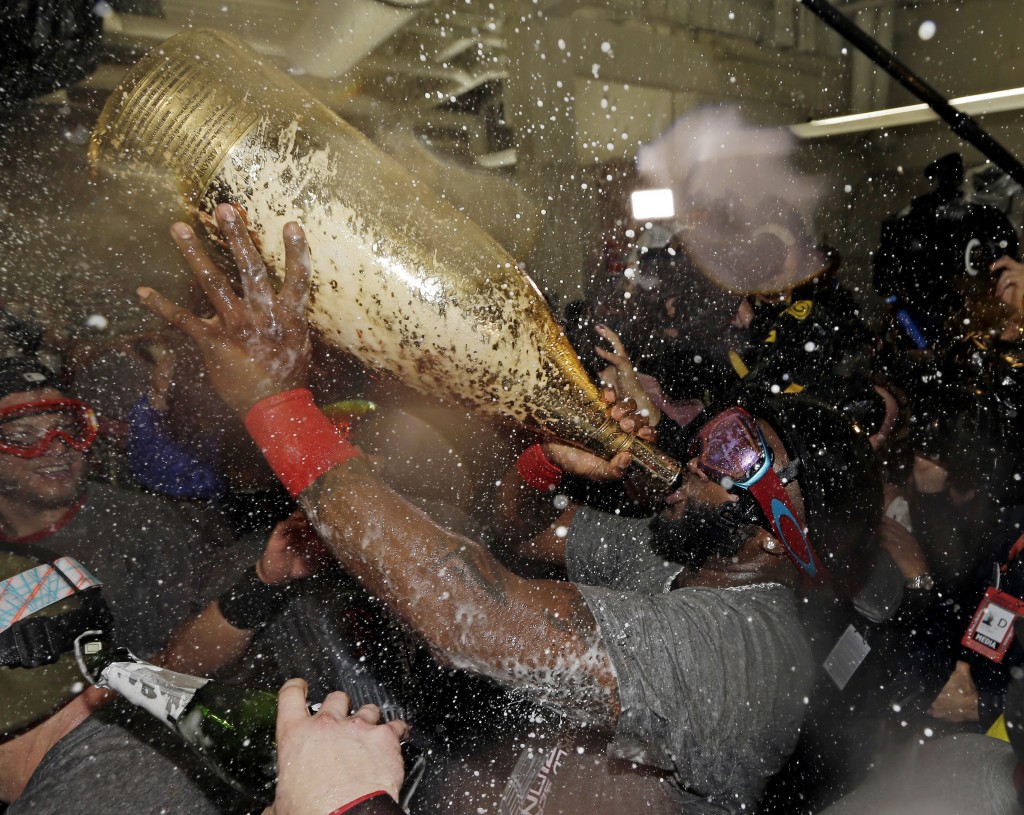
Ortiz is the 2013 WS MVP and drinks from very large bottles.  Photo AP via usatoday.com

Ortiz is the 2013 WS MVP and drinks from very large bottles. Photo AP via usatoday.com

So, as we wind down the 2013 World Series, one in which Boston star David Ortiz performed at levels rarely seen and earned the WS MVP as a result, a familiar narrative is sprouting up.  Stop me if you’ve heard it;

“David Ortiz is a known PED user.”

And thus his accomplishments (and eventual Hall of Fame case) are forever tarnished.

Here’s the thing: what “proof” exactly is there that David Ortiz used PEDs?

(You know, David Ortiz, who just came in 3rd in the Boston mayoral race).

As far as I can tell, the source for the allegations against David Ortiz is this NY Times article, dated July 30 2009 by writer Michael Schmidt.   Go ahead and read that article and tell me where exactly there is definitive proof of any positive test?  Here’s a couple of salient quotes from the article which encompass the “proof” that compelled this writer to forever trash the reputations of these players:

  • …according to lawyers with knowledge of the results.”   
  • The lawyers spoke anonymously because the testing information was under seal by a court order. “
  • The lawyers did not identify which drugs were detected.”

Hmm.  This sounds awfully thin to me.  Anonymous lawyers who claimed to have “knowledge of the results” of the 2003 surveys, who did not go on record and didn’t identify the supposed substance.  AND, to make matters even worse, these lawyers were knowingly breaking federal laws by disclosing information that was a) supposed to be confidential and b) at the time under seal.

Why would anyone believe this?

In the same story, Ortiz “confirmed the report” but if you read exactly what he said, he didn’t admit to testing positive.  He “confirmed that the union told him that the report was true.”  That’s not an admission of usage of a PED.  That’s just acknowledging that he was told his name was apparently on some list.  And as noted later on (and referenced in the link at the bottom of this blog), MLB and the Union have since stated that some players on “the list” never tested positive; they were just on the list as having being tested.  Or even worse (as is noted in the above link), “… in 2003, legally available nutritional supplements could trigger an initial ‘positive’ test under our program.”   Furthermore, the commissioner of MLB released a statement openly questioning the 2003 results as well in 2016.

Think about that.  Ortiz could have been drinking some supplement that was legal then, is legal now, but which triggered a positive test.  Ortiz has vehemently denied initially or ever using anything illegal whenever it has been brought up since.  Of course, those denials run shallow considering that every PED-suspected user denies in the same way.

Ortiz does not appear in The Mitchell Report; go ahead and search its 409 exhausting pages and there’s no mention of him.  Nor does Manny Ramirez (ed; corrected after the fact; i had written Manny Rodriguez), who was also outed in the 2009 NY Times article.  Ramirez’ reputation has since been sullied through his own stupidity and multiple subsequent positive tests … but I can’t help but wonder if Ortiz wasn’t being unfairly targeted by some faceless “lawyer with knowledge” who could very well have been a die-hard New York Yankees fan (this is the New York Times after all, and these proceedings were all conducted in New York City) with an axe to grind.

You may think this is a cynical approach.  You may have blind faith that the journalist in question took his “sources” to his editors, who should have vetted the information and made the decision to publish based on such anonymous quotes.  And to that I say, you’re a fool if you think that all journalists are prim and proper and squeaky clean in terms of their morals.   You don’t know these people, you don’t know who their sources are, and you don’t know the motivations behind the breaking of federal laws in order to … do what exactly?  Purposely tarnish the career of a player who didn’t do anything to anybody, and who apparently may not have even used the damn PEDs in the first place.

I find it troubling, that a man’s career, legacy and reputation are basically shot because of some unconfirmed report.   If this was in a court of law, the “evidence” against Ortiz would be considered so thin that any right-minded judge would dismiss the case outright before it even began.

Ortiz commented on this topic in an SI piece recently and I can’t help but agree with his take on the situation.  He felt helpless, he (claims) not to have ever  heard anything about a positive test until his name appears in the New York Times.  He claims that he’s asked repeatedly for additional proof, for the name of the drug he supposedly tested positive for … and has never been told!  Think about that.  The people who hold the evidence that has destroyed his legacy are refusing to give him details about his own test and his own career.

I’m not the only one with this view: Ken Rosenthal discusses many of the same facts in this May 2013 article.

Anyway.  I feel Ortiz may have been unfairly thrown under the bus in the post Steroid-era mania of discovery, and judging a man based on “proof” this weak continues to trouble me.  Feel free to comment if you have better information than I do about his supposed “positive test.”

Written by Todd Boss

October 31st, 2013 at 7:35 am

World Series Game 6 Pitching Matchup and Prediction

leave a comment

(Editor note: Ha; I forgot to publish this prior to last night’s game.  I would have been right 🙂

Well, I was 4-for-4 leading up to game 5 predictions … and was wrong.  I thought St. Louis could break out against the weakened Clay Buchholz.  But they couldn’t do anything against a clearly laboring Buchholz, doing nothing against mid 80s fastballs throughout the night.  Wainwright made some mistakes that cost him (0-2 hanging curve in the 1st, then not pitching around David Ortiz being early, simple examples).

In the end, perhaps trying to predict either Game 6 or a possible Game 7 is fools-gold; I think we now see that Boston is the superior team and has worked around its own offensive deficiencies and a stitched-together rotation.  They get Mike Napoli back in the middle of their lineup now that they’re back in the AL park using DH rules, and at some point this will make the difference.

Game 6: Michael Wacha versus John Lackey; Simply put, I think Wacha’s amazing run of unhittable-ness may end tonight.  You have to think Boston’s going to go back to the film, look for a weakness, and try to exploit it.  Lackey probably puts in his typical quality start; 6 innings, 2 or 3 runs.  It just seems that fate is going to go Boston’s way after they clawed 2 of 3 in St. Louis.

I’m going with Boston closing out the series tonight in a memorable night for Boston fans, finally clinching a World Series on home soil.  Oritz is your obvious World Series MVP and bolsters his eventuall Hall of Fame case.

Written by Todd Boss

October 30th, 2013 at 3:40 pm

30 for 30 review: Big Shot

leave a comment

(Spoiler alert if you haven’t seen the film or if you don’t know the story).

We havn’t done a review of a 30-for-30 documentary in a while because, well, it had been since April since one was released.  Now there’s been a whole bunch that premiered this month, and we’re catching up.

Here’s some quick thoughts on Big Shot, the story of John Spano‘s incredible story of financial fraud and duplicity that enabled him to “purchase” and control the New York Islanders hockey franchise for a brief period in the mid 1990s.  This film was directed and narrated by Kevin Connelly, better known as the character “E” from the HBO show Entourage.  Connelly grew up on Long Island, is a lifelong Islanders fan, and had intimately followed this entire story during his childhood.

On the whole, I did not think this was one of ESPN’s best films.  I disagreed with Bill Simmons‘ effusive praise to Connelly when they appeared on his podcast The B.S. Report, though in fairness it could have been a case of “stroking the ego” of the star.  Connelly should have gotten a professional narrator; his voice overs were amateurish and lacked the proper cadence for a serious documentary.  The film was 1.5 hours, probably 30 minutes too long for the story that it intended to tell.  Even with an hour and a half, there are basic details on Spano’s wikipedia page that went uncovered.   On the good side, the fact that Connelly got Spano on film (freshly released from his second stint in federal prison for financial fraud) really helps this story; I think back to the 30-for-30 piece on Allen Iverson that never featured the star player and the film comes of lacking.  Also, the wide list of interviews the film shows (including basically every player in the drama, including the NHL commissioner Gary Bettman) gives the film a lot of credit.  The podcast interview goes into some detail about this: Spano was very hesitant to do the interviews until realizing it was 30-for-30; had this been any other documentary he likelihood of Spano’s character getting completely trashed was high.

The story itself is amazing; Spano got an $80Million loan with almost no due diligence on the bank’s part.  $80 million.  Think about how much paperwork you went through the last time you bought a house or a car or a business loan.  And, it is amazing to think about this story and see how close Spano really came to pulling it off; he was within a couple of days of finding someone to make his first $17M payment, and you’d have to think with a year to make the next payment he could have found a way to continue the charade.  Also amazing to think is this: he *owned” the team; the papers were signed despite the money not showing up.  Its like the analogy in the film; if you sign over the title of your car to some other guy … that’s HIS car, whether or not you got any money for it.  Spano could have made this really, really ugly for the league when push came to shove, despite Bettman’s hollow statements that “the league never would have let” Spano continue to hold the team.

The funny thing is this; if you leave out the clear fraud, the phony documents, etc; this transaction was almost like an old school leveraged buyout.  You get loans covering nearly the entire purchase price of a company, using that same company as leverage, and then make the loan payments from the coffers of the newly acquired company.  Think about how Malcolm Glazer obtained control over Manchester United: a very similar deal.  He “bought” his portion with tons of loans, put those loans on the books of the club, and financed the payments on the backs of the club’s profits.  Spano himself was halfway to a completely leveraged buy-out already, and came pretty close to taking at least the first step towards the next phase.

The team has never come close to returning to its early 1980s glory years; it has just one division crown since 1985.  It hasn’t advanced in the playoffs since 1993, and in the last 15 years had streaks of 8 and 5 straight playoff-less seasons.  Whether that has anything to do with the ownership snafus, bad luck with players, or (more likely) due to difficulties working with Nassau county officials over the years (a fact only alluded to in the film) getting needed stadium upgrades remains arguable.  As for Spano (as detailed in his wiki page), he got out of prison and was soon back for repeated financial fradulent behaviors.

All in all; a great story.  But the documentary left a bit to be desired.


Written by Todd Boss

October 30th, 2013 at 10:25 am

Why isn’t Carlos Gomez getting MVP consideration?

2 comments

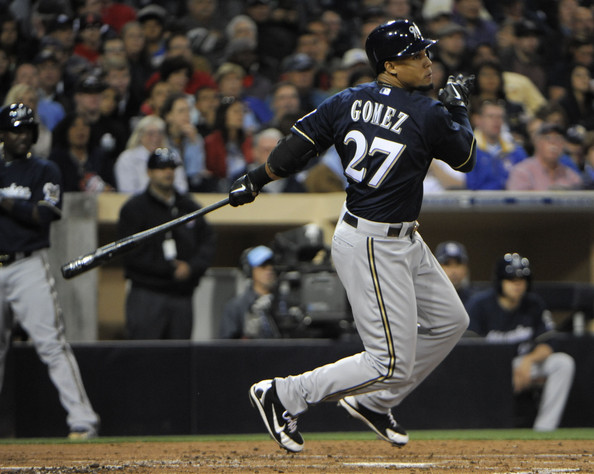
Why isn't Carlos Gomez getting the same attention for MVP that Mike Trout is getting?  Photo Denis Poroy/Getty Images via zimbio.com

Why isn’t Carlos Gomez getting the same attention for MVP that Mike Trout is getting? Photo Denis Poroy/Getty Images via zimbio.com

Simple question.

Brewers break-out star Carlos Gomez led the NL in bWAR.  Gomez played for a non-playoff team and augments his 24-homer/.506 slugging bat with speed on the basepaths (40 SBs this year) and plus defense in center (he was just named to Bill James Fielding Bible Team as the best defensive Center Fielder in the game).  Yet Gomez will likely lose out on the MVP voting to Andrew McCutchen, a player who trails him in the bWAR standings but who played for a playoff team.

Sounds an awful lot like the Mike Trout/Miguel Cabrera comparison, doesn’t it?

Why is nobody talking about Carlos Gomez for the NL MVP?  In fact, in the litany of post-season award review columns not only do I not see his name prominently mentioned, I’m not seeing it even mentioned in the list of top 5-6 candidates.  You hear about McCutchen, Clayton Kershaw and Paul Goldschmidt as the likely top 3 NL candidates, then you hear about guys from the other playoff teams (Yadier Molina or Matt Carpenter from St. Louis, Joey Votto from Cincinnati, or Freddie Freeman from Atlanta).  Where’s Gomez on this list?

If you are a critic of the Miguel Cabrera pick and maintain that Mike Trout deserves the MVP in the AL and use “WAR” as a basis for your argument … then are you similarly arguing that Gomez should win in the NL right now?

I think the entire Trout-Cabrera argument is tired; i’m tired of hearing it and I’m sure people are tired of talking about it.  The critics of those who support Cabrera for MVP like to talk about the “narrative” of the MVP, how the award criteria definition on the ballots seems to imply that the winner “should” come from a playoff team.  But I’m of the opinion that those who blindly live by the WAR stat and support Trout but do NOT similarly demand support of Gomez are falling victim to their own “narrative” as well.

Ask yourself; if you think Trout is the AL MVP (this year or last year) … then what’s your argument that Gomez is NOT the NL MVP this year?

World Series Game 5 Pitching Matchup and Prediction

3 comments

Four games into this World Series, and we’re tied up at 2 games a piece.  Boston got their must-win victory last night on the strength of the unlikely Jonny Gomes (former Nat) and on 85mph fastballs from Clay Buchholz.  Lance Lynn didn’t pitch badly; in fact his stuff looked pretty good early on.  But one bad pitch to Gomes and the game was over.

Game 5: Jon Lester versus Adam Wainwright.  a repeat of the Game 1 matchup, though this time the tables are reversed in terms of road team/home team.   In four career home playoff starts Wainwright has conceded exactly four runs.   Lester had a .500 record and a 4.21 ERA on the road this season.  Despite St. Louis’ inability to hit lefties, I don’t think Wainwright is losing tonight.

Expect a close game, with St. Louis perhaps coming out on top with a 2-1 victory.  And since we’ve already had two rather rare game-ending baserunning mishaps (an obstruction call and a pick-off), i’m calling for Game 5 to include something like a running out of order, or a missed base being called out on appeal or something random.  Maybe we’ll just get a hotly contested balk.

Written by Todd Boss

October 28th, 2013 at 8:15 am

World Series Game 4 Pitching Matchup and Prediction

leave a comment

So far, the World Series has played out the way I thought; St. Louis up 2 games to 1 (albeit on rather odd circumstances last night) and heading into the most difficult match-up to predict: game 4.

Starters: Clay Buchholz versus Lance Lynn.  Neither guy has pitched well this post season (both have identical 5.40 ERAs this post-season).  Neither guy looks like he’s going to be able to keep the opposing offenses down.  And I sense this game is going to be a 4.5 hour marathon going deep into each team’s bullpen and likely featuring early appearances for 5th/neglected starters for Boston such as Ryan Dempster, Felix Doubront.  Meanwhile St. Louis’ forgotten man Shelby Miller has thrown a grand total of 1 inning this off-season; against the Pirates on October 4th.  Could he possibly now feature more than three weeks later in a pivotal situation?

For all the grief the 2012 Nationals got for voluntarily sitting Stephen Strasburg … why has there not been similar outrage for the Cardinals removal of their #2 starter all year from their post-season plans?  If the Red Sox bomb Lynn tonight and end up taking the series, is there going to be similar outrage facing the Cards’ management that Mike Rizzo took for sitting Strasburg and “costing” his team in the playoffs?  Because clearly Lynn is the Card’s #5 pitcher, the starter that normally wouldn’t even be on some post-season rosters and clearly wouldn’t be getting a post-season start.

How much will Buchholz’ “shoulder fatigue” play in to tonight’s game?  How much will Lynn’s hittability factor in?

I see a slugfest, and I see Boston coming out on top tonight.  Which is good for Boston, because I can’t see them beating Wainright tomorrow night and they need this game to get the series back to Boston for games 6 and 7 (where Wacha looms for a possibly classic Game 7, if they can get there).

Written by Todd Boss

October 27th, 2013 at 10:29 am

World Series Game 3 Pitching Matchup and Prediction

leave a comment

The series heads to St. Louis after the teams split in Boston.

However, the predicting gets harder from here on out, as each team gets deeper into its rotation and has to rely on lesser starters.

Game 3: Jake Peavy vs Joe Kelly.   Kelly was pretty good in September, lowering his season ERA from the 2.80 range to the 2.60 range, and Kelly pitched a nifty 6ip/2ER home start in the NLCS.  Peavy was not good in September, leaking runs left and right.  Peavy got hammered in the ALCS in Detroit.

All signs point to St. Louis jumping up 2 games to 1 in this series and putting a lot of pressure on the Game 4 starters (perhaps Clay Buchholz and Lance Lynn).  Boston obviously needs to take a game in St. Louis or they’re done.  And unless they want to take their chances beating Michael Wacha in a game 7 back in Fenway, they want to get two.  Kelly’s no pushover; he may look like an accountant but he throws some serious cheese: 94.4 average two-seam velocity with a peak of 98.8 this year.  Boston has its work cut out for them.  Meanwhile Peavy hasn’t been good, and I think the Cardinals jump on him quickly.

Because they’re in St. Louis, Boston has had to choose between sluggers, and Mike Napoli misses out.  This takes away a slugger in the middle of Boston’s order and puts a severe defensive liability at first in David Ortiz.  I think this and the return home to the charged up St. Louis crowd spells a Game 3 victory for the Cardinals.

Written by Todd Boss

October 26th, 2013 at 9:45 am