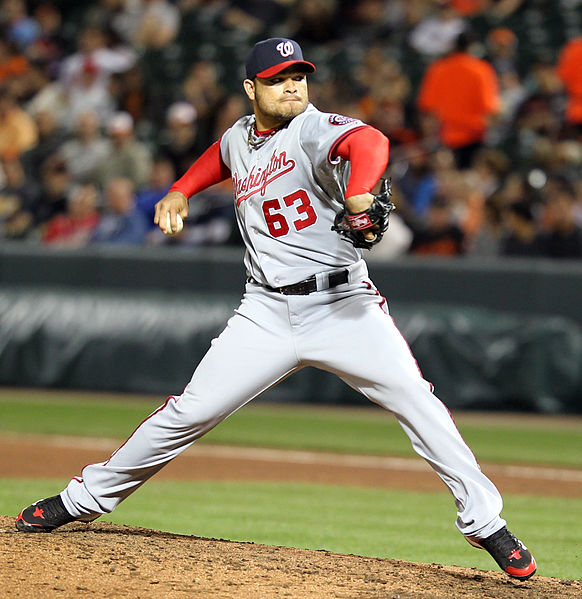
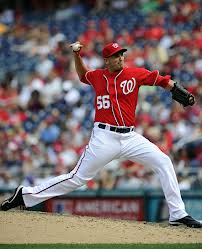
Nationals Arm Race

"… the reason you win or lose is darn near always the same – pitching.” — Earl Weaver

Academy Awards (plus others) for Baseball Movies

4 comments

(Editor’s note: another article that I essentially wrote in Feb of 2011 but never got around to publishing; this has been a good couple of weeks of cleaning out the drafts).

Right around the time of the Academy Awards in 2011, Jim Caple wrote a fun pre-2011 Oscar review of historical baseball movies from an Academy Award perspective (where he picked the 6 major Academy Awards for baseball movies).  Caple’s awards for the “major” Oscar nominations were:

  • Best Picture: “Bull Durham
  • Best Director: Barry Levinson for “The Natural
  • Best Actor: Walter Matthau from “Bad News Bears
  • Best Actress: Susan Sarandon from “Bull Durham
  • Best Supporting Actor: Vic Morrow from “Bad News Bears
  • Best Supporting Actress: Madonna from “A League of their Own

(Other interesting movie links related to baseball I’ve stored over the years: Caple subsequently wrote a Moneyball review in September of 2012, and SBNation posted a list of the Greatest Baseball Movie Lines in history around the same time.  Here’s a recent link 50 Fun facts about sports movies that includes some Baseball trivia, and here’s a list of the Top Grossing Baseball movies of all time; the leader isn’t that surprising).

Being a fan of baseball movies myself, I’d quibble with some of Caple’s winners ( you have to see his list of “nominations” to really argue) but the article is a great read.  And it got me thinking: what other “Award Categories” for Baseball movies make sense to debate?

Here’s my Categories, and here’s a great list of baseball-themed movies to choose from.  Its a bit dated but gets most of the major films you need.   I fully admit that I have not seen every single baseball-related movie in the history of Hollywood, so feel free to debate the nominees that I’ve selected below.


Best Baseball Action Depicted

Nominations: Bull Durham, Major League, The Natural, Eight Men Out, 61*

Discussion: Eight Men Out was a fantastic period piece and did a great job.  Major League was a baseball movie for sure, but wasn’t nearly as good in terms of action as Bull DurhamBilly Crystal‘s pet project 61* did a great job as well.  I loved The Natural, its old-time baseball stadium shots, and the old school uniforms.  This is a tough call, but the winner goes to the one movie among all of these that was actually directed by a former minor league ball player. Winner: Bull Durham.  (Note: I considered and didn’t use Moneyball because of the actual footage intermixed in, and the general lack of baseball action in the movie).


Best Actor as a passable Baseball Player

Nominations: Kevin Costner (any of his several baseball movies), Robert Redford (The Natural), Randy Quaid (The Rookie), Thomas Jane (61*), Charlie Sheen (Major League), Dennis Haysburt (Major League), Jon Cusack (Eight Men Out), Ray Liotta (Field of Dreams).

Discussion: I nominate Liotta only because of the fact that Shoeless Joe Jackson batted lefty and Liotta spent months learning how to hit lefty for the role, only to have the director discard his abilities.   Similarly, Jon Cusack learned how to hit lefty and several of the baseball action scenes depict him swinging and hitting baseballs for long drives.  Quaid did an admirable job as Jim Morris and is quite an athlete, but did a far superior job as a quarterback in “Any Given Sunday.”

Dennis Haysburt deserves special mention by creating his iconic character, Pedro Ceranno.  He looked realistic at the plate and running the bases.  Redford was clearly a player, talking in the past of how he fashioned his game after fellow San Diego native Ted Williams, and his baseball scenes both hitting and pitching in the Natural are fantastic.  He comes in a close third.

The award comes down to Costner and Sheen.  Sheen (per his IMDB page) was a baseball pitcher in high school and could throw mid-80s naturally.  He looks great on the mound.  But for me, the fact that Costner could legitimately switch hit, played a convincing catcher throughout Bull Durham and a pitcher in For the Love of the Game give him the award.  Winner: Kevin Costner.


Worst Actor attempting to pass as a Baseball Player

Nominations: Tommy Lee Jones (Cobb), Tom Berenger (Major League), Tom Selleck (Mr. Baseball), Gary Cooper (Lou Gehrig), Tim Robbins (Bull Durham), John Goodman (The Babe), Brendan Frasor (The Scout).  Wesley Snipes (The Fan or Major League).

Discussion: Apparently actors love to do sports movies, because they all think they can, you know, play sports well.  Every guy who used to play pick up basketball thinks they can do “White Men Can’t Jump” and every guy who played little league thinks they can be in “Bull Durham.” I list a number of guys here, all of whom struggled in some way or another to appear athletic in a baseball movie.  In all fairness, most of these guys did decently well.  Berenger was in a tough spot, appearing as a catcher who threw like a girl.  Robbins did a pretty good job and was athletic enough to pass.  But the winner is most likely Gary Cooper, who apparently was so un-athletic that they gave up having him appear to be lefty, let alone make him look like Lou Gehrig.  This topic recently appeared again in some popular baseball blogs, with the researcher doing some pretty in-depth analysis to determine if this is actually a hollywood myth.  In any case, the Winner is Gary Cooper.


Best Movie Coach/Manager

Nominations: James Gammon (Lou from “Major League“), Tom Hanks (Jimmy Dugan from “A League of their Own“), Trey Wilson (Joe Riggens from “Bull Durham“), Wilford Brimley (Pop Fisher from “The Natural“), Walter Matthau (Bad News Bears), Philip Seymore Hoffman (Art Howe in “Moneyball”).

Discussion: A great set of character actors and performances here.  Lou from Major League has some memorable lines but wasn’t much of an acting job.  From a purely acting/role preparation perspective its hard to argue with Tom Hanks’ portrayal of the legendary Jimmie Foxx.  Pop Fisher was a good ole grandfather but didn’t exactly test the range of Wilford Brimely.  Hoffman is a fantastic actor in his own right, but by all accounts Art Howe isn’t even remotely like the character he played.

Walter Matthau probably put in the best pure acting job.  But the late Trey Wilson’s fantastic portrayal of the manager of the Durham Bulls, including his interaction with Crash Davis, his shower scene speech and his fighting with the umpires were legendary.  Winner: Trey Wilson.


Best Biopic of a player

Nominations: Cobb, Pride of the Yankees, Hustle, The Babe, The Rookie

Discussion: Honestly I didn’t really care for any of these movies that much.  The most recent of them (The Rookie) was interesting but not really that well done frankly.  Dennis Quaid was just a hair too old for the role and isn’t that good of an actor.  The Babe and Cobb were the two best shots, but both were such bad movies that one cannot pick them as the winner.  I think sentimentality dictates the winner here.  Winner: Pride of the Yankees.


Best Representation of Actual Baseball Events

Nominations: Eight Men Out, Soul of the Game, 61*, The Perfect Game

Winner: Eight Men Out. Doesn’t romanticize the events, presents them relatively slant-free.  I liked 61* in this respect, but Billy Crystal didn’t have the budget he really needed to compete with the excellent period piece about the Black Sox scandal.


Best Baseball Movie to trick your Wife into seeing

Nominations: How Do You Know, Fever Pitch, Summer Catch

Winner: Fever Pitch, but do you really want to see any of these movies?


Best Baseball Movie to take your kids to see

Nominations: Rookie of the Year, Angels in the Outfield, Little Big League, Air Bud: 7th Inning Fetch, The Sandlot

Winner: Air Bud 7th Inning Fetch.  Any movie where a dog gets to play baseball is a winner in my book.


Creepiest Baseball Movie to see

Nominations: The Bad News Bears, The Fan

Discussion: I put in the “Bad News Bears” as slightly “creepy” since our ideals of parenting, racial relations and what-not have changed so much since this movie was made.  So there are many parts that will make you cringe.

Winner: The Fan:  Robert DeNiro plays an obsessed fan of SF Giants outfielder Wesley Snipes.  This wins almost by default, since I can think of no other thriller/suspense baseball films.


Worst Baseball Movie

Nominations: Major League III Back to the Minors, Hustle, The Benchwarmers, Hardball

Discussion: There’s some pretty bad movies in here.  But nothing was as insufferable as the third edition of the Major League franchise.  It was bad enough that they made the second edition, with Omar Epps badly attempting to recreate Wesley Snipes‘ character.  But it went downhill in the third; the writing was bad, and all the leading stars from the first two installments declined to participate, leaving Corbin Bernsen and Dennis Haysbert as the last remaining characters from the original.  Winner: Major League III.


Best Drama

Nominations: The Natural, Bang the Drum Slowly, Field of Dreams, Pride of the Yankees, Moneyball

Discussion: Moneyball is the late entry here, garnering several Academy Award nominations and getting major Academy street cred by virtue of being written by Aaron Sorkin. I’m a sucker for old school tear-jerkers like the rest of them, meaning that Bang The Drum Slowly gets a nod.  Field of Dreams doesn’t hold up as much for me (though I fully admit I cannot watch the last scene without crying).  Up until Moneyball’s release, the winner for me was the excellent The Natural, despite its modified ending from the classic novel of the same name.  Winner: Moneyball.


Best Comedy

Nominations: Major League, Bull Durham, A League of their Own, Mr. 3000, The Bingo Long Traveling All-Stars and Motor Kings

Discussion: There’s three very quality finalists here, if I may immediately cut the Bernie Mac vehecile Mr. 3000 and the obscure Bingo movie.  Lets talk about them one by one.

A League of their Own depended on the slapstick sexual references from Madonna for its comedy most of the time, with thinly-veiled references to her nude portrait book or the fact that “most of america has seen her naked.”  Major League was a great comedy and had a great setup.  But for me nothing matches the subtleties and quality of the writing in Bull Durham.  Winner: Bull Durham


I KNOW this will generate discussion and disagreement.  Feel free to chime in with your thoughts.
Washington is a “Football” town; what’s yours?

15 comments

(Editor’s Note: I first started writing this post in May of 2011, came back to it in August of 2012.  Suddenly in Feb of 2013 this whole post got “scooped” by Craig Calcaterra on HardballTalk.   Don’t you hate it when a post you’ve had in draft mode forever is essentially duplicated while you sit on it?   At least it gave me some reason to finish it and finally publish it).

In early 2011, After watching a re-run of “Four Days in October” of the fantastic 30-for-30 series I got to thinking about the “leading” sports obsession, per city, around the country.  There were numerous shots of the town of Boston, its fans, the bars, etc, and one clearly got the impression that Boston is a “Baseball town.”  This got me thinking: what is the Leading Sport in every pro town in America?

(coincidentally,  if you’re also a fan of the 30-for-30 series, I posted a review and ranking of all 30 original episodes in December 2010.  ESPN’s 30 for 30 site also has a ranking page where, after you vote, you can see the results.  I put in my own rankings on the Dec 2010 post, which I may re-publish at some point).

Here in Washington, clearly we are a Football town.  The Redskins are king; every local sports radio show dedicates large portions of its programming to the Redskins in season or out, because that’s what draws.  The other pro teams in town are of only passing interest to casual fans, are mostly followed by die-hards (like me and the Nationals of course), but if they have a run of success (as with the Capitals now and the Nationals in the first half of 2005 or in 2012) then suddenly they’re popular.  But Football will always be king here.  Some local sportswriters have mentioned the Jayson Werth walk-off in game 4 of last year’s NLDS as the moment that “Washington became a baseball town,” but I just don’t see it.

How about the other major sports towns in America?  I took every town that has 2 or more pro franchises (since obviously, if you live in Jacksonville with only one major franchise, the answer is usually pretty clear) and put my thoughts down.  Feel free to debate, criticize, or tell me I don’t know what i’m talking about.  The towns are listed by category, in descending market size.

Four (or more) Sports towns

1. New York: Baseball.  Despite having so many sports choices, I think the history and continued dominance of the Yankees makes NYC primarily a baseball town.  That’s not to say that a city of 8 million people doesn’t support its football, basketball or hockey teams, but none of the other NY-based franchises have consistently been as good or in the news as much as the Yankees.

2. Los Angeles: Basketball.  As with the Yankees of New York, the Lakers status as one of the marquee franchises (if not THE marquee franchise) of the NBA makes this a basketball town first and foremost.  The Dodgers have 50+ years of history in the town, but the Lakers rule.  Note; of all its major city counterparts, Los Angeles is also the closest to a “college town” that you’ll see.  USC and UCLA both have major sports programs, the area hosts the Rose Bowl every year, and other lesser sports schools such as Loyola Marymount, Pepperdine, and Long Beach State all have had their moments in various college sports.

3. Chicago: Baseball (but open for debate).  The Baseball history is obvious, with both teams having 100+ years of history and the Cubs being one of the marquee franchises in the sport.  The Bulls clearly made the town a Basketball town for a sustained period of time, but I don’t get the impression they’ve supplanted the Cubs.  The Blackhawks are an Original Six hockey team, and the Chicago Bears have been around since the beginning of organized professional football (In fact, they won the first NFL championship in 1933).  So there’s a ton of sports history in this town.  But do the other sports supplant the baseball culture?

4. Philadelphia: Football.  The Phillies have re-made themselves into a dominant force in Baseball over the past few years (2012 notwithstanding), but nothing stokes the fire of Pennsylvanians as much as the E-A-G-L-E-S.

5. Dallas/Fort Worth: Football.  Can’t get much more important to a town’s psyche than the Cowboys.  Even if the Mavericks win a title and the Rangers make the World Series.

6. Miami: Football by attrition.  The South Florida populace is so irritated with Jeffrey Loria that they’ll probably never be baseball diehards.  The Heat?  LeBron is johnny-come-lately.  Hockey?  In a town where it never gets below 60?  Can’t see it.  In fact, Miami may really be the most apathetic sports town out there.  The rise of the U of Miami football team helped, but that fad has passed and Miami football barely draws any more.  I don’t think you’d really say that the town is crazy over its Dolphins, but is it crazy about any of its teams?

7. Washington: Football.  The Redskins rule (as discussed above), and the other teams are only of passing interest if they’re winning (which, in the Wizards case, hasn’t happened since the late 70s).

8. Detroit: Hockey.  The Red Wings are an institution, and they don’t call Detroit “Hockey Town, USA” for nothing.  The Tigers were a laughingstock for years, the Pistons had a slight run of glory under Isaiah Thomas, and the Lions are in the midst of a horrible period.  Even with Detroit’s run of glory in the past decade, the Red Wings keep on rolling.

9. Boston: Baseball. The hold the Red Sox have on the psyche of New Englanders in general is legendary.  Boston’s other teams have had sustained runs of greatness lately, and of course the Celtics rival the Lakers in terms of legendary franchises.  But if you have to pick one team I still think its the Red Sox.

10. Atlanta: Football, I think.  The Braves made the playoffs 15 straight years but the team couldn’t sell out its playoff games.  I don’t think the town really cares about its hockey or basketball teams that much (in fact, the Hockey team moved to Winnipeg).  How about the Falcons?  Does the rise and fall of the Falcons drive sports talk in Atlanta?  Perhaps the presence of Georgia Tech and SEC football makes the town more apathetic about its Pro teams.

11. Phoenix: Debatable as well.  I’d guess Basketball as being the longest tenured professional team in Arizona.  But, a number of teams now have spring training in Arizona and the Diamondbacks have a relatively recent World Series victory.  The Arizona football team may have made a run to the 2009 Super Bowl but Arizona didn’t even have a football team for a number of years with the Rams relocation.

12. Minneapolis: Has to be Football.  The Twins are contenders now but it wasn’t too long ago that the team was in supposed danger of contraction (thanks to their penny-pinching billionaire owner Jim Pohlad and his father).  The basketball team is a punchline in the league.  One of the few major northern/cold weather cities would be a natural for Hockey, but the North Stars left town and I had to look up the current pro hockey team’s franchise name.  The Vikings current stadium is in dis-repair, and there’s rumors that the team may move from the area (perhaps to Los Angeles to continue a trend the Lakers started in 1960).  There’s a voter backlash against paying for billion dollar properties that serve only to further enrich billionaire NFL owners, so the natural move for the Vikings may be to move out of town.  Which is a shame for football diehards in the Twin Cities area.

13. Denver: Football.  They only got baseball and hockey within the past 20 years, and i’m pretty sure the Nuggets don’t outweigh the successful Broncos.

Three Sport Towns

1. Houston:  I’d say Football, if only because its Texas (where football rules) and because the baseball team has a history of underperforming.  Houston is definitely a destination spot for NBA players (tax purposes, warm-weather city) but does it out-shine the Texans?  Clearly it isn’t the Astros, who may lose 115 games this year.

2. Toronto: Hockey.  One of the original 6 NHL franchises, a troubled basketball squad and the general dissatisfaction in Canada re: professional baseball since the strike.

3. Oakland: Football. Raider-nation is psychotic.  The A’s lack of expenditure and outright politicking to move to San Jose has soured the community on baseball to the point where large swaths of the outfield are tarped over during regular season games.  Golden State has reached the playoffs once in the past 18 years.

4. St. Louis: Baseball.  Perhaps Football, with the run-and-gun Rams and the incredible noise they generate in their indoor stadium. But St. Louis has the 2nd most successful baseball franchise in the sport (in terms of World Series victories) and a continual line of success.

5. Pittsburgh: Football.  No one can trump the Steelers, not even the owned-by-team-legend Penguins.  In most other cities this would be a hockey town.

6. Tampa Bay: Football.  Despite a recent run of success, the Rays barely draw (though have great TV ratings).  The Lightning are a great team … but I can’t see such a warm weather city really dedicating itself to a cold-weather sport.  So by default we have Football.

7. Cleveland: Football. The moving of the original Browns franchise was one of the true tragedies of sports relocation; a beloved team that was well supported picking up and moving.  So controversial was the move that the city was allowed to keep its name and almost immediately an expansion team was “invented” to give back to the city.

8. Milwaukee: Football, if you count Green Bay as being in the Milwaukee Market.  And I do, which may or may not be considered “correct” in the opinion of Wisconsin natives.

Two Sport Towns: these towns are either-or, and mostly football wins.

1. San Francisco: Football.  Despite all the history with the Giants, going to 49ers games reinforces the notion that the Bay Area loves its football.  This is the single city for which I disagree with Calcaterra, perhaps because I’ve seen 49er games and, well, they’re just as crazy as Raider fans.

2. Seattle: Football. Seahawks games are notorious for being amongst the loudest in the league despite an open-air stadium.  The Mariners have some history of success, and a great following, but don’t out-weigh the Football team.

3. San Diego: Football again; the baseball team doesn’t really draw and this beautiful-weather city doesn’t like to commit to spending its sunny evenings at baseball games.  Of course, it would help if their owner would open up his pocketbook once in a while.

4. Baltimore: Football. It was a travesty when the Colts left town, but the team has embraced its Ravens.  The Orioles had their shot to take over the town during the no-football period, and it looked as if they just might.  With one of the crown jewel stadiums in the league they shot to the top of the baseball world (for a time in the mid 90s it was Baltimore with the highest payroll in the league, not the Yankees).  Unfortunately owner Angelos has run the team into the ground, and the changing baseball market forces now mean that Baltimore is destined to be a 2nd tier team for the extended future.

5. Cincinnati: Baseball.  Both pro teams (Reds and Bengals) have respected histories and long line of success.  And yet both teams have struggled as of late.  The Reds have 3 World Series victories since 1940 but none since a shock win in 1990, and its been a long time since the Big Red Machine was in effect.  But the Bengals have never won a superbowl and havn’t even reached it since 1988.   By virtue of the Reds recent run of success I’ll go with Baseball.

6. Kansas City: Football all the way.  The Royals may look dangerous this season, but they’ve lost an entire generation of fans to ineptitude.  Meanwhile the Chiefs are an original AFL landmark and make Arrowhead one of the best home field advantages in the league.

7. Indianapolis: Arguable.  Indiana is the heart of Basketball middle-america, the home of Hoosiers and major basketball pride in the high schools and colleges.  So are the Pacers the leading sports interest?  Not with the sustained success of the Colts football team, led by possible best-ever player Peyton Manning.  But Manning is gone, and I think Basketball is still king.

8. Charlotte: none?  Charlotte is home to the Panthers and to the Bobcats.  Because of the college-basketball crazy state of North Carolina, one would think that Basketball would be king.  But the new franchise has one playoff appearance in its history and seems to be going backwards under new owner Michael Jordan (at least in the opinion of basketball pundits and observers).  The Old franchise was so abhorred due to owner’s George Shinn’s personal conduct that the community more or less boycotted the games, forcing their move to New Orleans.  Meanwhile are the Panthers the hot name in town either?  They’ve made one super bowl appearance but finished last year 2-14.  I’m going with Basketball just by default.

9. New Orleans: Football!  With an exclamation point; the “Who-Dat” Saints have always been the soul of this sports-town.  2010’s Super Bowl victory was just icing on the cake.  The basketball team shouldn’t have been moved there to begin with, and struggled so badly that the league bought out Shinn’s interest in order to keep them (for whatever reason) in New Orleans.  (Perhaps a move to Seattle is in the cards?)

10. Nashville: Football. The Predators are never going to out-live the pull of the Titans.

11. Buffalo: Tough one.  I’d go Football if only because the city still holds on to its great run of super bowl appearances, except that the team is playing “home games” in Toronto every year.  The hockey team has never won the league but has been a pretty strong lately, so I’m going with a Hockey town.


Summary by sport:

  • Football: 20
  • Baseball: 5
  • Basketball: 4
  • Hockey: 3

Thoughts?  Feedback?  Do you think I have some of these cities mid-pegged?

Written by Todd Boss

February 21st, 2013 at 10:39 am

Why do baseball players constantly have “Visa Issues?”

5 comments

Why do foriegn players constantly have Visa issues? Photo Elsa/Getty Images via nydailynews.com

(Editor’s note: I thought I published this when Soriano’s Visa issues came out before)

Welcome to spring training!  And along with a slew of “he’s in the best shape of his life” comments around the game, there’s the inevitable “Delayed by Visa Issue” stories.  Including, as it turns out our own Rafael Soriano.

Ok, here’s what I don’t get.  It isn’t as if the Report Date to spring training is a surprise to these guys.  It’s pretty well publicized months in advance.  How is it that every year, year after year, there’s Visa issues??  Why can’t these guys get their acts together and get these things handled in a timely manner?

A bit of googling finds this 2011 New  York Times reporter (Dave Seminara) who asked and answered some of the same questions I have.   But in nearly every case of a delay, the conclusion seems to either be ethical issues (delays due to brushes with the law) or paper work issues (badly filled out paperwork).  Neither looks good for the player frankly.  If you know you’re going to be delayed, then why not start the process early?

More reading apparently shows that getting paperwork done in a timely manner in the Dominican Republic (where the large majority of foreign-born players reside) is impossible, and that most of these delay issues are not necessarily the fault of the player.  Fair enough.

(side note: read this NY Times article; did you know that Rangers hurler Alexi Ogando was banned from entering the US for 5 years as part of a Human Trafficking charge?  I didn’t.  That’ll explain some serious Visa delays)

Written by Todd Boss

February 18th, 2013 at 10:03 am

Henry Rodriguez still isn’t healthy?

11 comments

Be prepared for another dubious DL trip for Rodriguez. Photo Keith Allison via wiki/flickr

Sometimes its the smallest of items that catch your eye.   In Washington Times’ beat reporter Amanda Comak‘s 2/12/13 spring training report, she posted this little snippet:

Right-hander Henry Rodriguez, who had a bone spur and a chip removed from his throwing elbow last August, arrived in camp on Tuesday. Rodriguez has been rehabbing all winter and he said that while he feels good to this point, his rehab is not finished. It will be interesting to see just how much he’s able to do during spring training.

Rodriguez’s rehab isn’t finished?  We’re 6 weeks away from Opening Day.  He had this surgery in August, nearly 7 months ago.  It was characterized as a “clean-up” surgery, not a “repair” surgery.  What is going on?

The team already has too many right handed relievers for spots.  Rodriguez has zero options, so he’s either on the 25-man roster, on the DL or out the door via waivers (and you know someone would pick him up; there’s a lot of really bad teams with thin bullpens out there right now).

Be prepared for another 2011-esque situation where the team stashes him on the DL out of spring training so as to give him yet another lifeline on this team.  This topic came up recently in the comments, so for reference purposes he was put on the 15-day DL trip on 3/28/11, and I posted about this topic twice in March of 2011, on 3/23/11 when he got “shelved” to work on his mechanics and then again on 3/28/11 when his official DL-trip reason was “neck spasms,” despite not one single report of any neck issues the entirety of the spring.

I’ve made no secret of my frustrations with Rodriguez, both in his up-and-down performance and in the method of his acquisition.  This little snippet of news gave me yet another reason to potentially be frustrated with him.

However, this future DL trip may open up an opportunity for one of the handful of left handed relievers the team has signed on minor league deals with spring training invites.  It seems almost reminiscent of Jim Bowden‘s 2008 pitching staff cattle calls, the lengths to which the team has pursued possibly LOOGY’s this off-season.  I see no other reason for all these signings (just off the top of my head, Bill Bray, Fernando Abad, Bobby Bramhall, Brandon Mann, Sean West and Will Ohman) unless the team really wants to break camp with a second left-handed reliever.  A second left-handed reliever means only 5 right-handed relievers, and those spots seem to be taken at the moment by Soriano, Storen, Clippard, Stammen and Mattheus barring injury.

Why is Toradol “ok” but Steroids and HGH “bad?”

9 comments

Did Papelbon inadvertantly open up a whole new PED angle? Photo Keith Allison via wikipedia/flickr

The latest salvo in the “Questionable Performance Enhancing Drug” storyline in today’s professional baseball landscape was this interesting statement from Jonathan Papelbon last week;  he and other Boston teammates frequently were injected with the drug Toradol by team doctors when they were feeling “run-down” or overly fatigued in order to get a quick pick-me-up for a game.  Apparently Toradol had the effect of giving players a four hour window of feeling “pretty damn good” and it was used by a portion of the Boston clubhouse.  Its also in use in many other clubhouses (though apparently not in Philadelphia, who told Papelbon his Toradol days were over).

Ok, how is Toradol not a Performance Enhancing Drug?  It certainly seems to qualify based on WADA’s “Three Criteria” for PEDs:

  1. The capacity to enhance performance (clearly, as discussed by Papelbon)
  2. Use can result in negative health consequences (absolutely; Jon Lester suffered some of them and had a serious internal bleeding issue, and now Boston is reportedly reviewing its use of the drug)
  3. Violate the spirit of sports. (opinion based .. but after reading what Toradol can do, how can you NOT argue that its use violates the “spirit of sports?”)

(2/15/13 update: The Red Sox trainer who administered all this Toradol apparently “flouted” state laws by doing so, as reported by Jeff Passan, who is all over this case.)

By the way, WADA adds a drug to its banned list if it qualifies for TWO of the above three categories (hence the addition of things like “Deer Antler Spray” despite it having no known side effects, since it clearly seems to violate the spirit clause).

This leads me to my larger question: Why is Toradol, and as a side effect Steroids and HGH “bad” but the use of Cortisone, Toradol considered “ok” in terms of usage?   What do Cortisone shots do?  They enable a player to play through pain that otherwise may keep him out.  Uh … isn’t that the definition of a “performance enhancing” substance??   Our own Ryan Zimmerman clearly benefited from cortisone shots in 2012; his before/after splits after receiving shots in his shoulder are pretty distinct and obvious.   Cortisone itself also fits the 3 WADA principles; it enhances performance, it has side-effects that many doctors are quite worried about, and I’m sure some would agree it changes the “spirit of the game” in some ways.

If your answer involves something along the lines of “PEDs are banned because they’re illegal” then I’ll counter with this: Steroid’s aren’t illegal; they’re just controlled.  But so is Cortisone; you can’t just inject yourself with the stuff without a doctor’s order.  And so is Toradol; you can’t go into your local supermarket and buy injectable Toradol.   And so is HGH: ask yourself why most elderly persons keep bottles of the stuff on their bed-side table?  Even something like a B-12 shot raises some issues; lots of players get B-12 shots and swear by the natural effect it has, but as with Toradol I’m pretty sure you can’t just get injectable B-12 and administer it yourself.  Even though B-12 is naturally occurring, in order to naturally consume the amounts of B-12 being injected you’d likely have to eat a bushel of clams (or some other high B-12 food) every day.

Honestly I may have the biggest issue with the classification of HGH as a PED, when you think about what HGH is (a naturally occurring growth hormone that is generates solely to help the body heal itself after an injury or illness) and then think about what Cortisone accomplishes for athletes.  So its “ok” to take a Cortisone shot that treats inflammation from an injury/strain so that you can go out and play better … but its NOT ok to take a naturally occuring suppliment to help with the same issue??  The only reason adults don’t heal as fast as kids is precisely because our natural HGH generation slows as we age … and doctors prescribe HGH to help the elderly heal from illnesses and injuries all the time.  Isn’t this inconsistent?

And all the above just talks about various medications.  Lets talk about the in-vogue plasma-replacement treatments that Kobe Bryant popularized and which have now been done by others, including Alex Rodriguez and Bartolo Colon. In this op-ed piece from Jeff Passan from Dec 2011, he discusses the blurry line between PEDs and legitimate surgical procedures.  The article has a very in-depth description of the A-Rod procedure and raises the question as to what defines a Performance Enhancing Drug?   If blood doping is illegal, how is a procedure that filters out platelets and re-injects them to targeted spots legal?  Colon was out of the game in 2010, got the procedure and suddenly is a 116 ERA+ pitcher in 2013; isn’t this concerning?

Passan takes things one step further, comparing the healing effects of HGH with these new treatments that A-Rod and Colon got and makes a very good point; these new-fangled surgical procedures absolutely qualify for WADA’s 3 criteria.  Passan has also asked the same questions I’m asking in a June 2006 article that started about HGH but ended with this same general question.  And he makes very good points about cortisone, HGH, Testosterone and even Tylenol usage.  Its worth a read.

Here’s another question: why is it “ok” to have performance-enhancing surgical procedures (Lasik surgery, Tommy John surgery, or any manner of surgery involving transplanted ligaments or tendons) but it is NOT ok to use drugs that have the same general effect?   If I can take a pill that gives me 20-10 vision, which enables me to see the baseball better and become a better hitter, would that be considered a PED?  I’m pretty sure … but yet people go get laser surgery and can get their eyes fixed to this level of quality any day of the week.  Perhaps this is a ridiculous example but my point stands; whether or not your performance is enhanced by virtue of a bottle or by the knife, aren’t these valid questions?  We’re starting to hear of psychotic parents of teen-aged pitchers actually getting “preventative” Tommy John surgery done, knowing that most pitchers who have the surgery see improvement in certain aspects of their game (since the Ulnar Ligament connector is actually strengthened in this surgery over how it grows naturally).  Is this … ethical?

And then there’s this interesting point, which was proposed on a BS Report podcast done between Bill Simmons and Chuck Klosterman last week.  If HGH is considered a PED, and HGH’s sole purpose in life is to help people get better after being sick … then why aren’t classes of anti-biotics such as Amoxicillin also considered PEDs?  What is the difference?   Klosterman then made the additional (scary) point that PED usage and testing may all be for naught eventually; Genetic testing and DNA manipulation may get to the point where there can BE no test to find out whether someone’s been genetically manipulated in order to be a superior athlete.  Testing has been trailing the science for years in professional sports … it may eventually be rendered completely moot.  Of course, taken the the ridiculous extreme, do we really want a slew of genetically engineered super-athletes competing for our enjoyment?  Why not just invent a bunch of robots to play these games?

Food for thought.  I know we’ve discussed some of these topics here before but do you worry about the inconsistencies in professional sports PED policies?  I’m not sure I have an easy solution, but I will say that the classifications of drugs seems arbitrary in some cases.

Gonzalez to play in WBC: why this is really Bad News for the Nats

10 comments

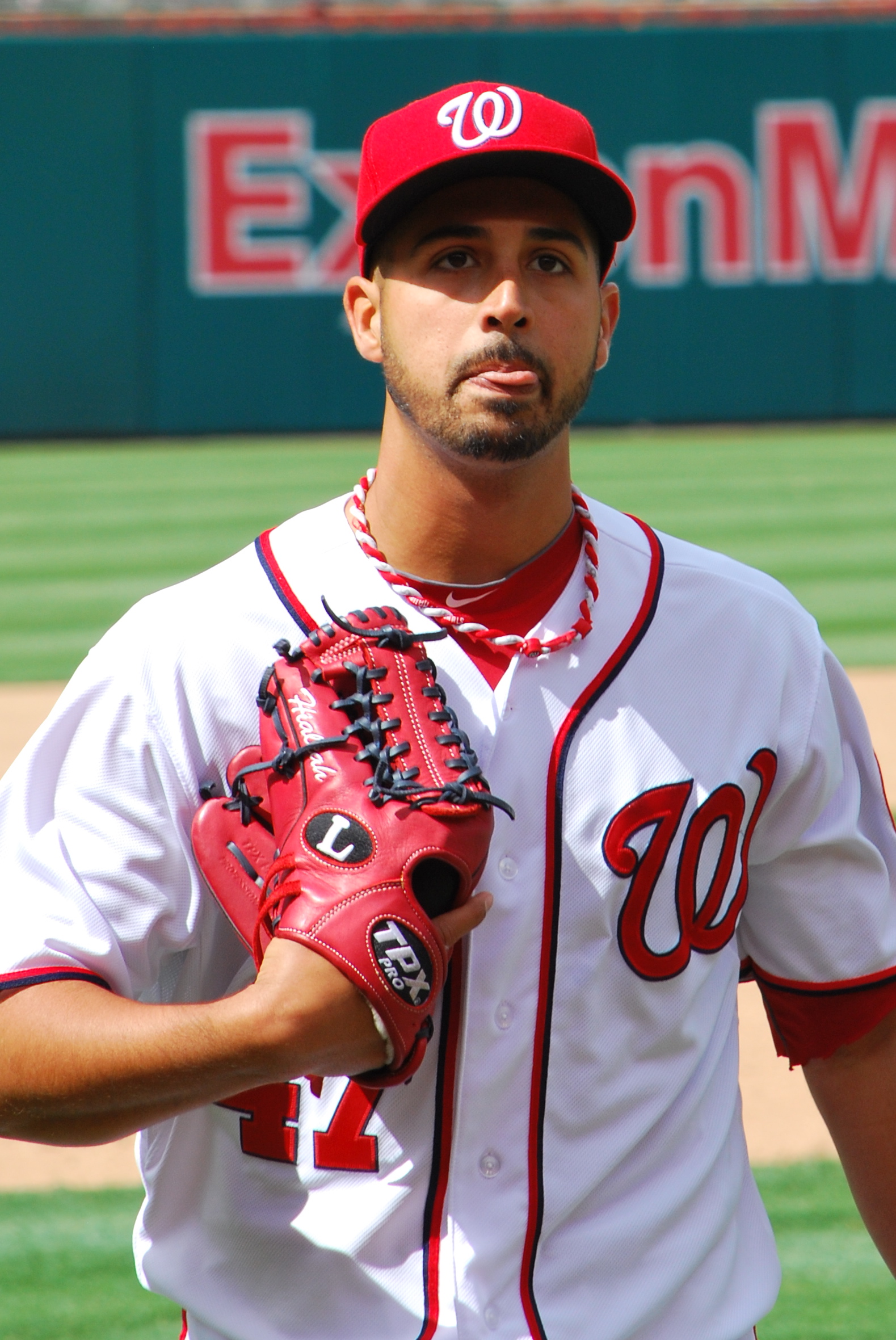
Gonzalez decides rolls the dice with his 2013 performance. Photo via Wikipedia/Flickr from user muohace_dc

Word came out over the weekend that suddenly embattled Nats pitcher Gio Gonzalez has accepted an invitation to play for Team USA in the World Baseball Classic, replacing Kris Medlen (who is anticipating having a child right around the same time).

Why is this bad news for the team?

Simply put: there’s a really bad track record for Pitchers who throw in the WBC the subsequent season, both league-wide and especially with the Nats.

Speaking just about the Nats first: Here’s a quick table showing the before and after ERA and ERA+ figures for the five Nationals pitchers who played in the first two iterations of the WBC (the “before” year is the season leading up to the WBC, while the “after” year shows performance in the season following the WBC):

WBC Yr Pitcher Name ERA before ERA After ERA+ before ERA+ after
2006 Luis Ayala 2.66 inj 153 inj
2006 Chad Cordero 1.82 3.19 225 134
2006 Gary Majewski 2.93 4.61 139 96
2009 Joel Hanrahan 3.95 4.78 109 89
2009 Saul Rivera 3.96 6.1 109 70

As you can see; every single one of our pitchers was either injured or regressed (mostly significantly) after playing in the WBC.  Ayala’s injury cost him the entire 2006 season.  I talked about this discovered phenomenon back in November, 2012 when trying to predict who may participate in the WBC (and where I actually predicted that Gonzalez would play, though the rest of my team USA predictions were wrong).

But this is just our team’s experiences.  How about Baseball wide?  MLB has endeavored itself to argue that participation in the WBC does not lead to an increase in injuries amongst its players and especially pitchers.  But we’re not talking about injuries here; we’re talking about performance.   Here are two very well done studies that show the negative impact of pitching in the WBC:

  1. This July 2010 study on Fangraphs
  2. This Feb 2013 study from BaseballPress.com

The BaseballPress one shows some of the same numbers I’ve shown above, but conducts the analysis across every pitcher who participated in both WBCs.  And the results are pretty evident; across the board on average pitchers regressed both in the year of the WBC and in the year after.  Plain and simple.

It isn’t hard to figure out why these guys regress; playing in the WBC interupts the decades-old Spring Training plans for getting a starting pitcher ready for a season by slowly bringing him along in terms of innings and pitch counts.  And, suddenly exposing both starters and relievers to high-leverage situations in February/March that they aren’t ready for either physically or mentally puts undue stress on these guys that (as we have seen) manifests itself later on down the road.

In the comments section of another post, someone asked what would stop the Nats from steamrolling to the World Series this year.  I answered “rotation injuries” and “bad luck in the playoffs.”  Well, now thanks to Gonzalez we can add two more items: PED suspensions and WBC regression.

Written by Todd Boss

February 11th, 2013 at 9:45 am

Caltech ends record losing streak

leave a comment

Logo via wikipedia

Today’s distraction:

The word came out over the weekend: The California Institute of Technology’s division III baseball team snapped a 10 year, 228 game losing streak by beating fellow baseball powerhouse Pacifica over the weekend.

Which of course begs the question; CalTech has a baseball team!?

Written by Todd Boss

February 7th, 2013 at 11:20 am

Posted in College/CWS

Ladson’s Inbox 2/5/13

16 comments

Lots of questions about Gonzalez and Garcia this week. Photo unknown credit.

Hey, what great timing for another Bill Ladson inbox (posted 2/5/13).  Baseball news is light, pitchers and catchers report in a week or so, and I’m not quite ready to continue my Stats series.

As always, I write my answer before reading his, and sometimes edit questions for clarity:

Q: Do you think general manager Mike Rizzo will add starting pitching depth before Opening Day? Does the lingering possibility of a Gio Gonzalez suspension change whom the Nationals would consider acquiring?

A: In Ladson’s 1/22/13 mailbag, some one asked what could prevent the Nats as constructed from winning the World Series in 2013.  I answered Rotation Injuries and Luck.  Well, in the wake of the Miami PED scandal, I guess the third answer may be “PED scandal.”

This is a tough question to answer; Gio Gonzalez has denied the rumors, but the newspaper in question (the Miami New Times) clearly only named Gonzalez because they felt like the evidence they had in hand was irrefutable.  Many other players have not been named.  So as a GM; how do you go about preparing for 2013 at this point?   If Mike Rizzo knows that Gonzalez is getting suspended, you have to think he’s on the horn to his buddy Scott Boras about possibly buying Kyle Lohse, which is clearly the best remaining FA starter.  But Lohse isn’t coming cheap, and likely isn’t coming on a one year deal, and would cost another draft pick (I believe).  The Nats are already topping $120M in payroll; would they go to $135M?

If we think Gio at least gets a pass and the suspension is put off, maybe Rizzo’s recent activities of signing random starters to minor league contracts is going to be sufficient.

Ladson mentions Javier Vazquez and the ever-present rumors of Christian Garcia going to the rotation as possible Gonzalez replacements if he gets suspended quickly.  Probably fair; Vazquez may be a great, cheap alternative.

Q: Everyone is saying that it’s going to be a two-team race in the National League East between the Nationals and Braves. Do you think the Phillies have a shot to contend with both these teams, or is their time done?

A: Boy, its hard to look at the aging, expensive Phillies lineup they had in place in 2012, which suffered injuries and setbacks and creaked their way to a .500 record, and then look at the highly questionable slew of acquisitions and signings this off season (Ben Revere, John Lannan, Michael YoungDelmon Young and everyone’s favorite anti-gay advocate Yuniesky Betancourt) and not, well, giggle at where this team is going.  My favorite baseball joke from the off-season goes like this: “The Phillies wanted to get Younger this off-season, so they signed Michael Young and Delmon Young.”

The two Youngs were both negative WAR players last year, Lannan is a 5th starter, Revere was a backup centerfielder who the Phillies traded some decent assets for, and Betancourt is who he is (though admittedly he’s on a minor league deal and seems at best set to be a utility infielder behind starters Jimmy Rollins and Chase Utley).  I see the Phillies being a very bad defensive team with the two Youngs in the starting lineup, I see some serious questions in the back side of the rotation, and I see continued regression and louder complaints about Ryan Howard‘s contract.  Fun times a-coming in Philadelphia.  Ladson actually says that the Phillies will “be improved with Michael Young.”  Bill!  Have you seen Young’s WAR figures from 2012??  He was a NEGATIVE WAR player at both major War sites.  That means he makes your team worse!    Now, he was completely servicable in 2011 … so if you want to make the argument to me that 2012 was an aberration for an aging hitter playing in a hitter’s park, well I guess that’s a stance you can take.  But pretty much every other pundit in the blogosphere has loudly criticized the Philadelphia moves this off-season.

Q: What is the status of Lucas Giolito? When do you see him pitching in D.C.?

A: Tommy John surgery in Late August (I can’t remember the exact date; it was 8/24/12 when I posted this highly-critical article about Lucas Giolito and the situation), so figuring a typical 12-month rehab session before he’s actively throwing again in pro-games basically puts him at the end of the 2013 minor league season.  Which means he’ll be 20 before he really is ready to start his pro career in the spring of 2014.  Figure 4-5 years average case for typical high schoolers to work their way up the systems (perhaps fewer years given his talents and pedigree, as we’ve seen with someone like Dylan Bundy in 2012, who made his way from low-A to AA in his first pro season out of HS and got a late Sept callup to the majors) and we’re probably looking at 2016-2017 before seeing him in the majors.  If, of course, he recovers from surgery, hasn’t destroyed his mechanics, is effective, matures, doesn’t get re-injured, or any of the million other pitfalls that typically befall high school arms drafted in the upper rounds.  Ladson thinks he’s pitching pro games “after the all-star break” and is in the majors in 3 years.  Wow.  That is optimistic.

Q: How do you think Henry Rodriguez will do? And what do you think his role in the bullpen will be?

A: I am, and always have been, pessimistic on Henry Rodriguez.  I hated the Willingham trade that got him here.  He’s forced the team to invent injuries to stash him on the DL coming out of spring training b/c he has no options.  He led the league in wild pitches in 2011 in just 65 innings.  He had a 69 ERA+ in 2012.  At some point when does the team say, “OK, its nice that he throws 100mph.  But enough is enough; we need a reliable pitcher who can deliver when called upon.”  Perhaps Spring Training 2013 is that time.

What do I think his role will be?  I’m sure he’ll look great in Spring Training again, will break camp with the team, and very well may look halfway decent for a while.  But just like every other season, he’s going to have those 3-walk outings where he pitches a 1/3 of an inning and gives up 4 runs, and then the manager will be afraid to use him unless the team has a 5-run lead.  And eventually we’ll call up Garcia to replace him and move on.  That’s my prediction for Rodriguez.  Ladson says the team should “attempt to trade him if he is not impressive this spring.”  Wow, that’s sage advice; if only every team could trade its under-performing players and actually get value back whenever it wanted.

Q: Can you predict Washington’s Opening Day lineup if all available players are healthy?

A: Easy.  I’ll even predict the batting order.  Span-Werth-Harper-Zimmerman-LaRoche-Desmond-Espinosa-Suzuki-Strasburg.  Ladson predicts the same names but in a lineup order that makes no sense from a lefty-righty balance perspective.

Q: After announcing his retirement, do you think Brian Schneider is a possible candidate to replace Johnson as manager of the Nationals?

A: Wow, yet another speculative question about the future Nationals Manager.   He took a question about the manager on 1/28/13, and on 1/22/13.  And on 1/14/13.   I guess people like speculating on the Nats next manager.  Not repeating what i’ve said on the topic before, is Brian Schneider a candidate?  Why would he possibly be a candidate to manage the major league team of a system he left 5 years ago?  Why would the Nats pick a manager who’s never managed a day in his life?   Ladson breathes some common sense on this one.

Q: I think Garcia has to be on the Opening Day roster, so is he in the bullpen or someplace else? Can the 25-man roster accommodate him and all the other pitchers?

A: “Someplace else?”  Like where?  In the outfield?   I like Garcia too, but the team has a numbers problem in the bullpen.  Storen, Clippard, Mattheus, and Stammen have all more than earned their spots.  Soriano is being paid a ton of money.  Duke is guaranteed a spot (he’s the only lefty and he’s got enough service time to refuse a demotion).  Oh, and Rodriguez has no options.  So there’s your 7-man bullpen.  Notice there’s only one left-hander out there; if you believe that you need left-handers to get left-handed batters out, then the bullpen needs to sacrifice one of the righties in order to have a second lefty (Bill Bray?) in there.

The only way I see Garcia making this bullpen is if the team runs out of patience with Rodriguez and DFAs/DLs him, or if the team trades away one of their closer-quality surplus guys, or if maybe someone like Mattheus/Stammen (both of whom do have options) struggles or gets hurt.  Otherwise look for Garcia to get stretched out and get looks as a starter in AAA.  Ladson says he’s confident Garcia is on the 25-man roster …. ok explain it to me then based on the above paragraph.  Who is he replacing?

Stats Overview Part II: Hitting stats on the rise: wRC, wOBA, etc

2 comments

Trout's BABIP was very high in 2012; what does this mean for 2013? Photo Gary Vasquez/US Presswire via espn.com

(Part 2 in a series: Part 1 talked about Whats Wrong with Old School Baseball Stats).

More and more in modern baseball writing, you see relatively new statistical creations thrown into articles in order to prove or disprove an opinion, and more and more you almost need a glossary to properly read these articles and properly understand what the author is attempting to say.  I always want to understand that which I read, and at the same time I want to make sure I stay current and up-to-date on the stats out there, so I decided to do a little research (and pen my own post while I was at it) into some of these newer stats that are being used.

I’ll write about each stat, give links to its calculation, write about how it may be used, then put in some rules of thumb by which to consider the stat.

Pretty much every stat here is defined and available at either Baseball-reference.com or fangraphs.com.  BaseballProspectus.com also has some more obscure stats discussed further below.  I’ve always thought that B-R’s interface was so much easier to navigate that I tend to search there first, but a more complete set of stats is at fangraphs.

1. BABIP.  Batting Average on Balls in Play.  Most people know this one, but it is an important stat to consider in conjunction with other stats (especially the older Batting Average and Earned Run Average).   The calculation, as it is seen at Wikipedia, measures basically how many balls put into play (removing from consideration home runs) turned into hits.  Interestingly it penalizes the hitter for hitting sacrifice flies (not sure why).  This stat is kept for both individual hitters and for pitchers.

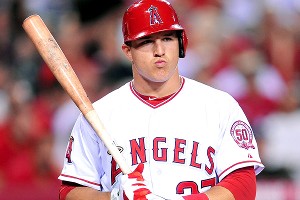
How is BABIP used? The measurement is essentially used as a checkpoint for fluky seasons.  If a pitcher has a very high ERA but also has a very high BABIP, one can explain that he’s been unlucky and his talent level lays somewhere below his posted performance on the year.  Ironically, the two leaders of Pitcher BABIP in 2012 were both on the Tigers; Rick Porcello and Max Scherzer had BABIPs of .344 and .333 respectively; this delta is probably going to lead to both of these guys having better ERAs in 2013.  If a hitter has a decent hitting season but also has a high BABIP, one usually says that the hitter was “lucky” and is due to regress (Mike Trout in 2012 had a Babip of .383.  That’s really high, probably unsustainably high, and he probably regresses statistically in 2013).

MLB Average/Rule of thumb: .290-.300 depending on the year.

When BABIP is high: a hitter is considered to be “lucky,” and future regression of more batted balls being turned into outs is expected.

When BABIP is low, a hitter is considered to be “unlucky,” and future improvement of more hits on batted balls is expected.

Caveats using BABIP: there are many arguments about whether some pitchers “baseline BABIP” should be modified based on their talent or capabilites.  For example, Mariano Rivera‘s career BABIP is .262 while R.A. Dickey‘s BABIP since he turned into a Mets knuckleballing starter is around .275.  Rivera’s lower baseline is probably attributed to his amazing cutter and his pure skill, while Dickey’s is most likely due to the fluctuations of hitting his knuckleball.  Meanwhile, some hitters maintain higher than average career BABIPs (two extreme examples that immediately come to mind are Ichiro Suzuki and Nyjer Morgan, with career BABIPs of .347 and .336 respectively.  Why so high?  Because both are skilled at bunting (or at least hitting choppy grounders) for base hits, artificially inflating their baseline BABIP.

2. ISO; Isolated Power.  As posted on Wiki, Isolated power can be simply calculated by subtracting a hitter’s batting average from the slugging percentage, or as it is more eloquently defined at FanGraphs, ISO is essentially a measure of how many extra base hits a batter hits per at-bat.  Slugging tells you how many bases per at bat a hitter obtains, but ISO strips out singles to isolate a player’s capability of hitting doubles, triples and homers.  Here’s a couple of decent examples from 2012; our own Bryce Harper hits a ton of extra base hits; he’s posted a .206 ISO for the 2012 season.  Meanwhile we know that the aforementioned Nyjer Morgan is not a very powerful hitter and ISO shows it; he’s at .069 for the 2012 season.  The league leaders for ISO reads like a list of MLB’s best sluggers.  Giancarlo Stanton would have led the league in ISO had he qualified; he posted a fantastic .318 ISO in 2012.

How is it used? ISO is used to measure how good a hitter is at getting extra-base hits.

MLB Average/Rule of thumb (from Fangraphs page) .145 is considered an “average” MLB ISO figure.  .200 is pretty good, .100 is poor.

Caveats using ISO: as with many sabremetric-tinged stats, small sample sizes greatly skew the figures.  Fangraphs says 550 ABs is needed before really drawing any judgements.

3. wOBA; Weighted On Base Average.  Created by Tom Tango, wOBA is a relatively newer statistic that attempts to improve upon the traditional batting statistics we use (Batting Average, Slugging and On Base Percentage) by measuring cumulative “weighted” hits that a batter may achieve.  It is based on the premise that the three traditional stats just mentioned all treat hitting events relatively the same.  Is a single equal to a double?  No, but in Batting Average it is.  Is a double worth half as much as a home-run?  No, but in the Slugging Percentage it is.  Each hitting event is weighted and added together, with increases/decreases for stolen bases/caught stealing thrown in, to arrive at a measurement that attempts to better quantify pure hitting.

How is it used?  wOBA attempts to be set to the same scale as the league wide OBP, which seems to hover around .315-.320 year to year.

MLB Average/Rule of thumb (from Fangraphs page) .320 is a good “league average” number.  .370 is great, .300 is poor.

Caveats using wOBA: There are several to keep in mind; the weights change  year to year, in order to normalize the stat across generations.  It is NOT normalized to park factors, so hitters in places like Boston and Colorado will have artificially inflated wOBAs to their true value.  Lastly, there’s zero context given to the game situation when measuring hits (i.e. was there a guy on third with one out?  Was it a close game in the 9th?)  I think particular situation is nearly impossible to measure in any stat, but it is important.

4. RC/wRC: Runs Created and Weighted Runs Created.  Runs Created is a stat that Bill James invented in one of his earlier Baseball Abstracts (1985) in order to try to measure simply how many runs an individual player contributed to the team in a given season.  It was improved upon vastly in 2002 to be much more detailed and accurate; the original version over-emphasized some factors of hitting.  It is a complicated statistic (see its wiki page for the formula).  The aforementioned Tom Tango improved upon the basic RC by creating the Weighted version of the statistic based on his own Weighted OBA statistic (which he believed more closely measures the proper “value” of each hitting event).

How is it used?  Individually, RC and wRC need to be understood in context of an entire season.  It isn’t until we get to wRC+ (see below) that a side-by-side comparison is capable.  Its like saying “Player X has 105 hits.”  If that’s through 75 games, that’s pretty good; if that’s for an entire season, well that’s pretty poor.

MLB Average/Rule of thumb (from Fangraphs page) RC and wRC both have roughly the same scales.  60 is average, 100 is great, 50 is poor for a full season.

Caveats using RC and wRC: They are basically full season counting numbers.  In 2012, Trout started in the minors, so his RC and wRC totals are less than his MVP competition Miguel Cabrera.

5. wRC+/wRAA: Weighted Runs Created Plus/Weighted Runs Above Average

wRAA and especially wRC+ are touted by fangraphs.com as being very good “single number” statistics to properly measure a player’s hitting ability.  I often use OPS+ as a singular number to measure a hitter; fangraphs specifically calls out this number and recommends using wRC+.

How is it used?  Both numbers basically measure the same thing.  wRC+ is a bit easier to explain; 100 is the league baseline, and points above or below the average are expressed as “percentage points above or below the league average.”  So, a person with a 120 wRC+ is considered to be 20% better at creating runs than the average major leaguer.  Cabrera and Trout ironically tied for the MLB lead for 2012 in wRC+, each posting a 166 wRC+.  Meanwhile wRAA (per fangraphs.com) “measures the number of offensive runs a player contributes to their team compared to the average player” and is scaled to zero.  wRAA is essentially a direct calculation from wOBA, so if you’re using one you can likely ignore the other.

MLB Average/Rule of thumb (from Fangraphs page) for wRC+: 100 is average while for wRAA zero (0) is average.  20-25 percentage points above is great, while 15-20 percentage points below is bad.

Caveats for using: Unlike wOBA, wRC+ is park- and league-adjusted, indeed making it an excellent single number by which to measure players.  Otherwise the caveats for these weighted averages are all about the same; they seem to be based on an weighting of hits that you may or may not agree with.


What have I learned from looking into these hitting stats?  I need to keep BABIP in mind.  I like ISO but I don’t see it gaining real credence over slugging percentage.  And I should probably start using wRC+ more than OPS+.

Part 3 coming up on Pitching advanced stats.

Cal Ripken Burgers??

leave a comment

I'm sure they're really tasty. Photo unknown via baltimoresports.report.com

Because when I think of frozen burger patties, I think of Cal Ripken Jr.

I was shopping at Giant over the weekend and did a double-take in the frozen food aisle.  Did you guys know that Ripken is hawking a line of burgers?  I didn’t.  A bit of google work shows that they’ve been on the market since May of 2012.

Is it just me, or is this a relatively random athlete-food connection?  This would be like Reggie Jackson having his own candy bar.  Oh wait… 🙂

Written by Todd Boss

February 3rd, 2013 at 2:34 pm