Nationals Arm Race

"… the reason you win or lose is darn near always the same – pitching.” — Earl Weaver

Movie Review: 42

4 comments

Robinson's most iconic moment; stealing home in the 1955 World Series.

Robinson’s most iconic moment; stealing home in the 1955 World Series.

So, one thing we’ve noticed about having a kid is how our television and movie watching habits have changed.  Here’s a summary:

1. We never go out to movies anymore.

2. We watch about 30 minutes of something between the time we get him down at night and the time we have to go to bed and collapse from exhaustion.

3. If we do rent a movie …  it is something that came out months ago and is either on HBO or on-demand for $5 bucks.  We watch it in 30 minute increments around his sleep schedule.

So, given the above parameters, we just finished watching the movie 42, which chronicles Jackie Robinson‘s breaking of the color barrier in Baseball in the mid 1940s.   Some Links about the topic: IMDB’s movie page, Jackie Robinson’s Wikipedia page and Robinson’s Baseball-Reference page.

Here’s what I thought.

Story and Acting: My wife enjoyed the movie moreso than I did; perhaps it is because of the “love interest” storyline between Jackie and his wife, or perhaps it is because she doesn’t know the whole story of Robinson.  I knew, for example, that Robinson won the Rookie of the Year award in his debut season and a subsequent MVP award, so someone who doesn’t know Robinson’s history would watch the latter half of the movie regarding his MLB debut and maintain some suspense as to how he performed.  The various players just sort of allude to Robinson’s talent level here or there; never letting on just how good of a player he is.

Robinson’s relationship with his wife is a large feature on the movie.  I have no idea how pertinent this is to the man and this story, having not yet read one of the many Jackie Robinson books out there (the most frequently mentioned being Baseball’s Greatest Experiment by Jules Tygiel and Opening Day by Jonathan Eig, not to mention the fact that Robinson seems to have penned at least 4 autobiographies).  But enough emphasis is given that at one point my wife asked, “He doesn’t frigging cheat on her, does he?”  Perhaps a statement on our low expectations of professional athletes in the modern world, thanks to the travails of stars like Tiger Woods and Michael Jordan.

Harrison Ford as Branch Rickey might be the best acting job I’ve ever seen him perform outside of Witness or The Fugitive.  I thought Ford was washed up as an actor, but he played a compelling, complex Rickey character who at times was using Robinson’s debut both as a money-grabbing ploy and a morality play.  The two relatively unknown actors playing Jackie and Rachel Robinson were fantastic, all things considered.  Chadwick Boseman and Nicole Beharie both gave excellent performances.

The story itself, as tends to happen, left out some details.  It had to, in order to fit into a 2 hour time period.  I wish they would have spent more time discussing Robinson’s college and military background; he was an absolutely fantastic all-around athlete, winning varsity letters at UCLA in FOUR different sports.  Instead the movie seemed to imply that Robinson had been kicked out of the military (which did not occur) and barely mentioned his background prior to his being plucked out of the Negro Leagues in Birmingham.  Fair enough; Robinson’s legacy had to do with baseball, not his collegiate football accomplishments.

Baseball Sequences: Unlike some baseball movies we’ve seen, at least the pitchers looked like they could pitch in this movie.  Boseman’s ability to look natural at the plate was nearly convincing; per his biography he’s an athlete who still plays basketball.  As it turned out though, they didn’t really have to show a ton of baseball footage despite this film’s title subject; most of this story was to bring to the screen the oppressive and unbelievable racism prevalent in the mid 1940s and to subsequently show how the Robinsons faced it.  Nowhere was this more prevalent or obvious than in the first Brooklyn-Philadelphia game, where the opposing manager (Ben Chapman) stood on the field and hurled insult after insult at Robinson in what seemed like pure racism, but was later explained away as “gamesmanship” by the coach.

Unfortunately, the best baseball sequences didn’t appear until the credits started to roll, where what looked like B-film capturing the players making diving stops in the field appear in slow motion.  Perhaps it is fitting that the baseball action is limited; this isn’t really a “baseball story” like The Natural or Major League is; it does not depend on believable baseball action to make its point.  Robinson could walk and triumphantly trot to first base and it can appear as a monumental moral statement.

Some clarifications on the legacy of early black players: the movie implies that the Dodgers were considering Robinson, Roy Campanella and Satchel Paige to be the first player to integrate.  What’s left unsaid is that the real “star” of the Negro Leagues at the time was Josh Gibson.  Also interesting to me was the fact that a second black player named Johnny Wright was signed in early 1946 and played in the minors the same season that Robinson debued.  I didn’t necessarily know this, but Larry Doby broke the color barrier in the American League just a couple months after Robinson did, to very little fan fare (see this list on Wikipedia of the earliest black players by date and team).  I only mention this because the film post-credits say that (paraphrased) Robinson paved the way for black athletes like Campanella and Don Newcombe.  That’s true: Campanella and Newcombe were the next two black players to play for Brooklyn, but not in the major leagues.

Conclusion: Decent movie.   Probably will never watch it again.  I may be in the minority though; the film grossed nearly $100M and now stands as the 2nd highest grossing baseball film ever made.   I’m not sure i’ve got it in my top 10 baseball movies of all time, but it may slide into contention for best baseball-related drama.  I’ll keep it in mind the next time I update my Baseball Movie post.

What did you guys think?


Ask Boswell 7/22/13

10 comments

Denard Span is catching a lot of criticism right now.  Photo: Brad Mills-USA TODAY Sports

Denard Span is catching a lot of criticism right now. Photo: Brad Mills-USA TODAY Sports

Well, Phil Mickelson came out of nowhere to take the British Open over the weekend, NFL training camps are coming up soon and the Nats just got swept anemically at home.  I wonder how many baseball questions there are in this week’s ask Tom Boswell chat?  Lets find out.

As always, I answer here before reading Boswell’s response, only take his baseball/Nats questions and edit those questions for clarity.

Q: Is one of the reasons for the Nats malaise because they know Johnson is a short timer?

A: The implication of the question is this: if Davey Johnson suggests a change, the player says, “Eh, you’re gone by the end of the season, why should I listen to you?”  I have a hard time believing this for two reasons:

1. I’m not convinced there’s that much “coaching” going on in the majors.  Especially for veterans.  These guys are professionals, they’ve been playing professional baseball for years.  If you don’t know how to bunt, or how to field by the time you’ve made the majors then I don’t think you’re ever going to get it.  Maybe I’m wrong.

2. I’m also not convinced that managers really have that much to do with a game’s being won or lost.  Yes, disastrous bullpen decisions can back fire.  But its still on the hitters to hit, the starters to pitch, the fielders to make plays.

Related to #2; word came out today that the Nats have fired hitting coach Rick Eckstein.  Is this sort of like firing the secretary when the entire office puts out bad work?  Johnson was really upset by it and said so in the media … and I don’t have any doubt that this is a reactionary move to the poor offensive numbers.  But ask yourself; what is a new hitting coach going to do to turn this team of hitters around between now and September 30th?

Boswell gives Johnson lots of credit in 2012 for instilling confidence in the youngsters and garnering more respect out of the veterans (in comparison to Jim Riggleman). 

Q: Suzuki, Soriano, LaRoche. Any reason the Nats shouldn’t be sellers this year?

A: The Nats will not sell.  Because that would be Mike Rizzo admitting that all his moves last off-season were wrong.  And he’s not going to admit that.

Lets play the what-if game though; what if the Nats were to become sellers.  First guys on the block are FAs in their last (or only) year.  We only have a couple of those guys: Kurt SuzukiDan Haren and Chad Tracy.  Look at that list and ask yourself who would want these guys and what they’d be willing to give up?  Even newly acquired Scott Hairston is signed through 2014.  But then again, teams are smarter and generally won’t give up good prospects anymore for rentals.

One last point: the Red Sox blew a 9 game lead in September two years ago.  The Nats are only 7 out of the division lead, even playing as poorly as they have.  It’s still just mid July.

Boswell says wait until July 31st.  And interestingly he criticizes the Denard Span acquisition. 

Q: Can we get rid of Span?

A: Ironic that Boswell took this question right after killing him.  I have always thought that the Span acquisition was Rizzo being too clever, too focused on defense.  And so far it looks like the critics were right.  Span is posting an 86 OPS+ right now.  His OBP is about the same as the guy we had to jettison to make room for him (Michael Morse).   Except Morse at any moment can hit the ball 430 feet; it’d take Span 3 swings to get it that far.  To say nothing of driving out a fan favorite/good clubhouse guy.

Can we get rid of him?  Nope.  Stuck with him and most of this team through next season.  But, at that point he seems tailor made to flip to bring up someone like Brian Goodwin.

Boswell says that Bernadina isn’t the answer.

Q: Isn’t it galling to the team that Rafael Soriano acts differently on the mound — e.g., windup vs. stretch — depending on whether or not it is a save situation?

A: The word on Rafael Soriano wasn’t positive before he got here, and the whole “shirt untuck” seems to smack of showing people up.  And it’s clear to me that he’s a “Save snob;” look no further than his numbers in 2010, 2011 and 2012.  In2010 as a closer in Tampa?  226 ERA+.  The next year as a setup guy in New York?  4.12 era.  Then when Mariano Rivera goes down and he gets the closer job in 2012?  Back to being excellent.  If he purposely pitches differently in save vs non-save situations?  I’d be really, really pissed as a player.  But luckily the stats don’t support it; his ERA in non-save situations is better than in save situations, by a lot.  Boswell says that Soriano’s behavior is being noticed.  great.

Q: Should we start platooning Span with Hairston?

A: Is this what it’s come to with Span?  That we’re talking about platooning him with a guy hitting .170?  Yes Hairston’s lefty splits are good … but come on.  It isn’t like he’s an all-star slugger.  At least span brings plus-plus defense to center.  Bat him 8th, where his damage is limited.  Boswell says Yes its time to platoon.

Q: Everybody says Nats Park can’t get an All-Star Game because the surrounding area isn’t developed enough. But how does that explain sites like Busch Stadium (their development plan is further behind than ours), Angel Stadium (surrounded by parking lots and freeways), or Citi Field (surrounded by parking lots, a subway line, and a junkyard)?

A: Great question.  Maybe Bud Selig hasn’t seen all the development going on.  Or maybe Ted Lerner just don’t want to get on his knees and beg for it before the omnipowerful commissioner.  I do think its kind of ridiculous that baseball has chosen to return to parks that have previously hosted before giving a game to every new park.    Boswell doesn’t really answer.

Q: How good has Gio been over the past two months?

A: Before his 6 shutout/11k outing last weekend Gio Gonzalez had won 4 straight starts.  The worst of them was a 6 2/3 3 run performance that the team won easily anyway.  Maybe he’s pitching to score (ooh, don’t say that too loudly, the sabre nerds get all pissed).  Yeah he’s pitching great.  Boswell agrees.

Q: Should Krol start working later in games?

A: I’m still not entirely convinced Ian Krol can be more than a loogy.  Every time i’ve seen him, he’s been a one-pitch/one-trick guy.  I’ve literally never seen him throw his off-speed stuff for strikes.  Luckily the deception and velocity on his fastball are good enough to let him ride to a very good season statistically so far.  I’d stick with what we’re doing now; using him and Fernando Abad as situational relievers and leaving the hard work for Clippard and Soriano.  Drew Storen?  Now that’s another story.  Boswell says give him more work.

Q: I’ve seen a recent increase in the criticism of Davey Johnson’s managerial decisions. I can’t believe fans are blaming him for where the Nats currently stand. I put the blame on the players. It’s execution that’s at fault. Right? What else could/should Davey do that he hasn’t already tried?

A: Stop using poor relievers.  Stop pulling effective starters after 90 pitches.  Stop batting Span 1st and drop him to 8th where he belongs.  That’s what I’d do.  Boswell shared some ancedotes.

Q: I was so in favor of the Span acquisition, now it just looks horrible. Do you think he can get back to the .392 On Base Percentage he has in 2009 or is he really a .317 OBP guy? Will this team ever solve CF and lead off?

A: Just had this discussion with someone over email.  He does look horrible at the plate.  But he plays a great center field!  Rizzo just had to have his center fielder; well now you have him, and the guy he displaced (Mores) has about the same OBP this year as Span.  To go along with 200 points of slugging.  So there’s that.  You say “well Morse has been injured?”  I say sure … he got injured in Seattle.  No reason to assume the same thing would have happened here.  We gave up Morse’s power in the middle of the order and moved a perfectly capable defender (Harper) off center to acquire Span and have him drag down the top of the order.  Can’t do anything about it now (or until 2015 frankly): I say bat him 8th until he proves he deserves to return to the top.   Boswell points out that Span’s OBP is only 1% better than league average.

Q: Should we keep Soriano in the closer role?

A: Pretty much; $11M a year and he’ll be a sullen clubhouse cancer if he’s not closing.   He’s being paid way too much money to flip, even to teams that covet closers.  Well, maybe we can talk to Boston; they seem to be idiots when it comes to paying for closers (as noted in this space).   Boswell also mentions Boston but points out how battle-tested Soriano is, implying he has value.  I’m clearly on the record in my opinion about closers and paying big money for them, disagreed with the acquisition and disagree with Boswell here; if we could trade him, you do it.

Q: Is Jayson Werth immature and/or a hypocrite?

A: You’d have to read the whole question (which clearly implies the opinion of the asker), but there’s some vitriol in there.  I can’t think of any incidents that make me ever put Jayson Werth in the same maturity category as Nyjer Morgan.  I think the questioner is off-base here.  Boswell predictably defends Werth.  I will say this: go look at Werth’s hitting stats this year; he’s been very, very good.


Innings limits and media hypocrisy

2 comments

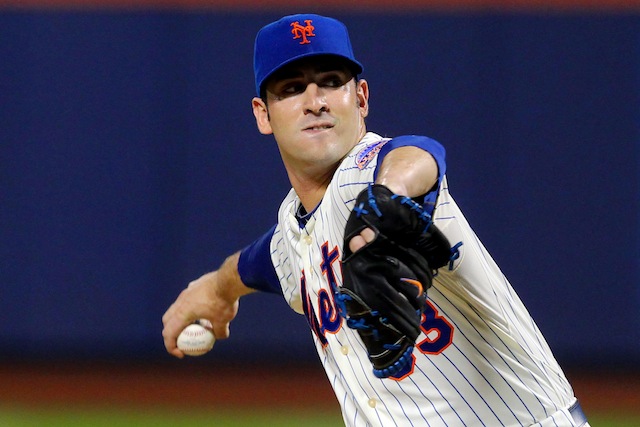
Matt Harvey is lucky he isn't pitching for a contender .. Photo: Brad Penner-USA TODAY Sports

Matt Harvey is lucky he isn’t pitching for a contender .. Photo: Brad Penner-USA TODAY Sports

I just noticed this little report float across the wire: the Miami Marlins plan to shut down their rising star 20-yr old Jose Fernandez when he reaches 170 innings.  We’ve already seen the Mets manipulate Matt Harvey‘s pre-all-star start in an attempt to limit his innings and stretch him out as long as possible, and they too have talked about an innings limit for their new-found Ace (Editor Note: this was before his unfortunate UCL injury).  Cub’s rising Ace Jeff Samardzija was shut down on September 8th of 2012 after reaching a prescribed limit that the team had set.  And our own Jordan Zimmermann worked on a 160 inning limit and was shut down in late August of 2011 after recovering from Tommy John surgery.  And there’s more: see the following for a quick summary of Operation Shutdown 2013:

So what’s the common theme here?  When the Nats shutdown Zimmermann in 2011 they were not a playoff team.  Nor were the Cubs with Samardzija in 2012.  And this year clearly the Mets and Marlins are not playoff teams.  BUT, when the Nationals in 2012 were clearly a playoff team and did a similar innings-limit shutdown with Stephen Strasburg, there was (and continues to be) national media uproar over the decision.  The Nats (and by proxy Mike Rizzo) were described as “arrogant” by more than one “anonymous GM” (aka gutless chicken-sh*t executive who wouldn’t go on the record criticizing a colleague who had to make a pretty significant, difficult decision), as dutifully and gleefully reported by bloggers and writers who go to great lengths to state their own opinions on the matter.   And it didn’t take but a few hours after the Game 5 meltdown (and in some cases even before then) for said writers to pipe up yet again with their opinions that the NLDS absolutely would have turned out differently if Strasburg was pitching.

And keep in mind, Strasburg was coming back from an injury!  Nearly every one of these 2013 Operation Shutdown guys weren’t ever hurt; they were just limited by executives who may prescribe to the Tom Verducci effect of increased workloads (whether or not you agree with the principle, which has been disproven on the macro level yet Verducci maintains an 80% successful prediction rate.  Discussion on both sides from a January 2013 post here).

Why the hypocrisy?  Because there’s a huge double standard here.  Its “OK” to shutdown your ace for health-related or longevity-related issues …. but only if your team sucks and you’re not making the playoffs.  However, if you are making the playoffs and you follow-through on your season-long stated intention to shutdown your star pitcher coming off a major arm injury … then you’re an idiot.  At least, that’s my interpretation of the media reaction in September of 2012 of Strasburg-shutdown versus Samardzija-shutdown.

Its ok to ignore doctor’s recommendations and attempt to blow out your 24-yr old’s arm again so that he can make one or two post-season starts … because, hey, Flags fly forever, and you may never get back to the playoffs.   I think this statement encapsulates the argument very simply; some people value making the playoffs for one year far above the long-term health of one particular baseball pitcher’s arm.  People with these opinions are gleefully watching our team struggle in 2013, and I’ve seen more than one opinion posted that say this is “karma” on the Nats for shutting down Strasburg last year.  Really?  Karma?  Not the 29th ranked offense in the league as being the root of all our troubles right now?

The point is this: if you were against an innings limit for Strasburg … then you should stand up and say you’re against innings limits for any pitcher.  All the “well we don’t know if shutting down a pitcher helps or hurts” arguments (which are all entirely true; we don’t have any idea if Strasburg’s career will be 3 more years or 15, and we have no idea if the 2012 shutdown will help, hurt or have no impact), shouldn’t be affected by the team’s place in the standings.  If you’re against the Strasburg shutdown on principle, then you should be equally outraged that the Mets, Cubs, and Marlins plan to “tank” games in August that their aces would have been scheduled to pitch as well.

I’m sure that we’ll continue to hear more “shutdown dates” being announced for the slew of young power arms that are making 2013 increasingly the “Year of the Rookie pitcher.”  None of these names have been mentioned yet, but rookies with decent MLB workloads such as Shelby MillerGerrit ColeZach WheelerJacob TurnerTony CingraniAlex Cobb, and maybe even guys like Jarred CosartChris Archer and Martin Perez could all be names that teams look to protect going forward.  And some of these guys (especially Miller and Cole) are pitching significant innings for playoff contenders, and are going to blow by 2012 innings numbers by mid-August.  Will we see another Strasburg-esque shutdown media blitz in 2013?


Post Script added 7/26/13: we have announced that our own Taylor Jordan will be facing an innings limit in 2013, and it is coming up very fast.  “20-30” more innings, or roughly 5-6 more starts.  That hopefully will coincide with Ross Detwiler‘s return from the D/L but it may not, forcing the team to scramble to fill that rotation spot.  Update: this on 8/18/13 after Jordan suffered a sprain that would have made it impossible to come back anyway.  Shut down at 142 total innings for 2013.

[After the fact post addition: ESPN’s Jerry Crasnik posted about the same topic on 8/7/13, with great updated innings counts for pitchers on contending teams.  He says the same things I’m saying here.  Sept2013 I updated this post whenever a new team announced they were shutting down a player].

9/15/13 post about innings limits

http://hardballtalk.nbcsports.com/2013/09/14/are-pitch-counts-and-early-shutdowns-actually-helping-pitchers/

How much live action occurs in each sport? Ball in Play studies summarized

131 comments

How much live action actually occurs in each major sport?

Note: if you’ve found this and want to make a comment about how football is such a more exiting sport than soccer, or think this is some sort of anti-football post … then you’re missing the point.  This is about LIVE ACTION stats and the viewing experience.  If you love Cricket, you’ll sit there for 5 hour test matches where there’s fractions of periods of real action.  If you love football, then you’ll sit there for hours on end.  That’s not the point here.

Editor Post-publishing Update: this was originally published in July of 2013.  Over the years I have updated this post with additional information, resulting in adjusted numbers from the original.  I’m always looking for more and better information and am all ears if you have links to these kinds of studies.


I’ve never been the biggest NFL fan, despite living in a distinctly football town here in Washington DC.  But in the past few years or so, slowly my patience for watching an entire NFL football broadcast has ended.  Notice how games used to be slated for 1pm and 4pm on Sundays?  Now they’re 1pm and 4:15pm, or maybe even 4:25pm, with seemingly all that extra time now devoted to commercials.  Every time there’s a time-out, a break in play, after every challenge, there’s more commercials.  My friends and I have a joke.  I’ll ask “Hey, what time is the 8:00 game?”  And instead of the answer being obvious … the answer is 8:15 or 8:30 or whenever they’ve now pushed the late Sunday night game thanks to the 4:00 games running late (you know, since they  now start at 4:15 or 4:25 or whenever they’re slated to start).

Ironically, the same distinct lack of action complaint is easily seen in baseball broadcasts.  So I can’t be casting too many hypocritical stones against my football-following brethren (this is a Baseball-focused blog after all).

I got to wondering; just how many frigging commercials do they really show in NFL games these days?  This pursuit led to the larger issue: How often is the ball actually in play in an NFL game?  How often are the fans just sitting there watching crowd shots or replays or pictures of cheerleaders or head coaches looking constipated?

So I started looking far and wide for “Ball in Play” studies for the 5 major professional sports to compare and contrast the TV viewer experience.  Here’s what I’ve found (all sources are listed at the bottom and referenced inline).  For some sports (Hockey and Basketball) it is relatively easy to assume that, if the clock is running, there’s action.  For the others, with either a lack of a clock (Baseball) or significant periods of inactivity while the clock is running (Soccer to some extent but especially in Football) the details are harder to come by.

  • Baseball: Per the 2013 WSJ study, Baseball games feature 17 minutes and 58 seconds of action.  Baseball games have been increasing in length (thanks in part to the eighteen annual 4-hour marathons between the glacial Boston Red Sox and equally glacial New York Yankees) over the years.  But, the amount of action has stayed roughly the same.  A 1952 TV broadcast showed about 13 minutes of action but just 9 minutes 45 seconds of commercials. The latest WSJ study found that fully 42 minutes and 41 seconds of between-inning inactivity would be purely commercial time on TV broadcasts.  That means there’s nearly 5 times as many commercials now than 50 years ago.  2015: thanks to new pace of play rules, the average length of a baseball game dropped by 6 minutes from 20142017 update: ESPN published a study of the 2017 playoffs, which have been dragging.  The average MLB playoff game in 2017 has been going 3hrs, 35mins, which is up 10 minutes from 2016 and an astonishing 21 minutes from 2015.  I get that playoffs are more strategic, that pitchers are on quick hooks b/c there’s a finite amount of time, but this 3hrs 35mins is brutal.
  • Football: Per the WSJ 2010 study, NFL games feature about 11 minutes of action.  The amount of action in football games has been roughly the same since the early 1900s.  There was roughly 13 1/2 minutes of action in 1912, and slightly less in the 2010 study.  Other studies have shown that football generally ranges between 12-17 minutes of action.  Personally I tracked one quarter of an NFL playoff game  a few years ago with these numbers: in 50 minutes of clock time we saw exactly 250 seconds of action (4 minutes, 10 seconds) accompanied by no less than 20 commercials.  And this turned out to be a relatively “easy” quarter: one time out, one two-minute warning and two challenges/reviews.  It could have been a lot worse.  More recent studies have found that things are worsening for the NFL: WP’s Fred Bowen counted the ads in a 2014 NFL game and had seen an astounding 152 advertisements during the game.  152; that was more ads than plays from scrimmage.  Update for 2015: the early returns on the first few weeks of the season show a huge up-tick in penalties, which have slowed the game by four minutes from 2014 and average times are now at 3hrs 10minutes for games.  2017 update: the NFL has made some tweaks and the average game length through 2 weeks is down significantly, to 3hrs 4mins from 3hrs 15minutes in 2016.
  • Basketball: NBA games average 2 hours and 18 minutes in actual time.  Working backwards (since the clock only runs when the ball is in play and we know there’s exactly 48 minutes of play time) we know that there’s 138-48 = 90 minutes of “down time” of some sort in a typical NBA game.  Not all of that is commercial time but all of it is inaction.  I cannot find any documentation of typical number of commercials so i’ve just split the difference between on-screen inaction and off-screen commercials in the table below.  If you’re a big-time NBA watcher and feel this isn’t fair, please comment as such.
  • Hockey: The Livestrong piece below (side note: why is Livestrong doing “ball-in-play” studies on Hockey?) quotes average NHL games being 2hours and 19minutes in the 2003-4 season.  Working backwards from this, you have three 20-minute periods and two 17 minute intermissions, which leaves 46 minutes of remaining idle time.  Given that the idle times in Hockey are not nearly as long as those in basketball, I’m going to estimate that about 2/3rds of that 46minutes is commercials.
  • Soccer: Per the Soccerbythenumbers.com website 2011 study, between 62 and 65 minutes of ball-in-play action is seen on average in the major European pro leagues per game.  For the table below i’ll use 64 minutes as an average.  The duration of pro soccer games is relatively easy to calculate: they fit neatly into a 2 hour window by virtue of its 45minute halves, 15 minute break and an average of 3 minutes added-time on either side of the halves.  45+45+3+3+15 = 111 minutes of a 2 hour/120 minute time period.  Thanks to a bit of fluff on either side of the game, you generally count a soccer broadcast to last 1 hour and 55 minutes.  In the table below i’ve assumed that a huge portion of the intermission is commercial; in fact it is a lot less since most soccer broadcasts have a half-time show and highlights.  So if anything, the # of commercials in soccer broadcasts is less than listed.  Post 2014 World Cup Update: FIFA estimates that the group stage games averaged 57.6 minutes of action per game (if i’m reading their stat page correctly).  I’ll use this as the number going forward, even though World Cup games might be a bit “slower” than your average pro soccer game due to the careful, tactical nature of most of the matches.

So, in summary, here’s how the five major sports look like in terms of Ball in Play and # of commercials the viewer is forced to endure in a typical broadcast:

Sport Clock Duration Amt of Action % of Action Amt of Commercial Time Est # of 30-second commercials # of commercials/hour
Baseball 2hrs 56mins 17mins, 58secs 10.21% 42.68 85 29
Football 3hrs 10mins 11mins 5.79% 75 150 47
Soccer 1hr 55mins 57.6mins 50.09% 19 38 20
Basketball 2hrs 18mins 48mins 34.78% 45 90 39
Hockey 2hrs 20mins 60mins 42.86% 30 60 26

From this you can clearly see that watching Soccer gives you the most amount of live “Action,” though cynics and soccer-haters would probably claim that a lot of that action is “dead action,” defenders passing the ball around and not the type of action you see in other sports.  I’m a soccer fan and would rather have this type of “dead action” than what we see in the NFL: one 3 second running play then more than 30 seconds of watching players stand around before running another 3 second running play.  Don’t be fooled; there’s plenty of dead action in other sports too that gets counted as “live action” here … players walking the ball up the court in slow motion for 10 seconds in Basketball, the dumping of the puck to the end of the ice to facilitate a line shift in Hockey, etc.  So this kind of analysis is not an exact science.

Soccer is easily the most predictable of the five sports to plan a viewing experience around; you know for a fact that a regular-season/non-Overtime game is going to be over within 2 hours.  All the other sports can go into over-time and lengthen the time commitment.

Professional Football is at the bottom of all of these Viewer-experience measures: it is the longest broadcast, shows the least amount of game action and forces around 50 commercials an hour onto its viewers.  And the NFL is only getting worse; recent years have seen the introduction of new commercial breaks where none existed before (after a kickoff being the most ridiculous, but the mandated booth reviews at the end of halves now gift-wrap new commercial breaks to broadcasters at a game’s most critical time).

Thoughts?  If you have better information I’m all ears.  I’ve had very good suggestions to add to this data stuff like College Football, College Basketball and Tennis.  Perhaps some day with more research we’ll revisit.


Sources:

Written by Todd Boss

July 17th, 2013 at 8:20 am

Interesting Trade Season rumor…

12 comments

Could the Nats trade LaRoche? Photo: Rob Carr/Getty Images

Could the Nats trade LaRoche? Photo: Rob Carr/Getty Images

In a recent column, Jayson Stark floats an interesting trade scenario: basically the Nats trade Adam LaRoche, move Ryan Zimmerman to first base, move Anthony Rendon to his natural third, and recall the hopefully back-on-track Espinosa.

In other words, the exact future scenario envisioned for this team before locking in LaRoche for 2 years at first base, necessitating the jettison of Michael Morse (and his offense) this past off-season.

He wouldn’t have reported it if he hadn’t heard some rumblings in the industry about it; how seriously would the Nats consider such a  move?

Major issue with this situation?  You’re losing LaRoche’s bat.  This team needs all the offense it can get; it doesn’t need to trade their cleanup hitter away.  In this scenario you’re replacing LaRoche like-for-like in the rotation with Danny Espinosa, not exactly an even deal.

We’ve already heard that the team is playing Espinosa at short in AAA, in what most believe is a show-casing of Espinosa’s skills at the position.  He’s far more valuable to teams as a career .240 shortstop with 20-homer power than he is putting up those same numbers at second base.  However, as others have noted, trading Espinosa after the start he had in 2013 would be the definition of “selling low.”  So I’m guessing he’s just filling in where needed in Syracuse for now.  Once a short-stop, always a short-stop.  After a horrible start in Syracuse, reports are that Espinosa is tearing it up as of late.  Is he ready to come back up?

Another issue with this scenario is Zimmerman’s improved defense at third lately.  Is it possible that all his throwing issues were lingering effects of his off-season shoulder surgery?  You know, the surgery that was supposed take just a few weeks to recover from but whose recovery period is now well into the 2013 season?  Despite Rendon’s reputed skills at the hot-corner, you don’t lightly move Gold Glove-winning fielders off their positions.

What if LaRoche was packaged with Espinosa and moved to a team that could provide the Nats back with a bigger bat who plays first base but who is making too much money for the team in question?  I can’t think of someone like this off-hand, but the scenario would be the Nats providing payroll relief for some bad contract.

Thoughts?

Written by Todd Boss

July 16th, 2013 at 10:04 am

One Team Hall of Famers: a dying breed?

3 comments

Chipper Jones at his retirement game.  Photo via lostthatsportsblog

Chipper Jones at his retirement game. Photo via lostthatsportsblog

I was listening to a podcast this past weekend and the host mentioned something in passing related to Chipper Jones being the last of a dying breed: one-team Hall-of-Famers.  In the modern age of free agency, we’re seeing iconic players such as Albert Pujols (and in other sports lately, Paul Pierce and Peyton Manning) switch teams mid-to-end of their careers and sullying their legacy in their original city.

It got me thinking: who in baseball right now are the best remaining chances of guys being single-team Hall of Famers?

Using the Current Baseball-Reference Active career WAR leaders as a guide to finding players (and using Baseball Prospectus’ Cots Salary database to quote contract years), lets take a look.  The players are listed in descending order of total career WAR.  The first few names are obvious.  Then there’s a group of younger guys who have yet to play out their arbitration years and who could easily jump ship and sign elsewhere in free agency; i’ll put in a complete WAG as to the chances of the player staying with one team their entire career.

Hall of Fame Locks and Likelys

1. Derek Jeter, New York Yankees.   100% likelihood he retires as a Yankee, and 100% likelihood of being a first ballot hall of famer.

2. Mariano Rivera, New York Yankees.  As with Jeter, he’s 100% to retire as a Yankee (having already announced his retirement) and should be a first ballot hall of famer as inarguably the best late-inning reliever the game has known.

3. Yasiel Puig, Los Angeles Dodgers.  Just kidding.  Come on, you laughed.

4. Joe Mauer, Minnesota Twins.  Its hard to envision someone being more of a franchise player than Mauer; born in Minnesota, High School in Minnesota, 1st overall draft pick by the Minnesota Franchise.  Massive contract with full no-trade through 2018.  I think Mauer will be a Twin for life.   Hall of Fame chances?  Looking pretty good; already has an MVP and has a career .323 BA for a catcher, pretty impressive.

5. Robinson Cano, New York Yankees.  He’s about half way through his career, but his numbers and accolades keep piling up.  Pretty soon we’re going to look up and he’s going to have 400 homers and a career BA above .300 as a 2nd baseman with a slew of top 5 MVP finishes, and we’ll be asking ourselves where Cano ranks in the pantheon of baseball 2nd basemen.  Here’s the canonical list of 2nd basemen elected to the hall of fame in the last 50 years: Roberto AlomarRyne Sandberg, Rod Carew and Joe Morgan.  Do you think Cano belongs there?  Now, will Cano stay a Yankee?  We’ll soon find out: he’s just played out his two option years and has not been extended.  Are the Yankees preparing to let him walk?

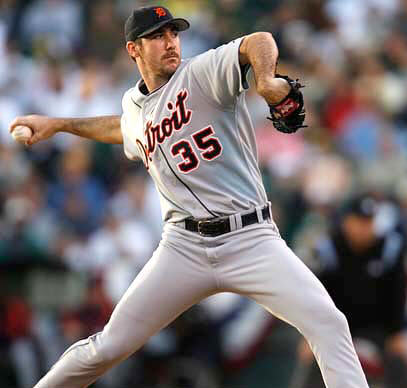
6. Justin Verlander, Detroit Tigers.  He’s struggled this year as compared to his typical lofty achievements, but he already owns the career trifecta of awards (RoY, MVP, Cy Young).   He’s signed through 2019 with a 2020 option, at which point he’ll be 37.    He probably won’t get to 300 wins but he could broach 250 with excellent career numbers.  Will he stay with Detroit?  It seems like a safe bet.

Honorable Mentions: Juston Morneau: early numbers supported it, but he has aged fast.  Update 9/1/13 traded away from Minnesota in a waiver-wire deal; no longer eligible.


Borderline Hall of Fame Guys

1. Todd Helton, Colorado Rockies.   He turns 40 in August, has played his entire career with Colorado and is in the final year of a two-year deal.  His production has vastly tailed off the last two years and I can’t see him playing again after this season.  But, we haven’t heard any retirement news either, so I wonder if he’s going to be one of these one-teamers that tries to play one season too long.  Chances of Hall-of-Fame:  33%.   I think he’s going to have the same issues that Larry Walker is having; despite a career 134 OPS+ his home OPS is nearly 200 points higher than his road OPS, and I think writers will believe him to be an offensive juggernaut borne of Denver.

2. Chase Utley, Philadelphia Phillies.  He’s struggled with injuries four seasons running now, but otherwise has great career offensive numbers for a 2nd Baseman.  Even if he gets healthy, he may fall short of the Hall of Fame for similar reasons to those of Jeff Kent.   And, Utley doesn’t have an MVP.  However, Utley may be falling off this list because his name is prominently mentioned in trade-rumors if the Phillies decide to sell.

3. David Wright, New York Mets.  He’s in his 10th season with the Mets and is signed through 2020, so his chances of being a career one-teamer seem high.  Not 100% though; He’ll be 37 at the end of this deal and may want a couple more seasons; will he be productive enough and stay healthy enough to earn another short-term deal that late in his career?  Is he trending towards the Hall of Fame?  Probably not; he’s got plenty of All Star appearances, Gold Gloves and Silver Sluggers but relatively little MVP love.  In this respect he needs his team to be better.

4. Jimmy Rollins, Philadelphia Phillies.  Rollins is the subject of a long, long running joke amongst my close friends.  One die-hard Philly fan made his argument that Rollins was a sure-fire Hall of Famer, and the rest of us mocked him for being such a homer.   In reality, his Hall of Fame case likely ends up being really debatable.   He has a smattering of career accomplishments but not nearly as many as (say Barry Larkin, the most recent elected SS).   Now, does Rollines remain in Philadelphia?  Probably; he’s signed through 2015, at which point he’ll be 37.  I can see Philadelphia keeping him on board with a 2 year deal at that point.


Too Early to tell Guys

1. Felix Hernandez, Seattle Mariners.  Signed through 2019 for just absolutely ridiculous money (he’ll make $27M in the year 2019).  Of course, he’s just 27 now so he’ll still have some career left by then.  Will he stay in Seattle?  A good bet.  Will he continue to look like a hall-of-famer?  Also a good bet, despite his velocity loss.   But like any other guy who’s only 27, its hard to project 10-15 years down the road, especially for pitchers.

2. Dustin Pedroia, Boston Red Sox.  Pedroia doesn’t seem like a guy who is mentioned in the same breath as hall-of-famers, especially when compared to Cano above.  But here’s what Pedroia has that Cano doesn’t: A Rookie of the Year award AND an MVP award.  Pedroia has bounced back in 2013 from a couple of injury-plagued years and has put him self back in position to gain MVP votes if Boston makes the post-season.  Will he stay in Boston?  Seems like hit; he seems like a classic career Red Sox Captain-in-the-making.

3. Ryan Braun, Milwaukee Brewers.  Great production, career accolades, signed to a long-term deal for a mid-market team.  He has all the makings of being a classic one-team Hall of Famer …. except for the small fact that he’s a) already tested positive for banned substances and b) is becoming public enemy #2 (behind Alex Rodriguez) because of his arrogance in being caught up in the Biogenesis scandal AFTER beating the testing rap.  He could win 3 more MVPs and I don’t see him making the hall-of-fame until some veteran’s committee 75 years from now posthumously puts in all these PED cheaters of the 90s and today.

4. Evan Longoria, Tampa Bay Rays.   He’s signed with options through 2023.  He’s always on the short list of the best third basemen (offensively and defensively) in the majors.   He’s already had a series of all-time highlight moments in his career.  But from a cumulative accolades stand point, he’s very much lacking.  While he won the 2008 Rookie of the Year award, the closest he’s come to an MVP is 6th, and his 2013 All-Star snub means he’s only appeared in the game 3 times.  I think he’s going to need a run of healthy, strong seasons to really put his name in the HoF mix.

5. Ryan Zimmerman, Washington Nationals and Troy Tulowitzki with Colorado: both guys are here for the same reasons: they are each team’s “Face of the Franchise” and are likely never going to play anywhere else.   They’re both signed to very long term deals.  In Zimmerman’s case, he’s a local guy.  As for Hall of Fame chances, right now they look very negligible for both players.  Not because they’re not good, but because both are too inconsistently injured to put together the full seasons needed to stay in the minds of all-star and MVP voters.  They are what Longoria is heading towards: injury plagued solid players who are the cornerstone of their teams for a 15 year stretch.

6. Joey Votto, Cincinnati Reds.  Here’s a fun fact: Votto trails our own Ryan Zimmerman in career war despite being a year older.   He’s signed with Cincinnati with options through 2024, at which point he’ll be 41, so he’s almost guaranteed to be a one-team guy.  Will he accumulate enough accomplishments to be a Hall of Famer?  So far so good.  He’s one of the most feared hitters in the league and seems to be getting better.

7.  Matt CainCole HamelsJered Weaver: all three of these guys have nearly identical career WARs, all are signed for relatively long-term deals, all are on most people’s shorter lists of the best starters in the game, and all are between 28-30 right now.   But ironically, I don’t see any of them as hall-of-famer calibre talent when compared to the next small jump up in talent in the league right now (see the next player).

8. Clayton Kershaw, Los Angeles Dodgers.  It is foolish to speculate on the Hall of Fame chances of a 25 year old pitcher.  But Kershaw seems to be a safe bet to sign the largest pitcher contract in history with the nouveaux-rich Dodger’s ownership group, so he could continue to pitch in the cavern of Dodger stadium for another 10 years and start to really approach some hall-of-fame mandate numbers.  Ask yourself this; who would you rather have for the next 10 years, Kershaw or Stephen Strasburg?


Summary: In all of baseball, just two HoF one-team locks.   A couple more good bets for being career one-teamers but by no means HoF locks.  So yeah, it seems like the one-team hall-of-famer is going the way of the Reserve Clause.

Ask Boswell 7/8/13 Edition

12 comments

Your Nats are on a little roll; they swept the Padres and have clawed their way to a mighty 4 games above .500 before looking downright weak so far in Philly. What’s the temperature of Tom Boswell‘s chat this week?  Lets find out?

As always, I write the answer here before reading Boswell’s, and edit questions for clarity/conciseness.

Q: Is this the turnaround we’ve all been waiting for?

A: Well, at the risk of being a complete hypocrite (as a couple of my friends accuse me of doing, after basically writing off the team when they were still mired at .500 at the end of June), I’ll stick with “we’re not out of the woods yet.”   After winning 4 straight and sweeping the hapless Padres in Washington, we travel to Philadelphia for a mid-week 4-game set where I only give the Nats the clear starting pitcher advantage in one of the four games.

And sure enough, Dan Haren gave up 2 early runs to set the tone and the Nats were efficiently shut down by former Ace John Lannan in dropping the first game 3-2 while getting just one run in 8 innings against Cole Hamels in last night’s loss.  It would not surprise me in the least to see the Nats lose 3 of 4 in Philly (the mano-y-mano Cliff Lee-Gio Gonzalez showdown tonight favors the Phillies, then the Jordan ZimmermanKyle Kendrick matchup that favors Washington on paper .. but Zimmermann has been leaking runs lately and only has 4 quality starts in his last 8 outings).  Boswell says that “baseball hates a straight line,” I suppose implying that the Nats can get a winning streak together and get back in.

Q: Why are the Nats ownership pushing out Johnson?

A: Asked and Answered in a previous chat.  See the Davey Johnson question from the 7/1/13 version of this post.  Boswell indeed repeats his 7/1 answer today.

Q: Who gets demoted to make way for Scott Hairston?

A: The obvious and easy answer is (and was) Tyler Moore, the only real expendable hitter left on the active roster.  Expendible meaning he wasn’t a vet, wasn’t out of options, and isn’t hitting .300 playing every day.  (This move has already happened by the publication of this post, so it isn’t very timely).  Boswell points out that not only is Moore going to AAA, but there’s literally no room for him NEXT year since Scott Hairston is signed through 2014.  Oops.  Moore is now officially trade bait.

Q: Why do Baseball fields continue to be irregularly shaped?

A: Anachronism.  Its the only thing I can think of.   Boswell sort of agrees.

Q: Why havn’t we pulled the plug on Dan Haren?

A: I’ll give you $13M reasons why.  But, we’re getting close.  If the Nats are really going after Matt Garza then Haren’s days are numbered.  Thank baseball for guaranteed contracts, eh?   Boswell proposes a crazy trade proposal: Detwiler, Espinosa, Moore and Giolito for David Price, who he constantly mentions as being a guy he’d love to see acquired.  I don’t see it; Tampa Bay is notoriously difficult to deal with on the trade market and this trade offer basically collects three under-performing MLBers and an injured rookie for one of the 15 best arms in the game.  As David Schoenfield put it in his ESPN chat yesterday, this is a ridiculous trade offer from a homer-fan in Boswell.  

For what its worth, later on in the chat someone also pokes disbelief at this trade proposal.  Boswell defends the trade more on the years-of-control and by comparing Price to the Gio Gonzalez deal.

Q: Why did the Nats acquire Hairston in the first place?

A: Clearly, they felt like they needed better bench hitters.  And, they got him.  Boswell notes his great lefty splits.

Q: Will the Nats re-align their rotation post All-Star Break?

A: Probably; they did minor tweaks last year.  Unless it results in some ridiculous layoff, you’d have to think they’re going back to the opening day 1-2-3-4-5.  Boswell says nobody knows.

Q: According to high placed sources, Cliff Lee has informed the Phillies he’ll waive his no trade clause for the Nationals. Will the price be to high?

A: Ugh.  Just go look at Cliff Lee‘s contract.  He’s owed more than $75M AFTER this season (I’m counting the 2016 option that seems very likely to vest).  He turns 35 in August.  That’s an awful lot of money to be going to a 38 year old guy.  And it’d take a massive haul of our thinned farm system to get him, since the Phillies would be full bore into rebuilding mode if they moved Lee.  Just don’t see it.   Yes Lee has been great this year, but the fall-off for guys in their mid 30s can be steep.  Boswell points out similar facts.

Q: MLB seems to be making a special effort to promote Puig for the final spot, three tweets about him yesterday; none about the other four NL candidates. If they want him that badly why not institute a next-to-last spot for whoever they want to pick for marketing purposes?

A: Others have proposed reserving an all-star spot for an “Up and coming” player who isn’t on the ballot and thus has little chance of making it.  That makes sense to me.  MLB is doing their best to capture the Yasiel Puig-mania, and good for them to finally do some aggressive marketing of their marketable stars.  Boswell says Puig is awesome and then goes off on a tangent.

Q: Is Rafael Soriano turning into Don “fullpack” Stanhouse for Davey Johnson?

A: Rafael Soriano‘s numbers are fine; 2.19 ERA, converted 21 of 24 save opportunities.  He gives up a hit an inning; not ideal for a closer but not out of the realm of crazy.    I don’t get THAT nervous when he comes into games.   Boswell says Soriano is underrated.

Q: Alex Rodriguez is playing single A ball. Are the Yankees sending him a message?

A: Did the Nats “send a message” to Bryce Harper by sending him to Potomac (A-Ball) to rehab?   MLBers have to play re-hab ball somewhere;  dumb question inspired by the media sensationalism that perpetually surrounds Alex Rodriguez.  Boswell pokes fun at the Yankees, Brian Cashman‘s STFU tweet and the whole situation with A-Rod in general.

Q: Do the Nationals over-play music and promotions at games?

A: The question comes from someone who clearly comes across as a whiny “I liked it in the old days when we just had an organ at baseball games” type.  I’ve never gotten that impression at Nats games.  If you want to *really* see what a fan experience is like with near perpetual distractions and music, just head on over to the Verizon Center and take in a Wizards games.  They play 95 decibel music DURING PLAY.  Its just crazy.  Boswell says that while the PA is too loud, the Nats park is relatively devoid of ads and clutter.  

Q: Trade proposal: Clippard and Storen for Cliff Lee

A: Two non-closers for a MLB Ace.  And one (Drew Storen) who is really struggling this year.  Yea right.   If you’re going to propose trades, make them at least believable.   boswell falls back on intra-division, CYA blocking reasons for not considering this trade.

Q: Should we prevent Harper from participating in the Home-Run Derby due to injury concerns?

A: Should we block Harper from taking batting practice due to injury concerns?  Another ridiculous question.  The Home Run Derby is just BP with the cameras on.   Boswell says its more likely to mess up h is stroke; whatever.  Everything I’ve read about Harper’s BP sessions show that he’s basically trying to hit it to the beer stands on every pitch.

Q: Does Storen need a change of scenery?

A: Great question; the full text of the question answers things pretty well; Storen has gone from closer to 7th inning Ryan Mattheus replacement in less than a half a season.  If traded and given another shot, you have to think he’d re-flourish as a closer.  Mike Rizzo has traded closer-quality guys to teams that covet them (see the Matt Capps deal) so maybe this could be in the cards.  I’d always trade in a closer for a position player, since you can “make” closers so easily.  Look at what Ian Krol is doing; all he’s done since arriving as an unheralded AA-reliever is just shut people down; I’ll bet he would make an excellent closer.    Boswell says the team wants Storen around for the long haul.

Q: Trade idea: Danny Espinosa for Ervin Santana?

A: Hmm.  #2 starter with a 2.93 ERA for a team trying to make the playoffs for …. an AAA infielder who hit .158 this year.  AND the questioner thinks the Royals would throw in a prospect to make it work!  Talk about over-valuing your own assets.  There’s a difference between potential talent and realized talent; Espinosa completely encapsulates the difference.  Yes we know that he’s a plus-plus defender who can hit 20 bombs from the shortstop position.  But he has regressed year to year at the plate and now will be lucky to play in the majors again before the Sept 1st callup.  Why would the Royals possibly do this deal?   Thank god this is just a local chat and not one of these national ESPN chats where Nats fans in general would be lampooned for trade ideas like this.  Boswell doesn’t really even give an opinion on this one.


Why is Paul Pierce wearing a Washington Nationals hat?

leave a comment

http://www.thebiglead.com/index.php/2013/07/06/paul-pierce-is-piling-up-the-chips-at-world-series-of-poker-event/

No complaints.  Just seems a bit odd 🙂  He has (as far as I can tell) zero connections to Washington (born in Oakland, high school in LA, college in Kansas, entire NBA career in Boston).

Good pub for the team I guess.

Written by Todd Boss

July 8th, 2013 at 12:36 pm

Posted in Non-Baseball

Tagged with

June 2013: Minor League Monthly Rotation Review

4 comments

Taylor Jordan is the big name in the Minor League Rotations this month.  Photo via wffn.net/hueytaxi on flikr.com

Taylor Jordan is the big name in the Minor League Rotations this month. Photo via wffn.net/hueytaxi on flikr.com

Here’s this month’s Minor League Rotation Review post.  Here’s April 2013 and May 2013‘s post for history.

For each level, I’ll put out the Rotation members, their “letter grades” per start for this month only, and then throw in a quick link to show their seasonal stats for context.  For each team there are 3 distinct groups of starters: the top group of 5-6 Starters per level is the “current rotation” as best as I can figure it, then the next section of pitchers are swing-men or spot-starters or guys who had “2nd start” or longer outings worthy of grading, followed by a 3rd group of guys who are generally no longer with the team (either by D/L, promotion, demotion or release).

All stats were as of 7/1/13 and may be slightly changed now with additional starts.


AAA Rotation: click here for Syracuse Milb.com stats

  • Maya: B+,D+,C+
  • Tatusko: C -> hburg spot start and back,B+,D-,D
  • Rosenbaum: B,B+,D,C-,B-,D
  • Roark: A-,A
  • Clay: B,C,A
  • Mandel: D-,A-,D,D-
  • Perry:  demoted
  • Young: still on the D/L; no starts in June
  • Demny: D- -> back down
  • Ohlendorf: B+ -> promoted
  • Torra: D,D-,C+->released

Discussion: The AAA rotation was rather tumultuous to follow in June.  Only Danny Rosenbaum made all of his expected starts.   Yunesky Maya nursed an injury and recognition of the looming ignomious end to his Nats career after his outright off the 40-man.  Ryan Tatusko continues to struggle in a starting role.  Tanner Roark always seems to do well in his spot-starts and may keep his gig in the rotation starting in July with the struggles of fellow swingman Jeff Mandel.   Caleb Clay has done very well since his promotion; he holds a 2.21 ERA in AAA and looks like quite a MLFA find so far.  Paul Demny wasn’t ready for AAA and got hammered in his one spot-start.  The team ran out of patience with Matt Torra and released him with a 5.53 ERA through 5 starts in April and May.  Ryan Perry‘s future in the organization is in question after being demoted to AA and successfully being outrighted off the 40-man roster.  Chris Young remains in organizational limbo, having not pitched in nearly 6 weeks.  Lastly the one success story: Ross Ohlendorf‘s patience has paid off with his promotion and his continued presence in the Nats bullpen.


AA: click here for Harrisburg Milb.com stats

  • Gilliam: D,A+,D,D,D-
  • Treinen: B+,B,B,A,C-
  • Demny: -> up/back,A-,A+,D,F-
  • Karns: returned/11 day layoff,C,A
  • Hill: A
  • Broderick: still on the D/L: no June Starts
  • Tatusko A (rain driven spot start->back to AAA)
  • Clay: A+,B,A -> promoted
  • Rauh: demoted
  • Jordan: A,A+,A+,A+,A- (pitch limit) -> promoted

Harrisburg’s rotation has now been picked twice by the Nats for a starter to promote; Nathan Karns struggled in 3 spot starts before being returned and looked rusty in his return, while Taylor Jordan‘s 2013 continues to be magical as he holds a sub 3.00 ERA through his two MLB starts (though he’s likely to be returned once all the Nats regular rotation guys return from D/L stints).  As for the rest of the Harrisburg Rotation in June: Rob Gilliam has mostly struggled since his promotion.  Blake Treinen continues to be the staff work-horse, leading the team in starts and innings.  Paul Demny got a spot start in AAA that seemed more due to schedule availability than performance; Demny continues to sport the same mid 4.00 ERA that he’s had essentially for his whole career in the Nats farm system.  Taylor Hill has had a couple of very nice debut starts on the heels of a sterling run of starts in Potomac.


High-A:  click here for Potomac Milb.com stats

  • Ray: A,A,F,D-,C+
  • Cole: B-,A+,A,B-,C+
  • Pineyro: D
  • Schwartz: A,F,D+,C-
  • Rauh F,A
  • Detwiler: C- rehab
  • Solis: C-,C- -> shelved for weeks
  • Sylvestre: D->demoted back to short/A spot start
  • Hill: A+,A,A+,A- -> promoted

Robbie Ray and A.J Cole continue to be the Potomac workhorses, both being high over-slot 2010 high school pitcher draftees and both with highly varying degrees of expectations both from Nats prospect followers and from the organization.  Both guys pitched in a double header that new Delaware resident Keith Law took in and he posted his 6/30/13 blog review of all the starters involved.   The link is insider-only (which everyone should be who wants to read ESPN’s premier content) but Law’s consensus seems to be this: Cole’s taken a step back since his last (2011) opinion and Ray is only projecting as a 5th starter at best.  You’d hope for more out of these two guys, given their draft pedigree and bonus money paid.  Sammy Solis threw 2 early June starts and hasn’t appeared since in a concerning development for the 2010 2nd rounder coming back from TJ surgery.   Ivan Pineyro‘s high-A debut went roughly, but he’ll presumably get a few more chances with few other viable candiates right now.  Despite a couple of up-and-down June starts Blake Schwartz maintains the best season-long numbers of any of Potomac starter right now.  And i’ll make mention of it here; its amazing to think that Taylor Jordan started 2013 as the #2 starter in Potomac and is now making (near) quality starts in the majors.


Low-A: click here for Hagerstown Milb.com stats

  • Anderson: D,A+,D+,D-
  • Mooneyham: D-/short,A-,B,D,A-
  • Lee: B-,A-,C,F,C+
  • Encarnation: B,F,D (took one for the team),C
  • Purke: A,D,B-,A-,A+
  • Rauh: C
  • Lopez: D+->back down from spot-start
  • RPena:  ->demoted to bullpen?->7 day d/l
  • Hudgins: -> demoted to short/A

Dixon Anderson and Pedro Encarnacion‘s monthly grade lines look poor, but their season-long stats are still decent (ERAs of right around 3.20, WHIPs of right around 1.2, about 2-1 K/BB ratios).   Brett Mooneyham‘s starts are looking dominant as they should be, repeating the level as a college draftee.  Matthew Purke‘s performances were a highlight for Nats farm system fans everywhere; after the month ended he was promoted to Potomac.   As for the rest of the starters, there’s room for concern.  Nick Lee and Ronald Pena both sport 1.50 WHIPs.   Hagerstown has already graduated a number of arms this season and may struggle to re-stock.


Short-A: click here for Auburn Milb.com stats

  • Turnbull: A,C-
  • Johansen: B+,C
  • Orlan: C+,A,C-
  • DWilliams: B,D,F
  • Barrientos: A-
  • Selsor: | | B-,F,C+
  • Hudgins: | | B-
  • Lopez: | | F- -> demoted

Auburn’s season kicked off June 17th, so we’ve only gotten a brief glimpse of the “Rotation.”  So far, some up and down.  Kyle Turnbull has looked good (as he very well should, having been demoted from full-season ball).  Robert Orlan‘s ERA looks great (1.38) but his walks are too high (9 in 13 innings).  Speaking of walks, Joel Barrientos has 12 walks against 3 strikeouts in his 11 2/3 innings so far; that’s not going to be sustainable.  Deion Williams has been hit hard thus far.  And 2013 2nd round (our first pick) Jake Johansen has three relatively wild outings under his belt; 8 innings, 8 walks, 8 strikeouts.  Of note; Reynaldo Lopez‘s “F-” outing was a 1 1/3, 7 run debacle giving him a nifty 47.25 ERA.


GCL: click here for GCL-Nationals Stats on MiLB.com

  • Suero: A,D
  • JRodriguez: B-,A
  • Silvestre: A,C
  • Valdez: C+
  • Voth: B-
  • DRamos: A

As with Auburn, the GCL season didn’t start until mid June (June 21st to be exact) so the “rotation” is still shaking out.  And frankly, those who get “starts” aren’t exactly pitching “starter” outings.  For example: the IP leader at the time of this writing is Jefry Rodriguez with 10 2/3 thrown over 3 starts.  So the letter grades here are mostly  misleading, given that they’re for 2-3 inning stints.  Nonetheless, Wander SueroRyan Ulliman, and Austin Voth look good in the early goings.

Nats all-star review: 2013 and years past

11 comments

harper and trout 2

Harper and Trout’s rookie appearance in the 2012 game was so special: I hope Yasiel Puig makes it this year. Photo unk.

Here’s my annual Nationals All Star representative post.   As with 2012 and 2011‘s post, I’m including a retrospective on our “illustrious” All Star representative history from years past.  If you read on and it sounds familiar, that’s because a lot of it is cut-n-pasted from the annual version of this post.  Even so, reading backwards to see who our All-star representatives were in the lean years is an interesting exercise.

Here’s a link to the All Star Rosters for 2013.

2013

  • Nationals All-Star representatives: Bryce Harper, Jordan Zimmermann
  • Snubs: Stephen Strasburg, Ian Desmond
  • Narrative: Harper comes in 3rd in the NL outfielder voting, ahead of some big-time names, to become only the second Nationals position player elected as an All-Star starter.  He was 4th in the final pre-selection vote, so a big last minute push got him the starter spot.   Harper also becomes the first National to participate in the Home Run Derby.   Zimmermann is 12-3 heading into the game and is on mid-season Cy Young short lists right now and is a very deserving pick.  Strasburg’s advanced stats are all better than Zimmermann’s, but his W/L record (4-6 as of this writing) means he’s not an all-star.  It also probably doesn’t help that he missed a few weeks.  Desmond loses out to Troy Tulowitzki, Everth Cabrera and Jean Segura.  Tulowitzki is having a very solid year and is a deserving elected starter (though he’s currently on the DL and I wonder if Desmond may still make it as an injury replacement), while Cabrera and Segura are both having breakout seasons.  Desmond is on the “Final vote” roster, but my vote (and most others’ I’m guessing) would be for Yasiel Puig there ([Editor Update: Desmond and Puig lost out to Freddie Freeman: I still hope Puig finds a way onto the roster).   Gio GonzalezRyan Zimmerman,and Rafael Soriano are all having solid but unspectacular years and miss out behind those having great seasons.

Trivia: With his 2013 selection, Harper has been selected as an all-star in every season in which he has appeared in a game.  As far as I can tell in baseball history, there’s only TWO other players in Major League History who can say this.  Name them (discuss in comments).

2012

  • Nationals All-Star representatives: Stephen StrasburgGio GonzalezIan Desmond, Bryce Harper
  • Possible Snubs: Adam LaRocheCraig Stammen
  • Narrative: The two starters Strasburg and Gonzalez were the obvious candidates, and my personal prediction was that they’d be the only two candidates selected.  Gonzalez’ first half was a prelude to his 21-win, 3rd place Cy Young season.  The inclusion of Desmond is a surprise, but also a testament to how far he’s come as a player in 2012.  Harper was a last-minute injury replacement, but had earned his spot by virtue of his fast start as one of the youngest players in the league.  Of the “snubs,” LaRoche has had a fantastic come back season in 2012 but fared little shot against better, more well-known NL first basemen.  Stammen was our best bullpen arm, but like LaRoche fared little chance of getting selected during a year when the Nats had two deserving starters.

2011

  • Nationals All-Star representatives: Tyler Clippard
  • Possible Snubs: Danny EspinosaMichael MorseDrew StorenJordan Zimmermann
  • Narrative: While Clippard was (arguably) the Nats best and most important reliever, I think Zimmermann was a more rightful choice.  He was 10th in the league in ERA at the time of the selections and has put in a series of dominant performances.  Meanwhile Espinosa is on pace for a 28homer season and almost a certain Rookie-of-the-Year award (though a precipitous fall-off in the 2nd half cost him any realistic shot at the ROY), and perhaps both players are just too young to be known around the league.  Lastly Morse is certainly known and he merited a spot in the “last man in” vote sponsored by MLB (though he fared little chance against popular players in this last-man-in voting).

2010

  • Nationals All-Star representatives: Matt Capps
  • Possible Snubs: Adam DunnJosh WillinghamRyan Zimmerman, Steven Strasburg
  • Narrative: Capps was clearly deserving, having a breakout season as a closer after his off-season non-tender from the Pirates.  The 3-4-5 hitters Zimmerman-Dunn-Willingham all had dominant offensive seasons as the team improved markedly from its 103-loss season.  But perhaps the surprise non-inclusion was Strasburg, who despite only having a few starts as of the all-star break was already the talk of baseball.  I think MLB missed a great PR opportunity to name him to the team to give him the exposure that the rest of the national media expected.  But in the end, Capps was a deserving candidate and I can’t argue that our hitters did anything special enough to merit inclusion.

2009

  • Nationals All-Star representatives: Ryan Zimmerman
  • Possible Snubs: Adam Dunn
  • Narrative: The addition of Dunn and Willingham to the lineup gave Zimmerman the protection he never had, and he produced with his career-best season.  His first and deserved all-star appearance en-route to a 33 homer season.  Dunn continued his monster homer totals with little all-star recognition.

2008

  • Nationals All-Star representatives: Cristian Guzman
  • Possible Snubs: Jon Rauch
  • Narrative: The first of two “hitting rock-bottom” seasons for the team; no one really merited selection.  Zimmerman was coming off of hamate-bone surgery in November 2007 and the team was more or less awful across the board.  Rauch performed ably after Cordero went down with season-ending (and basically career-ending) shoulder surgery.   Guzman’s selection a great example of why one-per-team rules don’t make any sense.  Guzman ended up playing far longer than he deserved in the game itself by virtue of the 15-inning affair.

2007

  • Nationals All-Star representatives: Dmitri Young
  • Possible Snubs: Ryan Zimmerman, Shawn Hill (though I wouldn’t argue for either)
  • Narrative: Young gets a deserved all-star appearance en route to comeback player of the year.  Zimmerman played a full season but didn’t dominate.  Our rotation featured 6 primary starters, none of whom are still in the league now, though Hill showed flashes of dominance throughout the year.

2006

  • Nationals All-Star representatives: Alfonso Soriano
  • Possible Snubs: Nick JohnsonRyan Zimmerman
  • Narrative: Soriano made the team as an elected starter, the first time the Nats have had such an honor.  Our pitching staff took massive steps backwards and no starter came even close to meriting a spot.  Cordero was good but not lights out as he had been in 2005.  Soriano’s 40-40 season is a poster child for “contract year” production and he has failed to come close to such production since.  The team was poor and getting worse.  Johnson had a career year but got overshadowed by bigger, better first basemen in the league (a recurring theme for our first basemen over the years).

2005

  • Nationals All-Star representatives: Livan HernandezChad Cordero
  • Possible Snubs: Nick JohnsonJohn Patterson.
  • Narrative: The Nats went into the All Star break surprisingly in first place, having run to a 50-31 record by the halfway point.  Should a first place team have gotten more than just two representatives?  Perhaps.  But the team was filled with non-stars and played far over its head to go 50-31 (as evidenced by the reverse 31-50 record the rest of the way).