Nationals Arm Race

"… the reason you win or lose is darn near always the same – pitching.” — Earl Weaver

Archive for the ‘bryce harper’ tag

My top 5 Nats Games seen in person

6 comments

As we get started for a new season of Nats baseball, one with incredible promise and high expectations, I thought I’d put out a fun post for retrospection for all us Nats fans.  What are some of the best Nats games you’ve seen in person?  This post is inspired by a post from William World News, he himself inspired by another post (so this is transitive blog post inspiration here).

Here’s my Best 5 Nats games seen in person, in no particular order:

1. Nats Park Opener 2008: I caught a 4am flight from a Vegas bachelor party to make it.   We had nosebleeds up in the left field bleachers but Dad and I stayed for the whole game.  Jon Rauch blew the save and gave up the lead in the top of the 9th and we all groaned; it was late on a Sunday night and very cold.  Dad and I had metro’d down and started making our way back to the train, thinking that with the cold there may be a long set of extra innings when suddenly Ryan Zimmerman blasted a walk-off homer to win the game.  Very special game.

2. Ramon Ortiz taking a no-hitter into the 9th on September 4th, 2006 at RFK.  We basically saw the greatest game of Ortiz’s career as he shutdown the powerful St. Louis Cardinals on zero hits through eight.  Ortiz also managed to hit the SOLE home run of his career that night.  In the top of the 9th he gave up a hit … and then promptly served up one of the longest home runs I’d ever seen to Albert Pujols, who blasted a ball to dead-center field at RFK that landed in the upper bleachers.  Before Pujols had rounded first base Frank Robinson was out of the dugout to pull Ortiz and let Chad Cordero get the save.  Looking at the box score it was an awfully fast hook; there were 2 outs in the 9th, the Nats were ahead 4-1 and Ortiz was only on 95 pitches.  Why not let him get the CG?  Still a special game.

3. Fathers Day versus the Yankees 2006: Zimmerman walk off again for come-from behind victory, closest RFK ever came to being full outside of the 2005 opener.  The stadium was absolutely buzzing that day and I was dutifully in tow with my own father (along with good friend Pat Boyd and his dad, a diehard yankee fan).  The same group was also at the 2012 Nats-Yankees series, and we saw the game where Bryce Harper struck out 5 times.

4. NL East clincher Oct 1st, 2012; entire crowd singing “Take On Me” when Michael Morse came to the plate, and then despite being behind in the 9th the Nats clinched the division when the Braves lost, which was announced in the middle of the 9th inning as the mobile-phone enabled crowd started cheering and the announcers were forced to post it on the scoreboard.  The Nats were listless that game, getting just 4 hits off of Kyle Kendrick in 7 innings and seemed distracted.  But it was all worthwhile for the champagne celebration afterwards.

5. First home game as a franchise: April 14 2005.  The new Washington franchise played its first 9 games on the road, ostensibly to give the Nats their own stage for their first home opener.  Thanks to George W. Bush‘s attendance, the line to get into the stadium was an hour long and we missed the first inning entirely.   But we got in, the team won behind 8 strong innings from Livan Hernandez and a tradition was started.

Coincidentally, Zimmerman now has 8 career walk-off home runs, a distinct penchant for the dramatic.  Which is a ton considering that the career record is 13, belonging to Jim Thome.  Can Zimmerman keep getting these marquee home runs and put his name on this list?   He seems to have a long career ahead of him and plenty of time to hit a handful more walk-offs (myworldofbaseball has a nice description of each of Zimmerman’s 8 walkoffs).

Games I wish I had been to:

Strasburg‘s debut: June 8, 2010; my family was in South Africa for the World Cup 2010 so we missed it.  However, I remember my dad distinctly telling me Strasburg’s line on the day.  7ip, 14Ks, 0bbs.  And I thought he was kidding.

– Teddy Wins!  After years of losing, many people had given up hope that Teddy would ever win.  I thought personally his best shot was his Bobblehead day, when “secret service” members guarded him as he tried to finally cross the finish line first.  But it was not to be and I thought perhaps he’d never win.  As it turned out, the prerequisite to Teddy winning was the Nats themselves winning a title, a fitting end to his losing streak.

– Any of the 2012 playoffs, but especially NLDS Game 4 walk-off.  Probably the most special moment in the Nats short history.  I did not “win” any playoff tickets out of my season ticket groups and watched the game from home, on tape delay.  Amazing finish.  I have a photo of Jayson Werth stomping on home plate framed in my son’s room now; ironically its the same photo that now adorns the side of Nats Stadium.

– Final game at RFK: I may have been there frankly.  That was a long time and a lot of losses ago.  If I was there, It didn’t turn out to be nearly as special as it could have been.

What are your best Nats game memories?

My 2013 Fantasy Baseball Team

3 comments

Kemp reacts to being Boss' first round pick in my fantasy league for the 2nd year running. Photo unknown via ladodgertalk.com

Editor’s note: feel free to stop reading now if you don’t want to read 4,400+ words on my fantasy baseball team.  I won’t blame you for it.  For those of you who do play fantasy, as I made picks I wrote down who I was considering and who was available per each pick to try to give some context for the pick.  I’ll insert a “jump” line here so that RSS readers don’t have to see this whole massive post 🙂

Read the rest of this entry »

Ladson’s inbox 3/22/13

one comment

Micah Owings has had an impressive spring, putting himself in line for a 2013 callup. Photo Jonathan Newton/TWP

We’re getting closer to Opening Day!  Bill Ladson publishes what may be his last spring training mailbag late friday 3/22/13.

As always, I sometimes edit questions for clarity and answer here before reading Ladson’s response.

Q: Micah Owings is showing pretty impressive numbers in Spring Training. What are his chances of making the Opening Day roster, considering Roger Bernadina and Tyler Moore are also backup outfielders?

A: Zero, barring an injury this week.  The Nats outfield has been set since mid last year.  Micah Owings knows this but took the offer with the Nats presumably for two reasons: the team is expected to be good (and what veteran player doesn’t want to catch on with a first place team?) and the team is a bit thin on corner outfielder OF prospects in the higher minors.  Looking at the current state of the minor league depth chart, it isn’t hard to see how a solid start in AAA would catapult Owings above Corey Brown into the #1 OF reserve spot (of course, Brown can play center, so it would likely depend on which OF was injured, but still).  I like reclamation projects, and I like what we’ve seen out of Owings so far this spring.  I’d like to see him make it back to the majors as a big bopper.  Ladson agrees, though he says the team may promote him in May or June??  Who exactly is he to replace?

Q: Most of the Nationals’ starters are not showing good numbers in Spring Training. Should we be worried?

A: Nope.  Rule number one with Spring Training; pay zero attention to the stats of any established Major Leaguer.  They’re not pitching these games to try to get a win; they’re pitching to get ready for the season, to work on specific pitches, to work on location, etc.  I once heard a story about Tom Glavine giving up something ridiculous like 8 runs in his final spring training outing and the press corps going nuts; turns out he was working on locating his change-up, and ONLY working on locating his change-up, so once the opposing team figured out what he was doing they started sitting on an outside change-up and tattooed him.  This is exactly why you can’t trust stats from Florida.  Ladson agrees.

Q: Do you think the bars that Bryce Harper and Stephen Strasburg have set for themselves this year will be too much for them to handle?

A: I’m not really aware of any “bars” either player has set; the only things I can think of are Strasburg saying he wants to be a “workhorse” and perhaps Harper saying he wants to hit 30 homers?  It isn’t like they’ve thrown down the gauntlet and said they want to win MVPs, Cy Youngs, etc.  Now the Press on the other hand; yes they’ve probably set the bar too high.  But (especially with Harper) it isn’t hard to see this scenario; usually MVPs are the best players from the best teams.  If the Nats end up being a playoff team, and Harper is our best player …. he’s going to be a leading MVP candidate.  This doesn’t imply Harper is the best player in the league (that’s NOT the definition of the MVP and not how its generally voted), but it does mean he may be in the running.  Ladson dismissed the question as well.

Q: What do you feel are the plans with Eury Perez this season and beyond?

A: First off, I’d say that Eury Perez really cost himself development time this year as a side-effect of playing for the Dominican Republic in the World Baseball Classic.  The Nats demoted him while he was sitting on the bench for the D.R., and mentioned publically they were worried about his lack of work.  I’d say that Perez needs another season proving himself at AAA before he really starts putting himself in the mix for a full time MLB spot.  He put up great numbers last year; .314/.344/.361 between AA and AAA with 51 steals in 127 games.  That’s classic leadoff/centerfielder stuff, or exactly what the team acquired in the off-season in Denard Span.  In games so far this spring, Perez has just glided to 2nd base on steal attempts; he’s faster than nearly any player I can remember in a Nats uniform.

But the question is this; how does Perez fit in given that the Nats are committed to Span for at least 2013 and 2014 (it seems more and more likely we’ll be declining his 2015 option based on this paragraph), and considering that the team has rising stud Brian Goodwin who seems to be a similar player in a similar position (albeit with slightly less speed but significantly more power)?  I’m beginning to think that the log-jam in the Nats outfield is going to eventually mean that Perez ends up being traded for an opportunity elsewhere.  Ladson agrees with all of these points, also mentioning prospect Michael Taylor, who I always forget about.

Wow; short mailbag, only 4 questions.


Ladson’s Inbox 3/14/13

5 comments

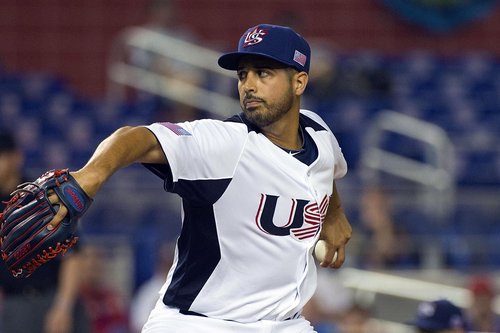
Mar 12, 2013; Miami, FL, USA; United States pitcher Gio Gonzalez (47) delivers a pitch against Puerto Rico at Marlins Park. Mandatory Credit: Scott Rovak-USA TODAY Sports

It’s been a while since Bill Ladson did an inbox; strange because you’d think with Spring Training in full swing he’d be getting a ton of emails.  Here’s his 3/14/13 edition.  Lets see if he takes a question on who will be the 2014 manager for the 5th consecutive time.

As always, I write my own answers before reading his, and edit questions for clarity as needed.

Q: Should the Nats be worried about sending their pitchers to the World Baseball Classic? Will there be pressure on them to pitch too many innings too soon?

A: Yes, this organization may be worried, as discussed in depth in Feburary in this space.  We’ve never had a pitcher throw in the WBC who hasn’t come back either injured or less effective, and league-wide studies show the same trend.  However I will say this: all 5 pitchers we’ve sent in years past were relievers.  This year we sent two starters in Gio Gonzalez and Ross Detwiler.  So maybe things will be different.  Yes the concern basically is that these guys are more interested in getting outs than getting ready for the regular season, causing them to overthrow, to not prepare as they normally would in the spring, to not focus on specific things that they would normally do in spring training games.  It is less about innings or pitch counts (which are strictly monitored).   Ladson says the team isn’t worried about their arms, but is worried about the lack of playing time Eury Perez is getting.  And they have a great point; Perez is sitting on the DR bench instead of getting ABs in spring training games.  His chances of making the team dropped to zilch and he’s already been re-assigned to AAA.

Q: Who are going to be the lefties for the Nationals by Opening Day?

A: I’m assuming he means the “Lefty relievers.”  At this point its looking like we’re going to break camp with just one lefty reliever in Zach Duke. Bill Bray needs more minor league time, Bobby Bramhall and Sean West are in minor league camp slated for AAA jobs, Brandon Mann got one inning and was awful, Pat McCoy got some innings but isn’t ready.  Only Fernando Abad has stuck with the big-league team and looks good.  But, if Henry Rodriguez is ready to go there’s no room for Abad.  I’m guessing Abad goes to AAA and bides his time.  Ladson agrees, and points out that our righties can get lefties out.

Q: With Tyler Moore on the big league roster, what do you think will happen to Chris Marrero?

A: I’m going to answer this my way, then i’ll predict what Ladson says.  Chris Marrero goes back to AAA, burns his last option in the process, and bides his time waiting for injuries to take out the likes of Adam LaRoche and/or Tyler Moore. That seems to be the only way he gets opportunities this year.  The team will hope for a strong AAA season to build up trade value and then will move him if they can.  Otherwise he’s looking at a waiver wire trip this coming off-season.  Now, before I read Ladson’s answer i’m going to guess that he says something along the lines of “The Nats will look to trade him for valuable assets” but he’ll neglect to mention that Marrero has zero trade value right now, having missed all of last year.  Lets see if i’m right: I stand corrected; Ladson has finally come around on his stance on Marrero and says he’ll be in AAA all year.

Q: Would the Nats ever consider adding Kyle Lohse to the roster?

A: Consider?  Perhaps.  Actually do it?  I don’t see it.   Kyle Lohse is becoming the poster child for the problem with the Qualifying Offer in the new CBA.  He foolishly declined it (on the advice of Scott Boras, who probably told him he could get 3-4 years guaranteed on the open market), and now sits unsigned 3 weeks from opening day.  Its amazing; this guy was 16-3 last year!  Lohse is seen as a product of his environment, a great coaching staff in St. Louis who do wonders with mediocre pitchers.  And make no mistake; 2012 aside Lohse is a career 97 ERA+ pitcher with a .500 record and a 4.45 ERA.  He doesn’t fit into the mold of what Mike Rizzo generally wants in a starter; power arm, high K/9 capabilities.  Now, if the team bus crashed and we lost our starting rotation to injury tomorrow … yeah i’m guessing we’d give him a call.  But there’s no way the Nats (or likely any other team) is going to give 3 guaranteed years to a 34-year old soft-tossing guy.  Boras really, really miscalculated here and it looks like its going to cost his client millions.  Ladson agrees.

Q: Please find out where Cole Kimball is in his rehab. I would like to know if he’s anywhere close to pre-surgery velocity.

A: I only saw Cole Kimball in one game, but his velocity was down.  Perhaps its ramped back up later into spring training.  In either case he’s bound for AAA to burn his last Option and await bullpen issues for his shot.  Ladson says he’s “close to throwing 95-mph.”  I wish more of these games were televised.

Q: Having heard earlier in the offseason that general manager Mike Rizzo feels Steve Lombardozzi and Danny Espinosa are both starters and not bench players, do you feel one of them will be traded prior to Opening Day? Lombardozzi was an extremely clutch pinch-hitter last year in my opinion.

A: Traded prior to Opening Day?  Almost impossible; nobody makes trades at this point in the season.  You make trades prior to spring training and then after a couple months are past in the season to address off-season or intra-season needs.  We’ll save the Espinosa vs Lombardozzi vs Rendon discussion; we all know it by heart by now.   Ladson says a trade is not coming.

Q: Considering he had a very good year with Triple-A Syracuse in 2012, what are the chances of outfielder Corey Brown making the team?

A: Zilch.  He may have hit in AAA, but he didn’t hit squat with Washington last September.  He’s at least 6th on the Washington OF depth chart (Werth, Harper, Span, Moore, Bernadina and then Eury Perez.  Perhaps even lower; I think the team would give Carlos Rivero and Erik Komatsu chances before Brown at this point.  And its just a matter of time before uber-prospect Brian Goodwin passes him by as well.  Brown’s looking at another year of AAA time, burning his last option, and then getting the MLFA treatment.  Ladson says no chance.

Hey!  No question on the 2014 Nats manager this time! I stand corrected.

Starting Pitching Quality in the WBC

3 comments

I keep a little file, periodically updated, that keeps track of “Ace Starters” in the league.  There’s usually right around 20 of them at any one time.  There’s no hard and fast rule as to what defines an Ace; not every team has an Ace.  Some teams have more than one Ace.  Its essentially defined as a guy who, every time he goes to the hill, he is expected to win, a perennial Cy Young candidate, a guy who is acknowledged as being one of the best in the game.

Here’s my list of “Aces” in this league, right now; Strasburg, Gonzalez, Halladay, Lee, Hamels, Cueto, Wainwright, Lincecum, Cain, Kershaw, Greinke, Lester, Price, Sabathia, Dickey, Johnson, Verlander, Hernandez, Darvish and Weaver.    Twenty guys, some arguable with poor 2012 performances (Lester, Lincecum, Johnson, Halladay), some arguable for possibly being one-year wonders (Dickey, Greinke, Gonzalez), but by and large a quick list of the 20 best starters in the league.

How many of these Aces are pitching in the 2013 WBC?  TWO.  That’s it.  Gio Gonzalez and R.A. Dickey are starting for the US.  Not one other US Ace is taking the hill for their country.  The few foreign guys (Hernandez, Cueto and Darvish) aren’t pitching for their teams either for various reasons.

If you asked me to give you the 4 best US starters, right now, the four starters I’d throw in a World Baseball Classic to best represent this country, I’d probably go (in nearly this order) Verlander, Kershaw, Strasburg and maybe Cole Hamels.   If you asked me the NEXT four guys i’d want on the bump i’d probably go Sabathia, Cain, Price and Lee.   After that?  I’d probably still take the likes of Halladay and Greinke before I got to Gonzalez or Dickey.   And that’s only because of the poor 2012 showings by Lincecum, Lester and Johnson; if this was 2011, those three guys are absolutely in the mix for best arms in the league.  So by rough estimates, we have perhaps the 14th and 15th best American starters going for us right now.

Who else does the US team have starting?   Ryan Vogelsong and Derek Holland.  Vogelsong is the 4th best starter ON HIS OWN TEAM, and Holland isn’t much further up on the Texas depth chart.

I’m enjoying the WBC, don’t get me wrong, but you can repeat this exercise for a number of the positional players on this roster too.   Look at the post-season voting last year and look at who is playing on these teams.  No Buster Posey, Mike Trout, Bryce Harper, Andrew McCutchen, Josh Hamilton or Prince Fielder.  There is only one player who got an NL Cy Young vote in 2012 participating (Fernando Rodney for the D.R.).  I think this event needs its best players to play, and I think the league needs to come up with a way of making that happen.  No more injury dispensations, no more excuses for not having the best, most marketable guys out there.

Why in the hell aren’t Trout and Harper playing for the team USA??   This is the best duo of young, marketable players to this this league since the 1998 home run derby.  They’re on the cover of Men’s Health Magazine and Sports Illustrated in the last month.   You use what you have and market the league on the backs of players like this.  Look at the NBA; they market on top of their most recognizable names and they have grown because of it, from Michael Jordan to Kobe Bryant to LeBron James.  Why MLB can’t seem to see the forest for the trees sometimes is just frustrating.  The WBC is growing in popularity; its ratings in Japan eclipsed the TV ratings for the Olympics in that country, and the US games reportedly have gotten the highest ratings for a non-playoff game in TV history).  Team USA needs to catch on.

Observations of Nats from early televised ST games

2 comments

Carlos Rivero looks like a valuable utility guy so far this spring. Photo Brad Barr/US Presswire via bleacherreport.com

I have to admit, I’ve thoroughly enjoyed the two Nats spring training games that managed to find their way to MLB Network TV thus far (NatsJournal live blogs for the 2/23 game here and 2/25 game here).  Not so much because we got to see Harper, Strasburg and Gonzalez … we all know what these guys can do.  No; I’m interested in seeing the young guys, the guys who we rarely get to see play.  This year’s spring training is a week longer, meaning that there’s going to be an awful lot of playing time devoted to these AA and AAA guys who got spring training invites, and that’s many more looks at the likes of Matt Skole, Chris Marrero, and Carlos Rivero.

It is also good to see some of these arm prospects that we’ve been hearing so much about, and it has been instructive to see some of the minor league veterans invited to spring training.  Some observations on our guys (arms then bats):

  • Stephen Strasburg‘s first 7 pitches on 2/23/13; all fastballs, all 96-97.  Clearly he was working on his spots.  I’m not sure he threw a change-up the entire outing.  As is always the case in spring training, guys work on pitches, work on location, and stats are meaningless.  He gave up a wind-aided homer to a guy who’s hit like 1 his entire career; no cause for concern.
  • Gio Gonzalez was amped up; he over threw his fastball in the first and (if you believe the broadcast) reached 97 in the second.  He struggled with his release point clearly.  However, his curve looked in mid-season form, breaking sharply and serving as a nice out pitch against the few regulars that the Mets did bat on 2/25/13.
  • Bill Bray looked, well, awful.  His mechanics were always odd-looking, but he got hit hard by the Mets lineup of rag-tag regulars.  Not a good start for Bray’s spring.
  • Cole Kimball back on the hill …. where was his fastball?  It generally was coming in 90-91.  That’s clearly a step back from 2011, when he was averaging 93 and peaking at 95.8.  Lets hope this is Kimball working himself in slowly and not a permament velocity loss from his shoulder surgery.  Either way, he’s not going to displace his RHP competitors for the bullpen spots unless he can hump it up a bit more.
  • Pat McCoy was scheduled to throw 2/23, and I would really have liked to see him, but the Mets were ahead in the 9th and didn’t need to bat.  I’m convinced that McCoy could be a sleeper candidate for a left-handed specialist in this organization, if the cattle-call of guys we’ve signed to ML deals falls through.
  • Ross Ohlendorf put in two clean innings, but I don’t like what I see from him necessarily.   Not a lot of velocity (90-91) but a big guy (6’4″) who gets downward plane on his fastball.  But he just seems very “hittable.”  His numbers from the last two years in the majors show it; ERAs of 8.15 and 7.77 in 18 starts.  Not good.
  • Nathan Karns: the beat reporters raved about his performance overall; 2 innings, 3 Ks against a MLB-heavy part of the Mets order.  It was great to finally see Karns throw; he has easy arm action, runs the ball in 94-95, and spotted the ball on the corners well.  What I didn’t see was anything resembling a quality second pitch.  He attempted a number of sliders (I’m guessing sliders; they were generally 84-86, which would be a very hard curve) and he couldn’t get over-top of them at all.  He did throw one particular breaking pitch that was sharp and nasty.  I didn’t see anything resembling a 3rd or 4th pitch though.  Is he destined for the bullpen?  That’s not the worst thing in the world; to be the next Ryan Mattheus, a hard-throwing 7th inning right hander.

Now for thoughts on our minor league hitters:

  • Eury Perez is, well, really fast.  If he turns out to be anything close to a servicable hitter, he’s got leadoff/center fielder written all over him.  The question could become; which speedy CF prospect do we hope for more; Perez or Brian Goodwin?  Denard Span‘s contract has a convenient option for 2015, just about the time that Goodwin is likely ready for the majors on a full-time basis.  Of course, that being said Perez is further along than Goodwin (who likely starts 2013 at AA).  Goodwin has power to go with his speed, while Perez seems to have very little power.  Which would you prefer to be the longer-term CF solution?
  • I like Matt Skole; sweet swing, not overpowered by facing MLB pitching.  It makes you wonder about scouting sometimes; how come guys like Skole and Tyler Moore get no love from scouts?  Its like a 30-home run minor league guy is somehow a liability.  Of course, Skole’s problem is the same as Anthony Rendon‘s; positional blockage at 3B.  Yes Skole was playing low-A as a college junior when he hit 27 homers … but if you’ve seen Hagertown’s stadium, you know its a monster park to hit balls out of.  27 homers is no mean feat down there.   I’ll be curious to see if Skole can hit with that kind of power at High-A or AA (wherever he starts 2013).
  • Chris Marrero has looked pretty good, making good solid contact a number of times.  I don’t like his haircut though :-).
  • Carlos Rivero is impressing me; he’s playing the outfield (after having played first SS and then 3B in the minors).  He has good hands, is a big guy, and seems like he can be a servicable backup utility guy who can fill in at any corner.  He’d be more flexible Moore or Chad Tracy in this respect (when judging our projected utility guys) but of course needs to show he can hit at the same levels.  Still, he is likely to be a numbers game victim unless someone like Bernadina gets hurt this spring.

Ask Boswell 2/25/13 Edition

8 comments

When is Anthony Rendon going to be ready for the Majors? Photo Nats Official via espn.com

With the first couple of Spring Training games in the books, its fitting that Tom Boswell did a Monday morning chat on 2/25/13.

Here’s how I’d have responded to the Baseball-specific questions he took.  As always, questions are edited for clarity and I write here before reading his response so as not to “color” my answer.

Q: Given that the Nats know almost every player making the roster out of Spring Training, do the players/coaches approach the 6 weeks differently?

A: Good question; I was taking with someone about this exact topic this weekend.  The 25-man roster is essentially already solidifed; perhaps the only question remaining is whether or not Henry Rodriguez makes it onto the team or does the team carry a second lefty reliever (Bill Bray?).  So I think the answer has to do with looking more at the AAA talent, looking at minor league FA signings like Micah Owings and Chris Snyder to see if they’re going to be better options than the guys we already had slated at AAA.  And the coaching staff gets to look at up-and-coming guys like Anthony Rendon, Zach Walters, and the like.  Boswell reiterates what I said here, naming other ML signings of interest like Chris Young, but also says that this ST has a lot of “wasted time.”

Q: I’ve spent the offseason reading Ball Four to help get my baseball fix. Do you have a sense about how different things are now?

A: It has been a while since I read Jim Bouton‘s seminal baseball book Ball Four.   But the season he chronicles (1969) happened before a number of rather important moments in Baseball history.  Expansion, divisional play, the Designated Hitter, the aftermath of the Curtis Flood and Andy Messersmith decisions (aka, Free Agency) and of course the massive increase of money in the game (both from a revenue stand point and from a player salary stand point).  One thing that seems certain to have changed; players can now earn enough in a season to be set financially for life.  And, the players union’s power is now such that players have the upper hand in a lot of negotiations with the league and the owners when it comes to labor unions.  Boswell notes that managers, coaches and GMs are far “smarter” now than they were in the Bouton era.

Q: How the Nats will do at the gate this year?

A: The season ticket base is back to where it was in 2005 apparently, broaching 20,000 season tickets.  The team averaged 29,269 fans last year.  Clearly the attendance seems set to rise significantly.   I think they’ll average 35,000 a night if they continue to be a first-place club.  Boswell agrees, noting that the team also has a couple of very marketable stars to help with attendance.

Q: Other than obvious injuries, are there any things that can happen in the first quarter of the year that you would find to be troubling?

A: I’d be troubled if Danny Espinosa started off slow.  I’d also be concerned if we saw significant regression out of our WBC participants Gio Gonzalez and Ross Detwiler, confirming my fears.  But the most important factor may be the performance of Dan Haren: is he the 2012 Haren or the 2009 Haren?  If he approaches 2009 version, this team may be set for the season.  Boswell notes they have a tough early schedule, that winning 98 games is tough, and that we should be patient.

Q: Gio Gonzalez; did he or didn’t he?

A: I think the prevailing opinion in the sport now seems to be that he did NOT take or receive PEDs from the Miami clinic, and that he was an unfortunate bystander.  His passing a surprise PED test given two days after the scandal seems to have also bolstered his case.   Boswell agrees.

Q: Are the Nats a 98 win team again, or was last year a fluke?

A: Barring a significant injury in the rotation, I think the Nats are easily a 98-win team and perhaps better in 2013.  Statistical WAR “proof” offered in this space back in January, and that was before the LaRoche re-signing and the Soriano pickup, both of which marginally should improve the team a few wins.  Most national pundits that I’ve read think the same thing, that this team could win 103 games.  The various estimator stats out there (Zips, Pecota, etc)  the team much closer to 90 wins, but those predictors are by and large incredibly conservative.  Boswell also says it comes down to health of the rotation.

Q: How would you rate the Nats starting rotation, spot by spot, compared to the rest of the Major Leagues?

A: Spot by Spot, its hard not to think that each of our guys are each at least in the top 5 by position in the league.  Drawing from my Rotational Rankings post from January 7th, 2013, I’d say that:

  • Strasburg is clearly among the best arms in the game (in the discussion along with Verlander, Kershaw, and Hernandez).  He’s not as accomplished as this group of course, but his talent is unquestionable.
  • Gonzalez matches up as a top 5 number two starter (other candidates: Greinke, Hamels, Lincecum or Cain, depending on who you think SF’s “ace” is).
  • Zimmermann is traditionally underrated but is at least a top 5 number three starter (along with Scherzer, Johnson/Morrow, Bumgarner, Lee and Moore).
  • Haren on potential could be the best number four starter in the game, though Buehrle, Miley, and Lynn could also fit in here.
  • Detwiler is often mentioned as being the best number five starter out there, and its hard to find competitors (best options: Zito, Romero, Garcia, and whoever Oakland and St. Louis settle upon for their #5 starters).

Boswell seems worried that these five guys can handle the workload all year, only really trusting Gonzalez in terms of repeatability.

Q: What future do you see for Anthony Rendon, and when will he debut in the majors?

A: I have been of the belief that Zimmerman should move to 1B for Rendon at some point.  But with LaRoche signed for two years, that won’t happen for a while (2 years, perhaps 3 if we pick up his 2015 option).  So now i’m starting to come around to the the possibility of Rendon pushing someone else off their position.  The most likely candidate seems to be Espinosa at 2B.  Despite having Lombardozzi on the 25-man, Rendon is a higher-potential player.  If Espinosa starts slow, and Rendon starts fast, I could see Rendon getting called up in June and starting to get reps at 2nd while Espinosa goes on the DL for his shoulder.  Otherwise, a Sept 1 call-up seems in order.  Boswell predicts a post-all star game call-up.

Q: Is there any way the Nats can stop Detwiler and Gio from pitching in that baseball ‘classic’? I see a disaster waiting to happen. Luis Ayala was never the same after getting hurt pitching in that thing.

A: There’s no way legally the team can prevent either guy from pitching, since neither suffered any injuries in 2012.  And yes I agree (as discussed in this space on 2/11/13) this is bad news for the Nats.  Washington has never had a pitcher play in the WBC who didn’t regress badly, and the stats seem to show that most every pitcher who does participate in the WBC pitches poorly the next two seasons (links in my post).   Boswell says cross your fingers.

Q: Do you think Bryce has it in him to be National League mvp?

A: Yes I do.  MVP voting generally starts with the “Best Player” on the “Best Teams” and creates a short list from there.  It is why it is relatively easy to predict the MVPs.  If Washington is the best team in the league and makes the playoffs again, and Bryce Harper has a break out season, it won’t be hard to see him getting serious MVP consideration.  Now, let me also say that a “Harper for MVP” prediction is NOT the same as predicting that Harper is set to become the best player in the game.  That’s not what the MVP measures.  If the question was, “Is Harper set to become the best player in the National League” i’d then say, “No, he’s a few years away from that distinction.”  Boswell thinks it may be a bit early.

Q: How many wins per year would you estimate a a stellar defense adds to a teams win total over the course of a season?

A: I’m sure there’s a good statistical answer for this, based on the percentage of WAR added by defense.  But it seems like a very difficult answer to come by.  Boswell says “a few.”

Q: Any reason to think he’s NOT going to be the GM for a long time?  Because I can’t think of many others who have done as good a job in all of baseball.

A: I can see no reason for Rizzo not to be the GM for at least the next 4 years.  His next big challenge will be dealing with the inevitable payroll demands of Harper and Strasburg (both of whom project to be $25M players) while also keeping a competitive team on the field.   2017 could be an interesting year for this team; Strasburg projects to hit Free Agency that year, and Harper should be in his 4th arbitration year.  They already have Zimmerman and Werth at $14M and $21M respectively in the 2017 year, with possibly another $40-$45M out the door to keep Harper and Strasburg.  They better start working on the farm system again.  Boswell didn’t really answer the question, just mentioned how Rizzo’s options have yet to be picked up.

Q: How is Ramos looking thus far? 100%? Suzuki is a professional and seems to be a good guy, do you get a feel for how well he and Ramos interact? How great would it be to generate some power/runs from the catcher spot this year.

A: I’ve been assuming that the catcher job is Suzuki‘s to lose for now; its still early but no word has come out negatively on Ramos‘ recovery.  Either way, yes it would be nice to get some production out of the #8 hole.  Suzuki was pretty good after he came over here, but Ramos healthy was a middle-of-the-order bat.  Boswell suggests that Ramos stop blocking the plate.

Q: If Rendon tears it up after September call-up, what does the Nats 2014 infield look like?

A: Wow; hard not to say Rendon replaces Espinosa like-for-like right now.  But, just as Desmond broke out in his 3rd full time season, so could Espinosa.  It could make for a log jam.  Lets hope for the best, hope for a rebound Espinosa season and a good-problem-to-have situation of having to trade a strength to make way for another strength.  Boswell has no idea where Rendon will play if he merits a call-up.

Q: I think the Nats, and Danny Espinosa are whistling past the graveyard if they think a completely torn left rotator cuff will not seriously affect Danny’s play. Your take?

A: A fair assessment.  I too believe a torn rotator cuff absolutely has to be affecting his swing, especially from the right side.  I think Espinosa should have gotten the thing surgically repaired in the off-season.  I wonder how much the team knew of the injury, because when it was reported in the off-season it sure seemed like a surprise.  Boswell says its a concern and that Espinosa should take more days off.

Q: Is McCatty working with Strasburg on correcting his inverted W delivery? Strasburg also has footstrike issues, as he tends to plant his foot and then whip his arm, which puts a ton of strain on his shoulder. I’m concerned if he doesn’t correct this, his shoulder will give out this season or next. Are the Nats worried about this? Are they working on cleaning up his delivery at all?

A: I’m beginning to think that this whole “Inverted W” thing is a bunch of BS.  Keith Law stated as much when prompted in a chat recently; he says that the problem with the Inverted W theory is that its difficult to “state” with authority that certain pitchers do or don’t have the phenomena.  And its true; if you see some shots of Strasburg he has it, in others his arms are more bent behind his back.  Its the same with Gio Gonzalez (I can show you stills of him landing with his arms clearly in an “inverted W” position and you don’t hear anyone talking about Gonzalez’s mechanics.   The leading inverted-W site on the internet (Chris O’Leary‘s page linked here) uses an opportunisitic example set of pitchers with that motion, but I can find plenty of examples of guys who have similar mechanics but zero soft-tissue injury history (on the Nats two quick examples are Drew Storen and Craig Stammen).  Meanwhile one of his examples was John Smoltz … who only threw 3400 MLB innings in his career and basically didn’t miss a start until he was 32.  Not the best example of proof that his mechanics were somehow “awful.”  I think the entire phenomenon is an observation of coincidence, that pitchers get injuries all the time no matter what their mechanics, and that we need to move onwards.  Wow; Boswell thinks exactly what i think; these proofs are nonesense.
Ladson’s Inbox 2/5/13

16 comments

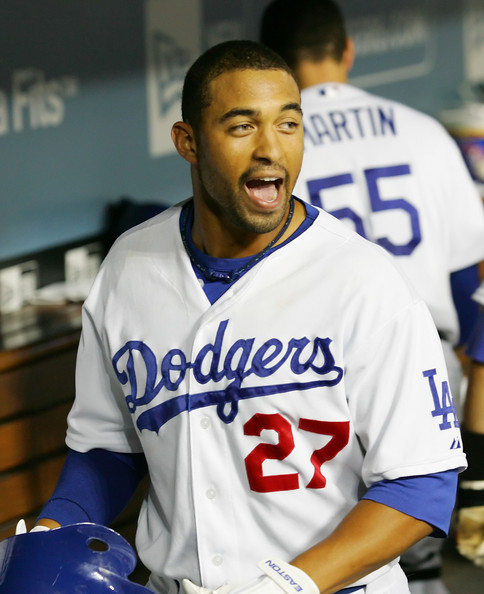
Lots of questions about Gonzalez and Garcia this week. Photo unknown credit.

Hey, what great timing for another Bill Ladson inbox (posted 2/5/13).  Baseball news is light, pitchers and catchers report in a week or so, and I’m not quite ready to continue my Stats series.

As always, I write my answer before reading his, and sometimes edit questions for clarity:

Q: Do you think general manager Mike Rizzo will add starting pitching depth before Opening Day? Does the lingering possibility of a Gio Gonzalez suspension change whom the Nationals would consider acquiring?

A: In Ladson’s 1/22/13 mailbag, some one asked what could prevent the Nats as constructed from winning the World Series in 2013.  I answered Rotation Injuries and Luck.  Well, in the wake of the Miami PED scandal, I guess the third answer may be “PED scandal.”

This is a tough question to answer; Gio Gonzalez has denied the rumors, but the newspaper in question (the Miami New Times) clearly only named Gonzalez because they felt like the evidence they had in hand was irrefutable.  Many other players have not been named.  So as a GM; how do you go about preparing for 2013 at this point?   If Mike Rizzo knows that Gonzalez is getting suspended, you have to think he’s on the horn to his buddy Scott Boras about possibly buying Kyle Lohse, which is clearly the best remaining FA starter.  But Lohse isn’t coming cheap, and likely isn’t coming on a one year deal, and would cost another draft pick (I believe).  The Nats are already topping $120M in payroll; would they go to $135M?

If we think Gio at least gets a pass and the suspension is put off, maybe Rizzo’s recent activities of signing random starters to minor league contracts is going to be sufficient.

Ladson mentions Javier Vazquez and the ever-present rumors of Christian Garcia going to the rotation as possible Gonzalez replacements if he gets suspended quickly.  Probably fair; Vazquez may be a great, cheap alternative.

Q: Everyone is saying that it’s going to be a two-team race in the National League East between the Nationals and Braves. Do you think the Phillies have a shot to contend with both these teams, or is their time done?

A: Boy, its hard to look at the aging, expensive Phillies lineup they had in place in 2012, which suffered injuries and setbacks and creaked their way to a .500 record, and then look at the highly questionable slew of acquisitions and signings this off season (Ben Revere, John Lannan, Michael YoungDelmon Young and everyone’s favorite anti-gay advocate Yuniesky Betancourt) and not, well, giggle at where this team is going.  My favorite baseball joke from the off-season goes like this: “The Phillies wanted to get Younger this off-season, so they signed Michael Young and Delmon Young.”

The two Youngs were both negative WAR players last year, Lannan is a 5th starter, Revere was a backup centerfielder who the Phillies traded some decent assets for, and Betancourt is who he is (though admittedly he’s on a minor league deal and seems at best set to be a utility infielder behind starters Jimmy Rollins and Chase Utley).  I see the Phillies being a very bad defensive team with the two Youngs in the starting lineup, I see some serious questions in the back side of the rotation, and I see continued regression and louder complaints about Ryan Howard‘s contract.  Fun times a-coming in Philadelphia.  Ladson actually says that the Phillies will “be improved with Michael Young.”  Bill!  Have you seen Young’s WAR figures from 2012??  He was a NEGATIVE WAR player at both major War sites.  That means he makes your team worse!    Now, he was completely servicable in 2011 … so if you want to make the argument to me that 2012 was an aberration for an aging hitter playing in a hitter’s park, well I guess that’s a stance you can take.  But pretty much every other pundit in the blogosphere has loudly criticized the Philadelphia moves this off-season.

Q: What is the status of Lucas Giolito? When do you see him pitching in D.C.?

A: Tommy John surgery in Late August (I can’t remember the exact date; it was 8/24/12 when I posted this highly-critical article about Lucas Giolito and the situation), so figuring a typical 12-month rehab session before he’s actively throwing again in pro-games basically puts him at the end of the 2013 minor league season.  Which means he’ll be 20 before he really is ready to start his pro career in the spring of 2014.  Figure 4-5 years average case for typical high schoolers to work their way up the systems (perhaps fewer years given his talents and pedigree, as we’ve seen with someone like Dylan Bundy in 2012, who made his way from low-A to AA in his first pro season out of HS and got a late Sept callup to the majors) and we’re probably looking at 2016-2017 before seeing him in the majors.  If, of course, he recovers from surgery, hasn’t destroyed his mechanics, is effective, matures, doesn’t get re-injured, or any of the million other pitfalls that typically befall high school arms drafted in the upper rounds.  Ladson thinks he’s pitching pro games “after the all-star break” and is in the majors in 3 years.  Wow.  That is optimistic.

Q: How do you think Henry Rodriguez will do? And what do you think his role in the bullpen will be?

A: I am, and always have been, pessimistic on Henry Rodriguez.  I hated the Willingham trade that got him here.  He’s forced the team to invent injuries to stash him on the DL coming out of spring training b/c he has no options.  He led the league in wild pitches in 2011 in just 65 innings.  He had a 69 ERA+ in 2012.  At some point when does the team say, “OK, its nice that he throws 100mph.  But enough is enough; we need a reliable pitcher who can deliver when called upon.”  Perhaps Spring Training 2013 is that time.

What do I think his role will be?  I’m sure he’ll look great in Spring Training again, will break camp with the team, and very well may look halfway decent for a while.  But just like every other season, he’s going to have those 3-walk outings where he pitches a 1/3 of an inning and gives up 4 runs, and then the manager will be afraid to use him unless the team has a 5-run lead.  And eventually we’ll call up Garcia to replace him and move on.  That’s my prediction for Rodriguez.  Ladson says the team should “attempt to trade him if he is not impressive this spring.”  Wow, that’s sage advice; if only every team could trade its under-performing players and actually get value back whenever it wanted.

Q: Can you predict Washington’s Opening Day lineup if all available players are healthy?

A: Easy.  I’ll even predict the batting order.  Span-Werth-Harper-Zimmerman-LaRoche-Desmond-Espinosa-Suzuki-Strasburg.  Ladson predicts the same names but in a lineup order that makes no sense from a lefty-righty balance perspective.

Q: After announcing his retirement, do you think Brian Schneider is a possible candidate to replace Johnson as manager of the Nationals?

A: Wow, yet another speculative question about the future Nationals Manager.   He took a question about the manager on 1/28/13, and on 1/22/13.  And on 1/14/13.   I guess people like speculating on the Nats next manager.  Not repeating what i’ve said on the topic before, is Brian Schneider a candidate?  Why would he possibly be a candidate to manage the major league team of a system he left 5 years ago?  Why would the Nats pick a manager who’s never managed a day in his life?   Ladson breathes some common sense on this one.

Q: I think Garcia has to be on the Opening Day roster, so is he in the bullpen or someplace else? Can the 25-man roster accommodate him and all the other pitchers?

A: “Someplace else?”  Like where?  In the outfield?   I like Garcia too, but the team has a numbers problem in the bullpen.  Storen, Clippard, Mattheus, and Stammen have all more than earned their spots.  Soriano is being paid a ton of money.  Duke is guaranteed a spot (he’s the only lefty and he’s got enough service time to refuse a demotion).  Oh, and Rodriguez has no options.  So there’s your 7-man bullpen.  Notice there’s only one left-hander out there; if you believe that you need left-handers to get left-handed batters out, then the bullpen needs to sacrifice one of the righties in order to have a second lefty (Bill Bray?) in there.

The only way I see Garcia making this bullpen is if the team runs out of patience with Rodriguez and DFAs/DLs him, or if the team trades away one of their closer-quality surplus guys, or if maybe someone like Mattheus/Stammen (both of whom do have options) struggles or gets hurt.  Otherwise look for Garcia to get stretched out and get looks as a starter in AAA.  Ladson says he’s confident Garcia is on the 25-man roster …. ok explain it to me then based on the above paragraph.  Who is he replacing?

Stats Overview Part II: Hitting stats on the rise: wRC, wOBA, etc

2 comments

Trout's BABIP was very high in 2012; what does this mean for 2013? Photo Gary Vasquez/US Presswire via espn.com

(Part 2 in a series: Part 1 talked about Whats Wrong with Old School Baseball Stats).

More and more in modern baseball writing, you see relatively new statistical creations thrown into articles in order to prove or disprove an opinion, and more and more you almost need a glossary to properly read these articles and properly understand what the author is attempting to say.  I always want to understand that which I read, and at the same time I want to make sure I stay current and up-to-date on the stats out there, so I decided to do a little research (and pen my own post while I was at it) into some of these newer stats that are being used.

I’ll write about each stat, give links to its calculation, write about how it may be used, then put in some rules of thumb by which to consider the stat.

Pretty much every stat here is defined and available at either Baseball-reference.com or fangraphs.com.  BaseballProspectus.com also has some more obscure stats discussed further below.  I’ve always thought that B-R’s interface was so much easier to navigate that I tend to search there first, but a more complete set of stats is at fangraphs.

1. BABIP.  Batting Average on Balls in Play.  Most people know this one, but it is an important stat to consider in conjunction with other stats (especially the older Batting Average and Earned Run Average).   The calculation, as it is seen at Wikipedia, measures basically how many balls put into play (removing from consideration home runs) turned into hits.  Interestingly it penalizes the hitter for hitting sacrifice flies (not sure why).  This stat is kept for both individual hitters and for pitchers.

How is BABIP used? The measurement is essentially used as a checkpoint for fluky seasons.  If a pitcher has a very high ERA but also has a very high BABIP, one can explain that he’s been unlucky and his talent level lays somewhere below his posted performance on the year.  Ironically, the two leaders of Pitcher BABIP in 2012 were both on the Tigers; Rick Porcello and Max Scherzer had BABIPs of .344 and .333 respectively; this delta is probably going to lead to both of these guys having better ERAs in 2013.  If a hitter has a decent hitting season but also has a high BABIP, one usually says that the hitter was “lucky” and is due to regress (Mike Trout in 2012 had a Babip of .383.  That’s really high, probably unsustainably high, and he probably regresses statistically in 2013).

MLB Average/Rule of thumb: .290-.300 depending on the year.

When BABIP is high: a hitter is considered to be “lucky,” and future regression of more batted balls being turned into outs is expected.

When BABIP is low, a hitter is considered to be “unlucky,” and future improvement of more hits on batted balls is expected.

Caveats using BABIP: there are many arguments about whether some pitchers “baseline BABIP” should be modified based on their talent or capabilites.  For example, Mariano Rivera‘s career BABIP is .262 while R.A. Dickey‘s BABIP since he turned into a Mets knuckleballing starter is around .275.  Rivera’s lower baseline is probably attributed to his amazing cutter and his pure skill, while Dickey’s is most likely due to the fluctuations of hitting his knuckleball.  Meanwhile, some hitters maintain higher than average career BABIPs (two extreme examples that immediately come to mind are Ichiro Suzuki and Nyjer Morgan, with career BABIPs of .347 and .336 respectively.  Why so high?  Because both are skilled at bunting (or at least hitting choppy grounders) for base hits, artificially inflating their baseline BABIP.

2. ISO; Isolated Power.  As posted on Wiki, Isolated power can be simply calculated by subtracting a hitter’s batting average from the slugging percentage, or as it is more eloquently defined at FanGraphs, ISO is essentially a measure of how many extra base hits a batter hits per at-bat.  Slugging tells you how many bases per at bat a hitter obtains, but ISO strips out singles to isolate a player’s capability of hitting doubles, triples and homers.  Here’s a couple of decent examples from 2012; our own Bryce Harper hits a ton of extra base hits; he’s posted a .206 ISO for the 2012 season.  Meanwhile we know that the aforementioned Nyjer Morgan is not a very powerful hitter and ISO shows it; he’s at .069 for the 2012 season.  The league leaders for ISO reads like a list of MLB’s best sluggers.  Giancarlo Stanton would have led the league in ISO had he qualified; he posted a fantastic .318 ISO in 2012.

How is it used? ISO is used to measure how good a hitter is at getting extra-base hits.

MLB Average/Rule of thumb (from Fangraphs page) .145 is considered an “average” MLB ISO figure.  .200 is pretty good, .100 is poor.

Caveats using ISO: as with many sabremetric-tinged stats, small sample sizes greatly skew the figures.  Fangraphs says 550 ABs is needed before really drawing any judgements.

3. wOBA; Weighted On Base Average.  Created by Tom Tango, wOBA is a relatively newer statistic that attempts to improve upon the traditional batting statistics we use (Batting Average, Slugging and On Base Percentage) by measuring cumulative “weighted” hits that a batter may achieve.  It is based on the premise that the three traditional stats just mentioned all treat hitting events relatively the same.  Is a single equal to a double?  No, but in Batting Average it is.  Is a double worth half as much as a home-run?  No, but in the Slugging Percentage it is.  Each hitting event is weighted and added together, with increases/decreases for stolen bases/caught stealing thrown in, to arrive at a measurement that attempts to better quantify pure hitting.

How is it used?  wOBA attempts to be set to the same scale as the league wide OBP, which seems to hover around .315-.320 year to year.

MLB Average/Rule of thumb (from Fangraphs page) .320 is a good “league average” number.  .370 is great, .300 is poor.

Caveats using wOBA: There are several to keep in mind; the weights change  year to year, in order to normalize the stat across generations.  It is NOT normalized to park factors, so hitters in places like Boston and Colorado will have artificially inflated wOBAs to their true value.  Lastly, there’s zero context given to the game situation when measuring hits (i.e. was there a guy on third with one out?  Was it a close game in the 9th?)  I think particular situation is nearly impossible to measure in any stat, but it is important.

4. RC/wRC: Runs Created and Weighted Runs Created.  Runs Created is a stat that Bill James invented in one of his earlier Baseball Abstracts (1985) in order to try to measure simply how many runs an individual player contributed to the team in a given season.  It was improved upon vastly in 2002 to be much more detailed and accurate; the original version over-emphasized some factors of hitting.  It is a complicated statistic (see its wiki page for the formula).  The aforementioned Tom Tango improved upon the basic RC by creating the Weighted version of the statistic based on his own Weighted OBA statistic (which he believed more closely measures the proper “value” of each hitting event).

How is it used?  Individually, RC and wRC need to be understood in context of an entire season.  It isn’t until we get to wRC+ (see below) that a side-by-side comparison is capable.  Its like saying “Player X has 105 hits.”  If that’s through 75 games, that’s pretty good; if that’s for an entire season, well that’s pretty poor.

MLB Average/Rule of thumb (from Fangraphs page) RC and wRC both have roughly the same scales.  60 is average, 100 is great, 50 is poor for a full season.

Caveats using RC and wRC: They are basically full season counting numbers.  In 2012, Trout started in the minors, so his RC and wRC totals are less than his MVP competition Miguel Cabrera.

5. wRC+/wRAA: Weighted Runs Created Plus/Weighted Runs Above Average

wRAA and especially wRC+ are touted by fangraphs.com as being very good “single number” statistics to properly measure a player’s hitting ability.  I often use OPS+ as a singular number to measure a hitter; fangraphs specifically calls out this number and recommends using wRC+.

How is it used?  Both numbers basically measure the same thing.  wRC+ is a bit easier to explain; 100 is the league baseline, and points above or below the average are expressed as “percentage points above or below the league average.”  So, a person with a 120 wRC+ is considered to be 20% better at creating runs than the average major leaguer.  Cabrera and Trout ironically tied for the MLB lead for 2012 in wRC+, each posting a 166 wRC+.  Meanwhile wRAA (per fangraphs.com) “measures the number of offensive runs a player contributes to their team compared to the average player” and is scaled to zero.  wRAA is essentially a direct calculation from wOBA, so if you’re using one you can likely ignore the other.

MLB Average/Rule of thumb (from Fangraphs page) for wRC+: 100 is average while for wRAA zero (0) is average.  20-25 percentage points above is great, while 15-20 percentage points below is bad.

Caveats for using: Unlike wOBA, wRC+ is park- and league-adjusted, indeed making it an excellent single number by which to measure players.  Otherwise the caveats for these weighted averages are all about the same; they seem to be based on an weighting of hits that you may or may not agree with.


What have I learned from looking into these hitting stats?  I need to keep BABIP in mind.  I like ISO but I don’t see it gaining real credence over slugging percentage.  And I should probably start using wRC+ more than OPS+.

Part 3 coming up on Pitching advanced stats.

Ladson’s inbox 1/28/13

13 comments

Espinosa's shoulder injury is the big news this week. Photo AP Photo/Nick Wass

These Inboxes are coming fast and furious!  Its almost like we’re just a few days away from Pitchers and Catchers reporting or something.  I should do an inbox response.  Except nobody emails me any questions.   Sometimes I wonder who emails Bill Ladson some of these questions, frankly, especially the people who keep asking about who the manager will be in 2014.  Anyway, here’s his 1/28/13 inbox and how i’d have responded.

Q: What is the status of Chris Marrero? Does he figure to contribute in the Major Leagues at all this year?

A: The phrase “what have you done for me lately” never seems more appropriate than when talking about Chris Marrero.   In November 2007 he was listed by Baseball America as our #1 prospect.   #1 over the likes of Detwiler, Zimmermann, Maxwell, Clippard, Desmond, Peacock, Norris and even Bernadina.    A season-ending injury in 2008, slow progress up our system and then last off-season’s torn hamstring have now dropped him to the Nats #23 ranked prospect overall.  #23 puts him behind “prospects” such as Corey Brown and right above 7-year minor leaguer Carlos Rivero.

The status of Marrero is this: he’s stuck at first-base, seemingly can’t play anywhere else, but doesn’t hit nearly enough homers in order to be a MLB first baseman.  So he seems sort of in a quandry.  Unless he suddenly turns into a 30-home run hitter over-night, or figures out how to play another position, he’s really in a tough spot.  On the Nats depth chart at 1B, he seems to be no better than 4th right now (LaRoche, Moore, Tracy).  That doesn’t bode well for him contributing at the MLB level.  It seems to me that the only way he’s playing meaningful minutes at first this year is if both LaRoche and Moore come down with season-ending injuries.

On the bright side; despite us hearing about him for years, he’s only 24.  But he’s running out of time.  He’ll burn his 3rd and last option in 2013 and isn’t going to be eligible for a 4th.  Marrero needs to hit lights out in AAA this year, get an injury on the big club and gets some big-league ABs, and build trade value.

Ladson has answered this question before and repeated his answer; he thinks Marrero needs to be traded.  Great idea!  Now, who exactly is going to trade for him right now?  And what exactly could the Nats get in return?  These sort of things matter when looking at trade candidates and it irritates me when they’re not taken into consideration by supposed “professionals” in the field.

Q: Given Danny Espinosa’s torn rotor cuff and disappointing second half last season, is there any chance Steve Lombardozzi will become the Opening Day starting second baseman?

A: Boy, the revelation that Danny Espinosa has a torn rotator cuff is big news to me.  Even though its in his non-throwing shoulder (obviously; if it was in his right shoulder he’d likely have had the surgery as soon as it happened), you have to think this affects his hitting.  In fact, the blog Nationals Review did just this yesterday in a great bit of analysis: before the estimated injury date Espinosa was hitting 255/.321/.416.  Afterwards (including his awful playoffs): .156/.241/.234.  That’s rather definitive, even if “after injury” only included a few weeks of the regular season and a 5-game series.

I think the injury gives the team a built-in excuse to replace him if he starts off the year struggling.  Opening Day though?  No way; Davey Johnson is a players’ manager, is old-school and will go with the team at hand unless someone gets hurt in Viera.  Ladson says lets see what happens in Spring Training.  I think that’s the baseball writer equivalent of an Economist saying, “It depends.”

Q: Do you think Johnson will sit Espinosa more often this season because of his injury?

A: Doubtful; he’s either going to produce or not.  If he doesn’t produce, look for him to be sent to the DL for surgery.  I don’t see him getting sat sporadically.  Ladson says that Espinosa won’t let that happen.  Last time I checked though, Espinosa was the player and Johnson was the manager.  So I’m not sure how he can make that command decision.

Q: What role do you foresee Christian Garcia playing this year?

A: I see Christian Garcia starting the year as a starter in AAA and then one of two things happening; either he hurts himself again, thus destroying the whole starter experiment.  Or, someone in the MLB bullpen gets hurt or gets ineffective (ahem, Henry Rodriguez anyone?) and Garcia-as-starter is scrapped as he’s brought up to pitch meaningful innings.  Ladson says he expects Garcia to be a bullpen member and doesn’t buy into the starter experiment.

Q: Assuming 2013 is Johnson’s final year, do you think his replacement will come from inside or outside the organization?

A: I just don’t get how people are obsessing over the 2014 manager.  Call me when the World Series is over and AFTER Johnson actually retires.  Ladson predicts someone from within.

Q: After Adam LaRoche’s contract runs out, could Ryan Zimmerman move across the diamond to first base and let Anthony Rendon play third?

A: This is exactly what I believe should happen.  My ideal world has Rendon hitting his way into a utility infielder role this year, pushing for more playing time next year (perhaps even forcing the Nats hand at 2nd base), and Zimmerman logically moving across the diamond to alleviate his mental issues with routine throws and to protect his body from the constant pounding he gets at 3rd.  Ladson wants Zimmerman at 3rd for a long time, apparently forgetting that Zimmerman increasingly has difficulty making routine throws and being incredibly fragile.

Q: What are the chances of the Nats opening the season with Bryce Harper in right field and Jayson Werth in left?

A: Zero.  But, honestly, Werth in left is a better defensive team.  Harper‘s so good in center while Werth‘s range is eroding in right, it just makes more sense to switch them up.  Why won’t it happen on opening day?  Deference to the veteran.  Deference to the contract.  I expect the OFs to switch around and get each of them playing time in all three positions.  Ladson says that Harper is more comfortable in left while Werth is an “above-average” right fielder.  Uh, not according to UZR/150, which had Werth at a very poor -14.2 in 2012.  Harper belongs in RF but it won’t happen overnight.