Getting the jump on the MLB’s larger 120-team announcement, the team announced officially who our four official affiliates will be. There had been much curiosity and speculation on the Nat’s affiliates in general, thanks to the forced Axing of Hagerstown and the general
The Rookie league team continues to be the GCL Nats out of our Spring Training complex, and we continue to have a DSL team.
My initial reactions to each team officially being named is:
AAA: Thank gosh they’re finally on the east coast, and finally in a league where they can develop minor leaguers. Now when we send a pitcher to AAA we can know for sure that a 6.00 ERA is actually “bad” and not just an off-shoot of the ridiculous elevation and hitters parks.
AA; our longest affiliation continues, and i’m happy for it. In an ideal world we’d be talking Richmond here, but Harrisburg is a great spot as well.
High-A: Can’t complain too much with Wilmington; its nearly as close as Harrisburg to the home base. I was selfishly hoping for Lynchburg, but I’m guessing they will be dumped to Low-A as well, and clearly MLB doesn’t rate Fredericksburg as a High-A city.
Low-A: well, they can’t be happy about dumping down a level (but should look no further than what Fresno is being forced to do before swallowing and saying ok), but i’m glad they’re still around.
One interesting side note to going to Wilmington is this: it is the park closest to Keith Law, one of the leading independent scouting/prospect guys out there, so that means he’ll be seeing lots of our guys and we’ll have more analysis to show for it.
As I was writing this, BA released the full 119 team list , with Fresno holding out and confirmation that Lynchburg got dropped a level.
Lastly, fun facts about our affiliate history. Here they are dating to 2000
Year
AAA
AA
high-A
low-A
short-A
rookie
DSL 1
DSL 2
2021
Rochester
Harrisburg
Wilmington
Fredericksburg
(disbanded)
GCL Nationals
DSL Nationals
2020
Fresno
Harrisburg
Fredericksburg
Hagerstown
Auburn
GCL Nationals
DSL Nationals
2019
Fresno
Harrisburg
Potomac
Hagerstown
Auburn
GCL Nationals
DSL Nationals
2018
Syracuse
Harrisburg
Potomac
Hagerstown
Auburn
GCL Nationals
DSL Nationals
2017
Syracuse
Harrisburg
Potomac
Hagerstown
Auburn
GCL Nationals
DSL Nationals
2016
Syracuse
Harrisburg
Potomac
Hagerstown
Auburn
GCL Nationals
DSL Nationals
2015
Syracuse
Harrisburg
Potomac
Hagerstown
Auburn
GCL Nationals
DSL Nationals
2014
Syracuse
Harrisburg
Potomac
Hagerstown
Auburn
GCL Nationals
DSL Nationals
2013
Syracuse
Harrisburg
Potomac
Hagerstown
Auburn
GCL Nationals
DSL Nationals
2012
Syracuse
Harrisburg
Potomac
Hagerstown
Auburn
GCL Nationals
DSL Nationals
2011
Syracuse
Harrisburg
Potomac
Hagerstown
Auburn
GCL Nationals
DSL Nationals
2010
Syracuse
Harrisburg
Potomac
Hagerstown
Vermont
GCL Nationals
DSL Nationals
2009
Syracuse
Harrisburg
Potomac
Hagerstown
Vermont
GCL Nationals
DSL Nationals
2008
Columbus
Harrisburg
Potomac
Hagerstown
Vermont
GCL Nationals
DSL Nationals
DSL Nationals 2
2007
Columbus
Harrisburg
Potomac
Hagerstown
Vermont
GCL Nationals
DSL Nationals
DSL Nationals 2
2006
New Orleans
Harrisburg
Potomac
Savannah
Vermont
GCL Nationals
DSL Nationals
DSL Nationals 2
2005
New Orleans
Harrisburg
Potomac
Savannah
Vermont
GCL Nationals
DSL Nationals
2004
Edmonton
Harrisburg
Brevard County
Savannah
Vermont
GCL Expos
DSL Nationals
2003
Edmonton
Harrisburg
Brevard County
Savannah
Vermont
GCL Expos
(no team)
2002
Ottawa
Harrisburg
Brevard County
Clinton
Vermont
GCL Expos
DSL Nationals
2001
Ottawa
Harrisburg
Jupiter
Clinton
Vermont
GCL Expos
DSL Nationals
2000
Ottawa
Harrisburg
Jupiter
Cape Fear
Vermont
GCL Expos
DSL Nationals
Rochester is our 5th AAA affiliate since moving to DC. Harrisburg has been solidly our AA team since before the move. Potomac/Fredericksburg moved with the team and continue their relationship. It’s kind of interesting to see the pre-Nats machinations/locations just before moving as well.
Cade Cavalli named #1 prospect in the system by BA. Photo via Lookout Landing blog
Baseball America dropped the first off-season ranking of prospects for the Nats on 11/20/20 and, well, it was interesting.
Click here for the top 10 and their list of “best tools” for the system. It might be behind a paywall. If not that, then a quick chat with BA’s Lucy Lusk provides some insight on the list as well.
The last time we got any appreciable updated rankings was MLBpipeline’s end-of-the-season look at the system with the slew of 2020 graduates/call-ups removed. Technically MLBPipeline’s list is a running dynamic update, not a static list as of that moment in time, but I capture them as major updates occur for tracking.
Nonetheless, the two orgs definitely have different viewpoints on the top of the Nat’s farm system. Lets talk about some of BA’s conclusions.
BA has Cade Cavalli ahead of Jackson Rutledge at the top. I find this kind of interesting, given that Rutledge is younger, had pro ball experience in 2019, was in the 60-man pool along with Cavalli, and was a 1st round pick just like Cade.
Furthermore, in BA’s “best tools” they list Rutledge as having the best fastball AND the best slider. So, unless Rutledge literally doesn’t have a 3rd pitch, and his first two are the system best … not sure how he’s not #1 over Cavalli.
Therefore, Cavalli must really, really be promising, or have some pretty amazing secondary stuff.
Tim Cate: best curve AND best control. All he’s done since they drafted him was win. I think he’s an excellent 3rd or 4th starter in the making for this team in a couple years.
BA is amazingly bullish on Yasel Antuna. They list him as having the best hitter for average AND the best power hitter?? For a SS currently listed as 6’0″ 170? Well, no wonder the Nats just protected him on the 40-man. This is also a big change in BA’s opinion of him just from July, when they ranked him 12th in the org. The BA staff think Antuna is nearly top 100 material. They like him more as a 2B/3B option versus SS, with the thinking that maybe the infield goes Carter Kieboom, Luis Garcia, Antuna and a FA bopper at 1st. Hey; if Kieboom can learn how to hit, i’m all for that.
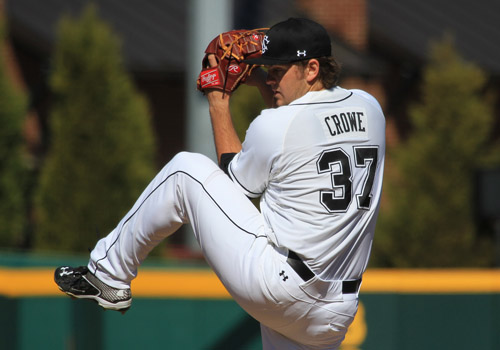
They have soured fast on Wil Crowe, dumping him to 10th in the system. MLBpipeline has him 3rd right now just after the two big 1st round arms. He made three starts in 2020, got shelled in all three, gave up 5 homers in 8 1/3rd innings … does that mean the jury is now out on Crowe forever?
They’re quite bullish on Jeremy De La Rosa, having him ranked 6th when most shops have him in the teens. Only other pundit anywhere close on De La Rosa is Keith Law, who had him 8th last spring. I mean, he did get invited to the 60-man roster as an 18yr old … quite a statement. Maybe we have another Juan Soto on our hands.
Lastly, in their tools section they give “Best Athlete,” “Fastest Baserunner” and “Best Defensive Outfielder” all to the same guy: Cody Wilson. Looks like the next Andrew Stevenson.
Israel Pineda could be getting the call-up this week. Photo via milb.com
Welcome to the annual Rule 5 analysis post. Lets take a look at who is eligible, who might get protected and make some predictions.
I suspect that the Rule-5 decisions are going to be somewhat anti-climactic this year. The team called up its two top ranked prospects from the 2017 draft class earlier this year (Seth Romero and Wil Crowe) and its top prospect from the 2016IFA class (Luis Garcia), eliminating some suspense on the decision. They also already did a roster-addition of one more famous name that we talked about at length last year (Steven Fuentes), taking him out of the running. In a “normal” season i’m not sure any of these players would have played, and we’d be talking about adding them to the roster this week.
So honestly, it wouldn’t surprise me if nobody got protected this week. But there are a few interesting candidates that you could make an argument for. And the team has a ton of roster room; we only sit at 30/40 slots right now and we’re not buying 10 FAs this off-season.
As always, using the two indispensable Nationals resource sites Draft tracker and the Big Board, and then looking up candidate acquisitions made via trade, here’s some thoughts on who might merit protection. Also incredibly useful is Roster Resource’s Nats Roster, which keeps track of options, rule-5 status and the like.
The quick Rule-5 rules for 2020; any 4-year college-aged draftee from 2017 or before who isn’t already on the 40-man roster is Rule-5 eligible this coming off season, and any high-school aged draftee/International Free Agent from 2016 or before is newly eligible this year, assuming they were at least 18 as of June 5th of that year. There’s always a couple of guys who have specific birthdays that move them up or down one way or the other; i’ll depend on the Roster Resource rules and the Draft Tracker for exact details.
Group 1: Newly Eligible 2017 draft College Players this year worth consideration for protection:
Cole Freeman, 2017 4th rounder. Was not on the 2020 60-man roster, did not play in 2020, has not played above High-A. Not a candidate.
Alex Dunlap, 29th round catcher. Can never have too much catching, but he’s not a candidate.
Jackson Tetreault, 2017 7th rounder. I’ve always liked him; he forced a promotion to AA after a month in Potomac in 2019 but couldn’t cut it and got sent back down. Was not on the 2020 60-man roster, a telling sign to his future. Not a candidate, but hoping he can step up in 2021.
Alex Troop, 2017 9th rounder who has appeared in Low-A three years running. Good numbers, but not a candidate to get picked.
Trey Turner; 2017 10th rounder, middling stats in Short-A in 2019, sort of surprised he survived the 2020 minor league purge. Not a candidate.
Jackson Stoeckinger, 2017 12th rounder. Kind of a 5th starter/swing man lefty starter, never above Low-A. Not a candidate, but like Tetreault I like the potential here.
Leif Strom, 2017 21st rounder: another guy who I’m surprised survived the May 2020 purge. Has barely pitched since getting drafted, hast a career ERA in the 8s. Not a candidate.
Gabe Klobosits, 2017 36th rounder: cleaned up in 2017 right after getting drafted, got hurt in 2018, didn’t give up a run in low or high-A in 2019. Not a candidate to get drafted Rule-5, but is quickly becoming the best 30th or higher round pick we’ve ever had.
K.J. Harrison: a 2017 3rd round pick by Milwaukee flipped to us in the Gio Gonzalez trade. Decent hitting 1B, never above High-A, not on the 60-man, not a candidate.
Pearson McMahan, a 2014 4th round pick by Colorado that we picked up as a MLFA in mid 2019. I’m not clear on the rules here; is now a FA? does he fall under Rule-5 guidelines? Either way, not a candidate.
Jacob Condra-Bogan, a 32nd rounder in 2017 by Toronto who, I guess, didn’t sign, went to Indy ball, then signed as a FA in Jan 2018 with Kansas City, then got flipped to Washington in the Brian Goodwin trade. Pitched well in a middle-relief role in AA in 2019, perhaps the best profile of any guy in this section, but not on the 60-man roster. Barely a candidate, but could push his way into the conversation for bullpen arm going forward.
Group 1 Rule-5 Protection Candidates: Condra-Bogan, barely.
Group 2: Newly Eligible 2016 High School-age drafted players under consideration for protection
We have none. We picked two HS players in this draft who signed. One of them is Carter Kieboom, the other is Jesus Luzardo. Both 40-man active. Therefore there are no Group 2 candidates.
Group 3: Newly Eligible 2016 signed IFAs under consideration for protection:
Israel Pineda; 2016 IFA. On the 60-man roster for 2020, one of our best young Catching prospects. His stock faded a ton in 2019 when he hit a paltry .217 in Hagerstown. But he still got put on the 2020 extended roster, which means he got a ton of ABs against major league talent. A solid candidate to consider protecting, especially if other scouts got a look at him and he performed well.
Jose Sanchez, 2016 IFA SS who hit .182 between short- and Low-A in 2019. not a candidate.
Yasiel Antuna; 2016 IFA. one of the more polarizing prospects we have. He was a huge money bonus guy in 2016, getting a whopping $3.9M as a 16-yr old switch-hitting true SS. His state-side debut in 2017 was solid, he struggled in 2018 then missed half the season with injury when he had to have Tommy John surgery. This caused him to basically miss the entire 2019 season. The team added him to the 60-man roster for 2020, so he got reps with the MLB-quality players in Fredericksburg there. So what do you do? $3.9M is a sunk cost, but baseball team’s struggle to accept that sometimes, instead thinking that its an “investment” that needs to be protected. On the other hand, what are the odds that a 21-yr old (just turned a few weeks ago) who has basically not played since Aug of 2018 and has never played above low-A could possibly stick on a MLB roster for a full season? A candidate to protect.
Caldioli Sanfler: 2016 IFA as an older 18yr old. Not exactly a household name amongst Nats prospect watchers; he played CF in Auburn in 2019 and had decent numbers. Not a candidate.
Niomar Gomez: 2016IFA who struggled as a starter in short-A in 2019. but had great K/9 rates. Could be a future reliever candidate based on his swing-and-miss capabilities. But not a candidate for R5 protection now.
Joan Adon, 2016IFA who was pretty solid in 2019 as a starter for Hagerstown, enough so to get put on to the 60-man extended roster for 2020, which means the top brass got a long look at him as he threw to 4-A guys all summer. He’s one of a handful of decently-ranked prospects in our system (in the 10-20 range) that is eligible this year. Candidate to be protected.
Alfonso Hernandez, a 2016IFA now serving as a loogy in low/short A. Not a candidate.
Wilmer Perez 16IFA Catcher, played in Short-A in 2019 and hit .221. not a candidate.
Group 3 Rule-5 protection candidates: Pineda, Antuna, Adon
Group 4: Nats Drafted Rule-5 Eligible hold-overs of note: 2016 or prior college draftees still hanging out in the system, or 2015 and prior HS draftees. Unless there’s been an appreciable update worth noting, none of these guys are anything more than org guys at this point.
Nick Banks, 2016 4th rounder. No new news here; didn’t play in the 60-man roster, so the same decision holds based on his 2019 results. not a candidate.
Armond Upshaw, 2016 11th round.
Sterling Sharp: 2016 22nd rounder. As we now now, he was Rule-5 selected last year after I and many other pundits thought he should be protected, trashed the org on his way out, got returned, immediately put on the 60-man extended roster, and … well now what? Do you bother protecting him again? I don’t think you bother, and I don’t think he’s long for the organization. post-publishing update: pointed out by the astute Luke Erickson, thanks to Sharp’s outright, he’s no longer really eligible for rule-5 in that he can refuse the next DFA, so there’s no real point in mentioning him here.
Rhett Wiseman, 2015 3rd rounder
Ian Sagdal, 2015 16th rounder
Andrew Lee: 2015 11th rounder
Ryan Brinley, 2015 27th rounder
Andrew Istler, 2015 23rd rounder, trade bounty for Ryan Madsen. Still hanging around at the age of 28.
Jakson Reetz, 3rd round C from 2014. This will be his third time facing rule-5 draft, only now he’s coming from the 60-man roster. He’s entering his age 25 season, his 8th professionally with the Nats after signing out of HS. Has he progressed enough in the extended roster with MLB quality looks to merit protection? Maybe.
Nick Wells, a 2014 3rd rounder and our trade bounty for Austin Adams at the beginning of 2019. After barely pitching in 2019, he somehow found his way to the 2020 60-man roster. He’s never been above A-ball. I wonder if he made that Fredericksburg roster because … well because he lives in Haymarket. Anyway; doesn’t seem like a protection candidate.
Ronald Pena: 2012 16th round pick: the long-time Nats farmhand that has now re-signed twice on MLFA deals. He’s now 29, clearly is an org arm, has passed through Rule-5 drafts now multiple times. Not a candidate.
Group 5: IFAs: 2015 and older. Sometimes players in this group, because they often are signed at age 16, make fast progress even after their first year R5 eligible. Will this be the case in 2020?
Luis Reyes: 2013 IFA
Joan Baez 2014 IFA; pitched in both AA and AAA in 2019, really struggled in Fresno. Not put on the 60-man roster for 2020, so nothing has changed from an evaluation perspective. Not a candidate.
Telmito Agustin 2014 IFA
Gilbert Lara, 2014 IFA, received from Milwaukee in the Gio Gonzalez trade.
Malvin Pena 2014 IFA
Aldrem Corredor, 2013 IFA who just turned 25. Undersized 1B in high-A with little power; not a candidate.
Omar Meregildo: 2015 IFA; yet to really impress at any level, hit .228 in High-A in 2019. not a candidate.
Gilberto Chu, 2015 IFA
Jhonathan German, 2015 IFA RHP closer who ascended 3 levels in 2019, ending the year in AA, then got a 2020 NRI. The team likes him, but not quite enough to put him on their extended 60-man roster. He doesn’t get a ton of prospect buzz, but could be a useful bullpen arm. I think he could get protected because he’s the kind of middle-bullpen arm that could be stashed away on some 2nd-tier team’s roster.
Felix Taveras, 2015 IFA
Tomas Alastre: 2015 IFA
Jhon Romero: 2015 IFA signing, trade bounty for Brandon Knitzler.
Manuel Geraldo, 2013 IFA we rule-5 drafted last off-season from San Francisco, Rule-5 eligible again. He’s yet to take the field for our franchise; hard to believe we’d protect him as a non-prospect. not a candidate.
Mario Sanchez, 2012IFA and subject to the interesting MLFA re-signing/Rule-5 eligibility issue last offseason. He’s still on the roster, still projected as a AAA pitcher. He just turned 26, was really excellent as a starter in AA in 2019, and as we speak he’s still listed as active with the Nats, so I suspect he’s R-5 eligible. But, curiously, he was NOT put on the 60-man for 2020. So, does the team view him as an org-guy? He’s a candidate to consider, but a lower-probability one for all the above reasons.
Group 5 Protection Candidates: German, Sanchez
Group 6: MLFAs for 2020: I think technically guys we’ve already talked about may qualify for this category. Mario Sanchez, Ronald Pena, technically a few others like Jakson Reetz who were briefly MLFAs then re-signed. So, no candidates for this group this year.
Post-2019 publishing, i’m adding a new section because it seems like we’re going to see the following situation occur for the second time in recent memory. Long time farmhand Mario Sanchez achieved minor league free agency at the end of the 2019 season, but apparently has been re-signed (his milb.com page lists the Nationals resigning him to a contract … but its dated in the future, 12/18/19, something i’ve never seen before). But, if he’s re-signed as a MLFA with the team, then he has to be protected else he’d be subject to the draft.
So, who would I protect?
Summary of above:
Group 1: Condra-Bogan, barely. Group 2: none Group 3: Pineda, Antuna, Adon Group 4: Reetz maybe, Wells maybe, Sharp possibly Group 5: German, Sanchez Group 6: none
I would protect:
Israel Pineda
Joan Adon
I would consider protecting, in order of likelihood:
Antuna
German
Sanchez
Reetz
all the others: Condra-Bogan, Wells, Sharp.
Here’s some other opinions in the Natmosphere on the same topic (i’ll add them as I see them):
mlb.com’s list of Rule-5 top30 prospects; None of our current top prospects is eligible; the highest MLB-ranked candidate for Rule-5 is #14 Pineda.
For a fun trip down memory lane, here’s the same Rule 5 Protection analysis post for 2019, 2018, 2017, 2016, 2015, 2014, 2013, 2012, 2011, and 2010. This is one of the only recurring posts I have managed to do every year since I started writing.
By year, here’s who I predicted we’d add and who we did add.
2012: Predicted Karns and McCoy, with Hood and Rosenbaum as maybes. Actual: Karns and Davis. I think we were all surprised by Davis’ inclusion, despite his good AA numbers that year.
2011: Predicted Norris as a lock, guessed strongly on Moore, Meyers and Komatsu. Actual: Norris, Moore, Solano, Perez. This was poor analysis on my part; I did not consider the IFAs newly eligible.
2008: I might be wrong, but I don’t see any evidence of the team protecting *anyone* prior to the Rule-5 draft. A bit of an indictment of the farm system at the time, I’d say 🙂
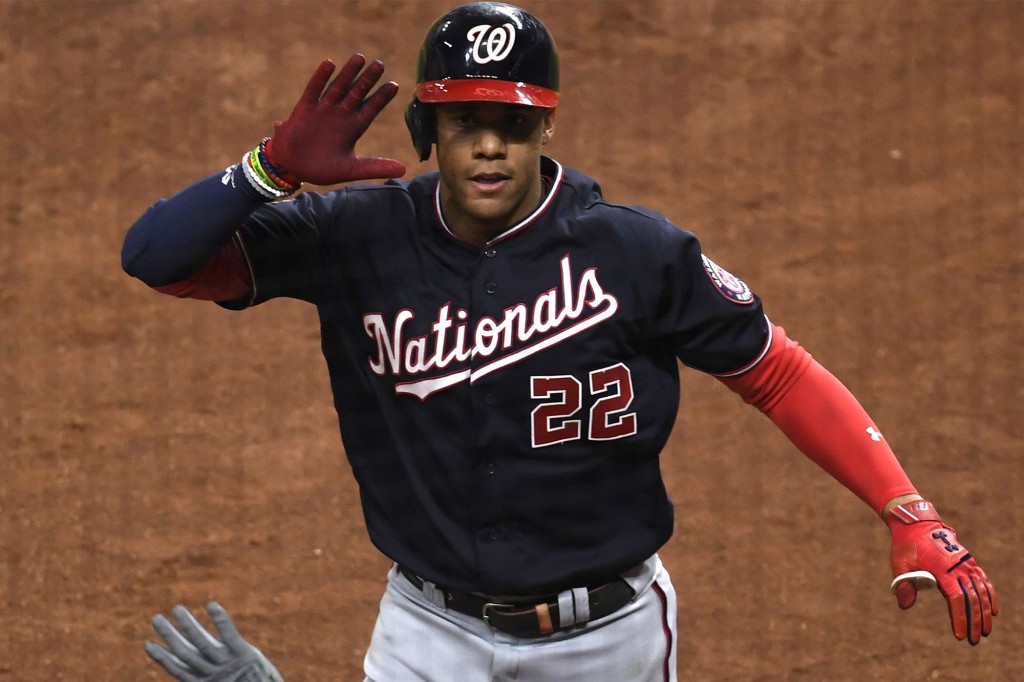
Newly minted Silver Slugger and MVP snub Soto is set for a big raise in arbitration; how will this factor into the Nat’s payroll plans? Source NYPost
Before giving real thought to what the Nats might do this off-season, you have to know where they stand from a payroll consideration.
Quick answer: they have about $50M to spend. See https://docs.google.com/spreadsheets/d/1Au_xTIni1eJbDGzravS1482wBbzN9DBQaOY1wwo2Mr0/edit#gid=1520401900
More detailed answer: I have been maintaining a “Payroll worksheet” for the nats for years, which helps write t his particular post every year.
I’ve posted this at the Big Board, in a new tab called “2021 Payroll” https://docs.google.com/spreadsheets/d/186nm-v5F-zTCoR2Be7TFYM3e2cZ-gYi2WVqJLEkHdmc/
Here’s a breakdown of the Nats payroll right now (note; every figure in this article is Luxury Tax dollars: I honestly don’t care about real or actual dollars anymore since everything is driven by the Luxury tax limit in this game, and if the Lerners are looking at deferred dollars and making spending decisions in real-time based on that, then they don’t deserve to be running a team that earns them tens of millions of dollars a year).
$112,522,709
<– under contract
$18,850,000
<– arb est
$7,889,000
<– pre arb
$1,800,000
<– 40-man
$15,500,000
<– benefits
$156,561,709
<– total payroll estimate right now
$210,000,000
<– Luxury tax cap for 2020
$53,438,291
<– room under cap right now
By category:
The nats have $112M and change committed to its 8 current veteran players. Of course, the lion’s share of this is going to its big 3 starters in Strasburg, Scherzer and Corbin, who combine for $87M of this $112M themselves.
We have 4 arb-eligible players, who i’m estimating to earn $18.8M; the two biggest earners of course will be Turner and Soto, who are projected to be at least $10M and $5M each
The rest of the roster are estimates: 14 26-man roster players at roughly the MLB minimum comes out to $7.8M, a figure that will be a bit higher as 1 and 2-year guys get a bit of a raise. Plus the rest of the 40-man gets estimated at $150k per, so 12*$150K turns into $1.8M. Again, might not be exactly that b/c we may not have 40 on the 40-man all year.
the 2021 estimate for benefits is $15.5M this year.
So that leaves us around $156M committed right now before we acquire a single player. $210M is the cap for 2021, so we’re working with an operating FA budget of $53M. My figures are slightly different from Cot’s because of the arb estimates and 40-man estimates, but we’re within $2M of each other right now.
$53M is not a lot of money to acquire everything that this team needs. We need another starter, a catcher, a decent slugger to play 1B, we need another outfielder, and we need a few relievers. Catchers are rare and are not cheap, but we may be able to acquire a re-tread veteran starter for around $10-$12M. But for the rest of the roster we’re looking at taking fliers on MLFA/NRI types and edge of the roster $1M major league deals.
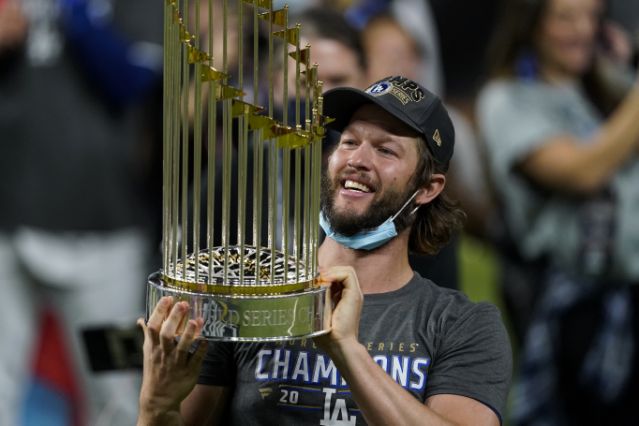
ARLINGTON, TX – OCTOBER 27: Clayton Kershaw #22 of the Los Angeles Dodgers holds the commissioners trophy after defeating the Tampa Bay Rays 3-1 in Game Six to win the 2020 MLB World Series at Globe Life Field on Tuesday, October 27, 2020 in Arlington, Texas. (Photo by Cooper Neill/MLB Photos via Getty Images)
The end of the world series brings the beginning of baseball’s off-season, and the Nats wasted no time officially declaring its free agents to be.
I’m tempted to write about some of the hot-button stories that led from Game 6, notably surrounding Blake Snell‘s ridiculous hook (reminiscent of the Greinke hook in game 7 of last year’s WS) and Justin Turner‘s returning to the field after testing positive for Covid-19. But others have covered it far better than me (both on Snell and on Turner).
As of this writing, the 40-man is as empty as I can ever remember, having shed 9 FAs yesterday and another 10 outrights between Oct 10th and Oct 15th. By my accounting (and per the Big Board)
Notably, a number of players who had options were also declared FAs yesterday, as discussed here. We talked previously about possibly considering options for some of these guys, but none were taken. Adam Eaton, Howie Kendrick, Anibal Sanchez and Eric Thames all declined.
As it stands now, the 40-man roster sits at just 28 players. Joe Ross will be the 29th once he’s restored. Technically its at just 25 players, as procedurally the team has not activated its three remaining 60-day DL guys (Strasburg, Castro, Romero).
Lots of work to be done this off-season and the first big decisions just passed by with little fan fare.
Do the Nats bring back this famous celebration couple? Photo via Brobible
Since we have no playoffs to discuss, we’re pivoting immediately into off-season mode.
The Nats procedurally on 9/28/20 activated all their 10-day DL players. They also procedurally recalled the last three remaining players from the 40-man alternative site for the purposes of off-season moves. Amazingly, they ended the season with 9 players on the 10-day DL and just one healthy player on the 40-man roster not already playing (Raudy Read).
Free Agents to-be are immediately declared FAs at 8am Central time the day after the World Series ends. The team doesn’t have to restore its 60-day DL players until 5 days after the World Series ends, which allows them to add them back after free agents are declared and after the team has a small exclusive window to negotiate. So, we have to wait for about a month to see the next dominos fall, but we can start to speculate now.
Based on my records, here’s how our roster will look in the off-season, which will drive the decisions to make. We’ll classify these players into 5 categories
Category 1: Players under a “veteran” contract for 2021 (7): Scherzer, Strasburg, Corbin, Hudson, Harris, Gomes, Castro. Seven players but a huge payroll hit (per Cots, these 7 players count for $120M or so in cap space next year.
Category 2: Pre-Arbitration players under full team control (22): Voth, Fedde, Crowe, Finnegan, Harper, McGowin, Braymer, Espino, AWilliams (TJ aug 2020), Read, Garcia, Noll, Robles, Stevenson, Hernandez, Bacus, Rainey, Bourque, Kieboom, Sanchez, Romero, Barrera. That’s a ton of players on pre-arb deals, which is important since they will represent a huge chunk of the active roster in 2021. I think a few of these pre-arb guys are in discussion for “first 40-man guy to get DFA’d when the team needs room” territory (Noll, Williams, Sanchez) but for now, they’re all in play. Note: a couple of these guys were technically MLFA signings in 2020 so i’m not sure if they are now pre-arb or still FAs. Apologies if I got their status wrong).
Category 3: Arbitration-eligible players for 2021 (8). Here’s where we start discussions. Player by player:
Suero (A1); lock to tender
Turner (A3): lock to tender
Soto (A1): lock to tender. I saw something recently that seemed to indicate he may or may not be a Super-2 guy, but he was projecting to be Super-2 after last off-season so i’m assuming he’s Arb-eligible this year.
Taylor (A4); Nothing has really changed with Taylor; he struggled at the plate again but hit a few bombs, which drove his OPS+ figure up a bit from what you’d expect for someone who hit below .200. The change in Taylor in 2020 is that his defensive numbers COST him WAR this year instead of helped. Probably Small Sample Size driven, but Taylor’s bigger problem is that his direct competition as “4th outfielder” on this roster Andrew Stevenson just blew up in 2020, making Taylor an obvious non-tender candidate.
Guerra (A4); his contract status is odd; he has bounced back and forth on and off the roster and signed a combo major/minor FA deal this past off-season. But Cots lists him as arb-eligible, so i’m not entirely sure if he’s a FA or if he’s arb eligible. My guess is that the team cuts another deal with him and non-tenders him if he’s eligible then immediately re-signs him the next day.
Barrett (A3); another odd case; how much does sentimentality count? The team called up a slew of other prospects before recalling Barrett this year, he pitched in 2 games then hit the DL. It seems to me he’s a non-tender candidate and at age 32 could be facing one last shot at making a MLB roster next year.
Elias (A3); 2020 a lost season for Elias, who went onto the 60-day DL early and barely pitched in 2019 for this team as well (thanks to the idiotic decision in Aug 2019 to allow him to hit, which resulted in a leg injury with him running out a grounder in a meaningless at bat). The Nats didn’t give up a ton to acquire him (giving up two decent minor league arms in Taylor Guilbeau and Elvis Alvarado) so I can’t imagine them non-tendering him, but how do you do salary evaluation of a player who misses an entire year?
JRoss (A3); he opted out in 2020, and his absence was felt immediately when it became clear his 5th starter replacements could not cut it. I think you tender him and he goes back into the starter competition for 2021. Worst case he gets cut mid-way through spring training and the Nats escape with 1/6th of his salary.
Category 4: Players with Options for 2021 (5): here’s where we start having some tougher decisions.
Sanchez: $12M club option, $2M buyout: I’m not sure how you take this option if you’re the Nats after the season we just saw. Sanchez was lucky to post the numbers he did in 2019 (his FIP was more than a half a point higher than his ERA), and he bottomed out in 2020. Decline the option, pay the buyout.
Thames: $4M mutual option, $1M buyout. Thames posted just a 65 OPS+ playing primarily as a 1B/DH type. That’s just patently awful, considering how many options there were on the market for “non-mobile mid-30s slugger.” Decline the option, pay the buyout.
Holt: $5M club option, $750k buyout. He took a significant step back from his Boston numbers, which resulted in Milwaukee cutting bait on him a month into a 2year deal. Despite his positional flexibility (he played 6 positions in 20 games for the Nats) I don’t see how you guarantee $5M to a guy who didn’t “wow” you in his audition. Decline the option, pay the buyout.
Eaton: $10.5M club option, $1.5M buyout. Phew; what do you do here. His fourth straight year in offensive decline. He was awful defensively. But he’s only 31; does the team take the $10.5M option and roll the dice that 2020 was an anomoly? If they cut him, do they have a replacement minor leaguer that makes sense (not really no). So do they roll the dice that they can get comparable production on the FA market for the same price? How much does sentimentality factor in here? Clubhouse presence and managerial relationship? Again, he’s only 31, which is a lot different from 36 (see next). I think the team exercises the option.
Kendrick: $6.5M mutual option, $2.25M buyout. Word came out a few days ago that Kendrick was considering retirement until he got hurt. I’m not sure I buy that, not with a 6.5M option on the table and more gas left in the tank. Another sentimental pick here; a guy who can plug in multiple positions in a pinch and who now has the DH to settle into if need be. Also a factor here; much like in poker, if you’re into a hand already for the big blind, why not make a call for a little bit more? Declining the option only saves them $4M, and it may be worth the cost to keep a veteran presence around one more time. I mean, if Eaton is there, you gotta keep his buddy Howie right? Exercise the option.
Category 5: Unrestricted FAs (6). Now, there’s nothing the team can really do with these guys since they’re FAs. But we can talk about whether or not we think the team pursues them in the off-season:
Suzuki; do you re-sign a 37yr old catcher? He’s been amazingly consistent at the plate the last few years while splitting time pretty evenly with Gomes. Still sporting a decent OBP. Is he getting pushed out by rising minor league depth (hardly, unless you think Read or Barrera is an option in the majors in 2021). I might pursue a 1-yr deal.
Cabrera: reverted to his 2018-19 form at the plate, league average providing poor, slow, aging defense at multiple infield positions. I think you move on.
Harrison really showed a jolt for this team, but he’s a 2B on a team with a prospect seemingly installed there for the longer run.
Doolittle: tough one. Struggled last year, struggled this year. A huge part of the community, outspoken leader. Maybe bring him back on an incentive-laden deal?
Freeman (TJ Aug 2020); really bad timing on his TJ surgery, as he’s a FA and will be rehabbing on his own.
Zimmerman, the most difficult decision of all. The team was onboard with a $2M deal for 2020 before he opted out for completely understandable family reasons. 2020 was his age 35 season; I’d guarantee him a $2M incentive-laden deal to be a 1B/DH platoon with a lefty slugger for 2021 absolutely. When he’s healthy he can hit, and doing nothing but DHing will help keep him on the field. Its worth a flier for a guy who is either retiring to the Nats front office or playing in 2021.
If the team does exactly what I say here, what would be our needs heading into the off-season? First lets see how this would look from a roster perspective (not counting FAs):
Another starter. I’m just not sure you can go into 2021 with your 4th/5th starters being Ross, Voth, Fedde and Crowe. I’m not sure I trust what I saw from McGowin or Braymer. Espino has never really succeeded in the majors and seems like the definition of a 4-A guy. And Romero? Maybe he can step up now that he’s gotten his debut out of the way.
Reliever help: I see 5-6 mlb-quality relievers here, but we’d need like 12 on the 40-man roster.
Catcher; as discussed with Suzuki above
Infield: well, right now your starting infield in 2021 is Castro/Kieboom at 3rd, Turner at SS, Garcia/Castro at 2nd, Kendrick at 1st (if they exercise his option), with Noll and Sanchez in AAA or released. They probably need more depth here.
Outfield: If they exercise Eaton’s option, then little needs to be done. If they don’t, then they’ll need a starting corner OF.
In other words, they need help basically everywhere.
A useless 3-game winning streak against another also-ran from the division ended up costing the Nats at least 5 spots in the 2021 draft.
Assuming that MLB does not do any chicanery with the 2021 draft order, the Nats stand to pick 11th overall, down from projecting to at worst 6th overall a week ago.
Despite the drop, the 2021 draft projects to be a pretty solid draft, thanks to the 5-round draft done this year and the corresponding dozens of decent college prospects who were forced to return to school (and, for prep players, forced to actually attend school, some of which chose the juco route, making them immediately eligible for the draft).
We have some 2021 draft content in the works; a drop out of the top 10 probably costs the nats a shot at one of the more “famous” names in the draft (Kumar Rocker, Jack Leiter, Matt McClean, etc) it does bring into play one of many very solid players from a second tier of guys. Could we be looking at someone like LSU’s starter Jadan Hill or Ole Miss’ starter Gunnar Hogeland? Could a run on starters at the top of the 2021 draft force the Nats to actually take a position player? We’ll see.
Man, it seems like its been forever since we’ve seen a Nats beat reporter do a mailbag. And unfortunately the one I found is behind the Athletic’s paywall, By Athletic Nats beat reporter Brittany Ghiroli. No worries though; you’ll get the gist.
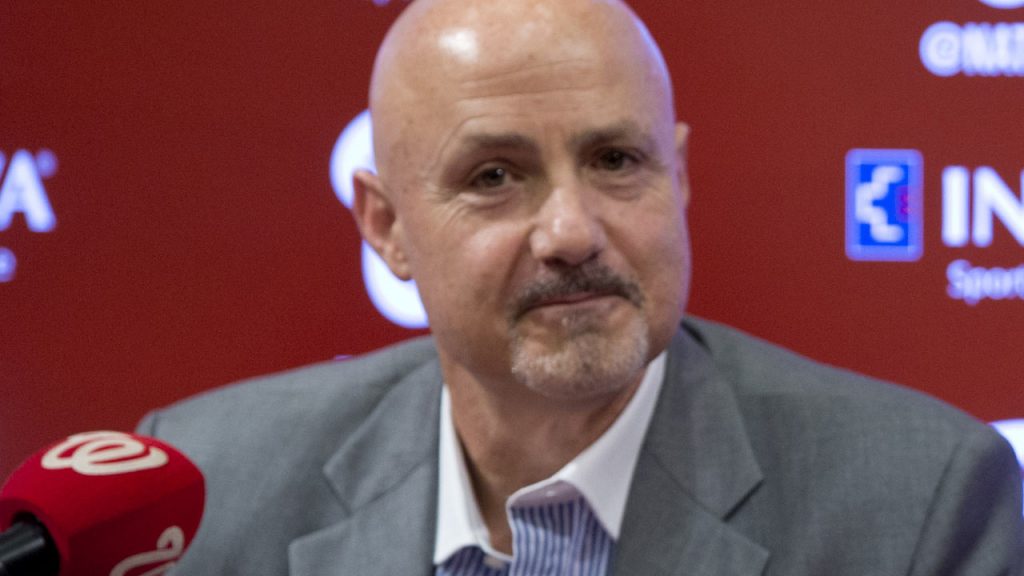
Q: What are your reactions to the (Mike) Rizzo contract? A: It’s about damn time. I just do not understand why either Mike Rizzo or Davey Martinez entered this season w/o an extension. The only thing I can think is that both had had informal discussions with the ownership group that promised them extensions at a later time.
Brittany’s take: Finally. 3yr extension, with a big bump in pay from $4M/year on his previous deal. But she also notes how disrespectful this delay was to the rest of the front office staff, who live and die by Rizzo’s contract status. Hard to disagree.
Q: Have you heard about any extension talks with (Juan) Soto? A: I hope they have … but it seems unlikely. Juan Soto has already established himself as one of the league’s elite players, so there seems to be little incentive for him to sign away any flexibility. He got a “big” pre-arb raise, which frankly is still peanuts compared to his value, and he’s already guaranteed to be a Super-2 guy, meaning four arb years. If i’m the Nats maybe i’m doing what they did with Harper and Rendon; buy out the arb years with sizeable raises so they’re not arguing every off-season, see if they can get one post-arb FA year thrown in (he’s FA after 2024 season), and make it worthwhile to both sides.
Brittany notes that Soto’s agent is Scott Boras, so forget about an extension. She is unaware of any extension talk, but points out a couple of Braves deals that could serve as landmarks.
Q: Any details on whether the front office has moved on from competing this year to preparing for a stronger ’21 season? A: Well, we saw no trades this year, meaning zero attempts to shore up multiple areas of need on the current roster. But then again, that might have been a factor of the price tag and our own depleted farm system. I mean, would you have wanted to give up Cade Cavalli or Jackson Rutledge for a month of a #3 starter hitting free agency after the season? Hell no. Meanwhile on the field, the team has been frisky this week, but (as of this writing on 9/11/20) remain 5.5 games out of a wild card spot and still projected for either the #6 or #7 overall pick next July. Brittany notes the same thing: the lack of moves at the trade deadline tipped their hand.
Q: Any insight on moves Rizzo should consider in 2021 free agency? A: man, it exhausts me to even start considering this. But here’s 2 minutes on their FA outlook. Using COTS site, they are set to lose Eaton, Sanchez, Doolittle, Suzuki, Kendrick, Thames, Holt, Cabrera, Zimmerman and Freeman to FA (yes some of these guys have options but … right now its hard to see any of these options exercised).
So that means the team is in need of: 1-2 Starting pitchers, a corner OF, two veteran lefty relievers, a starting quality catcher, and a big chunk of their infield depth. Assuming they go young in 2021 the infield could be anchored by Kieboom, Turner and Garcia, so they’d be in the market for a 1B/DH platoon, plus a couple of utility guys who can move around. So, not a ton but also some work to do. the have $126M committed before arb raises of roughly $25M (could be more depending on how much Soto gets), so that leaves about $50M of FA room to work with. We can’t get a good SP and a solid catcher for that, but we should be able to get the edges covered.
Brittany repeats the same list of players, and says the priorities will be similar to what I put.
The Nats on 8/31/20 are 12-20. They have the second worst record in the NL. They have the 5th worst record in the majors. But thanks to the crazy 2020 playoff structure they sit just 3.5 games out of a Wild Card spot. They’ve had season-ending injuries or opt-outs of multiple planned core players; they’ve lost to presumed rotation members in Joe Ross and Stephen Strasburg, they’ve lost a middle-of-the-order off-season acquisition bat in Starlin Castro. They’ve lost both their lefty specialist relievers in Roenis Elias and Sam Freeman. They lost an important bench bat/team leader in Ryan Zimmerman. They’re now throwing out AAA starters twice every five games, and have had severely disappointing seasons from a slew of players they were counting on (Anibel Sanchez, Adam Eaton, Carter Kieboom, Eric Thames, Daniel Hudson, Sean Doolittle, and so on).
So what did they do at the deadline? Zip. Nothing. Nada.
Maybe the farm system is now so utterly depleted (given that they’ve already called up their consensus #1, #2, #5 and #10 prospects on the year with little impact) that they couldn’t offer enough in trade to actually acquire someone they wanted. Perhaps more to the point, the price tag it would have taken to acquire starters (given the spate of pitcher injuries this year and the competition in the area) may have been too high for the team’s taste (how pissed would you be if they had flipped someone like Jackson Rutledge or Cade Cavalli yesterday for a 3rd starter one-month rental?). It seems foolish to think they have the cavalry coming in to help; right now the only 10-day DL player they have is Seth Romero, who is only up because they needed a lefty bullpen arm. Brock Holt? That’s not a savior. Neither is Josh Harrison (though to be honest he has hit well). So I guess the plan is to assume that all those veterans listed above who have sucked so far are short sample size regression to the mean candidates and they’ll be rebounding … within the next few days?
Meanwhile, the rest of the division at least tried to improve:
the Braves traded forTommy Milone. ok that’s not that impressive a move, but its a move
the Marlins of all teams acquiredStarling Marte from Arizona.
Not earth shattering moves, but it is notable that the Braves lead the division with a rotation that’s being held together with scotch tape, and they just acquired Milone to fill in because he’s better than whatever else they apparently have at their disposal (remember when people shuddered at the pipeline of starters in the Atlanta system? yeah’ they’ve all crapped the bed this year).
So, what to make of this? Are you happy they did nothing? did we want a sell-off? Or do we have confidence they can turn it around and squeak into the crap-shoot playoffs for 2020?
Word today that Strasburg is having surgery on his wrist and is heading to 60-day DL, effectively ending his season. Wil Crowe becomes the latest Nats top-10 prospect (behind Kieboom, Garcia, Romero ) to get called up this season and attempt to keep the team afloat. By most rankings, the Nats current #1, #2, and #4 prospects are now active (plus wherever you think Romero ranks, anywhere between 10 and 14 on most boards). Suddenly its looking like a youth movement in Washington. (side note: our farm system is going to be dead last next year if all these guys exhaust rookie eligiblity).
Is Strasburg’s injury unsurpassable for this team? Eh, probably not; he was already hurt but in his absence the team is sputtering along playing about .400 ball.
Of course, in the 2020 crazy season, .400 ball only puts them like a game out of the wild card. Eight teams out of the NL make it, meaning that ST Louis (currently sitting at 7-8) is in playoff position. So the Nats at 9-13 are … 1.5 games back? My math is a little fuzzy on “games back” logic right now given differing numbers of games played. So a weekend sweep suddenly rockets the team back into play off position.
The larger question is this: The Nats are losing piece after piece, and I wonder how long they conintue to hold on. Both lefty relievers are done, their #2 starter done, their FA second baseman signing done. They were already down a 5th starter thanks to Joe Ross‘ opt out. I mean, i’m glad to see all these prospets coming up; its great to be able to actually see these guys play. But man, can this team hold on?
Luckily for the Nats … the “class” of the division (Atlanta) is just 4 games ahead, and themselves seem to be falling apart too. Maybe its a race of attrition until October.