Nationals Arm Race

"… the reason you win or lose is darn near always the same – pitching.” — Earl Weaver

Ask Boswell 6/24/13

leave a comment

Lots of grief for Espinosa and Haren this week.  Photo Nats official.

Lots of grief for Espinosa and Haren this week. Photo Nats official.

We’re now almost 3 months in, the team is still stuck at .500 and the natives are getting restless (see Haren, Dan‘s forced D/L trip as penance for his performance lately and Danny Espinosa‘s forced demotion to work on his batting).  I wonder what the tone of Tom Boswell‘s weekly chat questions on 6/24/13 will be?

As always, I answer here before reading Boswell’s answers and edit questions for clarity.

Q: Should the Nats move Ian Desmond up in the order?

A: Ian Desmond has mostly been batting 5th or 6th (depending on injuries to the 3-4-5 guys).   Frankly there’s no place else to put him.  They bought Denard Span so he could bat lead-off, and now suddenly Anthony Rendon is the prototypical #2 hitter; hits to all fields, good bat control, high average and some pop.  3-4-5 are set in stone when they’re healthy.   The only question is whether Desmond merits batting before or after Jayson Werth.  I’d say he will stay in the #6 hole.  Boswell says #6 is the best spot for him and he’ll stay there until Adam LaRoche‘s contract is up.

Q: Why do fans boo home-town players who are struggling?

A: The genesis of this question is the cascade of Boos rained down on Dan Haren after his latest meltdown.   I think fans are fans: they pay good money and expect this team to be successful.  When a guy lets in 7 runs in 3 and a third innings … well that’s a game spoiled.  Are they booing the player or the team, really?  Should they boo?  Eh; you certainly hear “good baseball town” crowds booing players.  Boswell says he’d have booed Haren too, but also notes what a class act and competitor he is.

Q: Where do we go with Dan Haren now?/Will Ohlendorf get the spot start?/Is Haren getting DFA’d?

A: Just answered a lot of this myself in a post yesterday.  Short answer; spot start from someone, extended rehab assignment for Haren, and probably a long-man role in the bullpen if we find a competent starter replacement.   I don’t think he’s getting DFA’d because any one of a number of pitching poor teams would snap him up in a heartbeat despite his crummy numbers.  Boswell thinks the team is going out on the open market to replace Haren and notes he’s hearing Taylor Jordan is getting a shot this weekend, and thinks that summarily demanding that a struggling player be released is cruel.

Q: Is Ian Desmond a flawed player?

A: The question arises because of Desmond’s small delta between his BA and his OBP (.280 and .318) and his approach in clutch situations.  I think Desmond has taken a small step back from last year’s break out season but otherwise all three of his slash line numbers are right where they were last year and in the same relative ratio as last year. His 2012 OBP was about 40 points higher than his average (same as this year), and his slugging is about at the same slightly lower figure.  He’s on pace to hit the same number of homers and actually increase his total extra base hits.  I see no issues here.  I’ll take a 120 OPS+ shortstop who plays plus defense anyday.  Boswell agrees, saying Desmond is a complete player and an all-star.  Nuff said.

Q: Is Werth’s groin strain another example of a Nats player coming back too soon?

A: It doesn’t seem so.  Different injury, and one that does tend to bedevil older players like Werth.  Lets just hope it isn’t too long.  Boswell does kind of scoff at Werth’s excuse of “playing dehydrated.”  As if there wasn’t enough ways for a professional athlete to hydrate themselves during the day.

Q: Will either Haren or Espinosa get another start in 2013?

A: I think the answer is likely yes.  This team has shown itself to be incredibly brittle so far (Saw a stat that the opening day lineup hasn’t played together since the 2nd week of April).  The odds of another guy going down with injury and requiring the return of either guy seems high.  The better question is likely what happens after 2013.  Haren’s one year deal is clearly over, and the Nats can’t possibly offer him a Qualifying Offer.  Danny Espinosa will be sans position and will be traded (even more proof of this?  The fact that Espinosa is playing SS in Syracuse).  Boswell interpreted the question more of a “rest of their career question” and said that Espinosa clearly has more career but Haren, maybe not unless he adjusts his approach.

Q: Why is there a disagreement between Harper and Johnson on his rehab?

A: Much to-do about nothing?  Either way, it doesn’t sound good when you have media members scurrying from one guy to another to play “he said, she said” in the papers.  Those two need to get on the same page, whether Bryce Harper is going on a rehab assignment Tuesday, Wednesday or three Fridays from now.  turns out: he’s going out on rehab tonight.  Boswell thinks its just Davey Johnson being too positive on how long it takes guys to come back.

Q: Why hasn’t Espinosa gotten surgery, if it has so clearly impacted his performance?

A: Probably two words: “Anthony” and “Rendon.”  I think Espinosa’s been reading the tea leaves and knew that his spot was the most likely destination for Rendon, and that Rendon (once arriving) likely wouldn’t give it up.  So far, that scenario is playing pretty much exactly as in Espinosa’s worst fears.  Boswell talks about how the Nats evaluated Espinosa’s injuries now and at the time.

Q: If the Nats were to pursue someone like Lee or Gallardo in the trade market, what would it cost them?  And who is untouchable?

A: Cliff Lee is owed so much money that it may not take as much in prospects as one would think.  But, the Philles have to declare that they’re out of it first … and they’ve got basically the same record as the Nats right now.  Gallardo is signed through 2014 with a 2015 option for about the same money we’re paying Haren right now .. and he has limited no-trade.  The thing is; is he worth trading for?  He’s only so-so this year, better the last two years.  I think Yovani Gallardo probably rates a bit below Gio Gonzalez on the trade market b/c of his salary  and being slightly less on the field, so perhaps two good prospects plus a young guy.

Who is untouchable at this point?  Rendon, Karns (they like him too much), Jordan (gotta see what they have now).  Brian Goodwin (he’s Span’s replacement in two years).  A.J. Cole (they worked pretty hard to get him back).  I don’t think they want to part with Matt Skole either.  But that’s not leaving a lot to work with in terms of prospects.

Boswell doesn’t really talk much about these guys or who the Nats are keeping … but fantasizes about getting David Price.  Dream on; the Tampa Bay Rays don’t trade unless they know they’re winning the deal.
 

Haren’s 6 week Demotion, er I mean D/L Trip

5 comments

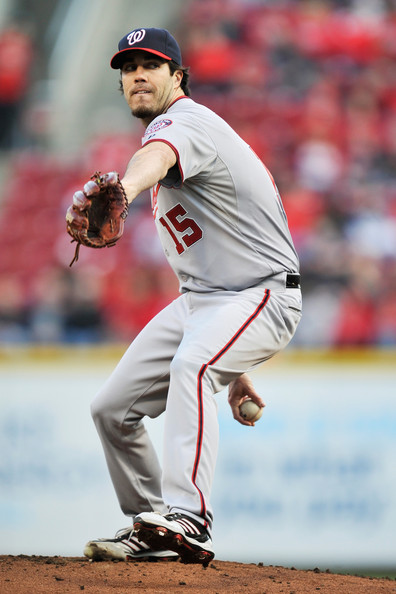
Haren's struggles earn a well-deserved D/L trip.  Photo via Zimbio.com

Haren’s struggles earn a well-deserved D/L trip. Photo via Zimbio.com

Little surprise that the Major’s worst starting pitcher Dan Haren was sent to the D/L.  As of 6/24/13, out of 99 qualified Starting Pitchers he currently ranks 99th in ERA, 95th in FIP, 72nd in xFIP (so there’s that) and (interestingly, since it purportedly is the best of the analytical evaluator advanced pitching stats) 48th in SIERA.  As has been noted elsewhere, he’s tied for the league lead in HRs conceded.  The team has lost his last nine starts, and his latest meltdown clearly has forced the team’s hand.  Haren may not be the reason this team is mired at .500 (offense, offense, offense), but he’s clearly not helping either.

So the Nats have found a “soft tissue” issue with Haren (this time?  a “Shoulder Strain”) and have sent him to the D/L.  This isn’t the first time the Nats have used a dubious soft-tissue injury to “stash” an inflexible contract (see Rodriguez, Henry and Wang, Chien-Ming repeated D/L trips over the past two years), and while I kind of laugh at the blatant manipulation of the rules, it benefits the team to be able to remove him from the active roster but not lose him to the open market, so we’ll let it slide.  (btw, how do I know that the team is playing shenanigans with the D/L trip?  Read CSN Chase Hughes‘ tweet about what Haren said when informed he was going on the D/L.   Haren didn’t even know what injury he was supposed to have!).

So what happens next?  Adam Kilgore‘s WP article on the topic seemed to indicate that the Nats and Davey Johnson are not considering either Ross Ohlendorf or Craig Stammen for spot starts.  Which I have a hard time believing frankly; both guys demonstrated their ability to pitch longer outings in the last two days in relief of failed starters.  Ohlendorf has been starting all year and is exactly the kind of 4-A/6th starter that the Nats envisioned him to be when they signed him in the off-season.  Why would the team do something rash like call up Taylor Jordan (as Kilgore suggested and as others are reporting) when we’ve already seen what a more polished and experienced AA-pitcher (Nathan Karns) can do when jumped far above his head too soon?  Yeah, I’m excited about Jordan and what he’s done this year; but I think Ohlendorf or Stammen are better options.  I’d start Ohlendorf on Saturday and see what happens.

Of course, perhaps the Nats talent evaluators are convinced that a guy (Jordan) with exactly 49 innings above A-ball is ready to replace a $13M veteran.   If so, I can’t wait to see him pitch live.  Even if it starts his service time clock too soon, he was a guaranteed 40-man addition ahead of the coming Rule-5 draft anyway based on his domination so far in 2013.  What’s a few extra months at this point?  He’s already past Super-2 status so the team has guaranteed all the control they could get over him.

As for Haren, here’s what we’re likely going to see:  he’ll pay lip service to his “injury,” get an MRI, see a couple of specialists, get a shot.  That’ll take a week or so.  By that time we’ll know whether or not whoever gets his Saturday 6/29/13 start is worth giving another start to.  If Ohlendorf or somebody pitches 6 shutout innings in Haren’s place … then Haren’s going on a long “rehab” assignment in Syracuse.  And frankly, even though he’s making $13M and was supposed to be our former ace acting as a 4th starter FA acquisition, he may struggle to get his starting gig back.

Is it time to pull the plug?  Well, baseball is a performance-based industry.  Haren has just not performed.  Is it truly because he’s pitching through injuries?  Somehow I don’t think so; he was ineffective last year, he’s yet to really have a truly dominant outing this year, and the question is out there as to whether Haren is officially washed up.  For as much as I looked forward to Haren’s time here when we signed him, I now feel like we can’t give him more starts unless he starts throwing shut-down outings in AAA.

PS: read this interesting nugget tooDanny Espinosa is playing short-stop in Syracuse.  You know what this tells me?  The same thing that Kilgore concludes: Espinosa is being showcased so that he can be shopped as a Shortstop on the trade market.  Read the link; I can’t disagree with any of his analysis.  Well, either that or the team is looking to move Ian Desmond and replace him w/ Espinosa.  Ha.

PPS: Also reading reports on NBCSports that Mike Rizzo is burning up the pre-trade market phone lines.  That’s a clear indication that this team is not ready to wave the middling .500 team flag.

College World Series Update; The final is set

leave a comment

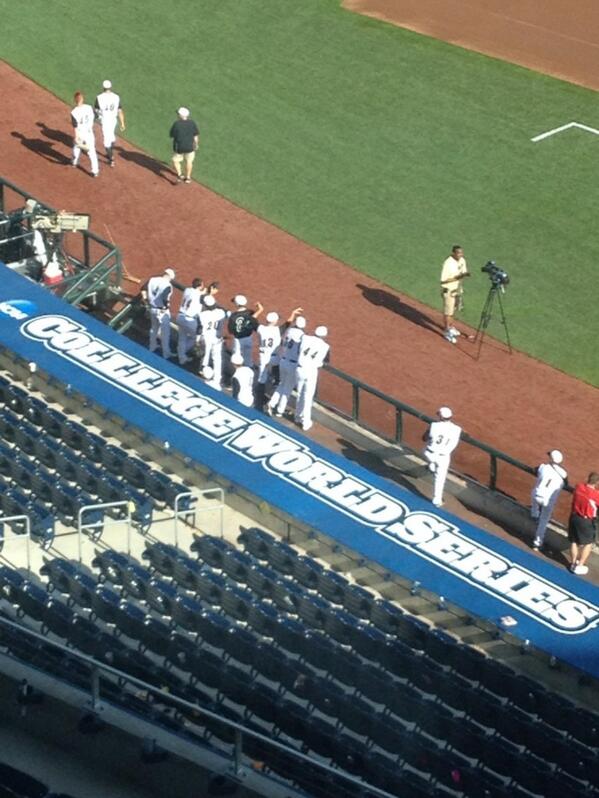
Here’s an update of where we are in the 2013 College World Series (CWS).  We’re to the CWS final, having had the 8 competitors whittled to just two.

To recap the entire NCAA post-season tournament with links to previous posts:

A couple helpful resources for those who want to follow the College game: here’s a link to the CWS schedule page at d1baseball.com, which I use as the best way to quickly find all the core college site data.  And here’s the best (only?) College Baseball blog out there: CollegeBaseballDaily.com.

CWS Field: here’s the two Original Brackets.

  • Bracket 1: UNC, NC State, UCLA, LSU
  • Bracket 2: Mississippi State, Oregon State, Indiana, Louisville

Days 5-6:

  • Results: Two elimination Games.  Oregon State v Indiana, and UNC v NC State.
  • Oregon State shut down Indiana in one loser’s bracket elimination game 1-0 behind a complete game 4-hitter from senior lefty Ace/Friday starter Matt Boyd.   Boyd improved to 13-4 on the season in what may have been his last collegiate start; he was a 6th round pick by Toronto.   Boyd out-dueled fellow Ace/Friday starter Aaron Sledgers, himself a 5th round pick by Minnesota, who finishes his 2013 season 9-2 after giving up just one run on 7 hits for his complete game loss.
  • UNC got a couple of runs on NC State’s ace starter Carlos Rodon (pitching on 3-days rest and on a pitch count limit) and #3/Sunday starter Hobbs Johnson made it stand up, throwing 8 1/3 shutout innings in the start of his career as UNC took the loser-bracket final 7-0 (box/gamer).  Johnson is an undersized lefty with decent velocity picked in the 14th round by Milwaukee.   By throwing their #3 starter, UNC can come back with their #1 Kent Emanuel and #2 Trent Thornton ready to go to try to beat UCLA twice to make the final.

Days 7-8:

  • Results: Bracket Finals: Mississippi State over Oregon State 4-1, and UCLA over UNC by the same score.
  • Mississippi State got to Oregon State starter Andrew Moore, hanging him with just his second loss of the season and their big-time hitter Hunter Renfroe hit a 3-run homer to win the game for the SEC team (box).
  • UNC’s Emanuel didn’t pitch badly (6ip, 1 earned run) but threw far too many pitches (112 pitches through six innings) while the Tar Heel’s offense couldn’t touch UCLA’s #3/Sunday starter Grant Watson, and UCLA cruised into the CWS final (box).

CWS Bracket Results: here’s the final standings of each of the two CWS Brackets:

Bracket 1:

  • 1st place: #12 UCLA
  • 2nd Place: #1 UNC
  • 3rd Place: #9 NC State
  • 4th Place: #4 LSU

Bracket 2:

  • 1st place: #11 Mississippi State
  • 2nd Place: #3 Oregon State
  • 3rd Place: #10 Indiana
  • 4th Place: #15 Louisville

Where do we stand in the tournament now/What’s next?

  • The final is set: Mississippi State and UCLA will play a 3-game set starting tonight 6/24, 6/25 and (if necessary) 6/26.
  • UCLA’s pitching staff is set up perfectly for the 3-game set, with Ace Adam Plutko set to go on 6/24 with more than a week’s rest since his 6/16 victory.  If the series goes all three games, none of UCLA’s starters will be on anything other than regular rest.  Meanwhile Mississippi State’s “rotation” has been a patchwork the entire post-season; their #1/friday starter Luis Pollorena hurt himself in the regionals and has only thrown a handful of innings in the CWS.  We havn’t seen their #3/sunday starter Jacob Lindgren the entire post-season.  The team has leaned heavily on #2/Saturday starter Kendal Graveman, who has now started four of their post season games (including two games in the Bracket) and on a couple of bullpen guys in Trevor Fitts and Chad Girodo to make up the innings (the Fitts/Girodo combo likely starts tonight).  Graveman would be on 4-days rest for the 2nd game, 5 days rest for a 3rd game in the CWS final but likely will not pitch the opener.
  • Is this a compelling CWS final?  The 3rd place PAC-12 team and a team that finished a distant 3rd in its division (and was barely over .500 in conference play) in the SEC?   I would have loved to see a Vanderbilt-UNC or a Vanderbilt-LSU SEC grudge match in the final.  I would have liked to see an ACC team at least challenge for the title to try to break their big winless streak.  That being said, both teams were very good; Mississippi State was a 50 win team, UCLA a 47-win team.

Prediction: I think UCLA’s pitching staff is setup and rested while Mississippi State’s staff is in disarray and will be tired.  I think this will make the difference as UCLA takes it in 3.

More R.A. Dickey Animated Gifs

one comment


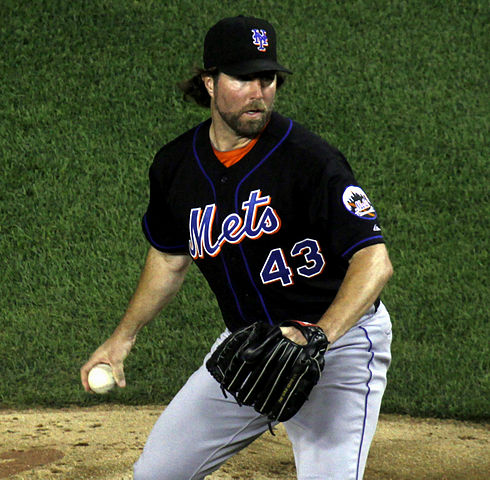
R.A. Dickey throwing another knockler. Photo via wiki/flickr user dbking

R.A. Dickey throwing another knockler. Photo via wiki/flickr user dbking

A few months ago I posted a Youtube video showing a Catcher’s point-of-view look at R.A. Dickey‘s knuckle ball coming in.

Here’s a couple more cool graphics that have popped up on various blogs that I read.

  •  From imgur/r/baseball, an animated Gif of Dickey’s knuckler as it travels to the plate.  Done by the same fellow @DShep25 who did similar Gifs of Yu Darvish‘s repertoire and of Miguel Cabrera‘s ability to hit homers from any point in terms of plate coverage.  (h/t to BusinessInsider blog).
  • And here’s a story to go with the above images from the author himself, Drew Shephard on fangraphs.com.

Still amazing that his 2013 numbers are so bad right now (6-8, 4.90 ERA, 1.388 whip, all significantly worse than his Cy Young numbers from last year).  The Blue Jays are only 6-9 in his starts, a big reason why they’re in last place in the AL East right now.

And then, since its related to these cool graphics, here’s a study (again from BusinessInsider’s Sports blog) about the Physics of a Curve Ball.  Its no wonder Dickey reportedly didn’t even travel with the team when they went to Colorado; he knew his pitches wouldn’t have any movement.

Written by Todd Boss

June 20th, 2013 at 12:26 pm

College World Series Update; The tourney is taking shape

leave a comment

Not a good sign when you can't spell the name of your marquee event correctly.

Not a good sign when you can’t spell the name of your marquee event correctly.

Here’s a recap of the 2013 College World Series (CWS) so far.  We’re through the first four days of competition and we’re getting closer to a CWS final.

To recap the entire NCAA post-season tournament so far

A couple helpful resources for those who want to follow the College game: here’s a link to the CWS schedule page at d1baseball.com, which I use as the best way to quickly find all the core college site data.  And here’s the best (only?) College Baseball blog out there: CollegeBaseballDaily.com.

CWS Field: here’s the two Pots that will each determine a finalist:

  • Pot 1: UNC, NC State, UCLA, LSU
  • Pot 2: Mississippi State, Oregon State, Indiana, Louisville

Days 1-2:

  • Results: NC State beats UNC, UCLA beats LSU, Mississippi State beats Oregon State and Indiana beats Louisville.  My predictions were pretty bad; all four teams that I thought would win the openers lost; only Indiana-Louisville would not have been considered an “upset” by seeds.
  • Carlos Rodon for NC State pitched a complete game victory, giving up just one run on 5 hits against the #1 overall seed UNC.  Rodon’s post-season stats now stand as follows: 26 1/3 innings, 18 hits, 4 runs, 27Ks, 4 walks.  Hie continues building his draft pedigree for 2014 (he’s already considered one of the best, if not the best 2014 draft prospects).  If NC State can beat UCLA, they’ll get Rodon in the pot final on 4 days rest and could use him in game 3 of the finals on 4 days rest as well, an intruiging scenario for NC State’s chances at winning this tournament.  So instead of seeing marquee matchups in the winners brackets of both pots, we saw them in win-or-go-home games in the Losers bracket.
  • Aaron Nola for LSU took his first loss of the season, giving up 2 unearned runs in 8 innings to lose to UCLA.  Another upper-end sophomore pitching prospect, Nola has yet to give up an earned run in the post season and previously out-dueled 3rd overall pick Jonathan Grey in the super Regional by pitching a 2-hit shutout against Oklahoma.  But UCLA ground out an important victory.
  • Mississippi State scored twice in the 8th to take the 5-4 lead and held on against #3 overall Seed Oregon State.
  • Joey DeNato pitched a 4-hit shutout for Indiana and shut down Louisville.  DeNato is a college junior who (amazingly?) went undrafted in June (likely because of his size; he’s listed as 5’10” 180 and probably is smaller).   He’s 24-8 for his college career and is only improving.  He could be a draft day find for someone in 2014.

Days 3-4:

  • Results: Oregon State eliminates Louisville, Mississippi State beats Indiana, UNC eliminates LSU, and UCLA beats NC State.
  • Louisville is the first team eliminated as their ace Jeff Thompson (a third round 2013 pick for Detroit) gets pounded for 7 runs in 3 2/3 innings.  Not a great way to end your college career.
  • Mississippi State puts itself in the driver’s seat to advance from Pot 2 with another 8th inning come-back to beat Indiana and now only needs one more win to get to the CWS final.
  • LSU, the team that I thought would win the CWS a few days ago, became the 2nd team to be eliminated by falling to #1 overall seed UNC.  Tar Heels freshman “Closer” Trent Thornton got the start and threw 7 decent innings to improve to 12-1 on the season.  The Tarheel’s offense got to LSU’s starter early to send my (and Baseball America pundits’) favorite home early.
  • UCLA put itself in the drivers seat of Pot 1 by beating NC State 2-1.  UCLA’s saturday starter Nick Vander Tuig (and San Francisco’s 6th round pick this year) junk-balled his way through 7 innings of 4-hit ball for the victory.

Where do we stand in the tournament now/What’s next?

  • The next two days feature Elimination games.
  • Oregon State-Indiana is tonight 6/19/13.  Loser goes home.  The winner has to beat Mississippi State twice to get to the CWS Final.
  • UNC faces NC State for the 5th time this season tomorrow night 6/20/13.  Loser goes home.  The winner has to then beat UCLA twice to get to the CWS final.
  • UCLA and Mississippi State are both heavily favored at this point to advance; they get to rest their bullpens and they can throw their #1 starters on full rest.


Written by Todd Boss

June 19th, 2013 at 9:13 am

Variation on the Offense theme; Records by runs scored

2 comments

We know the offense is bad.  Even given Dan Haren‘s continued struggles, he’s not the problem.

Here’s a telling statistic; from Baseball-Reference here’ links to 2013’s Team Scoring Summary report and a comparison to 2012’s version.  I did a version of this analysis mid-last year to show the amazing record the 2012 team had in games in which they scored 4 or more runs.   Lets see what’s changed this year:

Some telling breakdowns:

In 2012:

# runs scored Wins Losses W/L %
3 or less 19 48 0.283582
4 or more 79 16 0.831579
5 or more 62 10 0.861111

If they scored 4 runs, they won 83% of their games last year.  There were a couple weird games (they lost three games in which they scored 9 or 10 runs; that’s hard to do) but overall these stats are pretty constant for most teams; when you score 3 or fewer runs it is awful hard to win.  4 runs is the benchmark to shoot for.

More specifically though, the 2012 Nats were an astounding 17-6 when they scored exactly four runs.  You would expect something closer to a .500 record in games like that, given the RS/RA averages and league ERAs in baseball.  That’s indicative of just how good our starters were last year collectively.

In 2013, through Monday 6/17/13 game:

# runs scored Wins Losses W/L %
3 or less 9 31 0.225
4 or more 25 4 0.862069
5 or more 25 1 0.961538

The percentages are roughly the same.  They’re losing a few more of the low-scoring games thus far, but are winning a few more of the higher scoring games.   But look at the number of times they’ve already scored 3 or fewer runs (40) versus all of last year (67).  And their record when scoring the magic 4 runs exactly?  0-3.

On the bright side, they’re closing out wins much better when scoring 5 or more than they did last year (when they had some amazing blown leads).

Conclusion?  Hope for 4 runs every night (though it didn’t work last night).  And then hope again for that 5th run.

Written by Todd Boss

June 18th, 2013 at 12:38 pm

Posted in Nats in General

Tagged with ,

Ask Boswell 6/17/13 Edition

leave a comment

Anthony Rendon - What a draft day steal.  Photo: Brett Coomer/Houston Chronicle via chron.com

He’s continued to hit in the pros like he used to in college.  Photo: Brett Coomer/Houston Chronicle via chron.com

The Nats continue to struggle offensively.  They’re generally only above the Mets and the Marlins in key offensive categories, two teams that have basically given up for 2013.  They’re hitting worse than the Astros, a team that also had given up on 2013 before it started and whose payroll is 1/6th of ours.   Our best hitter Bryce Harper languishes on the D/L, but the team has (finally) made some adjustments and shed some of the underperforming players on its roster and rookie Anthony Rendon has been living up to his expectations.

So, what is Tom Boswell‘s weekly chat is going to be about?   Here’s his 6/17/13 version.  As it turned out many of the questions were about the US Open, and a few about Hockey and Football.  But lots about baseball.  As always I answer here before reading Boswell’s response and edit questions for clarity.

Q: Is Davey Johnson the problem with the Nats in 2013?

A: Despite some complaints about his Starting Pitcher and bullpen usage earlier this year, Davey Johnson isn’t the reason this team is losing.  Not with a team whose offense ranks 28th in the league in all the basic run-creating categories (Runs, Batting Average, OBP, and OPS+).   Changing the manager won’t help; all you can do is change the personnel.  And the Nats have done what they can; sending Tyler Moore and Danny Espinosa to the minors, calling up Rendon (slash line as of 6/16/13: .361/.426/.525; yeah that’s pretty darn good), giving Chris Marrero some at-bats.  The obvious: they need Harper back, they need the bench to start producing like it did in 2012, and they need Wilson Ramos to come back and spell the quietly falling-apart Kurt Suzuki (he’s now hitting just .215 with little power).  Boswell agrees; its the offense.

Q: Did Johnson screw up by not loading the bases in the Friday loss?

A: Situation: 2nd and 3rd with none out; do you load the bases?  I’d normally say that it depends on the matchups; a fly ball beats you anyway, so you’re looking for a pitching matchup that you can either get a punch out or a ground ball.  Well, they got their groundball; it just wasn’t enough to get the guy at the plate, who broke on contact and was fast.  A bases-loaded situation there means Suzuki doesn’t have to make the tag, just get the force out.  I guess Johnson could have loaded the bases.  Boswell points out the similarities to this and the NLCS Game 5 situation with Pete Kozma but doesn’t give an answer.

Q: Is Rick Eckstein culpable for the Nats Offensive woes?

A: Boswell answered an identical question on 5/28/13.   I’ll say the same thing again: I just don’t see how a hitting coach is responsible for players who suddenly hit 200 OPS points below their career averages as we’re seeing with a huge percentage of this team.  Rick Eckstein isn’t in the batter’s box; these guys are.  Boswell agrees, saying it isn’t Eckstein who is waving at balls a foot outside.

Q: Are the Nats just mentally fragile?

A: Possibly.  I think the weight of expectations is causing them to press.  But you have some veteran guys in that clubhouse (Jayson WerthAdam LaRoche especially) who should be leading the team and helping to manage this.  Maybe these guys just aren’t “Captain” material?  Notice too that the two most senior guys on the pitching staff (Dan Haren and Rafael Soriano) aren’t exactly the best role models either; Haren is struggling too much to command any respect, and Soriano doesn’t appear to be a big clubhouse influence (and I privately wonder if there isn’t lingering animosity towards Soriano’s signing from the rest of the bullpen, which seems relatively close in age and experience).  Boswell notes that the team leaders need to step up.

Q: Why is Dan Haren pitching again?

A: Asked and Answered here four days ago.  Boswell didn’t really answer.

Q: Should we eliminate pitcher Wins and Losses?

A: Well, if you’re a sabrematrician we should.  A pitcher can give up one hit in 5 innings (as Stephen Strasburg did on sunday) and take the loss, while a pitcher can give up 5 runs in 5 and get a win if his offense bails him out.  That in a nutshell is the issue most people have with the Win and Loss statistics.   I saw a stat on billy-ball.com today that Chad Billingsley took the loss in an 8-inning one-hit outing in 2011 (the run was un-earned to boot).  That’s pretty unlucky.  Bill James said recently that he continues to use W/L records simply because they’ve been the default way to express stats for pitchers for 100 years.  I now view them sort of as throw-away stats written ahead of the meaningful measurements for pitchers, things like Fip and xFip, perhaps Siera.  I like ERA+ and K/9 as good short-hand measurements too, but realize that every one of these stats has flaws.  The pitcher “Win” used to mean a lot more than it does now; when a guy went 9 innings every day instead of going 5 2/3 and having a bullpen close out more than a third of the game it becomes harder and harder to equate one with with another.  Boswell agrees.

Q: How much of Rendon’s hitting is a reflection of his talent, and how much of it is a product of teams not having a book on him yet? Certainly he’s not a .350 hitter, but is he a .300-.310 hitter?

A: Great question.  I think its part column A and part column B.  For one, he’s an exceptional hitter.  He wasn’t College Player of the Year as a sophomore at Rice by accident.  He should have been a 1-1 pick had it not been for lingering issues that dropped him into the Nats lap in 2011.  And in his short sample size so far in 2013 we’re seeing his great approach; fast hands, ability to use the whole field, opposite field power.  Now, a new hitter hasn’t had “the book” written on him (that’s what advance scouts do) so yes, we’ll expect to see teams identify weaknesses in Rendon’s swing and start pitching him accordingly.  The great players then adjust to the adjustments.  In the ESPN documentary Bryce Begins there was a very telling quote from Braves pitcher Kris Medlen, who commented that Harper had “already made the adjustment” to the way the Braves were pitching him from one series to the next.  The film then showed Harper fanning at a pitch to strike out .. and then clobbering the same pitch in a subsequent game.  That’s what pro hitters do to stay good, and that’s what Rendon is going to have to eventually do to keep his lofty average.  Boswell raves about his stat lines all the way up the minors.

….And we’re back

6 comments

If you’re seeing this, we’re live at the new host.  Upgraded version of WordPress, more stable server (it is no longer hosted on a machine that literally is sitting on someone’s desk).

I lost a comment on my forkball article; apologies to Frank M.  (I only saw it at the last minute before the cutover).

Let me know if you see any issues.

Written by Todd Boss

June 17th, 2013 at 9:02 am

Posted in Non-Baseball

Tagged with

System Maintenance Notice

leave a comment

Hello all.

A quick note: we’re moving the NationalsArmRace.com blog today (June 15, 2013) to a new hosting provider that will give us a lot more stability and should effectively end the downtime issues we’ve been having.  The new host also has a better WordPress configuration which should allow us to do some more plug-ins, have better tracking, etc.

We’ll be back soon.  Thanks.

Written by Todd Boss

June 15th, 2013 at 8:29 am

Posted in Non-Baseball

Tagged with

Chasing Saves: a cautionary tale for GMs

6 comments

Mariano Rivera’s success has led to a generation of closer-chasing in MLB. Photo wikipedia

One of the mantras we hear from Fantasy Baseball experts is “Don’t chase Saves.”  Closers are so hit-or-miss in this league, that on draft day trying to chase mediocre closers usually turns into wasted draft picks as these guys frequently get hurt or under-perform and get replaced.  Well, its not that much better in “real” baseball, where teams best laid plans for closers often backfire mightily.

In fact, check out this link on RotoAuthority.com, which charts the Opening day and Closing Day 2012 closers for all 30 teams.  In summary:

  • Only 10 of the 30 MLB teams kept the same closer wire-to-wire.
  • 14 of the 30 teams had a different guy in the closer role by season’s end.  That’s half the league!
  • The other 6 teams had the same guy at season’s start and end, but went through personnel changes in between.  This includes our own Nats, who started with Drew Storen, he got hurt, Tyler Clippard took over and stayed in the role after Storen got back, then Clippard melted in September and Storen took back over the role.

By my observations, as of June 15th 2013 here’s the same stats for this year:

  • 22 of 30 teams have same guy as start of season
  • 8 teams have already made a switch (Boston, Detroit, Arizona, Oakland, Chicago Cubs, Cleveland, St Louis, Los Angeles Dodgers)

So what’s the point here?  Teams need to re-think they way they grow, acquire and pay for “Saves.”  Lets look at how far one particular organization has gone “Chasing Saves” and pursuing a Closer.  I present you the Boston Red Sox, normally considered a very forward-thinking, analytical organization but which seemingly has a very large blind spot for the mytical “shutdown closer” position.  As of the publishing of this article (June 14, 2013):

  • Current Closer: Andrew Bailey, for whom they traded 3 players to the Oakland A’s in 2011 to obtain.  Two minor league prospects and one Josh Reddick, who hit 32 homers last year.
  • Acquired last off-season to be their 2012 closer: Mark Melancon, for whom they traded two good prospects to the Houston Astros in 2011; Jed Lowrie and Kyle Weiland.   Lowrie is now posting a nifty 126 ops+ for the Athletics (to whom he was flipped by Houston for even more prospects).  Melancon had two bad outings at the beginning of 2012, was banished to the minors and eventually flipped for ….
  • Former 2013 closer: Joel Hanrahan, for whom they traded 4 players to the Pittsburgh Pirates last December.  Including Mark Melancon, who is repaying the Pirates for their patience in him by posting a .072 ERA in 25 innings thus far this year.  Hanrahan just had Tommy John surgery and is out for at least a  year.
  • [Post-post update]; By the end of June, Bailey allowed 4 homers in 5 games, hit the D/L and on July 22nd was announced as undergoing season-ending surgery. and is being replaced by … somebody.  By Mid July it seemed clear that it was Kenji Uehara, a free-agent signing last off-season.  So for all their trades, they end up using a minor FA signing as their closer.

So for the record that’s 9 guys traded away (including at least two effective hitters) in the past two off-seasons to chase one (in my opinion) relatively meaningless statistic.  And basically all they have to show for it is Andrew Bailey no longer pitching the 9th for them.

Of course, maybe the joke’s on me, since the Red Sox are in first place at the time of this writing.

But for an organization that used to be known for doing smart things (including the smart move of allowing long-time closer Jonathan Papelbon be overpaid by someone else on the FA market), these moves are just dumb.   Find a hard throwing guy in your system, make him the “closer,” repeat as necessary.  That should be the strategy.


And oh, by the way, I don’t exempt our own team from this.  Rafael Soriano was an unneeded purchase who (as we’ve seen by the unwarranted shot at Bryce Harper) could be more trouble than he’s worth.  But hey, its not my money right?  At least the Nats didn’t trade good prospects to acquire him (like Boston has done over and again).


This argument leads into an oft-repeated discussion in this space about the ridiculousness of the Save statistic and how frequently closers are preserved for “Save Situations” despite their leverage rating.   Lets look at a couple of very specific mathematical arguments against overpaying for closers:

1. Joe Posnanski and others have shown how useless closers are.  Teams are winning games at basically the same percentage now in the closer era that they were 50 years ago, without highly paid specialized closers.  Some quick percentages:  For the latest decade teams won 95.2% of games in which they led going into the 9th.  In the 60s, 70s and 80s that same percentage varied between 95.6-94.8%.   Can someone explain to me how the proliferation of highly paid closers in the last 20 years of the game has basically helped teams …. win the exact same number of games they used to before closers, matchup bullpen roles and Loogys existed??

2. Any old mediocre reliever is going to end up being a relatively effective closer.  Proof?

Lets say an average reliever has a 4.50 era or so (which in today’s game frankly is a stretch, given what we’ve talked about before and the advantages that relievers have over starters; they can go max effort for shorter time periods and they don’t have to face batters more than once).  That means he gives up one run every two innings.  Now lets say that you used this pitcher with his 4.50 era in every closing situation you face in a given year.  A save situation can be a lead held by 1, 2 or 3 runs.

So, out of these three scenarios your 4.50 ERA pitcher can give up his run every other start and still “save” 5 out of 6 games.

  • 1 run lead: gives up 0 runs; save
  • 1 run lead; gives up 1 run: blown-save
  • 2 run lead: gives up 0 runs; save
  • 2 run lead: gives up 1 run: save
  • 3 run lead: gives up 0 runs: save
  • 3 run lead: gives up 1 run: save.

And then even in those blown-save situations, extra inning affairs are basically coin flips anyway historically, which means that teams are going to win half those games anyway.  So you’re basically going to win 5.5 out of every 6 games.   5.5 out of 6 is 91%.  So historically even my normal case scenario undervalues the ability of teams to win these games.

And this scenario really undervalues what kind of reliever you’re actually going to put into the role.  Every team has a handful of relievers in their bullpen with ERAs in the 3-3.50 range; that’s 1-1.5 runs better than my “mediocre pitcher” example over the course of a couple weeks (assuming closers get about 9 innings of work every two weeks).  With even this marginal improvement you’re going from 91% to closer to the historical 94-95% of games won.


Want some more food for thought on closers?   Here’s your current top 5 closers in the league by number of saves, along with their acquisition method, salary and general statement about their careers thus far:

  1. Jason Grilli – 23 Saves.  36yrs old.  $2.25M.  He was flat out released in July 2011 by Philadelphia and signed as a Minor League FA by Pittsburgh.  He’s a 36 year old journeyman on his 7th pro organziation with a 106 career ERA+.
  2. Jim Johnson – 23 saves.  30yrs old.  $6.5M.  He’s a home-grown middle reliever thrust into the closer role last year when the O’s got fed up with FA closer Kevin Gregg.
  3. Mariano Rivera – 23 saves.  43yrs old.  $10m, taking a discount from his $15M/year deals since 2008 b/c of knee issue.  Home-grown player who converted to relief after bombing out as a failed starter at age 25.
  4. Joe Nathan – 20 saves.  38yrs old.  $7M, taking a discount from his last contract value of $11.25M/year after significant arm injury.   Failed starter with San Francisco, traded to Minnesota in the AJ Pierzynski deal and has flourished as a closer.
  5. Addison Reed – 19 saves.  24yrs old, $520k (20k above MLB minimum).  3rd round draft pick by the White Sox out of San Diego State, where he was a career relief pitcher after not having ever pitched until his Junior year of HS.

The next few guys are Kimbrel (655k), Mujica ($3.2M).   But you’ve also got guys out there closing like Wilhemlsen, who didn’t even make the majors until he was 27 and was out of the game working as a bartender for 6 years.

The point?  You shouldn’t pay for a high end closer; you find someone internally who looks like a good option on the cheap and go with them.  You can find someone in your farm system, or on waivers, or working in a bar who can be an effective closer.  Find someone who can throw 1mph for 20 pitches a few nights a week; they’re going to give you as good of a chance to win as throwing the last guy out of the bullpen out there with a 3 run lead in the 9th.


One last bit of observation:  Lets look at Dennis Eckersley‘s career.  As a starter: good, not amazing.  A couple years with a smattering of Cy Young votes.  One 20-game winning season but another season where he 9-13 with a 5.61 ERA.  He converts to a closer and immediately his ERA plummets, his K/9 jumps up, his ERA+ numbers rise to stupid levels.  One year (1990) as a 35-yr old he allowed just 5 earned runs and just 3 unintentional walks on the year through 73+ innings.

So, how is it that a 4th starter during his 20s can suddenly become a lights out Hall-of-Fame closer in his mid-30s while doubling his k/9 rates at a time when he should have been regressing as a player?  The answer is easy; relievers only have to face part of the lineup once a night, don’t need 4 pitches and can basically get by with a gimmick pitch.  And, since they’re only throwing 15-20 pitches a few nights a week instead of 100-110 pitches every 4 days, they don’t need to “save their arm for the whole night” and can go with max effort during their outings with no long term effects.

That’s a lot of loosely tied together points to my main theory: If I were the GM of a team, the absolute last thing I’d pursue on the FA market was a high-priced closer.  I don’t think the “closer” role is going away (players know that Saves translate to Dollars in arbitration and on the FA market), but I’m hoping we’ll see less Dusty Baker-esque management techniques and more Joe Maddon.