Nationals Arm Race

"… the reason you win or lose is darn near always the same – pitching.” — Earl Weaver

Archive for the ‘drew storen’ tag

Ladson’s Inbox 4/1/11 edition

leave a comment

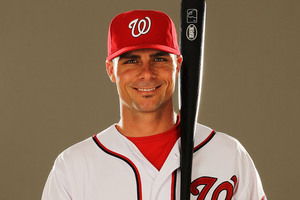
Is Ankiel the solution for the Nats in center field? Photo by Al Bello/Getty Images via federalbaseball.com

Editors note: I was out of town last weekend and had this queued up but never hit publish :-).

MLB’s Nationals beat writer Bill Ladson hasn’t done an inbox for a few weeks, probably because he’s been busy at spring training.  Now that the regular season has started and we’ve had some debatable 25-man roster decisions made, he has published another edition of his Inbox column.  Here’s how i’d answer the questions he selects…

Q: What are you most worried about with the Nationals in 2011?

A: I’d say, in order, offense, the starting rotation, center field, and the back end of the bullpen.  I feel like we took a step backwards in terms of offense, we have improved the rotation over last year but still would probably rank this rotation 28th or 29th in the league, that Rick Ankiel in center field doesn’t really help us a ton, and that Drew Storen had such a rough spring that our end-of-game scenarios may be challenging.

Q: How do you think the Nationals will fare this season in the National League East with their off-season signings?

A: Probably the same as last year; last place.  Philadelphia and Atlanta are probably playoff bound no matter how many injuries the Phillies sustain.  Florida is probably taking a step side ways, having lost Uggla but picked up Vazquez (honestly, I don’t see how their fans don’t revolt at their perennial 87 win team doesn’t spend the $10 needed to improve themselves to be a 92 win team and challenge for the wild card).  The Nats may finish above the Mets, if only because that franchise is in such disarray right now.  They’re eating more than $20M in salary for players they’ve already released, they made no significant off-season moves and there’s serious injury question marks around 4 of their 5 best paid players (Santana, Beltran, Bay and Francisco Rodriguz).  I can see that time imploding badly and the Nats sneaking ahead of them for 4th place, maybe.

Q: If Bryce Harper has an amazing year in the Minors, is there a chance he will get a Major League callup?

A: They shouldn’t … but they may.  I would not be surprised to see the kid rocket through low-A and high-A ball.  It would be purely a late-season revenue grab to call him up, but they need to be careful on his service time accrual.  If he plays 30 days in September we’d have to keep him down an extra 30 days in 2012 to ensure he doesn’t become a super-2.  For those not clear on the implications of super-2 screwup, read this bit about the mistake the Giants made with Tim Lincecum.

That being said, i’d love to see him playing in the bigs before his 19th birthday.  That’d be fantastic.  And he may very well earn it.  His weakness in the AFL and in spring training was offspeed pitches, but its hard to fault the kid for wanting to swing and make something happen in the limited time he’s seen.  Once a full season gets going and he’s getting 4 ABs every night, he will learn patience, he will earn walks as pitchers work around him, and he’ll pick his spots.  This, more than anything else, is the lesson he needs to learn to advance in the minors.

Q: Do we see a parallel developing between Roger Bernadina and Justin Maxwell? How long do we have to wait?

A: It isn’t a bad parallel to note.  Bernadina lost the LF job, then the CF job, then the 4th outfielder job to a non-roster invitee.  He’s burning his last option as we speak.  He has a career 80 OPS+.  I openly questioned in this space why he was the presumed starter in LF all off-season, and as it turned out I was right about Morse being the better player.  I think he’ll play out the string in AAA this year and get traded for a low-level minor leaguer at the end of spring training 2012, just as we did with Morgan and Gonzalez this week.

Q: What do you think of the job general manager Mike Rizzo and manager Jim Riggleman have done since they took over in 2009?

A: I think Rizzo has done a decent job with the major league team and a pretty good job with the farm system.  I feel like he’s tried a little TOO hard to rid the team of the non-defensive hitters Willingham and Dunn, and could have gotten more for them.  I understand the Werth signing but think (like the rest of baseball) that he overpaid and strangely backloaded the contract (why back load instead of front load?  We’re actually at LESS payroll this year than last, so we could be paying him $20M this year instead of $10M and still look like we’re treading water).  He’s definitely assembled a team in his vision; defensively gifted, a bullpen full of power arms.  Next step; power rotation.

Riggleman is doing the best with what he has; I don’t believe other managers could do much better.  Most people believe we have probably the 28th or 29th best collection of talent in the majors, but we’re achieving better than 29th place.

Q: Besides Harper, which rookie impressed you during Spring Training?

A: I cannot disagree with Ladson’s selection of Cole Kimball as “most impressive rookie.”  I would not be surprised to see him called up in 2011 and to start getting high-leverage appearances.

What does Rodriguez’s “shelving” mean for this team?

8 comments

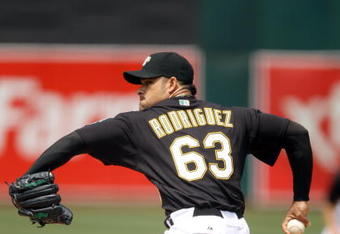
Rodriguez's tenure as a Nat has been so rough so far, I can't even find a picture wearing our uniform. Photo: Ezra Shaw/Getty Images via bleacherreport.com

When the Nationals traded Josh Willingham for power arm Henry Rodriguez and minor league outfielder Corey Brown in December, the team and its fans thought we were getting a good outfielder prospect plus a valuable power arm, back of the bullpen type in exchange for a defensively challenged left fielder who couldn’t stay healthy (that is certainly the glass-is-half-empty analysis of Willingham’s contributions to this team, but so be it).

Brown was always set to repeat AAA, having struggled there last year after dominating lower levels of the minors.  He still may feature in our outfield at some point if our slew of LF/CF options fail us and he plays well to start the season.  His ankle injury certainly is not helping him prepare for 2011, but he’s not the real prize of the Willingham trade.

Rodriguez, after showing up for spring training 2 weeks late and not getting into a game for another week, is now “being shelved” to work on his mechanics.  A week before opening day.  Here’s his stats for the spring thus far: 2 1/3 innings, 7.71 era, 3 hits, 3 walks and only about half the pitches he’s thrown being in the strike zone.  The coaching staff report that his mechanics are out of whack, that he cannot repeat his delivery and he’s been doing nothing but bullpen work for the past 5 days.

Great.

Rodriguez has no minor league options.  The Athletics knew this and the Nationals knew this upon trading their starting left fielder, #5 hitter and top OPS producer from 2010.  Now this roster inflexibility is set to cause a serious issue for this team.  We can’t just “invent” an injury for Rodriguez to store him on the DL; last time I checked my orthopaedic surgeon didn’t treat “mechanical flaw” as an injury.  So, instead of leaving someone deserving on the opening day roster (say, Collin Balester or even Drew Storen, not that he’s been 100% deserving based on his spring performance but remember he did appear in 50+ games last year rather effectively, especially for a rookie), we’re going to probably lug him around for a while and look for incredibly low-priority outings for him to “remember” how to pitch again.

I know all of Willingham’s faults.  He’s injury prone, he was arbitration eligible and his salary was escalating, he hasn’t ever played a full season without time off for injuries.  More importantly to Rizzo, he was a severe defensive liability, even in a position that traditionally can “hide” poor defenders.  And Rizzo from the onset has seemed dead set on fielding a team of track stars, no matter what the cost.

But none of those reasons factor in the most important point; Willingham can mash the ball.  In two seasons in Washington he had OPS+ figures of 129 and 127 (which would have ranked him about 20th in the NL had he qualified each year) and hit in the 5th hole protecting Adam Dunn admirably.  You don’t just give up that much offense unless you KNOW you’re getting something of equal value in return.

Right now, we’re not getting anything close to equal value for him.  And it may have larger ramifications for the team that breaks camp in a week or so.

Written by Todd Boss

March 23rd, 2011 at 11:09 am

What would the Nats look like without FA signings?

2 comments

Commenter Mark L, in response to my statement that (paraphrased) the 2011 Nationals cannot afford to keep rule 5 picks on this team, pointed out that the team really has little chance of competing in 2011 and thus it is really the perfect time to be keeping and testing rule5 guys.

In theory I agree with this premise w.r.t. keeping rule 5 guys.  We’re not going to win the pennant in 2011.

I think in reality though the team has gone mostly backwards since arriving here in 2005 and cannot afford to ever seem as if they’re not trying to make progress.  I blame a lot of that on Bowden’s obsession with former Reds and tools-y players who became such a nightmare to integrate as a team that Acta had to be scuttled as a manager in favor of the more old-school Riggleman. The team lost the entirety of good will and excitement that came with a new stadium and the Lerners as owners had to be shocked at how quickly they destroyed their season ticket base (most observers believe they’ve lost more than half their season ticket holders just from 2009!). So the team is just not in a position to play for the future any more; they have to appear to be improving the team even marginally for the next few years to put themselves in a better position financially.

If the team was really playing for 2013 (as, say, the KC Royals clearly are), they’d never have even brought in the likes of Ankiel, Coffey, Hairston, basically every mid-career veteran and go completely with a lineup of prospects and these rule5 guys.   Arguably they wouldn’t have spent the money on Werth either.  What would the 25-man roster really look like without any FA signings?  Lets take a look:

  • Catchers: Pudge, Ramos (remember, they *had* to get Pudge b/c of the state of their catcher depth pre 2010).  If you like, you can replace Pudge with someone like Flores or even Maldonado, since Norris is not ready for the majors in 2011.
  • Infield: Marrero, Espinosa, Desmond, Zimmerman backed up by Gonzalez and Lombardozzi.  This would have required a serious leap of faith on the readiness of Marrero for 2011, and we’d be rushing Lombardozzi to the majors.  Perhaps we would have replaced Lombardozzi with Bixler.
  • Outfield: Bernadina, Morgan, Burgess, Morse and CBrown.  I know Burgess was traded, but perhaps the team keeps him and installs him in right field knowing they wouldn’t have Werth.  Perhaps Burgess and Morse compete for right field and we bring up newly acquired CBrown as the 5th outfielder.
  • Starters: Maya, Detwiler, Livan, Lannan, Zimmermann.  I leave Livan in here if only because we signed him to such a sweetheart deal.  If we don’t count Livan, we’re looking at someone like Stammen, Mock, Detwiler or Chico in that 5th spot.  Or perhaps we use Broderick as the 5th starter instead of putting him in long relief.
  • Relievers: Storen, Clippard, Burnett, Slaten, Broderick, HRodriguez and Carr/Kimball (with ERodriguez on DL).  Our bullpen would have hard throwers at the back end and we’d immediately give AFL hero Kimball or Carr a shot.

Of this active roster, 17-18 would be on pre-arbitration salaries and the total payroll would probably be in the $28-30M range for the entire team. It’d be the “right” thing to do but the town would absolutely howl in protest.

I dunno. I go back and forth as a fan. Part of me says screw 2011, play the kids, see what they can do this year and regroup for 2012 when you can have a very good Strasburg-Zimmermann 1-2 punch to go along with general improvement across the rest of our younger guys.  The other part of me says that incremental growth in terms of wins and respectability for this team is just as important in terms of attracting free agents and enabling the team to make a quick leap in a couple years. If this team can win 75 games this year, Strasburg comes back and probably improves the team 5 wins just by himself, we acquire an incrementally better #3 pitcher and hope that Maya, Detwiler and our rising AAA guys become real major league options. If you’re a 81 win team a couple of key free agent signings coupled with the natural rise of our core up and coming players can improve the team 10-12 wins very quickly. Suddenly we’re a 90 win team and still have a manageable payroll to augment and take the next steps to rise above Atlanta and Philadelphia in the division.

That’s “the plan,” right?

What to do with Brian Broderick?

10 comments

Brian Broderick on Media Day. Photo by Al Bello/Getty Images North America/zimbio.com

Commenter Mark L asked whether or not I was “ignoring” rule-5 draftee Brian Broderick‘s performance thus far when considering the bullpen competition in response to a post previewing the Nats 3/15/11 game against the Mets.

I don’t know if i’m “ignoring” Broderick’s performances thus far … I just have a reaaaaaaly hard time believing he’ll be on the 25-man roster based on the inflexibility of keeping a rule5 guy, given the roster inflexibilities we already have with several other players.  Here’s my reasoning:

  • We have 3 guys who already essentially HAVE to stay on the 25-man roster because of a lack of options: Clippard, Burnett, and Henry Rodriguez.  Two of these guys are bullpen mainstays and would have been there anyway, but the acquisition of Rodriguez has complicated matters for the team.  As mentioned before, he showed up late for spring training and has not necessarily looked fantastic so far.  If we could possibly find a way to DL him if he’s not ready to go on April 2nd (“tired arm?”) , a lot of problems would be avoided.
  • We have a 4th guy in Coffey who signed a major league deal and has enough service time that he could (and probably would) refuse a AAA assignment, so he either stays on the 25-man roster or we light his $1.35M on fire.
  • We have to have a loogy; Slaten seems almost certain to be that guy.  I guess you could argue that we really don’t need a loogy, that Burnett could be that guy or even Gorzelanny if he gets bumped out of the rotation.  But Burnett’s value is not as a one-out guy and Gorzelanny is a starter.
  • Storen is supposed to be “the closer.” He may be struggling this spring but there’s nothing about his 2010 performance that says he does NOT deserve to be in that position for this team. Admittedly he does have options and can be sent down but i’d be awfully mad if we sent a first round draft pick down so we could keep some untested minor leaguer on the active roster.

So, if we keep Broderick, he’s the 7th guy in the pen and has to stay there all season.

That’s your 7 spots essentially wrapped up. So now here’s the rest of the picture and why this could become rather complicated for the team:

  • If Gorzelanny struggles in the starter’s role, he has no options and would have to go to the bullpen. Who makes way?  We can’t really cut Gorzelanny out right without admitting that the move backfired greatly for the team, having given up 3 decent prospects just a few months ago.
  • If we want to use Gaudin, who has looked great so far in spring training, he’d have to be first added to 40-man (and then we’d have to drop someone else or move them to 60-day dl). And then he’s more or less stuck on the roster too; he’s got 5+ years of service time, no options and can reject an assignment back to AAA. Based on the fact that he signed a minor league deal with us, one could assume that he is ok with starting the season in AAA, but other teams have scouts too and might be taking notice of his achievements so far.  However again, if Gaudin is the 7th guy who makes way for him?
  • Balester: he certainly performed well last year; 28ks in 21 ip in the same role we’re talking about here.  Before the rule5 draft I had him locked into that long-man role. Has he done anything this spring to cost him this spot?  No but he has one more minor league option and may lose out nonetheless.
  • Stammen; he clearly can give you innings since he’s always been a starter, and his advanced stats last year were not THAT bad. But he too has options and seems to be pitching his way to AAA this spring.

Honestly, I think what the Nats need to do is make a deal with StL, trade them someone for Broderick and then stash him at AAA til you need him. Return him to the starters role where he was 11-2 last year in AA and maybe we’ve found a real cheap 5th starter for the future.

Starting versus Closing

5 comments

Should we try Clippard as a starter? Absolutely! Photo: NationalsDailyNews/Meaghan Gay/DCist.com

Baseball writer extraordinaire Tom Verducci posted a fantastic article today talking about Neftali Feliz‘s proposed move from the Rangers closer to the starting rotation.  The article touches on a topic that I’ve been meaning to write about for a while; Starting versus Closing.  It also is literally the best summation I’ve seen yet describing why the save is over-rated, closers are overpaid and why you’d rather have starters versus relievers.

Lets face it; for the most part relievers are failed starters.  A few get drafted or signed as relievers (Washington’s Drew Storen being one local example), but most starters are drafted as starters and work their way through the minors as starters.  Some starters discover that they can’t develop secondary pitches, but their primary pitches are so fantastic that the club (rightly) turns them into relievers.  This especially allows hard-throwers (think someone like Joel Zumaya) to have a career despite the fact that they only really have one pitch and throw with such effort that they could not possibly last 6+ innings.

Minor league relievers definitely make the majors, but most often as either LOOGYs or rubber-armed replaceable right-handers (think Miguel Batista) out of the bullpen.  In recent  years the desire to have more and faster throwing arms out of the bullpen has led to more pitchers opting to become relievers sooner, but they still are converted out of starting roles for either performance or fragility.

Two items from his story that I’d like to comment on:

1. Managers don’t use Closers in the most high-leverage situations. I could not agree more.  When is the best spot to use your best, most reliable reliever?  In a one-run game in the 6th when your starter runs out of gas and loads the bases with one out?  Or at the beginning of the 9th inning of a 5-3 lead?  Verducci is right; managers in the modern game are slaves to the save statistic and will not bring in their closer unless its a “save situation.”   But he also notes what is common knowledge; that you could be putting out the 12th man in your bullpen and probably have only a slightly worse chance of getting 3 outs without losing the game for your team.  Per the article, 94% of 2-run leads in the 9th inning are won irrespective of who you put out there, and that percentage has not changed significantly over the past 50 years of baseball.  Joe Posnanski also wrote about this same topic in November with similar results, finding that teams in the 50s closed out games with the same regularity as teams now, but without high-priced one-inning closers.

Luckily for the Nats, we look to have 3-4 different guys who are of sufficient quality who we CAN bring in to a game in the 6th and get a high-leverage situation.  Storen, Clippard, Burnett or newly acquired Henry Rodriguez all seem to fit the bill.  But that doesn’t mean that we don’t have a manager in Riggleman who is in the “slave to the save” category.  Matt Capps was brought in to be the closer and he closed games.  That’s it.  It is safe to say that if Riggleman decides on a closer, that’s going to be his role and that’s that.

The save stat is ridiculous and most people know it.  You can get a save in a game where you give up 2 runs and 5 hits in a 1/3 of an inning.  You can get a save when you perform mop up duty but let the score get too close while you rubber-arm your way through a meaningless blowout.  The save takes nothing about the pitcher’s performance into account; only whether or not the game ended while he was on the mound and the win was preserved.

But the save stat, and its monster creation the specialized one-inning closer, are here to stay.  Prospects come up through the ranks specifically to be closers, free agent players will only play for certain teams if given “the chance to close.”  Closers are well paid, and their pay is directly tied to this flawed save statistic.  Statisticians have tried to create a better set of metrics for middle relievers (“Holds” mostly) but the reality is that closers have high leverage in salary situations while middle relievers are lucky to get paid a bit more than the veteran’s minimum.  Verducci touches on this ridiculousness, pointing out that Papelbon‘s higher salary in 2011 than Cole Hamels despite the relative levels of production for their teams.

Ironically, some Major League managers *know* this fact, but continue to trot out their best reliever for a 3-out save at the beginning of the 9th inning in a 3-run game.  They do the same as the other 29 managers because the radical idea that backfires directly leads to termination.  No manager is willing to risk their job to try to do something the right way.  To say nothing of the reaction of a highly-paid FA closer who is suddenly told he’s going to be primarily used in the middle of the 7th to clean up the starter’s mess.

It makes you wonder if there’s a better way.  Here’s two radical suggestions:

1. Comprise a bullpen with no named closer role, and tell the entire 7-man bullpen they’re doing closer-by-committee.  It may infuriate fantasy baseball players and the union (since saves translate to salary for their FAs), but it probably placates an entire roster of wanna-be closers.  Imagine if 5 of the 7 guys in your bullpen (leaving out the LOOGY and long-man) know they may be brought in to rescue a game in the 6th or close it out in the 9th, and their roles change on a daily basis based on use.  That to me is a far better situation than pre-naming a closer (which invariably is the best guy out there) and then never using him until the 9th.

2. Comprise an ENTIRE pitching staff of long-men relievers.  Imagine if you didn’t have starters at all, but an entire bullpen of guys who were geared to pitch 2-3 innings every other night.  You would never have a need for specialized closers or even high-priced starters.  You’d rotate through who got the start, the starter would go 2-3 innings, then the next guy would go, and you’d repeat this until the game was over.  It’s kinda like spring training but all year.  Since these guys are only throwing 2-3 innings, they should be able to repeat this task multiple times in a week.

There’s 54 regular innings to be had per week mid-season (6 games at 9 innings per).  54 innings divided out by 12 guys in the pen means about 4.5 innings per WEEK per pitcher.  If you split those 4.5 innings up across three games you’d be pitching (say) 2 innings on monday, 1 on thursday then 1.5 on saturday.  That’s pretty manageable.  Plus if everyone else is doing the same, you can rotate through the guys and slightly adjust based on how they’re pitching that day.

Plus, think about how CHEAP this pitching staff would be.  12 middle relievers could not possibly cost your team more than about $15-20M annually in salary, even if they were mostly on veteran contracts.  Roy Halladay makes more than that in 2011 just by himself.

Coincidentally, this is exactly what Tony LaRussa tried at one point in the early 90s with the Athletics.  Unfortunately his experiment ended quickly, failing less because of execution and more because of lack of support from his players and management.  Its just a matter of time before someone tries it again.


Here’s the second item i’d like to comment on:

2. Starters are FAR more valuable than Relievers or Closers.  Last year in the midst of Clippard’s fantastic middle-relief run I asked myself, “Why isn’t Clippard in the rotation?”  He pitched 91 innings spread out over 78 appearances and only gave up 69 hits.  He maintained an 11.1 K/9 ratio, which is better than any starter in 2010.  91 innings was good for 4th on the entire staff in 2010.

The leading argument i’ve read for Clippard staying in the bullpen relates to the nature of his stuff.  He’s got a sneaky good fastball, a decent curve but his bread and butter pitch is the change-up.  Apparently the knock on him is that hitters adjust to him more quickly and thus he makes more sense in a relief role.  In a starting role hitters would be getting their third crack at him in the 5th or 6th inning, right when he’s tiring and right when he’s vulnerable.  In relief, he can “show” all his pitches in one at bat and work each batter individually, then leave the game before his “stuff” is exposed.

Clippard was a starter his entire minor league career, and his minor league numbers were pretty good.  He always maintained a small hits-to-IP ratio, a good k/9 ratio.  It wasn’t until he reached the majors that suddenly he couldn’t start.  I think perhaps he’s either gotten pigeonholed or he’s psychologically set in the reliever mind-frame now.

A quality starter gives your team 6+ innings, works through the opposing team’s batting order nearly 3 full times and keeps your team in the game.  6-7 innings at a 3.00 era is invaluable for your team’s psyche as it tries to win game after game.  Leaving just 2-3 innings a night for a bullpen staff of 7 means that there’s fewer days when your staff is over worked and you have to give up games for lack of bullpen arms.

How about using career WAR as a bench mark?  I don’t really like the career WAR analysis (since it is an accumulator stat and a mediocre guy with 22 years of experience appears to be better than the best pitcher of his day who only had a 15 year career).  But it is telling in this situation.  Here’s a link to career WAR for pitchers at baseball-reference.com.  And here’s the rank of the 5 best relief pitchers of all time (the 5 relievers currently in the hall of fame), along with the rankings of some of their active contemporaries who seem likely for the hall.

Lname Fname Career WAR Rank
Smoltz John 38
Eckersley Dennis 46
Rivera Mariano 69
Wilhelm Hoyt 121
Gossage Goose 133
Hoffman Trevor 215
Wagner Billy 238
Sutter Bruce 315
Fingers Rollie 325

Smoltz and Eckersly both started for large portions of their career, hence the high rank.  Mariano Rivera is clearly (in my mind) the greatest reliever who has ever played and his career WAR shows.  But notice how low closer-only guys like Sutter and Fingers are on this list.  Both are currently below modern day starters Ted Lilly and Kevin Millwood, again guys who are hardly listed as being among the game’s elite.

By means of comparison, Trevor Hoffman, who is ranked 215th all time is ranked just ahead of one Freddie Garcia in all time WAR.  Now, is Freddie Garcia a serious hall of fame candidate?  Not likely; he’s currently on a minor league contract offer with the Yankees after nearly washing out of the game two years ago.


Oh, coincidentally, I absolutely think Felix should be in the rotation.  As should Aroldis Chapman in Cincinnati.  Because they’ll be able to help your team win on a much more frequent basis.  You always want the chance of 180 innings of quality versus 60.  Its that simple.
The reported price for Greinke (updated)

one comment

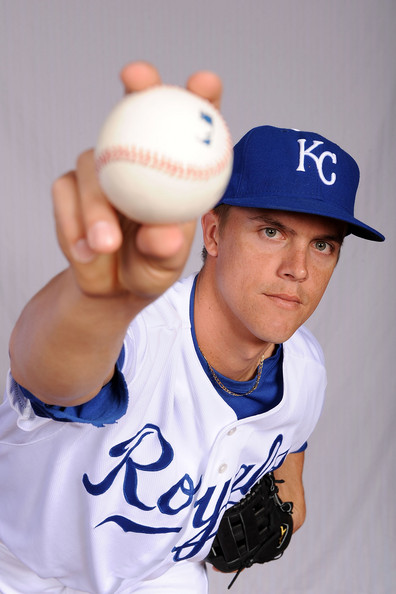
Zack Greinke at the Royal's photo day 2010. Photo by Harry How/Getty Images North America

12/19/10 update: this article is essentially moot: Zack Greinke was dealt to Milwaukee along with infielder Yuniesky Betancourt for four players (outfielder Lorenzo Cain, shortstop Alcides Escobar and pitching prospects Jake Odorizzi and Jeremy Jeffress (who played HS ball in South Boston ironically enough).  I’m not familiar enough with the Milwaukee prospects to offer opinion one way or the other; here’s some opinions on the trade from FanGraphs, Ken Rosenthal, Jerry Crasnick, Joe Sheehan, and Keith Law.  Also from beat writers Kilgore and Zuckerman.

And, according to Jon Heyman via twitter, the Nats were close to a deal for Greinke in a deal that may or may not have included Storen and Espinosa.  Read more below.

—-

About 6 weeks ago the question of a possible Nat’s trade for Zack Greinke came up in a Keith Law chat (link is ESPN insider only) and the trade proposal was Zimmermann, Espinosa, Burgess and Detwiler.  I wrote about this theoretical deal at the time, saying it was too much to give up.

A glass-is-half empty analysis of these four players (which was apparently the opinion of Law, since he thought this would be a good deal for Washington) is something along the lines of the following: Zimmermann is promising pitcher but has yet to really produce consistently at the major league level.  Espinosa is also promising but is replaceable by our up-and-coming 2nd base prospects Lombardozzi and KobernusBurgess has been solidly improving as he’s progressed through the system but he’s still the toolsy/high promise player that Jim Bowden adored but which has never really panned out.  Lastly Detwiler has shown flashes of dominance but lost pretty much the entirety of 2010 to injury and is getting pushed further and further down the rotation depth chart.

The glass-is-half full opinion of these four players is simple: they represent the bulk of our farm system’s player development over the past few  years.  These four players represent the absolute cream of our drafting crop over the past few  years; a #1, a supplemental #1, a #2 and a #3 round draft pick.

Now today, we are hearing the TRUE bounty that Greinke would cost, and it is similarly heavy.   Greinke has hired new agents and apparently demanded a trade.  He also has a limited clause in his contract that allows him to block trades to certain teams, and the Nats are on that list.  According to Buster Olney though, the Royals and Nats have been talking and he discovered the actual price it would take (another ESPN insider link): Zimmerman, Espinosa and new closer Drew Storen.  On 12/24/10, KLaw reported that the offer was Zimmermann, Storen, Norris.  Wow that would have been quite the bounty.

This trade option replaces the unknown players (Detwiler and Burgess) with the known quantity (Storen), and only seems slightly less palatable than the Law chat proposal.  Can the Nats possibly give up 3 of their planned “starting 14” players (the 8 out-field players, the 5 rotation guys and the closer) next year for Greinke?

Here’s my problem: Greinke had the makings of looking like an otherwise solid pitcher with a one-year wonder season that won him the Cy Young in 2009.  Is he really an “Ace” in this league?  His 2010 season was unremarkable (an ERA+ of exactly 100, meaning he performed at the mlb average), but now scouts are surmising that he was tired of his team going nowhere and he was “bored” most of the year.  But the fact remains there is no guarantee he returns to his 2009 performance.

If i’m Rizzo, I say no to this deal.

One last note about possibly overvaluing “prospects.”  Storen, Espinosa and Zimmermann are not prospects; they’ve graduated to becoming “promising young players.”  They have all made the majors, they’ve all competed at the highest levels and the Nats have a decent idea of what they can do.  Guys like Detwiler (because of his injury history) and players who have never reached the majors (Burgess as mentioned in this post) are the real “prospects” in question.  Teams and Fans overvalue prospects in a pseudo-parental relationship because they’ve watched the players grow up and grow.  But as Rosenthal pointed out (in the linked article above), prospects mostly flame out or don’t become major leaguers.  That’s the difference; teams MUST be willing to part with prospects to get real players.

Rizzo’s off-season todo list: where do we stand?

leave a comment

Mike Rizzo answering the latest question about where the money is coming from for the Werth contract. Photo: centerfieldgate.com

Each year heading into the off-season, I make up a transactional “to-do” list for the team (as if I were the GM).  Essentially you look at the roster and kind of work backwards.  Based on the way things looked at the end of 2010, the Nationals seemed set on:

  • C (Pudge, Ramos)
  • most of the infield: 2b (Espinosa), SS (Desmond), 3B (Zimmerman)
  • LF (Willingham)
  • 3-4 starters (Lannan, Marquis, LHernandez, Zimmermann), and
  • several relievers (Clippard, Burnett, Storen)

So, given this, here’s what I listed as off season priorities and where we stand post the Winter Meetings (and counting all the rumors and scuttlebutt we’ve been hearing):

Fantasy

  • Power hitting reliable RF
  • Top-of-the-rotation Starting Pitcher
  • Better Centerfielder/Leadoff Hitter

1. In what was easily the most surprising move this team has done since relocating from Montreal, we acquired a front-line marquee FA in Jayson Werth, satisfying the “power hitting RF” fantasy requirement.  Yes there are concerns about the contract’s length and value, but hey, we’re a better team for getting him.

2. Rizzo has definitely made mention of wanting to acquire a “top of the rotation” starter but they are hard to come by this off season.  Cliff Lee is the target, and from there the list dwindled quickly to include guys who were middle of the road veterans with question marks (Vazquez, Pavano), FA starters that weren’t exactly planning on going anywhere (Lilly, Kuroda, de La Rosa, Arroyo, Garland, Padilla) and incredibly risky alternatives (Webb, Darvish, Francis).

3. Lastly, despite my desire to upgrade from Nyjer Morgan in center and leadoff (for reasons that include discipline, chemistry and performance), Rizzo seems set on the guy for the time being.  I would not be surprised to see no more movement in this area.  I advocated trading Willingham to Boston for possible spare-part outfielder Jacoby Ellsbury in a previous post, but despite Willingham’s offensive capabilities Boston may also value defense and may not really be interested in acquiring more bats this off season.

Reality

  • First Baseman
  • 1-2 Veteran FA pitchers
  • Utility Middle Infielder

1. Acquiring a first baseman included the possibility of re-signing Adam Dunn, despite all indications that it was never to happen.  Rizzo clearly will take less power for more defense at first, and we seem destined to sign Adam LaRoche (after missing out on Carlos Pena, the player I was absolutely sure we’d get).  Frankly, for my money I’d rather have LaRoche.  He’ll sign a 2 year deal for less than any of Dunn, Pena, Konerko or Huff would have signed for, he hits for power and he is a plus defender.  I think he’s perfect until we figure out if Chris Marrero or someone even more remote (like high-A stud hitter and Nats minor leaguer of the year in 2010 Tyler Moore) becomes a possibility.  A final thought; I do NOT want to be left with Derrek Lee as the solution.  He’s a right handed hitter on a team that is now full of them.  Zimmerman, Willingham, Werth all righties; we need a lefty slugger to break up the middle of our batting order.

2. I still see the acquisition of one or two veteran FA pitchers on the horizon.  I can see us (unless someone foolishly offers him $10M) signing Brandon Webb on a one year flier.  I can see us re-signing Wang to a minor league deal with an invite to spring training.

3. The backup middle infielder is a lower priority but still important.  If Desmond/Espinosa are holding down the starting spots and Alberto Gonzalez is begrudingly serving as the primary glove-man backup, we still need a second player that can do middle infield.  Willie Harris has been that player but he really tailed off last season.  Adam Kennedy served as the backup for the right side of the infield but he clearly wants to start.  I was lobbying for Pete Orr as a nice cheap candidate; he had always produced for us when called up, could play 2nd, 3rd or even outfield.  But he signed elsewhere as a minor league FA.  Perhaps the answer is a prospect to be named (Lombardozzi?) or a FA signing.  I like David Eckstein to team him up with his hitting-coach brother but he probably wants a starting job too.  And Eckstein wouldn’t make sense unless we traded one of Desmond/Espinosa (still a possibility; see later).

Less Likely

  • FA Closer
  • Trade for a Veteran pitcher
  • 1 veteran bullpen presence

1. There are a couple closer-types on the FA market and I can now see the Nats picking one up ala their deal with Matt Capps to cover for Storen as he grows into the spot.  Jenks, Dotel,Gregg, Hoffman, Soriano, Wood all available (Soriano a type-A though, so we wont’ get him).  I think this would make for a good piece of business and could serve as a useful trade chip mid season.

2. I can see us working out a trade with Tampa Bay to acquire Matt Garza.  Tampa wants to get rid of payroll, not add it, but perhaps we can pre-arrange a one-year deal with Willingham and flip him to Tampa.  Washington could eat some of the salary and Willingham would slot nicely into the left field spot recently vacated by Carl Crawford.  Tampa may like this deal since Willingham projects to be a type-A free agent and would net them 2 picks when he leaves (you have to think Willingham wants to get at least a 3-year deal when he hits the FA market based on his age and his proclivities for injuries).  Of course, getting rid of Willingham also puts a hole into OUR lineup, one that looks pretty promising when we get a power hitting lefty first baseman.  And we certainly would like to get some compensation picks to continue to rebuild the farm system.  More likely Tampa would ask for someone like Desmond, which would be a tough trade to swallow for a team that hasn’t really developed that many marquee players in the last 5 years.  We could trade Desmond, acquire Garza, move Espinosa to short (where he’s a better fielder anyway) then sign a short term 2nd baseman like David Eckstein or Orlando Hudson until one of our high-end 2nd base prospects (Lobardozzi, Rick Hague or Jeff Kobernus) is ready to go.

3. Lastly, with not one but TWO arms picked up in the rule5 draft, the likelihood of us acquiring any veteran bullpen arms seems nil.  Perhaps we re-sign Peralta as a long man, but we have plenty of cover there in Balester and Stammen.  We have all the arms we could want coming up (Kimball, Carr, Wilkie all project as mid-bullpen arms, and the AA team is filled with good arms with no place to move up to with so many AAA starters on the 40-man) and we have three great live arms in Storen, Clippard and Burnett already in place.

It has been a pretty fun offseason to track thus far for Nats fans.  I can’t wait to see what happens next.

GM for a day Part 3: the rest of the Roster and DFA candidates

leave a comment

The last time anyone was happy with Jason Marquis. AP Photo/Luis M. Alvarez

This is the 3rd of a quick series of reviews on the Nat’s 2010 season ending roster with analysis of what we should do.  Part I was a discussion of our Arbitration candidates while Part II was a discussion about Free Agents (ours and rumored acquisitions).  Part III is a quick rundown on the players either already under contract for 2011 or under club control (not yet reached arbitration status).  Bold means I am guessing that they’re on the 25 man roster on opening day.

Marquis, Jason #4 starter in 2011; lets hope he can regain some form.
Zimmerman, Ryan Franchise player
Strasburg, Stephen 60-day DL to start season; hopefully see some rehab starts in September
Rodriguez, Ivan Likely to cede playing time gradually to Ramos through 2011.
Hernandez, Livan Great 1-year re-signing.  Opening Day #1 Starter 2011.
Maya, Yunesky Hopefully shows his value with a full Spring Training.  Probable #5 starter barring FA signings or injury
Morgan, Nyjer Still under club control; but definitely a roster question mark
Mock, Garrett Destined for AAAA starter status.  Syracuse Rotation
Stammen, Craig Despite good advanced stats, probably behind in rotation race.  2011 long man in BP
Clippard, Tyler BP Anchor; splits time between setup and closer role.
Zimmermann, Jordan #3 starter 2011.  Hopefully stays healthy.
Atilano, Luis AAA rotation
Balester, Collin MLB bullpen/longman
Bernadina, Roger Possible starting 2011 RF
Desmond, Ian Starting SS
Detwiler, Ross Probably loses out on rotation battle and starts in AAA
English, Jesse Coming off injury, probably AAA bullpen.  Possible DFA.
Jaime, Juan Injured all of 2010: Possible DFA?
Martin, J.D. Coming off injury, probably AAA rotation or DFA.
Martis, Shairon AAA rotation
Mattheus, Ryan Injured most of 2010: Possible DFA
Maxwell, Justin 4th outfielder.
Severino, Atahualpa AAA bullpen
Thompson, Aaron AA Rotation.  Possible DFA after awful 2010.
Bisenus, Joe DFA Candidate after middling end of 2010.
Storen, Drew MLB bullpen; sharing closing duties w/ Clippard
Ramos, Wilson MLB backup catcher
Espinosa, Danny MLB starting 2nd baseman
Harper, Bryce Likely starting in Potomac and fast rising.

We had more than 40 guys that needed to be made active  (given that we ended the year with several on the 60-day DL) and some had to be designated for assignment (DFA) to make room when the date arrives to make the rosters right post 2010.   That date was 11/10/10, and between our 5 free agents we also cut loose four other players.  None was really a surprise.

  • Scott Olsen endured another injury and earned the ire of the manager when his move to the bullpen was met with some petulance.
  • Tyler Walker was injured all year and is the most common of commodities in baseball (the right handed middle reliever).
  • Jesse English suffered a similar fate to Walker, and is surplus to requirements after Slaten did such a good job as the LOOGY.
  • The mild surprise DFA so far has been Joe Bisenius.  He didn’t have the greatest numbers out of our bullpen at the end of last season (walking more than he K’d) but he’s a power arm in a league that is quickly becoming a power-arm league.  Perhaps he’ll be invited to spring training to try to earn another shot.

As of right now, we sit at exactly 37/40 on the 40 man.  This gives us some nice flexibility to acquire players via trade or sign free agents without having to make any more moves.  We also have a pending deadline to add Rule5 eligible players, and we have several guys we probably want to protect (a blog posting on this is upcoming…), so I do feel we could make a few more moves:

  • Juan Jaime: he’s buried in the minors and its unlikely someone would risk him after being injured all year
  • Ryan Mattheus (see Jaime)
  • Aaron Thompson: who had just a horrible 2010 and could probably pass through waivers.
  • We could also cut JD Martin loose: he’s 27 coming off a season-ending injury, is clearly not going to be in the future plans of the team, and a soft-tossing right handed starter isn’t likely to be in great demand on the waiver wire.

Let the offseason mania begin!

Nats GM for a day. Part 2: the Free Agents

one comment

Is this the National’s 2011 First Baseman? Photo: J. Meric/Getty Images

In our first of a 3-part post, we talked about the arbitration cases that the Nats face.  Some of those decisions are already being made and that post has been updated.  Now, lets talk about the free agents.

Player What Should Washington Do?/What WILL We do?
Dunn, Adam We should resign him, but Rizzo seems dead set against it.  Offer him arbitration and let him walk.
Batista, Miguel Valuable rubber arm in BP; I would resign him to a simliar 1 year deal in 2011.
Harris, Willie Let him go.  Declining value, Morse a better utility option.
Mench, Kevin Let him go; awful september numbers.  Perhaps ML FA in AAA
Kennedy, Adam Decline club option and let him go.  No need for 2nd baseman.

Clearly, the Adam Dunn decision will be critical to the direction of the team and our offense next year.  As noted above, personally I think he needs to be re-signed.  The team’s actions all year (plus Tom Boswell‘s repeated comments about how the front office has bungled the negotiations) seem to indicate though that we’re content with getting the compensatory picks and moving another direction.  If we decide to let him go, I’d prefer to sign someone like Adam LaRoche, a player who plays decent defense and shows a good bat.  I don’t think Carlos Pena (as is frequently rumored) is a good choice, and there’s sentiment in the Tampa Bay community that he may stay on in Tampa and try to improve on an awful 2010 season.  But, most pundits seem to think he’s coming here.

We also could become more creative and put someone like Josh Willingham, Michael Morse or even a supposedly healthy Jesus Flores at first as a stop gap until one of our prospects like Chris Marrero or even, say it isn’t so, Bryce Harper is ready to come up.  I mean come on, you “hide” defensive liabilities at first base.  If someone is 6’4″ and has any fielding ability they should be good enough to play the position.

Moving on to other FAs to be the decisions are relatively easy.  Harris, Mench, and Kennedy are gone.  None batted well enough to even consider and we have more able (and cheaper) minor leaguers ready to come up and serve as backups.  The last FA to be Miguel Batista proved to be a great asset to the bullpen at relatively little cost and would be worth bringing back.  We signed him last year on a non-guaranteed contract but guaranteeing him $1M wouldn’t be a huge risk.

Now, given the above, what is in store in the FA market?  I know i’ve heard lots of noise about how the Nats are going after Cliff Lee but I just don’t see that happening.  Here’s what I do see them doing:

1. Getting one or two pitchers.  Rizzo has a history with Brandon Webb, Arizona has blown enough cash on the guy, and he may be ready to come back.  We sign him to a one year deal and try to get lucky.  I’d also be happy with trading for one of Tampa’s spare starters (Garza, Shields), acquiring Vazquez (who I think is an NL, non-NY market pitcher and could return to his 2009 Atlanta form) or a De La Rosa type (hard thrower and can get Ks).  Most pundits have us signing Vazquez, some have us getting Webb.

2. Get a FA first baseman: I’ve previously said I like Adam LaRoche.  Rizzo likes Carlos Pena.  We’ll see what happens.  There’s lots of teams looking for first basemen, so the competition for these guys may force our hand into a guy we don’t want.

3. Find a utility player: we need a better version of Willie Harris.  May come from the minors as a prospect but probably not.  We need a guy who can play 2nd/ss or 3b in a pinch.

Less Likely:

4. Sign or acquire a marquee outfielder.  I’d love to see someone like Werth or Ross in right field, which could move Bernadina to center, allow us to rid ourselves of Morgan and then use Maxwell as the 4th outfielder.  We could also acquire someone like Rasmus or Ellsbury, put them in center, dump Morgan and go with Willingham-new CF-Bernadina.  Or we could use a Morse/Bernadina platoon in Right with Bernadina occasionally spelling Morgan in center (though they’re both lefty and both hit relatively the same, so that may not actually work).

I don’t really see us going after any bullpen help or a closer.  As Zuckerman once said, we’re remarkably set on 2011 positions despite being a 90-loss team.   We had a good bullpen last year and have a couple of decent looking reliever prospects in Carr and Kimball.  I could see a 2011 bullpen with Clippard, Burnett, Storen, Stammen, Balester, Slaten and Carr.  Or substitute some of our arbitration/fa guys for Stammen and Balester.

I’ve said for a while that the Nats need to spend like a mid market team.  $90M payroll at a minimum so as not to insult the fanbase.  Perhaps this off season we’ll see it.  They only have a paltry $24M committed for 2011 right now and, while that number will increase with potentially 13 arbitration cases, a huge chunk of last year’s payroll is now gone (just Guzman and Dunn consisted of nearly 1/3 of our 2010 payroll).  So, lets see some FA dollars get spent!

Interesting thoughts about the Giant’s roster construction…

one comment

As I watch the NLCS and its surprising results so far (Cody Ross with a Reggie Jackson-esque performance thus far, Roy Halladay getting beat, etc), you can’t help but notice some interesting items about the Giants roster and its makeup.

1. The Giants THREE highest paid players (Zito, Rowand, Guillen) are not even on the post season roster, and their 4th highest paid player (Renteria) is not the starter at short.

2. The position players that the Giants are depending on are all either developed internally (Posey, Sandoval) are retread/journeyman free agents on one-year deals (Torres, Uribe, Huff, Fontenot) or total reclamation projects (Burrell who was DFA’d earlier this season and Ross who they got on waivers).

3. Almost their entire pitching staff is home grown. Lincecum, Cain, Sanchez, Bumgarner plus setup/closer
combo of Romo and Wilson are all original SF draft picks. Only #5 Starter Zito is an (infamous) FA acquisition.

Here’s a quick table of Giants “primary starters” player acquisition methods:

SF (postseason 2010) acquisition method
Buster Posey Draft
Aubrey Huff FA
Freddy Sanchez Trade Prospects
Pablo Sandoval FA (intl)
Juan Uribe FA
Pat Burrell FA (dfa’d)
Andres Torres FA
Cody Ross Waivers
Tim Lincecum Draft
Matt Cain Draft
Jonathan Sanchez Draft
Madison Bumgarner Draft
Barry Zito FA
Sergio Romo Draft
Brian Wilson Draft
Drafted/Developed 8
Traded Prospects 1
Traded MLBs 0
FA/Waivers 5

By way of comparison, the Nationals opening day roster featured only FOUR such home grown players (Zimmerman, Desmond, Lannan and Stammen).

The Giants list their 2010 payroll at $96M, of which $42M is allocated to those 3 guys not even rostered.  Imagine what this team would look like if that $42M was properly allocated.

I think what this shows is that, with enough development time and effort put into your pitching staff you can get to the playoffs even with near replacement players in most of your fielding positions. Hope for the Nats, since this seems to be the direction Rizzo is going with his 2009 and 2010 pitcher heavy drafts. 8 of the first 11 picks in 2009 were arms, and while only 4 of 2010’s top 10 picks were arms there was significant funds paid to Solis, Cole and Ray.

Can the Nats turn these two drafts (plus other prospects) into a Giants-esque rotation? Strasburg, Zimmermann, Solis, and Cole all project to be #1 or #2 starter quality per scouting reports. Those four, plus live arms in the pen like Storen, Holder and Morris could be our future. 3-4 years out future, but still promising.

Or am I too rosy glasses colored?