Nationals Arm Race

"… the reason you win or lose is darn near always the same – pitching.” — Earl Weaver

Archive for the ‘Post Season’ Category

Roster construction of 2013 playoff teams

leave a comment

I like doing this post every year (here’s 2012’s version, here’s 2011’s version), looking for trends in baseball’s most successful teams.  How do the best teams generally construct their rosters?

Borrowing from last year’s post, there are four main ways teams can acquire players:

  1. Draft/Development: The player is with the original team that drafted him.  In the case of international free agents, if they’re signed as 16-year olds they are considered in this category as well (i.e. Jose Fernandez is a developed player despite being acquired as an international “free agnet” while Yasiel Puig).  It could be better defined as “Club developed players.”
  2. Trade MLBers: The player was acquired by the team by virtue of trading an established MLB player.  Most of the time these days, this means the player was acquired as a prospect (since most trades seem to be of the prospect-for-established player kind).
  3. Trade Prospects: The player was acquired by the team by virtue of trading prospects.  This is essentially the reverse of #2.
  4. Free Agency: The player was acquired in free agency.  This category also includes several other types of acquisitions: waiver claims, Rule-5 draftees and cash purchases.  These three categories are lumped together since all three indicate that a team has acquired a player with zero outlay in terms of development or prospects.

Sometimes these trades get a bit muddled; if you send a combination of major and minor league talent to the other team, which category does it fall under?  But for the most part trades are simply categorized.

Now, here is the summary of roster construction and “Construction Strategy Category” for all 10 teams that made this year’s playoffs.  I only count the “core players” on a team for this analysis.  The core players is defined as the 5-man starting rotation, the setup and closer, the 8 out-field players, and the DH for AL teams.  I didn’t extend this all the way to the 25-man roster, figuring that these core 15-16 players are the main reasons teams win and advance.  That and huge chunks of the bullpen and the bench are either fill-in FAs or draftees and it would skew the analysis of how teams really got to the playoffs.  Here’s the summary (the table is sorted by count of Draftees):

Team Drafted/Developed Traded Prospects Traded MLBs FA/Waivers Constr Method
Boston 7 1 0 8 #4
Detroit 5 4 2 5 #2/#4
Oakland 3 1 7 5 #3
Tampa Bay 6 1 4 5 #1
Cleveland 4 1 7 4 #3
St. Louis 10 2 2 1 #1
Atlanta 8 0 5 2 #1/#3
Cincinnati 9 2 2 2 #1
Pittsburgh 5 3 3 4 #1/#3
Los Angeles Dodgers 3 4 1 7 #4

So, what are these four Team Construction Methods?  Lets go one by one:

Method #1: Build from within nearly 100% (Tampa, St. Louis and Cincinnati the best examples, Atlanta and Pittsburgh to some extent): Two great fact points drive this team construction for two of the best example teams in this category:

  1. 18 of St. Louis’ 25 man post season roster was drafted by the team and is still with the team.   Another 5 total guys were acquired in trade (including Adam Wainwright who was acquired more than a decade ago).
  2. When Roberto Hernandez got a start this past April, it broke a nearly 8-season long trend of Tampa having every one if its starts being taken by a starting pitcher developed in house.

These are easily the two best examples in the game of success from almost entirely in-house player development.  St. Louis has one core Free Agent (Carlos Beltran and only two on its entire playoff roster).  Cincinnati isn’t too far behind with its sole major FA acquisition on this year’s roster being Aroldis Chapman.   Atlanta and Pittsburgh do qualify for this (Atlanta has a huge number of home-grown players), but also have made enough trades/signings to create their current rosters that they don’t entirely fit here fully.

Method #2Ride your developed Core and use your prospects to acquire big names: Detroit (to a certain extent).  Detroit has a good core of home-grown guys to which they’ve augmented by trading prospects and major FA acquisitions to arrive at their current incarnation; a very good, very expensive squad.

I continue to classify Washington in this category as well, 6 of our core 15 were drafted and another 3 were acquired by flipping our prospect depth.

Method #3: Wheel and Deal: Oakland, Cleveland entirely, then Atlanta & Pittsburgh to a certain extent.  Is roster-turnover the new market inefficiency?  Oakland’s 2013 team featured an entirely new infield from last year’s 2012 AL West winning team.  Only 3 of Oakland’s core 16 players were home-grown this year.  Billy Beane’s M.O. of wheeling and dealing is paying major dividends; his trades of established major leaguers to acquire prospects has resulted in two AL West divisional crowns in a row.  Meanwhile Cleveland has adopted some of the same strategy, with just one real home grown starter and a whole batting order assembled via trade and free agency.

Atlanta and Pittsburgh each have done their fare share of major trades/signings lately, with Atlanta ending up with Justin Upton and Pittsburgh ending up with 4/5ths of a rotation thanks to big moves.  So while both teams have their cores in player development, smart transactions have made big differences in their 2013 playoff pushes.

Method #4Spend what it takes to win: Boston, Los Angeles Dodgers and Detroit to some extent.  Certainly no one can argue with Los Angeles’ planned path; they more than doubled their team payroll from 2012 to 2013 by taking hundreds of millions of dollars off the hands of … Boston, who still remains in this category despite a large bulk of their core 16 being home grown.  You just can’t have a $150M payroll and not be categorized as a “spend what it takes to win” team.  Detroit’s owner has opened up the pocketbook time and again to try to buy a winner, so they aren’t entirely in this category but they’re getting close.


So, what’s the *right* way to build your team?  I guess it depends; clearly all four of these methods can result in playoff appearances.  Perhaps its better to look at the downsides of each method:

Method #1 depends on a long track record of consistent player evaluation and drafting.  St. Louis, in my opinion the best franchise in the game, has a great track record.  Their 2009 draft alone produced 5 of their 25 man roster, and Michael Wacha was a 2012 draft pick who shot to the majors and may be the steal of that draft.  But getting there takes time and talent; to me clearly teams like the Cubs and Houston are re-booting in order to get to this point.  It tests the patience of your fan base and your RSNs (as Houston is learning).  Kansas City has tried this method for years and years and has had little luck.  Seattle went this route mostly and a slew of big-name prospects have failed to really pan out.  So you need great player development and some draft-day luck.  The new CBA is going to make this method harder and harder to do.

Method #2 is slightly less harrowing than going entirely by method #1, but does depend on finding trading partners and finding matches for your spots.  This is where I classify the Nats right now; we have a good core of home-grown guys earned on the backs of several years of last place finishes/high first round draft picks.  And now we’ve parlayed some prospect depth into two key members (Gio Gonzalez and Denard Span).  The downside of this method basically is that your farm system gets depleted very quickly.  Washington’s farm system went from the best in the game to being ranked in the low #20s after matriculations, losses of first round picks and the two big trades.  Suddenly your team has no big-time rising prospects, your major league team has no reinforcements coming, and you soon devolve more into category #4, spending hand over fist to extend your stars and to fill in holes.  Kind of like where Philadelphia is right now.

Method #3 can go bad, fast.  If your trades don’t work out … you look bad, quickly.  You’re also buying yourself some known down years (think what Miami is doing; they clearly punted on 2013 while trading away a ton of salary and major league assets).  That can be tough on the fan base; Oakland and Miami’s fan bases already have their own problems, but Cleveland struggled to sell seats this  year even on their way to 90 wins.

Method #4 can go bad, fast as well … and expensively so.  Only three of the game’s 11 most expensive teams made the playoffs this year.  The Yankees got 85 wins for their $228M in payroll and look like they may be in trouble for a time to come.  Philadelphia?  73 wins.  The Angels and Giants were losing teams.   Free Agents are generally being paid for what they DID, not what they’re going to do.  And Free Agents are almost always in their late 20s/early 30s, entering their natural decline years, and invariably are going to be overpaid for their performance.  If you want to build your team through FA, consider that new estimates value a “win” at roughly $7M on the open market … meaning that to build just a 90 win team through free agency would cost more than $300M in free agent dollars.  Or about what Robinson Cano wants this off-season.  There will continue to be high-payroll teams of course (that RSN money has to get spent somewhere), but I feel as if the industry is going to get smarter about these long term deals.  One look at the Angels last few off-seasons should give you every bit of proof you need to know; hundreds of millions committed to aging sluggers, several very productive prospects traded away chasing glory, and the Angels (even with the best player in the game at $500k/year) look lost.

I think the answer to “which way is best” really resides in the skills of the organization at large.  You can succeed using all four methods … its just how *long* can you continue to succeed?
ALDS wrap up and NLCS game 1 thoughts

2 comments

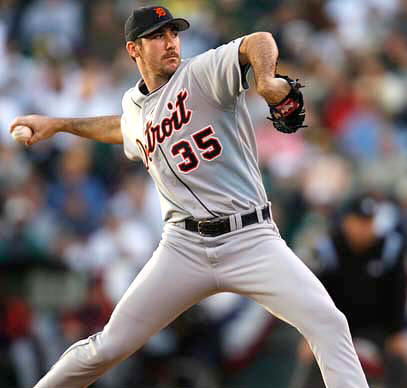
If Verlander is back to Ace form ... good luck stopping Detroit.  Photo unknown via rumorsandrants.com

If Verlander is back to Ace form … good luck stopping Detroit. Photo unknown via rumorsandrants.com

I thought Oakland would get to Verlander last night; I was wrong.  Who knew after the inconsistent season he had that suddenly he’d be pitching 8 dominant (and 5 perfect) innings in an elimination game on the road.  Phew.  If Verlander is back to being “best in the league” level these playoffs … Boston is in trouble.  A Scherzer/Verlander 1-2 punch going 4 times out of 7 is going to be tough to beat.  Same with a Greinke/Kershaw 1-2 punch on the NL side.  That’s why in a simplistic quick analysis it’s hard to go against a Detroit-Los Angeles World Series right now.  Up until yesterday I was thinking Boston-LA … but now i’m not sure Detroit is beatable.
Billy Beane famously said that “his sh*t doesn’t work in the playoffs” and once again he’s right.  Notice how Oakland, Tampa and Pittsburgh all made the playoffs with dinky payrolls but well put-together teams but subsequently lost to bigger payroll teams?  When the chips were down, Detroit had a $20M/year pitcher going against a $500k pitcher, and the game was won when their $24M/year MVP hit a homer.  I’m not saying that happens all the time, but it is sure happening this post season.  I’ve got a draft post quickly reviewing payroll versus standings (like I try to do every year) and its interesting to say the least what has happened to some of the game’s biggest payrolls.On the other hand … what a playoffs so far.  I think its easy to point out that the 4 best teams remain, that all four teams are significant, historical baseball franchises, and the world series looks set to be an absolute classic matchup no matter what happens.
NLCS Game 1 thoughts: Greinke-Kelly.  Kelly may not be “sexy,” but he’s a darn effective pitcher.   The last time he faced the Dodgers he shut them down (one run in 6 innings).  Greinke was good in the NLDS (2 runs in 6 innings in Atlanta), had a similar 2 in 6 line in St. Louis in August, but got mostly hammered by the Cardinals in the 2011 playoffs.   This is two years later, of course, a whole different set of circumstances.   I think both guys are going to have similar lines tonight (6 innings, 2 runs) and i’m calling for a close game won by the home team Cardinals with their superior hitting and home field advantage.

Written by Todd Boss

October 11th, 2013 at 10:29 am

ALDS Game 5 thoughts

leave a comment

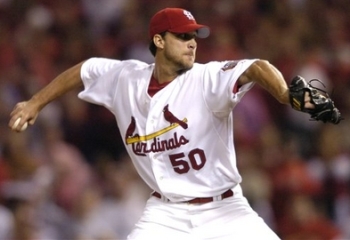
Wainwright shows why he's an "Ace."  Photo: talksportsphilly.com

Wainwright shows why he’s an “Ace.” Photo: talksportsphilly.com

As much as it pained me and most sentimental baseball fans, I called St. Louis’ NLDS game five victory last night.  Gerrit Cole pitched well, but nothing beats a complete game shutdown performance from an Ace like Adam Wainwright.    The Cards continue to get clutch hitting when they need it and remain a difficult out.  I honestly wanted the Cardinals to lose as penance for putting Shelby Miller in the bullpen, so that I could use the same line that others have used against the Nats for an entire year.  But the Cards gutted out wins in two straight elimination games and now get LA in the NLCS.

With last night’s correct prediction, I’m now 14 for 18 now in per-game predictions this post-season.  Lets put it on the line for another pretty tough game to predict.

ALDS Game 5: Detroit at Oakland.  Verlander versus Gray.   A rematch of game 2’s starters.

Verlander just destroyed Oakland in Game 2; 7 innings, 4 hits, 11 K’s.  No real reason not to think that may happen again.  His big problem was pitch count; he was at 117 pitches through 7 because Oakland sees a ton of pitches.  Billy Beane in action, Oakland walks at the 3rd highest rate in the game.   But, Gray was better; going 8 shutout innings and allowing just 5 baserunners.  Gray was more efficient and probably could have gone another inning; instead Bob Melvin brought on his closer in a tie game late and was rewarded with a bottom of the 9th walk-off win….

Quick Tangent: see Fredi Gonzalez; isn’t it nice when you use your best reliever to help win games, instead of managing to the stupid save category and watching a lesser reliever give up the game-winning bomb while Kimbrel sits in the bullpen with his hands on his hips??  You deserved to lose that game, and its karmic that the Braves are now out after all the whining, the showmanship, and the beanball wars they brought on the league this year.

Anyway.  On tonight’s game something tells me the A’s are going to get to Verlander slightly more than the Tigers get to Gray.   Oakland’s bullpen is in tatters, but Detroit’s isn’t much better.  If Gray can hand the ball directly to Balfour again, and if Oakland can squeeze Verlander out of the game after 7 innings again … I think Oakland hangs on for the win.


Written by Todd Boss

October 10th, 2013 at 8:51 am

NLDS Game 5; this could be one of the games of the post-season

leave a comment

I went 0 for 2 predicting games last night.  Oakland gets screwed on the disputed HR call, their bullpen falls apart and lets in 5 runs, and they can’t score after loading the bases with zero outs (that situation has an average run expectancy of about 2.4 runs … they got zero).  Ball game.   Neither starter pitched badly (both went 6 innings and gave up 3 runs for the mediocre 4.50 ERA “quality start”).  But in the battle of the bullpens, Detroit pulled out its big gun in ace Scherzer and it almost cost them.  He somehow got out of the bases loaded jam with a couple of Ks (one where he got Donaldson to swing at a ball-4 change-up that was a foot inside) and then escaped when a rope to center was caught instead of falling in or sailing over Jackson.

In the night cap I guess it isn’t entirely surprising that Boston won; they easily handled Tampa on the season series.  Their offense is best in the league and just has not been shut down yet.   I still see them as favorites to make the World Series; decent pitching and an offense that has scored 26 runs in 4 games against the very good Tampa pitching staff.  Phew.

Tonight’s game could be one of the games of the post season.  Cole vs Wainwright.  Game 5 in St Louis, one of the best baseball towns in the game.   Cole is just a kid; conventional baseball wisdom says a rookie will wilt under playoff pressure.  But he sure didn’t do that in the previous game (holding the Cardinals to 1 run on two hits in 6 innings in game 2.  That one run was via a homer ..).   Can he do it twice in a row?  Same question goes for Wainwrigth; last post season he shutdown the Nats in game 1 and got trounced in game 5.  Can he hold down the Pirates two times in a row?

I think in the end you have to go with St. Louis simply because they’re home, and because they’re the better hitting team.

Written by Todd Boss

October 9th, 2013 at 9:40 am

Quick thoughts on tonight 10/8/13’s playoff starters and matchups

leave a comment

13 for 15 on the post-season now.  Got 3 of 4 yesterday; didn’t see the A’s beating Sanchez.  And didn’t see the Dodgers pulling a fast one and throwing Kershaw on short rest.   They really must not trust Nolasco right now.

Today’s might be the toughest games yet to pick; both ALDS game 4s are featuring the team’s #4 starters, who are the least predictable and most unreliable.

Detroit-Oakland: Straily vs Fister.  A rematch of this exact scenario (Oakland visiting Detroit) on August 28th.  Here’s the box score: http://www.baseball-reference.com/boxes/DET/DET201308280.shtml .  Oakland pounded Fister that day and won 14-4.  Fister finished the season very erratically, Straily finished with a handful of decent starts.  Neither guy has had a start since 9/25 … so they’re working on 13+ days of rest when they’re used to just four.  So you have to wonder how that’s going to play out.  Honestly I see another high scoring game here and I see Oakland taking it.  They’re hot, Fister’s not good, and if Oakland could so easily get to Sanchez they can easily pound Fister.

Boston-Tampa: Peavy vs Hellickson.  Peavy’s faced Tampa twice this year and had basically the same line: 6ip, 3ER, quality start.  One game they lost, one they won.  Meanwhile Hellickson had an awful 2013, a significant step back from a guy who was considering a near ace last year.  His ERA rose two full points from 2012 to 2013.  However he was good in his three 2013 outings versus Boston.  He’s going to have to shake off some really bad outings recently, but I think he can do it.  I’m going with Tampa to force a game 5.

Picking Oakland and Tampa today.

Written by Todd Boss

October 8th, 2013 at 7:37 am

Quick thoughts on Monday 10/7/13’s playoff games

leave a comment

Well, both my guesses for Sunday won (Pittsburgh and LA) but not quite how I envisioned it.  Liriano was good but not shutdown, and Pittsburgh needed a big hit from one of their big hitters.  Meanwhile Ryu melted under the pressure … but so did his counterpart Teheran, and LA battered their way to a big 13-6 win.

So, I guess that makes it 10 for 11 so far in the baseball post season.  Not bad.  Lets see who we like tonight:

– NLDS Game 4: Stl at Pitt: StL better win this game, else they face a ton of 2nd guessing for sitting Shelby Miller in favor of Lance Lynn (who promptly got bombed).  Wacha nearly no-hit the Nats in his final regular season start and easily shut down Pitt earlier in September.  Morton has gotten pounded by STL in 2 of the 3 times he’s faced them this year.  I feel like StL is stealing one and forcing a 5th game.

– NLDS Game 4: Atl at LAD: Garcia vs Nolasco.  A tale of two seasons for both pitchers; if you had told me this was the matchup in April I would have laughed and given the series to LA.  Now?  The tables have turned: Garcia was excellent all September and Nolasco was god-awful.   I think Atlanta gets to Nolasco in this one … but LA also gets to Garcia and this turns into another game like yesterday’s … LA’s hitting hot though and outslugs the Braves for the game 4 victory.

– ALDS Game 3: Boston at Tampa: Buchholz vs Cobb; wow, tough match up to call.  I think Tampa’s too good to get swept and gets at least one win here.  Cobb was great in the WC game, is generally good at home (unbeaten 7-0 record) and the Rays get all excited actually playing infront of a sell-out crowd.

– ALDS Game 3: Athletics at Detroit: Parker v Sanchez.  Neither guy has that great of a statline against the other team this year; Parker’s one appearance vs Detroit in April he got hammered for 8 runs in 3 1/3 innings, while Sanchez shut them down in April but got beat by them in August.  On the whole of it, you have to go with the AL ERA champion at home though, so we’ll go Detroit.

Picking St Louis, Los Angeles Dodgers, Tampa and Detroit today.

ALCS Game 2 Starters and thoughts

leave a comment

I missed on the Oakland-Detroit game yesterday; one bad inning undid Bartolo Colon, who gave up 3 in the first and that was all Detroit needed as Max Scherzer took over.  For the post-season we’re 8-for-9.  Should have gone to Vegas 🙂

Gut feeling on today’s games: always take the aces.  David Price and Justin Verlander going today.  Not much time for deeper analysis.  Price has been awesome against Boston this year, especially at Fenway.  Meanwhile Verlander’s disappointing season finished on a decent note, with two double-digit strikeout games to finish off the season.

Look for Detroit to sweep in Oakland and for Tampa to leave Boston with a split.  Both results seem rather acceptable: Boston had the upper hand on Tampa this year (winning 12 of 19 on the season series) but Price is tough to beat.  And Oakland got healthy on Houston (winning 15 of 19 on the year) and might not be quite as good as its 96 wins indicates.

Written by Todd Boss

October 5th, 2013 at 10:43 am

Game 1 ALDS and Game 2 NLDS Pitching Matchup thoughts

leave a comment

We’re on a roll; 5-for-5 so far in predictions for individual games.  Lets see if we can keep it going now that all four divisional series are in full swing.  Cnnsi probable pitchers are here, along with some good stats.

NLDS Game 2: Pittsburgh-St. Louis: The Pirates are going with young phenom Gerrit Cole while the Cardinals curiously are going with their least effective playoff starter in Lance Lynn.  (Side note: I thought Lynn would be left off the playoff roster by virtue of being the 5th best St Louis starter; instead it turns out the Cardinals are moving Shelby Miller to the bullpen for the playoffs, ostensibly because Miller “looked tired” down the stretch.  BS: he lowered his ERA during the month of August.  How is this not a “shutdown” of some sort, and if so where’s the righteous indignation that followed the Nats shutting down Strasburg in 2012 for a medical reason?).   Lynn pitched to a 91 ERA+ on the year, struggled for most of the season but finished strong by posting a 2.82 ERA in September (going against a bunch of also rans for the most part).  He pitches significantly better at home, perhaps one reason to get his NLDS start in now before the teams move to Pittsburgh.  Lynn has faced Pittsburgh 5 times this year, but more importantly was his last two outings against the Pirates in August.  Both times they got to him; 4 runs in 5 innings on 8/15, 7 runs in 4 innings on 8/31.

Meanwhile Pittsburgh counters with its 2nd best pitcher in Cole.  Cole’s potential and minor league pedigree are well known to prospect watchers, and his arrival to the majors was heralded as the coming of the next big thing.  Oddly though, initially Cole looked mortal; it took him 17 MLB starts before he had a scoreless outing.  Like Lynn, Cole vastly improved once September came, capped off by 7 innings of shutout ball he threw at Texas and a 6 inning/12 strikeout outing in late September.  To be fair, like Lynn Cole’s September starts were also filled with also-rans.

The Cardinals hit.  And they especially hit right-handers (best in the NL in several macro batting categories, including BA, OPS, wOBA and wRC+).  Despite my liking Cole, I have a feeling the Cards are eventually going to get to him.  Will the Pirates get to Lynn first?  I’m betting so; after last night’s beating and emotional letdown, I think the Pirates re-group and take game 2.

NLDS Game 2: Los Angeles-Atlanta: The Braves are in trouble; after getting embarassed by Clayton Kershaw last night they have to go up against a pitcher of nearly the same quality in Zack Greinke.  Greinke was hurt early, and struggled to find his form until the season was half over.  But now he’s on a roll; he hasn’t given up more than 2 runs in an outing since July 25th.  In his last 6 starts he’s given up a total of 7 runs.  The Braves are going to have a hard time scoring on him.   In Greinke’s only start against Atlanta in June, he pitched 7 shutout innings, giving up just 4 hits.  I see a similar outing tonight; perhaps 7 innings giving up 1 or 2 runs and punching out 7-8 guys.

Meanwhile, Atlanta counters with Mike Minor, who hasn’t pitched badly per se down the stretch but certainly hasn’t pitched that dominantly; Atlanta has lost his last 6 starts.  However, in two starts against LA Minor has been good.  I can see Minor holding the Dodgers at bay and getting this to the bullpens, where Atlanta has the very distinct advantage.  I’m predicting a very close Atlanta victory tonight to send it back to LA.

ALCS Game 1: Tampa-Boston: After a disastrous 2012 season, Boston is back and is set to bash their way through the playoffs with its league-best offense.  In game 1 Boston throws its ace Jon Lester, who has lowered his season ERA three quarters of a point in the last 2 months going against mostly a solid diet of playoff-calibre and AL east teams.  The Rays hit left-handers pretty well (108 wRC+) but Lester has mostly handled them in 4 match-ups this season.

Meanwhile Tampa is hampered by its two play-in games costing them their two best arms.  They start the ALDS with their #3 starter Matt Moore, no slouch himself at 17-4 with a 3.29 ERA and 116 ERA+.  However Moore is struggling down the stretch; since a fantastic 2-hit shutout in Boston in late August, Moore has finished 6 innings just one time and has had to be taken out of games early due to high pitch counts and unusual wildness (Moore leads the league this year in wild-pitches; very odd considering how well he controlled the ball in the 2011 playoffs).  Boston is just as patient a team as Tampa at the plate (they’re #1 and #4 in terms of BB% in the majors), and Boston can wait out Moore to get to Tampa’s fatigued bullpen.

All in all, I think Boston waits out Moore, gets into Tampa’s bullpen and gets a win.  Lester holds Tampa at bay and Boston takes game 1.

ALDS Game 1: Oakland-Detroit: Presumed AL Cy Young winner Max Scherzer gets the ball in game 1, going against the ageless Bartolo Colon, who at 40 may have just had his best season (his WAR for 2013 is a full 1.1 wins better than his Cy Young winning season in 2005).  Scherzer may be averaging 10 K/9, but the last time he hooked up with Oakland he got beat.  Likewise, the last time Colon faced Detroit he shut them down.  With Miguel Cabrera hurting and the Tigers offense limping into the post-season, with Scherzer oddly inconsistent down the stretch, and with Colon entering the post-season nearly unhittable (he’s given up just 4 earned runs in his last 5 starts, three of them on solo homers), I think we’re about to see an upset in game 1.  I’m going with Oakland.


Game 1 NLDS Matchup thoughts and predictions

2 comments

Can Kris Medlen stop the Kershaw train tonight? Photo unknown via totalprosports.com

Can Kris Medlen stop the Kershaw train tonight? Photo unknown via totalprosports.com

I’m 3-for-3 so far predicting the play-in games.  Called the Texas-Tampa game, then the NL wild-card, then the AL wild-card.    I didn’t mean to start the post-season by offering predictions, but some email messages with friends turned into analytic efforts which turned into blog posts.  Now i’ll continue the trend and try to guess the winners each day as best as I can.

Next up in baseball’s post-season: the first games of each NL divisional series.  Here’s some quick hit thoughts.  The si.com probable-pitcher page is a nice little resource, giving the probable starters and a quick little stat history.

Without doing a ton of research (not much time today):

Pirates at Cardinals.  Pirates #2  A.J. Burnett goes against St. Louis ace Adam Wainwright.   Wainwright is tough at home, tough all year, has been good down the stretch, and probably isn’t getting beat in his own stadium.  He’s a quality right-handed pitcher going against a Pirates lineup that doesn’t score a ton of runs and isn’t that great against right handed hitters.  I also think the Pirates may have a bit of a letdown early in this series, having blown their Ace and a lot of emotional capital in the wild-card game.  Burnett has faced the Cards six times this season, most recently a month ago in St. Louis and got hammered.  I think the Cards wear down Burnett on the road again and cruise to an easy game 1 victory.

Dodgers at Braves.  The Dodgers have their rotation lined up and put out ace Clayton Kershaw in Atlanta for game 1.  Meanwhile the Braves send to the hill Kris Medlen, who has been fantastic down the stretch to get the nod as the replacement Ace of the Braves staff for Tim Hudson.  Medlen’s strong close to the season is muddied by looking at his competition; the last time he faced a playoff-calibre team was a month ago, when he was good but not great against the Cardinals.   Meanwhile Kershaw’s unreal 1.83 ERA on the season represented an ERA+ value of 194, tied for the 46th best ever such season and ranking him ahead of a couple of  Sandy Koufax‘s dominant mid-1960s seasons.  Kershaw led the league with 232 strikeouts; the Braves as a team only trailed the hapless Astros and Twins in team strikeouts.  Atlanta only hit .239 on the season against all lefties, let alone the best left-handed starter in the league.   I just do not see Atlanta getting a ton of baserunners tonight.  Plus I don’t entirely trust Medlen against a good team and I think he’ll have a quality start but get the loss, something like 3-1 to the Dodgers.


Written by Todd Boss

October 3rd, 2013 at 9:31 am

Ranking the 2013 Playoff Rotations

leave a comment

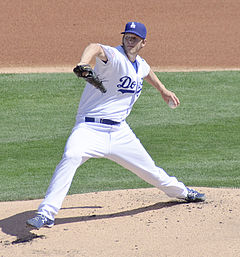
Kershaw leads the best rotation in the playoffs. Photo via wiki.

Kershaw leads the best rotation in the playoffs. Photo via wiki.

Now that the playoff fields are set … who has the most formidable playoff rotation?

Unlike previous rotation rankings posts, the playoffs focus mostly on the 1-2-3 guys.  Your 5th starter may not even be on the playoff roster and your 4th starter usually just throws one start in a series where you can line up your guys, and some teams skip the 4th starter altogether if they at least one veteran pitcher who can all go on 3 days rest (there’s enough off-days in the 2-3-2 format to allow most guys to go on regular rest).  So the focus here is on the strength of your top guys.

Here’s how I’d rank the 10 playoff teams’ rotations, despite the fact that two of these teams will be wild card losers and never get a chance to use their rotations:

  1. Los Angeles: Kershaw, Greinke, Nolasco, Ryu (Capuano left out).  As great a 1-2 combination Kershaw and Greinke are, Nolasco has for stretches outpiched them both since his trade, and Ryu is a #2 starter talent in the #4 slot.  They’re going to be a tough out in any short series where Kershaw gets two starts.  Easily the #1 playoff rotation.
  2. Detroit: Scherzer, Verlander, Sanchez, Fister (Porcello left out).  Hard to believe that a guy who most thought was the best or 2nd best pitcher in baseball (Verlander) may not even get the start in the first game of the playoffs.  But they’re still the 2nd best rotation.
  3. St. Louis: Wainwright, Miller, Wacha, Kelly (Westbrook and Garcia hurt, Lynn left out).  The knock on St Louis’ current rotation is their youth; two rookies and a 2nd year guy who was in the bullpen all last year.  Are there any innings-limit concerns here that could force a shutdown  It doesn’t seem so at this point?  It continues to amaze me how well St. Louis develops players.  Carpenter and Garcia out all year?  No worries we’ll just bring up two guys in Wacha and Miller who are barely old enough to drink but who can pitch to a 120 ERA+.
  4. Tampa Bay: Price, Moore, Archer, Cobb (Hellickson left out); A tough top 4, if a little young on the back-side.  Moore has quietly returned to this dominant form upon his call-up and gives Tampa a formidable 1-2 punch.  Price has already pushed them past game 163.
  5. Pittsburgh: Liriano, Burnett, Cole, Morton (Rodriguez hurt, Locke left out).  The team previously said that Cole would likely a reliever in the playoffs, but I’ll believe that when I see it; he’s been fantastic down the stretch.  It is difficult to put a rotation headlined by the burnout Burnett and the reclamation project Liriano this high, but their performances this year are inarguable.
  6. Boston: Lester, Buchholz, Peavy, Lackey (Dempster, Doubront left out).  Buchholz just returning mid September after a hot start; could push this rank up.  I don’t necessarily trust the #3 and #4 spots here in a short series, but Boston can (and probably will) bash their way to the World Series.
  7. Cincinnati: Bailey, Cueto, Arroyo, Cingrani (Leake left out, Latos hurt).  Cingrani may be hurt, Cueto has returned to replace the sore-armed Latos.  Leake’s performance may push him over Arroyo if they get there, but the odds of them beating Pittsburgh were already slim after their poor finish and were vanquished last night.  Still, isn’t it nice when you have more quality starters than you need heading into a season, Mike Rizzo?
  8. Atlanta: Minor, Medlen, Teheran, Wood (Hudson hurt, Maholm left out).  If Wood is shutdown, Maholm makes sense as the #4 starter but has struggled most of the 2nd half and finished poorly.  I may have this rotation ranked too low; they’re solid up and down, just not overpoweringly flashy.
  9. Cleveland: Jimenez, Kluber, Kazmir, Salazar (Masterson in the pen, McAllister left out).  How did these guys get a playoff spot?  Amazing.  They’re all solid, nobody especially flashy, and they won’t go away.
  10. OaklandColon, Parker, Griffen, Gray (Milone, Straily left out, Anderson in long relief).  I didn’t want to rank them last, considering Oakland’s record over their last 162 game stretch.  But here they are; on an individual level one by one, they just do not stack up.  The age-less wonder Colon is easily the staff Ace.  The rest of these guys’ seasonal numbers are just not impressive.

These teams obviously didn’t make the playoffs, but were in the hunt until late, and since I had already typed up this content might as well say where I’d have ranked them, had they made the playoffs…

  • Washington: Strasburg, Gonzalez, Zimmermann, Haren (Ohlendorf, Roark left out, Jordan shut down)  Perhaps you’d replace Haren with Roark based on September performances;  I just can’t imagine trusting Haren in a 7 game series..  I’d put them about #4, just ahead or just behind Tampa.   Gonzalez and Zimmermann have shown themselves to be oddly vulnerable here and there coming down the stretch, and I just don’t put Strasburg in the same elite category as Kershaw right now.  Too bad months of indifference cost them the 4 games they needed to make up in the standings to reach the WC game.
  • Kansas City: Shields, Santana, Chen, Guthrie (Duffy, Davis, Mendoza left out): Duffy may be a better choice than Guthrie based on small sample sizes.  I’d have put them just behind Cincy at #8 in terms of rotation depth.
  • Texas: Darvish, Garza, Holland, Perez (Tepisch, Grimm left out, Harrison hurt): Great Ace in Darvish (even if he has occasaional blowups), but falls off badly after that.  The Garza acquisition has just not worked out, and the rest of the rotation is good but not overpowering.  I’d put them behind KC but just ahead of Baltimore.
  • Baltimore: Tillman, Chen, Gonzalez, Feldman (Norris, Garcia, Hammel and others left out).  They’d probably be behind Atlanta at #9, only ahead of Oakland/Cleveland.
  • New York: Sabathia, Kuroda, Nova, Pettitte (Hughes, Phelps left out): Kuroda has been the ace of the staff this year, but you’d always lead off with Sabathia (though, had they made the playoffs it would be unknown if Sabathia could even go with his late-season injury).  Either way, this would be behind any other playoff team’s rotation.