Nationals Arm Race

"… the reason you win or lose is darn near always the same – pitching.” — Earl Weaver

Archive for the ‘jordan zimmermann’ tag

Post-Winter Meeting bonanza; who improved their Rotation the most? Who’s left?

8 comments

Lester joins the Cubs revolution. Photo via weei.com

Lester joins the Cubs revolution. Photo via weei.com

(Editor’s Note: sorry for the tardiness on this post: I had it completely written and a WordPress or browser glitch lost 1,000 words of analysis.  So it took a bit of time to cobble back together what I had originally written.  Then the Souza trade hit, then the Cuban thing … and this got pushed).

What a GM Meeting week!  As one of the Fangraphs guys noted, there were so many transactions, so fast, that he literally gave up trying to write individual analysis pieces and went to a running diary of sorts.  I was amazed at the number of significant deals and trades made, especially when it came to starters.  So lets take a look at who shook things up.

Many teams are making big moves (almost the entirety of the the AL it seems) to try to win in 2015.  And many teams have revamped their rotations.  First, here’s a quick run through teams that have made significant acquisitions to their starting rotations (using BP’s Depth Charts page, Fangraphs stats pages and BaseballProspectus‘ page for injury history, Cots at BP for salaries, and of course baseball-reference.com).

Teams who have Improved

  • Chicago White Sox: acquired Jeff Samardzija in Oakland’s fire sale to go with established ace Chris Sale, the highly underrated Jose Quintana.  From there the White Sox have question marks: John Danks is just an innings eater at this point and Hector Noesi was not effective in 2014.  But the White Sox have one of the brightest SP prospects in the game at AAA in Carlos Rodon (their fast-rising 2014 1st round pick) and their former #1 prospect Erik Johnson (who struggled in his debut in 2014 but has a good minor league track record).  So by the latter part of 2015 the White Sox could be a scary team for opposing offenses to face.
  • Minnesota: just signed Ervin Santana to join a rotation containing the rejuvinated Phil Hughes, the decent  Ricky Nolasco and first rounder Kyle Gibson.  If they (finally) call up former Nats 1st rounder Alex Meyer to fill out the rotation and replace the dregs that gave them #4 and #5 rotation spot starts last year, they could be significantly improved.  Of course, the problem they face is the fact that they’re already playing catchup in the AL Central and still look like a 5th place team in this division.
  • Los Angeles Angels: adroitly turned one year of Howie Kendrick into six years of Andrew Heaney, who should thrive in the big AL West parks.  If the Angels get a healthy Garrett Richards back to go along with the surprising Matt Shoemaker, they may have a surplus of decent arms being stalwards Jered Weaver and C.J. Wilson.
  • Miami has spent some cash this off-season, but they’ve also gone shopping and upgraded their rotation significantly.   After acquiring the decent Jarred Cosart at the trade deadline, they’ve flipped bit-players to acquire Mat Latos, added Dan Haren and a $10M check  while parting ways with the unproven youngster Andrew Heaney, and should get ace Jose Fernandez back by June 1st if all goes well with his TJ rehab.  Add to that Henderson Alvarez and the Marlins look frisky (their new-found depth enabled them to move Nathan Eovaldi to the Yankees).  Rumors are that Haren won’t pitch unless he’s in SoCal, but $10M is an awful lot of money to turn up your nose at.  This is an improved rotation no doubt, and the rest of the Marlins lineup looks good too.
  • New York Mets get Matt Harvey back.  Enough said.  Harvey-Jacob deGrom is one heck of a 1-2 punch.
  • Chicago Cubs: added an ace in Jon Lester, re-signed their own effective starter in Jason Hammel, and will add these two guys to the resurgent Jake Arrieta.  Past that you have question marks: Kyle Hendricks looked great in 2014.  And the Cubs gave nearly 60 starts last year to Travis Wood (5+ ERA) and former Nat Edwin Jackson (6+ ERA).  I could envision another SP acquisition here and the relegation of Wood & Jackson to the bullpen/AAA/scrap heap.
  • Pittsburgh was able to resign Francisco Liriano and get A.J. Burnett for an under-market deal.  This should keep them afloat if they end up losing Edinson Volquez in free agency.   Otherwise they have decent back of the rotation guys and will get back Jamison Taillon perhaps in the early part of the year.  This could help them get back to the playoffs with the anticipated step-back of NL Central rivals Cincinnati.
  • Los Angeles Dodgers said good bye to a stable of starters (Josh Beckett, Chad Billingsly, Kevin Correia, Dan Haren, Roberto Hernandez and Paul Maholm are all either FAs or have been traded away) and signed a couple of guys to go behind their big three of Kershaw, Greinke and Ryu who could quietly make a difference (Brandon McCarthy and Brett Anderson) if they remain healthy.  That’s a bigger “if” on Anderson than McCarthy, who excelled once leaving the circus that Arizona was last year before the management house cleaning and should continue to excel in the huge park in LA.  Were I Andrew Friedman, I’d re-sign at least a couple of these FA guys for 5th starter insurance … but then again, the Dodgers also have a whole slew of arms in AAA that could be their 5th starter.  Or they could just open up their wallets again; there’s still arms to be had.  Nonetheless, replacing 32 Haren starts with McCarthy will bring immediate benefits, and whoever they end up with as a 5th starter has to be better than the production they got last year out of that spot.

Team most improved: likely the Cubs.

What teams’ rotations have taken step backs or are question marks heading into 2015?

  • Boston: after trading away most of their veteran rotation last season, the Red Sox seem set to go into 2015 with this rotation: Clay Buchholz, Rick Porcello, Justin Masterson, Joe Kelly and Wade Miley.  This rotation doesn’t look as good as it could be; Buchholz was awful in 2014, Porcello is good but not great, Masterson the same, Kelly seems like a swingman, and Miley has back to back 3.98 FIP seasons in the NL and will see some ERA inflation in the AL (though not as much as normal since Arizona is a hitter’s park).  But Boston’s entire AAA rotation are among their top 10 prospects, so there’s plenty of depth they could use in trade or as reinforcements. 
  • Detroit: Arguable if they’ve really taken a “step back,” but you have to question their direction.  In the last two off-seasons they’ve traded away Doug Fister, Rick Porcello, Drew Smyly, prospect Robbie Ray and have (seemingly) lost Max Scherzer to free agency so that they can go into 2015 with this rotation: David Price, Justin Verlander, Anibel Sanchez, Alfredo Simon and Shane Greene.   Is this a winning rotation for 2015?
  • Kansas City: They have replaced departing free agent ace James Shields with newly signed Edinson Volquez, keeping newly acquired Brian Flynn and 2014 draft darling Brandon Finnegan in the bullpen for now.  KC is going to take a step back and will struggle to compete in the new super-powered AL Central in 2015, but have a slew of 1st round arms that look like they’ll hit in late 2015/early 2016.  I do like their under-the-radar signing of Kris Medlen though; he could be a very solid addition to their rotation if he comes back from his 2nd TJ.
  • Oakland will have a new look in 2015, having traded away a number of core players.  But their rotation should be OK despite having traded away Samardzija and let Jon Lester and Jason Hammel walk.  Why?  Because they stand to get back two very good rotation members who missed all of 2014 with TJ surgery in A.J. Griffin and Jarrod Parker.  They should re-join the 2014 rotation members Sonny Grey, Scott Kazmir, newly acquired Jesse Hahn and either Jesse Chavez/Drew Pomeranz to form another underrated rotation.  Of course, if these guys have injury setbacks, it could be a long season in Oakland.
  • Texas made a couple of acquisitions, re-signing their own Colby Lewis and trading for Nats cast-off Ross Detwiler (who should fit in immediately as their 4th starter), to go with ace Yu Darvish and recently recovered Derek Holland.  But Texas could significantly improve come mid-season when injured starter Martin Perez should return.  The big question mark for Texas is Matt Harrison, who had to have two vertebrae in his back fused and may not return, ever.   But if Harrison can come back, that gives Texas an opening day 1-5 that’s pretty improved over last  year.
  • Cleveland didn’t exactly have the world’s best rotation in 2014 but has done little to improve it going forward.  They will continue to depend on Corey Kluber, newly minted Cy Young winner to head the line, but then its question marks.  Carlos Carrasco was great in a combo role in 2014; where’d that come from?  He was awful in years prior.  Is Trevor Bauer dependable?  They better hope so; that’s your #3 starter.  They just signed Gavin Floyd after his injury shortened 9-game stint with Atlanta last year; he’s no better than a 4th/5th innings eater.   Is Gavin Salazar ready for prime time?  He wasn’t in 2014.  And there’s little else on the farm; the Indians don’t have a significant starting pitcher prospect in their entire system. 
  • Atlanta: The Braves surprisingly parted ways with Kris Medlen and not-so-surprisingly parted ways with Brandon Beachy, Gavin Floyd, Ervin Santana and Aaron Harang.  That’s a lot of starter depth to cut loose.  They look to go into 2015 with ace Julio Teheran followed by the newly acquired Shelby Miller, the inconsistent Mike Minor, the excellent but scary Alex Wood and under-rated 5th starter David Hale.  That’s not a *bad* rotation … but it isn’t very deep.  They have cut ties with guys who made nearly half their 2014 starts AND the guy who went 10-1 for them in 2012.  They (inexplicably) picked up a starter in Rule-5 draft who had TJ surgery in June; are they really going to carry him that long on the active roster?  They have no upper-end SP talent close to the majors.  If one of these 5 starters gets hurt, Atlanta could be in trouble.
  • Philadelphia: all you need to know about the state of the Philadelphia franchise can be summed up right here: A.J. Burnett declined a $12.75M player option to play for the Phillies in 2015 and, instead, signed for 1  year, $8.5M to play for Pittsburgh.  They will head into 2015 with their aging 1-2 punch of Cole Hamels and Cliff Lee, the former being constantly dangled in trade rumors but going nowhere because the Phillies GM clearly over-values what a guy like Hamels and his guaranteed contract can actually bring back in return in this market.  Past Hamels/Lee there’s a bunch of non-descript names (David Buchanan, the waiver-claim Jerome Williams and the untested Cuban FA Miguel Gonzalez).   Can this team even broach 70 wins?
  • Cincinnati is moving backwards: they’ve traded away Mat Latos for  pennies on the dollar (Keith Law says there’s “make-up issues.”) and moved the effective Alfredo Simon for other bit players.  They’re putting a ton of faith that one-pitch Tony Cingrani will last a whole season and the youngster Anthony DeSclafini (obtained for Latos) will comprise a workable rotation.  They do have a couple of decent prospects at AAA (Robert Stephenson and Michael Lorenzen) but they seem to be accepting that they’re taking a step back.
  • St Louis traded away their least effective starter (Shelby Miller) and acquired the best defensive RF in the game (Jason Heyward).  Not a bad bit of work.  But they now will go into 2015 with a question mark in the rotation; prospect Carlos Martinez will get the first shot and could be good; oft-injured Jaime Garcia is still hanging around, and there’s a couple of good arms in AAA who could matriculate into the rotation via the bullpen as Martinez did in 2014.  It could end up being addition by subtraction (Martinez for Miller) but we’ll see.
  • Arizona has boldly re-made their rotation this off-season, dealing away 2014 opening day starter Wade Miley for a couple of SP prospects and dealing for 6 arms in total thus far.  New rotation may not be flashy at the top (the enigmatic Josh Collmenter is slated for the opening day start in 2015) and is followed by former Tampa pitcher Jeremy Hellickson (traded for prospects), the two pitchers acquired from Boston for Miley in Rubby de la Rosa and Allen Webster and then a cattle-call for the 5th starter competition this spring.  Arizona also ended up with former Nats farm-hand Robbie Ray, still have the highly regarded Archie Bradley waiting for his free agent clock to get pushed out a year, plus 2013’s darling Patrick Corbin coming off of TJ, not to mention Bronson Arroyo coming back from TJ later in the season.  So there’s a lot of arms out there to choose from, eventually.  But getting to Bradley-Corbin-Hellickson-de la Rosa-Webster from where they’ll start will be rough.
  • San Francisco‘s 2015 rotation could be just as effective as it needs to be (after all, they won the 2014 world series having lost Matt Cain mid-season and given the ineffective Tim Lincecum 26 starts).  They seem to set to go with Cain, WS hero Madison Bumgarner, the age-less Tim Hudson, and then with Lincecum and re-signed aging FA Jake Peavy.  This pushes Yusmeiro Petit to the bullpen for the time being and seemingly closes the door on Ryan Vogelsong‘s SF time.  Rumor had it that they were all over Jon Lester… and missed.  So a big acquisition to permanently sent Lincecum to the pen could still be in the works.  SF’s bigger issue is the loss of offense.  But the NL West is so weak they could still sneak into the playoffs again.  I list them as question marks though because Cain might not be healthy, Lincecum could still suck, and Hudson and Peavy combined are nearly 80 years of age.
  • San Diego has completely re-made their offense; do they have the pitching they need to compete?   They signed Brandon Morrow to replace 32 awful starts they gave to Eric Stults last year; that should be an improvement.  But they’ve traded away their 2nd best guy (Jesse Hahn) and are now set to have two lesser starters (Odrisamer Despaigne and Robbie Erlin) compete for the rotation.  The Padres re-signed lottery ticket Josh Johnson (coming off what seems like his millionth season-ending arm injury) and still have TJ survivor Cory Luebke in the wings, possibly ready for April 1st.  Their 1-2-3 of Andrew Cashner, Tyson Ross and Ian Kennedy isn’t that inspiring, but in San Diego’s home park, you don’t have to be Sandy Koufax to succeed.  Have they done enough to compete in the NL West?

Which team has taken the biggest step back?  Clearly for me its Arizona.

Who is left?

Well, clearly the two big FA names are Max Scherzer and James Shields.  Scherzer gambled heavily on himself when he turned down 6/$144M.  Would the Tigers make him a new offer?  Are the Nationals possibly involved (I hope not for the sake of the team’s chemistry; what would it say to players if the Nats jettisoned Jordan Zimmermann so they could give Scherzer $150M?).   He’d make a great fit in San Francisco … who wanted Lester but would get nearly the same great performance out of Scherzer.  Meanwhile Shields could fit in Boston or for the Dodgers to give them the depth they’ve lost.

Past the two big names, you have older guys likely to go on one year deals.  There’s no longer really room for Ryan Vogelsong in SF; he could be a decent option for someone.   Aaron Harang has earned himself a likely 2 year deal as someone’s back of the rotation guy.  Guys like Kyle Kendrick or Joe Saunders could be someone’s starter insurance policy.  And of course there’s a slew of injury guys who are like pitching lottery tickets.  Beachy, Billingsley, and Alexi Ogando all sound intriguing as reclamation cases.

But, once you get past Scherzer and Shields, anyone looking for a big upgrade will have to hit the trade market.  The problem there seems to be this: there’s just not that many teams that are already waving the white flag for 2015.   From reading the tea leaves this off-season, Atlanta is giving up, Cincinnati may be close, Philadelphia has begrudgingly admitted they’re not going to win, Arizona has already traded away its assets, Colorado is stuck in neutral, Oakland may look like they’re rebuilding but they still will be competitive in 2015, and  young teams like Houston and Tampa aren’t giving up what they currently have.  So a GM might have to get creative to improve their team at this point.
Written by Todd Boss

December 22nd, 2014 at 9:24 am

Posted in Majors Pitching

Tagged with , , , , , , , , , , , , , , , , , , , , , , , , , , , , , , , , , , , , , , , , , , , , , , , , , , , , , , , , , , , , , , , , , , , , , , , , , , , , , , , , , , , , , , , , , , , , , , , , , , , , , , , , , , , , , , , , , , , , , , , , , , , , , , ,

Best contracts in the game right now

15 comments

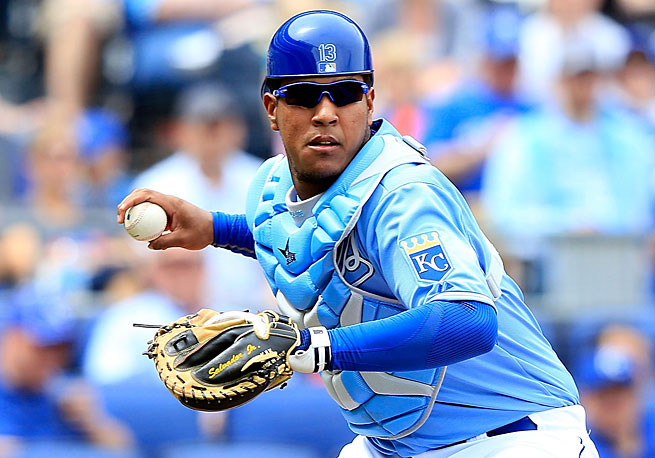
Sal Perez is the best value contract in the game right now. photo via si.com

Sal Perez is the best value contract in the game right now. photo via si.com

Inspired by Steve AdamsMLBTR chat on 11/18/14, I thought this was a fascinating topic.  What players have the best value contracts in the game right now?

For several years, the answer here was Evan Longoria, who signed a 6yr/$17.5M contract in 2008 and promptly put up three straight seasons north of 7.0 bWAR.  We’re into the option years on that original deal, which are still pretty affordable, and Longoria did get a 9-figure extension, so he’s not entirely in this discussion any longer.  Call him the “godfather” of ridiculously good value contracts.

Using the obvious websites (baseball-reference.com and Cots’ salary database now at BaseballProspectus.com), lets take a look at some candidates.  Note; I refer to a “valuation” of $6M per win above replacement as a way to “value” production.  There are some known limitations to equating salary to this figure, and there are others who estimate it even higher, but $6M per is still a decent estimate to use as a quick estimate of a player’s “monetary” production on the field.

Note: we are NOT including the litany of pre-arb players who are putting up huge seasons.  This is mostly trying to focus on those players who have signed for affordable contracts but who are delivering huge value.  Thus players like Josh Donaldson, Anthony Rendon, Kyle Seager, Corey Kluber and Starling Marte are not included here.

Candidate contracts: I’ve arranged these in my opinion of the order of value:

  • Sal Perez: 5 years/$7M (2012-16), plus 2017-19 club options worth just a *combined* $14.75M.  This for a guy who has made the all-star team and won the catcher Gold Glove two years running.  Wow.
  • Chris Sale: 5 years/$32.5M (2013-17), plus 2018-19 options of $12.5M and $13.5M.  This for a guy who led the AL this year in ERA+ and has received significant Cy Young votes 3 years running.  His bWAR in the last three seasons: 5.9, 6.9 and 6.6.  That’s crazy.
  • Jose Altuve: 4 years/$12.5M (2014-17), plus 2018-19 options at $6M and $6.5M.   Two-time all-star, led the AL in both hits and batting average in 2014.   Just put up a 6.6 bWAR season … and the Astros got it for just $1.25M in salary.
  • Jonathan Lucroy: 5 years/$11M (2012-16), plus 2017 option at $5.25M.  this late bloomer signed an incredibly affordable deal, then had a break out 2014 season where he posted a 6.7 bWAR, made the All-Star team, finished 4th in the MVP voting and should have won the gold glove as the best framing catcher in the game.   His total salary for the remaining three years of his contract is just $12.25M.
  • Madison Bumgarner.  Current contract: 5 years/$35M (2013-17), plus 2018-19 options at $12M each.  Bumgarner was 4th in Cy Young voting this year with a 4 bWAR season but (as we all know) dominated the playoffs, single-handedly handing the Giants their 3rd World Series title in the last 5 seasons.  A 4-war season is worth at least $24M on the open market these days, but he earned just $3.75M this year.  His options can vest and increase with certain achievements, but even at their max $16M value he’s still a massive bargain.
  • Yasiel Puig: 7 years/$42M (2012-18).  Everyone thought the Dodgers were crazy to commit $42M to an unknown; now it looks like a massive bargain.  For $2M salaries the last two years he’s put up 4.9 and 5.4 bWAR seasons.
  • Julio Teheran: 6 years/$32.4M (2014-19).  This contract gets expensive later, but in 2014 he was paid just $800k to put up a 4.0 win season.  If Teheran continues to be the #2 pitcher he showed this year, the Braves have great value on their hands.
  • Jose Quintana: 5 years/$21M (2014-18).  Thanks to the crummy team he toils for, Quintana’s exploits have gone unnoticed.  But he’s now got a career 117 ERA+ and has reached 200 innings both of the last two seasons and is signed for a song going forward.  Its no wonder analysts scoff when his name is mentioned in trade talks.
  • Michael Brantley: 4 years/$25M (2014-17), plus 2018 option of $11M).  This is preliminary, but based on his 7 bWAR season in 2014 (for just a $1.5M salary), this could be a huge bargain.  Is he a flash in the 2014 pan or is he for real?  If he’s for real, the Indians have a fantastic value going forward.
  • Ben Zobrist: 4 years/$18M (2010-13), plus 2014-15 options of $7 and $7.5M.  This was the poster child for years of affordable contracts (once Evan Longoria got his extension).  He’s averaged 4.75 bWAR over the past four seasons while playing six or seven different positions for the Rays.  Even in the final 2015 season at $7.5M, he’s projecting at 4 bWAR, still a significant under-value.  Keith Law calls  him “the best contract value” in MLB history; maybe he should be higher on this list.
  • Mike Trout: 6 years/$144.5M (2015-20).  No, a $33.25M salary in 2020 isn’t really a bargain, but the Angels are still getting the best player in baseball for $1M in 2014 and $5.25M in 2015.  Even if Trout declines to “just” a 6 bWAR player for the next 6 years … the Angels are still coming out ahead on the $6M/WAR evaluation technique.
  • John Lackey: 1yr/mlb minimum (2015).  He had a quirk in his previous contract that vested a MLB-minimum year thanks to an injury a couple years ago, so the Cardinals get the benefit of a veteran innings-eating 100 ERA+ starter at the league minimum.  Nothing to sneeze at, even if its just a one year contract.  On the open market you have to think he’s worth $8-$10M/season.
  • Steve Pearce: 1 year/$850k (2014).  This isn’t really a true candidate like the other players here, but Pearce’s story is worth noting.  He was DFA’d and *released* in April and re-signed a couple days later, but still posted a 6 bWAR season for Baltimore this year.  He’s arbitration eligible for 2015 but how far could his salary really rise after an 850k salary?
  • Jonathan Singleton: 5yrs/$10M plus 3 club options.  He may not profile as being worth this contract now … but if he lives up anywhere close to expectations, those later option years at $2-$2.5M are going to look pretty darn good.  No wonder the players union howled when he signed this deal.
  • Adam Jones: 4yrs/$62M is nothing to shake a stick at, even if his “gold glove” defense is rather suspect.
  • Edwin Encarnacion: 3 years/$29M (2013-15), plus 2016 club option of $10M.  Yeah that’s a pretty good deal.
  • Jose Bautista: 5 years/$65M (2011-15), plus 2016 option of $14M.   $14M for a guy who probably would have gotten 33% more had he been a FA two years ago.

How about the same analysis for the Nats?  The clear best value players on the team are Anthony Rendon and Tanner Roark.  Both Jordan Zimmermann and Doug Fister delivered pretty good WAR/pay value.  Denard Span just gave us a 3.6 bWAR season for $6.5M in salary; a pretty good deal.  But none of these contracts really contend with the above list.

Did I miss anyone obvious?  Do you agree with my rankings above?

2/24/16: Dan Szymborski posted his own updated version of this topic here: http://insider.espn.go.com/mlb/insider/story/_/id/14832664/carlos-correa-tops-list-baseball-best-assets-most-team-friendly-contracts-mlb .  He goes by surplus projected WAR.  Carlos Correa #1, Trout #2, then a bunch of pre-arb high-end rookies.

Nats Individual Award voting over the years

leave a comment

Rendon's 2014 5th place MVP result is the highest ever for a Nat.  Photo Nats Official via espn.com

Rendon’s 2014 5th place MVP result is the highest ever for a Nat. Photo Nats Official via espn.com

While we wait for the Rule-5 results, I thought i’d throw a fun little post out there.  Inspired by James Wagner‘s blog post last week (and subsequent newspaper filler two days later), I decided to dive into the subject of Nats award-receiving seasons.  Anthony Rendon just finished 5th in NL MVP voting, the highest ranking ever for a Nats player.  And three of our five starters just got Cy Young votes.

Using baseball-reference.com’s award pages as a source, here’s the history of every Washington Nationals player who has received any voting whatsoever in MVP, Cy Young or Rookie of the Year races.

MVP Races

year Rank  Name  Tm  Vote Pts  1st Place  Share  WAR 
2014 5 Anthony Rendon  WSN  155 0 37% 6.5
2014 18 Jayson Werth  WSN  9 0 2% 4
2014 19 Denard Span  WSN  8 0 2% 3.6
2013 13 Jayson Werth  WSN  20 0 5% 4.9
2012 6 Adam LaRoche  WSN  86 0 19% 4.1
2012 16 Ian Desmond  WSN  15 0 3% 3.4
2012 20 Gio Gonzalez WSN  8 0 2% 4.7
2012 24 Ryan Zimmerman  WSN  7 0 2% 3.9
2012 30 Bryce Harper  WSN  2 0 0% 5.1
2011 19 Mike Morse  WSN  5 0 1% 3.4
2010 16 Ryan Zimmerman  WSN  18 0 4% 6.2
2010 21 Adam Dunn  WSN  9 0 2% 2.4
2009 25 Ryan Zimmerman  WSN  2 0 0% 7.3
2006 6 Alfonso Soriano  WSN  106 0 24% 6.1
2005 14 Chad Cordero WSN  21 0 5% 2

There’s only been three top-10 MVP performances in franchise history: Rendon’s sneaky good 2014, Adam LaRoche‘s 6th place 2012 finish, and Alfonso Soriano‘s 40-40 season in 2006 (also a 6th place finish).   But it is kind of indicative of the balance on this team that *eight* different players have received MVP votes over the course of the last three years, and seven of them seem likely to suit up for the 2015 team.  No, a 17th place MVP finish isn’t really that impressive … but it is recognition that someone thought you were a top 10 player in the league that year (the MVP ballot goes 10 deep), and that’s worth recognizing.

Cy Young Races

year Rank  Name  Tm  Vote Pts  1st Place  Share  WAR  W  L  SV  ERA  WHIP 
2014 5 Jordan Zimmermann  WSN  25 0 12% 4.9 14 5 0 2.66 1.07
2014 8 Doug Fister  WSN  5 0 2% 4.5 16 6 0 2.41 1.08
2014 9 Stephen Strasburg  WSN  3 0 1% 3.5 14 11 0 3.14 1.12
2013 7 Jordan Zimmermann  WSN  21 0 10% 3.7 19 9 0 3.25 1.09
2012 3 Gio Gonzalez  WSN  93 1 42% 4.9 21 8 0 2.89 1.13
2005 5 Chad Cordero  WSN  1 0 1% 2 2 4 47 1.82 0.97

As we mostly know, Gio Gonzalez‘s 3rd place finish in 2012 (which included a first place vote amazingly) was our closest Cy Young candidate.  Amazingly, the team didn’t have a pitcher even garner a Cy Young vote from 2006-2011.  It was quite a dry stretch for hurlers.

Rookie of the Year Races

RoY
year Rank  Name  Tm  Vote Pts  1st Place  Share  WAR 
2012 1 Bryce Harper  WSN  112 16 70% 5.1
2011 4 Wilson Ramos  WSN  6 0 4% 1.8
2011 6 Danny Espinosa  WSN  3 0 2% 2.8
2006 2 Ryan Zimmerman  WSN  101 10 63% 2.9

Finally we have a winner!  Zimmerman was a justified 2nd place in 2006 (he lost to Hanley Ramirez).

Not much analysis here, just recognition of the balance of talent we have on this team and how hard it is to win one of these awards.

Closer post-mortem 2014

6 comments

Francisco Rodriguez screwed my fantasy team this year.  Photo via cbssports.com

Francisco Rodriguez screwed my fantasy team this year. Photo via cbssports.com

This post is somewhat driven by fantasy baseball, where one of the typical pitching categories is “Saves,” and the constant churn of closers has become a huge detriment to most fantasy baseball players.  I’m no exception; this year I drafted who I presumed was going to be the closer for Milwaukee (Jim Henderson), only to watch him be replaced the day before the season started, inexplicably and without warning, by Francisco Rodriguez, who subsequently earned 40+ saves for the guy in my league who vulture waiver-wire picked him up.  (We eventually found out why; Henderson gave up 10 runs in 11 innings before going under the knife for “Labrum & Rotator Cuff Debridement.”  Ugh).

My research shows that just 13 of the 30 teams in the MLB this year started and ended the season with the same closer.  That’s a pretty amazing churn of players.  So I put together a tracking XLS.

Team Switch during 2014 season? 2014 Closer, start of season 1/2 point Closer End of Year Closer Most Saves 2014 full season # Saves for Team Leader in 2014
Ari Addison Reed Addison Reed Addison Reed Addison Reed 32
Atl Craig Kimbrel Craig Kimbrel Craig Kimbrel Craig Kimbrel 47
Bal Yes Tommy Hunter Zach Britton Zach Britton Zach Britton 37
Bos Yes Koji Uehara Koji Uehara Edward Mujica Koji Uehara 26
Chc Yes Jose Veras Hector Rondon Hector Rondon Hector Rondon 29
Cin Yes J.J. Hoover Aroldis Chapman Aroldis Chapman Aroldis Chapman 36
Cle Yes John Axford Cody Allen Cody Allen Cody Allen 24
Col LaTroy Hawkins LaTroy Hawkins LaTroy Hawkins LaTroy Hawkins 23
Cws Yes Nate Jones Ronald Belisario? Jake Petricka Jake Petricka 14
Det Joe Nathan Joe Nathan Joe Nathan Joe Nathan 35
Hou Comm. Chad Qualls Chad Qualls Chad Qualls Chad Qualls 19
KC Greg Holland Greg Holland Greg Holland Greg Holland 46
LAA Yes Ernesto Frieri Joe Smith Huston Street Huston Street 17
LAD Kenley Jansen Kenley Jansen Kenley Jansen Kenley Jansen 44
Mia Steve Cishek Steve Cishek Steve Cishek Steve Cishek 39
Mil Yes Jim Henderson Francisco Rodriguez Francisco Rodriguez Francisco Rodriguez 44
Min Glen Perkins Glen Perkins Glen Perkins Glen Perkins 34
NYM Yes Bobby Parnell Jennry Mejia Jennry Mejia Jennry Mejia 28
Nyy David Robertson David Robertson David Robertson David Robertson 39
Oak Yes Jim Johnson Sean Doolittle Sean Doolittle Sean Doolittle 22
Phi Jonathan Papelbon Jonathan Papelbon Jonathan Papelbon Jonathan Papelbon 39
Pit Yes Jason Grilli Mark Melancon Mark Melancon Mark Melancon 33
Sdp Yes Huston Street Joaquin Benoit Joaquin Benoit Joaquin Benoit 11
Sea Fernando Rodney Fernando Rodney Fernando Rodney Fernando Rodney 48
Sfg Yes Sergio Romo Santiago Castilla Santiago Castilla Sergio Romo 23
Stl Trevor Rosenthal Trevor Rosenthal Trevor Rosenthal Trevor Rosenthal 45
TBR Yes Grant Balfour Jake McGee Jake McGee Jake McGee 19
Tex Yes Neftali Feliz Joaquim Soria Neftali Feliz Neftali Feliz 13
Tor Casey Janssen Casey Janssen Casey Janssen Casey Janssen 25
Was Yes Rafael Soriano Rafael Soriano Drew Storen Rafael Soriano 32

Now, technically the Reds never “switched” their closer; they just knew that Aroldis Chapman was coming back after a brief stint on the D/L.  And the Astros show Chad Qualls in all the positions, but they clearly were going with a committee for most of the season.  So you could argue against those two teams, but that still leaves half the league switching their closer mid-season.  Other teams stuck with the same guy all year (Detroit with Joe Nathan) despite awful numbers (4.81 ERA on the season for Nathan), so you could argue that they *should* have switched.

The Nats were no exception; they started the year with Rafael Soriano, who was one of the league’s best for half the season.  By September, the Nats had dumped Soriano for their *previous* closer in Drew Storen, who then dumped the bed in his only two post-season appearances (blowing the save in Jordan Zimmermann‘s epic 8 2/3 shutout innings, and then allowing two hits and a run in a non-save situation the next night).

What does this mean?  For “real” baseball, not much that we didn’t already know.  Closers are judged mostly on high-leverage short-sample sizes, where one blow-out inning destroys ERA and WHIP numbers for a month.  Its a ridiculous statistic that has far too much credence in the modern game.  And its even more ridiculous that a mediocre “closer” with a ton of saves earns more than a middle-to-late innings reliever with a ton of “holds” and great numbers.  But this is our system.

For “fantasy” baseball, the take away again is kind of known: closers are a crapshoot.  Try to get a couple of “known” closers in the 5th-8th rounds, grab a couple of fliers on people later on, but be sure to be incredibly proactive on the waiver wires in the last week of spring training/first week of the season.  A lot of these personnel changes happened in early April and then stuck the rest of the way through (quick examples being Milwaukee as described above and the New York Mets, who saw presumed closer Bobby Parnell blow out his elbow on practically the first day of the season and have Tommy John surgery on 4/8/14).


Wagner’s Q&A: how I’d have answered the questions he took

36 comments

Zimmermann's status is on everyone's mind.  Photo Unk.

Zimmermann’s status is on everyone’s mind. Photo Unk.

I used to love answering the questions that MLB.com beat writer Bill Ladson would post.  But Ladson hasn’t done such a column in months, and the other outlet for such a post (Tom Boswell) usually is populated with too many non-baseball questions to be worth addressing.  So today WP beat reporter James Wagner took a crack at a Q&A session and I thought it’d be fun to do a version of his Q& (my) A.

As with previous posts, I write my response before reading his and edit the questions for clarity/conciseness.

Q: What was the Nats’ final record against winning teams & how did it compare to the other playoff teams?

A: Wagner summarized the answer well; the Nats ended up 23-23 against winning teams.  To show you how useless this stat is in predicting the playoffs, the team with the best record (the Orioles) was swept and the WS matchup features the Giants, who had a losing record against winning teams.  Once again we learn that the post-season is about getting hot (or in the Nat’s case, disappearing) at the right time.  Wagner did the same analysis.

Q: Will the Nats turn to Tyler Clippard as the 2015 closer?

A: Doubtful.  Despite Drew Storen‘s second playoff meltdown, he’s likely the closer in 2015 on the strength of his excellent 2014 season.  Tyler Clippard‘s of more use in generally higher-leverage 8th inning situations, and likely continues in that role.  This has to be a bummer for Clippard, who enters his last arbitration argument without the benefit of the lucrative saves, but who is also just as likely to cash in when he hits free agency with a team looking for a reasonably priced closer.  I’ll bet he can get a 3yr/$24M deal as someone’s closer.  He is a fly-ball guy (not optimal as a 9th inning solution) but fly-ball pitchers definitely play well in pitcher parks.  He’d make an excellent closer for most any team on the west coast.  Wagner agrees.

Q: Why not keep both LaRoche and Zimmerman and platoon them at first base?

A: Because that’s an awful lot of payroll to dedicate to a platoon.  LaRoche likely gets $15M/year, Zimmerman is set to earn $14M next year.  Both are middle-of-the-order bats who need to play every day.  Unfortunately we don’t have a DH, else you’d re-sign LaRoche immediately and they’d split time at 1B/DH like most every other DH in the AL.  LaRoche is getting one last crack at free agency and could get another 2 year deal (rumors have him as a great fit in Milwaukee).  I think sticking Zimmerman at 1B makes the most sense considering the description of his shoulder at this point (he used the phrase “bone on bone” to describe the state of his arm at this point).  In fact, I think Zimmerman makes a great first baseman, immediately becomes a Gold Glove candidate, and (hopefully) stays healthy.  Wagner makes the same points.

Q: How about Steven Souza as our 2B solution?

A: Souza started his pro career as a third baseman … and was moved to the outfield by the time he was 22.  I’m guessing there’s a reason for that.  I don’t see him coming back to the infield, either at 3b or 2B.  He’s way too big to play second base effectively (he’s 6’4″ 225); if I was forced to play him in the infield, i’d suffer with him at 3B and stick Rendon back at second.  But that’d be a waste of Rendon’s defensive talents at the hot corner; we’re much better off installing him at his natural position and finding another 2B alternative.  None of this really talks about what the team *should* do with Souza; he’s more or less blocked for 2015 (as we’ve discussed to death) but has nothing left to prove in AAA.  His best case scenario is an injury in the Nats 2015 outfield, which gives him playing time.  Wagner  points out Souza’s poor defensive record in his time at third.

Q: Should we care about the MASN outcome?

A: Uh, yes.  The Nats could easily expand payroll with a decision and a guaranteed income stream, and we’d not be hearing about how they “have to” let some of their core players walk because they can’t afford them.  The MASN issue has gone on way too long, and it seems like it is getting ready to affect both the Nats and the Oriole’s business operations soon.  Wagner agrees.

Q: Do players and broadcasters read blogs and the press?

A: I hope not.  We’re not professionals; we don’t have day in-day out access, intimate knowledge of the team’s comings and goings, nor insight into reasons that may be behind a player’s cold streak (does he have the flu?  Is he nursing a slight sprain that nobody knows about?)  I don’t think any good comes of professional players reading about themselves.  If a player called out something I wrote derogatory i’d probably profusely apologize and retract it.  Wagner says players sometimes read about themselves in the press … but that if they don’t, they’re likely to hear about it from family/friends/agents anyway.

Q: Which of the bench players (Frandsen, Hairston, Schierholz, McLouth) will be back and who will most likely leave?

A: Well, McLouth is still under contract for 2015, so he’ll at least start the  year with the team (whether he finishes depends on whether he can regain some value).  I’d guess that the other three are gone.  None of the three hit particularly well for us, and all three are replaceable by internal promising candidates.  Frandsen probably has the best chance of sticking around since he’ll be so cheap (he made $900k last year and is arb-eligible); he’ll be an interesting tender-deadline candidate.

Your 5-man bench needs a catcher (Lobaton), a guy who can play both 2b and SS (Espinosa, if he’s not the 2B starter), an outfielder who can cover center (McLouth), a utility guy who can play multiple positions (Frandsen fits  here), and then a big bopper who can pinch hit.  This last spot has been held by the likes of Tyler Moore, Chad Tracy, Matt Stairs, Jonny Gomes in the past few years.  In 2015 it makes more sense to have Souza in this spot.  Only problem is that it helps if this last bench spot is a lefty.  We’ll see how the transactions play out this off-season.

Q: If you must chose between Zimmermann and Desmond, whom do you chose?

A: Desmond.  Harder position to fill, less in the minor league pipeline, probably cheaper too thanks to Desmond’s sub-par (for him) 2014 season.  Zimmermann seems likely to earn nearly $20M/year at this point, which is going to be too rich for this team, and there’s ready-made replacements in the upper minors (A.J. Cole, Blake Treinen, Taylor Jordan) ready to step in immediately after he departs.  A better question might be this: do the Nats flip Zimmermann this off-season for something better than a compensation pick, admitting to themselves they won’t be able to extend him?  It makes 2015 team weaker obviously, but also could ease the transition to the next “phase” of this team that starts in 2016-2017.  Wagner agrees, but also mentions that Doug Fister plays into this decision too.

Q: If the Nats make it back to the postseason next year, can you envision them carrying a speed first guy like Rafael Batista or Wilmer Difo on their roster a la the Kansas City Royals?

A: No.  Williams is old-school and made it pretty clear that he was managing  his post-season team the same way he managed his regular-season team.  For better or worse.  The makeup of this team isn’t the same as the Royals, who have focused on speed, defense and bullpen strength to power their way through the post-season.  The Nats are a starter-first, adequate but fragile offense second.  Wagner isn’t as dismissive as I am.

Q: Why not find a FA third baseman and move Rendon to second?

A: A completely logical idea that we’ve talked to death.  Definitely on the table.  Wagner puts out some names that likely are going to be too expensive for the Nats to really consider.

Q: If the Nats offered Zimmermann a big extension and he declined it, could you see the Nats trading him?

A: If I were the GM, I’d consider it yeah.  You take a step back in 2015 to set yourself up for 2016 and 2017 with the right deal.  Maybe you flip Zimmermann for the 2b/3b player you need and a prospect or two further away, save some payroll and provide more continuity.  My reading the tea leaves though?  I don’t see this team doing it; they’ll “keep the band together” for one more run with this crew in 2015, and then make adjustments for 2016 depending on who they can sign and who walks.  Wagner thinks its possible, but also cautions that the 2015 salary ($16.5M) and just one year of control will limit what the Nats get back.  A very fair point.

One Team Hall of Famers: a dying breed? (2014 Jeter retirement update)

leave a comment

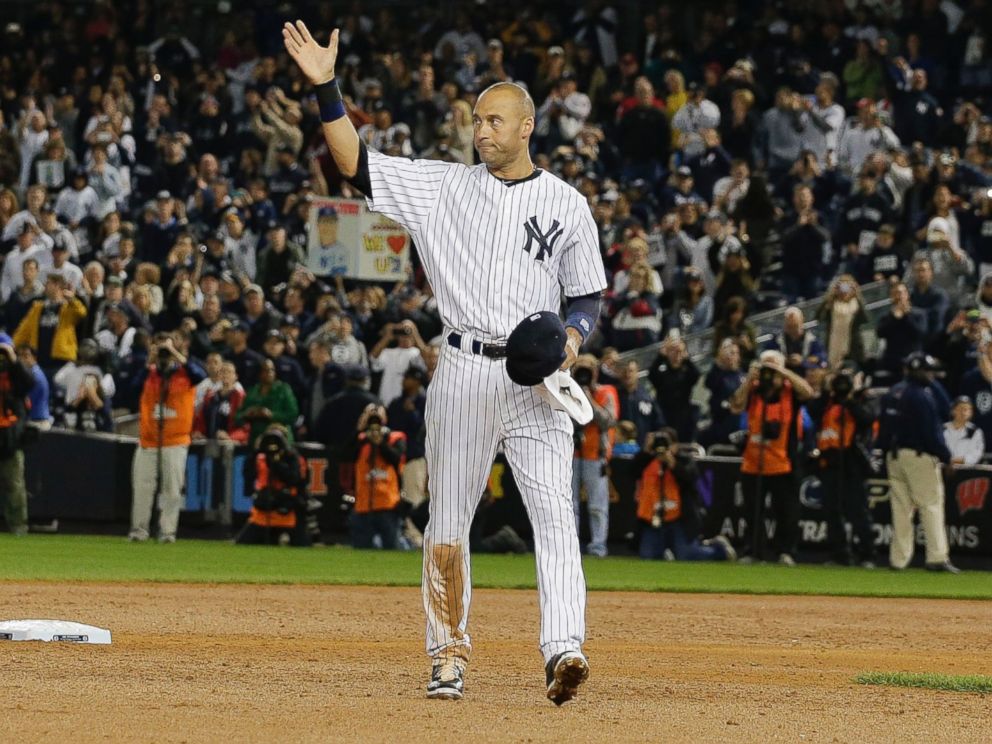
Jeter waves to the fans in his last home game.  AP photo via abcnews.com

Jeter waves to the fans in his last home game. AP photo via abcnews.com

In June of 2013, in the midst of the Mariano Rivera retirement tour, I posted about one-team Hall of Famers and whether they were a dying breed in modern baseball.  I figured that they were, that free agency had ruined the iconic “one team” home-town legend that we grew up knowing (especially in DC, with Cal Ripken Jr. just up the road).

Now that Derek Jeter has wound down own his 2014 retirement tour, and the fact that we’ve seen some recent player movement that has eliminated some HoF candidates from being one-teamers, I thought this was a good topic to pick back up.

Here’s a quick glance at the landscape of one-team Hall of Fame candidates in the game today.

  • Recently Retired One-team Hall of Fame locks: Chipper Jones, Mariano Rivera, Derek Jeter

You have to think each of these three guys is a first ballot Hall of Famer, and each was a one-team guy.

  • Recently retired one-team Hall of Fame candidates: Todd Helton

I’m not sure Helton will make the Hall; if Larry Walker can’t get in because people think his numbers were inflated by Colorado’s home park, then Helton will be in the same boat.  His embarrassing, ridiculous DUI arrest in mid 2013 while driving to get lottery tickets (despite the fact that he has more than $160M in career earnings just in salary alone) certainly won’t help his case.

  • Active HoF one-team promising candidates: Joe Mauer, Justin Verlander, Chase Utley, Jimmy Rollins, Dustin Pedroia, Clayton Kershaw, Felix Hernandez, Andrew McCutchen, Buster Posey, Mike Trout

If Verlander finished out his contract just being a 14-11 guy each year, he’d probably end up with 250 wins to go with his Cy Youngs, MVP, and Rookie awards.  People will remember how good a hitter Mauer is when the time comes.  Yes, I think Utley is on track to be a hall of famer; he’s been hurt for so long that people have forgotten how good he is.  No I don’t think Rollins is a HoFamer right now, but he deserves to be in this category not the “borderline” category.  Now, not all of these guys are guarantees to stick with their current teams (especially McCutchen, who eventually cashes in on a big contract that Pittsburgh cannot afford), but for now this is the list.  Almost all of these guys managed to be excellent players for huge-payroll teams, meaning that they can easily finish their careers without having to move on.

Yeah I put Mike Trout on this list.  Did you know that Trout already has as much career bWAR (28.3) by age 22 that Paul Konerko has for his entire 18-year career??  If Trout flamed out before the age of 30 he’d have the same case for inclusion that Sandy Koufax had, and he’d be in.

I cannot see the likes of Rollins, Utley or Pedroia moving teams at this point; do you view Pedroia as a HoFame candidate?  He’s got more than 40 bWAR by the age of 30, an MVP vote, two rings and a bunch of All-Star and Golden Gloves.

  • Active Borderline HoF one-team guys who need to step it up: David Wright, Evan Longoria, Troy Tulowitzki, Joey Votto, Cole Hamels, Adam Wainwright, Jordan Zimmermann

These are all perennial all-stars, kings of the game, but none of them really screams out “Hall of Famer” right now.  I may be slightly down on these guys (especially Hamels, who might be more than borderline right now).  I’ve thrown Zimmermann in there thanks to his second stellar season in a row and his no-hitter; he’s likely to have another top 5 Cy Young finish in 2014 and with a few more such seasons he may put himself into the conversation.  Of course, the odds are that he departs the Nats after 2015, so he may be off the list anyway.

  • Active One-team players who have taken themselves out of HoF candidacy lately: Ryan Zimmerman, Ryan Braun, Matt Cain, Tim Lincecum, Jered Weaver, Ryan Howard

I used to think Zimmerman was on track, especially after his monster 2009 season.  Now I think he’s destined to be just a middle of the order solid hitter on teams with better hitters surrounding him.  Think Scott Rolen.  Braun may be one of the best players in the NL, but getting caught with PEDs not once but twice will prevent him from ever being enshrined no matter what kind of career he puts together.  The fall-off of the San Francisco duo of pitchers speaks for itself; what the heck happened to Lincecum?  Similarly, Weaver now looks like a guy who peaked during his expected peak years and now is settling into being a slightly better-than-average pitcher.  Fair?  Maybe not, but his ERA+ for 2014 is 104; not exactly Kershaw-territory.

  • Recently traded/free agent one-team HoF promising candidates: Albert Pujols, Ichiro Suzuki, Robinson Cano,  Justin Morneau, David Price, Jon Lester, Prince Fielder

I’m not saying all these guys are HoF locks right now, just that they’re top players who have made big moves recently to break up a string of years with one team.

Conclusion?   I think there’s plenty of one-team candidates out there.  So no, one-team hall-of-famers aren’t going to be a dying breed.  Teams are locking up their marquee players to long-term contracts earlier and earlier, meaning the likelihood of having big-name one-team players present their cases to the voters is that much higher in the modern baseball climate.

Did I miss anyone worth talking about?


2014 playoff team payroll analysis

60 comments

An annual post done at the end of each season.  Here’s 2013’s version.

Money can’t buy me love.  And, in baseball, more and more we’re seeing that Money also can’t buy playoff spots.  Of the ten teams that made the 2014 MLB playoffs, only half of them were among the top 10 spenders in terms of opening day payroll (payroll numbers courtesy of Spotrac.com).  Here’s the full list:

Team SpotRac Opening Day Payroll SpotRac Opening Day Rank Final W/L W/L Rank Playoff Status Payroll/Record Delta
Los Angeles Dodgers $232,899,930 1 94-68 4 NL West -3
New York Yankees $194,460,757 2 84-78 13 -11
Philadelphia Phillies $177,729,966 3 73-89 22 -19
Detroit Tigers $163,285,500 4 90-72 5 AL Central -1
Boston Red Sox $155,912,125 5 71-91 25 -20
San Francisco Giants $148,589,474 6 88-74 8 NL WC -2
Los Angeles Angels $146,647,750 7 98-64 1 AL West 6
Washington Nationals $133,319,078 8 96-66 2 NL East 6
Toronto Blue Jays $133,070,557 9 83-79 14 -5
Texas Rangers $131,657,214 10 67-95 28 -18
St. Louis Cardinals $112,768,000 11 90-72 5 NL Central 6
Atlanta Braves $112,658,731 12 79-83 16 -4
Arizona Diamondbacks $112,298,833 13 64-98 30 -17
Cincinnati Reds $111,694,938 14 76-86 21 -7
Baltimore Orioles $104,045,833 15 96-66 2 AL East 13
Milwaukee Brewers $103,397,967 16 82-80 15 1
New York Mets $96,554,970 17 79-83 16 1
Colorado Rockies $94,079,071 18 66-96 29 -11
Seattle Mariners $91,739,642 19 87-75 11 8
Kansas City Royals $90,837,000 20 89-73 7 AL WC 13
San Diego Padres $90,361,600 21 77-85 18 3
Chicago White Sox $89,792,166 22 73-89 22 0
Chicago Cubs $89,046,356 23 73-89 22 1
Minnesota Twins $85,465,000 24 70-92 26 -2
Cleveland Indians $84,809,134 25 85-77 12 13
Oakland Athletics $80,360,900 26 88-74 8 AL WC 18
Tampa Bay Rays $76,746,916 27 77-85 18 9
Pittsburgh Pirates $71,929,833 28 88-74 8 NL WC 20
Houston Astros $50,032,900 29 70-92 26 3
Miami Marlins $44,136,900 30 77-85 18 12

As you may have already surmised, the “delta” column to the right quickly shows which teams were badly over or under performing their payroll ranks.  Specifically:

  • Boston, Philadelphia, and Texas are three obvious teams that badly underperformed their payroll.  We’re all well aware of Philadelphia’s problems: too many long term contracts given out to guys in their 30s, locking that franchise into transactional inertia for the past few years.  Texas suffered from injury problems that were beyond ridiculous; they ended the season with 10 players on the 60-day D/L, used 15 different starters and no less than *40* pitchers on the year.  Fourty different pitchers!   Texas started the year with $130M payroll and finished with a worse record than their in-state rivals Houston, who have been *not* trying for years.
  • Arizona is a sneaky under performer, but also merits discussion.  Ownership finally has admitted that the brain trust that has been running players out of town for 50 cents on the dollar for years because of “character” or “make-up” issues has, well, not worked (see Justin Upton, Trevor Bauer most famously, but also see the moves that jettisoned Tyler Skaggs, Ian Kennedy and Brandon McCarthy in the same vein).  Gone are former GM Kevin Towers and the on-field managerial staff who has valued “grit” over “capabilities” for years, led by Kirk Gibson.  However, now running the show in Arizona is a newbie GM Dave Stewart whose accomplishments during his brief front-office experience in Toronto were not exactly well thought of by his former staff-member Keith Law.  Nonetheless; they’ll have the #1 overall pick in 2015 thanks to their ineptitude, and a chance to put some depth into a middling farm system.
  • The three teams who have already replaced their GMs this off season (Colorado, Atlanta, Arizona) all were on the under-performing list.  Colorado had the second worst record with a mid-sized payroll but has replaced its odd executive structure from within (which some pundits think will lead to more ineptitude).  Arizona’s odd choices are discussed above.  Atlanta’s GM switch is surprising to me (as i’ve mentioned before) and seems to be the result of an odd power-struggle going on within the Atlanta executive suite.  How do you fire a guy who constructed a team that has gone to the playoffs three out of the last five years on a budget immediately following a season when he lost 3/5ths of his starting rotation to injury before the season began?

How about on the “good” side?

  • Three of your four WC teams are among the smallest payrolls in the game.  Oakland, Pittsburgh and Kansas City rank 26th, 28th and 20th in 2014 payroll.  Also worth mentioning as overachievers are Cleveland (who missed out on the AL wild card by a game), Baltimore (who won 96 games with the 15th ranked payroll) and (of course) Miami (who sported the lowest payroll *by far* but still won 77 games).  Miami in particular seems like it is ready for another boom and sell-off cycle; they have a good team without the services of its best pitcher nearly all year; one or two more acquisitions and/or successful call-ups could have Miami competing for a divisional title again, and soon.
  • Washington Nationals: 8th highest payroll, 2nd best record.  That’s certainly good news.  Our opening day payroll of $133M may have been on the high side to some observers, but the team lived up to its reputation.
  • The Angels bashed their way to the best record in the league on just the 7th highest payroll, ironically, considering the over-spending they’ve been accused of in the past few years.  Don’t worry though; the Angels payroll will begin to have its own issues when Trout’s $30M/year contract years hit.  $30M a year.

What happens next year?

  • The Nats may be holding steady; LaRoche‘s $12M and Soriano‘s $14M salaries go away, but huge increases to Desmond and Zimmermann‘s salaries in 2015, stepped-up increases for Gonzalez and Span (who I’m assuming we’re going to exercise for 2015), and arbitration cases for a number of key and expensive players (Fister, Strasburg, Ramos, Clippard, Storen) will probably  more than make up for the $26M coming off the books.
  • The Phillies, to my constant amusement, already have $127M committed to just nine players for next year.  They’ll continue to be a top payroll, bottom performer for at least two more years.
  • The Yankees, who dipped underneath $200M for 2014 thanks to a gift-wrapped Bud Selig suspension for Alex Rodriguez and an equally generous $14M payoff from the cubs to take Alfonso Soriano off their hands, have $161M committed next year for just 10 players, with five of those players each earning north of $20M a year.  Wow.   Plus, they stand to lose their closer, two of their five SPs (Kuroda and McCarthy), and several position players to either FA or retirement.  They could be a train wreck again next year.


Would you have pulled Fister?

15 comments

Fister shows Tim Hudson what *he* has between his legs.  Photo via wp.com

Fister shows Tim Hudson what *he* has between his legs. Photo via wp.com

It’s only fair to discuss, since we just saw Matt Williams pull another starter in the midst of a shutout and sitting right at 100 pitches.  That’s where Doug Fister stood after completing 7 innings last night before giving way to the conventional 1-2 punch of Clippard-Storen to finish off the Giants in Game 3.

With a 3 run lead and the top of the order due up in the 8th inning, the move to Clippard was a bit less arguable.  Fister was on a shutout, but wasn’t half as dominant as Jordan Zimmermann was the previous night.  Fister had given up 7 base runners in 7 innings: Zimmermann only 4 in 8 2/3rds.  It may smell like hindsight-is-20/20, but I thought this was a good managerial move.

Meanwhile, even if the hits off of Storen were mostly weak (going back to last night too; Posey’s single was on a good outside pitch that he nubbed into center and Sandoval sliced a ball the other way, landing it three feet fair, usually a sign of luck and not malice), are you concerned about going back to him with the game on the line?

Tonight, the Giants get our sole lefty Gio Gonzalez, who didn’t face the Giants this year.  In his sole start against SF last year, he gave up 2 in 7 and took the loss.  The Giants as a team possess a .258/.318/.390 slash line good for a wRC+ of 104 against lefties on the year, slightly better than how they fare against righties.  So we may brace ourselves for a bit more offense than we’ve see so far.  Meanwhile, the Nats get Ryan Vogelsong, who had just a 87 ERA+ for the season and who got absolutely blitzed in the two games he faced the Nats this year (2 starts, 11 1/3 innings, 13 hits and 9 runs).

Smells like a high-scoring, get into the bullpen early kind of game.  Do you like the Nats’ chances?

If we make it to game 5, do you dare to skip Strasburg and go with Zimmermann (who, by the way, would have his normal 4 full days of rest by the time the deciding game rolled around on thurs 10/9/14).


Written by Todd Boss

October 7th, 2014 at 9:17 am

Would you have pulled Zimmermann?

25 comments

This picture is 2 years old; replace it with a red jersey and you would have thought it was last night.  Photo Andrew Harnik/washingtontimes.com

This picture is 2 years old; replace it with a red jersey and you would have thought it was last night. Photo Andrew Harnik/washingtontimes.com

On his 100th pitch of what I certainly thought was going to be a 3-hit shutout masterpiece to resurrect this playoff series for the Nats, Jordan Zimmermann missed on a fastball up to Giants #2 hitter Joe Panik, issuing his first walk and just the fourth base-runner of the night.

I was not entirely shocked to see Matt Williams trot to the mound, but I also wasn’t happy.  As my wife can attest, I uttered the following phrase: “I think he’s going to regret taking him out.”

Sure enough.  Another Drew Storen meltdown, another blown 9th inning lead that led to the team snatching defeat from the jaws of victory.

To be fair; this isn’t entirely about second guessing.  You can quite easily make the argument to put in Storen as thus: Storen has been lights out for the entire year.  The Giant’s most dangerous hitter (Buster Posey) was coming to the plate.  You would rather have Posey going at a fresh Storen than getting his 4th look at Zimmermann (most starters’ third time through the lineup averages inflate wildly, to say nothing of their 4th).  It was righty-versus-righty.

Well, sometimes you can over-think things.  Certainly Tom Boswell feels that way, based on his column this morning.

On the other hand, if the following scenarios had played out, I’m not sure anyone would have argued against the strategy.

  1. After giving up the walk, Williams walks out to talk to Zimmermann, he stays in and gives up the Posey single, *then* Storen comes in and gives up the run-scoring double to Pablo Sandoval.  You’ve yanked the starter after putting two guys on, and you’ve gone to your closer in the highest-leverage situation of his career and he got unlucky.  That’s still harsh on Storen, but more understandable.
  2. After giving up the walk, Williams leaves Zimmermann in like a total old-school manager and watches him subsequently give up the single and then the double, all while his closer warms up in the bullpen.  That would have led to the reverse second-guessing; why leave him in when you’ve got your closer ready to go?

Major league manager; sometimes you just can’t win.  Williams had a quick hook last night.  Don Mattingly had an excruciatingly slow hook two nights ago, letting his ace Clayton Kershaw give up *SIX* hits in the 7th inning of the Dodgers-Cardinals series before relieving him, and then watched his reliever give up a 3-run homer to turn a 6-2 lead into a 7-6 deficit.  That’s “lose your job” kind of decision making (if the Dodger’s don’t get out of the NLDS).

You guys know what I follow and am most interested in; starting pitching.  So you probably know what I would have done; stick with my starter.  But sometimes it isn’t that simple.  So I’m not going to kill Williams for last night.  I do think Storen’s future with this team is in serious doubt; would you throw him again this post-season?  Would you trust him going forward?  Fool me once, shame on you, fool me twice …. and I see Storen in a new uniform next year.

I spent 6+ hours watching that baseball game (practically the first time all summer I have watched a game from start to end).  The longer I watched, that more and more looked like it was going to be the inevitable disappointment, as Yusmiero Petit looked like the second coming of Roger Clemens and the Nats hitters looked like a AAA team at the plate for much of the night.  A deflating end to a long night.  Tanner Roark gave up the game-winning homer on a mistake (he missed over the plate while trying to hit the outside corner and Brandon Belt destroyed it), but the offense had more than their share of walk-off opportunities.

The Nats have a long road ahead; they match up with the Giant’s Ace next, have to win 2 straight on the road just to get it back to a 5th game.  Lets see if they have what Tim Hudson implied they may not have: I can’t say it here in a PG blog but it rhymes with “Walls.”  🙂

Divisional Series Pitching Matchups & Predictions

5 comments

Strasburg's first post-season start is upon us. Photo unk via thewifehatessports.com

Strasburg’s first post-season start is upon us. Photo unk via thewifehatessports.com

Last year I went nearly game-by-game, night-by-night with predictions and analysis of the playoffs.  Can’t do that this year, but I am doing some quickie starter match-up analysis to do some Divisional Series match-up predictions.  The current list of probables is mostly guess work, with the help of MLB.com’s probable pitcher page.  Also using depth charts to make guesses on the probables.

Lets start with the home team.

Washington-San Francisco

Potential Pitching Match-ups:

  1. Game 1: SF@Wash: Jake Peavy vs Stephen Strasburg
  2. Game 2: SF@Wash: Tim Hudson vs Jordan Zimmermann
  3. Game 3: Wash@SF: Doug Fister vs Madison Bumgarner
  4. Game 4: Wash@SF: Gio Gonzalez vs Ryan Vogelsong (if necessary)
  5. Game 5: SF@Wash: Peavy vs Strasburg (if necessary)

The WP’s James Wagner has a nice “how do the Nats fare against Peavy and Hudson” story on 10/2/14 with per-National stats against Peavy and Hudson for the first two games.  And Wagner also just announced the rotation order for the Nats.

Yes, it seems like we’re going to see Strasburg & Zimmermann at home instead of Stras-Gio.

Looking at the match-ups, its easy to say “advantage Washington.”  Strasburg has been hot.  Zimmermann has been even more hot.  We then throw the underrated Fister against Giant’s best starter, then come back with Gio in game 4 on the road, where he’s  going against the erratic Vogelsong.  Hudson has had the Nat’s number for years, but he’s been a train wreck in the 2nd half of 2014.  Peavy has been a bulldog for San Francisco since the trade, but was nearly a 5.00 ERA in the AL.

I’m predicting Washington sweeps the first two at home, loses Bumgarner’s start, then beats SF in game 4 to wrap up the series 3-1.


St. Louis-Los Angeles Dodgers

  1. Game 1: Stl@LAD: Adam Wainwright vs Clayton Kershaw
  2. Game 2: Stl@LAD: Lance Lynn vs Zack Greinke
  3. Game 3: LAD@Stl: Hyun-Jin Ryu vs John Lackey
  4. Game 4: LAD@Stl: Dan Haren vs Shelby Miller (if necessary)
  5. Game 5: Stl@LAD: Wainwright v Kershaw again (if necessary)

St. Louis has already announced that Michael Wacha is *not* in the post-season rotation, which is a huge blow for their chances to out-last the Dodgers.  The game 1 match-up might be the pitching matchup of the post-season, with perennial Cy Young candidate Wainwright going against the likely MVP in Kershaw.  Lynn has gone from being barely a 5th starter to being the #2 guy on St. Louis’ staff, but I don’t know if he’s got enough to get St. Louis the split against Greinke.  Missing Wacha means that St. Louis will have to depend on both Lackey and Miller.  Long odds there.

This series might end up being a sweep frankly; I think LA has the distinct pitching advantage here.  And not having Wacha’s dominance from previous post seasons makes it tough.  Dodgers in a sweep or 3-1 if the Cards can get to either Greinke or Ryu.


Detroit-Baltimore

  1. Game 1: Det@Balt: Max Scherzer vs Chris Tillman
  2. Game 2: Det@Balt: Justin Verlander vs Wei-Yin Chen
  3. Game 3: Balt@Det: Bud Norris vs David Price
  4. Game 4: Balt@Det: Miguel Gonzalez vs Rick Porcello (if necessary)
  5. Game 5: Det@Balt: Tillman-Scherzer (if necessary)

The 96-win Orioles get rewarded with having to face three Cy Young winners in the first three games.  Their rotation mates are underrated (3rd best ERA in the 2nd half) but certainly not in the same class as what Detroit puts up there.  Baltimore’s best case is to get a split at home, then a split away and get to the 5th game.  I don’t see it: I think this series hinges on whether Verlander is Cy Young-Verlander or inexplicably-bad-lately Verlander.  I’m guessing the former; Detroit wins this series in a sweep or perhaps 3-1.


Kansas City-Los Angeles Angels

  1. Game 1: KC@LAA: Jason Vargas vs Jered Weaver
  2. Game 2: KC@LAA: Yordano Ventura vs Matt Shoemaker
  3. Game 3: LAA@KC: C.J. Wilson vs James Shields
  4. Game 4: LAA@KC: Weaver vs Jeremy Guthrie (if necessary)
  5. Game 5: KC@LAA: Shoemaker v Vargas (if necessary)

The Angels are struggling into the playoffs and have announced they’re going with a 3-man rotation.  Weaver’s history of going on 3 days rest is spotty; one decent start and one blow-out.  Meanwhile the Royals burned their #1 guy in the WC game AND threw Ventura enough to have people question Ned Yost‘s sanity (even moreso than they already were with his multiple bunting).  But the Angels hit, and the Royals’ guys won’t be able to completely put them at odds.

I think the 3-man rotation will backfire, and whether the Royals throw Guthrie or Danny Duffy in game 4 won’t make a difference; they’ll hit Weaver at home and push this to a 5th game, where everybody will be on deck.  Angels in 5.


Lets see if these probable pitchers hold up to guesses made on 10/1/14.