Nationals Arm Race

"… the reason you win or lose is darn near always the same – pitching.” — Earl Weaver

LCS Predictions

5 comments

I think Lester has at least two more Game 1 starts in him... photo via Grantland

I think Lester has at least two more Game 1 starts in him… photo via Grantland (RIP)

LDS quick thoughts:

  • ALDS #1: Not surprised at all that Toronto manhandled Texas; look no further than the run differentials for the teams on the year (Texas was only +8, Toronto was +93).  Anyone who thought that was a surprise isn’t following the games closely.  The only surprise for me in that series was the fact that Odor and Bautista didn’t get into another fight.
  • ALDS #2: On the flip side, color me shocked that Cleveland swept Boston.   Cleveland is basically without its two best starters, yet still swept the AL East champ.  What it tells me is that Boston’s starters aren’t nearly as good as they are reported to be, and it showed as both Porcello and Price got bombed.
  • NLDS #1: I never expected a Chicago sweep of SF, not with Bumgarner lurking, and SF did indeed win the Bumgarner start (but without that much help from him in the end; he was in a position to take the loss in Game 3 when he departed).  But nonetheless, Chicago won in four games and get three full days off before the first game of the NLCS with which to reset their rotation.  A luxury that the Nats/Dodgers winner will not get.
  • NLDS #2: Nats/Dodgers came down to game 5, and despite their chances the Nats lose another heartbreaker.

Quick good links: MLB Post-season Schedule. and MLB.com’s Probable Pitchers.


Here’s a preview of the NLDS.  Thanks to wrapping up the NLDS early, Chicago can re-set their rotation but likely goes with the same set of arms.

  • Game 1: 10/15 in Chicago: Kenta Maeda versus Jon Lester
  • Game 2: 10/16 in Chicago: Clayton Kershaw versus Kyle Hendricks … i guess.  Kershaw is in uncharted waters here; a win on 10/11 on 3-days rest then an inning in relief on 10/13 … I guess he’ll be ready to go for a full start on 10/16.
  • Game 3: 10/18 in LA: Jake Arrieta versus Rich Hill
  • Game 4: 10/19 in LA: John Lackey versus Julio Urias

Its definitely saying something about your SP depth when last year’s Cy Young winner is relegated to being your #3 starter in a post-season series, but such is the strength of the Chicago pitching this year.  The Cubs will face a distinctly weakened LA pitching staff, shredded by the stress of the NLDS win over Washington, putting them at a severe dis-advantage.  LA will be incredibly lucky to get a split in Chicago; Lester (a lefty) should dominate the Dodgers in Game 1 and then the Cubs should have their hacks against Kershaw in game 2 (Cubs 7th in the league against lefties in terms of BA).   Then LA has no choice but to throw two more lefty starters in game 3 and 4, again playing more into Chicago’s strengths.  This isn’t like last year when NY’s strong RHP-centric starting pitchers blew away Chicago (who don’t hit Righties as well); this is a tough matchup for LA in general.

Prediction: Chicago in 5 or 6; i’m not sure it even gets back to Chicago for a game 6.


Here’s some thoughts on the ALCS.  Two teams that (rather easily) swept their divisional opponents.  Here’s how the pitching match-ups project (assuming these teams keep the same rotation from the LDS):

  • Game 1: 10/14 in Cleveland: Marco Estrada versus Corey Kluber
  • Game 2: 10/15 in Cleveland: J.A. Happ versus Josh Tomlin
  • Game 3: 10/17 in Toronto:  Trevor Bauer versus Aaron Sanchez
  • Game 4: 10/18 in Toronto: Mike Clevinger versus Marcus Stroman

A couple of interesting Nats connections here: Estrada was our 6th round pick in 2005 out of Long Beach State; he toiled in our system for years before being released and establishing himself as a superb starter elsewhere (first Milwaukee, now Toronto).  Stroman was our 18th round pick in 2009 out of a NY high school; he projected as a shortstop then; he went to Duke, remade himself as a starter, and was Toronto’s 1st rounder 3 years later.

The Cleveland slate of starters keeps changing;  Kluber is a Cy Young candidate; he will lead off for Cleveland instead of Bauer (and, as of this 10/14/16 note, Bauer is getting pushed further due to a “Drone” injury to his finger).  Meanwhile, Sanchez is probably Toronto’s best starter and Stroman was their opening day starter; I’d think both guys would get the ball before Happ.  I may have to re-write this section before all is said and done.  My gut feeling is that Cleveland’s superior record was attained thanks to a weaker division and the strong work of two starters (Danny Salazar and Carlos Carrasco) who are no longer there, and the step-down to Tomlin/Clevinger will cost them in the end.   Meanwhile Toronto emerged from an AL East with four near-playoff quality teams and is battle tested.  They had no problems going on the road to Texas and won’t either in the hitters park that is Cleveland.  Toronto gets a split in Cleveland and then batters Cleveland’s #5 starters in Toronto.  From there, its about what Kluber can do; can he get the series back to Cleveland?  It could be a quick one.

Prediction: Toronto in 5.


Lastly, i’m stealing this thunder from Craig Calcaterra at Hardball Talk/NBCsports.com, but this final four will award a winner who has been waiting an awful long time to win a world Series.

Here’s the final four teams:

  • Chicago Cubs: Last WS appearance was way back in 1945, and of course their last WS win was 1908.
  • Dodgers: Last WS appearance and win in 1988 … in case you forgot, that series featured the epic Kirk Gibson walk-off homer in game 1.
  • Toronto: Last WS appearance and win was the awesome Joe Carter walk-off in 1993, the year before divisional play took over.
  • Cleveland: Last WS appearance was in 1997 (but really their big missed opportunity was losing in 1995 as a 100-44 win team), last WS win was of course in 1948.

Lots of history at stake here; imagine a Cleveland-Chicago series.  For the historians that’d be the best.  I think the best series quality wise would be Chicago-Toronto.
1000th Post at NationalsArmRace

4 comments

Happy 1000th post!

With this post, if I trust my WordPress engine to tell me the right number of published articles, we have hit 1000 posts in the history of this blog.

Here’s some useless information for you about the first 1000 posts:

Posts by year:

  • 2010: (starting in June): 2+11+30+8+6+13+12 = 82 for the year
  • 2011: 2+20+25+23+23+20+17+13+26+18+21+19 = 227 for the year
  • 2012: 13+7+10+8+5+7+4+5+15+21+20+17 = 132 for the year
  • 2013: 21+15+22+22+20+26+18+20+13+31+10+19 = 237 for the year
  • 2014: 10+10+9+14+13+14+12+4+8+16+12+8 = 130 for the year
  • 2015: 8+5+9+13+11+12+8+7+4+15+13+10=115 for the year
  • 2016: 8+8+8+9+6+11+7+4+9+7=77 for 2016, including this post.  We may hit 100 in the next 3 months with all the off-season stuff we generally do.

I really got into the blog in 2011, and the post count was way up for rotation reviews of both major and minor leagues.  A new job curtailed my time immensely in mid 2012, though by the end of the season I had geared back up.  I was pretty regular with a post about 2 of every 3 days in 2013, with a whole slew of short posts in October 2013 to preview pitching match-ups for playoff games.  2014 scaled off a bit… a trend continuing into 2015 and 2016.

Milestone Posts

Random Blog milestones

  • 17th post: 8/9/10 “2011 Rotation Competition” First post where I started the formatting theme of bolding a proper name the first time it appears in a post.  I started this to highlight those players who I was specifically talking about.
  • 55th post: 10/20/10: “Contract Value for FA Starting Pitchers: The Cliff Lee Lesson to-be” First post where I started incorporating pictures into the blog posts.  I got the idea from Mark Zuckerman‘s blog, where he always uses a single picture at the top of each blog post.  Initially I used images.google.com to find the images and then attempt to give proper photo credit.  Coincidentally, at some point in the past I did a ton of research on the use of photos on the internet and had a discussion on the subject (in the comments section of this May 2011 post).  Now I generally use pictures from wiki and/or flickr where the author has granted free use.
  • 221st post:  8/25/11, “My Answers to Boswell’s Chat Questions 8/22/11 edition.”  This was the earliest post that I regularly started using “tags” for player names.  I started doing this after turning on the “tag cloud” along the right hand side.  The tags also serve as a nice searching method for a particular player.  (I’ve since gone through some effort to “tag” the posts prior to this one but am not entirely caught up to the history of the blog).
  • 243rd post: 9/25/11, “New Theme!”  I changed the look and feel of the blog from an out-of-the-box WordPress theme to a custom theme.  I was doing this primarily to figure out a way to get the blog slogan (the Earl Weaver quote at the top) to be more visible.
  • 1/12/12: Posted a missive about “What are non-MLB associated baseball league talent equivalents?” which suddenly got picked up by a major media outlet and I started getting hits from all over the place.  I still go back and update this post to this day.
  • 6/13/12: My first post covering the College World Series: College World Series Preview/Regionals Recap.  I now cover the College season at least starting with the field of 64 and sometimes (time allowing) with previews of local college teams.
  • 3/28/13: My first post covering local prep players: Local HS players to keep an eye on this Spring.  I now try to cover any halfway decent player anywhere in DC, MD or VA in its entirety.
  • 5/23/13: My first post covering the local High school tournaments: Local Prep Baseball: Oakton & Madison win District titles; Regional tourney set.  I now cover all the local high school baseball tournaments in a series of posts throughout May and June.
  • 6/11/13: The first post really covering college draftees with local ties, to go along with the local prep players.  MLB Draft Results for Players with Local Ties.  Now in 2016, i’ve got a running history of both prep and college players and can track those prep players who went to school in 2013 who are now draft eligible, so future posts are that much easier to write.
  • Oct 2015: a series of posts reviewing the 2015 Season Statistical Review of all Nats 2015 draft picks and going back to the 2011 class.  I like this series and look forward to doing it again this year.

I guess I havn’t really done too many new features lately.

Count of posts by category: (note that these will add up to greater than 1000 since some posts get multiple categories):

  • 30 for 30: 9 posts, mostly older.  I used to try to review ESPN’s “30 for 30” shows when they aired but lost track.  I still have several in draft form but they’re several years old and not worth posting at this point.
  • Awards: 22 posts.  These are generally predictions for BBWAA awards and some in-depth analysis of fielding awards that I try to do every year.
  • Baseball in General: 218 posts; these are usually the tag that I give to non-Nats, non-other issue.
  • Chat/Mailbag Responses: 100: I really like doing this and keep forgetting that Tom Boswell does monday chats.  They’re generally arguable questions about the kinds of things we’re always talking about anyways; moves, trades, what should we do with so-and-so, etc.
  • College/CWS: 32 posts; just a few each year covering the big CWS tournament.
  • Draft: 76 posts, surprised its not more.
  • Fantasy: 12 posts, which works out to almost exactly two a  year (one when I draft the team, one where I tell you how badly I did).
  • Hall of Fame: 37 posts, which are mostly older because I have gotten quite sick of arguing about Hall of Fame voting.
  • Local Baseball: 54 posts, mostly about High School tourney coverage, local draft candidates and even some Little League and local adult area baseball thrown in.
  • Majors Pitching: 317 posts; lots of discussion about the state of the pitching.
  • Minor League Pitching: 133 posts.
  • Minor League Rotation Reviews: 29 posts; used to be more frequent, now just an annual check-in.
  • Nats in General: 356 posts, the most frequently used tag.
  • Nats rotation Reviews: 30 posts; as with the Minor League rotation reviews, these were sacrificed to the gods of time.
  • Non-Baseball; just 33 posts, and only one since Nov 2014.  I guess I’m very focused on baseball here 🙂
  • Post-Season: 54 posts about, well, post-season.  Predictions, reviews of Nats games, etc.
  • Rule-5: 30 posts, since we talk about it over and over every year.  Ironically some pundits like Keith Law th ink the rule-5 draft is useless since such marginal prospects now reside at the ends of most 40-man roster teams, but I still think they’re useful precisely because those edge cases are so compelling to discuss.
  • Weekly News: 22 posts, an older feature where I used to cut and paste cool links I had read on a week to week basis.  That’s crazy to think about now; i just scan through everything these days.
  • World Baseball Classic: just 12 posts; but with another one coming up soon, we’ll revisit.  I cannot wait to see Cuba’s team this year.

Top 10 player names mentioned (since I started typing them in as Tags; this is definitely weighted more towards the the past season than earlier, as catching up hundreds of posts with updated tags is not an effort worth finishing frankly)

  1. Stephen Strasburg: 248 mentions; lost of angst about him over the years.
  2. Jordan Zimmermann: 193
  3. Mike Rizzo: 185
  4. Bryce Harper: 184
  5. Ross Detwiler: 167; really?  How is it that he’s the 5th most mentioned player in this blog??
  6. Gio Gonzalez: 163
  7. Danny Espinosa: 139
  8. Ryan Zimmerman: 138
  9. Drew Storen: 138
  10. Jayson Werth: 131

Items I wish I still had time to do:

  • The rotational reviews, especially in the minor leagues.  I maintained these for the first half of 2011, but a vacation in July of 2011 left me a couple weeks behind and I just never could catch up.  I didn’t even attempt to try these for 2012 or going forward.  Its unfortunate; the whole reason I started this blog was to study and be up on the minor league pitching, especially the starters.  I feel, and still feel, that developing quality starting pitching is the most important aspect of the farm system, and that a successful pre-arbitration pitcher is the most valuable commodity in the sport.
  • Nightly Reviews of MLB pitching performances; this requires the time to sit down each night and watch the games … I love baseball, but I just cannot commit that kind of time, especially with a young kid and a busy job.
  • Actually going to eyeball these players in the minor leagues and not just rely on stat lines.  Again, time and life priorities.
  • Honestly, I think I could do a better job “advertising” this blog.  Should I be pushing the

#1 item I wish I could incorporate: I’d love to do interviews of pitching coaches and pitchers at the various levels to talk about pitching strategy, mechanics and whatnot.  I briefly pursued getting a Nats press pass but got the impression that the team is less inclined to hand out press passes to blogs such as mine (which provide a heavy amount of opinion and commentary) versus blogs like Federal Baseball and DC Pro Sports Report (which act more like beat reporters and focus on doing pre-game and post-game reports).  Fair enough.

#1 technical issue I would like to change: I installed hit counters to try to gauge readership, but I still cannot reliably answer the question, “how many people read your blog?”  I have a plug-in installed to the WordPress engine called “Counterize” that gives me some sense of hits, but there’s so much garbage/hacker trolling going on that I cannot tell how many legitimate readers I have.


Post #1001 is coming soon after this one: i’m uncharacteristically going to do three posts in quick succession because I want to get the LCS preview/prediction post out before the LCS actually starts.  🙂  Lets you guys think I’m making predictions after the series starts…

Game 5 Post-Mortem …yet again

30 comments

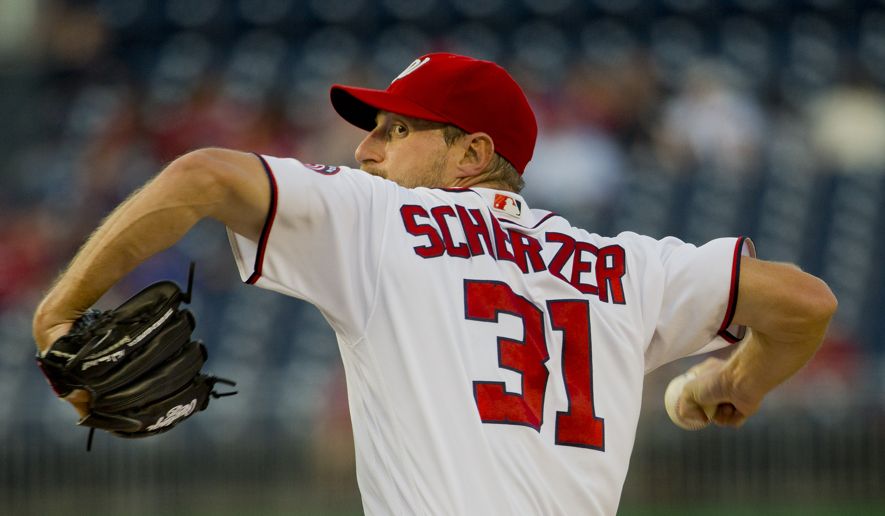
Scherzer did his part ... the bullpen didn't. Photo via washtimes.com

Scherzer did his part … the bullpen didn’t. Photo via washtimes.com

Another Division title, another gut-wrenching loss.  4-3 at the hands of LA to drop another game 5 at home and get a new candidate for “worst loss ever” for this franchise.

After 4 hours and 32 minutes, the Nats go home.  At a macro level, perhaps this is always where we were going to end up given the losses of two key players and lingering injuries that the team dealt with late in the season.  But this was clearly a missed opportunity.  Max Scherzer did his part, starting the game by facing the minimum first 11 guys and pitching six scoreless.  Hat off to Joc Pederson: that opposite field homer was a good swing on a bad but not awful pitch.  From there the bullpen that had been so good in the first four games cratered badly, and in his haste to bring in the next guy to try to put out the fire, Dusty Baker double-switched his way into replacing guys who he really could have used at the end.

In the aftermath, you always tend to look for moments of 2nd guessing.  For me, I was texting back and forth with a couple of friends and so I have a nice little history of question marks.

  • I think Baker took out Scherzer too soon; he was only on 99 pitches; yes he had that epic 13-pitch at-bat against series MVP Justin Turner … but he was only on 99 pitches!  He was on normal rest, is a work-horse, and clearly could have continued.  He had 7-8-9 coming up; not exactly murder’s row.  Did Baker really think Grandal (series BA: .125) or Toles (series BA: .222) was going to beat Scherzer there?  Or a cold pinch hitter?
  • Would a proper center-fielder had a better shot at the Justin Turner triple??   Did Trea Turner take a bad route there?  And, should he have held up and tried to play the carom instead of just running into the wall?  Where the f*ck was Jayson Werth backing up the play?  Would it have made a difference if that had been a double instead of a triple?  Maybe; the not exactly fleet-of-foot Carlos Ruiz scored from first easily on that play; maybe he’s held at third or there’s a play at the plate for that 4th Dodger run.  Because the next batter grounded out weakly.
  • Every Nats bench guy got an at-bat in the 7th, 8th or 9th.  Robinson, Taylor, Drew, Heisey, Severino and Difo.  Honestly; they’re bench guys for a reason; I understand the logic of trying to push back the pitcher’s spot with all the double-switches … but when Wilmer f*cking Difo is at the plate instead of one of your most solid hitters all year (Anthony Rendon) to end the game, I think you’ve made too many moves.  Yes, Chris Heisey‘s homer was amazing and had me screaming late in the night, but you should go down with the guys who got you there, not a guy who was in AA most of the year.
  • Speaking of Rendon; It is fair to say he was probably the “goat” of the Nats offense.  He went just 3-20 in the series and left an astounding 22 runners on base in five games (*seven* just yesterday).  For as good as he was in the 2012 NLDS and as solid as he was this season, he came up short, badly, in this series.  TWENTY TWO runners left on base from your #5 hitter; that’s really why this team lost.   He had a homer and four RBIs in five games and, to be fair, his homer in game 3 was huge.  But in the elimination games?  Not one clutch hit from one of their most important hitters; would Wilson Ramos (who batted 5th the most frequently of any lineup position this year) have made the difference here?  Who knows.
  • Should Baker have gone to Melancon early (as his counterpart did with his closer) instead of his cavalcade of relievers?  Hard to criticize him there; the guys who gave up hits had all been rock solid in the first four games.  Was this just the workload catching up to them?   Four straight relievers failed, giving up a walk, a single, an RBI-single and a crushed triple.  Just bad timing for all of them to fail in a row.

(Reading the comments, i forgot about the frigging Julio Urias balk move!  That was total BS.  The Nats have a real beef there and that has to be cleaned up next year.  Again, not sure what that would have meant in the larger game outcome since it was man-on-1st with two outs but was a very poor call.  I am less critical of the decision to send Werth home … who is up next?  Espinosa and Lobaton?  That was your best shot to get another run and you’re testing the whole relay system; two good throws had to be made under pressure and you often see those throws up the line or short-hopping the catcher; all credit to Corey Seager there for taking his time and making the play).

All that being said … in the bottom of the 9th,  you couldn’t ask for much of a better opportunity to tie it up.  Two guys on with one out and your team MVP at the plate.   The run expectancy of guys on 1st and 2nd with one out is .884 and the “chance” in percentage terms that a run scores at all is 40.6% … across all of baseball over the last 5 years irrespective of who was pitching.  Not when you’ve gotten those runs against one of the best closers in the game (even if Kenley Jansen was totally gassed), nor when the best pitcher in the game  Clayton Kershaw is riding in on his white horse on one day’s rest to get the save.  That being said, I thought Daniel Murphy would have gotten a better bat on the ball.

I dunno.  I don’t think there was some egregious managing error (despite my hindsight-is-20/20 points above).   All these moves were defensible in the moment, and at the death they had two guys on with their best hitter at the plate.  Murphy popped up weakly and that was it.  Better luck next year.


Game 5; by hook or by crook, we got here.

31 comments

Maybe they'll bring back out chocolate if Scherzer wins game 5. Photo via thesportsquotient.com

Maybe they’ll bring back out chocolate if Scherzer wins game 5. Photo via thesportsquotient.com

I didn’t really do a pre-NLDS prediction piece for this series.  A combination of work and life events conspired against me.

But if you had asked me what I thought a week ago about the Nats-Dodgers NLDS, I would have said the series would have basically gone like this:

  • Nats lose to Kershaw in Game 1 because he’s Kershaw
  • Nats rebound in Game 2 and handle the veteran Hill.
  • Nats throw their sole lefty who dominates the lefty-feeble Dodgers line-up
  • Dodgers then panic down 2-1 and throw Kershaw on short rest, who dominates us again.
  • … leading to the inevitable Game 5 back home.

Now … the above description isn’t exactly how these games have gone, but the end result has been the same.  The Nats hit Kershaw in Game 1 … but the Dodgers hit Scherzer harder; that was no 2-1 squeaker.  Game 2 was salvaged when perhaps the weakest hitter on the roster clubbed a 3-run homer into a 25mph wind, energizing the stadium and the team to a degree i’ve never felt before.  Gonzalez certainly did not “shut down” the Dodgers in Game 3, but the Nats bats came alive at the end to turn it into a 4hour 12min laugher.  In game 4 Kershaw did indeed go on short rest, and up until the 7th looked pretty dominant, but in a recurring theme for him in the post-season, he went one inning too long, loaded the bases in the 7th and was charged with a total of 5 runs on the night despite 11 strikeouts.  Nonetheless, the Nats bullpen (which it should be noted did not give up a single run in the first three games) finally faltered, with Treinen coughing up the game winner in the bottom of the 8th to long-time Nats nemesis Chase Utley.

So here we are.  Game 5 tomorrow 10/13/16.  Max Scherzer on full rest versus Rich Hill on three days rest thanks to the Saturday cancellation.   Hill, 37-yr old veteran journeyman with a career resurgence, has thrown precisely one game on 3 days rest in his career: he gave up 5 runs on 3 hits and 4 walks in just 3IP that day.   No offense to  Hill, but lets hope for that line again and for the Nats to get into the Dodgers incredibly taxed bullpen.

Meanwhile, Scherzer has to figure out a way to keep the ball in the park.  And he probably needs to go 6 or 7 innings to help a bullpen that has now thrown 17 2/3rds innings in four games.

How about the Offense for this team so far?   Hitting .259 as a team despite going against Kershaw twice and a bunch of one-out relievers most of the rest of the time.   The veterans have really come to play: Murphy, Zimmerman and Werth  all stepping up and crushing the ball.  Youngster Turner at the top hitting .353 … but 10 of his 11 outs have been punchouts.  Harper is just 3-14 with 4 walks … but to be fair, 13 of those plate appearances have come against lefties and 3 more have come against LA closer Jansen … not exactly the easiest series for Harper.

Who has not acquitted themselves at the plate?  Espinosa; 1-11 with 8 punch outs and being outright replaced in game 3.  I read elsewhere, this may change my “next year opinion” on Espinosa; he has looked beyond helpless at the plate despite being a switch hitter.  Remind me of this sentence this coming off-season if I start making arguments for keeping him and keeping Turner in center.   Rendon has had a “loud” 3-16 series; loud in that he has 4 RBI and a monster homer.  Severino is 1-9 but has been putting the ball in play and has not looked overmatched.

Can’t wait for game 5.

Quick NLDS Game 1 thoughts

18 comments

Rendon came to play. Photo Nats Official via espn.com

Rendon came to play. Photo Nats Official via espn.com

Nats lose 4-3 … but showed some promise in the process.

The offense battered Clayton Kershaw for 8 hits in 5 innings but only parlayed them into 3 runs thanks to some untimely strikeouts.  Kershaw to me really struggled; pitch count way up, was missing locations badly, couldn’t throw his slider at all.   Max Scherzer seemed similarly off; the difference in the game turned out to be more of Scherzer’s mistakes ending up over the fence while Kershaw’s mistakes ended up as line drives through the infield.  I guess maybe that’s as good of a summary of the talent difference between these two guys as any.

You had to hand it to the nats hitters: Harper had good ABs, Turner had a clutch sac-fly in a key RBI situation, Zimmerman did not look overmatched at all.  Rendon continued to look like the under-rated team MVP candidate that he has looked like all year.  Severino; man have we already found our 2016 starting catcher?

Espinosa?  Yeah not so much; 0-3 with 3 strikeouts and 6 runners left on base.  That’s your game right there; not one clutch hit, not even one ball put in play from Espinosa.

I feel a lot better about the team’s chances in Game 2; when they went down 4-0 early they didn’t hang their heads; they fought back and were one clutch hit away from tying the game on numerous occasions.   As a team they were 1-10 with RISP; a common refrain for “clutchness” that we’ve talked about often.  But in reality, that’s just bad luck; if the team BA is nearly .300 then a 1-10 line is just bad timing.

If it doesn’t rain that is …. I will be at the game, hopefully.

PS: fun local connection for me personally; the loogy that hte Dodgers brought in to face Harper in the 6th?  Yeah that was Grant Dayton.  Dayton played for my dad’s Clark Griffith team 8-9 years ago and we brought him out to  play for my adult MSBL team a few times.   He even pitched for us (though he wasn’t throwing frigging 93 like he was last night back then).  Great kid, really nice guy and really cool to see him finally break through this year and reach the majors after a very long minor league career.  Too bad he did his job too well and shut down Harper 🙂


Nats projected Starting lineup versus Kershaw: not half bad

29 comments

Kershaw is a daunting match-up. Photo via wiki.

Kershaw is a daunting match-up. Photo via wiki.

I was emailing with infrequent commenter “Old Man” (aka, my Dad) about the upcoming game one match-up and I said something along the lines of, “Well the Nats are in trouble because their two most important hitters are both hurt and lefty.”

Well, why go by biased observations when you can go to the stats?  Here’s the career stat lines for each of our projected game 1 starters against Clayton Kershaw:

  • Harper: 1 for 15; ok, that’s not good.
  • Murphy: 6 for 19 with 2 homers; not bad, .316 avg, .947 OPS
  • Werth: 10 for 35 for a .286/.359/.457 line.  not bad again
  • Rendon: 5 for 16; .313 but they are all singles; no power.
  • Espinosa: 1 for 17; no surprise there
  • Zimmerman: 7 for 22 but with no power for .318
  • Lobaton; 0 for 8; again, no surprise.
  • Turner: never faced Kershaw but his career lefty split shows consistent average versus his Righty split but significantly less power; 13 of his 14 career homers have come against righties.
So honestly; those aren’t half bad numbers against Kershaw all in all.  Murphy, Werth, Rendon and Zimmerman all about .300 against him.  Maybe you work your lineup differently as a result; maybe drop Harper down a bit and stack the top of the order with those who have had success:
  • Turner, Werth, Rendon, Murphy, Zimmerman, Harper, Espinosa, Lobaton, Scherzer.
Also keep in mind: Kershaw has a 4.59 post season ERA.  Its the playoffs: anything can happen.  Last year for example he gave up 3 runs in 6 2/3rds in game one of the NLDS to take the loss then completely shut down the Mets in Game 4 on three days rest for the win … but the Mets did enough against the Dodger’s big two to take the series and move on.
Yeah its a tough match-up for the Nats, or anyone.  Kershaw shut them down in LA in June, giving up 1 run in 7.  Scherzer somehow missed the Dodgers in both their season series this year; funny how nobody points that fact out when they talk about how the Dodgers beat the Nats 5 of 6 this year.  The Nats used these 6 pitchers against the Dodgers: Petit, Roark, Ross in LA in June, then Lopez, Gonzalez and Strasburg in DC.   The one win?  Surprise; it was with lefty Gonzalez on the mound.  I won’t make too much of this, since the Dodgers used 15 different starters this year and its frankly amazing they still won 91 games.  That and the fact that the Nats missed their #3 Kenta Maeda in both series.
Still, I like our chances with those career match-up stats.

Wild Card Preview and Prediction

15 comments

Snydergaard is the X-factor in the NL Wild Card. Photo tucson.com

Snydergaard is the X-factor in the NL Wild Card. Photo tucson.com

The Nats don’t have to worry about who wins the Wild Card this year, and the Cubs will get a weakened opponent either way.  So lets preview the Wild Card match-ups mostly from a SP stand point and make some knee-jerk predictions.

AL Wild Card: Baltimore @ Toronto: Probably Chris Tillman vs Marcus Stroman

These two AL East foes face off for the 20th and last time this year: Toronto won the season series 10-9 but badly out scored Baltimore while doing it.  Tillman is hittable; the fact that the Orioles are in the playoffs at all with their rotation is a miracle.   Tillman faced Toronto four times; in 22 1/3 innings he gave up 10 earned runs, and he controlled them in the game’s final season.   Stroman also faced his potential opponent four times this year and his numbers are not nearly as good; he got lit up for 7 runs in mid-June, and his start against Toronto last weekend was anything but dominant (4 runs on 9 hits in 7 innings).   The “intangibles” factor doesn’t bode well for Toronto; word has it their clubhouse has lost its focus and professionalism and they may spin out of control at the worst time.  If these teams played 10 times they go 5-5, but I give Baltimore the edge here.

Prediction: Baltimore wins a game that gets away from Toronto to earn a match up with Texas.


NL Wild Card: San Francisco @ NY Mets.  Madison Bumgarner vs Noah Snydergaard.

Does it get any better than this in terms of a pitching match-up?  The Mets took the season Series 4-3 with a +4 run differential; very even.  Despite that, I like the Mets in this one; they’ve been hot (not that that matters) and the Giants limped into the playoffs.  Bumgarner has two starts against the Mets this year: in New  York he shut them down early, but then in SF later on he got hit.  Snydergaard has also faced SF twice this year; in New York in early May he too got lit up by the Giants, but then allowed just 2 hits in 8 innings against them in August in SF.  Plus, thanks to an early clinch the Mets didn’t have to use Snydergaard in their weekend series, so he’ll have more than a week’s rest heading into the game .. which is good because he’s thrown a ton of innings and his splits with a large amount of rest are crazy good; 1.92 ERA.

Prediction: Mets win a one run game and advance to face the Cubs.


Written by Todd Boss

October 4th, 2016 at 1:01 pm

Nats 2016 Minor League Players of the year; do they matter?

13 comments

Lopez 2016 Nats minor league pitcher of the year; will it matter? Photo via wp.com/Mitchell Layton getty images

Lopez 2016 Nats minor league pitcher of the year; will it matter? Photo via wp.com/Mitchell Layton getty images

The Nats recently announced their 2016 Minor League Players of the Year, and then recognized them along with GCL MVP Juan Soto over the weekend.

Rafael Bautista, Reynaldo Lopez, Jose Marmolejos-Diaz and Juan Soto, who all hail from the Dominican Republic and represent the best evidence of the Nats long awaited “rebirth” in that market, were all recognized.  And that’s great.

But how have the Nats Minor League Players of the Year fared in terms of eventual career accomplishment?  Is this achievement a good precursor for MLB success?  Lets dig deeper.

Here’s a list of the Nats declared prospects of the year (i’ve gone back beyond the Nats time in DC since prospects lag in terms of their arrival), along with some quick commentary on where they’ve gone:

  • 2016: Jose Marmelejos-Diaz, Reynaldo Lopez: Lopez had some impact at the MLB level in his first shot, may factor into the post-season bullpen, but is looking at AAA next year unless an injury or trade occurs.  Marmeloejos-Diaz is still too young to pass judgement.  Verdict: too early to tell obviously; Is Lopez going to be an effective mid-rotation starter or (as some pundits believe) is he going to end up being more effective in the bullpen?
  • 2015: Jose Marmelejos-Diaz, Austin Voth: Voth had a solid AAA season in 2016, but was (somewhat surprisingly) not called up on 9/1 despite facing Rule-5 protection this coming off-season.  Has he peaked?  Was he left off of the 40-man for strategic (i.e. trade bait) purposes?   He’s clearly behind three other AAA guys on the depth chart right now with a full MLB roster; what does his future hold?  Verdict: too early but concerns about Voth’s role going forward.
  • 2014: Steven Souza, Lucas Giolito: Souza famously netted the team both Trea Turner and Joe Ross in trade, but has been an injury prone 1-win/year player for Tampa Bay ever since (total bWAR for Tampa: 1.9 in two seasons).  Giolito’s jury is still out; despite his lofty prospect status he struggled on the big stage in 2016 amid reports of mechanical tweaks and struggles.  Verdict: early on Giolito, Souza might be who he is.
  • 2013: Billy Burns, Taylor Jordan: Burns netted the team Jerry Blevins in trade and then had one decent season with Oakland (a 2.8 bWAR season in 2015 that may have had the Nats with trader’s remorse.  However, he struggled badly in 2016, was traded, was sent to the minors, and may not be much more than a defensive outfield bench player.  Jordan had 9 promising starts in 2013, then struggled in spot starts in 2014, blew out his elbow, came back, struggled again in 2015 spot starts, blew out his elbow again this year and was summarily released.  He may struggle to find a team willing to give a 4-A pitcher on his third elbow a shot going forward.  Verdict: one may be done, one may be a 4th outfielder at best.
  • 2012: Nathan Karns, Matt Skole: Karns was a lower-round draft pick with an injury history the Nats took a chance on and he shot through the system, taking just a season and a half to rise from low-A.  The team capitalized on his promise and flipped him for three role players (Jose LobatonFelipe Rivero and Drew Vettleson).  Since, Karns got flipped to Seattle, struggled early and has missed most of 2016 with a back strain.  Skole is a polarizing figure amongst readers here; to me he is a 27yr old AAA power-only hitter who has had three consecutive NRI to spring training (so its not as if the MLB squad doesn’t know who he is).  He’s at the end of his string with the Nats and likely moves elsewhere as a MLFA for next year.  I wish he turned out better; after his fantastic 2012 season an unfortunate injury cost him all of 2013 and he really seems like he’s been playing catchup since.  Verdict: Karns may turn out to be more than he’s shown, but Skole is a 6-year MLFA.
  • 2011: Steve Lombardozzi, Brad Peacock: Lombardozzi made the majors as a 19th round pick (quite the rarity; it usually only happens 2-3 times per draft class), got traded in the Doug Fister deal, got traded again, then released, then picked up by Baltimore, then released again and found himself playing indy ball after getting cut by the Chicago White Sox this past spring.  The Nats picked him up for their AAA team but he possesses a negative bWAR career value as a backup utility player.  Peacock (not unlike Karns) had a brief debut with the Nats before getting used in trade to acquire others (in his case, going to Oakland as part of the Gio Gonzalez deal).  Oakland flipped him to Houston, where he struggled as a starter in 2014 and has been basically a 4-A taxi squad member between their AAA team and their bullpen.  Verdict: both guys ended up better AAA players than MLB players.
  • 2010: Tyler Moore, Tommy Milone: Moore matriculated to the majors and had a fantastic 2012 off the bench (123 OPS+) … and then never matched it.  The Nats traded him for Nate Freiman in a “moving the deck chairs” trade with Atlanta, and Moore spent most of 2016 off a 40-man and on the D/L.  Milone, like Karns and Peacock after him, had a brief and exciting debut with the MLB club before being used as trade fodder for others (he was also in the Gonzalez trade).  He excelled in Oakland’s big park and was then flipped for Sam Fuld to the Twins.  He’s been less successful with Minnesota, getting dumped out of the rotation in 2016 and posting a 5+ ERA this year for baseball’s worst team.  He may be a non-tender candidate and could be on the move again this winter.  Verdict: At best a 4-A slugger and a 6th starter.
  • 2009: Derek Norris, Brad Meyers: Is it interesting that three Nats Minor league players of the year were all included in the same trade?  Norris was a centerpiece of the Gonzalez deal while still relatively a young minor leaguer; he peaked as an All Star in 2014 for Oakland before getting moved to San Diego in the Jesse Hahn deal.  He’s struggled in San Diego, hitting just .186 this year.  Meyers’ career is an injury plagued shame; after a fantastic 2009 he started 2010 just as well before getting hurt.  He returned and had a solid 2011 in AA and AAA but was taken in Rule5 by the Yankees.  He missed basically all of 2012 with injury and was returned as damaged goods, an injury that cost him all of 2013.  By the time he made it back in 2014, he just had nothing left; after 6 starts in Harrisburg the team released him.  Verdict: At least a backup catcher in the majors and an asterick due to injury.
  • 2008: Leonard Davis, Jordan Zimmermann: Davis was named the hitter of the year on the back of a solid year at Potomac … when he was 24 and a year and a half older than the league.  He kept climbing the ranks, hit .250 in Syracuse in 2011 but never got a shot in the majors.  He bounced around indy ball for a copule of years but retired in 2013.   Zimmermann is what we all know him to be: a 9-figure starter and easily the most successful player on this list .. which, not to bury the lede this early, is kind of the point of this article.  Verdict: a AA washout and a #2 starter in the majors.
  • 2007: Justin Maxwell, John Lannan: Maxwell toiled for years as a 4th OF for the Nats in their dark times before getting flipped for a middle reliever in Adam Olbrychowski.  That started his itinerant career, playing for Houston, Kansas City, San Francisco and most recently Boston’s AAA team.  He has now decamped for Korea.  For his career he has a bWAR figure of 2.9, 2.4 of which came in his best season in Houston.  Lannan famously went from Nats opening day starter and Ace during the “down years” to AAA insurance policy in 2012.  After getting mercifully non-tendered in 2012, he played for two different NL East rivals in 2013-2014, and has pitched full AAA seasons in the PCL the last two years.  7.1 career bWAR, most of which was earned during his first two full seasons starting for the awful 2008 and 2009 Nats.  Verdict: two MLB players, both of which had limited impact in their careers.
  • 2006: Kory Casto, Zech Zinicola: Casto was a long-time Nats farmhand favorite, progressing slowly one level a  year and always producing.  He finally made the majors in 2007 but struggled in parts of two seasons and was outrighted off the 40-man after 2009.  He elected FA, bounced around two organizations in 2010 before retiring in July of that  year.  Zincola won the Nats minor league pitcher of the year in a  year when he threw just 32 innings as a closer, an indication of how bad our farm system was in the early years.  He played for years in the Nats system, never making the majors, but interestingly played a full season this year with the independent Sugar Land Skeeters.  Verdict: essentially two career minor leaguers.
  • 2005: Kory Casto, Mike O’Conner: O’Conner became just the second pitcher in the history of George Washington baseball to make the majors (the first being a guy from the 1920s who had exactly one career IP).  He gave the team 20 starts in 2006 and then had a grand total of 15 MLB innings thereafter, toiling for years in AAA.  Verdict: as with Casto, essentially a career minor leaguer.
  • 2004: Ryan Church: a late bloomer who won the Nats minor league player of the year the year he was acquired by destroying Edmonton before getting called up.   By 2007 he was a solid contributor for the Nats and looked like a viable RF option for a few  years.  He got flipped to the Mets in Jim Bowden‘s ill-fated trade for the “toolsy” Lastings Milledge not uncoincidentally just before his first arbitration pay day, played there halfway decently for a year and a half before getting moved to Atlanta.   He signed as a FA in Pittsburgh and struggled badly, and 2010 was his last year in the big leagues.  Total career bWAR: 9.1, most of it in the three solid years he gave the Nats.  Verdict: a MLB regular for a handful of seasons.
  • 2003: Terrmel Sledge: Sledge won the Expos minor league award after an excellent year in AAA Edmonton.   He was solid in 2004 for the big league club but then barely played in 2005 thanks to injury.  That off-season he was flipped in the Alfonso Soriano deal, traded to San Diego a few weeks later, played two non-descript seasons there and then played 5 years in Japan, retiring after the 2012 season at the age of 35.  Verdict: essentially a 4-A player.


Summary: 13 years of the franchise naming minor league players of the year (24 total guys) has produced:

  • One legitimate MLB star (Zimmermann)
  • 6 slightly better than replacement Major leaguers: Souza, Milone, Karns, Norris, Lannan, Church
  • 9 basically 4-A players: Burns, Jordan, Lombardozzi, Peacock, Moore, Maxwell, Casto, O’Conner, Sledge
  • 4 guys who never made the majors: Skole (as of yet), Meyers, Davis, Zinicola
  • 4 guys who its too early to tell: Marmelejos-Diaz, Lopez, Voth, Giolito

Not a great track record.  Lots of this is squarely on the shoulders of the early state of the farm system; fair enough.   Its also wise to note that none of the main home-grown stars that the team as developed over the years appears on this list; No Zimmerman, Harper, Strasburg, Rendon, Storen, Cole, Solis, Ray, Espinosa, etc.  That’s because these guys either raced through the minors or just never shined brightly enough at a particular level to earn the award.

Also interesting; look how many of these guys got flipped soon after their being named our POTY: Norris, Milone, Peacock, Karns, Burns, Souza.  Its almost as if the team is trading high on more marginal prospects thanks to their POTY status.  Look at the return in each of these deals; it seems like the Nats “won” the trade nearly every time.

Another interesting side note; while doing this I noticed that no less than four guys from the 2007 draft are on this list: Zimmermann (2nd), Souza (3rd), Norris (4th) and Meyers (5th).  That draft also included future big leagers in Detwiler (1st), Smoker (1st-supp) and Smolinksi (2nd).  and McCoy (10th).  That’s a heck of a draft; all due credit.


Post-Season pitching Staff; who should it be?

37 comments

Gonzalez is key in the NLDS. Photo via Wikipedia/Flickr from user muohace_dc

Gonzalez is key in the NLDS. Photo via Wikipedia/Flickr from user muohace_dc

As requested in the comments, here’s a good thread to argue about and attempt to read the tea leaves as to what the team will do for its upcoming divisional series against Los Angeles.

A quick note before starting: the Dodgers are literally dead last in the majors against lefties as a team.   The have a team BA of .216 against all lefties, which is 15 points lower than the 29th ranked team.  They have a 75 wRC+ against lefties and a .634 OPS figure as a team  … by way of comparison, Michael Taylor has an OPS figure of .648 for the 2016 season.  So the Dodgers hit lefties kinda like Taylor hits pitching in general.  I only mention this because, while I knew the Dodgers were “bad” against lefties, I didn’t know they were this bad.

So, common sense may seem to indicate that the team would know an important fact like this and either a) plan their rotation accordingly, and b) plan their bullpen accordingly.  But, we are talking about a team managed by Dusty Baker, and I’m not sure he’ll have it in him to perhaps consider using Gio Gonzalez in this fashion.

So, that being said, here’s what I think will happen with the rotation and bullpen, based on what we’ve been seeing the last few weeks.  (Btw, i am assuming that the Nats don’t blow home field advantage this weekend and the first two games are in DC … which may be a bad assumption but I can’t see them losing 2 of 3 to the unfortunately reeling Marlins)


Rotation goes (and this isn’t much of a surprise): Scherzer, Roark, Gonzalez, Ross

Discussion: Scherzer is scheduled to throw Sunday 10/2 in the final game of the season, giving him normal 4 days rest before the first game of the NLDS (here’s the MLB 2016 post-season schedule).  Past that, i’m guessing that Baker will re-arrange the rotation based on performance and not the current order since everyone will have plenty of rest by the time the NLDS rolls around.  Assuming that the final three games feature the expected probables of A.J. Cole tonight, Tanner Roark tomorrow 10/1 and Scherzer, then Roark would be on five days of rest for the NLDS game 2.

Gonzalez then goes in Game 3, in LA.  Is that bad?  Maybe not; in 2016 his home/away splits are nearly identical; he’s been not good no matter where he pitches.

Game 4 is where we think Joe Ross goes 100 pitches or so, which might get him to the 5th inning, and then we see Reynaldo Lopez in a “once through the order” bridge to the back end of the bullpen.  Ross seems like he has gotten back to the point where he can go.

This leaves the likes of Mat LatosA.J. Cole and Lucas Giolito off the post-season roster.  None has really merited inclusion.


Bullpen goes (and this is where I’m sure there’s some disagreement): Melancon, Kelley, Treinen, Belisle, Perez*, Rzepczynski*, Solis*

This means we’re leaving off:

  • Petit: he’s struggled badly and his long man role is replicated by Lopez or Perez
  • Glover: he has also struggled down the stretch and loses out in lieu of a third lefty
  • Gott, Martin and Grace: all have pitched well since their 9/1 call ups, but none are better options or have made cases to supplant the four righties listed above, all of whom have excelled this year.  But I will say, these three may make excellent in-house options to replace the guys who will likely be departing this off-season via FA (specifically Belisle and Rzepczynski).


I think this is a good plan of attack.

Who is the first lefty out of the pen to face the likes of Joc PedersonCorey Seager, Adrian Gonzalez or Chase Utley?   Per their current depth chart, the Dodgers are starting no less than six guys who are lefty only but the above four are the ones to be most scared of.  I think it’ll be scrabble, but having three arms makes it easier to do lefty matchups multiple times in a game.

thoughts?


Jose Fernandez 1992-2016

38 comments

Such a shame. Photo via thestar.com

Such a shame. Photo via thestar.com

I have MLB.com notifications setup on my phone.  Normally I get fun notifications about the Nats’ announced lineup for the coming game, or that so-and-so is a triple from a cycle, or information about Vin Scully‘s retirement tour.  But I certainly wasn’t expecting early Sunday morning to see this alert: “Miami Marlins pitcher Jose Fernandez, 24, killed in boating accident.”  It was pretty jarring, and obviously out of the blue.

I’m not going to quote Fernandez’s career stats like other publications have done; I think its tacky and not unlike printing some football player’s career rushing stats along with the announcement that they’re being charged with sexual battery.  The story is that a young player is suddenly gone; one week he’s in discussions about whether he’s in the running for the 2016 Cy Young, the next we’re seeing instagram pictures of his pregnant girlfriend and putting ourselves in her shoes and considering the awfulness of the situation.  Watching the news lately is already awful enough (every story is about a shooting in a mall or a god-awful political race that can’t end quickly enough); now this adds to the overall awfulness.

Unfortunately, we live in a TMZ-driven society where the death of an athlete, or a celebrity, or a politician of note is given tons of media attention while similar deaths are given no attention at all.  An actor commits suicide and its in the news cycle for weeks; a military vet with PTSD commits suicide about once an hour in this country and its just another stat in an ever growing national crisis.  There’s nothing more or less tragic about Fernandez dying in an accident; its just that he was a larger than life figure thanks to his unique occupation.  Like other baseball players who have died suddenly (Nick Adenhart or Cory Lidle recently, Thurman Munson from my youth for example), its hard to separate the tragedy from the celebrity.

My thoughts are with his family, and I’m saddened that such a vibrant exciting player who clearly had an elan for the game is taken so soon.


Written by Todd Boss

September 26th, 2016 at 9:25 am