Nationals Arm Race

"… the reason you win or lose is darn near always the same – pitching.” — Earl Weaver

Nats all-star review: 2014 and years past

14 comments

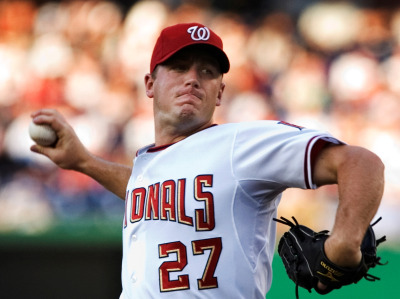
Congrats to Zimmermann on his all-star selection.  Photo dcist.com/(AP Photo/Manuel Balce Ceneta)

Congrats to Zimmermann on his 2014 all-star selection. Photo dcist.com/(AP Photo/Manuel Balce Ceneta)

Here’s my annual Nationals All Star selection post.   As with last year’s post (which also links to subsequent years), I’m including a retrospective on our “illustrious” All Star representative history from years past.  If you read on and it sounds familiar, that’s because a lot of it is cut-n-pasted from previous versions of this post.  Even so, reading backwards to see who our All-star representatives were in the lean years is an interesting exercise.  There were many years that the “one representative per team” rule was bent pretty far in order to include a member of our lousy teams.

Discussion item for the comments: Do you feel that the Major League all-star game should be a collection of the games biggest and best stars year after year, or should it represent who’s having the best current season?  I’ll put in my two cents: right now (thanks partly to the one player from each team rule) the rosters are somewhat of a mix of these two philosophies but are leaning more and more towards “who is having the best season.”  This year for example, future hall of famers like Albert Pujols are not on the team while 2-month flash in the pans like Charlie Blackmon are.  But I feel like a showcase event like the All-Star game needs to highlight the games biggest stars.  And I don’t feel like it does.

Keith Law is right: when (to use our local examples) marquee/famous players like Bryce Harper and Stephen Strasburg are not selected in lieu of middle relievers who have a great ERA through 20 innings in the first couple months of the season, it does a disservice to the game.  Harper can’t open his mouth without it making national news and he’d be a draw at the game.  Same for Strasburg just on fame factor.  In this respect I always thought the NBA all-star game did the best job of making its event an actual “All Stars” event.  If you want to have an event that rewards players for the best SEASON … then do what the NFL does and have the all-star game after the season.  Right now we give all- star spots to guys who have a couple of hot months and who might be hitting .220 again by the end of the season.

The most egregious example of this lately probably was 2012’s Cubs representative Bryan LaHair, who made the all-star game thanks to a scorching first half in 2012.  You know where LaHair is now?  Chicago *released* him at the end of 2012; what all-star gets released in the season in which they make the team?  He played in Japan in 2013 (perhaps why he was released but still indicative of what the team thought of his true talents), hit .230 there, and is currently sitting on Cleveland’s AA roster (having hit .113 for their AAA team and getting demoted).  I dunno; is this the kind of “all star” you want to see in your league’s marquee event?  I don’t think so; even if Joey Votto is having a down year, I want to see him suit up and not some flash in the pan.

One other quick point.  If the season ended today, here’s your playoff teams and the number of players they have in the ASG: NL: Atlanta (3), Milwaukee (4), Los Angeles (4), Washington (1) and San Francisco (2).   And AL: Baltimore (3), Detroit (3), Oakland (6), Los Angeles (1) and Seattle (2).   Wow; looks to me like both the Nats and the Angels have some serious griping about player selection.  The Angels have the 2nd best record in the league and got just one representative (Mike Trout of course).

Anyway, on to the Nats historical representatives.


Here’s a link to the All Star Rosters for 2014, prior to the “last man in” voting and any pending injury replacements.

2014

  • Nationals All-Star representative: Jordan Zimmermann (Update post-publishing: Zimmermann strained a bicep, and had to withdraw from the ASG.  For a bit it looked like the Nats wouldn’t even have a representative, until Tyler Clippard was named on 7/13/14).
  • Snubs: Adam LaRoche, Anthony Rendon, Rafael Soriano, Drew Storen
  • Narrative: Zimmermann’s been the best starter on the best pitching staff in the majors this year, and thus earns his spot.  I find it somewhat odd that a first place team (or near to it) gets just one representative on the team (as discussed above).  Rendon tried to make the team via the “last man in” voting, but historically Nationals have not fared well in this competition (especially when better known players from large markets are in the competition, aka Anthony Rizzo from the Chicago Cubs), and indeed Rendon finished 4th in the last-man voting.  LaRoche is having a very good season, almost single handedly carrying the Nats offense while major parts were out injured, but he’s never going to beat out the slew of great NL first basemen (Joey Votto couldn’t even get into this game).  Soriano has quietly put together one of the best seasons of any closer in the game; at the time of this writing he has a 1.03 ERA and a .829 whip; those are Dennis Eckersley numbers.  But, the farce that is the all-star game selection criteria (having to select one player from each team) means that teams need a representative, and deserving guys like Soriano get squeezed.  Then, Soriano indignantly said he wouldn’t even go if named as a replacement … likely leading to Clippard’s replacement selection.  The same goes for non-closer Storen, who sports a sub 2.00 ERA on the year.  Advanced stats columnists (Keith Law) also think that Stephen Strasburg is a snub but i’m not entirely sure: he may lead the NL in K’s right now and have far better advanced numbers than “traditional,” but its hard to make an argument that a guy with a 7-6 record and a 3.50+ ERA is all-star worthy.

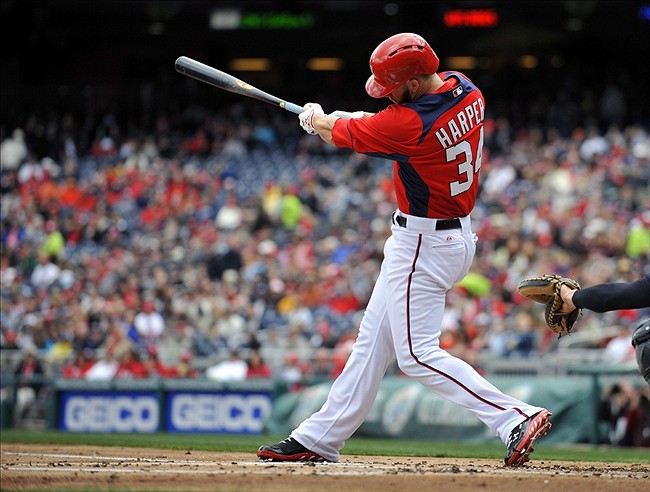
All Star Game Trivia Challenge: Thanks to his 2 month absence, Bryce Harper will not make the 2014 all-star team, thus he drops off as an answer to one of my favorite baseball trivia questions.  Prior to this season, Harper had been selected as an all-star in every season in which he has appeared in a game.  As far as I can tell in baseball history, there’s now just 4 players in Major League History who can say this.  Name them (discuss in comments):

2013

  • Nationals All-Star representatives: Bryce Harper, Jordan Zimmermann
  • Snubs: Stephen Strasburg, Ian Desmond
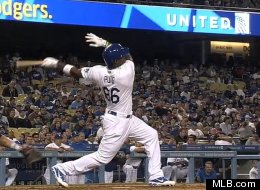
  • Narrative: Harper comes in 3rd in the NL outfielder voting, ahead of some big-time names, to become only the second Nationals position player elected as an All-Star starter.  He was 4th in the final pre-selection vote, so a big last minute push got him the starter spot.   Harper also becomes the first National to participate in the Home Run Derby.   Zimmermann was 12-3 heading into the game and was on mid-season Cy Young short lists in July in a breakout season.  Strasburg’s advanced stats are all better than Zimmermann’s, but his W/L record (4-6 as the ASG) means he’s not an all-star.  It also probably doesn’t help that he missed a few weeks.  Desmond loses out to Troy Tulowitzki, Everth Cabrera and Jean Segura.  Tulowitzki wass having a very solid year and wass a deserving elected starter, while Cabrera and Segura are both having breakout seasons.  Desmond was on the “Final vote” roster, but my vote (and most others’ I’m guessing) would be for Yasiel Puig there ([Editor Update: Desmond and Puig lost out to Freddie Freeman: I still wished that Puig finds a way onto the roster but ultimately he did not and I believe the ASG was diminished because of it).   Gio GonzalezRyan Zimmerman,and Rafael Soriano are all having solid but unspectacular years and miss out behind those having great seasons.

2012

  • Nationals All-Star representatives: Stephen StrasburgGio GonzalezIan Desmond, Bryce Harper
  • Possible Snubs: Adam LaRocheCraig Stammen
  • Narrative: The two starters Strasburg and Gonzalez were the obvious candidates, and my personal prediction was that they’d be the only two candidates selected.  Gonzalez’ first half was a prelude to his 21-win, 3rd place Cy Young season.  The inclusion of Desmond is a surprise, but also a testament to how far he’s come as a player in 2012.  Harper was a last-minute injury replacement, but had earned his spot by virtue of his fast start as one of the youngest players in the league.  Of the “snubs,” LaRoche has had a fantastic come back season in 2012 but fared little shot against better, more well-known NL first basemen.  Stammen was our best bullpen arm, but like LaRoche fared little chance of getting selected during a year when the Nats had two deserving starters.

2011

  • Nationals All-Star representatives: Tyler Clippard
  • Possible Snubs: Danny EspinosaMichael MorseDrew StorenJordan Zimmermann
  • Narrative: While Clippard was (arguably) the Nats best and most important reliever, I think Zimmermann was a more rightful choice.  He was 10th in the league in ERA at the time of the selections and has put in a series of dominant performances.  Meanwhile Espinosa is on pace for a 28homer season and almost a certain Rookie-of-the-Year award (though a precipitous fall-off in the 2nd half cost him any realistic shot at the ROY), and perhaps both players are just too young to be known around the league.  Lastly Morse is certainly known and he merited a spot in the “last man in” vote sponsored by MLB (though he fared little chance against popular players in this last-man-in voting).

2010

  • Nationals All-Star representatives: Matt Capps
  • Possible Snubs: Adam DunnJosh WillinghamRyan Zimmerman, Steven Strasburg
  • Narrative: Capps was clearly deserving, having a breakout season as a closer after his off-season non-tender from the Pirates.  The 3-4-5 hitters Zimmerman-Dunn-Willingham all had dominant offensive seasons as the team improved markedly from its 103-loss season.  But perhaps the surprise non-inclusion was Strasburg, who despite only having a few starts as of the all-star break was already the talk of baseball.  I think MLB missed a great PR opportunity to name him to the team to give him the exposure that the rest of the national media expected.  But in the end, Capps was a deserving candidate and I can’t argue that our hitters did anything special enough to merit inclusion.

2009

  • Nationals All-Star representatives: Ryan Zimmerman
  • Possible Snubs: Adam Dunn
  • Narrative: The addition of Dunn and Willingham to the lineup gave Zimmerman the protection he never had, and he produced with his career-best season.  His first and deserved all-star appearance en-route to a 33 homer season.  Dunn continued his monster homer totals with little all-star recognition.

2008

  • Nationals All-Star representatives: Cristian Guzman
  • Possible Snubs: Jon Rauch
  • Narrative: The first of two “hitting rock-bottom” seasons for the team; no one really merited selection.  Zimmerman was coming off of hamate-bone surgery in November 2007 and the team was more or less awful across the board.  Rauch performed ably after Cordero went down with season-ending (and basically career-ending) shoulder surgery.   Guzman’s selection a great example of why one-per-team rules don’t make any sense.  Guzman ended up playing far longer than he deserved in the game itself by virtue of the 15-inning affair.

2007

  • Nationals All-Star representatives: Dmitri Young
  • Possible Snubs: Ryan Zimmerman, Shawn Hill (though I wouldn’t argue for either)
  • Narrative: Young gets a deserved all-star appearance en route to comeback player of the year.  Zimmerman played a full season but didn’t dominate.  Our rotation featured 6 primary starters, none of whom are still in the league now, though Hill showed flashes of dominance throughout the year.

2006

  • Nationals All-Star representatives: Alfonso Soriano
  • Possible Snubs: Nick JohnsonRyan Zimmerman
  • Narrative: Soriano made the team as an elected starter, the first time the Nats have had such an honor.  Our pitching staff took massive steps backwards and no starter came even close to meriting a spot.  Cordero was good but not lights out as he had been in 2005.  Soriano’s 40-40 season is a poster child for “contract year” production and he has failed to come close to such production since.  The team was poor and getting worse.  Johnson had a career year but got overshadowed by bigger, better first basemen in the league (a recurring theme for our first basemen over the years).

2005

  • Nationals All-Star representatives: Livan HernandezChad Cordero
  • Possible Snubs: Nick JohnsonJohn Patterson.
  • Narrative: The Nats went into the All Star break surprisingly in first place, having run to a 50-31 record by the halfway point.  Should a first place team have gotten more than just two representatives?  Perhaps.  But the team was filled with non-stars and played far over its head to go 50-31 (as evidenced by the reverse 31-50 record the rest of the way).
Minor League Age Appropriateness for Nats Short Season Squads for 2014

2 comments

Mooneyham is a senior citizen in the NY Penn League.  Photo via mlbdraftcountdown.wordpress.com

Mooneyham is a senior citizen in the NY Penn League. Photo via mlbdraftcountdown.wordpress.com

In early April we looked at the ages of our pitchers on all four full-season squads in comparison to the median ages of all pitchers in their leagues.  Now that the short-seasons have started, here’s similar analysis.  (Full xls of the raw data is available at this Google XLS link here).

(Note: if you want some thoughts on why I do this, data taxonomy or how I collect the data, see the April 2014 post).

In April, we found (generally speaking) that our full season squads in AAA, AA and High-A were all on average older than their leagues, while Hagerstown in Low-A seemed to have a good spread of youngsters and players who were quite old for the level (Hagerstown’s overall average age was still slightly above the median age of the league for pitchers though).  These findings are consistent with the fact that the Nats have tended to draft college pitchers over the past few years, and if a college pitcher doesn’t matriculate a level at a time in his first 2-3 seasons, he’s going to be “old” for the level.

How do our short season squads look?   The Short-A team is as of 6/23/14 or about 10 games into the season, while the Rookie data is as of 6/23/14 as well, which was just two games into their season.    This means that the rotations will grow likely younger in both leagues as 2014 draftees are added; the median age in the NY Penn league is 22.39, while it is 21.17 in the rookie league; both of those age averages should be above even a typical college junior, were he to be added to the Rookie league roster instead of the Short-A.

Short-A/New  York Penn League

Team First Name Last Name DOB Age as of 9/1/14 Age Status
Auburn (wash) Cory Bafidis 8/22/1990 24.03 Really Old
Auburn (wash) Matthew Derosier 7/13/1994 20.14 Really Young
Auburn (wash) Jake Joyce 8/19/1991 23.04 Old
Auburn (wash) Reynaldo Lopez 1/4/1994 20.66 Really Young
Auburn (wash) Anderson Martinez 2/22/1993 21.52 Young
Auburn (wash) Brett Mooneyham 1/24/1990 24.60 Really Old
Auburn (wash) David Napoli 10/3/1990 23.91 Really Old
Auburn (wash) Robert Orlan 9/28/1990 23.93 Really Old
Auburn (wash) Travis Ott 6/29/1995 19.18 Really Young
Auburn (wash) Luis Reyes 9/26/1994 19.93 Really Young
Auburn (wash) Jefry Rodriguez 7/26/1993 21.10 Really Young
Auburn (wash) Mario Sanchez 10/31/1994 19.84 Really Young
Auburn (wash) Luis Torres 6/4/1994 20.24 Really Young
Auburn (wash) Phillips Valdez 11/16/1991 22.79 Old
Auburn (wash) Deion Williams 11/11/1992 21.80 Young
Auburn (wash) Deibi Yrizarri 10/3/1994 19.91 Really Young

Discussion: Unlike the Nats full season squads, its Short-A squad right now is quite young.  The average age of this squad is 21.49, well below the league median age of 22.39.   Travis Ott is the 2nd youngest pitcher in the entire league, and the Nats team features 5 of the youngest 20 players in the league.  I think this is a great sign for the state of the Nats pipeline from the international market, and if these really young arms succeed here they’ll make Hagerstown and Potomac trend younger for next year.

Oldest Guy in the New York Penn League: Mets’ A.J. Pinera, at age 27+, but he’s weird.  He’s on their restricted list, and he doesn’t have any stats since 2010.   I wonder if he’s beign converted to a coach or something.  Our own Brett Mooneyham is among the 10 oldest guys in the league, a clear sign of his troubles thus far in his pro career.

Youngest Guy in the New York Penn League: Boston’s Enfember Martinez, two months younger than our own Ott.  He’s a Venezuelan middle reliever who was decent in the GCL last year and is treading water thus far in Short-A.

Percentage of New York Penn League pitchers on MLB 40-man rosters: just 1 of 229 players; Dylan Bundy doing rehab for Baltimore post Tommy John Surgery.


Rookie/Gulf Coast League

Team First Name Last Name DOB Age as of 9/1/14 Age Status
GCL Nationals Connor Bach 6/24/1992 22.19 Old
GCL Nationals James Bourque 7/9/1993 21.15 Young
GCL Nationals John Costa 5/1/1993 21.34 Old
GCL Nationals Weston Davis 7/6/1996 18.15 Really Young
GCL Nationals Kida De La Cruz 8/10/1994 20.06 Young
GCL Nationals John Feliz 10/28/1993 20.84 Young
GCL Nationals David Fischer 4/10/1990 24.39 Really Old
GCL Nationals Elisaul Gomez 3/26/1992 22.43 Really Old
GCL Nationals DJ Jauss 9/5/1990 23.99 Really Old
GCL Nationals Samuel Johns 7/12/1991 23.14 Really Old
GCL Nationals Domenick Mancini 9/28/1993 20.93 Young
GCL Nationals Tyler Mapes 7/18/1991 23.12 Really Old
GCL Nationals Chase McDowell 12/14/1990 23.72 Really Old
GCL Nationals Jose Morales 2/12/1995 19.55 Really Young
GCL Nationals Cole Plouck 4/25/1994 20.35 Young
GCL Nationals Jean Ramirez 10/24/1994 19.85 Young
GCL Nationals Yorlin Reynoso 11/20/1995 18.78 Really Young
GCL Nationals Melvi Salazar 12/17/1994 19.71 Really Young
GCL Nationals Kyle Simmons 9/25/1991 22.93 Really Old
GCL Nationals Maximo Valerio 7/22/1995 19.11 Really Young
GCL Nationals Drew Van Orden 1/19/1992 22.62 Really Old
GCL Nationals Daury Vasquez 11/21/1992 21.78 Old
GCL Nationals Austen Williams 12/19/1992 21.70 Old

Discussion: The Nats GCL team is about average for the league: its average squad age is 21.38, slightly more than the league median age of 21.17.

Oldest Guy in the Gulf Coast Rookie League: one Jason Marquis, ex Nats starter, now Philadelphia farm  hand.  He’s in Florida on a rehab assignment, presumably before heading to Lehigh Valley to toil in their AAA squad for a while.  In fact, the bottom of the age list is mostly players doing rehab assignments in their team’s spring training facilities and can mostly be lopped off the discussion (hence why I like using medians instead of averages in this analysis).

Youngest Guy in the Gulf Coast Rookie League: Toronto’s Hansel Rodriguez, who turned 17 in Feburary.   He’s the youngest player in this league by half a year.  And he may not be long for the league; he’s been hit pretty hard so far.  Understandable.

Percentage of Gulf Coast Rookie League pitchers on MLB 40-man rosters: just one of 294; Carlos Perez of Atlanta doing rehab.


Written by Todd Boss

July 7th, 2014 at 1:43 pm

State of the Nats at the halfway point

37 comments

Harper's run production in the middle of the order should spark this team now that he's back.  Photo via fansided.com

Harper’s run production in the middle of the order should spark this team now that he’s back. Photo via fansided.com

When Bryce Harper was reinstated from the D/L on 6/30/14, an interesting situation occurred:  The Nationals were at full strength for the first time, all year.

That’s right.  With Doug Fister starting the season on the D/L, even those who think that the team was at “full strength” for the first 7 innings of the first game (that’s how long it took before a Nationals offensive starter got hurt) aren’t quite right.  This team has been hampered and has been covering for injuries to its best available squad since the first day of the season.  Here’s a review of the tale of the injury tape for the ideal 25-man roster of this team so far in 2014:

  • Doug Fister; strained shoulder 3/23/14, missed 34 games
  • Wilson Ramos: broken hand on 4/1/14, missed 32 games
  • Scott Hairston; oblique strain on 4/6/14, missed 26 games
  • Denard Span, concussion on 4/12/14, missed 7 games
  • Ryan Zimmerman, broken thumb on 4/13/14, missed 44 games
  • Bryce Harper: torn thumb tendon on 4/27/14, missed 56 games
  • Adam LaRoche: strained quad on 5/11/14, missed 14 games
  • Gio Gonzalez, shoulder strain on 5/18/14, missed 27 games
  • Ramos again, this time a hamstring strain on 6/11/14, missed 14 games

2/5ths of the rotation and 5/8ths of the starting offense have at one time or another been on the shelf so far this year.  More than 250 games lost.  Ironically the oldest player on the team (Jayson Werth) has been one if its healthiest (he’s only missed 4 games this year).  And (knock on wood) there hasn’t been a single bullpen injury, likely one of the main reasons the Nats bullpen is among the best in the game this year.

The Nats (at the time of this writing) sit 1/2 a game out of first behind nemesis Atlanta, but have several reasons to be optimistic about catching them:

  • The Nats have a +39 run differential right now, while the Braves have a zero run differential.  That means that the Nats should be 9 games above .500 (according to pythagorean records) while the Braves should be a .500 team.  The Nats have been unlucky while the Braves have been quite lucky.  You could expect these situations to reverse themselves over the rest of the season.
  • The Nats are just 2-7 in extra inning games and 9-13 in one-run games.  You’d normally expect both of these W/L records to be near .500 and is likely the real reason behind the above run differential issue.
  • Despite the heart of their batting order missing dozens and dozens of games, the offense is not doing half bad: the Nats as a team are 8th out of 15 in the NL in WRC+, 8th in runs scored, 8th in wOBA, 10th in batting average, and are 10th in homers despite Zimmerman having just THREE on the year.
  • While the Offense treads water, the Pitching has been fantastic.  Our starters are 5th in the NL in ERA, 1st in FIP, 2nd in xFIP, 2nd in SIERA.  The bullpen has been equally as good (a huge improvement over last year):  2nd in NL ERA, 1st in FIP, 6th in SIERA.
  • The starters lead the NL in FIP despite Stephen Strasburg‘s “struggles;” ironically despite his having a .500 record an a 3.70 ERA he has the best FIP of any Nats starter.   He’s just been victim of circumstance while he pitches.   Blake Treinen has been fantastic covering in the rotation, and the team has found an excellent 5th starter in Tanner Roark.  Games that were “thrown away” time and again last year by Dan Haren and a litany of poor-performing minor league call-ups have been handled with aplumb this year.

Where do we go from here?

The Nats schedule from here on out eases significantly; as of the time of this writing the last three months look like this:

  • July: 10 of 25 games against teams with winning records right now
  • August: 12 of 28 games against teams with winning records right now … and that includes teams that very well may have losing records by the time we get to them.
  • September: Just 9 of 27 games against teams with winning records right now, including the final 11 against Marlins and Mets teams likely to be playing out the string with 40-man call-ups from AAA and key young arms sitting due to inning limits.

For this Nats fan, its hard to see the same struggles we saw last year; I see a team finally getting their squad back together, having a solid July and perhaps a dominant closing to the season to fulfil its promise.  I like where this team stands right now (even with the tepid split in Chicago last weekend) and look forward to the next few months.

Who *really* should be in the HR derby?

2 comments

Puig would *make* the home run derby.  photo mlb.com

Puig would *make* the home run derby. photo mlb.com

I have to admit it: the home run derby has probably become my favorite part of the all-star game festivities.  That and the futures game of course.  The all-star game itself has devolved into a farce with a slew of issues (I posted a lot of these criticisms in my 2011 Nats all-star piece, and they remain issues today, so no need to go back into them here).  Lets talk about the Home Run derby.

I kind of like the wrinkle of naming “captains,” which for this year occurred on 6/23/14.  But the captains have to pick the right guys.  I hate the format; when a guy like Josh Hamilton is remembered for his epic performance in an early round moreso than the winner, something’s wrong with the format.   But they’re changing it this year.   And the players take *way* too many pitches.  But whatever.  This year’s captains are Troy Tulowitzki and Jose Bautista.  Fans can vote on who they want to see in the competition.

Here’s my ideal home-run derby slate of participants.  In the interest of keeping the competition “small” i’ve limited this to 5 per league:

National League:

  • Giancarlo Stanton: owner of 3 of the biggest 11 homers on the year, on pace for 45+ homers, leading the NL in home runs.  And he wants in this year.
  • Bryce Harper: last year’s runner-up is one of the few players in the majors scouted with 80 power; despite his injury-plagued season he belongs in this competition.
  • Michael Morse: not too many all-or-nothing hitters like Morse, whose name dots the leader board on hittracker.
  • Evan Gattis: you don’t just turn on chest-high fastballs from Strasburg if you’re a plain ole hitter.
  • Yasiel Puig: just because.  Can he do a bat flip after every homer?

Left out:

  • Troy Tulowitzki: He’s in as a captain, but even despite that selection he’s a decent choice: he’s 5th in the majors in ISO and tied for 6th in Homers.
  • Paul Goldschmidt: has the power capabilities and the overall game.  But he’s not nearly as explosive as the guys above.
  • Ryan Howard: He may not merit inclusion based on his performance, but he’s a classic three-true outcomes hitter.  Lefties get him out with ease; i’m sure batting practice pitchers don’t.
  • Todd Frazier: his power numbers spike thanks to playing in Cincinnati, but he’s still got some serious underrated power.
  • Justin Upton: Owner of the 3rd longest homer on the year.

American League:

  • Yoenis Cespedes: gotta let the man defend his crown.
  • Edwin Encarnacion: MLB leader in Homers as of this writing.  Has to be in this competition.
  • Jose Abreu: MLB leader in ISO and on a 40 homer pace despite hitting the D/L.
  • David Ortiz: Owns the 2nd longest homer hit this season and would make a nice homecoming in Minnesota.
  • Mike Trout: He’s such a good hitter, that he could just sit at the plate and hit homer after homer.  And, he just hit a 489 foot homer to take over the longest homer of the year.

Left Out

  • Jose Bautista: He’s a captain, so we’ll list him here.   Otherwise he’s a stretch to make this list.
  • Victor Martinez: he’s quietly one of the best power hitters in the league right now.
  • Mark Trumbo: too bad he’s hurt; he’s a great power hitter to watch.
  • Nelson Cruz: his homer totals may be augmented by playing in Baltimore, but he’s still putting numbers on the board.
  • Adam Dunn: you know he’d be a favorite to win if he was named to this team, but I could only select 5.  He’d be the 6th man in for the AL.

Are these the best lineups you could possibly ask for in this competition?  Who else would you put on this list of power-crazy players?  Jim Caple posted his own tongue-in-cheek version of this same post, worth a read for a quick giggle.  There’s a handful of other DH-only types in the AL (Billy Butler, Chris Carter, Adam Lind, Juan Francisco, etc) who might make sense.

(I used three resources to name these names: the current major league leaders in Homers, the current major league leaders in Isolated Power, and an eyeballing of the leader board for most astoundingly long homers on the year from Hit Tracker Online.  All stats are as of 6/24/14 and may have changed slightly between then and the publication of this post).

2014 College World Series Finals: Vanderbilt wins

leave a comment

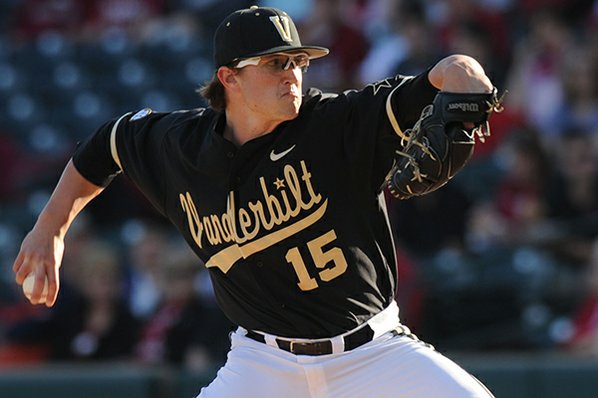
Vanderbilt's ace Fuller helped Vanderbilt win the deciding game 3 in the CWS.  Photo unk via anchorofgold.com

Vanderbilt’s ace Fuller helped Vanderbilt win the deciding game 3 in the CWS. Photo unk via anchorofgold.com

Congrats to #13 seed Vanderbilt, your 2014 College World Series champ (following UCLA, who won the 2013 CWS as covered here last year).  This is our final College post of the year.

Here’s a review of our CWS coverage for 2014:

Here’s how the CWS final played out:

  • In Game One on 6/23/14, UVA’s All-American starter Nathan Kirby blew up in the third inning, walking in three runs en route to a NINE run inning, which held up for Vanderbilt as they won 9-8.  Kirby said that he just lost his release point, leading to a pretty uncharacteristic outing.  This is not good news for UVA, who thought for sure they’d win a matchup of their #1 All-American versus Vanderbilt’s 3rd starter Walker Buehler.  Sure enough, UVA got to Buehler for 2 runs in the first and 5 runs before knocking him out, but they just couldn’t overcome the large deficit.   Buehler’s no slouch; the sophomore went 12-2 on the season and throws an easy 95 and likely is a top draft pick next year, so it isn’t as if UVA faced the scrubs.  But their work is cut out for them now.
  • In Game two on 6/24/14, UVA got a bounce-back performance from #2 starter Brandon Waddell, who pitched a complete game giving up 2 runs on 5 hits to lead the Cavaliers to a 7-2 victory to force the deciding game.   Vanderbilt’s #2 starter, supplanted Ace and 2014 first rounder Tyler Beede pitched well for 5 innings, but got knocked around in the 7th to give up what turned out to be the go ahead runs and took the loss.  UVA continued to show why Baseball America pundits thought they were the “most complete” team in the college post season, coming at teams with both superior pitching AND superior hitting.
  • In the deciding Game 3 on 6/25/14, UVA’s Josh Sborz (of McLean HS, where he had a stellar prep career and collected every available “player of the year” award his senior year) faced off against Vanderbilt’s ace Carson Fuller, going on short rest after pitching the play-in game for Vanderbilt just 4 days ago.  Sborz was wild early and got yanked in the first, leaving mid-week starter Artie Lewicki with the ball.  All Lewicki did was throw 6 innings of 4 hit ball, giving up one unearned run (Lewikie didn’t give up an earned run in 23 IP this CWS; wow).  UVA got the ball into their closer’s hand in a tie ball game in the 8th (first rounder Nick Howard) and he gave up an unlikely homer (just the third of the entire CWS) to prove to be the game winner for Vanderbilt 3-2.  UVA loaded the bases in the 8th but couldn’t push a run across against Vandy’s bullpen, and they closed it out.  Heartbreak for UVA, who may not have a better combination of hitting (6 hitters drafted) and pitching (led by an All-American sophomore) for quite a while.

Congrats to Vanderbilt for coming out on top.

Resources:

Written by Todd Boss

June 27th, 2014 at 9:45 am

Quick thoughts on Garcia and Hill Moves Today

16 comments

Garcia just couldn't ever make it back. Photo unknown credit.

Garcia just couldn’t ever make it back. Photo unknown credit.

Quick thoughts on the two major pitching-related transactions this week.

  • Nats finally cut the cord on Christian Garcia, after attempting to nurse him back to health for most of the past few years.  They got moments of brilliance (the 2012 playoffs basically), but mostly they got frustrated promises of future utility.  There were more than a few arguments in this space even as late as this spring from people who thought Garcia was going to break camp with the team thanks to his grand total of 12 2/3 MLB innings, merely on the promise of what he could become.  I hope someone picks him back up and gives him another shot (maybe the Yankees, his original drafting team?).  One small nit: I can see perhaps DFAing the guy to make room on the 40-man; why bother outright releasing him at this point?  What harm would there be in keeping him in Syracuse to see if he gets it back?
  • Taylor Hill, who I thought would be lucky to start in AA this year, let alone dominate AAA has he has (9-2, 1.92 ERA), gets added to the 40-man and called up.  I say bravo to him and bravo to the Nats for rewarding a guy who didn’t appear on *any* prospect list for the Nationals, anywhere.  This guy was a *senior* sign, a 6th round cost-savings draft pick in 2011, a guy who probably signed for a few thousand dollars and whose ceiling of expectations was perhaps two good years in A-ball eating innings before getting released for the next crop of draftees.  Hill may only be up with the team for a couple of days to give some bullpen innings, but now he’s on the 40-man, where he’ll likely sit for quite a while.  Maybe he even pushes for a 5th starter spot sometime in the future.

Lets hope Hill gets some time tonight or in the next series so we can do a “first look” post.

Written by Todd Boss

June 25th, 2014 at 3:58 pm

A history of Pitchers taken #1 overall

leave a comment

Brady Aiken joins an exclusive club.  PHoto Scott Kurtz via studentsports.com

Brady Aiken joins an exclusive club. Photo Scott Kurtz via studentsports.com

While researching for the #1 overall pick Starting Pitching matchup post, I found myself typing up little mini biographies on each of the pitchers.  I ended up moving that content to a new post, which you see here.  This is probably the last draft-related post for a while, until I summarize how our draft picks did at the end of the season.

Here’s a biography and career summary of every pitcher who’s been taken #1 overall in the history of the MLB draft, which started in 1965.  PeterGammons.com has a review of all #1 picks, which looks like a nicer-formatted version of the b-r.com page.  Dave Cameron wrote a WSJ article talking about the fact that just two HS arms have been drafted 1-1 prior to 2014 and they were both failures, and Baseball Prospectus’s Steve Goldman printed his own own version of this same post in 2009 with great insight not otherwise available, but it was light on details for the last 5 or so guys.

Believe it or not, there’s only been 17 pitchers picked first overall (including 2014) … and there’s *never* been a prep right handed starter picked.   Fourteen of the seventeen first overall pitchers selected came from college, and twelve of those fourteen were right handed pitchers.

Here’s a brief history of each #1 overall pitcher.

  • 2014: Brady Aiken, LHP from Cathedral Catholic HS in San Diego, drafted 1st overall by the Houston Astros in 2014.  Issues with pre-draft consensus 1-1 Carlos Rodon led the Astros to go with just the third prep pitcher ever to go #1 overall.  Aiken is considered the best talent in this draft by nearly every pundit, with a live arm, good mechanics, 3 excellent pitches and good command.   He quickly signed a below-slot deal, saving the Astros a ton of money that should enable them to sign over-slot deals later on in their draft.  There’s plenty of draft coverage of Aiken in the normal places, so we’ll focus on the previous guys who by now have at least a bit of pro experience.
  • 2013: Mark Appel, RHP from Stanford, drafted by the Houston Astros in 2013.  Appel had quite a draft day history; he was picked in the 15th round out of HS and didn’t sign.  And then in 2012 he was thought to be the #1 draft prospect in the draft (the first year where there were significant restrictions on bonuses by slot) but fell to #8.  The Pirates drafted him at #8 but couldn’t put together an over-slot enough deal to convince him to forgo his senior year.  So that’s what he did; pitched his senior year and then went #1 overall to Houston, who got him to sign an under-slot deal soon after the draft.   Appel was assigned to low-A to finish out the 2013 season and did well, but has struggled mightily in 2014 for Houston’s high-A team.  Some say that he has been unable to adjust to Houston’s “tandem” starting scheme, where guys throw fewer innings/pitches per outing but throw more frequently (every 4 days).  I agree; I think Houston is really foolish to take a prized possession such as Appel and shoe-horn him into a weird/non traditional rotation experiment.  Put him in AA, put him throwing regularly every 5 days and see what he can do.  As of this writing, he sports an 11+ era in the California League, having given up 10 runs in one 1 1/3 inning-outing at the end of May.  The word on the street was that he was suffering from a hand issue which prevented him from locating (but didn’t sap his velocity); still; that’s an awful lot of hits and runs to give up to A-ball players for a guy who (in some opinions) could be in the majors right now.  Is it too early to worry?
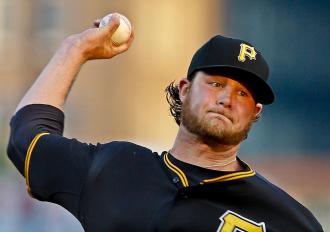
  • 2011: Gerrit Cole, RHP from UCLA, drafted by the Pittsburgh Pirates.  Cole was part of an amazing 1-2 punch at UCLA in 2011 (his rotation mate was Trevor Bauer, taken 3rd overall in the same draft.  Amazingly, UCLA didn’t even advance out of its own regional despite having two top-3 starters in their rotation).  Cole didn’t pitch in 2011, but “solved” high-A and AA in his first pro season in 2012 and was called up in mid 2013 once he’d cleared super-2 status by the cost-conscious Pittsburgh Pirates.  He was excellent in 2013, maintaining a sub 3.00 FIP for the year and helping Pittsburgh make the post season for the first time in a generation.
  • 2009: Stephen Strasburg, RHP from San Diego State, drafted by Washington.  We all are quite familiar with the story by now; Strasburg was a laconic out-of-shape  hurler in high school who barely merited a college spot, then re-made himself into the “greatest pitching prospect of all time” while at San Diego State.   Despite his reported bonus demands (he ended up with more than $15M deal) and his representation (Scott Boras), the Nats never seriously not selecting him with their first round pick.  The team played the “service time” game with him, keeping him in the minors until his super-2 eligibility was exhausted, then he struck out 14 Pirates in his MLB debut.
  • 2007: David Price, LHP from Vanderbilt, drafted by Tampa Bay.  Price was the friday starter for Vanderbilt, who entered the 2007 post season as the #1 overall CWS seed but who somehow lost in their regional.  Price signed late (this was before the moved-up signing deadline and often big-money draft picks had to wait for the signing deadline to be announced) so he didn’t debut until 2008.  He quickly proved to be un-hittable in high-A or AA and was promoted to the big club in September of his first pro season.  He was up and down (both to and from Durham and in terms of performance in 2009) before exploding onto the scene in 2010, going 19-6 and finishing 2nd in the Cy Young race to Felix Hernandez.  Price won the Cy Young in 2012 in a close race and is generally been considered one of the best 10-15 pitchers in the game.  The biggest question with Price now is where he’ll end up; he’s arbitration eligible and earning a significant portion of the Tampa payroll, and his name has been in the trade rumors for two years running.  However 2014 may finally be the time Price moves on; Tampa has the worst record in the majors and probably starts making moves as soon as the all-star break passes.  I look for Price to join a playoff contender and have a real impact in 2014 and 2015 before his 9-figure payday arrives.
  • 2006: Luke Hochevar, RHP from Tennessee/Indy league, drafted by Kansas City.  Hochevar burned quite a few bridges in Los Angeles prior to his joining Kansas City; he was drafted by the Dodgers twice, the second time agreeing to and then reneging on a 1st round deal worth nearly $3M in 2005.  Instead he played Indy ball and went 1st overall in 2006 to the Royals, who gave him a (now banned) MLB deal with significantly more money than the Dodgers offered.  He debuted in 2007, but generally struggled as a starter for the Royals for the next 5 seasons (compiling a 38-59 record in those years).  In 2013 he remade himself as a wipe-out 8th inning guy, posting a 215 ERA+ for the rising royals.  Unfortunately, he sucummed to the dreaded Tommy John disease early in 2014 and had surgery on 3/7/14.   Hochevar’s injury couldn’t be more badly timed; he’s a free agent this upcoming season and likely will have to sign a non-guaranteed deal until he can show he’s recovered.
  • 2002: Bryan Bullington, RHP from Ball State, drafted by the Pittsburgh Pirates.  Bullington’s selection by the penurious Pirates was considered a “signability pick,” with the GM given direction to sign a “safe” college pitcher as opposed to one of the prep talents that were higher ranked on most draft boards.  So Pittsburgh selected Bullington (in lieu of B.J. Upton, Prince Fielder or a slew of other now-successful MLBers from the 2002 draft).  To be fair, Bullington was considered the #1 college arm in the 2002 draft, but few thought he was the #1 overall talent.  He held out for months, finally signing in October of 2002 for $4M.  He progressed slwoly through the Pittsburgh system, debuting in September 2005.  He was hurt though, got diagnosed with a torn labrum and the Oct 2005 surgery cost him all of 2006.   He never was really effective afterwards, sputtering through 2007 and part of 2008.  Pittsburgh waived him in 2008.  After that he bounced around 3 organizations in the next 3 years, ending up with a callup by Toronto in late 2010 where he threw 8 innings of shut-out ball to earn is sole major league victory.  For the last three years he has pitched in the Japanese Nippon league.
  • 1997: Matt Anderson, RHP from Rice, drafted by Detroit.  Detroit picked the Rice hurler believing that his position (closer) and his velocity (100mph capabilities) would mean that he was quick to the majors and they were right; after dominating high-A and AA, he was in Detroit’s bullpen by late June 1998.  He had a great debut season but mostly struggled with control issues (career 5.5 bb/9) as a 7th/8th inning guy.  He tore a muscle in his shoulder in 2002 (allegedly by participating in an Octopus-throwing contest earlier in the day), which sapped him of his velocity upon his return.  Detroit sent him to AAA in 2004 and then released him at the end of the season.  After 2005, he bounced around 3 different organizations, attempted a comeback in 2011 with the Phillies and now is completely out of baseball.
  • 1996: Kris Benson, RHP from Clemson, drafted by the Pittsburgh Pirates.  Unlike the Bullington pick, Benson was the consensus #1 player in the draft, having just completed an undefeated junior season at Clemson, leading them to the CWS, and being named the College player of the year.   He spent two nondescript years in the minors and joined Pittsburgh’s rotation in the 1999 season.  He had two good seasons, then blew out his elbow and missed all of 2001 recovering from Tommy John.  He returned to the mound in 2003 and pitched like a #3/#4 starter for several years until being befelled again by injury.  This time it was more serious; a torn labrum.   By this point he had been traded from Pittsburgh to New York to Baltimore and had brought his “road show” along with him (he was married to former stripper Anna Benson, who on more than a few occasaions made headlines thanks to her curious behavior.  It is alleged in some circles that the Mets traded Benson just to rid themselves of his wife’s antics).   He missed the whole 2007 season and a good chunk of 2008 with shoulder soreness, bounced around a couple more organizations, and called it a career after 2010.    He made 200 career starts in the majors and had a 70-75 record all in all.  He filed for divorce from his (crazy) wife, who then was arrested after showing up at his house with weapons while wearing a bullet-proof vest.   I’ll be honest; his devotion to charitable causes doesn’t seem congruous with his marriage to an ex-stripper.  Maybe that’s a bit judgemental on my behalf 🙂
  • 1994: Paul Wilson, RHP from Florida State, drafted by the New York Mets.  Wilson was part of a trio of high-end Mets pitching prospects who were expected to be the next wave of power arms for the team (himself, along side of Jason Isringhausen and Fairfax’s Bill Pulsipher).   Wilson’s career peak may have been the year after he was drafted, throwing 180+ innings in the minors.  He struggled in 1996 at the major league level and subsequently had to have Labrum surgery.  That cost him most of 1997 and 1998 … then to add insult to injury he tore his UCL and had to have Tommy John in 1999.   By this point the Mets were apparently tired of waiting for him to develop and traded him to Tampa Bay.  There, he finally got back on the field in 2000 and pitched well enough to earn a 4yr deal from Cincinnati.  Unfortunately, he tore his rotator cuff, underwent his third surgery as a professional … and never made it back afterwards.  He tried to rehab the arm in the minors in 2006, suffered a set-back, took a non-guaranteed deal in 2007, had a set-back, and tried Indy ball in 2008 before being released and retiring.  Despite all these injuries he managed to make 150+ major league starts.
  • 1991: Brien Taylor, North Carolina HS, LHP, drafted by the New York  Yankees.  One of only three high school pitchers ever taken number one overall and (excluding the two most recent draftees) he’s the only player on this list who never appeared in the majors.  Taylor was hitting 98-99 as a HS pitcher, had an absolutely astounding 21 K/9 rate (he struck out 213 in just 88 HS innings), and by more than one scout’s opinoin was the greatest high school pitching prospect the game has seen.  Unfortunately he suffered a significant shoulder injury (a rotator cuff tear that separated the cuff from the bone) in a bar fight while in the minors, missed an entire season after surgery, and lost 8mph off his fastball.  The Yankees released him without his ever appearing above AA.  After bounching around odd jobs, he was arrested for cocaine trafficing in 2012 and is currently in federal prison.  ESPN has a great oral-history just posted about Taylor, with all sorts of quotes from Yankees officials of the day.   He’s a sad story all around.
  • 1989: Ben McDonald, RHP from LSU, drafted by the Baltimore Orioles.   He was the consensus #1 overall pick, the best player in the college game the year prior, and had just led USA baseball to the gold medal in the 1988 olympics.  He is one of the most “close to the majors” pitchers ever drafted.  He signed on August 21st and made his MLB debut just 18 days later, pitching out of the bullpen.  In July 1990, he pitched a 4-hit shut-out in his major league debut, a game I distinctly remember watching on TV.  McDonald was a phenom and was going to bring Baltimore back to the promised land.  It never happened: McDonald struggled with injuries and ended up leaving Baltimore after his initial deal ended.  In Milwaukee he was pitching well but suffered a torn rotator cuff, from which he never recovered.  McDonald was out of baseball at the age of 29.  In the years since, he was elected to the College Baseball Hall of Fame, a nod to his completely dominant career at LSU.
  • 1988: Andy Benes, RHP from Evansville University, drafted by the San Diego Padres.  Career 1989-2002.  Benes was a “pop up” guy who went from being an unknown prospect to a first rounder thanks to an amazing 21-K outing his junior year in college.  The Padres were “drafting for need” somewhat and had targeted a quick-to-the-majors college arm to be their #1 pick, and Benes was the best available choice.  He was a multi-sport player in college, which some pundits believe limited his pitching development.  He was known to have an excellent fastball with great command … and little else.  Nonetheless, he flashed through the minors and debuted in 1989, finishing 5th in the Rookie of the Year voting.  For the next six years he was basically a #3 starter/innings eater for San Diego, never missing a start, putting up great K/9 numbers and compiling a near .500 record for a series of decent-to-awful Padres teams.  He was traded to Seattle in 1995 (for one Ron Villone) in his walk year to join the Mariners for their playoff run, then signed a 2-year deal with St. Louis.  He pitched well in St. Louis, even getting Cy Young votes, but then a contract snafu led him to join Arizona ahead of their debut season, where he threw the first pitch in franchise history.  After his stint in Arizona, he came back to St. Louis but a series of injuries cause him to miss significant time during his last two seasons.   He pitched excellently in the 2nd half of 2002, but his declining health (he suffered from an arthritic knee, which sapped him of his power, forced him to pitch with a knee brace and caused him to become more of a finesse guy later in his career) caused the Cardinals to decline their 2003 option on Benes.  Frustrated with his health and unwilling to pitch anywhere but in St. Louis, Benes retired in the winter of 2002.
  • 1983: Tim Belcher, RHP from Mount Vernon Nazarene College, drafted by the Minnesota Twins.  Career 1987-2000.   Technically Belcher was a #1 overall pick twice.  He was drafted by Minnesota #1 overall but didn’t sign (Minnesota was known to be cheap with their money back then), and then was picked #1 again in the January 1984 supplimental draft phase by the Yankees.  Belcher visited two more organizations before making his debut, getting snagged by Oakland from the Yankees as FA compensation, then getting flipped to the Dodgers after Belcher struggled in the minors.  He was immediately effective for Los Angeles though, giving them several good seasons after finally debuting at age 25.  He threw EIGHT shutouts in 1989 enroute to a 5th place Cy Young finish, his most effective season as a pro.  He was flipped to Cincinnati (for Erik Davis) and bounced around 5 other orgnaizations from there, always featuring as a #3-#4 starter quality guy who stayed relatively healthy and ate innings but was nothing more.  His career was ended thanks mostly to an elbow surgery late in 1999; he tried to come back in 2000 but was mostly ineffective and hung them up in spring training of 2001.  He served as a coach in the Cleveland organization for most of the rest of the decade but (as far as I can tell) has been out of the game since 2011.
  • 1981: Mike Moore, RHP from Oral Roberts, drafted by the Seattle Mariners.  Career 1982-1995.  Moore was already a known quantity, having been drafted in the 3rd round out of High School.   After being drafted by Seattle (who by 1981 also had former #1 overall pick Bannister on their payroll), Moore made just 14 minor league starts before debuting in the majors in April of 1982.   Predictably, he got hammered.  Seattle was generally awful during Moore’s entire tenure there, despite his putting up several 5-6win seasons.  When he made it to free agency, he joined Oakland and immediately became the leader of a world series winning squad.  He finished his career off by vastly underperforming during a 3yr/$10M contract with Detroit, ending with his being released a month before his contract ended.   He ended up with a career profile quite similar to some of the names above here (especially the likes of Benes and Belcher): decent career, #3 starter ceiling, .500 pitcher.
  • 1976: Floyd Bannister, LHP from Arizona State, drafted by the Houston Astros.  Career 1977-1992.  As with Moore after him, Bannister was a 3rd round pick out of HS but opted to go to Arizona State, where (like McDonald and Benson after him) he was the collegiate player of the year and the clear #1 overall prospect in the draft.   And like several guys before him, he ended up being less of a total Ace and more of a #3/#4 starter, .500 career record kind of hurler.  He probably had his best season for the White Sox in 1987, but knocked around three more organizations and Japan after that, retiring in 1992 with 363 career starts.
  • 1973: David Clyde, Texas HS LHP drafted by the Texas Rangers.  Career 1973-1979.  The first ever pitcher taken #1 overall was Clyde, who turned into a cautionary tale of what NOT to do with your prep draftees: Clyde was a Texas-based high school phenom who had an amazing senior year and was the consensus #1 overall pick.  But Texas did something rather extraordinary; they drafted Clyde and then immediately put him on the major league roster.  He ended up starting 18 games for Texas as an 18 yr old, mostly as a publicity stunt by the owner, looking for increased box office revenue.  He got hurt, was traded to Cleveland and was out of the league by the age of 24.  His wikipedia page is a good read; after retiring he went through some tough times but seemed to come out ok.

Best career of any #1 overall pick by total bWAR: Andy Benes with 31.7 bWAR compiled over a 14 year career where he was basically a .500 starter (career record: 155-139, career ERA+ was 104).   Belcher didn’t quite have the bWAR but had the longest career of any of these guys.  You can probably argue that David Price is more successful already by virtue of his Cy Young award.

Least successful #1 overall pick: clearly Brien Taylor, the only one of these 17 players who never reached the majors (excepting recent picks Appel and Aiken of course).  A couple of the other picks here at least made the majors but compiled negative bWAR for their brief careers.


CWS Group Play review; Final set

leave a comment

Here’s a look at our CWS coverage so far in 2014:

Now lets review the group play in Omaha.  Compared to the blitz of games during regionals (100+ games in four days) and super-regionals (where there were nearly 40 games in a long weekend), covering the CWS is pedestrian; there’s just a couple of games a day for nearly two weeks.

My pre-CWS predictions are with Vanderbilt from the top and UVA from the bottom, but UVA’s path through to the CWS finals is a lot tougher.  Lets see how things played out.


In the Top Bracket (UC Irvine, Vanderbilt, Louisville, and Texas):

UC Irvine continued their surprising run this post-season by getting 3 runs late on Texas’ starter Nathan Thornhill and taking the first game 3-1.  Meanwhile, Vanderbilt got to wild Louisville starter Kyle Funkhowser behind their flame-throwing converted closer Carson Fulmer and took their first game 5-3

In the first elimination game, Texas handed Louisville’s Anthony Kidston his first loss of the year and put the Cardinals 2-and-out 4-1.  In the winner’s bracket game, UC Irvine tagged Vanderbilt’s stud Tyler Beede for four runs early and knocked him out in the 4th, but Walker Buehler relieved and threw 5+ innings of no-hit ball as Vanderbilt’s offense stormed back to take the winner’s bracket game 6-4.  This sets up Vanderbilt nicely for the rest of the tournament and confirms them as the early favorite to advance to the final.  In an elimination game, Texas got a solo homer from C.J. Hinojosa and 8+ shutout innings from middle-reliever Chad Hollingsworth to eliminate UC Irvine 1-0 in a matchup of two of the games most tenured and respected coaches Augie Garido and Mike Gillespie, with nearly 3,000 combined wins between them.  Texas must now beat Vanderbilt twice over the 6/20/14 weekend to advance to the CWS final.  Texas did their part in the first game, knocking Vanderbilt’s starter out before the first inning was complete and winning 4-0 to force a doe-or-die 6/21/14 game.  In that do-or-die game, Vanderbilt outlasted Texas with a walk-off infield single in the bottom of the 10th to advance 4-3.


In the Bottom Bracket (Texas Tech,Virginia, Ole Miss and TCU):

TCU saved their #1 starter and got by Texas Tech 3-2 in the opener, scoring 2 runs in the bottom of the 8th after not being able to touch TTU starter Chris Sadberry.  Texas Tech’s coach is probably kicking himself right now; Sadberry had given up just 3 hits through 7 innings and sat on 101 pitches; his reliever immediately coughed up the game.  Meanwhile, UVA’s Nathan Kirby pitched a gem in their opener, holding Ole Miss to just one hit over 7 innings and supp-1st rounder Mike Papi drove in the walk-off run as UVA won 2-1.  UVA’s work is cut out for them though, having to face first rounder Brandon Finnegan in the winner’s bracket game.  In that marquee TCU-UVA matchup, UVA couldn’t do much against Finnegan (8ip, 1 ER) but their own co-ace Brandon Waddell also held the Horned Frogs in check (7ip, 1ER).  The game went into extras .. many extra innings, finally won by UVA in the 15th 3-2 (tying the longest CWS game ever).  UVA’s closer Nick Howard threw 4 innings and 60 pitches, which makes me wonder if we’ll be hearing complaints about his usage (perhaps not; he was a starter his first two years at UVA).  Then, In the loser’s bracket, Ole Miss put Texas Tech out in a close 2-1 game, then similarly eliminated TCU 6-4.  Ole Miss must now beat UVA twice over the 6/20/14 weekend to advance to the CWS final.  And they couldn’t do it: behind 8 innings from their #3 and #4 starters (Josh Sborz and Artie Lewicki UVA topped Ole Miss 4-1 to advance to the CWS finals.


CWS finals: #13 Vanderbilt versus #3 UVA.

Game 1 on June 23rd, Game 2 on June 24th and (if necessary) Game 3 on June 25th.

Kirby versus Beede in game 1; Kirby sits on 8 days of rest after throwing just 85 pitches on June 15th.  Vanderbilt burned their ace Fulmer in the bracket final, leaving Vanderbilt at a definite disadvantage in the pitching matchup.  In game 2, UVA has Waddell set to go with 6 days rest while Vanderbilt has to go with their #3.  Sborz/Lewicki could tandem pitch a deciding game 3 for UVA with four full days rest if neither guy is used in the first two games, while Vanderbilt could bring back Fulmer on 3 days rest (to the likely ire of pitch count scouts, despite the fact that he only threw 90 pitches on 6/21).  UVA’s pitching is setup just about as good as you could hope for and have the bats to match; you have to think they’re the favorites.


Resources: d1baseball.com has all the CWS results in easy-to-consume fashion.  Their live scoreboard is great and is up-to-the-minute all throughout the weekend with links to the ESPN box scores.  Collegesplits.com has a ton of great data on college players.  And the Washington Post is providing great coverage of UVA’s trek through the college playoffs.

Strasburg-Cole matchup and a history of #1 vs #1 picks

leave a comment

Gerrit Cole won the latest installment of #1 versus #1 overall drafted pitchers.  AP Photo via sporting news.

Gerrit Cole won the latest installment of #1 versus #1 overall drafted pitchers. AP Photo via sporting news.

I saw a cool stat while idly watching a Nats-Pittsburgh game a few weeks back.  The match-up between Stephen Strasburg and Gerrit Cole was the 11th time ever that #1 overall picks faced each other in baseball history.

What a great stat.  So naturally I wanted to look up the other ten.  I was hoping that I could find this data in the Baseball Reference Play Index, but couldn’t find it, so I went with a “brute force” method of finding the 11 matchups by scouring b-r.com’s play index data for each of the handful of pitchers entire career game logs.

The draft has existed since 1965.  In that time just 17 pitchers have been drafted #1 overall (including this year), and a few of them barely had careers.  Thus the rarity of this occurence.  While researching this article, I found myself looking more closely at all seventeen #1 overall picks, but moved that to a subsequent post, so look out for that in the future.

Meanwhile, here the 11 matchups are, in descending chronological order:

  • 11th: Stephen Strasburg vs Gerrit Cole 5/24/14: Strasburg gives up 3 in 7 while Cole gives up 2 in 6 and gets the win.  Pittsburgh d Washington 3-2.
  • 10th: David Price vs Luke Hochevar 8/21/12.  Seven years have passed since the last 1/1 matchup by this time.  Here, both pitchers threw 8 shutout innings (Hochevar giving up just 1 hit) and Kansas City prevailed by getting a run in the 10th.  This game was likely the greatest game Hochevar ever pitched (game score of 87), slightly better than a 3-hit shutout he had in 2009.   Hochevar was pretty-well awful as a starter for years with Kansas City but transformed himself into a great middle reliever in 2013; he suffered a blown elbow and had Tommy John surgery in March.
  • 9th: Kris Benson vs Paul Wilson 5/16/05:  Nearly a decade has passed since we had a #1 vs #1 matchup.  Here, neither guy was pitching terribly well in 2005, but Benson got the better of Wilson on the day.  Benson gave up just 2 runs in 7+ innings while Wilson got beat around for 7 runs in 5 1/3.   After the game, Wilson hit the disabled list and eventually had shoulder surgery for labrum and rotator cuff issues, which cost him the rest of 2005 and all of 2006, and he never appeared in another game.  So Wilson’s last ever MLB appearance was his sole #1 versus #1 matchup.
  • 8th: Ben McDonald vs Tim Belcher 6/27/96: McDonald was enjoying a nice bounce-back season after leaving his original team (Baltimore), and threw a nifty 7ip/3hit/1 run performance to beat Belcher’s Royals.
  • 7th: Ben McDonald vs Tim Belcher 4/11/94: McDonald was off to a great start for Baltimore, while Belcher was not for Kansas City.  Odd how these two guys both met up again, both with new different teams.   McDonald again threw 7+ innings of 2 run ball to beat Belcher on the day.
  • 6th: Ben McDonald vs Mike Moore 9/2/92: Their second meeting in two weeks, McDonald threw 6 innings but Moore threw 9 innings of 1 run ball; the game was won in the 10th by Baltimore.
  • 5th: Ben McDonald vs Mike Moore 8/23/92: Moore again got the better of McDonald, who gave up 6 in 6 for the loss.
  • 4th: Andy Benes vs Tim Belcher 4/8/92: Benes got the better of Belcher on the day, though both pitched well.
  • 3rd: Ben McDonald vs Mike Moore 5/7/91: McDonald hit hard early and Moore gets a win over his fellow #1 overall pick.
  • 2nd: Mike Moore vs Floyd Bannister 6/24/1988.  Moore pitched a 4-hit shutout to beat Bannister and the Royals in a rematch of their first 1-1 meeting four years prior.  Bannister gave up 7 runs (4 earned) in 3 2/3’s innings to get knocked out in the first ever matchup of former #1 overall picks.
  • 1st: Mike Moore vs Floyd Bannister 6/27/84: The first ever meeting between #1 overall picks took nearly 20 years to occur, thanks to just a couple of pitchers being taken first overall in the first two decades of the draft and thanks to bad timing.  This meeting was nothing to write home about though; neither guy pitched that badly, but neither figured in the decision after each gave up 3-4 runs in 5 innings.

Mike Moore appeared in 5 of the 11 one-vs-one matchups and his teams were 4-1 in these five games.   Bannister’s teams went 1-1 in his two appearances.  Ben McDonald also appeared in 5 of the 11 one-vs-one games and his teams went 3-2 in the games.   Belcher’s 3 games all resulted in losses for his team, despite (arguably) Belcher having the most accomplished career of any #1 overall drafted pitcher.   There’s only been 3 such meetings in the last 20 years, all featuring more recently drafted pitchers.

I also found these games where two former #1 overall picks both appeared, but one (or both) was in relief:

  • Kris Benson vs Andy Benes 7/20/02: Benson got the start and the win while Benes pitched 3 innings of mop-up duty as St. Louis fell behind by 10 runs.
  • Tim Belcher vs Matt Anderson 9/7/00: Belcher got the start and the win with 6ip/3er, while Anderson pitched the last out of the 8th for the losing team.
  • Tim Belcher vs Matt Anderson 7/14/98: Belcher got the start and got blasted; Anderson pitched the 7th and got a hold.
  • Mike Moore vs Floyd Bannister 6/12/92.  Moore got punched out of the box early and Bannister picked up the victory by pitching the 14th inning.
  • Ben McDonald vs Floyd Bannister 5/17/91: McDonald started and pitched a complete game win while Bannister relieved the losing starter in the 5th.
  • Mike Moore vs Floyd Bannister 4/17/91.  By this time in their careers, Bannister was relegated to the bullpen, but they did “face” each other in this game.  Moore threw 7 innings of 1-run ball for the victory.

Just for completion sake, who are the 6 pitchers not mentioned already who were picked #1?  That would be 2014’s Brady Aiken, 2013’s Mark Appel (neither of which has appeared in a major league game yet, obviously), along with Bryan Bullington (who bounced around the league for a few years but never matched up with any of his fellow draft picks), Brien Taylor (the 1991 #1 overall pick who never made it above A-ball), and David Clyde (who was the first pitcher to go #1 overall but didn’t last long enough to get any matchups with subsequent picks).

Stay tuned for a look at all seventeen of these guys, their stories and their careers in a future post.

Nats Draft History; what were the rumors on draft day historically?

leave a comment

Zimmerman was the Nats first ever pick. Photo unknown credit via fantasyknuckleheads.com

Zimmerman was the Nats first ever pick. Photo unknown credit via fantasyknuckleheads.com

I thought I’d do a different take on the “history of Nats drafts.”  What was the mood/feel around the team approaching draft day year after year?  Who do we think they were focusing on as the big day rolled around and why?  We focus mostly on the first round pick, where so many of the mock drafts focus, but we’ll also mention significant moves further down.

To be honest, I didn’t really start closely following the draft and track who the Nats were “rumored” to be with until the 2008 draft.   So if you remember something differently than me, please feel free to chime in.  I also focus pretty heavily on the early picks here, simply because teams generally get the most value out of their 1st round picks, and the thought processes in taking the first round pick often is the focus of draft analysis and mock drafts posted head of each actual draft.

The Draft Tracker xls (created by Brian Oliver, now maintained by SpringFieldFan) is vital for any Nats fan interested in tracking the teams’ drafting history.

  • 2005: Nats picked 4th overall and did not have a 2nd or 3rd round picks (the 2nd round pick went to Colorado for the Vinny Castilla FA signing and the 3rd round pick went to Minnesota as compesation for the Cristian Guzman signing)).  The team was also under MLB control and was (presumably) given quite strict financial guidelines over signings.  Given those considerations, they knew they needed a splash with their #1 overall pick, they needed someone affordable and they needed someone that would speak to their new fan-base.  They wanted college draftees, quick to the majors.  The team was looking at the three top 3rd Basemen in the draft.  Ryan ZimmermanRyan Braun and Alex Gordon.  All three were playing at good schools with good numbers.  Gordon went 2nd overall to Kansas City and the Nats snapped up Zimmerman.  Zimmerman signed quickly for an acceptable amount ($2.9M as the 4th overall pick) and was playing in the majors by September.   Zimmerman’s selection made sense geographically (he grew up in Va Beach and attended UVA) and it made sense considering the talent available at the Nats pick.  MASN’s David Huzzard printed a retrospective of the 2005 draft ahead of 2014’s draft.
  • 2006Thanks to a couple of FA losses (Hector Carrasco and Esteban Loiaza), the team had two extra picks in the first two rounds.  The team had a roller coaster 2005; first place at mid-season and then a collapse as MLB refused to allow reinforcements.  By draft-day 2006 the team was firmly under the control of Jim Bowden, and his philosophy had always skewed towards “toolsy” players, potential over actual.   But the team didn’t have an owner yet, so were still operating under MLB’s guidelines.  These two facts were quite evident by looking at the haul the Nats had with their early picks.  6 picks in the top 4 rounds and they were all high school players.  Chris Marrero, Colten Willems, Stephen Englund, Sean Black, Stephen King and Glenn Gibson.    The team got Marrero for a relatively cheap $1.6M deal mid-way through the first round, failed to sign Black altogether, and got 5 of these 6 players to sign for around $5M all told.  The team on the field was under-performing thanks to a limited MLB-dictated budget, but Bowden was drafting for the longer run.  Unfortunately none of these high school players ever amounted to much of anything, with only Marrero ever reaching the majors and Willems retiring before ever advancing out of A-Ball.
  • 2007: The team had another haul of upper-end draft picks, thanks to their acquisition of Alfonso Soriano and his type-A free agency sending them both an extra first rounder and a supplimental first rounder.   The team took lefty Ross Detwiler from small school Missouri State with the 6th overall pick, a selection that has been lampooned based on who else was available at the time (Madison Bumgarner and Jason Heyward in particular), but literature from 2007 supports his selection at 6th overall.  After Detwiler, the nats spent their two supplimental first round picks on high school raw talents (as was Bowden’s custom), neither of which ever panned out (Josh Smoker and Michael Burgess).  This draft turned into one of the more productive in Nat history, with at least four current major leaguers picked (along with Detwiler, Stephen SouzaDerek Norris and especially 2nd round pick Jordan Zimmermann, so it is unfair to focus on the misses out of 2007.  This was easily Bowden’s best draft while in charge in Washington.
  • 2008: The year of Aaron Crow.  Crow had a strong summer and a strong spring and was the 2nd best college arm in the draft, no question.  There was apparently antagonism between Bowden and Crow’s agents from the moment that he was drafted, and the negotiations between the sides never really came together.  The signing deadline came and went with no signature, and Crow went to Indy ball before getting picked the following summer.  There was talk about how the Crow non-signing was purposeful; the Nats spent significantly less money in the draft in 2008 than they had in 2007 and the ownership group was still being labeled as “cheap.”  Either way, this lack of signing was one more bullet in the ammunition guns of opinion makers in the industry about the state of the Nationals organization under the leadership of Bowden.  This would serve to be his last draft; he was embroiled in the bonus scandal over the off-season and relinquished his job ahead of the 2009 season.
  • 2009: We all are quite familiar with the story by now; Stephen Strasburg was a laconic out-of-shape hurler in high school who barely merited a college spot, then re-made himself into the “greatest pitching prospect of all time” while at San Diego State.   Despite his reported bonus demands (he ended up with more than $15M deal) and his representation (Scott Boras), the Nats never seriously considered not selecting him with the first overall pick.  For me the big question was who the Nats were going to take at #10. I wanted another starter, and there were some significant college pitchers projected to be available at #9.  Kyle GibsonAlex White,  Tyler Maztek, Chad Jenkins and Tanner Scheppers were all left on the board to draft a Stanford reliever in Drew Storen.  Keith Law had Storen ranked as his 28th prospect, a guy who was clearly “good” but who was over-drafted by nearly 20 spots.  This had “signability pick” written all over it, a thought that was even more proven when the team drafted college senior Trevor Holder with their 3rd pick and signed him for 1/2 of slot.  Holder wasn’t even his team’s friday starter and had a 4.48 ERA.  So, the team got Strasburg and paid him significant money, and the 2008 draft misstep turned into an effective closer in Storen, so the draft wasn’t a disaster, but with a bit more money allocated (remember, this was the same year they were paying Guzman $8M to be a mediocre shortstop) the team really could have hit it out of the park.
  • 2010: After another 100+ loss season, the Nats were fortunate to have another no-brainer, consensus #1 overall pick in Bryce Harper.   But the real story of the 2010 draft was Mike Rizzo’s finally convincing the ownership group and Ted Lerner of the power of the over-slot pick.  The Nationals gave Harper a 40-man deal and a lot of guaranteed money … but they also bought two high-end high school arms out of their college commitments for 1st-2nd round money (A.J. Cole and Robbie Ray).  The Nats were quickly becoming a team that was ignoring the advice of the penurious commissioner Bud Selig, known for railing against teams and owners who ignored his “slot recommendations.”  The Lerners tried to be friends with Selig and play by the rules, only to watch other teams out-spend and out-sign them.  Remember this fact when we see the next CBA come out, assigning slot deals ahead of time and implementing draconian policies on teams that over-spend in the draft.
  • 2011: The Nats were looking at a handful of players with their #6 pick; George Springer, Sonny Gray, Taylor Jungman, Jackie Bradley, and the like.  In a pretty shocking draft-day shake-up, teams passed on former college player of the year Anthony Rendon and suddenly he fell into the Nationals’ lap.  The sliding of Rendon to the Nats was amazing; Rendon was considered a clear consensus 1-1 pick for nearly 2 seasons, and the pro track record of BA college players of the year is pretty solid.   The Nats had two extra first rounders (compensation for type-A FA Adam Dunn) and the selection of Alex Meyer with the #17 overall pick was a given; some pundits had the Nats taking him at #6 overall, so much they were enthralled with the huge right hander from Kentucky.   As with 2010, the team continued to write big checks to convince Brian GoodwinMatt Purke and Kylin Turnbull to leave school early.  The Purke pick in particular showed that the Nats were willing to spend money to get big-time players and were willing to risk the dice on injury concerns.  The Nats had no 2nd rounder (lost as compensation for Adam LaRoche but with three 1st/supp-1st rounders got plenty of cracks at top-end talent.
  • 2012:  The Nats had a mid-draft pick after their .500 record in 2011 and were focusing on arms.  By now, Rizzo’s drafting mentality has been made evident; he focuses on college players, and more specifically college arms, unless an outlier falls into his lap.  Well, the definition of a draft-day outlier fell into the Nats lap in 2012 when Lucas Giolito, a big-time prep prospect who was under consideration of being the first ever high school right handed pitcher to go 1st overall early in the process.  Giolito’s size, power and secondary offerings were the makings of a 1-1 pick, but his senior prep season was derailed by what was initially called an “elbow strain” but which turned out to really be a “small elbow ligament tear.”  Nonetheless, the Nats grabbed him, signed him for over-slot money (nearly $3M), and they had their man.  Years later, Rizzo revealed that the next guy on their draft board was St. Louis sensation Michael Wacha … a “what if” question for this team that may be asked for quite a while, given Wacha’s quick rise and overall dominance at such a young age.  The rest of the Nats draft class was entirely about saving dollars to over-pay Giolito and buy him out of his college committment (as is seen by the bonus figures and senior draftees for the rest of the first 10 rounds), and we’re already seeing the after-effects of this strategy; the team has already released 10 of its 2012 draft class after just two pro seasons, and outside of Giolito its hard to see any potential impact players out of the entire class.  The Nats may get a couple of RHP bullpen arms, but little else.
  • 2013: The team knew it didn’t have a first rounder thanks to its signing of Rafael Soriano (though to be honest, knowing that they were picking last thanks to their MLB-best record in 2012, they probably weren’t as reticent about losing that pick), and the new CBA had taken affect, meaning that the team had a very limited budget for signing players.  Their first pick wasn’t until the end of the second round, and they went with a big power college arm in Jake Johansen.  It was impossible to predict who would be available to the Nats at the 68th pick (their first pick), so the Nats draft philosophy seemed to revert to default; lots of college players, lots of college arms.  Of their first 15 selected players, just one prep player was selected (Drew Ward) and a number of their guys signed  for significantly under-slot to pay Ward and a couple of other players.
  • 2014: After a disappointing 2013 season, the team kept its first round pick in a draft that seems deep on college arms but thin in other areas (especially college hitters).  The Nats farm system, after years of drafting predominantly college arms for the past few drafts, has plenty of arms but is thin on hitters, leading some pundits to presume the Nats are looking at college bats.  But a couple of late spring elbow injuries on significant names (James Hoffman and Erick Fedde) also has other pundits thinking that the Nats will have no concerns about taking a pitcher who is known to need Tommy John surgery (given their handling of the likes of Strasburg, Solis, Zimmermann and their picking of Giolito in 2012).  Mock drafts frequently have the Nats selecting Fedde at #18.  And indeed that is who the Nats select.  A run on high-end college arms just prior to the Nats pick probably sealed their fate on taking Fedde.  They take a good balance of pitchers and hitters in the top 10 rounds, almost entirely out of the college ranks (as is their custom).  Like 2013 and 2012, they gambled on one prep player in the top 10 (this year Jakson Reetz) and bought a high-end prep prospect out of his college committment, but otherwise stayed the course drafting college players.

The following links were crucial to doing this post: