Nationals Arm Race

"… the reason you win or lose is darn near always the same – pitching.” — Earl Weaver

What will Dunn do? (updated)

leave a comment

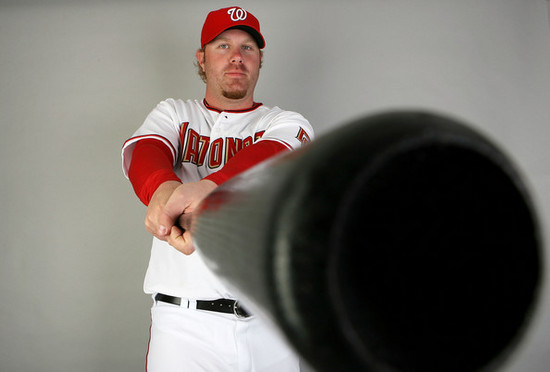
Photo by Doug Benc/Getty Images North America

As posted by other bloggers today, October 28th 2010, (especially in this post here on the Nationals Enquirer which rather eloquently titles their posting with the obvious consequence of Dunn’s Elias rating), the Nats dodged a huge bullet and will be fully compensated if Adam Dunn decides to leave via free agency (that is well, unless they do the unthinkable and fail to offer him Arbitration).  The official Elias Rankings came out and previous estimates on Dunn were slightly low (resulting in panicked posts by yours truly and others about his being a type B free agent and thus making our entire mis-handling of the contract extension even more egregiously bad).

Now, based on the rules of compensation (as explained in the Kilgore’s Nats Journal blog posting today), the first 18 picks of the 2011 draft are protected (usually first 15 but there’s a few compensation picks in there from failed draft picks in 2010).  So, IF Dunn is leaving (and the prevaling opinion seems to lean that way despite all realistic arguments against it…), what the Nats now root for is a team in the “bottom” half of the first round to be the signing team.  If this happens, we’ll get their 1st rounder AND a supplemental pick.  Otherwise we’re looking at the supplemental pick plus the signing team’s 2nd rounder.  That’s not nearly as nice of a haul frankly.

The first round draft order for 2011 goes like this, thanks to mlbtraderumors.com

Here’s the thing though; if Dunn is going to leave, then he needs to go to a team that:

a) Needs a first baseman and

b) Is REALISTICALLY in the market for Free Agents in general, and

c) Makes more sense for him to leave the Nationals for.  As in, why would he go from one last place team to another, unless the Nats insultingly refuse to offer him anything more than a 2yr deal.

Here’s a quick rundown on NL teams and their 1st basemen situation.  We focus first on the NL because of Dunn’s repeated statements that he’s not interested in becoming a full time DH.

  • Nym: Ike Davis: an up and coming prospect, had a nice 2010.
  • Phi: Ryan Howard: long term contract, anchor of the franchise.
  • Fla: Gaby Sanchez: could be upgraded but it doesn’t matter, they’re not FA buyers.  Never are.
  • Atl: Derrick Lee, who is a FA.  Troy Glaus also a FA but was awful this year. Could be a buyer, looking for a slugger to help them make the leap from WC to divisional champ.  Or they could depend on up and coming prospect Freddie Freeman.  Not listed as players in any of the early Free Agency predictions though.
  • Stl: Albert Pujols; franchise player, obviously.
  • Mil: Prince Fielder.  Milwaukee’s franchise player until his eventual trade/FA saga next season.
  • Cin: Joey Votto; MVP candidate and not yet even to arbitration.  Best bargain in baseball right now.
  • Chi: it was Derrick Lee til they traded him to Atlanta.  Possible FA buyers.  See below.
  • Hou: it was Lance Berkman til they traded him.  But are they FA buyers?  I don’t think so.
  • Pit: Garrett Jones: doesn’t matter, they’re not FA buyers; they’re the reason baseball has revenue sharing.
  • Lad: James Loney: cost contained and home grown.  plus no FA $$ spent until ownership divorce settled.  Some reports seen saying they’ll trade Loney and go after Dunn, but sounds doubtful.
  • Sdp: Adrian Gonzalez; San Diego’s marquee player.
  • Sfg: Aubrey Huff: a FA and SF desperately needs hitters.  BUT Huff may have earned an extension based on his post season exploits both at bat and in the field where he’s a plus defender.  And the Giants (by virtue of a number of awful contracts) are payroll bound for the next few years.  Not major shoppers.
  • Col: Todd Helton; signed through 2011, which will be the last of his 9 year contract.  His production is declining but they’ll want to stay flexible enough to go after the bumper 2011 1st basemen FA crop of Fielder, Gonzalez, and Pujols.  Won’t go after Dunn but will seek a 1-year FA.
  • Ari: Adam LaRoche, who is a FA, but Arizona’s new GM values defense and doesn’t like Dunn.  Plus, they do have a decent 1B prospect in Brandon Allen.  Not buyers.

So, if he goes anywhere in the NL I think it could be either Atlanta, Chicago or (maybe) San Francisco.  Chicago already has some serious payroll issues and an underperforming team but has a ton of cash.  SF may not have the payroll flexibility to buy Dunn despite really needing him.  Atlanta only has $60M committed next year and has a bunch of arbitration cases … but they’ve spent over $100m on payroll as recently as 2 years ago and may expand it out again.

Adding in AL teams, looking at 1B solutions (I can’t see him signing up for a team that will ONLY DH him, so we have to look at teams where he splits time between 1B and DH).

  • Bos: Kevin Youklis/Victor Martinez; but have a serious need for a DH if they don’t resign David Ortiz.  Interesting off season for Boston.  If they cut loose the legendary Ortiz, I can see them letting Beltre go, putting Youklis at 3rd, and then going after Dunn and selling him on splitting time between 1st and DHing when Victor Martinez needs a blow.  That’s an awful lot of “ifs” to work out though.  Update: The RedSox exercised the 2011 option on Ortiz, presumably removing them from the equation.
  • Nyy: Mark Teixeira.  Plus, don’t the 2011 yankees have like 8 guys who might need to DH periodically?  My favorite subplot of the next few years is how the Yankees handle their aging core of players.  Jeter, A-Rod, Rivera, Posada, Pettitte and Rivera are all on the wrong side of 34, all make a ton of money and all need a position to play.  Where exactly does Jeter go when he cannot play SS anymore?
  • Tam: Carlos Pena, a FA who will be allowed to walk.  However, Tampa won’t buy Dunn b/c they’re in massive payroll reduction mode.  I’m sure they’ve got some uber hitting prospect who will contribute an OPS+ of 140 next year.  They do have their 2010 minor league player of the year Dan Johnson, who hit THIRTY homers in AAA in just 98 games but he hasn’t exactly torn it up in his MLB experiences.
  • Tor: Lyle Overbay, a FA who is 34.  Can’t see Toronto buying an aging FA w/ new GM in town who is focused on building the team the right way.
  • Bal: Ty Wiggington: another aging mediocre FA.  Dunn would be *perfect* in Baltimore and at Camden, but are Orioles buyers?
  • Det: Miguel Cabrera; locked in and coming off a great year.  However, they have nearly $60M coming off the books and may be looking for someone to bash and protect Cabrera.  Would mean that Dunn becomes a full time DH.
  • Cws: Paul Konerko, a FA coming off a career year.  But, the consensus seems to be that the CWS won’t pursue Konerko (he’s 34 and clearly should start declining).  A dark horse candidate for Dunn.
  • Min: Justin Morneau; franchise player, long term contract.
  • Kc: Billy Butler; player of the future.
  • Cle: Matt LaPorta, the future of this team right now and bounty from the CC Sabathia trade.
  • Laa: Kendrys Morales; a key hitter whose injury helped derail their 2010 season.
  • Oak: Daric Barton: up and coming hitter, only 24 but they’d never buy Dunn unless it was to flip him later.
  • Sea: Russell Branyon/Casey Kotchman but they have Justin Smoak coming up (bounty for Cliff Lee).
  • Tex: Had a rotating door post Smoak trade between castoff Cantu and rookie Chris Davis, but their 2009 minor league player of the year Mitch Moreland seems to have taken hold of the position.  9 homers in 47 games down the stretch plus he has come up huge in the post season.  Not buyers.  No wonder they were OK with letting Smoak go.

There’s many more AL options.  In various scenarios he could make sense for 5 or 6 AL teams.  At least Chicago, Baltimore, Boston, or Toronto.  Tampa if they weren’t going cheap.

My personal odds/guesses in order on where Dunn may go:

  1. Chicago Cubs: makes the most sense and are already politicking for him.  However, rumors on the street at the start of free agency seem to indicate that the Cubs are standing pat.  They have new ownership in 2010 and a bunch of bad contracts.  After such an awful season how can the owners be compelled to throw good money after bad?
  2. Chicago White Sox: instead of the North Side, he moves to the south side.  Some of the Foxsports.com team belives he’s heading here.  The White Sox won 88 games last year and may be looking to upgrade (and get younger) from Konerko.  Yes its AL, but he’d clearly be the first baseman.
  3. Re-signs w/ the Nats; less likely since Rizzo can’t see the forest (40 home runs) for the trees (Dunn’s defensive liabilities).  And, he has to be insulted by the hemming and hawing that went on all season (not to mention the constant trade rumors, which clearly irritated him as the summer progressed).  There has been a 3-year deal on the table since at least August but Dunn has resisted.
  4. Lesser possibilities but which could arise.

  5. Atlanta: if the braves don’t trust prospect Freeman, they make perfect sense and Dunn would be walking into a playoff team ready to take the next step.
  6. Houston; a return home  … but I don’t think they’re really shopping.
  7. Detroit: A couple of Fox sportswriters seem to think he’s heading to Detroit.  If he does, its clearly a signal of defeat on his part because he’d immediately be a full time DH.
  8. New York Yankees.  The Yankees do have a slight need for a DH, but it would take convincing Dunn to completely give up playing in the field as the Yankees are already stacked with future DHs.
  9. Baltimore; Dunn may reach 700 career homers if playing in Camden Yards for the next 5 years with its short porch.  But, as mentioned before, if he decides to leave Washington (an up and coming franchise that could actually contend by the time his contract ends), why would he go to a place like Baltimore?  Baltimore is the 5th best team in a division that shows no signs of ever having an off year.  In fact, why would ANY marquee free agent ever go to Baltimore?
  10. Oakland: listed by Ben Reiter as a dark horse for Dunn’s services.  Don’t see it.

Now, IF Dunn is absolutely leaving … who are the teams we’d be “rooting” to sign him?  Boston is best, but Atlanta or SF would be great too.  If he goes to these locations we’d own a mid-20s first rounder plus a supplemental.  If he goes to Chicago or Houston, we’re looking at a supplemental and an early 2nd rounder (or worse if these teams decide to sign TWO type-A free agents and the other is higher ranked than Dunn.  Under this scenario we’d get a supp-1st and the signing team’s 2nd rounder.  Not good).
Greinke Trade Question

2 comments

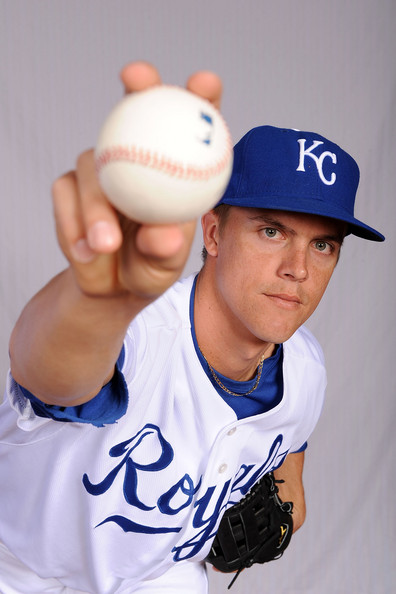
Zack Greinke at photo day 2010. Photo by Harry How/Getty Images North America

I have kind of a love-hate relationship with Keith Law sometimes.  I think he’s a pretty darn good talent evaluator and there’s a reason he had a front office job (and now the scouting analysis job).  He even once responded to an article follow-up email I sent him where I thought he was bashing Bowden’s moves a bit to heavily (ironic in that i’m now clearly on the anti-Bowden track as he was all along).  However, I think he over-analyzes and is a bit TOO stat heavy sometimes, and I believe he over-values certain players.

In yesterday’s chat on ESPN (insider only, apologies), there were a few Washington related questions.  Here was one that I couldn’t quite believe though:

Joseph (Sacramento, CA) asks, “J.Zimmermann, Espinosa, Burgess, Detwiler for Greinke? Does this work for both sides?”

Klaw answer: “It certainly works for Washington.”

Jordan Zimmermann, Espinosa, Burgess and Detwiler for Greinke straight up.  I say, no way.  I have to disagree with Law here.

That’s trading your current #2 pitcher, your anticipated starting 2nd baseman, your best OF prospect not named Bryce Harper, and a prospect lefty starting pitcher/former 1st round draft choice (who may not have great MLB stats but is a lefty who throws mid 90s) for a potential #1 starter.  I say Potential because, if you look at Greinke’s career numbers they’re not exactly overwhelming.  Yes he had a phenomenal 2009.  What happened in 2010?  Era+ of 100 means he was MLB average.  The years before he was a good but not overpowering starter on a bad team (putting up ERA+ figures of 126 and 124; good but not great).   There’s no promise of Greinke returning to that form (though the move to the NL will certainly help).  Is he a Ron Guidry or Rick Sutcliffe pitcher (guys who had one fabulous year and then came back down to earth)?

I think I’d be interested in Greinke (who wouldn’t?) but at a lesser price.  I’d trade Zimmermann and Espinosa for him.  Justification; Zimmermann is indeed a #2 starter quality guy but would be expendable with Greinke in the fold.  Espinosa shows great promise and I like him, but we also have a couple of high-profile 2nd basemen prospects in the minors that would feature soon (Lombardozzi or Kobernus).  Perhaps I’m as guilty as Law in overvaluing our own prospects, but to me Greinke isn’t good enough to merit the trade.  If it was a better “Ace,” someone with a repeated track record of success (Felix Hernandez, Lincecum, Halladay), the haul would be easily worth it.

But for Greinke, all 4 of those guys is too much.

Nats GM for a day Part 1: the Arbitration cases

2 comments

Photo Courtesy of Jeff Saffelle/Nats320 Blog

MLB’s beat writer Bill Ladson kicked off the National’s offseason with a post summarizing the Nat’s major off season personnel decisions (free agents to be and Arbitration candidates).  The Nats have a relatively large number of arbitration decisions to make, as well as a few free agents.

Next up, the Arbitration cases.  We have a number of them.  In relative order of salary expectations:

Player What Should Washington Do?/What WILL We do?
Willingham, Josh Tender; valuable trade chip in 2011.
Wang, Chien-Ming Non-tender and negotiate one year deal (ala Olsen in 2010).  Can’t pay arb raise for zero production in 2010, despite what he’s capable of.
Olsen, Scott Non-Tender; usefulness to the team in terms of production and character at an end.
Burnett, Sean Tender: and please don’t fight him for a few dollars after his great 2010
Flores, Jesus Tender: may end up being trade bait to a needy team since we have Ramos and Pudge plus Norris coming up.
Nieves, Wil Non-Tender; we’re finally after 2 years in a decent catcher position in the franchise.
Walker, Tyler Non-Tender; perhaps offer ML deal with ST invite.  Other arms that can do what he did in the system for less.  11/4/10 update: Nats have flat out released him.
Lannan, John Tender: Nats #2 starter in 2011.
Gonzalez, Alberto Tender: Achieved super2 status.  Tough call though since he wants to leave and get a starting opportunity.  Nats need him as a backup for at least one more season though til guys like Lombardozzi are ready.
Slaten, Doug Tender: great job in 2010 as loogy.
Peralta, Joel Tender: Despite being FA, only has 4+ yrs of MLB service.   Was fantastic for us in 2010 and need to keep

Amazingly Ladson thinks Willingham is a non-tender candidate.  Uh, why would we possibly do that?  He was as solid a #5 hitter as there was when he was healthy, he’s a great clubhouse guy and contributes well above his salary.  Other clear tenders include Burnett, Flores and Lannan.

Olsen, Nieves and Walker are clearly guys that we do NOT tender contracts to.  Each for different but well documented reasons.  11/6/10 Update: Olsen assigned to AAA and refused the assignment, becoming a FA.

The difficult decisions lay with the other arbitration candidates.  With Wang i’d try to appeal to his (agent’s) sense of fairness and pre-negotiate an incentive laden contract, based on the lack of a single game played for his $2M in salary last year.  Perhaps a contract of $1M plus incentives based on number of starts that push the total value to $3M if he makes more than 25 starts.  Alberto Gonzalez has apparently reached Super2 Status and we a may have an arbitration case coming, if only because Gonzalez has stated he wants a chance to start.  The problem Alberto doesn’t seem to realize is that he’s an awful hitter, putting up a 57 ops+ in about 200 ABs last year.  He’s a classic good field-no hit dominican middle infielder and I doubt he finds many suitors on the trade market.  Lastly we come to Slaten and Peralta.  Both guys were minor league FAs for us in 2010 and both pitched lights out after getting called up to fill in for injuries and poor performers (basically replacing English and Bergmann).  Are they worth tendering and paying more money or do you cut them loose and take your chances with the next crop of minor leaguers coming up?  I say stick with the known (i.e., a fantastic bullpen last year) and bring them back.

Next up, two guys who may or may not have achieved Arbitration status.  Cots and baseball-america don’t necessarily agree.

Chico, Matt Not sure if he’s truly achieved Arbitration status yet.  Cots says yes.  If Arb eligible, Tender a contract.  AAA rotation
Morse, Michael May not have achieved Arbitration yet.  If Arb eligible, absolutely Tender.  MLB utility infielder.

Even though Chico seems like he’s buried in AAA, he’s still a lefty starter with a somewhat decent track record who gave us one decent spot-start this year.  Morse I’m more excited for.  I believe that Morse could be a hidden gem of a starter for us if given the time.  He hit 15 homers in 293 ABs, which projects to 30 homers over a full season.  He’s athletic (played shortstop in HS and in his MLB debut season) and can clearly play all around the diamond.  Clearly he can play first base since he’s 6’5″ and is a reformed middle infielder.  If Dunn walks, I can easily see Morse playing 1st and Bernadina playing RF (barring no FA pickups).

Next up; the Free Agents…

Giants win continues a “Best Team not Winning the World Series” Trend…

one comment

Photo by Carlos Avila Gonzalez / San Francisco Chronicle

The SF Giants finished with the 5th best record in the majors.  Clearly they were an elite team and won their division, but finished the season five games worse than the same Phillies that they dispatched in 6 games in the NLCS.

Their victory in the World Series continues an interesting trend in Baseball, and in most of the other major sports in this country for that matter, where the team with the best record in the regular season does not win the year end title.  I call it the “wild card” effect on professional sports.  Each major sport has a playoff structure that allows in “wild card” teams that have a chance to win the year end title despite not even being able to win their own division throughout the regular season.

Here’s a quick rundown of the best Baseball teams in the regular season (by overall record) versus who won the WS.  I’ve got the data going back to 1990, a convenient starting point since the Wild Card was instituted in 1994.  Bolded means that the best team won the WS:

year MLB WS Winner MLB Best Reg Season Team per league
2010 San Francisco Philadelphia, Tampa Bay
2009 New York New York, LA Dodgers
2008 Philadelphia LA Angels, Chicago Cubs
2007 Boston Boston, Arizona
2006 St. Louis NY Yankees, NY Mets
2005 Chicago WS St. Louis, Chicago WS
2004 Boston St. Louis, NY Yankees
2003 Florida (Miami) NY Yankees, Atlanta
2002 Anaheim (LA) NY Yankees, Atlanta
2001 Arizona (Phoenix) Seattle, Houston
2000 New York SF Giants, Chi WS
1999 New York Atlanta, NY Yankees
1998 New York NY Yankees, Atlanta
1997 Florida (Miami) Atlanta, Baltimore
1996 New York Cleveland, Atlanta
1995 Atlanta Cleveland, Atlanta
1994 (no WS, player strike) Montreal, NY Yankees
1993 Toronto Atlanta, Toronto
1992 Toronto Atlanta, Toronto
1991 Minnesota (Minneapolis) Pittsburgh, Minnesota
1990 Cincinnati Oakland, Pittsburgh

Since 1990, only THREE times has the team with the best regular season record won the World Series.  The fantastic 1998 NY Yankees team, the 2007 Boston Red Sox and last year’s 2009 Yankees team.  This year, the Rays fell to Texas and the Phillies fell to the Giants, meaning the two best teams in the league didn’t even make the World Series.  This “wild card” effect resulted in one of the regular season teams ever (the 2001 Seattle Mariners) not even reaching the World Series (falling at the hands of the Yankees, who then lost to the wild card Diamondbacks).  Several times wild card teams have won the WS out right (Florida in 97 and the 04 Red Sox as other examples), meaning that our WS champion would not have even qualified for the playoffs just a few years earlier.  For some reason I find this troubling.

Are the other major sports even worse?   Both the NBA and NHL allow in more than half the league’s teams to the playoffs.  In the MLS, half the teams qualify and then play a “home-and-home” first round of playoff games, essentially negating any home-field advantage earned by winning your division (ridiculous frankly; why have any value to the regular season?)   Football seems to have a pretty well-regarded playoff system right now but the imbalanced talent in the 2010 season may result in deserving AFC 10-6 teams being left out in favor of 8-8 NFC teams.  Here’s a quick breakdown of our major leagues and the percentage of teams allowed into the playoffs.

Ttl Teams # Playoff teams Pct
mlb 30 8 26.67
nfl 32 12 37.5
nba 30 16 53.33
nhl 30 16 53.33
mls 16 8 50

Baseball still has the stringiest playoff-qualifications, even post 1994 wild card expansion.  Now Bud Selig wants to add in more wild card teams in what is clearly a money-grab for his fellow greedy owners (a third of whom are basically refusing to field a competitive team and are sucking in revenue sharing dollars like a trust fund kid).

So, how many times do the other leagues crown their best regular season team as champs?  The answer may surprise you.  Here’s a similar table going back to1990 for all the major sports.   Here’s the summary.  Since 1990:

  • 3 times the best Baseball Team won the World series
  • 6 times the best Football Team won the Super Bowl
  • 8 times the best Basketball Team won the NBA championship
  • 5 times the best Hockey Team won the Stanley Cup

How’s that for parity?  I used to knock the NHL for the proclivity of #8 teams knocking off #1 seeds in the playoffs (something that’s only happened twice in the NBA).  The NHL is infamous for having teams “built for the playoffs” and it not really being a surprise when a team like last year’s Washington Capitals lose in the first round of the playoffs.  However, look at baseball.  Only three times in 20 years has the best team won the World Series.  This fact gives credence to Billy Beane’s comment that the playoffs are indeed a crapshoot and GMs should build towards making the playoffs and then crossing their fingers.

Anyway you slice it, the Giants earned this World Series victory by beating the best.  I would have personally loved to see a NY Yankees-Philadelphia series (as would have every TV executive at Fox) and it would have crowned a champion that truly was one of the two best teams this year in the regular season.  But this series was definitely entertaining in its own right and featured some great pitching (the topic of my next blog posting…)

Written by Todd Boss

November 2nd, 2010 at 5:34 pm

Posted in Baseball in General

Tagged with

A dose of reality for the Nats off-season upcoming

one comment

Strasburg's Elbow Injury. Photo LarryBrownSports.com

In the past few weeks, we are hearing news reports linking the Nats to such luminary names as Cliff Lee, Matt Kemp, and Zack Greinke as off season targets.  We are willing to go $125M/5years for Lee, we’d be “interested” in Kemp and we think we can put together a package of prospects for Greinke.

Now, I don’t mean to come off as a grumpy old Nats fan.  Because I’m not; I follow this team intently, I have a rather unhealthy obsession with the minor league pitching rotations (hence the name of the blog), and I truly want the team to do better.  But each of these rumors seems more ridiculous than the last and we (along with my fellow Nats bloggers) probably should have a bit of restraint when talking about the possibilities of actually acquiring these guys.

Zach Greinke is under contract to KC through 2012, has a limited no-trade clause and will probably cost (by various accounts) at least two young MLBers plus one or more additional prospects.  I use the Roy Halladay-to the Phillies deal as a comparison.  Halladay still had an entire year on the contract and Philly had to give up two high end prospects plus a third good young player in Kyle Drabek.   If Greinke was in the last year of his contract (ala Cliff Lee this year) the price would be far less (indeed, the Rangers gave up their #1 prospect Justin Smoak but the other players were lesser ranked prospects).

Matt Kemp apparently is irritated with his club’s management, leading to spurrious trade rumors.  But Kemp is even further away from free agency than Greinke, currently on a 2 year deal and then facing one more arbitration year before being cut loose by 2013.

Here’s the rub; the Nationals really don’t HAVE the kind of prospect depth that is required to make a deal for either player.  Baseball America’s Jim Callis ranked his top 10 Nats prospects in a recent chat  and he listed them in this order:

BA’s Jim Callis’ top 10 Nats prospects (the comments are his’)
1. Bryce Harper, of: Has monster power, though he won’t match Strasburg’s immediate impact.
2. Wilson Ramos, c: Matt Capps trade freed Ramos from being blocked by Joe Mauer with Twins.
3. Derek Norris, c: Still needs to polish bat and defense, but he has power and on-base ability.
4. A.J. Cole, rhp: First-round stuff earned him $2 million as a fourth-rounder.
5. Sammy Solis, lhp: Don’t be surprised if the $1 million second-rounder outperforms Cole.
6. Danny Espinosa, ss: Solid defender has cannon arm and surprising pop (40 HR in 2009-10).
7. Chris Marrero, 1b: Best proven all-around bat in system, though little defensive value.
8. Brad Peacock, rhp: Runs his fastball up to 95, flashes solid knuckle-curve and changeup.
9. Michael Burgess, of: Power potential remains impressive, but will he make enough contact?
10. Yunesky Maya, rhp: Former Cuban national team ace got $8 million big league contract.

Note he doesn’t mention our Minor leaguer of the year Tyler Moore, or our 12th round steal Robbie Ray.

Of this list, who is really trade-able?  Probably not a single one of the top 6 right now, nor Maya or Ray.  Perhaps Norris, if we find out that Jesus Flores is indeed healthy and we decide we can cash in one of the three of our young catchers.  That leaves Marrero (who can barely play 1B and doesn’t hit nearly well enough to be a DH prospect), Peacock (22 and probably the best experienced minor league arm we have), Burgess (who now has 3 full pro seasons and still can’t hit a curveball), and Tyler Moore (great season but he did it as a 23-yr old in high-A).  Our cache of early to mid 20s arms is good (Chico, Martis, Atilano, Stammen, Balester, Detwiler, Martin, Mock to start) but not one of them has proven they can produce at a sustained level without an ERA ballooning into the 5.00 era.  Who wants to trade for a middle-relief right handed pitcher?

Lastly, there’s the Cliff Lee question.  I just finished a blog posting showing how $125/5yrs is almost guaranteed to be an albatross of a contract.  But ask yourself; why would Lee come here even if offered more money than Texas or New York will throw at him?  Why did Mark Teixeira not come to Washington despite being (allegedly) offered more money than the Yankees?  Simple reason: we’re not good enough yet.  The team needs build its farm system and thus build its product on the field, while improving in the records and begin to attract better and better free agents.  Yes, some players will just take whoever offers the most money, but most players want to get paid AND have a chance to win championships, pad their legacy, etc.  If Ryan Zimmerman played for a winning team, he’d not only have more All Star appearances by now but he’d also probably have some MVP votes.

Now, if Strasburg was healthy next year, AND we had a legitimate #2 guy (could be Zimmermann, could be someone else), AND we knew that Marquis and Livan Hernandez would serve as good back-of-the-rotation innings eaters, and we resigned Dunn to preserve a pretty fearsome 3-4-5 lineup … well that sounds a lot more promising to a marquee Free Agent, right?

Now, think about how we’d possibly look 2 years from now at the beginning of 2012.  Harper has torn through a year in the minors, Solis has made  his mlb debut and looks like the 2nd coming of Madison Bumgarner.  Strasburg looks great in rehab starts in Florida and in Potomac.  Espinosa and Desmond are settled in to their roles, Zimmermann has bounced fully back from TJ surgery and looks great, and we’ve added an outfield bat to augment what we had in 2009.  That’s an enticing story, a good young up and coming team that should be able to attract a serious FA starter to augment what is already here.

Contract Value for FA Starting Pitchers; the Cliff Lee lesson-to-be

4 comments

Cliff Lee. Photo: Al Bello/Getty Images

As Cliff Lee continues to dazzle in the post season (his most recent effort being his 8inning, 2hit 13k gem against the most potent offense in Baseball, your NY Yankees), rumors of his purported price tag in the Free Agency market continue to reach spiraling heights.  The most common numbers thrown out start at 5yrs, $25M per.  One author at Forbes thinks he may approach $200M for 6 years combining salary and endorsements.

If you are trying to compare talent to contract value, then you have to start with the highest paid pitchers at current.  CC Sabathia is at $23M/year, Johan Santana is at $22.9M/year on average, and Roy Halladay took a slight discount to sign with Philadelphia (and be able to live in his offseason Odessa home 2 extra months of the year and drive to Spring Training) and is making $20M/year on his new deal.  Clearly, Cliff Lee has shown that he belongs at least at the $20M/year scale.  But how much higher makes sense financially for the signing team?

Forgetting for the moment that payroll means very little to a team like the New York Yankees (unfortunately his likely destination), lets talk about the value of the Free Agent contract and whether a team that gives out a $25M/year contract can ever really get their money’s worth.  Baseball is filled with horror stories of huge FA contracts that went bust.  Names like Zito, Dreifort, Pavano, Neagle, and Hampton fill general managers and fan’s heads with dispair.

How bad were these contracts?  I put together a spreadsheet with every significant starting pitcher FA contract that I could find, then cross referenced it by the Pitcher’s Won/Loss record during the duration of the contract.  See below: the table is sorted in reverse order of $/win.  In addition to the major FA contracts, I also arbitrarily added every “Ace” starter in the league, resulting in names like Lee, Jimenez, Price and Buchholz being in this list despite not being major FA pitchers (yet).  Their inclusion illustrates one of my major conclusions below.

Pitcher Team Total Value (includes club options) $$/year Avg Contract Term W/L $ per win
Kei Igawa New York Yankees $46,000,000 $9,200,000 2007-11 2-4 $18,400,000
Jason Schmidt Los Angeles Dodgers $47,000,000 $15,666,667 2007-09 3-6 $15,666,667
Kei Igawa New York Yankees $20,000,000 $4,000,000 2007-11 2-4 $8,000,000
Darren Dreifort Los Angeles Dodgers $55,000,000 $11,000,000 2001-05 9-15 $6,111,111
Russ Ortiz Arizona Diamondbacks $33,000,000 $8,250,000 2005-08 7-22 $4,714,286
Roger Clemens New York Yankees $28,000,022 $28,000,022 2007 6-6 $4,666,670
Carl Pavano New York Yankees $39,950,000 $9,987,500 2005-8 9-8 $4,438,889
Denny Neagle Colorado Rockies $51,000,000 $10,200,000 2001-05 19-23 $2,684,211
Jake Peavy San Diego Padres $52,000,000 $17,333,333 2010-12 7-6 $2,476,190
Carlos Silva Seattle Mariners $48,000,000 $12,000,000 2008-12 15-24 $2,400,000
Mike Hampton Colorado Rockies $121,000,000 $15,125,000 2001-08 56-52 $2,160,714
Chan Ho Park Los Angeles Dodgers $65,000,000 $13,000,000 2002-06 33-33 $1,969,697
Barry Zito San Francisco Giants $126,000,000 $18,000,000 2007-13 40-57 $1,800,000
Johan Santana New York Mets $137,500,000 $22,916,667 2008-13 40-25 $1,718,750
Pedro Martinez New York Mets $54,000,000 $13,500,000 2005-08 32-23 $1,687,500
Carlos Zambrano Chicago Cubs $91,500,000 $18,300,000 2008-12 34-19 $1,614,706
Gil Meche Kansas City Royals $55,000,000 $11,000,000 2007-11 29-39 $1,517,241
Daisuke Matsuzaka Boston Red Sox $103,000,000 $17,166,667 2007-12 46-27 $1,492,754
Kevin Brown Los Angeles Dodgers $105,000,000 $15,000,000 1999-2005 72-45 $1,458,333
A.J. Burnett New York Yankees $82,500,000 $16,500,000 2009-13 23-24 $1,434,783
Roger Clemens New York Yankees $18,000,000 $18,000,000 2005 13-8 $1,384,615
Felix Hernandez Seattle Mariners $78,000,000 $15,600,000 2010-14 13-12 $1,200,000
John Lackey Boston Red Sox $82,500,000 $16,500,000 2010-14 14-11 $1,178,571
Jarrod Washburn Seattle Mariners $37,000,000 $9,250,000 2006-09 32-52 $1,156,250
Chris Carpenter St. Louis Cardinals $50,800,000 $12,700,000 2008-11 33-13 $1,154,545
Kevin Millwood Texas Rangers $60,000,000 $12,000,000 2006-10 52-62 $1,153,846
C.C. Sabathia New York Yankees $161,000,000 $23,000,000 2009-15 40-15 $1,150,000
Roy Oswalt Houston Astros $73,000,000 $14,600,000 2007-11 52-36 $1,123,077
Bartolo Colon Los Angeles Angels $51,000,000 $12,750,000 2004-07 46-33 $1,108,696
Mark Buehrle Chicago White Sox $56,000,000 $14,000,000 2008-11 41-35 $1,024,390
Ryan Dempster Chicago Cubs $52,000,000 $13,000,000 2009-12 26-21 $1,000,000
Derek Lowe Atlanta Braves $60,000,000 $15,000,000 2009-12 31-22 $967,742
Mike Mussina New York Yankees $88,500,000 $14,750,000 2001-06 92-53 $961,957
Justin Verlander Detroit Tigers $80,000,000 $16,000,000 2010-14 18-9 $888,889
Josh Johnson Florida Marlins $39,000,000 $9,750,000 2010-2013 11-6 $886,364
Pedro Martinez Boston Red Sox $92,000,000 $15,333,333 1998-04 117-37 $786,325
Bronson Arroyo Cincinnati Reds $25,000,000 $12,500,000 2009-10 32-23 $781,250
Josh Beckett Boston Red Sox $42,000,000 $8,400,000 2007-10 55-29 $763,636
Daisuke Matsuzaka Boston Red Sox $52,000,000 $8,666,667 2007-12 46-27 $753,623
Ted Lilly Chicago Cubs $40,000,000 $10,000,000 2007-10 54-21 $740,741
Zack Greinke Kansas City Royals $38,000,000 $9,500,000 2009-12 26-22 $730,769
Tim Lincecum San Francisco Giants $23,000,000 $11,500,000 2010-11 16-10 $718,750
Mike Mussina New York Yankees $22,141,452 $11,070,726 2007-08 31-19 $714,240
Matt Cain San Francisco Giants $27,250,000 $9,083,333 2010-12 13-11 $698,718
Roy Halladay Toronto Blue Jays $40,000,000 $13,333,333 2008-10 58-31 $689,655
Derek Lowe Los Angeles Dodgers $36,000,000 $9,000,000 2005-08 54-48 $666,667
Cole Hamels Philadelphia Phillies $20,500,000 $6,833,333 2009-11 22-22 $621,212
Jason Schmidt San Francisco Giants $40,000,000 $8,000,000 2002-06 71-36 $563,380
Brandon Webb Arizona Diamondbacks $28,000,000 $5,600,000 2006-10 56-25 $500,000
Jon Lester Boston Red Sox $43,000,000 $7,166,667 2009-14 34-17 $421,569
Adam Wainwright St. Louis Cardinals $36,000,000 $6,000,000 2008-13 50-22 $360,000
Cliff Lee Cleveland Indians $23,000,000 $4,600,000 2006-10 67-44 $343,284
Ubaldo Jimenez Colorado Rockies $23,750,000 $3,958,333 2009-14 34-20 $232,843
David Price Tampa Bay Rays $11,250,000 $1,875,000 2007-12 29-13 $64,655
Clay Buchholz Boston Red Sox $443,000 $443,000 2010 17-7 $26,059

Comment on Won/Loss records; yes I know that individual pitcher wins are not a great indicator of a starter’s worth.  However, they do reasonably indicate over the course of a longer term period the value of that pitcher to a team.  Perhaps a better argument is free agent dollars per quality start (despite the quality start measuring basically a mediocre start of 3ER or less in 6ip or more by a pitcher, it does generally correlate well to team wins andveven to a “real” quality start of 2ER or less in 6IP or more).  At some point I’ll re-run the analysis and count up QS per FA dollar to see how it compares.

Note for the purposes of this argument:

  • The Contract total value is averaged over the life of the contract, even if the payments are different during different years.
  • The W/L record is for the pitcher over the life of the contract, not necessarily for the original signing team.
  • If the contract is current (i.e., runs from 2009-2012) then I’ve only counted the completed regular seasons.
  • There are no off-season records taken into play.
  • I entered in both Japanese Pitchers (Igawa and Matsuzaka) with massive posting numbers twice; one factoring the posting fee and the other not.  Without the fee Dice-K looks halfway decent but with it he’s overpriced (something all Boston fans probably already knew about their highly paid #5 pitcher).

Conclusions.

– If  you can get 1 win per $1M expended, you are doing about average it seems.  Anything above $1.25M and you are looking at a questionable contract.

– It is difficult to look at any contract below $1M/victory and say that the team made a bad deal.

– The absurdly low $/victory values for David Price and Clay Buchholz demonstrate as clearly as possible the value of the pre-arbitration superstar.  Tampa Bay (who did a similarly shrewd deal with Evan Longoria, buying out the arbitration years and tying the player to the club past the 6-year pre-FA window) now gets Cy Young-quality starts from Price for the next two years at 1/20th his market value.  Buchholz is even more evident; at a pre-arbitration salary of $443,000 for 2010, he went 17-7 and gave the Red Sox #1 starter capabilities.  On the open market he’s worth at least $15M/year at that level of productivity.

– The worst FA contract ever given to a starting pitcher wasn’t one of the aforementioned infamous culprets; it belongs to one Kei Igawa.  The Yankees paid the posting fee of $26M just to negotiate with him, then signed him to a 5 year, $20M contract.  For that outlay of $46M guaranteed, the Yankees have gotten a record of 2-4 over parts of two seasons, and he hasn’t appeared in a MLB game since June of 2008.  Luckily the Yankees can afford it; this kind of FA mistake would cripple a mid-to-small market team for years.

Jason Schmidt‘s 3yr, $47M deal with the LA Dodgers is the largest $$ bust in terms of a pure FA play, not counting the vagarities of the Japanese posting system.  Schmidt had ironically just finished an incredibly efficient deal with San Francisco, where he went 71-36 over 5 seasons on a $40M contract (resulting in a very good $/win number of $563,380).  Six games into his Dodger career he went onto the DL list with shoulder injuries that eventually cost him the rest of 2007 and all of 2008.  He tried to regroup in 09, failed to make the team out of spring, made a few starts and was back on the DL.  All told, 3 wins in 10 starts for $47M.

– Some of the infamous deals do appear close to the top of this list; Neagle’s $51M for a 19-23 record.  Dreifort’s $55M deal resulting in a grand total of 9 wins and only 26 starts.  Ironically, the highest single season salary was Roger Clemen‘s $28M deal with New York in 2007.  For that money the Yankees got a middling 6-6 record.

– Are there any major FA deals that ARE paying off?  Well, you have to dig deep.  CC Sabathia has won 40 games for the Yankees in the first two years of his $23M/year deal, which is easily the best 9-figure deal.  However, it is early; we need to check back in years 6 and 7 of this deal.  Mussina went 92-53 for the Yankees after he signed his $88M deal in 2001.  Verlander won 18 games this year for his $16M annual salary and looks like a good bet to continue that trend.

– The BEST long term FA deal ever signed has to be Pedro Martinez‘s 6year $92M deal.  He went 117-37 between 1998-2004, won 3 Cy Youngs, had 2 Cy Young runners-up, and in the year 2000 posted an ERA+ of 291, which accounts for the best modern-day single-season pitching performance in the history of the game.

Bringing this back to Cliff Lee; the conclusion is thus; he may earn a $25M/year deal but the odds of his continuing to win 20-22 games/year for the duration of the contract and thus inflating the $/win value will eventually prove that contract to be an albatross (even more so if he misses significant time to injury at some point).

Interesting thoughts about the Giant’s roster construction…

one comment

As I watch the NLCS and its surprising results so far (Cody Ross with a Reggie Jackson-esque performance thus far, Roy Halladay getting beat, etc), you can’t help but notice some interesting items about the Giants roster and its makeup.

1. The Giants THREE highest paid players (Zito, Rowand, Guillen) are not even on the post season roster, and their 4th highest paid player (Renteria) is not the starter at short.

2. The position players that the Giants are depending on are all either developed internally (Posey, Sandoval) are retread/journeyman free agents on one-year deals (Torres, Uribe, Huff, Fontenot) or total reclamation projects (Burrell who was DFA’d earlier this season and Ross who they got on waivers).

3. Almost their entire pitching staff is home grown. Lincecum, Cain, Sanchez, Bumgarner plus setup/closer
combo of Romo and Wilson are all original SF draft picks. Only #5 Starter Zito is an (infamous) FA acquisition.

Here’s a quick table of Giants “primary starters” player acquisition methods:

SF (postseason 2010) acquisition method
Buster Posey Draft
Aubrey Huff FA
Freddy Sanchez Trade Prospects
Pablo Sandoval FA (intl)
Juan Uribe FA
Pat Burrell FA (dfa’d)
Andres Torres FA
Cody Ross Waivers
Tim Lincecum Draft
Matt Cain Draft
Jonathan Sanchez Draft
Madison Bumgarner Draft
Barry Zito FA
Sergio Romo Draft
Brian Wilson Draft
Drafted/Developed 8
Traded Prospects 1
Traded MLBs 0
FA/Waivers 5

By way of comparison, the Nationals opening day roster featured only FOUR such home grown players (Zimmerman, Desmond, Lannan and Stammen).

The Giants list their 2010 payroll at $96M, of which $42M is allocated to those 3 guys not even rostered.  Imagine what this team would look like if that $42M was properly allocated.

I think what this shows is that, with enough development time and effort put into your pitching staff you can get to the playoffs even with near replacement players in most of your fielding positions. Hope for the Nats, since this seems to be the direction Rizzo is going with his 2009 and 2010 pitcher heavy drafts. 8 of the first 11 picks in 2009 were arms, and while only 4 of 2010’s top 10 picks were arms there was significant funds paid to Solis, Cole and Ray.

Can the Nats turn these two drafts (plus other prospects) into a Giants-esque rotation? Strasburg, Zimmermann, Solis, and Cole all project to be #1 or #2 starter quality per scouting reports. Those four, plus live arms in the pen like Storen, Holder and Morris could be our future. 3-4 years out future, but still promising.

Or am I too rosy glasses colored?

2011 Draft Race: Nats finish with #6 pick in 2011

leave a comment

A slight faltering at the tail end of the season leaves the Nats with the #6 overall pick in next year’s draft.  Here’s how the first round will go next year.

Order Team Wins Losses winning pct
1 Pittsburgh 57 105 0.352
2 Seattle 61 101 0.377
3 Arizona 65 97 0.401
4 Baltimore 66 96 0.407
5 KC 67 95 0.414
6 Washington 69 93 0.426
6a Arizona
7 Cleveland 69 93 0.426
8 Chi cubs 75 87 0.463
9 Houston 76 85 0.472
9a San Diego
10 Milwaukee 77 85 0.475

Pittsburgh was 5-6 games “ahead” for the #1 pick for most of the 2nd half.  Seattle’s historically bad offense locks them into the #2 overall pick.  Baltimore’s late season surge under Showalter cost them a couple spots but gives the fanbase hope for 2011.  Arizona’s unprecedented 2 top 7 picks (the 2nd is compensation for failing to sign Barret Loux after an MRI showed a more significant arm injury than anyone knew) should make for a great draft for them.  Houston nearly jumped into the mid-teens by having a scorching August but settled down into the #9 pick, just ahead of San Diego’s compensation pick for failing to sign Karsten Whitson (I believe he was diagnosed with diabetes and opted for college instead of going pro).

By “tying” Cleveland (Washington gets the better pick because of a worse 2009 record), we actually jumped the compensation pick of Arizona, which is good news.  There is sure to be some good talent in next year’s college pitcher rich draft at the #6 overall pick.  (Early draft reviews show possibly guys like Gerrit Cole, Danny Hultzen, Matt Purke, or Taylor Jungmann at that spot). Plus, we may pick up another pick in the first round depending on the outcome of the Adam Dunn offseason (see a previous post here about Dunn’s current TypeB status).

Full Reverse standings are here at mlbtraderumors.com.

Written by Todd Boss

October 11th, 2010 at 12:49 pm

MLB Payroll and Parity: only 2 of Baseball’s $100M teams make Playoffs

leave a comment

Now that the regular season is over, lets take a look at the opening day payrolls and how the teams finished up:

Team 2010 Team salary (src: usatoday baseball salary datbase) 2010 record rank playoff status Salary Rank
$206,333,389 3 AL WC 1
Boston Red Sox $162,447,333 10 2
Chicago Cubs $146,609,000 23 3
Philadelphia Phillies $141,928,379 1 NL East 4
New York Mets $134,422,942 20 5
Detroit Tigers $122,864,928 15 6
Chicago White Sox $105,530,000 11 7
Los Angeles Angels $104,963,866 17 8
San Francisco Giants $98,641,333 5 NL West 9
Minnesota Twins $97,559,166 4 AL Cent 10
Los Angeles Dodgers $95,358,016 17 11
St. Louis Cardinals $93,540,751 12 12
Houston Astros $92,355,500 22 13
Seattle Mariners $86,510,000 29 14
Atlanta Braves $84,423,666 6 NL WC 15
Colorado Rockies $84,227,000 14 16
Baltimore Orioles $81,612,500 27 17
Milwaukee Brewers $81,108,278 21 18
Tampa Bay Rays $71,923,471 2 AL East 19
Cincinnati Reds $71,761,542 6 NL Cent 20
Kansas City Royals $71,405,210 26 21
Toronto Blue Jays $62,234,000 13 22
Washington Nationals $61,400,000 24 23
Cleveland Indians $61,203,966 24 24
Arizona Diamondbacks $60,718,166 28 25
Florida Marlins $57,034,719 17 26
Texas Rangers $55,250,544 8 AL West 27
Oakland Athletics $51,654,900 15 28
San Diego Padres $37,799,300 8 29
Pittsburgh Pirates $34,943,000 30 30

What we see here is some direct relationship between payroll and performance at the very top and bottom of this table: the Yankees certainly bought their way into the playoffs while the Pirates certainly played their way to the worst record in the league with the lowest payroll in baseball.  But how do you explain the other 28 teams in between?

First lets talk about the high end of the spectrum.  The Red Sox slumped at the end of the season to the 10th best record but were only a game worse than the AL West winning Rangers.  Several high payroll teams (Cubs, Mets, Tigers) continue to show why long term contracts for aging veterans are not the way to win in modern baseball.  Well, unless you’re the Yankees and you buy enough of them to cover for mistakes (see Vazquez, Javier).  The two LA teams are both in the upper ends of the payroll spectrum but faltered this year for different reasons (the Angels with injuries and key FA losses and the Dodgers with ownership ridiculousness).

At the other end of the spectrum, the Padres and Rangers are in the beginning stages of where Tampa and (to a lesser Extent Florida) are now; teams that gutted themselves, developed their teams through superior drafting and player development (even with the Lee trade most scouting pros believe the Rangers still have the best or 2nd best farm system) and kept payroll low.  If you have superior drafting capabilities and develop players, soon you’ll have a good young team, cost contained, that outproduce multi-million dollar free agents.  Also, Kudos to the Atlanta Braves for smartly spending money and continuing to produce quality major leaguers.  A team that spends $84M on payroll certainly can’t complain about being poor, but to produce a playoff success with a young team and with more players in the wings (Mike Minor comes to mind)

A good number of teams fall more or less in line with their payroll productivity.  St. Louis underperformed this year but finished with the 12th best league record and the 12th highest payroll.  Milwaukee, Arizona, Washington, Cleveland, Colorado and Philadelphia all basically finished in line with their payroll output.

However, when a team with the second lowest payroll (Padres) misses out on the playoffs on the last day of the season, arguments for a salary structure in the major leagues basically goes out the window.  Why would you penalize a team for excelling at player development and shrewdness in the amateur market by going to an NFL-esque salary structure?  If the Rays can consistently outperform a higher payroll team like Toronto with more expensive personnel, shouldn’t the message be to teams to get better management and a better plan?  The real lesson learned is that no matter what your payroll, incompetence in the front office will turn a $100M payroll into a poor team (see the NY Mets for the past few years).  Each of the GMS of the teams with the 5 biggest “negative” deltas between payroll and record (San Diego, Texas, Tampa, Cincinnati and Oakland) are on the short lists of anyone’s GM of the year candidates.  Meanwhile, the Executives of the 5 “positive” delta teams (the Mets, Cubs, Mariners, Orioles and Tigers) are being questioned or (in Minaya‘s case) already out the door.

The Yankees continue to spend a ridiculous amount of payroll (at $200M+, that is nearly 7 times what Pittsburgh spent last year) and look to add to that amount with rumored FA chases of Cliff Lee and Carl Crawford.  This cannot be healthy for the competitive spirit of the other teams playing in the AL East.  But if there doesn’t prove to be a direct correlation between payroll and results, how can anyone realistically ask for a salary cap?

Team 2010 Team salary (src: usatoday baseball salary datbase) 2010 record rank playoff status Salary Rank
$206,333,389 3 AL WC 1
Boston Red Sox $162,447,333 10 2
Chicago Cubs $146,609,000 23 3
Philadelphia Phillies $141,928,379 1 NL East 4
New York Mets $134,422,942 20 5
Detroit Tigers $122,864,928 15 6
Chicago White Sox $105,530,000 11 7
Los Angeles Angels $104,963,866 17 8
San Francisco Giants $98,641,333 5 NL West 9
Minnesota Twins $97,559,166 4 AL Cent 10
Los Angeles Dodgers $95,358,016 17 11
St. Louis Cardinals $93,540,751 12 12
Houston Astros $92,355,500 22 13
Seattle Mariners $86,510,000 29 14
Atlanta Braves $84,423,666 6 NL WC 15
Colorado Rockies $84,227,000 14 16
Baltimore Orioles $81,612,500 27 17
Milwaukee Brewers $81,108,278 21 18
Tampa Bay Rays $71,923,471 2 AL East 19
Cincinnati Reds $71,761,542 6 NL Cent 20
Kansas City Royals $71,405,210 26 21
Toronto Blue Jays $62,234,000 13 22
Washington Nationals $61,400,000 24 23
Cleveland Indians $61,203,966 24 24
Arizona Diamondbacks $60,718,166 28 25
Florida Marlins $57,034,719 17 26
Texas Rangers $55,250,544 8 AL West 27
Oakland Athletics $51,654,900 15 28
San Diego Padres $37,799,300 8 29
Pittsburgh Pirates $34,943,000 30 30

Written by Todd Boss

October 11th, 2010 at 9:40 am

Dunn a type B free agent??

3 comments

So, the entire principle behind NOT signing Adam Dunn during the summer was the 2 draft picks we would acquire (the signing team’s 1st pick and a supplimental) after he declines our arbitration offer.

Check out this link at mlbtraderumors.com.  If this site is correct, and the analysis is accurate, then Dunn has fallen just below the threshold and is now a Type B Free Agent.

From a Nats standpoint, this is an unmitigated Disaster.  Now not only is there more incentive for other teams to sign him,there’s even LESS incentive for him to take a deal from us.  And, we’ll get merely a supplimental 1st pick.

Unless the entire 2010 season was just a charade and we plan on signing him anyway.  Per Boswell there’s a 3-year deal on the table now.  But if you’re Dunn, you HAVE  to see what is out there right now, right?

Assuming that he does not consider AL teams, as he has stated he wants to continue to play the field, here’s a quick rundown on NL teams and their 1st basemen situation:

NY: Ike Davis; up and coming prospect
PHI: Ryan Howard: long term contract
Fla: Gaby Sanchez (doesn’t matter, they’re not FA buyers)
Atl: Derrick Lee, who is a FA.  Troy Glaus also a FA but was awful this year. Could be a buyer.

Stl: Pujols
mil: Prince Fielder
Cincy: Joey Votto
Chi; it was Derrick Lee til they traded him.  Possible FA buyers.
Hou; it was Lance Berkman til they traded him.  But are they FA buyers?  I don’t think so.
Pitt: Garrett Jones (doesn’t matter, they’re not FA buyers)

LA: James Loney: cost contained and home grown.  plus no FA $$ spent until ownership divorce settled.
SD: Adrian Gonzalez
SF; Aubrey Huff: a FA and SF desperately needs hitters.
Col: Todd Helton; not the greatest hitter anymore but signed through 2013.
Ariz: Adam LaRoche who is a FA but I sense Ariz is rebuilding and not FA buyers

So, if he goes anywhere I think it could be either Atlanta, Chicago or San Francisco.  Chicago already has some serious payroll issues and an underperforming team.  SF may not have the payroll flexibility to buy Dunn despite really needing him.  Atlanta only has $60M committed next year and has a bunch of arbitration cases … but they’ve spent over $100m on payroll as recently as 2 years ago and may expand it out again.

Adding in AL teams, looking at 1B solutions (I can’t see him signing up for a team that will ONLY DH him, so we have to look at teams where he splits time between 1B and DH).

Bos: Youklis/Victor Martinez
NYY: Teixeira
Tampa: Carlos Pena, a FA who will be allowed to walk.  However, Tampa won’t buy Dunn
Tor: Lyle Overbay, a FA who is 34.  Can’t see Toronto buying an aging FA w/ new GM in town.
Balt: Ty Wiggington: another aging mediocre FA.  But are Orioles buyers?

Det: Cabrera
CWS: Paul Konerko, a FA coming off a fantastic season; i see him resigning here.
Minn: Justin Morneau
KC: Billy Butler
Cle: Matt LaPorta, the future of this team right now and bounty from the CC Sabathia trade.

LAA: Kendrys Morales;
Oak; Daric Barton: up and coming hitter, only 24.
Sea: Russell Branyon/Casey Kotchman but they have Justin Smoak coming up (bounty for Cliff Lee).
Texas: Jorge Cantu/Chris Davis; rotating door post Smoak trade, but Mitch Moreland is prospect of the future.

So, from what I can tell there’s only really 4 AL teams that even have FA spots at 1B.  Chicago (resigning Konerko), Tampa (not FA players), Toronto (are they FA buyers?) and Baltimore (why would Dunn go to a WORSE team than Washington?)

I still see him focusing on the NL.  Based on this … Dunn seems like he may have options in the NL, which means our chances of having him accept a 3 year deal with us less likely.  Not good news for us in 2011.