Nationals Arm Race

"… the reason you win or lose is darn near always the same – pitching.” — Earl Weaver

Archive for the ‘jordan zimmermann’ tag

Nats Rotation Cycle #15: good/bad/soso

3 comments

It is good to have the Face of the Franchise back. Photo unknown credit via fantasyknuckleheads.com

The Nats finally get Ryan Zimmerman back into a suddenly potent lineup, and continue their longest winning streak in several years.  How’d our guys fare heading into the weekend Interleague series with the Orioles?

Good

  • Livan Hernandez pitched perhaps his best game in a Nats uniform on June 15th (box/gamer) against the powerful St. Louis lineup.  A 3-hit shutout.  Three errors and 4 bombs from his improving offense definitely helped, but he would have won this game even with his typical crummy run support.  Game score on the night: 87.  Nice.  (Verlander‘s no hitter on May 7th scored a 90, for comparison purposes).  For a nice overview of the Bill James Gamescore, and a list of the greatest pitching performances in National’s history, read Zuckerman‘s piece here.
  • John Lannan continues to look like a different pitcher than earlier this season, throwing his sixth straight quality start in the St. Louis series finale on 6/16 (box/gamer).  He was denied the spoils of victory though, with Danny Espinosa‘s walkoff 3-run shot giving Burnett a victory.  The win pulled the Nats out of last place in the NL east for the first time this late in the season since perhaps 2005.
  • While not quite as dominant as his past few starts, Jordan Zimmermann threw yet another quality start in saturday 6/18’s game versus Baltimore (box/gamer).  He went 6 1/3, giving up 2 runs on 8 hits for his 9th consecutive quality start.  In that time he’s driven his ERA from 4.55 to its current 3.08, good enough for 12th in the NL as of 6/19.  Can we say “second Ace” yet?

Bad

  • Jason Marquis somehow willed his way out of 12 hits in less than 6 innings without giving up a dozen runs, settling for 4 against the Orioles on friday night (box/gamer).  The Orioles certainly did not hit well with RISP, and it cost them as the Nats bats continued to be hot and they extended their winning streak.
  • Tom Gorzelanny‘s return from the DL was poor: he failed to get out of the 5th inning and got pounded by the Orioles to end the Nats 8-game winning streak on 6/19 (box/gamer).  He gave up 10 hits for 5 runs (4 earned) on the afternoon.  No strikeouts for the team’s leading k/9 guy, making you wonder if he’s rushed back from his injury.  His velocity seemed ok and he was pitching to contact … but the Orioles aren’t exactly a weak-hitting team.  We’ll have to hope for a stronger start next time out.

Starter Trends: Lannan and Zimmermann continue their hot streaks, Livan continues his yo-yo-ing of performances, and Marquis gets a win on a day he got hit around pretty badly.

MLB Trends (through gorzelanny 6/19)
Lhernandez         soso,soso,good,bad,great
Marquis                soso,good,good,good,bad
Lannan                  great,good,good,good,good
Zimmermann     good,good,good,great,good
Gorzelanny         good,bad,soso,bad->dl,bad

Relievers of Note

  • Boy its nice to see a bullpen full of shut-down arms.  A quick glance at the ERA+ stats of our bullpen as of 6/19 offers up some pretty dominant figures.  Storen-159, Clippard-197, Rodriguez-219, Coffey-183, Mattheus-infinite (he’s yet to give up a run in two appearances).  Only Balester and Burnett have sub 100 figures.  The ERA+ is a bit deceptive for certain people (for example, Doug Slaten has a 179 figure despite a god-awful WHIP and a horrible inherited runners-scoring track record) but for the most part does a good job characterizing the performance of pitchers over the long haul.

Thoughts on the offense

  • Rick Ankiel can’t seem to catch a break this season, going back on the DL to let a strained rib cage muscle heal properly.  The move was fortuitous for the Nats, who needed to activate Tom Gorzelanny to make his 6/20 start and offers a stay of execution for (likely) Brian Bixler on the active roster.
  • 6 of the 8 starting hitters for this team now feature OPS+ stats > 100.  Only Desmond and Bernadina (who just missed out with a 95 OPS+) are struggling to join the hit parade.
  • More importantly for our power-starved team, with 43% of the season gone we’ve got 4 players on pace to eclipse 20 homers on the season (Werth, Nix, Morse and Espinosa), and Zimmerman may pick up the pace and threaten that same mark.  Espinosa is noteworthy as the team leader, currently on pace for 27-28 homers during his rookie season, from the 2nd base position.  He may become a very valuable player indeed.

Did the team waste $8M on Maya?

9 comments

Are we about to see the last of Yunesky Maya? Photo: Al Bello/Getty Images via thenatsblog.com

In 5 starts last year; Yunesky Maya was 0-3 with a 5.88 era, a 1.577 whip and a very bad 69 ERA+.  The team lost all 5 games he pitched and he didn’t come close to even recording a quality start.

He was any one of a number of excuses.  He was “rusty.”  He was “rushed to the majors.”  He was “homesick” and he “missed his family.”  He was suffering from a “lack of competition.”  All those points were true.  The real test for Maya would be spring training 2011.

He failed to make the rotation out of the spring this past March, but you can’t fault him there.  The only rotational guy really in any jeopardy of not making the rotation (by virtue of contract or option status) was Jordan Zimmermann, and even then it was only if he was hurt.  So he (by some accounts) sulked to AAA and got pounded his first few starts before sucking it up and starting to pitch like a pro.  Because of Detwiler‘s sudden lack of performance in AAA, Maya was first to be called up to make a spot start when Gorzelanny got hurt.

All the 2010 excuses are now out the window.  He’s had a full spring, he’s rested, he should be in playing shape, and he had a bunch of AAA starts.  So, what happened?

He got lit up.  Again.

  • 5/29: 6 hits and 2 walks in 4 2/3 innings.  His team bailed him out for a ND.
  • 6/3: another 6 hits and 3 more walks in 4 innings plus.  His bullpen failed him and made his line look worse than it was, but still.  He took a loss and dropped his era to 8.00.
  • 6/8: He actually looked great.  6ip, 4 hits, 1 run, albeit against a weaker hitting San Francisco team.  He got an early hook and his bullpen blew the game for him.
  • 6/14: The coup-de-grace.  Finally going against a decent hitting team (St. Louis), Maya got pounded like a bullpen pitcher.  Only a 6run 7th inning from his offense bailed him out and gave him a ND.

Those first two starts were against San Diego and Arizona, two of the weakest hitting teams in the league.  He was clearly nibbling at the strike zone instead of commanding his pitches.  His one quality start was against San Francisco, also a weak hitting team (man that NL west just can’t hit!).  But notice what happened when he went up against a lineup of proven hitters: Pujols homer, Berkman homer, Rasmus rbi-double.  Thank god Holliday is hurt.

With Gorzelanny having finished a rehab start and looking to come back, Maya has been optioned back to AAA.

One of the reasons we drafted Maya was because of his reported “93-94” mph fastball.  That, as it turns out, as proven to be a complete myth.  Here’s his pitch f/x links for his 2011 starts:

  • 5/29: 89.24mph average, a MAX speed of only 91.7.  He only looks like he even broke 90mph a handful of times on the night.
  • 6/3: 88.7 average and ONLY 89.4 as a max.  89.4 as a max fastball for a right-handed starter in the major leagues?
  • 6/8: 88.6 average, 90.6 max.  And this was his best game.
  • 6/14: 89.1 average, max of 91.1.  The announcers said he had no movement, his fastball was flat, he was missing out over the plate and he had no control.

Yeah, he throws a gazillion different pitches.  Pitch f/x distinguishes between 6 of them, but he varies his arm slot on his fastballs and curves for even more variety.    But clearly he’s not throwing 93-94.  Whoever quoted that speed was probably on a fast gun at a stadium or was working on commission.

He’s had two shots at the big leagues and has badly underperformed both times.  If he had better stuff or commanded his pitches better, then his lack of velocity wouldn’t matter as much (see Hernandez, Livan as Exhibit 1-a).  But he doesn’t (have command), so he can’t (get around a lack of velocity).  Unfortunately for Maya and the team, it looks like his contract may be a bust.  When he goes back to AAA, it may be for good.  Perhaps he’ll make for a long-man/mop-up guy at some point.  But his career as a prospective Nationals starter seems done.

Broderick and Rodriguez are officially costing the team Wins

16 comments

Why exactly was Slaten left in to pitch 2+ innings last night? Photo Getty Images via zimbio.com

There’s no other way to put it, after watching the unfolding of last night’s bullpen meltdown; carrying Brian Broderick and Henry Rodriguez on this team is having the effect of shortening the bullpen from 7 guys to 5, and is costing this team wins by not allowing Jim Riggleman to put in the right guys at the right time.

WP Beat reporter Adam Kilgore put it more politely, calling the carrying of two essentially worthless pitchers an “unusual roster construction.”  You know what I call it?  A GM who is hand-cuffing his manager.

I have complained in this space several times (mostly summed up here in this March 2011 post) about the implications of the Nats having 3 of their 12 pitchers (Tom Gorzelanny in addition to Broderick and Rodriguez) be essentially “locked” onto the 25-man active roster.  Its one of my main criticisms of the Josh Willingham deal in general; see my post for more opinion but to have only a right handed reliever who your manager cannot use in return for your #5 hitter of the past two years is my definition of a trade failure).  Gorzelanny has pitched much better than anticipated and his roster spot hasn’t been questioned (though for me, that wasn’t always the case either).

To say nothing of this plain fact: If you can’t trust a reliever to come into a close game and get outs, then he should NOT BE ON THE ROSTER.  Its as simple as that.  And clearly neither Broderick or Rodriguez currently falls into that category.

What is the answer?  Mike Rizzo needs to do three things, almost immediately:

  1. Invent another “injury” and put Rodriguez back on the DL.  Send him to extended spring, put him back on rehab assignments and tell him he needs to either throw strikes or take a hike.
  2. Call St. Louis’ GM and work out a PTBNL trade for Broderick.  Enough is enough; he projects as a #5 starter (maybe) on a team that has 4 good starters.  Is he really part of the future for this team?  Is he going to be better than any of Detwiler, Maya, Meyers, Solis, or Peacock in 2012?  Because that’s who he’s competing with for rotation spots in 2012 (figuring that at least 3 are already spoken for in Strasburg, Zimmermann and Gorzelanny).  Trade for him so you can option him to Syracuse.
  3. With these two spots opened up, recall Collin Balester and call up Cole Kimball so you can actually have two useful guys in your pen who you can trust.  If you’re so in love with Rodriguez’s power, Kimball throws nearly as hard and has put up far better bb/9 numbers in AAA.  Balester has been in the majors before, put up great numbers in 2010 out of the pen, and can pitch long relief if needed as a former starter.

Its time for Rizzo to acknowledge his errors in roster construction and fix them.

(As an aside: Jim Riggleman is not totally without fault here: per Ben Goessling‘s report last night, “Todd Coffey and Tyler Clippard [needed] a night off and Drew Storen [was] being saved for a lead.”  Why let Sean Burnett stay in to get out one of Atlanta’s best hitters in Martin Prado?  Why not bring in Storen at this point and use him as the “fireman?”  Is it because he’s the “closer” and you save your closer for save situations?  I certainly hope this wasn’t his thinking.  A managers *should* use his best relievers in the highest leverage situations, and last night Storen should have been used to get out of a bases loaded jam against a tough right-handed hitter, instead of leaving in a lefty who has struggled lately.  But, this post is more about roster construction than reliever use, a topic for another day, and a larger issue in baseball in general).

Nats Rotation Cycle #1: good/bad/inconclusive

7 comments

Lannan has the only W for the rotation thus far. Photo: blog.prorumors.com

A major league team’s rotation cycles somewhere between 33-34 times a year.  As I did with the Spring training games, I will try to do a good/bad/indifferent each time through for the pitching staff.  I’ll focus more on the starters but will mention the relievers as is merited.

Good

  • Livan Hernandez‘s opening day start (running blog/gamer/box score) may have gone down as a loss, but it was a pretty nifty gem.  He gave up two runs on four hits with no walks in 6 1/3 on only 77 pitches.  He retired 15 in a row after a 2nd inning homer given up to Jason Heyward.  He may have gotten the loss but it was a quality start for sure and he probably pitches a complete game if the Nats could score.
  • John Lannan goes 5 complete for the win in the 2nd game of the season (blog/gamer/box score).  Its amazing what a little run support will do for a guy.  I do agree though with Steven from FJB, who criticizes the decision to bring Lannan back after an hour’s rain delay just so he can pitch the 5th and get the W.  Why would he have possibly had Lannan return after an hour’s delay?  That’s why you have long men in the bullpen.  That should have been Broderick or Gaudin in to re-start the game.
  • Jordan Zimmermann‘s first start of the season (running blog/gamer/box score) was promising: 2er in 6ip and finishing those 6 innings in just 84 pitches.  Not very many Ks though (only two through six) for a strike out pitcher.  Perhaps he was pitching to contact.
  • Sean Burnett: apparently our new “closer” for now.  He’s pitched pretty effectively in limited opportunities.
  • Jason Marquis: his 4/5 start (gamer and box)was the first game that I have gotten to see.  And I thought he looked pretty good.  He went 6 1/3, gave up 6 hits and 0 walks and was efficient all night (he was only at 78 pitches when he got removed).  He only had 2 ks but was throwing lots of strikes.   His fastball showed around 90 with great movement and he got lots of groundballs (11 grounders and 5 fly balls).  The middle of the Marlins order had his number but he controlled the rest of the squad.

Bad

  • Doug Slaten: three games and three failures in the Loogy role to start the season.  Gotta do better.  Your job is to get the lefties out.  He may not have given up an earned run yet but his whip is a nifty 12.00 through three games.
  • The Bullpen on 4/3/11.  Broderick, Gaudin, and Coffey‘s 4/3/11 performances.  Not.  Good.  Notice that these three guys are all brand new to a very good bullpen last year.  I’m not panicking, but i am saying.  Balester may have his ears burning if (especially) Gaudin can’t get it done.

Possibly Concerning

  • Storen seems to be getting his confidence back.  But he cannot be giving up two hits and a walk in the 9th inning of a tied game (as he did on 4/5).  He’s not getting any Ks either, and we need his k/9 ratio to be up in the 8.5-9.0 range.

Pitching Summary:

We’ve had four starts and gotten 3 “real” quality starts (plus Lannan on his way to a 4th when a rain delay caused his night to be shortened).  You cannot ask for much more out of your starting rotation.  Last year our first four starts went like this:

  • Lannan; 3 2/3ip, 7 hits, 3bbs and 5 runs.
  • Marquis: 4ip, 8 hits, 3 bbs and 6 runs.
  • Stammen: 5ip, 9 hits, 4 runs.
  • Mock: 3 1/3ip, 4hits but FIVE walks and 2 runs.

For the record, that was 17 runs in 16 innings over 4 days.  Our first four starts in 2011 elicited 23 2/3ip and just 7 earned runs.  Quite the turn around.  Too bad the team couldn’t score any runs and went 1-3.

Thoughts on the offense

We’re getting great production out of our stars (Zimmerman has a 1.406 ops through 4 games and Werth is at .945).  Ramos is mashing the ball and Espinosa is 4/10 so far.  The rest of the team?  Bad.  Until last night the lead off  hitters were 0-for-the-season and Riggleman is already swapping players around to put Espinosa at leadoff (a pretty good decision if he can handle it).  Ankiel is 1/12 (but that “one” is a mashed homer, which St. Louis fans are probably cackling about, since they continually warn Nats fans that this is exactly what Ankiel does).  They’ve only scored 10 runs in 4 games (6 of them in their sole win) and definitely need to show better run support.

Summary

Great starting pitching to go with little run support.  I hope this isn’t the story of the season.

What would the Nats look like without FA signings?

2 comments

Commenter Mark L, in response to my statement that (paraphrased) the 2011 Nationals cannot afford to keep rule 5 picks on this team, pointed out that the team really has little chance of competing in 2011 and thus it is really the perfect time to be keeping and testing rule5 guys.

In theory I agree with this premise w.r.t. keeping rule 5 guys.  We’re not going to win the pennant in 2011.

I think in reality though the team has gone mostly backwards since arriving here in 2005 and cannot afford to ever seem as if they’re not trying to make progress.  I blame a lot of that on Bowden’s obsession with former Reds and tools-y players who became such a nightmare to integrate as a team that Acta had to be scuttled as a manager in favor of the more old-school Riggleman. The team lost the entirety of good will and excitement that came with a new stadium and the Lerners as owners had to be shocked at how quickly they destroyed their season ticket base (most observers believe they’ve lost more than half their season ticket holders just from 2009!). So the team is just not in a position to play for the future any more; they have to appear to be improving the team even marginally for the next few years to put themselves in a better position financially.

If the team was really playing for 2013 (as, say, the KC Royals clearly are), they’d never have even brought in the likes of Ankiel, Coffey, Hairston, basically every mid-career veteran and go completely with a lineup of prospects and these rule5 guys.   Arguably they wouldn’t have spent the money on Werth either.  What would the 25-man roster really look like without any FA signings?  Lets take a look:

  • Catchers: Pudge, Ramos (remember, they *had* to get Pudge b/c of the state of their catcher depth pre 2010).  If you like, you can replace Pudge with someone like Flores or even Maldonado, since Norris is not ready for the majors in 2011.
  • Infield: Marrero, Espinosa, Desmond, Zimmerman backed up by Gonzalez and Lombardozzi.  This would have required a serious leap of faith on the readiness of Marrero for 2011, and we’d be rushing Lombardozzi to the majors.  Perhaps we would have replaced Lombardozzi with Bixler.
  • Outfield: Bernadina, Morgan, Burgess, Morse and CBrown.  I know Burgess was traded, but perhaps the team keeps him and installs him in right field knowing they wouldn’t have Werth.  Perhaps Burgess and Morse compete for right field and we bring up newly acquired CBrown as the 5th outfielder.
  • Starters: Maya, Detwiler, Livan, Lannan, Zimmermann.  I leave Livan in here if only because we signed him to such a sweetheart deal.  If we don’t count Livan, we’re looking at someone like Stammen, Mock, Detwiler or Chico in that 5th spot.  Or perhaps we use Broderick as the 5th starter instead of putting him in long relief.
  • Relievers: Storen, Clippard, Burnett, Slaten, Broderick, HRodriguez and Carr/Kimball (with ERodriguez on DL).  Our bullpen would have hard throwers at the back end and we’d immediately give AFL hero Kimball or Carr a shot.

Of this active roster, 17-18 would be on pre-arbitration salaries and the total payroll would probably be in the $28-30M range for the entire team. It’d be the “right” thing to do but the town would absolutely howl in protest.

I dunno. I go back and forth as a fan. Part of me says screw 2011, play the kids, see what they can do this year and regroup for 2012 when you can have a very good Strasburg-Zimmermann 1-2 punch to go along with general improvement across the rest of our younger guys.  The other part of me says that incremental growth in terms of wins and respectability for this team is just as important in terms of attracting free agents and enabling the team to make a quick leap in a couple years. If this team can win 75 games this year, Strasburg comes back and probably improves the team 5 wins just by himself, we acquire an incrementally better #3 pitcher and hope that Maya, Detwiler and our rising AAA guys become real major league options. If you’re a 81 win team a couple of key free agent signings coupled with the natural rise of our core up and coming players can improve the team 10-12 wins very quickly. Suddenly we’re a 90 win team and still have a manageable payroll to augment and take the next steps to rise above Atlanta and Philadelphia in the division.

That’s “the plan,” right?

The importance of Home grown Starting Pitching

5 comments

Clay Buchholz provided the best Wins/salary in the majors last year. Photo baseballrumormill.com

A few weeks back si’s Tom Verducci posted an article discussing the value of starters over closers.  One of the points that he made in the article related to the general fact that Ace Starters are more likely to be with the same team that developed them than being free agent acquisitions in the modern game.  In Verducci’s article, he analyzed the 20 best pitchers by ERA from last season and found that 13 of them are still with their original organization.  Furthermore, 10 of them were first round draft picks.

Modern baseball teams are being built more and more through the draft.  Last year’s World Series champions San Francisco featured 4 home grown starters, each of whom would slot in as the best or 2nd best pitcher on most every other rotation in the league.  Tampa Bay rode a slew of home-grown (and cheap!) starters to the 2nd best record in Baseball over the past 3 years.  And now we clearly see Mike Rizzo trying to build up his starting pitcher cache in the minors through mid-season trades and a focus on pitching in the past couple drafts.

I thought I’d take this point a bit further, as it relates to a topic that I have found more and more fascinating.  The New York Yankees and their $200M payroll struggled to find starting pitching in the off season and are now essentially conducting tryouts in spring training for the #4 and #5 starter spots in their rotation.  How did they find themselves in this predicament?  The answer is thus; it has been years since they developed a home-grown Ace starter.  Their best pitcher (CC Sabathia) was a (very) expensive Free Agent, their 2nd best a home grown rookie (Phil Hughes) and their third best (AJ Burnett) another pricey free agent.  Arguably it has been since either Chien-Ming Wang or possibly Andy Pettitte that the Yankees have developed a starter worthy of mention.  Now, the Yankees have certainly bought themselves a whole lot of offense that will mask their weaknesses in the rotation, but the fact remains that they could easily miss the playoffs in 2011 despite their payroll if the first three members of their rotation do not pitch well.

Lets look at the “Aces” in baseball, and take a look at their acquisition methods and their contract status.  Here, “Home Grown” means the team that developed the pitcher, not necessarily the team that drafted him.  When prospects get traded, I credit the acquiring team for developing and delivering the player to the majors.

  • Home Grown: Johnson, Hamels, Wainwright, Jimenez, Lincecum, Cain, Lester, Buchholz, Price, Verlander, Liriano, Felix Hernandez, Jered Weaver.
  • Free Agent Acquisition: Halladay, Lee, Carpenter, Sabathia.
  • Trade Acquisition: Oswalt, Santana, Greinke.

Of these 20 “Aces,” 13 are still with their developing organization.  Four Free Agent acquisitions for big money, and three traded Aces that cost their teams plenty (though in retrospect the Johan Santana trade isn’t looking that bad for the Mets).

Another side-point was Verducci’s findings that 10 of the top 20 pitchers by ERA last year were first rounders.  I find that piece of information really amazing, given the notorious “crapshoot” mentality of baseball Drafts.  Here’s a quick followup analysis of the Initial Acquisition method of my 20 “Aces” and determining draft or international free agent. Here, we’ll put “supplemental first rounders) into the “1st round” category.

  • Draft: 1st Rounder: Hamels, Halladay, Carpenter, Wainwright, Greinke, Lincecum, Cain, Buchholz, Price, Sabathia, Verlander, Jered Weaver.
  • Draft: top 5 rounds: Johnson (4th), Lee (4th), Lester (2nd).
  • Draft: 6th round or later: Oswalt (23rd).
  • International Free Agents: Santana, Jimenez, Liriano, Felix Hernandez.

So by my analysis, 12 of the best 20 pitchers in the game were first round picks.  Only Oswalt looks like a complete diamond in the rough find.  For all the talk about how the draft is a crap shoot (hey, Albert Pujols was a 13th round pick), it really seems apparent that these first rounders paid off handsomely.

Here’s one more look; of the 13 “home grown” aces, lets look at their current contract status.  All data per Cot’s fantastic salary database site.

  • Johnson: 4 years/$39M (2010-13)
  • Hamels: 3 years/$20.5M (2009-11), but he has a 4th arbitration year in 2012.
  • Wainwright: 4 years/$15M (2008-11), plus 2012, 2013 club options (this contract is in complete peril though, since the club can terminate at the end of 2011 when Wainwright is on the DL.  That essentially kills $21M guaranteed to Wainwright in 2012 and 2013.  Tough, tough break for the player).
  • Jimenez: 4 years/$10M (2009-12), plus 2013-14 club options (the club options are very reasonable for an Ace)
  • Lincecum: 2 years/$23M (2010-11), but these are just his first two arbitration years.  Two more to go to take him through 2013.
  • Cain: 3 years/$27.25M (2010-12)
  • Lester: 5 years/$30M (2009-13), plus 2014 club option
  • Buchholz: 1yr/$480K (est): Still on a pre-arbitration contract, possibly the best value in baseball right now.  Controlled through 2014 by the Red Sox.
  • Price: 6 years/$8.5M (2007-12).  Wait, actually THIS may be the best deal in baseball, since Buchholz will probably garner a massive first-year arbitration award in 2012 just as Price’s 6 year deal ends.  However, Price can void the contract and file for arbitration as soon as he becomes eligible, presumably for the 2012 season.
  • Verlander: 5 years/$80M (2010-14)
  • Liriano: 1 year/$4.3M (2011).  Still in his arbitration years, under club control through 2012.
  • Felix Hernandez: 5 years/$78M (2010-14)
  • Jered Weaver: 1 year/$7.37M (2011).  He lost his arbitration hearing this year after going “only” 13-12 but leading the league in strikeouts and coming in 5th in Cy Young voting.  Under club control through 2012.

And, adding in the non-home grown players for a complete picture of the future Ace starter FA market:

  • Halladay: 3 years/$60M (2011-13), plus 2014 option
  • Lee: 5 years/$120M (2011-15), plus 2016 option
  • Carpenter: 5 years/$63.5M (2007-11), plus 2012 club option
  • Sabathia: 7 years/$161M (2009-15) but he can opt out after the 2011 season
  • Oswalt: 5 years/$73M (2007-11), plus 2012 club option
  • Santana: 6 years/$137.5M (2008-13), plus 2014 club option
  • Greinke: 4 years/$38M (2009-12)

So, here’s a quick summary of when these Aces may hit the FA market:

  • After 2011: Wainwright (but he’ll be post-TJ surgery), Sabathia (probably)
  • After 2012: Cain, Liriano, Weaver, Oswalt, Carpenter, Greinke, Hamels
  • After 2013: Johnson, Lincecum, Santana (probably)
  • 2014 or Beyond : Jimenez, Lester, Buchholz, Price, Verlander, Hernandez, Halladay, Lee

Notice how teams are locking up these Ace pitchers for the long haul.  We’re likely to have perhaps just an injury reclamation project in Adam Wainwright and opt-out 100% certain to return to the Yankees Sabathia as the sole major  free agent candidates this coming off season.  I’ve read differing opinions on whether or not Sabathia opts out of his contract (he’d be abandoning $92M of guaranteed pay over 4 years) but I’d be surprised (shocked actually) if he did NOT opt out, especially if he has a third consecutive year of similar production to his first two for the Yankees.  You would have to think he could easily merit a contract north of Cliff Lee’s $24M/year for 7 additional years.  7yrs/$170M or so.

Lastly, lets look at the 8 playoff teams from last  year and investigate how many of their starters were home grown:

  • Giants: 4 of 5 homegrown (Lincecum, Cain, Sanchez, Bumgarner).  1 FA in Zito
  • Rangers: 3 of 5 home grown (Wilson, Hunter, Feldman), 1 trade acquisition (Lee), and one FA (Lewis)
  • Yankees: 1 home grown (Hughes) and 4 Free Agents (Sabathia, Burnett, Pettitte, Vazquez)
  • Phillies: 1 home grown (Hamels), 3 traded acquisitions (Halladay, Oswalt, Blanton) one FA (Moyer).
  • Rays: 4 home grown (Sheilds, Neiman, Price, Davis) one trade acquisition (Garza)
  • Twins: 3 home grown (Baker, Blackburn, Slowey) one FA (Pavano) and one trade acquisition (Liriano).
  • Braves: 3 home grown (Hanson, Jurrgens, Medlen/Minor), one FA (Lowe), one trade acquisition (Hudson)
  • Reds: 3 home grown (Leake, Bailey/Wood, Cueto), two trade acquisitions (Arroyo and Harang).

Six of the Eight playoff team used rotations that were mostly home grown.  Most of the trade acquisitions here were trading of prospects (either the acquiring team using prospects to acquire a proven Vet, as with Hudson, or the acquiring team acquiring and developing the player, as with Garza).

What is the lesson, after all this analysis?  Draft well, develop well, and then lock down your Aces for the long haul.  That is the pathway to success.  There are some exceptions of course (the Phillies have acquired 2 Aces by leveraging their very good farm system depth, and still have enough lower-level depth to rank among the best farm systems in baseball.  And the Yankees of course have bought themselves a good portion of their team).  But looking at the playoff teams last year, most of them were draft-heavy on starters.

Coincidentally; the Nats 2011 rotation by way of comparison?  2 drafted (Lannan, Zimmermann), 2 FAs (Livan and Marquis) and one trade acquisition candidate (Gorzelanny).  This would look far better of course if we were using two key drafted/developed players (Strasburg, Detwiler or even Maya).

Here’s hoping that the Nats’ higher-end starting pitcher draft picks (Strasburg, Zimmermann Solis, Cole, and Detwiler) become the core of our rotation for years to come.

Does Verducci’s article about Strasburg’s Mechanics worry you?

4 comments

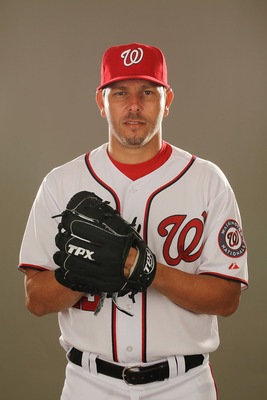
This is an image I hope we don’t see again.

In an article that seemingly came out of nowhere, Si.com columnist Tom Verducci posted this missive on 3/8/11 with ominous warnings to Nationals fans everywhere.  He believes that Stephen Strasburg has a fatal flaw in his mechanics related to the timing of his stride forward off the rubber versus his release point that may continue to plague the pitcher even after his post Tommy John surgery recovery.

I say this article comes out of nowhere since I would have expected to see this posted back in August 2010, when every other pundit posted their own theories as to why “the best pitching prospect ever” suddenly blew out his elbow.  I reviewed some of those explanations at the time but thought (and still do think) that his injury was less about his release point and more about pitch selection.  I think that Strasburg (and more importantly his catchers) fell in love with his change-up after discovering what a devastating pitch it was (imagine facing a 91-mph screw ball that moves a foot into the right handed hitter).  Suddenly he was throwing a ton of circle changes and placing unexpected, here-to-fore unseen stress directly on his elbow ligament.  When a hurler goes from pitching one day a week in a protected environment where he can get by throwing mostly fastballs to overpower college hitters to suddenly throwing only about 58% fastballs (per Verducci’s research) at the Major league level every 5 days, sudden injury onset can occur.

Verducci touches on the preponderance of off-speed pitches Strasburg was throwing in the article but focuses on the “late cocking” of the arm as the primary culprit of the injury.  He then lists a number of pitchers who exhibit this same late arm cocking with (conveniently) a ghastly list of arm and shoulder injuries that followed.

Here’s my problem with this type of cherry picking of arm injuries; as Mike Rizzo pointed out in the article, you can probably find a similar subset of pitchers who exhibit the same late-cocking of the arm who have NEVER had an arm injury.  Rob Neyer posted a similar opinion in a Verducci-followup piece.  Similarly, those who subscribe to the “Inverted W” pitching mechanical flaw fail to point out that, while there are plenty of examples of pitchers who show the inverted W behavior (most notably in most examples is Mark Prior but Strasburg exhibits the same mechanics as well), there are also plenty of pitchers who do the same motion but who never have had a serious injury.  People always forget to mention this fact and their articles always come off with the message that “if you exhibit this, you are doomed.”

John Smoltz was listed as a pitcher who had this fatal mechanical flaw (he also has inverted W syndrome) and listed as an “example” of what can happen.  Yes Smoltz blew out his elbow in his early 30s and missed an entire major league season.  But he also pitched until he was 42, made over 700 major league starts, won 213 games and saved another 154 while he was in the closer role theoretically “protecting” his arm.  If Strasburg gives the Washington franchise those kinds of numbers between now and the year 2030 (when he too will be 42 years of age) I will never quibble.

For me, shoulder injuries are the injuries that you really worry about.  Look at Chien-Ming Wang right now; he’s throwing in the low 80s 2+ years on from shoulder surgery.  The Nats have taken fliers on several other post-shoulder injury starters over the past few years (Brian Lawrence, Ryan Drese, John Patterson) with limited success.  However, pitchers seem to be able to recover from Tommy John surgeries with much better regularity.  I realize our own Shawn Hill had the TJ surgery and never really came back, but the list of successful pitchers who have had the TJ surgery is long.  3 of the top 5 NL Cy Young candidates last year (Josh Johnson, Tim Hudson and now Adam Wainwright) have had the TJ surgery, as did 2009 NL cy Young winner Chris Carpenter.  Our own Jordan Zimmermann seems to be nicely recovering, although it is far too soon to conclude that his surgery was a success.

I sometimes wonder what modern medicine could have done with Sandy Koufax, who abruptly retired at age 30 after a Cy Young winning season where he made 41 starts and went 27-9.  His retirement reason was listed as “arthritis in his pitching elbow” and he had symptoms that included massive hemorrhaging in his arm; was this a condition that would be easily solved today?

For Strasburg, as with pretty much any baseball pitcher, in many ways every pitch could be your last.  Modern medicine can fix all kinds of injuries and modern technology can pin point the wheres and whys of why some guys may last and some guys may be flashes in the pan.  But in the end, some guys physiologically are more durable than others, some guys can throw a ball through a brick wall for 25 years (see Ryan, Nolan) and others break down after just a few professional games.  Lets just hope for the best once Strasburg comes back.

http://en.wikipedia.org/wiki/Tommy_John_surgery#List_of_notable_baseball_players_who_underwent_the_surgery

What about Maya?

3 comments

Maya in his first start for the P-Nats. Photo William Yoder/thenatsblog.com

I like to think i’m reading just about every bit of Washington Nationals news there is to be had during Spring Training.  I follow all the beat writers I know of plus try to read just about every columnnist or blogger that I know to be down in Viera.  But nobody is talking about Yunesky Maya.

We know, for example, that John Lannan bulked up over the off season, that Livan shot a 65 and plans on playing in the Senior Golf tour when he turns 50, that Marquis feels better, that Detwiler has new mechanics, that Wang is healthy and that Zimmermann is rearing to go.  But what about Maya?

Last we had heard, Maya had gone down to the Dominican Winter League (DWL), played for Leones del Escogido and pitched well.  Baseball America’s Lacy Lusk wrote a rather promising report in December (insider only, sorry), and Maya was named the league’s best pitcher at the Winter’s end.  He finished the DWL 4-2 with a 1.32era, striking out 42 batters in 41 innings pitched.  And according to reports he had his fastball up to 93mph.  Now, the DWL may be the “best” of the winter leagues but its talent level has dipped significantly over the past 10 years.  At best, i’d say its a AAA-level quality league.  So take the stats with a slight grain of salt.

This slight uptick in speed is important.  In my review of Maya’s first four starts (posted here last September) he was barely breaking 90, sitting in the 88-89 range and relying more on nibbling than going after hitters.  I feel the uptick in velocity is clearly a result of gaining arm strength over the course of throwing innings, indicating that he was rushed to the Majors last September.  Rizzo has all but admitted the team screwed up by rushing Maya through the minors, and his results showed.

However, if Maya can hump it up to 93 and combine it with the amazing arsenal of pitches he seems to have (in his MLB debut he showed at least EIGHT different pitches), I think he can be a very dangerous pitcher in this league. Which is why the team risked an $8M contract on him.

Now, what does this mean for the 2011 season?  So far, its hard to tell; Ladson posted a biopic piece today but I’ve yet to see any reports on how he looks during his mound sessions or how he’s throwing.  Perhaps its a language barrier issue; he doesn’t really speak English so interviews are difficult unless the interviewer also speaks Spanish.

I think he’s still bound for AAA to start the season, simply because he has options and certain guys (Gorzelanny in particular) do not.  But he may be first in line when someone gets hit by the injury bug.

Written by Todd Boss

February 25th, 2011 at 9:56 am

Gorzelanny trade thoughts…

5 comments

The Nats' newest #5 starter, Tom Gorzelanny. AP Photo/Mark J. Terrill

Love the Trade to get Tom Gorzelanny.  The three guys we gave up were all marginal prospects in the grand scheme of things.  Burgess was a Bowden toolsy draft pick who has moved slowly through the farm system and now is completely blocked for the next 7 years or so by Werth and Harper.  I really liked AJ Morris when we drafted him (he was a 4th rounder but was fantastic in college, giving Mike Leake his only loss of the 2009 season) but he’s already lost his starter status and seems like a middle relief guy at best.  Lastly Graham Hicks was probably the 2nd or 3rd best pitcher in Hagerstown this year and has some promise.

Gorzelanny’s numbers are not fantastic, but you wouldn’t expect them to be for a 5th starter from a team that lost 90 games last  year.  He had a 106 era+ for the season pitching out of a hitters park in Chicago.  He probably has the inside track on the 5th starter spot here in DC by virtue of his acquisition.  If the season started tomorrow you have to think the rotation would be going Livan, Lannan, Zimmermann, Marquis and GorzelannyMaya and Detwiler are starting in AAA save an injury, and Wang has a bit more time to rehab.

Meanwhile, AAA is looking jammed.  We already had Atilano, Martin, Mock and Martis as returning rotation starters in AAA.  Chico is down there as well, having passed through waivers to be reassigned.  Maya and Detwiler are going to need places to pitch.  Plus we have some older prospects from last year’s AA team (Roark and Tatusko) who really need to be pitching in AAA to see if they’re MLB candidates.

All in all, a competent pitcher to compete for a spot in the rotation and who may help out the rotation in the short term.  And not for a lot of money (probably something close to Lannan’s $2.75M deal for 2011).

The reported price for Greinke (updated)

one comment

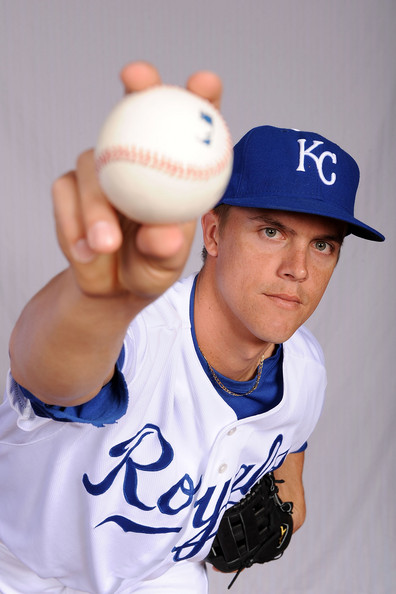
Zack Greinke at the Royal's photo day 2010. Photo by Harry How/Getty Images North America

12/19/10 update: this article is essentially moot: Zack Greinke was dealt to Milwaukee along with infielder Yuniesky Betancourt for four players (outfielder Lorenzo Cain, shortstop Alcides Escobar and pitching prospects Jake Odorizzi and Jeremy Jeffress (who played HS ball in South Boston ironically enough).  I’m not familiar enough with the Milwaukee prospects to offer opinion one way or the other; here’s some opinions on the trade from FanGraphs, Ken Rosenthal, Jerry Crasnick, Joe Sheehan, and Keith Law.  Also from beat writers Kilgore and Zuckerman.

And, according to Jon Heyman via twitter, the Nats were close to a deal for Greinke in a deal that may or may not have included Storen and Espinosa.  Read more below.

—-

About 6 weeks ago the question of a possible Nat’s trade for Zack Greinke came up in a Keith Law chat (link is ESPN insider only) and the trade proposal was Zimmermann, Espinosa, Burgess and Detwiler.  I wrote about this theoretical deal at the time, saying it was too much to give up.

A glass-is-half empty analysis of these four players (which was apparently the opinion of Law, since he thought this would be a good deal for Washington) is something along the lines of the following: Zimmermann is promising pitcher but has yet to really produce consistently at the major league level.  Espinosa is also promising but is replaceable by our up-and-coming 2nd base prospects Lombardozzi and KobernusBurgess has been solidly improving as he’s progressed through the system but he’s still the toolsy/high promise player that Jim Bowden adored but which has never really panned out.  Lastly Detwiler has shown flashes of dominance but lost pretty much the entirety of 2010 to injury and is getting pushed further and further down the rotation depth chart.

The glass-is-half full opinion of these four players is simple: they represent the bulk of our farm system’s player development over the past few  years.  These four players represent the absolute cream of our drafting crop over the past few  years; a #1, a supplemental #1, a #2 and a #3 round draft pick.

Now today, we are hearing the TRUE bounty that Greinke would cost, and it is similarly heavy.   Greinke has hired new agents and apparently demanded a trade.  He also has a limited clause in his contract that allows him to block trades to certain teams, and the Nats are on that list.  According to Buster Olney though, the Royals and Nats have been talking and he discovered the actual price it would take (another ESPN insider link): Zimmerman, Espinosa and new closer Drew Storen.  On 12/24/10, KLaw reported that the offer was Zimmermann, Storen, Norris.  Wow that would have been quite the bounty.

This trade option replaces the unknown players (Detwiler and Burgess) with the known quantity (Storen), and only seems slightly less palatable than the Law chat proposal.  Can the Nats possibly give up 3 of their planned “starting 14” players (the 8 out-field players, the 5 rotation guys and the closer) next year for Greinke?

Here’s my problem: Greinke had the makings of looking like an otherwise solid pitcher with a one-year wonder season that won him the Cy Young in 2009.  Is he really an “Ace” in this league?  His 2010 season was unremarkable (an ERA+ of exactly 100, meaning he performed at the mlb average), but now scouts are surmising that he was tired of his team going nowhere and he was “bored” most of the year.  But the fact remains there is no guarantee he returns to his 2009 performance.

If i’m Rizzo, I say no to this deal.

One last note about possibly overvaluing “prospects.”  Storen, Espinosa and Zimmermann are not prospects; they’ve graduated to becoming “promising young players.”  They have all made the majors, they’ve all competed at the highest levels and the Nats have a decent idea of what they can do.  Guys like Detwiler (because of his injury history) and players who have never reached the majors (Burgess as mentioned in this post) are the real “prospects” in question.  Teams and Fans overvalue prospects in a pseudo-parental relationship because they’ve watched the players grow up and grow.  But as Rosenthal pointed out (in the linked article above), prospects mostly flame out or don’t become major leaguers.  That’s the difference; teams MUST be willing to part with prospects to get real players.