Nationals Arm Race

"… the reason you win or lose is darn near always the same – pitching.” — Earl Weaver

Archive for the ‘denard span’ tag

Nats Player Option status for 2013-2014

10 comments

I took a moment to update my own little internal spreadsheet that tracks Player Options for the Nationals, now that Cots’ site has updated service time numbers for 2013.

This spreadsheet is in Google Docs at this link, as well as being in the “NatsArm Creations list along the right hand side of the blog.

Springfieldfan also maintains an options page on the Big Board with a bit more detail for other players in our system outside of the 40-man players that i’ve focused on.

Interesting Options developments for 2014:

  • First and foremost, 40-man member Corey Brown exhaused his 3rd and last option in 2013.  Does anyone think he’s going to be on next year’s 25-man roster as a bench player?   Ironically the team needs lefty power off the bench, and Brown is a lefty with two straight power-filled seasons in AAA.  But somehow me-thinks he’s going to lose out on this competition and faces a DFA sometime between now and April 1st 2014.  He’s cleared waivers before and stayed in the organization, but with more teams purposely tanking right now I wonder if he’ll survive another exposure to waivers.
  • A reminder that Ross Detwiler remains out of options, though the Nats have shown that limitation is easily worked around by virtue of “soft tissue” D/L trips as needed.  Nonetheless, if Detwiler is healthy in spring training, he’s either your 5th starter, a lefty in the pen, or facing a transaction.  It seems like we have this conversation every spring.
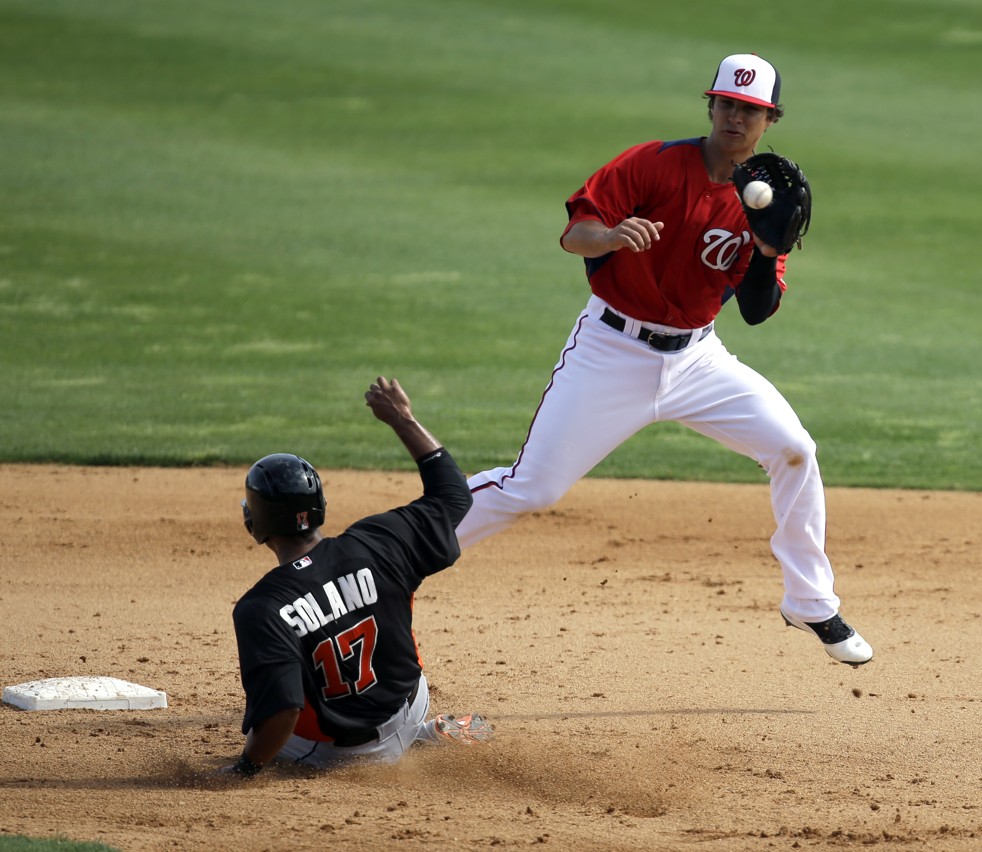
  • Denard Span has achieved 5 years of cumulative service time, meaning he can refuse an option to the minors.  Not that he’s in grave jeopardy of such a thing.

The bulk of the team remains very options-flexible, with 30 of the 39 guys on the current 40-man roster capable of being sent down if needed.  This proved to be very handy last year when a number of guys under-performed, and may prove to be handy this year.

Frankly, Spring Training 2015 is going to be a big options showdown for a lot of guys on this team; I count at least four guys and perhaps more who are almost guaranteed to use their last options in 2014.  But this is a topic for a post a  year from now.

Written by Todd Boss

December 5th, 2013 at 9:42 am

Ladson’s inbox 12/2/13 edition

19 comments


The drumbeat to have Morse back continues.  Photo hardballtalk.nbcsports.com

The drumbeat to have Morse back continues. Photo hardballtalk.nbcsports.com

Happy Thanksgiving!  Apparently I didn’t realize how long between posts it had been (nearly 2 weeks).    I didn’t go anywhere or anything; just hunkered down for the holidays, entertained the in-laws, and found myself with very little non-work computer time to delve into hot-stove season issues.

Thankfully, we have a Bill Ladson inbox to get us going this week!  Dated 12/2/13.

(Note: I was mid-way typing this post when the Doug Fister news broke … so its a day later than I wanted it to be, and I edited this to be relevant).

As always, I write my response here before reading his and edit questions for clarity/conciseness.

Q: I’ve heard about so many big-market teams being out of the Robinson Cano sweepstakes. What about the Nats? They did swing a shocker of a deal in Jayson Werth, and Cano could be the signing that brings the World Series trophy back to the beltway.

A: Several national writers (including this latest, most comprehensive viewpoint from Paul Swydan on ESPN insider just this week) are making the same point.  In simple terms, sign Robinson Cano, move Anthony Rendon to third, move Ryan Zimmerman and his scatter-arm to first, and put Adam LaRoche out to pasture (or, more likely, a trade for 20 cents on the dollar).   I’d love the move in the short-term but would absolutely hate it in the long term.   Its really simple: the guy’s 30.  He wants to be paid for the next decade as if he’ll never age.   His anticipated 10 year $200-and something million dollar contract will immediately be at the top of the list of albatross contracts in the league.  You just can’t do it, not if you want to maintain finacial flexibility to extend the core of this team (Strasburg, HarperDesmond to name three) and maintain some sort of a budget.  (Oh, by the way, I have always maintained the Jayson Werth contract was a “statement contract” to the league, an overpay that legitimized this franchise as a FA player after years of being a laughingstock in the league under Jim Bowden and inept league ownership.  So, i’m not entirely sure I’d use Werth’s deal as any sort of predictor of Mike Rizzo‘s intentions).

Hey, it isn’t my  money.  If Ted Lerner‘s ok with spending $150M or more a  year … maybe i’d be on board.  But man, 3 or 4 years from now when Jayson Werth is hobbling around the outfield earning $20M plus, Zimmerman’s at $15M/year and possibly clogging a 1st base spot, each of Desmond, Gonzalez, Harper, Strasburg and Zimmermann earning 8 figure deals, a Cano $25M/year albatross is clogging your payroll, and the team starts telling its fans that they’re standing pat or depending on signing middling free agents to try to “win” next year (you know, like the Phillies), I think you’ll regret this contract.

Ladson thinks the team could be in on Cano, and could use Rendon as trade bait for a pitcher.  *sigh* well, we’ll see what happens.

Q: Do the Nats have any interest in a guy like Raul Ibanez to fill the fourth outfielder/power-left-handed-bat-off-the-bench role? He’s over 40, but a veteran with outstanding work ethic. His 2013 season’s numbers suggest that it might be worthwhile to take a gamble on him for one year, if he’s willing to accept a reasonable salary and less playing time. Your thoughts?

A: I just do not see it.  Would you trust a guy who suddenly spikes his performance at age 41?  Rizzo needs to go younger, not ancient.  Raul Ibanez makes sense to sign a series of one year deals with AL teams that can DH  him as long as he proves his worth until he’s retired.  Ladson says the nats need a 4th OF who can man center; a good point.

Q: With the way that Ryan Mattheus hurt his hand last year and then struggled mightily after being activated from the disabled list, is he in the Nats’ bullpen plans for 2014?

A: I think Ryan Mattheus may be on the outside looking in come April 1, 2014 after his performance and injury in 2013.  Without any other moves, you have to think right now the Nats bullpen has 4 locks (Soriano, Clippard, Storen and Stammen), one loogy (from within or outside), one long man (Ohlendorf or a 5th starter competition loser) and one spot up for grabs.  Mattheus is the current leader in the clubhouse for that spot .. but he’ll face competition.  Right now, if Christian Garcia is healthy he’s proven to be more effective than Mattheus.  If Garcia can’t go, then Mattheus probably has the spot locked up barring any more signings.  He could face some competition from guys in the minors like Nathan Karns (if the team decides he can’t find a 3rd pitch and converts him to a reliever… though this probably doesn’t happen until 2015 at the earliest), or possibly from new 40-man addition Aaron Barrett.  For right now i’d say he’s the 7th guy but he needs to produce at 2012 levels to keep his job over Garcia.  Ladson agrees with me, I guess.

Q: Just wondering, do you think No. 2 prospect Lucas Giolito will get an invitation to Spring Training with the big club?

A: Nope, not this year.  No point.  He’s yet to play a day in full-season ball; he needs to stay in the minor league section and get his full work, not languish on the MLB spring training bench getting an inning every other day.  Now, if he shoots up the system in 2014 and ends in AA, then yeah a spring training invite for 2015 could be in the works.  Ladson agrees.

Q: After reading all these trade rumors, I feel like the Nationals are going to make a huge move this offseason. Do you feel it would come as a bat or as a pitcher?

A: Even before the Fister deal, I still would have said a Pitcher.  Even though I don’t think pitching was our problem in 2013 (a tease for a draft blog post with some interesting stats that I have in progress).  The problem with trading for a Bat is this: there’s just no obvious place to upgrade.   Not unless you move a guy like LaRoche or Span (our two least productive bats last season) and make a hole for someone coming in.  Ladson really goes out on a limb and says ‘it could be both.’

Q: Why not bring back Michael Morse for the extra power on the bench and replacement forAdam LaRoche from time to time?

A: I think the book on Michael Morse has been written by now: he can’t stay healthy, he’s a liability in the field, and he needs to be able to DH.  He’s just not an NL player anymore.  A quick look at the depth charts in the AL shows a couple of teams that could take a flier on Morse.  The problem is that two of the teams with the most need for a DH (Seattle and Baltimore) both had Morse last year and he washed out.  Maybe his last shot could be with a team like Oakland or Houston, teams with limited budgets willing to give last-chances to guys like Morse to resurrect their careers.  Ladson repeats his last Morse answer; Morse wants to be an every-day player and at Washington he’d be  a bench player.

Q: With Stephen Drew being a Scott Boras client, could you see the Nationals signing him, having him or Ian Desmond transition to second base? It could solidify the middle infield with veteran stability, couldn’t it?

A: Why in the h*ll would you purposely take a plus defender shortstop (whether it be Stephen Drew or Desmond)  and waste him at second base?   That’d be dumb.  That’d kind of be like what Texas is doing to Jurickson Profar.  Despite the oft-repeated mantra that the “Nats are Scott Boras‘ b*tch” if you check the records we’re not even the team with the most Boras clients.   And most of our Boras clients were guys we drafted irrespective of who represented them.  I’m really tired of reading the cliche that any and all Boras clients are Nats targets because we for some reason feel obliged to deal with him.  I’ll tell you this; I’d rather be friendly with Boras than unfriendly; he represents serious talent in this game and if we can get access to his players more easily than an antagonistic GM, we’re in a better positions.  Ladson doesn’t think Drew would want to switch positions either.

Nats Rule-5 protection thoughts for 2013

25 comments

Walters already got added to the 40-man; who else may join him? Photo unk via wp.com

Walters already got added to the 40-man; who else may join him? Photo unk via wp.com

Who might the team protect ahead of the Rule-5 Draft this year?  The topic came up recently in the comments so I thought i’d publish this post to open up the debate again.  I’ve got a rule-5 history post as well that i’ll post later this week.   And, as it turns out, Nov 20th is the deadline for adding players to the 40-man, so today’s as good a day as any to discuss.  (Kilgore’s analysis here, Baseball’s off-season calendar here).

The Nats off-season rule-5 protection debate really started in late August with an observation made about Zach Walters from Adam Kilgore in his pre-Sept 1 callup piece on 8/27/13.  It was continued by the announced list of Nats AFL participants, which included a couple of significant Rule-5 protection candidates.  Walters was subsequently added to the 40-man and called up, ending any Rule-5 speculation.

As (allegedly) was Steve Souza, who hit the cover off the ball in AA in 2013, with power to go with his CF defensive capabilities.  He followed that up by hitting .357 in the AFL, trailing just mega-prospects Kris Bryant and C.J. Cron for top hitting honors in Arizona.  I say Souza was “allegedly added” to the 40-man because, while news of his 11/1/13 40-man addition was widely published at the time, but his name does not appear on MLB.com’s 40-man roster for the team nor does there exist an 11/1/13 transaction (Editor’s update: it was posted 10/31/13 and the MLB 40-man database was missing him in error; it was eventually fixed).   I don’t know if its just a procedural thing or if all the beat reporters mis-reported the event and it should have been characterized as a “planned future” move.  But I’ll assume for the rest of this article that Souza is going to be put on the 40-man before the rule-5 draft.

Two of the most obvious Rule-5 candidates (even if Souza was technically a minor league free-agent to be) are now protected.  Who else might we see added?

Using the indispensable sites Draft tracker and the Big Board, and then giving some thought to prospect acquisitions made via trade, here’s some thoughts.  The quick rule-5 rules; any college-aged draftee from 2010 or before who isn’t already on the 40-man roster is Rule-5 eligible this coming off season, and any high-school aged draftee from 2009 or before is newly eligible this year.

Newly Eligible Players this year worth consideration for protection:

  • Rick Hague: 2B/SS from Harrisburg; .673 OPS in AA, not good enough OBP for a middle infielder and no power.  He’s well down the pecking order of backup middle infielders in this organization right now, and wouldn’t be a great organization loss even if he was selected.  Chances of being drafted or protected: very slim.
  • Jason Martinson: SS from Potomac/Harrisburg: Martinson finally earned a promotion above A-ball, where he promptly hit .185 in AA in 54 games.  He showed a ton of power in 2012 for a SS (22 homers) but it was in Low- and High-A ball.  Maybe he is a late bloomer.  However he’s not in jeopardy of being protected or drafted at this point.

No other 2010 college aged drafted hitter has even made it to Harrisburg; so they’re not going to get drafted or protected.  This includes three draft picks in the first 10 rounds of that draft; understandable in that the team committed millions to 3 top guys in 2010 and skimped elsewhere.

  • Sammy Solis: LHP with Potomac: coming back from injury in 2013 he pitched in Potomac the whole season.  He was a bit “old” for A-ball but its understandible considering where he’s been.  He excelled in the AFL and is being mentioned as a possible Loogy with the big-league team, so I’d have to think he’s a lock to be protected ahead of the draft.
  • Harrisburg middle relievers Matthew GraceAaron Barrett and Neil Holland: all three have good to excellent numbers in relief this year for AA Harrisburg.  Barrett especially as the closer.  Grace is left-handed and could feature as someone’s loogy.   Tough calls here; you can make a case that the team would like to retain all three guys as bullpen reinforcements in the coming years.  You can also make the riskier case that all three guys, while valuable and skilled players, may not stick on a MLB roster the entire year so perhaps they’re good bets to be left unprotected versus someone already on the 40-man roster.

The rest of the remaining 2010 college-age draftees are all either currently on the DL or are in Hagerstown or below, making them very slim candidates to be protected or picked.  Cameron Selik was one guy who could have made some noise, but he got hurt this year and isn’t going to get picked.

  • 2009 High School-age drafted players newly eligible: just Michael Taylor, who has a ton of speed (51sbs) and an improved OBP (.340) while repeating high-A this year.  I know there are readers here who like Taylor a ton, so this isn’t spoken out of disrespect.  I think Taylor has potential.   Maybe he “made the leap” in 2013.  Maybe he’s going to light up AA next season and suddenly we’re talking about him being Denard Span‘s replacement and not Brian Goodwin.  However, I can’t see someone rolling the dice with him in a rule-5 situation.   He’s never played above A-Ball.  In today’s modern game, with 12 man bullpens and thus shortened benches, I just can’t see someone like Tayler getting carried for an entire year.  I think the team may very well roll the dice and leave him exposed in December, and revisit 40-man protection in 2014.

Rule-5 holdovers from before of Note

  • Last year’s selections Erik Komatsu and Danny Rosenbaum: Komatsu has been hurt all year, Rosenbaum was decent but not over-powering in AAA.  Neither guy seems worth protecting since they already were selected and failed to stick.  But, they’re both AAA-level talents who could be someone’s bench player/swing man so they may get plucked again if not protected.
  • Justin Bloxom and Sean Nicol are both college-aged 2009 draftees with run-of-the-mill numbers in AA; they’ll play out the string until they get pushed out at this rate.
  • Patrick Lehman ended the season on the DL, making one think he’s not likely to get drafted.  Well that and his numbers were not good.
  • Matt Swynenberg has looked better in AA than he did in high-A; has he done enough to garner some interest from another team?
  • Destin Hood: our 2nd round pick in 2008 just seems to be spinning his wheels; his batting average has dropped as he’s repeated a level.  He’s officially in bust status.
  • Adrian Nieto has earned a placement in the Arizona Fall League and was Rule-5 Eligible last year, but was not drafted.  He’s yet to rise above high-A and seems a long shot to be taken (though, the Nats did pretty well plucking one Jesus Flores out of the Mets high-A team one year).


So, who’s getting protected?   As of the time of this writing, the Nats roster sits at 39 of 40 (again, assuming Souza is really there), so there’s just one empty spot.  But there’s at least a few guys on the fringes of the 40-man who I think could be waived and have a high likelihood of being kept (namely, Tyler Robinson and Corey Brown) if the team thought it needed room for either protectees or free agents.  The back-end of this roster is getting a bit clogged.

Depending on how many spots the team keeps open, in order I’d protect Solis, Barrett, Tayler, Grace, and Holland.   For me, only Solis is a lock.  The rest (for reasons described above) may be calculated omissions.


Ladson’s Inbox 11/5/13 edition

10 comments

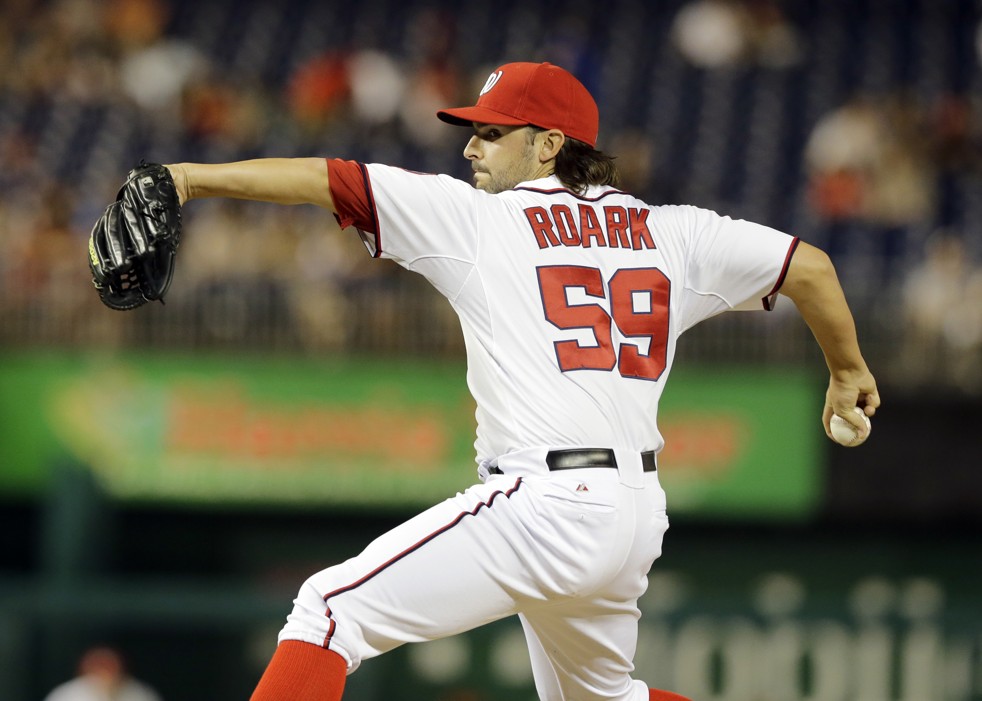
Can Roark win a 2014 rotation job? Photo Alex Brandon/AP via wp.com

Can Roark win a 2014 rotation job? Photo Alex Brandon/AP via wp.com

Well, we finally got a manager, so hopefully MLB.com Nats beat reporter Bill Ladson will stop taking “Who do you think the next Nats Manager” questions.  I’m not ruling it out though 🙂  Nonetheless, here’s the latest Ladson inbox, dated 11/5/13.  As always, I write my response before reading his and edit questions for clarity.

Q: Will Davey Johnson still play a role in the organization?

A: Who cares?  Does it matter?  Whatever role Davey Johnson could play would have so little significance on the on-field play of the 2014 team that I find it useless to even speculate.  I’m sure the Nats offered him a limited role out of respect, and I’d assume Johnson accepted it as long as it allowed him to go relax in Florida for a while, hoping another managerial job opens up.  Ladson expects he’ll consult to the team and advise on trades and FA signings because he’s such a great “talent evaluator.”  Hey Bill; if Johnson was such a great talent evaluator why exactly did he run Danny Espinosa out for so many at-bats?  Why didn’t he push to make a change in the rotation when it was clear that Dan Haren wasn’t pitching at even a replacement-level?  How come he didn’t see the rising talent that made such a difference in September?

Q: After Stephen StrasburgGio Gonzalez and Jordan Zimmermann, how do you see the rest of the rotation shaking out?

A: A good question.  After going into the 2013 season with almost no high-minors starting pitching depth, you have to think the team is going to cover themselves for 2014.  So count on there being more seemingly worthy candidates than roles going into spring training 2014.  The answer to this question may depend on payroll issues: right now Cots has the Nats with about $80M committed for 2014 prior to its arbitration cases, which MLBtraderumor’s Matt Swartz is estimating will run the team another $37.3M (which honestly I think is slightly low).  That’s roughly $117M in payroll before even looking at a single FA candidate.   You could save some of this money with non-tenders or trades (Tyler Clippard at $6.2M is a candidate to be moved), but not enough to get an impact player.

Will the ownership group expand the payroll even more for 2014, knowing their “window” with this group of players is shrinking?  Or will they stay the course and know that nearly $30M of mostly underperforming veteran FAs (LaRocheSpanSoriano) come off the books after next season, allowing them to reload in the FA market towards 2015 and beyond?

If ownership frees up some cash, by trade/non-tender or by expansion of the payroll limit, there are FA pitchers to be had.  I’ve seen more than one pundit with the Nats linked to Matt Garza, but I don’t see it; I don’t think he’s worth what people seem to think he’s going to get (4 yrs/$60M).  More likely is the team going with a modification of the Edwin Jackson/Dan Haren plan and getting a reclamation project in the ilk of Josh Johnson on a one-year/low paying contract with big incentives.

Less predictable is the trade acquisition.  Nobody saw the Gio Gonzalez trade coming until it happened, and something similar could happen now.  The team is in the same position generally this off-season as it was in 2011 in terms of having a slight surplus of closer-to-the-majors arms and bats and could put together a similar package.  If we moved Brad PeacockTommy MiloneDerek Norris and A.J. Cole for Gonzalez in 2011 (or in otherwords, a good-looking starter with great initial call-up numbers, a solid lefty starter who dominated AAA, a decent looking catcher prospect and a high-leverage low-minors prospect) would a similar package of something like Tanner RoarkNathan Karns, Eury Perez and Robbie Ray fetch a #2 starter in the trade market?   Oakland isn’t facing the same issue they were in 2011 with any of its pitchers, so the most likely eager-to-make-a-trade GM in Billy Beane is out.  But that being said, they’re paying Brett Anderson a LOT of money for Oakland’s payroll (roughly 1/6th of their payroll for next year), and he could be moved.  Anderson wouldn’t cost nearly this much in prospects, but would be a huge risk; he hasn’t pitched a full season in years.

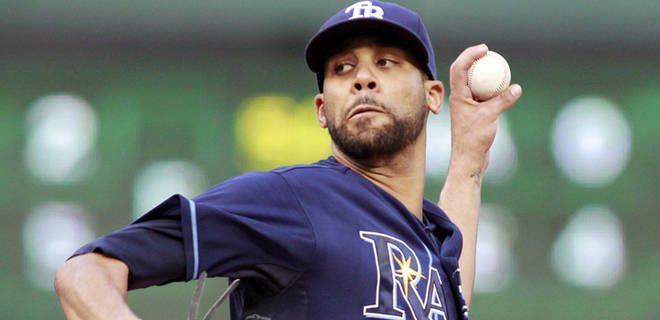
Meanwhile everyone knows Tampa is looking to move David Price, but any trade for him has to start with your two best prospects and build from there, and the Nats are just back to the point where the farm system is looking respectable again.  I’m not sure the Nats are going to be willing to give up what the Rays will demand.  The Nats have done business lately with the Chicago Cubs, who may look to move the arbitration-eligible Jeff Samardzija, but they’d be selling incredibly low on him after his poor 2013.  Lastly the Tigers reportedly are considering moving Max Scherzer, who enters his last year of arbitration looking for a big pay day and with Ken Rosenthal reporting that the Nats are his best fit, but I just cannot see purposely moving a Cy Young winner and disrupting a team that continues to be one of the best in the AL.

With no FA acquisitions and no trades, I see a competition next spring that likely sees Ross Detwiler in the 4th spot (no options, theoretically healthy again), Tanner Roark in the 5th spot (he keeps his spot until he shows that his remarkable September numbers are human), Ross Ohlendorf as the spot starter/long man in the MLB pen, and Taylor Jordan-Nathan Karns being the #1 and #2 starters in AAA Syracuse.  Some speculate that Detwiler would lose out to both Roark and Jordan and become a lefty out of the pen … but I don’t see that.  I’m not counting it out, but I don’t see that happening if he’s healthy.

With any significant FA acquisition or trade, you line up Stras-Gio-Zimmermann-New Acquisition and Detwiler to start off 2014, just as you did in 2013.   Roark and Ohlendorf likely work out of the MLB pen and Jordan/Karns still in AAA.   Maybe Karns comes up and works the 7th inning as well, while Jordan remains starter insurance plan #1.

Ladson also mentions Price, also mentions what I do about the difficulties lining up, thinks the Nats will acquire someone for #4 spot and then says Roark has the inside edge on #5 spot, even over Detwiler (who he thinks could move to the bullpen). 

Q: What did you think about the Nationals hiring Williams as manager last week?

A: Well, I guess Ladson had to get in one last question about the managerial situation.  My take: I like the move, I think Matt Williams‘ combination of successful playing career and MLB coaching experience will instantly give him the respect of the veterans and the rookies on this team.   He will get this team in line, he will bring some old-school notions to this team and won’t back down in a fight (as Johnson clearly did with Atlanta all year).  I think he will give this team the spine it lacked and will do nothing but help move the team forward.

One other opinion; I do see some critics who say that Williams’ lack of direct managerial experience at any level hurts him.  I say BS; he was a major league coach for four years, working underneath a successful, respected manager.  He presumably contributed to the decision making process, got to witness first hand how decisions worked out, got to decide for himself how he would have handled situations, and in some ways I think this experience supercedes being a manager of a lower-level ball-club where there’s no egos and just a bunch of kids who you can cower into submission.

Ladson says its too early to tell, but that Williams had a great news conference.  Honestly I didn’t really expect much of an answer here from an employee of MLB.

Q: What is Christian Garcia‘s status? Will he join the Nationals in 2014? He was a great late addition to the bullpen in 2012.

A: He’s finally healthy, and pitching in the Mexican Winter League.  I think the team sees the error of its ways in trying to convert the injury-riddled pitcher to being a starter.  He’s working as a reliever in winter ball, and I hope to see him continue to work as a reliever in the spring.  I’d love to see him earn a spot in the bullpen; lord knows the team could use one more reliable arm in the 6th/7th inning (Ryan Mattheus needs to be on guard; your spot is in jeopardy for 2014).  Ladson agrees with everything I’ve said.

Q: Do you think the Nationals will trade Danny EspinosaTyler Moore and Steve Lombardozzithis winter or sign a couple free agents? I believe they need a lefty middle reliever, a left-handed bat coming off the bench and a veteran backup catcher.

A: Trading any of those three guys after the seasons they had at the plate would be selling incredibly low.  So no, I don’t think any of them get moved unless they’re part of a larger deal.  Espinosa needs to get healthy, learn how to hit left handed, and build trade value.  I believe he can be a valuable player for someone, somewhere, just based on his incredible defense.  But he has to hit better than .150.  Moore needs to return to his 2012 power ways, but I still see him as a useful player who we have no reason to trade; he still has options, he’s still pre-arbitration and thus he’s cheap.  Lombardozzi is the quintessential utility guy; he can play 2nd, 3rd, left, right.  You have to have one of these guys around … and if he can’t hit, it is’t going to kill you.  But when this player gets 300 ABs (as Lombardozzi got last year) … then you have a problem.  This is why the team got Scott Hairston and why they’re likely to give some looks to Zach Walters in 2014.   Maybe the team looks for a cheap veteran to replace Chad Tracy but i’d hope for a bit more positional flexibility.

I can also see the team kicking the tires on a veteran lefty but don’t entirely see the need; Ian Krol may have faltered down the stretch but he was mostly good.  Abad was good.  Cedeno was good.  We have all these guys locked up.  You see who wins a competition and switch them out if they’re ineffective.

Ladson thinks Espinosa is getting traded no matter what, and has played his last game as a National.

Q: Are Gold Glove Awards given with consideration to the offensive stats of a player? Otherwise, how could Denard Span miss out on the award this year?

A: They’re not supposed to be … but we all know old habits die hard and bit players who are awful at the plate often times have a hard time getting a Gold Glove.  Span as it turned out led all NL centerfielders in one defensive metric (Total Zone Total Fielding Runs), but I have zero problem with the NL winner Carlos Gomez.  Ladson says he was “shocked” that Span didn’t win, and then used “# of errors” as a metric.  Poor form Ladson; you need to reference some of the advanced stats in question.  Gomez led the NL in Defensive Runs Saved, one of the two major defensive metrics.  So your argument fails.  Span may have great range, but he wasn’t best in the Ultimate Zone Ratings measurement either.  See the Fielding Awards spreadsheet link to the right to see all the leaders in one place.
Gold Glove Awards review with Advanced Metrics

2 comments

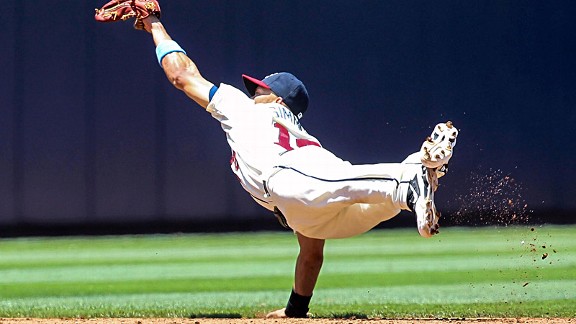
Andrelton Simmons put up what most consider the best defensive season of 2013.  Photo via espn.go.com

Andrelton Simmons put up what most consider the best defensive season of 2013. Photo via espn.go.com

The recent years have been a rise in all sorts of statistical analysis in the game of baseball (as we all know), and one of the more important areas of research has been the measurement and tracking of defensive metrics.  The data we have at our disposal is not yet infallible, but the data has opened our eyes to the real impact that some major leaguers have on the defensive side of the ball.

We’re all quite familiar with the WAR-based arguments that have completely consumed last year’s AL MVP award voting as an example of modern statistics helping to shape the selection of a traditional award winner.  However, up until 2013, the Gold Gloves remained an award that was given out without practically any consideration given to any advanced metric, and the awards have been embarassed in recent years with some amazingly inept selections.  The two most laughable selections of recent memory were Rafael Palemeiro in 1999 (given a Gold Glove for his play at 1B despite the fact that he only played 28 games in the field that  year) and Derek Jeter in 2010 (a year in which he posted a -5.1 UZR/150, was dead last among all 59 AL shortstops in Total Zone Total Fielding and had the selection was openly mocked by the normally staid Baseball-Reference.com website).   Even the more defensible gold gloves over the past few years have been considered “wrong” by the stat-crowd, to the point where a number of national writers openly mock the awards and go out of their way to “ignore” th em.

This concerns me as a fan, and as someone who is keenly interested in the Hall of Fame merits of players.  I absolutely believe that when it comes time to judge players on the whole of their careers, that individual awards such as the Gold Gloves, MVP and Cy Young awards matter.  I want these awards to be relevant and properly awarded.

Two things have happened lately that give me hope:

  1. Bill James and a varied panel of baseball writers, statisticians in the field and former players now vote on The Fielding Bible awards each year.  The 2013 Fielding Bible awards are not league specific; they recognize the best in the majors at each position each year.
  2. The Gold Glove award committee for the first time in 2013 has incorporated a statistical element to the traditional surveying of players and coaches to choose the award winners.

(All winners/leaders listed below are on one common Google XLS here.  Listed are the winners of the GGs, Fielding Bibles, and then the leaders in each league by position of these Defensive stats: UZR/150, DRS, FRAA, and Total Zone.  I haven’t gone into the various definitions and pros/cons of these stats; I have a planned off-season defensive statistical overview post where I’ll go into greater detail).

First off, if you believe that the Fielding Bible panel has picked the best possible awardees, then you’ll be happy to note that every Fielding Bible award winner also received a Gold Glove this year.  Here’s the Fielding Bible winners by position for 2013:

Pos Fielding Bible Winner
C Yadier Molina, STL
1B Paul Goldschmidt, ARI
2B Dustin Pedroia, BOS
SS Andrelton Simmons, ATL
3B Manny Machado, BAL
LF Alex Gordon, KC
CF Carlos Gomez, MIL
RF Gerardo Parra, ARI
P R.A. Dickey, TOR

Now, here’s the Gold Glove winners, with the Fielding Bible award winners bolded:

Pos AL GG Winner NL GG Winner
C Salvador Perez, KC Yadier Molina, STL
1B Eric Hosmer, KC Paul Goldschmidt, ARI
2B Dustin Pedroia, BOS Brandon Phillips, CIN
SS J.J. Hardy, BAL Andrelton Simmons, ATL
3B Manny Machado, BAL Nolan Arenado, COL
LF Alex Gordon, KC Carlos Gonzalez, COL
CF Adam Jones, BAL Carlos Gomez, MIL
RF Shane Victorino, BOS Gerardo Parra, ARI
P R.A. Dickey, TOR Adam Wainwright, STL

As you’ll see below by looking at the various defensive metrics out there, most of the Gold Glove winners were merited.  In fact, there only seems to be one egregiously bad selection here (which we’ll get to below).  Nearly every other winner was at the top of one or more of the advanced metrics available by position for his league:

UZR/150 leaders per league (again, with Fielding Bible winners bolded):

Pos AL UZR/150 NL UZR/150
C
1B Mike Napoli, BOS Anthony Rizzo, CHC
2B Ben Zobrist, TBR Darwin Barney, CHC
SS Yunel Escobar, TBR Andrelton Simmons ATL
3B Manny Machado, BAL Juan Uribe, LAD
LF David Murphy, TEX Starling Marte, PIT
CF Colby Rasmus, TOR A.J. Pollack, ARI
RF Shane Victorino, BOS Gerardo Parra, ARI
P

Defensive Runs Saved leaders per league:

Pos AL DRS NL DRS
C Salvador Perez, KC Wellington Castillo, CHC
1B Mike Napoli, BOS Anthony Rizzo, CHC
2B Dustin Pedroia, BOS Darwin Barney, CHC
SS Pedro Florimon, MIN Andrelton Simmons, ATL
3B Manny Machado, BAL Nolan Arenado, COL
LF Alex Gordon, KC Starling Marte, PIT
CF Leonys Martin, TEX Carlos Gomez, MIL
RF Shane Victorino, BOS Gerardo Parra, ARI
P

FRAA Leaders per league:

Pos AL FRAA NL FRAA
C
1B Eric Hosmer, KC Paul Goldschmidt, ARI
2B Ian Kinsler, TEX Donovan Solano, MIA
SS Nick Franklin, SEA Andrelton Simmons, ATL
3B Manny Machado, BAL Nolan Arenado, COL
LF Andy Dirks, DET Carl Crawford, LAD
CF Alejandro De Aza, CWS Brandon Barnes, HOU
RF Shane Victorino, BOS Hunter Pence, SF
P R.A. Dickey, TOR Andrew Cashner, SD

And lastly here’s the Total Zone Total Fielding leaders:

Pos AL Total Zone Total Fielding NL Total Zone Total Fielding
C Matt Wieters, BAL Yadier Molina, STL
1B Mike Napoli, BOS Paul Goldschmidt, ARI
2B Dustin Pedroia, BOS Brandon Phillips, CIN
SS Jayson Nix, NYY Andrelton Simmons, ATL
3B Manny Machado, BAL Juan Uribe, LAD
LF Alex Gordon, KC Chris Heisey, CIN
CF Jacoby Ellsbury, BOS Denard Span, WAS
RF Shane Victorino, BOS Norichika Aoki, MIL
P R.A. Dickey, TOR Patrick Corbin, ARI

So, after looking at all these leaders, lets talk a bit about the Gold Gloves and ask ourselves whether they did a good job representing the best defenders this year.  Position by position:

CatcherSalvator Perez is as good an AL pick as any; the only other AL catcher in the mix is Matt Weiters.  On the NL side, Jadier Molina has earned his reputation and backs it up on the metrics side.  His only challenger being the little known Wellington Castillo from Chicago.

1st Base: Hosmer and Goldschmidt seem as good of picks as any; only Mike Napoli and Anthony Rizzo seemed close in either league.  Napoli may have been a better pick than Hosmer on the weight of the evidence.

2nd Base: There’s several decent candidates who were not honored, but I don’t think anyone is arguing vehimently against either Pedroia or Phillips as the winners.  Darwin Barney may be the most egreiged candidate.

Shortstop: the amazing Andrelton Simmons led every possible statistical category; there was no chance he was losing.   J. J. Hardy‘s selection wasn’t bad per se, but as you can see from the above tables four different AL shortstops led each of the four statistical measures.  None of them was Hardy though, making you wonder if his gold glove was slightly on reputation.

3rd Base: One day Manny Machado will move back to short (maybe) and challenge Simmons for the title of “Best Shortstop in the Game.”  But for now he has to settle for easily being the best defensive 3B in the game.  As with Simmons, Machado led every possible defensive measure at his position.  On the NL side, the choice of Nolan Arenado was a sound one, with only Juan Uribe really challenging him.  Thankfully the award didn’t go to someone like David Wright or our own Ryan Zimmerman based on reputation.

Left FieldAlex Gordon was a sound choice; the NL choice of Carlos Gonzalez may have been a disservice to one Starling Marte.  However, picking individual positions for the OF is somewhat tough, especially for the corners.  Fangraphs lists RF winner Gerardo Parra as a left-fielder for some reason.

Center FieldCarlos Gomez is a great pick (and is one of the reasons I posted my “Why no MVP support for Gomez” post in this space, which by the way, got almost no reaction from the readership…).   Adam Jones was nearly dead last in some of these range metrics and unfortunately has gotten this award via reputation (and his arm; still one of the best) as opposed to performance.   Jones is clearly the “Derek Jeter” of 2013, and the voters really erred badly on his selection.   Its hard for me to say who I would have preferred; Jacoby Ellsbury is the biggest name among the four guys who led the four different defensive numbers, but Ellsbury’s arm is weak (nearly last of any CF in the league) and a better candidate would have been Leonys Martin.

Right FieldGerardo Parra and Shane Victorino are the leading candidates for their leagues and both selections are warranted.  I know that Hunter Pence led the NL in FRAA, but his arm is awful (one of the worst of any RF in the league), so that has to count against him.   In fact, Victorino was as good as or better than Parra in most of these metrics (with the exception of Arm; Parra has one of the better arms in the league).  I’m guessing its arm strength that tipped the Fielding Bible balance to Parra.

Conclusion: I think the Gold Gloves did a pretty good job in 2013 of identifying the best overall defenders at each position.  With one significant exception (Adam Jones).  I think its time the sportswriters who have been purposely ignoring the awards come back into the fold.


2013-14 Off-season Baseball Calendar

leave a comment

Now that the WS is over, the official off-season begins.  Since a number of key dates related to player movement are based on the end of the world series, now we can officially list the key upcoming dates.

This document is also available in the links section to the right-hand side of the blog (see the 2013-14 MLB Off Season Calendar link).  I’ve uploaded it to Google XLS.  A few of the dates listed here are estimates or based on the day they occurred last year.  The XLS has urls to back up some of these dates.

Date Event Nats-specific Impact/Winners/Notes
Sept 29th, 2013 Last day of regular season No Nats post-season for 2013
Oct 1st, 2013 Beginning of 2013 Post season (NL WC game).  End of Year BBWAA award ballots due (prior to beginning of post season) Some Nats may get some mentions
Oct 21rd, 2013 Sporting News Comeback Players of the Year AL and NL Mariano Rivera and Francisco Liriano winners
Oct 27th, 2013 Roberto Clemente Award given Carlos Beltran 2013 winner; Zimmerman best Nats candidate
Oct 28th, 2013 Fielding Bible Awards given No Nats mentioned
Oct 29th, 2013 Rawlings AL & NL Gold Glove Announcements Span, Desmond finalists but no awards
Oct 30th, 2013 Last actual day of 2013 World Series; official end of 2013 season Boston wins Game 6 and takes the 2013 WS 4-2
Oct 31st, 2013 (WS end + 1) Official start of FA period (8am CST the day after the last game of the WS)
Nov 2nd, 2013 (WS end + 3) Team and player options must be decided three days after the end of the World Series.  (this may be WS + 5 by 2013)
Nov 2nd, 2013 Clubs have to re-set their 40-man rosters, moving all 60-day DL players back to active. Nats currently sit at 39/40 with two 60-day DL guys; someone has to get dropped unless the FA’s don’t count against this list.
Nov 2nd, 2013 HoF “Veterans Committee” releases ballot.
Nov 4th, 2013 (WS end + 5) 5pm: Deadline to make Qualifying offers for your own Fas (average of top 125 salaries or $14.1M for 2014).  5 days after end of WS was 13.3M for 2013.  Nats highly unlikely to offer Qos to their two Fas.
Nov 4th, 2013 (WS end + 5) End of “Quiet Period.”  Teams have “exclusive” negotiating rights with their own free agents during this period.
Nov 4th, 2013 (WS end + 5) 5 days after WS ends: Free agent filing period and exclusive negotiating window ends at 12:01 a.m. ET. Free agents can sign with any team. Haren, Tracy only Fas for Nats in 2013.
Nov 2013 est MLB Comeback Players of the Year AL and NL
Nov 4th, 2013 (WS end + 5) Free Agency granted to all eligible Minor League free agents (5 days after the end of the WS).  Eligibility done on service time; 6 years ML service for college draftees or 7 years ML service for HS draftees or free agents under the age of 18. Plenty of significant, long-serving Nats farm hands hitting MLFA this year.
Nov 4th, 2013 Wilson Defensive Player of the Year awards, given by MLB to best defensive player on each club. Span or Desmond likely in the mix but unlikely to win
Nov 5th, 2013 MLBPA announces “Players Choice” awards: Player of the year, Comeback Player of the year, etc
Nov 7th, 2013 BBWAA Award Nominees announced on MLB networks
Nov 8th, 2013 Sporting News Executive of the Year announced
Nov 6th, 2013 Louisville Slugger Silver Slugger Awards Desmond, Harper may get some attention here.  Werth also
Nov 11-13, 2013 GM Meetings, Orlando, FL for 2013
Nov 11th, 2013 (WS end + 12) 12 Days after WS ends: Players must accept or reject Qualifying Options No Nats likely getting Qos
Nov 11th, 2013 AL, NL Jackie Robinson Rookie of the Year Awards Roark get some honorable mention votes?
Nov 12th, 2013 AL and NL Manager of the Year
Nov 13th 2013 AL and NL Cy Young Zimmermann may get some top-5 votes but not likely.  Strasburg?  Doubtful
Nov 14th 2013 AL and NL Most Valuable Player Werth may get some top-10 votes
Nov 14-15th, 2013 Owners Meetings, Chicago for 2013
Nov 20th, 2013 Day to file reserve lists for all Major and Minor League levels.  In other words, Last day to add players to 40-man to protect them from the Rule5 Draft
Dec 2nd, 2013 Midnight: Deadline for teams to Tender contracts to arbitration eligible players.  If not tendered, those players immediately become free agents.   This is the non-tender deadline for arbitration eligible players No real non-tender scares for this year’s arbitration eligible list of Nats.
Dec 2nd, 2013 Last day for teams to offer 2014 contracts to unsigned players.  (same thing as the non-tender deadline above?)
Dec 9th, 2013 Last day to request outright waivers to assign player prior to Rule 5 Draft
Dec 9th-12th 2013 Winter Meetings, Lake Buena Vista/Orlando, FL
Dec 3rd, 2013 HoF “Veterans Committee” officially releases ballot that was made public ??????
Early December, 2013 Baseball America announces its Executives of the Year
Dec 4th, 2013 MLB Balloting results announced for Hall of Fame Ford C. Frick Award for excellence in baseball broadcasting
Dec 4th, 2013 MLB announces winners of 21 “GIBBY” awards (greatnest in Baseball yearly awards)
Dec 12th, 2013 Rule 5 Draft.  Occurs at Winter meetings
Dec 31st, 2013 Deadline for BBWAA ballots for HoF voting.
Jan 9th, 2014 Hall of Fame BBWAA voting announced; the HoF class of 2014.
Jan 15th, 2014 Salary arbitration filing period
Jan 18th, 2014 Salary arbitration figures exchanged
Feb 1-21, 2014 Salary arbitration hearings (actual hearing date per player picked at random), Phoenix AZ
Feb 12th, 2014 Voluntary Spring Training reporting date for Pitchers, Catchers, Injured players
Feb 15th, 2014 Voluntary Spring Training reporting date for non-pitchers and catchers
Mar 2-11th, 2014 Contracts of unsigned players who are not yet eligible for Arbitration may be renewed
Early March 2014 First Spring Training Game for the Nats
March 13th, 2014 Last day to place a player on unconditional release waivers and pay 30 days termination pay instead of 45 days.
March 27th, 2014 Deadline to request unconditional release waivers without having to pay the player’s full salary or $100k bonus for certain types of veterans
March 31st, 2014 2014 Season Opener; Opening Day 2014; active rosters must be reduced to 25 players and 40-man rosters must be established
March 31st, 2014 Opening Night 2014: ? Vs ?
April 1st, 2014 Traditional Opening Day (Cincinnati)


Roster construction of 2013 playoff teams

leave a comment

I like doing this post every year (here’s 2012’s version, here’s 2011’s version), looking for trends in baseball’s most successful teams.  How do the best teams generally construct their rosters?

Borrowing from last year’s post, there are four main ways teams can acquire players:

  1. Draft/Development: The player is with the original team that drafted him.  In the case of international free agents, if they’re signed as 16-year olds they are considered in this category as well (i.e. Jose Fernandez is a developed player despite being acquired as an international “free agnet” while Yasiel Puig).  It could be better defined as “Club developed players.”
  2. Trade MLBers: The player was acquired by the team by virtue of trading an established MLB player.  Most of the time these days, this means the player was acquired as a prospect (since most trades seem to be of the prospect-for-established player kind).
  3. Trade Prospects: The player was acquired by the team by virtue of trading prospects.  This is essentially the reverse of #2.
  4. Free Agency: The player was acquired in free agency.  This category also includes several other types of acquisitions: waiver claims, Rule-5 draftees and cash purchases.  These three categories are lumped together since all three indicate that a team has acquired a player with zero outlay in terms of development or prospects.

Sometimes these trades get a bit muddled; if you send a combination of major and minor league talent to the other team, which category does it fall under?  But for the most part trades are simply categorized.

Now, here is the summary of roster construction and “Construction Strategy Category” for all 10 teams that made this year’s playoffs.  I only count the “core players” on a team for this analysis.  The core players is defined as the 5-man starting rotation, the setup and closer, the 8 out-field players, and the DH for AL teams.  I didn’t extend this all the way to the 25-man roster, figuring that these core 15-16 players are the main reasons teams win and advance.  That and huge chunks of the bullpen and the bench are either fill-in FAs or draftees and it would skew the analysis of how teams really got to the playoffs.  Here’s the summary (the table is sorted by count of Draftees):

Team Drafted/Developed Traded Prospects Traded MLBs FA/Waivers Constr Method
Boston 7 1 0 8 #4
Detroit 5 4 2 5 #2/#4
Oakland 3 1 7 5 #3
Tampa Bay 6 1 4 5 #1
Cleveland 4 1 7 4 #3
St. Louis 10 2 2 1 #1
Atlanta 8 0 5 2 #1/#3
Cincinnati 9 2 2 2 #1
Pittsburgh 5 3 3 4 #1/#3
Los Angeles Dodgers 3 4 1 7 #4

So, what are these four Team Construction Methods?  Lets go one by one:

Method #1: Build from within nearly 100% (Tampa, St. Louis and Cincinnati the best examples, Atlanta and Pittsburgh to some extent): Two great fact points drive this team construction for two of the best example teams in this category:

  1. 18 of St. Louis’ 25 man post season roster was drafted by the team and is still with the team.   Another 5 total guys were acquired in trade (including Adam Wainwright who was acquired more than a decade ago).
  2. When Roberto Hernandez got a start this past April, it broke a nearly 8-season long trend of Tampa having every one if its starts being taken by a starting pitcher developed in house.

These are easily the two best examples in the game of success from almost entirely in-house player development.  St. Louis has one core Free Agent (Carlos Beltran and only two on its entire playoff roster).  Cincinnati isn’t too far behind with its sole major FA acquisition on this year’s roster being Aroldis Chapman.   Atlanta and Pittsburgh do qualify for this (Atlanta has a huge number of home-grown players), but also have made enough trades/signings to create their current rosters that they don’t entirely fit here fully.

Method #2Ride your developed Core and use your prospects to acquire big names: Detroit (to a certain extent).  Detroit has a good core of home-grown guys to which they’ve augmented by trading prospects and major FA acquisitions to arrive at their current incarnation; a very good, very expensive squad.

I continue to classify Washington in this category as well, 6 of our core 15 were drafted and another 3 were acquired by flipping our prospect depth.

Method #3: Wheel and Deal: Oakland, Cleveland entirely, then Atlanta & Pittsburgh to a certain extent.  Is roster-turnover the new market inefficiency?  Oakland’s 2013 team featured an entirely new infield from last year’s 2012 AL West winning team.  Only 3 of Oakland’s core 16 players were home-grown this year.  Billy Beane’s M.O. of wheeling and dealing is paying major dividends; his trades of established major leaguers to acquire prospects has resulted in two AL West divisional crowns in a row.  Meanwhile Cleveland has adopted some of the same strategy, with just one real home grown starter and a whole batting order assembled via trade and free agency.

Atlanta and Pittsburgh each have done their fare share of major trades/signings lately, with Atlanta ending up with Justin Upton and Pittsburgh ending up with 4/5ths of a rotation thanks to big moves.  So while both teams have their cores in player development, smart transactions have made big differences in their 2013 playoff pushes.

Method #4Spend what it takes to win: Boston, Los Angeles Dodgers and Detroit to some extent.  Certainly no one can argue with Los Angeles’ planned path; they more than doubled their team payroll from 2012 to 2013 by taking hundreds of millions of dollars off the hands of … Boston, who still remains in this category despite a large bulk of their core 16 being home grown.  You just can’t have a $150M payroll and not be categorized as a “spend what it takes to win” team.  Detroit’s owner has opened up the pocketbook time and again to try to buy a winner, so they aren’t entirely in this category but they’re getting close.


So, what’s the *right* way to build your team?  I guess it depends; clearly all four of these methods can result in playoff appearances.  Perhaps its better to look at the downsides of each method:

Method #1 depends on a long track record of consistent player evaluation and drafting.  St. Louis, in my opinion the best franchise in the game, has a great track record.  Their 2009 draft alone produced 5 of their 25 man roster, and Michael Wacha was a 2012 draft pick who shot to the majors and may be the steal of that draft.  But getting there takes time and talent; to me clearly teams like the Cubs and Houston are re-booting in order to get to this point.  It tests the patience of your fan base and your RSNs (as Houston is learning).  Kansas City has tried this method for years and years and has had little luck.  Seattle went this route mostly and a slew of big-name prospects have failed to really pan out.  So you need great player development and some draft-day luck.  The new CBA is going to make this method harder and harder to do.

Method #2 is slightly less harrowing than going entirely by method #1, but does depend on finding trading partners and finding matches for your spots.  This is where I classify the Nats right now; we have a good core of home-grown guys earned on the backs of several years of last place finishes/high first round draft picks.  And now we’ve parlayed some prospect depth into two key members (Gio Gonzalez and Denard Span).  The downside of this method basically is that your farm system gets depleted very quickly.  Washington’s farm system went from the best in the game to being ranked in the low #20s after matriculations, losses of first round picks and the two big trades.  Suddenly your team has no big-time rising prospects, your major league team has no reinforcements coming, and you soon devolve more into category #4, spending hand over fist to extend your stars and to fill in holes.  Kind of like where Philadelphia is right now.

Method #3 can go bad, fast.  If your trades don’t work out … you look bad, quickly.  You’re also buying yourself some known down years (think what Miami is doing; they clearly punted on 2013 while trading away a ton of salary and major league assets).  That can be tough on the fan base; Oakland and Miami’s fan bases already have their own problems, but Cleveland struggled to sell seats this  year even on their way to 90 wins.

Method #4 can go bad, fast as well … and expensively so.  Only three of the game’s 11 most expensive teams made the playoffs this year.  The Yankees got 85 wins for their $228M in payroll and look like they may be in trouble for a time to come.  Philadelphia?  73 wins.  The Angels and Giants were losing teams.   Free Agents are generally being paid for what they DID, not what they’re going to do.  And Free Agents are almost always in their late 20s/early 30s, entering their natural decline years, and invariably are going to be overpaid for their performance.  If you want to build your team through FA, consider that new estimates value a “win” at roughly $7M on the open market … meaning that to build just a 90 win team through free agency would cost more than $300M in free agent dollars.  Or about what Robinson Cano wants this off-season.  There will continue to be high-payroll teams of course (that RSN money has to get spent somewhere), but I feel as if the industry is going to get smarter about these long term deals.  One look at the Angels last few off-seasons should give you every bit of proof you need to know; hundreds of millions committed to aging sluggers, several very productive prospects traded away chasing glory, and the Angels (even with the best player in the game at $500k/year) look lost.

I think the answer to “which way is best” really resides in the skills of the organization at large.  You can succeed using all four methods … its just how *long* can you continue to succeed?

Nationals 2013 post-mortem

7 comments

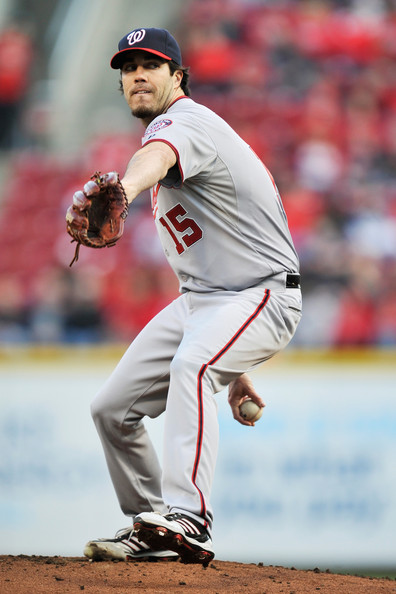
This may be the last time i use Haren's picture in a Nats uniform on this blog.  Photo via Zimbio.com

This may be the last time I use Haren’s picture in a Nats uniform on this blog. Photo via Zimbio.com

They say success has many fathers but failure is an orphan.  Well, here’s a whole slew of orphan-causing problems that befell this team this year.  I started this post months ago, when the team sputtered in July and suddenly sat at 54-60.  None of these bullet points are surprises.  Maybe I forgot some key points; feel free to tack ’em on.   This is a cathartic, washing my hands of the 2013 season, where so many things conspired to go wrongly.

  1. Davey Johnson, for continued pitching/bullpen mismanagement episode after episode, for seemingly losing the clubhouse (see below), for sticking with severely under-performing players (Espinosa, Haren especially) far, far too long, for failing to react to repeated beanings of his best player, and for generally looking old, tired and out-matched this year at press conference after press conference.  This team needs a new voice, a disciplinarian who will command more respect than what Johnson was commanding from this team.  My vote is for Matt Williams.
  2. Injuries.  Every team has injuries; I’m not going to write some simplistic statement that says “well if we had So-and-So healthy all year we’d have won the division.”   Look at St. Louis: they’re missing Chris Carpenter and Jaime Garcia basically all year and still won the best division in the game.  I think the issue most people will have with the Nats is the way their players’ injuries were handled.  Bryce Harper missed the whole month of June after several wall collisions finally caught up to him and he was clearly in pain the rest of the season.  Did the team not allow him to get healthy at the end of April?  Meanwhile you have to take serious issue with either the team, Danny Espinosa or both over the handling of his injuries.  What good did it do anyone to allow Espinosa to try to play through the significant shoulder injury he apparently has?  Why has he STILL not had the surgery done to fix it?  It sounds to me like there’s some serious stubbornness on both sides of this fence.  Ross Detwiler looked to be on the verge of a breakout season in 2012 … and now he’s back to being the broken down starter he’s mostly been during his time here.  In his 6 pro seasons he’s not pitched full seasons in 3 of them.   This isn’t necessarily on the team .. but I will ask this: at what point do you go into a season counting on Detwiler to break down instead of the reverse?  It goes to proper roster planning (also mentioned later on).
  3. Bench production, for regressing so far past the mean from last year’s over production.  Did you know that Steve Lombardozzi got more than 300 plate appearances this year with this slash line: .255/.276/.337?  I know you need backup utility infielders, but man, that’s a huge 68 OPS+ hole getting a ton of ABs.  Our opening-day bench of Lombardozzi/Moore/Bernadina/Tracy posted these OPS+ figures in 2012: 82/123/111/111.  In 2013?  69/66/43/55.  Wow.  That’s just a startling drop-off in production.  To add insult to injury Kurt Suzuki‘s OPS+ went from a respectable 95 last year to 64 this year.  Basically every pinch hitting spot or guy off the bench covering for a starter turned into an 0-4 outing.  We know that at least 3 of these 5 bench guys are gone; who will replace them?
  4. Dan Haren.  $13M for one of the worst starters in the game, even given his little August rebound.  The team finished 4 games out of the wild card, 10 games back of Atlanta.   In Dan Haren’s 30 starts, the Nats went 11-19.  In every other pitcher’s starts, the team went 75-57.   That’s a .568 winning percentage, which equates to 92 wins.  Even a #5 starter who gave the team a 50/50 chance of winning on any given sunday would have basically put the team into the WC game.  Haren was just a really really poor FA acquisition who contributed a huge part to the downfall of the team.  I wonder at this point if the Nats didn’t fail to do the proper medical due diligence on Haren; there was a reason the proposed trade to the Cubs fell through and there was a reason the Angels did not give him a qualifying offer.  I fully admit: I was completely on board with the signing, thinking we were getting the pre 2012 Haren.  Wrong; something clearly changed for him after the 2011 season and I wonder how much longer he can stay in the league after his last two seasons.  I’m sure he’ll get another one-year deal for 2014 based on his stronger finish, but another 5+ ERA season may finish him.
  5. Offense in general: The team scored 656 runs on the year.  That’s down fully 75 runs from last year, when they were 10th in the league in scoring.  Had they produced like they did last year in 2013 (about 10th in the league in runs scored and other key indicators),  they’d have scored around 700 runs, probably good for at least 10 more wins (under the rough estimate that it takes about 4 “extra” runs per win).  With 10 more wins … they’re winning the division again (since some of those added wins come at the hands of Atlanta).
  6. Hitting in the Clutch: Ask any sabre-nerd and they’ll tell you that “clutch” doesn’t exist and that all aspects of batting (good or bad) with RISP is merely coincidence (this came up again recently with David Ortiz’ game-changing NLCS homer).  I don’t entirely buy it. I think hitting with runners on base is a skill that can be practiced and honed.  I think there’s importance to driving runners in when you have the opportunity.  I think a batter with a runner on third and less than one out can absolutely look for a ball that he can hit into the air, thus driving in the run.  Anyway: let’s look at how well the Nats offense hit in the clutch this season (see this team-stats split link at tFangraphs).  The Nats team batting average with runners on base is ranked 19th in the league; its wRC+ as a team 17th.  However, change “runners on base” to “high leverage” in the Fangraphs split and you get this: Nats were 29th in high leverage batting average, 28th in wRC+. That’s right: almost dead last in the league in high-leverage hitting for the year.  When they came to bat in situations that mattered, they were one of the worst teams in the league.  Any way you slice it … that’s not “clutch.”
  7. Clubhouse Issues: I know that many readers here get irritated with presumptions of “chemistry” issues, writing comments about how we have no idea what really goes on in the clubhouse.  Fair enough; we don’t need to rehash the argument.  Absent any proof, I believe something might have been amiss.  Reporters have noted the losses of free-spirit Morse and the level headed DeRosa.  The Soriano acquisition brought a known surly loner with behavior problems into a tight knit bullpen and resulted in the chain reaction demotion of two guys (Storen and Clippard) who didn’t necessarily deserve to be demoted.  I believe Harper was fed up with Johnson’s message and was caught on camera more than once clearly ignoring or showing disdain to something he was being told.  To say nothing of the ridiculousness of Harper getting hit over and over without any of his teammates getting his back.   Can a new manager fix this?  Probably.  Can a leadership void fix this?  Definitely.  Perhaps with Jayson Werth‘s great season he can step up in the clubhouse and be the voice of reason moreso than it seems he has been before (either because he was struggling on the field or collapsing under the weight of his contract).
  8. Rizzo’s mis-management of the 2013 roster: Rizzo just had to have his speedy leadoff/centerfielder, and Span underperformed when it counted (I’m on record stating over and over that the team is wasting Harper’s defensive capabilities in left and blocking a power-hitter acquisition by sticking with Span in center.  But what’s done is done).  The opening day roster had no left handed specialists, a move that I quasi-defended at the time but which turned out to be disastrous.  We relied on a MLFA (and frankly, we over-relied an incredibly short sample size) for the long man (Duke) and he failed. We had absolutely no starting pitching depth in the high Minors and got rather lucky that Taylor Jordan materialized out of the thin air of high-A and Tanner Roark suddenly added 5 mph to his fastball and turned into an effective MLB hurler.  We had a $120M payroll but were depending on bargain basement acquisitions in key roles.  That just has to change for 2014.  Don’t go looking to save pennies on the proverbial dollar by non-tendering useful guys (as they did with Tom Gorzelanny last year); do the right thing and lock these guys up.  You had enough to waste $30M on Soriano but couldn’t find the scratch to keep around half of 2012’s bullpen?
  9. Pressure. this team had no pressure last year, and all of the pressure this year.  Nearly every baseball pundit with a blog, microphone or column picked them to win the division (me included), and lots picked them to win 100+ games (me included).  Look at how awfully they fared this year against the NL playoff bound teams:
  • Stl: 0-6, scoring just 8 runs in 6 games.
  • LA Dodgers: 1-5
  • Atlanta: 6-13.  Outscored 73-49
  • Pittsburgh: 3-4
  • Cincinnati: 4-3 but outscored 36-27 thanks to a 15-0 spanking the 2nd week of the season.

When the chips were down, they folded.  Especially against Atlanta, who pushed the team around, continually threw at us, and we had no reaction (that is until Strasburg suddenly had a fit of wildness which some will argue was less about standing up for his players and more about being off that day).   I lay this at the manager’s feet again.  Atlanta has proved time and again (and again) that they’re capable of acting like bullies when it comes to “unwritten rules” of the game, and Johnson let this go unchecked far too long.  A new manager with some balls will put an end to this nonesense, fast.  Sorry to sound crude, but it is what it is.  Johnson had no balls and made his entire team look weak in the face of the Braves.

Yes its great the team had a run in August and September.  What does it really mean?  Their schedule was cake in August and then filled with teams with AAA callups in September.  Who is the real Denard Span?  The guy who hit .235 in the middle of the summer or the guy who hit .303 in September?  Can Werth keep this kind of production up in the face of father time in 2014?  Can LaRoche return his OPS to something better than what a middling 2nd baseman can produce?  Can Harper stop running into walls and stay on the field?

I think the scarier part for Nats fans is the fact that this team is basically going to be the exact same team next year. Nearly every position player, likely the entire rotation (simply replace Haren with a healthy Detwiler), most all of the bullpen. There’s not a lot of holes here, not a lot of wiggle room.   Unless there’s a major trade on the horizon that drastically reshapes the roster, this is your team in 2014.  Can they turn it around and make up the 14 games they declined in the win column?

In summary; which of the above points IS the real issue behind 2013’s disaster?  And how do you fix it?  Because if you don’t address it, then 2014 is going to be the same story.


DC-IBWAA Poll results and my vote

2 comments

http://dc-ibwaa.blogspot.com/2013/10/dc-internet-baseball-writers.html
David Nichols does a great job getting all the Nats bloggers to participate in pre-season and post-season polls.  He got 18 voters this time around.  The link above is the results of the post-season poll.  Here’s his post-season survey questions, the poll results and how I answered them and why.

2013 DC-Internet Baseball Writers Association

POST-SEASON ACHIEVEMENT AWARDS BALLOT

 AWARD FIRST (5 POINTS) SECOND (3 points) THIRD (1 point)
Goose Goslin Most Valuable PlayerPlayer most valuable to the success of the Washington Nationals Werth Desmond Harper
Walter Johnson Starting Pitcher of the YearExcellent performance as a starting pitcher Zimmermann Strasburg Gonzalez
Frederick “Firpo” Marberry Relief Pitcher of the YearExcellent performance as a relief pitcher Clippard Stammen Roark
Sam Rice Hitter of the YearExcellence in all-around hitting, situational hitting and baserunning Desmond Span Harper
Frank Howard Slugger of the YearExcellence in power hitting Werth Harper Zimmerman
Joe Judge Defensive Player of the YearExcellence in fielding Span Desmond Espinosa
Mickey Vernon Comeback Player of the YearPlayer who overcame biggest obstacle in the preceding season to contribute on the field Jordan Ramos Werth
Josh Gibson Humanitarian Player of the YearPlayer who meritoriously gave of himself to the community Zimmerman
Minor League Player of the YearMinor league player most destined for big league success


Jordan 

Giolito

Burns 

Cole

Souza 

Godwin

  • Goose Goslin Most Valuable Player: Werth, Desmond, Zimmermann.  I went Werth, Desmond and Harper.  I don’t like voting pitchers for MVP; they have their own awards 🙂
  • Walter Johnson Starting Pitcher of the Year: Zimmermann, Strasburg, Gonzalez: Same way I voted.  I do like the few side-votes for Roark.
  • Frederick “Firpo” Marberry Relief Pitcher of the Year : Clippard, Stammen, Soriano: I voted Clippard, Stammen and then Roark.  Honestly I did not think Soriano really did that great a job this year.  He had a 0.9 WAR for his $15M salary (with deferred payments).  That just doesn’t cut it for me for a high-end closer.  I want Craig Kimbrel-esque dominance for that kind of money.  Roark on the other hand had a 2.0 bWAR in his limited time on the team.
  • Sam Rice Hitter of the Year: Werth, Desmond, Zimmerman.  I went Desmond, Span, Harper.  I dunno; I guess I got caught up on the definition, which included “baserunning” and “situational” hitting.  I think I just plain forgot how good a season Werth had here.
  • Frank Howard Slugger of the Year: Werth, Harper, Zimmerman: same way as I voted.  Maybe we should have put more thought into it besides just listing the team leaders in  homers.
  • Joe Judge Defensive Player of the Year: Span, Desmond, Ramos.  I went Span, Desmond and Espinosa.  Despite how bad his bat was, Espinosa was still awfully good in the field.  You always forget about the catchers when rating defenders.  I’m guilty here.
  • Mickey Vernon Comeback Player of the Year: Ramos, Werth, Ohlendorf.  I went Jordan, Ramos and Werth.  Remember, Jordan had Tommy John surgery and was buried in high-A to start the season.  That’s a heck of a comeback.  Fair enough on Ramos after his kidnapping ordeal and his injuries.
  • Josh Gibson Humanitarian Player of the Year: Zimmerman, Desmond, Gonzalez.  Honestly I only voted for Zimmerman; do the rest of these guys do events?  Maybe i’m just unaware of what the rest of the team is doing in the charity world, but clearly Zimmerman’s MS causes is well known.
  • Minor League Player of the Year : Giolito, Rendon, Cole: I voted Giolito, Cole and Goodwin, thinking that Rendon was “graduated.”  I have two lines of players because I wasn’t sure how to answer the question at first; was it “3 best prospects” or “3 best minor league players THIS season?”  Because the answer to the latter question clearly is not the same as the answer to the former question.

Survey Questions
1. Which players on the 40-man roster at the end of the season are least likely to return in 2010?    

I said Cedeno, Haren, Ohlendorf, Tracy (which were the top four answers among all the responses) but i’d like to change my mind on Ohlendorf.   I think the team is going to tender him and keep him around as a long man, considering that he can’t refuse an option until mid-next year.  I also think a couple of these random guys picked up on waivers late in the season (Tyler Robinson and Mauro Gomez) may not stick around for the long haul.  These two guys in particular never even got numbers assigned to them.

2. Will the Nats sign Ian Desmond and Jordan Zimmermann to long-term contract extensions before they reach free agency? 

I said “Desmond yes, Zimmermann maybe.”  Honestly, I feel the team can replace Zimmermann from within and may be better served to flip him for prospects if his price tag gets too high.  At some point the Nats are going to have to make tough choices like this (they are not going to be able to give 9-figure deals to everyone on this team who deserves them) in order to maintain their core group and contine to compete.  You already have two 9-figure deals, and you have to think that Desmond, Harper and Strasburg are going to merit them.  can you have a team with that much top-heavy payroll?  Now, if you got Zimmerman for Gonzalez prices (5  yrs $50M or so) then you have yourself a deal.

3. What player was the biggest surprise for the Nats this season?

I went with with Jordan, Roark, Werth.   The group went with Roark, Werth, Jordan.

4. Who was the biggest disappointment?

I went with Haren, Span, LaRoche.  The group went with Haren, Espinosa, Span.  Maybe I didn’t include Espinosa because I already had my doubts on him; frankly he didn’t disappoint me, he met my low expectations for him in 2014.

5. Who is your favorite professional Nats writer?

I went with Mark Zuckerman.  The survey results went Kilgore, Comak, Zuckerman and Wagner.  Coincidentally bon voyage to Comak, who is leaving The Washington Times Nats beat.

6. Who is your favorite non-professional Nationals writer?

I went with Luigi de Guzman, writer of the blog Natstradamus.  He doesn’t write that frequently, but when he does they’re usually thoughtful, well researched opinion pieces.  Though that’s no slight to Luke Erickson at Nationalsprospects.com, whose blog I absolutely depend on to write this blog.  I also really like Ryan Sullivan‘s NatsGM blog and its focus on prospects.  Generally speaking my preference in reading baseball writing on the internet leans towards opinion pieces.  I know that lots of blogs out there try to be replacement newspaper writers/beat reporters.  That’s not what excites me.  I want to see opinion pieces, criticism where criticism is due, etc.  Harper Gordek at Nationals Baseball is one that definitely writes opinion pieces and I look forward to his stuff too.  Unfortunately a lot of these guys have retired (Steven Biel, Chris Needham in particular were always good for a scathing piece when the team deserved it).  I know there’s a couple others out there who write good opinion pieces that i’m forgetting.

Yours truly got one vote!  That’s awesome, to whichever fellow blogger voted for me.


Ladson’s Inbox 10/4/13

4 comments

Wouldn't it be nice to see Price in a Washington uniform?  photo unk via strikesportsnetwork.com

Wouldn’t it be nice to see Price in a Washington uniform? photo unk via strikesportsnetwork.com

Nothing like a Bill Ladson inbox to start off your week!  This one is dated 10/4/13 and was posted late friday.  As always I write my response here before reading his and edit questions for clarity and conciseness.  Here we go.

Q: This past season, Adam LaRoche had a .403 slugging percentage, which might fly at shortstop, but not at first base. Do you think that Tyler Moore is good enough to be in a platoon with LaRoche, or should the Nats go after someone like James Loney to start most of the time?

A: Adam LaRoche‘s season was a disappointment for sure.  In addition to the noted poor slugging percentage, I’ll give you two more interesting stats.  He posted a bWAR of 0.9 for the year, which is only slightly better than the bWAR of 0.7 posted by Billy Hamilton during his two weeks of base-running terror in September.  And he ranked 20th of qualified first basemen in the league in terms of fWAR for the year.  James Loney put himself in a position to get a decent contract this year, with a nice slash line, a 118 OPS+ and a 7.2 UZR/150 at first.  But Loney’s problem is that he just doesn’t hit for enough power.  The Nats need LaRoche’s power, and I think at this point they stick with what they have for one more year and hope he rebounds.   I don’t think Tyler Moore is ready for prime time and will continue to be a power RH bat off the bench.  Lastly; who is taking LaRoche off our hands if we decide to replace him?  We’d have to pay most of his salary, get little in return, and I just don’t see this management team doing that.  Ladson agrees.

Q: How does Ross Ohlendorf fit in with the Nationals’ future plans? I see him as a great No. 4 or 5 starter.

A:  Ross Ohlendorf is in an interesting spot.   He was signed as a MLFA this past off-season, but did not accrue enough service time to get to 5 full years, so I believe he’s still tied to the club.  He should be arbitration eligible, and (per springfieldFan’s big board work) seems to have 2 options left.  So, on the one hand he pitched pretty well for us and I’d definitely tender him a contract for 2014; he’ll be relatively cheap even through arbitration.  I see him competing for the 4th/5th with the other obvious candidates (Karns, Jordan, Detwiler, Roark), but his longer term history as a starter in 2011 and 2012 does not inspire confidence.  His new motion helped him to a 3-1 record with a 3.52 ERA in 7 starts this year, but ultimately I see him settling into a long-man role similar to what he had this year.  Ladson agrees; he’s arb eligible but doesn’t seem like he can stick as a starter.

Q: I feel like the Nationals should go after center fielder Jacoby Ellsbury. How do you feel about that?

A: Nope.  Jacoby Ellsbury is a nice player, but I feel like he’s somewhat of a one-season wonder.  Look at his career homer records and tell me how he hit 32 in 2011 when he’s never hit more than 9 in any other season??  Doesn’t that outlier scream out PEDs?  Plus he can’t stay healthy; he missed 30 games this year, half of last year, basically all of 2010.  He’s a Scott Boras client who is already making noise about getting more for Ellsbury than he got for Carl Crawford.  Would you pay $150M for 7 years of Ellsbury??

But here’s the other thing; as with LaRoche, this team has a center fielder under contract for 2014!  If the Nats want to make a change in center they’ll be selling somewhat low on Denard Span.  Personally I wouldn’t mind putting Harper in center, acquiring a big bopper for left and adding some muscle to this lineup.  But I just don’t see Mike Rizzo doing that and admitting defeat on the Span acquisition.  Ladson points out that Span’s great finish means he’s clearly not in line to be replaced; organizationally they have to be hopeful that his 2014 will resemble more closely the end of 2013, not the middle.  Fair enough; I can get on that bandwagon.

Q: Have you noticed how similar the home run swings of Wilson Ramos and Andres Galarraga are? Every time Ramos goes yard, he reminds me of The Big Cat.

A: I had not noticed, but sure, whatever.  No real question here otherwise.  I like Ramos, and he’s finally showing signs of durability after an injury-plagued career.   This is the kind of hard-hitting question that Ladson is known for taking.

Q: Do you think the Nationals should go after another pitcher or two during the free agency period?

A: I think the Dan Haren experience may have scared them off the FA market for a bit.  And this coming off-season’s FA market for Starting Pitching is really thin.  After spending $13M each of the last two years for Haren and Edwin Jackson (and getting bWARs of -0.1 and 2.0 respectively) the Nats have to be thinking that there’s better ways to spend money.  I wouldn’t be surprised in the least to see another deal similar to the Gio Gonzalez deal, where we package a slew of close-to-the-majors players together for one decent-to-good pitcher.   The problem would be finding such a team; Oakland’s current slate of young starters mostly struggled this year and none of them are arb-eligible yet.  Maybe Tampa lines up; not only do they have to deal with David Price‘s rising salary but Jeremy Hellickson is arb-eligible for the first time too.  Hellickson took a major step back though in 2013; would Tampa use this to their advantage and keep him at a lower arb-number for one more year instead of selling low?   Would you trade, say, Karns, Roark and Kobernus for Hellickson?  Too much?  Too little?  Ladson says he could see them going after a pitcher either on FA or in Trade.

Q: Will Jhonatan Solano be the backup catcher out of Spring Training or will the Nationals try to bring in someone else? 

A: This is one of the bigger questions for this team this coming off-season: do the Nats go into 2014 with Ramos and a minor league call-up as his backup, or do they go for a veteran backup?  I’m guessing they may go the veteran FA route; there’s a ton of catchers on the FA market this year.  Jhonatan Solano may have peaked as a player: his AAA slashline as a 27 yr old this year was .214/.245/.279.   He’s been bouncing between AA and AAA since 2009.   Sandy Leon seemed like he was the future answer, but he bottomed out this year too after looking great in 2012.   I’d go with a veteran backup (Kurt Suzuki is a FA …) and wait out the kids one more season.  Ladson thinks FA route.

Q: Do you think a new manager will be able to change the hitting philosophy of the team and play more small ball instead of over-swinging and trying for home runs all of the time?

A: Is that the perception of this team’s offense in 2013?  That they over-swing all the time?  I think they just don’t hit well in the clutch.  Small-ball is a century old concept mostly debunked by modern stats in the game as being out-dated strategy.  Honestly, I want a manager who stands up for his players, who keeps them in line, who isn’t afraid to order a bean-ball when it is called for, and who doesn’t come across as a feeble old man (sorry Davey Johnson; that’s how I interpreted your last season).  Ladson says the hitting has settled since the firing of Rick Eckstein and the hiring of Rick Schu. 

Q: I think that left-hander David Price would be the ideal arm to add to the Nationals’ rotation. If he is willing to agree to an extension, do you think that he would be a good fit for the Nationals?

A: Price would be a great fit on every team in the majors.   Duh.  The problem is extracting him from Tampa.  Tampa is shrewd, drives a hard bargain, and wants to win every trade.  They’re not exactly the best team to try to negotiate with.  We’ve had this argument on this site many times; what would it really take to get Price out of Tampa?  Giolito, Jordan, Kobernus and Rendon maybe?  Would you make that deal or is that too much?

Of course, that being said … ask yourself this; was starting pitching *really* the reason this team failed in 2013?  No I don’t think it was.  Yes, the team was 10-19 in Haren’s starts … even if they’d finished .500 in Haren’s starts they were still out of the WC game.  No; this team took a significant step backwards offensively.  So the way to fix that should be to address the offense.  Problem is; all 8 starting fielders are under contract or under team control for 2014.  What do you do?  Get a couple of bench guys who can hit?  How does that help?

Ladson punts with his patented ‘lets see what happens’ line.