Nationals Arm Race

"… the reason you win or lose is darn near always the same – pitching.” — Earl Weaver

Archive for the ‘erick fedde’ tag

Nats Draft History; what were the rumors on draft day historically?

leave a comment

Zimmerman was the Nats first ever pick. Photo unknown credit via fantasyknuckleheads.com

Zimmerman was the Nats first ever pick. Photo unknown credit via fantasyknuckleheads.com

I thought I’d do a different take on the “history of Nats drafts.”  What was the mood/feel around the team approaching draft day year after year?  Who do we think they were focusing on as the big day rolled around and why?  We focus mostly on the first round pick, where so many of the mock drafts focus, but we’ll also mention significant moves further down.

To be honest, I didn’t really start closely following the draft and track who the Nats were “rumored” to be with until the 2008 draft.   So if you remember something differently than me, please feel free to chime in.  I also focus pretty heavily on the early picks here, simply because teams generally get the most value out of their 1st round picks, and the thought processes in taking the first round pick often is the focus of draft analysis and mock drafts posted head of each actual draft.

The Draft Tracker xls (created by Brian Oliver, now maintained by SpringFieldFan) is vital for any Nats fan interested in tracking the teams’ drafting history.

  • 2005: Nats picked 4th overall and did not have a 2nd or 3rd round picks (the 2nd round pick went to Colorado for the Vinny Castilla FA signing and the 3rd round pick went to Minnesota as compesation for the Cristian Guzman signing)).  The team was also under MLB control and was (presumably) given quite strict financial guidelines over signings.  Given those considerations, they knew they needed a splash with their #1 overall pick, they needed someone affordable and they needed someone that would speak to their new fan-base.  They wanted college draftees, quick to the majors.  The team was looking at the three top 3rd Basemen in the draft.  Ryan ZimmermanRyan Braun and Alex Gordon.  All three were playing at good schools with good numbers.  Gordon went 2nd overall to Kansas City and the Nats snapped up Zimmerman.  Zimmerman signed quickly for an acceptable amount ($2.9M as the 4th overall pick) and was playing in the majors by September.   Zimmerman’s selection made sense geographically (he grew up in Va Beach and attended UVA) and it made sense considering the talent available at the Nats pick.  MASN’s David Huzzard printed a retrospective of the 2005 draft ahead of 2014’s draft.
  • 2006Thanks to a couple of FA losses (Hector Carrasco and Esteban Loiaza), the team had two extra picks in the first two rounds.  The team had a roller coaster 2005; first place at mid-season and then a collapse as MLB refused to allow reinforcements.  By draft-day 2006 the team was firmly under the control of Jim Bowden, and his philosophy had always skewed towards “toolsy” players, potential over actual.   But the team didn’t have an owner yet, so were still operating under MLB’s guidelines.  These two facts were quite evident by looking at the haul the Nats had with their early picks.  6 picks in the top 4 rounds and they were all high school players.  Chris Marrero, Colten Willems, Stephen Englund, Sean Black, Stephen King and Glenn Gibson.    The team got Marrero for a relatively cheap $1.6M deal mid-way through the first round, failed to sign Black altogether, and got 5 of these 6 players to sign for around $5M all told.  The team on the field was under-performing thanks to a limited MLB-dictated budget, but Bowden was drafting for the longer run.  Unfortunately none of these high school players ever amounted to much of anything, with only Marrero ever reaching the majors and Willems retiring before ever advancing out of A-Ball.
  • 2007: The team had another haul of upper-end draft picks, thanks to their acquisition of Alfonso Soriano and his type-A free agency sending them both an extra first rounder and a supplimental first rounder.   The team took lefty Ross Detwiler from small school Missouri State with the 6th overall pick, a selection that has been lampooned based on who else was available at the time (Madison Bumgarner and Jason Heyward in particular), but literature from 2007 supports his selection at 6th overall.  After Detwiler, the nats spent their two supplimental first round picks on high school raw talents (as was Bowden’s custom), neither of which ever panned out (Josh Smoker and Michael Burgess).  This draft turned into one of the more productive in Nat history, with at least four current major leaguers picked (along with Detwiler, Stephen SouzaDerek Norris and especially 2nd round pick Jordan Zimmermann, so it is unfair to focus on the misses out of 2007.  This was easily Bowden’s best draft while in charge in Washington.
  • 2008: The year of Aaron Crow.  Crow had a strong summer and a strong spring and was the 2nd best college arm in the draft, no question.  There was apparently antagonism between Bowden and Crow’s agents from the moment that he was drafted, and the negotiations between the sides never really came together.  The signing deadline came and went with no signature, and Crow went to Indy ball before getting picked the following summer.  There was talk about how the Crow non-signing was purposeful; the Nats spent significantly less money in the draft in 2008 than they had in 2007 and the ownership group was still being labeled as “cheap.”  Either way, this lack of signing was one more bullet in the ammunition guns of opinion makers in the industry about the state of the Nationals organization under the leadership of Bowden.  This would serve to be his last draft; he was embroiled in the bonus scandal over the off-season and relinquished his job ahead of the 2009 season.
  • 2009: We all are quite familiar with the story by now; Stephen Strasburg was a laconic out-of-shape hurler in high school who barely merited a college spot, then re-made himself into the “greatest pitching prospect of all time” while at San Diego State.   Despite his reported bonus demands (he ended up with more than $15M deal) and his representation (Scott Boras), the Nats never seriously considered not selecting him with the first overall pick.  For me the big question was who the Nats were going to take at #10. I wanted another starter, and there were some significant college pitchers projected to be available at #9.  Kyle GibsonAlex White,  Tyler Maztek, Chad Jenkins and Tanner Scheppers were all left on the board to draft a Stanford reliever in Drew Storen.  Keith Law had Storen ranked as his 28th prospect, a guy who was clearly “good” but who was over-drafted by nearly 20 spots.  This had “signability pick” written all over it, a thought that was even more proven when the team drafted college senior Trevor Holder with their 3rd pick and signed him for 1/2 of slot.  Holder wasn’t even his team’s friday starter and had a 4.48 ERA.  So, the team got Strasburg and paid him significant money, and the 2008 draft misstep turned into an effective closer in Storen, so the draft wasn’t a disaster, but with a bit more money allocated (remember, this was the same year they were paying Guzman $8M to be a mediocre shortstop) the team really could have hit it out of the park.
  • 2010: After another 100+ loss season, the Nats were fortunate to have another no-brainer, consensus #1 overall pick in Bryce Harper.   But the real story of the 2010 draft was Mike Rizzo’s finally convincing the ownership group and Ted Lerner of the power of the over-slot pick.  The Nationals gave Harper a 40-man deal and a lot of guaranteed money … but they also bought two high-end high school arms out of their college commitments for 1st-2nd round money (A.J. Cole and Robbie Ray).  The Nats were quickly becoming a team that was ignoring the advice of the penurious commissioner Bud Selig, known for railing against teams and owners who ignored his “slot recommendations.”  The Lerners tried to be friends with Selig and play by the rules, only to watch other teams out-spend and out-sign them.  Remember this fact when we see the next CBA come out, assigning slot deals ahead of time and implementing draconian policies on teams that over-spend in the draft.
  • 2011: The Nats were looking at a handful of players with their #6 pick; George Springer, Sonny Gray, Taylor Jungman, Jackie Bradley, and the like.  In a pretty shocking draft-day shake-up, teams passed on former college player of the year Anthony Rendon and suddenly he fell into the Nationals’ lap.  The sliding of Rendon to the Nats was amazing; Rendon was considered a clear consensus 1-1 pick for nearly 2 seasons, and the pro track record of BA college players of the year is pretty solid.   The Nats had two extra first rounders (compensation for type-A FA Adam Dunn) and the selection of Alex Meyer with the #17 overall pick was a given; some pundits had the Nats taking him at #6 overall, so much they were enthralled with the huge right hander from Kentucky.   As with 2010, the team continued to write big checks to convince Brian GoodwinMatt Purke and Kylin Turnbull to leave school early.  The Purke pick in particular showed that the Nats were willing to spend money to get big-time players and were willing to risk the dice on injury concerns.  The Nats had no 2nd rounder (lost as compensation for Adam LaRoche but with three 1st/supp-1st rounders got plenty of cracks at top-end talent.
  • 2012:  The Nats had a mid-draft pick after their .500 record in 2011 and were focusing on arms.  By now, Rizzo’s drafting mentality has been made evident; he focuses on college players, and more specifically college arms, unless an outlier falls into his lap.  Well, the definition of a draft-day outlier fell into the Nats lap in 2012 when Lucas Giolito, a big-time prep prospect who was under consideration of being the first ever high school right handed pitcher to go 1st overall early in the process.  Giolito’s size, power and secondary offerings were the makings of a 1-1 pick, but his senior prep season was derailed by what was initially called an “elbow strain” but which turned out to really be a “small elbow ligament tear.”  Nonetheless, the Nats grabbed him, signed him for over-slot money (nearly $3M), and they had their man.  Years later, Rizzo revealed that the next guy on their draft board was St. Louis sensation Michael Wacha … a “what if” question for this team that may be asked for quite a while, given Wacha’s quick rise and overall dominance at such a young age.  The rest of the Nats draft class was entirely about saving dollars to over-pay Giolito and buy him out of his college committment (as is seen by the bonus figures and senior draftees for the rest of the first 10 rounds), and we’re already seeing the after-effects of this strategy; the team has already released 10 of its 2012 draft class after just two pro seasons, and outside of Giolito its hard to see any potential impact players out of the entire class.  The Nats may get a couple of RHP bullpen arms, but little else.
  • 2013: The team knew it didn’t have a first rounder thanks to its signing of Rafael Soriano (though to be honest, knowing that they were picking last thanks to their MLB-best record in 2012, they probably weren’t as reticent about losing that pick), and the new CBA had taken affect, meaning that the team had a very limited budget for signing players.  Their first pick wasn’t until the end of the second round, and they went with a big power college arm in Jake Johansen.  It was impossible to predict who would be available to the Nats at the 68th pick (their first pick), so the Nats draft philosophy seemed to revert to default; lots of college players, lots of college arms.  Of their first 15 selected players, just one prep player was selected (Drew Ward) and a number of their guys signed  for significantly under-slot to pay Ward and a couple of other players.
  • 2014: After a disappointing 2013 season, the team kept its first round pick in a draft that seems deep on college arms but thin in other areas (especially college hitters).  The Nats farm system, after years of drafting predominantly college arms for the past few drafts, has plenty of arms but is thin on hitters, leading some pundits to presume the Nats are looking at college bats.  But a couple of late spring elbow injuries on significant names (James Hoffman and Erick Fedde) also has other pundits thinking that the Nats will have no concerns about taking a pitcher who is known to need Tommy John surgery (given their handling of the likes of Strasburg, Solis, Zimmermann and their picking of Giolito in 2012).  Mock drafts frequently have the Nats selecting Fedde at #18.  And indeed that is who the Nats select.  A run on high-end college arms just prior to the Nats pick probably sealed their fate on taking Fedde.  They take a good balance of pitchers and hitters in the top 10 rounds, almost entirely out of the college ranks (as is their custom).  Like 2013 and 2012, they gambled on one prep player in the top 10 (this year Jakson Reetz) and bought a high-end prep prospect out of his college committment, but otherwise stayed the course drafting college players.

The following links were crucial to doing this post:

First Look: Nats top 10 draftees from 2014 Rule-4 Draft

15 comments

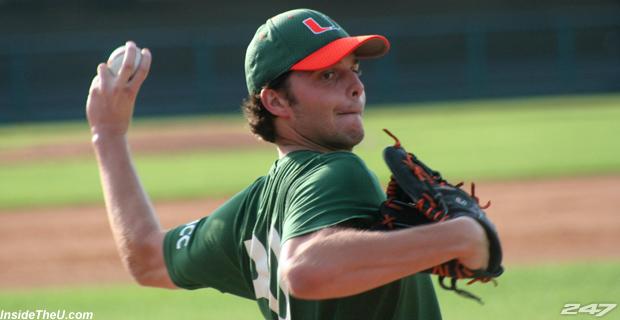
Suarez is the Nats 2nd round pick.  Photo via 247sports.com

Suarez is the Nats 2nd round pick. Photo via 247sports.com

As we did last year, here’s a quick introduction to the Nats top 10 picks for 2014.

A quick glance on our high-end draftees from 2014 draft.  I’ll put in the rankings from several prospect ranking shops (Keith LawBaseball America, MLB.com and MinorLeagueBall).  overall player ranking after the player name where appropriate (though as we’ll see, Keith’s top 100 quickly runs out of names).  Here’s a link to the draft order, and here’s a link to MLB.com’s fantastic draft tracker database for reference.

As he did last year, NatsGM.com‘s Ryan Sullivan is live-blogging and does a great job of pulling up stats on each of our picks.  I depend on his reports as well as those from the four links above to give a quick overview of our draftees.

Note: I wrote most of this over the weekend as the guys were picked; we’re already hearing plenty of rumors about signings.  I havn’t updated this post with such intel but I’m sure its readily available from Ladson and Kilgore and the like.

1st round/#18 overallErick Fedde, UNLV RHP (Law #27/BA #24/MLB #33/MinorLeagueBall #70).  Most of the credible mock drafts had the Nats drafting Fedde here, and that’s exactly what happened.  In my quickie preview post, I thought Fedde would be an overdraft and hoped that either Tyler Beede or Brandon Finnegan would drop.  Well, Beede went 14th and Finnegan went 17th.  I liked Touki Toussant as well as a prep HS that may drop to the Nats, but he went 16th.   I’m not sure I agree with pundits who say that Fedde was a “top 10 talent” prior to his injury; I still think this is an overdraft on Fedde given the fact that he’s rehabbing a blown UCL.  Look at the placement of Fedde on the four prospect ranking shops; that’s an awful lot of trust being placed into the hands of the surgeon, the rehab process, and the recovery.  That being said, looking at the next several players picked, there wasn’t a name that really stood out as someone that I would have rather had who at the same time was a prototypical Mike Rizzo pick  Maybe Connor Gillaspie would have worked (he went #20).  Ryan Sullivan thinks we got a steal here; i’m not so sure.  I think the Nats were looking at their board while the Giants were picking at #14, and then had their next best three names get snatched out from under them, leaving them taking a gamble on Fedde.

On the player himself; Fedde is tall (6’4″) but *skinny* (listed at between 165 and 180), sits 91-93 and touched 95 with excellent movement.  Secondary pitches can flatten out because of his lower arm slot, but he’s listed with a decent slider and decent change.   ESPN thinks he projects a 65 fastball and a 60 slider but needs to work on his command.  Very preliminary ceiling/projection is as a mid-rotation starter.   The thought is that he can fill out his frame and add velocity, though he’s done neither in his three college years.

He’s a Scott Boras client, he was a HS teammate of Bryce Harper, and he’s rehabbing a torn UCL, so he fits in nicely with the Nats on several levels.  It was easy to see why the mock drafts were all over the Nats taking Fedde.  In reality, I’ll bet the war room was rather dejected watching the three a-forementioned pitchers drop off the board in the 4 preceding picks to #18.

2nd round/#57 overall: Andrew Suarez, LHP from U-Miami (Law out of top 100/BA #75/MLB #86/MinorLeagueBall #103).   A re-draft (he was picked in the 9th round out of HS but chose to go to school), he suffered a torn labrum early in his college career but reportedly picked up velocity this past season and held it through most of the year.   Law alludes to other medical issues that clearly had him down on Suarez (Law ranked him lowest of my 4 resources).  He spent the year as Miami’s saturday starter (aka, their #2 starter).  BA mentioned him in their draft preview specifically because of his fantastic control; he had just a 1.34 BB/9 rate despite throwing a low 90s fastball that can reach 95.  He pitched a shut-out in game 1 of the Coral Gables regional, a 7-hit, 10K, 0 walk outing that matched his career high; nice way to finish off your college career (Miami was elminated from CWS play before Suarez could throw again).   Scouting reports say he profiles as a 4th starter.  (Note: my fingers just automatically typed Luis Suarez, aka Liverpool and Uruguay’s striker.  Part of me is in World Cup mode already).

3rd round/#93 overallJakson Reetz, prep Catcher from Nebraska (#38/#62/#40/#36).   A prep catcher isn’t who you normally expect to see this high on the National’s draft results, but his pre-draft rankings show that he’s clearly a steal at the mid-3rd round.  The question is; is he signable here?  $567k is his bonus slot figure; he might be a tough sign unless the Nats have a pre-draft deal with Fedde to save some money for a guy like Reetz.   His pedigree is good: MVP of the PG all-american game, member of the same world champion U-18 team that #1 overall pick Brady Aiken was on.   In prep games he was showing 91 from the mound and reportedly has a great arm, but some scouting reports say he may struggle to stay behind the plate.  As pointed out by NatsGM.com’s Ryan SullivanBA did a “day in the life” piece on Reetz that is worth checking out; once you watch this you’ll really like Reetz.  Last note: Keith Law even likes the pick and says he’ll sign.

4th round/#124 overall: Robbie Dickie, juco RHP from Blinn college in Texas (na/210/179/173).  95-97 on the gun, led his team to the Juco World Series, but he may project as a reliever thanks to questionable mechanics.   Quite a pop-up guy, but an over draft based on the rankings in the major publications.  He’s committed to Texas State if he doesn’t sign, which isn’t exactly a baseball powerhouse, so is this a value/slot saving pick?

5th Round/ #154 overall: Drew Van Orden, a senior RHP from Duke (na/395/na/na).  Good numbers on the year as Duke’s Friday starter (6-5, 3.19 ERA, more than a k/inning).  He finished off his college career with a 5-hit complete game shutout over Georgia Tech in the ACC tournament, Duke’s only win in their post-season tournament.  I like his pedigree despite the fact that he’s a senior 5th round pick with zero leverage.  Who are the Nats saving all this money for?  Update: Van Orden quickly signed, terms undisclosed.

6th Round/#184 overall: Austen Williams, junior RHP from Texas State ( na/#276/na/na).  Nats clearly saw something in Williams that other draft pundits did not; even MinorLeagueBall (who ranked to 350) didn’t have him listed.  Texas State’s friday starter continues a long trend of the Nats plucking talent out of Texas.  Williams posted solid numbers as Texas State’s Friday starter (8-3, 3.65 era, good K/9 rates).  I’m sure he’ll take a bit more than slot to sign, but the Nats should have some pennies saved.

7th Round/#214 overall: Dale (D.K.) Kerry, a senior Center fielder from the U of Miami (na/#332/na/#133).  MLB’s scouting report on him says he’s a great athlete and he has a “4th outfielder” projection.  Sounds like the perfect senior 7th round draft pick to me (sarcasm).  Ryan Sullivan is more bullish on him than I.

8th Round/#244 overall: Jeff Gardner, senior corner OF from Louisville (na/498/na/na).  He may be a senior, but he’s also the clean-up hitter for a CWS-bound team and had great stats on the year (.321/.403/.538 with 9 homers).   Not a bad find for the 8th round.

9th Round/#274 overall: Austin Byler, junior 1B from Nevada (94/123/166/271).  Well, now we see why the Nats are saving their pennies; getting Byler here is a find.  He should have been taken in the 3rd or 4th round if you believe the pundits, and he may take an over-slot deal to buy him out of his senior year.  He’s got serious power (he led his conference in homers and is an offensive threat) and would be a great find if he signs.

10th Round/#304 overallMatthew Page, senior RF from Oklahoma Baptist (na/na/na/na).  A d-2 pick for a team that a) loves guys from the south west already and b) has shown itself more than willing to gamble on non D-I players.  I can’t imagine he’ll be expensive to sign.  He’s also the first player the Nats have picked that didn’t appear anywhere on any of the draft previews.

Summary: Through the first 10 rounds the Nats picked 5 pitchers and 5 hitters for good balance.  Of these 10 players selected, 9 are college.  So, in other words, this is exactly the type of draft we expect to see out of a Rizzo-run organization (with the possible exception of perhaps predicting a few more arms). 

Of these 10 draftees, I’d say that at least 5 are “expected under slot guys” (Dickie, Van Orden, Kerry, Gardner and Page).  You have to think the team may play some slot hardball with Fedde.   Suarez and Williams should sign for about slot.  That leaves two guys who may take over-slot deals to sign; the sole HS draftee in Reetz and the decently ranked Byler.  I’ll bet it works out and all 10 guys sign.


Some useful draft links for you:

Who are the Nats targeting at #18 plus Mock Draft review of top5 picks

25 comments

Lots of pundits think the Nats are taking Fedde at #18.  Photo via chicagonow.com

Lots of pundits think the Nats are taking Fedde at #18. Photo via chicagonow.com

The annual amateur/Rule-4 draft is upon us.  Wendy Thurm posted a nice overview of the festivities, kicking off today, June 5th.   Who is going at the top, and who do we think the Nats are going to take with their first round draft pick (#18 overall?)

Lets check in with some experts and pundits.  Unlike in years past, there’s no real consensus #1 overall pick this year thanks to a host of factors.  But the top-5 is relatively consistent no matter who the pundit.  We’ll talk about predictions for the first few picks plus who they think the Nats will end up with.  (Link to the draft order for the first few rounds to show all the missing picks and supplemental additions from MLB.com).  Note that all the Keith Law and Jim Bowden links are ESPN insider.  Profiles on the frequent top-5 picks and the names being associated with the Nats potential picks are below the list of pundit’s mock drafts:

  • MLBDraftInsider’s Chris Crawford has done a host of Mock Drafts this spring (the sixth version dated 5/28/14 and the “near final” version on 6/2/14, his penultimate mock on 6/3/14, his “really final” board on 6/4/14 and his “final mock ever” on 6/5/14)  and in his last mock has come down on the Nats taking Hoffman. Predicted top 5 in final mock: Aiken, Rodon, Nola, Conforto, Gordon.  Same movements that Law is projecting at the final minute.
  • ESPN’s Keith Law put out his first mock draft on 5/16/14, his second on 5/27/14, his third on 6/4/14 and his final/last on 6/5/14 and had the Nats on Erick Fedde, calling it a “lock” in the industry.  Top 5 in the latest mock: Aiken, Rodon, Nola, Conforto, Gordon (only list on here without Kolek in top 5).
  • MLB.com’s Jonathan Mayo posted a mock on 5/16/14, another on 5/30/14.  One last one 6/5/14.  In his latest he went Aiken, Jackson, Rodon, Kolek, Gordon.  He has the Nats taking Jeff Hoffman, saying that it could come down to “financials” and who is willing to go over-slot.
  • MLB.com’s Jim Callis posted his latest mock on 5/23/14 and one last one 6/5/14.   He went Aiken, Jackson, Rodon, Gordon, Kolek.  He has the Nats on Hoffman as well, but in the description basically says he says Hoffman could go top 10 and/or the Nats could take Fedde.
  • MinorLeagueBall’s Matt Garrioch posted his first mock draft early (3/10/14), his second on 5/19/14.  His top 5: Rodon, Kolek, Aiken, Jackson, Gordon.  He has the Nats on Kyle Schwarber.
  • ESPN’s Jim Bowden posted his Top-10 picks on 5/28/14, trying to think like the GM of each top-10 picking team, and went Rodon, Aiken, Kolek, Jackson and wildcard Freeman.
  • BaseballAmerica’s John Manuel has posted mock drafts on 5/9/14, 5/16/14 and v3.0 on 5/25/14 and his final the day of the draft 6/5/14.  His top 5 in his most recent mock: Aiken, Rodon, Kolek, Conforto, Gordon, with the Nats on Fedde.
  • GradingontheCurve’s Shaun Kernahan put up his mock draft 5/29/14.  He went Aiken, Rodon, Kolek, Jackson, Gordon with the Nats on Gatewood.
  • MinorLeagueBall did a community Mock Draft on 5/30/14 (so, not full of expert opinion but interesting nonetheless to see what the crowd-sourced opinion on players is).   They went Aiken, Jackson, Rodon, Kolek, Gordon with the Nats taking Conforto.  Based on where Conforto is now being projected, there’s little chance he survives to #18.
  • BaseballInstinct’s Thomas Belmont has a top-200 draft board that isn’t a mock draft but lists top 5 as Aiken, Jackson, Kolek, Rodon and Toussant.  #18 is Grant Holmes, who I would be surprised if the Nats picked despite his pedigree.  He posted his mock draft on 6/4/14 where he follows his board, but I have a problem with his rankings considering what the professional reporters above are showing for top 5 and for the Nats.
  • PerfectGame’s Patrick Ebert posted a bunch of mock drafts; in his last one on 6/4/14, he went top-5 of Aiken, Rodon, Kolek, Gordon, Nola with the Nats on Bradley Zimmer.
  • Si.com’s Dave Perkin (a former professional scout who does some writing) posted a last-minute mock 6/5/14 online.    He goes Aiken, Rodon, Kolek, Freeland, Jackson with the Nats on Beede.  I like this scenario.

How do I think the top 5 will go?  I like Aiken #1, Rodon to the Marlins (for the cuban-american/quick to the majors factors), then Kolek.  From there I have no idea; the Cubs by all accounts want a college arm but the next best one (Nola) isn’t worth the #4 spot.  Maybe they take a college bat (Conforto?), maybe they go BPA.  I’m guessing they bite the bullet and play the hand that they’ve been dealt and get Jackson or Gordon 4th, with the other going 5th.

ACTUAL DRAFT RESULTS: Aiken, Kolek, Rodon, Schwarber and Gordon.  Who was closest?   hard to tell; Schwarber came out of nowhere, and nearly everyone had Rodon before Kolek.

A quick overview of the names in discussion for top 5 selection:

  • Carlos Rodon: lhp from NC State; was the heavy consensus 1-1 overall pick all winter, but a rough spring and high pitch counts have dropped him on most people’s mock boards.  Scout.com has a detailed scouting report and video.  Scouting Video from Keith Law.
  • Brady Aiken is a prep lhp from San Diego who could be just the third high school pitcher ever picked #1 overall.  Scout.com has a detailed scouting report and video.  Keith Law scouting video.
  • Alex Jackson is a prep C also from the San Diego area.  Scout.com has a detailed scouting report and video.  Scouting video from Keith Law.
  • Tyler Kokek is a prep RHP from Texas with big time stuff; 100mph velocity on his fastball.  Scouting video from Keith Law.
  • Aaron Nola is a polished RHP friday starter for LSU who may not overpower you with velocity, but is a good pitcher.  Scouting Video from Keith Law.
  • Nick Gordon is a prep SS from Florida.  Scouting Video from Keith Law.
  • Michael Conforto is a junior OF from Oregon State.
  • Kyle Freelan is a lhp junior starter from Evansville.  He has good velocity, a good slider and great control.
  • Max Pentecost is a C from Kennesaw State who may be a stretch to go top-5 but should be top-10.
  • Touki Toussaint is a prep RHP from Miami, FL who is considered the second best prep RHP arm behind Kolek; he doesn’t quite have the velocity but he has better secondary stuff.

MLB.com reports that seven of these guys will be in-studio during the draft (all high schoolers), including a couple that may drop out of the first round (could be a bit embarassing for both them and MLB).

The names associated/predicted with the Nat’s #18 overall pick:

  • Erick Fedde was UNLV’s friday starter before going down with the dreaded Tommy John injury, diagnosed on 5/10/14.  Before his injury Fedde was projected in the same general area where the Nats are picking … which makes me question this prediction.  I could understand if Jeff Hoffman falls (a projected top -5 pick) to #18 grabbing him … but here I don’t know if I’d agree with picking a guy who you won’t see for a year and a half in uniform.  Though that being said, BA had Fedde ranked #8 in their top-200 pre-injury draft rankings, so perhaps grabbing him at #18 could be appropriate.
  • Tyler Beede: RHP Vanderbilt starter, who was a projected top-10 pick thanks to his amazing sophomore season (14-1, 2.32 ERA and a Golden Spikes finalist), before a rough season (7-7, 3.49 ERA and 92/41 k/BB in 91 innings) dropped his draft status.  He turned down a big bonus out of HS as a Toronto 1st rounder and that apparently (combined with unknown/unstated “make-up” issues) has him dropping fast.  Personally, I think he could be a steal at #18.  BA’s Aaron Fitt profiled Beede on 5/29/14.  Scouting Video from Keith Law.
  • Kyle Schwarber, C/1B power hitter from Indiana.  Listed as 6’0″, 240.  .340/.450/.623 on the year with 12 homers, 27/41 K/BB ratio in 215 ABs.  Great numbers if he’s really a catcher; some listed him as C, others at 1B.  Question: Big10 baseball isn’t exactly the SEC; are his stats padded thanks to playing a bunch of weak programs all year?
  • Jeff Hoffman was ECU’s friday starter and a consensus top-5 predicted pick (perhaps as high as #3) before being felled by TJ surgery (diagnosed on 5/8/14).  I think he’s a huge long-shot to make it to #18 because Toronto picks twice in the top 11 picks and it makes complete sense for them to use their 2nd pick to take Hoffman, save some slot money and basically temper their draft risk by virtue of having a second high pick.  Scouting Video from Keith Law.
  • Jacob Gatewood is a prep SS from Fresno, California who has a ton of power for a middle-infield bat (he won the prep home run derby held during last year’s all-star game festivities), even if he has to move off Short to 3B.  Gatewood gets some mention as a potential Nats pick, but this seems very much out of Mike Rizzo‘s style.  I cannot see the Nats taking a high school player unless someone falls to them unexpectedly.  Scouting Video from Keith Law.
  • Casey Gillaspie is a 1B from Wichita State with huge power numbers in 2014: .389/.520/.682 with 15 homers and 28/58 K/BB ratio in 211 ABs.  But, like with Schwarber, do you draft a guy who is already locked into first base?  Are his numbers a mirage thanks to the weaker Missouri Valley Conference?
  • Michael Chavis is a prep OF/3B from Georgia who Crawford has the Nats taking in his mock draft … but which I cannot believe will happen.  I just don’t see Rizzo taking a HS player, practically ever, unless there’s huge upside or value.
  • Brandon Finnegan: friday LHP starter for national seed TCU.  Undersized but a big-time arm.  Not the prototypical pick for Rizzo (he likes big, tall guys).
  • Grant Holmes is a big RHP prep pitcher from South Carolina who likely goes before #18, but if he’s sitting here he could get a look.
  • Bradley Zimmer is an OF with a brother already in pro ball from San Francisco.

Who do I like for the Nats at #18?  Honestly, I think picking TJ surviver Fedde at #18 might be an overdraft.  Now, if Hoffman fell there I’d grab him … but most pundits put Hoffman at #11 (Toronto’s extra 1st rounder).  I’d love to take a crack at Tyler Beede; he was so good last  year and I don’t think he’s forgotten how to pitch.  I like Finnegan too.  Maybe they go with a college bat.  But one thing seems certain; I just cannot see one of these HS names at #18.  I think they’ll take someone whose quicker to the majors.

ACTUAL DRAFT RESULTS: In what may have been the worst kept secret of the draft, Nats take Fedde.


CWS Field of 64 announced; teams and analysis

one comment

CWS 2014 logo

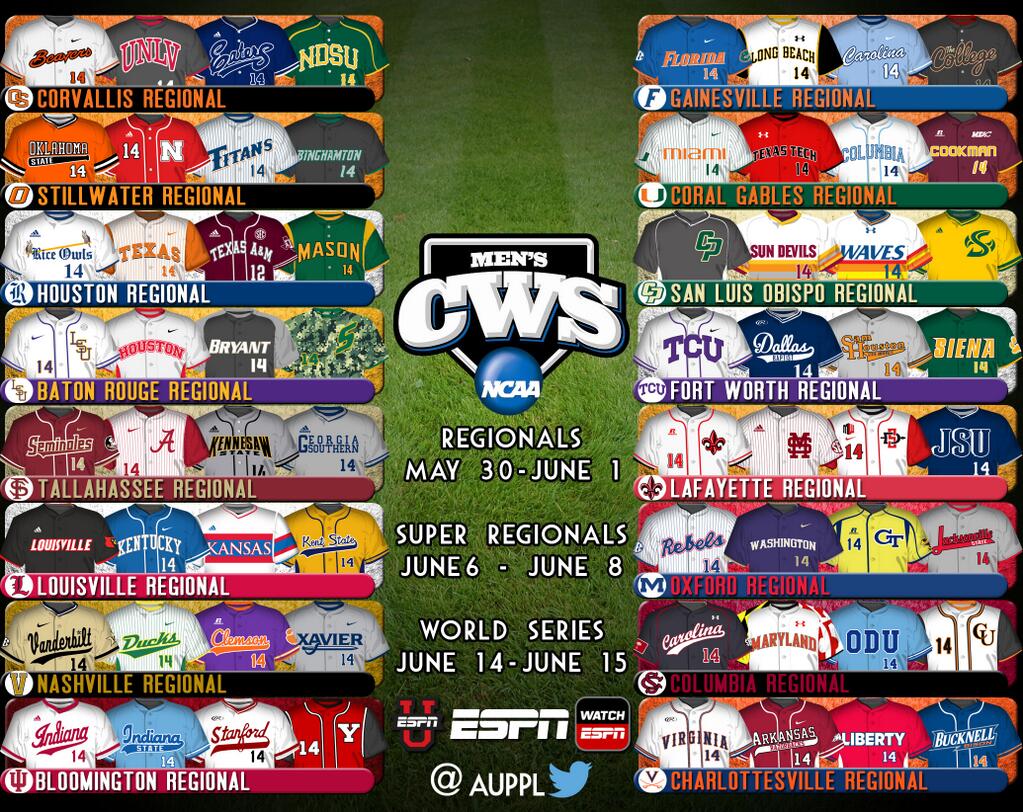
Hot on the heels of our “local college team” post earlier this week, the full 64-team field has been announced.  (here’s a cool picture of all 64 uniforms in the tourney)

A preliminary announcement earlier on 5/26/14 stated the 16 regional hosts, each of whom is also automatically in the field.  The full field announcement came later in the day (link from College Baseball Blog and nicely formatted regional pairings from BaseballAmerica).  Oregon State got the #1 overall seed in the field of 64 and the Top 16 National seeds are:

  1. Oregon State: Pac-12 regular season champ (no tourney)
  2. Florida: SEC Eastern Division and overall regular season champion, Conference tourney runner-up
  3. Virginia: 2nd ACC coastal division
  4. Indiana: Big-10 regular season and conference tourney champion.
  5. Florida State: ACC Atlantic division champion.
  6. Louisiana-Lafayette: Sun Belt regular season and conference tourney champion.
  7. TCU: Big-12 2nd place regular season, conference tournament Champion
  8. LSU: 2nd SEC Western division, conference tourney champion.
  9. Rice: Conference USA regular season and conference tourney champion.
  10. Cal Poly: Big West regular season champ (no tourney)
  11. Ole Miss: SEC Western Division champion
  12. Louisville: American Athletic Conference regular season champion, Conference tourney runner-up
  13. Vanderbilt: 3rd SEC Western division
  14. South Carolina: 2nd SEC Eastern division,
  15. Miami: ACC Coastal Division and overall regular season champion,
  16. Oklahoma State: Big-12 regular season champion, Conference tourney runner-up

By inferring the stated match-ups of regional hosts, we infer the 9th-16 national seeds from the regional hosts: The 16 regional hosts *usually* are also the top 16 seeds of the tournament, though there have been some deviations from this in the past.  However these seem accurate based on RPI rankings and typical top-25 votes.

Seeding Analysis: I thought Oregon State was slightly over-seeded at #1; I think you have to put Florida or Florida State there based on their record, Strength of Schedule (SoS) and the conferences they play in.   Otherwise in some form or fashion I think your top 8 seeds are correct.   Some are complaining about Indiana but their RPI and BA ranks are top 8 material and there’s no team seeded 9-12 that can make a real strong case to rise.   I think teams like Houston, Washington and Texas were pretty hard done by not getting at least a regional host/9-16 seed.  How does the Pac-12 get the #1 overall seed but its 2nd best team doesn’t even rate a top 16 seed?  Meanwhile Houston is 10th in RPI and #15 in the latest BA poll, and they have to go to LSU to compete against a championship-calibre team.

(Note: CollegeBaseballBlog is reviewing every regional this week ahead of the weekend games.  Click here for an example).

Easiest RegionalsMiami, who in their 42nd consecutive CWS appearance gets Ivy league champ Columbia as its regional THREE seed and a team with a losing record as its 4th seed.  Of course, Miami’s prize will be a super-regional matchup with my tournament favorite Florida and a likely trip home.   Oregon State’s regional looks incredibly straight forward; its #2 and #3 seeds are from smaller baseball conferences and its #2 seed (UNLV) just lost their friday starter (Erick Fedde) to Tommy John.   Indiana’s regional looks pretty easy all things considered, and Florida State’s regional isn’t difficult, with middling SEC team Alabama and small conference schools to contend with.

Hardest Regionals: LSU; they get Houston, a team that should have been seeded as well as conference champ Bryant.  Oklahoma State got no favors with Nebraska and traditional power Cal-State Fullerton.  Rice gets #12 RPI ranked Texas to go with Texas A&M.  Ole Miss gets 14th ranked and under-seeded Washington to go with 25th ranked Georgia Tech and a pesky 4th seed in Jacksonville State.   Florida has three teams ranked inside of the RPI #50 in its regional; no cupcakes here and it includes the best #4 seed in the tourney (College of Charleston with local favorite Taylor Clarke).  TCU gets baseball powerhouse Dallas Baptist to go along with Sam Houston State, a team ranked in and out of the top 25 all year.  Lastly Louisville has a regional that looks like a fantastic basketball tournament; they have Kentucky, Kansas and Kent State.  Kentucky and Kansas were in the top 25 as recently as earlier this month and this could be a very competitive regional.

Snubs: West Virginia was the highest RPI ranked team left out (#38) but that was mostly on their SoS; they were barely a .500 team overall and were just 9-14 in divisional play.  Next in RPI rankings missing out were Mercer (#46), UCF (#48), and UC Santa Barbara (#50).  Central Florida likely was the “last team out” and Clemson/UC Irvine were the “last teams in.”  Duke may feel a bit unfairly done by; they finished ahead of two other NCAA teams in the conference standings.  CAA champ William & Mary just didn’t have the SOS to get in after losing the conference tournament.   Wright State won its conference going 25-4 in division only to lose the tournamnet to the team that finished dead last in conference play (Youngstown State).

(Links to other analysis from CollegeBaseballDaily blog, BaseballAmerica cool facts and tidbits, and BaseballAmerica field of 64 analysis by Aaron Fitt).

Local Rooting Interests: #3 overall seed and regional host UVA.  Liberty (#3 seed in Charlottesville region), Old Dominion (#3 seed in South Carolina’s region), George Mason (#4 seed in Rice’s regional), and U of Maryland (#2 seed in South Carolina region).  Tough matchup for Liberty.  Maryland returns to the tournament for the first time in 43 years, an amazing fact.  George Mason not only has to travel to Dallas, but they get two top 12 ranked teams in Rice and Texas.  Its hard to envision any of these teams besides host UVA advancing.

Big-time draft prospects to watch: Many of the biggest names in the upcoming draft failed to make the tourney (Carlos RodonBradley ZimmerSean Newcomb and Jeff Hoffman).  But you will have:

  • Aaron Nola, LSU’s friday night starter for the 2nd year running
  • Max Pentecost catches for Kennesaw State.
  • Michael Conforto, an OF with #1 seeded Oregon State
  • Brandon Finnegan, TCU’s #1 starter (a lefty who may be in Washington’s sights if he drops to #18 in the draft)
  • Tyler Beede, Vanderbilt’s #1 starter, who was a first rounder in 2011 out of HS but who failed to sign and has purported “make-up” issues (though finding links to whatever his transgressions may be are difficult)
  • Kyle Schwarber, Indiana’s backstop
  • Erick Fedde‘s team (UNLV) is in the tourney but he isn’t; he had Tommy John surgery a couple of weeks back.  Remember this name; more than one pundit has the Nats drafting him in 2 weeks time.
  • UVA has three 1st-2nd rounders of note as discussed here frequently: Derek FisherMike Papi and Nick Howard.

See more of the guys in play by scanning down MLBdraftInsider’s latest mock draft.  And mlb.com posted its link to the Tourney teeming with talent.

Regionals run from Friday 5/30/14 to Monday June 2nd (if needed).

My Regional winner predictions: I’ll go chalk with national seeds 1-8.  After that most of the 9-16 seeds could be in trouble:

  • I think Texas beats out perennially over-ranked #9 Rice.
  • I think #10 Cal Poly doesn’t have the SoS to compete with either Arizona State or Pepperdine and will get beat.
  • I like Washington over #11 Ole Miss.
  • I think Kentucky can outlast #12 Louisville.
  • I think #16 Oklahoma State could be in trouble with Cal State Fullerton looming as a pretty tough #3 seed.
  • I worry about small-conference #6 Louisiana-Lafayette’s lofty ranking (they’re #1 in the final BA poll) but they got a pretty easy regional.
  • Despite Houston’s pedigre I don’t think they can beat out #8 LSU, and someone has to go through Aaron Nola.  And despite some complaints with #4 Indiana’s seeding their bracket is pretty easy.

Other pundit regional predictions: CollegeBaseballBlog and MinorLeagueBall/Chris Slade.

But no matter what happens, I hope they bring along the “Bat Dog” for one of the regionals 🙂


Useful College Baseball links to use: BaseballAmerica, and their top-25 lists.  d1baseball.com is fantastic and is the best place to get updated information on day-to-day data, standings, and tournament results.  PerfectGame.org has the best data on college players in their vast prep database.  Warrennolan.com has the best guesses on college baseball RPIs.  NCBWA does top-30 polls and other analysis.

TJ Surgery epidemic: upbringing, showcases and mechanics

10 comments

Jose Fernandez is (arguably) the biggest name to go down to TJ surgery yet.  Photo via thestar.com

Jose Fernandez is (arguably) the biggest name to go down to TJ surgery yet. Photo via thestar.com

Its the biggest story in baseball so far in 2014.   We’ve had nearly 20 MLB pitchers get diagnosed with torn elbow ligaments so far this calendar year.  All of them have or are set to undergo “Tommy John” surgery (also known as ulnar collateral ligament/UCL replacement surgery).  That’s nearly as many as who got the surgery ALL of 2013 and we’re just 6 weeks into the season.  There’s an alarming trend upwards over just the past few seasons of pitchers getting this surgery.  There’s been plenty more minor leaguers (two Nats farmhands in Erik Davis and Danny Rosenbaum have already gotten it in 2014) and already a couple of very high-profile draft prospects as well (including as discussed in this space potential 1st rounders Jeff Hoffman and Erick Fedde just in the last week).

Lots of people are talking about this story, especially some heavy-weights in the baseball world.  A sampling:

  • Dr. James Andrews, perhaps the most famous sports doctor in the world, attributes the growing trend to the rise in year-round baseball competition in the US.
  • SI.com’s Jay Jaffe reviews Dr. Andrews comments and had other excellent stats about the trend in this April 2014 piece.
  • The Washington Post’s Dave Sheinin did an excellent piece in the paper a few weeks ago about the injury, which he attributes to youth usage.
  • Tom Verducci (he of the “Verducci effect”) proposed a solution in a column this week after the Jose Fernandez announcement.  His idea?  Lowering the mound across all levels of the sport.  He draws this conclusion after hosting a very interesting round-table on MLB Network.
  • Jayson Stark teamed up with ESPN injury analyst Stephania Bell and former player Alex Cora to discuss the rise in arm injuries in this ESPN.com video, and they follow Andrews’ theory of year-round pitching.
  • Chris O’Leary, king of the Inverted-W (whether you believe his theories or not, I’ve included this link here) has his own theories as discussed here.  He doesn’t really have much in the way of explanation, just more whining about how every pitcher’s mechanics has something you can complain about.
  • Jeff Passan basically calls out baseball executives for not having any answers.
  • If you want an index of all of ESPN.com’s stories on the topic, click here.  It will have columns, analysis and press releases for individuals getting the surgery.

Some interesting stats about Tommy John surgery:

So what the heck is going on??  Lets talk about some theories.  I’ll highlight them in Blue.

The new “hot theory” is essentially this: Over-throwing at Showcase events, which have become crucial scouting events for kids raised in the United States, are to blame.  Thanks to the rise in travel leagues and select teams, scouts spend less time sitting at high school games and more time at these all-star events.  To prescribers of this theory, it isn’t so much about the amount of innings or pitches that kids throw … its the nature of the “showcase” events and the high pressure situations that those events put kids under.  Kids are throwing year-round, and they’re ramping up max-effort pitches at national competitions multiple times per year, and in some cases out of “season.”  This leads to serious damage to kids’ arms done as 16 and 17 yr olds, which then manifests itself over the years and results in blown ligaments in pro ball.

Do you buy this explanation?  It certainly makes sense to me, but how do you prove this?  And, it doesn’t explain the similar rise in elbow injuries to non-American pitchers.

Is it less about the showcase events and more about the Larger Increase in Youth pitched innings thanks to the rise in Travel Leagues?   This theory also makes some sense to me: thirty years ago kids played an 18-20 game spring Little League season, at best would pitch half those games and that was it.  Maybe they played in the fall too, but there were specific innings limits in place that protected kids.  Now instead of playing limited spring and fall seasons, kids are playing AAU travel teams that play 40-50 games a summer, plus weekend tournaments, plus (eventually) the above showcase events as they get closer to matriculation.  This theory certainly is supported by a startling rise in youth arm injuries, as noted in this 2010 study by the American Academy of Orthopaedic Surgeons.

But, if its “bad” to play more baseball … then shouldn’t we be seeing even MORE injuries from players who grew up in third-world baseball hot beds like the Dominican Republic or Venezuela, where by all accounts kids play baseball from sun-up to sun-down 12 months out of the year in tropical climates?

Interestingly, of the list of 19 MLB players so far who have been diagnosed with a torn UCL (see next section), there’s 4 non-American developed pitchers (Rondo, Nova, Figueora, Cisnero).  4 of 19 = 21%, whereas about 22% of MLB pitchers are non-American developed (my 22% figure comes from this quick study that I did; I grabbed every active MLB pitcher as of early May 2014 and did a quick-and-dirty player upbringing analysis to determine that about 78% of players “grew up” in the current American system of player development).  It is small sample size … but the percentage of american versus foreign developed players are so far exactly in line with the total percentage of each type of player in the larger pool of MLB pitchers.  This doesn’t seem to support either of the two above theories.

We’ve all heard horror stories about pitch counts and pitcher abuse at  high school events in Japan (this came to light over the winter as we looked at Masahiro Tanaka and learned about these Japanese showcase events; this article here at thebiglead.com talks about one Japanese prospect’s 772 pitches thrown over 9 days, and Jeff Passan talked about Tanaka’s own pitch count abuse stories and his average pitch counts as a Japanese-league pro).   Unfortunately there’s not a ton of data available about this TJ theory and Japanese pitchers.  I can find a couple of instances of Asian pitchers getting the surgery (Kyuji Fujikawa in 2012 being the most recent example), but not enough to establish any trends.

But lets state it this way: you can’t have things both ways.  Both these stereotypes about player upbringing cannot be true:

  • Latin American poor youth plays baseball from sun up to sun down 12 months a year, building arm strength constantly, therefore his arm is “stronger” and he’s less suceptible to injury
  • American little leaguer plays limited schedules (18 games in the spring, perhaps fewer in the fall), has closely monitored pitch counts, therefore does not abuse his arm as a youth and thus his arm is “stronger” later in life as a result.

Here’s a list of the 19 MLB pitchers who have already gone under the TJ knife so far in 2014 (data from baseballheatmaps.com, which has detailed Disabled List data).

Of these 19 pitchers, they are evenly split between being starters (10) and relievers (9).  So that doesn’t seem to lend itself to any Starter vs Reliever usage conclusion.

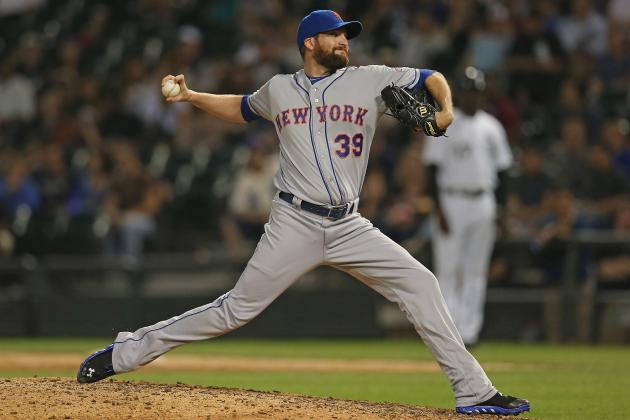
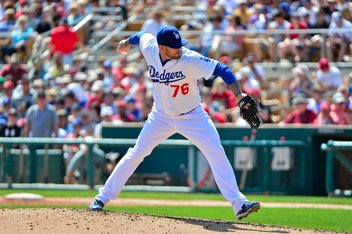
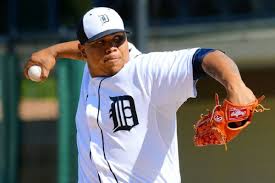
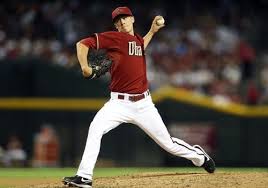
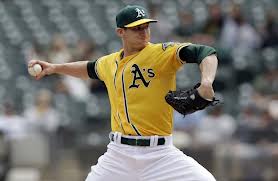
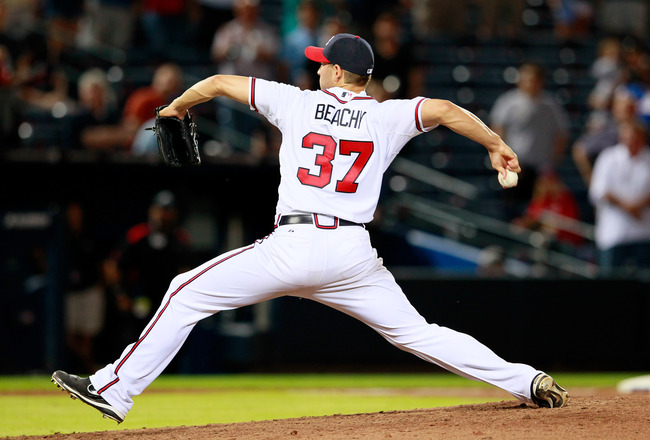
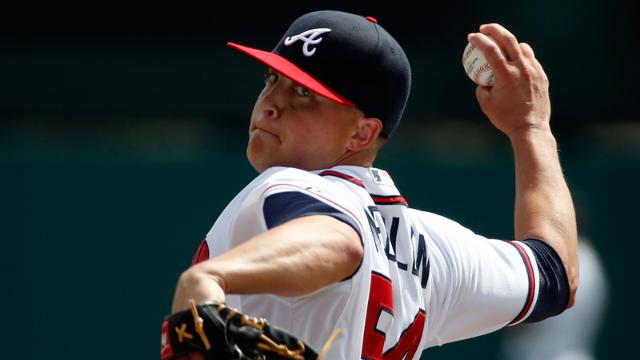
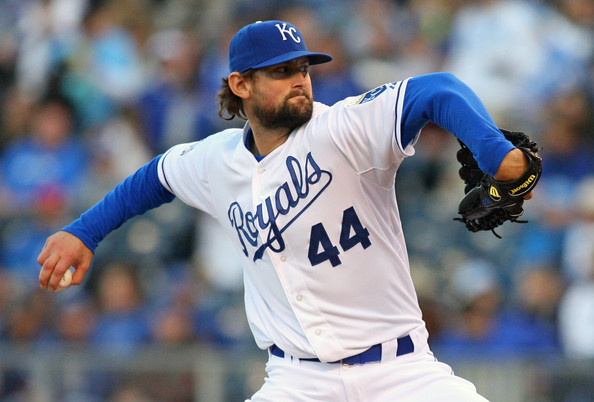
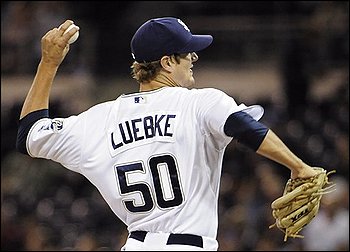
How about Pitching Mechanics?  We’ve all heard ad-naseum about the “Inverted W” and people talking about pronation and timing and elbow lift and etc etc.  Here’s a quick attempt to analyize the mechanics of each of these 19 guys (all photos grabbed as thumbnails from google images for the purposes of demonstration; no copyright infringement intended).

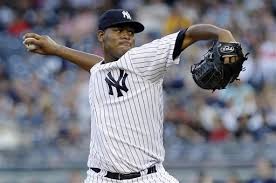
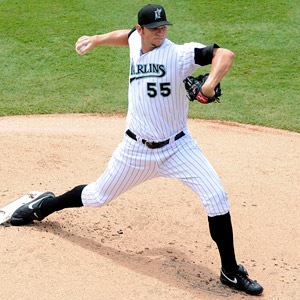
CisnerJose landingFernandezJose landingGriffinAJ landingFigueroaPedro landing


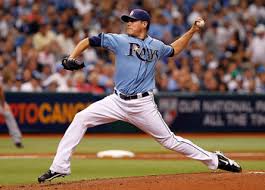
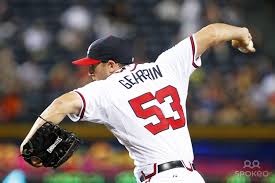
NovaIvan landingJohnsonJosh landingMooreMatt landingGearrinCory landing


ParnellBobby landingDavisErik landingHernandezDavid landingMLB: Spring Training-Arizona Diamondbacks at Los Angeles Dodgers


RondonBruce landingCorbinPatrick landingParkerJarrod landingBeachyBrandon landing


MedlenKris landingHochevarLuke landingLeubkeCory landing2

Quick and Dirty Mechanics analysis (images in same order as list of pitchers above, which is choronological in order of diagnosis in 2014):

  • Inverted W: Griffin, Nova, Gearrin, Beachy, Hochevar
  • Sideways M: Fernandez, Johnson, Davis, Moylan, Rondon, Parker, Medlen
  • Inverted L: Cisnero, Figueroa, Moore, Parnell, Hernandez, Corbin, Luebke

But I’ll immediately add a caveat to these classifications; at various stop-points in a guy’s delivery, he may exhibit “good” or “bad” trends.   Maybe some of these “sideways-M” guys are actually “inverted-W” guys.  Maybe some of these inverted-W guys are ok and the stills make their mechanics seem worse than they are.

Nonetheless; there’s no trend among the 19 guys in terms of their mechanics.  In some cases they’re “bad” (Griffin and Gearrin’s look awful) but in some cases excellent (nobody should look at Moore’s mechanics and say they’re anything but clean, nor with Parnell or Corbin).  These pitchers are overhanders, 3/4-slot guys and even side-armers/submarine guys (Gearrin and Moylan).   These guys include hard throwers (Rondon had the 3rd highest velocity of *any* pitcher in 2013) and softer-throwing guys (Medlen had one of the lowest fastball velocities in the majors in 2013).  There’s starters and relievers almost equally represented in this list.

Conclusion; there’s no conclusions to draw from pitching mechanics analysis.  I think all attempts to look at guys’ mechanics and make judgements are useless.  I think (as does Keith Law and other pundits in the field) that the “Inverted W” is nonesense and that “research” posted online by concerned-fathers-turned-self-appointed-mechanics-experts is not exactly trustworthy.  The fact of the matter is this: throwing a baseball over and over is hard on the body.  Throwing a ball is an unnatural motion, and throwing a ball at max-effort will eventually lead to pitching injuries, no matter what your mechanics.  They can be “good” or “bad” according to someone’s pet theory on bio-mechanics and it has nothing to do about whether a pitcher is going to throw 10 seasons without injury or have two tommy johns before they’re 25.

Some historical context for pitching mechanics arguments: the pitcher who has the 2nd most innings thrown in the non-knuckleballer modern era (behind Nolan Ryan) was Don Sutton.  Sutton displayed absolutely *classic* inverted-W mechanicsnever hit the D/L in his career and threw nearly 5,300 innings over the course of 23 seasons.   Walter Johnson‘s mechanics were awful; he slung the ball sideways as he literally pushed backwards away from the hitter at the end of his delivery.  If someone saw Johnson’s mechanics today they’d talk about how over-compensated he was on his shoulder and how he lost velocity thanks to landing stiff and having zero follow through.  Johnson only threw 5,900 innings in his pro career; yeah those mechanics really held him back.  Nolan Ryan was a freak of nature, throwing at that velocity for as long as he did.  The point?  You just don’t know.


Maybe there’s something to the “showcase abuse” theory for some players.   Maybe there’s something to the travel-ball overuse theory for some kids.  But I think the answer may be a bit more simple.  We all know there’s been a rise in the average MPH of fastballs in the majors, both on starters and especially with relievers.  My theory is simply this: kids who “can” throw upper 90s spend all their time trying to throw upper 90s/max effort fastballs 100% of the time, and human arms just cannot withstand that kind of abuse over and over.  In prior generations, kids who “could” throw that hard wouldn’t, or would rarely try to throw that hard, and thus suffered fewer elbow injuries.

Side note: I also firmly believe that we’re “victims of our own success” to a certain extent with respect to modern medicine; 30 years ago would someone have just “blown out their arm” instead of being diagnosed specifically with a “torn ulnar collateral ligament?”  Would some kid in the low minors who hurt his harm even bother to get an MRI?  How much of the rise in these injuries is simply the fact that we’re better at diagnosing injuries in the modern sports world?

Why are these kids trying to throw so hard these days?  Because velocity is king, and that’s what scouts look for.   A kid who “only” throws mid 80s as a 17-yr old is dismissed, while the kid who can throw mid 90s at the same age is fawned over.   Guys like Greg MaddoxMark Buehrle, and Tom Glavine probably don’t even get drafted in the modern baseball climate thanks to the over-focus on pure velocity.

You can talk about upbringing and showcase events and pitch counts and mechanics all you want, but I think it comes down to Pitcher over-exertion thanks to the rising trend of fastball velocity and the human nature urge of prospects and farm-hands to show more and more velocity so they can advance their careers.

What do you guys think?  Do you dismiss the “inverted-W” arguments like I do?  Do you think its all about showcase events?