Nationals Arm Race

"… the reason you win or lose is darn near always the same – pitching.” — Earl Weaver

Best contracts in the game right now

15 comments

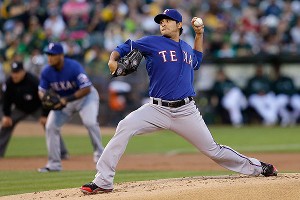
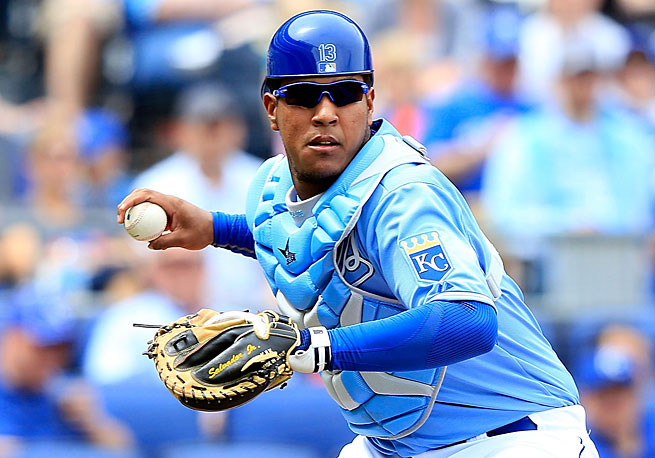
Sal Perez is the best value contract in the game right now. photo via si.com

Sal Perez is the best value contract in the game right now. photo via si.com

Inspired by Steve AdamsMLBTR chat on 11/18/14, I thought this was a fascinating topic.  What players have the best value contracts in the game right now?

For several years, the answer here was Evan Longoria, who signed a 6yr/$17.5M contract in 2008 and promptly put up three straight seasons north of 7.0 bWAR.  We’re into the option years on that original deal, which are still pretty affordable, and Longoria did get a 9-figure extension, so he’s not entirely in this discussion any longer.  Call him the “godfather” of ridiculously good value contracts.

Using the obvious websites (baseball-reference.com and Cots’ salary database now at BaseballProspectus.com), lets take a look at some candidates.  Note; I refer to a “valuation” of $6M per win above replacement as a way to “value” production.  There are some known limitations to equating salary to this figure, and there are others who estimate it even higher, but $6M per is still a decent estimate to use as a quick estimate of a player’s “monetary” production on the field.

Note: we are NOT including the litany of pre-arb players who are putting up huge seasons.  This is mostly trying to focus on those players who have signed for affordable contracts but who are delivering huge value.  Thus players like Josh Donaldson, Anthony Rendon, Kyle Seager, Corey Kluber and Starling Marte are not included here.

Candidate contracts: I’ve arranged these in my opinion of the order of value:

  • Sal Perez: 5 years/$7M (2012-16), plus 2017-19 club options worth just a *combined* $14.75M.  This for a guy who has made the all-star team and won the catcher Gold Glove two years running.  Wow.
  • Chris Sale: 5 years/$32.5M (2013-17), plus 2018-19 options of $12.5M and $13.5M.  This for a guy who led the AL this year in ERA+ and has received significant Cy Young votes 3 years running.  His bWAR in the last three seasons: 5.9, 6.9 and 6.6.  That’s crazy.
  • Jose Altuve: 4 years/$12.5M (2014-17), plus 2018-19 options at $6M and $6.5M.   Two-time all-star, led the AL in both hits and batting average in 2014.   Just put up a 6.6 bWAR season … and the Astros got it for just $1.25M in salary.
  • Jonathan Lucroy: 5 years/$11M (2012-16), plus 2017 option at $5.25M.  this late bloomer signed an incredibly affordable deal, then had a break out 2014 season where he posted a 6.7 bWAR, made the All-Star team, finished 4th in the MVP voting and should have won the gold glove as the best framing catcher in the game.   His total salary for the remaining three years of his contract is just $12.25M.
  • Madison Bumgarner.  Current contract: 5 years/$35M (2013-17), plus 2018-19 options at $12M each.  Bumgarner was 4th in Cy Young voting this year with a 4 bWAR season but (as we all know) dominated the playoffs, single-handedly handing the Giants their 3rd World Series title in the last 5 seasons.  A 4-war season is worth at least $24M on the open market these days, but he earned just $3.75M this year.  His options can vest and increase with certain achievements, but even at their max $16M value he’s still a massive bargain.
  • Yasiel Puig: 7 years/$42M (2012-18).  Everyone thought the Dodgers were crazy to commit $42M to an unknown; now it looks like a massive bargain.  For $2M salaries the last two years he’s put up 4.9 and 5.4 bWAR seasons.
  • Julio Teheran: 6 years/$32.4M (2014-19).  This contract gets expensive later, but in 2014 he was paid just $800k to put up a 4.0 win season.  If Teheran continues to be the #2 pitcher he showed this year, the Braves have great value on their hands.
  • Jose Quintana: 5 years/$21M (2014-18).  Thanks to the crummy team he toils for, Quintana’s exploits have gone unnoticed.  But he’s now got a career 117 ERA+ and has reached 200 innings both of the last two seasons and is signed for a song going forward.  Its no wonder analysts scoff when his name is mentioned in trade talks.
  • Michael Brantley: 4 years/$25M (2014-17), plus 2018 option of $11M).  This is preliminary, but based on his 7 bWAR season in 2014 (for just a $1.5M salary), this could be a huge bargain.  Is he a flash in the 2014 pan or is he for real?  If he’s for real, the Indians have a fantastic value going forward.
  • Ben Zobrist: 4 years/$18M (2010-13), plus 2014-15 options of $7 and $7.5M.  This was the poster child for years of affordable contracts (once Evan Longoria got his extension).  He’s averaged 4.75 bWAR over the past four seasons while playing six or seven different positions for the Rays.  Even in the final 2015 season at $7.5M, he’s projecting at 4 bWAR, still a significant under-value.  Keith Law calls  him “the best contract value” in MLB history; maybe he should be higher on this list.
  • Mike Trout: 6 years/$144.5M (2015-20).  No, a $33.25M salary in 2020 isn’t really a bargain, but the Angels are still getting the best player in baseball for $1M in 2014 and $5.25M in 2015.  Even if Trout declines to “just” a 6 bWAR player for the next 6 years … the Angels are still coming out ahead on the $6M/WAR evaluation technique.
  • John Lackey: 1yr/mlb minimum (2015).  He had a quirk in his previous contract that vested a MLB-minimum year thanks to an injury a couple years ago, so the Cardinals get the benefit of a veteran innings-eating 100 ERA+ starter at the league minimum.  Nothing to sneeze at, even if its just a one year contract.  On the open market you have to think he’s worth $8-$10M/season.
  • Steve Pearce: 1 year/$850k (2014).  This isn’t really a true candidate like the other players here, but Pearce’s story is worth noting.  He was DFA’d and *released* in April and re-signed a couple days later, but still posted a 6 bWAR season for Baltimore this year.  He’s arbitration eligible for 2015 but how far could his salary really rise after an 850k salary?
  • Jonathan Singleton: 5yrs/$10M plus 3 club options.  He may not profile as being worth this contract now … but if he lives up anywhere close to expectations, those later option years at $2-$2.5M are going to look pretty darn good.  No wonder the players union howled when he signed this deal.
  • Adam Jones: 4yrs/$62M is nothing to shake a stick at, even if his “gold glove” defense is rather suspect.
  • Edwin Encarnacion: 3 years/$29M (2013-15), plus 2016 club option of $10M.  Yeah that’s a pretty good deal.
  • Jose Bautista: 5 years/$65M (2011-15), plus 2016 option of $14M.   $14M for a guy who probably would have gotten 33% more had he been a FA two years ago.

How about the same analysis for the Nats?  The clear best value players on the team are Anthony Rendon and Tanner Roark.  Both Jordan Zimmermann and Doug Fister delivered pretty good WAR/pay value.  Denard Span just gave us a 3.6 bWAR season for $6.5M in salary; a pretty good deal.  But none of these contracts really contend with the above list.

Did I miss anyone obvious?  Do you agree with my rankings above?

2/24/16: Dan Szymborski posted his own updated version of this topic here: http://insider.espn.go.com/mlb/insider/story/_/id/14832664/carlos-correa-tops-list-baseball-best-assets-most-team-friendly-contracts-mlb .  He goes by surplus projected WAR.  Carlos Correa #1, Trout #2, then a bunch of pre-arb high-end rookies.
Happy Thanksgiving 2014

16 comments

thanksgiving_turkeybaseball via bloguin.com

Happy Thanksgiving to all our readers!

I am thankful for lots of things that are more important than arguing about rule-5 draftees and theoretical Nats trades: family and friends, good health, and the means to keep my family warm and fed.

But I’m also thankful for the great outlet for our little niche discussions, and I’m thankful for the great set of regular readers here who provide great commentary.  When I look back on some of the comment sections in the blog i’m amazed when I see 50 or 60 follow-ups, each providing thoughtful comments and making this the first page I generally bring up each day, to see who else has commented.

So go get some turkey, watch some football, and spend time with loved ones.

ps: this is my 800th post!  That’s a lot of baseball 🙂

Written by Todd Boss

November 27th, 2014 at 9:49 am

Posted in Non-Baseball

Tagged with

Rizzo the gambler; how have his injury-risk signings/picks done?

10 comments

Rendon was probably Rizzo's best injury gambit. Photo: Brett Coomer/Houston Chronicle via chron.com

Rendon was probably Rizzo’s best injury gambit. Photo: Brett Coomer/Houston Chronicle via chron.com

By now, we’ve grown accustomed to it.  Nats GM Mike Rizzo acquires yet another player with a questionable injury past, hoping to find a new market inefficiency and getting a better player in the long term than how the rest of the league valued the player in the short term.  This topic came up last week as the Nats seemingly severed ties with Matthew Purke and we immediately began talking about the wasted bonus money … three days later he re-signed a minor league deal, but he’s still an integral part of this discussion.

This post attempts to go through all of Rizzo’s injury-risk player acquisitions (draft, trade or FA), to see how he’s doing in terms of these high risk acquisitions.  I may have missed out on someone; please let me know if you think someone else merits discussion.  I’m sure there’s deep-draft picks worth discussing in prior drafts that our readers may remember; please pipe up in the comments section.  In each section they’re basically in reverse chronological order.

Draft

  • Erick Fedde, 1st round pick in 2014 (18th overall), RHP from UNLV, $2.5M bonus (over-slot, ~10th pick money).  I reviewed this pick after it happened and maintain the same stance I had in June; I thought Fedde was over paid and over drafted, but (in the Nats defense) the combination of the picks right before us (which included one Brandon Finnegan, who was on the Royals post-season roster) and right after us probably sealed Fedde’s selection.  Verdict: Obviously, it is far too early to tell how Fedde will turn out, so there is no judgement to pass here.  Fedde had the Tommy John surgery in Mid May, so he won’t even throw his first pro pitch until mid next season.
  • Lucas Giolito, 1st round pick in 2012 (16th overall), RHP from Harvard-Westlake HS (CA), $2.9M bonus (well over-slot, equivalent to 7th overall pick slot).  Giolito was rumored to be in the mix for 1-1 in 2012 before a “strain” in his pitching elbow caused him to miss most of his senior year.  This “strain” turned out to really be a “partial tear,” but the Nats saw value in getting a potential 1st overall talent mid-first round.  Giolito rehabbed, threw a few innings, then had TJ surgery on 8/31/12.  Since, Giolito’s rehab went perfectly, throwing 40 innings in 2013 and another 100 in 2014.  Despite his limited workload in 2014, he was named the Nats minor league pitcher of the year and has rocketed up prospect charts.  He currently is the unquestioned #1 Nats minor league prospect and should feature as a top 10 prospect in all of baseball.  Verdict: so far, so good.  They say there’s “no such thing as a pitching prospect,” so the wheels could still come off the bus, but Giolito is trending up and the gamble is looking like it will pay off.
  • Kevin Dicharry, 24th round pick in 2012, RHP from Texas.   Dicharry was good early in his college career but missed most of his college career with shoulder issues.  His pro debut was good enough: a 2.84 ERA in 25 GCL innings in 2012.  He started 2013 in Short-A, got hit hard in 3 outings, and was abruptly released to my surprise.  Verdict: failure … but it’s kind of hard to say that a 24th round pick was a failure for not panning out, even if he was perfectly healthy.
  • Robert Orlan, 30th round pick in 2012, RHP from UNC.  Orlan suffered an elbow injury late in the 2012 college season and was immediately placed on the 60-day DL by the team after they drafted him.  Baseball Prospectus does not have any injury/surgery history, so I do not know what, if any procedures he had done in 2012.  Orlan was decent for Auburn in 2013 but struggled in 2014 and couldn’t make the level jump to full-season ball.  He’s already been relegated to the bullpen and may not be long for the org.  Verdict: not looking good … but again, hard to really pass any harsh judgement on a 30th round pick.  The fact that he has even lasted two pro years makes him a success already.
  • Anthony Rendon, 1st round pick in 2011 (6th overall), 3B from Rice.  $6M bonus, well over-slot at the time.  Rendon’s dropping out of the top 2-3 picks was a huge draft-day shock; we’re talking about a college player of the year who scouts had penciled in as the 2011 1-1 pick for nearly two years.  But nagging ankle injuries in both his sophomore and junior year scared off the teams above Washington, who probably tripped over themselves running to the podium to take him.  We know the rest of the story now; by mid 2013 he was a starter, and he posted a 6.5 bWAR season in 2014.  Verdict: huge success so far.
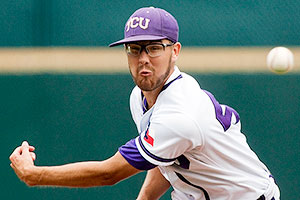
  • Matthew Purke, 3rd round pick in 2011, LHP from TCU.  Given a $4.15M MLB contract.  The impetus for this post.  Purke was a 1st round pick out of high school, then went 16-0 in his freshman year of college, earning 2nd team all American honors.  Shoulder bursitis cost him a ton of starts his sophomore year, but the Nats gambled on him anyway.  A healthy Purke would have easily been a top 10 pick in 2011, so the Nats got a potential top 10 talent in the 3rd round.  Of course, we know how this story goes from here: Purke could never get going in 2012 and had to have shoulder surgery.  Then he throws 90 decent innings in 2013 … only to drop off a cliff in 2014 before having TJ surgery.  Now he’s out until at least June 2015.  But, as we’ve seen this week, at least he’s not on the 40-man roster any more.  But more time remains to be seen as to whether Rizzo’s $4M gamble can pay off in any capacity.  Verdict: check back at the end of 2015, but not looking great.
  • Sammy Solis, 2nd round pick in 2010.  A herniated disc in his back cost him the entire 2009 season, but he roared back with a solid 2010 to profile as the 2nd round pick he ended up being.
  • Nathan Karns, 12th round pick in 2009, RHP from Texas Tech.  Karns was hurt when he got drafted, and didn’t throw a pitch in 2009 or 2010.  He had to have shoulder surgery in June of 2010.  He finally made his pro debut in 2011, and by 2012 was the Nats minor league pitcher of the year after going 11-4 with a 2.17 ERA across low-A and high-A.  By mid 2013 he was making his MLB debut to provide cover for injured starters.   Karns was flipped to Tampa Bay in the Jose Lobaton deal (also bringing back two decent prospects in Felipe Rivero and Drew Vettleson) and spent most of 2014 in Durham (where he took a step back, posting a 9-9 record with a 5.08 ERA in 27 AAA starts).  Verdict: success for the team, given what he helped acquire, even if he’s struggling for Tampa Bay.  (Thanks to commenter JohnC for reminding me to fully list his trade bounty).

(post-posting thanks to NationalsProspect’s Luke Erickson, who provided the Orlan injury link and reminded me of Solis’ back injury during college).

Trade Acquisitions

  • Denard Span, acquired from Minnesota on 11/29/12 for Alex Meyer.  Span missed a huge chunk of the 2011 season after suffering a pretty bad concussion.  He missed a month in 2012 after injuring his shoulder diving for a ball.  So there was some legitimate injury concerns following Span around, though I don’t recall really discussing it at the time.  I didn’t necessarily like the trade when it happened, but that was more because I thought Bryce Harper could be our center fielder for the next decade.  Nonetheless, after struggling for stretches, Span inarguably was worth every cent of his exercised option for 2015, and though this wasn’t *that* big of an injury gamble, it has paid off.  Verdict: Success.
  • Ryan Mattheus was acquired on 7/31/09 from the Rockies for Joe Beimel, just two weeks after he underwent Tommy John surgery.   By mid 2011 he was an effective middle reliever for the team, and contributed a 1.3 bWAR season in 2012 as a good 6th/7th inning right hander.  In 2013 he broke his pitching hand in a fit of pique and basically never recovered; he lost his bullpen spot to Aaron Barrett in 2014 and, being out of options and not really having that great a season in AAA, was released last month.  Verdict: Success, considering what we gave up and considering that he may still be with the organization had he not punched a wall.  (Thanks to commenter Wally for reminding me of the Mattheus acquisition).

Free Agent Signings

  • Dan Haren, 1yr $13M for the 2013 season.  Haren had missed time in 2012 for a back issue, and had taken a huge uncharacteristic step backwards in performance from 2011.  It was enough so that some thought (including me) the Nats were going to get a bounce-back season and a return to his #2 starter form.  Uh, no.  Haren at one point in the 2013 season was the *worst* starter statistically in the league (the team was just 4-11 in his first 15 starts, and he had a 6.15 ERA when he was summarily sent to the D/L with a soft tissue injury that even Haren himself didn’t know he had).  He bounced back enough in the 2nd half to save his statistical season, but the damage was done.  Verdict: failure of a signing, but to be fair I don’t believe Haren’s issues in 2013 were lingering back issues.
  • Chien-Ming Wang.  Signed a combined 3  years of contracts worth $7M from 2010-2012.  He had shoulder surgery in July of 2009.  He missed the whole 2010 season, most of 2011 too.  But he showed *just* enough in the tail end of 2011 to earn a $4M deal for 2012, where he promptly got hammered.  To make matters worse, the guy whose rotation spot he took (Ross Detwiler) was usually the one coming in to relief him and pretty soon it was apparent the team had gone with the wrong horse.   In the end, Wang gave the team 94 innings and 6 wins for his 3 guaranteed contracts.  Verdict: well, a failure, but didn’t hurt the team as they raced to 98 wins in 2012.  Just cost money.
  • Brad Lidge: he missed most of 2011, his final season in Philadelphia, and the Nats took him on a 1yr/$1M flier.  After overcoming sports hernia surgery, Lidge gave up 12 hits and 11 walks in just 9 1/3 innings before being mercifully released, never to play again.  Verdict: failure, but a good gamble.
  • Christian Garcia was picked up as a MLFA in mid 2011 after the Yankees gave up on him following his third elbow surgery in 5 years.  He was un-hittable in our minor league system in 2012 (he gave up just 31 hits in 52 minor league innings that year), was called up and was effective enough to be added to the 2012 post-season roster.  Unfortunately, Garcia’s injury luck did him no favors: he lost all of 2013 to a partial flexor tear in his arm, and never made it back in 2014, eventually being released in June of 2014.  All that promise, just couldn’t stay  healthy.  Verdict: can’t possibly call a MLFA mid-season waiver claim a failure, no matter how little the team got out of him.  Another good gamble.


Conclusion: actually Rizzo looks pretty good here.  His draft pickups have mostly worked out; just Purke stands out as a possible loser.  His only real injury-risk trade acquisition worked out.  Haren and Wang were pretty high-visibility failures … but Lidge and Garcia were low-cost risks that had good upside if they worked out.

Did I miss anyone?

http://m.mlb.com/video/?content_id=7189149&topic_id=8080130

2014 Tommy John Post-Mortem

5 comments


Jose Fernandez is (arguably) the biggest name to go down to TJ surgery yet.  Photo via thestar.com

Jose Fernandez was (arguably) the biggest name to go down to TJ surgery in 2014. Photo via thestar.com

When we hit 20 MLB pitchers going under the knife for blown Ulnar Collateral Ligaments (UCL) on the 2014 season, I posted on possible reasons for the epidemic.  By the time the season was over, more than 90 players in professional baseball (and a handful of marquee amateurs, including two first round picks and our own) had gone under the knife for blown UCLs/Tommy John surgery.  2014 was the year of the elbow ligament, no question, in terms of volume and awareness.

This post lists all the major league pitchers who had the surgery this year, with links to the announcements as they happened, along with stills of the pitchers’ mechanics to do a quickie thumb nail analysis of mechanics and whether there’s a relationship to the injury. At the bottom i’ve captured any significant news related to the surgery, MLB being proactive in preventing the injuries, and other TJ news.


First, here’s the complete Tommy John fall-out for the year for major league arms.  According to the great injury tracking links below, no less than 91 players in all levels of pro baseball had the surgery in calendar year 2014, of which 29 were MLB-experienced pitchers.

(data from baseballheatmaps.com, which has detailed Disabled List data).

10 of these 29 pitchers are getting the surgery for the 2nd time.  Wow.

Here’s links to other notable non-MLB pitchers who have gotten the surgery as well in 2014:

  • Jamison Taillon: the Pirates #1 pitching prospect and one of the best pitching prospects in the game.  Diagnosed 4/6/14, surgery 4/9/14.
  • Danny Rosenbaum: Nats AAA starter and long-time farmhand.   Surgery 5/8/14.  Tough for Rosenbaum because he’s a MLFA this coming off-season, now facing a very uncertain future.
  • Miguel Sano: one of the best prospects in the minors, had the surgery 3/12/14.  He’s not a pitcher, and he initially injured his arm playing in the Dominican Winter League, but it still costs Minnesota one of its best prospects.
  • Jeff Hoffman, ECU’s right handed starter and consensus top 5 pick in the 2014 draft, hurt his arm and was diagnosed on 5/8/14.  He dropped 5 places from his likely drafting spot by the Cubs at #4, which cost him about $X in slot dollars.   We talked about whether the Nats (picking at #18) were a likely suitor for him at the time of the injury in early May.
  • Erick Fedde, UNLV’s friday starter and projected mid-1st round pick, was diagnosed two days after Hoffman on 5/10/14.  He dropped perhaps 8 places from his estimated drafting spot of mid 1st round and was picked by Washington.  His injury didn’t really cost him much in slot money thanks to the Nats paying over-slot.
  • Our own Matthew Purke, diagnosed and set for TJ surgery 5/29/14 after really struggling out of the gate this year for Harrisburg.   Purke may face an options crunch by the time he’s done re-habbing, thanks to his MLB deal signed on draft-day.  (Update: the Nats never let him get there, releasing him on 11/14/14).
  • Chad Billingsley having flexor tendon surgery while trying to recover from his 2013 TJ surgery.    This isn’t counted as a TJ, but is noteworthy.
  • Not a pitcher, but key Orioles player Matt Wieters had to have TJ surgery on 6/18/14.
  • Matt Cain dodged a bullet by just being diagnosed with elbow chips, but still had season-ending elbow surgery on 8/5/14.
  • Padres uber-prospect and 2012 first rounder Max Fried went under the knife in mid-august.
  • Yu Darvish didn’t fall victim to the TJ surgery, but an elbow issue is shutting him down in late August, just the latest nail in the coffin of the Rangers’ season.
  • Jonathan Mayo discussion on elbow surgeries and prospects from Mid-Late August.

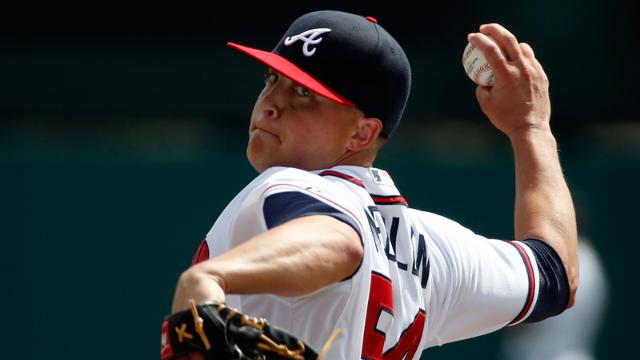
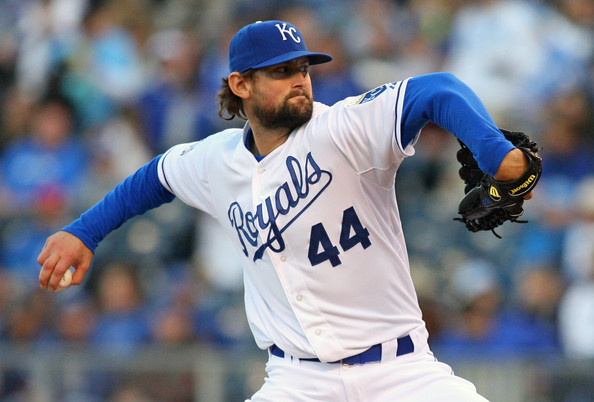
Here’s quickie images of every MLB starter diagnosed this year as they land to make a quick judgement about their mechanics:

VentersJonny landingHefnerJeremy landing

SkaggsTyler landingJonesNate landingChatwoodtyler landingTanakaMasahiro landing

ArroyoBronson landingBurnettSean landingBellTrevor landingWithrowChris landing

PerezMartin_landingCisnerJose landingFernandezJose landingGriffinAJ landing


FigueroaPedro landingNovaIvan landingJohnsonJosh landingMooreMatt landing


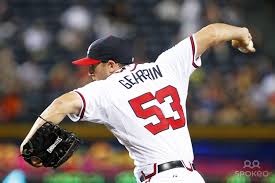
GearrinCory landingParnellBobby landingDavisErik landingHernandezDavid landing


MLB: Spring Training-Arizona Diamondbacks at Los Angeles DodgersRondonBruce landingCorbinPatrick landingParkerJarrod landing

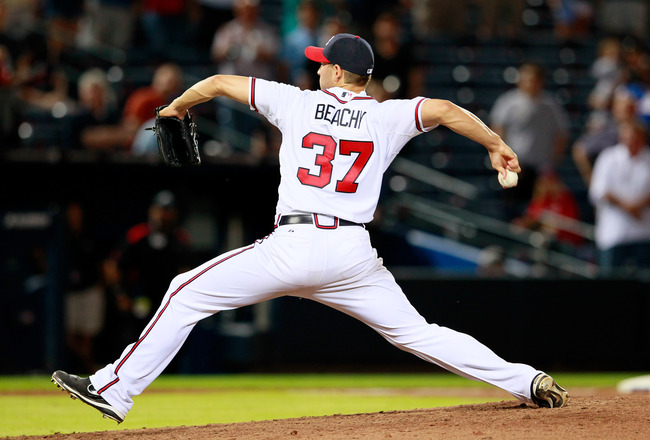
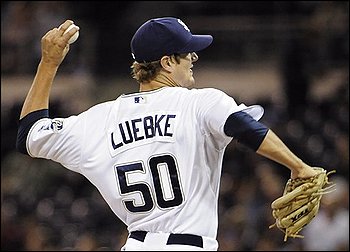
BeachyBrandon landingMedlenKris landingHochevarLuke landingLeubkeCory landing2

Quick and Dirty Mechanics analysis (images in same order as list of pitchers above, which is chronological in order of diagnosis in 2014):

  • Inverted W: Hefner, Skaggs, Withrow, Griffin, Nova, Gearrin, Beachy, Hochevar
  • Sideways M: Ventors, Chatwood, Bell, Burnett, Fernandez, Johnson, Davis, Moylan, Rondon, Parker, Medlen
  • Inverted L: Jones, Tanaka, Arroyo, Perez, Cisnero, Figueroa, Moore, Parnell, Hernandez, Corbin, Luebke

Conclusions? None.  They’re all over the road.  TJ injuries this year happened to those thought to have “dangerous” mechanics and clean mechanics.  TJ injuries happened to the league’s harder throwers (Rondon, Ventors, Fernandez) and its softest throwers (Medlen and Arroyo, both of whom are usually at the absolute bottom of the league in terms of fastball velocity).  Starters and relievers, no discernable pattern.

I think all you can conclude is this: if you throw a lot of innings, you’re more prone to injury.  I know, ground breaking analysis.


Other notable/interesting links I’ve collected on the topic over the length of the season:

  • Yahoo’s Tim Brown interviewed Zack Greinke (published 5/15/14)who says he made a conscious decision to throw fewer sliders, noting that he could really feel it in his elbow after starts where he threw too many.  This tends to support the notion that sliders make a difference.
  • Jerry Crasnick interviewed commissioner Bud Selig on 5/15/14 and Selig said he’s “concerned.”  Great!  On a scale of “Resolve Oakland/San Jose territorial rights” concerned to “Resolve MASN dispute” concerned, I wonder where he falls?  Maybe he’ll form a blue-ribbon committee that can meet for several years without arriving at any solutions.
  • Stephania Bell‘s articles on the spate of TJ injuries: from April and again in May.
  • Nate Silver‘s new blog 538 chimes in in mid-may.
  • Neil Weinberg from Peter Gammons‘ website posts his own theory on 5/16/14 that is basically related to the rise in youth/showcase events.
  • Shawn Anderson from the blog HallofVeryGood.com posts his theory (overuse).
  • An older link to Will Carrol from July 2013 talking about the surgery, how its done, who’s had it and some other great stuff.
  • The American Sports Medicine Institute (led by Dr. James Andrewsreleased a statement on 5/28/14 on the issue of Tommy John surgeries (as pointed out by David Schoenfield and/or Craig Calcaterra in late may and/or Jerry Crasnick on the same day).  Their basic point: don’t throw with max effort.
  • Dr. James Andrews announced that he’s releasing an app to help keep pitchers healthy.   Per screen shots, it will be relatively simple and will have pitch counts, age and rest days calculate a max number of pitchers that a player can throw today.
  • An interesting analysis of Kansas City’s Yordano Ventura after he was diagnosed with a non-UCL related elbow injury in May.
  • Thoughtful piece from Dirk Hayhurst about the quest for velocity and the value of soft-throwers like Mark Buehrle.
  • Danny Knobler special piece to the BleacherReport in June 2014 discussing “child abuse” of kids over-throwing, throwing too much, too hard, too soon.
  • A sleeve has been announced that may help prevent TJ injuries (its called the Motus Pitcher Sleeve).  Dirk Hayhurst subsequently did some research and interviews about the sleeve and offers some thoughts.
  • CBS’s Jon Heyman breaks the news that #1 overall pick Brady Aiken may have an “elbow ligament issue,” thus holding up the signing.  Wow.  As we all know, this turned into a big-time stalemate, the non-signing of Aiken (which cascaded down and cost the Astros their 5th round pick too), possible grievances, possible lawsuits, all sorts of NCAA eligibility concerns, and a whole big black-mark for the Astros organization.  All over $1.5M.  Remember; this is the same team that gave $30M last off-season to 5th starter Scott Feldman.
  • There was a two hour special on the injury on MLB Radio Networks on 7/17/14 that I hope they replay or transcribe to the internet.
  • Bud Selig still awaits the Tommy John study in Mid July 2014.  If its anything like his other blue-ribbon panels, he’ll be waiting a long time.
  • Discussion about youths with UCL/TJ injuries in USA Today on 7/23/14.
  • Study from USA Today on how prep pitchers are avoiding TJ.
  • MLB unveils “Pitch Smart” guide in Mid November to help youth’s understand workloads.  Also discussed by Jeff Passan.

Hope you’ve found this trove of TJ links as interesting as I have.

Rule 5 fallout: placeholder for arguing

14 comments

Welcome to the 40-man roster. Photo AP

Welcome to the 40-man roster. Photo AP

The 11/20/14 deadline for adding players to the 40-man roster ahead of the Rule-5 draft has come and gone.  Jonathan Mayo at mlb.com posted an excellent overview of each team’s top 20 prospects under consideration for protection, which could also be a nice shopping list for some team looking to roll the dice.

Our Nats went and protected many more players than I thought hey would.  So maybe there’s not much room for us to argue about who should and shouldn’t have been protected.

Here’s who we protected: A.J. Cole, Brian Goodwin, Wilmer Difo, Matt Grace

And here’s notables who we did not protect: Matt Skole and maybe Drew Vettleson.

My reaction?  Slightly surprised they went with four players.  No arguments about the value of Difo, just wondering if he realistically could have stuck on a 25-man roster spot all year.  No arguments about the players they dumped to make room (Pedro Florimon and Ryan Mattheus); most of us questioned why they were even still on the roster given the lack of options and slim chances of making the Nats 25-man roster next spring.  Slightly surprised they decided to risk losing Skole, if only because of his proven capabilities.  Otherwise, for prospect hounds, this was a good day.

Post-posting update: MLB’s Jim Callis and Jonathan Mayo each posted their thoughts on the best players left unavailable.  And Baseball America’s J.J. Cooper posted his list of top rule-5 eligible players.  Cooper mentions Skole in passing but not as a top 10 player.

Written by Todd Boss

November 21st, 2014 at 8:25 am

Nats Individual Award voting over the years

leave a comment

Rendon's 2014 5th place MVP result is the highest ever for a Nat.  Photo Nats Official via espn.com

Rendon’s 2014 5th place MVP result is the highest ever for a Nat. Photo Nats Official via espn.com

While we wait for the Rule-5 results, I thought i’d throw a fun little post out there.  Inspired by James Wagner‘s blog post last week (and subsequent newspaper filler two days later), I decided to dive into the subject of Nats award-receiving seasons.  Anthony Rendon just finished 5th in NL MVP voting, the highest ranking ever for a Nats player.  And three of our five starters just got Cy Young votes.
Using baseball-reference.com’s award pages as a source, here’s the history of every Washington Nationals player who has received any voting whatsoever in MVP, Cy Young or Rookie of the Year races.
MVP Races

year Rank  Name  Tm  Vote Pts  1st Place  Share  WAR 
2014 5 Anthony Rendon  WSN  155 0 37% 6.5
2014 18 Jayson Werth  WSN  9 0 2% 4
2014 19 Denard Span  WSN  8 0 2% 3.6
2013 13 Jayson Werth  WSN  20 0 5% 4.9
2012 6 Adam LaRoche  WSN  86 0 19% 4.1
2012 16 Ian Desmond  WSN  15 0 3% 3.4
2012 20 Gio Gonzalez WSN  8 0 2% 4.7
2012 24 Ryan Zimmerman  WSN  7 0 2% 3.9
2012 30 Bryce Harper  WSN  2 0 0% 5.1
2011 19 Mike Morse  WSN  5 0 1% 3.4
2010 16 Ryan Zimmerman  WSN  18 0 4% 6.2
2010 21 Adam Dunn  WSN  9 0 2% 2.4
2009 25 Ryan Zimmerman  WSN  2 0 0% 7.3
2006 6 Alfonso Soriano  WSN  106 0 24% 6.1
2005 14 Chad Cordero WSN  21 0 5% 2

There’s only been three top-10 MVP performances in franchise history: Rendon’s sneaky good 2014, Adam LaRoche‘s 6th place 2012 finish, and Alfonso Soriano‘s 40-40 season in 2006 (also a 6th place finish).   But it is kind of indicative of the balance on this team that *eight* different players have received MVP votes over the course of the last three years, and seven of them seem likely to suit up for the 2015 team.  No, a 17th place MVP finish isn’t really that impressive … but it is recognition that someone thought you were a top 10 player in the league that year (the MVP ballot goes 10 deep), and that’s worth recognizing.
Cy Young Races

year Rank  Name  Tm  Vote Pts  1st Place  Share  WAR  W  L  SV  ERA  WHIP 
2014 5 Jordan Zimmermann  WSN  25 0 12% 4.9 14 5 0 2.66 1.07
2014 8 Doug Fister  WSN  5 0 2% 4.5 16 6 0 2.41 1.08
2014 9 Stephen Strasburg  WSN  3 0 1% 3.5 14 11 0 3.14 1.12
2013 7 Jordan Zimmermann  WSN  21 0 10% 3.7 19 9 0 3.25 1.09
2012 3 Gio Gonzalez  WSN  93 1 42% 4.9 21 8 0 2.89 1.13
2005 5 Chad Cordero  WSN  1 0 1% 2 2 4 47 1.82 0.97

As we mostly know, Gio Gonzalez‘s 3rd place finish in 2012 (which included a first place vote amazingly) was our closest Cy Young candidate.  Amazingly, the team didn’t have a pitcher even garner a Cy Young vote from 2006-2011.  It was quite a dry stretch for hurlers.

Rookie of the Year Races

RoY
year Rank  Name  Tm  Vote Pts  1st Place  Share  WAR 
2012 1 Bryce Harper  WSN  112 16 70% 5.1
2011 4 Wilson Ramos  WSN  6 0 4% 1.8
2011 6 Danny Espinosa  WSN  3 0 2% 2.8
2006 2 Ryan Zimmerman  WSN  101 10 63% 2.9

Finally we have a winner!  Zimmerman was a justified 2nd place in 2006 (he lost to Hanley Ramirez).

Not much analysis here, just recognition of the balance of talent we have on this team and how hard it is to win one of these awards.

Closer post-mortem 2014

6 comments

Francisco Rodriguez screwed my fantasy team this year.  Photo via cbssports.com

Francisco Rodriguez screwed my fantasy team this year. Photo via cbssports.com

This post is somewhat driven by fantasy baseball, where one of the typical pitching categories is “Saves,” and the constant churn of closers has become a huge detriment to most fantasy baseball players.  I’m no exception; this year I drafted who I presumed was going to be the closer for Milwaukee (Jim Henderson), only to watch him be replaced the day before the season started, inexplicably and without warning, by Francisco Rodriguez, who subsequently earned 40+ saves for the guy in my league who vulture waiver-wire picked him up.  (We eventually found out why; Henderson gave up 10 runs in 11 innings before going under the knife for “Labrum & Rotator Cuff Debridement.”  Ugh).

My research shows that just 13 of the 30 teams in the MLB this year started and ended the season with the same closer.  That’s a pretty amazing churn of players.  So I put together a tracking XLS.

Team Switch during 2014 season? 2014 Closer, start of season 1/2 point Closer End of Year Closer Most Saves 2014 full season # Saves for Team Leader in 2014
Ari Addison Reed Addison Reed Addison Reed Addison Reed 32
Atl Craig Kimbrel Craig Kimbrel Craig Kimbrel Craig Kimbrel 47
Bal Yes Tommy Hunter Zach Britton Zach Britton Zach Britton 37
Bos Yes Koji Uehara Koji Uehara Edward Mujica Koji Uehara 26
Chc Yes Jose Veras Hector Rondon Hector Rondon Hector Rondon 29
Cin Yes J.J. Hoover Aroldis Chapman Aroldis Chapman Aroldis Chapman 36
Cle Yes John Axford Cody Allen Cody Allen Cody Allen 24
Col LaTroy Hawkins LaTroy Hawkins LaTroy Hawkins LaTroy Hawkins 23
Cws Yes Nate Jones Ronald Belisario? Jake Petricka Jake Petricka 14
Det Joe Nathan Joe Nathan Joe Nathan Joe Nathan 35
Hou Comm. Chad Qualls Chad Qualls Chad Qualls Chad Qualls 19
KC Greg Holland Greg Holland Greg Holland Greg Holland 46
LAA Yes Ernesto Frieri Joe Smith Huston Street Huston Street 17
LAD Kenley Jansen Kenley Jansen Kenley Jansen Kenley Jansen 44
Mia Steve Cishek Steve Cishek Steve Cishek Steve Cishek 39
Mil Yes Jim Henderson Francisco Rodriguez Francisco Rodriguez Francisco Rodriguez 44
Min Glen Perkins Glen Perkins Glen Perkins Glen Perkins 34
NYM Yes Bobby Parnell Jennry Mejia Jennry Mejia Jennry Mejia 28
Nyy David Robertson David Robertson David Robertson David Robertson 39
Oak Yes Jim Johnson Sean Doolittle Sean Doolittle Sean Doolittle 22
Phi Jonathan Papelbon Jonathan Papelbon Jonathan Papelbon Jonathan Papelbon 39
Pit Yes Jason Grilli Mark Melancon Mark Melancon Mark Melancon 33
Sdp Yes Huston Street Joaquin Benoit Joaquin Benoit Joaquin Benoit 11
Sea Fernando Rodney Fernando Rodney Fernando Rodney Fernando Rodney 48
Sfg Yes Sergio Romo Santiago Castilla Santiago Castilla Sergio Romo 23
Stl Trevor Rosenthal Trevor Rosenthal Trevor Rosenthal Trevor Rosenthal 45
TBR Yes Grant Balfour Jake McGee Jake McGee Jake McGee 19
Tex Yes Neftali Feliz Joaquim Soria Neftali Feliz Neftali Feliz 13
Tor Casey Janssen Casey Janssen Casey Janssen Casey Janssen 25
Was Yes Rafael Soriano Rafael Soriano Drew Storen Rafael Soriano 32

Now, technically the Reds never “switched” their closer; they just knew that Aroldis Chapman was coming back after a brief stint on the D/L.  And the Astros show Chad Qualls in all the positions, but they clearly were going with a committee for most of the season.  So you could argue against those two teams, but that still leaves half the league switching their closer mid-season.  Other teams stuck with the same guy all year (Detroit with Joe Nathan) despite awful numbers (4.81 ERA on the season for Nathan), so you could argue that they *should* have switched.

The Nats were no exception; they started the year with Rafael Soriano, who was one of the league’s best for half the season.  By September, the Nats had dumped Soriano for their *previous* closer in Drew Storen, who then dumped the bed in his only two post-season appearances (blowing the save in Jordan Zimmermann‘s epic 8 2/3 shutout innings, and then allowing two hits and a run in a non-save situation the next night).

What does this mean?  For “real” baseball, not much that we didn’t already know.  Closers are judged mostly on high-leverage short-sample sizes, where one blow-out inning destroys ERA and WHIP numbers for a month.  Its a ridiculous statistic that has far too much credence in the modern game.  And its even more ridiculous that a mediocre “closer” with a ton of saves earns more than a middle-to-late innings reliever with a ton of “holds” and great numbers.  But this is our system.

For “fantasy” baseball, the take away again is kind of known: closers are a crapshoot.  Try to get a couple of “known” closers in the 5th-8th rounds, grab a couple of fliers on people later on, but be sure to be incredibly proactive on the waiver wires in the last week of spring training/first week of the season.  A lot of these personnel changes happened in early April and then stuck the rest of the way through (quick examples being Milwaukee as described above and the New York Mets, who saw presumed closer Bobby Parnell blow out his elbow on practically the first day of the season and have Tommy John surgery on 4/8/14).


Farewell Matthew Purke

88 comments

Shocker release.  Photo AP/Nati Harnik

Shocker release. Photo AP/Nati Harnik

Shocker of a press release today; the Nats have outright released Matthew Purke, he of the $4M signing bonus in the 2011 draft.

Thus ends one of the more expensive draft gambits of the Mike Rizzo era; Purke was a former 1st round talent (14th overall pick out of HS to Texas who had his deal nixed by MLB during the ownership crisis there) who blitzed through his freshman year at TCU but who suffered a shoulder issue that pushed him to the 4th round as a draft-eligible sophomore in 2011.  The Nats rolled the dice, gave him upper 1st round money and a MLB deal (one of the last of its kind before the new CBA eliminated such contracts).

His minor league stats are a cautionary tale.  3 starts in 2012 before shoulder surgery in August.  18 total starts in 2013 as he recovered from said surgery.  8 awful starts in 2014 before getting TJ surgery.

Despite having another option eligible, the team has decided to cut bait.  He had the TJ surgery on 5/29/14, meaning he would have likely  missed a good chunk of the 2015 season even if his recovery went perfectly.  Perhaps the team just decided he was never going to recover, that even a career as a reliever wasn’t in the cards.

I was surprised simply because of the one remaining option; why not keep him around one more season to see if anything could be salvaged from that huge signing bonus?  But we’re not in the GM’s office; maybe his recovery wasn’t on track and 2015 was looking like a lost season.  That’s perfectly reasonable.  And as we’ve discussed a ton lately, the Nats have more than a few critical rule-5 decisions to make and a full 40-man roster.  So looking for room, Purke was one of the first to go.  His release reminds me of the shock John Patterson release in spring training 2008; nobody saw it coming and we all thought he still could salvage an injury riddled career.  As it turned out, he never threw another MLB pitch.

Farewell Mr. Purke; i’m pretty confident he won’t be unemployed for long as another team rolls the dice on a non-MLB deal to see if he can turn into something.  The lesson here is easy: don’t give out 40-man spots if you don’t have to, because eventually they become pretty tough to work around.  If Purke was a normal draftee still on a minor league contract, simply put he’d still be with the organization.

11/17/14 Update: Nats announce that they’ve re-signed Purke to a minor league deal with a spring training invite.  Wow.  That’s the best possible outcome of this whole situation!  Off the 40-man but still in the organization.  Bravo Mike Rizzo!

Written by Todd Boss

November 14th, 2014 at 12:21 pm

2014 MLB Awards Predictions vs Results

17 comments

Kershaw cleans up the BBWAA awards.  Photo via wiki.

Kershaw cleans up the BBWAA awards. Photo via wiki.

Here’s who I predicted would win.

  •     NL MVP: Kershaw
  •     NL Cy Young: Kershaw
  •     NL Rookie: deGrom
  •     NL Manager: Bochy
  •     AL MVP: Trout
  •     AL Cy Young: Felix
  •     AL Rookie: Abreu
  •     AL Manager: Showalter

Here’s who actually won, along with some links to other awards

End result predicting 2014’s BBWAA awards: 6 for 8.  My worst prediction season on record.  2010: 8 for 8.  2011: 8 for 8.  2012: 7 for 8.  2013: 8 for 8.  I swear I only looked up these links because I was re-categorizing posts and adding in a filter for “awards” related posts :-).  Usually its a bit easier to predict the BBWAA electorate in these awards; I suppose that the general evolution of the writers is slowly bringing more statistical analysis into the mix, meaning that the “dinosaur” method of voting is heading out the window.  Probably for the better.

Links to other awards, some of which I used to try and track/predict but no longer.

Gold Glove Awards versus Defensive Metrics Review for 2014

leave a comment

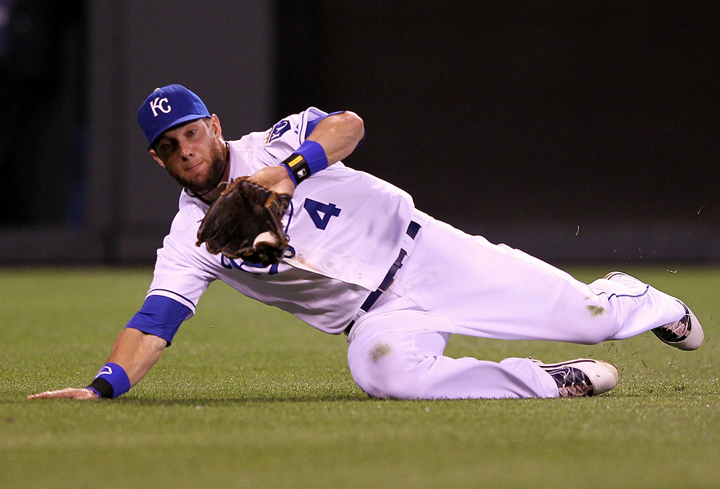
Alex Gordon was one of the best defensive players in baseball, by any measure in 2014.  photo 365rundown.com

Alex Gordon was one of the best defensive players in baseball, by any measure in 2014. photo 365rundown.com

Last year, I created a little spreadsheet upon the announcement of the Gold Glove winners, to see how they compared to various defensive metric leaders (2013 xls link here).  And I threw in the “Fielding Bible” award winners, since that has now taken over as the “accepted” list of the year’s best defensive players, thanks to the Gold Gloves continuing to pick inexplicable players (this  year’s repeat “I cannot believe he won” player again being Adam Jones).  But, as we’ve seen, the Gold Gloves are getting better, and the days of picking someone like a statue-esque Derek Jeter and/or a nearly permanent DH in Rafael Palmeiro seem to now be over.

So, now that we’ve announced the 2014 Gold Glove winners, lets also look at the league leaders in various defensive metrics.

This data is in the following spreadsheet for 2014 on Google Docs.

First, your 2014 Gold Glove winners: bold are also Fielding Bible winners, and red are the most egregiously bad selections.

Pos AL GG Winner NL GG Winner
C Salvator Perez, CLE Yadier Molina, STL
1B Eric Hosmer, KC Adrian Gonzalez, LAD
2B Dustin Pedroia, BOS DJ LeMahieu, COL
SS J.J. Hardy, BAL Andrelton Simmons, ATL
3B Kyle Seager, SEA Nolan Arenado, COL
LF Alex Gordon, KC Christian Yelich, MIA
CF Adam Jones, BAL Juan Lagares, NYM
RF Nick Markakis, BAL Jason Heyward, ATL
P Dallas Keuchel, HOU Zack Greinke, LAD

As with last year, the league still remains obsessed with Adam Jones despite his possessing negative defensive rankings across the board.  Kyle Seager wasn’t “bad” but wasn’t nearly as deserving as Josh Donaldson.  The only other real “bad” selection was Molina, not because he’s not a great defensive catcher (he is), but because he missed a ton of time and there were better options in the NL this year (namely, Jonathan Lucroy).  Otherwise every Gold Glove winner listed here was deserving.

Repeat Gold Glove winners from last  year: Molina, Hosmer, Pedroia, Hardy, Simmons, Arenado, Gordon, and Jones.  So, 8 of 18.

Here’s the 2014 Fielding Bible Awards, which (if you’re not aware) is a Bill James-driven website that uses a committee of national writers to select the winners (the site is here and you can read about their methodology).  Bolded are also GG winners:

Pos 2014 Fielding Bible Winner
C Jonathan Lucroy, MIL
1B Adrian Gonzalez, LAD
2B Dustin Pedroia, BOS (repeat)
SS Andrelton Simmons, ATL (repeat)
3B Josh Donaldson, OAK
LF Alex Gordon, KC (repeat)
CF Juan Lagares, NYM
RF Jason Heyward, ATL
P Dallas Keuchel, HOU
Util Lorenzo Cain, KC

They selected Lucroy over Molina, and Donaldson over Seager.  They’ve also added a 10th position for “Utility,” to recognize the excellent work of Lorenzo Cain playing multiple outfield positions.

Now, here’s the league leaders by various defensive stats.  The links to get any of these leaderboards are in the Google xls.  First: UZR/150.

Pos AL UZR/150 NL UZR/150
C
1B Albert Pujols, LAA (9.3) Anthony Rizzo, CHC (8.2)
2B Dustin Pedroia, BOS (20.4) DJ LeMahieu, COL (11.0)
SS J.J. Hardy, BAL (15.4) Andrelton Simmons, ATL (18.4)
3B Josh Donaldson, OAK (13.3) Todd Frazier, CIN (8.9)
LF Alex Gordon, KC (22.6) Christian Yelich, MIA (14.1)
CF Jackie Bradley JR, BOS (22.6) Juan Lagares, NYM (25.3)
RF Nori Aoki, KC (7.7) Jason Heyward, ATL (20.5)
P

I like UZR as a measure and use it often. UZR/150 somewhat standardizes the scores across a 150-game average to represent the figure for a full-season for apples-to-apples comparisons.  A good number of these leaders also earned Gold Gloves and/or Fielding Bible awards.  Josh Donaldson was the clear AL 3B leader.  Otherwise there’s a lot of similarities to the lists we’ve already seen.  I was surprised as heck to see Albert Pujols on this leader board.

For a quick point of reference to the above scores, the BEST UZR/150 of any Nationals player this year was Anthony Rendon‘s uZR/150 of 4.6 while playing 3B.  Span and LaRoche (our two GG finalists) both scored *negative* UZR/150 scores … perhaps an indictment of their nominations in general as being based on reputation and not actual on-field performance this year.

Next: DRS; Defensive Runs Saved.  Some like this stat a lot; I struggle with it because single plays (like an outfielder reaching over the wall to take away a homer) result in huge swings in the numbers on plays that aren’t necessarily the hardest to make.

Pos AL DRS NL DRS
C
1B Chris Davis, BAL (8) Adrian Gonzalez, LAD (12)
2B Ian Kinsler, DET (20) DJ LeMahieu, COL (16)
SS J.J. Hardy, BAL (10) Andrelton Simmons, ATL (28)
3B Josh Donaldson, OAK (20) Nolan Arenado, COL (16)
LF Alex Gordon, KC (27) Christian Yelich, MIA (13)
CF Leonys Martin, TEX (15) Juan Lagares, NYM (28)
RF Kole Calhoun, LAA (2) Jason Heyward, ATL (32)
P

Dustin Pedroia had one of the highest UZR/150 ratings in the league … but he was not the top-rated 2nd baseman in the AL.   We have our third different AL center fielder in three lists.  Otherwise this is a pretty good list.

Next: FRAA: Fielding Runs Above Average, a Baseball Prospectus measure that attempts to remove the bias present in zone-based data and also tries to factor in the tendencies of the pitcher on the mound (ground-ball guy, fly-ball guy,

Pos AL FRAA NL FRAA
C
1B Steve Pearce, BAL (7.7) Adrian Gonzalez, LAD (11.4)
2B Jason Kipnis, CLE (9.5) Chase Utley, PHI (6.9)
SS Alexei Ramierez, CWS (8.1) Jean Segura, MIL (23.6)
3B Kyle Seager, SEA (20.5) Nolan Arenado, COL (14.3)
LF Alex Gordon, KC (12.2) Khris Davis, MIL (6.6)
CF Jacoby Ellsbury, NYY (12.0) Ender Inciarte, ARI (11.0)
RF Kevin Kiermaier, TB (8.3) Jason Heyward, ATL (26.4)
P Dallas Keuchel, HOU (6.7) Tyson Ross, SD (3.7)

Interestingly, Jean Segura shines highly here (the supposed “best defensive player in the league” Andrelton Simmons only scored a 10.0 in FRAA).   And this stat really favors the play of some random players: I had no idea who Kevin Kiermaier or Ender Inciarte were before doing this post, nor did I know what position they played.

Adam Jones scored a -8.1 FRAA; ranking him 1187th out of 1212 players for 2014.  I’m not kidding.  That’s how bad a selection for the Gold Glove Jones was.

Last stat: Baseball Reference’s Total Zone Fielding

Pos AL Total Zone Total Fielding NL Total Zone Total Fielding
C Salvator Perez, CLE (12) Wilson Ramos, WAS (8)
1B Steve Pearce, BAL (13) Justin Morneau, COL (11)
2B Jonathan Schoop, BAL (16) Anthony Rendon, WAS (12)
SS J.J. Hardy, BAL (14) Jordy Mercer, PIT (21)
3B Kyle Seager, SEA (23) Chase Headley, SD/NYY (18)
LF Alex Gordon, KC (25) Khris Davis, MIL (13)
CF Lorenzo Cain, KC (18) Billy Hamilton, CIN (14)
RF Kevin Kiermaier, TB (12) Jason Heyward, ATL (30)
P

Check it out: our own Wilson Ramos is on this list as the “leader” for the NL.  Which, no offense to Ramos, makes you question at least the catcher rankings for this stat.  Rendon also factors in for his partial season at 2B.  But overall, this seems like the least reliable defensive stat.

As mentioned above, both our GG finalists (LaRoche and Span) seem to have been nominated on reputation only; neither of them appeared near the top on any of these statistical measures (unlike last year, when Span at least was a leader in Total Zone)

Did I miss any good defensive metrics?  Do you have one you like more or less than these?  I know there’s other stats out there; I can update this analysis with more of them.


So, how did the Gold Gloves do this year in selecting the most deserving winners?  Pretty good.  Alex Gordon was the AL leader for left fielders in every stat.  I think they picked the two correct short stops.  Catchers are difficult to measure.  They absolutely screwed up the AL Center fielder (though to be fair; there were four statistical measures presented and four different AL center field leaders.  Excellent defensive players who jump around (Lorenzo Cain, Ben Zobrist) make the awards somewhat challenging in some cases.