Nationals Arm Race

"… the reason you win or lose is darn near always the same – pitching.” — Earl Weaver

Archive for the ‘drew storen’ tag

One lesson learned from 2013: you can never have enough starting pitching

17 comments

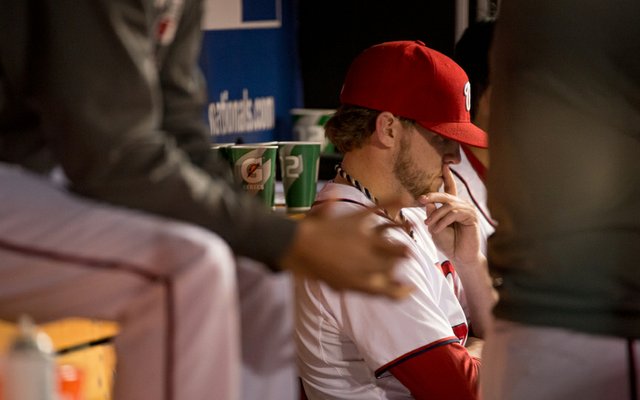
If Detwiler is out for the year, the Nats have a problem. Photo: Haraz Ghanbari/AP via federalbaseball.com

If Detwiler is out for the year, the Nats have a problem. Photo: Haraz Ghanbari/AP via federalbaseball.com

We all knew the Nationals had a glaring, acknowledged weakness heading into the 2013 season; almost no quality starting pitching depth in the high minors.  We non-tendered former opening day starter John Lannan in lieu of paying him somewhere between $5M-$6M dollars to toil in Syracuse again.  We non-tendered former starter Tom Gorzelanny despite his excellent 2012 season for us instead of paying him a few millions dollars a year to continue to be the 7th guy out of the pen.  We traded away top starting pitching prospect Alex Meyer to acquire a center-fielder that (in my oft-stated opinion) we didn’t need.  We were blinded by the excellent but short-sample-sized performance of Zach Duke upon his call-up last September and chose to make him not only the sole lefty in our 2013 pen, but the long-man/spot starter as well.

And we talked ourselves into it.

In 2012 our primary rotation made 150 of 162 starts.  Those 12 missed starts were made by Chien-Ming Wang (five starts) in a quickly-aborted glimpse to see if the many millions of dollars invested in his recovery over the past few years were going to pay off (they did not), by Lannan (six) for a couple of mid-season spot starts and his Stephen Strasburg replacement plan in September, and one by Gorzelanny the day after the team clinched the division (editor note: mistakely originally put “pennant.”  Duh).  That’s it; otherwise the rotation was solid, consistent, and one of the best in the majors by any statistical measure.

Was it just hubris that led us to believe that the same thing would happen in 2013?  That our vaunted rotation (which I certainly thought was the best in the majors before the season started) would steamroll through another 150+ starts in 2013 as we marched to the inevitable World Series title?  Maybe so.

The latest blow is the news that Ross Detwiler‘s herniated disk may very well keep him out for the rest of 2013.  Taylor Jordan has been more than ably filling in for Detwiler … but in a familiar twist Jordan is facing an innings restriction limit.  After August 4th’s start he’s got 40 2/3 major league innings in 2013 to go with 90 1/3 in the minors for 131 total on the year.  He only threw 54 1/3 all of 2012 coming back from Tommy John surgery, and this year easily marks a professional career high (he’s never thrown more than 100 professional innings).  He’s going to get shut down, soon (in about four more starts per the Washington Times’ Amanda Comak, which would put him just about at the same 160ip limit that both Strasburg and Jordan Zimmermann pitched to the year after their own TJ surgeries).  This leaves the team right back where they were on May 20th, when the whole “find a competent 5th starter” charade started.

Duke failed and was released.  Yunesky Maya got his last attempt at pitching in the majors and was outrighted (a move long overdue in the opinion of many Nats followers).  Nathan Karns got three bites at the apple and returned to AA with a 7.50 ERA.  Ross Ohlendorf gave us a fantastic spot start in a double header last week… and just went on the D/L after not being able to dial it up more than 85mph in his last appearance.  The only other 40-man starter in the whole of the minors is Matthew Purke, currently posting a 6.35 ERA in high-A.

Hey, at least Dan Haren suddenly resembles the 2009 version of himself, having tossed 14 innings oof one-run ball en route to winning his last two starts.  A month ago we were talking about releasing him.

So, what should the team do when Jordan is shutdown?  It sounds to me like in the short term we’ll go back to Ohlendorf as the 5th starter (assuming of course his recent “dead arm” injury doesn’t turn into much more than a quick D/L trip).   However, despite Ohlendorf’s excellent work for us thus far, lets not forget why he was available on a minor league deal in the first place; his ERAs in 2011 and 2012 were 8.15 and 7.77 respectively.  Odds are that he’s not likely to be that effective going forward.

Plus, Ohlendorf’s time in the rotation means the bullpen will need another guy … presumably one that can pitch long relief to replace Ohlendorf.  I’m not entirely sure any of the other relievers on the 40-man but in the minors (Drew StorenErik Davis or Tyler Robertson) fits the bill.  Craig Stammen has absolutely done that role in the past, but I think Stammen’s value to this team now lies in his 7th inning “bridge reliever” role, getting the team from a short start to the 8th/9th inning guys.

If Detwiler is indeed out for the year I think he should be immediately transferred to the 60-day D/L (opening up a spot on the 40-man roster) and I’d like to see Tanner Roark  get a look-see as the long man in the bullpen.  He’s put up very good numbers in AAA this season in a swing-man role and faces minor league free agency this off-season.  Or, I wouldn’t be opposed to keeping Ohlendorf in the pen and giving Danny Rosenbaum a shot at the 5th starter.  He’s been the most effective AAA starter all year and, despite not being that overpowering, could turn into another Tommy Milone-esque lefty starter that we could leverage in trade.  We may not have fantastic depth in the upper minors, but you never know who may suddenly be an effective MLB pitcher (see Krol, Ian).

(Editor’s note: after I wrote this mid-weekend MASN’s Byron Kerr wrote and posted almost identical analysis).
Is it time to fire Davey Johnson?

12 comments


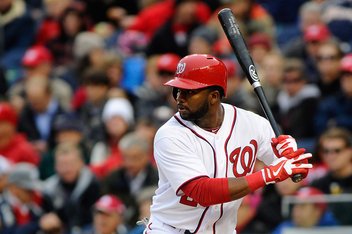
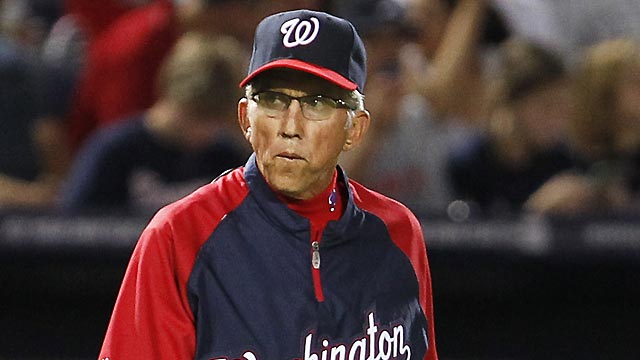
Davey Johnson can't get this team in gear.  Is it time to go?  Photo Getty via mlb.com

Davey Johnson can’t get this team in gear. Is it time to go? Photo Getty via mlb.com

I know this is blasphemous to say.

I know it’ll never happen, not under this GM and not under this ownership group, both of whom have far more respect for Davey Johnson than to give him such an ignominious end to his time here.

And I know that Johnson is as good of a manager as is out there.  I may have been critical of his decisions here and there (especially related to yanking starters on low pitch counts), but I recognize he’s a Hall of Famer and cannot argue against his career accomplishments.

But I’m beginning to believe that the only way to shake this team out of its current malaise is to change the message coming from the top.

They tried demoting players who weren’t hitting (Danny EspinosaTyler Moore).   They’ve tried calling up their best remaining prospects (Anthony Rendon, Nathan Karns and Taylor Jordan).  They’ve tried cleaning house of underperforming relievers (Henry RodriguezZach Duke, and Drew Storen).  They’ve tried changing key staff (firing Rick Eckstein).  They’ve tried ridiculous lineups (your best power hitter Bryce Harper leading off??)   Nothing has made a difference; the team has basically been playing .500 ball for weeks and weeks now.

For whatever reason, this team of players, picked by every baseball pundit out there to make the playoffs and by a good portion to make it to or win the World Series, is now 10 games out of of the divisional lead.  They’re 10 games back of Atlanta, which themselves has only played .500 ball since mid April after a 12-1 start.  The Nats just finished June and July playing 50 games in a row against teams that missed the 2012 playoffs (perhaps not the best bench mark, since Pittsburgh has the best record in baseball this year, but still), and finished the stretch 5 games south of .500.

The team looks like its sleepwaking through games.  They look like they have no voice, no spark, no sense of urgency.  No leadership.

The trade deadline won’t help at all; the Nats have practically no tradeable assets.  Their only FAs to be are Dan Haren and Chad Tracy.  Kurt Suzuki has a 2014 option that clearly won’t be exercised, so he counts too.  But who is out there lineing up for these 3 guys?  Meanwhile, despite their offensive woes, there’s really not a spot on the field that can be improved through trade.  Go around the field and you’ve got players on deals that at least extend through 2014 (LaRoche and Span), or  you’ve got guys on major contracts (Zimmerman and Werth) or you’ve got cornerstone younger players (HarperRamosDesmond and Rendon).  Who are you going to replace?  Maybe you think about trading Rafael Soriano (after all, the last thing a losing team needs is a high-priced closer) but a quick glance at the teams in playoff contention does not easily find a team in need of a closer (the best candidate may be Pittsburgh, who just lost their closer Jason Grilli to a forearm injury, but they’re not exactly rolling in dollars nor likely to take on an $11M/year guy).

Maybe its time to bring in a new voice, and see if he can scare this team into an August and September run.

Sorry Davey; you know how the old saying goes.  You can’t fire 25 players, but its pretty easy to fire the manager.

Storen to the minors… did he deserve it?

6 comments

Storen will look to re-group in AAA..  Photo Andrew Harnik/washingtontimes.com

Storen will look to re-group in AAA.. Photo Andrew Harnik/washingtontimes.com

Talk about a fall from grace.  Drew Storen went from being the closer for a 98 win team in Oct, 2012 to being optioned to the minors after Friday 7/26/13’s doubleheader.

On the face of it, it makes sense.  This team is struggling, Ryan Mattheus is off the D/L, and there were 8 relievers for 7 spots.  Storen’s numbers in 2013 have been abhorrent: a 5.95 ERA and a 1.512 whip in 42 1/3 innings.  The team isn’t scoring any runs, so the last thing they need is a reliever who can’t hold a close lead right now.

A look deeper into Storen’s numbers though reveals a very tough-luck case.  Looking at his advanced stats from Fangraphs, he’s got a .346 BABIP right now, 45-50 points above the league average and a good 60 points above his career average.  He’s been very unlucky on balls in play.  This contributes to the huge gap between his ERA (5.95) and his FIP (4.16), and especially his xFIP (3.59).  This expected FIP by they way is significantly better than Rafael Soriano‘s current xFIP (4.26).  The point?  Storen has been unlucky so far this season and, were he given the chance to allow his appearances to regress to the expected mean, he likely would have pitched a ton better going forward.

Side Note:  Luigi De Guzman (aka “Ouij”) from Natstradamus did a fantastic bit of data mining, looking at Storen’s detailed pitch f/x data to delve into the reasons for Storen’s downfall.  Definitely go over there and read that piece.

Steve McCatty was quoted during Saturday’s broadcast as saying that he wanted Storen to work on his mechanics.  Specifically, Storen used to vary his left leg motion between the straight legged approach and a conventional knee bend.  This is confirmed by beat reporter James Wagner‘s story to the same.  Makes sense to me: the straight leg kick causes him to be slower to the plate, making it harder for him to hold runners.  The Nats as a team are already struggling to hold runners in general.  Plus, I’ve privately wondered if the varying leg kick causes him to struggle to hold his mechanics.  McCatty alluded to this, wondering if Storen’s control is affected.

On a different note; I’ve said this before, but I cannot help but think that Storen’s mental state has been in question ever since the acquisition of Soriano.  Buying Soriano on the FA market was essentially management telling Storen either a) we don’t trust you anymore after your game 5 meltdown, or b) we don’t think you’re good enough to be our closer any more.  It was an public and embarrassing demotion, and not every guy will take it in stride.  Tyler Clippard may have had an easier time with it since he was already an established 8th inning guy, and he was never really in line this season to be the closer.  These are the kind of man-management issues I think us casual fans forget about; just like you have problems in your office, so do players have problems in the clubhouse.

So, tough break for Storen.  Two straight awful appearances plus the blown save in 7/20’s Los Angeles game conspired to get him sent to the minors.  Lets hope he regroups, clears his head and is ready to come backup when the next spot in the bullpen opens up.


Written by Todd Boss

July 29th, 2013 at 7:02 am

Ask Boswell 7/22/13

10 comments

Denard Span is catching a lot of criticism right now.  Photo: Brad Mills-USA TODAY Sports

Denard Span is catching a lot of criticism right now. Photo: Brad Mills-USA TODAY Sports

Well, Phil Mickelson came out of nowhere to take the British Open over the weekend, NFL training camps are coming up soon and the Nats just got swept anemically at home.  I wonder how many baseball questions there are in this week’s ask Tom Boswell chat?  Lets find out.

As always, I answer here before reading Boswell’s response, only take his baseball/Nats questions and edit those questions for clarity.

Q: Is one of the reasons for the Nats malaise because they know Johnson is a short timer?

A: The implication of the question is this: if Davey Johnson suggests a change, the player says, “Eh, you’re gone by the end of the season, why should I listen to you?”  I have a hard time believing this for two reasons:

1. I’m not convinced there’s that much “coaching” going on in the majors.  Especially for veterans.  These guys are professionals, they’ve been playing professional baseball for years.  If you don’t know how to bunt, or how to field by the time you’ve made the majors then I don’t think you’re ever going to get it.  Maybe I’m wrong.

2. I’m also not convinced that managers really have that much to do with a game’s being won or lost.  Yes, disastrous bullpen decisions can back fire.  But its still on the hitters to hit, the starters to pitch, the fielders to make plays.

Related to #2; word came out today that the Nats have fired hitting coach Rick Eckstein.  Is this sort of like firing the secretary when the entire office puts out bad work?  Johnson was really upset by it and said so in the media … and I don’t have any doubt that this is a reactionary move to the poor offensive numbers.  But ask yourself; what is a new hitting coach going to do to turn this team of hitters around between now and September 30th?

Boswell gives Johnson lots of credit in 2012 for instilling confidence in the youngsters and garnering more respect out of the veterans (in comparison to Jim Riggleman). 

Q: Suzuki, Soriano, LaRoche. Any reason the Nats shouldn’t be sellers this year?

A: The Nats will not sell.  Because that would be Mike Rizzo admitting that all his moves last off-season were wrong.  And he’s not going to admit that.

Lets play the what-if game though; what if the Nats were to become sellers.  First guys on the block are FAs in their last (or only) year.  We only have a couple of those guys: Kurt SuzukiDan Haren and Chad Tracy.  Look at that list and ask yourself who would want these guys and what they’d be willing to give up?  Even newly acquired Scott Hairston is signed through 2014.  But then again, teams are smarter and generally won’t give up good prospects anymore for rentals.

One last point: the Red Sox blew a 9 game lead in September two years ago.  The Nats are only 7 out of the division lead, even playing as poorly as they have.  It’s still just mid July.

Boswell says wait until July 31st.  And interestingly he criticizes the Denard Span acquisition. 

Q: Can we get rid of Span?

A: Ironic that Boswell took this question right after killing him.  I have always thought that the Span acquisition was Rizzo being too clever, too focused on defense.  And so far it looks like the critics were right.  Span is posting an 86 OPS+ right now.  His OBP is about the same as the guy we had to jettison to make room for him (Michael Morse).   Except Morse at any moment can hit the ball 430 feet; it’d take Span 3 swings to get it that far.  To say nothing of driving out a fan favorite/good clubhouse guy.

Can we get rid of him?  Nope.  Stuck with him and most of this team through next season.  But, at that point he seems tailor made to flip to bring up someone like Brian Goodwin.

Boswell says that Bernadina isn’t the answer.

Q: Isn’t it galling to the team that Rafael Soriano acts differently on the mound — e.g., windup vs. stretch — depending on whether or not it is a save situation?

A: The word on Rafael Soriano wasn’t positive before he got here, and the whole “shirt untuck” seems to smack of showing people up.  And it’s clear to me that he’s a “Save snob;” look no further than his numbers in 2010, 2011 and 2012.  In2010 as a closer in Tampa?  226 ERA+.  The next year as a setup guy in New York?  4.12 era.  Then when Mariano Rivera goes down and he gets the closer job in 2012?  Back to being excellent.  If he purposely pitches differently in save vs non-save situations?  I’d be really, really pissed as a player.  But luckily the stats don’t support it; his ERA in non-save situations is better than in save situations, by a lot.  Boswell says that Soriano’s behavior is being noticed.  great.

Q: Should we start platooning Span with Hairston?

A: Is this what it’s come to with Span?  That we’re talking about platooning him with a guy hitting .170?  Yes Hairston’s lefty splits are good … but come on.  It isn’t like he’s an all-star slugger.  At least span brings plus-plus defense to center.  Bat him 8th, where his damage is limited.  Boswell says Yes its time to platoon.

Q: Everybody says Nats Park can’t get an All-Star Game because the surrounding area isn’t developed enough. But how does that explain sites like Busch Stadium (their development plan is further behind than ours), Angel Stadium (surrounded by parking lots and freeways), or Citi Field (surrounded by parking lots, a subway line, and a junkyard)?

A: Great question.  Maybe Bud Selig hasn’t seen all the development going on.  Or maybe Ted Lerner just don’t want to get on his knees and beg for it before the omnipowerful commissioner.  I do think its kind of ridiculous that baseball has chosen to return to parks that have previously hosted before giving a game to every new park.    Boswell doesn’t really answer.

Q: How good has Gio been over the past two months?

A: Before his 6 shutout/11k outing last weekend Gio Gonzalez had won 4 straight starts.  The worst of them was a 6 2/3 3 run performance that the team won easily anyway.  Maybe he’s pitching to score (ooh, don’t say that too loudly, the sabre nerds get all pissed).  Yeah he’s pitching great.  Boswell agrees.

Q: Should Krol start working later in games?

A: I’m still not entirely convinced Ian Krol can be more than a loogy.  Every time i’ve seen him, he’s been a one-pitch/one-trick guy.  I’ve literally never seen him throw his off-speed stuff for strikes.  Luckily the deception and velocity on his fastball are good enough to let him ride to a very good season statistically so far.  I’d stick with what we’re doing now; using him and Fernando Abad as situational relievers and leaving the hard work for Clippard and Soriano.  Drew Storen?  Now that’s another story.  Boswell says give him more work.

Q: I’ve seen a recent increase in the criticism of Davey Johnson’s managerial decisions. I can’t believe fans are blaming him for where the Nats currently stand. I put the blame on the players. It’s execution that’s at fault. Right? What else could/should Davey do that he hasn’t already tried?

A: Stop using poor relievers.  Stop pulling effective starters after 90 pitches.  Stop batting Span 1st and drop him to 8th where he belongs.  That’s what I’d do.  Boswell shared some ancedotes.

Q: I was so in favor of the Span acquisition, now it just looks horrible. Do you think he can get back to the .392 On Base Percentage he has in 2009 or is he really a .317 OBP guy? Will this team ever solve CF and lead off?

A: Just had this discussion with someone over email.  He does look horrible at the plate.  But he plays a great center field!  Rizzo just had to have his center fielder; well now you have him, and the guy he displaced (Mores) has about the same OBP this year as Span.  To go along with 200 points of slugging.  So there’s that.  You say “well Morse has been injured?”  I say sure … he got injured in Seattle.  No reason to assume the same thing would have happened here.  We gave up Morse’s power in the middle of the order and moved a perfectly capable defender (Harper) off center to acquire Span and have him drag down the top of the order.  Can’t do anything about it now (or until 2015 frankly): I say bat him 8th until he proves he deserves to return to the top.   Boswell points out that Span’s OBP is only 1% better than league average.

Q: Should we keep Soriano in the closer role?

A: Pretty much; $11M a year and he’ll be a sullen clubhouse cancer if he’s not closing.   He’s being paid way too much money to flip, even to teams that covet closers.  Well, maybe we can talk to Boston; they seem to be idiots when it comes to paying for closers (as noted in this space).   Boswell also mentions Boston but points out how battle-tested Soriano is, implying he has value.  I’m clearly on the record in my opinion about closers and paying big money for them, disagreed with the acquisition and disagree with Boswell here; if we could trade him, you do it.

Q: Is Jayson Werth immature and/or a hypocrite?

A: You’d have to read the whole question (which clearly implies the opinion of the asker), but there’s some vitriol in there.  I can’t think of any incidents that make me ever put Jayson Werth in the same maturity category as Nyjer Morgan.  I think the questioner is off-base here.  Boswell predictably defends Werth.  I will say this: go look at Werth’s hitting stats this year; he’s been very, very good.


Ask Boswell 7/8/13 Edition

12 comments

Your Nats are on a little roll; they swept the Padres and have clawed their way to a mighty 4 games above .500 before looking downright weak so far in Philly. What’s the temperature of Tom Boswell‘s chat this week?  Lets find out?

As always, I write the answer here before reading Boswell’s, and edit questions for clarity/conciseness.

Q: Is this the turnaround we’ve all been waiting for?

A: Well, at the risk of being a complete hypocrite (as a couple of my friends accuse me of doing, after basically writing off the team when they were still mired at .500 at the end of June), I’ll stick with “we’re not out of the woods yet.”   After winning 4 straight and sweeping the hapless Padres in Washington, we travel to Philadelphia for a mid-week 4-game set where I only give the Nats the clear starting pitcher advantage in one of the four games.

And sure enough, Dan Haren gave up 2 early runs to set the tone and the Nats were efficiently shut down by former Ace John Lannan in dropping the first game 3-2 while getting just one run in 8 innings against Cole Hamels in last night’s loss.  It would not surprise me in the least to see the Nats lose 3 of 4 in Philly (the mano-y-mano Cliff Lee-Gio Gonzalez showdown tonight favors the Phillies, then the Jordan ZimmermanKyle Kendrick matchup that favors Washington on paper .. but Zimmermann has been leaking runs lately and only has 4 quality starts in his last 8 outings).  Boswell says that “baseball hates a straight line,” I suppose implying that the Nats can get a winning streak together and get back in.

Q: Why are the Nats ownership pushing out Johnson?

A: Asked and Answered in a previous chat.  See the Davey Johnson question from the 7/1/13 version of this post.  Boswell indeed repeats his 7/1 answer today.

Q: Who gets demoted to make way for Scott Hairston?

A: The obvious and easy answer is (and was) Tyler Moore, the only real expendable hitter left on the active roster.  Expendible meaning he wasn’t a vet, wasn’t out of options, and isn’t hitting .300 playing every day.  (This move has already happened by the publication of this post, so it isn’t very timely).  Boswell points out that not only is Moore going to AAA, but there’s literally no room for him NEXT year since Scott Hairston is signed through 2014.  Oops.  Moore is now officially trade bait.

Q: Why do Baseball fields continue to be irregularly shaped?

A: Anachronism.  Its the only thing I can think of.   Boswell sort of agrees.

Q: Why havn’t we pulled the plug on Dan Haren?

A: I’ll give you $13M reasons why.  But, we’re getting close.  If the Nats are really going after Matt Garza then Haren’s days are numbered.  Thank baseball for guaranteed contracts, eh?   Boswell proposes a crazy trade proposal: Detwiler, Espinosa, Moore and Giolito for David Price, who he constantly mentions as being a guy he’d love to see acquired.  I don’t see it; Tampa Bay is notoriously difficult to deal with on the trade market and this trade offer basically collects three under-performing MLBers and an injured rookie for one of the 15 best arms in the game.  As David Schoenfield put it in his ESPN chat yesterday, this is a ridiculous trade offer from a homer-fan in Boswell.  

For what its worth, later on in the chat someone also pokes disbelief at this trade proposal.  Boswell defends the trade more on the years-of-control and by comparing Price to the Gio Gonzalez deal.

Q: Why did the Nats acquire Hairston in the first place?

A: Clearly, they felt like they needed better bench hitters.  And, they got him.  Boswell notes his great lefty splits.

Q: Will the Nats re-align their rotation post All-Star Break?

A: Probably; they did minor tweaks last year.  Unless it results in some ridiculous layoff, you’d have to think they’re going back to the opening day 1-2-3-4-5.  Boswell says nobody knows.

Q: According to high placed sources, Cliff Lee has informed the Phillies he’ll waive his no trade clause for the Nationals. Will the price be to high?

A: Ugh.  Just go look at Cliff Lee‘s contract.  He’s owed more than $75M AFTER this season (I’m counting the 2016 option that seems very likely to vest).  He turns 35 in August.  That’s an awful lot of money to be going to a 38 year old guy.  And it’d take a massive haul of our thinned farm system to get him, since the Phillies would be full bore into rebuilding mode if they moved Lee.  Just don’t see it.   Yes Lee has been great this year, but the fall-off for guys in their mid 30s can be steep.  Boswell points out similar facts.

Q: MLB seems to be making a special effort to promote Puig for the final spot, three tweets about him yesterday; none about the other four NL candidates. If they want him that badly why not institute a next-to-last spot for whoever they want to pick for marketing purposes?

A: Others have proposed reserving an all-star spot for an “Up and coming” player who isn’t on the ballot and thus has little chance of making it.  That makes sense to me.  MLB is doing their best to capture the Yasiel Puig-mania, and good for them to finally do some aggressive marketing of their marketable stars.  Boswell says Puig is awesome and then goes off on a tangent.

Q: Is Rafael Soriano turning into Don “fullpack” Stanhouse for Davey Johnson?

A: Rafael Soriano‘s numbers are fine; 2.19 ERA, converted 21 of 24 save opportunities.  He gives up a hit an inning; not ideal for a closer but not out of the realm of crazy.    I don’t get THAT nervous when he comes into games.   Boswell says Soriano is underrated.

Q: Alex Rodriguez is playing single A ball. Are the Yankees sending him a message?

A: Did the Nats “send a message” to Bryce Harper by sending him to Potomac (A-Ball) to rehab?   MLBers have to play re-hab ball somewhere;  dumb question inspired by the media sensationalism that perpetually surrounds Alex Rodriguez.  Boswell pokes fun at the Yankees, Brian Cashman‘s STFU tweet and the whole situation with A-Rod in general.

Q: Do the Nationals over-play music and promotions at games?

A: The question comes from someone who clearly comes across as a whiny “I liked it in the old days when we just had an organ at baseball games” type.  I’ve never gotten that impression at Nats games.  If you want to *really* see what a fan experience is like with near perpetual distractions and music, just head on over to the Verizon Center and take in a Wizards games.  They play 95 decibel music DURING PLAY.  Its just crazy.  Boswell says that while the PA is too loud, the Nats park is relatively devoid of ads and clutter.  

Q: Trade proposal: Clippard and Storen for Cliff Lee

A: Two non-closers for a MLB Ace.  And one (Drew Storen) who is really struggling this year.  Yea right.   If you’re going to propose trades, make them at least believable.   boswell falls back on intra-division, CYA blocking reasons for not considering this trade.

Q: Should we prevent Harper from participating in the Home-Run Derby due to injury concerns?

A: Should we block Harper from taking batting practice due to injury concerns?  Another ridiculous question.  The Home Run Derby is just BP with the cameras on.   Boswell says its more likely to mess up h is stroke; whatever.  Everything I’ve read about Harper’s BP sessions show that he’s basically trying to hit it to the beer stands on every pitch.

Q: Does Storen need a change of scenery?

A: Great question; the full text of the question answers things pretty well; Storen has gone from closer to 7th inning Ryan Mattheus replacement in less than a half a season.  If traded and given another shot, you have to think he’d re-flourish as a closer.  Mike Rizzo has traded closer-quality guys to teams that covet them (see the Matt Capps deal) so maybe this could be in the cards.  I’d always trade in a closer for a position player, since you can “make” closers so easily.  Look at what Ian Krol is doing; all he’s done since arriving as an unheralded AA-reliever is just shut people down; I’ll bet he would make an excellent closer.    Boswell says the team wants Storen around for the long haul.

Q: Trade idea: Danny Espinosa for Ervin Santana?

A: Hmm.  #2 starter with a 2.93 ERA for a team trying to make the playoffs for …. an AAA infielder who hit .158 this year.  AND the questioner thinks the Royals would throw in a prospect to make it work!  Talk about over-valuing your own assets.  There’s a difference between potential talent and realized talent; Espinosa completely encapsulates the difference.  Yes we know that he’s a plus-plus defender who can hit 20 bombs from the shortstop position.  But he has regressed year to year at the plate and now will be lucky to play in the majors again before the Sept 1st callup.  Why would the Royals possibly do this deal?   Thank god this is just a local chat and not one of these national ESPN chats where Nats fans in general would be lampooned for trade ideas like this.  Boswell doesn’t really even give an opinion on this one.


Nats all-star review: 2013 and years past

11 comments

harper and trout 2

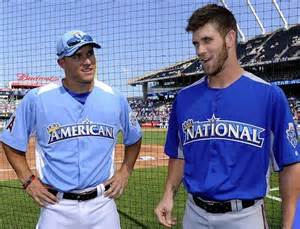
Harper and Trout’s rookie appearance in the 2012 game was so special: I hope Yasiel Puig makes it this year. Photo unk.

Here’s my annual Nationals All Star representative post.   As with 2012 and 2011‘s post, I’m including a retrospective on our “illustrious” All Star representative history from years past.  If you read on and it sounds familiar, that’s because a lot of it is cut-n-pasted from the annual version of this post.  Even so, reading backwards to see who our All-star representatives were in the lean years is an interesting exercise.

Here’s a link to the All Star Rosters for 2013.

2013

  • Nationals All-Star representatives: Bryce Harper, Jordan Zimmermann
  • Snubs: Stephen Strasburg, Ian Desmond
  • Narrative: Harper comes in 3rd in the NL outfielder voting, ahead of some big-time names, to become only the second Nationals position player elected as an All-Star starter.  He was 4th in the final pre-selection vote, so a big last minute push got him the starter spot.   Harper also becomes the first National to participate in the Home Run Derby.   Zimmermann is 12-3 heading into the game and is on mid-season Cy Young short lists right now and is a very deserving pick.  Strasburg’s advanced stats are all better than Zimmermann’s, but his W/L record (4-6 as of this writing) means he’s not an all-star.  It also probably doesn’t help that he missed a few weeks.  Desmond loses out to Troy Tulowitzki, Everth Cabrera and Jean Segura.  Tulowitzki is having a very solid year and is a deserving elected starter (though he’s currently on the DL and I wonder if Desmond may still make it as an injury replacement), while Cabrera and Segura are both having breakout seasons.  Desmond is on the “Final vote” roster, but my vote (and most others’ I’m guessing) would be for Yasiel Puig there ([Editor Update: Desmond and Puig lost out to Freddie Freeman: I still hope Puig finds a way onto the roster).   Gio GonzalezRyan Zimmerman,and Rafael Soriano are all having solid but unspectacular years and miss out behind those having great seasons.

Trivia: With his 2013 selection, Harper has been selected as an all-star in every season in which he has appeared in a game.  As far as I can tell in baseball history, there’s only TWO other players in Major League History who can say this.  Name them (discuss in comments).

2012

  • Nationals All-Star representatives: Stephen StrasburgGio GonzalezIan Desmond, Bryce Harper
  • Possible Snubs: Adam LaRocheCraig Stammen
  • Narrative: The two starters Strasburg and Gonzalez were the obvious candidates, and my personal prediction was that they’d be the only two candidates selected.  Gonzalez’ first half was a prelude to his 21-win, 3rd place Cy Young season.  The inclusion of Desmond is a surprise, but also a testament to how far he’s come as a player in 2012.  Harper was a last-minute injury replacement, but had earned his spot by virtue of his fast start as one of the youngest players in the league.  Of the “snubs,” LaRoche has had a fantastic come back season in 2012 but fared little shot against better, more well-known NL first basemen.  Stammen was our best bullpen arm, but like LaRoche fared little chance of getting selected during a year when the Nats had two deserving starters.

2011

  • Nationals All-Star representatives: Tyler Clippard
  • Possible Snubs: Danny EspinosaMichael MorseDrew StorenJordan Zimmermann
  • Narrative: While Clippard was (arguably) the Nats best and most important reliever, I think Zimmermann was a more rightful choice.  He was 10th in the league in ERA at the time of the selections and has put in a series of dominant performances.  Meanwhile Espinosa is on pace for a 28homer season and almost a certain Rookie-of-the-Year award (though a precipitous fall-off in the 2nd half cost him any realistic shot at the ROY), and perhaps both players are just too young to be known around the league.  Lastly Morse is certainly known and he merited a spot in the “last man in” vote sponsored by MLB (though he fared little chance against popular players in this last-man-in voting).

2010

  • Nationals All-Star representatives: Matt Capps
  • Possible Snubs: Adam DunnJosh WillinghamRyan Zimmerman, Steven Strasburg
  • Narrative: Capps was clearly deserving, having a breakout season as a closer after his off-season non-tender from the Pirates.  The 3-4-5 hitters Zimmerman-Dunn-Willingham all had dominant offensive seasons as the team improved markedly from its 103-loss season.  But perhaps the surprise non-inclusion was Strasburg, who despite only having a few starts as of the all-star break was already the talk of baseball.  I think MLB missed a great PR opportunity to name him to the team to give him the exposure that the rest of the national media expected.  But in the end, Capps was a deserving candidate and I can’t argue that our hitters did anything special enough to merit inclusion.

2009

  • Nationals All-Star representatives: Ryan Zimmerman
  • Possible Snubs: Adam Dunn
  • Narrative: The addition of Dunn and Willingham to the lineup gave Zimmerman the protection he never had, and he produced with his career-best season.  His first and deserved all-star appearance en-route to a 33 homer season.  Dunn continued his monster homer totals with little all-star recognition.

2008

  • Nationals All-Star representatives: Cristian Guzman
  • Possible Snubs: Jon Rauch
  • Narrative: The first of two “hitting rock-bottom” seasons for the team; no one really merited selection.  Zimmerman was coming off of hamate-bone surgery in November 2007 and the team was more or less awful across the board.  Rauch performed ably after Cordero went down with season-ending (and basically career-ending) shoulder surgery.   Guzman’s selection a great example of why one-per-team rules don’t make any sense.  Guzman ended up playing far longer than he deserved in the game itself by virtue of the 15-inning affair.

2007

  • Nationals All-Star representatives: Dmitri Young
  • Possible Snubs: Ryan Zimmerman, Shawn Hill (though I wouldn’t argue for either)
  • Narrative: Young gets a deserved all-star appearance en route to comeback player of the year.  Zimmerman played a full season but didn’t dominate.  Our rotation featured 6 primary starters, none of whom are still in the league now, though Hill showed flashes of dominance throughout the year.

2006

  • Nationals All-Star representatives: Alfonso Soriano
  • Possible Snubs: Nick JohnsonRyan Zimmerman
  • Narrative: Soriano made the team as an elected starter, the first time the Nats have had such an honor.  Our pitching staff took massive steps backwards and no starter came even close to meriting a spot.  Cordero was good but not lights out as he had been in 2005.  Soriano’s 40-40 season is a poster child for “contract year” production and he has failed to come close to such production since.  The team was poor and getting worse.  Johnson had a career year but got overshadowed by bigger, better first basemen in the league (a recurring theme for our first basemen over the years).

2005

  • Nationals All-Star representatives: Livan HernandezChad Cordero
  • Possible Snubs: Nick JohnsonJohn Patterson.
  • Narrative: The Nats went into the All Star break surprisingly in first place, having run to a 50-31 record by the halfway point.  Should a first place team have gotten more than just two representatives?  Perhaps.  But the team was filled with non-stars and played far over its head to go 50-31 (as evidenced by the reverse 31-50 record the rest of the way).


How do Pitchers “tip” their pitches to opposing hitters?

10 comments

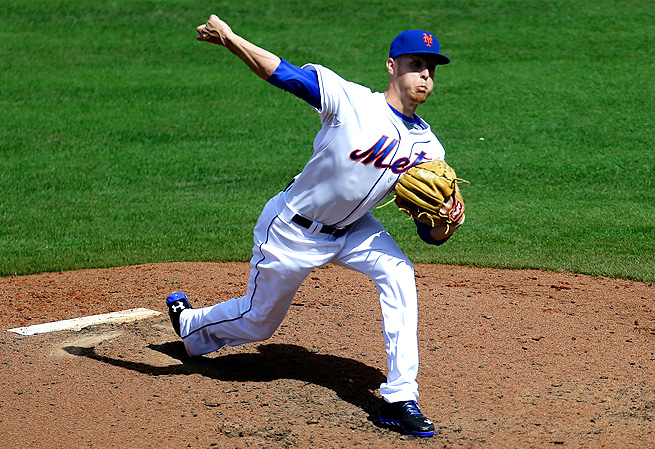
Zack Wheeler's mechanics are apparently a mess right now.  Photo cnnsi.com

Zack Wheeler’s mechanics are apparently a mess right now. Photo cnnsi.com

I’ve taken an interest in Mets rookie right hander Zack Wheeler since his call-up.  I nabbed him for my fantasy team and have watched his starts when I could.   His name has been in the news for quite a while, ever since he was traded by the Giants for a 2-month rental of Carlos Beltran (a trade that had Giants prospect-watching fans howling).  Moreso because of Wheeler’s pedigree; 100mph heat, #1 starter ceiling.  There’s nothing more exciting than seeing a prospect for the first time, even if he could be the bane of your team’s existance for the next 10 years.

His first few starts have been up and down; now we may know why: reports are coming out of the Mets camp that say that Wheeler’s been tipping his pitches.  Of course, it apparently wasn’t an issue when he threw 6 shutout innings in his debut, but its still something worth looking into.  The team plans on working with Wheeler in the bullpen to make some adjustments (he apparently is doing several things wrong right now; see below for all the different ways he’s tipping).  However, apparently not enough was fixed prior to his last start against the Nationals, who teed off on him as if they knew what was coming.  And you know what?  They probably did.

But this got me wondering: how exactly to pitchers “tip” their pitches?  I’ve played an awful long time and have always been a “feel” hitter at the plate; I look fastball, adjust to the curve, never really give much thought to trying to think along with the pitcher, and generally “feel” my way through at-bats.  I’ve never in my life specifically looked for or noticed a pitcher tipping his pitches or tried to take advantage of it; frankly when a guy’s fastball is only in the upper 70s or low 80s as it generally is in amateur leagues, you don’t really need to get that kind of advantage.

After doing a bit of research, here’s what I’ve found.  Pitchers can “tip” their pitches a number of different ways.

  1. Differing Arm Angles for different pitches.  This (according to the above link) is one current Wheeler issue.  I have seen this personally; usually a curveball comes in at a slightly lower arm angle if the pitcher wants to get more side-to-side action.  Pitch F/X data tracks release points and this type of tip can be worked on.
  2. Differing Arm Action: A common tip is when a pitcher specificically slows their arm when an off-speed pitch comes, especially a change-up.  This is an amateur tip though; professionals throwing change-ups hone their craft to be as deceptive as possible.
  3. Glove Positioning: another apparent Wheeler issue; he was holding his glove in different spots (as pointed out by this fangraphs.com link and as noticed in the video in this article here) depending on the pitch.  This has to be something done unconsciously; there’s no reason to hold your glove in different spots or to hold your body in different positions based on the pitch you’re going to throw.   Others have noted that pitchers will have different “glove widths” depending on the grip; a “12-6” grip (like on a fastball) allows the glove to be slightly more closed than a “3-9” grip, like you’d have on a curve ball.  Another glove tip-off may be the way the glove is held in the set position; some pitchers have a tendency to hold the glove more straight up and down when throwing fastballs.
  4. Differing Motion Mechanics: I’ve often wondered if our own Drew Storen, who uses two different leg kicks, has any sort of telegraphing of his pitch selection by virtue of this mechanical difference.  Andy Pettitte unconsiously was once found to bring his arms together in slightly different ways from the stretch depending on the pitch he was to throw.  Dennis Eckersley admitted (after he retired of course) that he went through a tipping period where batters could tell he was throwing off-speed stuff because he unconsiously was “tapping” his leg with his hand.
  5. Differing Motion Speeds: do you speed up  your motion for one pitch but not another?  Apparently Wheeler may be doing it now.  Conventional wisdom states that a pitcher will take a nice leisurly motion for a fastball to gain natural physical momentum but may forget that momentum when he’s throwing a curve.
  6. Pitch Gripping in the Glove: If a pitcher throws an unconventional pitch that takes a moment to get a grip on, a batter can pickup on different timings or different mannerisms and get a read on the pitch.  I’ve noticed this with pitchers who throw specifically the split-fingered fastball, one of the more difficult pitches to properly grip.  I once watched a guy on the hill who would pre-jam the ball in-between his fingers as he took the sign; it became pretty easy to know what was coming because if he did NOT fiddle with his glove you knew it was a splitter.  Some pitchers have to look down at their grip to get it right after accepting the call; can you glean anything from this fiddling in the glove?
  7. Pitch Grip VisibilityMike Mussina found out from a teammate (Jorge Posada) during spring training one year that his unique change-up grip telegraphed the pitch to opposing hitters.  Posada watched him pitch and called out every pitch in what must have been a rather disheartening bullpen session.  He made a slight adjustment with his finger positioning and eliminated the tell.  This problem is somewhat related to a pitcher’s overall ability to “hide the ball” during his wind-up; if you’re an over-the-top thrower and you throw a pitch that shows a lot of the ball … batters can see it.  Knuckleballers especially are plagued by this, but they don’t much care since everyone knows what pitch is coming anyway.
  8. Poker-face tells: sometimes pitchers just flat out have a Poker table-esque tell that they unconsiously perform on certain pitchers.  They’ll grimace, or puff up cheeks, or stick out their tongue on some pitches but not others.

The best way to find out about any of these tells is to have a former rival hitter get traded to your team.  But even then sometimes players can be secretive.  So video tape work is key, as is 3rd party eyes looking for predictive tells in your body language and motion.


Written by Todd Boss

July 2nd, 2013 at 1:31 pm

Chasing Saves: a cautionary tale for GMs

6 comments

Mariano Rivera’s success has led to a generation of closer-chasing in MLB. Photo wikipedia

One of the mantras we hear from Fantasy Baseball experts is “Don’t chase Saves.”  Closers are so hit-or-miss in this league, that on draft day trying to chase mediocre closers usually turns into wasted draft picks as these guys frequently get hurt or under-perform and get replaced.  Well, its not that much better in “real” baseball, where teams best laid plans for closers often backfire mightily.

In fact, check out this link on RotoAuthority.com, which charts the Opening day and Closing Day 2012 closers for all 30 teams.  In summary:

  • Only 10 of the 30 MLB teams kept the same closer wire-to-wire.
  • 14 of the 30 teams had a different guy in the closer role by season’s end.  That’s half the league!
  • The other 6 teams had the same guy at season’s start and end, but went through personnel changes in between.  This includes our own Nats, who started with Drew Storen, he got hurt, Tyler Clippard took over and stayed in the role after Storen got back, then Clippard melted in September and Storen took back over the role.

By my observations, as of June 15th 2013 here’s the same stats for this year:

  • 22 of 30 teams have same guy as start of season
  • 8 teams have already made a switch (Boston, Detroit, Arizona, Oakland, Chicago Cubs, Cleveland, St Louis, Los Angeles Dodgers)

So what’s the point here?  Teams need to re-think they way they grow, acquire and pay for “Saves.”  Lets look at how far one particular organization has gone “Chasing Saves” and pursuing a Closer.  I present you the Boston Red Sox, normally considered a very forward-thinking, analytical organization but which seemingly has a very large blind spot for the mytical “shutdown closer” position.  As of the publishing of this article (June 14, 2013):

  • Current Closer: Andrew Bailey, for whom they traded 3 players to the Oakland A’s in 2011 to obtain.  Two minor league prospects and one Josh Reddick, who hit 32 homers last year.
  • Acquired last off-season to be their 2012 closer: Mark Melancon, for whom they traded two good prospects to the Houston Astros in 2011; Jed Lowrie and Kyle Weiland.   Lowrie is now posting a nifty 126 ops+ for the Athletics (to whom he was flipped by Houston for even more prospects).  Melancon had two bad outings at the beginning of 2012, was banished to the minors and eventually flipped for ….
  • Former 2013 closer: Joel Hanrahan, for whom they traded 4 players to the Pittsburgh Pirates last December.  Including Mark Melancon, who is repaying the Pirates for their patience in him by posting a .072 ERA in 25 innings thus far this year.  Hanrahan just had Tommy John surgery and is out for at least a  year.
  • [Post-post update]; By the end of June, Bailey allowed 4 homers in 5 games, hit the D/L and on July 22nd was announced as undergoing season-ending surgery. and is being replaced by … somebody.  By Mid July it seemed clear that it was Kenji Uehara, a free-agent signing last off-season.  So for all their trades, they end up using a minor FA signing as their closer.

So for the record that’s 9 guys traded away (including at least two effective hitters) in the past two off-seasons to chase one (in my opinion) relatively meaningless statistic.  And basically all they have to show for it is Andrew Bailey no longer pitching the 9th for them.

Of course, maybe the joke’s on me, since the Red Sox are in first place at the time of this writing.

But for an organization that used to be known for doing smart things (including the smart move of allowing long-time closer Jonathan Papelbon be overpaid by someone else on the FA market), these moves are just dumb.   Find a hard throwing guy in your system, make him the “closer,” repeat as necessary.  That should be the strategy.


And oh, by the way, I don’t exempt our own team from this.  Rafael Soriano was an unneeded purchase who (as we’ve seen by the unwarranted shot at Bryce Harper) could be more trouble than he’s worth.  But hey, its not my money right?  At least the Nats didn’t trade good prospects to acquire him (like Boston has done over and again).


This argument leads into an oft-repeated discussion in this space about the ridiculousness of the Save statistic and how frequently closers are preserved for “Save Situations” despite their leverage rating.   Lets look at a couple of very specific mathematical arguments against overpaying for closers:

1. Joe Posnanski and others have shown how useless closers are.  Teams are winning games at basically the same percentage now in the closer era that they were 50 years ago, without highly paid specialized closers.  Some quick percentages:  For the latest decade teams won 95.2% of games in which they led going into the 9th.  In the 60s, 70s and 80s that same percentage varied between 95.6-94.8%.   Can someone explain to me how the proliferation of highly paid closers in the last 20 years of the game has basically helped teams …. win the exact same number of games they used to before closers, matchup bullpen roles and Loogys existed??

2. Any old mediocre reliever is going to end up being a relatively effective closer.  Proof?

Lets say an average reliever has a 4.50 era or so (which in today’s game frankly is a stretch, given what we’ve talked about before and the advantages that relievers have over starters; they can go max effort for shorter time periods and they don’t have to face batters more than once).  That means he gives up one run every two innings.  Now lets say that you used this pitcher with his 4.50 era in every closing situation you face in a given year.  A save situation can be a lead held by 1, 2 or 3 runs.

So, out of these three scenarios your 4.50 ERA pitcher can give up his run every other start and still “save” 5 out of 6 games.

  • 1 run lead: gives up 0 runs; save
  • 1 run lead; gives up 1 run: blown-save
  • 2 run lead: gives up 0 runs; save
  • 2 run lead: gives up 1 run: save
  • 3 run lead: gives up 0 runs: save
  • 3 run lead: gives up 1 run: save.

And then even in those blown-save situations, extra inning affairs are basically coin flips anyway historically, which means that teams are going to win half those games anyway.  So you’re basically going to win 5.5 out of every 6 games.   5.5 out of 6 is 91%.  So historically even my normal case scenario undervalues the ability of teams to win these games.

And this scenario really undervalues what kind of reliever you’re actually going to put into the role.  Every team has a handful of relievers in their bullpen with ERAs in the 3-3.50 range; that’s 1-1.5 runs better than my “mediocre pitcher” example over the course of a couple weeks (assuming closers get about 9 innings of work every two weeks).  With even this marginal improvement you’re going from 91% to closer to the historical 94-95% of games won.


Want some more food for thought on closers?   Here’s your current top 5 closers in the league by number of saves, along with their acquisition method, salary and general statement about their careers thus far:

  1. Jason Grilli – 23 Saves.  36yrs old.  $2.25M.  He was flat out released in July 2011 by Philadelphia and signed as a Minor League FA by Pittsburgh.  He’s a 36 year old journeyman on his 7th pro organziation with a 106 career ERA+.
  2. Jim Johnson – 23 saves.  30yrs old.  $6.5M.  He’s a home-grown middle reliever thrust into the closer role last year when the O’s got fed up with FA closer Kevin Gregg.
  3. Mariano Rivera – 23 saves.  43yrs old.  $10m, taking a discount from his $15M/year deals since 2008 b/c of knee issue.  Home-grown player who converted to relief after bombing out as a failed starter at age 25.
  4. Joe Nathan – 20 saves.  38yrs old.  $7M, taking a discount from his last contract value of $11.25M/year after significant arm injury.   Failed starter with San Francisco, traded to Minnesota in the AJ Pierzynski deal and has flourished as a closer.
  5. Addison Reed – 19 saves.  24yrs old, $520k (20k above MLB minimum).  3rd round draft pick by the White Sox out of San Diego State, where he was a career relief pitcher after not having ever pitched until his Junior year of HS.

The next few guys are Kimbrel (655k), Mujica ($3.2M).   But you’ve also got guys out there closing like Wilhemlsen, who didn’t even make the majors until he was 27 and was out of the game working as a bartender for 6 years.

The point?  You shouldn’t pay for a high end closer; you find someone internally who looks like a good option on the cheap and go with them.  You can find someone in your farm system, or on waivers, or working in a bar who can be an effective closer.  Find someone who can throw 1mph for 20 pitches a few nights a week; they’re going to give you as good of a chance to win as throwing the last guy out of the bullpen out there with a 3 run lead in the 9th.


One last bit of observation:  Lets look at Dennis Eckersley‘s career.  As a starter: good, not amazing.  A couple years with a smattering of Cy Young votes.  One 20-game winning season but another season where he 9-13 with a 5.61 ERA.  He converts to a closer and immediately his ERA plummets, his K/9 jumps up, his ERA+ numbers rise to stupid levels.  One year (1990) as a 35-yr old he allowed just 5 earned runs and just 3 unintentional walks on the year through 73+ innings.

So, how is it that a 4th starter during his 20s can suddenly become a lights out Hall-of-Fame closer in his mid-30s while doubling his k/9 rates at a time when he should have been regressing as a player?  The answer is easy; relievers only have to face part of the lineup once a night, don’t need 4 pitches and can basically get by with a gimmick pitch.  And, since they’re only throwing 15-20 pitches a few nights a week instead of 100-110 pitches every 4 days, they don’t need to “save their arm for the whole night” and can go with max effort during their outings with no long term effects.

That’s a lot of loosely tied together points to my main theory: If I were the GM of a team, the absolute last thing I’d pursue on the FA market was a high-priced closer.  I don’t think the “closer” role is going away (players know that Saves translate to Dollars in arbitration and on the FA market), but I’m hoping we’ll see less Dusty Baker-esque management techniques and more Joe Maddon.

Two months in; Stuck in Neutral

13 comments

So my dad calls me the other day and immediately exclaims, “What’s wrong with this team?!?

Today, the season is 57 games old.  Two months old.  Almost exactly 1/3 old.  And the Nationals, the supposed power houses, next-coming-of the 1927 Yankees, the possible 110 win Nationals, are a .500 team.  Actually, a game under .500 with the weekend series loss to Atlanta.

We’ve talked about the Nats early schedule (as has Tom Boswell recently), chock full of 2012 playoff contenders.   But 2013 is a new season and in reality the Nats as of two months in have played the 14th ranked schedule of 30 teams (3 days ago it was 19th ranked … so these rankings move fast).   We’ve talked about the injuries, the offense in general, defense, the bench, Drew StorenDanny Espinosa, and Dan Haren all as contributing factors. A couple of prominent national baseball writers pipped in on 5/31/13 on this topic: Jay Jaffe on si.com and then Rob Neyer on BaseballNation.com, offering some suggestions, possible trades (Ian Kinsler?) and possible call-ups (the obvious Anthony Rendon).

But here’s my scary thought, as proposed to my dad.  What if .500 is exactly what this team is?

The 2011 Nationals finished .500.  The 2012 Nationals surprised us all and won 98 games.  Now the team is back to its 2011 levels.  Is it possible that this was always a .500 team for whom everything went perfectly right in 2012?  All the stars were in alignment in 2012 in terms of hitting, bench play and coming out parties for guys like Ian Desmond and Bryce Harper and Gio Gonzalez.   Now in 2013 are we just seeing all these guys revert to their normal production levels?

Were we just spoiled by the amazing bench production we got last year?  Here’s a quick table (stats as of 5/31/13):

player 2012 OPS+ 2013 OPS+ Career OPS+
Bernadina 113 34 85
Moore 125 27 90
Lombardozzi 83 55 74
Tracy 112 19 97

In other words, all four primary bench guys outperformed their career OPS+ values (mostly by a 25-30% factor) in 2012, and now all four guys are hitting so far below replacement level as to be drastically hurting the club.

I think the answer to the above questions goes along the following, topic by topic:

  • No, this is better than a .500 team.  The 2013 team is absolutely better than the 2011 team that rallied in September to finish 80-81.  The rotation now is leaps and bounds better than the 2011 rotation.  The offense (on potential anyway) is better.
  • This team is by-and-large the exact same team as the 2012 98 win team.  You can quibble about the loss of Michael Morse‘s charisma and power versus the fire-starting abilities of Denard Span at the top of the order, but then you also have to acknowledge the runs-saved so far this season by having an additional plus-plus defender in the outfield.  Haren versus Edwin Jackson?  At least a wash.  Bullpen additions and subtractions?  Perhaps replacing Burnett, Gorzelanny and Gonzalez with just Zach Duke and Rafael Soriano has weakened the bullpen.  Perhaps not, considering Soriano’s pedigree as a closer and its cascading effect on the rest of the bullpen.
  • The bench over produced in 2012 and is underproducing thus far in 2013, per career averages.  A bit of expected regression to the mean should indicate rising bench offensive production from here on out.  It almost has to; there’s just no way that these four guys are going to hit THIS badly the rest of the season.

But, the early season damage as been done.  At this point, just for the team to match its 2012 win total they’d have to finish the season 70-35.  That’s a .667 winning percentage.  That’s a 110-win pace for a season.  The NL Central right now has three teams with better records than either Atlanta or Washington, the two pre-season NL favorites, meaning there may not even be a NL Wild-Card to fall back on.  This team needs to focus on winning the division or there may not be an October.

This sounds like something Yogi Berra would say, but here goes: you have to score to win.  For me, if they start scoring runs and out-hitting teams, the issues we have with defense, the bullpen and injured starters will become secondary concerns.  As we speak, these Nationals are hitting .229 AS A TEAM.  That’s unbelievable.   Almost amazingly bad.  They’re 28th in batting average.  They’re dead last in team OBP (on a pace for a modern seasonal low OBP in fact), 27th in team slugging, 29th in wOBA and 28th in wRC+.

They need Werth back in the middle of the order.  They need a healthy Harper, who hasn’t been the same since the LA wall crash but really hasn’t been the same since hitting the wall in Atlanta in late April (from a tweet by Mark Zuckerman: Bryce Harper’s stats before April 29 collision in ATL: .356/.437/.744. His stats since: .183/.315/.350).  They’re finally getting LaRoche back on track, and Zimmerman is hitting well.  They need to stop giving at bats to Espinosa, and they need Ramos back to help spell Suzuki (he’s catching nearly every game and his offense has bottomed out in the last month).

I’m going under the assumption, by the way, that Strasburg misses at most one start and that Detwiler returns straight away.  I don’t think Nathan Karns is ready for the big time and the team needs to find another spot starter in the short term (Stammen?).

June is here; a weak schedule and an opportunity to get some wins.  If we’re still .500 on July 1st, then we’ll probably have run out of excuses and decided that we are who we are.

Ask Boswell 5/28/13 Edition

4 comments

Apparently shelving Danny Espinosa will solve all the Nats problems. Photo AP via mlb.com

Its the end of May, the Nats are still lingering around .500.  Are the natives getting restless in Washington?  Lets check in on Tom Boswell‘s 5/28/13 chat.

Q: Pretend there is some kind of supplemental draft and only 3 players are available – Machado, Harper and Trout. Would you mind channeling your inner Mel Kiper and give us your “big board” and rank these 3 phenoms?

A: I’d likely go Trout, Harper and Machado.   I think Trout slightly beats out Harper right now in terms of overall talent, though its really really close.  I like Trout’s advantage on the basepaths and in the outfield.  Harper’s 80 power is hard to find though.  Meanwhile Machado’s supposed defensive prowness isn’t even being exploited by the O’s, but given that he plays a premium position to either Trout or Harper he may end up being in the mix for #1 overall too.   Boswell puts them in the same order.

Q: Can Ryan Zimmerman play 2B? What about moving him over there and making room for Rendon at third? Ryan played SS in college and in his major league debut, and his quick reflexes seem to give him the range necessary to play the position. And the best part: the throws are a lot shorter from 2B.

A: Michael Morse played shortstop in high school, why wouldn’t we want him to play middle infield now?   (sorry, taking a ridiculous similar stance with a player’s athletic abilities NOW versus when he was 18 or 21).  I perceive Zimmerman to be “quick” but at the same time “slow.”  I don’t think he’s make it as a middle infielder any more.  Boswell says almost the same thing; he’s “quick but not fast.”  Wow, Boswell and I are 2-for-2 like minded so far!

Q: Is Espinosa ever going to find his swing? I know you were tooting his horn a while back, do you still feel the same about him?

A: Danny Espinosa needs to stop hiding significant injuries from his management.  You can’t blame him though; he knows he’s likely out of a job if he sits and someone else succeeds in his place while he heals.  But, this is now two major injures he’s basically hidden and tried to play through.  No judgement can be made about him any more before he gets completely healthy.  I believe the team should D/L him, get both his injuries fixed and re-assess when he’s healthy.  He’s certainly not doing the team any favors by hitting .150 with loose bone fragments in his wrist.  Of course, his current BABIP is .202;  That’s so low as to be amazing, so even with his struggles he should be set to improve.  Wow, Me and Bos are 3-for-3; he talks a bit about Espinosa plus tools, his issues post first 1,000 at-bats, and then mirrors my statement of wanting him shutdown to heal for the rest of 2013.

Q: Shouldn’t Harper just be placed on the DL until he heals up enough that he won’t be missing a few games every week? The way they’re doing it, the team is short a player and a bat for two or three days on a regular basis, or has Harper playing at 70 percent

A: I agree.  Harper‘s splits since running into the wall at the end of April are pretty distinct.  April: 1.150 OPS.  May: .687 OPS.  And that was before Los Angeles.  An now he’s got this knee issue.   I think he needs a D/L trip, rest, sit in the hot tub for two weeks and come back refreshed.  Between him and Espinosa and Detwiler the team has been playing 22 against 25 for days now.  Boswell agrees; he thinks Harper should have been given the 7-day D/L stint when he hit the wall.

Q: Has anyone suggested Espinosa get his vision tested? He has absolutely no pitch recognition, he looks like the world’s [biggest] guess hitter.

A: I don’t think its his vision.  I think he’s just an awful left-handed hitter, and unfortunately he takes most of his switch-hitting swings from the left side.  He’s just lost at the plate.  I went through a game like this once; the umpire’s zone was so unpredictable that I was just up at the plate swinging at whatever came.  It was like BP when you know you’re only getting 10 swings and the pitcher sucks; swing at everything.  Boswell says Espinosa has the worst plate discipline on the team, and talks about how Espinsoa is swinging before the ball even comes to the plate.  Sounds familiar.

Q: With a lack luster offense, poor defense, a bullpen you can’t seem to count on and only two starters pitching well, why do you believe the Nats will turn it around?

A: Because of their upcoming schedule of course!  Here’s my post on the topic on April 24th.  The gist of it is this; by the time May 31st rolls around, the Nats will have played 27 of their 55 games against 2012 playoff contenders.  Look at their season so far; they’ve played the Reds, the Braves, the Cardinals, the Reds again, 4 at Atlanta, the Tigers, at the Giants and now 4 straight against Baltimore.   June and July are significantly easier.  Look at the teams they play for the next 8 weeks; yes Cleveland and Arizona are improved, but a lot of the games on their slate are easy, winnable games.  You can get confident quickly when you have a bunch of winnable games.

To this question specifically, the offense has absolutely been affected by injuries.  People will get healthier.  The Defense was great last year; what changed?  If anything we’ve got a better defensive team now than in 2012 (replaced Morse with Span, replaced Flores with Suzuki).  The bullpen is fixable; Storen has just been unlucky, not bad.  Only 2 starters doing well?  I’d say at least 3 are doing well (Strasburg, Detwiler and of course Zimmermann, one is inconsistent but at the high end when he’s on (Gonzalez) and one has been a pretty severe disappointment in Haren.  My hope is that Haren slowly gets back to a 100 ERA+ level pitcher and then is left off the playoff roster.  Boswell eventually talks about the schedule, but goes off on a huge Pecota Rest-of-Season projection tangent.

Q: Big day (maybe) for the Nationals future if Karns can establish himself as a future 3-4-5 starter. Everything I hear and read about him says he has plus stuff and makeup, and an especially good fastball. What are you looking for tonight vs. the Os and how many starts can we expect Karns to make?

A: I’m looking for Nathan Karns to make it through the lineup tonight against Baltimore giving up just a minimum of damage frankly.  I don’t think Karns has a servicable 3rd pitch, which means he can get by on heat and his great slider for a while … but eventually Baltimore’s hitters are too good to get fooled more than twice.  I’ll be ecstatic with a line like this: 6 ip, 2 runs, 5 hits, 2 walks, 6 k’s.   I think he makes this start and perhaps 1 more before going back down when Detwiler returns.  Boswell didn’t really answer the question.  Editor Update: Karns had flashes of good and bad in last night’s game, going 4 1/3 and giving up 3 runs on 5 hits and two homers.  Didn’t agree with Johnson’s yanking him and taking away his Win though.

Q: Are the Nats and Harper going the way of Shanahan and RGIII with this knee business OR will we see common sense prevail so we can see our best player Harper rest up and make a difference when it really counts? Didn’t Harper come to bat with the score already 5-1 (6-1 ?) , in the bottom 8th when the Nats already had a commanding lead?

A: Hardly the same situation.  A brused knee from a foul ball versus a blown ACL?  Come on.  Must be someone begging the question.  Boswell does have some criticism for the Harper handling considering the kid gloves that Strasburg has been handled with his whole career.

Q: Why are people praising Espinosa for being “tough” and playing through his broken wrist? He was HURTING the team, it’s time to sit down at that point!

A: Because we live in a macho football culture, and playing through pain is a football mentality.  Boswell punts.

Q: The Nationals bats have not lived up to expectations. What move or moves could the Nationals make to get these bats going? Maybe a new hitting coach, an additional hitting coach, minor league players or some through a trade.

A: Why do people think hitting coaches make a difference?  Is Rick Eckstein part of the problem here?

Actually, looking at the Nats starting eight hitters; four of them have OPS+ figures > 100 (meaning they’re better than MLB average).   Suzuki is a bit below but he’s the catcher.  Span has slowly started to be come a liability at the top; he’s only got a .332 OBP with zero power right now.  Espinosa of course is the big black hole.  So while we’re knowingly in a rut offensively … the individual pieces aren’t really that bad.  There’s some bats in the minors but not much.  We really have very little prospect depth that’s tradeable for a bat mid-season.  This is your team ladies and gentlemen; get used to it.  Boswell also says we have to ride it out, but points out that the team hasn’t been healthy and has replaced Morse’s ABs with almost zero production from our bench.

Q: Any early predictions as to who will be managing the Nats next season? Davey’s also dropped a couple of hints that his retirement isn’t entirely his idea. Assuming they don’t win the World Series and he gets to ride off into the sunset, any chance that he comes back next year?

A: I’m continually amazed at the amount of curiosity about the manager.  Maybe Davey Johnson is back, maybe he isn’t.  Maybe the team hires a name guy, maybe they hire from within.  Lets focus on 2013 first.  Boswell mentions Don Mattingly, as we’ve heard in the national media.