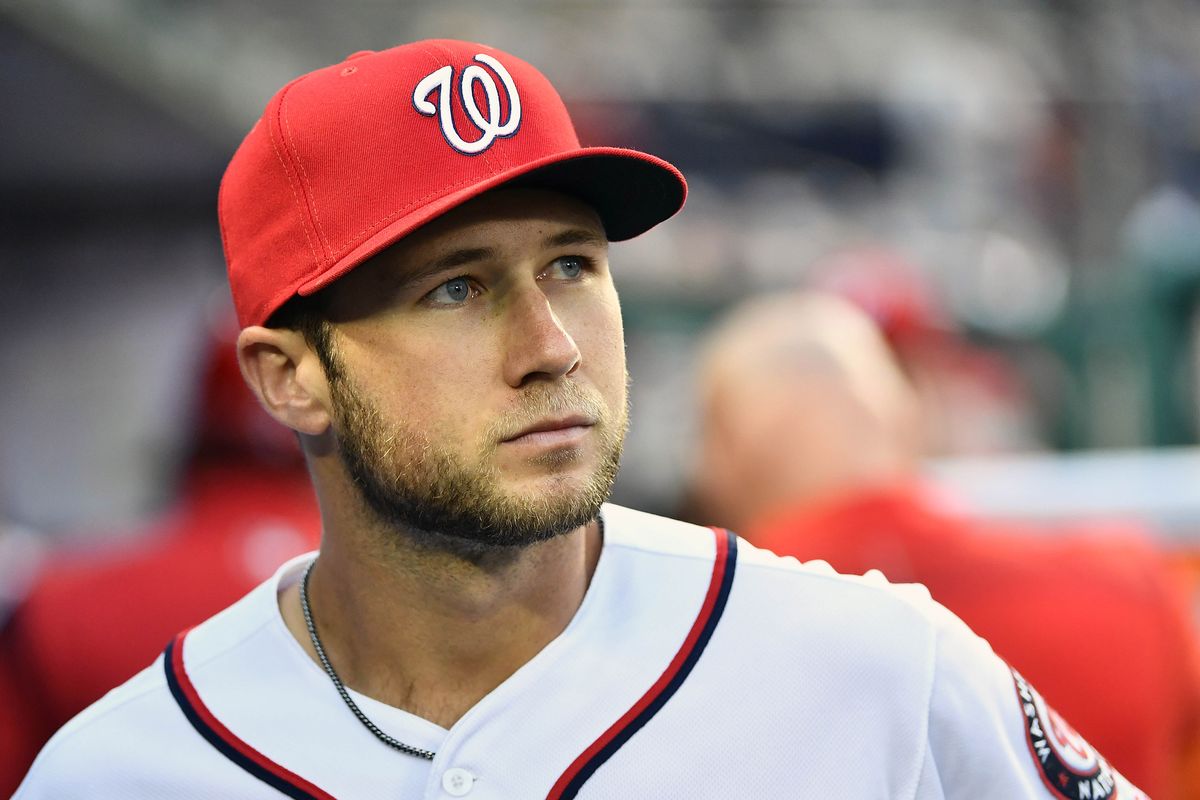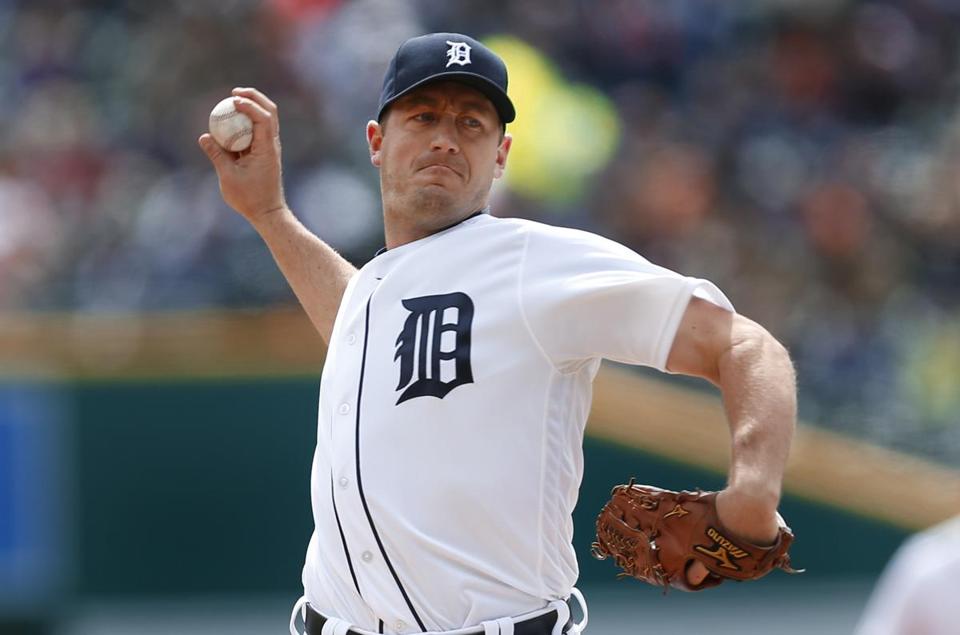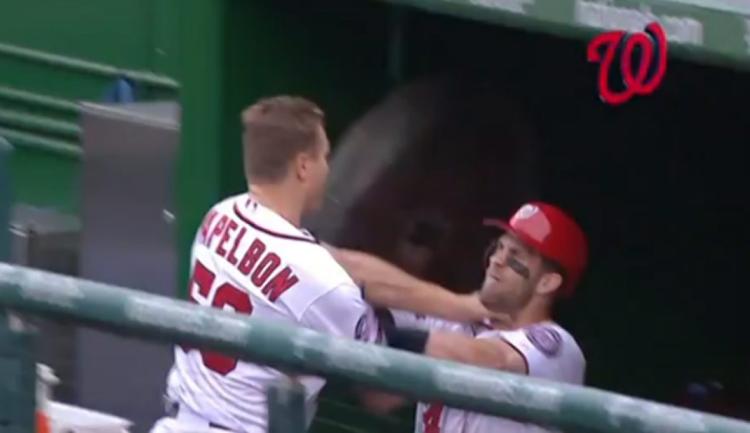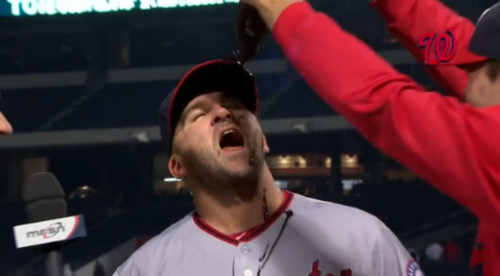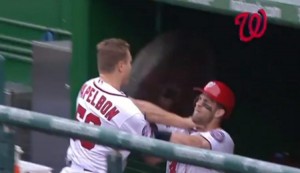
Papelbon becomes the most high-profile 2016 Oblivion candidate. He’ll always have this though. Picture via ny daily news
Note: this is a recurring post, and large chunks of the older material is recycled. I’ve updated the research for older players as needed (mostly 2015 and 2014’s players), getting 2016 season updates for everyone on this list still playing, plus 2017 assignments and whether or not htey’ve . See here for the 2015 version, 2014’s version, 2013’s version, and 2012’s version of this post, though honestly everything from those posts that’s still relevant is updated here.
Even though I know most of this data is repeated from last year, I still find myself reading the whole way down just for a crazy trip down memory lane each time I do this post.
Background: many years ago (November 2010) Mark Zuckerman initially posted a fascinating analysis he titled “From Nats to Oblivion.” It chronicled the astoundingly high number of players that the early incarnations of the Nats were using who, once the Nats released them, never again appeared in a MLB game. I thought the analysis was so interesting that I kept up the same data and have been keeping it up-to-date with the whereabouts of Nats-to-Oblivion candidates ever since. So with apologies to Zuckerman for stealing his original idea, here’s an interesting visit to the Nats darker past.
It is nearly impossible for a team to field an entire year’s worth of players who will not fall into this “Oblivion” category. Every MLB team has guys playing out the string or near retirement, and every MLB team calls up guys through out the season from the minors who eventually show themselves as unable to compete on the MLB level and who never make it back. So a 0% oblivion measure isn’t a goal. The best this team has done is 4 players (the 2013 team). I don’t think the 2015 team will get that low, and I’m not sure the 2016 team will get that low either.
For your reminiscing pleasure, here is the summary data updated to the 2016 team:
- 2016: 19 position, 24 pitchers, 43 total. 5/43 = 11.6% candidate ratio right now.
- 2015: 20 position, 24 pitcher, 44 total. 7/44 = 15.9% candidate ratio right now.
- 2014: 22 position, 18 pitchers, 40 total. 5/40 = 12.5% candidate ratio right now
- 2013: 23 position, 21 pitchers, 44 total. 3/44 = 6.8% candidate ratio right now
- 2012: 24 position, 19 pitchers, 43 total. 6/43 = 13.9% candidate ratio right now
- 2011: 20 position, 24 pitchers, 44 total. 6/44 = 13.6% candidate ratio
- 2010: 20 position, 26 pitchers, 46 total. 12/46 = 26.0% never appeared again
- 2009: 25 position, 30 pitchers, 55 total. 9/55 = 16.3% never appeared again
- 2008: 25 position, 25 pitchers, 50 total. 8/50 = 16% never appeared again
- 2007: 21 position, 26 pitchers, 47 total. 12/47 = 25.5% never appeared again
- 2006: 28 position, 29 pitchers, 57 total. 20/57 = 35% never appeared again
- 2005: 30 position, 25 pitchers, 55 total. 16/55 = 29% never appeared again
Look at the 2006 season; 35% of the players who played for the team that year never played another Major League game. That’s still astounding to me. Read on for a detailed look back at some of the very bad players that have put in significant time for this team.
2016: (5 leading candidates right now, 7 overall counting 40-man guys):
Total players used: 19 position players, 24 pitchers, 43 total. 5/43 = 11.6% candidate ratio right now.
Candidates: They are listed in the order of their odds of staying on this list: highest to lowest odds that they’re done playing.
- Jonathan Papelbon: hard to believe he’s on this list. But the facts remain; after his release mid-2016, not only did he not sign on for the rest of the season … he has yet to sign on with anyone for 2017. Is it possible he’s being forced into retirement? I think he still holds value as a middle reliever for someone, but it is a possibility that his “baggage” is preventing teams from signing him. Or perhaps he’s instructed his agent to hold out for closing jobs only. Nonetheless, of all the players on this list, right now I give Papelbon the highest probability of being done with baseball and staying on this list.
- Sean Burnett: given a quick look late in 2016, signed MLFA deal with Philadelphia for 2017 but failed to make their opening day Roster. Active on Philly’s AAA team all of 2017, but no appearances. Might be done.
- Spencer Kieboom: had a “Moonlight Graham” esque 2016 debut; one at bat, a walk, then an off-season DFA. He remains in the organization but once you’re off that 40-man, its tough to get back on. I still think he’s 4th on the realistic catcher depth chart and may get called back up if injuries persist, but there is another catcher (Raudy Read) on the 40-man which complicates things for Kieboom. At least he got his one AB in the majors … which gives him access to the MLB players health benefit plan for life.
- Clint Robinson: long-time minor league veteran made the team in 2015 and had a break-out season, but struggled badly in 2016, prompting the team to sign Adam Lind to a guaranteed deal, all but eliminating Robinson’s chances from making the roster. Robinson was waived towards the end of Spring Training as expected, cleared waivers and is at Syracuse. I give him a decent chance of getting called back up if Lind or Ryan Zimmerman gets hurt.
- Rafael Martin: Just a handful of Sept 2016 innings after a not-very-impressive 2016 in Syracuse, and was DFA’d early in 2017; he was outrighted and may struggle to return to the majors.
Names removed since Apr 2017 publication: Espinosa, Revere, Belisle, Melancon, Rzepczynski, all of whom signed MLB deals and appeared in the first week of 2017 for new teams. Petit, who made the 2017 Angels as an NRI. Difo and Taylor for making the Nats 2017 opening day roster and getting appearances. Mat Latos removed when Toronto added him and called him up in April 2017, shocking me; I figured Latos was done. Technically Ross’ first start removed him from this list. Matt den Dekker got removed when Detroit recalled him for a few games in June 2017. Wilson Ramos indeed returned from his injury and began starting for Tampa. Brian Goodwin not only returned to the majors but got an extended run of starts with Werth’s 2017 foot injury. Severino got recalled during an outfielder crunch in July 2017. A.J. Cole got a spot-start in May 2017. Relievers Gott and Grace both got re-calls, with Grace impressing and Gott not. Reynaldo Lopez removed upon his 8/11/17 call-up for CWS. Giolito was called up a week later.
Outlook for remaining 2016 Oblivion candidates: Of the 5 candidates, I don’t see an easy path forward for any of them. Two are older guys probably forced out of the game, the other three marginal prospects who, now that they’re off the 40-man roster, face long odds of getting back on.
Favorite Nats to Oblivion Story: Jonathan Papelbon. (ok maybe not “favorite” but certainly most interesting…). What a whirlwind career he had with the Nats: he was already controversial even before arriving, then essentially ended the productive career of Drew Storen, who he replaced (as a condition of his accepting the trade) as closer upon his arrival. Two months into his tenure here, he took it upon himself to choke teammate Bryce Harper as Harper and the rest of the team disappointingly played out the string of the 2015 season. These two buried the hatchet over the off-season, and everyone looked happy entering 2016 … but a 6.00 ERA in June and an even worse ERA in July sealed Papelbon’s fate; the team paid heavily to acquire Mark Melancon for the stretch run and Papelbon was released a couple weeks later. Quite the Nats tenure for the combustible Papelbon. Side note: for reasons beyond explanation, the Papelbon’s decided to buy a $2.9M house in Alexandria just after his acquisition …. which was only assessed at half their purchase price. I wonder if they ever even moved in?
2015: (7 candidates right now):
Total players used: 20 position, 24 pitcher, 44 total. 7/44 = 15.9% candidate ratio right now.
Candidates (these players are listed in the order of their odds of staying on this list: highest to lowest odds that they’re done playing):
- Dan Uggla: The Nats were probably his last stand chance in the majors; hit just .183 and was given just 17 ABs the last two months of the 2015 season. Never signed for 2016 and seems to be retired.
- Reed Johnson: Got picked back up on a MLFA deal by Washington for 2016 season, but did not make the team out of spring and was released on 4/2/16. He did not pick up with anyone for 2016 and at age 39 may be retired.
- Casey Janssen: Signed a ML deal with San Diego for 2016 but was released in late Spring Training. Picked up with Boston in June of 2016, pitched a bit for their Short-A and AAA teams then was released in early August 2016. Did not pick up with a MLB team for 2017. Signed for a Mexican league team, pitched in 15 games and was released. Might be the end of the line for the 35-yr old.
- Taylor Jordan: After brief appearances in 2015, started 2016 in AAA but got hurt in June of 2016, he had a second TJ surgery … and then was released by the club on 6/28/16 to correspond to the Giolito contract addition. Man, that seems kind of cold to release a guy just after surgery, but his odds of making it back to the majors just took a significant hit. As of 2017 has not re-signed anywhere and seems a long-shot to do so, with little major league track record and two arm injuries. Likely done.
- David Carpenter: shoulder injury, DFA’d, elected free agency and quickly signed a ML deal with Atlanta for 2016. However he was cut after just a handful of spring training games; maybe his injury is worse than we thought. He then bounced from Tampa to the Angels system for 2016, and then signed back with Tampa as a MLFA/NRI for 2017, but was cut on 4/4/17. Signed w/ Arizona in July 2017 and posted an ERA north of 9.00 for AA/AAA.
- Taylor Hill: Hill was DFA’d to make room for January 2016 signings and was outrighted to AAA, so he faces longer odds to get back to the majors at this point. If it comes to it, would you rather go with Hill or the likes of Voth or Giolito at this point? Hill finished out the year for AAA Syracuse with a 4.60 ERA in 27 starts, but I’d have to say he’s just an innings-eater/org guy now. Still with the team for 2017 but has been passed on the depth chart by several guys (Cole, Voth, Fedde) and faces long odds of a return to the majors with this organization. Started 2017 badly, demoted to AA.
- Aaron Barrett: the odds of him turning into Cole Kimball seems small; an elbow is not a shoulder. But until he recovers from his 2015 surgery, he’s an Oblivion candidate. He’ll sit on the 60-day D/L for most of 2016. In June of 2016, he had a major set-back in his TJ recovery, fracturing his elbow. This will require another visit to Dr. James Andrews and another surgery. The Nats outrighted him off the 40-man after the 2016 season and he elected free agency. He has re-signed with the Nats for 2017 and starts the year on the AAA D/L.
Names recently removed: Fister (signed a $7M deal with Houston for 2016). Thornton (MLFA deal with San Diego and made 25-man roster). Burriss: signed MLFA with Philly and lead-off against the Nats in their first visit to Philadelphia in the new season. Added Stammen when he failed to make Cleveland’s 25-man roster in 2016. Removed Solis when he got called up to cover for injury to Belisle. Removed Martin when he got called up briefly on 6/27/16. Removed de los Santos when he got waived, picked up by Cincinnati and appeared for them mid Sept 2016. Removed all our 2015 prospect-types who all got 2016 call-ups: Turner, Difo, Severino, Grace, Cole. Stammen removed after he made the 2017 San Diego Padres out of spring training. Tyler Moore made the 2017 Marlins, and got a crucial hit against the Nats early in 2017 season, but was soon DFA’d.
Note: the one guy DFA’d mid-season 2015 by the Nats (Xavier Cedeno) got purchased by the Dodgers, who then sold him to the Rays 5 days later … and he had 61 appearances with a 2.09 ERA for Tampa Bay this year. Do you think maybe the team gave up on him too soon?
Outlook for 2015 Oblivion candidates: Most of these guys seem like they have little shot of re-gaining a MLB spot; the first 4 guys are likely retired at this point (Uggla, Johnson, Janssen, Jordan), and the other 3 (Barrett, Carpenter, Hill) face pretty long odds to make it back.
Favorite Nats to Oblivion Story: Dan Uggla. Uggla was released out of a $13M/year contract from Atlanta and the Nats picked him up for 2015, paying just a MLB minimum on him as middle infield cover/lottery ticket. Well, Uggla’s luck turned out pretty well as injuries shredded the Nats lineup and Uggla earned a 25-man roster spot. He played sparingly throughout April but had a massive homer in the epic April 28th come-from-behind 13-12 win over Atlanta, which sparked the Nats (who were just 7-13 at the time) to a 21-6 run. It was one of just two homers Uggla hit on the year (the other in the last game of the season/his career), and Uggla played less and less as the team got healthier. For the year he hit just .183, which was in line with what he had hit the prior to years, and he never got picked up after his “last hurrah” season. Uggla never seemed to recover from two separate concussions he suffered from HBPs (one in July 2012, another in ST 2013), never again hitting even the meager .220 he managed in 2012.
2014 (5 remaining candidates right now):
Total Players used: 22 position, 18 pitchers, 40 total. 5/40 = 12.5% candidate ratio right now
Candidates:
- Greg Dobbs: FA after 2014, retired in May 2015 when he didn’t catch on with a new club.
- Nate McLouth, who signed an ill-advised 2-year deal to be our “veteran 4th outfielder” behind Denard Span … but who struggled in 2014 and then missed the entirety of 2015. The team bought out his 2016 option and as of this writing has not signed with a new team (not even a minor league deal). May have played his way out of the game. (Thanks to Karl in the comments for the reminder on McLouth).
- Jeff Kobernus: Released by the team Mar 2015, played the rest of 2015 with SF’s A+ club in San Jose, MLFA for 2016. He never signed with anyone in 2016 and may be finished.
- Scott Hairston: FA after 2014, sat out 2015. Signed for Chicago White Sox for 2016, but then was cut on 3/29/16. He did not pick back up with anyone for 2016, and at age 36 could be forced into retirement.
- Nate Schierholtz: FA after 2014, signed w/ Texas but did not stay with club out of spring training. Played 2015 in Japan, then signed as a MLFA with Detroit in Dec 2015. Starting in AAA for Detroit 2016 but not a 40-man player. Subsequently released on 5/23/16 after hitting .246, did not pick back up for the rest of 2016. May be done.
Names removed since the last post: Kevin Frandsen (signed w/ SFG and appeared in 7 games in 2015), Ryan Mattheus (got one game with LAA, waived, then pitched the whole of 2015 in Cincinnati’s bullpen), Rafael Soriano (who finally signed with the Cubs in June but had just 6 appearances before getting released on 9/4/15, and Taylor Hill (who had 12IP across 6 games for the Nats in 2015). Added Nate McLouth after Karl noticed he was missing in the comments.
Outlook for 2014 Oblivion candidates: after a rough 2016 for all these players, only Schierholz really seems like he may give it another shot, but he never signed for 2017 and this list may be complete.
Favorite Nats-to-Oblivion story: I’ll go with Kobernus at this point, if only because he went to my dad’s Alma Mater (Cal-Berkeley) at a time where the program was threatened with the Axe (eventually donations resurrected the program in 2011). He’s an example of an odd fascination the Nats seem to have with good field-no hit upper round draft picks from Cal (see also Renda, Tony).
2013 (3 Candidates):
Total Players used: 23 position, 21 pitchers, 44 total. 3/44 = 6.8% candidate ratio right now
Current Candidates
- Chad Tracy: MLFA signed w/ LA Angels for spring 2014, cut, retired 4/25/14.
- Yunesky Maya; MLFA with Atlanta AAA for 2014, then went to Korea where he got pounded for two seasons. Just signed a MLFA deal with Los Angeles Angels for 2016 and is pitching for AAA Salt Lake. He strained his elbow and missed a big chunk of the 2016 season, which was a missed opportunity for Maya as the Angels had very little SP depth. Did not sign for 2017.
- Erik Davis; Nats AAA 2014 60 day D/L Tommy John surgery 2014, still on Nats D/L 2015. Outrighted off the 40-man in January 2016, assigned to AAA. Posted a 4.13 ERA in a full year of middle relief for Syracuse, with excellent K/9 ratios, but did not merit a 9/1 call up. Elected free agency after 2016, signed with Arizona and pitching at AAA Reno for the organization in 2017, posting mediocre numbers but pitching a ton (50+ appearances in 2017).
Updates since last post: removed Jhonatan Solano went 1-20 for Miami in 2015 and may be a “Marlins to Oblivion” candidate going forward. Removed Chris Marrero after he made the 2017 San Francisco Giants team in a shock (four years in the minors between MLB at bats). Unfortunately he was DFA’d just a few weeks later after struggling to start the season.
Outlook for 2013 Oblivion candidates: The 2 active remaining guys face uphill climbs; none remain with the Nats. Davis is with a new organization for 2017 while Maya has not signed for 2017 and may be done.
Favorite Nats-to-Oblivion story: Yunesky Maya, who was Mike Rizzo‘s first foray into the Cuban exile market. Signed to a 4yr/$8M deal, he was given several shots at the majors and never could capitalize. He arrived in the US with a wide arsenal of pitches but not a lot of swing-and-miss talent, and he ended up basically being a AAA starter. He spent the last three seasons as Syracuse’s lead starter (getting 22, 28 and 24 starts there in-between infrequent call-ups) and ended up with just one career MLB win for his $8M salary (making his one of the worst dollars-per-win contracts ever … even if it was “just” $8M). This whole paragraph is assuming that Maya never makes it back to the majors … but based on what he’s shown thus far combined with his advancing age, that seems like a likely end-result for the Cuban starter. As we speak, he has given up on minor league ball and has decamped for Korea, where he’s shown some good stats in limited appearances.
2012 (6 candidates)
Total Players used: 24 position, 19 pitchers, 43 total. 6/43 = 13.9% candidate ratio right now
Candidates
- Brad Lidge: Retired post 2012.
- Christian Garcia: got added to the 40-man roster down the stretch of 2012 and provided some electric relief out of the pen, even making the playoff roster. Got hurt in ST 2013, went to the 60-day D/L, still hurt in 2014, and released in June of that year. Garcia never had bad stats … just too many injuries that he couldn’t overcome. (Thanks to commenter Justin for this reminder!)
- Ryan Perry: Wash AAA/AA 2013, 2014, released by Washington in 2014, signed back with Detroit and played 2014-2015 with their AAA affiliate. Released mid 2015 by Toledo and never signed on again for 2015 or 2016; may be done.
- Jesus Flores; signed ML deal with Los Angeles Dodgers for 2013, was with TB, KC for 2014, Miami AAA for 2015, but was released in July 2015 and never re-signed. Played Winter Ball 2015 never signed for 2016; may be done.
- Brett Carroll: signed ML deal w/ Pittsburgh for 2013, Tor for 2014. Never signed for 2015, looks done.
- Carlos Maldonado: Wash AAA 2013. Played Venezuelan Winter Ball for a number of years, then after no US-based organized ball for 2 seasons signed a ML deal with Texas in 2015 …and made their AA team as a 37-yr old. Still plugging away. In 2016 Maldonado again was assigned to Frisco, but was immediately put on the D/L and never appeared. In fact, he doesn’t even have a minor league at bat since 2013; is he just on a roster to serve as a bullpen catcher?
Updates since last post: Updates for Maldonado, who I can’t believe is still playing in the bus leagues at age 37. Added Christian Garcia after commenter Justin noticed he was missing.
Outlook for 2012 Oblivion candidates: Only Maldonado seems like he’s still technically “active,” but as a 38-yr old catcher who hasn’t even had an at-bat since 2013 the odds of him making it back are nil. The book seems closed on 2012.
Favorite Nats-to-Oblivion story: Brad Lidge, who gave it one last shot and failed and didn’t keep trying. Sometimes, when you lose your stuff, its gone and gone fast. I’ll readily admit I thought the signing was a great one when it occurred but it just didn’t work out. I really hoped that Lidge would be a serviceable 7th inning guy and mentor to Drew Storen and Tyler Clippard, being one of the great closers of his day. It didn’t work out that way: the Nats released him on June 25th and he hung ’em up.
2011 (6 candidates)
Total Players used: 20 position, 24 pitchers, 44 total. 6/44 = 13.6% candidate ratio right now…
Candidates
- Ivan Rodriguez – retired after 2011; will appear on the 2017 Hall-of-Fame Ballot with 1st ballot stats but a PED cloud over his head.
- Matt Stairs — retired after 2011.
- Alex Cora — retired after 2011, now the General Manager of a Puerto Rican Winter League team.
- Cole Kimball — Nats 60-day DL in 2012, XST in 2013, DFA’d off 40-man roster. 2014 indy, NYY AA team. Threw 3.2 Innings of 14-ERA ball in the Mexican summer league in 2015. Does not seem to be on any 2016 rosters; may be done.
- Brian Broderick — Stl AAA, waived now Nats AAA in 2012, AA in 2013. Indy ball 2014, Kansas City AAA 2015, where he had a pretty good season. He elected MLFA … and (oddly?) did not get picked up for 2016. May be done.
- Atahualpa Severino — Nats AAA, DFA’d off 40-man in 2012, signed w/ KC for 2013, Atl AAA in 2014, LAA AAA in 2015 but he got cut and ended the year in the Mexican league. For 2016 he is again in the Mexican League, and had a strong season for Monterrey. Perhaps he gets another shot some-day. There’s always people looking for loogies.
Changes since the last post: none other than 2016 assignment updates; nobody’s gotten off this list in a while.
Outlook for 2011 Oblivion candidates: Just one guy still hanging on: Severino continues to throw albeit in his home country’s unaffiliated Mexican league.
Favorite Nats-to-Oblivion story: Matt Stairs: He made the 2011 roster despite having almost no defensive capabilities and, as it soon became evident, almost no remaining abilities at the plate. He somehow hung onto his roster spot until August 1st despite having just one extra base hit in 74 at-bats on the year. I remember one game in particular; we were at the stadium going against the hated Phillies and they left Roy Halladay in to attempt to finish a shutout with a 3-0 lead (Game was on 4/13/11). Nats rally, score 2 runs to make it 3-2. Stairs comes up pinch hitting for Jerry Hairston with guys on 1st and 2nd with one out; he promptly watches three straight fastballs go right down the middle of the plate without moving his bat. I’ve never been so p*ssed at a player at the ball-park. Fellow Nats-to-Oblivion candidate Ivan Rodriguez then promptly struck out on 3 pitches as well, looking strike 3 into the mitt and then arguing vehemently with the ump over the game-ending call which gave Halladay the complete game victory. Those were the good ole days.
2010 (12 players)
Total Players used: 20 position, 26 pitchers, 46 total. 12/46 = 26.0% never appeared again
Players:
- Kevin Mench; retired after 2010
- Jamie Burke; retired after 2010
- Luis Atilano: in CIN org, AAA in 2012, never signed for 2013, out of baseball.
- Scott Olsen; in CWS org, AAA 2012, never signed for 2013, out of baseball.
- Tyler Walker; indy league 2011, never signed for 2012, out of baseball.
- Matt Chico; indy league 2012, never signed for 2013, out of baseball.
- Garrett Mock: Houston AAA 2012, AZ AAA for 2013. Not signed for 2014
- Jason Bergmann: indy 2011, Col AAA 2012, Indy again in 2013, KC AA. Not signed for 2014.
- Jesse English; indy league 2011, 2012. Mexican League 2013, Indy ball 2014 but struggled, no 2015 stats.
- Joe Bisenius; in Mexico 2011-12, Atl AA/AAA 2013, indy/mexican league 2014 but struggled, no 2015 stats.
- Willy Taveras; played AAA for Col in 2011, retired prior to 2012, back with KC AAA 2013. Mexican league 2014, 2015, Indy ball in 2015. He re-signed with Pueblo in the Mexican league for 2016 and played a full season, hitting .325. He’s still playing in 2017.
- JD Martin; in MIA org AAA 2012, in TB AAA 2013, in Korea 2014 but struggled, no 2015 stats. 2016 MLFA signing back with the team and re-making himself as a knuckleballer. However, in 2017 he spent most of the year in XST, got one appearance in the GCL and was released.
Changes since last post: none.
Outlook for 2010 Oblivion candidates: Two active players in the minors; Taveras and Martin. Martin may have run out of chances in 2017. Taveras may just be a Mexican leaguer now.
Favorite Nats-to-Oblivion story: Jamie Burke: The 2009 Nats were so thin at Catcher by the end of the season that we literally bought a spare catcher in Burke from Seattle so we could have some coverage at the end of the season. Burke re-signed on for 2010 and appeared in exactly one MLB game. He was released after the season and retired.
2009 (9 players)
Total Players used: 25 position, 30 pitchers, 55 total. 9/55 = 16.3% never appeared again
Players:
- Elijah Dukes: released and never picked up for 2010. Arrested in 2011, 2012, out of baseball.
- Alex Cintron; playing in Mexico 2012, nothing in 2013
- Jorge Padilla; in SD org, AAA in 2012, nothing in 2013
- Ron Villone, AAA all of 2010, 2011 playing indy ball, retired prior to 2012. He was scheduled to appear on the 2015 Hall of Fame ballot but was removed for some reason. Remains a pitching coach for the Cubs organization.
- Julian Tavarez; retired after getting DFA’d in July 2009
- Mike Hinckley: Tor org in 2011, retired prior to 2012
- Steven Shell; KC org in 2011, retired prior to 2012
- Victor Garate; MIL org and Indy ball in 2012, Mexican league 2013, 2014. Went to Japan for 2015 and had a great season. Back on the continent and pitching in the Mexican League for 2016; had 10 starts for Saltillo and was released. May be done.
- Zack Segovia; in Det org AA in 2012, Mexican league/Indy ball 2013, Mexican League 2014. Picked up with San Diego’s AAA for 2015 but got hit. Pitching in the Mexican League for 2016 and had decent numbers as a middle reliever, but was released in June.
Changes since last post: none.
Outlook for 2009 Oblivion candidates: Still a couple guys active here, both in the Mexican league. Not likely to see any changes going forward.
Favorite Nats-to-Oblivion story: Ron Villone, who proved that a crafty lefty with a halfway decent fastball can have a long career in this game. He had 63 appearances at age 39 for the 2009 Nats and got re-signed for 2010. He didn’t make the team though, labored in Syracuse the whole season and was released. Despite being 41 years old, he headed to Indy ball for one last shot but washed out after just a few outings in 2011.
It wouldn’t be a retrospective on poor Nats players if we didn’t briefly talk about Elijah Dukes though. I think its safe to assume that he’s the only guy on this list that has served more time in jail than has played in the minor leagues, attempting to get back to the show.
2008 (8 players)
Total Players used: 25 position, 25 pitchers, 50 total. 8/50 = 16% never appeared again
Players:
- Kory Casto; 2009 AAA, 2010 in Ariz AA, retired.
- Dmitri Young: some rehab in low minors 2009, retired.
- Rob Mackowiak: 2009: some indy, bounced around AAA, that’s it.
- Johnny Estrada; quit after 2008 mid-season release.
- Odalis Perez; refused his 2009 contract, never resigned (see below)
- Levale Speigner; 2009 in Florida’s AA/AAA, then 2010 in Seattle AAA. done.
- Ray King; retired after 2008
- Chris Schroder; 2009, 2010 bounced around AAA with Oakland,Florida (now Miami).
Changes in last 12 months: none.
Outlook for 2008 Oblivion candidates: every remaining candidate is now out of baseball.
Favorite Nats-to-Oblivion story: Odalis Perez, though I’m tempted to say either Mackowiak or Estrada, possibly the two worst FA signings of the whole Jim Bowden era (and that’s saying something). But nothing beats the Perez story. He was the Nats Opening Day Starter in 2008, and he was the first guy to get a start in the new Nationals Stadium. He pitched decently enough; in 30 starts he was 7-12 with a 4.34 ERA and a 99 ERA+ for a god-awful team. But apparently he got really pissed when the team only offered him a non-guaranteed Minor League deal for 2009. So he held out, the Nats said “fine with us” and released him, and nobody else picked him up. And he never played another game. I’m not sure if that was a sign that he was just that bad (not one team wanted to even give an opening day starter a look the subsequent year?), or if there was some sort of MLB general manager omerta that conspired against him. Either way, Perez never played again, not even in Winter Leagues as far as I could find. Sometimes a player has to swallow his pride, and Perez apparently could not.
2007 (12 players)
Total Players used: 21 position, 26 pitchers, 47 total. 12/47 = 25.5% never appeared again
Players:
- Nook Logan; indy league 2008, 2010.
- Robert Fick: Cut from the Padres in ST 2008, full year indy league 2009, retired.
- D’Angelo Jimenez: AAA all of 2008, 2009. Mexican league and Indy league 2010-2012
- Tony Batista: Wash AAA 2008, then released
- Michael Restovich: 2008 in Japan, AAA 2009-2011, retired
- Brandon Watson: AAA 2008-9, indy league 2011, retired.
- Mike Bacsik: 2008 AAA, 2011 indy league, now a broadcaster.
- Jason Simontacchi; 2008 indy league, 2010 again.
- John Patterson; cut in ST 2008, immediately signed w/ Texas but never played again.
- Ryan Wagner: AAA 2008-9, released and presumably retired.
- Arnie Munoz; went to mexican league, retired > 2010
- Chris Booker: AAA in 2008, then retired/released.
Changes in last 12 months: none
Outlook for 2007 Oblivion candidates: every remaining candidate is now out of baseball.
Favorite Nats-to-Oblivion story: Mike Bacsik, who was destined to be a career 4-A guy before Washington picked him up and gave him 20 starts in 2007. Bacsik was on his 6th minor league organization when he arrived in Syracuse and pitched his way up to the major leagues. He was overmatched badly; he had a 5.11 ERA and just a 3.4 K/9 rate. But he did get his moment in the headlines by giving up Barry Bonds‘ 756th career homer one night in San Francisco in August. Contrary to accusations on the topic, I do not believe Bacsik “served up” the homer. If you check the play index, Bonds hit the 7th pitch of the at-bat in a 3-2 count for that homer. Bacsik didn’t purposely give up a homer on the 7th pitch of an at-bat; he just ran out of pitches to show Bonds that weren’t going to get pulverized.
A quick comment though on John Patterson: I remember being absolutely shocked at his release in 2008’s spring training. He was cut on 3/20/08, right in the middle of Spring Training with no warning and having just thrown his Grapefruit innings. He was healthy, recovered from surgery, ready to be the ace of that staff and start showing off the potential that he showed in 2005 (you know, when he 4-hit the Dodgers with 13 punch outs and posted the best Game-Score performance in Nats history). He signed a ML deal with Texas after his release by the Nats, but he couldn’t answer the call and never appeared again, getting released in mid May. I guess his third arm surgery in 7 years just left him unable to compete at any level and he hung ’em up.
2006 (20 players)
Total Players used: 28 position, 29 pitchers, 57 total. 20/57 = 35% never appeared again
- Damian Jackson; dnp 2007, indy league 2008-9
- Bernie Castro: AAA all of 2007, 8 then retired.
- Alex Escobar: Wash minors 2007-8, then retired.
- Brandon Harper: Wash AAA all of 2007, then released/retired.
- Wiki Gonzalez: CWS AAA all of 2007, indy league 2008, retired.
- Henry Mateo: AAA or Indy league 2007-2009, Mexican league from 2010-2013
- George Lombard: AAA 2007-9, some indy league, retired.
- Mike Vento: 2007 Wash AAA, indy league 2008, back with Syracuse 2009, retired.
- Melvin Dorta; various minor leagues 2007-2010, indy league 2011, retired.
- Luis Matos: AAA 2007, Mexican League 2008-2012. ? 2013 and done.
- Pedro Astacio; retired after 2006
- Felix Rodriguez: dnp 2007, indy league 2008-9, retired.
- Zach Day: AAA 2007, briefly A+ 2008, retired.
- Beltran Perez; wash minors AA/AAA 2007-8, released and never played again.
- Joey Eischen; released off of Washington and retired.
- Travis Hughes; AAA in 2007, played in Japan 2008, indy leagues 2009, 2011.
- Ryan Drese: various minor leagues 2007-8, indy league 2009-2010, Baltimore AAA 2011, released/retired.
- Kevin Gryboski: AAA 2007-2008, retired/released.
- Brett Campbell: Wash AA 2007, released/retired.
- Santiago Ramirez: Japan in 2007, Mexican league 2008, indy 2009, retired.
Changes in last 12 months: none
Outlook for 2006 Oblivion candidates: every remaining candidate is now out of baseball.
Favorite Nats-to-Oblivion story: Joey Eischen, who bounced around the league in his 20s before settling in Montreal and moving south with the team. He was known to be a “character” in the clubhouse and to give good quotes to reporters (google “Joey Eischen quotes” and you’ll find some of his classics). By 2006 though the years had taken their toll on his shoulder; he had 19 walks in 14 2/3 innings through the end of May had blown his rotator cuff. The team put him on the 60 day D/L and called up Virginia-native Bill Bray. Eischen never got off that D/L; he was released in the off-season and never played again. He has been a pitching coach in the Colorado system since 2010.
2005 (16 players)
Total Players used: 30 position, 25 pitchers, 55 total. 16/55 = 29% never appeared again
Players:
- Carlos Baerga; retired after 2005
- Junior Spivey: bounced around AAA 2006-7, indy ball in 2009, retired.
- Wil Cordero; released mid 2005, signed on with the NY Mets but never made it out of AAA. Retired after 2005.
- Deivi Cruz; released after 2005, cut from St. Louis 2006 ST, played indy ball, retired.
- Jeffrey Hammonds; retired in June 2005 mid-season.
- J.J. Davis: Traded to Colorado as part of the Preston Wilson deal, sent to Colorado’s AAA, then released after the season and never played again.
- Rick Short; Granted FA after the 2005 season to play in Japan, played there til 2009.
- Kenny Kelly; AAA in 2006 and 2007, released and retired.
- Keith Osik; a backup catcher, got 4 ABs in 2005, released and retired.
- Tyrell Godwin; after just three MLB at-bats in 2005, spent all of 2006 and 2007 in AAA, released and retired.
- T.J. Tucker; released after 2005, tried one year of indy ball in 2008, retired.
- Joe Horgan; released after 2005, played one year of AAA with Florida, released, retired.
- Matt White; AAA in 2006-7, Japan 2007-8, tried indy ball in 2010, hung ’em up.
- C.J. Nitkowski; AAA in 2006, then went to Japan 2007-8, Korea 2009-10, back with the Mets AAA team in July 2012. Not signed for 2013. Was a blow-hard “I’m an ex baseball player and know more than you” Podcast host for Fox Sports with Rob Neyer until their cancellation. Made news in 2015 for his article on the Bryce Harper/Jonathan Papelbon where he quoted a number of anonymous MLBers who said that (paraphrasing) “Harper had it coming.”
- Antonio Osuna: dnp in 2006, Mexican league 2007-9.
- Tony Blanco; Nats minor leagues 2006-7, Colorado AA in 2008, in Japan from 2009-present. Hit 41 homers in 2013 for Yokohama but struggled in 2015, but got picked up by Orix and is on their 2016 roster. Not signed for 2017, may be done.
Changes in last 12 months: none
Outlook for 2005 Oblivion candidates: Tony Blanco is still playing in Japan, entering his 8th pro season there in 2016. But he has no 2017 assignment.
Favorite Nats-to-Oblivion story: Rick Short, who got his MLB debut at the age of 32, after 11 very long seasons in the minors with many different teams. He got a couple of call-ups in June and July to provide cover, and then played out the string after a Sept 1 roster expansion call-up. In that off-season, he returned to Japan (where he’d played one full season prior), and played four more years in the Japanese League and retired in 2009.
Though it merits talking about a couple other guys here. Tony Blanco; he was a rule-5 draftee who the Nats carried the whole of 2005 so they could keep his rights. He was awful; he had a .177 batting average as the 25th guy off the bench. In 2006 he couldn’t even cut it in AA and played most of the year in High-A. After 2007 the Nats summarily released him from their minor league organization altogether. He found his calling though; he signed on in Japan in 2009 at age 27 and continues to play there today. You have to wonder if he may very well earn another MLB shot.
Jeffrey Hammonds was well known to Washington baseball fans by virtue of his pedigree with our northern neighbors in Baltimore; he was a 1st round draft pick in 1992 out of Stanford, broke in with the MLB team the following year and was a role player on the powerhouse Baltimore teams of the mid 1990s. He bounced around the league afterwards though, signing on with the newly relocated Washington franchise for the 2005 debut season but he hung ’em up after a slow start here. He was only 34 when he retired.