Nationals Arm Race

"… the reason you win or lose is darn near always the same – pitching.” — Earl Weaver

Archive for the ‘scott diamond’ tag

2013 Rotation Rankings; Ranked 1-30

8 comments

Greinke bolstered the Dodger's already strong rotation. How much? Photo Jeff Golden/Getty Images

(Editor Note: I’ve had the bulk of this post written for weeks and have been waiting for the last couple of impact FA starters to sign.  I’m tired of waiting.  If/when guys like Kyle Lohse, Shawn Marcum or Joe Saunders signs, or if there’s another big trade that happens, perhaps I’ll re-post this).

On December 5th, awash in the after-glow of the Dan Haren acquisition, I postulated that the Washington Nationals’ 2013 rotation was the Best in the Majors.

That was before the next shoe dropped in the Los Angeles Dodger’s unbelievable spending spree in 2012: signing Zack Greinke to a 6yr/$147M contract.  This is the 2nd largest starting pitcher contract ever signed (just behind CC Sabathia’s 7yr/$161M deal that he opted out of to sign a slightly larger deal in terms of AAV after the 2012 season).  These rankings also are updated for the highly-criticized James Shields (and parts) for Wil Myers (and parts) deal, the Ryan Dempster signing.

The larger story behind the Greinke signing remains the unbelievable payroll Los Angeles will be sporting in 2013; they’ll spend roughly $225M in 2013, breaking the  Yankees record by a 10% margin, and all boldly in the face of a dollar-for-dollar luxury tax.  And they’re likely not done yet on the FA market.  But the focus of this article is a revisiting of baseball’s best rotations, now that Greinke is in the Dodger’s fold.

Instead of trying to figure out which handful of teams are the best, why not rank all 30 rotations?  With the help of some Depth Chart websites (ESPN, rotoworld, mlbdepthcharts, and some good old-fashioned baseball-reference.com), here’s my rankings of the 30 rotations as they stand for 2013, right now.   For the sake of this ranking, I am trying to take a reasonable expectations case for each of the pitchers on each team, as opposed to a “best case” for each team (this is most important when considering San Francisco’s rotation).  I’m also not considering “depth,” just the Ace through 5th starter (this is important when judging Washington especially).

Note: a couple of other National writers have done similar analysis, with David Schoenfield’s NL-only rankings on his Sweetspot blog back in November and Buster Olney’s top-10 in the MLB rankings here.  By and large the rankings match up, with a couple of different .

Discussion on each rotation is below the rankings.

  1. Washington: Strasburg, Gonzalez, Zimmermann, Haren, Detwiler
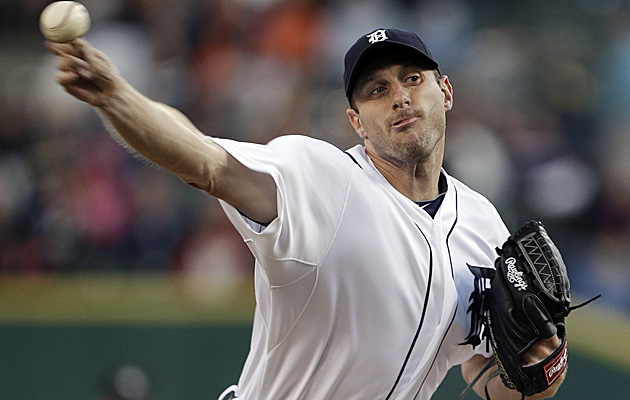
  2. Detroit: Verlander, Fister, Sanchez, Scherzer, Porcello (with rookies Smyly, Crosby, Wilk awaiting)
  3. Los Angeles DodgersKershaw, GreinkeBeckett, Harang, Capuano (with Ryu, Lilly, Billingsley in the wings)
  4. Toronto: DickeyMorrow, Johnson, Buehrle, Romero with Happ/Laffey/Drabeck/Huchinson in the wings.
  5. San Francisco: Cain, Lincecum, Bumgarner, Vogelsong, Zito.
  6. Tampa Bay: Price, Hellickson, Moore, Niemann and one from Cobb/Archer.  Possibly Odorizzi and Montgomery now in the mix too.
  7. PhiladelphiaHalladay, Hamels, Lee, Kendrick, Lannan (with Cloyd/Pettibone/Hyatt as backups)
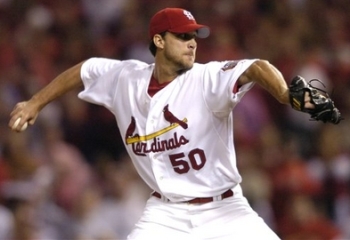
  8. St. Louis: Carpenter, Wainwright, Westbrook, and probably Lynn and Garcia (Kelly/Miller if Garcia is not ready)
  9. CincinnatiCueto, Latos, Bailey, Arroyo, Leake (possibly Chapman?)
  10. Arizona: Kennedy, McCarthy, Cahill, Miley, and one from Skaggs/Collmenter
  11. Atlanta: Medlen, Hudson, Minor, Maholm, and one from Beachy/Delgado/Tehran
  12. Texas: Darvish, Harrison, Holland, Ogando and likely a FA pick up. (Perez for now)
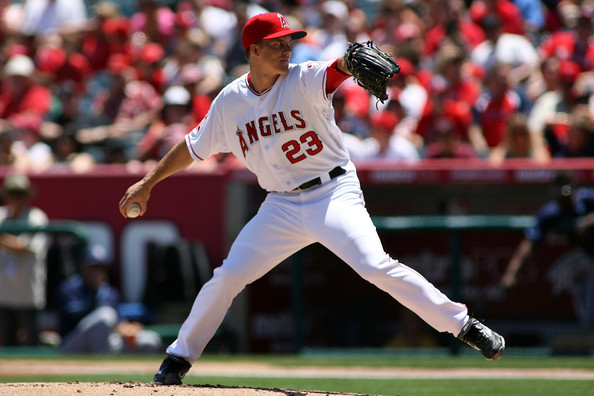
  13. Los Angeles Angels: Weaver, Wilson, Vargas, Hanson, Blanton (wth Richards/Cassevah for depth).
  14. Oakland: Anderson, Griffen, Parker, Colon, Milone, with Straily/Blackley/Ross/Godfrey in the wings.
  15. Chicago White Sox: Sale, Peavy, Danks, Floyd, Quintana
  16. New York Yankees: Sabathia, Kuroda, Pettitte, Nova, Hughes/Phelps.  What about Pineda?
  17. Boston: Lester, Buchholz, Dempster, Lackey, and 1 from Doubront/Morales/ De La Rosa.
  18. Baltimore: Hammel, Chen, Tillman, Gonzalez, Britton (perhaps Bundy)
  19. Chicago Cubs: Garza, Samardzija, Jackson, Wood, and one from Baker/Feldman/Villanueva (likely two if Garza is still injured or is traded).  They also just signed Dontrelle Willis to a minor league deal.
  20. Kansas CityShields, Guthrie, Santana, Davis, Chen (Hochevar, Moscoso?)
  21. Seattle: Hernandez, Iwakuma, Ramirez, Beavan (Hultzen?).  Bonderman on a reclamation project.
  22. Pittsburgh: Burnett, Liriano, Rodriguez, McDonald, Locke, McPherson
  23. Milwaukee: Gallardo, Estrada, Fiers, Narveson, Rogers (with the likes of Peralta and Thornberg waiting if Narveson cannot go).
  24. Minnesota: Diamond, Worley, Correia, Pelfrey (if he’s healthy), Hendricks, Duensing, De Vries (maybe Gibson or May? ).  Harden on a reclamation project.
  25. New York Mets: Santana, Niese, Gee, Harvey, and who knows.
  26. Cleveland: Jimenez, Masterson, McAllister, Kluber, Carrasco, Bauer (Kazmir and Myers on reclamation projects)
  27. Colorado: De La Rosa, Chacin, Pomeranz, Nicaso, Francis (and newly acquired Rosenbaum perhaps?)
  28. San Diego: Volquez, Richard, Marquis, Stults, Ross
  29. Miami: Nolasco, Alvarez, LeBlanc, Eovaldi, Turner, Maine?
  30. Houston: Norris, Humber, Ely, White, Harrell, Lyles (who, who and who?)

Free Agents as of 1/2/13 that could impact the above list: Lohse, Marcum, Saunders, Lowe.  Also guys like Webb, Vazquez and Pavano could be coming out of retirement but likely won’t make much of an impact.

Rumored trades as of 12/31/12 that could impact this list:  Harang, Capuano, Masterson, Smyly/Porcello.

Hmm.  I seem to favor NL teams.  The majority of my top Ten rotations are in the NL.  Is this bias?  Discussion, 1-30

  1. Washington: If Dan Haren returns to 2011 form, which I’m assuming he will, this is the best rotation in the majors.  Not the deepest though; if we lose someone to injury we could struggle to repeat 2012’s win total.  But this is an exercise to determine the best 1 through 5, not to determine depth (where teams like the Dodgers and Tampa clearly have more depth).  I will say, this is a close race at the top; I can see arguments for any of the top 4-5 to be the best rotation.  I don’t want to be accused of homerism by ranking the Nats #1, but can make a man-for-man argument that shows we should be #1 above the next several competitors.
  2. Detroit’s rotation in the post season was fantastic against New York, then god-awful against San Francisco.  Why?  What can they change in 2013?  They better figure it out, because upon re-signing Anibel Sanchez they’re rolling the dice on the same big 4 in 2013.  Fister and Scherzer are slightly underrated but showed how dominant they can be in the playoffs.  The #5 starter is likely where Detroit falls to Washington; Detwiler’s 12th ranked ERA+ in 2012 will trump nearly every other #5 starter in the league.
  3. The Los Angeles Dodgers has an Ace in Clayton Kershaw, a near-Ace (in my opinion) in Zack Greinke, a potential near-ace career reclamation project in Josh Beckett, and then a bunch of question marks.  Two rotation stalwarts Ted Lilly and Chad Billingsley remain injury question marks for 2013, and the rest of their rotation right now are league average hurlers.   I believe their pitchers get a bump in adjusted ERA by virtue of their home park, thus I don’t believe their current #4/#5s match up as well with Washington’s or Detroit’s, putting them in 3rd place.  Plus Beckett is a question mark; is he throwing like he did at the end of 2012, or is he the Fried-Chicken eating malcontent he has been in Boston the last couple of years?
  4. Toronto: Its not every day you can trade for 4 starting players, including two rotation members.  But thanks to Miami’s salary dump, Toronto finds itself with a significantly improved rotation.  If Josh Johnson returns to Ace form, coupled with Brandon Morrow’s fantastic 2012 performance and Mark Buehrle’s solid #3 stuff, they have something to build on.   The subsequent acqusition of 2012 Cy Young award winner R.A. Dickey changes things though, valulting Toronto into the discussion for best AL rotation.
  5. San Francisco has won two World Series’ in three years with the same core of hurlers, and there’s no reason to think they won’t continue to be amongst the elite in the league.  The question remains though; what are they getting from Tim Lincecum in 2013?  Is the other shoe going to drop on Ryan Vogelsong’s fairy tale career resurgence?  And, can Barry Zito continue his career rebound?   If the best-case falls for Lincecum and Zito (Lincecum returns to Cy Young form and Zito pitches even marginally ok) then I think they’re the best rotation in the game.  As it stands though, i’m assuming that both guys fall somewhere short of the best case, meaning that they’re “only” the 5th best rotation in the game.
  6. Tampa Bay has well-known pitching depth, and even with the move/heist of the James Shields trade they have a ton of guys who other teams would love to have.  Expect a bounce-back sophomore campaign from Matt Moore and more excellent innings from rising hurlers Alex Cobb and Chris Archer.  They may not be the best rotation in the game, but they’re certainly the most value for the dollar.
  7. Philadelphia’s big 3 are all fantastic, but are showing signs of age.  Roy Halladay only had an 89 ERA+ last year; has age caught up to him?  The drop-off after the big 3 is significant too.  But the potential of the big 3 keeps this rotation among the league’s elite.  The acquisition of John Lannan didn’t affect their ranking much; he merely replaces the Phillies heading into 2013 with a rookie in the #5 spot.  I had Philadelphia lower in the earlier drafts of these rankings, and have them this high on the assumption that their big three are all entering 2013 healthy.
  8. St Louis’s 2012 rotation was rich enough this year to drop 18-game winner Lance Lynn to the bullpen.   With Chris Carpenter healthy in 2013, with Adam Wainwright recovered from Tommy John, and with the likes of hard-throwing Joe Kelly or Shelby Miller as your #5 starter, this could be a scary rotation.  And that’s if Jaime Garcia isn’t ready for the start of the season after injuring his shoulder in the playoffs.  Kelly/Rosenthal are serious arms though and give far more depth than what a team like Washington has.  Some pundits are not as high on the ability of Carpenter to return to his career form, pushing this ranking slightly lower than I initially had them.   It all comes down to the health of their 1-2 punch; if Carpenter and Wainwright pitch like Cy Young candidates, this rotation gets pushed up much higher.
  9. Cincinnati’s 5 starters took every 2012 start except ONE (the back half of an August double header).  In today’s baseball landscape, that’s nothing short of amazing.  Mike Leake may not be the strongest #5, but Cincy’s 1-2-3 put up great numbers pitching in a bandbox in Cincinnati.  I’m not the biggest Mat Latos fan, but his 2012 performance spoke for itself.   Lastly, there’s rumors that Aroldis Chapman may be moving to the rotation, pushing Leake presumably to a swing-man role.  If Chapman can repeat his K/9 performance in a starter role, this rotation is even more formidable.  Should it be higher?  Perhaps; in previous drafts I had them in the top 5, but I just can’t seem to give their top guys the same “Ace” billing as other leading arms above them on this list.
  10. Arizona’s acquisition of Brandon McCarthy is a great one for me; if the Nats hadn’t bought Haren, I thought this guy would fit in perfectly.  Arizona has a solid 1-4 and (like Atlanta) has a slew of options for #5.  And, they have help in the immediate future, with Daniel Hudson coming back from July 2012 TJ surgery and a top prospect in AA.  I see them as a solid rotation 1 through 5 but without the blow-away ace that other top rotations have.
  11. Atlanta’s found gold in Kris Medlen gives Atlanta enough depth to trade away starters (the Tommy Hanson for Jordan Walden deal).  They have 4 good starters and then can pick from 3 top-end prospects for the 5th starter until Brandon Beachy is back from surgery.  What pushes this rotation down in the rankings is the unknown; is Tim Hudson getting too old?  And what kind of performance can we expect from Medlen realistically?  Can he really continue to pitch like Bob Gibson in 1968?  Their 3/4/5 guys don’t scare me right now, but the potential of 1 and 2 keep them ranked decently high.
  12. Texas bought an ace last off-season in Yu Darvish, has a couple of good arms developed in house in Holland and Harrison, but has been depending on one-off FAs to fill the void.   They need a full healthy year out of their two upper-end arms Alexi Ogando and/or Neftali Feliz to make the leap.  Felix is out for most of 2013 though after getting Tommy John surgery in August.  Colby Lewis is in the fold but seems like he’s out most of 2013 after elbow surgery late last season.  If they buy another decent FA this off-season (Lohse?), this rotation works its way further up.  I have a hard time seeing them at #12, but who above them on this list right now do you push them ahead of?
  13. The Los Angeles Angels have a great 1-2 punch in Weaver and Wilson, but they’ve spent the off-season watching their former envious rotation erode.  Hanson is an arm injury waiting to happen, Blanton has been pitching below replacement level for 3 years, and they don’t have an established #5 right now.  Perhaps this rotation should be lower.  The shrewd trade for Jason Vargas helps keep them in the upper-half of the league, based on who their planned #4/#5 guys are.
  14. Oakland’s slew of young, cost contained and quality starters is the envy of the league.  The only thing that keeps this list from greater acclaim is Oakland’s relative lack of recent success (2012 not withstanding).  Throw in a couple more playoff appearances and Billy Beane can get a sequel to Moneyball published.  Like the LA and SF rotation, they benefit from their home park, but that doesn’t take away the fact that they won the division last year.  The off-season isn’t over either; I can still see Beane flipping one or more of his rotation for more depth/more hitting and turning to his stable of youngsters again.  I’m not necessarily happy with this ranking spot and feel like it should be higher, but their collection of unknowns doesn’t inspire the confidence of the known Aces above them on this list.
  15. The Chicago White Sox have a big up and coming potenial Ace in the making in Chris Sale and the engimatic Jake Peavy.  After that are some league average options.  Jose Quintana had a great 2012; can he repeat his success?  I feel like the 3/4/5 guys in this rotation are all quality, innings eater types, but nothing that really knocks your socks off.  Middle of the pack feels right.
  16. The New York Yankees continue to get 95+ win teams with a smoke-and-mirror job in the rotation.  Now they set to go into 2013 with one possibly injured Ace and two guys nearly 40 as their 1-2-3.  Is 2013 the year the wheels come off the bus for New York?  A healthy Michael Pineda contributing as the #2 starter he can be would vastly improve the outlook here.
  17. Boston’s ranking may be changing significantly, depending on which arms they buy up off the FA market.  I think a new manager helps Lester and Buchholz regain their near-Ace form of yesteryear, and Dempster should give them competent innings in the middle of the rotation.  But I can’t assume anything when it comes to their 1/2; they’ve both been so good and so bad in the recent past.
  18. Baltimore amazingly comes in ranked this low despite making the playoffs last year with this collection of no-name starters.  Maybe i’m underselling their 1-2-3 capabilities.  Maybe i’m just treating them like a team that had a pythagorean record of 82-80.
  19. The Chicago Cubs still seem set to be in “sell mode,” so listing Garza as their Ace seems fleeting.  Behind Garza though are a collection of hard throwing, promising guys.  I like Samardzija, the Edwin Jackson acquisition gives them a solid #4.  Perhaps this rotation should be slightly higher on potential.
  20. Kansas City made their big trade to acquire an “Ace” … and only got James Shields.  I mean, Shields is good .. but not that good.  He’s only got a career 107 ERA+, but he is a healthy workhorse.  Behind Sheilds is a collection of guys who mostly are #4 and #5 starters elsewhere, which means this rotation is … below average.
  21. Seattle should have been higher than the teams directly ahead of them on this list just by virtue of the quality of Felix Hernandez … but then they went and traded away Vargas, and seem to have no good ideas on the back end of their rotation right now.  This team could be in trouble.
  22. Pittsburgh is getting by on veteran starters who have the ability to look good, and may not deserve this high of a ranking.  AJ Burnett had a great first half but settled back down to average in 2012.  Here’s a great stat: Burnett is getting paid $16.5M a year … and has *never* made an all star team in his career.
  23. Milwaukee seems like they should be higher with a guy like Gallardo leading the ranks.  But their #2 is Marco Estrada, a guy who couldn’t make Washington’s rotation in the years when we didn’t HAVE a rotation.   I know Fiers is good; perhaps this rotation should be higher.
  24. Minnesota’s rotation looks pretty poor right now; their ace is a guy whose a #3 on most teams (Scott Diamond) and they’re hoping for one of their injury reclamation projects to pan out.  It could be a long season in Minneapolis.
  25. The New York Mets rotation could be better than 25th, if Santana isn’t allowed to throw 150 pitches pursuing a no-hitter and if Niese pitches up to his capability.  However, Santana hasn’t had an injury-free season since 2008, and I’m not betting on it in 2013.  They are planning on giving both the 4/5 slots to rookies, meaning there could be some long series for this team in 2013.  Their fate was sealed when they traded away their Cy Young winning Ace, and the statement was made about the direction of the franchise.

From 26-30, I honestly don’t see much of a difference between these rotations.   Really the only argument was to figure out which rotation of no-names between Miami and Houston was dead-last.  I selected Houston for the time being; if/when Miami trades Ricky Nolasco for 40 cents on the dollar, we’ll feel free to rank them 30th.


At the end of this massive posting, I can honestly say that the difference between the 5th ranked rotation and the 6th is often near nothing. Looking back, I can see anyone from the 5-8 range being listed in any order and I’d agree with it. I ranked and re-ranked these rotations over and over again from the time I started writing this post in early December to the time i’ve posted it. Perhaps it would have been easier to just have groupings of rotations instead of a pure ranking 1-30. But, that would have been a copout.

I look forward to your opinions and arguments for some rotations to be higher/lower than others.

My 2012 End-of-Season award Predictions

3 comments

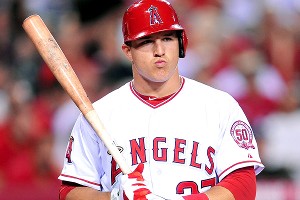
Mike Trout is a shoe-in for Rookie of the Year. Will he add AL MVP as well? Photo Gary Vasquez/US Presswire via espn.com

I’ve had a good string of predicting MLB’s major Post season awards in this space.  In 2010 I went 8 for 8.  In 2011 I again went 8-8 in predicting MLB’s awards, though I missed on predicting the unofficial Sporting News Executive and Comeback Player of the year.   I don’t have much confidence in going 8-for-8 this year though; the AL MVP seems way too close to predict, and I have no idea how the Cy Young awards will go.

[Editor Note: I write this in phases over the course of the season, and finalized it in early October.  After I wrote this piece some of the awards have already been announced; Sporting News announced Comeback Players of the Year last week.  I'll put up another post talking about my guesses and which awards I got right and wrong in another article once all awards are announced in November.]

Here’s a sampling of major baseball writers’ and their predictions that I could find ahead of my publishing this article: Tom Verducci, Ken Rosenthal, Bob Nightengale, Jonah Keri, and Jayson Stark.  Here’s the Fangraphs.com staff picks, heavily statistically weighted as you’d expect.  As you will see, even the national writers are all over the road with their predictions.  Here’s HardballTalk’s Matthew Pouliot’s theoreticall ballot, with some contrarian picks.  Seamheads’ Andrew Martin has the typical sabre-slanted ballot.

Before reading on to my predictions on 2012’s winners, a statement to prevent arguments in the comments section.  These are my guesses as to who will WIN the awards, not necessarily who DESERVES them.  Invariably there’s a player who plays on a non-playoff or losing team but puts up fantastic numbers (Matt Kemp for the 2011 Dodgers, perhaps Mike Trout this year) who a number of loud pundits say “should” win the MVP.  Well, the fact of the matter is that the current voter base absolutely takes into account the circumstances behind a player’s production, and places more value on batters who are in a pennant race.  As do I.  The MVP isn’t the “Best Overall Batter Award,” which would end a lot of these arguments (since, the Cy Young essentially is exactly the “Best Overall Pitcher Award” and thus is easier to predict); its the “Most Valuable Player” award, and I agree with many who believe that a guy hitting .370 for a last place team isn’t nearly as “valuable” as the guy who hits .320 and leads a team deep into a playoff race.  It is what it is; if we want to change it perhaps the Baseball Writers Association of America (BBWAA, whose awards these are) needs to add a category or clarify their requirements.

Secondly, when considering the Cy Young, invariably there’s one pitcher who puts up comparable numbers to another, but one plays in a weaker division so the same Sabr-focused pundits make their holier-than-thou proclamations about how the voter base failed in their picks.  And their points are valid.  But this is a prediction piece, not an opinion piece, and the fact of the matter is that current voters are still mostly old-school and put value on things like “Wins” and “ERA,” stats that most Sabr-nerds think are useless in evaluating a pitcher.

So keeping those two points in mind, Here’s my predictions for 2012:

  • AL MVP: Miguel Cabrera.  Despite the massive amount of internet baseball material devoted to talking about how great a season Mike Trout has had (mostly looking at his WAR values historically), I still see the voter base placing emphasis on three major points:
    • Cabrera plays for a playoff team, Trout does not.   The fact that the Angels will finish with a better record than the Tigers, or that the Angels clearly played in a harder division?  Immaterial to the old-school voter base.
    • Cabrara won the Triple Crown.  And most Triple Crown winners throughout history also won the MVP.  The fact that the triple crown is based on 3 relatively flawed statistics?  Irrelevant to the narrative of the achievement itself.  It remains an incredibly difficult achievement to accomplish in modern baseball’s era of specialized hitters (Ichiro for batting, Adam Dunn for homers) to hit for both average and power in the way that Cabrera consistently does.  (Rob Neyer posted thoughts about this topic, quoting random people on the internet with various takes).
    • Cabrera had a monster finish, Trout did not.  Cabrera’s OPS in the run-in months was over 1.000 each of July, August and September.  Trout peaked in July but was merely above average in the closing months.   Your finish matters (as we’ll see in the NL Rookie of the Year race discussed later on).

    Opinions like USA Today’s Bob Nightengale’s exemplify the bulk of the voter base right now.  A few years ago the writers were smart enough to award Felix Hernandez a Cy Young with nearly a .500 record by recognizing more of the advanced metrics in play, but the Cy Young’s definition is a lot more specific than that of the MVP.

    This is nothing against Trout; the Angels were 6-14 when he got called up and finished 89-73.  That’s an 83-59 record with him, a .584 winning percentage that equates to 95 wins, which would have won the AL West.  Trout was the undeniable MVP for me nearly all season.  You hate to say it, but when the Angels faltered so did Trout’s MVP candidacy.

    The rest of the ballot?  Adrian Beltre and Robinson Cano get some typical “best player on best teams” votes.  I’d give Josh Reddick some top-5 votes too.

  • AL Cy Young: David Price, by virtue of his 20 wins and league leading ERA, will squeak out the win over last year’s winner Justin Verlander. The statistical crowd will point out that Verlander was just as dominant in 2012 as he was in 2011 (when he unanimously won), and that his significantly higher innings total and lead in Pitcher WAR should get him the award.   However, as with the AL MVP you have to take into account the voter base.   Price won 20 games, that he pitches in a tougher division, that he beat out Verlander for the ERA title.  Plus, and I hate to say it, but Price is the “sexy pick,” the guy who hasn’t won before.  Verlander is the known guy and sometimes you see voters being excited to vote for the new guy.  Its kind of like the Oscars; sometimes an actor wins for a performance that wasn’t the best as a way to “give it to the new guy.”  Certainly this contributed to Clayton Kershaw’s victory in 2011 and we may see similar behaviors again.  There might even be an east coast voter bias in play.  Jered Weaver, Chris Sale, Jake Peavy, and Felix Hernandez all get some top-5 votes, possibly finishing in that order behind Price and Verlander.
  • AL Rookie of the Year: Mike Trout, in what should be an unanimous vote. He could (if the MVP vote goes the way many thinks it should) become only the 3rd player ever to win both the MVP and the RoY in the same year (Fred Lynn and Ichiro Suzuki being the others).  In the conversation: Yu Darvish (who certainly did not have a BAD year, but drifted mid-season), Yoenis Cespedes (who would win it in most years), Matt Moore (my preseason guess; I’m still shocked he displayed virtually none of the dominance of the 2011 post-season during his 2012 season), Will Middlebrooks (who made Kevin Youklis expendible within just a couple of months of arrival), and amazingly Tommy Milone (who was nearly unhittable in his home stadium and continued his performance from the Nats in the end of 2011).  A couple other names in the conversation: Scott Diamond and Jarrod Parker.
  • AL Mgr: Buck Showalter should get this this award for taking a team that should be a .500 ballclub based on pythagorean record and put them in the playoffs for the first time in a decade.  I also think he wins because of east coast bias, since certainly what Bob Melvin and the Oakland A’s pulled off is nothing short of fantastic.  Robin Ventura may have gotten some votes had the White Sox held on, but may be the 3rd place finisher.
  • (Unofficial “award”): AL GM: I almost hate to say it, but Billy Beane. The A’s were supposed to be awful this year, having traded away most of their starting rotation (as explained further in this Aug 2012 post here) and let most of their hitters walk.  Instead they acquire a couple of good pieces from Washington, sign the exciting Cespedes to go with a few bottom-barrel FAs, and overcame a 13-game deficit to win the powerhouse AL West.  A great story.
  • (Unofficial “award”): AL Comeback Player of the Year: It has to be Adam Dunn, right?  How do you go from the lowest qualifying average in history to career highs in homers and not get votes.  Jake Peavy may get some votes after two injury plagued seasons, but he was pretty decent last year and isn’t exactly coming out of nowhere like Ryan Vogelsong did last year.

Now for the National League:

  • NL MVP: Buster Posey’s strong finish, combined with his team’s playoff run and his playing catcher gives him the nod over his competition here.  For much of the season I thought this award was Andrew McCutchen’s to lose, but his fade and Pittsburg’s relative collapse from their division-leading mid-season costs him the MVP.  The rest of the ballot? Ryan Braun may be putting up MVP-esque numbers but the fall out from his off-season testing snafu will cost him votes (both in this race and for the rest of his career unfortunately). Johnny Molina getting some press too, for many of the same reasons as Posey.  Joey Votto probably lost too much time to be really considered, but remains arguably the best hitter in the league.
  • NL Cy Young:  R.A. Dickey was the mid-season choice, was challenged late but his 20th win combined with his fantastic ERA for a knuckleballer makes him the winner.  Amazingly, Dickey has pitched most of the season with a torn abdominal muscle, making his season accomplishments even more impressive.   Johnny Cueto makes a great case, leading the playoff-contending Reds, but he slightly sputtered down the stretch.  Clayton Kershaw quietly had a fantastic year, leading the league in ERA, but as we saw with David Price above, I think the voters like to vote for the new guy.  Kershaw got his Cy Young last year; this year is Dickey’s time.  Other names in the top-5 mix: Matt Cain, Cole Hamels, Gio Gonzalez and perhaps even Jordan Zimmermann (who got some mid-season attention by virtue of his excellent July).  I have a hard time giving the award to a reliever, but the numbers Aroldis Chapman and Craig Kimbrel are putting in as the closers of Cincinnati and Atlanta respectively may be enough to at least appear in the top-5.  Lastly, the odd case of Kris Medlen; his WAR puts him in the top 10 despite only having 12 starts.  Is this enough to give him some votes?  Maybe some 5th place votes here and there.  But look out in 2013.
  • NL Rookie of the Year: Bryce Harper, who won his 2nd rookie of the month in September, finished incredibly strong and took advantage of late-season fades from his two biggest competitors to win this award.  The National media buzz on Harper/Trout was never greater than during the season’s last month, and while games in April count the same as in September, the lasting impression is made by he who finishes strongest.   Wade Miley has a great case but I think falls short.  Cincinnati’s Todd Frazier has had a great season and was beating Harper’s numbers across the board, but he sat once Scott Rolen came back and faded down the stretch.   Milwaukee’s Norichika Aoki has had a nice season at age 30, coming over from Japan.  I don’t think guys like this (or Darvish, or Ichiro Suzuki for that matter) should qualify as “rookies” but rules are rules.  Anthony Rizzo, Wilin Rosario, Matt Carpenter, and Mike Fiers also put up good rookie numbers and may get some 5th place votes.
  • NL Mgr: Davey Johnson.  Nobody had the Nats winning nearly 100 games.  Had the Pirates not collapsed perhaps we’d be talking about Clint Hurdle. Don Mattingly had somewhat of a transitionary team playing great early, but the mid-season influx of high-priced talent, and their subsequent collapse costs him any support.
  • (unofficial award) NL GM: Mike Rizzo, pulling off the Gio Gonzalez trade, signing Jackson in a deal immediately lauded as a great move and quickly putting together a team that looks to be 15-20 games improved over 2011.  We thought they’d be in the mid-80s in wins; who thought they could be pressing for 100??
  • (Unofficial “award”): NL Comeback Player of the Year: Buster Posey.  He went from a season-ending injury to an MVP season.  In other years Adam LaRoche may get some looks here, but not in the face of what Posey has been doing for San Francisco.  Lastly I had Johan Santana on a short list for this award until he was lost for the season in the aftermath of his 134 pitch no-hitter on June 1st.  At at point he was 3-2 but with a 2.38 ERA.  He finished the season 6-9 with a 4.85 ERA and was shut down on August 17th.  Are we sure that no-hitter was worth it?

Nats Rule 5 Draft History

leave a comment

Jesus Flores remains our most successful Rule 5 Draftee. Photo Toni Sandys/Washington Post

The Rule 5 draft is being held on December 6th, 2012 at the annual Baseball Winter meetings.  Frequent readers of this and other Nats blogs are well aware of the Rule 5 draft; the Nats have been frequent participants in the Rule 5 draft process, somewhat to the ire of other teams (who I suspect lately have been “returning the favor” by taking players from us and sitting on them for a year, as mentioned below).

Most scouting pundits bemoan the changes made to the CBA, saying it gutted the Rule 5 draft, but it has still featured some pretty significant names even in recent years.  Guys like Dan Uggla, Johan Santana, Shane Victorino, Joakim Soria, Josh Hamilton, RA Dickey, Scott Diamond and Evan Meek are all example draft picks from the past few years.  So I believe the draft is still important and can lead to significant players changing hands.

I split this post into two parts: Below we’ll review the Nats Rule 5 draft history.  Then in Part II tomorrow we’ll talk about our own possible rule 5 players warranting protection, and then talk about what the Nats may be looking for in 2012’s rule 5 draft.

Part I. Nationals Rule-5 draft history

Baseball-reference (of course) has Rule 5 draft results from recent years.  Here’s a list of the Rule 5 drafts since 2005, with our players taken/received noted and with some thoughts on how the player turned out for either side.  Note i’m only doing this analysis for the major league section of the rule 5 draft; there’s just far too little eventual MLB success to be found in the AAA and AA sections of the Rule 5 draft to do the analysis.

2004 Rule 5 Draft (ahead of the 2005 season)

  • Tony Blanco: 1B; Drafted from Cincinnati.  He batted .177 as a 1st baseman backup while eating a roster spot all season, then we cut him from AAA after 2007.  He kicked around Colorado’s system for a year and has been playing in Japan ever since.  Verdict: failure.
  • Tyrell Godwin: CF, Drafted from Toronto.  Prior to the 2005 season, the team traded another minor leaguer to keep his rights, so this really played out less like a rule-5 pickup in that Godwin didn’t have to stick on the 25-man roster all year.  He played a grand total of 3 games for the Nats, kicked around AAA for a while an hung them up in 2007.  Verdict: failure.

2005 Rule 5 Draft

The Nats did not draft anyone, but had a player drafted themselves who went on a whirlwind tour of MLB organizations before getting returned mid 2006.   Chris Booker was rule-5 drafted by Detroit, who immediately sold him to Philadelphia, who then waived him in May of 2006 with the intent of returning him … except that Kansas City picked him up, hung onto him for a couple months and eventually returned him to Washington.  The Nats eventually called him up but he was relatively ineffective and he washed out of the game (likely due to injuries) after 2008.

2006 Rule 5 Draft

  • Jesus Flores, C, drafted from the New York Mets, stuck with the team all year despite having only played high-A ball in the minors.  Despite his downslide and injury issues, Flores remains the hopeful “found gold” prospect that can be had in the Rule 5 draft.  Verdict: success.
  • Levale Speigner RHP (a closer) was drafted from Minnesota and, as with Booker above, eventually was traded for by the Nats so they could keep him and stash him in the minors.  After some awful outings for the big team, he passed through waivers mid 2008 and was released from AAA in 2008, bounced around a couple other organizations, and retired after 2010.  Verdict: failure.

The Nats lost one player in this draft: Alejandro Machada was drafted by Minnesota just a month after the Nats had re-signed him to a minor league contract.  So Machada didn’t have to stay on their active roster.  And indeed he didn’t; he was injured all of 2007 and stayed with Minnesota’s AAA team until 2009, never again broaching the majors.

2007 Rule 5 Draft

  • Matt Whitney: 1B/3B, Drafted and then eventually returned back to Cleveland, who eventually made the former 1st rounder a ML free agent and we signed him after the 08 season.   We cut him after the 2009 season and he retired after 2010.  Verdict: failure.
  • Garrett Guzman: LF/RF: after Rule-5 selecting him, the team eventually traded a PTBNL for him to Minnesota, then we cut him outright and nobody picked him up.  He played two years of Independent ball and is out of baseball after 2010.  Guzman is more infamously known as the player who was caught having sex with an underage girl while playing for our AA team in Harrisburg in 2008, likely the reason why nobody picked him up after his DFA.  Verdict: failure.

2008 Rule 5 Draft

  • Terrell Young: Drafted with the #1 pick in the Rule 5 draft from Cincinnati.  He got hurt, never played for us, and was eventually returned to the Reds.   His injury was severe enough that he was out of baseball after being drafted; he has no professional games after 2008.  Verdict: failure.

2009 Rule 5 Draft

  • Jamie Hoffman; OF, Drafted with the #1 pick in the Rule 5 draft from Los Angeles Dodgers and immediately traded for Brian Bruney in a pre-arranged deal.  NY returned him to the Dodgers later that spring.   Bruney, meanwhile, immediately went to arbitration and lost with the team in the spring of 2010, was awful out of the gate, and the team outright released him before the end of May.   Verdict: failure, all the way around this transaction.

Zech Zinicola was drafted away from us by Toronto, who eventually returned him to the Nats without any Toronto appearances.  His selection was probably due to Dana Brown’s recent hiring in Toronto, going from Washington’s Scouting Director to being a special assistant to the GM in Toronto.  Zinicola remains in our farm system to this day and likely is nothing more than an organizational arm.

2010 Rule 5 Draft

  • Elvin Ramirez RH reliever, drafted from the New York Mets: he was injured in spring training and spent the entirety of the season on the DL.  Interestingly, the team returned him to New York in October, long before they needed to, and with New York this year he made his way to the majors for some appearances.  If the team drafted him, why not keep him through spring training of 2012 to see if he was worth keeping?  It just seemed odd to give up on the draft pick while procedurally you could still keep him.   Verdict: failure.
  • Brian Broderick, RH Starting Pitcher, Drafted from St. Louis and stuck into the 2011’s bullpen as the long-man/mop-up guy.  He was awful, he was costing the team, and was eventually returned to St. Louis before May was out.   However, St. Louis waived him towards the end of last season and we picked him back up, so he sits on our AA roster now.  I project him to be one of our AAA starters in 2013.  Verdict: failure.

The Phillies drafted Michael Martinez away from the Nats, and he’s stuck on their roster both in 2011 and 2012 as a backup middle infielder.  His batting lines are awful though, and the Nats clearly have depth at middle infield, so losing this player was not that big of a deal.

2011 Rule 5 Draft

The Nats did not take anyone for the first time in years, but had two players themselves taken.  Neither player drafted was a surprise; I posted at the time that I thought both these players should have been protected.  Brad Meyers (RH starting pitcher) was drafted by the New York Yankees, but he suffered an injury in spring training and was DL’d all year.  He was recently returned to the franchise and looks set to be in our AAA rotation in 2013.  I think Meyers is a right-handed version of Tommy Milone and could feature for the big club in a pinch, but isn’t the big-time power arm that the team is looking for in a 5th starter.

Erik Komatsu was drafted by St. Louis (possibly in retaliation for our taking Broderick the previous year), made their 2012 opening day roster, played for a while before being waived, got picked up by Minnesota, and by Memorial day was returned to Washington in a whirlwind set of transactions.  I think he remains a minor league caliber player, with too little offense for a corner outfield position but not enough speed to play center.  He likely features in Syracuse’s outfield in 2013.

Summary: we’ve drafted 10 guys in the rule 5 draft since 2005, and I’d classify 9 of the 10 draftees as eventual failures.  Not a great track record.  Plus its safe to say that every player drafted FROM us has been a failure as well (the one exception perhaps being Martinez).  Clearly the Rule 5 draft isn’t a great way to reliably find players.

Part II tomorrow, just ahead of the 40-man deadline date ahead of the Rule 5 draft, where we’ll talk about who we may protect.