Nationals Arm Race

"… the reason you win or lose is darn near always the same – pitching.” — Earl Weaver

Archive for the ‘keith law’ tag

TJ Surgery epidemic: upbringing, showcases and mechanics

10 comments

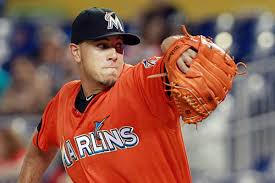
Jose Fernandez is (arguably) the biggest name to go down to TJ surgery yet.  Photo via thestar.com

Jose Fernandez is (arguably) the biggest name to go down to TJ surgery yet. Photo via thestar.com

Its the biggest story in baseball so far in 2014.   We’ve had nearly 20 MLB pitchers get diagnosed with torn elbow ligaments so far this calendar year.  All of them have or are set to undergo “Tommy John” surgery (also known as ulnar collateral ligament/UCL replacement surgery).  That’s nearly as many as who got the surgery ALL of 2013 and we’re just 6 weeks into the season.  There’s an alarming trend upwards over just the past few seasons of pitchers getting this surgery.  There’s been plenty more minor leaguers (two Nats farmhands in Erik Davis and Danny Rosenbaum have already gotten it in 2014) and already a couple of very high-profile draft prospects as well (including as discussed in this space potential 1st rounders Jeff Hoffman and Erick Fedde just in the last week).

Lots of people are talking about this story, especially some heavy-weights in the baseball world.  A sampling:

  • Dr. James Andrews, perhaps the most famous sports doctor in the world, attributes the growing trend to the rise in year-round baseball competition in the US.
  • SI.com’s Jay Jaffe reviews Dr. Andrews comments and had other excellent stats about the trend in this April 2014 piece.
  • The Washington Post’s Dave Sheinin did an excellent piece in the paper a few weeks ago about the injury, which he attributes to youth usage.
  • Tom Verducci (he of the “Verducci effect”) proposed a solution in a column this week after the Jose Fernandez announcement.  His idea?  Lowering the mound across all levels of the sport.  He draws this conclusion after hosting a very interesting round-table on MLB Network.
  • Jayson Stark teamed up with ESPN injury analyst Stephania Bell and former player Alex Cora to discuss the rise in arm injuries in this ESPN.com video, and they follow Andrews’ theory of year-round pitching.
  • Chris O’Leary, king of the Inverted-W (whether you believe his theories or not, I’ve included this link here) has his own theories as discussed here.  He doesn’t really have much in the way of explanation, just more whining about how every pitcher’s mechanics has something you can complain about.
  • Jeff Passan basically calls out baseball executives for not having any answers.
  • If you want an index of all of ESPN.com’s stories on the topic, click here.  It will have columns, analysis and press releases for individuals getting the surgery.

Some interesting stats about Tommy John surgery:

So what the heck is going on??  Lets talk about some theories.  I’ll highlight them in Blue.

The new “hot theory” is essentially this: Over-throwing at Showcase events, which have become crucial scouting events for kids raised in the United States, are to blame.  Thanks to the rise in travel leagues and select teams, scouts spend less time sitting at high school games and more time at these all-star events.  To prescribers of this theory, it isn’t so much about the amount of innings or pitches that kids throw … its the nature of the “showcase” events and the high pressure situations that those events put kids under.  Kids are throwing year-round, and they’re ramping up max-effort pitches at national competitions multiple times per year, and in some cases out of “season.”  This leads to serious damage to kids’ arms done as 16 and 17 yr olds, which then manifests itself over the years and results in blown ligaments in pro ball.

Do you buy this explanation?  It certainly makes sense to me, but how do you prove this?  And, it doesn’t explain the similar rise in elbow injuries to non-American pitchers.

Is it less about the showcase events and more about the Larger Increase in Youth pitched innings thanks to the rise in Travel Leagues?   This theory also makes some sense to me: thirty years ago kids played an 18-20 game spring Little League season, at best would pitch half those games and that was it.  Maybe they played in the fall too, but there were specific innings limits in place that protected kids.  Now instead of playing limited spring and fall seasons, kids are playing AAU travel teams that play 40-50 games a summer, plus weekend tournaments, plus (eventually) the above showcase events as they get closer to matriculation.  This theory certainly is supported by a startling rise in youth arm injuries, as noted in this 2010 study by the American Academy of Orthopaedic Surgeons.

But, if its “bad” to play more baseball … then shouldn’t we be seeing even MORE injuries from players who grew up in third-world baseball hot beds like the Dominican Republic or Venezuela, where by all accounts kids play baseball from sun-up to sun-down 12 months out of the year in tropical climates?

Interestingly, of the list of 19 MLB players so far who have been diagnosed with a torn UCL (see next section), there’s 4 non-American developed pitchers (Rondo, Nova, Figueora, Cisnero).  4 of 19 = 21%, whereas about 22% of MLB pitchers are non-American developed (my 22% figure comes from this quick study that I did; I grabbed every active MLB pitcher as of early May 2014 and did a quick-and-dirty player upbringing analysis to determine that about 78% of players “grew up” in the current American system of player development).  It is small sample size … but the percentage of american versus foreign developed players are so far exactly in line with the total percentage of each type of player in the larger pool of MLB pitchers.  This doesn’t seem to support either of the two above theories.

We’ve all heard horror stories about pitch counts and pitcher abuse at  high school events in Japan (this came to light over the winter as we looked at Masahiro Tanaka and learned about these Japanese showcase events; this article here at thebiglead.com talks about one Japanese prospect’s 772 pitches thrown over 9 days, and Jeff Passan talked about Tanaka’s own pitch count abuse stories and his average pitch counts as a Japanese-league pro).   Unfortunately there’s not a ton of data available about this TJ theory and Japanese pitchers.  I can find a couple of instances of Asian pitchers getting the surgery (Kyuji Fujikawa in 2012 being the most recent example), but not enough to establish any trends.

But lets state it this way: you can’t have things both ways.  Both these stereotypes about player upbringing cannot be true:

  • Latin American poor youth plays baseball from sun up to sun down 12 months a year, building arm strength constantly, therefore his arm is “stronger” and he’s less suceptible to injury
  • American little leaguer plays limited schedules (18 games in the spring, perhaps fewer in the fall), has closely monitored pitch counts, therefore does not abuse his arm as a youth and thus his arm is “stronger” later in life as a result.

Here’s a list of the 19 MLB pitchers who have already gone under the TJ knife so far in 2014 (data from baseballheatmaps.com, which has detailed Disabled List data).

Of these 19 pitchers, they are evenly split between being starters (10) and relievers (9).  So that doesn’t seem to lend itself to any Starter vs Reliever usage conclusion.

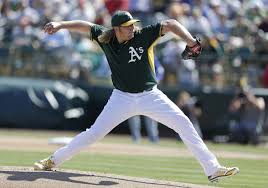
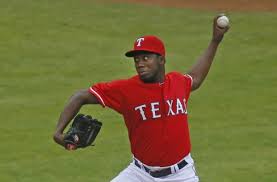
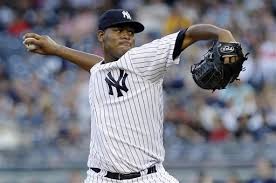
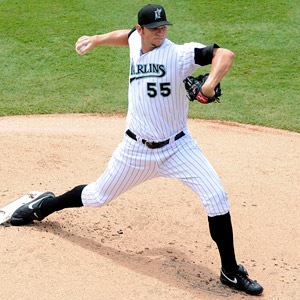
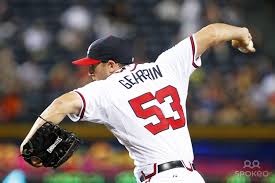
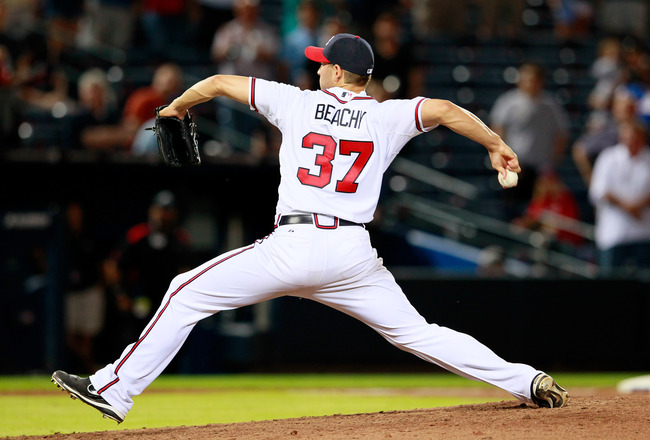
How about Pitching Mechanics?  We’ve all heard ad-naseum about the “Inverted W” and people talking about pronation and timing and elbow lift and etc etc.  Here’s a quick attempt to analyize the mechanics of each of these 19 guys (all photos grabbed as thumbnails from google images for the purposes of demonstration; no copyright infringement intended).
CisnerJose landingFernandezJose landingGriffinAJ landingFigueroaPedro landing


NovaIvan landingJohnsonJosh landingMooreMatt landingGearrinCory landing


ParnellBobby landingDavisErik landingHernandezDavid landingMLB: Spring Training-Arizona Diamondbacks at Los Angeles Dodgers


RondonBruce landingCorbinPatrick landingParkerJarrod landingBeachyBrandon landing


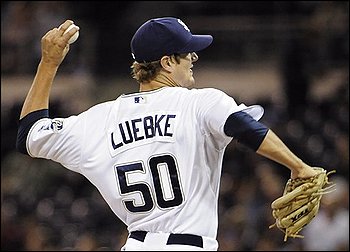
MedlenKris landingHochevarLuke landingLeubkeCory landing2

Quick and Dirty Mechanics analysis (images in same order as list of pitchers above, which is choronological in order of diagnosis in 2014):

  • Inverted W: Griffin, Nova, Gearrin, Beachy, Hochevar
  • Sideways M: Fernandez, Johnson, Davis, Moylan, Rondon, Parker, Medlen
  • Inverted L: Cisnero, Figueroa, Moore, Parnell, Hernandez, Corbin, Luebke

But I’ll immediately add a caveat to these classifications; at various stop-points in a guy’s delivery, he may exhibit “good” or “bad” trends.   Maybe some of these “sideways-M” guys are actually “inverted-W” guys.  Maybe some of these inverted-W guys are ok and the stills make their mechanics seem worse than they are.

Nonetheless; there’s no trend among the 19 guys in terms of their mechanics.  In some cases they’re “bad” (Griffin and Gearrin’s look awful) but in some cases excellent (nobody should look at Moore’s mechanics and say they’re anything but clean, nor with Parnell or Corbin).  These pitchers are overhanders, 3/4-slot guys and even side-armers/submarine guys (Gearrin and Moylan).   These guys include hard throwers (Rondon had the 3rd highest velocity of *any* pitcher in 2013) and softer-throwing guys (Medlen had one of the lowest fastball velocities in the majors in 2013).  There’s starters and relievers almost equally represented in this list.

Conclusion; there’s no conclusions to draw from pitching mechanics analysis.  I think all attempts to look at guys’ mechanics and make judgements are useless.  I think (as does Keith Law and other pundits in the field) that the “Inverted W” is nonesense and that “research” posted online by concerned-fathers-turned-self-appointed-mechanics-experts is not exactly trustworthy.  The fact of the matter is this: throwing a baseball over and over is hard on the body.  Throwing a ball is an unnatural motion, and throwing a ball at max-effort will eventually lead to pitching injuries, no matter what your mechanics.  They can be “good” or “bad” according to someone’s pet theory on bio-mechanics and it has nothing to do about whether a pitcher is going to throw 10 seasons without injury or have two tommy johns before they’re 25.

Some historical context for pitching mechanics arguments: the pitcher who has the 2nd most innings thrown in the non-knuckleballer modern era (behind Nolan Ryan) was Don Sutton.  Sutton displayed absolutely *classic* inverted-W mechanicsnever hit the D/L in his career and threw nearly 5,300 innings over the course of 23 seasons.   Walter Johnson‘s mechanics were awful; he slung the ball sideways as he literally pushed backwards away from the hitter at the end of his delivery.  If someone saw Johnson’s mechanics today they’d talk about how over-compensated he was on his shoulder and how he lost velocity thanks to landing stiff and having zero follow through.  Johnson only threw 5,900 innings in his pro career; yeah those mechanics really held him back.  Nolan Ryan was a freak of nature, throwing at that velocity for as long as he did.  The point?  You just don’t know.


Maybe there’s something to the “showcase abuse” theory for some players.   Maybe there’s something to the travel-ball overuse theory for some kids.  But I think the answer may be a bit more simple.  We all know there’s been a rise in the average MPH of fastballs in the majors, both on starters and especially with relievers.  My theory is simply this: kids who “can” throw upper 90s spend all their time trying to throw upper 90s/max effort fastballs 100% of the time, and human arms just cannot withstand that kind of abuse over and over.  In prior generations, kids who “could” throw that hard wouldn’t, or would rarely try to throw that hard, and thus suffered fewer elbow injuries.

Side note: I also firmly believe that we’re “victims of our own success” to a certain extent with respect to modern medicine; 30 years ago would someone have just “blown out their arm” instead of being diagnosed specifically with a “torn ulnar collateral ligament?”  Would some kid in the low minors who hurt his harm even bother to get an MRI?  How much of the rise in these injuries is simply the fact that we’re better at diagnosing injuries in the modern sports world?

Why are these kids trying to throw so hard these days?  Because velocity is king, and that’s what scouts look for.   A kid who “only” throws mid 80s as a 17-yr old is dismissed, while the kid who can throw mid 90s at the same age is fawned over.   Guys like Greg MaddoxMark Buehrle, and Tom Glavine probably don’t even get drafted in the modern baseball climate thanks to the over-focus on pure velocity.

You can talk about upbringing and showcase events and pitch counts and mechanics all you want, but I think it comes down to Pitcher over-exertion thanks to the rising trend of fastball velocity and the human nature urge of prospects and farm-hands to show more and more velocity so they can advance their careers.

What do you guys think?  Do you dismiss the “inverted-W” arguments like I do?  Do you think its all about showcase events?
If Hoffman is there at #18, do you take him?

20 comments

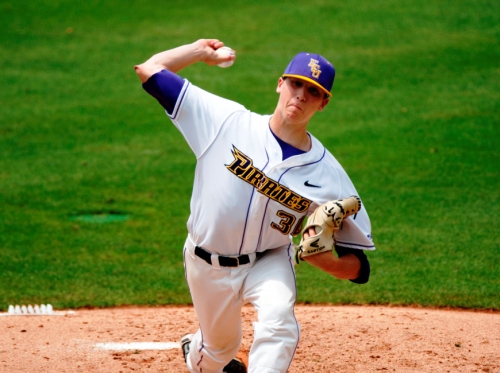
Jeff Hoffman gets some terrible news; would you still draft him?  Photo via ECU Media Relations department.

Jeff Hoffman gets some terrible news; would you still draft him? Photo via ECU Media Relations department.

News came down on 5/7/14 that likely top-5 pick Jeff Hoffman, a RHP starter for East Carolina University, has a small tear in his UCL that will require Tommy John surgery (also reported here on PerfectGame and discussed on MLBTradeRumors).  Yet another high-profile starter in the sport befelled by this injury.   Keith Law believed that the Chicago Cubs (picking 4th overall) were highly likely to be drafting Hoffman … and now are re-making their draft strategy on the fly.

Here’s the question of the day: If you’re Mike Rizzo and you’re the Washington Nationals, and Hoffman drops to you picking in the first round at #18 … do you consider taking him?

Despite this injury, Hoffman likely will be drafted and will sign.  Why?  Because even if he gets the surgery tomorrow, he’s looking at least at a 12-month recovery time, which means he’d miss his entire senior season.  He could red-shirt so that he could play a 5th college season, but by the time he were to do that, he’d be pushing 23 and will have missed two full years of pro development time compared to his contemporaries.  If he signs a pro contract, he can rehab under the care of a pro baseball team that likely has had numerous other pitchers go through this surgery instead of rehabbing on his summer break from school, likely away from his college coaching and training staff.  Who may never have had to deal with an injury like this frankly.  By the time he recovers, it’ll be just in time for him to debut on a short-season squad in 2015 after having worked out since February in a team’s spring training facility.

If he’s getting any sort of decent representation, they’ll advise him to sign.

Now the question is; how far does he drop in the draft?  Mid first round?  End of the first round?  Further?  He’ll drop on everyone’s draft board; the question is just how much.  Law predicts he drops from about 4-5 to about #25 overall, citing players like Kyle Gibson and last year’s Sean Manaea as examples of players who got drafted while injured in recent years.

There is another important precident here, and it involves the Nats.  Lucas Giolito was in the discussion of going 1st overall in the 2012 draft before injuring his arm, and the Nats grabbed him at #16.  After attempting to rehab the arm all summer, Giolito’s one pro outing that year was stopped short and he had the surgery.   He returned ahead of schedule, got in 36 pro innings in 2013, and started this year in the low-A full season rotation.  One of the reasons Giolito signed was because of the Nats track record with the injury and its recovery, and its reputation for putting the player’s concerns over the teams (see Strasburg Shutdowngate and the similar handling of Jordan Zimmermann and Taylor Jordan).   Now, Hoffman is no Giolito; he’s older, his stuff reportedly isn’t quite as good, and ECU isn’t exactly in a powerhouse conference so the possibility exists that his stats are augmented.  But that’s why teams have scouts, and despite all of this he is widely considered the 2nd-best college pitching prospect in this draft (after Carlos Rodon).

I think the Nats might be tempted to grab a top 5 talent at #18, knowing that he’ll be ready to go by 2015’s short-season.  The question is whether they value that committment at #18 overall over another player.  My gut reaction is that the Nats will skip him and go a different direction, and that someone with a comp 1st round pick will grab him knowing that they have another first rounder in the bag.  But if he’s still hanging around in the mid-2nd round … I think he’d be a great roll-of-the-dice pick.

Local 2014 draft-prospects; mid-spring Update

one comment

Bukauskas is rocketing up the draft boards. Photo Bill Kamenjar/InsideNova.com

Bukauskas is rocketing up the draft boards. Photo Bill Kamenjar/InsideNova.com

This is the 2nd post in a periodic spring-long series looking at DC/MD/VA draft prospects for the 2014 season.

The pre-season review is here, going mostly on far-too-early lists of prospects from various sources.  Now that we’re a good way through high school and college seasons, its a great time to re-visit some names.  UVA remains ranked #1 in the BaseballAmerica college poll (ranking as of 5/5/14) on the backs of two guys we’ll talk about here.  But the big local baseball prospect news is all about one name in particular.

Lets talk about the three leading names that seem to be potential top-3 round picks in the coming amateur/Rule-4 draft.

  • Jacob Bukauskus, RHP from Stone Bridge HS in Ashburn has just shot up draft boards and gathered a ton of local attention.  He’s reportedly up to 98 on the gun and has given up just one RUN so far this season.   ESPN’s Keith Law drove to NoVa to see him a couple of weeks ago and filed this report (insider only), predicting he’ll be picked at the end of the first round.   The blog BaseballDraftReport wrote 1,000 words on Bukauskas here.   And the Washington Post’s Tariq Lee wrote a nice feature for WP’s AllMetSports.com and the paper a few weeks back on the prospect.  If you want to see Bukauskas, your time is running out for the regular season.  He’s throwing Stone Bridge’s mid-week games and goes tonight (5/6/14).  Stone Bridge’s schedule is here; they play at Tuscarora HS in Leesburg tonight, then are home to Broad Run on 5/13, and then play away to Freedom-South Riding on monday 5/19 before the post-season tournaments start.  Law has him ranked #29 in his early May Draft-preview, but broke a story this past week that has Bukauskas telling sources he wants to go to college (he’s committed to UNC).  I said it before; you don’t generally graduate a year early so you can turn down $1.5M and go to college; I still firmly believe someone is drafting him early and paying him well.   Likely Drafted at the end of the first round by all reports.
  • Derek Fisher‘s lofty pre-season status took a huge hit when he broke his hamate bone this season; he’s only played in 21 games this year.  But he seems to have returned from the injury and teams have a pretty good knowledge of how players react to this injury (they’re generally hampered for a year or so and their power numbers diminish badly).  Bad timing for Fisher; he could have made himself some money thanks to a thin crop of college bats this year.  Stats for the year: .325/.372/.513 with 2 homers, 12/4 K/BB in 21 games/80 at-bats.  Not a ton of walks but also not a ton of strike-outs considering his slugging.  Law has him ranked #17 in his early May draft-preview.  Likely Drafted later in the first round if teams aren’t scared off by his hand injury.
  • Mike Papi has rocketed up draft boards this spring; going from being considered the 3rd or 4th best draft prospect on his own team to being talked about as an early 2nd round pick.  His slash line: .289/.446/.493 with 8 homers, 32/40 K/BB ratio in 46 games and 152 ABs.  That’s nearly a 1.000 OPS using the BB-Core bats.  Law has him ranked #38 in his early May draft preview.  Likely Drafted in the early to middle second round.

A note on UVA: they were pre-season #1 and have maintained that high ranking using a weekend rotation of three SOPHOMORES.  They might be matriculating a bunch of hitters this spring, but they’re going to be a major force on the mound.  Add to their rotation two big-name freshman that we talked about in draft-posts last year (namely, Alec Bettinger and Connor Jones) and the Cavaliers look like they’ll have a historic pitching corps in 2015.

Other names on Keith Law’s top 100 early may draft-preview:

  • Nick Howard, RHP from UVA.  (#59)
  • Jake Stinnett, RHP from Maryland (#89)

Mock Draft links for several sites/blogs that do such things.  Most draft pundits are now off of NC State’s Carlos Rodon as 1-1 thanks to his diminished velocity and over-use this season (he’s had several outings that had him at 130+ pitches to the abject horror of some scouting personnel).  Most experts now have San Diego LHP prep pitcher Brady Aiken as the likely #1 overall pick, meaning that baseball will go another year without ever having a prep RHP selected 1-1 overall.

  • BaseballDraftReport.com’s top HS pitchers list Bukauskas as the 5th best HS pitching prospect in the land.  That’s pretty heady praise considering that the guys listed ahead of him are all top-10 draft pick talents or close to it.
  • MLBDraftInsider.com does Mock First round drafts: this 4/15/14 link has Bukauskas and Papi in the top 50.  By this 5/5/14 version, Fisher is back, Bukauskas is rising and Papi is holding steady as an early 2nd rounder.
  • MLB.com has a top 100 list of draft prospects in some rough order put together by their staff (presumably including Jim Callis and Jonathan Mayo) and they’ve got nice little write-ups on the prospects.

Fyi: here’s links to the latest Nationwide High School Polls; not a lot of love for DC/MD/VA high-schools here.

  • Baseball America top 25 high schools: only Western Branch HS in Chesapeake is mentioned for local schools.  That link was dated 4/22/14; the new rankings due out 5/6/14 show Cosby replacing Western Branch in the top 25 behind their top player Hunter Williams.
  • USA Today top 50 high schools: Western Branch #23.  Rankings are as of 4/30/14; new rankings due out 5/7.
  • MaxPreps/Freeman top 25.  Interestingly Freeman has Midlothian’s Cosby HS as #3 in the land.   Max Preps has FOUR VA schools ranked in the mid-30s right now: Freeman, Cosby, Woodside and Western Branch (in that order).  Rankings as of 5/4/14.
  • PerfectGame.org top 50: only Western Branch listed, at #43 (as of 5/5/14)

So, no national love for Bukauskus’ Stone Bridge right now; I’m guessing they’ll have to make some regional noise before getting any notice.  They also play in a pretty weak baseball district (playing a bunch of newer Loudoun County schools) and don’t have to face NoVa powerhouse programs like Lake Braddock and Robinson on a regular basis.  Local All-Met rankings have Stone Bridge (13-1) at #1 and Madison #2, fitting in that Madison’s sole local loss was to Stone Bridge in the season opener.  Local baseball factories St. Johns and Riverdale Baptist are in the top 5, along with a slew of Maryland schools.  I’m hoping these two teams get a chance to meet in the regional tournament; I have no idea if Stone Bridge has a strong enough #2 to make it there.  It could make waiting to see Bukauskas risky; would you throw  him in the first district/regional game or try to save him for a tougher match up?

Can’t wait for regionals and I can’t wait for a shot to see Bukauskas live.

Law trashes Williams and their handling of Harper

32 comments

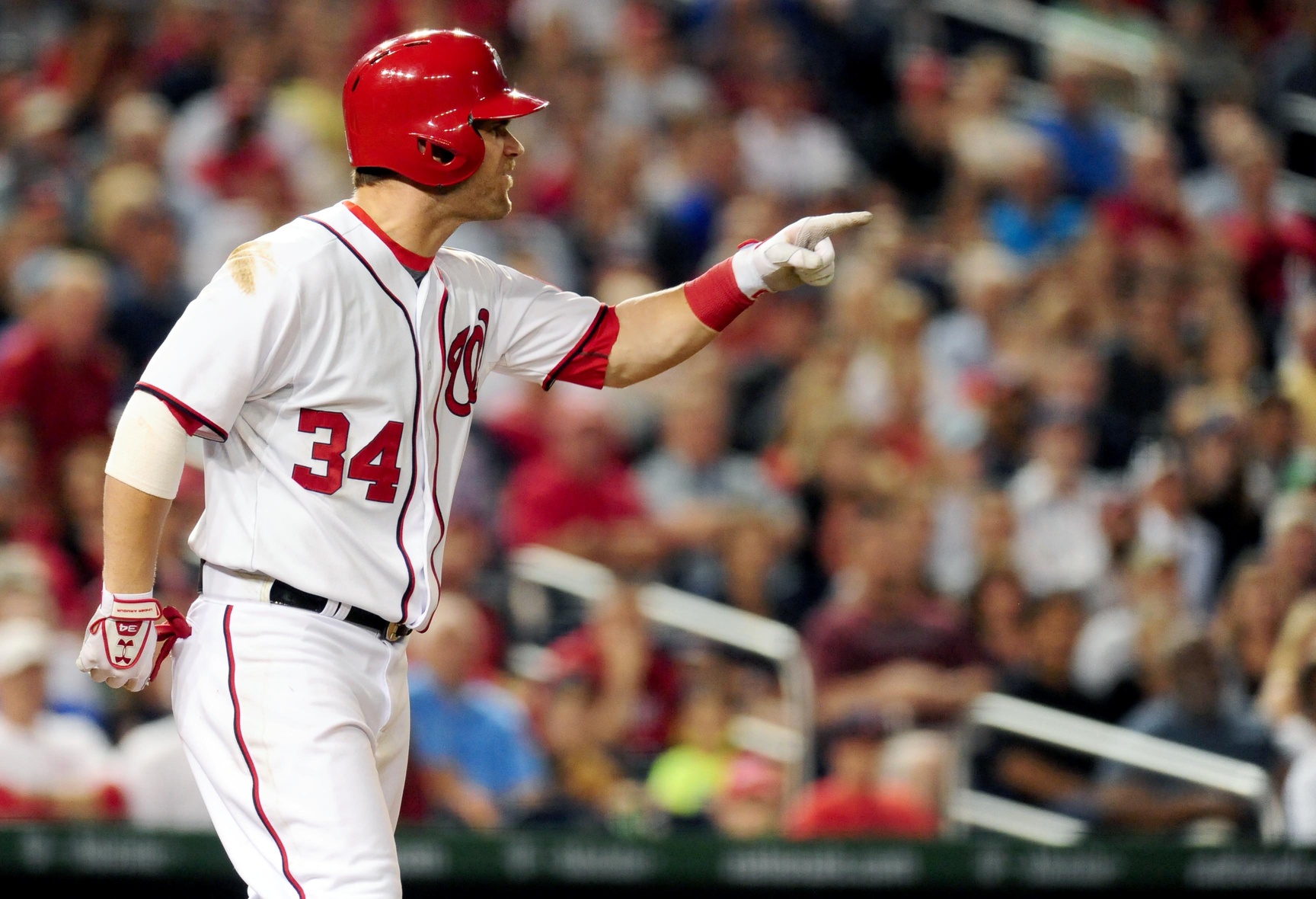
Harper Harper Harper.  Photo Evan Habeeb-USA TODAY Sports

Harper Harper Harper. Photo Evan Habeeb-USA TODAY Sports

http://insider.espn.go.com/blog/keith-law/post/_/id/2286/the-mishandling-of-bryce-harper

(Yes the post is ESPN Insider only; if you don’t get ESPN insider then ask yourself why you’re not willing to spend $3 a month for access to quality baseball writers like Dave Symborski, Keith Law, or Buster Olney, as well as access to the whole slew of scouting content from Law’s staff… and that’s just their baseball stuff.  $3/month; I spent more than that on my bagel this morning.   And if you’re in that whole “anti paywall camp” and believe that God intended that everything on the internet be for free … well I guess I’d just say sometimes you get what you pay for.   And to me, ESPN’s insider content is worth the 10 or 11 cents a day that I pay for it.  Rant off).

Basically, Law questions whether Matt Williams is in over his head as a major league manager right now.  Law questions his  lineup choices (as others have repeatedly, especially when the team’s best power hitter his batting 7th.  Which to be fair he only did once, but Harper’s been batting 6th for a good portion of the season too, only really moving up when Ryan Zimmerman went out with injury).   I too question his lineup choices; why the h*ll is Denard Span still batting leadoff?  If Williams felt the need to move Harper to 7th because he was struggling, why hasn’t Span been dropped either?  Isn’t Span “struggling” too?  Yeah; he’s got a .282 OBP right now and has fewer stolen bases than the 35-year old Jayson Werth; why exactly is he still batting leadoff??

Law also questions Williams’ public bashing of Harper’s hustle.  Which led, among other things, to Tom Boswell‘s outlandish claims in a chat two weeks ago that Harper was purposely asking out against tough hitters to maintain a meaningless 9-game hitting streak.  Did anyone actually watch the games surrounding the hustle incident?   To me Harper was clearly favoring his leg, and he had been frustrated at the plate, and by multiple reports was also struggling with the flu.  Maybe everyone would have been happier if Harper had just frigging sat out a couple of games instead?   So he didn’t run out a come-backer; that’s human nature.  Law correctly points out that only Harper has been bashed openly in the press by Williams; other team issues were handled internally.

Why is that?  Is Williams “old school” mentality coming through here?  Is he singling out the young Harper in a “youngster hazing” way?  Remember where Williams came from; the “grit is the way to win” Arizona Diamondbacks, who now have the worst record in the majors after a slew of trades and moves that were designed essentially to rid the team of players who couldn’t or didn’t get along with either the manager or the staff for some reason or another.  I’ve touched on the topic of the Arizona methodology before; you just don’t trade away top 3 draft picks for 50 cents on the dollar because of a personality conflict and expect there to be no consequences.  I believe the consequences are going to be a new manager and a new GM this coming off-season after Arizona loses 90+ games.

Law correctly points out that you can’t have the “hustle” narrative both ways either: Harper cannot be simaultaneously a “lazy” player (as Williams went out of his way to state to the media) but then also be the same player who people thought needed to “slow down” and “play within himself” (as was oft-repeated all last year after he bashed his head in running into outfield walls).   For me; I tend to believe that Harper is human; he was frustrated after an o-fer day, and didn’t run out a come-backer in a meaningless situation late in a game (like a thousand other major leaguers before him).

I’m not sure if I’d lay the play that ended up with Harper’s injury on the manager (Law seems to intimate that Harper’s “over hustle” on that play was in reaction to his press bashing over the lack of hustle the week before), but many, many other players in this game would have just slowed up at 2nd, knowing they had cleared the bases, and not gone for the triple.  Which player would you rather have?   For better or worse, the team will now have plenty of time to think about it; Harper’s out for 2 frigging months.  For those keeping score at home, we’re not even to May yet and we’ve seen the guys hitting 1st, 2nd, 4th and 5th from our opening day lineup now hit the D/L for various lengths.

It bears repeating: Harper, despite being in his 3rd pro season, was STILL the youngest player in the majors on opening day.   If he was sitting on Potomac’s roster right now, he’d be one of the youngest players in the league.  I guess we all need to take a deep breath sometimes and be thankful for what Bryce Harper is, not what he isn’t.  And get well soon…. this team’s offense is going to miss him badly.

Written by Todd Boss

April 29th, 2014 at 10:31 am

Local draft-prospects to keep an eye in for the 2014 draft

6 comments

UVA's Derek Fisher is likely a mid-first round pick, the area's highest projected for 2014.  Photo via pennlive.com

UVA’s Derek Fisher is likely a mid-first round pick, the area’s highest projected for 2014. Photo via pennlive.com

I enjoyed writing about our local players and their draft prospects in 2013 (full 2013 draft results for players with DC/MD/VA ties here).  So here we go for a similar look in for 2014.  Believe it or not, local High Schools kick off play this week, despite the 6 inches of snow we just got.  Perfect Game just released their pre-season All-Atlantic Region team (and the Washington Post All-Met team did a nice review of it);  it  includes some names listed below in our local section.

I’ll talk about local prep kids, then MD/VA college prospects and then branch out to a larger MD/VA prep collection of players mentioned on various draft prep lists (links to which are at the bottom).

Here’s some names to keep an eye on for the 2014 season:

Washington DC Area Local Prep Players

  • Jacob Bukauskas, a 16-yr old rising senior (he reclassified to skip a year of HS) who plays for Stone Bridge HS in Ashburn, is already up to 93 on the gun in showcase events and is going to graduate early to qualify for the 2014 draft.  He is committed (incredibly early) to UNC, but you generally don’t graduate HS a year early so you can go play 3 years in college.  #162 on MinorleagueBall’s list.  Pre-season PG all-Atlantic 1st  team.
  • Justin Morris is a C from DeMatha HS who plays for the newly crowned 2013 PerfectGame national champions EvoShield Canes.  He’s a Maryland commit but may improve his draft stock with a strong 2014 spring.  #295 on minorleagueball’s list.  Pre-season PG all-Atlantic 1st  team.
  • Tommy Doyle is a big (6’6″) RHP from my home town of Vienna, playing at Flint Hill Academy in Oakton.  PG has him at 91 and he’s committed to UVA.  I wonder if the competition he’ll face at the small private school Flint Hill will hamper scouting efforts.  Not in minorleagueball’s top 300.  Pre-season PG all-Atlantic 1st  team.
  • Brodie Leftridge, a CF from Highland, MD (outside of Columbia) but going to local power St. Johns Prep.  Committed to Tennessee.   Profiles as a leadoff/CF type; ran a sub 6.6 60 per perfect game.  Ranked #256 on MinorleagueBall.com.   Pre-season PG all-Atlantic 1st  team.

Slim pickings of local HS guys this year unfortunately.  I may have to venture out to Ashburn to see Bukauskas throw.

College Guys in MD/VA:

  • Derek Fisher is a lefty corner outfielder at UVA who passed up 6th round money out of HS and now projects as a possible mid 1st rounder.  Law has him higher than others, ranked 14th on his top 50.  MLBDraftInsider has him 16th, as does minorleagueball.  But we have seen relative talent ranking does not always equate to draft positioning in the modern bonus-limit era.  Minorleaguebaseball.com posted this profile of Fisher in early Feb, with a pretty detailed overview of his game and a prediction for middle-of-the-first round.  Nonetheless, he profiles as a good college bat in a draft that doesn’t have a ton of them, and he’ll probably go high.
  • Mark Zagunas, C from Virginia Tech, #41 on MinorleagueBall’s list.
  • Nick Howard, RHP from UVA, #111 on MinorleagueBall’s list.  He’s a weekend starter, but may be in trouble of losing his spot thanks to two standout sophomore starters who look to be your friday/saturday guys and the addition of freshman Connor Jones (who was a 1st round talent last year out of HS).
  • Brandon Downes, CF from UVA, #145 on MinorleagueBall’s list.
  • Mike Papi,1B/corner OF from UVA, #176 on MinorleagueBall’s list.
  • Troy Stokes, OF from UMaryland, #209 on MinorleagueBall’s list.
  • Brandon Cogswell, ss/2b from UVA, ranked #225 on MinorleagueBall’s list.
  • K.J. Hockaday, SS from Harford Community College (which is in Bel Air, MD; I had to google it).  #235 on MinorleagueBall’s list.
  • Jake Stinnett, sr RHP from UMaryland, has started the season strong and is getting some notice.

Five players in the top 225 draft prospects on UVA’s squad; no wonder they’re getting some heady pre-season praise (#1 on Baseball America’s pre-season rankings, ahead of NC State which boasts two potential top 5 overall picks).  Keith Law wrote specifically about UVA’s talent pool 2/25/14, saying that they’ll likely have their top five guys drafted in the first 3 rounds this year.

High School MD and VA Guys, from around the rest of the State

  • Charlie Cody is a 3B from the same Great Bridge HS in Chesapeake that just graduated Connor Jones.  He’s committed to UVA.  Sullivan has him as the #34 HS prospect in the country in mid 2013.  He is known for his speed: a 6.6 60 time.  It should be interesting to see how he fares this spring and whether his stock rises enough to merit a top draft pick.  Here’s some video of a couple at-bats from baseballinstinct.com.  Ranked only #208 on MinorleagueBall’s list.  Pre-season PG all-Atlantic 1st  team.
  • Jeff Harding is a senior RHP from Cambridge, MD committed to South Carolina.  PG has him up to 94 on the gun but he’s really undersized (listed as 5’11” 165).  Sullivan lists him as #44 HS prospect in the nation in mid 2013.   Minorleague ball has him at #75.  He seems like a good bet to head to school.  Fair or not, pitchers are considered too small these days unless they’re 6’4″.  Pre-season PG all-Atlantic 1st  team.
  • Hunter Williams is a two-way lefty player from Cosby HS in Chesterfield, VA who has skills both on the mound at at the plate.  He’s limited to first base in the field, which may make it tougher for him to get drafted and developed.  91 on the gun.  Another UNC commit, it should be interesting to see which way he focuses.  Minorleagueball has him at #103.  Pre-season PG all-Atlantic 1st  team.
  • Jack Gerstenmaier is a SS from Freeman HS in Richmond with a UVA commit.   #232 on MinorleagueBall’s list.   Pre-season PG all-Atlantic 1st  team.
  • Devon Fisher is a solid catching prospect from Portsmouth, VA who is either at Greenbriar Christian Academy (a decent baseball development school) or Western Branch (per PG).  UVA committed.  He’s rising in the ranks by virtue of good showcase efforts.  Pre-season PG all-Atlantic 1st  team.
  • Hunter Taylor is a C from a small HS on the Delmarva peninsula in Olney, VA (which I had to look up), who also plays with EvoShield and is committed to South Carolina.  Pre-season PG all-Atlantic 1st  team.
  • Chase Pinder (brother of Va Tech 2013 2nd rounder Chad Pinder) is a senior SS from Poquoson, VA, committed to Clemson.  Pre-season PG all-Atlantic 1st  team.
  • Taylor Lane is a taller SS/3B prospect also from Great Bridge HS in Chesapeake, committed to Florida.  Pre-season PG all-Atlantic 1st  team.
  • Troy Stokes is an undersized OF with power from Calvert Hall College in Baltimore with a Maryland commit.  Pre-season PG all-Atlantic 1st  team.
  • Derek Casey is an RHP from Mechanicsville, VA with a UVA commit.  Ranked #223 on MinorleagueBall.com.  Pre-season PG all-Atlantic 1st  team.

Lots of local guys on EvoShield; click here http://canesbaseball.net/canes-alumni/ for a look at their alumni.  AAU/Travel baseball is taking over the world.  Also, every guy listed here was on PG’s All-Atlantic team, so that’s clearly a good list to start from for prep interest.

A reminder; there’s almost no baseball talent within the District itself.  The DCPS baseball programs are in terrible shape (as talked about in this excellent WP Magazine article from a couple weeks ago), and the colleges within the city limits that do play baseball (GW, Georgetown in Division I, Gallaudet in Division III NEAC Conference and Catholic in Divison III Landmark Conference) are generally not power-house programs.

Lastly, Here’s some links to draft prep lists that profile national high school talents.


Ladson’s Inbox 1/31/14

37 comments

Would this guy look good in a Washington uniform?  Photo unknown via ladodgertalk.com

Would this guy look good in a Washington uniform? Photo unknown via ladodgertalk.com

Nothing like a time-waster for the weekend; Bill Ladson‘s latest inbox plopped Friday afternoon 1/31/14.  Here’s how I’d have responded if someone had bothered to as me these questions 🙂

Q: Even though the Nationals are confident with Denard Span in center field and they have strong center fielders in the Minors, is it possible that they might try to get Matt Kemp at the Trade Deadline or next offseason?

A: Matt Kemp‘s name has come up in this blog in the discussion spaces once before in an interesting “what-if” game.  The question as it was posed was this: “Would you, straight up and with no salary relief, trade Matt Kemp right now for Anthony Rendon?”  Think about it; Kemp is owed $127.5M over the next six seasons ($21-$21.5M per season).  He put up MVP numbers in 2011 (many thought he should have won instead of Ryan Braun, even more so after Braun’s positive PED tests) but has floundered with injury and sub-par performances (relative to his salary) for the past two years.  Meanwhile Rendon is getting paid a fraction of what Kemp’s salary is, is younger and has room to grow, but so far has been merely a league average player.  Its a good question: do you run the risk of a $20M boat anchor on your roster, taking up 1/7th of  your salary cap, or do you roll the dice that Kemp returns to his former glory and earns his pay?  Or do you bet on Rendon becoming a significant player cost contained and under team control for another 5 years?

For me, I think you stay away from Kemp.  That’s a ton of money with no guarantee that 2014 will be any different from 2013, and the Nats already have enough pending payroll problems without adding one more $20M player.

As for the question at hand, I see no inclination for Mike Rizzo to make such a move, now or ever.  He spent a lot of capital (our best starting pitching prospect at the time in Alex Meyer) to get Denard Span, he sought him out and coveted openly him for years, and now he has him.  Span’s not going anywhere.  As for next year, we’re in a wait and see.  One of our best prospects is a CF candidate in Brian Goodwin, but he took a step back in 2013.  If Goodwin steps back up in 2014 or doesn’t pan out, we can exercise Span’s 2015 option at $9M and wait for the next best CF prospect in our system (Michael Taylor) to grow.  If neither prospect pans out, we don’t have to worry about it for a few years.  But, at some point you hope this team can grow another prospect to replace an aging $9M free agent with a minimum salary guy.

Ladson basically says what I say, but in fewer words.

Q: The Nationals still have bullpen questions that were not addressed during the offseason. Do you think the Nats will sign another lefty for the bullpen? Or will they use Ross Detwilerin relief?

A: Do we have bullpen questions?  Where?  We got a lefty (Jerry Blevins) and we have another decent lefty option who pitched decently for us last year (Xavier Cedeno).  I’m quite pleased with the state of our back-end guys (Soriano and Clippard), our 7th and 8th inning options (Storen and Stammen), and our long-man options (Ohlendorf and Roark).   Remember; Clippard has great lefty splits, always has.  If our loogy doesn’t work out that well, we go back to using Clippard periodically as a match-up guy.  Or we call up Sammy Solis.  Hell, we could even try Matthew Purke as a bullpen option (he’s on the 40-man after all); scouts are souring on him ever being an effective starter, but his weird motion and shorter stints could help him feature as a bullpen guy.   I think you use Ross Detwiler as a starter until he proves otherwise; as mentioned in this space time and again, Detwiler was effective in 2012, started well in 2013 and got hurt; I have no doubt that if healthy he can start 2014 as he started 2013.  Ladson says similar things about our lefty options.

Q: How is Adam LaRoche‘s health going into Spring Training? He looked as if he lost a tremendous amount of weight last year.

A: Adam LaRoche looked healthy enough in all those shots that appeared of him killing things on the internet over the winter.  Seriously; who knows what the answer to this question is.  But we know he’s aware of the situation and should be taking steps to maintain his strength and weight in 2014.  It is a contract year after all, and he’s shown a proclivity towards having career years in contract years when he needs them to secure his next paycheck.  I can’t see  him “platooning” like a lot of bloggers seem to be calling for, but I can see him being told by management that he needs to maintain his production or he may be banished in phantom DL trips.  Ladson reports that LaRoche was taking an ADD medication, believes he has it figured out, and predicts a Gold Glove in 2014.  Random prediction but sounds good.

Q: Any chance Nationals could bring back Jesus Flores as a backup to Wilson Ramos?

A: Well, Jesus Flores is still out there as a MLFA.  What doesn’t speak well of him is the fact that he was released in May of last year by the Dodgers.  Clearly to me, he’s no longer a viable major league backup candidate.  I can still see the Nats giving a non-guaranteed contract to one of the few remaining veteran catchers to see if one of them sticks as Ramos’ backup, but at this point I wouldn’t be surprised to see the winner of a competition between Jhonatan Solano and Sandy Leon sticking as the backup.  That being said, both these guys were awful in 2013 in the minors offensively and I don’t have a good explanation why.  Leon seems like the better bet; better history of batting,  younger.   Chris Snyder has had a rough couple years but is still relatively young and has had stretches of decency, if the team wants to go with a veteran backup instead of a rookie.   I dunno what’s going to happen.  On the bright side, Keith Law‘s just-released top 10 for the system (ESPN Insider only) includes one Pedro Severino, giving him relatively glowing grades for his defense.   He’s a couple years away (born in 1993) but if he succeeds in Potomac this year he could be a ready-made Ramos backup sooner than later.  Ladson says the team had a problem with the way Flores called games … hmm, never heard that before.  Ladson also predicts more signings before Feb 1.

Q: I sense a double standard: why give continued chances to Danny Espinosa but essentially shut out Drew Storen? Am I missing something? Similar struggles, but at least Drew fought his way back to the Majors.

A: I’m not sure what “chances” Danny Espinosa is getting at this point, nor am I sure what Storen has been “shut out” of.  The team bought Rafael Soriano, are paying him a ton of money, and he’s the closer as long as he’s here.  That’s that; both Storen and Clippard got pushed down a peg when he got acquired.  Meanwhile, I think its clear that Anthony Rendon is the starter, and Espinosa is playing for a backup role.  Maybe there were just too many quotes taken out of context from NatsFest.  Ladson re-iterates his believe that Espinosa will be traded.


Thoughts on Keith Law’s organization and prospect rankings

28 comments

Giolito is rising the ranks of prospects baseball-wide.  Photo unk via federalbaseball.com

Giolito is rising the ranks of prospects baseball-wide. Photo unk via federalbaseball.com

I’ll admit it; I’m a sucker for prospect lists.

Every time I see an organizational ranking published (whether it be from BA/John Callis, BP/Jason Parks, ESPN/Keith Law, MLB/Jonathan Mayo, John Sickels or whoever, I put the rankings into a big spreadsheet and do comparison analysis (I’d publish on Google Docs it except that Law’s stuff is ESPN insider only and I wouldn’t want to get into trouble).   Every time any of these guys puts out organizational top 10s, I capture that too into one big file too.

So, this week is an exciting time because one of the leading prospect voices out there has published his annual rankings lists.  Keith Law published his System rankings 1-30 on 1/28/14 and published his Top 100 prospects list on 1/29/14.  The links themselves are ESPN-insider, which I believe is well worth the pittance of a cost per year just to get access to Law and Buster Olney‘s stuff (among others).

Law has our system ranked 18th this time around, a slight increase from last year’s ranking of 21.   In the five years that I’ve been capturing Law’s organizational rankings, this is as high as he’s had the system ranked believe it or not; his 2012 rankings (where Baseball America famously had us ranked #1) came out after the big Gio Gonzalez trade and thus we didn’t get the high ranking we would have expected (Law said he dropped the system from a top 5 ranking b/c of that trade).

So, how do we explain how the system went from #21 to #18 given all that has happened in the last year?   Borrowing from the comment I made at NationalsProspects.com when Luke Erickson noted the same Law publishing, lets analyze where we were in January 2013 versus now as a system:

In Law’s 2013 writeup for the team, he noted that he liked Washington’s top 5 prospects but that there was a significant gap afterwards.  Going back and looking at my notes, Law’s top 5 guys went:

  1. Anthony Rendon
  2. Brian Goodwin
  3. Lucas Giolito
  4. A.J. Cole
  5. Nathan Karns

Then the gap, then Law ranks 6-10 as went Matt Skole, Christian Garcia, Carlos Rivero, Matthew Purke and Michael Taylor. So, no mention of Taylor Jordan or Ian Krol, both of whom graduated and performed more than ably in the majors in 2013.  There was no mention of Robbie Ray, who Law never liked and never gave much credit to even when in 2011 he was out performing Cole in the low minors despite being the same age and same draft class, but who was regarded enough in Detroit to basically fetch a 4-win established MLB pitcher in Doug Fister.  There was no mention of Jeff Kobernus, who did get some MLB innings but isn’t considered a real prospect.  No mention of Nats minor league batter of the year Billy Burns (again, not really a prospect in lots of evaluator’s eyes).  No mention of Eury Perez as a top 10 candidate, and obviously no mention of Tanner Roark (who in January 2013 pretty much everyone saw as an organizational arm playing out the string to minor league free agency).  Law did say at the time that if Sammy Solis got healthy again he’d be back in the running for his top 100.  Amazingly Rivero, a waiver claim who ended the year demoted to AA, was his 8th best prospect for the system, quite an indictment.  Well, either that or a blind spot for Law, who is more impressed by tools in lower-minors kids than capabilities in prospects in the upper minors.

So, given that our top 10 last year in Law’s minds (in order):

  1. Rendon graduated to a starting job in the majors
  2. Goodwin struggled in a 2-level jump
  3. Giolito ably recovered from injury
  4. Cole impressed at AA after a promotion
  5. Karns made the leap to the majors but struggled
  6. Skole missed the entire season due to a freak injury
  7. Garcia missed basically the entire season with yet another injury
  8. Rivero was demoted to AA and is now a MLFA
  9. Purke pitched mostly a full season but did not dominate as expected
  10. Taylor impressed in high-A and was added to the 40-man

… and considering the litany of graduations/trades/exoduses out of the system (Rendon, Jordan, Krol, Ray, Rivero, Burns and Roark all ineligible for a 2014 analysis), how do you explain the fact that he thinks the system is basically treading water?

You have to think Law’s top 5 for the system now starts Giolito/Cole/Goodwin but then who knows where it goes from there.  I know from chat responses that Law is down on Purke now and that he didn’t ever really rate Jake Johansen or Drew Ward as 2013 draft picks.  Does Karns still qualify as a prospect?  Yes I believe so.   Solis came back and performed post injury but was he that impressive in 2013?

Perhaps Law’s thinking goes like this: he likes our top 3 prospects (clearly; Giolito, Cole and Goodwin all made Law’s minor league-wide top 100 list with Giolito at #21).  Law rates these top 3 guys as strong enough to make up for the graduations from last year.  Then there likely is a gap, then perhaps a small grouping of Karns and Solis, both of whom Law likes and both of whom he probably believes would make either #5 starters or good bullpen guys.  Then after that a grab bag to include Skole, Taylor, Perez and perhaps a couple guys from our 2013 draft class (Austin Voth?).  The problem with the back side of this theoretical top 10 list is that it includes a slew of players who were hurt or who treaded water in 2013.

What do you think?  And if your answer is some variation of, “Todd you spend too much time over-analyzing prospect lists and you just proved your own point by showing that a guy like Taylor Jordan can go from high-A to a MLB-average ERA+ and never appear on anyone’s prospect lists therefore prospect lists are useless” …. well I’m not going to argue against you that vociferously 🙂  I’d probably respond by saying something to the effect of, “Its frigging january, what else are we going to talk about?”

Buster Olney’s HoF vote explanation…

7 comments

… is probably the best, most reasoned, least hyperbolic explanation of a Hall of Fame ballot that I’ve read, probably ever.

Its ESPN Insider, but if you’re a true baseball fan you should be paying the $2/month or whatever pittance it is in order to get Buster Olney and Keith Law‘s stuff.

http://insider.espn.go.com/blog/buster-olney/post?id=4360

He voted for Rafael Palmeiro but not Mark McGwire (I’d tend to disagree here but he reasonably explains why).   He voted for Jack Morris but not Curt Schilling or Mike Mussina (again, even up comparing Morris to either of these guys I’d disagree, but I also like Morris for the Hall despite all the vehiment arguments that people make against him).  Olney explains his thoughts about the “character clause” that seems to be catching so many voters in the most clear and concise way i’ve seen.

Its just a nice read in the face of the just over-the-top criticism on the baseball blogosphere (which is heavily slanted towards the use of metrics above all else) of writers and their votes.

Like you, i’ve had my annual fill of reactionary blog postings to those writers who make their ballots public, with titles judging whether or not the ballot was “good” or “bad” based on whether or not the voter did or did not include someone’s pet name.   Olney simply dismisses these criticisms by saying that “he understands arguments but disagrees.”   I’m tired of some kid writing blog posts in his mommy’s basement acting as if he knows more than a guy who has been covering the game, in the clubhouses and on the road, for 25 years.  (Yeah that’s a total cliche but it isn’t far from the truth; if you found out that some blog post was written by a college freshman who just took a stats class and thinks he knows everything, would you give it more weight than by a veteran beat reporter for a major newspaper?  I didn’t think so).  I’m ready for the announcement of the 2014 class to come, one way or another, so we can get back to preparing for next season.

Pitchers and Catchers in 37 days.   It won’t come a day too soon.

Written by Todd Boss

January 8th, 2014 at 9:57 am

Fister acquisition thoughts and fallout

24 comments

What a steal; Fister joins the Nats rotation.  AP Photo/Paul Sancya via cbssports.com

What a steal; Fister joins the Nats rotation. AP Photo/Paul Sancya via cbssports.com

Wow; I got into work today and opened up the Washington Post and saw that the Nationals pulled off what I think is a huge steal of a trade, getting Detroit’s Doug Fister for three fringy guys in Steve LombardozziIan Krol and Robbie Ray.

Taking the very glass is half empty view of the guys we just sent away: we get an accomplished starter for (frankly) two edge-of-the-25 man roster players in Lombardozzi and Krol, and a prospect who I like but who scouts never have really taken to in Ray.  Lombardozzi took a step back this year offensively and despite being the kind of flexible, multi-positional player that teams crave this year (think of how Tampa Bay uses Ben Zobrist) he was exposed at the plate and may have already shown what his peak is (backup infielder).   Krol flashed up the farm system and looked fantastic in his early MLB appearances, but slumped enough to be demoted back to the minors in search of some consistency; he’s got a great arm but clearly is a one-out lefty.  Robbie Ray is a very young and accomplished starter who has operated in the shadow of his fellow high school draft-class mate A.J. Cole and has mostly out-pitched him, but the scouting reports on Ray seem bearish on his eventual ceiling (4th starter at best?).  

If i’m a Detroit fan, I’m scratching my head here.  A backup infielder, a matchup-lefty with just a few months of MLB experience, and a AA prospect who is probably still 2 years away?  That’s the return for a cost-contained, effective 4th starter for a team who’s oft-repeated mantra is Win now?  I just don’t get this deal for the Tigers.  Yes Fister faces arbitration, and his salary may rise up to the $6-$7M range, and yes I guess Detroit has a ready-made replacement in Jose Alvarez or perhaps Drew Smyly, but why are you trading away depth at a time like this?  Is this simply a money-saving deal?   The team saves somewhere in the range of $6M in arbitration for Fister (paying MLB mins or less for all three guys they got back).  As others have pointed out, the Tigers really must have liked what they saw in Robbie Ray to make him the clear centerpiece of this deal.

Some other quick responses in the Baseball analysis world: Keith Law hates the deal for Detroit with this quote summing it up nicely: “A lefty reliever, a backup at second and a non-top-100 prospect is just not a good return for two years of one of the top 30 starters in baseball.”   Jayson Stark thinks Detroit made this deal for payroll relief and seems to indicate that Detroit’s GM Dave Dombrowski is already on the defensive.  Matt Fillippi at HardBallTimes questions Detroit’s mindset.   Grant Brisbee wishes his team (the Giants) could have done this deal.  Dave Cameron says the Nats “stole” Fister in this deal.    So, I’m not being a homer in saying that, on the face of it, this is a fantastic deal.

Fister posted 3.67 ERA in 2013 pitching in front of a horrible Detroit defense in the American League, so you would have to think that he’s going to immediately get that typical 1/3 to 1/2 point improvement on his ERA moving to the NL and facing weaker lineups and pitchers on a regular basis.   Not to mention going from one of the worst infield defenses to one of the better ones.  Meanwhile, despite being called a “4th starter” Fister quietly has been one of the best pitchers in the league over the last three years; in Cameron’s fangraphs post he has a list of the top pitchers by various measures over the last three years and Fister easily makes the top 15 arms in the game by most measures.  He’s a 4-WAR arm slotting into a near-replacement level WAR slot (Dan Haren) for half the price.  And the team basically gave away spare parts and a decent but not elite prospect to get him.

Other positional fallout from this for the Nats off-season:

  • Lombardozzi was still penciled in a backup infielder/utility guy.  Does this open up an opportunity for Zach Walters to earn a spot?  Will the team buy a cheap utility guy on the FA market to couple with Scott Hairston?  Does this pave the way for Danny Espinosa to return to the majors?
  • Krol’s departure thins the already thin internal loogy ranks to choose from, which to me indicates that one of two things now happens.  We either try to buy one of the limited remaining professional lefties on the market or we go into 2014 planning on converting a here-to-fore starter (either Ross Detwiler or Sammy Solis) into a left-handed option out of the pen.  Unless we think Xavier Cedeno is the answer.

Summary; Great move by Mike Rizzo, and I have to immediately agree with Law’s sentiment that this easily gives the Nats one of the 2-3 best rotations in either league heading into 2014.  I didn’t think Starting Pitching was an area of greatest need necessarily … but boy he’s upgraded over the 4th starter/$13M experiments the team has been running out for the past two years in a hurry.


My 2013 End-of-Season award Predictions

leave a comment

Clayton Kershaw may be the sole unanimous major award winner in 2013.  Photo via wiki.

Clayton Kershaw may be the sole unanimous major award winner in 2013. Photo via wiki.

This post is months in the making.  In WordPress I looked up the first revision and it was dated May 4th.  Its on at least its 50th revision.  Its crazy.  But its a fun piece to do, to kind of keep track of these awards throughout the season.  But with yesterday’s release of the top-3 candidates for each BBWAA award, I thought it was finally time to publish.  The top-3 announcement didn’t have too many surprises in it, but was eye opening for some of the also-rans in each category.

I like seeing how well I can predict these awards by reading the tea leaves of the various opinions that flow into my RSS feed (here’s 2012’s version of the same post with links to prior years).  The goal is to go 8-for-8 predicting the major awards, with an even loftier goal of going 12-for-12 adding in the unofficial Sporting News awards.  I succeeded in 8-for-8 in 2010 and 2011, but missed out last year by over-thinking the Manager of the Year award in the AL.   This year is going to be tougher; the NL Rookie award and the AL Manager of the Year award are going to be coin-flips.

Here’s links for the MLB Players of the Month, to include Player, Pitcher and Rookies of the month, though frankly these monthly awards don’t amount to much.  But they’re fun to go see who was hot and how they ended up (think Evan Gattis).

Here’s links to some mid-season award prediction columns from Tom Verducci, Matthew Pouliot and Jayson Stark.  Here’s an 8/27/13 post from Keith Law, a 9/5/13 post from Cliff Corcoran, and a 9/25/13 prediction piece from USA Today’s Frank Nightengale that may be very telling about the Cabrera/Trout debate.   Lastly a few end of season pieces from Stark, Passan, Pouliot NL and AL, Gammons, Keri, Olney, Heyman.

Lastly here’s a great Joe Posnanski piece complaining about the faults the typical BBWAA voter has in their methodology.  He touches on some themes I mention below.  Remember this is a prediction piece, not who I necessarily think should actually win.

Without further ado, here’s my predictions and thoughts on the awards (predicted winners in Blue).

  • AL MVP:  Miguel Cabrera (May’s AL player of the month) and was leading the league in nearly every offensive category through a big chunk of the season before injuries cost him a lot of September.  There’s talk of another Cabrera-Mike Trout competition for the MVP in 2013, but I think the same results will hold as in 2012.  It comes down to the simple question; how can you be the “MVP” of a last place team?  That vastly over-simplifies the debate of course, but it is what it is.  I continue to be impatient with holier-than-thou writers who ignore the BBWAA definition of the award and who think this MVP should just be a ranking of the seasonal WAR table.  This award is not (yet) the “Best Player” award, and if it was then Trout would be the easy winner.  Of the also-rans:  Chris Davis tied the AL-record for pre-All Star break homers and finished with 53, but he’s likely #3 in this race.   Rounding out my top 5 would be Josh Donaldson and  Manny Machado.  Names briefly under consideration here earlier in the season (and possible top 10 candidates) include Joe Mauer and Evan Longoria.
  • AL Cy Young: Max Scherzer started the season 13-0 and finished 21-3.  This will propel him to the award despite not being as quite as good overall as his top competition.  Yu Darvish was on pace for nearly 300 strikeouts for a while before finishing with 277 and is likely finishing #2.   Despite a losing record pitching for one of the worst teams in the league, Chris Sale pitched to a 140 ERA+ for the second season in a row and should be rewarded with a top-5 finish.  Hisashi Iwakuma has fantastic numbers in the anonymity and depression of Seattle and will also get top-5 votes.  Rounding out the top 5 could be one of many:  Clay Buchholz was unhittable in April and weathered  accusations of doctoring the baseball from the Toronto broadcast team (Jack Morris and Dirk Hayhurst specifically), but then got hurt and may fall out of the voting.   Felix Hernandez put up his typical good numbers early despite a ton of kvetching about his velocity loss early in the season, but tailed off badly in August to drop him from the race.  Anibal Sanchez‘s 17-strikeout game has him some buzz, and he led the league in both ERA and ERA+.    Matt Moore became the first young lefty to start 8-0 since Babe Ruth and somewhat quietly finished 17-4 for the game-163 winning Rays.  Lots of contenders here.  Predicted finish: Scherzer, Darvish, Iwakuma, Sale, Sanchez.
  • AL Rookie of the Year: Wil Myers may be the winner by default.  Nobody else really stands out, and the biggest off-season narrative involved Myers and the big trade, meaning that nearly every baseball fan and writer knows of Myers’ pre-MLB exploits.  Jose Iglesias put up good numbers in the Boston infield before being flipped to Detroit, and is a great candidate but most of his value resides in his defense, meaning old-school writers won’t vote for him over Myers.   Past that, the candidates are slim.  Justin Grimm‘s fill-in starts for Texas were more than adequate.  Nick Tepesch is also holding his own in Texas’ rotation.  Coner Gillaspie and Yan Gomes are in the mix.  Texas’ Martin Perez put himself in the race with a solid year and got some last-minute exposure pitching in the game-163 tie-breaker.  Leonys Martin is another Texas rookie that has quietly put up good numbers.  Myers’ Tampa Bay teammate Chris Archer could get some votes.  Predicted finish: Myers, Iglesias, Perez, Archer and Martin.
  • AL MgrJohn Ferrell in Boston for going worst to first may be the best managerial job, but Terry Franconia in Cleveland deserves a ton of credit for what he’s done with significantly less resources in Cleveland and should win the award.  Its hard to underestimate what Joe Girardi has done in New York with injuries and the media circus this year, but this award usually goes to a playoff bound team.  I’ll go Franconia, Ferrell, Girardi.
  • (Unofficial “award”): AL GM: Initially I was thinking Ben Cherington, Boston.  He traded away all those bad contracts, brought in several guys under the radar, leading to a 30 game swing in its W/L record.  Though, I agree with David Schoenfield; with Oakland’s 2nd straight AL West title it’s hard not to give this to Billy Beane.
  • (Unofficial “award”): AL Comeback Player of the Year: Nate McLouth has come back from the absolute dead for Baltimore, though technically he was decent last year too.  Josh Donaldson has come out of nowhere for Oakland, but really had nowhere to come “back” from.  John Lackey and Scott Kazmir both rebounded excellently from injury plagued seasons.  I think the winner has to be Kazmir by virtue of his slightly better record over Lackey.  Editor’s update: this award was already given and I got it wrong: Mariano Rivera won for his great 2013 comeback; I completely forgot about him.  We’ll cover the results versus my predictions in a future post.
  • (Unofficial “award”): AL Fireman of the YearGreg Holland, despite some sympathetic desire to give it to Mariano Rivera on his way out.  Joe Nathan is also in the AL discussion.  Jim Johnson is not; despite leading the league in saves for the 2nd year in a row he blew another 9 opportunities.  I hope the voters see past that.

Now for the National League:

  • NL MVP:  Andrew McCutchen is the shoe-in to win, both as a sentimental favorite for the Pirates first winning/playoff season in a generation and as the best player on a playoff team.  Clayton Kershaw‘s unbelievable season won’t net him a double, but I’m guessing he comes in 2nd in the MVP voting.  Paul Goldschmidt has become a legitimate stud this year and likely finishes 3rd behind McCutchen and Kershaw.  Rounding out the top 5 probably are two from Yadier Molina, Freddie Freeman and possibly Joey Votto as leaders from their respective playoff teams.  Also-rans who looked great for short bursts this season include the following:  Jayson Werth (who is having a career-year and making some people re-think his albatros contract),  Carlos Gomez (who leads the NL in bWAR, won the Gold glove and led the NL in DRS for centerfielders but isn’t being mentioned at all for the NL MVP: isn’t that odd considering the overwhelming Mike Trout debate??  I’ve made this case in this space to little fanfare in the past; if you are pro-Trout and are not pro-Gomez, then you’re falling victim to the same “MVP Narrative” that you are already arguing against), and maybe even Matt Carpenter (St. Louis’ real offensive leader these days).
  • NL Cy Young:  Clayton Kershaw put together his typical dominant season and won’t lose out to any of his darling competitors.  He may be the only unanimous vote of the major awards.  Marlins rookie phenom Jose Fernandez probably finishes #2 behind Kershaw before squeaking out the RoY award.   Matt Harvey was the All-Star game starter and looked like he could have unseated Kershaw, but a later season swoon and a torn UCL in late August ended his season and his chances early.  He still likely finishes #3.   Others who will get votes here and there: Jordan Zimmermann (who nearly got to 20 wins),  Adam Wainwright (who is back to Ace-form after his surgery and is put together a great season), St. Louis teammate Shelby Miller,  Patrick Corbin (Pitcher of the Month in May), Cliff Lee (who has been great for the mediocre Phillies), and perhaps even Zack Greinke (who finished 15-4; did you know he was 15-4?).  Predicted finish: Kershaw, Fernandez, Harvey, Wainwright, Corbin.
  • NL Rookie of the Year: Seems like its coming down to one of 5 candidates: Fernandez, Puig, Miller, Ryu and Teheran.  I’d probably vote them in that order.  Shelby Miller has stayed the course filling in St. Louis’ rotation and may also get Cy Young votes and seemed like the leading candidate by mid June.  Evan Gattis, the great feel-good story from the Atlanta Braves, started out white-hot but settled down in to relative mediocracy.  Tony Cingrani continued his amazing K/9 pace from the minors at the MLB level, filling in quite ably for Red’s ace Johnny Cueto but was demoted once Cueto returned and struggled with injuries down the stretch.   Didi Gregorious, more famous for being the “other” guy in the Trevor Bauer trade, has performed well.  Meanwhile don’t forget about Hyun-Jin Ryu, the South Korean sensation that has given Los Angeles a relatively fearsome frontline set of starters.  Yasiel Puig took the league by storm and hit 4 homers his first week on the job.  Jose Fernandez has made the jump from A-Ball to the Marlins rotation and has been excellent.  Julio Teheran has finally figured it out after two call-ups in the last two years and has a full season of excellent work in Atlanta’s rotation.  The question is; will narrative (Puig) win out over real performance (Fernandez)?  Tough call.
  • NL MgrClint Hurdle, Pittsburgh.  No real competition here.  Some may say Don Mattingly for going from near firing in May to a 90 win season … but can you really be manager of the year with a 250M payroll?
  • (Unofficial award) NL GMNeal Huntington, Pittsburgh.  It really has to be Huntington for pulling off the low-profile moves that have paid off with Pittsburgh’s first winning season in 20 years.  Ned Colletti‘s moves may have resulted in the best team in the league, but he has the benefit of a ridiculously large checkbook and I hope he doesn’t win as a result.
  • (Unofficial “award”): NL Comeback Player of the Year: I’d love to give this to Evan Gattis for his back story but that’s not the point of this award.  I’m thinking Carlos Gomez with Milwaukee for his massive out-of-nowhere season.  But honestly the award has to go to Francisco Liriano.  Editor’s update: this award was already given and I got it right: Liriano indeed won.
  • (Unofficial “award”): NL Fireman of the YearCraig Kimbrel, who looks to finish the year with a sub 1.00 ERA for the second year running.   Edward Mujica and Aroldis Chapman in the discussion but not really close.