Nationals Arm Race

"… the reason you win or lose is darn near always the same – pitching.” — Earl Weaver

Archive for the ‘keith law’ tag

Season Statistical Review of all Nats 2013 draft picks

5 comments

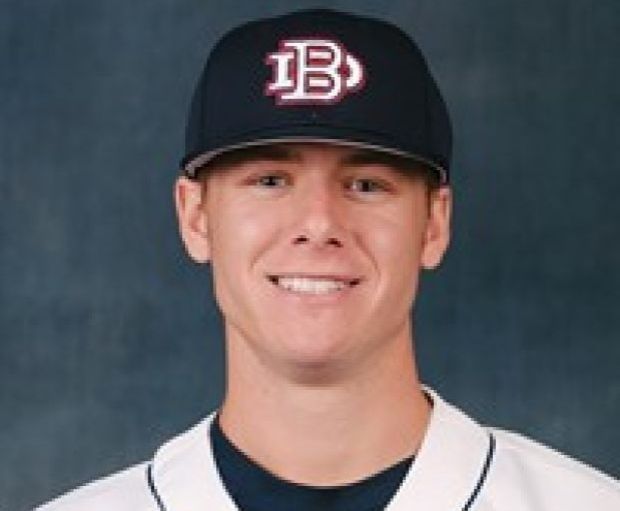
Jake Johansen led the Nats 2013 draft.  Photo via DBU website

Jake Johansen led the Nats 2013 draft. Photo via DBU website

Last year, minorleagueball.com’s John Sickels started a quick-hit review of every 2012 draft pick with snap judgements and quick stats.  I thought it was a great project, a nice little way to see how the draft picks were faring.  He petered out around the 17th round, and I took up his cause for just the Nationals picks and went through all 40 rounds at this link here.  Apparently 2012’s project was too much work for Sickels; he doesn’t seem to be doing it this year.  So I picked up the torch and did a Sickels-style analysis for all 40 of the Nats 2013 draft picks below.

(Note: stats are pulled from milb.com and/or fangraphs.com; put the player name into the search bar to get his seasonal stats).  MILB has nice consolidated seasonal stats while fangraphs has better advanced stats.  They do not include any playoff stats for those still playing after 9/2/13).

Finally, at the end of each writeup i’ll put in a color coded trending line for the player: Green for Trending UpBlue for Trending steadyred for Trending Down.   This is just my knee-jerk opinion of the prospect status of the player system-wide.  And yes I realize this is their first pro ball season, short-sample sizes, etc etc.

Without further ado:

Round 1: forfeited w/ Rafael Soriano signing, which as I noted in this June 2013 post cost the Nats a shot at one of several highly regarded pitchers drafted just behind our vacated spot.

Round 2Jake Johansen, Coll Sr. RH Starting Pitcher.  1-3, 1.92 ERA with 51/23 K/BB in 51 2/3 innings between Auburn and Hagerstown, 34 hits.  After signing quickly for slot (very quickly, like in 24 hours or so), Johansen joined short-A Auburn and was essentially unhittable through 10 starts.  He was promoted up to low-A, got hit around in two starts and finishes the season with a 1.92 ERA, and a sub 1.00 WHIP.  Johansen outperformed his poor college numbers somewhat, still walks too many batters, and still flashes a dominant fastball.  Scouts continue to believe he’ll end up in the bullpen, but until that situation presents itself Johansen will stay as a starter.  He seems like he’s bound for the opening day start in Hagerstown in 2014.  Trending Up.

Round 3Drew Ward, HS 3B.  .292/.402/.387 with one homer, 25 walks, 44 strikeouts in 168 at-bats for the GCL Nats in the rookie league.  A good average and a great OBP, but where’s the power?  Ward was reported to have a ton of power coming up but his slugging was lower than his OBP.  He produced at a 142 wRC+ for the season, which is great, but I think he needs to show more power going forward.  That won’t be easy in his next stop; the stadium in Hagerstown is old and cavernous with huge walls; you earn every homer up there.  Trending Up.

Round 4Nick Pivetta, Juco RH Starting Pitcher.  1-1, 3.41 ERA with 18/12 K/BB in 29 innings between GCL and Short-A, 28 hits.  Pivetta started 8 games but averaged less than 4 innings a start.   For such a big guy (6’5″ 220) with such a reported fastball (upper 90s in short spurts) I would have hoped for more K’s (18 in 29 innings).   Outlook; bound for Hagerstown but seems like someone who may convert to short relief soon where he can maintain higher velocity in shorter outings.  Trending Steady.

Round 5Austin Voth, Coll Jr RH Starting Pitcher: 3-0, 1.75 ERA with 55/6 K/BB in46 1/3 innings between three levels, 33 hits.  You read that correctly; 55 to 6 strike out to walk ratio for this U of Washington product.   He pushed his way through two promotions on the season, ending up in the Hagerstown rotation.  Another interesting stat: Zero home-runs in his 55 innings on the year.  And these stats were done with pretty normal looking BABIPs; his FIP values were lower than his ERAs in short- and low-A.  He seems like an exciting draft find and should be in the Hagerstown rotation in 2014.  Trending Up.

Round 6Cody Gunter, Juco 3B.   .229/.294/.313 with 3 homers, 20 walks, 62 strikeouts in 214 at-bats for Auburn.   62 punchouts out of 214 at-bats; that’s more than 25%.  With so many Ks and so little power (.084 ISO), I’d be concerned about Gunter’s future at the corner.  Its possible he was just a bit young for Auburn as a 1st-year JuCo grad.  Trending down.

Round 7Jimmy Yezzo, Coll Jr 1B.  .267/.282/.342 with 2 homers, 5 walks, 37 strikeouts in 243 at-bats for Auburn.   Five walks in 243 at-bats??  That shows a pretty significant plate discipline issue.  Yezzo came to the Nats with such a good hitting reputation in a decent baseball conference (the CAA); what has happened?  Drafted as a first baseman, Yezzo needs to show some serious power improvement to continue at a spot which normally is where lesser defenders “end up” to keep their bat in the lineup.  Trending down.

Round 8David Napoli, Coll Sr LH relief pitcher.  1-0, 1.14 ERA with 28/10 K/BB in23 relief innings in Auburn, 16 hits.  He had a very wild reputation coming out of college, but seems to have toned it down at Auburn to become an excellent relief pitcher.   I’m a little disappointed to see him already get converted to relief, but his size and stuff seems to point towards situational lefty anyway.  I could see him in Potomac in 2014 quickly turning into the next Ian Krol.  Trending up.

Round 9Jake Joyce, Coll Sr RH relief pitcher.  1-3, 5.22 ERA with 25/12 K/BB in 29 relief innings in Auburn, 37 hits.  Joyce was unlucky (.381 babip) and his FIP reflects that (3.03 versus 5.22 era), but he still gave up a ton of base-runners (1.67 whip) and a ton of air-outs (0.62 GO/AO on the year).   Given the fact that Joyce was a senior sign for very little money, he could seem rather expendible if he doesn’t start strong in 2014.  Trending down.

Round 10Brennan Middleton, Coll Sr SS/2B.  Did not play an inning in 2013; I cannot find any details of the injury.  There are some reports that he injured his ankle towards the end of his senior season at Tulane; perhaps that injury carried over into the summer.  He signed for a pittance and was not highly regarded; he could struggle to make a team out of spring.  Trending down.

A quick note before continuing: you can see the effect very clearly of the new MLB draft rules by looking at the Nats draft picks here; our 8th,9th and 10th round guys signed for a combined $40,000 so the team could over-pay earlier in the draft.  We got mostly cheap guys, senior signs with zero leverage as we got closer to the 10th round and the production shows.   Then, starting at round 11 (where the slot per pick is a flat $100,000 and the signing bonus cap re-sets) we start to see more significant prospects get signed and coaxed out of remaining college eligibility.  Its almost as if we should treat the 8th-10th rounders as closer to 30th round picks, all things considered.

Round 11John Simms, Coll jr RH relief pitcher.  0-4, 5.70 ERA with 34/7 K/BB in 30 relief innings mostly in Auburn, 41 hits.  His walks were low but hits were high.  His ERA looks ugly but look beyond the top layer and you discover that Simms actually didn’t pitch that badly this year.  A ridiculously high BABIP of .438 contributed to his inflated short-A ERA; his FIP was just 2.38.  Combine that with his 5/1 K/BB ratio and he has the makings of at least a good reliever in the system.   Look for him in Hagerstown or Potomac’s bullpen, where shorter stints should allow him to maintain velocity.  Trending steady.

Round 12Andrew Cooper, Juco RH relief pitcher.  2-1, 3.86 ERA with 16/7 K/BB in 25 2/3 relief innings mostly in Auburn, 29 hits.  Drafted as a project, and so far he’s pitched like a project.  His numbers aren’t bad or great in any direction.  I’d suspect the team knew he needed some complex time so I could see him staying in Viera until next season’s short-A starts up and repeating the level.  Trending steady.

Round 13John Costa, Juco RH relief pitcher.  Did not pitch an inning in 2013; he had Tommy John surgery in March and won’t be healthy until mid 2014.   Likely stays in the complex league until short-season starts, then heads to the rookie league.  Trending down.

Round 14David Masters, Juco SS.  .178/.246/.237 with 0 homers, 9 walks, 33 strikeouts in 152 at-bats for Auburn.  Masters showed little power, little hit tool in general.  He had a wRC+ of just 51 and slugged lower than his OBP.  He’s apparently a genius in the field though.  But, you’ve got to hit to advance.  If he’s the defensive whiz that the scouting reports say, then he may get another shot in 2014.  Note; as others have noted, Masters is a 2nd cousin to Mad Men star John Hamm.  I hope this wasn’t the reason we drafted him :-).  Trending down.

Round 15Isaac Ballou, Coll Sr OF/CF.  .273/.381/.366 with 2 homers, 32 walks, 37 strikeouts in 238 at-bats mostly for Auburn.  Ballou was Auburn’s leading hitter by average and earned a promotion up to Hagerstown, where a 3/27 start dented his seasonal numbers.   No reason not to see him in low-A again starting in 2014.  Trending up.

Round 16Willie Allen, Juco Corner OF from Oklahoma/Newtown, MA.  Did not sign; I cannot find any reason; there’s a link to his hometown paper that seemed to indicate that he was ready to sign and report.   Perhaps something came up in his medicals.  Allen also does not appear to have transferred to a 4-year school.  Interesting question; how did a kid from Boston end up in an Oklahoma junior college program?

Round 17Geoff Perrott, Coll Sr C.  .308/.308/.308 in 12 at-bats for Hagerstown; Perrott was hurt most of the year and is providing late-season cover for the Suns’ playoff push.  A lost season for Perrott; hopefully he gets a chance to prove himself next season.  Trending down.

Round 18Cory Bafidis, Coll Sr LH relief pitcher.  2-0, 2.73 ERA with 22/13 K/BB in 26 1/3 relief innings mostly in Auburn, 18 hits.  He got pushed to low-A too early, settled into short-A where he probably belonged to begin with, and pitched relatively well for 20 innings.   Too many walks for a relief pitcher, though, he’ll have to work on that.   He mostly worked in 2 inning stints and never got any looks at starting.  Trending steady.

Round 19Niko Spezial, Coll Sr LH relief pitcher.  1-0, 3.32 ERA with 21/8 K/BB in 19 relief innings mostly in the GCL, 16 hits.  Spezial started the season with Auburn but got the quick demotion after just 3 1/3 relatively non-descript innings.  A college senior draftee, he did not belong in the rookie league.  Nonetheless he pitched effectively for the record-setting GCL Nats.  Spezial needs to show how he fares against someone his own age, which hopefully he’ll get a chance to do in 2014.  Trending steady.

Round 20Brenton Allen, Coll Jr Corner OF.   .186/.319/.271 with 1 homer, 15 walks, 31 strikeouts in 113 at-bats mostly for Auburn.  A disappointing pro debut for Allen, a 9th rounder out of HS who chose UCLA at the time.   Which makes his signing all the more curious; if he was a 9th rounder at one point, why sign for 20th round money?  Why not go back for your senior season to try to build draft value?  Nonetheless, he seems like he’ll compete for a full season OF job in 2014 but will have to show a better hit tool.  Trending down.

Round 21Justin Thomas, Coll Sr LH relief pitcher.  1-0, 3.13 ERA with 28/3 K/BB in 23 IP split between FOUR levels.  Thomas was well traveled this summer; he started in the GCL, got promoted to Auburn, then again to Potomac before settling back in Hagerstown for the bulk of the 2nd half.   All he did in Hagerstown was post a 21/1 K/BB ratio in 15 2/3 innings.  His ERA was a bit inflated versus his low-A FIP (2.56) and he remains the sole member of his draft class to broach high-A on the year (even if it was just for a game or two).  He’s clearly a leading situational lefty candidate with his control and should feature for Potomac in 2014.  Trending up.

Round 22Cody Dent, Coll Sr SS.  .222/.310/.242 with 0 homers, 19 walks, 47 strikeouts in 153 ABs for Auburn.  A light hitting senior sign middle infielder who strikes out one out of every three times isn’t going to go far in this game unless he fields like Ozzie Smith.   What’s interesting is this: Dent is actually hitting BETTER than he did at Florida this year.  A blogger on fangraphs dug into the numbers and found that Dent had an amazingly low babip his senior year in college.  Trending down.

Round 23Garrett Gordon, Juco Corner OF.  .257/.356/.317 with 0 homers, 12 walks, 27 strikeouts in 101 ABs for the GCL Nats.   We’d hope for some more power here for the undersized Gordon; he’s listed as an outfielder but he caught in high school.  Perhaps he’s considering going back to the position.  Trending down.

Round 24Matt Derosier, Juco RH relief pitcher.  2-1, 2.43 ERA with 20/5 K/BB in 19 relief innings mostly in the GCL, 24 hits.   Derosier may have been a Juco guy but he’s young; he turned 19 in July of this year.  After a brief stint to start the season in Auburn he pitched in middle relief for the GCL Nats, getting at least 4 long enough stints to earn a “grade” in my monthly starter grades.   He posted good, solid numbers, nothing flashy, nothing bad.  A 4/1 K/BB ratio is great.  He’ll move up next year, looking to stick as a younger member of the bullpen in low-A.  One interesting point related to Derosier: despite his young age, he’ll achieve rule-5 eligibility as if he was a college draftee, so he could run out his eligibility when he’s in the very low-minors.   Trending up.

Round 25Travis Ott, HS LH starting pitcher.  3-0, 4.03 ERA with 32/12 K/BB in 29 innings in the GCL, 24 hits.  The rare mid-20s round high schooler who signs, Ott was used as a starter in the GCL and was mostly good all year.  His seasonal numbers were skewed by one bad outing where he gave up 6 earned runs in 1 2/3 innings in mid-July.  This tall, lanky left-hander (6’4″ 170lbs) seemingly has room to grow and is very young; he turned 18 at the end of June.  Looks like the Nats might have a find here.  Trending up.

Round 26Garrett Hampson, HS SS from Reno, NV.  Did not sign; honored committment to Long Beach State (as confirmed by a local media site as well as PerfectGame).  Hampson was a well regarded prospect  heading into the draft (BA had him #84) and may have been a typical casulty of the new MLB draft reality; unless you’re picked in the first couple rounds and will sign for slot, you’re dropping.

Round 27Bryce Harmon, HS LH starting pitcher from Richmond, VA.  Did not sign; honored committment to East Carolina University.  A big lefty clocked 87-91 but recruited by lesser baseball schools (per PerfectGame).

Round 28Joey Webb, Coll Sr LH relief pitcher.  2-0, 1.89 ERA with 25/6 K/BB in 19 innings in the GCL, 13 hits.   A college senior who turns 23 in a few weeks pitching in the rookie league?  The definition of “too old for the level.”  But, Webb comes from a very small baseball school (NAIA’s Menlo College in California) and may not have been ready to compete with a bunch of Division I guys in Short-A.   Webb has almost no baseball pedigree (PerfectGame doesn’t even have a profile of him) so he’ll have to earn it going forward.  Trending steady.

Round 29Mike Sylvestri, Coll Sr RH relief pitcher.  3-1, 5.40 ERA with 14/9 K/BB in 18 innings split between Short-A and the Rookie league.  Sylvestri started in Auburn, got shelled (12 runs in 8 2/3 innings) then threw a shutout in the rookie league (9 2/3 innings, 9 hits, zero runs).   He’s undersized (5’10”, 180) and could have trouble getting out of rookie ball (as evidenced by his short-A experience).  May not be long for the organization.  Trending down.

Round 30Ryan Ullmann, Coll Sr RH Starting pitcher.  3-2, 4.74 ERA with 38/13 K/BB in 49 1/3 innings, 64 h its.  Ullman, like Webb, started in the rookie league being a senior coming from an NAIA (small).   By the end of the season, Ullmann was in the Auburn rotation.  He got 6 starts in Auburn with some up and down results (3 decent, one ok, two bad) that resulted in a 5.30 ERA all told.   You can’t teach size (he’s 6’6″, 230).  Ullmann closed in college and may return to the pen.  Trending down.

Round 31Willie Medina, Coll Sr SS.  .228/.315/.237 with 0 homers, 9 walks, 24 strikeouts in 114 ABs for the GCL Nats.   A .552 OPS playing as a 22-yr old in the rookie league is disappointing.  Medina may struggle to make it out of Viera next spring.  Trending down.

Round 32Pat Boling, Coll Jr LHP: Did not sign, chose to return to U. of Georgia for his senior season.  Bolling missed all of the 2012 season with an injury and redshirted, then had an uneven 2013 season (going from weekend starter to bullpen guy).   Probably looking to either complete his degree or try to compete for a full time starter job a year removed from injury in 2014.

Round 33Andrew Dunlap, HS C/RHP from Houston.  Did not sign.  Honoring a committment to Rice University.  Research on Dunlap finds an interesting story; he apparently went to 3 different  high schools all told (he moved around b/c because at the time he was a catcher and was blocked at the varsity level), was committed to Texas Tech at one point but then de-committed when he decided to become a pitcher and discovered he could hit 95-96 on the mound, transferred again and tried to gain a 5th year of high school eligibility, apparently failed, and had no “team” to play for this past spring.  Nonetheless, he had multiple offers for scholarships (Rice, UNC and U San Diego) before going to Rice.  BA did a Q&A feature on him in Feb 2013, so I’m guessing he was supposed to go much higher than the 33rd round.

Round 34Jake Walsh, Coll Sr LH relief pitcher.  0-0, 1.40 ERA with 17/5 K/BB in 19 1/3 innings closing in the Rookie League.  Promoted to Hagerstown on 9/3/13 to provide lefty bullpen coverage in the playoffs.    He was probably too old and too experienced for the rookie league but showed enough promise to get a two-level call-up for the post-season.  Lets see how he does in 2013, likely as a situational lefty/closer for Hagerstown.  Trending up.

Round 35Lukas Schiraldi, Juco RHP from Texas.  Did not sign.  The son of Calvin Schiraldi, Lukas was a 2nd year All-American Juco pitcher ranked #162 by Baseball America who has decided to transfer to U Texas Austin (like his father) instead of signing.   Understandible; if Schiraldi succeeds for Texas next spring, he’ll come into the 2014 draft as a high-powered college junior with much better earning potential.

Round 36Reid Humphreys, HS SS from Missouri.  Did not sign.  Honoring committment to Mississippi State.  Humphreys was the 2013 “Mr. Baseball” for the state of Missouri.  He is also the brother of the Nationals’ own Tyler Moore, who also was Mr. Baseball for Missouri and also attended Mississippi State.

Round 37Karsten Whitson, RH starting pitcher from Florida.  Did not sign, returning to U Florida for his senior/4th year.   Whitson is an interesting story.  He was San Diego’s 1st round pick (9th overall) in 2010 and was drafted just behind Matt Harvey and just ahead of Chris Sale.  In a move that surprised the Padres, Whitson refused to sign for slightly above-slot money and chose to go to school, turning down a $2.1M offer.    After a great freshman year, Whitson struggled with arm pain his sophomore year and turned to Dr. James Andrews this past spring, performing a “cleanup” surgery on his shoulder to alleviate an “impingement” and costing him the whole season.  Clearly Whitson needs to return to school and complete a full healthy season to regain draft value, so I don’t entirely understand this pick.  Maybe the Nats wanted to see if Whitson wanted to sign and rehab with the team as opposed to on his own (they did something similar with Robert Orlan last year).  But that would have made no sense for Whitson; he’s already in college on scholarship; why would he possibly have signed for round 37 money at this point in his career?

For me Whitson confirms what Keith Law always says when it comes to significant bonus money; take the money; you can always go back to college if you wash out of the minors.  But you just never know what may happen; if Whitson suffers another injury or performs badly next spring, he’ll be lucky to be offered $10k and will really wish he’d have taken that life-changing $2M bonus.  When proposed with this scenario, my wife says “I want my kid to go to college” but the reality is this; that money may not ever be there again, and the kid can always go to college later.  You have to take it if it is there.

Round 38Caleb Hamilton, HS SS from Washington State.  Did not sign; honoring committment to U of Washington.  Seems like Washington’s area scout liked Hamilton, so they made an impression on the kid and drafted him late.

Round 39Robbie Tenerowicz, HS 2B/SS from California.  Did not sign; honoring committment to UC Berkeley.  He looks like an excellent Oakland-area product staying close to home.  Made the Area Code team and was on some all-american lists.  The Nats have drafted two middle infielders from Cal lately (Kobernus and Renda) so perhaps Tenerowicz will be a third in a few years.

Round 40Shaun Anderson, HS RH starting pitcher from Florida.  Did not sign; honoring committment to U of Florida.  Baseball America had a nice little writeup on the 2013 draft’s Mr. Irrelevant.
Movie Review: Trouble with the Curve

4 comments

(Slow news week; i’m posting some posts that have been sitting in draft mode for a while).

As mentioned in my previous baseball movie review, we’re a bit behind on watching movies.  If it weren’t for DVRs, I don’t think we’d have any idea what was going on in the modern entertainment world.  After writing the review of the movie 42, I suddenly remembered that we also recently saw Clint Eastwood‘s Trouble with the Curve.  So lets dive in with a review.

Story and Acting: I did not like the story, all in all.

Yes, we get it.  Moneyball (and Billy Beane) invented modern stats-based scouting.  But did it have to be so ham-handedly rammed down our throats?  The entire storyline revolves around the fact that Eastwood’s character is an old-school baseball scout, and he’s old.  Meanwhile the scouting office is apparently run by an uber stat-guy (played by Matthew Lillard, currently starring in the new series The Bridge on AMC) who has the ear of the owner.  But lets face it; if you’ve got a top 3 first round pick, we’re talking millions of dollars and a significant portion of your franchise’s near-immediate future at stake.  You’re not just sending one scout; you’re sending your area scout, your cross checker, your scouting director and your General Manager.

Not to mention, you absolutely cannot depend on stats alone when scouting high school players.  There’s so much variation in talent between teams, even in good baseball areas, that statistics are completely deceiving.  Keith Law mentioned a time where he went to a HS game in Georgia to scout a guy and, during warmups, the opposing team had a 3rd baseman who literally could not throw the ball across the diamond.  The prospect’s team was ahead 15-0 after three innings and the slaughter rule was put into effect.  What value would those stats have for that prospect, good or bad?  College guys are favorites of sabre-slanted scouting directors because there’s a known body of work.  If a guy plays in (say) the SEC, you know what kind of competition he plays against on a week in/week out basis and can properly judge his stat line.

The story needlessly made the star slugger an arrogant, entitled jerk.  He could just as well have been portrayed as a shy kid who wasn’t aware of his own skills or limitations.  The villian wasn’t the draftee; it was the front office executive who undermined Eastwood.  I guess the counter argument would be that if the draftee wasn’t a bad kid he’d have to be a good kid, and then you’d be rooting for him and against Eastwood’s interpretation of his limitations.

Did the Amy Adams character have to be undermined by a younger, whiter guy?  Did they have to add in blatant sexism to this story?  Couldn’t have Adam’s character just taken off from work with some implicit pushback from management in order to make the story work?

Another problem: do we really think that scouts “keep tabs” on “their guys” after they start playing?  If you’re an area scout in the rural mid-atlantic, you don’t have time to take in random minor league games to track your players.  You’re on the road every day scouting players and burning the road trying to get to the next game.  I found that to be somewhat unbelievable.

I’m not even bothering to mention the Justin Timberlake character, whose inclusion added nothing except a cheap romance storyline for the ladies.  I guess that’s a good enough reason.

Lastly, what did the “finding of the janitor” have to do with this story?  That made no sense; you could have made the point that the high draft pick couldn’t hit a curveball  just as easily by having him whiffing on curveballs being thrown by a BP pitcher.  After watching the climactic scene you could have easily have asked, “well is he missing the curve because its so amazing, or because he can’t hit a curve?”   I suppose the plot device was there to enable the Adams character an out of her lawyer job, serving as the janitor’s agent.

Baseball Sequences:

The climax of the movie is about a scouting sublety; watching a hitter’s hands moving when he’s faced with a breaking pitch.  This leads to the title of the movie and to the prospect’s downfall at the end.  That’s great and all, but difficult to show, especially in an actor playing a baseball player and not a player himself.

I’d be curious to see the draftee’s stat line in this movie; he seemed to go 15-15 with 15 homers in play sequences.  I guess it wasn’t enough to just show this kid getting hits; he had to be the best slugger of all time in po-dunk North Carolina or wherever they were supposed to be playing.

Otherwise, there really wasn’t much actuall baseball to watch here; it was a “baseball movie” in topic only.

Conclusion:

A poor movie.  I’m surprised Eastwood came out of acting retirement so that he could reprise his Gran Torino gruffy, grunting character and put him on a baseball field instead of a run down neighborhood in Detroit.  I like Eastwood, I like his movies and wanted to like this one.  But I just could not.

I know its probably been a few months (years?) since you’ve seen the movie, but what did you guys think?


Written by Todd Boss

August 13th, 2013 at 8:46 am

June 2013: Minor League Monthly Rotation Review

4 comments

Taylor Jordan is the big name in the Minor League Rotations this month.  Photo via wffn.net/hueytaxi on flikr.com

Taylor Jordan is the big name in the Minor League Rotations this month. Photo via wffn.net/hueytaxi on flikr.com

Here’s this month’s Minor League Rotation Review post.  Here’s April 2013 and May 2013‘s post for history.

For each level, I’ll put out the Rotation members, their “letter grades” per start for this month only, and then throw in a quick link to show their seasonal stats for context.  For each team there are 3 distinct groups of starters: the top group of 5-6 Starters per level is the “current rotation” as best as I can figure it, then the next section of pitchers are swing-men or spot-starters or guys who had “2nd start” or longer outings worthy of grading, followed by a 3rd group of guys who are generally no longer with the team (either by D/L, promotion, demotion or release).

All stats were as of 7/1/13 and may be slightly changed now with additional starts.


AAA Rotation: click here for Syracuse Milb.com stats

  • Maya: B+,D+,C+
  • Tatusko: C -> hburg spot start and back,B+,D-,D
  • Rosenbaum: B,B+,D,C-,B-,D
  • Roark: A-,A
  • Clay: B,C,A
  • Mandel: D-,A-,D,D-
  • Perry:  demoted
  • Young: still on the D/L; no starts in June
  • Demny: D- -> back down
  • Ohlendorf: B+ -> promoted
  • Torra: D,D-,C+->released

Discussion: The AAA rotation was rather tumultuous to follow in June.  Only Danny Rosenbaum made all of his expected starts.   Yunesky Maya nursed an injury and recognition of the looming ignomious end to his Nats career after his outright off the 40-man.  Ryan Tatusko continues to struggle in a starting role.  Tanner Roark always seems to do well in his spot-starts and may keep his gig in the rotation starting in July with the struggles of fellow swingman Jeff Mandel.   Caleb Clay has done very well since his promotion; he holds a 2.21 ERA in AAA and looks like quite a MLFA find so far.  Paul Demny wasn’t ready for AAA and got hammered in his one spot-start.  The team ran out of patience with Matt Torra and released him with a 5.53 ERA through 5 starts in April and May.  Ryan Perry‘s future in the organization is in question after being demoted to AA and successfully being outrighted off the 40-man roster.  Chris Young remains in organizational limbo, having not pitched in nearly 6 weeks.  Lastly the one success story: Ross Ohlendorf‘s patience has paid off with his promotion and his continued presence in the Nats bullpen.


AA: click here for Harrisburg Milb.com stats

  • Gilliam: D,A+,D,D,D-
  • Treinen: B+,B,B,A,C-
  • Demny: -> up/back,A-,A+,D,F-
  • Karns: returned/11 day layoff,C,A
  • Hill: A
  • Broderick: still on the D/L: no June Starts
  • Tatusko A (rain driven spot start->back to AAA)
  • Clay: A+,B,A -> promoted
  • Rauh: demoted
  • Jordan: A,A+,A+,A+,A- (pitch limit) -> promoted

Harrisburg’s rotation has now been picked twice by the Nats for a starter to promote; Nathan Karns struggled in 3 spot starts before being returned and looked rusty in his return, while Taylor Jordan‘s 2013 continues to be magical as he holds a sub 3.00 ERA through his two MLB starts (though he’s likely to be returned once all the Nats regular rotation guys return from D/L stints).  As for the rest of the Harrisburg Rotation in June: Rob Gilliam has mostly struggled since his promotion.  Blake Treinen continues to be the staff work-horse, leading the team in starts and innings.  Paul Demny got a spot start in AAA that seemed more due to schedule availability than performance; Demny continues to sport the same mid 4.00 ERA that he’s had essentially for his whole career in the Nats farm system.  Taylor Hill has had a couple of very nice debut starts on the heels of a sterling run of starts in Potomac.


High-A:  click here for Potomac Milb.com stats

  • Ray: A,A,F,D-,C+
  • Cole: B-,A+,A,B-,C+
  • Pineyro: D
  • Schwartz: A,F,D+,C-
  • Rauh F,A
  • Detwiler: C- rehab
  • Solis: C-,C- -> shelved for weeks
  • Sylvestre: D->demoted back to short/A spot start
  • Hill: A+,A,A+,A- -> promoted

Robbie Ray and A.J Cole continue to be the Potomac workhorses, both being high over-slot 2010 high school pitcher draftees and both with highly varying degrees of expectations both from Nats prospect followers and from the organization.  Both guys pitched in a double header that new Delaware resident Keith Law took in and he posted his 6/30/13 blog review of all the starters involved.   The link is insider-only (which everyone should be who wants to read ESPN’s premier content) but Law’s consensus seems to be this: Cole’s taken a step back since his last (2011) opinion and Ray is only projecting as a 5th starter at best.  You’d hope for more out of these two guys, given their draft pedigree and bonus money paid.  Sammy Solis threw 2 early June starts and hasn’t appeared since in a concerning development for the 2010 2nd rounder coming back from TJ surgery.   Ivan Pineyro‘s high-A debut went roughly, but he’ll presumably get a few more chances with few other viable candiates right now.  Despite a couple of up-and-down June starts Blake Schwartz maintains the best season-long numbers of any of Potomac starter right now.  And i’ll make mention of it here; its amazing to think that Taylor Jordan started 2013 as the #2 starter in Potomac and is now making (near) quality starts in the majors.


Low-A: click here for Hagerstown Milb.com stats

  • Anderson: D,A+,D+,D-
  • Mooneyham: D-/short,A-,B,D,A-
  • Lee: B-,A-,C,F,C+
  • Encarnation: B,F,D (took one for the team),C
  • Purke: A,D,B-,A-,A+
  • Rauh: C
  • Lopez: D+->back down from spot-start
  • RPena:  ->demoted to bullpen?->7 day d/l
  • Hudgins: -> demoted to short/A

Dixon Anderson and Pedro Encarnacion‘s monthly grade lines look poor, but their season-long stats are still decent (ERAs of right around 3.20, WHIPs of right around 1.2, about 2-1 K/BB ratios).   Brett Mooneyham‘s starts are looking dominant as they should be, repeating the level as a college draftee.  Matthew Purke‘s performances were a highlight for Nats farm system fans everywhere; after the month ended he was promoted to Potomac.   As for the rest of the starters, there’s room for concern.  Nick Lee and Ronald Pena both sport 1.50 WHIPs.   Hagerstown has already graduated a number of arms this season and may struggle to re-stock.


Short-A: click here for Auburn Milb.com stats

  • Turnbull: A,C-
  • Johansen: B+,C
  • Orlan: C+,A,C-
  • DWilliams: B,D,F
  • Barrientos: A-
  • Selsor: | | B-,F,C+
  • Hudgins: | | B-
  • Lopez: | | F- -> demoted

Auburn’s season kicked off June 17th, so we’ve only gotten a brief glimpse of the “Rotation.”  So far, some up and down.  Kyle Turnbull has looked good (as he very well should, having been demoted from full-season ball).  Robert Orlan‘s ERA looks great (1.38) but his walks are too high (9 in 13 innings).  Speaking of walks, Joel Barrientos has 12 walks against 3 strikeouts in his 11 2/3 innings so far; that’s not going to be sustainable.  Deion Williams has been hit hard thus far.  And 2013 2nd round (our first pick) Jake Johansen has three relatively wild outings under his belt; 8 innings, 8 walks, 8 strikeouts.  Of note; Reynaldo Lopez‘s “F-” outing was a 1 1/3, 7 run debacle giving him a nifty 47.25 ERA.


GCL: click here for GCL-Nationals Stats on MiLB.com

  • Suero: A,D
  • JRodriguez: B-,A
  • Silvestre: A,C
  • Valdez: C+
  • Voth: B-
  • DRamos: A

As with Auburn, the GCL season didn’t start until mid June (June 21st to be exact) so the “rotation” is still shaking out.  And frankly, those who get “starts” aren’t exactly pitching “starter” outings.  For example: the IP leader at the time of this writing is Jefry Rodriguez with 10 2/3 thrown over 3 starts.  So the letter grades here are mostly  misleading, given that they’re for 2-3 inning stints.  Nonetheless, Wander SueroRyan Ulliman, and Austin Voth look good in the early goings.

MLB Draft Results for Players with Local Ties for 2013

5 comments

Virginia Tech’s Chad Pinder represents the highest ranked Virginia-tied player in the 2013 draft. Photo via dailypress.com

After checking in with some local prep players early in March 2013, and then taking a more in-depth look at all the local player draft prospects (with a focus on any Virginia-based player) in May, here’s how the draft ended up working out for these and a few other Virginia players (table in order of overall draft position).

Couple of useful links while reading here: Total Team Bonus Pool limits for 2013 draft and Slot Bonus Values for the first 10 rounds of picks.

(Sorry for the formatting of this table at the blog itself: it looks fine in the WordPress editor and in the RSS feed)

Player Name Pos Current School Klaw Rank BA rank Coll Cmmt Drafted #overall Drafting Team
Chad Pinder 3B Virginia Tech 86 53 n/a 2nd-Supp 71 Oakland
Kyle Crockett LHP UVA >100 93 n/a 4th 111 Cleveland
Matt McPhearson OF Riverdale Baptist (Upper Marlboro) 62 136 Miami 4th 120 Arizona
Bobby Wahl RHP Ole Miss (from West Springfield) 66 36 n/a 5th 161 Oakland
Jimmy Reed LHP U Maryland (From Gaithersburg, MD) >100 >500 n/a 6th 185 St. Louis
Alex Murphy C Calvert Hall College HS (Frederick) >100 >500 Wake Forest 6th 189 Baltimore
Tyler Horan OF Virginia Tech >100 293 n/a 8th 252 San Francisco
Jake Joyce RHP Virginia Tech >100 >500 n/a 9th 286 Washington
Austin Nicely LHP Spotswood (Grottoes) 78 342 Virginia 10th 287 Houston
Ryan Cordell OF Liberty >100 196 n/a 11th 340 Texas
Alec Grosser RHP TC Williams (Alexandria) > 100 158 George Mason 11th 343 Atlanta
Conner Jones LHP Great Bridge (Chesapeake) 29 33 Virginia (strong) 21st 628 San Diego
Scott Silverstein LHP UVA >100 >500 n/a 25th 745 Toronto
Andy McGuire SS/3B Madison HS (Vienna) 74 196 Texas 36th 1069 Colorado
Jack Roberts RHP James River (Richmond) >100 360 Virginia
Thomas Rogers LHP Lake Braddock (Fairfax) >100 >500 North Carolina
Errol Robinson SS St. Johns (DC) >100 >500 Ole Miss (strong)
Alec Bettinger RHP Hylton (Woodbridge) >100 >500 Virginia
Zach Rice LHP Suffolk (Norfolk) >100 >500 North Carolina

Note that this is not an exhaustive list of Virginia or Maryland-tied players who were drafted; it is merely a list of some of the more notable names in the state pre-draft.   You can surf to MLB’s excellent Draft Tracker tool for the 2013 draft and query by state, which gives you any player who has a connection to a state (whether they’re from the state or attend college there).

Some thoughts here:

  • We continue to see the drastic effects the new draft bonus limits have on team’s decisions.  No longer are you seeing any high-end high schoolers taken with speculative picks in the 4th-10th round (much as the Nats picked and signed the likes of A.J. Cole and Robbie Ray).  Now, if a high schooler projected to go in the first few rounds falls … he may as well fall all the way out of the draft.  Consider what happened to Andy McGuire; pre-draft ranked relatively highly by pundits and projected as a 4th rounder by Keith Law.  What happened?  He falls to the 36th round where Colorado makes a (frankly) wasted pick on him.  So McGuire is clearly going to school.
  • Continuing on this theme, the number of college seniors and slot-signing players in the 4th-10th rounds continued to be high.  A number of Virginia-based college players went in this range despite not even being in the BA top 500 list.
  • Conner Jones is going to get his wish to go to school, falling from his end-of-1st round projection all the way to being a 21st round pick.  The lesson; the penalty for picking and missing on an upper-end pick is no longer just “saved” money but “lost” bonus money, so these tough-sign high schoolers went from first three rounds to nothing.
  • Bobby Wahl reportedly set out his bonus demands early ($1.5M or he returns for his senior season per Keith Law), dropping him from a worst-case end-of-2nd round projection all the way to the 5th.  Will Oakland find the money for him or will he go back for his degree?  Likely the latter.  Post-script: Wahl signed for $500k.
  • A couple of local prep players did get picked relatively high; Matt McPherson went in the 4th round to Arizona; will he take that slot money ($425k) or will he honor his University of Miami commitment?   And TC Williams hurler Alec Grosser was selected in the 11th round, which has a slot value of $100,000 unless Atlanta coughs up additional dollars saved elsewhere.  McPherson may want to take the money but Grosser likely could earn himself some cash by gong to school.  Post-script: both guys signed above slot deals; McPhearson for $500k and Grosser for a hugely overslot $400k.
  • The collection of high-profile Virginia hurlers who went completely unselected (the bottom names in the list above) includes a couple of guys whose lack of being picked surprised national pundits.
  • Lastly thought on all these highly regarded prep arms not being drafted: both the University of Virginia and North Carolina made out like bandits with this draft result.  All four major local UVA pitching recruits (Austin Nicely, Conner Jones, Jack Roberts and Alec Bettinger) are almost guaranteed to be going to college.  And UNC’s Thomas Rogers and Zach Rice will join that squad for the next three years.   The ACC should have some pretty significant pitching battles if these guys live up to their scouting reports.   Post-script: only Nicely ended up signing, for a big overslot $610k deal with Houston.

First Look; Nats top 10 rounds of 2013 Draftees

7 comments

Meet Jake Johansen, the Nats 2nd round 2013 pick. Photo via DBU website

A quick glance on our high-end draftees from 2013 draft.  As with other posts, I’ll put in the Keith Law and Baseball America ranking after the player name where appropriate (though as we’ll see, Keith’s top 100 quickly runs out of names).

Two other blogs are doing a far more in-depth look at these picks than I am here; definitely see Ryan Kelley‘s fantastic scouting reports on each pick at BaseballNewsHound.com and see Ryan Sullivan‘s excellent draft day blog coverage at NatsGM.com for more and better in-sight than what I’ve got here.  Plus Tom Schad at MLB.com has posted nice per-player summaries for all the Nats picks.   I’m just looking for a quick hit observation on our new guys.

  • Rnd #1/#28 overall: In what would have been the Nats first round pick, the Cardinals selected Rob Kaminsky, a prep RHP from New Jersey.   However at that point in the draft high-end prep lefty Ian Clarkin, pre-draft top-10 pick LHP Sean Manaea from Indiana State University and highly-regarded Arkansas RHP Ryne Stanek (another guy who was seen as an upper-end 1st rounder earlier this year with fantastic stuff) were still on the board.   Don’t you think the Nats wouldn’t have minded a shot at Manaea or Stanek at above-slot and then punted on below-slot guys the rest of the way (kinda what they did in 2012 with Lucas Giolito and a senior-heavy first 10 rounds)?  Both Manaea and Stanek dropped just in the past few weeks because of short-term injuries and both seem like steals at the end of the 1st round.  Man I would have liked to see one of these two guys added to the farm system. Was this worth the Rafael Soriano signing?
  • Rnd #2/#68 overall: Jake Johansen, RHP from Dallas Baptist University.  Keith Law ranked #63, Baseball America ranked #180.  This is a classic Mike Rizzo pick; a big guy (6’6″) with a big arm (98-100mph on the fastball, sustained through out the game).  Its almost like they’re trying to replace Alex Meyer in the farm system.  Johansen’s college numbers leave something to be desired: 5.40 era this season, a career ERA > 6.00.  Some have pointed out he has a very high BABIP on the year and that his conference is a hitter’s paradise; fair counter points).  For a guy who throws so hard, he had surprisingly few Ks this year (75 Ks in 88 1/3 innings).   His size and profile seems to trend towards an automatic reliever, but the Nats profile him as a starter.  You can’t teach velocity right?  The Nats execs are already on record saying that they’re drafting the tools and they believe they can coach him up.  FederalBaseball has a nice writeup on him with good quotes and the Nats press release on the pick too.  Masn’s Byron Kerr‘s write-up is here.  Already some pundits questioning the pick (HardBallTalk).  My thought?  I would have liked to have drafted a polished guy with our highest pick, not a project.  6/8/13 update: already signed for slot value.  Wow that was fast.  Clearly smells like a pre-draft deal here.
  • Rnd #3/#105 Overall: Drew Ward, prep SS/3B from Oklahoma.  BA #88.  Prep 3B who’s graduating a year early and with an Oklahoma commitment.    I don’t think he graduated HS a year early so he could get to college; he’ll sign.  Nice FederalBaseball writeup about him.  Keith Law isn’t a fan.
  • Rnd #4/#136 Overall: Nicholas “Nic” Pivetta, RHP  from a New Mexico Juco.   BA #155.  The MLB scouting reports say he’s an upper 90s fastball in short spurts and may be headed for the bullpen.  Sounds like a Rizzo pick to me.  Are you sure we’re not drafting for need at the MLB level right now?  :-).  All signs point to reliever.  Maybe we’re so happy with our High-A rotation right now that we’re just focusing on relivers who can go straight to AA and matriculate up the ranks with our current set of starters?
  • Rnd #5/#166 Overall: Austin Voth, RHP from University of Washington.  BA #260.  Seems like an over draft, might be a signability pick, though Voth fits the profile of a good K/9 guy.  He was the University of Washington’s friday starter, he was 2nd in the Pac-12 in strikeouts to #1 overall pick Mark Appel and had pretty good stats for a sub-.500 college team.
  • Rnd #6/#196 Overall: Cody Gunter 3B/RHP from Texas Juco.   BA #249.  Could be another reliever, but likely was drafted to play the field.  MLB.com’s writeup on him is here.
  • Rnd #7/#226 Overall: James Yezzo, 1B from UDelaware.  BA #290.  You usually don’t like to draft 1B-only guys on NL teams, especially ones who are only 6’0″, but Yezzo clubbed his way to the CAA player of the year honor and hit .410 with power in a 3-big conference with some good baseball.
  • Rnd #8/#256 Overall: David Napoli, LHP from Tulane.   Not BA ranked.  A weekend senior starter for Tulane with a great BA against for one probable reason; he seems wild as heck.  33 walks in 66 innings and FOURTEEN Hbps this year.  He had a fantastic batting average against (.176) and was even better in H/9 against (5.32 hits per 9, 2nd in the NCAA this year), but that’s easier to do when you’re all over the plate.  Looks like a loogy to me; undersized (5’10” 180lb) and ok stuff (threw 87 in HS, reportedly can hit 93-94 in short stints).  We’ll see.
  • Rnd #9/#286 Overall: Jake Joyce, RHP from Virginia Tech.  Not BA ranked.  A prototypical round 6-9 pick; college senior, little leverage, will sign for below slot to save cash.  Per the MLB.com story on him, a nats executive knows the family and made the recommendation.  95 out of the pen for Va Tech; you just hope that a reliever in college is going to be successful in the pros.
  • Rnd #10/#316 Overall: Brennan Middleton, SS from Tulane.  Say hello to Auburn’s starting SS this year.

First 10 round summary:

  • Four college RHP who mostly project to relievers
  • One college LHP who definitely projects as a reliever
  • Three college infielders; a 1B, a SS and a 3B.
  • One prep 3B who may be a tougher sign with a college commitment

So far, pretty typical Rizzo draft; college heavy with a focus on power arms destined for the bullpen.  Is there one big name in this list to get excited about?  Unfortunately not so far, but not having a 1st rounder and a crack at a big name (as described in the “possible 1st round missed” bullet point will leave a draft class wanting.

Mid-spring update on local draft prospects

leave a comment

High Schools are heading into post-season tournaments and local prep players have had their chances to make impressions through the Spring HS season.  How are our local prep phenoms faring this year, and what players with Virginia ties may feature prominently in the upcoming MLB draft?

Note; it is difficult to find updated stats on Prep players.  I tried.  If you know where to find reliable prep hitting and pitching stats, let me know.  So there’s not much in the way of stats here unless they’re college players.  For all the players below I’ve listed if they appear in the latest top-100 draft prospect rankings from two reliable sources: Keith Law‘s top-100 draft list and BaseballAmerica’s top 100 list and top 250 list.  Instead of re-linking over and over, i’ll refer to these two lists in shorthand via the links here.

First, quick updates on the players mentioned in my March 2013 posting on 4 local players:

  • Andy McGuire: SS/3B: leading Madison HS in Vienna to a 19-1 record (with 19 consecutive wins) heading into the District tournament and a #1 local ranking by the Washington Post.  Madison is also an honorable mention in the latest USA Today national rankings.  I asked Law in his 5/16/13 chat about McGuire’s draft status (he’s regularly in the lower 50 of pundit’s top 100 draft prospects for this year, implying a mid 2nd round pick) but Law is “hearing” 4th round, which he’s surprised by and may indicate that McGuire will honor his U. Texas committment.  Draft Rankings: Law #74/BA #196.  6/6/13 update: some video of McGuire at this link; just watching him run and move and his body type I’m immediately thinking he’s going to struggle to stay at SS, echoing what scouts say.
  • Alec Grosser: RHP TC Williams: Nothing else has really popped up about Grosser after the initial flurry of articles, and he’s listed as “Signed” and committed to George Mason.  PerfectGame has his best measured fastball at 92, ranging 89-92.  That’s still pretty good and I’m guessing he’ll head to George Mason to see where his arm takes him.  His HS has not had the success one would expect with a dominant arm, sitting at around .500 heading into the post-season.  Not ranked by Law/BA #158.
  • Matt McPhearson: OF with Riverdale Baptist popped up on MinorLeagueBall’s Mid-Atlantic report recently with the note that he has “game changing” speed.  He’s still listed as a “Verbal” Commit to U. Miami.  I’ve seen him as a late 1st rounder on some mock drafts.  Here’s a good scouting report on him from BaseballHounds.com.  Lastly there’s some scouting video online of him, showing a good bat from the left-hand side and with some amazing speed stats: a verified 6.2 in the 60 yard dash and home-to-first in less than 3.8 seconds.  As the articles say; that’s Crazy fast.   He’s one of only three guys with an “80” scouting grade in this year’s class per Jim Callis (the other two being Jonathan Gray’s fastball, and Kris Bryant’s power, and those two guys are both going in the top 3 of the 2013 draft). The only knock on him may be his size (just 5’10”) but he profiles as a prototypical leadoff/center fielder.  Law ranked #62/BA #136.
  • Thomas Rogers, LHP injured all year is still verbally committed to UNC.  Nothing new to report.  Not ranked in either Law/BA’s lists.

A couple of new names that I’ve taken note of locally, by virtue of their college commitments to major Baseball programs:

  • Errol Robinson, SS from St. Johns, signed to play at Ole Miss.  He was #92 in BaseballAmerica’s top 100 pre-season draft prospects and had a nice Q&A with them in March 2013.  His PerfectGame profile and draft write ups indicate he’s a quick-bat SS who has the capability of going in the top 5 rounds.  NatsGM’s Ryan Sullivan scouted him about a week ago and wrote it up here.   Based on this interview (where he talks about how his Mom, Dad and sister all attended or currently are at Ole Miss), I’m pretty sure he’s going to honor his college commitment despite any potential drafting.   Not ranked in either Law/BA’s lists.
  • Alec Bettinger, a RHP with Hylton HS in Woodbridge, has a verbal commitment to UVA.  PerfectGame has him with about a 90 mph fastball.  He’s “small but athletic” per this MinorLeagueBall article (6’0″ 165lbs), which may have him leaning towards a future professional bullpen role.  6’0″ is really on the low-end for what scouts like to see in a starter (think Tim Hudson is considered undersized and he’s 6’1″ 175lbs), so it seems likely he’ll take his fastball to college to see how it develops.  Not ranked in either Law/BA’s list.

Other Virginia-connected big names being talked about in the draft (thanks to this MinorLeagueBall article and comments for crowd-sourced Virginia-connected names to target)

  • Conner Jones, RHP with Great Bridge HS, the HS of Justin Upton down in Chesapeake.  Jones is leading his HS to a current 19-0 record, good enough for being ranked 18th by USAToday/22nd by BaseballAmerica in the state title game.  He’s easily the best Virginia draft prospect this year and is the only guy that MLBDraftInsider.com has going in the top 50 of their mock drafts right now.  PG has him at 93mph with a UVA committment that he has told scouts he intends to honor, but he’s getting back-of-the-1st round notice for the upcoming draft.  As scouts have noted, these “verbal commitments” are pretty meaningless unless a player specifically fails to file one specific item prior to the draft (which automatically invalidates them; i can’t recall what it is right now but believe its a drug test).  So we’ll see.  Law ranked #29/BA ranked #33.
  • Bobby Wahl: RHP from Ole Miss, a good sized Righty who is Ole Miss’ Friday night starter and who hails from Springfield, VA (West Springfield HS).  He’s 9-0 with a 1.43 ERA on the season, quite a stat line considering who he’s typically going up against (the #1 starters of other SEC teams, easily the best baseball conference in the land).  Law ranked #66/BA ranked #36.  If he last til the late 2nd round as Law suggests, he could be right around where the Washington Nationals could draft him with their first pick (#68 overall).  However, John Sickels/MinorLeagueBall’s latest mock draft has Wahl going #31, more consistent with BA’s rankings.  It doesn’t seem likely he’ll fall to the Nats.
  • Austin Nicely, LHP from Spotswood HS in Grottoes, Virginia (way down I-81 by my alma Mater James Madison University).   PG has him as a lefty who throws 90 and is committed to UVA.  Law #78/Not in BA’s top 250, a huge disparity.
  • Chad Pinder, 3B Virginia Tech.  Described as a plus-defender, decent bat.  His season batting stats aren’t that impressive as compared to his teammates, so he must be some defender.  If he can really move to SS like the scouting reports say and still hit for average and some power, he’s a good 2nd-3rd round prospect.  Law ranked #86/BA ranked #53.
  • Jack Roberts, RHP from James River HS in Richmond, committed to UVA and per PG gets up to 92mph.   Big guy (6’4″ 200lbs) who I’d bet can add more velocity if he goes to college.   If he threw a couple ticks higher he’d probably be a big time prospect.  Not ranked in either Law/BA’s list.
  • Zach Rice, LHP from Suffolk (outside of Norfolk), tall lanky kid who slings it 89 from the left hand side.  Committed to UNC.  Worth mentioning since he’s been recruited by the best team in the country.  Not ranked in either Law/BA’s list.
  • Kyle Crockett, LHP from UVA.  He’s UVA’s closer (and a HS teammate of fellow draft prospect Chad Pinder).  He throws 90-92 from the left side but has impeccable control; he has just one unintentional walk in 43 innings this year while getting more than a K/inning.  Despite being used as a reliever, I can see someone moving him back to the rotation to see if his stuff can play for 6-7 innings at a time.  Not ranked by Law/BA #103.

Conclusion: Looking at this list, UVA stands to lose an awful lot of pitching recruits if these guys don’t honor their commitments.  Bettinger, Jones, Nicely and Roberts are all UVA commits.  But imagine that staff in a couple years if they all go to college.  Phew.

http://www.baseballamerica.com/draft/2013-state-draft-report-virginia/

Would you rather have Houston or Durham’s rotation?

6 comments

My Pitching Rotation Rankings post (published on January 7th 2013)  ended up with poor Houston ranked as the 30th best rotation heading into the 2013 season.  They’re heading into the 2013 season with this rotation of guys:

Rank Name Age 2012 Stats
1 Bud Norris 28 (MLB Hou) 7-13, 4.65 ERA, 1.37 whip, 86 ERA+, 4.23 fip
2 Lucas Harrell 28 (MLB Hou) 11-11, 3.76 ERA, 1.36 whip, 106 ERA+, 3.75 fip
3 Philip Humbel 30 (MLB CWS) 5-5 6.44 ERA, 1.54 whip, 68 ERA+, 5.77 fip
4 Erik Bedard 34 (MLB Pit) 7-14, 5.01 ERA, 1.47 whip, 74 ERA+, 4.07 fip
5 Brad Peacock 25 (AAA Sac) 12-9, 6.01 ERA, 1.58 whip, 4.26 fip

There’s a couple of decent possibilities here: Norris looked pretty good opening day and Harrell’s numbers last year weren’t bad.  The other three though?  Phew.  Even Nats favorite Brad Peacock isn’t that convincing right now as a starter, based on his numbers in the PCL last year.

Now, here’s Tampa Bay AAA affiliate Durham Bull’s opening day 2013 rotation:

Rank Name Age 2012 Stats
1 Chris Archer 24 (AAA Dur): 7-9, 3.66 era, 1.258 whip, 3.25 fip
2 Jake Odorizzi 23 (AAA Oma): 11-3, 2.93 era, 1.35 whip, 4.19 fip
3 Alex Colome 25 (AA Birm) 8-3, 3.48 ERA, 1.37 whip, 2.91 fip
4 Mike Montgomery 23 (AAA Oma): 3-6, 5.89 ERA, 1.67 whip, 4.95 fip
5 Alex Torres 25 (AAA Dur): 3-7, 7-30 era, 1.93 whip, 4.56 fip

Tampa’s AAA rotation includes Keith Law‘s #53, #68 and #81 top prospects for 2013 in Archer, Odorizzi and Colome respectively.  Montgomery was Kansas City’s #1 prospect for quite a while and has struggled in AAA, but he reached AAA as a 21 year old in 2011.  Torres may switch places with a 6-year ML FA signing (the Bulls do have former Nat favorite J.D. Martin on their roster among other candidates) but the strength of this group is the first four guys.

Given that Tampa is notoriously slow in bringing along its starting pitcher prospects, its safe to assume that most of these guys would have already matriculated to lesser team’s rotations (of them only Archer has MLB service time; he got 4 starts and 30 innings late last year).   As it stands now, none of them can crack Tampa’s MLB rotation of David Price, Matt Moore, Jeremy Hellickson, Alex Cobb and Roberto Hernandez.  And this is all AFTER the big Tampa-KC trade which sent two other starters (James Shields and Wade Davis) to Kansas City.  And this doesn’t include former rotation stalwart Jeff Niemann, who just had season ending shoulder surgery. Man that’s a lot of starting pitching depth.

(Side note: Roberto Hernandez is officially “Roberto (Heredia) Hernandez,” the artist formerly known as Fausto Carmona.  He is also the first Free Agent to start a game for Tampa Bay since 2005!  Just an amazing statistic frankly, and an amazing tribute to Tampa’s pitching development staff).

So, honestly, which of these starting 5 would you want right now?  Not on potential, but on the ability to get major league hitters out in 2013?

Ask Boswell 2/25/13 Edition

8 comments

When is Anthony Rendon going to be ready for the Majors? Photo Nats Official via espn.com

With the first couple of Spring Training games in the books, its fitting that Tom Boswell did a Monday morning chat on 2/25/13.

Here’s how I’d have responded to the Baseball-specific questions he took.  As always, questions are edited for clarity and I write here before reading his response so as not to “color” my answer.

Q: Given that the Nats know almost every player making the roster out of Spring Training, do the players/coaches approach the 6 weeks differently?

A: Good question; I was taking with someone about this exact topic this weekend.  The 25-man roster is essentially already solidifed; perhaps the only question remaining is whether or not Henry Rodriguez makes it onto the team or does the team carry a second lefty reliever (Bill Bray?).  So I think the answer has to do with looking more at the AAA talent, looking at minor league FA signings like Micah Owings and Chris Snyder to see if they’re going to be better options than the guys we already had slated at AAA.  And the coaching staff gets to look at up-and-coming guys like Anthony Rendon, Zach Walters, and the like.  Boswell reiterates what I said here, naming other ML signings of interest like Chris Young, but also says that this ST has a lot of “wasted time.”

Q: I’ve spent the offseason reading Ball Four to help get my baseball fix. Do you have a sense about how different things are now?

A: It has been a while since I read Jim Bouton‘s seminal baseball book Ball Four.   But the season he chronicles (1969) happened before a number of rather important moments in Baseball history.  Expansion, divisional play, the Designated Hitter, the aftermath of the Curtis Flood and Andy Messersmith decisions (aka, Free Agency) and of course the massive increase of money in the game (both from a revenue stand point and from a player salary stand point).  One thing that seems certain to have changed; players can now earn enough in a season to be set financially for life.  And, the players union’s power is now such that players have the upper hand in a lot of negotiations with the league and the owners when it comes to labor unions.  Boswell notes that managers, coaches and GMs are far “smarter” now than they were in the Bouton era.

Q: How the Nats will do at the gate this year?

A: The season ticket base is back to where it was in 2005 apparently, broaching 20,000 season tickets.  The team averaged 29,269 fans last year.  Clearly the attendance seems set to rise significantly.   I think they’ll average 35,000 a night if they continue to be a first-place club.  Boswell agrees, noting that the team also has a couple of very marketable stars to help with attendance.

Q: Other than obvious injuries, are there any things that can happen in the first quarter of the year that you would find to be troubling?

A: I’d be troubled if Danny Espinosa started off slow.  I’d also be concerned if we saw significant regression out of our WBC participants Gio Gonzalez and Ross Detwiler, confirming my fears.  But the most important factor may be the performance of Dan Haren: is he the 2012 Haren or the 2009 Haren?  If he approaches 2009 version, this team may be set for the season.  Boswell notes they have a tough early schedule, that winning 98 games is tough, and that we should be patient.

Q: Gio Gonzalez; did he or didn’t he?

A: I think the prevailing opinion in the sport now seems to be that he did NOT take or receive PEDs from the Miami clinic, and that he was an unfortunate bystander.  His passing a surprise PED test given two days after the scandal seems to have also bolstered his case.   Boswell agrees.

Q: Are the Nats a 98 win team again, or was last year a fluke?

A: Barring a significant injury in the rotation, I think the Nats are easily a 98-win team and perhaps better in 2013.  Statistical WAR “proof” offered in this space back in January, and that was before the LaRoche re-signing and the Soriano pickup, both of which marginally should improve the team a few wins.  Most national pundits that I’ve read think the same thing, that this team could win 103 games.  The various estimator stats out there (Zips, Pecota, etc)  the team much closer to 90 wins, but those predictors are by and large incredibly conservative.  Boswell also says it comes down to health of the rotation.

Q: How would you rate the Nats starting rotation, spot by spot, compared to the rest of the Major Leagues?

A: Spot by Spot, its hard not to think that each of our guys are each at least in the top 5 by position in the league.  Drawing from my Rotational Rankings post from January 7th, 2013, I’d say that:

  • Strasburg is clearly among the best arms in the game (in the discussion along with Verlander, Kershaw, and Hernandez).  He’s not as accomplished as this group of course, but his talent is unquestionable.
  • Gonzalez matches up as a top 5 number two starter (other candidates: Greinke, Hamels, Lincecum or Cain, depending on who you think SF’s “ace” is).
  • Zimmermann is traditionally underrated but is at least a top 5 number three starter (along with Scherzer, Johnson/Morrow, Bumgarner, Lee and Moore).
  • Haren on potential could be the best number four starter in the game, though Buehrle, Miley, and Lynn could also fit in here.
  • Detwiler is often mentioned as being the best number five starter out there, and its hard to find competitors (best options: Zito, Romero, Garcia, and whoever Oakland and St. Louis settle upon for their #5 starters).

Boswell seems worried that these five guys can handle the workload all year, only really trusting Gonzalez in terms of repeatability.

Q: What future do you see for Anthony Rendon, and when will he debut in the majors?

A: I have been of the belief that Zimmerman should move to 1B for Rendon at some point.  But with LaRoche signed for two years, that won’t happen for a while (2 years, perhaps 3 if we pick up his 2015 option).  So now i’m starting to come around to the the possibility of Rendon pushing someone else off their position.  The most likely candidate seems to be Espinosa at 2B.  Despite having Lombardozzi on the 25-man, Rendon is a higher-potential player.  If Espinosa starts slow, and Rendon starts fast, I could see Rendon getting called up in June and starting to get reps at 2nd while Espinosa goes on the DL for his shoulder.  Otherwise, a Sept 1 call-up seems in order.  Boswell predicts a post-all star game call-up.

Q: Is there any way the Nats can stop Detwiler and Gio from pitching in that baseball ‘classic’? I see a disaster waiting to happen. Luis Ayala was never the same after getting hurt pitching in that thing.

A: There’s no way legally the team can prevent either guy from pitching, since neither suffered any injuries in 2012.  And yes I agree (as discussed in this space on 2/11/13) this is bad news for the Nats.  Washington has never had a pitcher play in the WBC who didn’t regress badly, and the stats seem to show that most every pitcher who does participate in the WBC pitches poorly the next two seasons (links in my post).   Boswell says cross your fingers.

Q: Do you think Bryce has it in him to be National League mvp?

A: Yes I do.  MVP voting generally starts with the “Best Player” on the “Best Teams” and creates a short list from there.  It is why it is relatively easy to predict the MVPs.  If Washington is the best team in the league and makes the playoffs again, and Bryce Harper has a break out season, it won’t be hard to see him getting serious MVP consideration.  Now, let me also say that a “Harper for MVP” prediction is NOT the same as predicting that Harper is set to become the best player in the game.  That’s not what the MVP measures.  If the question was, “Is Harper set to become the best player in the National League” i’d then say, “No, he’s a few years away from that distinction.”  Boswell thinks it may be a bit early.

Q: How many wins per year would you estimate a a stellar defense adds to a teams win total over the course of a season?

A: I’m sure there’s a good statistical answer for this, based on the percentage of WAR added by defense.  But it seems like a very difficult answer to come by.  Boswell says “a few.”

Q: Any reason to think he’s NOT going to be the GM for a long time?  Because I can’t think of many others who have done as good a job in all of baseball.

A: I can see no reason for Rizzo not to be the GM for at least the next 4 years.  His next big challenge will be dealing with the inevitable payroll demands of Harper and Strasburg (both of whom project to be $25M players) while also keeping a competitive team on the field.   2017 could be an interesting year for this team; Strasburg projects to hit Free Agency that year, and Harper should be in his 4th arbitration year.  They already have Zimmerman and Werth at $14M and $21M respectively in the 2017 year, with possibly another $40-$45M out the door to keep Harper and Strasburg.  They better start working on the farm system again.  Boswell didn’t really answer the question, just mentioned how Rizzo’s options have yet to be picked up.

Q: How is Ramos looking thus far? 100%? Suzuki is a professional and seems to be a good guy, do you get a feel for how well he and Ramos interact? How great would it be to generate some power/runs from the catcher spot this year.

A: I’ve been assuming that the catcher job is Suzuki‘s to lose for now; its still early but no word has come out negatively on Ramos‘ recovery.  Either way, yes it would be nice to get some production out of the #8 hole.  Suzuki was pretty good after he came over here, but Ramos healthy was a middle-of-the-order bat.  Boswell suggests that Ramos stop blocking the plate.

Q: If Rendon tears it up after September call-up, what does the Nats 2014 infield look like?

A: Wow; hard not to say Rendon replaces Espinosa like-for-like right now.  But, just as Desmond broke out in his 3rd full time season, so could Espinosa.  It could make for a log jam.  Lets hope for the best, hope for a rebound Espinosa season and a good-problem-to-have situation of having to trade a strength to make way for another strength.  Boswell has no idea where Rendon will play if he merits a call-up.

Q: I think the Nats, and Danny Espinosa are whistling past the graveyard if they think a completely torn left rotator cuff will not seriously affect Danny’s play. Your take?

A: A fair assessment.  I too believe a torn rotator cuff absolutely has to be affecting his swing, especially from the right side.  I think Espinosa should have gotten the thing surgically repaired in the off-season.  I wonder how much the team knew of the injury, because when it was reported in the off-season it sure seemed like a surprise.  Boswell says its a concern and that Espinosa should take more days off.

Q: Is McCatty working with Strasburg on correcting his inverted W delivery? Strasburg also has footstrike issues, as he tends to plant his foot and then whip his arm, which puts a ton of strain on his shoulder. I’m concerned if he doesn’t correct this, his shoulder will give out this season or next. Are the Nats worried about this? Are they working on cleaning up his delivery at all?

A: I’m beginning to think that this whole “Inverted W” thing is a bunch of BS.  Keith Law stated as much when prompted in a chat recently; he says that the problem with the Inverted W theory is that its difficult to “state” with authority that certain pitchers do or don’t have the phenomena.  And its true; if you see some shots of Strasburg he has it, in others his arms are more bent behind his back.  Its the same with Gio Gonzalez (I can show you stills of him landing with his arms clearly in an “inverted W” position and you don’t hear anyone talking about Gonzalez’s mechanics.   The leading inverted-W site on the internet (Chris O’Leary‘s page linked here) uses an opportunisitic example set of pitchers with that motion, but I can find plenty of examples of guys who have similar mechanics but zero soft-tissue injury history (on the Nats two quick examples are Drew Storen and Craig Stammen).  Meanwhile one of his examples was John Smoltz … who only threw 3400 MLB innings in his career and basically didn’t miss a start until he was 32.  Not the best example of proof that his mechanics were somehow “awful.”  I think the entire phenomenon is an observation of coincidence, that pitchers get injuries all the time no matter what their mechanics, and that we need to move onwards.  Wow; Boswell thinks exactly what i think; these proofs are nonesense.

Dan Haren; another excellent signing

7 comments

Dan Haren fulfils the team's need for a 5th (but not a #5) starter. Photo unknown via wikipedia

The Nats filled their 5th starter hole today, signing Dan Haren to a 1yr/$13M deal.

Haren looks like a possible fantastic pick-up for this rotation, giving them a legitimate #2 MLB starter capable pitcher to supplement the four returning rotation members from 2012.  He’s a sinker-ball pitcher (throws the sinker 34% of the time) who can reach 90-91 and throws a large variety of pitches en route to a career 7.6 K/9 rate.  I think he just may be fantastic in the NL east.  Even Keith Law likes the deal, a surprise since I can’t remember the last time he “approved” of a deal the Nats have made.

Haren struggled with back issues off-and-on in 2012, depressing both his numbers, his velocity and his free agency value, but heretofor was an incredibly durable pitcher (he’s averaged 219 innings per 162 games over his entire career, throwing 238 1/3 in 2011) with a penchant for putting up lights-out numbers (he had a 1.003 WHIP for an entire season in 2009 for Arizona, pitching in a hitter’s park).  Law noted that back issues all year were the cause of both his dropped velocity and his rising sinker, leading to his elevated ERA, and that a healthy Haren should have no problems returning to his typical form.  Some have noted concerns about his hip (sportswriters tweeting that Boston reviewed his medical records and passed on signing him), but others have noted that the Angels (who seemingly know his medical history the best) had a 2-year deal on the table.  If the Angels wanted him back, I’m more confident that the Nats don’t have damaged goods on their hands.

I really like this deal.  Haren was on the second-tier of free agents that I thought would be good fits here (Dempster, Sanchez, McCarthy being other examples) but I never thought he’d leave Los Angeles.  I understand why he was forced to sign a one-year deal (a very ill-timed injury plagued season, in his contract year), but he now has a chance to move to the NL, rebuild some FA value and springboard into 2013 free agency much as Edwin Jackson did last year.  I have always considered him a near-Ace pitcher in this league, and it may be the Nats great fortune to get him on a one year deal.

With this piece of business, I only see a couple more moves/decisions required this off-season:

  • Re-Sign Adam LaRoche and/or install Michael Morse at first for 2013.
  • Maybe sign one more lefty, possibly Michael Gonzalez (or not, if you’re confident that Bill Bray is healthy).
  • Maybe pursue some middle infield depth, looking to replace the Mark DeRosa role from 2012.

Coincidentally, does Haren’s signing mean the team is no longer looking to move Morse?  Lots of the talks with Tampa and Baltimore seemed to surround trading for MLB starting pitching.  But now there’s no room in the rotation.  Maybe now we’re looking to trade Morse for prospects instead of MLB ready guys, a move I’m completely on-board with given the farm system drain of our starters lately.

Span for Meyer; Understand it but don’t entirely like it

38 comments

The team gets the lead-off hitter it has needed for years in Denard Span. Photo Bruce Kluckhohn/Minnesota Twins via twitter

At least Nats fans can start understanding the team’s off-season plans a little more clearly now.  The first domino has fallen.  The Nats acquired Denard Span from Minnesota for Alex Meyer yesterday.

I’ve argued against a center field acquisition for a while now.  Here’s three primary reasons why:

1. I don’t feel the Nats needed a center fielder.  Bryce Harper put up a 17.6 UZR/150 in 715+ innings while showing a plus-plus arm (both statistically and for any casual observers).   He’s just turning 20.  There is no reason to think he cannot ably patrol center for at least the next few years.  I’ve used this analogy before, but I feel like its the Yankees approaching Mickey Mantle after his first season in center and saying, “Hey Mick, we like you in center but we have this barely above league average guy At least until point #2 possibly comes to play:

2. Brian Goodwin, along with Destin Hood, Eury Perez, Michael Taylor and any other marginal OF prospect the team has is now effectively blocked for at least the next 3 years and possibly longer.  Span is signed through 2014 (with a very affordable 2015 option), Jayson Werth signed through 2017, and Harper is under team control through at least 2017.   There’s your outfield for the next 3 years guaranteed, 2/3rds of which is locked up for the next 5.  I just feel that the better path would have been to let Harper play CF until Goodwin or Perez seems ready (clearly Godwin is an upper-end prospect who has impressed ever since he was drafted, and the team didn’t add Perez to their 40-man roster just to give him the extra salary) and just make do with a slugger in left field.

3. The loss of Alex Meyer represents the best healthy starter arm in the entire system, a system which is becoming thinner and thinner (with this trade on the backs of the Gio trade I’d guess the Nats are now going to be in the bottom 5 farm systems when rankings start coming out).  You can argue whether or not Meyer was going to stick as a starter (see the “bright side” points below), but inarguably this weakens the farm system in general and further weakens a specific problem that may pop up sooner than later; starting pitcher depth.  If one of our big 4 suffers a spring training injury, it is difficult to see who may step up and be counted on for starts.

This move clearly forces the Nationals hand on Michael Morse, and now the team may end up negotiating from a point of weakness if they need to move him.  The decision path for the team now is clearly “Morse or LaRoche” at first base.  If the team does bring back Adam LaRoche suddenly Morse is without a lineup spot and his trade value diminishes quickly.  If the rumors are true that LaRoche is “only” seeking a 3 year deal, the Nats should stumble over themselves to offer him a 3 year deal (3yrs $40M seems more than fair based on what LaRoche did for us last year) and lock up the plus-defender/middle of the order bat.

This move also cannot be a happy day for Tyler Moore; he’s clearly set on being a backup now in 2013 no matter what happens with Morse/LaRoche, despite promising numbers in 2012.   Well, unless the team fails to re-sign LaRoche AND moves Morse (which I suppose is still possible but would make little sense), which would then install Moore as the every day first baseman.  Between Moore, Morse possibly being out of a position and Goodwin being blocked for years to come, you have to think we’re going to see some more moves involving these players (hopefully to acquire a starter, or some starter depth in the minors).


Now, on the bright side (since I’ve been accused of being too negative in my analysis), I will say the following:

1. We did not give up a ton for Span.  I like Meyer, but I’m afraid he may not stick as a starter.  The scouting knock on him has always related to his tall frame and repeatability of his delivery.  He has a funky leg kick and slightly weird mechanics, further muddying the waters.  Lastly he’s a huge guy and he (at first glance in videos) seems to really throw standing up and doesn’t use a ton of his lower body.  All of this spells “reliever” in his future.  If Meyer tops out as a fireballing reliever, this trade looks even better.

2. Span inarguably fills a need; a high OBP leadoff hitter.  He’s a .357 career OBP guy with speed and who hits lefty, a nearly perfect fit for what this lineup needs at the top.  Leadoff hitters generally come from one of three positions: CF, SS and 2B.  If the team decided it NEEDED a leadoff guy, and with Desmond and Espinosa locked into the SS and 2B slots for the time being, clearly the only place the team could go was a center-fielder.  The USAToday article linked at the top said it best (paraphrasing): this move is as if you bought a new chair for your living room, which forced you to have to move around your furniture.  You didn’t necessarily need the new chair, but it certainly makes your living room look better.  This move enables Werth to move further down in the lineup and return to his power stroke.

3. We didn’t spend good money after bad on BJ Upton or Michael Bourn, who’s 5yr/$75M demands would have been a real waste of money.  Span’s contract is great: 5yrs for $16.5M guaranteed plus a $9M option in 2015.   The Nats acquired a desired resource without appreciably increasing payroll, allowing them to focus (perhaps) on a FA starter.

Initial reaction to the trade in the Baseball World seems mixed, which is great since it probably indicates that this is a pretty fair trade all in all.  Keith Law doesn’t like it of  course, but that’s because Law believes every low-minors big arm is turning into Justin Verlander (Law also thought the Gio Gonzalez trade was a “huge win” for Oakland because they got AJ Cole, the same AJ Cole who put up a 7.82 ERA in high-A this year and was forced to repeat Low-A).  Meanwhile Dave Cameron calls this a “huge win” for Washington, focusing on Span’s numbers and mentioning the same concerns about Meyer that I do.  Rob Neyer pays a complement to Mike Rizzo and the Nats and says the team is well-positioned for several years.  Ken Rosenthal talks about the about-face the franchise has done in the last 3 years in the eyes of potential Free Agents, specifically Zack Greinke, who declined the Nats trade offer 2 years ago but now could be the final piece in building a juggernaut.


Coincidentally, those who think this moves Harper to LEFT field may be mistaken.  Werth’s defense in right has inarguably slipped (he posted a -14.2 UZR/150 in right this year, a significant drop from his previous decent-to-good seasons there).  I think Harper should play right field, with his gun for an arm protecting against 1st-to-3rd runners while Werth should immediately put up great UZR numbers in left.  Possible lineup in 2013 (assuming for now that LaRoche is leaving):

  1. Span (L) – CF
  2. Werth (R) -LF
  3. Zimmerman (R) – 3B
  4. Harper (L) – RF
  5. Morse (R) – 1B
  6. Desmond (R) – SS
  7. Espinosa (S) – 2B
  8. Suzuki (R) – C
  9. Pitcher.

L-R-R-L-R-R-S-R for good balance.  I could also see Desmond and Werth switching spots in the lineup.  Harper to cleanup may be a bit early, but without adding another lefty bat the lineup could have too many right-handed hitters in a row.

Now, what if LaRoche re-signs?  Then suddenly this lineup has pretty good balance.  With LaRoche in the fold i’d probably go like this:

  1. Span (L) – CF
  2. Werth (R) -LF
  3. Harper (L) – RF
  4. Zimmerman (R) – 3B
  5. LaRoche (L) – 1B
  6. Desmond (R) – SS
  7. Espinosa (S) – 2B
  8. Suzuki (R) – C
  9. Pitcher.

That’d be a slight modification over where these guys hit last year, but would give nearly perfect lefty-righty balance.


In the end, you have to give up something you value to get something you value.  The Nats made a good trade, despite my thinking they didn’t need to make the trade in the first place.  They’re an improved team on the field for 2013.