Nationals Arm Race

"… the reason you win or lose is darn near always the same – pitching.” — Earl Weaver

Archive for the ‘ross detwiler’ tag

Ladson’s Inbox 11/5/13 edition

10 comments

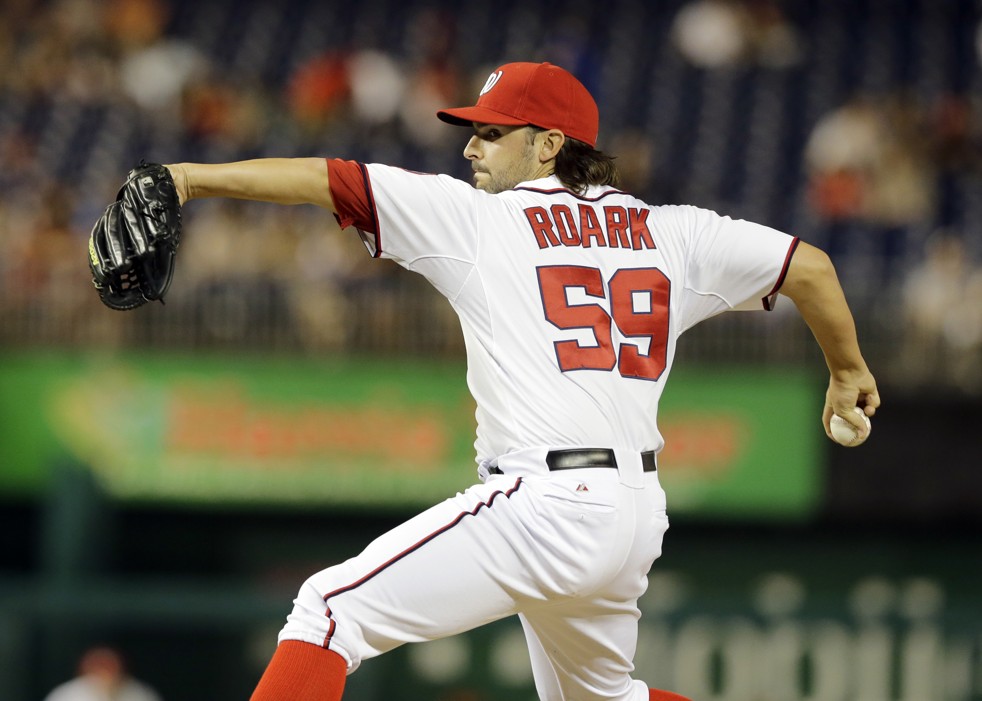
Can Roark win a 2014 rotation job? Photo Alex Brandon/AP via wp.com

Can Roark win a 2014 rotation job? Photo Alex Brandon/AP via wp.com

Well, we finally got a manager, so hopefully MLB.com Nats beat reporter Bill Ladson will stop taking “Who do you think the next Nats Manager” questions.  I’m not ruling it out though 🙂  Nonetheless, here’s the latest Ladson inbox, dated 11/5/13.  As always, I write my response before reading his and edit questions for clarity.

Q: Will Davey Johnson still play a role in the organization?

A: Who cares?  Does it matter?  Whatever role Davey Johnson could play would have so little significance on the on-field play of the 2014 team that I find it useless to even speculate.  I’m sure the Nats offered him a limited role out of respect, and I’d assume Johnson accepted it as long as it allowed him to go relax in Florida for a while, hoping another managerial job opens up.  Ladson expects he’ll consult to the team and advise on trades and FA signings because he’s such a great “talent evaluator.”  Hey Bill; if Johnson was such a great talent evaluator why exactly did he run Danny Espinosa out for so many at-bats?  Why didn’t he push to make a change in the rotation when it was clear that Dan Haren wasn’t pitching at even a replacement-level?  How come he didn’t see the rising talent that made such a difference in September?

Q: After Stephen StrasburgGio Gonzalez and Jordan Zimmermann, how do you see the rest of the rotation shaking out?

A: A good question.  After going into the 2013 season with almost no high-minors starting pitching depth, you have to think the team is going to cover themselves for 2014.  So count on there being more seemingly worthy candidates than roles going into spring training 2014.  The answer to this question may depend on payroll issues: right now Cots has the Nats with about $80M committed for 2014 prior to its arbitration cases, which MLBtraderumor’s Matt Swartz is estimating will run the team another $37.3M (which honestly I think is slightly low).  That’s roughly $117M in payroll before even looking at a single FA candidate.   You could save some of this money with non-tenders or trades (Tyler Clippard at $6.2M is a candidate to be moved), but not enough to get an impact player.

Will the ownership group expand the payroll even more for 2014, knowing their “window” with this group of players is shrinking?  Or will they stay the course and know that nearly $30M of mostly underperforming veteran FAs (LaRocheSpanSoriano) come off the books after next season, allowing them to reload in the FA market towards 2015 and beyond?

If ownership frees up some cash, by trade/non-tender or by expansion of the payroll limit, there are FA pitchers to be had.  I’ve seen more than one pundit with the Nats linked to Matt Garza, but I don’t see it; I don’t think he’s worth what people seem to think he’s going to get (4 yrs/$60M).  More likely is the team going with a modification of the Edwin Jackson/Dan Haren plan and getting a reclamation project in the ilk of Josh Johnson on a one-year/low paying contract with big incentives.

Less predictable is the trade acquisition.  Nobody saw the Gio Gonzalez trade coming until it happened, and something similar could happen now.  The team is in the same position generally this off-season as it was in 2011 in terms of having a slight surplus of closer-to-the-majors arms and bats and could put together a similar package.  If we moved Brad PeacockTommy MiloneDerek Norris and A.J. Cole for Gonzalez in 2011 (or in otherwords, a good-looking starter with great initial call-up numbers, a solid lefty starter who dominated AAA, a decent looking catcher prospect and a high-leverage low-minors prospect) would a similar package of something like Tanner RoarkNathan Karns, Eury Perez and Robbie Ray fetch a #2 starter in the trade market?   Oakland isn’t facing the same issue they were in 2011 with any of its pitchers, so the most likely eager-to-make-a-trade GM in Billy Beane is out.  But that being said, they’re paying Brett Anderson a LOT of money for Oakland’s payroll (roughly 1/6th of their payroll for next year), and he could be moved.  Anderson wouldn’t cost nearly this much in prospects, but would be a huge risk; he hasn’t pitched a full season in years.

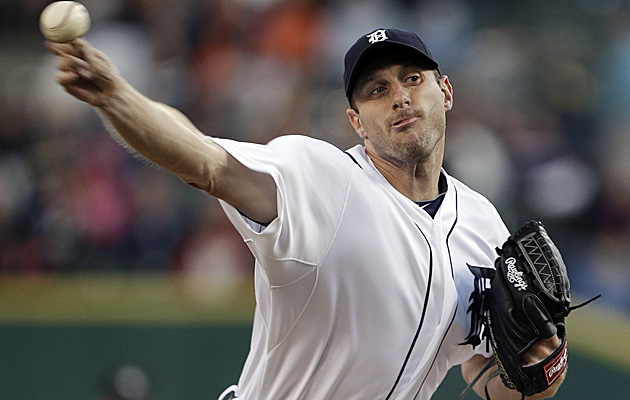
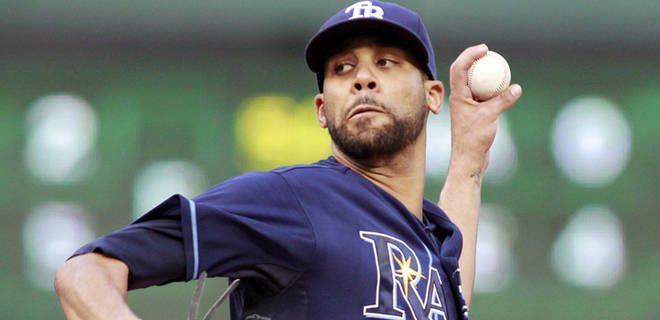
Meanwhile everyone knows Tampa is looking to move David Price, but any trade for him has to start with your two best prospects and build from there, and the Nats are just back to the point where the farm system is looking respectable again.  I’m not sure the Nats are going to be willing to give up what the Rays will demand.  The Nats have done business lately with the Chicago Cubs, who may look to move the arbitration-eligible Jeff Samardzija, but they’d be selling incredibly low on him after his poor 2013.  Lastly the Tigers reportedly are considering moving Max Scherzer, who enters his last year of arbitration looking for a big pay day and with Ken Rosenthal reporting that the Nats are his best fit, but I just cannot see purposely moving a Cy Young winner and disrupting a team that continues to be one of the best in the AL.

With no FA acquisitions and no trades, I see a competition next spring that likely sees Ross Detwiler in the 4th spot (no options, theoretically healthy again), Tanner Roark in the 5th spot (he keeps his spot until he shows that his remarkable September numbers are human), Ross Ohlendorf as the spot starter/long man in the MLB pen, and Taylor Jordan-Nathan Karns being the #1 and #2 starters in AAA Syracuse.  Some speculate that Detwiler would lose out to both Roark and Jordan and become a lefty out of the pen … but I don’t see that.  I’m not counting it out, but I don’t see that happening if he’s healthy.

With any significant FA acquisition or trade, you line up Stras-Gio-Zimmermann-New Acquisition and Detwiler to start off 2014, just as you did in 2013.   Roark and Ohlendorf likely work out of the MLB pen and Jordan/Karns still in AAA.   Maybe Karns comes up and works the 7th inning as well, while Jordan remains starter insurance plan #1.

Ladson also mentions Price, also mentions what I do about the difficulties lining up, thinks the Nats will acquire someone for #4 spot and then says Roark has the inside edge on #5 spot, even over Detwiler (who he thinks could move to the bullpen). 

Q: What did you think about the Nationals hiring Williams as manager last week?

A: Well, I guess Ladson had to get in one last question about the managerial situation.  My take: I like the move, I think Matt Williams‘ combination of successful playing career and MLB coaching experience will instantly give him the respect of the veterans and the rookies on this team.   He will get this team in line, he will bring some old-school notions to this team and won’t back down in a fight (as Johnson clearly did with Atlanta all year).  I think he will give this team the spine it lacked and will do nothing but help move the team forward.

One other opinion; I do see some critics who say that Williams’ lack of direct managerial experience at any level hurts him.  I say BS; he was a major league coach for four years, working underneath a successful, respected manager.  He presumably contributed to the decision making process, got to witness first hand how decisions worked out, got to decide for himself how he would have handled situations, and in some ways I think this experience supercedes being a manager of a lower-level ball-club where there’s no egos and just a bunch of kids who you can cower into submission.

Ladson says its too early to tell, but that Williams had a great news conference.  Honestly I didn’t really expect much of an answer here from an employee of MLB.

Q: What is Christian Garcia‘s status? Will he join the Nationals in 2014? He was a great late addition to the bullpen in 2012.

A: He’s finally healthy, and pitching in the Mexican Winter League.  I think the team sees the error of its ways in trying to convert the injury-riddled pitcher to being a starter.  He’s working as a reliever in winter ball, and I hope to see him continue to work as a reliever in the spring.  I’d love to see him earn a spot in the bullpen; lord knows the team could use one more reliable arm in the 6th/7th inning (Ryan Mattheus needs to be on guard; your spot is in jeopardy for 2014).  Ladson agrees with everything I’ve said.

Q: Do you think the Nationals will trade Danny EspinosaTyler Moore and Steve Lombardozzithis winter or sign a couple free agents? I believe they need a lefty middle reliever, a left-handed bat coming off the bench and a veteran backup catcher.

A: Trading any of those three guys after the seasons they had at the plate would be selling incredibly low.  So no, I don’t think any of them get moved unless they’re part of a larger deal.  Espinosa needs to get healthy, learn how to hit left handed, and build trade value.  I believe he can be a valuable player for someone, somewhere, just based on his incredible defense.  But he has to hit better than .150.  Moore needs to return to his 2012 power ways, but I still see him as a useful player who we have no reason to trade; he still has options, he’s still pre-arbitration and thus he’s cheap.  Lombardozzi is the quintessential utility guy; he can play 2nd, 3rd, left, right.  You have to have one of these guys around … and if he can’t hit, it is’t going to kill you.  But when this player gets 300 ABs (as Lombardozzi got last year) … then you have a problem.  This is why the team got Scott Hairston and why they’re likely to give some looks to Zach Walters in 2014.   Maybe the team looks for a cheap veteran to replace Chad Tracy but i’d hope for a bit more positional flexibility.

I can also see the team kicking the tires on a veteran lefty but don’t entirely see the need; Ian Krol may have faltered down the stretch but he was mostly good.  Abad was good.  Cedeno was good.  We have all these guys locked up.  You see who wins a competition and switch them out if they’re ineffective.

Ladson thinks Espinosa is getting traded no matter what, and has played his last game as a National.

Q: Are Gold Glove Awards given with consideration to the offensive stats of a player? Otherwise, how could Denard Span miss out on the award this year?

A: They’re not supposed to be … but we all know old habits die hard and bit players who are awful at the plate often times have a hard time getting a Gold Glove.  Span as it turned out led all NL centerfielders in one defensive metric (Total Zone Total Fielding Runs), but I have zero problem with the NL winner Carlos Gomez.  Ladson says he was “shocked” that Span didn’t win, and then used “# of errors” as a metric.  Poor form Ladson; you need to reference some of the advanced stats in question.  Gomez led the NL in Defensive Runs Saved, one of the two major defensive metrics.  So your argument fails.  Span may have great range, but he wasn’t best in the Ultimate Zone Ratings measurement either.  See the Fielding Awards spreadsheet link to the right to see all the leaders in one place.
Nationals 2013 post-mortem

7 comments

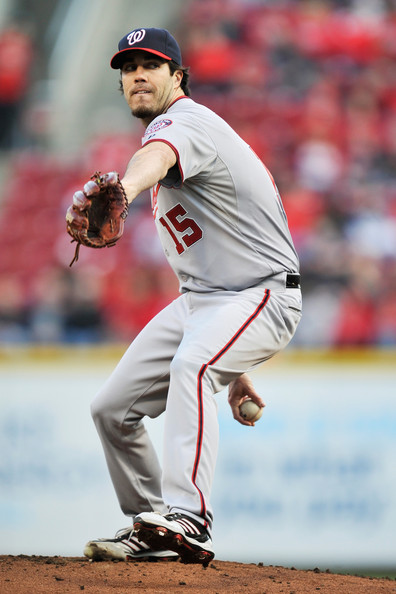
This may be the last time i use Haren's picture in a Nats uniform on this blog.  Photo via Zimbio.com

This may be the last time I use Haren’s picture in a Nats uniform on this blog. Photo via Zimbio.com

They say success has many fathers but failure is an orphan.  Well, here’s a whole slew of orphan-causing problems that befell this team this year.  I started this post months ago, when the team sputtered in July and suddenly sat at 54-60.  None of these bullet points are surprises.  Maybe I forgot some key points; feel free to tack ’em on.   This is a cathartic, washing my hands of the 2013 season, where so many things conspired to go wrongly.

  1. Davey Johnson, for continued pitching/bullpen mismanagement episode after episode, for seemingly losing the clubhouse (see below), for sticking with severely under-performing players (Espinosa, Haren especially) far, far too long, for failing to react to repeated beanings of his best player, and for generally looking old, tired and out-matched this year at press conference after press conference.  This team needs a new voice, a disciplinarian who will command more respect than what Johnson was commanding from this team.  My vote is for Matt Williams.
  2. Injuries.  Every team has injuries; I’m not going to write some simplistic statement that says “well if we had So-and-So healthy all year we’d have won the division.”   Look at St. Louis: they’re missing Chris Carpenter and Jaime Garcia basically all year and still won the best division in the game.  I think the issue most people will have with the Nats is the way their players’ injuries were handled.  Bryce Harper missed the whole month of June after several wall collisions finally caught up to him and he was clearly in pain the rest of the season.  Did the team not allow him to get healthy at the end of April?  Meanwhile you have to take serious issue with either the team, Danny Espinosa or both over the handling of his injuries.  What good did it do anyone to allow Espinosa to try to play through the significant shoulder injury he apparently has?  Why has he STILL not had the surgery done to fix it?  It sounds to me like there’s some serious stubbornness on both sides of this fence.  Ross Detwiler looked to be on the verge of a breakout season in 2012 … and now he’s back to being the broken down starter he’s mostly been during his time here.  In his 6 pro seasons he’s not pitched full seasons in 3 of them.   This isn’t necessarily on the team .. but I will ask this: at what point do you go into a season counting on Detwiler to break down instead of the reverse?  It goes to proper roster planning (also mentioned later on).
  3. Bench production, for regressing so far past the mean from last year’s over production.  Did you know that Steve Lombardozzi got more than 300 plate appearances this year with this slash line: .255/.276/.337?  I know you need backup utility infielders, but man, that’s a huge 68 OPS+ hole getting a ton of ABs.  Our opening-day bench of Lombardozzi/Moore/Bernadina/Tracy posted these OPS+ figures in 2012: 82/123/111/111.  In 2013?  69/66/43/55.  Wow.  That’s just a startling drop-off in production.  To add insult to injury Kurt Suzuki‘s OPS+ went from a respectable 95 last year to 64 this year.  Basically every pinch hitting spot or guy off the bench covering for a starter turned into an 0-4 outing.  We know that at least 3 of these 5 bench guys are gone; who will replace them?
  4. Dan Haren.  $13M for one of the worst starters in the game, even given his little August rebound.  The team finished 4 games out of the wild card, 10 games back of Atlanta.   In Dan Haren’s 30 starts, the Nats went 11-19.  In every other pitcher’s starts, the team went 75-57.   That’s a .568 winning percentage, which equates to 92 wins.  Even a #5 starter who gave the team a 50/50 chance of winning on any given sunday would have basically put the team into the WC game.  Haren was just a really really poor FA acquisition who contributed a huge part to the downfall of the team.  I wonder at this point if the Nats didn’t fail to do the proper medical due diligence on Haren; there was a reason the proposed trade to the Cubs fell through and there was a reason the Angels did not give him a qualifying offer.  I fully admit: I was completely on board with the signing, thinking we were getting the pre 2012 Haren.  Wrong; something clearly changed for him after the 2011 season and I wonder how much longer he can stay in the league after his last two seasons.  I’m sure he’ll get another one-year deal for 2014 based on his stronger finish, but another 5+ ERA season may finish him.
  5. Offense in general: The team scored 656 runs on the year.  That’s down fully 75 runs from last year, when they were 10th in the league in scoring.  Had they produced like they did last year in 2013 (about 10th in the league in runs scored and other key indicators),  they’d have scored around 700 runs, probably good for at least 10 more wins (under the rough estimate that it takes about 4 “extra” runs per win).  With 10 more wins … they’re winning the division again (since some of those added wins come at the hands of Atlanta).
  6. Hitting in the Clutch: Ask any sabre-nerd and they’ll tell you that “clutch” doesn’t exist and that all aspects of batting (good or bad) with RISP is merely coincidence (this came up again recently with David Ortiz’ game-changing NLCS homer).  I don’t entirely buy it. I think hitting with runners on base is a skill that can be practiced and honed.  I think there’s importance to driving runners in when you have the opportunity.  I think a batter with a runner on third and less than one out can absolutely look for a ball that he can hit into the air, thus driving in the run.  Anyway: let’s look at how well the Nats offense hit in the clutch this season (see this team-stats split link at tFangraphs).  The Nats team batting average with runners on base is ranked 19th in the league; its wRC+ as a team 17th.  However, change “runners on base” to “high leverage” in the Fangraphs split and you get this: Nats were 29th in high leverage batting average, 28th in wRC+. That’s right: almost dead last in the league in high-leverage hitting for the year.  When they came to bat in situations that mattered, they were one of the worst teams in the league.  Any way you slice it … that’s not “clutch.”
  7. Clubhouse Issues: I know that many readers here get irritated with presumptions of “chemistry” issues, writing comments about how we have no idea what really goes on in the clubhouse.  Fair enough; we don’t need to rehash the argument.  Absent any proof, I believe something might have been amiss.  Reporters have noted the losses of free-spirit Morse and the level headed DeRosa.  The Soriano acquisition brought a known surly loner with behavior problems into a tight knit bullpen and resulted in the chain reaction demotion of two guys (Storen and Clippard) who didn’t necessarily deserve to be demoted.  I believe Harper was fed up with Johnson’s message and was caught on camera more than once clearly ignoring or showing disdain to something he was being told.  To say nothing of the ridiculousness of Harper getting hit over and over without any of his teammates getting his back.   Can a new manager fix this?  Probably.  Can a leadership void fix this?  Definitely.  Perhaps with Jayson Werth‘s great season he can step up in the clubhouse and be the voice of reason moreso than it seems he has been before (either because he was struggling on the field or collapsing under the weight of his contract).
  8. Rizzo’s mis-management of the 2013 roster: Rizzo just had to have his speedy leadoff/centerfielder, and Span underperformed when it counted (I’m on record stating over and over that the team is wasting Harper’s defensive capabilities in left and blocking a power-hitter acquisition by sticking with Span in center.  But what’s done is done).  The opening day roster had no left handed specialists, a move that I quasi-defended at the time but which turned out to be disastrous.  We relied on a MLFA (and frankly, we over-relied an incredibly short sample size) for the long man (Duke) and he failed. We had absolutely no starting pitching depth in the high Minors and got rather lucky that Taylor Jordan materialized out of the thin air of high-A and Tanner Roark suddenly added 5 mph to his fastball and turned into an effective MLB hurler.  We had a $120M payroll but were depending on bargain basement acquisitions in key roles.  That just has to change for 2014.  Don’t go looking to save pennies on the proverbial dollar by non-tendering useful guys (as they did with Tom Gorzelanny last year); do the right thing and lock these guys up.  You had enough to waste $30M on Soriano but couldn’t find the scratch to keep around half of 2012’s bullpen?
  9. Pressure. this team had no pressure last year, and all of the pressure this year.  Nearly every baseball pundit with a blog, microphone or column picked them to win the division (me included), and lots picked them to win 100+ games (me included).  Look at how awfully they fared this year against the NL playoff bound teams:
  • Stl: 0-6, scoring just 8 runs in 6 games.
  • LA Dodgers: 1-5
  • Atlanta: 6-13.  Outscored 73-49
  • Pittsburgh: 3-4
  • Cincinnati: 4-3 but outscored 36-27 thanks to a 15-0 spanking the 2nd week of the season.

When the chips were down, they folded.  Especially against Atlanta, who pushed the team around, continually threw at us, and we had no reaction (that is until Strasburg suddenly had a fit of wildness which some will argue was less about standing up for his players and more about being off that day).   I lay this at the manager’s feet again.  Atlanta has proved time and again (and again) that they’re capable of acting like bullies when it comes to “unwritten rules” of the game, and Johnson let this go unchecked far too long.  A new manager with some balls will put an end to this nonesense, fast.  Sorry to sound crude, but it is what it is.  Johnson had no balls and made his entire team look weak in the face of the Braves.

Yes its great the team had a run in August and September.  What does it really mean?  Their schedule was cake in August and then filled with teams with AAA callups in September.  Who is the real Denard Span?  The guy who hit .235 in the middle of the summer or the guy who hit .303 in September?  Can Werth keep this kind of production up in the face of father time in 2014?  Can LaRoche return his OPS to something better than what a middling 2nd baseman can produce?  Can Harper stop running into walls and stay on the field?

I think the scarier part for Nats fans is the fact that this team is basically going to be the exact same team next year. Nearly every position player, likely the entire rotation (simply replace Haren with a healthy Detwiler), most all of the bullpen. There’s not a lot of holes here, not a lot of wiggle room.   Unless there’s a major trade on the horizon that drastically reshapes the roster, this is your team in 2014.  Can they turn it around and make up the 14 games they declined in the win column?

In summary; which of the above points IS the real issue behind 2013’s disaster?  And how do you fix it?  Because if you don’t address it, then 2014 is going to be the same story.


2013 Pre-season Rotation Rankings revisited

2 comments

Scherzer's dominant Cy Young season brings the Tigers to the top.  Photo AP Photo/Paul Sancya

Scherzer’s dominant Cy Young season brings the Tigers to the top. Photo AP Photo/Paul Sancya

In January, after most of marquee FA signings had shaken out, I ranked the 2013 rotations of teams 1-30.  I was excited about the Nats rotation, speculated more than once that we had the best rotation in the league, and wanted to make a case for it by stacking up the teams 1-30.

I thought it’d be an interesting exercise to revisit my rankings now that the season is over with a hindsight view, doing some post-mortem analysis and tacking on some advanced metrics to try to quantify who really performed the best this season.  For advanced metrics I’m leaning heavily on Fangraphs team starter stats page, whose Dashboard view quickly gives the team ERA, FIP, xFIP, WAR, SIERA, K/9 and other key stats that I’ll use in this posting.

  1. (#2 pre-season) DetroitVerlander, Fister, Sanchez, Scherzer, Porcello (with Alvarez providing some cover).  Scherzer likely wins the Cy Young.  Three guys with 200+ strikeouts.  The league leader in ERA.  And we havn’t even mentioned Justin Verlander yet.  A team starting pitching fWAR of 25.3, which dwarfed the next closest competitor.  There’s no question; we knew Detroit’s rotation was going to be good, but not this good.  Here’s a scary fact; their rotation BABIP was .307, so in reality this group should have done even better than they actually did.  Detroit’s rotation was *easily* the best rotation in the league and all 6 of these guys return for 2014.
  2. (#3 Preseason): Los Angeles DodgersKershaw, Greinke, Ryu, Nolasco, and Capuano (with Fife, BeckettLilly, Billingsley and a few others helping out); The 1-2 punch of Kershaw (the NL’s clear Cy Young favorite) and Greinke (who quietly went 15-4) was augmented by the stand-out rookie performance of Ryu, the surprisingly good half-season worth of starts from Nolasco, and then the all-hands-on deck approach for the rest of the starts.  This team used 11 different starters on the year thanks to injury and ineffectiveness, but still posted the 2nd best team FIP and 5th best fWAR in the league.
  3. (#8 pre-season): St. LouisWainwright, Lynn, Miller, Wacha and Kelly (with Garcia, Westbrook, and a few others pitching in).  Team leader Chris Carpenter missed the whole season and this team still was one of the best rotations in the league.  Westbrook missed time, Garcia only gave them 9 starts.  That’s the team’s planned #1, #3 and #4 starters.  What happened?  They call up Miller and he’s fantastic.  They call up Wacha and he nearly pitches back to back no-hitters at the end of the season.  They give Kelly a starting nod out of the bullpen and he delivers with a better ERA+ than any of them from the #5 spot.  St. Louis remains the bearer-standard of pitching development (along with Tampa and Oakland to an extent) in the game.
  4. (#22 pre-season): Pittsburgh:  Liriano, Burnett, Locke, Cole, Morton (with Rodriguez and a slew of call-ups helping out).  How did this team, which I thought was so low pre-season, turn out to have the 4th best starter FIP in the game?  Francisco Liriano had a renessaince season, Burnett continued to make Yankees fans shake their heads, and their top 6 starters (by number of starts) all maintained sub 4.00 ERAs.  Gerrit Cole has turned out to be the real deal and will be a force in this league.
  5. (#1 pre-season) WashingtonStrasburg, Gonzalez, Zimmermann, Haren, Detwiler with Jordan, Roark and other starts thrown to Karns and Ohlendorf).   Despite Haren’s continued attempts to sabotage this rotation’s mojo, they still finished 3rd in xFIP and 5th in FIP.  Haren’s 11-19 team record and substandard ERA/FIP values drug this group down, but there wasn’t much further up they could have gone on this list.   If  you had replaced Haren with a full season of Jordan’s production, maybe this team jumps up a little bit, but the teams above them are tough to beat.
  6. (#11 pre-season) Atlanta: Hudson, Medlen, Minor, Teheran and Maholm, (with rookie Alex Wood contributing towards the end of the season).  Brandon Beachy only gave them 5 starts; had he replaced Maholm this rotation could have done better.  Hudson went down with an awful looking injury but was ably covered for by Wood.  They head into 2014 with a relatively formidable  and cheap potential rotation of  Medlen, Minor, Teheran, Beachy and Wood, assuming they don’t resign Hudson.  How did they over-perform?  Teheran finally figured it out, Maholm was more than servicable the first couple months, Wood was great and came out of nowhere.
  7. (#26 pre-season) ClevelandJimenez, Masterson, McAllister, Kluber, Kazmir.  Too high for this group?  7th in rotation fWAR, 8th in FIP, and 6th in xFIP.  This group, which I thought was going to be among the worst in the league, turned out to be one of the best.  Jimenez and Masterson both had rebound years with a ton of Ks, and the rest of this crew pitches well enough to remain around league average.  They were 2nd best in the league in K/9.  You can make the argument that they benefitted from the weakened AL Central, but they still made the playoffs with a relative rag-tag bunch.
  8. (#9 pre-season) CincinnatiCueto, Latos, Bailey, Arroyo, Leake (with Tony Cingrani).  Cueto was good … but he was never healthy, hitting the D/L three separate times.  Luckily Cingrani came up from setting strikeout records in AAA and kept mowing them down in the majors.  Latos was dominant,  Leake took a step forward, and Bailey/Arroyo gave what they normally do.  If anything you would have thought this group would have been better.  6th in Wins, 7th in xFIP, 9th in FIP.  Next year Arroyo leaves, Cingrani gets 32 starts, Cueto stays healthy (cross your fingers, cross your fingers, cross your fingers) and this team is dominant again despite their FA hitting losses.
  9. (#25 pre-season) New York MetsHarvey, WheelerNiese, Gee, Hefner and a bunch of effective call-ups turned the Mets into a halfway-decent rotation all in all.  7th in xFIP, 11th in FIP.  Most of this is on the backs of Matt Harvey, who pitched like the second coming of Walter Johnson for most of the season.  Wheeler was more than effective, and rotation workhorses Niese and Gee may not be sexy names, but they were hovering right around the 100 ERA+ mark all year.  One superstar plus 4 league average guys was good enough for the 9th best rotation.
  10. (#12 pre-season) TexasDarvish, Holland, Ogando, Perez, Garza at the end.  Texas’ fWAR was the 2nd best in the league … but their accompanying stats drag them down this far.  Despite having four starters with ERA+s ranging from 114 to Darvish’ 145, the 34 starts given to Tepesch and Grimm drag this rotation down.  Ogando couldn’t stay healthy and Perez only gave them 20 starts.  Garza was mostly a bust.  And presumed #2 starter Matt Harrison gave them just 2 starts.  But look out for this group in 2014; Darvish, a healthy Harrison, and Holland all locked up long term, Ogando in his first arbitration year, and Perez is just 22.  That’s a formidable group if they can stay on the field together.
  11. (pre-season #6) Tampa BayPrice, Moore, Hellickson, Cobb, Archer and Roberto Hernandez.   Jeff Niemann didn’t give them a 2013 start, but no matter, the Tampa Bay gravy train of power pitchers kept on producing.  Cobb was unhittable, Archer was effective and Moore regained his 2011 playoff mojo to finish 17-4 on the year.  An odd regression from Price, which was fixed by a quick D/L trip, and a complete collapse of Hellickson drug down this rotation from where it should have been.  They still finished 12th in FIP and xFIP for the year.
  12. (pre-season #21) SeattleHernandez, Iwakuma, Saunders, Harang, Maurer, and Ramirez.  Seattle featured two excellent, ace-leve performers and a bunch of guys who pitched worse than Dan Haren all year.  But combined together and you have about the 12th best rotation, believe it or not.
  13. (pre-season #7) PhiladelphiaHalladay, Hamels, Lee, Kendrick, Lannan (with Cloyd and Pettibone as backups).  The phillies were 13th in xFIP, 10th in FIP on the year and regressed slightly thanks to the significant demise to their #1 guy Halladay.  Lee pitched like his typical Ace but Hamels self-destructed as well.  The strength of one excellent starter makes this a mid-ranked rotation.  Had Halladay and Hamels pitched like expected, they’d have finished closer to my pre-season ranking.
  14. (pre-season #17) BostonLester, Buchholz, Dempster, Lackey, Doubront, and Peavy: Boston got a surprise bounce back season out of Lackey, a fantastic if oft-injured performance from Buchholz, a mid-season trade for the effective Peavy.  Why aren’t they higher?  Because their home stadium contributes to their high ERAs in general.  Despite being 3rd in rotation fWAR and 4th in wins, this group was 17th in FIP and 18th in xFIP.  Perhaps you could argue they belong a couple places higher, but everyone knows its Boston’s offense that is driving their success this year.
  15. (pre-season #16) New York YankeesSabathia, Kuroda, Pettitte, Nova, Hughes/Phelps Hughes and Phelps pitched as predictably bad as you would have expected … but Sabathia’s downturn was unexpected.  Are  his years of being a workhorse catching up to him?  The rotation was buoyed by unexpectedly good seasons from Nova and Kuroda.  Pettitte’s swang song was pretty great, considering his age.  Enough for them to slightly beat expectations, but the signs of trouble are here for this rotation in the future.   Pettitee retired, Kuroda a FA, Hughes a FA, a lost season for prospect Michael Pineda and other Yankees prospects stalled.  Are we in for a dark period in the Bronx?
  16. (pre-season #29) Miami: FernandezNolasco, Eovaldi, Turner, Alvarez, Koehler and a few other starts given to either re-treads or MLFAs.  For Miami’s rotation of kids to rise this far up is amazing; looking at their stellar stats you would think they should have been higher ranked still.  Fernandez’s amazing 176 ERA+ should win him the Rookie of the Year.  Eovaldi improved, rookie Turner pitched pretty well for a 22 year old.  The team dumped its opening day starter Nolasco and kept on … losing frankly, because the offense was so durn bad.  Begrudgingly it looks like Jeffry Loria has found himself another slew of great arms to build on.
  17. (pre-season #5) San FranciscoCain, Lincecum, Bumgarner, Vogelsong, Zito, Gaudin.  What the heck happened here?  Cain went from an Ace to pitching like a 5th starter, Lincecum continued to completely forget what it was like to pitch like a Cy Young winner, Vogelsong completely fell off his fairy-tale cliff, and Zito completed his $126M journey in typical 5+ ERA fashion.  I’m surprised these guys are ranked this high (14th in FIP, 16th in xFIP but just 27th in fWAR thanks to just horrible performances all year).  What the heck are they going to do in 2014?
  18. (pre-season #10) Arizona: CorbinKennedy, McCarthy, Cahill, Miley and Delgado.  Corbin was 2013’s version of Miley; a rookie that came out of nowhere to lead the staff.  Miley struggled at times but righted the ship and pitched decently enough.  The rest of the staff really struggled.  I thought this was a solid bunch but they ended up ranked 23rd in FIP and 14th in xFIP, indicating that they were a bit unlucky as a group.
  19. (pre-season #15) Chicago White SoxSale, Peavy, Danks, QuintanaSantiago and Axelrod.  Floyd went down early, Peavy was traded.  Sale pitched well but had a losing record.  The team looked good on paper (16th in ERA) but were 26th in FIP and 17th in xFIP.
  20. (pre-season #14) Oakland: ColonAnderson, Griffen, Parker, Straily, Milone, with Sonny Gray giving 10 good starts down the stretch.  This rotation is the story of one amazing 40-yr old and a bunch of kids who I thought were going to be better.   Oakland is bashing their way to success this season and this group has been just good enough to keep them going.  I thought the likes of Griffen and Parker would have been better this  year, hence their falling from #14 to #19.
  21. (pre-season #19) Chicago CubsGarza, Samardzija, JacksonWood, and FeldmanFeldman and Garza were flipped once they showed they could be good this year.  Samardzija took an uncharacteristic step backwards.  Jackson was awful.  The Cubs ended up right about where we thought they’d be.  However in 2014 they look to be much lower unless some big-armed prospects make the team.
  22. (pre-season #20) Kansas CityShields, Guthrie, Santana, Davis, Chen, Mendoza: despite trading the best prospect in the game to acquire Shields and Davis, the Royals a) did not make the playoffs and b) really didn’t have that impressive a rotation.  12th in team ERA but 20th in FIP and 25th in xFIP.   Compare that to their rankings of 25th in FIP and 26th in xFIP in 2012.   But the results on the field are inarguable; the team improved 14 games in the Win column and should be a good bet to make the playoffs next year if they can replace the possibly-departing Santana and the ineffective Davis.
  23. (pre-season #23) Milwaukee: LohseGallardo, Estrada, Peralta, and dozens of starts given to long-men and call-ups.  I ranked this squad #23 pre-season before they acquired Lohse; in reality despite his pay and the lost draft pick, Lohse’s addition ended up … having almost no impact on this team in 2013.  They finished ranked 23rd on my list, and the team was 74-88.
  24. (pre-season #13): Los Angeles AngelsWeaver, Wilson, Vargas, Hanson, Blanton, Williams: The Angels are in a predicament; their two “aces” Weaver and Wilson both pitched well enough.  But nobody in baseball was really that surprised by the god-awful performances from Hanson or Blanton (2-14, 6.04 ERA … and the Angels gave him a two year deal!).  So in some ways the team brought this on themselves.  You spend half a billion dollars on aging offensive FAs, have the best player in the game languishing in left field because your manager stubbornly thinks that someone else is better in center than one of the best defenders in the game … not fun times in Anaheim.  To make matters worse, your bigtime Ace Weaver missed a bunch of starts, looked mortal, and lost velocity.
  25. (#28 pre-season) San DiegoVolquez, Richards, Marquis, Stults, Ross, Cashner: have you ever seen an opening day starter post a 6+ ERA in a cave of a field and get relased before the season was over?  That happened to SAn Diego this year.  Another case where ERA+ values are deceiving; Stults posted a sub 4.00 ERA but his ERA+ was just 87, thanks to his home ballpark.  In fact its almost impossible to tell just how good or bad San Diego pitchers are.   I could be talked in to putting them this high or all the way down to about #28 in the rankings.
  26. (pre-season #27) Colorado: ChatwoodDe La Rosa, Chacin, Nicaso, Francis and a few starts for Garland and Oswalt for good measure.  Another staff who shows how deceptive the ERA+ value can be.  Their top guys posted 125 ERA+ figures but as a whole their staff performed badly.  26th in ERA, 19th in FIP, 26th in xFIP.  Colorado is like Minnesota; they just don’t have guys who can throw it by you (29th in K/9 just ahead of the Twins), and in their ridiculous hitter’s park, that spells trouble.
  27. (pre-season #4) TorontoDickeyMorrowJohnson, Buehrle, Happ, Rogers, and a line of other guys.  What happened here?  This was supposed to be one of the best rotations in the majors.  Instead they fell on their face, suffered a ton of injuries (only Dickey and Buehrle pitched full seasons: RomeroDrabeck were hurt.  Johnson, Happ, Redmond only 14-16 starts each.  This team even gave starts to Chien-Ming Wang and Ramon Ortiz.  Why not call up Fernando Valenzuela out of retirement?  It just goes to show; the best teams on paper sometimes don’t come together.  The Nats disappointed in 2013, but probably not as much as the Blue Jays.
  28. (pre-season #18) BaltimoreHammel, Chen, Tillman, Gonzalez, FeldmanGarcia with a few starts given to Gausman and Britton.  I’m not sure why I thought this group would be better than this; they were in the bottom four of the league in ERA, FIP, xFIP and SIERA.  It just goes to show how the ERA+ value can be misleading.  In their defense, they do pitch in a hitter’s park.  Tillman wasn’t bad, Chen took a step back.  The big concern here is the health of Dylan Bundy, who I thought could have pitched in the majors starting in June.
  29. (pre-season #30) Houston: BedardNorris, Humber, Peacock, Harrell to start, then a parade of youngsters from there.  We knew Houston was going to be bad.  But amazingly their rotation wasn’t the worst in the league, thanks to Jarred Cosart and Brett Olberholtzer coming up and pitching lights-out for 10 starts a piece later in the year.  There’s some potential talent here.
  30. (pre-season #24) MinnesotaDiamond, Pelfrey, Correia, Denudo, Worley and a whole slew of guys who were equally as bad.  Minnesota had the worst rotation in the league, and it wasn’t close.  They were dead last in rotational ERA, FIP, and xFIP, and it wasn’t close.  They were last in K/9 … by more than a strikeout per game.  They got a total fWAR of 4.6 from every pitcher who started a game for them this year.  Matt Harvey had a 6.1 fWAR in just 26 starts before he got hurt.  Someone needs to call the Twins GM and tell him that its not the year 1920, that power-pitching is the wave of the future, that you need swing-and-miss guys to win games in this league.

Biggest Surprises: Pittsburgh, Cleveland, Miami and New York Mets to a certain extent.

Biggest Disappointments: Toronto, the Angels, San Francisco, Philadelphia and Baltimore to some extent.

Disagree with these rankings?  Feel free to pipe up.  I’ll use this ranking list as the spring board post-FA market for 2014’s pre-season rankings.

Written by Todd Boss

October 10th, 2013 at 2:23 pm

Posted in Majors Pitching

Tagged with , , , , , , , , , , , , , , , , , , , , , , , , , , , , , , , , , , , , , , , , , , , , , , , , , , , , , , , , , , , , , , , , , , , , , , , , , , , , , , , , , , , , , , , , , , , , , , , , , , , , , , , , , , , , , , , , , , , , , , , , , , , , , , , , , , , , , , , , , , , , , , , , , , , , , , , , , , , , , , , , , , , , , , , , , , , , , , , , , , , , , , , , , , , , , , , , , , , , ,

Ladson’s Inbox 10/4/13

4 comments

Wouldn't it be nice to see Price in a Washington uniform?  photo unk via strikesportsnetwork.com

Wouldn’t it be nice to see Price in a Washington uniform? photo unk via strikesportsnetwork.com

Nothing like a Bill Ladson inbox to start off your week!  This one is dated 10/4/13 and was posted late friday.  As always I write my response here before reading his and edit questions for clarity and conciseness.  Here we go.

Q: This past season, Adam LaRoche had a .403 slugging percentage, which might fly at shortstop, but not at first base. Do you think that Tyler Moore is good enough to be in a platoon with LaRoche, or should the Nats go after someone like James Loney to start most of the time?

A: Adam LaRoche‘s season was a disappointment for sure.  In addition to the noted poor slugging percentage, I’ll give you two more interesting stats.  He posted a bWAR of 0.9 for the year, which is only slightly better than the bWAR of 0.7 posted by Billy Hamilton during his two weeks of base-running terror in September.  And he ranked 20th of qualified first basemen in the league in terms of fWAR for the year.  James Loney put himself in a position to get a decent contract this year, with a nice slash line, a 118 OPS+ and a 7.2 UZR/150 at first.  But Loney’s problem is that he just doesn’t hit for enough power.  The Nats need LaRoche’s power, and I think at this point they stick with what they have for one more year and hope he rebounds.   I don’t think Tyler Moore is ready for prime time and will continue to be a power RH bat off the bench.  Lastly; who is taking LaRoche off our hands if we decide to replace him?  We’d have to pay most of his salary, get little in return, and I just don’t see this management team doing that.  Ladson agrees.

Q: How does Ross Ohlendorf fit in with the Nationals’ future plans? I see him as a great No. 4 or 5 starter.

A:  Ross Ohlendorf is in an interesting spot.   He was signed as a MLFA this past off-season, but did not accrue enough service time to get to 5 full years, so I believe he’s still tied to the club.  He should be arbitration eligible, and (per springfieldFan’s big board work) seems to have 2 options left.  So, on the one hand he pitched pretty well for us and I’d definitely tender him a contract for 2014; he’ll be relatively cheap even through arbitration.  I see him competing for the 4th/5th with the other obvious candidates (Karns, Jordan, Detwiler, Roark), but his longer term history as a starter in 2011 and 2012 does not inspire confidence.  His new motion helped him to a 3-1 record with a 3.52 ERA in 7 starts this year, but ultimately I see him settling into a long-man role similar to what he had this year.  Ladson agrees; he’s arb eligible but doesn’t seem like he can stick as a starter.

Q: I feel like the Nationals should go after center fielder Jacoby Ellsbury. How do you feel about that?

A: Nope.  Jacoby Ellsbury is a nice player, but I feel like he’s somewhat of a one-season wonder.  Look at his career homer records and tell me how he hit 32 in 2011 when he’s never hit more than 9 in any other season??  Doesn’t that outlier scream out PEDs?  Plus he can’t stay healthy; he missed 30 games this year, half of last year, basically all of 2010.  He’s a Scott Boras client who is already making noise about getting more for Ellsbury than he got for Carl Crawford.  Would you pay $150M for 7 years of Ellsbury??

But here’s the other thing; as with LaRoche, this team has a center fielder under contract for 2014!  If the Nats want to make a change in center they’ll be selling somewhat low on Denard Span.  Personally I wouldn’t mind putting Harper in center, acquiring a big bopper for left and adding some muscle to this lineup.  But I just don’t see Mike Rizzo doing that and admitting defeat on the Span acquisition.  Ladson points out that Span’s great finish means he’s clearly not in line to be replaced; organizationally they have to be hopeful that his 2014 will resemble more closely the end of 2013, not the middle.  Fair enough; I can get on that bandwagon.

Q: Have you noticed how similar the home run swings of Wilson Ramos and Andres Galarraga are? Every time Ramos goes yard, he reminds me of The Big Cat.

A: I had not noticed, but sure, whatever.  No real question here otherwise.  I like Ramos, and he’s finally showing signs of durability after an injury-plagued career.   This is the kind of hard-hitting question that Ladson is known for taking.

Q: Do you think the Nationals should go after another pitcher or two during the free agency period?

A: I think the Dan Haren experience may have scared them off the FA market for a bit.  And this coming off-season’s FA market for Starting Pitching is really thin.  After spending $13M each of the last two years for Haren and Edwin Jackson (and getting bWARs of -0.1 and 2.0 respectively) the Nats have to be thinking that there’s better ways to spend money.  I wouldn’t be surprised in the least to see another deal similar to the Gio Gonzalez deal, where we package a slew of close-to-the-majors players together for one decent-to-good pitcher.   The problem would be finding such a team; Oakland’s current slate of young starters mostly struggled this year and none of them are arb-eligible yet.  Maybe Tampa lines up; not only do they have to deal with David Price‘s rising salary but Jeremy Hellickson is arb-eligible for the first time too.  Hellickson took a major step back though in 2013; would Tampa use this to their advantage and keep him at a lower arb-number for one more year instead of selling low?   Would you trade, say, Karns, Roark and Kobernus for Hellickson?  Too much?  Too little?  Ladson says he could see them going after a pitcher either on FA or in Trade.

Q: Will Jhonatan Solano be the backup catcher out of Spring Training or will the Nationals try to bring in someone else? 

A: This is one of the bigger questions for this team this coming off-season: do the Nats go into 2014 with Ramos and a minor league call-up as his backup, or do they go for a veteran backup?  I’m guessing they may go the veteran FA route; there’s a ton of catchers on the FA market this year.  Jhonatan Solano may have peaked as a player: his AAA slashline as a 27 yr old this year was .214/.245/.279.   He’s been bouncing between AA and AAA since 2009.   Sandy Leon seemed like he was the future answer, but he bottomed out this year too after looking great in 2012.   I’d go with a veteran backup (Kurt Suzuki is a FA …) and wait out the kids one more season.  Ladson thinks FA route.

Q: Do you think a new manager will be able to change the hitting philosophy of the team and play more small ball instead of over-swinging and trying for home runs all of the time?

A: Is that the perception of this team’s offense in 2013?  That they over-swing all the time?  I think they just don’t hit well in the clutch.  Small-ball is a century old concept mostly debunked by modern stats in the game as being out-dated strategy.  Honestly, I want a manager who stands up for his players, who keeps them in line, who isn’t afraid to order a bean-ball when it is called for, and who doesn’t come across as a feeble old man (sorry Davey Johnson; that’s how I interpreted your last season).  Ladson says the hitting has settled since the firing of Rick Eckstein and the hiring of Rick Schu. 

Q: I think that left-hander David Price would be the ideal arm to add to the Nationals’ rotation. If he is willing to agree to an extension, do you think that he would be a good fit for the Nationals?

A: Price would be a great fit on every team in the majors.   Duh.  The problem is extracting him from Tampa.  Tampa is shrewd, drives a hard bargain, and wants to win every trade.  They’re not exactly the best team to try to negotiate with.  We’ve had this argument on this site many times; what would it really take to get Price out of Tampa?  Giolito, Jordan, Kobernus and Rendon maybe?  Would you make that deal or is that too much?

Of course, that being said … ask yourself this; was starting pitching *really* the reason this team failed in 2013?  No I don’t think it was.  Yes, the team was 10-19 in Haren’s starts … even if they’d finished .500 in Haren’s starts they were still out of the WC game.  No; this team took a significant step backwards offensively.  So the way to fix that should be to address the offense.  Problem is; all 8 starting fielders are under contract or under team control for 2014.  What do you do?  Get a couple of bench guys who can hit?  How does that help?

Ladson punts with his patented ‘lets see what happens’ line.


Ladson Inbox 9/26/13

15 comments

Could the team deal LaRoche to improve at 1st? Photo Rob Carr/Getty Images via bleacherreport.com

Could the team deal LaRoche to improve at 1st? Photo Rob Carr/Getty Images via bleacherreport.com

Phew.  I was running out of things to talk about lately.  Well, other than the ridiculous John Feinstein article this week or perhaps a missive on what a bunch of a-holes the Atlanta Braves seem to be.  The federal end of year cycle has consumed all my time recently, so I’ve been late to post end-of-season minor league pitcher reviews.  We’ll get there; its a long winter.

But thankfully a gift arrived via an unexpected Bill Ladson inbox dated 9/26/13.  Lets see what questions Ladson took this time around.  As always, I write my response here before reading his and edit questions for clarity.

Q: How disappointed were you in the 2013 Nationals?

A: Not so much disappointing as frustrating; when you’ve claimed “World Series or Bust” and your team isn’t gelling correctly, why not try to do more to fix the problem mid-season?  What was the sum total of the changes this team tried to make after it was clear the team was consistently playing .500 ball?  Replace a hitting coach?  Demote a couple guys who deserved demoting?  Trade for a 25th guy/bench player?  I dunno.  Why massively increase payroll and sign luxury players like $15M closers and then do nothing when the team is clearly mired in a malaise for 4/5ths of the season?  Ladson says he was disappointed too.

Q: What do you consider the team’s greatest need in the offseason?

A: A better question may be this: where *can* you upgrade this team as it sits now?  There’s not a single starting fielder who is a FA or who really needs to be replaced.  The two worst performing hitters (Span and LaRoche) are both under contract for 2014.  I’ve already seen quotes that say that Rendon will have “competition” for 2nd base next spring; from who exactly?  Lombardozzi and his 68 OPS+ or Espinosa and his 27 OPS+?  Right.  How about the starters?  The 3 main guys are not going anywhere.  Getting rid of Detwiler would be selling very low.  It seems clear from the FA market and from the Haren experience that the team should have a #5 starter competition between RoarkJordan and Karns.   How about the bullpen?  Not really; maybe you tweak it and find a 5th or 6th guy who may pitch better than Mattheus did this year, but by and large the bulk of it already seems set (Soriano, Clippard, Stammen all seem like locks, Storen will be given a chance to rebound, one from Ohlendorf/Roark probably fits in nicely as a long-man, and your lefties Abad and Krol have both been good).  So you’re left with bullpen scrubs and the bench.  Not exactly high-impact spots to improve.

I was talking about this with friends recently; one thing I’d do if I was GM would be to sign Shin-Soo Choo.  He posted a .424 OBP with 21 homers for Cincinnati from the leadoff position this year.  Career .389 OBP.  You put him in LF (since his defense in center is atrocious) and install Harper in center where he belongs.  Dump Span somewhere, anywhere.  Instantly you get power and a significantly improved OBP at the top of your order.  The knocks on Choo are that he’s older (30 this year), that he doesn’t hit lefties (true … but his OBP split versus lefties is STILL higher than Span’s season long OBP, even given the run he’s had the last 6 weeks), and that he’ll be expensive.  A move like this likely never happens; Choo will command probably 4/$40M or more, and I doubt the team wants to pay him that much or block an OF spot given the guys coming up.

I wonder if we’re not going to see something bigger and unexpected happen.  A big trade that opens up a spot and lets the players move around.  Or a big FA signing that forces a trade of one of these entrenched players.  Because otherwise its hard to see how this team dramatically improves this off-season.   Ladsons says the team needs dependable loogies, bench and the back of the rotation.  Safe, obvious statements.

Q: Do you think Adam LaRoche will be traded after this season?

A: I don’t see it; I think LaRoche is a team favorite.  Rizzo wants plus-defenders manning the positions and that’s how he views LaRoche.  But here’s a dirty secret; LaRoche wasn’t that great this year defensively at 1st.  His UZR/150 was negative, he was ranked 18th among first basemen with more than 500 innings at the position this year, and only slightly better than the very sedentary Ryan Howard and equally glacial Chris Davis on the year.  And we have all seen his throwing arm; accurate but weak.  But if you jettison LaRoche, who’s taking him after he hit just .230 this year?  And who are you replacing him with?  The FA crop is weak; who on that list would you want?  Mike Napoli maybe?  He can rake … but he also probably earned himself a ton of dough with his performance in Boston this year.   Ladson says LaRoche is going nowhere.

Q: Why don’t the Nationals sign Michael Morse? He has been injured, and they could get him for a cheap price.

A: …. and they’d play him, where exactly?  He can play left field and first base, and last time I checked we’ve got those positions covered.  I like Michael Morse like every one in DC else but he was *awful* this year.  And he picked an awful time to do it; age 31, in a contract year, playing in the relative media obscurity of Seattle.  If he had just hit a couple bombs down the stretch for Baltimore, maybe that would have helped.  Now you have to wonder if he’s just looking at a minor league deal.  Would the team consider him for a bench role?  Probably not, he likely still considers himself a starter and may not handle the bench well.  Ladson says it isn’t happening.

Q: Is Cal Ripken Jr. managing the Nats next year just a rumor or a realistic possibility?

A: Just a rumor.  What experience does Ripken have managing?  He’s not like other former players like Don Mattingly (who cut his chops watching the great Joe Torre for years in New York) or Ryne Sandberg (who worked his way up the minors and earned his job in Philadelphia).  I’d be worried about him being completely out of his element.  What proof is there that he can handle a pitching staff or manage a game?  Give me a serious, experienced, no-nonsense guy to manage this team and get the guys in line after this year’s season-long drift.  Give me Matt Williams.  Ladson says it isn’t going to be Ripken.

Q: Do the Nats have any interest in signing Robinson Cano?

A: Not at these prices; he reportedly wants 10yrs/$305M!!  And already turned down 6/$144M.  Phew.   I wouldn’t pay him $24M/year in his decline years.  He’s no doubt a great player; is he that good?  Whoever signs him (Dodgers?) is going to really, really regret any deal longer than 6 years.  Well, unless it IS the Dodgers, who may make a complete mockery of the game in the next few years in terms of payroll.  Fun fact: The Dodgers already are committed to $165M in payroll next year … for just ELEVEN players.  They still have to handle arbitration for Clayton Kershaw (who may command $20M) and fill out the rest of the lineup.    Ladson also mentions this contract demand.

Q: How about Jayson Werth as player-manager next year? It worked for the Senators, after all, with Bucky Harris and Joe Cronin.

A: Well, if we don’t Cal Ripken can manage, what makes you think Werth has any such qualifications either?  Baseball has come an awfully long way from the days where teams thought a player/manager was a workable idea.  Now a-days, the money involved and egos involved almost necessitate an experienced, veteran guy for nearly every team.  Ladson thinks Werth would make a great manager.

Q: What do you think is the main cause of the Nats’ struggles this season, and do you think they will be better next year?

A: (see upcoming blog post that I’ll hit “publish” on when the season is over).  Ladson says in order injuries, bullpen, bench, and St. Louis.

Q: At this point, how would you handicap the likely 2014 Nats managerial candidates?

A: Who knows.  Is this really the pressing issue on the minds of Nats fans like Ladson makes it out to be?   Somehow I don’t think its going to be anyone on the current field staff (sorry Randy Knorr).  I think it will be either a big-name manager who gets the axe this off-season unexpectedly (Mike Scioscia or Joe Girardi would be decent choices) or a former player that Rizzo knows (which is why I keep coming back to Matt Williams).  Ladson says Knorr is the leader but also mentions Williams and Trent Jewett.


Tanner Roark where have you been all my life?

5 comments

Tanner Roark living the dream.  Photo via milb.com

Tanner Roark is making a case to stick with the big club. Photo via milb.com

So, after yet another excellent outing Friday night in Kansas City, Tanner Roark now has 4 wins, a miniscule 1.10 ERA, a ridiculous 349 ERA+ and has pitched 16 innings and only given up 10 hits.  By way of comparison, in 12 MLB innings Nathan Karns gave up 17 hits, 6 walks and 10 earned runs.  On Friday night he stranded two runners he inherited from the wholly ineffective Gio Gonzalez and then pitched through the 8th inning giving up just one hit against a hot offense who had pounded our 2012 Cy Young candidate.

Tanner Roark, where have you been all my life??

Small sample sizes, yes.  But Roark has been effective in 5 of his 6 of his appearances thus far (his worst outing was in his hometown; understandable as his family looked on).  He hits corners, he doesn’t walk guys, he works inside, he gets a ton of jams and flairs.  He has decent enough velocity and stuff, which is less important than being able to command your pitches.  90mph at the knees on the black is better than 96mph over the middle of the plate (ask Greg Maddux what he thinks of command versus velocity).

Are we looking at a potential 5th starter for 2014?  At some point in the off-season we’re going to have this discussion.  Clearly the team has more than one viable candidate for a 5th starter.  The days of paying Edwin Jackson and Dan Haren tens of millions of dollars to be mediocre-to-ineffective 4th starters looks like it may be over.   Ross Detwiler‘s up and down career may put him in jeopardy of losing his rotation spot next spring.  At the very least Roark seems to have an inside track on the long-man/spot starter role that just a few weeks ago we thought was Ross Ohlendorf‘s to lose.

Stay tuned; with the Nats out of it September is going to be a great time to feature Roark in a starting role (along with perhaps Karns and maybe even someone like Danny Rosenbaum or even the surprising Caleb Clay) as an audition for 2014.

By way of comparison, in 12 MLB innings Nathan Karns gave up 17 hits, 6 walks and 10 earned runs.

Lincecum’s pending Free Agency; what’s he worth?

20 comments

What would you pay Lincecum in 2014?  Photo via SD Dirk flickr via wikipedia

What would you pay Lincecum in 2014? Photo via SD Dirk flickr via wikipedia

An interesting question was posed in an ESPN chat a while ago that I made a note on to come back to.

Should the Giants offer Tim Lincecum a qualifying offer, or just cut him loose without any compensation ties this coming off season?  And a better question: if you were a GM looking for pitching this coming off-season, what would you offer him?

First some stats.  Lincecum is in the last year of a 2yr/$40.5M deal signed to avoid his last two years of arbitration.  This is on the heels of a 2yr/$23M deal that took out his first two years of arbitration.  He’s already north of $60M in career earnings before hitting his first pure free agent contract.  But he’s at a cross-roads.

Take a look at the progression of his career stat-wise: 2 straight Cy Youngs before even hitting his first year of arbitration (which, if you remember, was a Super-2 year because the Giants apparently cannot read a calendar; this little snafu cost them probably $20M in salary).  He went from an ERA+ of 171 in 2010 to last year’s bottoming out season, where he posted a 68 ERA+, a 5.18 ERA and was pulled from the rotation in favor of Barry Zito (an insult to end all insults) in the playoffs.

Garrett Hooe at FederalBaseball just posted a great analysis as well, including insight into Lincecum’s breakdown of mechanics, his velocity loss and other things.  His analysis is great; no need to replicate it here.

In 2013 he’s regained some of his performance but not enough; he’s still pitching like a 5th/6th starter.  His month-by-month splits give no help: he was decent to good in April, awful in May, decent to good in June, mediocre in July and so far has been lights out in August.  The offensively-challenged Nats just tagged him for 6 runs in 6 innings en route to his 12th loss of the season.

Overall, his velocity is down, he has weird mechanics, and he’s clearly deviating from those weird mechanics as of late.  What GM out there is willing to give him a shot, given those two parameters?  Probably more than a few frankly, given his pedigree, but at what cost?

The answer to the second question (what is his value on the FA market) drives the answer to the first question (whether to offer him a QO).   I went looking for some comparisons from last year’s FA market to try to estimate what his market may be this coming off season and found the following data points of interest:

  • Freddie Garcia pitched to an 80 ERA+ (matching Lincecum’s in 2013) but had a 5.18 ERA in New York.  He’s also older (35 versus 29).  He signed a combo minor/major league deal that pays him $1.3M this year.
  • Dan Haren had an 89 ERA+, as 12-13 record with a 4.33 ERA last year and signed a one-year, $13M deal with the Nats.    But he was a near Cy Young winner just two years prior and was hurt most of 2012 (that was what we kept telling ourselves when we all talked ourselves into this signing anyway).
  • Jorge de la Rosa, coming off a lost season to injury but a great 2011, signed a 1 year $11M deal.
  • Joe Saunders pitched to a 101 ERA+ between two teams, is slightly older and is almost the definition of a MLB average pitcher (career ERA+: exactly 100.  career ERA: 4.20).  He signed a 1yr $6.5M deal with Seattle.
  • Speaking of MLB average guys; Gavin Floyd also owns a career ERA+ of 100, and had exactly that for the White Sox in 2012.  His contract?  1yr, $9.5M.
  • Jason Marquis was awful last year; 8-11 with a 5.22 ERA and a 72 ERA+.  He got a 1year $3M deal to come back to San Diego and regain value.  Fun fact: Marquis is a career 94 ERA+ pitcher, has a career ERA over 4.50, has a CAREER bWAR of 5.5 (that’s about half of what Mike Trout had in bWAR just last season) and yet has more than $50 million in career earnings.  Wow.  I’m in the wrong business.
  • Joe Blanton was pretty awful for two teams in 2012, going 10-15 with a 4.71 ERA, yet somehow earned a 2yr/$15M contract extension from the Angels.  Blanton, by the way, is 2-13 this year.  I’m not sure how exactly Blanton got anything more than a couple million dollars, to say nothing of a 2 year contract.  I question the sanity of the Angels management.

Ok.  So using these examples from last year’s FA market … uh, I have no idea what Lincucum is worth.  I’d say he’s better than Blanton, so that mean’s he’s better than $7.5M/year.   But that was such an awful contract that I don’t see how you can use it as a benchmark. Meanwhile, if Gavin Floyd’s consistency year over year is  worth $9.5M, then how do you value the possible jeckyl and hyde that you’re going to get from Lincecum?

If I was a GM, looking at his body of work and his last two seasons, I probably would end up somewhere between Floyd’s $9.5M and de la Rosa’s $11M on a one-year deal.  As they say, there are no bad one-year deals, and if it goes south its just money.  1year, $10M on a career-saving flier taken by some NL team out there willing to roll the dice and spend some cash.

Probably not the Nationals though, not after the Haren experience and considering what Taylor Jordan has given the team in a 5th starter role this year.  You’d have to think Mike Rizzo heads into the off-season with his 3 big guns under contract, his 4th guy Ross Detwiler on the mend, with Jordan penciled into the 5th starter and with the likes of Nathan Karns, Taylor Hill, and Caleb Clay providing the first line of reinforcements in AAA.

So I predict the Giants will not offer him a qualifying offer, thus cutting ties with one of their most iconic players in the last 25 years.  It will be a sad time in San Francisco head-shops everywhere.

First Look: Tanner Roark

17 comments

Tanner Roark living the dream.  Photo via milb.com

Tanner Roark living the dream. Photo via milb.com

A few days ago I was playing amateur GM and ended up predicting the 8/6/13 roster moves, where Ross Detwiler was transfered to the 60-day DL and Tanner Roark was called up to provide some bullpen cover while Ross Ohlendorf is on the mend.  Roark’s body of work both this season and over the past few warranted his call-up, and his mixture of success both in the starter role and in a long-relief role in AAA make him the perfect candidate to replace Ohlendorf for the time being.

A quick side note: whenever I see someone, after years and years of toiling in the minors, finally get the call-up I’m reminded of the storytelling of Dirk Hayhurst in his 2nd book Out of My League, where he described all the logistics and feelings of getting his first callup.  Of particular interest; the pay.  I’m sure Roark was compensated like a typical minor league veteran in AAA; probably making $1,500 a month or so (which was about what Hayhurst said he made).  Upon signing a MLB contract, you immediately start getting paid a pro-rated amount of a minimum MLB salary, which is $490,000 a season.  Well, you can quickly see that a guy getting called up immediately starts making significantly more money.   30-40 TIMES more money.  More money per day in the majors than he was making in a month in the minors.   So I say good for Roark and good for every guy who finally gets a shot at the bigs.

Lets take a look at Roark’s first appearance… which came last night on 8/7/13 in relief of a curiously ineffective Jordan Zimmermann, who needed 88 pitches to complete 4 innings as the Nats officially waved the white flag on the season, getting swept at home by the team they’re chasing for the division lead and falling to 15 1/2 games out of first.

Roark had a great MLB debut.  He came in to face Atlanta’s 4-5-6 hitters and pitched a 1-2-3 inning.  He got a Brian McCann to fly out on a relatively well struck ball, then badly jammed Chris Johnson to get a simple grounder to short, and then got Dan Uggla to reach for a first pitch fastball for an equally weak grounder to second.  Coming back out to face the bottom of the order he effectively jammed BJ Upton, who flared a flyball into shallow center field that Denard Span couldn’t quite come up with in a sliding catch attempt, then  he jammed Andrelton Simmons to get a simple pop-up to first.  Lastly for his coup-de-gras, he induced a popped-up bunt attempt from his opposite number Kris Medlen, made a diving catch and then doubled off Upton, who was (I guess) running on the play.

Not a bad debut, at all.

The scouting reports on Roark said that he’d work mid 90s in relief, low 90s as a starter, and that’s exactly what we saw.  Per the pitch f/x data, He threw 12 fastballs on the night which averaged 94.46, peaking at 95.52.  He only threw three sliders, bouncing the first and probably ruining his confidence in the pitch.  10 of 15 pitches were for strikes, and that ratio should have been higher; his first batter he didn’t get a borderline call on the outside corner and the ump flat out missed a low strike.  He seemed to have pretty good movement on the 4-seamer (-7.10″ average horizontal movement, which for comparison purposes almost as much as Medlen, a guy who relies almost exclusively on his movement, got on his 2-seamer last night).  He certainly worked the corners effectively, only really giving up one well hit ball (that to McCann, who benefitted from being way ahead in the count thanks to the ump’s missed strike calls).  You don’t have to throw 100mph if you can effectively work the ball inside and out.

He was almost too effective; 15 pitches to get through 2 innings meant he didn’t really work much of his repertoire.  I’m sure he has at least a third pitch, but we never got to see it.  Roark’s spot in the order was up, and he was out (as he was being pinch hit for, I wondered internally when the last time Roark got an at-bat was.  Turns out he has 18PAs for Syracuse this summer; I didn’t realize the minor league pitchers got any at-bats).

It was hard not to like what we saw from him last night.  Is he going to continue to be effective, can he stick in the majors?  Hard to tell.  Ian Krol giving up two hits and a walk in a third of an inning didn’t help his cause much, a similiarly ineffective appearance to his 7/31 outing.  Fernando Abad has basically blown the last two games in which he’s appeared.  But these two guys are blessed as being left-handers, so they possess value that a righty does not, and may not really be candidates to make way once Ohlendorf comes off the D/L.  So we’ll see.

Meanwhile Tanner, use some of that MLB meal money to go get a haircut!  🙂

PS.  One more thought on this series since i’ve got nowhere else to put it; I’m disappointed we didn’t see retaliation of some sort last night for the BS of the night before.  I’m sorry; you HAVE to protect your best player out there, and i’m not surprised to hear reports and see evidence that Bryce Harper was on edge last night with his own manager.  As J.P. Santangelo succinctly pointed out; not protecting one of your own players can and does blow up clubhouses.  I think somebody on Atlanta needed to get hit last night (likely McCann).  I’m more than a little worried right now about the state of the clubhouse, given this lack of reaction.

One lesson learned from 2013: you can never have enough starting pitching

17 comments

If Detwiler is out for the year, the Nats have a problem. Photo: Haraz Ghanbari/AP via federalbaseball.com

If Detwiler is out for the year, the Nats have a problem. Photo: Haraz Ghanbari/AP via federalbaseball.com

We all knew the Nationals had a glaring, acknowledged weakness heading into the 2013 season; almost no quality starting pitching depth in the high minors.  We non-tendered former opening day starter John Lannan in lieu of paying him somewhere between $5M-$6M dollars to toil in Syracuse again.  We non-tendered former starter Tom Gorzelanny despite his excellent 2012 season for us instead of paying him a few millions dollars a year to continue to be the 7th guy out of the pen.  We traded away top starting pitching prospect Alex Meyer to acquire a center-fielder that (in my oft-stated opinion) we didn’t need.  We were blinded by the excellent but short-sample-sized performance of Zach Duke upon his call-up last September and chose to make him not only the sole lefty in our 2013 pen, but the long-man/spot starter as well.

And we talked ourselves into it.

In 2012 our primary rotation made 150 of 162 starts.  Those 12 missed starts were made by Chien-Ming Wang (five starts) in a quickly-aborted glimpse to see if the many millions of dollars invested in his recovery over the past few years were going to pay off (they did not), by Lannan (six) for a couple of mid-season spot starts and his Stephen Strasburg replacement plan in September, and one by Gorzelanny the day after the team clinched the division (editor note: mistakely originally put “pennant.”  Duh).  That’s it; otherwise the rotation was solid, consistent, and one of the best in the majors by any statistical measure.

Was it just hubris that led us to believe that the same thing would happen in 2013?  That our vaunted rotation (which I certainly thought was the best in the majors before the season started) would steamroll through another 150+ starts in 2013 as we marched to the inevitable World Series title?  Maybe so.

The latest blow is the news that Ross Detwiler‘s herniated disk may very well keep him out for the rest of 2013.  Taylor Jordan has been more than ably filling in for Detwiler … but in a familiar twist Jordan is facing an innings restriction limit.  After August 4th’s start he’s got 40 2/3 major league innings in 2013 to go with 90 1/3 in the minors for 131 total on the year.  He only threw 54 1/3 all of 2012 coming back from Tommy John surgery, and this year easily marks a professional career high (he’s never thrown more than 100 professional innings).  He’s going to get shut down, soon (in about four more starts per the Washington Times’ Amanda Comak, which would put him just about at the same 160ip limit that both Strasburg and Jordan Zimmermann pitched to the year after their own TJ surgeries).  This leaves the team right back where they were on May 20th, when the whole “find a competent 5th starter” charade started.

Duke failed and was released.  Yunesky Maya got his last attempt at pitching in the majors and was outrighted (a move long overdue in the opinion of many Nats followers).  Nathan Karns got three bites at the apple and returned to AA with a 7.50 ERA.  Ross Ohlendorf gave us a fantastic spot start in a double header last week… and just went on the D/L after not being able to dial it up more than 85mph in his last appearance.  The only other 40-man starter in the whole of the minors is Matthew Purke, currently posting a 6.35 ERA in high-A.

Hey, at least Dan Haren suddenly resembles the 2009 version of himself, having tossed 14 innings oof one-run ball en route to winning his last two starts.  A month ago we were talking about releasing him.

So, what should the team do when Jordan is shutdown?  It sounds to me like in the short term we’ll go back to Ohlendorf as the 5th starter (assuming of course his recent “dead arm” injury doesn’t turn into much more than a quick D/L trip).   However, despite Ohlendorf’s excellent work for us thus far, lets not forget why he was available on a minor league deal in the first place; his ERAs in 2011 and 2012 were 8.15 and 7.77 respectively.  Odds are that he’s not likely to be that effective going forward.

Plus, Ohlendorf’s time in the rotation means the bullpen will need another guy … presumably one that can pitch long relief to replace Ohlendorf.  I’m not entirely sure any of the other relievers on the 40-man but in the minors (Drew StorenErik Davis or Tyler Robertson) fits the bill.  Craig Stammen has absolutely done that role in the past, but I think Stammen’s value to this team now lies in his 7th inning “bridge reliever” role, getting the team from a short start to the 8th/9th inning guys.

If Detwiler is indeed out for the year I think he should be immediately transferred to the 60-day D/L (opening up a spot on the 40-man roster) and I’d like to see Tanner Roark  get a look-see as the long man in the bullpen.  He’s put up very good numbers in AAA this season in a swing-man role and faces minor league free agency this off-season.  Or, I wouldn’t be opposed to keeping Ohlendorf in the pen and giving Danny Rosenbaum a shot at the 5th starter.  He’s been the most effective AAA starter all year and, despite not being that overpowering, could turn into another Tommy Milone-esque lefty starter that we could leverage in trade.  We may not have fantastic depth in the upper minors, but you never know who may suddenly be an effective MLB pitcher (see Krol, Ian).

(Editor’s note: after I wrote this mid-weekend MASN’s Byron Kerr wrote and posted almost identical analysis).

July 2013 Monthly Review of Nats Rotation by Opponent

one comment

Zimmermann really struggled in July. Photo Manuel Balce-Ceneta/AP

Zimmermann really struggled in July. Photo Manuel Balce-Ceneta/AP

[Editor’s note: duh, I published this with the wrong title; just fixed 8/2/13]

Continuing a monthly series of look-backs at our starters (here’s Apr 2013May 2013June 2013, July2013 posts), here’s a monthly glance at how our rotation is doing from a Starting Pitching standpoint. As with previous posts, we’ll have “Grades” per outing, the team’s performance per opposing starter sliced and diced a few ways, and other per-starter stuff that I like to track.

MLB Rotation Per-Start Grades (click here for Nats overall season stats)

  • Strasburg: A,C,F,B,A+,D
  • Gonzalez: C+,A,A+,B,F-
  • Zimmermann: C-,C,B,F-,D
  • Haren: C-,A+,D,A
  • Jordan: B-,C-,B,C+,A
  • Ohlendorf: B long relief,A spot start
  • Detwiler: B- -> D/L

Quick Summary:  A month where we had a handful of really shocking blow-up starts.  Gonzalez‘s 11 run debacle  yesterday, Strasburg‘s 2 inning/7 run meltdown being the most shocking examples.  Only rookie Taylor Jordan kept an even keel, never pitching that badly and only really pitching excellently in his last start (also, not coincidentally his first win).  I will say it is good to see Dan Haren putting in some good-to-great starts; that may really help.  Ross Ohlendorf‘s injury yesterday better not be serious; Jordan’s innings limit is fast, fast approaching.

Performance By Opponent Starting Pitcher Rotation Order Number

A look at the opposing team’s rotation ranked 1-5 in the order they’re appearing from opening day.  This table changes at the all-star break and honestly must be taken with a grain of salt, since guys like Clayton Kershaw are now the “#3 starter” because their turns were skipped coming out of the all-star game.

Starter # Record Opposing Starter in Wins Opposing Starter in Losses
1 2-3 Gallardo, Burnett Hamels, Nolaso, Sanchez
2 2-3 Lee, Slowey Peralta, Greinke, Verlander
3 1-4 Harvey Lohse, Kendrick, Kershaw, Liriano
4 2-1 Marquis, Gee Cole
5 2-3 Hand, Torres Lannan, Fernandez, Morton
5+ 2-2 Cashner, Erlin Eovaldi, Mejia

Quick thoughts: given the aforementioned caveat of having Justin Verlander listed as a #2 and Kershaw listed as a #3, the team more or less performed as you’d expect.  A 1-4 record against opposing teams’ #3 starters is really skewed by the likes of Harvey, Lohse, Kershaw and Liriano in that grouping, all four guys being their team’s current aces.  This table is becoming less and less meaningful as rotations get scattered as the season goes along.

Performance By Opponent Starting Pitcher Actual Performance Rank Intra-Rotation

A ranking of opposing teams’ rotations by pure performance at the time of the series, using ERA+ heavily.

Starter # Record Opposing Starter in Wins Opposing Starter in Losses
1 3-4 Lee, Harvey, Cashner Sanchez, Lohse, Kershaw, Fernandez
2 1-2 Hand Kendrik, Liriano
3 4-2 Gallardo, Burnett, Marquis, Gee Greinke, Eovaldi
4 1-4 Erlin Nolasco, Peralta, Verlander, Morton
5 2-2 Slowey, Torrez Hamels, Cole
5+ 0-2 Lannan, Mejia

Quick Thoughts: the Nats actually held their own very well against other teams’ best performing guys.  They hung losses on Matt Harvey somehow, and hung a loss on Cliff Lee.  Less impressive was the collapse against AAA-callup Jenrry Mejia or the no-show against former teammmate John Lannan.

Performance By Opponent Starting Pitcher League-wide “Rank”
A team-independent assignment of a league-wide “rank” of what the starter is. Is he an “Ace?” Is he a #2?

Starter # Record Opposing Starter in Wins Opposing Starter in Losses
1 2-4 Harvey, Lee Kershaw, Grienke, Verlander, Hamels
2 0-3 Sanchez, Liriano, Fernandez
3 2-3 Gallardo, Burnett Lohse, Nolasco, Cole
4 0-1 Kendrick
5 6-4 Cashner, Hand, Marquis, Gee, Erlin, Slowey Eovaldi, Peralta, Morton, Lannan
5+ 1-1 Torres Mejia

Quick thoughts: despite a supposedly “weak” schedule the team faced a lot of big-time names in July.  Six of the 27 games went against league-wide Aces, a tall order for any team.  They also got whitewashed by the near-Aces/#2 starters, losing all three games against these types.  More disappointing?  Only a 6-4 record against league-wide #5 pitchers, the kind of guys that are nearly interchangeable with AAA players.  Maybe John Lannan isn’t really a #5 starter (probably not; he’s probably more of a #4), but the rest of these guys?

Records by Pitching Advantage

Start-by-start advantages in my own opinion and then looking at the results.

Wash 4-6 Zim-Gallardo, Gio-Cashner, Zim-Marquis, Stras-Erlin Det-Lohse, Stras-Nolasco, Zim-Kendrick, Stras-Eovaldi, Stras-Peralta, Zim-Mejia
Even 3-3 Gio-Burnett, Jordan-Hand, Jordan-Torres Gio-Verlander, Stras-Sanchez, Stras-Liriano
Opp 4-8 Jordan-Slowey, Ohlendorf-Harvey, Haren-Gee, Gio-Lee Zimm-Kershaw, Gio-Greinke, Haren-Fernandez, Jordan-Hamels, Haren-Lannan, Jordan-Cole, Haren-Morton

A sign of how our season has gone:  I gave opponents the clear advantage in 12 of our 27 games this month.    Compare this to April, when I only gave our opponents the advantage in TWO of our first 27 games.  We’re to the point where Haren and Jordan are automatically underdogs nearly every time they take the mound, and we face enough power arms where our big three may not always be favored to win either.

Matchup analysis

Looking at the opposing starter rank that our guys are going up against to see how their competition fares.

Nats Starters Opponents matchup analysis Nats Record under starter
Strasburg Two #2s, a #3 and three #5s 1-5
Gonzalez Three Aces, a #3 and a #5 3-2
Zimmermann An Ace, a #3, a #4 and two #5s 2-3
Haren one #2, three #5s 1-3
Detwiler one #3 0-1
Jordan An Ace, a #3 and three #5s 3-2
Ohlendorf An Ace in Harvey 1-0

Instead of classifying by rotation order in this table, this is by “league wide rank.”  And we see some very interesting information.

  • The team was only 1-5 in Strasburg’s 6 starts this month, and he wasn’t exactly going against an all-star collection of opposing starters.  That’s a big-time area of concern.  It all comes down to run support.
  • Gio meanwhile had to face up with three of the best 20 pitchers in the league and still managed to have a winning record during his starts.
  • Zimmermann, as we see in his grades, tailed off badly this month.
  • Haren, despite facing off mostly against other #5 quality guys, still conspired to lose 3 of his four starts.
  • Jordan, as we all know, has really surprised everyone and has been helping the team win.
  • Ohlendorf faced off against one of (if not the) major’s best hurlers and the team got a win in his spot start.