Nationals Arm Race

"… the reason you win or lose is darn near always the same – pitching.” — Earl Weaver

Archive for the ‘taylor jordan’ tag

Ask Boswell 2/18/14 Edition

23 comments

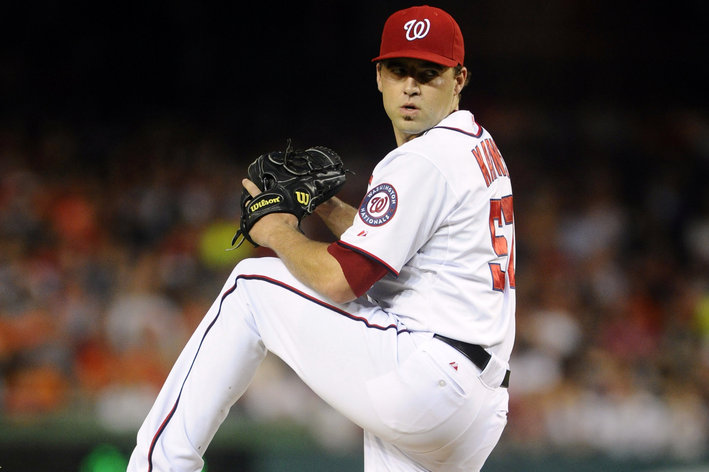
Lots of questions about Mr. Williams.  Photo Nats official 2014 via sportingnews.com

Lots of questions about Mr. Williams. Photo Nats official 2014 via sportingnews.com

Washington Post columnist Tom Boswell must be in heaven: he’s at Spring Training, in 80 degree weather, talking baseball.  Here’s his 2/18/14 WP chat edition and how i’d have answered his baseball questions.  He did an extra long session, doing an hour and then coming back for even more questions, so this is a huge post.

Q: Which Nat is most and least likely to benefit from Matt Williams’ detail-oriented approach?

A: I’ll take the easy way out on this one: I’ll say that the rookies are most likely to benefit and the veterans are least-likely.  But that’s probably not very fair because it assumes that our vets will automatically have a hard time adjusting to a new voice.  In reality, Matt Williamspedigree as a player is going to shut just about any veteran up; name one player on this team who has accomplished anything close to what Williams did as a player?   I mean, we’re talking about a guy with multiple All Star appearances, multiple Gold Gloves, multiple Silver Sluggers, a couple near MVP seasons, more than 200 post-season at-bats spread across 5 post-season trips, three trips to the World Series and one ring.  He also played in two specific games that are both counted among the best games of the last 50 years (Game 7 of the 1997 World Series and 2001’s Game 7 of the World Series).

That’s a heck of a lot of accomplishments.  Who in their right mind is looking him in the fact and doubting his wisdom about anything?

Boswell points out a number of guys who are “introverts” who like the structure, mentions Rafael Soriano as a possible problem child … but then also notes Soriano lost a ton of weight and is playing for a contract, so he doesn’t expect any issues.  Fair enough.

Q: Where can I get good details on the Nats spring training schedules in Viera?

A: CSN’s Mark Zuckerman posts a great intro-to-spring training on his Natsinsider.com blog each year.  Here’s parts 1 and 2, focusing on the Nats baseball Complex and the Town of Viera.  Boswell speaks highly of watching bullpen sessions.  Can’t blame him; man I want to do Spring Training sometime!

Q: What does the Yankees signing of Masahiro Tanaka do for the Yankees season?

A: Not much in my opinion.   Despite Tanaka’s pedigree and $175M paycheck, he’s being touted by his own team as a “#3 starter.”  That’s a heck of a lot of money for a #3 starter.  Now in reality scouts liken him to a young Dan Haren (in terms of his repertoire), but he’s still not nearly in the same Ace class as the most recent Japanese import Yu Darvish.  Plus he’s got to deal with the inevitable adjustment to this country, a new language, 10,000 obnoxious NY beat reporters, the food, the city, and that pesky 4-days of rest schedule we have here for our starters.

As for the Yankees chances in 2014 in general, check out their current depth chart: Their rotation is set to be Sabathia (coming off an awful year), 40-yr old Kuroda, TanakaIvan Nova and David Phelps.  Does that sound like a 95-win rotation?   Here’s their infield: Mark Teixeira (15 games last year), Brian Roberts (77 games last year), Derek Jeter (17 games last year), and Eduardo Nunez (90 games last year).   Does that infield inspire confidence?  What makes anyone think that infield is lasting even a quarter of the season without a major injury?  Plus, Buster Olney or Jayson Stark recently mentioned this factoid:  “No team has ever in the history of the game had a winning season starting a shortstop as old as Jeter.”    Yes the Yankees made some significant signings (Beltran, Ellsbury, McCann).  But I don’t think its enough to make up for what’s going to happen to their infield.  I think years of overpaying for FAs and being unlucky in their player development has caught up with the Yankees in a big way and they’ll be lucky to be a .500 team this year.  Boswell points out that PECOTA has them as 82-80.   And then he drops a scary subtle hint saying that Ian Desmond has already declined an $85M deal and may have his sights on becoming the next Yankees long-term shortstop.  Ouch.  Thankfully the timing doesn’t quite work out; Jeter retires after this year and the Nats have Desmond locked up for two seasons.

Q: Can you go into the stadium and see the view from your seats before committing to a Season Ticket?

A: No idea, but I’d bet the answer is yes.  We could do that before, you know back when I was a season ticket holder, pre Nats stadium, pre kids, pre getting-royally-screwed-in-the-new-stadium-relocation game.  Boswell assumes yes, and posts an answer confirming it from another fan later on who did exactly this.

Q: Why is the name Redskins such a hotbutton while the Braves gets almost no press?

A: (I couldn’t resist this question even if not entirely about Baseball): Probably because one name is a slur and the other is just a noun.  In a politically correct world no person-indicating moniker would ever be used as a team nickname … but then again you can get rather ridiculous (is “Padre” and the drawing of a priest with a goofy smile swinging a bat offensive to the clergy?  I’m of Irish descent; what if I said that the Notre Dame “Fighting Irish” is offensive to me because of my culture?).   Plus, frankly, I don’t get why little Danny Snyder won’t just frigging change the name; I mean, how many gazillions of dollars of new merchandise sales would he get if he re-branded the team?  Why is he so obstinate about this issue?  Every time he posts some dumb letter defending the name it makes him look more and more like a little rich whiny fan-boy who grew up loving the team despite being too sickly to actually play, and now he’s clinging to an iconic symbol of his youth.  As if it was a ratty security blanket.   Boswell talks about cultural change and social progress and hints that he’s going to post his official opinion on the matter soon.

Q: Has Jeter’s retirement caused TOO much media attention?

A: Honestly, I don’t feel like it has; at least not as much as the questioner, who whined about all the coverage and news items related to Jeter.  Perhaps its because he’s gone up against the Olympics and NBC’s force-fed human interest coverage machine that I havn’t noticed.

Olympics Rant/Tangent: Seriously; I thought I had seen it all with NBC’s ridiculous coverage over the years of figure skaters as “athletes” … now the coverage of these silly snowboarders has surpassed it.  I’m sorry; if your “sport” requires judges who take into consideration your “style” or your “costume,” then it isn’t a sport.  “Team skating?”  “Ice Dancing?”  Why not just have a frigging spinning contest or see who can coast the longest on one skate or some other useless reason to award a few more gold medals?  In my opinion, if there isn’t a score or a race to a finish line or one man versus another in a contest … you’re not a sport.  Nothing against figure skaters specifically; what they do is amazing, requires elegance and strength and years of training.  But so does Ballet; why is one an olympic sport and the other a performance art?  All those cirque-de-soleil performers?  Why isn’t that an olympic sport too?

Tangent/Rant off.

I think we’ll all be pretty frigging sick of Derek Jeter once August and September rolls-around.  Yeah he’s a great player, first ballot hall of famer.  But so are about 20-25 other guys playing right now.  I agree with the questioner’s rant about the over-coverage of all things Yankees.   Boswell points out that Jeter’s career WAR is one spot above Bobby Grich, so as to temper some expectations.  That’s harsh; even I recognize his importance to the game as a surpassing point than just whittling down all his accomplishments to one (dubious) number. 

Q: What is Livan Hernandez’s role on this team?

A: Whatever it is, I think its friggin awesome that he’s in Spring Training representing the Nats.  Kudos to whoever reached out and got him to come help out.  Livan Hernandez may have played all over the majors (9 teams in 17 seasons; that’s tough to do when you’re not a left-handed reliever) but he played the most of it with our franchise.  Boswell’s quoting of Drew Storen‘s description of Livan’s role is awesome: “His job is life-coach, bleep-talker and being Livo.”   He also notes that Livan can provide some fielding and instruction on holding runners, a sore spot for several Nats starters.

Q: How is Christian Garcia looking so far? Any chance that he goes north with the club?

A: All reports list Christian Garcia as (finally) healthy.  But its telling that the team is already specifically pointing out that “he’s made it further than he did last year.”  It seems like his fragility is almost a running joke on the team now.  Chances of breaking into the 7-man bullpen?  Remote unless there’s injuries.  But if he goes to AAA and pitches lights out, he’ll be first guy back.   If he stays healthy (four words that should be attached to every single sentence ever written about Garcia).  Boswell says that if he’s healthy, he’s on the team.  I have a very hard time believing that; who makes way?  Not Soriano, Storen, Clippard or Stammen.  Not Blevins.  Ohlendorf?  Roark?  Roark’s numbers last fall were *better* than anything Garcia did in 2012 and in 4 times the innings.  Ohlendorf isn’t being paid north of $1M to screw around in upstate New York.  And, none of this takes into account the statements from Williams about liking to have two lefties in the bullpen… If it were me, I’d want to see Garcia pitch at least a month straight without hurting something on his person.  

Q: How would you grade Rizzo’s off-season?

A:  Pretty frigging good.  Fister: fantastic acquisition.  McLouth; not too bad, should help.  Lobaton: looking better and better, considering the pedigree i’m hearing about the two guys thrown into the deal (Vettleson and Rivero).  I don’t think his lack of acquiring a better lefty will hurt; Sammy Solis is impressing and could contribute immediately, newly acquired Rivero apparently has some stuff, and there’s still the likes of Cedeno and a couple other AAA guys who we could use.  Boswell says A- … and then tells a tid-bit about the Grant Balfour deal that fell through.

Q: Why are the Nats pitchers so bad at holding runners on?  Is this something they’re working on this Spring

A: Why?  beats me.  Maybe a better defensive catcher will help in that category.  They definitely seem to be working on it this spring as noted in the above Livo question.  Boswell doesn’t really answer the question but then uses this question as a segue into talking about Williams’ anger issues.  Random.

Q: If Ryan Zimmerman is going to play some first base … what the heck is Tyler Moore going to do?

A: A decent question, but which assumes that Tyler Moore is anything other than a bench bat.  And it assumes that Adam LaRoche is going to platoon.  I know plenty in the blogosphere want that to happen … but this is a contract year, and the last time couple times LaRoche faced a contract year he played pretty durn good.  Meanwhile, Moore seems like the kind of player who could use a change of scenery and a trade to a team with more playing time.  Boswell likes his swing.

Q: Is team improvement correlation or causation to a hitting coach change, like what happened last year with Eckstein’s firing?

A: You ask me, i’d say its correlation/coincidence.  It isn’t the hitting coach facing 95 mph fastballs.  But I’m no professional.  Boswell can’t figure it out either.

Q: Did they really need another catcher when they had both two young options and Synder as a proven vet? Why waste a pitching prospect with a high upside for a backup catcher who can’t throw out runners, already a major problem. Did Rizzo get taken by the Rays?

A: Sounds to me like this question-er is overvaluing the potential contributions of our catching prospects Sandy Leon and Jhonatan Solano, is incredibly overvaluing what Chris Snyder still brings to the table, and is overvaluing Nathan Karns and what is ceiling seems to realistically be.  Oh, and he’s undervaluing the prospects we got in return (both of which are in our top 14 according to mlbdraftinsider.com’s recent post).  I like the move, it fixes a hole for the team and gives a couple of prospects to shore up a thinned system, all for a guy who I think we all liked in Karns but who likely faces a ceiling of a reliever.  Boswell notes the need for a “real” backup catcher and notes that the team traded from depth.

Q: Have the Braves taken a step back this offseason and are really counting on BJ Upton to do anything on offense this year?

A: Yes and yes.  McCann is a  huge loss.  Tim Hudson may not “seem” like a loss given the Braves pitching depth, but he was their opening day starter in 2013 and was their bulldog staff leader (if not an “ace” in the literal sense of the word).   They also let go Paul Maholm, who gave them a ton of decent innings last year.  They’re depending on Brandon Beachy to come back healthy and on the rest of their young rotation to contribute.  Otherwise they did little this off-season other than extending a couple of guys.   As far as BJ Upton, what choice do they have but to run him out day after day at this point?  Same as Dan Uggla: those two guys are getting paid a ton of money and will be given every chance to prove themselves.  Boswell agrees.

Q: How often have you seen baseball players take a hometown discount?

A: Not very often: Roy Halladay took a bit less so he could play for Philly … because their spring training complex is in the same town as his full-time home.  Hard to think of obvious other players off-hand.  The asker questioned whether Jordan Zimmermann would consider less money to play for his “hometown” Brewers … without really considering the fact that Milwaukee is a cheap-skate franchise and will *never* come close to paying the 9-figure deal that Zimmermann probably earns in two years’ time.  Boswell doesn’t really answer the original question, just notes that so far our FA players are going for the money.

Q: In your opinion, who will end up being the fifth starter? Detwiler, Roark, or Jordan?

A: Ross Emery Detwiler, for the same reasons I pointed out in my 2014 Staff Projections post in late december.   Quoting myself from that post:

Why am I predicting Detwiler will win the rotation spot?  Partly because of options (Detwiler has none while Roark, Ohlendorf and Jordan all do), but partly because I’ve sort of come back around on him after looking more closely at his 2013 season.  He had a decent to good 2012; he posted a 118 ERA+ and even if his advanced FIP/SIERA didn’t indicate he was quite that good, he was still more than a servicable 5th starter.  Then in his first seven 2013 starts he was also very good (he had a 2.53 ERA in his first 7 starts and 42 2/3 innings … he got hurt in his 8th start).  The rest of his season was a mess, with him fighting injury and ballooning his seasonal ERA from 2.53 to more than 4.00 in five more starts.   If he comes back healthy to start 2014, why wouldn’t we expect more of the same performance that he had at the start of 2013?  For these reasons, I think Detwiler breaks camp as the 5th starter.

I like Tanner Roark and feel the team is going to find a way for him to be in the MLB bullpen.  I also now believe Taylor Jordan‘s off-season ankle injury will give the team an excuse to keep him in the minors a bit to season him up and maybe even keep some innings off his arm.   So it’ll be Detwiler until he either falters or gets hurt again.  At least we have a ton of options this year to cover for a starter injury.

Boswell says Detwiler as well but writes a ton on othe other guys, including a glowing talk about Roark.  And he throws in this tidbit: Detroit asked for Jordan and Robbie Ray before settling for Ray and spare parts.  Interesting.  

Q: What’s your read on how the last two bullpen spots play out?

A: Also borrowing from my Dec 2013 post, I’ll go with Ohlendorf and Roark.  Ohlendorf as the long-man, spot starter rubber arm guy.  Roark with the hope he continues his magical run of exceptional command and fearless relief.  I know that only leaves on lefty out there, and leaves guys like Ryan Mattheus and Christian Garcia in AAA.  Hey, I could be wrong.   Boswell doesn’t seem to guess.

Q: Do you think the coaches will let Espi continue to be a switch hitter or keep him as a lefty hitter only? 

A: I hope you mean righty hitter only; he is a career .220 lefty hitter but .262 righty. If I was the Nats brass, i’d try him as a righty-only guy.  But by all accounts Danny Espinosa is a bit stubborn and may not be open to limiting a unique skill that he may continue to think distinguishes himself from other competitors.  I continue to wonder just how hurt he was last year … as others have said, it isn’t like Espinosa suddenly forgot how to hit.  Yes he was always somewhat limited as a player, but 20-homer capable middle infielders don’t grow on trees.  Boswell says the team isn’t messing with Espinosa, and that they want to see what he can do in 2014.  Fair enough.

Q: Are you worried about the power (or lack thereof) in the Nats lineup?

A: Not really.  The capability is there across the lineup.  Zimmerman has hit 30.  So has LaRoche.  Desmond has hit 20.  So has Espinosa.  Ramos has 20+ homer capability if he’s healthy.  Werth is good for 25 and has hit 30+ before.  And none of this talks about our best power hitter Harper and what he can do.   Basically the team is a whole bunch of guys with 20 homer capability.   The Nats were T-3th in the NL in homers last year as a team (trailing two teams in offensive parks) and should improve in this category with a healthy Harper.  Boswell just talks about Ramos’ stats extrapolated to a full season.

Q: Is praise of Williams’ approach tacit criticism of Davey Johnson’s?

A: Yeah probably.  That’s why you change managers; to change the message.  I’m not going to disparage Davey Johnson too much here other than to say what i’ve said before; the team needed a new voice.  Boswell points out that Johnson’s 2012 job was fantastic and that there’s “different jockeys for different horses.” I like that analogy.


One last point: there was a question about MASN that Boswell went off on and gave some tidbits, including a shot at Bud Selig.  Its worth the read; click on the chat link and head to the bottom.
Verducci effect for 2014 announced

10 comments

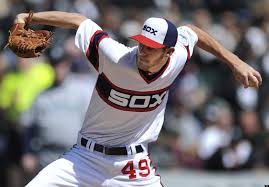
Chris Sale singlehandedly doing his best to disprove the Verducci effect.  Photo via landmarknews.com

Chris Sale singlehandedly doing his best to disprove the Verducci effect. Photo via landmarknews.com

I’m a number of weeks behind on this post, but I always enjoy the Tom Verducci article published in January of each year discussing what he titles the “Year After Effect” (here’s the link to the 2014 iteration).  In it, Verducci identifies a handful of pitchers who, using a simple innings pitched increase year-over-year rule-of-thumb and some added professional analysis, he believes are at risk for regression or injury.

Some links before we get started:

  • Here’s my blog post on this topic from last year, which includes a number of links that criticize or dispute the so-called “Verducci effect.”
  • Here’s Verducci’s 2013 iteration of his article.
  • Here’s Verducci’s 2014 iteration, published on 1/21/14 at cnnsi.com

First, some numbers.  Prior to 2013, of the 69 pitchers he’s identified in the last seven years as being at risk, 55 of them suffered an injury/posted significantly worse ERAs.  That’s about an 80% prediction clip.   Lots of critics of the effect have pointed out that there’s no effect when studying the larger population of pitchers, but that doesn’t explain Verducci’s 80% prediction rate.  So I don’t entirely accept that Verducci’s opinion is useless here.

Lets look at 2013’s pitchers and decide whether or not we think they regressed.  Verducci named 11 pitchers he thought were in jeopardy of injury and/or regression thanks to a significant workload increase from 2011 to 2012.

2013 Candidate Name/team 2012 IP 2012 FIP 2012 xFIP 2012 SIERA 2013 IP 2013 IP Delta 2013 FIP 2013 xFIP 2013 SIERA Arm Injury? Verdict
Chris Sale, White Sox 192 3.27 3.24 3.25 214 1/3 22 1/3 3.17 2.95 2.96 No Improve
Jarrod Parker, A’s 214 2/3 3.43 3.95 4.15 197 -17 2/3 4.4 4.41 4.48 No Regress
Jose Quintana, White Sox 185 4.23 4.33 4.5 200 15 3.82 3.86 3.92 No Improve
Joe Kelly, Cardinals 187 4 4.03 4.12 124 -63 4.01 4.19 4.31 No Regress slightly
Stephen Strasburg, Nationals 159 1/3 2.82 2.81 2.81 183 23 2/3 3.21 3.15 3.17 No Regress slightly
Chris Rusin, Cubs 173 4.85 4.53 4.47 187.3 14 1/3 4.75 4.46 4.78 No Improve
Matt Harvey, Mets 169 1/3 3.3 3.49 3.42 178.3 9 2 2.63 2.71 Yes Injured (TJ)
Alex Cobb, Rays 177 2/3 3.67 3.54 3.51 143.3 -34 3/8 3.36 3.02 3.26 No Improve
Felix Doubront, Red Sox 161 4.37 3.81 3.84 162.3 1 1/3 3.78 4.14 4.26 No Improve
Dan Straily, A’s 191 1/3 6.48 5.3 4.72 184 -7 1/3 4.05 4.22 4.26 No Improve
Andrew Werner, Padres 166 2/3 4.09 3.93 3.85 165 -1 2/3 4.28 ? ? No Regress

Interesting; of the 11 pitchers Verducci mentioned last year, only one suffered any kind of arm injury, and that was Matt Harvey (who was well on his way to the NL Cy Young, posting incredible numbers for a guy with his sustained velocity).  A couple of these guys saw significantly fewer innings in 2013 thanks to being either relegated to the bullpen (Joe Kelly) or having suffered a non-arm injury (Alex Cobb, who suffered a concussion and missed 10 starts).   Meanwhile, only two of the eleven guys “really” regressed in 2013 (Jarrod Parker and Andrew Werner, who spent the whole year in AAA hence the question marks for some of the advanced stats,which are not kept for minor leaguers on fangraphs).   Six of the eleven guys distinctly improved their overall stats, including specifically Chris Sale, who had a *massive* innings increase from 2011 to 2012, threw more innings yet again in 2013 and posted better numbers despite having what is easily described as “unorthodox” mechanics.

Our own candidate Stephen Strasburg “regressed slightly” from 2012 to 2013, posting mostly 4/10ths of a point regressions in his major pitching statistical component.  He missed a couple starts here and there due to a shoulder strain and forearm tightness, but otherwise threw 183 innings, increased his workload by 23 2/3 innings, and made 30 starts.   For those that expect Clayton Kershaw-greatness out of Strasburg, 2013 was a disappointment, but in the larger picture his numbers still were generally top-10 across the board.  Its tough to claim he regressed when he’s “just” a top-10 pitcher in the league … but that’s the price of fame I suppose.

Conclusions: before 2013 Verducci was 55 for 69 in successful year-after effect predictions of regression/injury.  I’m saying he went just 5 for 11 with his 2013 predictions, so now he stands at 60-for-80 lifetime, still a 75% prediction rate.  Verducci does note that of the 11 candidates from last year, only four were “really” candidates (Kelly, Quintana, Parker and Sale),  and the rest just barely broke his 30 innings threshold.

Who did he pick for 2014’s watch list?  Unfortunately for Nats fans, another of our own is present; Taylor Jordan.   Jordan pitched nearly 48 more innings in 2013 than he ever had professionally before, which triggers his presence on this list.  We all know the reason why; he never really threw a full season in 2009 or 2010, had Tommy John surgery in mid 2011, came back to throw just 15 starts in 2012, and 2013 was his first full season back.  The team had an innings cap for him (just as they had one for Jordan Zimmermann and Strasburg), and when Jordan got up around the 140 innings mark he was shutdown for the year.  Even given that cap, he still threw a ton more innings than he’s ever thrown before and I wouldn’t be surprised to see the team cap his innings at around the 170 mark in 2014.

Here’s a statistical look at Verducci’s 2014 candidates:

Pitcher, Team Age as of Jan 2014 2013 IP 2013 IP delta 2013 ERA 2013 FIP 2013 xFIP 2013 SIERA
Gerrit Cole, Pirates 22 196 1/3 64 1/3 3.22 2.91 3.14 3.41
Erik Johnson, White Sox 23 169 2/3 +62 2/3* 3.25 5.4 4.73 4.76
James Paxton, Mariners 24 169 2/3 50 2/3 1.5 3.26 3.08 3.24 (only 4 mlb starts)
Taylor Jordan, Nationals 24 142 47 2/3 3.66 3.49 3.8 3.86 (only 9 mlb starts)
Michael Wacha, Cardinals 21 179 2/3 45 2/3 2.78 2.92 3.36 3.32 (only 64 mlb innings)
Sonny Gray, Athletics 23 195 1/3 43 1/3 2.67 2.7 2.92 3.11 (only 64 mlb innings)
Danny Salazar, Indians 23 149 41 2/3 3.12 3.16 2.75 2.79 (only 52 mlb innings)
Andre Rienzo, White Sox 25 169 41 4.82 5.85 4.76 4.94 (only 56 mlb innings)
Yordano Ventura, Royals 22 150 40 2/3 3.52 5.33 4.3 4.46 (only 15 mlb innings)
Jose Fernandez, Marlins 20 172 2/3 38 2/3 2.19 2.73 3.08 3.22

A large number of these players were mid 2013 season call-ups, and their 2013 stats are mostly based on short-sample sizes (where noted).    We’ll revisit these pitchers next year to see what happened, and to judge whether teams are starting to mind these innings increases a bit more closely.  What interests me with this list (besides Jordan’s presence on it) is the number of high-profile arms listed here.  Salazar, Fernandez, Cole, and Wacha all are expected to be significant contributors in 2014; will the run into arm issues?

What do you guys think about Verducci’s annual study?  Bunk?  Pseudo-science?


Thoughts on Keith Law’s organization and prospect rankings

28 comments

Giolito is rising the ranks of prospects baseball-wide.  Photo unk via federalbaseball.com

Giolito is rising the ranks of prospects baseball-wide. Photo unk via federalbaseball.com

I’ll admit it; I’m a sucker for prospect lists.

Every time I see an organizational ranking published (whether it be from BA/John Callis, BP/Jason Parks, ESPN/Keith Law, MLB/Jonathan Mayo, John Sickels or whoever, I put the rankings into a big spreadsheet and do comparison analysis (I’d publish on Google Docs it except that Law’s stuff is ESPN insider only and I wouldn’t want to get into trouble).   Every time any of these guys puts out organizational top 10s, I capture that too into one big file too.

So, this week is an exciting time because one of the leading prospect voices out there has published his annual rankings lists.  Keith Law published his System rankings 1-30 on 1/28/14 and published his Top 100 prospects list on 1/29/14.  The links themselves are ESPN-insider, which I believe is well worth the pittance of a cost per year just to get access to Law and Buster Olney‘s stuff (among others).

Law has our system ranked 18th this time around, a slight increase from last year’s ranking of 21.   In the five years that I’ve been capturing Law’s organizational rankings, this is as high as he’s had the system ranked believe it or not; his 2012 rankings (where Baseball America famously had us ranked #1) came out after the big Gio Gonzalez trade and thus we didn’t get the high ranking we would have expected (Law said he dropped the system from a top 5 ranking b/c of that trade).

So, how do we explain how the system went from #21 to #18 given all that has happened in the last year?   Borrowing from the comment I made at NationalsProspects.com when Luke Erickson noted the same Law publishing, lets analyze where we were in January 2013 versus now as a system:

In Law’s 2013 writeup for the team, he noted that he liked Washington’s top 5 prospects but that there was a significant gap afterwards.  Going back and looking at my notes, Law’s top 5 guys went:

  1. Anthony Rendon
  2. Brian Goodwin
  3. Lucas Giolito
  4. A.J. Cole
  5. Nathan Karns

Then the gap, then Law ranks 6-10 as went Matt Skole, Christian Garcia, Carlos Rivero, Matthew Purke and Michael Taylor. So, no mention of Taylor Jordan or Ian Krol, both of whom graduated and performed more than ably in the majors in 2013.  There was no mention of Robbie Ray, who Law never liked and never gave much credit to even when in 2011 he was out performing Cole in the low minors despite being the same age and same draft class, but who was regarded enough in Detroit to basically fetch a 4-win established MLB pitcher in Doug Fister.  There was no mention of Jeff Kobernus, who did get some MLB innings but isn’t considered a real prospect.  No mention of Nats minor league batter of the year Billy Burns (again, not really a prospect in lots of evaluator’s eyes).  No mention of Eury Perez as a top 10 candidate, and obviously no mention of Tanner Roark (who in January 2013 pretty much everyone saw as an organizational arm playing out the string to minor league free agency).  Law did say at the time that if Sammy Solis got healthy again he’d be back in the running for his top 100.  Amazingly Rivero, a waiver claim who ended the year demoted to AA, was his 8th best prospect for the system, quite an indictment.  Well, either that or a blind spot for Law, who is more impressed by tools in lower-minors kids than capabilities in prospects in the upper minors.

So, given that our top 10 last year in Law’s minds (in order):

  1. Rendon graduated to a starting job in the majors
  2. Goodwin struggled in a 2-level jump
  3. Giolito ably recovered from injury
  4. Cole impressed at AA after a promotion
  5. Karns made the leap to the majors but struggled
  6. Skole missed the entire season due to a freak injury
  7. Garcia missed basically the entire season with yet another injury
  8. Rivero was demoted to AA and is now a MLFA
  9. Purke pitched mostly a full season but did not dominate as expected
  10. Taylor impressed in high-A and was added to the 40-man

… and considering the litany of graduations/trades/exoduses out of the system (Rendon, Jordan, Krol, Ray, Rivero, Burns and Roark all ineligible for a 2014 analysis), how do you explain the fact that he thinks the system is basically treading water?

You have to think Law’s top 5 for the system now starts Giolito/Cole/Goodwin but then who knows where it goes from there.  I know from chat responses that Law is down on Purke now and that he didn’t ever really rate Jake Johansen or Drew Ward as 2013 draft picks.  Does Karns still qualify as a prospect?  Yes I believe so.   Solis came back and performed post injury but was he that impressive in 2013?

Perhaps Law’s thinking goes like this: he likes our top 3 prospects (clearly; Giolito, Cole and Goodwin all made Law’s minor league-wide top 100 list with Giolito at #21).  Law rates these top 3 guys as strong enough to make up for the graduations from last year.  Then there likely is a gap, then perhaps a small grouping of Karns and Solis, both of whom Law likes and both of whom he probably believes would make either #5 starters or good bullpen guys.  Then after that a grab bag to include Skole, Taylor, Perez and perhaps a couple guys from our 2013 draft class (Austin Voth?).  The problem with the back side of this theoretical top 10 list is that it includes a slew of players who were hurt or who treaded water in 2013.

What do you think?  And if your answer is some variation of, “Todd you spend too much time over-analyzing prospect lists and you just proved your own point by showing that a guy like Taylor Jordan can go from high-A to a MLB-average ERA+ and never appear on anyone’s prospect lists therefore prospect lists are useless” …. well I’m not going to argue against you that vociferously 🙂  I’d probably respond by saying something to the effect of, “Its frigging january, what else are we going to talk about?”

Nationals Arm Race Best Stories for 2013; Happy New Year!

2 comments

On the last day of 2013, I thought I’d take a quick peek back at the posts and discussion that shaped the blog this year.  Here’s a highlight reel by month of the most read and commented-upon posts in this space, as well as recaps of major events and personal favorite entries.

January 2013:

February 2013:

March 2013:

April 2013:

May 2013:

June 2013

July 2013

August 2013

September 2013

October 2013

November 2013

December 2013

Happy New Year!  Its been fun.


2014 Projected Pitching Staffs and Rotations; entire Nats system

22 comments

Mr. Detwiler's 2014 assignment will have cascading effects for MLB and AAA.  Photo Haraz Ghanbari/AP via federalbaseball.com

Mr. Detwiler’s 2014 role will have serious cascading effects for MLB and AAA. Photo Haraz Ghanbari/AP via federalbaseball.com

OK here we are.  We did seven comprehensive pitching staff reviews (the GCL review is here, which has links to the other 6 reviews) in order to arrive at this post.

So, without further ado, here’s what I’m predicting for all seven systems right now, absent any more deals (like say for a MLB lefty or another starter or trading a closer to Chicago):

 MLB Level

  • MLB Rotation: Strasburg, Gonzalez (L), Zimmermann, Fister, Detwiler (L)
  • MLB Bullpen: Soriano, Storen, Clippard, Stammen, Blevens (L), Ohlendorf, Roark
    MLB out of Org: Haren, Duke (L), Abad (L), Krol (L), HRodriguez

Discussion: the 5th starter competition could shake out so many different ways, that it almost is not worth predicting.  I can see any of the following scenarios playing out:

  • Detwiler gets one last shot at the 5th starter as the incumbent, pushing Jordan to AAA and Ohlendorf/Roark to the bullpen (my current prediction).
  • Jordan wins the 5th starter, pushing Detwiler to the bullpen as a power lefty by virtue of his lack of options.  This would push (likely) Roark to AAA.
  • Roark wins the 5th starter, continuing his blistering sub 2.00 ERA pace from September, pushing Detwiler to the bullpen and Jordan to AAA.
  • Less likely, Karns wins the 5th spot, which pushes Detwiler to the bullpen and Roark & Jordan to AAA.
  • Even more less likely, Ohlendorf wins the spot, which pushes Detwiler to the bullpen but lets Roark stay as the long man/spot-starter.
  • Mike Rizzo shocks us again with another starter acquisition; Detwiler goes to the bullpen, Ohlendorf stays as long man, and Roark & Jordan are in AAA.

Why am I predicting Detwiler will win the rotation spot?  Partly because of options, but partly because I’ve sort of come back around on him after looking more closely at his 2013 season.  He had a decent to good 2012; he posted a 118 ERA+ and even if his advanced FIP/SIERA didn’t indicate he was quite that good, he was still more than a servicable 5th starter.  Then in his first seven 2013 starts he was also very good (he had a 2.53 ERA in his first 7 starts and 42 2/3 innings … he got hurt in his 8th start).  The rest of his season was a mess, with him fighting injury and ballooning his seasonal ERA from 2.53 to more than 4.00 in five more starts.   If he comes back healthy to start 2014, why wouldn’t we expect more of the same performance that he had at the start of 2013?  For these two reasons, I think Detwiler breaks camp as the 5th starter.  Now …. I have zero confidence that he’ll remain healthy enough to keep his spot in the rotation, but that’s a problem for another day.  And a problem for which this team has plenty of coverage.

Another scenario that could affect this predition: Rizzo acquires yet another lefty reliever (latest rumors were about Scott Downs before he signed elsewhere, but I’m sure a trade could be arranged), which complicates any of these predictions because it means one less spot for either Ohlendorf or Roark.  For a team that seems so obsessed with left-handed relievers, we sure have let a bunch of them go in recent years (Duke, Abad, Krol this year, Gorzelanny, Lannan, Burnett and Gonzalez last year).  Maybe we should just hang on to one or two of these guys?  I will say this: I do NOT believe that the Nats will choose Xavier Cedeno and his 6 2013 MLB innings for the Nats over Roark just because he’s left handed at this point.

Personally, I think Roark and Ohlendorf pitched like big leagers last year and deserve to stay in the majors until they prove otherwise.  Ohlendorf’s recent $1.25M deal seems to indicate he’s more likely to stick than Roark, but perhaps the long-man/spot starter competition is open as well.  This pushes previous stalwards in the bullpen (specifically Ryan Mattheus ) to AAA.   I will say this though: if you expect to win, you have to go north with your 25 best guys no matter how much they make or their option status.  And at the end of last year, that undoubtedly included Tanner Roark.  So thats why I’m going with Roark in the pen to start the season.

One other wrinkle; does Rizzo trade one of Storen or Clippard to Chicago, who desperately needs a closer?  This seems less likely, especially for a team that has World Series aspirations, but the truth is this team is paying a LOT of money into its bullpen ($25M and counting), has three closer-quality guys, and potentially a log jam of righties (see the AAA bullpen prediction for more).  I see this as less likely unless Chicago sends back pieces that we really need, but rumors get started because GMs are talking, so maybe this still happens.  But if a guy like that is traded, then that re-opens a slot for the deposed Mattheus or possibly the newly healthy an electric Garcia.   I think these are lesser possibilities and both those guys are pushed to AAA to begin the season.

I’m sure this section garners plenty of discussion; have at it in the comments 🙂

AAA Level

  • AAA Rotation: Jordan, Karns, Rosenbaum (L), Young, MLFA or two?
  • AAA Bullpen: Barrett, Mattheus, Garcia, Davis,  Cedeno (L), Robertson (L), Herron (AA?), Alfaro, Stange, Delcarmen
  • AAA Release candidates: Meyers, Lehman
  • AAA out of Org: Maya, Tatusko, Clay, Mandel, Torra, Broadway, Crotta, Lowe, Kimball, Accardo, Bramhall, Romero (L)

Discussion

So, the projected AAA rotation has one hold over in Rosenbaum, two “promotions” in Jordan and Karns, and then a whole bunch of question marks.  Is Chris Young healthy enough to pitch this year?  Is Brad Meyers?  Right now i’ve got Meyers as a release candidate, figuring that he hasn’t been healthy in two years and may be finished.  I have to think that the team will give a couple of lower-level free agents minor league contracts to try to pitch their way back into the league, much as they have done with the likes of Zach Duke, Ross Ohlendorf and Young in the last couple of off-seasons.  There’s plenty of guys out there who may make sense; a quick glance at the current list of free agents offers intriguing names (think of someone like a Joe Saunders or a Barry Zito or an Aaron Harang; do you think these guys are getting guaranteed contracts for 2014?).  I’m predicting that at least one or two of these types of guys get MLFA deals and end up in the AAA rotation, though I suppose at least one guy i’m projecting from the AA rotation could start in AAA.

The AAA bullpen has a couple of MLB-quality arms in Ryan Mattheus and Christian Garcia who we know can contribute at the MLB level but who end up here because of a numbers game at the big club.  The AAA closer likely is Aaron Barrett, newly added to the 40-man and looking to make his mark.  Erik Davis is here, who I kind of soured on last season but his numbers in small MLB samples were good and I think he can contribute in a Craig Stammen sort of way going forward.  We have a couple of hold-over loogies in Xavier Cedeno and Tyler Robertson, the latter of which successfully passed through waivers and was outrighted to Syracuse last month.   We already have three off-season MLFA signings (Gabriel Alfaro, Daniel Stange, Manny Delcarmen) who all project as righty middle relievers, making it seemingly less likely that the team will retain some of its own MLFAs (the likes of Ryan Tatusko and Jeff Mandel being longer serving Nats minor leaguers who pitched decently in 2013).

But as you can see there’s more candidates here than there is room on the Syracuse roster (10 for 7 spots, and that’s assuming that Pat Lehman doesn’t make the cut either).  There will be injuries and D/L stints among these guys, but there may also be some releases next March.

Still, a AAA rotation led by Jordan and Karns (and possibly Ohlendorf and/or Roark if another move is made at the MLB level) leaves Syracuse with a pretty good staff to start the season.  And I like the fact that we have one reasonably accomplished MLB starter (Jordan) waiting in the wings to go along with a guy who might get there soon (Karns), to go with potentially a couple other former major league guys who are working their way back.

AA Level

  • AA Rotation: Cole, Hill, Solis (L), Schwartz, Treinen (AAA?)
  • AA Bullpen: Benincasa, Mirowski, Holland,  Swynenberg, Grace (L), Bates, KPerez, Gilliam (swingman), Spann (L)
  • AA release candidates: Perry, Selik, Demny, RMartin
  • AA out of Org: Broderick, Ray, McCoy, Frias, Holder, Bray

Discussion

We’ll see this trend again and again; despite the fact that the likes of A.J. Cole and Taylor Hill reached AA last year, the organization seems to like seeing these guys “beat the level” a second season in a row before moving guys up.  And so I see these guys in AA again.  Sammy Solis here is no surprise; he’s nearly 26 and has been mentioned as a MLB bullpen candidate already.  Meanwhile for the time being i’ve got Blake Treinen here, repeating the level, but can also see him moving up to AAA.  His numbers were good but not *that* good last year, and I left him in AA assuming that the team will try out some re-treads in the AAA rotation.  Lastly Blake Schwartz gets a deserved promotion after leading Potomac in IP, wins and starts last year.

In the bullpen I think Robert Benincasa is your closer to start, with Richie Mirowski and Neil Holland continuing to put up dominating late-innings relief.  All three guys should be pushing for promotions to AAA.  We’re a little light on lefties here admittedly.  A couple of injury-prone guys in Ryan Perry and Cameron Selik are listed as release candidates in the face of a number of guys meriting placement here.  Paul Demny and Rafael Martin have been around forever and may also be release candidates at this point, but they also could (at least in Demny’s case) convert to relief and try to rekindle their careers.  Lastly, there’s newly acquired Matthew Spann, the bounty for the Nats gambit on David Dejesus near the end of last season.   He’s a lefty who looks like he could start but i’ve got him in the bullpen for now.

High-A Level

  • High-A rotation: Purke (L), Anderson, Mooneyham (L), Encarnacion, Bacus, Turnbull (bullpen?) (L)
  • High-A bullpen: Wort (AA?), Holt (AA?), Fischer, Henke, Mendez, Harper (L), Davis, Thomas (L), RPena (swingman), Dickson (swingman)
  • High-A release candidates: Dupra, Rauh (starter?), Meza (L)
  • High-A out of org: Pineyro, Hawkins

Discussion

I don’t think there’s too many surprises in this rotation: Matthew Purke leads the line and should push for a promotion mid-season.  If he doesn’t dominate High-A at this point it may be time to think about moving him to the pen.   The same can be said about Brett Mooneyham and especially Kylin Turnbull, two guys who (by now) should have accomplished this level.   Otherwise the rest of this projected rotation are three guys who succeeded in Low-A in 2013: Dixon AndersonPedro Encarnacion and Dakoda Bacus.

In the bullpen, at this point i’m not sure who the closer candidates are to start the season.  Perhaps Greg Holt starts in the role.  Perhaps low-A phenom Gilberto Mendez gets a shot at closing.  Both Holt and Rob Wort may belong in AA at this point; Wort began 2013 there but there’s a lot of relievers in that AA section who would have to get hurt/be released to make room for these two guys right now.  There’s a couple of decent swingmen candidates here in Ronald Pena and Ian Dickson both started for long stretches in Hagerstown and could be useful guys in Potomac.    There’s a lot of names in the mix here for this bullpen; from here on down there could be plenty of releases come the end of spring.


Low-A Level

  • Low-A rotation: Giolito, Johansen, Voth, Lee (high-A?) (L), Orlan (L)
  • Low-A bullpen: Self (high-A?), Selsor (swingman), Ullmann, Pivetta, Simms, Hollins, Napoli (L), Bafidis (L), Suero (swingman), Valdez, Walsh (L), Aries
  • Low-A release candidates: Joyce, Waterman, Boyden
  • Low-A out of org: McKenzie, Smith

Discussion

I like this rotation, a lot.  Two of our best prospects, a third guy in Austin Voth who impressed last year, a guy in Nick Lee who probably deserves a high-A rotation spot and then Auburn’s staff leader in Robert Orlan.  Jake Johansen may find himself needing a promotion quickly, if he’s all that he’s cracked up to be.

The bullpen is going to be tough; basically every college aged short-season guy who pitched well in 2013 is named in this bullpen competition.  There’s a couple of interesting DSL graduates in Wander Suero and Phillips Valdez, some big arms in Ryan Ullmann and Nick Pivetta, and some polished college-aged lefties in David Napoli, Cory Bafidis and Jake Walsh.   I have 15 names here for 7-8 spots; Viera’s extended spring training could be busy this year.


Short-A Level

  • Short-A rotation: Barrientos, JRodriguez, Silvestre (high-A?) (L), and then 2013 draftees and/or drop-downs from Low-A
  • Short-A bullpen: DWilliams, Cooper, KRodriguez, Derosier, Webb (L), Spezial (L), 2013 draftees and drop-downs from Low-A
  • Short-A release candidates: Sylvestri, Grisz
  • Short-A out of org: Hudgins, Simko, Dicharry

GCL Level

  • Rookie Rotation: Ott (L), 2013 draftees and DSL graduates
  • Rookie bullpen: RLopez, 2013 draftees and DSL graduates
  • Rookie release candidates: DRamos, MRodriguez

Discussion

Its frankly impossible to predict the short-season squads, since (especially Auburn) they exist to park newly signed draftees.  However, I do see a ton of guys who competed and succeeded in the GCL this year who won’t necessarily make the Hagerstown squad, and I see them forming a good chunk of the Auburn squad.   The rest of the Auburn squad will be populated with upper-end 2014 draftees and losers from the Hagerstown pitching staff competition.  More of the same with the 2014 GCL squad, which was heavily tilted with DSL graduates this year.  The Nats tend to focus on college arms and thus only small college guys are generally put in the GCL in their draft year.

Ladson’s inbox 12/19/13

9 comments

Harper behind the plate?  Photo GQ magazine Mar 2012

Harper behind the plate? Photo GQ magazine Mar 2012

Well, it isn’t like I didn’t have enough content to publish this week (with 7 seasonal reviews coming out, each of them between 1500 and 3000 words).  But Nats mlb.com beat reporter Bill Ladson had to come out with an inbox on 12/19/13, so lets do some rare weekend posting so we can talk about the system-wide pitching staff projections on monday.

As always, these are real questions from (presumably) real people.  I write my response here before reading his to avoid bias, and edit questions for clarity.  Here we go:

Q: Are the Nationals done as far as improving the team for next year?

A: I don’t think so: I still see a veteran catcher, a better backup infielder, and another lefty in the pen as possible acqusitions.  On my little “off-season Nats todo-list” the only one of these that I think *must* happen is the backup catcher.  Per mlbtraderumors.com 2014 FA Tracker I see some names still out there that could work: John Buck i’ve heard in rumors somewhere, and someone like Kelly Stoppach could work.  Honestly I havn’t done a ton of research on veteran backup catchers, so these may be awful suggestions.

Right now whose your backup infielders?  Are you ready to go to war with either Zach Walters or Danny Espinosa in that role?  Steve Lombardozzi got 300+ plate appearances in 2013, more the year before.  Jerry Hairston got 238 PAs in 2011 while Alex Cora ot 172.  Basically the point is this: your backup infielder is going to get a LOT of at-bats.  You need to have someone reliable.  I would not entirely call either Walters (lack of experience) or Espinosa (apparent lack of capability) proven right now.

I don’t see the need to go all out for another lefty reliever, but i’m also not Mike Rizzo.  We have some options internally that we could use.

Ladson mentions middle infield and a backup catcher as well, and then surprises me with his mention of Shin-Soo Choo, a personal favorite of mine who I’d love to see here hitting lead-off and playing LF in the short-term.  But not in center, where he proved he was awful last year, and not for 7 years and 9-figures like he seems to be set to get.  I’d be absolutely shocked if the Nats committed those kind of dollars for Choo, given his age and likely fall-off.

Q: With MLB looking to ban home-plate collisions, could you see the Nats giving Bryce Harper a chance behind the plate if Wilson Ramos can’t stay healthy? 

A: No way.  It isn’t just about collisions; its the wear and tear, its taking a guy’s bat out of the lineup once or twice a week.  Harper was never going to be a full time catcher, not with his once-in-a-generation premium bat.  Ladson agrees.

Q: Do you think pitchers Nathan Karns, Lucas Giolito and A.J. Cole will be used in spot starts this season?

A: Karns yes, Cole doubtful and Giolito no way.   It all comes down to 40-man roster manipulations.  Right now Karns is on the roster so he can get called up and down every week and it has no effect on anything but his service time accumulation (which teams have shown lately that they’re less and less concerned about).  Cole, if he dominates in AA could see a similar call-up to what Taylor Jordan and Karns got last year … except that the team has significantly more starter depth this year.  Maybe Cole can be a 9/1/13 call-up; he is rule-5 eligible after the 2014 season and will have to be added to the 40-man roster anyway.  As for Giolito, there’s just no way he’s sniffing the majors until he’s ready.  Right now he’s the prize asset in the farm system and he needs to develop so that he can arrive in the majors right as the team needs to make some key decisions on personnel.   Ladson agrees.

Q: Could you please explain to me why Zach Walters is only No. 11 on the list of the Nats’ top prospects? The numbers he put up last season are pretty amazing.

A: Mostly people seem to be concerned about his OBP, which has dropped at every level and was only .286 in Syracuse last  year.  He has always struck out a ton; 134 in 134 games last year, more or less averaging a K/game for his ML career.  That being said … you don’t find guys who can hit 29 homers and play Shortstop on trees.  And last I checked, you trade off some OBP and some excessive K’s for guys who can hit a ton of bombs.  Maybe scouts are just in denial.  Lots of people think the team should flip him now based on his 2013 season, but if he can do anything close to those numbers in the majors he’s doubly-valuable.  Ladson thinks he’ll be ranked much higher in the 2014 rankings.

Q: Who do you think will win the fifth spot in the Nationals’ rotation?

A: That’s the question of the off-season.  We’ve argued about it over and again here, and will again next week when I post system-wide predictions.  We’ll save the arguments for then.  Ladson says Tanner Roark, which surprises me frankly.  Lets save arguments on this for my big prediction piece next week.

Q: Do you think Espinosa will be a valuable backup for the Nats?

A: Boy I hope so.  But something holds me back; what has changed from the point he was demoted til now?  He hasn’t gotten his shoulder fixed.  He hasn’t stopped switch hitting.  All he did was go to Syracuse and continue to hit poorly.  Why at this point would we think he’s going to do anything better than what he’s already shown us he can do?  Ladson expresses some doubts too.


Hagerstown/Low-A Pitching Staff Year in Review; 2013

10 comments

Pedro Encarnacion was the staff leader for Hagerstown in 2013.  Photo via flickr.

Pedro Encarnacion was the staff leader for Hagerstown in 2013. Photo via flickr.

This is the 5th in the 2013 Pitching staff review series, here’s a review of Hagerstown/Low-A’s pitching staff for 2013.  Other parts of the 2013 series:

For some historical perspective, here’s 2012’s version (Aaron Barrett was the feature pitcher) and 2011’s version (Taylor Jordan the feature pitcher) of this post specifically for Hagerstown/Low-A.

All stats are courtesy of either milb.com’s Hagerstown 2013 Stats page or via Fangraph’s Hagerstown 2013 page.   Also useful here are the Big Board and the Nats Draft Tracker since so many of these lower-minors guys are recent draftees.

Hagerstown starters.  The rotation started the season with Anderson, Mooneyham, Pineyro, Pena and Encarnacion.  It ended with Turnbull, Encarnacion, Bacus, Voth, and Johansen (with Dickson in the rotation most of the last half of the season as well).  There were quite a few changes along the way; I counted 8 pitcher promotions throughout the year, including 6 starters.  Lets take a look at the High-A starters for 2013, starting with the original five and then counting down by the number of starts.

  • Dixon Anderson got the ball opening day and threw 15 decent starts for the Suns, even making the all-star team.  He started to struggle in June, hit the D/L at the end of that month and never re-appeared.  As you might imagine, its hard to find out injury news for guys in the low minors, so the extent of his injury is unknown to me at this time.  Which makes it kind of hard to predict where he’ll be next year.  He had good component ratios and was a college draftee from a good baseball school, so you’d think he’s ready to move up.  Outlook for next season: High-A rotation if he’s healthy.
  • Brett Mooneyham absolutely dominated low-A ball, posting a 1.94 ERA and going 10-3 in 93 innings before mercifully being pushed to Potomac.  And this comes as no surprise; a 3rd round pick from a Pac-12 baseball power should dominate a bunch of kids 2 years his junior.  I’m not sure what was left to prove in Hagerstown, especially when it became clear he was overpowering the league.  To be fair, he did have a 6 week D/L stint that factored in; but once he came back and dominated towards the end of June he should have been pushed up.  Outlook for next season: High-A rotation.
  • Ivan Pineyro threw 13 good starts for Hagerstown, was promoted, then got 3 starts in High-A before he was flipped for Scott Hairston.   Outlook for next season: in the Chicago Cubs organization.
  • Ronald Pena started in the rotation for Hagerstown, then was pushed to the bullpen to become the long-man by June.  He ended the season with decent enough numbers: 4-3 with a 3.48 ERA in 28 appearances (10 starts).  His component ratios weren’t that great: 55/34 K/BB in 88 innings, but he did give the Suns a great playoff stint in long relief.  Where does a guy like this go from here?  Outlook for next season: high-A bullpen in a similar long-relief/spot starter role.
  • Pedro Encarnacion was the staff leader for Hagerstown this year, leading the team in starts, wins (technically tied with Mooneyham), innings pitched and K’s.   The DSL graduate posted a 10-9 W/L record with 113/37 K/BB in 128 innings.   He had a 1.19 whip on the year, and his FIP (3.50) flattered his ERA (3.58).   Encarnacion right now represents the most accomplished DSL graduate in the entire system (when speaking of pitchers anyway), perhaps the best DSL pitching prospect we’ve had the entire time the team has been in Washington (who is more accomplished?  Atahualpa Severino?), and I see no reason for him not to keep climbing the ranks next year.    Outlook for next season: High-A rotation.
  • Nick Lee joined up with Hagerstown in mid May and gave the team 17 decent starts before hitting the D/L to make way for new acquisition Dakota Bacus in August (more on him later).   He had impressive K rates (102 strikeouts in 91 innings) and a FIP (3.54) that flattered his ERA (3.95).   He had a number of sparkling outings interspersed with a couple of failures, but for the most part was consistent this year.  Outlook for next season: High-A rotation competition, possibly dropping back to Low-A if the numbers game doesn’t work out (he’s young; he’s still 22).
  • Kylin Turnbull lasted just three high-A starts, giving up 10 runs in 17 innings and was demoted to low-A.  Repeating Hagerstown, he was again poor, putting in just 5 mediocre-to-bad starts before being sent to XST, where he toiled for a few weeks before joining up with Auburn to start the short-season.  He pitched to a 1.96 ERA in four short-A starts and earned a promotion back to Hagerstown, where he finally settled down and finished out the year.  Unfortunately he laid an egg in the playoffs, but a lot of our guys did.  On the whole in Hagerstown for the year, he performed ably; a 3.58 ERA in 16 starts.    Outlook for next season: Attempting High-A’s rotation again, but i’m wondering if he’s cut out to start.  Despite his draft pedigree (4th rounder in 2011) he may be eventually bound for the bullpen as a lefty specialist.
  • Ian Dickson was acquired in early June from the Cubs when the Nats finally DFA’d Henry Rodriguez.  I define this transaction as “getting something for nothing.”  Dickson joined the Suns bullpen, showed his big arm, then was mostly a starter for the rest of the season.  All in all for the Suns he had 16 appearances (10 starts) and posted a 4.39 ERA with more than a K/inning.  Meanwhile his K/BB ratio was fantastic for such a strikeout guy (71/17 in 65 2/3 innings for the Suns this year).  Is he a starter?  Outlook for next season: High-A swingman/spot-starter.
  • Matt Purke over-matched low-A in 6 starts (posting 41 K’s in 29 innings) and was pushed to Potomac in early July.  See the high-A writeup for more. Outlook for next season: High-A rotation.
  • Others who got just 1-2 starts for Hagerstown:
    • Austin Voth is an exciting 2013 draftee who blew through both short season teams to end up in the low-A rotation and get the opening playoff start.  See the short-A writeup for more.
    • Jake Johansen is, as we all know, the Nats top draft pick from 2013.  He (like Voth) pushed his way to low-A this season.   See the short-A writeup for more.
    • Dakota Bacus came to the team in late August in trade for Kurt Suzuki; he spent most of the year in Oakland’s low-A team and performed ably.  He posted a 3.65 ERA in 121 innings but showed a bit of a wild streak.   Outlook for next season: High-A rotation competition.
    • Blake Schwartz blitzed through 4 starts in low-A and was quickly promoted to Potomac.  See the high-A write-up for more.  Outlook for next season: AA rotation.
    • Brian Dupra earned two promotions on the season to end up in Potomac’s bullpen.  See the high-A write-up for more. Outlook for next season: High-A bullpen competition, possible release.
    • Reynaldo Lopez gave Hagerstown a spot start, getting called up from Auburn.  See Short-A write-up for more.
    • Ryan Mattheus got a rehab “start.”  See MLB write-up for more.

Hagerstown relievers.  We’ll start with the closers and work backwards by IP from there.  I will say this; when considering the future of middle relievers in low-A ball, everything is a crap shoot.  Most of these guys are already “org guys” before they’ve even really started their careers and its really difficult to project where they may go.   Unfortunately, lots of these guys may end up being post spring-training releases to make way for the newer crop of draftees.

  • Robert Benincasa led the Suns in saves despite being promoted mid-season.  See the high-A write-up for more.   Outlook for next season: AA/High-A bullpen.
  • Gilberto Mendez dominated low-A this season, arriving in June, posting a 0.91 ERA and striking out 33 in 29 2/3 innings while earning 7 saves.   No reason to think the 2011 DR signing isn’t moving on up.  I like this guy; so far he’s pitched pretty well at every level he’s hit.   Outlook for next season: High-A bullpen, possibly the closer if Benincasa is in AA.
  • Derek Self couldn’t make the leap to High-A, and spent most of the season in Hagerstown.  He posted decent numbers in low-A:  a 3.41 ERA in 31 2/3 innings pitching mostly towards the back of the bullpen.   Outlook for next season: trying the high-A bullpen again, possibly falling back to the low-A bullpen.
  • Travis Henke toiled most of the season in Hagerstown and got a late-season promotion.  In Low-A he posted a 2.72 ERA in nearly 60 innings of mostly longer relief.  He’s yet another decent find out of a small college (Arkansas – Little Rock) for the Nats scouting department. Outlook for next season: high-A bullpen.
  • Bryan Harper earned his keep in low-A this year, posting a 3.97 ERA in 45 innings.  He’s got to work on his control though; 32 walks in those 45 innings completely counter balance his nice K/9 ratio.  Outlook for next season: high-A bullpen competition as the matchup-lefty.
  • Cody Davis continued to pitch extremely well for an undrafted free agent signing, succeeding in his third straight season and third straight promotion.  For Hagerstown in 2013; a 2.76 ERA in 42 innings, more than a K/inning, nearly a 4/1 K/BB ratio and an even better FIP (2.33) than his ERA.  He’s clearly earned a shot at the next level.   Outlook for next season: High-A bullpen.
  • Brian Rauh started the year in Hagerstown’s bullpen as an 8th inning guy, didn’t really pitch that well but was pushed up to Potomac anyway.  See the high-A write-up for more.  Outlook for next season: High-A bullpen, perhaps a starter.  Perhaps a release candidate.
  • Christian Meza lasted about 5 weeks in Potomac, putting up a 6.62 ERA and greater than a 2.00 whip before getting demoted back to Hagerstown.  For Hagerstown he was better but still not great; a 4.00 ERA over 31 innings.  To be fair, his K rate was excellent and his FIP in such a short sample size was decent, but giving up 2 base runners an inning as a reliever is a no-no.  He’s entering his 5th pro season and has thus far been unable to succeed above low-A ball; he may face a do-or-die spring training in 2014.   He is a lefty though, and the lower parts of the system seem to lack lefty matchup guys, so this could be a saving grace.  Outlook for next season: trying the high-A bullpen again, possible release candidate.
  • David Fischer started the year in Hagerstown but was quickly bumped up to Potomac, where he served as a long-man out of the pen.  See the high-A write-up for more.  Outlook for next season: High-A bullpen.
  • Will Hudgins started the year in Hagerstown’s bullpen, was demoted to Auburn, and abruptly retired in July.   Odd in my opinion; his stats didn’t look that bad.  Outlook for next season: out of baseball.
  • Other relievers who didn’t get enough innings to really pass much judgement:
    • Justin Thomas bounced around the system in his first pro year, pitching at 4 different levels.  He only threw a grand total of 22 innings on the year so its hard to pass too much judgement.  He was a college senior draftee so you’d have to think he’s better suited for full-season ball in 2014.  Outlook for next season: High-A bullpen competition.
    • Chris McKenzie threw 12 innings of 5.25 ERA ball and was released, ending a 4 year tenure in the organization.  
    • Jason Smith got lit up in 7+ innings and was released.
    • Corey Bafidis stopped in to Hagerstown for two appearances before heading to Auburn.  See the short-A write-up.
    • Leonard Hollins had one appearance in low-A, got sent back to XST and spent the season in Auburn.    See the short-A write-up.
    • Jake Walsh had 1 IP during a brief callup in August, then joined the Suns for the playoffs.  See the GCL write-up for more.

Summary

The Suns were the first half champs on the backs of good (if over-aged) starting pitching.  It is what it is; the Nationals are drafting older players, focusing on college guys, and its just natural that our low-A team is going to trend older.   Based on what I see here, there’s going to be quite a competition for the High-A spots in 2014.  There’s going to be more guys than spots, both in the rotation and in the bullpen.

A lot of the names who featured for the Suns in the playoffs may very well be back to start 2014, giving the team an excellent chance of repeating as first half champs in 2014.

Potomac/High-A Pitching Staff Year in Review; 2013

3 comments

Taylor Jordan's phenomenal rise from A-ball to the majors is this year's high-A story of the year.  Photo via wffn.net/hueytaxi on flikr.com

Taylor Jordan’s phenomenal rise from A-ball to the majors is this year’s high-A story of the year. Photo via wffn.net/hueytaxi on flikr.com

This is the 4th in the 2013 Pitching staff review series, here’s a review of Potomac/High-A’s pitching staff for 2013.  Other parts of the 2013 series:

For some historical perspective, here’s 2012’s version (Nathan Karns the feature pitcher) and 2011’s version (Danny Rosenbaum the feature pitcher) of this post specifically for Potomac/High-A.

All stats are courtesy of either milb.com’s Potomac 2013 Stats page or via Fangraph’s Potomac 2013 page.   Also useful here are the Big Board and the Nats Draft Tracker since so many of these lower-minors guys are recent draftees.

Note: from here on down, there’s more than a few examples of small sample sizes.  Plus, I know many readers here were frequent Potomac game attendees and may have different/better opinions than I.  Please comment if you disagree with the sentiments here.

Potomac starters.  The rotation started the season with Ray, Jordan, Cole, Turnbull and Hill.  It ended with Purke, Demny, Mooneyham, Solis and Schwartz.   There were quite a few changes along the way; I counted 9 promotions throughout the year.  Lets take a look at the High-A starters for 2013, starting with the original five and then counting down by the number of starts.  Because there were so many promotions, we’ll be referring to the AA and MLB posts frequently here for more detail.

  • Robbie Ray got the ball opening day and never looked back: he dominated high-A in the first half of the season (10.71 K/9 in 16 High-A starts) and continued the great work as one of the youngest starters in all of AA by the time the season was over.  See the AA-writeup for more. Outlook for next season: in the Detroit organization.
  • Taylor Jordan gave up just 5 earned runs in his first 6 Potomac starts of the year, quickly earning him a promotion to AA.  We all know the story from here; he blew up AA and then gave the MLB team 9 good starts before hitting his post TJ surgery innings limit.  See AA’s and the MLB post for more detail.   Outlook for next season: AAA rotation.
  • A. J. Cole made his triumphant return to the Nats organization, escaping his hellish 2012 season in the California League by coming back to Washington as bounty for Michael Morse.  Cole threw about 100 innings in High-A across 18 starts and was 6-3 with a 4.25 ERA.  His FIP was considerably better and he averaged more than a K/inning, and the team pushed him to AA as a 21 year old.  See AA’s post for more.  Outlook for next season: AA rotation to start, looking for a mid-season promotion to AAA.
  • Kylin Turnbull lasted just three high-A starts, giving up 10 runs in 17 innings and was demoted to low-A.  See low-A’s post for more.   Outlook for next season: Attempting High-A’s rotation again.
  • Taylor Hill threw 84 innings of sub 3.00 ball across 14 starts in Potomac, earning a promotion to AA mid-season.  See AA’s write-up for more.  Outlook for next season: AA rotation.
  • Blake Schwartz blitzed through 4 starts in low-A and was quickly promoted to Potomac, where he led the staff in starts, wins and innings.  He finished the year with an 11-4 record with a 2.65 ERA in 132 innings.  His ERA was a bit masked by a low BABIP, resulting in a FIP that was a point higher.  He had a nice 4/1 K/BB ratio, a relatively small WHIP, and a decent enough K/9 rate.  Another excellent small college find by the Nats scouting staff.  Outlook for next season: You have to think he’s in the AA rotation; what more does he have to prove in high-A?
  • Sammy Solis made it back from Tommy John and gave Potomac 57 innings over 13 apperances with a decent 3.43 ERA.   He did miss some time mid-season but came back pretty strong.  He was also the P-Nats’ #1 starter in the playoffs, giving them one great and one not-so-great start in the post season.   Solis was added to the 40-man ahead of the Rule-5 draft by virtue of his being eligible; now there’s talk about him possibly featuring as a lefty-matchup guy at the major league level.   I can see that eventually, but not from the start of the 2014 season.  I can see Solis going to AA to get some reps against better hitters and possibly covering for injuries/need later this year.  Outlook for next season: AA rotation for now.
  • Brian Rauh started the year in Hagerstown’s bullpen as an 8th inning guy, didn’t really pitch that well but was pushed up to Potomac anyway, where he suddenly slotted in as a starter and ended up giving the team 12 starts over 16 appearances with a 4.22 ERA (4.81 FIP) over 64 innings.  He made way in the rotation late in the season for Brett Mooneyham and worked out of the pen again for the playoffs.   Outlook for next season: High-A bullpen, perhaps a starter.  Perhaps a release candidate.
  • Matt Purke finally looked healthy after years of shoulder issues.  He over matched low-A and was pushed to Potomac in early July.  In 12 starts he was 5-3 with a 4.43 ERA, 1.39 whip, and 3.58 FIP.  He got the ball in the ghird playoff game and pitched decently enough.  What concerns me is his lack of dominance of A-ball hitters; he sported just a 6.05 K/9 rate as a starter in High-A this year.  This from a former first round pick, a dominant lefty who was undefeated as a freshman in college in a good baseball conference.   What are we to make of him at this point?  On the bright side, he’s only 22 and still has a couple of option years left, so the Nats have some time to see what they have (unlike, say with Solis, who is 25 and needs to show something like right now).  Outlook for next season: High-A starter once again, looking for a quick promotion to AA.
  • Paul Demny couldn’t make the jump to AA as a starter, and was demoted back to Potomac mid-season.  He ended the season in Potomac’s rotation but (likely out of respect for what the Potomac guys accomplished this year) did not participate in the High-A playoffs.  In 8 Potomac starts, he was 2-2 with a 3.69 ERA with about a K/inning, which he should have done considering that he’s in his 6th pro season.   See the AA post for more.  Outlook for next season: AA bullpen.
  • Brett Mooneyham pitched most of the year in Hagerstown before a late-season bump up to Potomac, where he promptly got shelled.  See the low-A post for more.   Outlook for next season: High-A rotation.
  • Other guys who got spot starts here and there:
    • Ivan Pineyro got 3 starts in High-A before he was flipped for Scott Hairston.  See the low-A post for more. (Editor’s note: corrected for the right Hairston thanks to John C comment).
    • Brian Dupra got a few spot-starts; see the reliever section.
    • Marcos Frias posted a 7.59 ERA in two starts and a few relief appearances and was released 7/24/13.   See the AA post for more.
    • Rob Gilliam made two forgettable starts in High-A before getting pushed up to AA.  See the AA post for more.
    • Hector Sylvestre got called up from the rookie league to make one spot start.  See GCL post for more.
    • Ross Detwiler and Ross Ohlendorf both made one rehab start for Potomac.  See MLB post for more.

Potomac Relievers: taking a look at the relief corps.  We’ll organize relievers by looking at closers first, then by innings pitched.

  • Robert Benincasa earned 17 saves in 25 apperances for Potomac to lead the team in saves.  He earned his promotion after starting the season as Hagerstown’s closer.  His numbers on the year: 34/9 K/BB in 30 innings, 3.30 ERA, 1.23 whip, 2.80 fip.  His performance earned him a placement in the Arizona Fall League, where he posted a 4.00 ERA in 9 innings of work.  Outlook for next season: Depending on the numbers, I could see him in the AA bullpen or beginning in High-A with a look for a quick promotion.
  • Richie Mirowski dominated to the tune of a 1.50 ERA across 48 high-A innings and earned his promotion.  See the AA post for more.  Outlook for next season: AA bullpen again, looking to force another promotion.
  • Rob Wort started the season in AA, struggled, missed 5 weeks with an injury, but then settled in as a back-of-the-bullpen guy for Potomac.  In 34 innings he posted a 3.71 ERA but more impressively had a 48/29 K/BB ratio.  Well, ok, the 29 walks in 34 innings wasn’t that impressive, but the 48 Ks was.  Unfortunately for Wort, this is the FOURTH season in a row he’s been in Potomac.   He had absolutely fantastic numbers in 2012 but couldn’t back them up.  It may be safe to say he’s hit his limit organizationally.   Outlook for next season: Another shot at AA bullpen but may end up back in High-A.
  • Greg  Holt put up solid numbers as a middle reliever for Potomac, leading the bullpen in innings while going 9-0 with a 3.71 ERA in 70+ innings.  I’m concerned with his 55/33 K/BB ratio in those 70 innings; that just seems like too many walks and not enough K’s.  He’s progressed each of his three pro seasons; will he keep moving on up to AA for 2014?  Outlook for next season: Possibly in AA’s bullpen, more likely back as high-A middle reliever.
  • Colin Bates had a really nice season for Potomac this year, posting nearly a 6-1 K/BB ratio while still striking out nearly 7 guys per 9 innings pitched.  He posted a 2.61 ERA over 62 innings pitched, his second straight season advancing a level and posting a sub 3.00 ERA in the bullpen.    Outlook for next season: AA bullpen.
  • Brian Dupra earned two promotions on the season to end up in Potomac’s bullpen, where he put up pedestrian numbers (1-7, 4.96 ERA, 1.49 whip).  A college senior draftee with very little bonus money investment, Dupra’s usefulness to the organization may be at a limit.  Outlook for next season: High-A bullpen competition, possible release.
  • David Fischer started the year in Hagerstown but was quickly bumped up to Potomac, where he served as a long-man out of the pen.  He hit the D/L in mid August and never returned.  On the year his numbers were pedestrian; 4.30 ERA in 44 innings.  He did maintain a great K/9 rate (10.84).  But Fischer’s problem is the same as his fellow low-bonus/college senior draftees currently toiling in A-ball; its move up or ship out.  Outlook for next season: High-A bullpen.
  • Matt Grace threw 28 innings of quality relief and was bumped up to AA.  See the AA write-up for more.  Outlook for next season: AA bullpen to continue as the lefty matchup guy.
  • Rafael Martin didn’t make his first appearance until July, and when he got to Potomac he was great; a 1.04 ERA in 26 innings.  As well he should; two years ago he was a closer in AA and posted a 1.77 era.  What is he doing in A-Ball?  The Mexican league free agent signing in 2009 seems like he should be back in AA, where he’s shown he can compete in the past.  Outlook for next season: AA bullpen.
  • Derek Self couldn’t make the leap to High-A, getting demoted to Hagerstown after putting up a 6 ERA in 29 innings.  See the low-A post for more.   Outlook for next season: trying the high-A bullpen again.
  • Tyler Herron quickly showed he was too good for High-A and was promoted to Harrisburg after 20 innings.  See the AA post for more.  Outlook for next season: AAA bullpen.
  • Christian Meza lasted about 5 weeks in Potomac, putting up a 6.62 ERA and greater than a 2.00 whip before getting demoted back to Hagerstown.  See the low-A post for more.  Outlook for next season: trying the high-A bullpen again, possible release candidate.
  • Travis Henke toiled most of the season in Hagerstown and got a late-season promotion.  See the low-A post for more.   Outlook for next season: high-A bullpen.
  • Cameron Selik struggled through 10 appearances and 11 innings throughout the course of the season, missing a ton of time as he struggled with injury.  He can’t go back to Potomac for the fourth straight season, can he?   Outlook for next season: AA bullpen if healthy, otherwise perhaps an unfortunate release candidate.
  • Other guys who had short stints with Potomac this year:
    • Ben Hawkins threw 8 innings and was released.
    • Justin Thomas threw just one inning in Potomac during his tour of the low-minors this year; see the Low-A post for more.

Summary

No less than 18 guys got starts this year for Potomac, in a 142 game season.   All five of their opening day starters were moved out (four up, one down) by mid-season, and yet the team still made the playoffs.  That’s a great testament to the pitcher development going on in our low minors, and I think it is going to show on the big club very soon.  Its not hard to see potential in a whole slew of the starters who passed through Potomac this year.

On the reliever side, there’s a couple of guys here who may make an impact, but there’s also a whole slew of right handed middle relievers who were college senior graduates who may very quickly find themselves pushed out by the later crops of college senior draftees.

Harrisburg/AA Pitching Staff Year in Review; 2013

7 comments

Nathan Karns was the story of the year for AA Harrisburg's squad.  Photo Brad Mills-USA TODAY Sports

Nathan Karns was the story of the year for AA Harrisburg’s squad. Photo Brad Mills-USA TODAY Sports

This is the 3rd in the 2013 Pitching staff review series, here’s a review of Harrisburg/AA’s pitching staff for 2013.  Other parts of the 2013 series: Washington/MLB’s 2013 review and Syracuse/AAA’s 2013 review.

For some historical perspective, here’s 2012’s version (featuring Danny Rosenbaum) and 2011’s version (featuring Brad Peacock) of this post specifically for Harrisburg/AA.

All stats are courtesy of either milb.com’s Harrisburg 2013 Stats page or via Fangraph’s Harrisburg Stats page.   Also useful here are the Big Board and the Nats Draft Tracker.

Harrisburg starters.  The rotation started the season with Broderick, Treinen, Demny, Clay and Karns.  It ended with Karns, Cole, Treinen, Hill and Ray.   There were quite a few changes along the way.  Lets take a look at the AA starters:

  • Brian Broderick got the opening day start for Harrisburg but didn’t last very long, giving the team 7 mostly bad starts before hitting the D/L.  He got one more rehab start in the GCL and ended the season (I believe) on Potomac’s D/L list.  It doesn’t matter; Broderick’s time with the organization is likely done after quite a whirlwind trip; he was a 2010 rule-5 draftee from St. Louis who pitched for our MLB squad for nearly two months before being jettisoned back to the Cardinals.   St. Louis eventually waived him and we grabbed him in July 2012.  He toiled for AA last year and started there again this year.   Outlook for next season: MLFA, with another organization or perhaps out of affiliated baseball.
  • Blake Treinen, aka one of the “other guys” in the Michael Morse trade, quietly put together a pretty good season for the Senators.  In 21 games and 118 innings he had a 3.64 ERA and a nearly an identical 3.67 FIP.  He’s not a strike out guy (86 in 118 innings for a 6.5 K/9 rate, and he gave up more base-runners than you’d like to see (1.33 whip), which is odd considering his pedigree as one of the hardest throwers in the Nats farm system.  He missed a chunk of time this season with two separate D/L trips but made it back just in time to get hammered as the 4th starter in the playoffs.  I projected Treinen as an eventual back-of-the-bullpen arm thanks to his velocity, but for the time being the team should want to see if he can continue to develop as a starter.  Outlook for next season: back in AA as a starter, looking to push to AAA mid-season.
  • Paul Demny got 15 incredibly inconsistent starts for Harrisburg this year before a D/L trip resulted in his losing his rotation spot and then eventually losing his AA spot.  He ended the season in Potomac’s rotation but (likely out of respect for what the Potomac guys accomplished this year) did not participate in the High-A playoffs.  AA numbers for the year: 5-6, 4.95 ERA but 86 K/s in 83+ innings.  Outlook for next season: you have to think that he’s done as a starter, having failed to make the leap to AA for the second year running.  I”m predicting he’s in the AA bullpen.
  • Caleb Clay got 13 AA starts after signing as a MLFA before finishing the year in Syracuse.  See the AAA write-up for more.  Outlook for next season: in the San Francisco organization.
  • Nathan Karns followed up his 2012 Nats Minor League Pitcher of the year with a dominant season at AA: 10-6 with a 3.26 ERA and 155 Ks in 132 innings.  He was the first minor league reinforcement starter to get the call-up to the majors this year. (here’s my “first look” post at his 5/28/13 debut).  In three MLB starts he got hit hard and was eventually returned (after an 11 day layoff) to the AA rotation.  He finished the season strong and got one great playoff win, but was hammered in the season-ending championship for a sour end to a great season.  Nonetheless, we saw the potential and the organization’s patience has been rewarded.  For now Karns remains a starter.  Outlook for next season: AAA rotation.
  • Rob Gilliam ended up being the primary 6th starter/swing-man for Harrisburg this year, covering in the rotation as its original members got promoted, injured or demoted.  The “forgotten man” in the big Gio Gonzalez trade, Gilliam gave the Senators 18 starts and 90 innings of 4.40 ERA ball this year.  Nothing great but nothing awful; right now I see no reason to think he’s not going to serve in a similar same innings-eating role next year.  Outlook for next season: AA swing-man/spot-starter.
  • Taylor Hill had an exceptional season, stepping up from a guy who was throwing 5.00 ERA ball in low-A at the beginning of 2012 to a guy who was making a name for himself with sub 3.00 ERA pitching in AA by the end of 2013.  He earned a promotion out of Potomac with 14 excellent starts and continued the same work in AA.  His K/9 isn’t phenomenal (around 5.5 K/9 between both levels) and his FIPs show that his ERA was a bit lucky at both levels (3.38 FIP in high-A, 4.06 in AA) but the guy clearly knows how to pitch.  I think he’ll be a key man in the AA rotation next year.  Outlook for next season: AA rotation.
  • Robbie Ray showed why I kept my faith in him despite his 6.56 ERA blow-up in Potomac in 2012.  He dominated high-A in the first half of the season (10.71 K/9 in 16 High-A starts) and continued the great work as one of the youngest starters in all of AA by the time the season was over.  Final AA numbers: 5-2, 3.72 ERA, 3.42 whip with 60 K’s in 58 innings.  As we all know by now, Ray was the feature player in the Doug Fister acquisition and clearly made a huge impression on the Tigers GM Dave Dombrowski.  I’m sorry to see him go but I’m happy with the return he brought back.  Outlook for next season: in the Detroit organization.
  • Taylor Jordan passed through AA during his dream 2013 season, going 7-0 with a0.83 ERA in 9 appearances.  See Washington write-up for more.  Outlook for next season: AAA rotation.
  • A. J. Cole continued the trend of Potomac pitchers earning promotions, becoming the 5th of 5 starters who began the  year in Potomac to matriculate to AA.  He did not disappoint, going 4-2 with a 2.18 ERA and greater than a K/inning to solidify his status as one of the top prospects in the organization.  The Michael Morse trade that engineered his return is looking better and better for the team.  Outlook for next season: AA rotation to start, looking for a mid-season promotion to AAA.
  • Other guys who got spot starts here and there:
    • Matt Swynenberg got a few spot-starts heare and there; see the reliever section.
    • Ryan Tatusko dropped down to give AA a spot start; see AAA post.
    • Trevor Holder and Tyler Herron each got a spot start but were primarily relievers; see the reliever section.

Harrisburg Relievers: taking a look at the relief corps at the end of the season.  We’ll start with the closers and then run down the relievers by innings pitched.

  • Aaron Barrett was the primary closer for Harrisburg, earning 26 saves, striking out 69 in 50 innings and posting a 2.15 ERA.  His FIP was significantly lower (1.87) thanks to an inflated BABIP for the year.  Barrett’s performance on the year necessitated his protection on the 40-man roster: he was added in November ahead of the rule-5 draft.  His late August injury does not seem to be that threatening; the organization clearly thinks he’s got potential to help and i’m sure he’ll feature at some point in 2014 to cover for bullpen injuries.  Outlook for next season: AAA bullpen, likely the closer again.
  • Tyler Herron is an interesting case: signed out of the independent leagues, he had not appeared in affiliated ball since 2009.  He quickly showed he was too good for High-A and stuck around as a back of the bullpen guy in Harrisburg the rest of the season, taking over for Barrett when he hit the D/L in August.  Final season stats: 6-2, 5 saves,  a 3.11 ERA, and an even better FIP.  Even better: 58 K’s in just 46 1/3 innings.  He proved to be a very versatile arm for this team.  Despite the fact that he was a MLFA signing last off-season, he’s not listed on BA’s MLFA list for this off-season; is he still with the organization?  I hope so: I think he can be useful going forward. Outlook for next season: AAA bullpen, if he’s still with the org.
  • Matt Swynenberg served as a longer reliever out of the bullpen and posted a 3.16 ERA in 74 innings over 36 appearances and 4 starts.   He continues his steady progression up the organization but remains off the prospect-radar.  He’s been rule-5 eligible two  years running now and hasn’t been sniffed.  He enters his last  year of pre-MLFA possibly topped out in the organization thanks to a numbers game in the AAA bullpen.  Outlook for next season: AA bullpen.
  • Neil Holland was another big arm in the Harrisburg bullpen this year, posting 63 K’s in 50 relief innings to the tune of a 2.84 ERA/2.43 FIP.   Holland was a 2010 draftee who was Rule-5 eligible this year, but he slipped through the cracks and the Nats get to keep him off the 40-man roster for one more season.   He’s under-sized but has put up great numbers wherever he’s been; it is just a matter of time before he gets his shot.  Outlook for next season: AA bullpen to start, with a good likelihood of moving up soon.
  • Pat McCoy failed to make the jump from AA to AAA and was demoted back to Harrisburg after 7 ineffective AAA appearances.  Repeating AA for the third year, he posted a 4.32 ERA in 41 middle relief innings.  He exhaused his 6 years in the organization and has already signed elsewhere for 2014.  Outlook for next season: in the Detroit organization.
  • Matt Grace was one of NINE hurlers who earned promotions out of Potomac this year, and could be the next “sneaky good loogy” prospect that the organization develops.  He transitioned away from starting after the 2011 season and has seen his numbers improve.  In 38 AA innings this year he posted a 3.79 ERA but better looking 2.88 FIP.   He has good control but seems hittable; his career BABIP is especially high.  As with Holland, Grace passed through his first year of Rule-5 eligibility this year without any interest; he needs to push for a AAA promotion to get onto the MLB radar in 2014.   Outlook for next season: AA bullpen to continue as the lefty matchup guy.
  • Ian Krol exploded onto the scene for the organization, giving up just 2 earned runs in his first 21 appearances for Harrsiburg and getting a surprise  call-up in June.  See the MLB write-up for more.  Outlook for next season: in Detroit’s organization
  • Ryan Perry started the year in the AAA rotation under the National’s grand plan to make him a starter, and the experiment failed.  8 starts later, he boasted a 7.93 ERA.  He hit the D/L, then was demoted to Harrisburg.  There, he was outrighted off the 40-man roster and returned to the bullpen, where he was mediocre (4.43 ERA).   Outlook for next season: he has to show he can get AA hitters out; you have to think he’s starting in the AA bullpen again.
  • Richie Mirowski continues to impress; he has never posted an ERA above 2.61 at any level he’s appeared.  Not bad for a college senior draftee from a no-name college in the 45th round who likely signed for a bonus small enough to fit into the scout’s wallet who brought him his paperwork.  He posted a 1.50 ERA across 48 high-A innings and earned his promotion.  For Harrisburg he had a 12.63 K/9 rate in 20 innings and posted a 1.12 FIP in a small later-season sample size.  Not too shabby.  Outlook for next season: AA bullpen again, looking to force another promotion.
  • Pat Lehman was sent to AA after being a successful AAA guy in 2012 thanks to a numbers game; he promptly posted a 5.49ERA, got hurt and missed most of the season after just 13 appearances.  He did appear in 8 rehab games in the rookie league in August but did not make it back out of Florida.   Here’s the problem with Lehman; he has nothing to prove in AA; he already earned his stripes in AAA.  But is there enough room for him on the AAA roster in 2014?  He enters his 6th pro season and will face MLFA next year unless he pushes his way to the 40-man roster.   Outlook for next season: AAA bullpen competition, a possible release candidate?
  • Marcos Frias posted a 6.16 ERA in 19 innings and was dumped back to High-A.  There he posted an even worse 7.59 ERA and was released mid-season.  Outlook for next season: in another organization or out of baseball.
  • Trevor Holder was repeating AA and had posted respectable numbers through the first month of the season when he was suddenly released to make room for Taylor Jordan‘s promotion on 5/8/13.  I was shocked; we were talking about a 3rd round pick after all.  He was immediately picked up by San Diego and possibly proved why the organization knows more than we do; he dropped down to high-A and was lit up in the California league (a 6.39 ERA in 100 innings).  Now, its the California league (land of small ball parks and high altitudes) so the numbers are inflated (just look at what happened to A.J. Cole out there in 2012), but the story remains the same; Holder’s high draft pick was viewed at the time as the Nats “punting” on the pick to save money, and Holder never really proved anyone wrong.  Outlook for next season: in San Diego’s organization.
  • Michael Broadway started in Harrisburg and quickly earned a promotion to Syracuse.  See the AAA writeup for more.  Outlook for next season: in the Toronto organization.
  • Bill Bray returned to the organization that drafted him, and returned to his “home” team; he grew up in Virginia Beach, went to William & Mary and in a bit of a personal interest item is cousins with a friend of mine; he was counting on him making the MLB team and reaping the benefits of free tickets for family and friends :-).  However he struggled in the spring and was sent to minor league camp.  He stuck around Viera to work on his mechanics, finally got to Harrisburg and then, after just four outings, suffered a season-ending shoulder injury.   He’s a MLFA again this off-season and it remains to be seen where he picks up.  I’d like to see him back here again, but Bray’s representatives have to be looking at the crowded bullpen and may suggest he continue his career elsewhere.   That is if he can recover from his latest injury.  To say that Bray has “unconventional” mechanics would be an understatement, and it is no shock that he’s struggled with arm issues his whole career.  Outlook for next season: MLFA, in another organization.
  • Other Relievers who appeared in AA of note:

    • Christian Garcia pitched 4 rehab innings during his rehab tour of the organization.  See AAA write-up for more.
    • Ryan Mattheus pitched 4 innings of rehab over three games recovering from his broken hand.  See the MLB write-up for more.
    • Brian Rauh got a one-game call-up to provide bullpen cover.  See the high-A write-up for more.
    • Rob Wort pitched 3 AA innings before getting demoted to Potomac, where he spent the rest of the year.   See the high-A write-up for more.
    • Jose Lozada is normally a SS; he pitched one inning somewhere along the line in what likely was a blow-out loss.

Summary

Harrisburg got a ton of really good pitching this year, both from the starters and from the relievers.  And a ton of it matriculated up over the course of the year from Potomac.  Three guys on this squad jumped straight to the majors, and it isn’t hard to see another couple of these guys getting MLB debuts in 2014.


Nationals/MLB Pitching Staff Year in Review; 2013

7 comments

Jordan Zimmermann was the real "ace" of the 2013 Nats.  Photo Unk.

Jordan Zimmermann was the real “ace” of the 2013 Nats. Photo Unk.

I began thinking about system-wide predictions for the pitching staffs for the 2014 teams and realized that I heavily depend on doing staff-by-staff analysis to do the predictions.  I wasn’t going to do these review posts this year (mostly because they’re incredibly time consuming) but I also realize they’re a) the best way to do predictions for the coming year and b) the best way to becoming more vigilant in really forming an opinion on all the short-season guys.

So, without further ado, and despite the fact that its mid December and this post should have been done two months ago, here’s the first of many organizational reviews of the pitching staffs of our various affiliates for the 2013 season.  We’ll start with the Majors and move downwards.

Here’s the same version of 2012’s post for a historical review.

I think we all know how the major league squad did, so I’ll try to be brief here for the stalwarts we know are going to be with the team in 2014.  (Editor’s note: “brief” has turned into nearly 3,000 words.  oh well).  A lot of this analysis is for the “Outlook for next season” sections, which help me drive the predictions for all the pitching staffs next year.  All stats are courtesy of either Baseball-Reference’s Washington 2013 page or via Fangraph’s Washington 2013 page.  Also useful here are the Big Board and the Nats Draft Tracker.

Washington starters.  The rotation started the season with Strasburg, Gonzalez, Zimmermann, Detwiler and Haren.  At season’s end it was Strasburg, Gonzalez, Zimmermann, Haren and Roark, though not necessarily in that exact order thanks to skipped starts, ejections/washed out outings and some re-ordering at the all-star break.

  • Stephen Strasburg  had a down year for a supposed “Ace” in this league by conventional stats (8-9, 3.00 ERA) but by most advanced measures Strasburg was still in the top 10-15 pitchers in the league.  He still averaged more than a K/inning, he had the 2nd highest fastball velocity for any starter in the majors (only behind Matt Harvey).  He suffered from incredibly bad run support all year; the Nats scored 2 runs or less in 16 of his 30 starts and he got Losses or No-Decisions no less than 13 times when he allowed two or fewer earned runs and pitched enough to qualify for the decision.  That’s crazy.  With normal run support of 3-4 runs a game Strasburg easily could have had a record like 17-6 with a 3.00 era and been in the running for Cy Young votes.  On the bright side; he made 30 starts in year two post Tommy John surgery, and he should be in full force for 2014. Outlook for next season: 2014’s opening day starter.
  • Gio Gonzalez took a step back from his magical 2012 season and more closely resembled the starter that he was for Oakland in 2010-2011.  Which isn’t a bad thing; he still posted a 3-war season, he was still a 113 ERA+ guy, and he answered the bell every time his spot was up for the 4th year running.   He was a bit more hittable this year, gave up nearly twice as many homers as in 2012 (but in line with his years prior) and we got a glance of what we can probably expect from him going forward.  On the year he was 11-8 with a 3.36 ERA, and like Strasburg he had a number of no-decisions where the team just didn’t score him any runs.  Outlook for next season: 2014’s #2 starter.
  • Jordan Zimmermann had his best season as a pro, posting a 19-9 record with a 3.25 ERA and a 1.088 whip.  This earned him a 7th place Cy Young award finish and likely earned him tens of millions of dollars on his eventual contract extension.  Zimmermann maintained a 4/1 K/BB rate, good for 13th among all qualified starters and even better considering the velocity at which he pitches (9th in the league in vFA at 93.9mph).  A side note on just how amazing Matt Harvey is: he was 2nd in the league in K/BB and FIRST in vFA; that’s a pretty special combination.  Zimmermann seems set to broach 8 figures in arbitration and it may behoove the team to try to work out a contract extension before he hits the open market.  Outlook for next season: 2014’s #3 starter.
  • Ross Detwiler made 8 decent starts in April and May before missing a month thanks to an oblique strain, then made 5 mostly mediocre starts in June before being lost for the season thanks to a herniated disc in his back.  Detwiler’s injury exposed the one glaring weakness in the construction of the 2013 Nationals; absolutely no starting pitching depth.  Much ink has been spilled here and elsewhere on Detwiler’s status for 2014, but I will say this: look at his game logs from the early part of the season and you’ll find that his performance was north of expectations for a #5 starter.  Because of this (and his option-less status frankly), I am predicting for now that he’ll win the 5th starter battle in the spring (more on this after all the organization reviews are done and we talk about 2014 predictions).  The question will be; can he stay healthy and can he keep the job?  Outlook for next season: 2014’s #5 starter.
  • Dan Haren was, as we all know, awful in April, mostly awful in May and god-awful in June.  He hit the D/L for a brief stint in what was an obvious “forced” trip, for when he was asked he didn’t even know for what injury he was being shelved for.  At the time of his D/L trip he literally was the worst or close to the worst starting pitcher in the game by nearly any statistical measure.   Yes he picked up his performance after the D/L trip, but by that point the damage had been done.  He had game after game where suddenly the offense was down 5-6 runs and the game was basically over.  For the year the team was 11-19 in his starts.  Not a great return for the $13M contract he signed.  The Nats didn’t dare to offer him a qualifying offer and his tenure ended with an ironic slap in the face as he pitched one of his best games in his final Washington appearance.   Outlook for next season: signed with Los Angeles Dodgers for 1yr/$10m to be their 4th or 5th starter.
  • Nathan Karns was the first minor league reinforcement starter to get the call (here’s my “first look” post at his 5/28/13 debut).  In three starts he got hit hard: 17 hits and 5 homers that resulted in a 7.50 ERA and a return to AA.  We’ll talk more about Karns in the Harrisburg review.  Based on what I saw, it may be that he’s eventually bound for the bullpen, where he can throw harder for shorter bursts.  But his value as a starter is obvious if he can corral all of his pitches.  Outlook for next season: AAA rotation.
  • Taylor Jordan got the call-up when the team finally lost patience with Haren and sent him to the D/L in June (here’s my “first look” post at his 6/28/13 debut).  Jordan looked pretty good in his 9 starts, posting a 3.66 ERA and a 3.49 FIP.  Not bad considering where he started the year (in Potomac’s rotation).  Jordan was shut down in Mid-August thanks to the organizational innings limit for post-Tommy John surgery pitchers (he threw a total of 142 across 3 levels on the  year).  Now the big question; what to do with him for 2014?  Unfortunately for Jordan (and as we’ll talk about in a moment), his departure opened the door for other opportunistic pitchers and he may have been passed on the organizational depth chart.  For now, I’m predicting that Jordan won’t win the 5th starter job over Detwiler and will be sent to Syracuse to get starts and serve as the organizational starter depth that we struggled with in 2013.   Outlook for next season: AAA rotation.
  • Ross Ohlendorf took a minor league gig with the Nationals to try to revitalize his career and went a somewhat pedestrian looking 4-6 in 13 starts at AAA.  He re-vamped his wind-up and mechanics, threw with some good pace and eventually a streak of good starts led to his June call-up.  He spent the rest of the season as the Nats’ long-man/spot starter, getting 16 apperances and 7 starts in posting a servicable 3.28 ERA.  He seemed to tire when featured as a starter, only going past the 5th inning three times, and Davey Johnson eventually seemed hesitatant to use him because of it.  Eventually, a shoulder strain 15 day D/L trip and a poor spot-start in early September opened the door for others to grab starts (see below), but Ohlendorf remained the emergency starter for the rest of the season.  Outlook for next season: he did enough to get tendered a contract (which he quickly signed; 1yr/$1.25M), and seemingly he will slot back in as the long-man/spot-starter role for the MLB team.  He doesn’t seem to have enough to compete and win the 5th starter competition.  Will the team dump him to AAA as an inexpensive starter insurance policy?  I doubt it for now; they probably opt to keep Ohlendorf as the last guy out of the pen and keep Jordan on regular starts in AAA.
  • Tanner Roark toiled in AAA most of the season, and seemingly was set to exit the organization as a MLFA before earning a call-up in August.  Roark’s body of work both in 2013 and over the past few seasons warranted his call-up, and his mixture of success both in the starter role and in a long-relief role in AAA made him the perfect candidate to replace Ohlendorf when he hit the D/L.  All Roark did upon arriving in the majors is pitch lights-out (a 252 ERA+) in 50 innings mixed with starts and relief apperances.  Here was my “first look” post on his relief debut, and by the end of the season he was putting in a series of effective starts in the rotation.  Outlook for next season: he’ll compete for the 5th starter job in spring but may not win it.  Its hard to imagine a guy who threw 50+ innings of 1.50 ERA ball to NOT make the team the following spring;  I see him as the 6th guy in the bullpen and the first emergency starter in case someone gets hurt.
  • Zach Duke got one spot-start but was mostly a reliever; see the next section.

Washington relievers.  We’ll work the relievers backwards from the closer down the pen, starting with the original 7 guys in the pen to start the season and work from there.

  • Rafael Soriano was a surprise FA signing late in the 2012-2013 off-season, seemingly a Scott Boras special for the Nats.  His signing unsettled the bullpen, brought in a veteran with a history of malcontentness and under-performance when he wasn’t closing (just look at his stats in closer and non-closer seasons), cost a ton of money, and cost the team their 1st round draft pick (which could have netted them quite a prospect, as discussed in my draft review post here).  Other than that, I thought it was a fantastic signing (sarcasm).  For the year he went 43 for 49 in save opportunities, finished 58 games (important b/c his 2015 option vests if he “finishes” more than 120 games), and pitched relatively pedestrian stats for a highly paid closer: 3.11 era, 122 ERA+, 1.230 whip.  Certainly he wasn’t putting up the kind of lights out numbers we saw from other such highly paid closers.   Outlook for next season: back in the closer role, hopefully finishing fewer than 62 games so we can jettison him and his $11M salary.
  • Tyler Clippard returned to his dominant ways of 2011, throwing 71 innings of 2.42 ERA/158 ERA+ ball.  He showed why he’s best suited to keep in the 8th inning role even if it costs him money in arbitration.  He remains the most effective reliever in the pen and is well worth the $6M he seems set to attain in arbitration.  A more interesting question eventually awaits the team; is Clippard going to price himself out of our bullpen?  Perhaps not this off-season but maybe next, he should be moved to a team to assume their closer role and provide value commensurate with his rising salary.  Outlook for next season: back in the 8th inning role.
  • Drew Storen seemed to be the most unsettled by the Soriano acquisition, perhaps coupled with PTSD from his meltdown in the 2012 NLCS game 5.  He was ineffective in April, got it together for a while but then just blew up in July, giving up 14 runs in 9 innings and earning a demotion to work on his (admittedly) inconsistent mechanics.  To his credit, when he returned he was back to normal, giving up just 3 runs in 20 innings to finish out the season.  Lets hope he’s back to normal and can contribute for 2014.  Thanks to his inconsistent 2013, his name isn’t being mentioned as much in trade rumors, so hopefully that gives him some peace of mind this off-season. Outlook for next season: back in the 7th/8th inning role.
  • Craig Stammen continued his excellent workhorse performance as the classic right-handed middle reliever.  He put up a 2.76 ERA in 81 innings over 55 appearances.  Nothing much to say here; the biggest question with Stammen may be what happens NEXT off-season, when he faces the third and fourth arbitration years.  What kind of contract would you pay for him?  Is he going to price himself out of our bullpen?  We’ll see.  Outlook for next season: back in the 6th/7th inning middle relief role.
  • Ryan Mattheus was putting up the expected decent middle relief numbers when he imploded in San Diego in late May, giving up 5 runs in an inning.  In a fit of pique he punched a wall, broke his pitching hand (didn’t he ever see Bull Durham?  Never swing with your pitching hand!) and was sent to the D/L.  More importantly, I think the organization lost quite a bit of respect for him.  He returned two months later but pitched relatively poorly the rest of the season, finishing with a 6.27 ERA.   That’s just not going to cut it, not with the kind of arms who are pushing for spots lower down in the organization.  I think Mattheus will lose the competition for middle relief coming out of spring and will be sent to AAA as reliever depth.  Outlook for next season: AAA bullpen.
  • Henry Rodriguez was his typical self for the Nats early in the season; wild, ineffective and out of options, limiting the team’s flexibility.  Somewhere along the line the team finally gave up; DFA’ing Rodriguez  and somehow working out a trade to get something back (Ian Dickson from the Cubs).  Thus ends a long, frustrating tenure with the team.  The Cubs, for what its worth, DFA’d Rodriguez just 6 weeks after acquiring him, outrighted him to AAA Iowa, where apparently he got hurt after just 3 games and finished the season on the D/L.  He’s pitching in winter ball now so it must have been a minor injury.  Outlook for next season: on Chicago’s AAA team presumably.
  • Zach Duke was inexplicably ineffective for the team in the early parts of 2013, and was subsequently released in early June after the team presumably lost patience with him after an awful spot start and an even more unnerving 4 walk relief outing.   It goes to show you; sometimes you cannot trust small sample sizes.  Duke pitched great in September 2012, awful in April 2013 … but then was absolutely fantastic for Cincinnati down the stretch working primarily as a loogy.  Go figure; maybe our loogy solution was in the pen the whole time.  Outlook for next season: he’s not listed as a FA, so presumably he’s still under contract to Cincinnati right now.
  • Fernando Abad was a MLFA signing last off-season who pitched great for Syracuse and earned a call-up in May.   He toiled in the pen decently most of the year for the big-club but wasn’t considered valuable enough to keep.  The team DFA’d him ahead of this year’s rule-5 draft and then worked out a trade with our favorite GM Billy Beane.  This somewhat surprised me given Abad’s macro numbers for 2013 (3.35 ERA in 37 innings) but not when considering his lefty splits (a .306/.338/.452 lefty-lefty split for the year).  Outlook for next season: in Oakland’s organization.
  • Ian Krol exploded onto the scene for this team, getting a surprise  call-up in June from AA that coincided with the Duke and Rodriguez DFAs.  Here’s my “first look” post on him, pointing out the issue (he really has just one pitch) that would eventually drive him back to the minors.  Still, for a 22-yr old who had no experience above AA, he pitched pretty well; he maintained a sub 3.00 ERA until mid August and finished the year with a 3.95 ERA in 27 innings.  His lefty split numbers: .220/.273/.320.  This was good enough to intrigue Detroit, and Krol was included in the package that acquired Doug Fister.   Outlook for next season: in Detroit’s organization.
  • Erik Davis was Syracuse’s closer in name for a bulk of the season, earning 15 saves while posting a 3.10 ERA in 52+ innings.  He was a Sept 2012 pre-rule5 40-man addition and spent a week in the MLB pen in June before getting recalled for September.  In 10 MLB appearances he gave up zero runs in 9 of them and showed excellent middle-reliever stuff (12/1 K/BB ratio in 8 2/3 innings).  Outlook for next season: AAA bullpen again; he won’t beat out the names above him for the MLB bullpen.
  • Xavier Cedeno was an April 2013 waiver claim off of Houston (of all teams), who spent most of the season in Syracuse (save for a quick June call-up).  In September, he pitched pretty effectively, giving up just one run in 9 outings and 12+ innings for the Nats.  He clearly hasn’t shown the team enough to be counted on as the go-to loogy, considering the Nats off-season trade for Jeremy Blevens and their talk of using the likes of Detwiler and/or Sammy Solis as lefty reliever help in 2014.    Outlook for next season: Syracuse bullpen.
  • Lastly, Yunesky Maya got a call-up to provide bullpen relief, got blitzed, DFA’d and outrighted.  See the Syracuse writeup for more.

Summary

Washington’s rotation was by most measures a top 5-6 rotation in the majors (7th in starter ERA, 6th in starter FIP and 3rd in starter xFIP/SIERA).   Clearly we look to be improved on the rotation side, with Haren’s starts being replaced by the underrated Doug Fister, with a healthy Detwiler and with plenty of reinforcements to back the starters up.  Look for this to continue to be a source of strength in 2014.

The bullpen however was not a source of strength last year, ranking between 17th and 19th in the macro pitching categories (17th bullpen ERA, 19th bullpen xFIP and 18th in bullpen SIERA).  Has the team done enough to improve the bullpen for 2014 by just replacing the under-performers with call-ups and signings?