Nationals Arm Race

"… the reason you win or lose is darn near always the same – pitching.” — Earl Weaver

Archive for the ‘ross detwiler’ tag

WBC First Round Review

5 comments

I have to admit: I’m much more interested in the World Baseball Classic this year than in the first two iterations.  I don’t know why; perhaps its because I’ve become much more interested in prospects over the past few years, and the WBC rosters for the lesser teams are filled with minor league prospects.  I’m definitely watching the games though and have been really enjoying the competitions.  Here’s a quick review of the first rounds in all the pools (note that in the Far East the 2nd round is well underway; we’ll talk about that in a subsequent post).

These Pools are listed in their order of finish.  Here’s a Fangraphs.com summary of the two Far East pool first rounds.  And here’s the overall bracket for the tournament.

Pool A: Cuba, Japan, China, Brazil.

No real surprises here: the Brazilian team was expected to finish dead last while international powerhouse Cuba and two-time defending champion Japan advanced relatively easily.   Cuba continues its stellar international record with a head-to-head win against Japan to win the group (and as discussed here previously, could be a juggernaut if the defected Cubans could participate as well).  The bigger surprise here was China beating out Brazil for the automatic spot in the 2017 classic.

Pool B: Chinese Taipei, Netherlands, South Korea, Australia

A rather big upset here: South Korea finished 3rd and 2nd in the first two WBC tournaments, but fell behind the Netherlands on Run Differential after all three teams finished pool play 2-1.  Some have complained about the seedings; clearly by the results of the first two WBC events putting South Korea, Cuba and Japan in the same bracket seems unfair.  The Netherlands is filled with players from baseball-playing Dutch colonies such as the Netherlands Antilles, Curacao and Aruba, though it also has a number of players from the Dutch professional league Honkbal Hoofdklasse; either way it was not expected to advance against a traditionally strong Korean team playing so close to home.  Former Nat Chien-Ming Wang pitched well for Taiwan, bolstering his attempts to make a comeback after several disappointing seasons with Washington.  Our own Roger Bernadina started and played well for the Netherlands as they played their way into the 2nd round.

Pool C: Dominican Republic, Puerto Rico, Venezuela, Spain

There was no surprise who came in dead last (Spain), but I for one was shocked that a stacked Venezuelan lineup couldn’t come out on top of the Puerto Rican team.  Meanwhile the starting lineup for the D.R. looked closer to a MLB all-star lineup, and their dominance showed.  They’ve under-achieved in every tournament thus far and I look for the D.R. to go far in this tournament.  It was nice to see former Nats farm hand and prospect-watching favorite Christopher Manno pitching for Spain, even if he didn’t fare that well.

Pool D: USA, Italy, Canada, Mexico

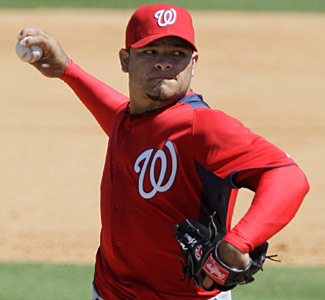
For a while on Sunday, it looked like the USA was closer to finishing dead last (and having to qualify for the next tournament) than winning it, but that’s the surprises involved in pool play.  After getting completely out-played by Mexico in the opener, the USA squeaked by Italy on the strength of 4 scoreless, nearly flawless innings from Ross Detwiler before turning it on late to beat Canada.  Meanwhile, the “Italian” team (I put that in quotes since i’d challenge someone to find more than a handful of the Italian team that actually speaks the language) surprises everyone by finishing second.  Meanwhile, Mexico finishes dead last behind a surprisingly good Canadian team (whose 3-4-5 hitters batted something like .450 for the tournament) and faces qualification for the next tournament.  An interesting pool all around, which could have looked very differently with just a few runs here or there.

Brackets for the Semi final rounds (some of which have already started as of the time of this writing):

2nd Round Pool 1: Netherlands v Cuba, Japan v Chinese Taipei

2nd Round Pool 2: Italy v Dominican Republic, USA v Puerto Rico

Pool 1’s favorites have to be Japan and Cuba, while Pool 2’s favorites have to be USA and the Dominican Republic.  But, the Netherlands and Italy have played far above their supposed skill level thus far and we could be in for more shocks.

Written by Todd Boss

March 11th, 2013 at 9:26 am

Ask Boswell 2/25/13 Edition

8 comments

When is Anthony Rendon going to be ready for the Majors? Photo Nats Official via espn.com

With the first couple of Spring Training games in the books, its fitting that Tom Boswell did a Monday morning chat on 2/25/13.

Here’s how I’d have responded to the Baseball-specific questions he took.  As always, questions are edited for clarity and I write here before reading his response so as not to “color” my answer.

Q: Given that the Nats know almost every player making the roster out of Spring Training, do the players/coaches approach the 6 weeks differently?

A: Good question; I was taking with someone about this exact topic this weekend.  The 25-man roster is essentially already solidifed; perhaps the only question remaining is whether or not Henry Rodriguez makes it onto the team or does the team carry a second lefty reliever (Bill Bray?).  So I think the answer has to do with looking more at the AAA talent, looking at minor league FA signings like Micah Owings and Chris Snyder to see if they’re going to be better options than the guys we already had slated at AAA.  And the coaching staff gets to look at up-and-coming guys like Anthony Rendon, Zach Walters, and the like.  Boswell reiterates what I said here, naming other ML signings of interest like Chris Young, but also says that this ST has a lot of “wasted time.”

Q: I’ve spent the offseason reading Ball Four to help get my baseball fix. Do you have a sense about how different things are now?

A: It has been a while since I read Jim Bouton‘s seminal baseball book Ball Four.   But the season he chronicles (1969) happened before a number of rather important moments in Baseball history.  Expansion, divisional play, the Designated Hitter, the aftermath of the Curtis Flood and Andy Messersmith decisions (aka, Free Agency) and of course the massive increase of money in the game (both from a revenue stand point and from a player salary stand point).  One thing that seems certain to have changed; players can now earn enough in a season to be set financially for life.  And, the players union’s power is now such that players have the upper hand in a lot of negotiations with the league and the owners when it comes to labor unions.  Boswell notes that managers, coaches and GMs are far “smarter” now than they were in the Bouton era.

Q: How the Nats will do at the gate this year?

A: The season ticket base is back to where it was in 2005 apparently, broaching 20,000 season tickets.  The team averaged 29,269 fans last year.  Clearly the attendance seems set to rise significantly.   I think they’ll average 35,000 a night if they continue to be a first-place club.  Boswell agrees, noting that the team also has a couple of very marketable stars to help with attendance.

Q: Other than obvious injuries, are there any things that can happen in the first quarter of the year that you would find to be troubling?

A: I’d be troubled if Danny Espinosa started off slow.  I’d also be concerned if we saw significant regression out of our WBC participants Gio Gonzalez and Ross Detwiler, confirming my fears.  But the most important factor may be the performance of Dan Haren: is he the 2012 Haren or the 2009 Haren?  If he approaches 2009 version, this team may be set for the season.  Boswell notes they have a tough early schedule, that winning 98 games is tough, and that we should be patient.

Q: Gio Gonzalez; did he or didn’t he?

A: I think the prevailing opinion in the sport now seems to be that he did NOT take or receive PEDs from the Miami clinic, and that he was an unfortunate bystander.  His passing a surprise PED test given two days after the scandal seems to have also bolstered his case.   Boswell agrees.

Q: Are the Nats a 98 win team again, or was last year a fluke?

A: Barring a significant injury in the rotation, I think the Nats are easily a 98-win team and perhaps better in 2013.  Statistical WAR “proof” offered in this space back in January, and that was before the LaRoche re-signing and the Soriano pickup, both of which marginally should improve the team a few wins.  Most national pundits that I’ve read think the same thing, that this team could win 103 games.  The various estimator stats out there (Zips, Pecota, etc)  the team much closer to 90 wins, but those predictors are by and large incredibly conservative.  Boswell also says it comes down to health of the rotation.

Q: How would you rate the Nats starting rotation, spot by spot, compared to the rest of the Major Leagues?

A: Spot by Spot, its hard not to think that each of our guys are each at least in the top 5 by position in the league.  Drawing from my Rotational Rankings post from January 7th, 2013, I’d say that:

  • Strasburg is clearly among the best arms in the game (in the discussion along with Verlander, Kershaw, and Hernandez).  He’s not as accomplished as this group of course, but his talent is unquestionable.
  • Gonzalez matches up as a top 5 number two starter (other candidates: Greinke, Hamels, Lincecum or Cain, depending on who you think SF’s “ace” is).
  • Zimmermann is traditionally underrated but is at least a top 5 number three starter (along with Scherzer, Johnson/Morrow, Bumgarner, Lee and Moore).
  • Haren on potential could be the best number four starter in the game, though Buehrle, Miley, and Lynn could also fit in here.
  • Detwiler is often mentioned as being the best number five starter out there, and its hard to find competitors (best options: Zito, Romero, Garcia, and whoever Oakland and St. Louis settle upon for their #5 starters).

Boswell seems worried that these five guys can handle the workload all year, only really trusting Gonzalez in terms of repeatability.

Q: What future do you see for Anthony Rendon, and when will he debut in the majors?

A: I have been of the belief that Zimmerman should move to 1B for Rendon at some point.  But with LaRoche signed for two years, that won’t happen for a while (2 years, perhaps 3 if we pick up his 2015 option).  So now i’m starting to come around to the the possibility of Rendon pushing someone else off their position.  The most likely candidate seems to be Espinosa at 2B.  Despite having Lombardozzi on the 25-man, Rendon is a higher-potential player.  If Espinosa starts slow, and Rendon starts fast, I could see Rendon getting called up in June and starting to get reps at 2nd while Espinosa goes on the DL for his shoulder.  Otherwise, a Sept 1 call-up seems in order.  Boswell predicts a post-all star game call-up.

Q: Is there any way the Nats can stop Detwiler and Gio from pitching in that baseball ‘classic’? I see a disaster waiting to happen. Luis Ayala was never the same after getting hurt pitching in that thing.

A: There’s no way legally the team can prevent either guy from pitching, since neither suffered any injuries in 2012.  And yes I agree (as discussed in this space on 2/11/13) this is bad news for the Nats.  Washington has never had a pitcher play in the WBC who didn’t regress badly, and the stats seem to show that most every pitcher who does participate in the WBC pitches poorly the next two seasons (links in my post).   Boswell says cross your fingers.

Q: Do you think Bryce has it in him to be National League mvp?

A: Yes I do.  MVP voting generally starts with the “Best Player” on the “Best Teams” and creates a short list from there.  It is why it is relatively easy to predict the MVPs.  If Washington is the best team in the league and makes the playoffs again, and Bryce Harper has a break out season, it won’t be hard to see him getting serious MVP consideration.  Now, let me also say that a “Harper for MVP” prediction is NOT the same as predicting that Harper is set to become the best player in the game.  That’s not what the MVP measures.  If the question was, “Is Harper set to become the best player in the National League” i’d then say, “No, he’s a few years away from that distinction.”  Boswell thinks it may be a bit early.

Q: How many wins per year would you estimate a a stellar defense adds to a teams win total over the course of a season?

A: I’m sure there’s a good statistical answer for this, based on the percentage of WAR added by defense.  But it seems like a very difficult answer to come by.  Boswell says “a few.”

Q: Any reason to think he’s NOT going to be the GM for a long time?  Because I can’t think of many others who have done as good a job in all of baseball.

A: I can see no reason for Rizzo not to be the GM for at least the next 4 years.  His next big challenge will be dealing with the inevitable payroll demands of Harper and Strasburg (both of whom project to be $25M players) while also keeping a competitive team on the field.   2017 could be an interesting year for this team; Strasburg projects to hit Free Agency that year, and Harper should be in his 4th arbitration year.  They already have Zimmerman and Werth at $14M and $21M respectively in the 2017 year, with possibly another $40-$45M out the door to keep Harper and Strasburg.  They better start working on the farm system again.  Boswell didn’t really answer the question, just mentioned how Rizzo’s options have yet to be picked up.

Q: How is Ramos looking thus far? 100%? Suzuki is a professional and seems to be a good guy, do you get a feel for how well he and Ramos interact? How great would it be to generate some power/runs from the catcher spot this year.

A: I’ve been assuming that the catcher job is Suzuki‘s to lose for now; its still early but no word has come out negatively on Ramos‘ recovery.  Either way, yes it would be nice to get some production out of the #8 hole.  Suzuki was pretty good after he came over here, but Ramos healthy was a middle-of-the-order bat.  Boswell suggests that Ramos stop blocking the plate.

Q: If Rendon tears it up after September call-up, what does the Nats 2014 infield look like?

A: Wow; hard not to say Rendon replaces Espinosa like-for-like right now.  But, just as Desmond broke out in his 3rd full time season, so could Espinosa.  It could make for a log jam.  Lets hope for the best, hope for a rebound Espinosa season and a good-problem-to-have situation of having to trade a strength to make way for another strength.  Boswell has no idea where Rendon will play if he merits a call-up.

Q: I think the Nats, and Danny Espinosa are whistling past the graveyard if they think a completely torn left rotator cuff will not seriously affect Danny’s play. Your take?

A: A fair assessment.  I too believe a torn rotator cuff absolutely has to be affecting his swing, especially from the right side.  I think Espinosa should have gotten the thing surgically repaired in the off-season.  I wonder how much the team knew of the injury, because when it was reported in the off-season it sure seemed like a surprise.  Boswell says its a concern and that Espinosa should take more days off.

Q: Is McCatty working with Strasburg on correcting his inverted W delivery? Strasburg also has footstrike issues, as he tends to plant his foot and then whip his arm, which puts a ton of strain on his shoulder. I’m concerned if he doesn’t correct this, his shoulder will give out this season or next. Are the Nats worried about this? Are they working on cleaning up his delivery at all?

A: I’m beginning to think that this whole “Inverted W” thing is a bunch of BS.  Keith Law stated as much when prompted in a chat recently; he says that the problem with the Inverted W theory is that its difficult to “state” with authority that certain pitchers do or don’t have the phenomena.  And its true; if you see some shots of Strasburg he has it, in others his arms are more bent behind his back.  Its the same with Gio Gonzalez (I can show you stills of him landing with his arms clearly in an “inverted W” position and you don’t hear anyone talking about Gonzalez’s mechanics.   The leading inverted-W site on the internet (Chris O’Leary‘s page linked here) uses an opportunisitic example set of pitchers with that motion, but I can find plenty of examples of guys who have similar mechanics but zero soft-tissue injury history (on the Nats two quick examples are Drew Storen and Craig Stammen).  Meanwhile one of his examples was John Smoltz … who only threw 3400 MLB innings in his career and basically didn’t miss a start until he was 32.  Not the best example of proof that his mechanics were somehow “awful.”  I think the entire phenomenon is an observation of coincidence, that pitchers get injuries all the time no matter what their mechanics, and that we need to move onwards.  Wow; Boswell thinks exactly what i think; these proofs are nonesense.

Ladson’s inbox 1/28/13

13 comments

Espinosa's shoulder injury is the big news this week. Photo AP Photo/Nick Wass

These Inboxes are coming fast and furious!  Its almost like we’re just a few days away from Pitchers and Catchers reporting or something.  I should do an inbox response.  Except nobody emails me any questions.   Sometimes I wonder who emails Bill Ladson some of these questions, frankly, especially the people who keep asking about who the manager will be in 2014.  Anyway, here’s his 1/28/13 inbox and how i’d have responded.

Q: What is the status of Chris Marrero? Does he figure to contribute in the Major Leagues at all this year?

A: The phrase “what have you done for me lately” never seems more appropriate than when talking about Chris Marrero.   In November 2007 he was listed by Baseball America as our #1 prospect.   #1 over the likes of Detwiler, Zimmermann, Maxwell, Clippard, Desmond, Peacock, Norris and even Bernadina.    A season-ending injury in 2008, slow progress up our system and then last off-season’s torn hamstring have now dropped him to the Nats #23 ranked prospect overall.  #23 puts him behind “prospects” such as Corey Brown and right above 7-year minor leaguer Carlos Rivero.

The status of Marrero is this: he’s stuck at first-base, seemingly can’t play anywhere else, but doesn’t hit nearly enough homers in order to be a MLB first baseman.  So he seems sort of in a quandry.  Unless he suddenly turns into a 30-home run hitter over-night, or figures out how to play another position, he’s really in a tough spot.  On the Nats depth chart at 1B, he seems to be no better than 4th right now (LaRoche, Moore, Tracy).  That doesn’t bode well for him contributing at the MLB level.  It seems to me that the only way he’s playing meaningful minutes at first this year is if both LaRoche and Moore come down with season-ending injuries.

On the bright side; despite us hearing about him for years, he’s only 24.  But he’s running out of time.  He’ll burn his 3rd and last option in 2013 and isn’t going to be eligible for a 4th.  Marrero needs to hit lights out in AAA this year, get an injury on the big club and gets some big-league ABs, and build trade value.

Ladson has answered this question before and repeated his answer; he thinks Marrero needs to be traded.  Great idea!  Now, who exactly is going to trade for him right now?  And what exactly could the Nats get in return?  These sort of things matter when looking at trade candidates and it irritates me when they’re not taken into consideration by supposed “professionals” in the field.

Q: Given Danny Espinosa’s torn rotor cuff and disappointing second half last season, is there any chance Steve Lombardozzi will become the Opening Day starting second baseman?

A: Boy, the revelation that Danny Espinosa has a torn rotator cuff is big news to me.  Even though its in his non-throwing shoulder (obviously; if it was in his right shoulder he’d likely have had the surgery as soon as it happened), you have to think this affects his hitting.  In fact, the blog Nationals Review did just this yesterday in a great bit of analysis: before the estimated injury date Espinosa was hitting 255/.321/.416.  Afterwards (including his awful playoffs): .156/.241/.234.  That’s rather definitive, even if “after injury” only included a few weeks of the regular season and a 5-game series.

I think the injury gives the team a built-in excuse to replace him if he starts off the year struggling.  Opening Day though?  No way; Davey Johnson is a players’ manager, is old-school and will go with the team at hand unless someone gets hurt in Viera.  Ladson says lets see what happens in Spring Training.  I think that’s the baseball writer equivalent of an Economist saying, “It depends.”

Q: Do you think Johnson will sit Espinosa more often this season because of his injury?

A: Doubtful; he’s either going to produce or not.  If he doesn’t produce, look for him to be sent to the DL for surgery.  I don’t see him getting sat sporadically.  Ladson says that Espinosa won’t let that happen.  Last time I checked though, Espinosa was the player and Johnson was the manager.  So I’m not sure how he can make that command decision.

Q: What role do you foresee Christian Garcia playing this year?

A: I see Christian Garcia starting the year as a starter in AAA and then one of two things happening; either he hurts himself again, thus destroying the whole starter experiment.  Or, someone in the MLB bullpen gets hurt or gets ineffective (ahem, Henry Rodriguez anyone?) and Garcia-as-starter is scrapped as he’s brought up to pitch meaningful innings.  Ladson says he expects Garcia to be a bullpen member and doesn’t buy into the starter experiment.

Q: Assuming 2013 is Johnson’s final year, do you think his replacement will come from inside or outside the organization?

A: I just don’t get how people are obsessing over the 2014 manager.  Call me when the World Series is over and AFTER Johnson actually retires.  Ladson predicts someone from within.

Q: After Adam LaRoche’s contract runs out, could Ryan Zimmerman move across the diamond to first base and let Anthony Rendon play third?

A: This is exactly what I believe should happen.  My ideal world has Rendon hitting his way into a utility infielder role this year, pushing for more playing time next year (perhaps even forcing the Nats hand at 2nd base), and Zimmerman logically moving across the diamond to alleviate his mental issues with routine throws and to protect his body from the constant pounding he gets at 3rd.  Ladson wants Zimmerman at 3rd for a long time, apparently forgetting that Zimmerman increasingly has difficulty making routine throws and being incredibly fragile.

Q: What are the chances of the Nats opening the season with Bryce Harper in right field and Jayson Werth in left?

A: Zero.  But, honestly, Werth in left is a better defensive team.  Harper‘s so good in center while Werth‘s range is eroding in right, it just makes more sense to switch them up.  Why won’t it happen on opening day?  Deference to the veteran.  Deference to the contract.  I expect the OFs to switch around and get each of them playing time in all three positions.  Ladson says that Harper is more comfortable in left while Werth is an “above-average” right fielder.  Uh, not according to UZR/150, which had Werth at a very poor -14.2 in 2012.  Harper belongs in RF but it won’t happen overnight.

Ladson’s inbox 1/22/13

7 comments

Does Boras run the Nats? The national narrative certainly seems to think so. Photo Ezra Shaw/Getty images via espn.com

I love a diversion.  Bill Ladson’s inbox is always a diversion.  Here’s 1/22/13’s edition.

Q: Why do the Nationals need another closer in Rafael Soriano?

A: My posted opinion about the deal from 1/15/13.  Did they “need” another closer?  Probably not.  But, innings sent to Rafael Soriano cascades downwards and means that innings that would be given to lesser relievers will now be pitched by Clippard and Storen (assuming one of them isn’t moved of course), and overall the bullpen is improved.  I wonder if Ted Lerner didn’t pull a George Steinbrenner/Dan Snyder-esque move and force a player signing as a reaction to a singular event (aka Storen’s NLDS game 5 meltdown).  Its possible I suppose.  If so, you hate to see moves like this, because it undermines the GM and leads to poorly constructed rosters.  Ladson belives this is a reactionary move to the NLDS bullpen meltdown in total, not just Storen’s misfortunes.

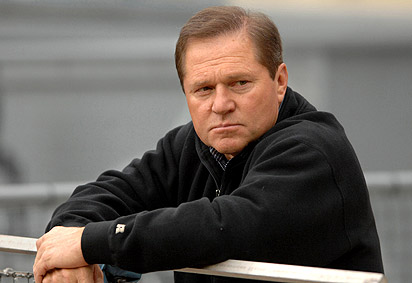
Q: It seems like Washington takes all of Scott Boras’ clients and puts them on its roster.

A: I hate this Urban Myth that now pervades anyone’s analysis every time the Nats sign a Scott Boras client.  Check the proof: MLBtraderumors keeps a player agent database and guess what?  The Nats don’t even have the most clients of Boras.   The Nats have 7 Boras clients but Boston has 8.  Plus, three of the 7 Boras clients the Nats have were no-brainer 1st round draft picks (Harper, Strasburg and Rendon, and you could even argue a 4th such Boras pick in Goodwin that the team would have taken at that point in the draft irrespective of his representation) that the team was likely going to draft and sign no matter who represented them.  The fact is this: the Nats have become a premier FA destination, Boras represents a lot of good players on the FA, and the Nats have hired some of his players.  When Boston or Texas hires a Boras client, you don’t suddenly hear people sarcastically asking, “Does Boras run the Red Sox?” now do you?  I think its great that Rizzo and Boras have a good working relationship, because other teams/GMs do not, and it affects the quality of their teams as a result.  Ladson defends my point as well, saying similar things to what I’ve pointed out.

Q: Does the Nationals’ front office regret not making Edwin Jackson a qualifying offer? It seems he would have signed elsewhere and the Nats would have received a compensation pick that would help the farm system.

A: Great Question!  One I asked in this space myself on 11/5/12.  I honestly think the team believed that Edwin Jackson, who had a history of signing one year deals, would have taken the contract.  Either that or there was a hand-shake deal in place stating that the team wouldn’t extend the offer.  I don’t truly believe the latter part of this, because (as others have pointed out) it’d be illegal as per the latest CBA.  Either way, I thought it was a mistake at the time and the Nats indeed missed the opportunity to gain an extra pick.  Ladson believes point #1; he thinks the team was afraid that Jackson would take the deal.

Q: If there was one thing that could hold the Nationals back from winning the World Series this year, what would it be?

A: I’ll give you two things that could prevent the team from winning.  1) Injuries in our Rotation and 2) bad luck.  We’re very thin in terms of starters and a season-ending injury to one of our big names would be a bad impediment.  And, the playoffs are crap-shoots; 83 win teams (St. Louis in 2006) can get hot and win it all while 116 win teams (Seattle in 2001) get beat easily before ever getting to the World Series.   That being said, even a starter injury probably wouldn’t be fatal to this team’s chances of making the playoffs; the Mets and Marlins are moving backwards, the Braves seem to be treading water, and the Phillies are getting older by the day.  The division is there for the taking even without winning 98 games again.  Ladson says injuries.

Q: Is it true that the Nationals are interested in Kyle Lohse and plan to put Ross Detwiler in the bullpen?

A: Man, I hope not.  I like Kyle Lohse but there’s a reason he’s still on the FA market despite a TON of teams needing pitching help (and it isn’t just because of the lost draft pick).  He’s really not THAT good.  He had (easily) his best season last year, the definition of a contract year if there ever was one.  Career 98 ERA+.  I think he’s a good fit for a team that needs a 3rd starter, but the Nats aren’t that team.  I made my arguments for keeping Ross Detwiler in the rotation on 1/16/13, when rumors swirled about the team looking at Javier Vazquez.  Who would you rather roll the dice with?  A young, up and coming power lefty or a soft-tossing righty who’ll be 34 next year?  I think buying another $12M/year starter and pushing Detwiler to the bullpen just for the reason of “needing another lefty” in the bullpen is arbitrary and would be a waste of Detwiler’s promising 2012.  Ladson agrees, saying that Davey Johnson likes Detwiler in the rotation.

Q: Would Mark DeRosa be a viable managerial candidate for the Nationals in 2014?

A: Random question.  What makes you think Mark DeRosa won’t still be playing in 2014?  Plus, what ties does he have to this organization that would make you think that the Nats think he’s the heir apparent?  I mean, if we’re talking about former players who have put in the time with this organization, look no further than Matt LeCroy, who played for the team and has been managing in our minor league system for years.  Personally, I think the team will go with a “celebrity manager” when the time comes.  Ladson expresses some surprise at the question as well.

Q: After he was acquired from the Athletics for Michael Morse, where does A.J. Cole fall on the Nationals’ list of prospects?

A: I’d say he’s probably 3rd in line, after Rendon and Goodwin.  That’s about where he was when he was still in the system, and despite his rough 2012 in the California league he’s still very promising.  Ladson says 3rd, as does mlb.com’s rankings for the team.

Q: What did you think of what the Nationals received for Morse? Could they have gotten more — a Major League lefty reliever in addition to a starting prospect? Is the problem that Morse only had a total of two good seasons?

A: I think the Nats got what they could for Morse, frankly.  I would have liked to have seen a MLB lefty and a starting pitcher prospect in the lower-to mid minors.  Lots of people were using the Josh Willingham trade as a comp; both players are similar (both are good offense, no defense type guys in the last year of an affordable contract).  Willingham netted us a mlb reliever and a high-minors OF prospect.  However Morse’s defensive inabilities preceed him reputationally, and many scouts perceive his 2011 as a one-off instead of a ceiling of potential.  Ladson says they made a great deal.

Nats & Vazquez; Do people really think Detwiler is going to the bullpen?

19 comments

Do people really think Detwiler is heading to the bullpen? Photo: Haraz Ghanbari/AP via federalbaseball.com

By now we’ve all seen the reports; the Nats have been to Puerto Rico to scout Javier Vazquez, the veteran starter who inexplicably “retired” after an effective 2011 at the age of 34.  According to Adam Kilgore‘s initial reports and as stated in other places on line Vazquez is apparently hitting the mid 90s in winter ball and is looking to possibly re-start his pro career.  Kilgore reports that the Nats are looking to offer Vazquez a minor league contract with an “out clause” if he’s not assigned to the Majors by a certain date.

This out clause arrangement seems to make perfect sense for the Nats.  We have a full rotation, we need starter depth in AAA, and Vazquez is a risk having been out of the league for a year, despite how good he looks in a winter ball league that rates at best at being a “weak AAA” level of talent.

What I don’t understand in some of these reports is the claim that the team would love to sign Vazquez and then drop Ross Detwiler to the bullpen.  Mike Axisa from MLBtraderumors stated as much in his report and I got into it with a NY-based blogger who keeps stating that Detwiler “belongs” in the bullpen without really giving much in the way of proof.

Here’s what Detwiler did in 2012: 10-8, 3.40 ERA and a 1.22 whip in 164 1/3 innings and 27 starts.  He posted a 117 ERA+, good for 12th in the league among qualified starters.  He’s a lefty who averages 92-93 and can reach 96 in a division with a number of teams with lefty power (especially Philadelphia).  And he saved the Nats bacon by giving the team its best post-season start in the NLCS.  He is still cheap (he’s first year arbitration eligible this year), meaning he provides great value for the dollar as a starter.

Why exactly would the Nats be looking to replace Detwiler in the rotation??  And why would the team be looking at a reclamation project like Vazquez to be his replacement?  Vazquez’s 2011 numbers were good (13-11, 3.69 era, 1.183 whip) but not earth shattering (106 ERA+ in 2011 after getting hammered in New York the year prior).   Detwiler was a significantly better pitcher by this measure in 2012 than Vazquez was in 2011.   If you had the 12th best pitcher (by ERA+) in the league installed as your 5th starter, why exactly would you be looking to replace him?

Then there’s the “personnel issues” involved with Vazquez at this point.  Why did he walk away from the game?  Wouldn’t you be concerned about his committment levels and his drive at this point?  Why would a team want to give him anything other than a non-guaranteed deal?

Yes, I realize the team’s bullpen, as it is currently constructed, is light on left-handed relievers.  We’ll ignore for the time being the fact that our existing RHPs out there mostly have good lefty splits.  If you go on the assumption that the team “needs” another left handed reliever, there are certainly better ways to fill that spot than by wasting an excellent starter by putting him in the pen.  Any statistical measure of player value will show you that even a medicore starter is usually “worth” more than even an excellent closer; sometimes FAR more.  A quick proof: Craig Kimbrel‘s 2012 season as the Braves closer was epic and historical, and was worth a 3.6 fWAR.  That would only have qualified him for 25th in the league, tied with Kyle Lohse and just ahead of our own Jordan Zimmermann.   And that was for one of the best reliever seasons ever seen.  Rafael Soriano was an excellent closer last  year and only had an fWar of 1.2, a more typical closer number, which would have been about 77th in the league in fWAR, around what Bruce Chen and Edinson Volquez provided in 2012.

In the end, it may not matter; if Vazquez is coming back there’s plenty of teams that make much more sense for him to join that would give him a guaranteed MLB deal and a guaranteed rotation spot.  Any of the bottom 4-5 teams in my Rotation Rankings would make sense.  Returning to Miami would make too much sense, based on where he pitched last and proximity to his home in Puerto Rico.  But it bugs me just the same that people don’t use some common sense when looking at what Detwiler gave the team last year and assuming that he is better served in the bullpen to make way for a lesser pitcher.  I’ll fully admit; I have not always been a Detwiler fan.  But after what he showed the team in 2012, I think you stick with him in 2013 no matter what.

Ladson’s Inbox 1/14/13

16 comments

Free Michael Morse! Photo Jacqueline Martin/AP via federalbaseball.com

Another edition of Bill Ladson‘s Nats inbox, dated 1/14/13.

Q: Who will replace Davey Johnson once he retires after the 2013 season?

A: Who knows and who cares?  Can we wait until the end of the 2013 season to see if Davey Johnson actually retires?  I’m not convinced that he actually will retire if the Nats don’t win the World Series.  Even if he does retire, I think its pointless to speculate who in the baseball universe the team could possibly look to as a successor.  It could be a current TV pundit, a bench coach, someone elses manager, someone who just got fired, a minor league manager in our system, one of our current coaches, Mike Rizzo‘s uncle.  About the only person I think it will NOT be is Jim Riggleman.  Ladson says internal candidates Randy Knorr and Trent Jewett are good candidates, and throws out Joe Girardi‘s name based on his contract status coinciding with the end of next season.

Q: Is there any validity to the Nationals having interest in Javier Vazquez? If the Nats were to sign him, would they move Ross Detwiler to the bullpen so he could be their second lefty?

A: This topic as so irked me that I’m penning an entire post dedicated to it.  Check back later.

Q: If Michael Morse is only making $6.7 million, why not keep him around as insurance and a right-handed bat off the bench?

A: An excellent question.  Much like the team paid John Lannan to sit around in Syracuse for a year, they could do the same with Michael Morse.  Except that Morse is FAR more valuable in trade than in sitting around and wondering what he’s done to earn his fate.  He’s by all accounts a great clubhouse guy, but keeping him here would be detrimental to everyone involved.  I think the team needs to move him for lefty bullpen help and some farm system starting pitching depth.  Ladson says the team needs to do Morse a favor and trade him.

Q: Who do you see as the Opening Day closer — Tyler Clippard or Drew Storen?

A: Drew Storen.  Tyler Clippard had his shot at the title and lost it down the 2012 stretch.  I think the team goes back to its winning formula with Clip-Store-and Save in 2013.  Ladson thinks Johnson will go with “the hot hand” and split the role.  I don’t.  I think he’ll go right back to what he was doing before.

Q: With Adam LaRoche now signed, what are the Nats’ long-term plans for Tyler Moore?

A: Once Morse is traded, Moore becomes the big bat off the bench and does some fill-in work at 1st base and (maybe) LF.   I see his opportunities limited though unless we see some injuries.  Longer term, I think he’ll have to hit his way into full time playing time; if he does perhaps he’s the first baseman of the future.  I don’t see it though; I think he’s likely to find his way off the team through trade at some point.  The OF is full and 1B is blocked.  Ladson agrees, mentioning an interesting wrinkle; with Bo Porter now in Houston, perhaps a trade would be in order.

Q: Which Minor League player do you think will have a breakout season this year?

A: A good question.  Borrowing from Luke Erickson‘s NationalsProspects watchlist for 2013 (a very handy one-page summary of all the top/interesting prospects throughout the Nats farm system), I’ll pick three names that could press for quick promotion and big impact in 2013: Rendon, Skole and Goodwin.  Ok that’s a cop out.  I will say this: I *hope* that Rendon breaks out and finally hits like his draft pedigree.  Lets keep an eye this year on Nathan Karns and Erik Davis, two rising arms that could both feature in the bullpen in 2013.  I’d like to see Robbie Ray rebound.  For a deep-cut, i’m really interested to see what Kevin DiCharry does in 2013.   Ladson goes with the two obvious candidates Rendon and Goodwin.  I don’t think he follows the farm system that closely, so we’ll give him a pass.

Q: Is Ryan Zimmerman expected to be healthy for Spring Training?

A: I saw nothing in his surgery detail that indicated that the 2013 season was in jeopardy in any way.  Ladson confirms.

Q: If Jayson Werth bats in the middle of the order, what right-handed hitter is the best choice for No. 2 after Denard Span?

A: I’d probably say Jayson Werth is still the best option at #2.  The lineup that seems to make the most sense goes Span-Werth-Harper-Zimmerman-LaRoche-Desmond-Espinosa-Suzuki.  That allows the team to go L-R-L-R-L-R-S-R, a perfect balance.  Perhaps you switch Desmond and Werth.  Ladson thinks Harper is batting second most of the time.  Can’t see that; can’t see Johnson purposely going lefty with 3 of the first four guys in his rotation.  That seems to scream out easy Loogy matchups every night.

Q: Will Christian Garcia do any starting for the Nats next season? I know Johnson would love to see that.

A: A man can wish; I’d love to see Christian Garcia starting and bringing his stuff for 7 innings a night.  Unfortunately I don’t think he’s got the stamina in that arm (surgically repaired more than once) to start, no matter how much Johnson may want him as starter depth.  I think Garcia starts the year in AAA starting but soon finds himself back in the MLB bullpen.   Ladson says he’s getting stretched out and will provide cover for any injuries.


How does the Nats WAR add up for 2013?

9 comments

How much WAR is Haren bringing to the 2013 Nats? Photo unknown via wikipedia

Mark Zuckerman posted a nice little Wins Above Replacement (WAR) analysis article in the wake of the Gio Gonzalez signing back in December 2011, showing that without any further moves and with the expected projections of WAR improvement the 2012 Nats should improve by nearly 12 wins if our injured stars return to the norm and produce as expected.  As it turned out, he was right … and wasn’t “right” enough.  He actually under-valued the WAR contributions of a newly healthy Adam LaRoche and of what Gonzalez would give the team (and of course nobody could have predicted what Ian Desmond would do nor how big an impact Bryce Harper would have) and the Nats ended up improving 17 games instead of a predicted 12 from 2011’s 81-81 team.

Here’s a similar analysis for your 2013 Nats, with some thoughts on players who may improve or regress from their 2012 WAR totals, and then using that analysis to predict how the team may fare in 2013.  I have uploaded my working 2013 fWAR spreadsheet to docs.google.com (also a link on the right-hand side of the page), which is the basis of the cut-n-paste tables below.  For the purpose of this article, we’re assuming that LaRoche is leaving and Michael Morse is playing 1B full-time, that Bill Bray is making the bullpen, and that Christian Garcia is starting in AAA.

A quick note before starting: the two leading baseball stats sites both have their own versions of the Wins Above Replacement stat.  Baseball-Reference’s WAR (usually abbreviated bWAR or rWAR) was developed by Sean Smith at BaseballProjection.com.  Meanwhile, fangraphs.com has developed their own version of WAR (usually abbreviated fWAR to distinguish from the Baseball-Reference version).  A good analysis of the differences between the two WARs is here: the main differences relate to the use of FIP versus ERA and TotalZone versus UZR for defensive additions.  In this article i’m using solely fWAR.  I think fWAR is slightly better and uses better component parts, though honestly the difference between the two is often negligible.

How many wins would an entire team of replacement level players win?  In other words, where do you start adding WAR figures to, in order to estimate how many wins you should expect out of your team?  Jim Breem of the Milwaukee-Wisconsin Journal Sentinel did just this study in Jan 2011 and discovered that the average of replacement level wins across MLB in 2010 was 45.5 wins.  In other words, you could expect a team of nothing but AAA-level veterans or 0.0 WAR players to win about 45-46 games in a season.  This is about on par with the figure’s I’ve heard in various chats, and is somewhat supported by last year’s awful Houston Astros (who finished 55-107 and had just a handful of players posting a 1.0 WAR or greater).   The 2012 Nats fWAR totaled exactly 50.0, the team finished 98-64 and they had a Pythagorean record of 96-66,  implying that a team of replacement Nats players would win between 46 and 48 games, right in line with Breem’s studies.  For the purposes of predicting the # of 2013 Nats wins we’ll use 46 as a floor.

How did our returning players fare in 2012, and what might they contribute in 2013?  Here’s my estimates for all returning players.  This table is sorted by 2012 fWAR from highest to lowest.  (b) after a pitcher’s name indicates the fWAR contributions (or lack thereof) of that pitcher at the plate.

2012 fWAR 2013 fWAR Est Trend from 2012
Ian Desmond 5.4 5 Down
Gio Gonzalez 5.4 4.8 Down
Bryce Harper 4.9 6 Up
Ryan Zimmerman 4.5 5 Up
Stephen Strasburg 4.3 5 Up
Danny Espinosa 3.8 3.8 Even
Jordan Zimmermann 3.5 4 Up
Roger Bernadina 1.9 2 Even
Ross Detwiler 1.8 2 Even
Jayson Werth 1 1.5 Up
Tyler Clippard 1 1 Even
Steve Lombardozzi 0.8 0.8 Even
Craig Stammen 0.8 0.8 Even
Stephen Strasburg (b) 0.7 0.8 Even
Drew Storen 0.7 1 Up
Tyler Moore 0.6 0.6 Even
Wilson Ramos 0.6 0.2 Down
Kurt Suzuki 0.6 1.5 Up
Chad Tracy 0.5 0.5 Even
Jhonatan Solano 0.4 0 Down
Jordan Zimmermann (b) 0.4 0.4 Even
Michael Morse 0.3 3 Up
Zach Duke 0.2 0.8 up
Corey Brown 0.1 0 Even
Eury Perez 0.1 0 Even
Christian Garcia 0.1 0 Even
Sandy Leon 0 0 Even
Ryan Mattheus (b) 0 0 Even
Zach Duke (b) 0 0 Even
Craig Stammen (b) -0.1 0 Even
Carlos Maldonado -0.1 0 Even
Ryan Perry -0.2 0 Even
Ryan Mattheus -0.2 -0.2 Even
Gio Gonzalez (b) -0.3 -0.3 Even
Henry Rodriguez -0.4 -0.4 Even
Ross Detwiler (b) -0.5 -0.6 Even

Here’s some discussion on my estimates:

Players who I’m trending Up: Harper, Zimmerman, Strasburg, Werth, Suzuki, Storen, Zimmermann, Morse and Duke.  I have Harper going from a 4.9->6.0 fWAR player, which frankly may be selling the kid short.  Lots of pundits think he’s going to explode in 2013 for a Mike Trout-like season.  I think both Zimmerman and Strasburg can achieve 5.0 fWAR seasons.  I think Werth can go from a 1.0->1.5 with a full healthy season, especially if he continues to hit as he did upon returning last year (we’ll ignore for a moment that he’s not “earning” his salary with fWAR seasons in the 5.0 fWAR range like he’s being paid to do).  Suzuki has a couple of 3.4 fWAR seasons under his belt; estimating him at 1.5 may be selling him short.  Storen returns to the closer role healthy, though an improvement to just 1.0 fWAR would be a career best for him.  I’m predicting an improved season out of Zimmermann, who seemed to tire at the end of last season in his first full season back from Tommy John surgery.  Morse has a huge increase predicted (from 0.3->3.0) but he posted a higher fWAR than that in his breakout 2011 season; if he’s here and playing full time, there’s no reason to not expect another season like 2011’s.  Lastly Duke’s 0.8 fWAR estimate may be exceedingly high, but he managed to add 0.2 fWAR in just a few weeks of work in September.

Players who I’m Trending Down: Desmond, Gonzalez, Ramos and Solano: I think Ramos and Solano’s contributions are now limited and/or blocked by Suzuki, so their fWAR contributions drop accordingly.  I’m building in some regression for both Desmond and Gio from last year’s fantastic performances.  Most every player with an estimate of 0.0 for 2013 is assumed to be spending the majority of the season in the minors (notably Ryan Perry and Garcia, but also the likes of Corey Brown,  Eury Perez and all the backup catchers we had to use last year).

Notable Players who I’m trending about Even: Espinosa, Bernadina, Detwiler, Clippard, Stammen, Henry Rodriguez: Even, meaning they’ll contribute about the same in 2013 that they did in 2012.  Is Clippard going to contribute 1.0 fWAR in 2013?  Maybe not.  Can Stammen repeat his stellar performance?  Will Rodriguez continue to drag down the bullpen with a -0.4 fWAR?  If anything, Espinosa should improve on his 3.8 fWAR; he’s trending up year over year.  I’ve listed almost all our backups (Bernadina, Lombardozzi, Moore, Tracy, etc) as being even year over year; there’s no reason right now not to expect the same performance we got out of them in the coming season.  For the moment I’m leaving Garcia in AAA, and have his fWAR at zero; if he were to join the bullpen on a full time basis he could contribute half a WAR or more.

Here’s a quick look at our new players acquired this off-season:

New Players for 2013 2012 fWAR 2013 fWAR Est Trend from 2012
Dan Haren 1.8 4.5 Up
Dan Haren (b) -0.1 -0.3 Down
Denard Span 3.9 3.9 Even
Bill Bray -0.6 0.3 Up
Bill Bray (b) 0 0 Even

Perhaps the most controversial estimate in this article is Haren‘s 2013 fWAR number.  I’m estimating that he’s going to return to his previous form and at least post a 4.5 fWAR.  If you look at his history before 2012, you’ll see he’s easily capable of posting a 6.0 fWAR or higher.   I think the team gave him the contract they did because they’re assuming he’s healthy and assuming he can return at least to his 2011 form.  A 4.5 estimate may end up being low.  Meanwhile, I’m assuming Span is going to just repeat his 2012 performance, and I’m assuming that Bray improves upon his own poor 2012 and returns to something closer to his 2011 form (where he posted a 0.7 fWAR).

Given the above breakdown, here’s how the summaries look:

2012 fWAR 2013 fWAR Est
sum of 2012 fWAR of returning players –> 42.6 49 <– Sum 2013 fWAR estimates existing players
sum of 2012 fWAR for departed players –> 7.4
8.4 <– Sum 2013 fWAR estimates new Additions
sum of 2012 fWAR –> 50.0 57.4 <– Sum 2013 Nats fWAR Estimates

Ok, what does the above table mean?

  • Sum of WAR Returning of 42.6: this is the sum of the fWARs of all pitchers and batters in 2012 who are returning to the team in 2013 (as broken down in the upper table).
  • Sum of WAR Gone of 7.4: this is the sum of the fWARs of all pitchers and batters in 2012 who are no longer with the team.  Adam LaRoche leads this list with a 3.8 fWAR in 2012, though also included in this list are a number of negative fWAR players who drug the team down last year (DeRosa, Wang and Nady especially).
  • Sum of 2012 Nats fWAR of 50.0: This is the sum of returning and departing 2012 players, and is the same number referenced above.
  • Sum fWAR estimates of existing players: 49: This is the sum of the fWAR for all our returning players for 2013; notice this is higher; I’m predicting that through attrition of poor players and some improvement over 2012, we can expect our team to be nearly 7 wins improved.
  • Sum fWAR new additions: 8.4: Span, Haren and Bray should add 8.4 fWAR (as shown in the second table).
  • Sum 2013 Nats fWAR estimates: 57.6

That’s right; I believe the team has an fWAR capability of 57.6, or 7.6 wins more than last year.  Adding that to the previously discussed fWAR floor of 46 games and you have a 103-104 win team.

What happens if LaRoche comes back?  If anything the team could be improved even more.  LaRoche posted a 3.8 fWAR in 2012, while Morse’s BEST fWAR season was his 2011 breakout of 3.3.  If we assume LaRoche can repeat his 2012 performance at least for one year into a 2-3 year contract, then the team’s fWAR estimates rise again.

Does this mean I’m predicting that the 2013 Nationals are going to win 104 games?  Well, no.  Every single one of these estimates implies a 100% best case scenario; no injuries and for the most part all our players playing at their capability levels of 2012.  In reality, we’re going to see some time lost due to injury from key players, and we’re going to see some regression from some players.  The hope is that those regression periods are matched by improvements from other players, or from breakout performances from players who were in the 1.0 fWAR range in the past (think Desmond in 2012).

One last note on WAR (which I’d love to see others’ opinions about): I admittedly have an uneasy and not always consistent opinion on the statistic.  On the one hand, I absolutely believe that career WAR values reward accumulator type players and skew career WAR figures (my favorite example to use is Bert Blyleven, who currently sits with the 39th largest career bWAR in the history of the game.  But no one in their right mind would claim that Blyleven was the 39th best player to ever play the game… so there’s a disconnect that I have a difficult time dealing with).  But, on the other hand, WAR usually does a nice job of quantifying individual seasons, and lending itself to the kind of analysis I’ve just done here.  Do I need to overcome my reservations of using the statistic?  How can I reconcile my concerns with the overall prevalence of the stat?

Ladson’s Inbox 12/28/12 edition

12 comments

Rodriguez getting ready to fire in another pitch he has no idea where its going. Photo via humorfeast.blogspot.com

Holiday edition mailbag from MLB.com’s Nats beat writer Bill Ladson for 12/28/12.

As always, I write my response here before reading his, and sometimes edit questions for clarity.

Q: Where does Henry Rodriguez fit in the Nationals’ plan this upcoming season?

A: A good question; Mike Rizzo loves Rodriguez but I find him completely frustrating as a fan.   In 2011 he led the league in wild pitches despite only throwing 65 innings, and in 2012 he had a -0.7 WAR and a 69 ERA+ before hitting the DL for season ending surgery.  He’s got no minor league options and thus has to be either carried on the active roster or be subject to DL shenanigans.  Davey Johnson also loves him, and said he was the Nats best pitcher last spring training.  My guess is that Rodriguez holds it together for another spring, breaks camp with the team and then plays his way into a DFA.  The team can replace his 7th/8th inning innings with Christian Garcia rather easily (assuming of course that the team realizes that Garcia’s arm is too fragile to reliably be depended upon as a starter).  Ladson predicts he’ll be a middle reliever for this team in 2013.

Q: What are the Nats going to do with first baseman Chris Marrero?

A: Great question; he has one more minor league option, is clearly behind the likes of Chad Tracy and Tyler Moore on the first base backup pecking order, but really hasn’t got much left to prove in the minors.  He hit admirably enough at AA and AAA in 2010 and 2011.  I think Marrero’s problem is that he’s stuck at first base but has limited power capabilities.  If he played LF, perhaps you could deal with someone who didn’t look to hit more than a handful of homers at the MLB level.  But he plays a position that needs 25-30 homers of production.  I think he’s trade bait ultimately.  Ladson says the team’s bench is set and that Marrero may be traded.

Q: Isn’t it time to make Ross Detwiler the No. 4 starter? Also, what do you think of Nats’ rotation?

A: I’m not exactly sure what the questioner wants; does it really matter if Detwiler is #4 or #5?  Not really (not until the playoffs anyway).  Detwiler is the 5th starter inarguably on this team, looking at the accomplishments of the 4 other guys.

I think the rotation is either the best or competing to be the best in the sport.  I’ve got a future post ranking all 30 rotations (I’m more or less waiting for the last of the impact free agents to sign before publishing it), and (teaser) the Nats are in the top 3 without question.  However, the Nats rotation is very, very thin.  If one of the 5 guys goes down, I really don’t know who is going to step up to make starts.   Zach Duke?  Ryan Perry?  Lets pray for a healthy spring training.  Ladson says Detwiler is the 4th starter entering spring training, and that he likes the rotation.  Not a very deep answer.

Q: Bill Bray was an OK pitcher in his last stint with the Nationals. Do you think he will be anywhere near as good the second time around?

A: It all depends on his health.  A groin strain and then a back strain cost him more than 100 games last year.   Those injuries should be healed up well enough by now; if he was recovering from an arm injury I’d be more worried.  He posted a 133 ERA+ in 2011; i don’t see any reason why he couldn’t repeat that performance in 2013.  However, I still think the team needs to pursue one more lefty out of the pen.  Michael Gonzalez just signed with Milwaukee, meaning that all three of our lefty bullpen guys from 2012 are gone.  J.P. Howell remains available but competition is fierce for his services.  Ladson says it all depends on his health.

Q: Should the Nationals be concerned with the way Ryan Zimmerman was releasing the ball at the end of 2012 season?

A: Yes.  They should be concerned with the way he’s been throwing the ball for several years now, AND they should have been concerned with the effects of the shoulder injury that was bothering him all season.  Off-season surgery fixed the latter part.  As for the former … I think its just inevitable that Zimmerman moves to 1B.  At some point I feel his arm action is going to turn into some sort of Chuck Knoblock mental block.  Ladson reminds of Zimmerman’s surgery.

Q: Why don’t the Nationals just give Adam LaRoche a third year? If things don’t pan out by the third year, the team could trade him.

A: Good question.  The core of the team is locked up for 3 more years, why not extend the offer?  I think perhaps the answer relates to the massive amount of arbitration salary the team is looking at by 2015.  They might have 12-13 arbitration cases with escalating salary by then.   And its no guarantee to be able to trade Adam LaRoche in 2015; what kind of return would we get?  We’d likely get marginal prospects AND have to pay most of his salary.  I’m not even mentioning the obvious; he just turned 33; do you want to guarantee a 3rd year 8-figure salary to a 35-yr old?  Isn’t that exactly the kind of contracts that are killing the Phillies right now?  Plus, signing LaRoche locks of 1B for 3 years … meaning no room for Moore for 2 more years AND no room to move Zimmerman if his arm turns into mush.  I know the team likes LaRoche, but it makes more sense for the future of the team to let him walk.  Ladson echos my comments on age and having to eat money on a trade.  He also mentions that the team would like Matthew Skole at first by 2015, which I don’t necessarily think will happen (but we’ll see).

Nats Franchise Draft history; biggest, best, worst Draft Picks

10 comments

Face of the Franchise Zimmerman easily represents the best player drafted in the Washington era (by WAR). Photo team official

This is the Third in a long-delayed series of “Best of” posts, breaking down the transactions of both the club’s General Managers.  Previously:

1. Biggest/Best/Worst Trades in Nats History (March 2012)

2. Biggest/Best/Worst Free Agent signings in Nats History (November 2012).

Here’s Part 3: looking at the Biggest, Best and Worst Draft picks the team has made since arriving here in Washington.

Ground rules for this article:

1. Unlike the trades and free agent posts, assiging “credit” or “blame” for draft picks on the General Manager is not entirely straightforward.  Baseball teams rely heavily on Scouting Directors and their staffs when it comes to the draft, especially once you get past the first few rounds.  So, perhaps for the purposes of this article it is better to talk about the “Reign of Jim Bowden” and the “Reign of Mike Rizzo” instead of insinuating that every draft decision was made by the GM during these times.  Much like the President of the US gets credit/blame when  the US economy as a whole rises or falls (whether or not you’d like to argue that a president’s decisions can influence a multi-trillion dollar economy), so does the GM get the credit/blame for his staff’s draft picks.  Most baseball pundits that I’ve read generally say that the GM/Team Ownership is always directly involved in making any 1st round and supplemental first round picks (because of the money), and will be involved if over-slot bonuses come up in later rounds, but that by the 5th round or so the entire draft is being conducted without the GM’s involvement.  Which leads us to point #2…

2. Related to #1; Mike Rizzo, whom Bowden hired in July of 2006, may not have been the Scouting Director but he certainly had a say in the drafts (coming from a scouting background in Arizona).   I’ll list scouting directors tenure here as well, related to #1 and #2.  But, it probably isn’t going to be entirely fair to the GM to say that such-and-such a pick was “good” or “bad” if it was actually being done by his staff.

3.  It is entirely “hindsight is 20/20” in nature.  But, it is what it is.  If you draft a 1st rounder who flames out in low-A, he’s a failure.  If you draft a major leaguer in the 21st round, he’s a fantastic success.  Mostly here in judging the “best draft picks” I’m looking for value in later rounds.  As it turns out judging “worst” draft picks mostly will be around first round busts.

Just for review, here’s the tenure period of both GMs:

  • Nov 2004 – Mar 2009: Jim Bowden
  • Mar 2009 – present: Mike Rizzo

And here’s the tenure period of Scouting Directors during our time here in Washington:

  • Mid 2002 – Mar 2009: Dana Brown
  • Mar 2009 – Present: Kris Kline

The quintessential Nats Draft resource is the Draft Tracker Spreadsheet, initially created by NatsFarm.com’s Brian Oliver and now maintained by “SpringfieldFan. ” It has all our draft picks, where they came from and signing bonuses.  A file I’ve kept recently (The Draft Prospects Worksheet) is a file I started to create when the Nats started getting some upper-end draft picks as a way to track who we may take.  Lastly, you can query the entire amateur draft results per team at baseball-reference.com (the link will go to the 2009 draft by way of example).

Jim Bowden Tenure: Nov 2004 – Mar 2009

Bowden’s Biggest Draft Picks (in terms of dollars committed).

  • 2005 1st rnd: Ryan Zimmerman, $2.975M
  • 2007 1st rnd: Ross Detwiler, $2.1M
  • 2007 6th rnd: Jack McGeary: $1.8M
  • 2006 1st rnd: Chris Marrero: $1.6M
  • 2006 1st rnd: Colten Willems: $1.4M

Bowden’s Best Draft Picks

  • 2005 11th rnd: John Lannan out of Siena College.  A durable and servicable lefty starter with MLB average numbers out of a small college in the 11th round is a great find.
  • 2005 12th rnd: Craig Stammen out of Dayton.  He didn’t look as if he’d be successful until his transition to the bullpen, where his arm action and movement have baffled hitters during his shorter reliever stints.
  • 2006 41st rnd: Brad Peacock out of a Florida HS as a “draft and follow” guy (which enabled teams to take late round fliers on good talent, so this isn’t exactly the same as finding a true 41st round player who made the majors, since Peacock likely wouldn’t have been taken without the DDE rules in place and would have been an upper round draft pick the next season he was eligible).
  • 2007 2nd rnd: Jordan Zimmermann out of U Wisconsin Stevens Point (not because of his draft position, but because of the scouting out of such a small school).  Zimmermann survived TJ surgery and now looks like a hidden Ace in the making.
  • 2007 4th rnd: Derek Norris out of a Kansas HS: possibly the best HS player the team has drafted since arriving in DC.
  • 2008 10th rnd: Tommy Milone out of USC.  Rizzo may not have rated him, but he looks to be in Oakland’s rotation for many years to come.
  • 2008 16th rnd: Tyler Moore out of Mississippi State.  Scouts continually have downplayed Moore’s power; I have never read a scouting report on Moore that didn’t focus on “holes in his swing” or “defensive liabilities.”  All he’s done is mash the ball at every level he’s been challenged with in his career.
  • 2008 19th rnd: Steve Lombardozzi out of St. Petersburg JuCo.  Despite his pedigree (his father played in the Majors in parts of 6 seasons), Lombardozzi was lightly pursued and surprisingly signed as a late round JuCo draftee.  He’s scraped his way to the top though and could find himself starting if the team decides to move Espinosa.

Despite the issues at the top of the 2008 draft, it may have been Bowden’s best.  He took no less than 6 guys who now are on 25-man rosters in this league (Milone, Moore, Lombardozzi, Espinosa, and Crow).  2005 wasn’t bad either, with 7 guys that have MLB appearances (though only 3 remain with the team).

Bowden’s Worst Draft Picks

  • 2006: almost the entire draft.  Bowden blew the first 6 picks on high schoolers, the best of whom was Chris Marrero, who has contributed -0.7 WAR in his career thus far.  First round pick Colten Willems flamed out and just gave up playing in the middle of the 2010 season, Stephen Englund was released (but not before earning a 50-game suspension for Amphetemine usage), Sean Black didn’t sign and Stephen King has yet to succeed above A-ball despite being in his his 6th pro season (and, just for good measure, had his own 50-game drug suspension in 2009).  Only one player in the top 12 rounds of picks even played a day in the majors.  Just a complete debacle of a draft.
  • 2007’s high schoolers: Smoker, Souza, Burgess, and Smolinkski: all top 3 round picks, all busts.
  • 2007’s Jack McGeary, who insisted (admirably) on also going to college, but probably at the detriment of his baseball career.  I’m sorry; if someone pays you $1.8M dollars in cash, you probably should work for that money.   McGeary never was able to master anything above rookie ball and was so under-valued by the team that they failed to protect him in the minor league phase of the 2012 Rule 5 draft (where he was subsequently taken by Boston).
  • The 2008 Aaron Crow debacle.  Yes I know that this pick turned into 2009’s Drew Storen.  And yes I know that Crow has now been turned into a middle reliever while Storen has turned into an effective closer.  At the time, this move helped continue the “incompetent” labels that the organization was earning, as Bowden reportedly refused to negotiate with Crow’s agents and failed to do his due diligence before drafting the player.  Who is to say whether Crow’s electric arm wouldn’t have turned into a regular rotation member in our organization (Kansas City doesn’t exactly have a stellar record of developing pitchers).  In the end, getting Storen and also not losing the opportunity cost of missing a year’s development time of a first round pick (by virtue of the rest of the team being so awful) ended up not hurting the team.  But it still goes down as a draft failure for Bowden.

Mike Rizzo Tenure: Mar 2009 – present

Rizzo’s Biggest Draft Picks (in terms of dollars committed).

  • 2009 1st rnd: Stephen Strasburg: $7.5M bonus, 15.1M guaranteed
  • 2010 1st rnd: Bryce Harper: $6.25M bonus, $9.9M guaranteed
  • 2011 1st rnd: Anthony Rendon: $6M, $7.2M guaranteed
  • 2011 3rd rnd: Matthew Purke: $2.75M bonus, $4.15M guaranteed
  • 2011 1st rnd (supplemental): Brian Goodwin: $3M
  • 2012 1st rnd: Lucas Giolito: $2.9M
  • 2011 1st rnd: Alex Meyer: $2M
  • 2010 4th rnd: A.J. Cole: $2M
  • 2009 1st rnd: Drew Storen: $1.6M

As we saw with the Free Agent post, Rizzo clearly had more money to work with from Ownership than Bowden did.  Spending $2M on a 4th round pick (AJ Cole) would have been unheard of in the Bowden reign.

Rizzo’s Best Draft Picks

  • 2009 12th rnd: Nathan Karns out of Texas Tech: Karns got 4th/5th round money in the 12th round but has been bedeviled by injuries until this year.  By now we know what he’s capable of; our organization’s Minor League pitcher of the Year earned a spot on the 40-man roster and could be in line for a 2013 late season call-up.  It could be too-early to tell, but right now this is looking like one of Rizzo’s best.
  • 2009 22nd rnd: Danny Rosenbaum out of Xavier; despite the team not protecting him and losing him in Rule-5, he had come out of no-where to be one of our best pitching prospects.
  • 2010 12th rnd: Robbie Ray out of a Tennessee HS; he had a great debut and has been steadily rising up the ranks.  The team was able to buy him out of a committment to the University of Arkansas by offering 2nd round money.
  • 2010 22nd rnd: Cameron Selik as a U Kansas senior has made it to AA and looks like a great later-round steal, especially for a college senior this low in the draft.
  • 2011 5th rnd: Matt Skole out of  Georgia Tech looks like he could be an excellent hitting prospect and is making it into the top 5 lists of Nationals prospects.
  • 2011 1st rnd supp: Brian Goodwin out of a Miami JuCo looks more advanced than anyone would have thought at this point, and could be pressing for playing time in 2013.  I don’t normally give plaudits for 1st round talents, but the team aggressively pursued and captured Goodwin at a time when it looked like he was heading to UNC.

Rizzo’s Worst Draft Picks

  • 2009 2nd rnd: Jeff Kobernus out of Cal Berkeley.  Perhaps less because of his production (which was mostly poor for his career), but moreso because the decision not to protect him and value your investment in the player, leading to his departure in the 2012 rule-5 draft.  No worries for Nats fans: Rizzo drafted almost the doppelganger of Kobernus in 2012: again taking a 2nd baseman from California in the second round (Tony Renda).  Lets hope it works out better this time.
  • 2009 3rd rnd: Trevor Holder out of Georgia.  A blatant punt on the draft pick to save money, Holder was a college senior with zero leverage and should have been offered closer to $1,000 instead of the $200,000 he got.  Holder has struggled for years in our system.  He did have a decent 2nd half in Harrisburg, so there is hope yet.  But 3rd round picks should have more promise than Holder has shown.
  • 2010 3rd rnd: Rick Hague out of Rice.  He hasn’t lived up to his 3rd round billing yet, though (to be fair) he has struggled with some injuries.

Rizzo’s Too Soon to Tell Draft Picks

  • 2010 2nd rnd: Sammy Solis was looking promising out of U San Diego, but has been side lined by Tommy John Surgery.
  • The 2011 college-arm gamble: Rizzo drafted dozens of college players this draft, stocking the system with experienced amateurs.
  • 2012 1st: the Lucas Giolito gamble won’t play itself out for a couple of years, but it is safe to say Rizzo went “all in” on this player.  A 1-1 talent but damaged goods upon drafting, the team is putting a lot of faith into its experience in dealing with hurlers going through Tommy John.
  • 2011 3rd: Matt Purke got a MLB deal and a whole lot of money, and has done relatively nothing to earn it because of lingering shoulder injuries.  I’m listing him as too early to tell, but the signs are not good.


Nats 2013 Rotation; Best in the Majors?

5 comments

Nats 2013 rotation:  Strasburg, Gonzalez, Zimmermann, Haren, Detwiler.

Question: Is this the best rotation in the majors?   David Schoenfield already thinks so.  If not, which team’s would you put up against it?

Last year, this same rotation (with Haren being replaced by Edwin Jackson) was considered a very good rotation, but not amongst the MLB’s elite.  That’s mostly because most baseball people thought Gonzalez would regress leaving the comfy confines of Oakland.  Instead, Gonzales put up a 21 win season, finished 3rd in the Cy Young voting and stunned most pundits with his lowered walk rates.  Meanwhile Zimmermann was getting some minor Cy Young consideration mid-way through the 2012 season before tiring in September; in any case the league-wide recognition for our quiet #3 hurler has been welcome.  Strasburg is who he is; inarguably near the top of anyone’s list of the best pitchers in the league.

Now in 2013, with these established guys continuing to improve, with Strasburg unleashed, and with an established #2 Haren in the fold, is this the best rotation in the majors?  Here’s your competition for “Best rotation” teams (I’ve got these ranked in my rough order of strength):

  • St. Louis: Carpenter, Wainwright, Westbrook, and two from Garcia/Lynn/Kelly/Rosenthal
  • Cincinnati: Cueto, Latos, Bailey, Arroyo and Leake
  • Atlanta: Hudson, Medlen, Minor, Maholm, and one from Beachy/Delgado/Tehran
  • Tampa Bay: Price, Hellickson, Moore, Niemann and one from Cobb/Archer
  • San Francisco: Cain, Bumgarner, Lincecum, Vogelsong, Zito
  • Philadelphia: Halladay, Hamels, Lee, Kendrick, Worley
  • Texas: Darvish, Harrison, Holland, Lewis and probably Ogando barring a FA pickup
  • Detroit: Verlander, Fister, Scherzer, Porcello, Smyly
  • Oakland: Anderson, Griffen, Parker, Milone and one from Straily/Blackley/Ross/Godfrey
  • Los Angeles Dodgers: Kershaw, Beckett, Capuano, Harang and a slew of injuries and question marks.
  • Toronto: Johnson, Buehrle, Morrow, Romero and one from Happ/Laffey/Drabeck/Huchinson/someone

Am I missing anyone?  Here’s some thoughts on these rotations as they stand right now:

  • St Louis‘s rotation was rich enough this year to drop 18-game winner Lance Lynn to the bullpen.   With Chris Carpenter healthy in 2013, with Adam Wainwright recovered from Tommy John, and with the likes of hard-throwing Joe Kelly or Trevor Rosenthal as your #5 starter, this is a scary rotation.
  • Cincinnati’s 5 starters took every 2012 start except ONE (the back half of an August double header).  In today’s baseball landscape, that’s nothing short of amazing.  Mike Leake may not be the strongest #5, but Cincy’s 1-2-3 put up great numbers pitching in a bandbox in Cincinnati.
  • Atlanta‘s found gold in Kris Medlen gives Atlanta enough depth to trade away starters (the Tommy Hanson for Jordan Walden deal).  They have 4 excellent starters and then can pick from 3 top-end prospects for the 5th starter until Brandon Beachy is back from surgery.
  • Tampa Bay has well-known pitching depth, and even with the anticipated move of James Shields they have depth up and down the rotation.  Expect a bounce-back sophomore campaign from Matt Moore and more excellent innings from rising hurlers Alex Cobb and Chris Archer.  They may not be the best, but they’re certainly the most value for the dollar.
  • San Francisco has won two World Series’ in three years with the same core of hurlers, and there’s no reason to think they won’t continue to be amongst the elite in the league.  The question remains though; what are thet getting from Tim Lincecum in 2013?  And, can Barry Zito continue his career rebound?  If the answers are yes and yes, then this rotation is much closer to the top of the list.
  • Philadelphia‘s big 3 are all fantastic, but are showing signs of age.  Roy Halladay only had an 89 ERA+ last year; has age caught up to him?  The drop-off after the big 3 is significant too.
  • Texas bought an ace last off-season in Yu Darvish, has a couple of good arms developed in house in Holland and Harrison, but has been depending on one-off FAs to fill the void.   They need a full healthy year out of their two upper-end arms Alexi Ogando and/or Neftali Feliz to make the leap.  Felix is out for most of 2013 though after getting Tommy John surgery in August.  If they buy a FA this off-season, this rotation works its way further up.  Especially if that FA is Zack Greinke.
  • Detroit‘s rotation in the post season was fantastic against New York, then god-awful against San Francisco.  Why?  What can they change in 2013?  They lose Anibel Sanchez to free agency, but their top three arms in Verlander, Fister and Scherzer are just as good as anyone elses 1-2-3 in terms of cumulative depth.  If they retain Sanchez, this rotation rises in the rankings as well.
  • Oakland‘s slew of young, cost contained and quality starters is the envy of the league.  The only thing that keeps this list from greater acclaim is Oakland’s relative lack of recent success.  Throw in a couple more playoff appearances and Billy Beane can get a sequel to Moneyball published.
  • Los Angeles has an Ace in Clayton Kershaw, a possible near-ace career reclamation project in Josh Beckett, and then a bunch of question marks.  Two rotation stalwarts Ted Lilly and Chad Billingsley remain injury question marks for 2013, and the rest of their rotation right now are league average hurlers.  If they make a splash in the FA market (Greinke?) this rotation could rise in the ranks as well.
  • Toronto: Its not every day you can trade for 4 starting players, including two rotation members.  But thanks to Miami’s salary dump, Toronto finds itself with a significantly improved rotation.  Is it close to league best?  No, probably not.  But if Josh Johnson returns to Ace form, coupled with Brandon Morrow‘s fantastic 2012 performance and Mark Buehrle‘s solid #3 stuff, they have something to build on.

Where would I put Washington’s rotation in this list?  At the top, or very close to it.  Each of our guys matches up well in a head-to-head competition going down the line, with Haren as a #4 starter that you’d likely take 100% of the time over anyone else’s #4 starter.