Nationals Arm Race

"… the reason you win or lose is darn near always the same – pitching.” — Earl Weaver

Archive for the ‘wilson ramos’ tag

What are non-MLB associated baseball league talent equivalents?

61 comments

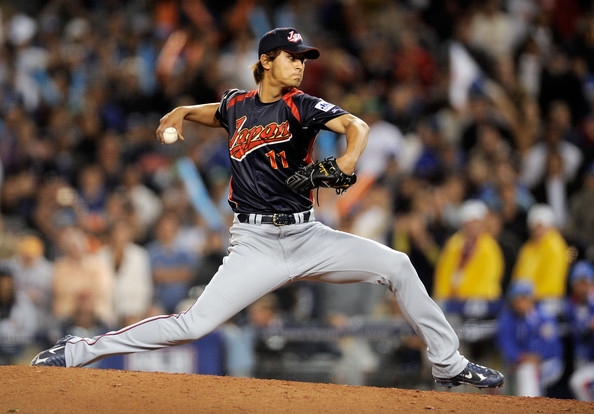
We all know how good Yu Darvish’s stats are in Japan, but how good is the competition? Photo unknown via beatofthebronx.com

Editor’s Note: this post was originally published in January of 2012: I have updated it as I have received new information several times since.  But some of the information and statements may be dated based on when it was initially written (like the Yu Darvish comment in the intro).  Over the years I’ve also added in more leagues and more details on existing leagues, including Wood bat leagues and Independent leagues.


I’ve always wondered, since we hear so much about players’ tearing up winter leagues or hear wonderful stat lines from players coming over from foreign countries (as we are now in the Yu Darvish mania).  So what is the talent-equivalent of the various leagues outside of the conventional MLB-AAA-AA-A-rookie levels?  I did a bit of digging around, asking questions and came up with the following approximations.  Feel free to debate if you think otherwise.

Foreign Pro Leagues

  • Japan: the Nippon Professional Baseball League rates, by various accounts, as a mid AAA-level talent league.  Baseball Prospectus’ Clay Davenport did a stat-heavy analysis in 2002 and concluded that the NPB was at least AAA level, perhaps close to MLB level.  However, the prevalence of mediocre players from the US going to Japan and being super-stars seems to indicate that Japan is no better than AAA, and may be a bit weaker.  And, not to claim this is about talent levels per race, but there have only been a very small number of Japanese-born players who were really impact players upon arriving here.
  • Cuba: per Dave Cameron (mentioned in a chat, need the link) the “general consensus” is that the Cuban pro league is about a High-A level of talent.  I wonder if it isn’t higher though, given the immediate impact that a number of Cuban ex-patriots have had immediately upon their arrival in the US (Yasiel Puig, Jose Abreu being exhibits 1 and 1-a).  I wonder if this will start rising now that the embargo has eased and the Cuban government has begun allowing its players to legally play elsewhere.
  • Taiwan/China: Taiwan had its own thriving baseball league for a bit, but merged it into the main Chinese league in 2003.  Given the small numbers of Taiwanese-born players who have made it to the majors, and the fact that the league serves mostly as a feeder into the Japanese league, its safe to say that the Chinese league is no better than a high-A level of talent.
  • Korea: As with the Chinese leagues, Korea mostly feeds into the Japanese league.  High-A talent levels.  Might be on the rise though, as more and more 4-A/AAA veterans decamp for Korea instead of Japan.  That may be driven more by money than by competition though.
  • European Leagues: Believe it or not, there are thriving baseball leagues all throughout Europe.  They even have multiple levels of play in certain countries (the Netherlands in particular).  However, based on the levels of talent of players that typically play in Europe, its hard to put the talent levels at anything close to our own Rookie leagues.  In fact, I’d suspect that most European pro teams are no better than a low division 1 college baseball program (such as GW or Catholic U’s teams).
  • Mexican Summer League: listed as a AAA-quality league in places like Baseball-Reference, but studies have shown it isn’t anywhere close.  A-level talent.
  • Leagues elsewhere: there’s leagues just about every where else; wikipedia searches turn up baseball leagues in Australia, Asia, the far pacific.  I didn’t do any research here, assuming that these leagues are one slight notch above amateur leagues in the US.

Winter Leagues

Davenport also did a bit of analysis on the various winter leagues in 2004; I’ve taken his recommendations and adjusted them based roughly on observation over the past few years, since the winter leagues have been shifting in terms of talent attracted in recent years.

Most players who go to winter leagues fall into one of three categories:

  1. Natives of the country looking to provide support for their home town teams and home leagues (the Nats own Ramos, Flores, Pudge, Severino and Perez being good examples)
  2. Players looking to get in additional work after an injury-filled year curtailed their seasons.
  3. Players looking to work on a new pitch, a new swing or some other experimental part of their game.

So, the talent levels in these various leagues are usually all over the road.

  • Dominican Winter League: Seemingly the “best” winter league, having the most ex-patriots playing in the US.  Davenport’s studies from earlier in the decade showed that the talent level is roughly equivalent to AAA talent, an opinion that I still maintain.  Our own Yunesky Maya tore up the DWL last winter, but struggled to be just a serviceable pitcher in Syracuse all year.
  • Puerto Rico Winter League : seems to be the 2nd strongest Winter League, but with slightly fewer MLBers than in the DWL.  So we’ll call it AAA level, but weaker.
  • Venezuela Winter League: The talent levels have dropped for a while, ever since political turmoil has taken over the country.  This is highlighted especially close to home in 2011 with the Wilson Ramos kidnapping case.  However, Nats farmhand Ryan Tatusko was kind enough to provide his opinion on the talent level and calls it “AAA talent.”   I think at best its a low AAA, as the league is clearly lower quality than Puerto Rico.  This last season’s version of the VWL seemed to be more talented that past versions though; perhaps this league is looking to challenge the DWL for pre-eminence in the winter leagues.
  • Mexican Winter League: Its really hard to tell; the winter leagues are quite a bit better than the summer league, at least per Davenport’s studies.  Now?  I’d guess the MWL has degraded a bit and is probably on a par with Venezuela in terms of talent.  AA-level at best.

Other US-based Professional Leagues

  • Arizona Fall League: the AFL rates somewhere between a AA and AAA level by and large, though for several reasons it rates as a very heavy hitter-league (pitcher workloads and ball-parks mostly).  Most of your pro teams send their top prospects from levels below AA and a number of AA and AAA (and even some guys who have MLB experience).  All told, that equates with a “good” AA league.  And since AA leagues are morphing into being populated with a team’s best prospects while AAA leagues are becoming repositories for “spare parts” for the MLB team, more and more the lines are blurred between AAA and AA in terms of “which team could really beat the other.”  Nationals fans saw this pretty clearly during Stephen Strasburg‘s minor league career; he was hit in AA but absolutely dominated AAA teams that seemed to be populated with backup catchers and backup infielders.
  • Independent Leagues: generally rates somewhere around an A-ball or slightly higher equivalent, depending on the league.  They’re usually full of guys who got cut from the MLB rosters and a collection of older veterans trying to hang on.  So, the younger players are (arguably) below rookie-league/short-A levels but the veterans are probably in the AAA level, bringing an average to somewhere in the A-ball range.  Maybe that’s overrating the talent level in these leagues: if the guys typically playing there were that good … they’d still be on affiliated low-A and/or rookie league teams.   Here’s some quick estimates by league:
    • Atlantic League: High AA
    • American Association: High A
    • Can-Am League: High A
    • Frontier League: Low A

College Leagues

  • Regular NCAA Division I College Teams are probably not even as good as a Rookie league team, when balancing the entirety of the roster’s depth.  I had this debate with my father recently, noting that the best Div-1 team in one recent year (South Carolina) was led by a pitcher (Mike Roth) who was a 31st round draft pick in 2011.  College teams only have 11.7 scholarships to use to field a team.  A good chunk of college teams are guys on partial scholarships or are complete walk-ons.  Good college teams may each have a number of pro prospects, but usually only 1 or 2 legitimate prospects.  On the flip side, even a rookie-level team is ENTIRELY comprised of players who were drafted, and will include high school players who signed in lieu of going to college because they were considered good enough at the time to risk signing.  A college team may use a hot pitcher to beat a pro team in a theoretical 3-game series every once in a while, but a team full of professional hitters are eventually going to utterly dominate typical college bullpens, Sunday starters and mid-week players.
  • Top end NCAA Division 1 College Teams, as in teams that are populated with a ton of future Pro talent, are likely the equivalent of the Advanced Short season Short-A leagues like the NY Penn league.  The absolute best Div-1 teams (like a friday night match-up between nationally ranked SEC teams) may broach the equivalent of low-A teams, as discussed in this 2015 Kiley McDaniel chat here.   When a college junior is highly drafted, most scouts advise that they go to at least high-A as a first stop, often saying that they’d be wasting their time in Low-A.  Does this imply that high-end Division 1 teams are more the equivalent of Low-A teams?  It seems so, at least at the upper cream of the crop level.  Consider the talent level on the 2014-2015 Vanderbilt team with multiple first round picks, or the 2018 Florida/Oregone State teams (each of which had 3 first rounders); I’d guess that team on a whole could easily compete with some short-league teams comprised mostly of 20th and 30th round college draftees and perhaps higher.  (Post publishing update May 2016: this question came up in quora.com and LA Dodger’s pitcher Brandon McCarthy provided a great answer not to terribly different from mine here.  He thinks the best Div-1 teams would have a chance in a 7-game series against a low-A team, but would probably fall short due to pitching depth.
  • Juco, Division II, Division III: Generally speaking a notch below the low-end Division I teams for obvious reasons.  Perhaps you could make an exception for some of the higher-end Juco leagues out there (like the league that Bryce Harper played in for one year to establish draft eligibility) and claim they’re of a low-division I quality, but that might be a stretch in the grand scheme of things.  So if these leagues aren’t even as strong as a low Division I team, they’re not even close to a pro-level quality.  (Post-publishing update Apr 2016); read the excellent commentary from former Juco player James  Pidutti, who gives some great context for the wide variety of talent in the Juco ranks these days).


Summer Wood-Bat Leagues

We have a thriving college wood bat league industry going on, with college players scattering all over the continent to play summer league baseball with wood bats.  Some of these leagues are better than others; you can write a whole analysis just to try to rank the leagues (in fact, I have, but I’ve yet to publish it because I’m not sure I have it exactly right), so I’ll just use general groupings to try to rank these leagues.

  • Cape Cod League: By far the most dominant wood bat league.  These teams are basically Division I all star teams of players, and the numbers speak for themselves.  1100 alumni have played in the majors (about one out of every seven current major leaguers).  More than  half of the first round draftees last  year were Cape Cod players.  They are the self-proclaimed “greatest amateur league in the world” and there’s no argument.  So how would a Cape Cod team fare when stacked up against a pro league?  I’d put these a step above the best division 1 teams and say these are High-A equivalent teams.
  • Northwoods League: After a step down from Cape Cod is Northwoods, who just had their 141st alumni debut in the majors.  The calibre of players is significantly lower than in the Cape: a quick gander at the rosters for 2015 found just a handful of players from “power conference” teams on each roster.  So I’m putting these teams at the same level as a “run of the mill” Division I team, or below a Rookie League team.
  • The next tier of collegiate leagues, including Coastal Plains, New England Collegiate, West Coast, California Collegiate and the Alaska League: less talent than in Northwoods and thus even further away from any pro level.
  • There are many more college leagues not mentioned here that probably rate as having even less talent than the already named leagues.  That includes our local leagues the Cal Ripken League and the Valley League.

Semi-Pro and Amateur Teams

I’m guessing that when the old Class-B/Class-C/Class-D leagues died out in the 50s, those players then began percolating into what we now see as an improved and thriving College baseball industry, Semi-Pro leagues scattered around the country, and the (now) official Indy league designation.  I always attribute the death of these low-class leagues to the advent of Television, which replaced the (usually) one source of nightly entertainment for small towns across America, which before the mid 50s would have been baseball.

Here in the DC area, there’s a “semi pro” league that is the combination of two long-standing leagues (the “Industrial League” and the “Credit Union” league) that features very good baseball.  Ex division-1 players, ex Pros, good baseball.  Back in the 50s this probably was a class-D level league (assuming that class-B was what has become the rookie leagues and class-C has morphed into the Independent leagues).

Summary

Here’s a table summarizing the above data, along with some clarifications from the comments after-the-fact, in order of best to least quality.  (Note; the cut-n-paste below is from 2012; see the descriptions above for some updates to league talents…).

League US Pro Equivalent Estimate
Japan (NPB) Mid AAA
Dominican Winter League Mid AAA
Puerto Rican Winter League Mid-Low AAA
Venezuelan Winter League Low AAA/High AA
Arizona Fall League Low AAA/High AA
Mexican Pacific (Winter) High AA
Atlantic League (Ind) High AA
Mexican Summer High-A/Low AA
Cape Cod League High-A
Cuba High-A
Taiwan/China High-A
Korea High-A
American Association (Ind) High-A
Can-Am League (Ind) High-A
Frontier League (Ind) Low-A
Top Division I (SEC) Short-A
Other Independents Rookie Ball
Division I run of the Mill Below Rookie Ball
Northwoods League Below Rookie Ball
European (Dutch, Italian) Low Division 1
Other upper Tier Wood Bats Low Division 1
Other Foreign (eg Australia) Div II/Div III
Juco Div II/Div III

Do you agree/disagree with these ratings?  Please feel free to comment and discuss.


Gio Gonzalez: Big Trade, Big Risk

28 comments

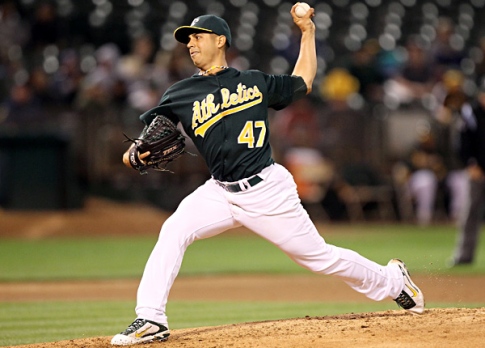
Nats go all-in for Gonzalez. Is it worth the cost? Photo Jed Jacobsohn/Getty Images via nydailynews.com

Well, the rumors turned out to be true.  The Nats today traded four major prospects for Oakland’s Gio Gonzalez.  Early reactions from fans on MLBtraderumors were all over the road; some said this will give Washington the Wild Card in 2012, others said Oakland fleeced Rizzo on the deal.  Predictably, Keith Law said that the Nationals over-paid in terms of prospects, calling AJ Cole the gem of the deal but paying little attention to the other three players.  Law is obsessed with ceiling arms and would rather have a projected #1 in Low-A versus a bird-in-hand guy like Peacock who has already debuted, so you have to take his opinion with a grain of salt.

First things first, how good do you think Gonzalez really is?  Without having done major analysis of the guy, I’ve considered him in the past to be one of a slew of “#2 pitchers” on Oakland’s rotation.  He’s put in two straight solid seasons pitching in Oakland, but we all know that Oakland’s a pitcher’s park with massive foul grounds that turn souvenirs into outs.  However, even I was surprised when checking the Park Effects of Oakland; it only rates as a 97 or 98 in the Park effect measurements on baseball-reference.com for the last couple of years.  By comparison, San Diego’s Petco Park (notoriously the best pitcher’s park in the league) was a 92/100.  Other known pitcher’s parks in San Francisco, Tampa, Anaheim and Seattle all scored well below Oakland’s park this year.  So, maybe the Oakland effect is over-stated by the media.

A quick glance at Gonzalez’s 2011 splits give me a bit more to go on; yes he was good in Oakland (10-5 with a 2.70 era) but he was more than servicable away (6-7, 3.62 era).  When he’s winning, he’s fantastic (1.37 ERA in 16 wins), but his ERA in his no-decisions was BETTER than in his wins (1.09 in 4 no decisions), indicating that he had a few unlucky no-decisions and could have been a 20-game winner with a bit better run support.  Looking a bit deeper at his advanced pitching stats shows that there’s nothing surprising; he’s got a normal BABIP of .287, his Fip was a pretty good 3.64 last year, and his xFIP was just slightly higher at 3.73.  All good signs; there’s nothing that really indicates that his conventional numbers were really “lucky” in any way.

He’s a low ERA, so-so WHIP (1.32 last year), high walk, high strikeout lefty arm that should benefit from coming to the NL.  Simple as that.  He’s going to put guys on base and depends on a good defense to bail him out, but he also strikes out a ton of guys and can get himself out of jams.

One last thing that is a huge plus on Gonzalez; he’s under team control for FOUR more years.  He’s heading into his first arbitration year this spring, is going to be a super-2, meaning the club controls him THROUGH 2015.  Honestly, when you look at the cost of our prospects given up, a lot of that has to do with this fact here.  A strong young guy who isn’t hitting FA for years to come?  That’s pretty valuable in this league.

Ok, I’ve talked myself into being excited to see this guy in our rotation.  Now, can I stomach the prospect loss?  Here’s the four guys we sent over.

  • AJ Cole
  • Brad Peacock
  • Tommy Milone
  • Derek Norris

Or, put another way, Baseball America’s #3, #4, #9 prospects from our system, plus a 4th guy in Milone who didn’t rate but was relatively successful in a couple of late season 2011 stints and who has been successful at every level of the minors.

We have a tendency to over-rate our own prospects.  I do especially, as someone who follows the minor leagues and has been tracking our pitching as it has risen for years.  And especially for a team like Washington, that has struggled in recent years to develop talent.  So when it comes time to cash them in for a pitcher like Gonzalez, sometimes it can be difficult to be objective about what we give up to get something we value in return.  So, lets play best case/worst case for these four guys:

Best Case

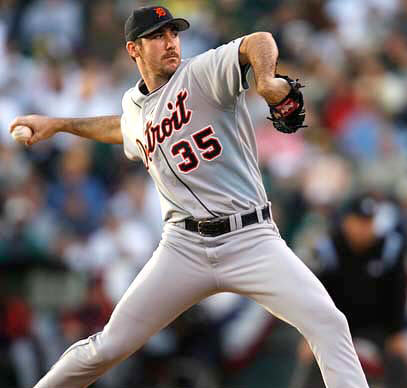
  • AJ Cole turns into a near #1 starter with an electric arm, in the mold of Justin Verlander.
  • Brad Peacock finds a reliable third pitch and maybe even a 4th, and peaks as a #3 starter.
  • Tommy Milone turns out to have 80 control and becomes this generation’s Tom Glavine, a serviceable back-end starter for years.
  • Derek Norris recovers from Hamate bone surgery to become a .260/.410/.550 catcher with 20-homer capability.

Ok.  Now what about worst case?

  • AJ Cole burns out as a starter and turns into a hard-throwing middle to late innings reliever.
  • Brad Peacock never harnesses a 3rd pitch and becomes a 2-pitch pony destined for middle relief.
  • Tommy Milone gets routinely pounded in the majors as a guy with no out pitch and becomes a 4-A guy.
  • Derek Norris never reaches his potential and settles in as a backup MLB catcher.

The reality will, of course, fall somewhere inbetween these two scenarios when all is said and done.  Norris was always going to be traded; we have found the catcher of the future in Wilson Ramos, Norris has seen his stock fall with two consecutive sub-par offensive seasons and he’s got little chance to supplant Ramos in our organization.  So I have no issues turning him into another player.  Its the pitchers we have to worry about.  In my Prospect Ceiling post I thought that Cole was a future #2, Peacock a future reliever and Milone a 4-A guy, somewhat mirroring the “worst case” scenario above.  If that’s the case, then we’ve essentially gambled on Cole or Peacock turning into something more valuable than they appear to be capable of right now in return for Gonzalez.

Yes, the price of pitching has skyrocketed this off-season, and a lot of analysts will say that we’ve over-paid.  But clearly the team has made a determination that Norris was expendable, Milone is topped out, and that Cole and Peacock are replaceable with guys like Meyer and Purke from the 2011 draft.  Fair enough.  For all the griping in yesterday’s post about how the Nats have “missed” on their starting pitcher goal, how the tides turn.

Can’t wait for 2012!

http://insider.espn.go.com/mlb/blog/_/name/law_keith/id/7380907/oakland-athletics-get-quality-quantity-gio-gonzalezhttp://insider.espn.go.com/mlb/blog/_/name/law_keith/id/7380907/oakland-athletics-get-quality-quantity-gio-gonzalez

Written by Todd Boss

December 23rd, 2011 at 8:47 am

Nats Off-season News Items Wrap-up 12/9/11 edition

3 comments

Probably the biggest Nats news of the week was who we DIDN’T get. Photo Peter Christian via thesportsbank.net

Weekly wrap-up of Nats and other baseball news that caught my eye.  With the absolute deluge of baseball news, rumors, and unbelievable FA signings this week I frankly got lost in the shuffle, so most of these items are from the weekend and early this week.  Hopefully you know by now about Reyes, Buehrle, Wilson, Pujols and our Rule5 losses.  If not, you’re just not a true baseball fan now are you?  🙂

Nationals In General

  • An excellent good-bye blog posting from Ben Goessling, leaving the MASN Nats beat for his home-town paper.  No permanent replacement has been hired, but MASN still has Byron Kerr putting out excellent prospect-focused posts, and Pete Kerzel temporarily filling in for Goessling during the Winter meetings (and perhaps beyond).
  • Well, now we know what Stan Kasten plans on doing in his post-Washington career.  Unfortunately for Kasten, Bud Selig can’t just give him the Dodgers as has been his custom in “awarding” teams to new owners.
  • Byron Kerr reports that Hector Nelo, our high-A reliever who is pitching in Venezuela, can now hit 100mph.  He always had a high velocity arm, but being a 25-yr old in high-A isn’t necessarily the most impressive feat.  He was an April minor league free agent pick up, having been released by the Texas organization after putting up pretty mediocre figures.  I’m projecting him in our AA bullpen for 2012.  He may be able to hit those high figures, but its not being reflected in amazing k/9 rates.  I remain skeptical that he can be an impact arm for us in the future.
  • As noted elsewhere, Keith Law‘s posted his “top 50 under 25” list of players under 25 but who have already lost their rookie eligibility.   Its insider-only but Amanda Comak at the Washington Times pretty much cut-n-pasted the entire list late last week.  You can google it or search her archives.  3 Nats made the list: Strasburg, Ramos, and Espinosa.  No real quibbles about those Nats left off; Drew Storen would have qualified, as could have Desmond and some weaker members of the bullpen/bench, but clearly Law doesn’t rate closers (nor do I, really).  He has Craig Kimbrel, 2012’s ROY at #49.  Law’s little dig at Desmond in his Espinosa write-up also indicates his opinion of the hitting capabilities of our current starting SS.  I do question some of his rankings: I’d certainly have ranked Kershaw above one-year wonders such as Mike Stanton, but perhaps Law’s explanation of his ranking (he’s looking at projections for the next 6 years versus what they’ve already accomplished), explains it away.
  • Well, there goes one OF option: Laynce Nix has signed with the rival Phillies.  Most reports seemed to indicate that the 2-year guarantee solidified the deal for Nix, who faces at best a LF platoon in Philadelphia.  Still, he could turn in a 20-homer season rather easily hitting in that bandbox.
  • Jim Riggleman signed on to manage the Cincinnati AA franchise, a bit of a step down from a MLB manager job but at least he has on-field work.
  • In what is sure to inspire a fire-storm of Natmosphere posts, Jim Bowden reports that Ryan Zimmerman‘s agents have been “rebuffed” in opening contract extension talks.  I can’t blame Rizzo here: you’ve got a franchise player who can’t stay healthy; he’s a risk to guarantee a bunch of years and a bunch of money.  Yes, everyone’s a risk to give guaranteed contracts … perhaps why the team needs to think on it a bit more.
  • Uh oh.  Sammy Solis is visiting Dr. Yocum to get his elbow looked at.  This is not a good sign.  Can anyone say Tommy John surgery?

Free Agents/Player Transaction News

  • A month-old post, but somehow I missed it.  Jeff Passan‘s free agent tracker, with some concise opinion on each of 181 free agents this off-season.  No predictions but on-point analysis.
  • Wow.  Heath Bell gets 3yrs/$27M from the Marlins.  Not that I don’t think he’s a good closer, and not that I really care that the Marlins just acquired a player being paid in AAV the equivalent of 1/8th of their 2011 payroll.  Maybe this whole “Marlins are going to spend money” thing is for real.  I agree with Neyer‘s assessment here: “that’s a lot for a guy who is going to throw 65 innings.”  Predictably, Keith Law hates the deal.
  • Even more Wow: Jose Reyes signs for a reported 6yr/$106M deal with these same Marlins.  One has to wonder if we’re looking at another dynasty build-up/epic team dismantling situation.
  • Jon Heyman‘s list of 10 busiest clubs for the Winter meetings, and somehow the Nats, whose name is associated with practically every FA in some form or another, are not on the list.
  • We could soon find out just how serious the Nats interest is in Yoenis Cespedes, with him possibly being declared a FA within the next week or so.
  • Despite some opinions that the Rule 5 draft is useless, there are active teams every year (The Nats included).  Here’s one blog’s Top 25 available Rule 5 draft potentials.  He does list three Nationals: Brad Meyers, Sandy Leon and Erik Komatsu.  He also lists the top other prospects by system.  That’s a TON of research frankly, digging through rule5 eligibles from all 30 minor league systems.  Of course, John Manuel did the same on Baseball America, posting part 2 of his review, highlighting some favorites for role players (utility infielders, 4th outfielders, loogys and middle relievers).  I’m guessing its from this group that the Nats may tempt fate and look to fill some bench spots.  12/7/11 Update: sure enough we lost both Meyers and Komatsu.  So irritated.
  • Sometimes, star athletes just don’t know how to say good bye.  Manny Ramirez has filed for re-instatement and plans on playing in 2012 after serving his 2nd drug suspension.  He’ll have to improve on his 1-17 outing for Tampa Bay last season.
  • Interesting potential trade tidbit posted by new Masn beat reporter Pete Kerzel: Boston possibly dangling either Josh Reddick or Ryan Kalish in trade for starting pitchers (names mentioned include Ross Detwiler and Collin Balester).  I’d like any trade permutation here; both Detwiler and Balester are out of options and increasingly with every Buehrle/Wilson/Oswalt rumor Detwiler’s chances of making our 25-man roster diminish.

General News; Baseball and other.

  • “Just in time,” indeed.  Rob Neyer reports that the Feds are investigating the incredibly shady Marlins stadium deal.  Jeff Passan also mentions the SEC subpoenas for financial records, meeting minutes, etc, looking for evidence of bribery of federal officials.  Nothing would make me cackle more than to find out that the Marlin’s owners and management were to expect a federal indictment for corruption.  Everything I’ve ever read about Jeffrey Loria, David Samson, and Larry Benifest and anything related to the Marlins as an organization and this stadium deal in particular has been negative, and this undoubtedly will be no different.  I hope Selig is happy with himself for engineering Loria’s Expos sale and Marlins purchase, as well as watching his new buddy subsequently pocket millions and millions of dollars in revenue sharing whilst occupying the 6th largest market by MSA.
  • Wow.  Jon Heyman is leaving SI for CBS.  This prolific writer is well known for being ahead of the curve on baseball news, and leaves a pretty big hole in the baseball reporting department for cnnsi.com.
  • Interesting precedent setting event: MLB has restored Mike Trout‘s rookie eligibility for 2012.   He’ll certainly be a candidate .. if he can get on the field.  Matt Moore may be a better candidate, based on what we saw in September and October though.
  • I’ll put in just enough opinion to get into trouble on the BCS: LSU-Alabama repeat for the National Championship is an abomination of justice when looking at the Alabama season in basic comparison to Oklahoma State.  The OK State-Stanford game will be 10x as enjoyable.  I only wish the BCS could have had 100% egg on its face with LSU losing the SEC title game but still being pretty much guaranteed a match up in the Championship.  I would have laughed.  Call me when there’s a playoff.
  • I didn’t realize they were nominated: legendary college coaches Mike Krzyzewski and Pat Summitt received 2011’s SI Sportsman of the  Year award.  Clearly these were “career” awards, as opposed to anything specific to 2011.
  • In case you were interested, or wanted to nit-pick every Hall of Fame ballot to death, here’s a blogger who tracks all the BBWAA voters and finds their HoFame votes.
  • Not to get into too much politics here, but Mitt Romney‘s reported dig on Barack Obama‘s planned 17-day vacation smacks of hypocrisy.  All he needs to do is check the record on George W. Bush‘s days spent “on vacation” while office and perhaps he’d wish he wasn’t casting stones.  In fact, depending on how you interpret this research, Bush spent nearly 32 PERCENT of his time in office actually back home at his ranch or at Camp David.


Nats Off-season News Items Wrap-up 12/2/11 edition

5 comments

Tough break this week (well, two weeks ago) for Chris Marrero. Photo unknown via curlyw.mlblogs.com

Weekly wrap-up of Nats and other baseball news that caught my eye.

Nationals In General

  • In a minor move, the team re-signed its own AAA minor league free agent Carlos Maldonado, per tweet from Bill Ladson.  This sets up our catcher depth for most of the system (Flores/Ramos, Solano/Maldonado, Norris/Leon, and Nieto/Fritas) and gives the team some flexibility with the inevitable injuries.  Frankly Norris’ poor 2011 season jeopardizes his progression; he’ll obviously be repeating AA in 2012 and needs to show some improvement to keep his oft-repeated “close to the majors” prospect status.
  • Chris Marrero tore his hamstring and had surgery, two weeks ago.  Two weeks ago!?  How did this little nugget stay hidden for so long?  Most of the beat reporters had the story on 11/29 and had the same opinion as I; this probably frees up a bench spot for someone like Tyler Moore or perhaps another veteran 1-year FA.
  • Nats are apparently interested in Mark DeRosa.  No big surprise; we have basically zero competent utility infielders under contract right now.  DeRosa can be 2012’s version of Jerry Hairston.
  • Sorry to hear that Masn beat reporter Ben Goessling is leaving to join the St. Paul Pioneer Press.  No word on his replacement.
  • Per the soon-to-be-departing Goessling as well: Toronto continues to collect ex-Nats players and signs Garrett Mock to a minor league deal.  I’m starting to sense a Jim Bowden-esque obsession on the part of Dana Brown with our farm players.  So be it; if they were that good when he was here, we wouldn’t have been ranked in the bottom 5 farm systems of the league.
  • Espinosa, Ramos and Strasburg on Keith Law‘s best 50 under 25 list.  Harper still too young to consider.

Free Agents/Player Transaction News

  • There remains to be questions whether or not Yu Darvish will actually post this off-season.  Rumors of a divorce complicating his posting persist, and its now been a week since the end of the NPB season with no word of his posting status.  (Jon Paul Morosi reports).
  • Here’s some non-news: Mark Buehrle won’t come “cheap or short.”
  • Here’s David Schoenfield‘s 3-fix suggestion for each team in the NL east.  His suggestions for us?  CJ Wilson, putting Werth in CF and signing a corner outfielder, and decide whether Davey Johnson is the long term answer.  I’m not sure the 3rd issue matters in the least: Johnson is only 69; there’s plenty of recent evidence showing guys who are older and less accomplished can be successful in the majors.  His argument for Wilson makes sense; he’ll cost half of Pujols/Fielder, wouldn’t be stressed as our “Ace” with Strasburg and Zimmermann around, and will only improve as he goes from the AL to the NL.  I like his Werth answer honestly; I think Werth could hold his own in Center for at least one season, perhaps two.
  • Baseball America’s Rule5 Preview, part 1 (may be subscriber only).  I definitely see some players the Nats could experiment with, given that they are looking for a 7th bullpen arm and a utility infielder.  He mentions our own Brad Meyers as a possible draftee, but not one of the marquee names out there.
  • Ken Rosenthal says the team is really on both Prince Fielder and the cuban-FA Yoenis Cespedes.  I’m not “against” the interest but am surprised by it.  Does the team really want to just give up on Adam LaRoche that quickly?  Do they really think Cespedes could play in the majors in 2012?
  • Well, there goes one of my Nats-trade candidates; the Angels acquired catcher Chris Iannetta from the Rockies for prospect Tyler Chatwood.  My working theory was that the Angels, who have too many outfielders and especially two many guys who can play center field, would be open to trading one of them (specifically Peter Bourjos) to the Nats for a catcher prospect.  Maybe it still can happen.  Of course, Rizzo actually has to be in the country in order to make deals (when this trade went down, Rizzo reportedly was in the D.R. scouting Cespedes).
  • Its just a MLBtraderumors chat, but Tim Dierkes is well respected, at least in my opinion.  He has the Nats as potential FA suiters for most every major name.   Edwin Jackson, Mark Buehrle, Cespedes, Fielder and Pujols, even Jimmy Rollins.  Geeze.

New Labor Deal Items

  • The new CBA seems almost custom-written to drive out the Tampa Bay Rays.  This scout.com article summarizes it nicely.  I wonder what the Tampa ownership group said about these negotiations as they were going on.  Clearly their methods of gaining advantages through player development and stockpiling draft picks are now obsolete.
  • Jim Callis reports via twitter but captured here some more restrictive items about the draft we’re finding out.
  • Teams in the 13 smallest markets now enter a Competitive Lottery for picks.  A quick analysis of the 13 teams selected (from Ben Goessling’s article: the Diamondbacks, Orioles, Indians, Royals, Athletics, Pirates, Padres, Rays, Reds, Rockies, Marlins, Brewers) almost identically mirrors the 13 smallest teams by MSA (in smallest to largest order; Milwaukee, Kansas City, Cincinnati, Cleveland, Denver, Pittsburgh, Tampa, Baltimore, St. Louis, San Diego, Minneapolis, Seattle, Phoenix).  The only deviations are the Athletics and Marlins, who would easily be amongst the smallest markets in baseball once you isolate Oakland from San Francisco’s MSA, and Miami from Ft.Lauderdale.  Tangotiger posted an interesting discussion on the same topic (where in the comments I posted this same analysis) on his blog here.

General News; Baseball and other.

  • It looks like the NBA has finally gotten its act together, announcing a tentative deal to salvage the season on Nov 26th.
  • An interesting take on the Bill James “game score” statistic.  (click here for a list of the 20-best scores in the last 70 years).  Highest ever recorded: an 18-inning shutout pitched by Carl Hubbel scoring a 127 game scoreKerry Wood‘s 20-k 1-hitter is the highest score in the last 25 years, scoring 105.  This was also the highest-scoring 9-inning game in baseball history.  My initial guess on the best ever game pitched would be Harvey Haddix‘s 12-inning perfect game, lost in the 13th inning.  Here’s the box: it scored a 107.   The highest ever recorded Nationals game score?  John Patterson in 2005 pitched a 4-hit shutout with 13 K’s, worth a score of 92Strasburg‘s 14-K debut was worth a 75, though interestingly his final 2011 start (6 innings of 1-hit ball over the Marlins with 10K’s) earned a 78There’s about 10 games out there in the 80s range, including an 88 that I can’t possibly think who could have thrown.  Is anyone a baseball-reference subscriber?  I use the site multiple times per day; I should probably register and pay for my time.
  • From the great blogger TangoTiger, an Expos Tribute video.
  • From another great blogger Rob Neyer, a news item about the future of baseball in the Portland, OR area.  Portland does not have a single pro baseball team in the area, not even a short-season or Indy league team, despite being roughly the same size population wise as the MLB cities of Cleveland and Cincinnati, and being larger than Kansas City and Milwaukee.

Nationals off-season todo-list: 2011 edition

4 comments

Signing Wang took care of one of our most important off-season tasks. Photo via Washington Nationals

(I’ve had this in draft form for weeks; might as well publish it now that the FA period has started).

Before we get too deep into the off-season, I thought it’d be good to do a level set of what exactly this team is in the market for.  Last year’s to-do list included a Center Fielder (Ankiel), a Right Fielder (Werth), a First baseman (LaRoche), a couple of Utility Infielders (Cora, Hairston), some veteran Starting Pitching (Gorzelanny), and some bullpen help (Coffey, Ramirez).

Based on how the team has played down the stretch and watching some players rise and fade in September, here’s what I think the team’s off-season to-do list may look like.

First, lets start with what we know we do NOT need.  Here’s players that seemingly have spots already locked up for 2012:

  • C: With Pudge leaving, Ramos and Flores seem set to be the 2 catchers for a while here.  Flores is healthy but clearly inferior to Ramos right now both defensively and at the plate.  We just added Solano and Norris for catcher cover in case someone gets hurt.
  • 1B: LaRoche should be back healthy, and Morse has shown he clearly can play first if not, though that would lead to a hole in left field.
  • 2B: Should be ably filled by Espinosa, or Lombardozzi if we move Espinosa to short (see next).
  • SS: Desmond‘s one of the lowest qualifying OPS hitters in the league, but the team management loves him.  I’m guessing he’s given one more season.  Rizzo has already stated he’s not after Jose Reyes, and the Marlins seem set to over-pay him.
  • 3B: Zimmerman isn’t going anywhere, despite some blogger’s statements that he should be moved.
  • LF: We’re assuming that Morse is the starter in left.
  • RF: As with Zimmerman, Werth is set to play right field well into the next presidency.
  • SPs: Strasburg, Zimmermann, and Lannan seem locks to be in the rotation.  We re-signed Wang for the #4 rotation spot.  There’s some talk here and there about non-tendering Lannan; he’s a solid mid-rotation guy who is still under arbitration control who is underrated by most people outside of this area, and I believe it would be a mistake to cut him loose at this stage.
  • Setup/Closer: Clippard and Storen managed to survive silly trade rumors this season and should be the 8th/9th inning tandem for at least 2012.
  • Loogy: Burnett: He struggled at times in 2011. He’s also under contract for 2012 with guaranteed money.  So he’s going to be back.  He’s more than a loogy though, so we’ll look for the team to replace Slaten.
  • Middle Relief: Henry Rodriguez and Ryan Mattheus look to return in their middle relief roles.  Kimball will be on the 60-day DL until he’s proven to have regained his fastball.

That’s actually a pretty large chunk of our planned 25-man roster (17 of the 25 are already accounted for, for the most part).

So, what do we need?  In rough priority order:

  • Center Field: again, we go into an off season with questions about center field.  Ankiel had a decent September but overall his 2011 offense was poorl.  He does fit Rizzo’s defensive mind, but is he the answer?  Perhaps this is the off-season Rizzo finally gets Upton or Span or someone of that ilk.  Or perhaps we re-sign Ankiel to a holding deal, waiting for wunder-kid Bryce Harper to come up and take over.  Or, perhaps the lineups that Johnson has been fielding in September featuring Morse in LF, Werth in CF and Nix in RF are telling enough that we can “get by” without investing in a center fielder for 2012.  (I’ve got a very large CF-only post coming up, with lots more detail).
  • Right-handed middle relief: we may have to go digging for one-year FA Todd Coffey types again, because Kimball is on the DL til probably July and Carr was flat out released in September.  That’s it in terms of 40-man roster options for right handed relievers.  An internal option could be using Peacock as a 7th inning guy in 2012; he’s shown he can bring it 95-96 and perhaps even higher in short term situations.  The team doesn’t seem to trust either Balester or Stammen, meaning we need a one-year guy.
  • Utility guys: we used Hairston, Cora, and Bixler as backup infielders.  Hairston did a great job starting at 3B in Zimmerman’s absence; the other two were awful.  So we need a couple replacements.  Lombardozzi could fit in, but he’d be better served with a full season in AAA.  Bixler was waived and claimed, so we’re almost guaranteed to go hunting on the FA pile.
  • Backup Outfielder: Bernadina seems to have run out of chances with this team.  Corey Brown has been god-awful in AAA this year and was assigned off of our 40-man to the AAA team.  Nix and Gomes are FAs.  We can’t possibly offer Gomes arbitration and guarantee him a $2M salary, and Nix can’t hit lefties. In any case, we look like we may need a backup outfielder from somewhere.  Nix has been getting starts in RF (as mentioned above) down the stretch and certainly has enough power to feature 6th in a lineup.  Perhaps he’s worth another year.  The team was in preliminary talks on a 2012 contract with him but nothing official has been signed.
  • Loogy: we could use a one-out guy, assuming that we need a 2nd lefty to Burnett.  I’m guessing that Severino is not the answer, based on how little use he got in September.  Or maybe he is.  Certainly I’d prefer giving him a shot versus scraping the bottom of the reliever barrel again and finding another guy who performs as badly as Slaten.
  • Starting Pitcher: We re-signed our own FA Wang, and continue to be in the mix for more of a marquee name like Buehrle and Oswalt.  Do we need another starter?  Signing either of these two vets will probably indicate team flexibility to trade some of our younger starting pitching cache of Detwiler, Peacock, and Milone, but also may end up blocking a guy who could be just as good for a fraction of the price.
  • Long man: I’m guessing that we assign a long man from one of  Gorzelanny (most likely), Detwiler (somewhat likely), Balester and Stammen (less likely).  The team seems down on both the latter guys, who are probably destined for DFA when they run out of options.

So, thats a somewhat big todo list.  Some spots are clearly fill-able from within, but we’re still looking at a few acquisitions.

Ask Boswell 11/21/11 edition

6 comments

If you had to pick one player to start a team with ... you can't do much better than Tulowitzki. Photo unknown via facebook page.

With the Redskins losing games faster than the GOP loses presidential candidates, Tom Boswell did his weekly Monday chat on 11/21/11.  He did take a ton of baseball questions; here’s how I’d have answered them.

As always, questions are edited for clarity and I answer here prior to reading his.

Q: Boz, If you pick any current baseball player (assuming current ages) to start a team with who would it be?

A: Great question.  I’d probably go with a position player over a pitcher, just for risk’s sake.  Has to be a young, already productive player.  I’d focus on a marquee position that generally is difficult to fill.  I’d probably go with Troy Tulowitzki.  Also in the mix would be Matt Kemp, Ryan Braun, Jacoby Ellsbury, Evan Longoria, Felix Hernandez and Clayton Kershaw.  These are all guys who are in their mid-20s and who have already proven they are accomplished, MVP/Cy Young calibre players.  Boswell never answered.

Q: How is MLB going to come up with the 2013 schedule, with 15/15 team-league splits, constant interleague play and balanced opponents?

A: Who possibly knows.  I just did some quick calculations and there’s not really an easy answer coming:  Assuming a (more) balanced schedule:

  • 6 home/6 away against 4 divisional rivals = 48 games.
  • 3 home/3 away against 10 other league rivals = 60 games
  • 3 home/3 away versus your “Natural Rival” = 6 games

That leaves 48 games to play. 48 games is 16 3-game series.  That doesn’t really work out too well for 15-team leagues.  Do you play every AL team once and double up somewhere?  Do you focus on playing a home/away series with each of a 5-team AL division on a rotating basis?  That would take away 10 of the 16 series but you still have 18 games to figure out.  And, what happens when your rotating division ends up being the same as your Natural rival?  Then you either play them as many times as you play your divisional rivals or you double up elsewhere.

Frankly, I think the unbalanced schedule needs to stay, if only to emphasize divisional rivalries.  If you increase divisional games to 9 home/9 away then you have 72 games accounted for intra-division.   Take away 60 regular season games intra-league and your 6-game set versus your “natural opponent” you’re left with exactly 24 games.  That’s 8 three-game series, which still isn’t an even number but could be handled with a team playing an entire AL division (splitting home and away) and parts of another.  I don’t know; there’s no real clean solution that makes itself evident.

Boswell also says he has no idea how the schedule will work.

Q: Better Pitcher for the Nats – Oswalt or Buerhle?

A: I’d rather have Oswalt frankly.  Buehrle may be an innings eater but Oswalt is a better pitcher, an “Ace” without question just within the last couple of seasons.  I don’t want a #3 starter; I want a guy to join my two best arms and give me something approaching a playoff rotation.  Caveat; I have to be sure Oswalt is healthy.  Does he have too many innings on that arm?  Is he recovered from his back injury?  The Nats are clearly favoring Buehrle right now, an indication that either they don’t trust Oswalt’s injury or they perceive that Oswalt wants to return to Texas.  Boswell doesn’t really answer, just noting that Buehrle throws about as hard as Milone.

Q: So who do you think we have in CF starting next year?

A: Someone that we either sign or acquire from outside the organization.  The easy guess would be BJ Upton, but a couple things have to happen before that happens.  There’s a few other interesting options that could serve as another 1 year hold-over til we figure things out.  I don’t see the team depending on Werth in center full time.  Ankiel was excellent defensively but was awful at the plate and the team should go in a different direction.  Boswell goes with Upton, after a non-tender.

Q: Boz – Rizzo makes numerous references to the Nats being open to trades. The team is in the unique position of having a surplus of young talent. Who do you think are the untouchables and who are the prospects that we may never see play in a Nats uniform because they were traded away?

A: Untouchables: Harper, Strasburg, Espinosa, Zimmerman, Rendon, Purke, Cole, Goodwin, Meyer, Norris, Peacock. Potentially in play for trades: Storen, Clippard, Solis, Ray, Desmond, Hood, Marrero, Detwiler, Lannan and pretty much anyone else.  Prospects we may never see in a Nats uniform?  That’s a harder question to guess on.  There’s certainly guys who seem blocked in a certain extent, but I’m guessing we trade MLB talent to unblock them before we trade them as prospects.  The team has come too far with its farm system to just throw away the fruits of it.  Boswell agrees mostly; he’s too busy using these questions as a forum to trash the Redskins.

Q: So do you think there is a chance that they sign Zim to a long term contract now or are we in danger of him going to free agency? I don’t want to see him in a Yankees/Phillies uniform.

A: This is a better question for NEXT off-season.  However if I’m Rizzo, and Zimmerman spends another couple months on the DL this season with some random injury, I’m really, really hesitant to give him a Troy Tulowitzki/Ryan Braun type of extension.  I may just allow him to leave or trade him mid 2013 (assuming the team isn’t in 1st place at the time).  By the way, he’ll never play for the Yankees; they have roughly $170M locked up in Alex Rodriguez‘s aging bat for the next decade.  Phillies?  I don’t think they have much in the way of payroll flexibility in the 2013 timeframe.  A real possibility is Boston; i have a future blog post detailing the scenario they could find themselves in sooner than later.  Boswell says they can, and should do the deal, despite the risks b/c he may be a lot more expensive next off-season.

Q: If you were starting an MLB team today, who would you want as your ace? Clayton Kershaw or Stephen Strasburg? Kershaw already has a Cy Young yet is only four months older than Strasburg.

A: I call this the Jason Amos question, my LA Dodger following friend who posed this same question to us earlier this season.  Right now, if I had to choose between the two I’d have to go KershawStrasburg could be a question mark for years to come.  If Strasburg thorugh finishes a couple of healthy seasons I may change my mind.  Strasburg has such a higher level of dominance capability that you’d have to choose that for the longer term, if you were convinced of his health.

A follow up question though; are either Kershaw or Strasburg the best young pitcher in baseball?  I say maybe not: Felix Hernandez and Clay Buchholz have both put up pretty good seasons in their pre-arbitration years.  Guys like Ian Kennedy, Michael Pineda, David Price also put their names in the mix.

Boswell says Kershaw, saying he’s “done it.”  Fair enough.

Q: After Harper’s Arizona Fall League performance, is there any chance he makes the opening day squad if he is the best candidate coming out of spring training?

A: There is a chance, if only because Davey Johnson has made a habit of selecting precocious and talented players and sticking with them.  Guys like Doc Gooden and Daryl Strawberry.  However, the arithmetic penalty for getting Harper into super-2 status by accident is pretty clear; it could cost the team north of $15M.  So, my gut says Harper will be left in Harrisburg to tear up AA for a few weeks, move up to Syracuse and join the team in mid June.  If he earns it, of course.  Boswell agrees with this assessment, then gives up a nugget; apparently Johnson “called up” most of the 9/1 call ups without really conferring with Rizzo, meaning they had to scramble to do the 40-man moves to make it happen.

Q: I noticed that the Nats added catcher Jhonatan Solano to their 40-man roster. This seems to indicate that they will trade one of their catchers (most likely Derek Norris) in exchange for a centerfielder. My best guess is Norris, LaRoche (assuming the Nats eat most of his contract), and Marrero to the Rays for Upton. What do you think?

A: The Nats added Solano for spare-part cover, nothing more.  It indicates nothing about a potential trade, only that they didn’t have another MLB-ready catcher on the 40-man in case Ramos or Flores gets hurt straight away.  Norris isn’t ready yet, but is a better prospect than Flores (and possibly than Ramos).  I think the trade bait is really Flores.

By the way, that trade offer for Upton is awful.  The Rays are most likely non-tendering the guy; why would we give up such a haul for him?  GMs know the Rays are hamstrung and will wait them out.  Just as the Twins should never have traded Ramos, the Nats will be hard pressed to give up Norris.

Q: Considering the abysmal state of sports in DC (including, right now, the Caps) is it the time for the Nats to take advantage and go big now? Rizzo’s MO is to fly under the radar on free agency and trades so there’s little that’s going to come from the Nats by way of info. Do you think they might be considering going after some of the big names, such as Pujols or Fielder (and trading LaRoche)?

A: Why deviate from the plan now?  This team is getting setup for the very long term, generating a ton of rising talent, cost contained, while augmenting where needed with key free agents.  LaRoche has zero trade value, so unless you want to waste 1/8th of your payroll you have to use him.  I think blowing $200M on either Pujols or Fielder would be shortsighted and would unnecessarily hamstring this franchise going forward.  Boswell thinks its a good idea.

And the Rule5 additions are…

5 comments

1B prospect Tyler Moore takes a big step up in the franchise, getting added to the 40-man. Photo unknown via insidenova.com

Per a tweet from The Nationals official account late friday 11/18, the Nats have protected:

  • 1B Tyler Moore
  • C Derek Norris
  • C Jhonatan Solano
  • OF Eury Perez

The first two were predictable, especially Norris, who has been on the Nats top prospect lists for several years now.  Moore has two 30-homer seasons running and could be putting his name in the mix for at least a bench spot soon.

The other two names were perhaps also predictable, once both international free agent signings were understood to be eligible, but may also indicate some directions this team may be going.  Solano wasn’t on anyone’s radar a year ago, when he was first eligible for the Rule5 draft.  He was a late 2005 international FA signee at the later age of 20, putting him first Rule-5 eligible last year.   However this year he eventually took over as the full time catcher at AAA and held his own, hitting .275 in 255 ABs and solidifying his being the first line of defense if either Ramos or Flores gets hurt.  So protecting him and keeping him at the ready in Syracuse is important.  This could also pave the way for a transaction involving (most likely) Flores, with Solano coming up to back-up Ramos for a year or so until Norris is MLB ready.  A quick look around the league easily shows that the catcher depth charts are weak, everywhere, and Solano could easily have gotten snapped up had he not been protected.

Perez is a wise addition.  Frankly I didn’t realize (nor did Zuckerman, or anyone else that was looking at this) that he was rule-5 eligible.  He signed with the Nats as a 16yr old in the Dominican Republic and just finished his 5th pro year, meaning (sure enough) he was rule5 eligible this year.  Shame on us for not noticing.  Perez has been on many top-10 prospect lists, has been steadily moving up the system and could be a mid-season 2013 candidate for the big team.  He may still be green enough to not really appear on our own OF depth chart radar, but that doesn’t mean someone else with major holes in the outfield (ahem, Oakland Athletics) wouldn’t have scooped him up without protection.

My predictions for protection included Moore and Norris, Komatsu and Meyers.  I would not be surprised in the least if Meyers was picked up by a team looking for starting pitching help.  He’s got a similar pedigree to Brian Broderick, who we snatched from St. Louis last year in an attempt to find pitching.  I’m slightly surprised the team decided Meyers was not worth protecting.  He’s been a solid starter steadily advancing through the system and seems to have fully recovered from his injury issues of a couple years past.  He was 6-5 with a 3.48 ERA once arriving in AAA last season, having dominated in his first 6 AA starts to earn the promotion.  He’s projected for the 2012 Syracuse rotation again though and isn’t mentioned as a candidate for the Nat’s rotation competition this coming spring (absent a FA signing we seem to basically be full-up, and Meyers probably is the 3rd or 4th best pitcher slated for AAA).  So the Nats clearly decided they could part with their 9th best starting pitcher in the system, given the talent they’ve drafted recently (Purke, Meyers) and the talent they have rising up quickly (Cole, Solis, Ray).  Fair enough.

Meanwhile, it seems that the team is rolling the dice with Komatsu, who was putting in a strong AA season in Milwaukee’s system before coming over in the Hairston trade and finishing the season hitting .234 in Harrisburg.  Upon further review, I’d say that the odds are that nobody’s selecting a right fielder with very little home-run power in the Rule 5 draft.  Maybe that was a bad prediction 🙂

Nats Off-season News Items Wrap-up 11/18/11 edition

2 comments

With more Wild Cards, get ready to see scenes like this more and more. AP Photo via infopop.cc

Here’s a weekly wrap up of Nats-related news items, along with other general interest baseball articles, with my thoughts as appropriate.  (Note: these news items are more or less chronological in the Saturday-to-Friday blog post news cycle i’m using, with me going back and adding in clarifying links as needed).

  • Great news: Wilson Ramos was rescued with apparently on 11/11/11 no bodily harm and no ransom paid.  This is a great end to this saga, which really could have gone so much worse for Ramos and his family.  Mark Zuckerman reports on the details of the rescue.
  • Interesting read from Jon Paul Morosi, who interviews an anonymous american player about life in the Venezuelan Winter League.  The player wanted to stay anonymous, but he didn’t seem to really say anything of note that would require protecting his identity.  Better safe than sorry though.
  • Joe Sheehan, writing for si.com, mentions both Bryce Harper and Sammy Solis in his AFL review of players to watch on 11/10/11.  He saw Solis’ 4-inning/9 K game and was impressed.  I would be to if a 6’5″ lefty could throw 94mph and punch out guys at will.  That’s Solis’ “ceiling.”
  • As if it wasn’t enough to do analysis of the current FA crop, Buster Olney apparently was bored and did a year-too-early analysis of the 2012 free agent crop.  I only post this because it corresponds with one of my frequent matras about this off season; don’t waste your FA dollars competing for 2-3 front-line pitchers.  Wait for 2012 when there’s 10-12 good candidates.
  • More BA links related to the Nats top 10 prospects, announced last week.  Here’s the free version of the top-10 with scouting reports, the Organization quick-overview page.
  • BA’s Jim Callis 11/9/11 editorial piece about how the Nats picked “a good time to be bad.”
  • For Yu Darvish fans, yet another scouting reportAnd another oneTom Verducci posted a very well done piece demonstrating how most pitchers from NPB hit “The Wall” 2 years into their MLB careers, also noting that there has never been a single Japanese pitcher to make more than one all-star team.  Fangraphs.com has a bunch more articles on Darvish from a few weeks ago, and BaseballAmerica has some as well for you to find at your leisure.  Side-story: In one of the weekly chats last week (can’t remember which one) a very good point was made about using previous Japanese pitchers as comparisons to Darvish.  The chat-host flat out called it racist.  I have certainly drawn those same comparisons, looking at player’s birth place (as a way of determining NPB-graduates) and asking whether or not there’s ever been a huge success story for a Japanese-born pitcher.  I don’t view this as racist; just factual.  When I point out that there’s never been (for example) a French-born star baseball player, there isn’t a subsequent implication that “there fore all French baseball players are crap.”  Therefore I will continue to point out that Darvish, as a NPB-graduate, comes with risk no matter what his scouting report or genetic make up happens to be.  And my stance is that the risk involved isn’t worth the likely 9-figure price tag.
  • Wow the Marlins are doing some serious FA inquiries.  Rumors this week that they’re talking with Jose Reyes, Albert Pujols, Mark Buehrle AND new Cuban FA Yoenis Cespedes.  Those players alone would probably represent something in the range of $400M of guaranteed contracts.  I just have a really hard time believing that this club, which has sucked revenue sharing money for years and easily transferred it into the owner’s pockets, will suddenly do an about-face and actually spend the money they need to be competitive.  Really hard time believing it until I see it.  Jeff Passan agrees with me.
  • Thanks to DistrictOnDeck for transcribing a few points of the Mike RizzoJim Bowden conversation on mlb radio this week.  I can’t help but taking note of the glaring discrepancy in Rizzo’s double-speak when it comes to pitching.  Despite having his 1-2-3 already being set for the 2012 rotation (Strasburg, Zimmermann, Lannan) and re-signing Wang this week, Rizzo still says that at the same time he wants to “bring in another starter” AND have the likes of Milone/Peacock/Detwiler compete for the 5th starter.  Well, which is it?  Because if you buy another FA starter, there is no 5th spot available.  Not unless we’re about to see a non-tender for John Lannan.
  • Excellent post from David Schoenfeld, in the wake of the Ryan Madson $44M contract being withdrawn, about the value of closers and the need to have a marquee closer at all in the modern game.  In the post, he lists the named closers of the past 10 WS winners, and his point is this; its littered with names of guys who were clearly not elite-level closers.
  • Interesting opinion piece from Jim Breen on FanGraphs about Hard-Slotting.  Breen posits the same opinion i’ve read over and over from Keith Law in the anti-draft slotting camp; they both claim it will “drive players to other sports.”  They use names like Zach Lee, Bubba Starling, and Archie Bradley as recent examples of guys who were legitimate 2-sport stars and were “bought” out of football commitments at major Div-I universities by virtue of the large bonuses they received.  Here’s the problem I have with this stance: where’s the proof?  I just have a hard time believing that these athletes, when presented with a choice, would have a larger-than-slot bonus make up their minds.  You’re either a baseball-first player or not, irrespective of your talents and desires in a secondary sport.  Nowhere in these arguments have I ever seen an interview or a survey where these two-sport stars are actually asked the basic question, “Would you be playing college football if your guaranteed baseball bonus was smaller than what you got.”  Its all assumptions, and this article is no different (posting the assumption that Lee “would not be playing  baseball right now if there was a hard-slotting system.”
  • Good information to know from Dave Cameron‘s fangraphs chat: the BABIP on ground-balls is .235 for ground balls, .130 for fly balls, .720 for line drives.  Cool.
  • Here’s a funny article from Baseball Prospectus on Hot Stove League terminology and how to interpret it.
  • Joe Lemire writes a great piece highlighting the safety issues and general decline of Venezuelan baseball over the past decade, in light of the Ramos kidnapping.
  • I first took note of Tax issues during last off-season’s Cliff Lee sweepstakes, noting that he faced perhaps a 12% difference in salary by taking a deal to stay in Texas versus New York.  Eric Seidman looks at the same issue and more with his great article in FanGraphs titled “Jock Tax.”  Conclusion; taxes for athletes are ridiculously complex.
  • Phillies sign Jonathan Papelbon to a 4 yr/$50M contract.  Well, I guess they’re not going to be re-signing Ryan Madson. The Phillies resign Papelbon basically for the same money they had been paying Brad Lidge, so its not going to directly lead to an increase in their payroll.  But as someone who openly questions the value of closers in general, I have to criticize the move as wasting money on a player they could replace from within for a fraction of the cost.  David Schoenfield agrees with this sentiment.
  • Adam Kilgore has a nice little primer on the upcoming GM and Owners meetings in Milwaukee.  He does some quick Nats off-season planning analysis, and I agree with him that it’s looking more and more like the team is going to pursue someone like Mark Buehrle or Roy Oswalt, meaning that the Detwiler/Peacock/Milone battle for 5th starter may not actually happen.  This would imply the team is looking to trade these guys, presumably for CF talent.  Lots of moving parts.
  • Si.com’s Jon Heyman broke news on 11/14 from the GM meetings that prospective Houston Astro’s owner Jim Crane has accepted the condition of moving his team to the AL west as a prerequisite to ownership approval.   Interleague blurring, here we come.  ESPN reports that this MLB “demand” was a condition of the sale of the team to Crane.  You have to love Bud Selig and his hard-line ways, given his precious anti-trust exemption.
  • The Nats outrighted both Cole Kimball and Corey Brown from the 40-man on 11/16/11 and lost Kimball to Toronto.  My thoughts here along with a healthy discussion.
  • Courtesy of Craig Caltaterra, a fantastic blog entry just crucifying Peter Angelos.
  • Op-ed piece about proposed draft changes, from ESPN’s David Shoenfeld.
  • Another Collective bargaining agreement fall out: elimination of compensation picks for type-B free Agents.  Probably a wise move; type B free agents are usually not valued nearly as much as a supplemental first round pick, leading to hijinks in the draft system by teams who covet these picks.  Frankly, the revampment to the system that needs to be done is the reliever classification.  How is Darren Oliver, a 41-yr old loogy possibly a type A free agent??  That classification immediately eliminates half the league from even looking at him, and probably the other half as well (meaning they’d be giving up a 2nd round pick at worst).  The union has to be upset at the way their veteran players have their job movement limited by this classification.  Ironically, about 5 minutes after I wrote this, Buster Olney also used Oliver as an example as to why the system needs to change.
  • In the “no surprise here” category, Hanley Ramirez isn’t keen on switching positions should the Marlins, who have been woo-ing every FA out there this off season, somehow acquire Jose Reyes.  Ramirez is pretty much the ultimate non-team player and the Marlins have spent far too long coddling him and cow-towing to his demands.  Good luck EVER getting him to agree to anything that isn’t Hanley-first.
  • Ex-Nats rumors: Jason Marquis apparently has interest from his “hometown” NY Mets for a 2012 contract.  I say that’s great news for the Veteran hurler, who had to be dismayed when he broke his leg in a contract year.  Even if its a non-guaranteed deal, or for significantly less money than he got from us two years ago (2yrs $15M), he deserves another shot.
  • Interesting side effect of MLB’s obscure player transaction rules: by virtue of the Angels only sending Mike Trout down for 17 days instead of 20, the demotion still counted towards his 2011 service time.  This has two implications: Trout officially now has served his rookie season and won’t be eligible for the 2012 Rookie of the Year award, AND the Angels now are in serious jeopardy of exposing Trout to eventual “Super-2” status.  The first point is a slight shame for Trout, who seems set to rocket into prominence in this league based on his minor league production.  The second point is “shame on the Angels” for not knowing the rules; if Trout is as good as promised, this mistake could cost them millions and millions of dollars.  WP Dave Sheinin did a great study about Stephen Strasburg‘s super-2 status, comparing it to Tim Lincecum‘s, and concluded that avoiding super-2 for superstars can save a team almost $20Million.  Seriously.
  • Why is this news?  The Nats and Ryan Zimmerman, a player who is signed through 2013 havn’t talked about a contract extension.  So what?  This shouldn’t be news until NEXT off-season.  I don’t care that Kemp signed a big deal, or that Braun got locked up for a few more years, or that Tulowitzki signed a ridiculous deal through 2020.  Just because YOU jumped off a bridge doesn’t mean I have to.  If i’m the Nats GM, I wouldn’t sign on for an 8year contract, let alone a 5year, for a guy who has missed significant chunks of the last few seasons through injury until I saw him back at the 155-160 game level.  He’s only 26, but has already had three major injuries (hamate bone surgery, left labrum and this year’s abdomen surgery).  Plus he missed the last couple weeks of the 2010 season with a muscle strain.  That’s a lot of medical on a young guy.  Maybe the musings of some other Nats bloggers on the topic could have some credence.
  • Its official; two wild cards coming in 2013Judge Landis is rolling in his grave.  Actually I’m somewhat ok with this news; I think more needs to be done to mitigate the possibilities of Wild Cards winning the World Series.  If a play-in round is introduced that thins your pitching staff and makes it harder to advance, i’m all for it.  I’m not a 100% traditionalist but I do like to see teams that win the most regular season games actually competing for the World Series, instead of the St. Louis Cardinals sneaking in as a last-second wild card and winning the championship.

Ask Boswell 11/14/11 edition

one comment

Glad to see the Ramos situation handled with no violence or harm. Photo ESPN screengrab via wvec.com

I somehow missed last week’s Tom Boswell chat; brain fart I suppose.  Either that or I got caught up in work and life and never got to it. However he only took three baseball-related questions this week, so I dug back and answered last week’s chat too.

Here’s the 11/14 version.  Despite Redskins meltdown, he did manage to squeeze in some baseball and Nats related questions.

As always, I edit the “questions” for clarity and pen my own response before reading Boswell’s.

Q: What are the chances that the kidnappers in Venezuela took the wrong person?

A: The implication being, why kidnap Wilson Ramos when he’s the one with access to all the money.  Wouldn’t it be better to kidnap (say) Ramos’ brother or another relative, then squeeze Ramos for cash?  Answer: yeah that does make more sense frankly, unless the kidnappers had plans of grandiose and were thinking that the Nationals franchise or MLB in general would pay a multi-million dollar ransom.  Boswell notes that we may eventually find out, as it is in Venezuela’s best interest to get to the bottom of the story to preserve their winter league.

Q: Why would any MLB player return home to face the violence or risks that Ramos did?

A: A sense of country, a sense of pride, home-sickness, visiting family, or a sense of loyalty to the grass roots programs that enabled the player to make it.  Take your choice.  Foreign players returning home in the off-season will never stop.  Boswell doesn’t really answer.

Q: Worse Owner: Snyder or McCourt?

A: McCourt by far; he took a cherished franchise and bankrupted it for personal gain.  Snyder has done nothing but vastly increase the value of the Redskins.  In that respect he’s one of the BEST owners out there.  So what if the Redskins are headed for another sub .500 season; the stadium is still sold out, idiots, er I mean “Redskins Fans” are still paying $60/day to park, and a hot dog and beer at the stadium still sets you back nearly $20.  If you want change, stop giving Snyder thousands of dollars and stop going to the games.


Here’s the 11/07 version.

Q: Since the Nats are a year away, do the pursue Grady Sizemore as a stop gap and if he plays well trade him and get value like Matt Capps?

A: That’s not a bad idea in theory, but in reality I’m pretty sure Sizemore‘s days of being a productive and (more to the point) reliable outfielder are done.  The Nats NEED a center fielder; they don’t need another experiment (Nyger Morgan) or another stop-gap (Rick Ankiel).  I’ll bet Sizemore doesn’t get more than a veteran FA deal (1yr, $1.5M) based on his injury history.  And he’ll go to a team that already has OF coverage and could use him as a DH or a 4th OF.  Boswell says forget Sizemore and look at Coco Crisp.  Or wait til the Rays non-tender BJ Upton and go after him.  I concur.

Q: Why are the Nats looking for a #3 starter, like Mark Buehrle? It seems like they have more than enough pitching between Strasburg, Zimmerman, Wang, Detweiler, Lannan, Peacock, Milone.

A: A good question … unless you don’t really trust your rookies.  Detwiler had a few good starts in September, but the previous two years of trials didn’t turn out so well.  Peacock and Milone similarly looked good in September … is that enough?  Buehrle is a known quantity, a better pitcher than most of the above, and would allow the team to enter 2012 with a relatively veteran rotation.

Another angle; sign Buehrle (or Oswalt for that matter, the goal with both is the same; to find a vet innings eater who can win) and non-tender Lannan.  This saves $4M or so, and then you have Detwiler, Peacock and Milone compete for #5.  I’m not saying this is a wise direction at all mind you; Lannan is a known quantity as well.  A sub 4.00 era who allows more base-runners than you’d like but who gets results.  Boswell notes that with Wang‘s signing, we don’t NEED another starter but may end up with one.  And he says don’t sleep on Yu Darvish, who apparently the Nats brass has been asking about for years.  Great.

Q: How accurate is Adam Kilgore’s article projecting the Nats salaries?

A: In my opinion, he was probably guessing low (he guessed $62M prior to any Fa signings).    Per my own calculations I project the Nats salary rising from last year’s $68M range to at least $72M before any more FA signings after Wang.  I’ve got $49M in guaranteed salaries to guys already signed for 2012, plus $15.9M for arbitration raises, plus around $6.7M for the min-salary guys.  This also assumed we were tendering both Lannan and Gorzelanny.  But this is all hypothetical anyway.  In reality the only number that matters is the payroll ceiling given to Rizzo by the Lerners. Boswell hadn’t read it and didn’t comment, then went off on a tangent on Davey Johnson’s pirate ship.

Q: What do you think the Nats will do with Norris? It looks like his path is blocked due to Wilson Ramos.

A: I’d say that eventually they trade Jesus Flores to bring up Norris, then allow Norris to compete with Ramos for starts.  There’s never a bad thing with having depth; it allowed the Twins to trade Ramos to acquire a resource they felt they needed in Matt Capps, whether or not you though it was a poor trade or not.  So eventually maybe Norris becomes trade bait as well.   Boswell didn’t really say what he thought would happen to Norris, just that its a good thing to have this “problem.”

Q: Hey Boz At what point do you have to look at Jose Reyes as the catalyst the Nats need?

A: Hopefully, never.  As I opined here, Reyes played well above career values in his contract year and seems sure to regress and disappoint.  Boswell agrees, noting also rumors of character/clubhouse issues that led to the Mets collapse a few years ago.

My 2011 End-of-Season award Predictions

5 comments

Justin Verlander’s season is one for the ages. Will it net him both a Cy Young and an MVP? Photo unknown origin via rumorsandrants.com

Last year (not to pat myself on the back or anything) but I went 8 for 8 in predicting the end-of-season awards for MLB.  In 2010 though, most of the major awards were relatively straightforward, even the Managers of the year being pretty obvious, so perhaps it wasn’t that great of a feat.

Here’s my predictions for 2011.  There’s been enough discussion about these awards in the media, with enough differing opinions, that its going to be interesting to see how this plays out.  This time through, there’s enough controversy about who really “deserves” the two MVP awards that I’ll be offering up some distinctions between who I think will win and who really should win.  I wonder if sometime soon we won’t have to make that distinction.

  • AL MVP:  Who I think will win: Justin Verlander.   In a year where none of the four playoff contending teams really had a break-out candidate, I think the voters will give it to a pitcher for the first time in 25 years.  I don’t agree with it: I don’t think pitchers should be eligible for MVPs (a topic for a future blog-post), but Verlander’s season was clearly a step ahead of the normal pitcher’s season.  As for Jacoby Ellsbury, his 30/30 season and his single-handed effort to drag his team into the post season almost earned him the nod, but when Boston missed the playoffs I’m guessing Ellsbury’s candidacy took a nose dive as well.  Curtis Granderson‘s fade in the 2nd half after a blistering first half costs him, despite a fantastic season overall. Adrian Gonzalez also started out w/ a monster first half, but faded down the stretch.  Jose Bautista would get more consideration if he was playing for a better team.  Miguel Cabrera quietly had a fantastic season but he’s completely overshadowed on his own team by Verlander’s great season.  Who really should win? Batista if his team was relevant at all.  He was clearly the best AL offensive player this year and put up historic stats.  But, the modern MVP isn’t about guys who toil in the 2nd division.  If they wanted to give the equivalent of a “Cy Young” to the “best hitter” in the league, Batista would be the winner hands down.  The definition of the MVP comes into consideration yet again.  Who probably would have won if his team didn’t collapse and miss the playoffs? Ellsbury.
  • AL Cy Young: Justin Verlander, with a no-hitter and dominance day-in and day-out, first to 20 wins and the pitching triple crown.  Jered Weaver, Josh Beckett get some 2nd place consideration (despite Beckett’s late season injury and subsequent beer and chicken distractions).   James Shields became a new pitcher in 2011 and could get some top 5 votes. CC Sabathia will get votes since wins play so heavily.  Felix Hernandez won’t get the votes he got last year.  CJ Wilson had a great season leading Texas to back-to-back titles; thankfully for him the voting for this award came in prior to his post-season meltdowns.
  • AL Rookie of the Year:  Jeremy Hellickson had wins and a great ERA and should be the pick.   Michael Pineda looked like a lock until fading in the 2nd half, but Hellickson’s toiling on the East Coast (media bias) and in the AL East (legitimately more difficult than the teams Pineda normally faced) gives him the nod.  Mark Trumbo put up some comparisons to Wally Pipp for Los Angeles and gives the Angels another big bat going into 2012.  Jordan Walden (closer for the Angels) had a fine season.  Ivan Nova quietly put his name into the mix with a 16-win season.  Justin Smoak, perhaps Dustin Ackley, Eric Hosmer, Mike Moustakas, Aaron Crow could get mentions.  Zack Britton started strong but disappeared in the 2nd half.  There’s so many good candidates this year, the voting may be pretty close, and any of the above names could get some top-5 votes.  But Hellickson should be the winner.
  • AL Mgr:  Joe Maddon‘s magic show of a managing job, with a completely new bullpen, huge loss of talent and nearly halving of his team’s payroll from the 2010 version of the Rays yet still sneaking into the playoffs should be your winner.  Manny Acta, who had the Indians in playoff position for a bit after last year’s 93-loss season in the first half, gets some consideration.  You could mention the job Ron Washington did to get his team back to the WS despite losing his ace pitcher.
  • (Unofficial “award”): AL GM: This award begins and ends with Andrew Friedman, who had the Rays in the playoffs with a payroll 1/5th of his competition.  It just doesn’t get any better than that.  Dombrowski in Detroit gets some credit for trades that paid off well, and Daniels in Texas gets some longer term credit for continuing to build a good young team.
  • NL MVP: Who I think will win: Ryan Braunled his team to the playoffs and overshadowed his cleanup hitter down the stretch.   Matt Kemp hit the cover off the ball all season but his team went nowhere during the season of the McCourts, and there’s little precedent for players from the 2nd division winning the MVP unless they have an outer-world season.  Jose Reyes had a great (contract) year, but his team is faltering and he was hurt by injuries.  And, his little ploy to guarantee the batting title on the season’s final day certainly turned off some BBWAA members.  Andrew McCutchen had a breakout season but the Pirates swoon will cost him.  Lance Berkman will get some consideration but will be difficult to select since he’s (arguably) the 3rd best player on his own team.   Prince Fielder also had a monster year and could take votes away from Braun, but without a clear candidate in the competition I’m guessing Fielder comes in 3rd.  Justin Upton came out of nowhere (as did his team) to put his name in the discusion and likely is a top-5 finisher.  Who really should win? Kemp clearly, but for the same reasons Batista won’t win, neither will Kemp.
  • NL Cy Young:  Clayton Kershaw won the NL pitching “triple crown” (Technically, he tied for the league-lead in wins with 21) for a team with a losing record on the year.  That’s tough to do.  Roy Halladay, having his typical dominant year with 6 CGs at the break, certainly deserves the award but i’m guessing voters want to reward someone new.  Cliff Lee isn’t having a half-bad season either.  Cole Hamels and Jair Jurrjens should be in this conversation but tailed off in the latter part of the season.  Ian Kennedy should get some 4th and 5th place votes for his fantastic season, finishing 21-4 for the surprising NL West winning Diamondbacks.
  • NL Rookie: Craig Kimbrel, who broke the rookie-save record before the all star break and is one of the top closers in the game right now will win despite what people may think about saves and reliever value.  Freddie Freeman is in the conversation.  Phillies starter Vance Worley has come out of nowhere to go 9-1 to start the 2nd half.   The Atlanta rookies (including Brandon Beachy) could go 1-2-3.  Hometown candidates Danny Espinosa and Wilson Ramos certainly deserves some notice and may get a few 5th place votes here and there, but you can’t hit .230 and expect to win the ROY award.
  • NL Mgr: Kirk Gibson in Arizona for a worst-to-first turn around.  Clint Hurdle of Pittsburgh, with his 2010-worst team over .500 at the all star break is 2nd.
  • (unofficial award) NL GM: Milwaukee’s Doug Melvin wheeled and dealt his prospects into two front-line starters and a first place team out of last year’s 77-win team.  You can also give some credit to Towers in Arizona (though a lot of the work there was due to his predecessor).

Thoughts?  There’s plenty of opinion pieces out there with these predictions, though most were published at the end of the season.  Get ready for two weeks of award over-analysis as these awards are given out by the BBWAA starting November 14th.