Nationals Arm Race

"… the reason you win or lose is darn near always the same – pitching.” — Earl Weaver

Archive for the ‘Minor League Pitching’ Category

Monthly Check-in with Minor League Pitching Staffs

10 comments

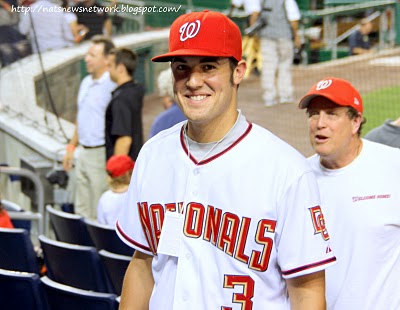
Robbie Ray is having a nice bounce-back 2013 so far. Photo: Natsnewsnetwork.blogspot.com

In 2011, I managed to do “Rotational Review” posts for both the MLB team and the minor league system for the whole summer.   That turned out to be a pretty hefty time commitment, and an endeavor that I couldn’t keep up with.  I managed to do all 33 MLB rotation reviews but gave up on the minor league systems around the all-star break. For the entirety of 2012 I never once published much of an in-season look at any of the minor league teams.  But I want to stay aware of the minor league pitchers; its basically the reason I started this blog.  I wanted to be up on the rising talent, always on the lookout for the next home grown pitching talent.

In 2013, I’ve modified my approach.  With the help of daily doses of Luke Erickson‘s NationalsProspects.com daily looks, I’m taking the time to give a quick “grade” to each Starter’s outing by looking at the stat-line and the peripherals, in order to gauge how guys are looking.  Instead of the previous “good-bad-soso” analysis, I’ve adopted somewhat of a letter grade system, from A+ to F.  It isn’t a hard and fast grading system, but generally speaking we start with a run-of-the-mill quality start being graded a C (lets face it, 3 earned runs in 6 innings for a 4.50 ERA is average) and then go from there.  6 shutout innings gets somewhere between an A+ and an A- depending on # of hits/walks/Ks, while a complete meltdown (e.g. 7 runs in 3 innings) earns an F.  You get the idea.

So, without further ado, here’s the April 2013 look at the starters by team, with grades for outings and some commentary.  We’ll do an expanded view of the MLB rotation in the next post.  The grades are through 4/30’s outings; the stats may be slightly off since I wrote the bulk of this prior to this morning.

AAA Rotation

  • Ohlendorf: A,B,D+,D,C-
  • Young: F,D
  • Maya: C,D,D,F,D-
  • Perry: D-,B+,C-,B
  • Rosenbaum: A-,A,C+,A
  • Roark: A,D,F->demoted to bullpen,A
  • Tatusko: D,A-

Discussion: Syracuse YTD Stats are here for reference

(A quick note explaining the notation; the top 5 pitchers are the current rotation, and guys who have been starters before promotions or demotions, or who have spot starts are noted below the current rotational members.  The rotation is listed in current appearance order).

So far, the AAA rotation (which i like to call the “desperately seeking to find an injury backup starter” group) has been mostly a mess this year.  Former Major league starters Ross Ohlendorf and Chris Young sport ERAs of 5.46 and 9.00 respectively.  Yunesky Maya has been even worse; a 7.45 ERA and a 1.62 whip.  Ryan Perry rebounded after a rough debut outing.  Tanner Roark was holding Young’s rotation spot and was either excellent or awful; even with two grade-A outings he’s sporting an 8.44 ERA in 21 1/3 innings.  Only Danny Rosenbaum has shown himself worthy of a potential call up; after trying out for the Colorado rotation all spring on a Rule-5 invitation, he was returned and has really thrown well in Syracuse.  (side note on Rosenbaum; is he now officially “Daniel?”  Sort of how we went from Tom Milone to Tommy?  I’ll have to update all my tags in the blog system).

In the Bullpen, Erik Davis, Fernando Abad and JC Romero each sport sub 1.00 ERAs in relief; the rest of the bullpen ranges from mediocre to awful.  As noted in a prior post comment, there’s not a lot of relief backup were one of our MLB arms to go down.  Davis is showing why the team protected him last November though.

AA Rotation

  • Broderick: C-,C+,B-,F,B-
  • Treinen: F,D,A,C,B+
  • Demny: A-,D,C,C-,F
  • Clay: D,A,A,C,B+
  • Karns: F,A,A,B+
  • Holder: C

DiscussionHarrisburg YTD Stats are here for reference

As with Syracuse, there’s a lot of up-and-down so far in Harrisburg.  Brian Broderick, who should be in AAA frankly, is barely holding on in AA.  He’s yet to have anywhere close to a dominant outing.  Blake Treinen (throw-in from the Michael Morse trade) started really slow and has clawed his way back to respectability.  Paul Demny has been up and down too.  Caleb Clay (a MLFA signing who spent 6 years in the Boston organization) has been surprisingly sucessful as an Eastern League starter; he was relatively UNsuccessful the last two years playing for Boston’s AA affiliate in the same league as a middle reliever.  We’ll see if he can keep this up.  Lastly Nathan Karns, who in my mind is the “next best Nats starter prospect” to keep an eye on (with apologies to Rosenbaum, AJ Cole and Lucas Giolito) himself rebounded from an awful 2013 debut to put in 3 dominant starts.  He now sits with a 3.80 ERA and 29 ks in 21 innings through 5 starts with nearly a 4/1 K/BB ratio.

Trevor Holder got a spot start and has been otherwise decent.  Ian Krol (the PTBNL in the Morse trade) has been lights out; one run allowed in 13+ innings so far.  Michael Broadway, who we picked up as a MLFA just a few days before the season started, has also been good in short sample sizes.   Aaron Barrett has 4 saves and 15 ks to just 3 walks in his 11 innings this month.  Most of the rest of the Harrisburg bullpen are showing great K/9 rates right now with good numbers thus far.

High-A Rotation

  • Ray: A-,B,B-,A,A
  • Jordan: A,B,B+,B-,B-
  • Cole: D,B,D,D,C+
  • Schwartz: A,A
  • Hill: C+,A-,A+,C,C-
  • Turnbull: D-,D,F->demoted

Discussion: Potomac YTD Stats are here for reference

Potomac is led by a series of guys who are all on good rolls.  Robbie Ray, Taylor Jordan and Taylor Hill each are sporting sub 2.00 ERAs at the end of the month.  Hill’s outings are a combination of excellent and mediocre; his stat line looks better than his Start grade line.  Kylin Turnbull turned out not to be ready for High-A, but his promoted replacement Blake Schwartz certainly looked like he was ready in his first start (6ip, 3hits, zero runs) and followed up that outing with another dominant outing on 4/30.   Only A.J. Cole has really struggled out of this group, a disappointing start so far for the re-captured prospect.   Is High-A going to turn out to be his tripping point?  The California league is tough on hitters, but the Carolina league isn’t; what is going on with Cole?

In the bullpen, Tyler Herron has an amazing 20 Ks in 10 1/3 innings, while Richie Mirowski has given up just 4 hits in his 10+ innings of work for the month.

Low-A Rotation

  • Anderson: B+,B+,A,B,A
  • Turnbull: A
  • Pineyro: D,D,Inc,C-,A+
  • RPena: B,F,D,A-,B+
  • Encarnation: B+,C-,C-
  • Schwartz: B+,A,B-,A+->promoted
  • Mooneyham: B-,A,A->dl
  • Dupra: B,A,B-,D->promoted
  • Rauh: C,C,B-,D-
  • Fischer: A+
  • Hudgins: A,A-

DiscussionHagerstown YTD Stats are here for reference

Hagerstown has a “rotation,” and then they have something akin to a “tandem” pitching plan in place, where the 2nd guy in goes nearly as long as the starter.  Hence the larger number of guys who are given grades on their “starts,” when in reality guys in the lower group don’t have any starts.  If a guy goes 3-4 innings in a game, they generally have a grade here.

Dixon Anderson is leading the way with 5 excellent outings and a 2.25 era/0.87 whip.  Brett Mooneyham had three good starts as well before hitting the D/L.  Schwartz proved too dominant in his 4 outings (21 Ks in 14 innnings) and was promoted; Dupra’s line earned him a promotion as well.  Pedro Encarnation is finally putting it together outside of short-season.  Turnbull looked very dominant in his low-A return as expected.   David Fischer and Wil Hudgins longer outings may have been good, but their other outings have drug down their stat lines.  DSL grad Pineyro is somewhat holding his own in full-season ball, with up and down nights that hopefully will even out.  Lastly Ronald Pena is living up to his “sleeper” potential; the 16th round 2012 draft pick has picked up right where he left off in full-season ball.
Houston’s Farm System Pitching Strategy

2 comments

While listening to the MLB radio broadcast of the 3/31/13 season opener between Texas and Houston on ESPN radio, one of the announcers spoke about a new pitching strategy Houston is employing this year with its minor league rotations: “Tandem Starting Pitchers.”  They’re apparently so stocked at the minor league level with starters from all their prospect acquisitions that they are forced to be creative in order to get everyone the work they need.

The strategy as I understand it (and from doing a bit of Google research) goes like this: instead of having a 12-13 man pitching staff in the minor leagues with conventional MLB-like roles (starters, long-men, closers, loogies, etc) Houston will assign starters in tandem for each game.  Starter A will throw either 5 innings or 75 pitches (which ever comes first), then Starter B will throw either 4 innings or 60 pitches (which ever comes first).  And then four days later the two guys will switch places so that Starter B gets 75 pitches.

This would (theoretically) allow each team to carry 10 starters and get them each 60-75 pitches at least on normal 4 days rest.  You then carry a couple of closer-candidates and perhaps one extra rubber-armed long man and that’s your staff.  If one of the starters gets into trouble and you need extra innings, you just use some of your later starters and get them an inning or two on their normal throw day (for example; on day one of the rotation the day four guys can easily throw an inning or two in a pinch).

Personally, I think this is brilliant.  All relievers are failed starters any way, and developing home-grown starting pitching is one of the hardest things for a farm system to do.  Look at how long the Nats have been working on it, and even then we’re still dipping into the trade market and free agency to fill out 40% of our rotation for the last couple of years.   So if you can try to develop twice as many starters from the onset, why not?  What value does a middle reliever on a low-A ballclub really have?  He’s already failed to be one of the 5 starters on the team, he isn’t being groomed as a closer type … so he’s essentially chaff and just playing out the string, pitching wasted innings until the end of the season and he can be released to make room for the next failed starter next year who gets dropped to long-man status (that may be a tad harsh frankly, but it goes to the point of this article).  Why not manage that staff so that all those long men/spot starters actually get to go 3-5 innings a night to see if they’re worth cultivating?

Now, Houston seems to admit that this tandem strategy may only be for the beginning of the season, until a stronger set of starters “naturally” emerges, and then they may move back to a more conventional staff (with the “losers” then becoming middle relievers).  That’s fair; but I think it’d be pretty amazing if someone tried to pull this off with their entire system for an entire year.

Downsides?

– Do you hinder starter development by NOT allowing them to go deep into games?  If you’re always getting yanked after 75 pitches, do you lose the ability to gain the stamina to eventually go 100-110 pitches?  Possibly.  But I doubt it; if you just go throw for another 30 minutes on the side after finishing up your 75 pitches, you’ll get your work in.

– Do you hinder the development of relievers?  I’d say no frankly; looking at the set of relievers the Nats are using now in the majors: by and large they’re all failed minor league starters who converted to relief and specialized.  This certainly describes at least Clippard, Stammen, Mattheus and Rodriguez.   Duke and Stammen both had shots at being starters in the majors and couldn’t make it happen.  Soriano was great as a minor league starter; he just was even better as a closer.  Of all our relievers only Storen has always been a professional reliever (as he was in college).   So; you’re still going to be able to find relievers by doing this tandem starting … you just have to wait a while for the “losers” to shake out and start working them in relief.

– What do you do if both your tandem starters get shelled?  Good question; keep rolling out the 3-days onward guys?  Keep one mop-up guy?

– What do you do if you go extra innings?  Same thing as if someone gets knocked out early; keep rolling out the 3-days on starters and deal with it later.  You can always call someone up for starts a few days from now.

Coincidentally, looking at the usage of the Nats Hagerstown rotation, the Nats may already be doing something along this line anyway.   In their first few games we’ve seen a starter go 5 then a reliever go 3 to finish up, then two guys basically splitting a 7-inning game 4ip and 3ip, and then another 5ip/3ip situation.

What do you guys think?

Written by Todd Boss

April 12th, 2013 at 9:31 am

Nats Major & Minor League Pitching Staffs vs Predictions

leave a comment

First off, this is partly a post of self-flaggelation, to show how far off my various predictions of what the 2013 minor league staffs would look like by doing 2012 season-ending analysis.  Such is the nature of minor league pitching staffs in the modern day; they’re a combination of spare parts, rising stars and hangers-on and they can change rapidly with trades and spring training performances.  Every trade and every MLFA signing trickles down and fouls up predicitons.

Here’s my End of Season 2012 post with predictions for each of the 2013 minor league pitching staffs.   We’ll use that as a basis for the Opening Day 2013 rosters of the four full-season minor league teams.  Just for fun we’ll throw in (and start with) the MLB prediction.  Note that this early in the season we don’t really know who’s shaking out as starters and relievers necessarily for these minor league teams; i’m just going on first week usage right now.  As always, Luke Erickson and nationalsprospects.com, the Nats Big Board and the tireless work by “SpringfieldFan” is much appreciated here.


MLB Nov 2012 Prediction

  • MLB Rotation: Strasburg, Gonzalez, Zimmermann, Detwiler, FA or other acquisition
  • MLB Bullpen: Clippard, Storen, Mattheus, Stammen, Garcia, a FA left-hander (possibly Burnett), a FA long-man (possibly Gorzelanny).
  • MLB notables Out of Organization: Jackson, Burnett, Gonzalez, Lannan, Wang

MLB April 2013 Actual

  • MLB Rotation: Strasburg, Gonzalez, Zimmermann, Detwiler, Haren
  • MLB Bullpen: Clippard, Storen, Mattheus, Stammen, Duke, Rodriguez, Soriano
  • MLB notables Out of Organization: Jackson, Burnett, Gonzalez, Lannan, Wang, Gorzelanny

MLB Discussion: It wasn’t going to be that difficult to predict the 2013 Nats pitching staff make-up by looking at our staff and their FA status heading into the off-season.  The rotation filled its one spot with Dan Haren.  The bullpen was 5/7ths predicted correctly (if you count Zach Duke as a FA left-hander acquisition).  Christian Garcia‘s injury opened the door for one more season of Henry Rodriguez, and of course nobody could have predicted the Rafael Soriano purchase.  Lastly all 5 of the predicted departures occured, in addition to Tom Gorzelanny being let go.


AAA Nov 2012 Prediction

  • AAA Rotation: Roark, Maya, Broderick, Meyers, Perry
  • AAA Bullpen: Tatusko (swingman), Arneson (swingman), Severino (loogy), Davis, Lehman, Nelo (closer), Martin,  Mandel

AAA Apr 2013 Actual

  • AAA Rotation: Ohlendorf, Roark, Maya,Perry, Rosenbaum ( eventually Young)
  • AAA Bullpen: Tatusko, Mandel,  Davis, McCoy, Crotta, Abad, Romero, Bramhall
  • AAA D/L: Kimball, Bray, Meyers, Torra, West, Garcia (technically XLS), Accardo
  • AAA cut/released/FA: HPena, Mann, Zinicola, Arneson, Atkins, Ballard
  • AAA Missing: none

AAA Discussion

We were 3/5s correct on the rotation, and probably would have been 4/5ths right if Brad Meyers was healthy.  Ross Ohlendorf and (eventually) Chris Young are new faces here, both being former MLB starters who are taking the Zach Duke route of signing on for full seasons as AAA starter insurance for the big club in the hopes of rebuilding value and finding a MLB job for next year.  Brian Broderick is indeed back; its just that he’s starting for AA instead of AAA.  Lastly Danny Rosenbaum was returned to the team after his spring Rule-5 adventure and was put in AAA instead of AA, where (as we’ll see in a second) I would have predicted he would start.  Once Young is ready to go, I see Tanner Roark turning into the swingman/long-man.

On the bright side (pun intended), when was the last time a professional baseball team had TWO Ivy League alumni pitching in its rotation??  Both Young and Ohlendorf went to Princeton.  I wonder if they have NYTimes crossword puzzle competitions instead of (assumedly) video game competitions on off-days in the clubhouse.

As far as bullpen predictions go, next year I’m paying more close attention to who are 6-year free agents.  Arneson, Severino and Nelo were all MLFAs and have either signed on elsewhere or are facing forced retirement.  Tatusko, Davis and Mandel are onboard.  Lehman is (surprisingly?) in AA, perhaps a victim of the numbers game of the Nats signing (and keeping) a number of minor league lefty relievers this off-season.  I would guess, looking at the names in the bullpen, that Erik Davis is the closer but who knows what the usage will be like.  Lastly Bramhall was a MLFA signing over the off-season who just got placed on the AAA roster to replace the injured Accardo.


AA Nov 2012 Prediction

  • AA Rotation: Rosenbaum, Holder, Gilliam, Karns, Grace, Demny (swingman?) or MLFA?  Solis if he’s healthy?
  • AA Bullpen: Frias, McCoy, Selik (maybe high-A again), Holland (setup),  Wort (closer), VanAllen (loogy), Demmin (maybe high-A again), an org arm or two to fill in.

AA Apr 2013 Actual

  • AA Rotation: Broderick, Treinen, Demny, Clay, Karns
  • AA Bullpen: Holder, Frias, Holland, Wort, Barrett,  Krol,  Lehman, Swynenberg
  • AA D/L: Solis, RMartin, Olbrychowski, Selik
  • AA Cut/released/FA: VanAllen
  • AA Missing: none

AA Discussion

We got, well, not much of this right.  Of my starter predictions: Rosenbaum is in AAA, Holder is here but seems to be the long-man right now, Gilliam is hurt, Solis is still on the DL, and Grace is back in High-A.  We do seem to have at least gotten Karns and Demny right.  Broderick was a surprise FA signing, his being a favorite of the Nats organziation per our Rule-5 experiment with him a couple years back.  I’m surprised he’s not in the AAA rotation though.  Treinen was a trade-throw in from the Morse deal and takes a spot in this rotation, while Clay was a 2013 MLFA signing who (surprisingly?) made the rotation over the likes of other candidates.

The bullen prediction is all over the place: We got Frias, Holland and Wort right.  McCoy is in AAA, Selik is on the AA D/L and VanAllen and Demmin were MLFAs who were left unsigned (and per the big board are still unsigned).   I thought Barrett and Swynenberg would be in high-A instead of AA, I (and most others) thought Lehman would be in AAA, and Krol arrived as the PTBNL in the Morse trade.


High-A Nov 2012 Prediction

  • High-A Rotation: Swynenberg, Ray, Meyer (maybe AA?), Schwartz (maybe low-A), Rauh(maybe low-A)
  • High-A Bullpen Competition: Barrett (maybe AA) , Testa, Smoker (loogy), Hill, Meza(perhaps a starter?), Holt, Hawkins, Bates, Mirowski
  • High-A bullpen Release candidates: Olbrychowski, McCatty, Applebee

High-A Apr 2013 Actual

  • High-A Rotation: Ray, Jordan, Cole, Turnbull, Hill
  • High-A Bullpen Competition: Herron, Mirowski, Holt, Hawkins, Meza, Bates, Self, Grace
  • High-A D/L: Smoker, Applebee, Gilliam
  • High-A Cut/FA/Released: Demmin, Consuegra, Samuel, Testa
  • High-A Missing: McCatty, Olbrychowski

High-A Discussion

The Potomac rotation guess was already light; a couple of the guys I was guessing might be in low-A are indeed there (Schwartz and Rauh).  Swynenberg is in the AA bullpen.  Meyer was traded.  Only Robbie Ray returns.  I thought Jordan was going to repeat Hagerstown.   We got Cole back in the Morse trade and bumped up Turnbull from short season (over Mooneyham, interestingly) Lastly Hill seems to have beaten out Grace for the 5th starter spot.

The Bullpen prediction looks pretty good: 7 of the predicted guys are here (Smoker on the DL, Meza, Holt, Hawkins, Mirowski and Bates).  Barrett indeed is in AA.  Testa was released.  Of my release candidates McCatty is in XST, Applebee and Olbrychowski are on the DL.  Lastly both Samuel and Consuegra were off-season MLFA signings who didn’t pan out and have already been released.


Low-A Nov 2012 Prediction

  • Low-A Rotation: Turnbull, Jordan, Purke (if healthy), Monar, Mooneyham
  • Low-A Rotation Competitors: Hansen, Lee (loogy if not), Encarnation, McGeary (if finally healthy)
  • Low-A Bullpen Competition: Anderson, Estevez, Dupra, McKenzie, Henke, Davis, Boyden, Benincasa, Hudgins, Dicherry, Mudron

Low-A Apr 2013 Actual

  • Low-A Rotation: Anderson, Mooneyham, Pineyro, RPena, Encarnation
  • Low-A Swingmen: Rauh, Schwarz, Dupra
  • Low-A Bullpen: Fischer, Harper, Henke, Hudgins, Benincasa
  • Low-A D/L: Estevez, Purke, Simko, Mesa, Weaver
  • Low-A Cut/FA/Released: Kreis, Lucas, Upperman, Hansen, Monar
  • Low-A Missing: Hollins, Hicks

Low-A Discussion

Historically the hardest to predict, the Low-A team.  Of the guesses for the rotation last fall, we only got Mooneyham right.  Turnbull and Jordan were bumped up a level.  Purke is still hurt.  Of the “competitors” the team flat out released Monar and Hansen to my surprise.  Monar was really good in Auburn last year, and while Bobby Hansen wasn’t nearly as dominant as a starter, I thought he’d at least get a shot at being a loogy after so many years in the organization.  Jack McGeary was selected out of the org during the minor league phase of the rule-5 draft.  Lee is in XST limbo right now.

So who are these surprising Low-A rotation guys?  I thought Anderson would be relegated to the bullpen in Low-A; instead he’s the opening day starter.  I thought Pineyro would repeat short-season ball but he made the full-season team.  And lastly I thought Pena was destined for another season in short-A.

Rauh and Schwartz, after I thought they had shots in the rotation in high-A, seem to be taking the roles of “2nd starters” for now, each having gone multiple innings in relief of the starter.  I wouldn’t be surprised to see them becoming full time starters if one of the 5 guys ahead of them falter.

Most of the rest of the predicted bullpen are 2012 signees who are currently amongst a large group of extended spring training guys who will be battling it out for short-season jobs with 2013 signees.   And we seem to have a very large group of them; the big board lists in excess of 30 hurlers who are currently still in the organization, who are not on the D/L officially, but who are not assigned to one of the four full season teams.   That’s a lot of arms for just a handful of spots in short-A and the rookie league after the 2013 draft occurs.

Written by Todd Boss

April 11th, 2013 at 8:41 am

Posted in Majors Pitching,Minor League Pitching,Rule-5

Tagged with , , , , , , , , , , , , , , , , , , , , , , , , , , , , , , , , , , , , , , , , , , , , , , , , , , , , , , , , , , , , , , , , , , , , , , , , , , , , , , , , , , , , , , , , , , , , , , , , , , , , , , , , , , , , , , , , , , , ,

No takers for Carlos Rivero plus Rule-5 returns

2 comments

Carlos Rivero snuck through waivers and stays with the organization. Photo Brad Barr/US Presswire via bleacherreport.com

Great news 3/25/13: the Nats exposed Carlos Rivero to waivers, got no takers and he was outrighted to AAA Syracuse over the weekend.

I know he didn’t have the greatest numbers this spring (8-for-47 for a meager .170 BA), but he seems like he could be a valuable utility guy in a pinch, able to play multiple positions both in the infield and outfield.   I liked what I saw from him in limited TV time this spring.  I’m glad he made it through waivers and remains an option in our farm system for at least this year.

He also clears a spot off the 40 man, leaving us sitting at 38/40.  Plenty of room to make moves if need be.  But not a ton of manuverability; of the 38 guys remaining, you can only really make a case for Corey Brown as being relatively expendible/likely to pass through waivers.  If we get a slew of injuries like last season that cause us to do mass call-ups, we may have to heavily depend on the 60-day DL.

Meanwhile, another year of Rule-5 complaining (see here and here) has essentially proven once again to be wasted breath; both Jeff Kobernus and Danny Rosenbaum have been returned to the team.   Kobernus still seemingly sits behind Steve Lombardozzi, Anthony Rendon and Wil Rhymes on the team’s 2nd base depth chart, meaning we’d have to have a pretty bad slate of injuries for him to sniff the majors this year.  But, it is nice to have him back, considering his draft pedigree and bonus money investment.  Rosenbaum was our AA Ace last year and started out with ace-like stuff, but struggled in the 2nd half.  Given that the team suddenly has a slew of starter arms in AAA (especially if Chris Young sticks around, though he probably walks), perhaps we’ll see Rosenbaum starting in AA again.  Not likely though; would you rather challenge Rosenbaum in AAA or give another year of starts to someone like Tanner Roark at this point?

Great article about PED usage from a former player

leave a comment

Posted yesterday 2/26/13 at BaseballProspectus.com from former player Eric Knott, who had a couple of cups of coffee over an 11 year professional career, including a stint with Montreal in 2003.

I’ve read some people who have claimed that “there’s no definitive proof that Steroids help baseball players.”  But I scoff at those claims; time and again we’re reading missives from former players brave enough to speak out who talk of utility infielders suddenly hitting 15 homers, and of middling relief pitchers suddenly adding 5mph to their fastballs and rocketing up the farm systems.

Knott’s article is no different.  You can claim stories like his and others are just coincidence, but it doesn’t take a huge leap of faith to connect the dots between steroid use, leading to increased strength and muscle mass, leading to increased power or velocity.

Also interesting is Knott’s take on “greenies” versus his opinions on Steroid use.  Clearly he differentiates between these two drugs despite both now being considered “performance enhancing.”

A good read.

Written by Todd Boss

February 27th, 2013 at 2:55 pm

Observations of Nats from early televised ST games

2 comments

Carlos Rivero looks like a valuable utility guy so far this spring. Photo Brad Barr/US Presswire via bleacherreport.com

I have to admit, I’ve thoroughly enjoyed the two Nats spring training games that managed to find their way to MLB Network TV thus far (NatsJournal live blogs for the 2/23 game here and 2/25 game here).  Not so much because we got to see Harper, Strasburg and Gonzalez … we all know what these guys can do.  No; I’m interested in seeing the young guys, the guys who we rarely get to see play.  This year’s spring training is a week longer, meaning that there’s going to be an awful lot of playing time devoted to these AA and AAA guys who got spring training invites, and that’s many more looks at the likes of Matt Skole, Chris Marrero, and Carlos Rivero.

It is also good to see some of these arm prospects that we’ve been hearing so much about, and it has been instructive to see some of the minor league veterans invited to spring training.  Some observations on our guys (arms then bats):

  • Stephen Strasburg‘s first 7 pitches on 2/23/13; all fastballs, all 96-97.  Clearly he was working on his spots.  I’m not sure he threw a change-up the entire outing.  As is always the case in spring training, guys work on pitches, work on location, and stats are meaningless.  He gave up a wind-aided homer to a guy who’s hit like 1 his entire career; no cause for concern.
  • Gio Gonzalez was amped up; he over threw his fastball in the first and (if you believe the broadcast) reached 97 in the second.  He struggled with his release point clearly.  However, his curve looked in mid-season form, breaking sharply and serving as a nice out pitch against the few regulars that the Mets did bat on 2/25/13.
  • Bill Bray looked, well, awful.  His mechanics were always odd-looking, but he got hit hard by the Mets lineup of rag-tag regulars.  Not a good start for Bray’s spring.
  • Cole Kimball back on the hill …. where was his fastball?  It generally was coming in 90-91.  That’s clearly a step back from 2011, when he was averaging 93 and peaking at 95.8.  Lets hope this is Kimball working himself in slowly and not a permament velocity loss from his shoulder surgery.  Either way, he’s not going to displace his RHP competitors for the bullpen spots unless he can hump it up a bit more.
  • Pat McCoy was scheduled to throw 2/23, and I would really have liked to see him, but the Mets were ahead in the 9th and didn’t need to bat.  I’m convinced that McCoy could be a sleeper candidate for a left-handed specialist in this organization, if the cattle-call of guys we’ve signed to ML deals falls through.
  • Ross Ohlendorf put in two clean innings, but I don’t like what I see from him necessarily.   Not a lot of velocity (90-91) but a big guy (6’4″) who gets downward plane on his fastball.  But he just seems very “hittable.”  His numbers from the last two years in the majors show it; ERAs of 8.15 and 7.77 in 18 starts.  Not good.
  • Nathan Karns: the beat reporters raved about his performance overall; 2 innings, 3 Ks against a MLB-heavy part of the Mets order.  It was great to finally see Karns throw; he has easy arm action, runs the ball in 94-95, and spotted the ball on the corners well.  What I didn’t see was anything resembling a quality second pitch.  He attempted a number of sliders (I’m guessing sliders; they were generally 84-86, which would be a very hard curve) and he couldn’t get over-top of them at all.  He did throw one particular breaking pitch that was sharp and nasty.  I didn’t see anything resembling a 3rd or 4th pitch though.  Is he destined for the bullpen?  That’s not the worst thing in the world; to be the next Ryan Mattheus, a hard-throwing 7th inning right hander.

Now for thoughts on our minor league hitters:

  • Eury Perez is, well, really fast.  If he turns out to be anything close to a servicable hitter, he’s got leadoff/center fielder written all over him.  The question could become; which speedy CF prospect do we hope for more; Perez or Brian Goodwin?  Denard Span‘s contract has a convenient option for 2015, just about the time that Goodwin is likely ready for the majors on a full-time basis.  Of course, that being said Perez is further along than Goodwin (who likely starts 2013 at AA).  Goodwin has power to go with his speed, while Perez seems to have very little power.  Which would you prefer to be the longer-term CF solution?
  • I like Matt Skole; sweet swing, not overpowered by facing MLB pitching.  It makes you wonder about scouting sometimes; how come guys like Skole and Tyler Moore get no love from scouts?  Its like a 30-home run minor league guy is somehow a liability.  Of course, Skole’s problem is the same as Anthony Rendon‘s; positional blockage at 3B.  Yes Skole was playing low-A as a college junior when he hit 27 homers … but if you’ve seen Hagertown’s stadium, you know its a monster park to hit balls out of.  27 homers is no mean feat down there.   I’ll be curious to see if Skole can hit with that kind of power at High-A or AA (wherever he starts 2013).
  • Chris Marrero has looked pretty good, making good solid contact a number of times.  I don’t like his haircut though :-).
  • Carlos Rivero is impressing me; he’s playing the outfield (after having played first SS and then 3B in the minors).  He has good hands, is a big guy, and seems like he can be a servicable backup utility guy who can fill in at any corner.  He’d be more flexible Moore or Chad Tracy in this respect (when judging our projected utility guys) but of course needs to show he can hit at the same levels.  Still, he is likely to be a numbers game victim unless someone like Bernadina gets hurt this spring.

Nats Franchise Draft history; biggest, best, worst Draft Picks

10 comments

Face of the Franchise Zimmerman easily represents the best player drafted in the Washington era (by WAR). Photo team official

This is the Third in a long-delayed series of “Best of” posts, breaking down the transactions of both the club’s General Managers.  Previously:

1. Biggest/Best/Worst Trades in Nats History (March 2012)

2. Biggest/Best/Worst Free Agent signings in Nats History (November 2012).

Here’s Part 3: looking at the Biggest, Best and Worst Draft picks the team has made since arriving here in Washington.

Ground rules for this article:

1. Unlike the trades and free agent posts, assiging “credit” or “blame” for draft picks on the General Manager is not entirely straightforward.  Baseball teams rely heavily on Scouting Directors and their staffs when it comes to the draft, especially once you get past the first few rounds.  So, perhaps for the purposes of this article it is better to talk about the “Reign of Jim Bowden” and the “Reign of Mike Rizzo” instead of insinuating that every draft decision was made by the GM during these times.  Much like the President of the US gets credit/blame when  the US economy as a whole rises or falls (whether or not you’d like to argue that a president’s decisions can influence a multi-trillion dollar economy), so does the GM get the credit/blame for his staff’s draft picks.  Most baseball pundits that I’ve read generally say that the GM/Team Ownership is always directly involved in making any 1st round and supplemental first round picks (because of the money), and will be involved if over-slot bonuses come up in later rounds, but that by the 5th round or so the entire draft is being conducted without the GM’s involvement.  Which leads us to point #2…

2. Related to #1; Mike Rizzo, whom Bowden hired in July of 2006, may not have been the Scouting Director but he certainly had a say in the drafts (coming from a scouting background in Arizona).   I’ll list scouting directors tenure here as well, related to #1 and #2.  But, it probably isn’t going to be entirely fair to the GM to say that such-and-such a pick was “good” or “bad” if it was actually being done by his staff.

3.  It is entirely “hindsight is 20/20” in nature.  But, it is what it is.  If you draft a 1st rounder who flames out in low-A, he’s a failure.  If you draft a major leaguer in the 21st round, he’s a fantastic success.  Mostly here in judging the “best draft picks” I’m looking for value in later rounds.  As it turns out judging “worst” draft picks mostly will be around first round busts.

Just for review, here’s the tenure period of both GMs:

  • Nov 2004 – Mar 2009: Jim Bowden
  • Mar 2009 – present: Mike Rizzo

And here’s the tenure period of Scouting Directors during our time here in Washington:

  • Mid 2002 – Mar 2009: Dana Brown
  • Mar 2009 – Present: Kris Kline

The quintessential Nats Draft resource is the Draft Tracker Spreadsheet, initially created by NatsFarm.com’s Brian Oliver and now maintained by “SpringfieldFan. ” It has all our draft picks, where they came from and signing bonuses.  A file I’ve kept recently (The Draft Prospects Worksheet) is a file I started to create when the Nats started getting some upper-end draft picks as a way to track who we may take.  Lastly, you can query the entire amateur draft results per team at baseball-reference.com (the link will go to the 2009 draft by way of example).

Jim Bowden Tenure: Nov 2004 – Mar 2009

Bowden’s Biggest Draft Picks (in terms of dollars committed).

  • 2005 1st rnd: Ryan Zimmerman, $2.975M
  • 2007 1st rnd: Ross Detwiler, $2.1M
  • 2007 6th rnd: Jack McGeary: $1.8M
  • 2006 1st rnd: Chris Marrero: $1.6M
  • 2006 1st rnd: Colten Willems: $1.4M

Bowden’s Best Draft Picks

  • 2005 11th rnd: John Lannan out of Siena College.  A durable and servicable lefty starter with MLB average numbers out of a small college in the 11th round is a great find.
  • 2005 12th rnd: Craig Stammen out of Dayton.  He didn’t look as if he’d be successful until his transition to the bullpen, where his arm action and movement have baffled hitters during his shorter reliever stints.
  • 2006 41st rnd: Brad Peacock out of a Florida HS as a “draft and follow” guy (which enabled teams to take late round fliers on good talent, so this isn’t exactly the same as finding a true 41st round player who made the majors, since Peacock likely wouldn’t have been taken without the DDE rules in place and would have been an upper round draft pick the next season he was eligible).
  • 2007 2nd rnd: Jordan Zimmermann out of U Wisconsin Stevens Point (not because of his draft position, but because of the scouting out of such a small school).  Zimmermann survived TJ surgery and now looks like a hidden Ace in the making.
  • 2007 4th rnd: Derek Norris out of a Kansas HS: possibly the best HS player the team has drafted since arriving in DC.
  • 2008 10th rnd: Tommy Milone out of USC.  Rizzo may not have rated him, but he looks to be in Oakland’s rotation for many years to come.
  • 2008 16th rnd: Tyler Moore out of Mississippi State.  Scouts continually have downplayed Moore’s power; I have never read a scouting report on Moore that didn’t focus on “holes in his swing” or “defensive liabilities.”  All he’s done is mash the ball at every level he’s been challenged with in his career.
  • 2008 19th rnd: Steve Lombardozzi out of St. Petersburg JuCo.  Despite his pedigree (his father played in the Majors in parts of 6 seasons), Lombardozzi was lightly pursued and surprisingly signed as a late round JuCo draftee.  He’s scraped his way to the top though and could find himself starting if the team decides to move Espinosa.

Despite the issues at the top of the 2008 draft, it may have been Bowden’s best.  He took no less than 6 guys who now are on 25-man rosters in this league (Milone, Moore, Lombardozzi, Espinosa, and Crow).  2005 wasn’t bad either, with 7 guys that have MLB appearances (though only 3 remain with the team).

Bowden’s Worst Draft Picks

  • 2006: almost the entire draft.  Bowden blew the first 6 picks on high schoolers, the best of whom was Chris Marrero, who has contributed -0.7 WAR in his career thus far.  First round pick Colten Willems flamed out and just gave up playing in the middle of the 2010 season, Stephen Englund was released (but not before earning a 50-game suspension for Amphetemine usage), Sean Black didn’t sign and Stephen King has yet to succeed above A-ball despite being in his his 6th pro season (and, just for good measure, had his own 50-game drug suspension in 2009).  Only one player in the top 12 rounds of picks even played a day in the majors.  Just a complete debacle of a draft.
  • 2007’s high schoolers: Smoker, Souza, Burgess, and Smolinkski: all top 3 round picks, all busts.
  • 2007’s Jack McGeary, who insisted (admirably) on also going to college, but probably at the detriment of his baseball career.  I’m sorry; if someone pays you $1.8M dollars in cash, you probably should work for that money.   McGeary never was able to master anything above rookie ball and was so under-valued by the team that they failed to protect him in the minor league phase of the 2012 Rule 5 draft (where he was subsequently taken by Boston).
  • The 2008 Aaron Crow debacle.  Yes I know that this pick turned into 2009’s Drew Storen.  And yes I know that Crow has now been turned into a middle reliever while Storen has turned into an effective closer.  At the time, this move helped continue the “incompetent” labels that the organization was earning, as Bowden reportedly refused to negotiate with Crow’s agents and failed to do his due diligence before drafting the player.  Who is to say whether Crow’s electric arm wouldn’t have turned into a regular rotation member in our organization (Kansas City doesn’t exactly have a stellar record of developing pitchers).  In the end, getting Storen and also not losing the opportunity cost of missing a year’s development time of a first round pick (by virtue of the rest of the team being so awful) ended up not hurting the team.  But it still goes down as a draft failure for Bowden.

Mike Rizzo Tenure: Mar 2009 – present

Rizzo’s Biggest Draft Picks (in terms of dollars committed).

  • 2009 1st rnd: Stephen Strasburg: $7.5M bonus, 15.1M guaranteed
  • 2010 1st rnd: Bryce Harper: $6.25M bonus, $9.9M guaranteed
  • 2011 1st rnd: Anthony Rendon: $6M, $7.2M guaranteed
  • 2011 3rd rnd: Matthew Purke: $2.75M bonus, $4.15M guaranteed
  • 2011 1st rnd (supplemental): Brian Goodwin: $3M
  • 2012 1st rnd: Lucas Giolito: $2.9M
  • 2011 1st rnd: Alex Meyer: $2M
  • 2010 4th rnd: A.J. Cole: $2M
  • 2009 1st rnd: Drew Storen: $1.6M

As we saw with the Free Agent post, Rizzo clearly had more money to work with from Ownership than Bowden did.  Spending $2M on a 4th round pick (AJ Cole) would have been unheard of in the Bowden reign.

Rizzo’s Best Draft Picks

  • 2009 12th rnd: Nathan Karns out of Texas Tech: Karns got 4th/5th round money in the 12th round but has been bedeviled by injuries until this year.  By now we know what he’s capable of; our organization’s Minor League pitcher of the Year earned a spot on the 40-man roster and could be in line for a 2013 late season call-up.  It could be too-early to tell, but right now this is looking like one of Rizzo’s best.
  • 2009 22nd rnd: Danny Rosenbaum out of Xavier; despite the team not protecting him and losing him in Rule-5, he had come out of no-where to be one of our best pitching prospects.
  • 2010 12th rnd: Robbie Ray out of a Tennessee HS; he had a great debut and has been steadily rising up the ranks.  The team was able to buy him out of a committment to the University of Arkansas by offering 2nd round money.
  • 2010 22nd rnd: Cameron Selik as a U Kansas senior has made it to AA and looks like a great later-round steal, especially for a college senior this low in the draft.
  • 2011 5th rnd: Matt Skole out of  Georgia Tech looks like he could be an excellent hitting prospect and is making it into the top 5 lists of Nationals prospects.
  • 2011 1st rnd supp: Brian Goodwin out of a Miami JuCo looks more advanced than anyone would have thought at this point, and could be pressing for playing time in 2013.  I don’t normally give plaudits for 1st round talents, but the team aggressively pursued and captured Goodwin at a time when it looked like he was heading to UNC.

Rizzo’s Worst Draft Picks

  • 2009 2nd rnd: Jeff Kobernus out of Cal Berkeley.  Perhaps less because of his production (which was mostly poor for his career), but moreso because the decision not to protect him and value your investment in the player, leading to his departure in the 2012 rule-5 draft.  No worries for Nats fans: Rizzo drafted almost the doppelganger of Kobernus in 2012: again taking a 2nd baseman from California in the second round (Tony Renda).  Lets hope it works out better this time.
  • 2009 3rd rnd: Trevor Holder out of Georgia.  A blatant punt on the draft pick to save money, Holder was a college senior with zero leverage and should have been offered closer to $1,000 instead of the $200,000 he got.  Holder has struggled for years in our system.  He did have a decent 2nd half in Harrisburg, so there is hope yet.  But 3rd round picks should have more promise than Holder has shown.
  • 2010 3rd rnd: Rick Hague out of Rice.  He hasn’t lived up to his 3rd round billing yet, though (to be fair) he has struggled with some injuries.

Rizzo’s Too Soon to Tell Draft Picks

  • 2010 2nd rnd: Sammy Solis was looking promising out of U San Diego, but has been side lined by Tommy John Surgery.
  • The 2011 college-arm gamble: Rizzo drafted dozens of college players this draft, stocking the system with experienced amateurs.
  • 2012 1st: the Lucas Giolito gamble won’t play itself out for a couple of years, but it is safe to say Rizzo went “all in” on this player.  A 1-1 talent but damaged goods upon drafting, the team is putting a lot of faith into its experience in dealing with hurlers going through Tommy John.
  • 2011 3rd: Matt Purke got a MLB deal and a whole lot of money, and has done relatively nothing to earn it because of lingering shoulder injuries.  I’m listing him as too early to tell, but the signs are not good.


John Sickels Season Review of all Nats 2012 draft picks

11 comments

The Nats liked Mooneyham a lot more than pundits did. How did he do in his first pro season? Photo via mlbdraftcountdown.wordpress.com

John Sickels writes the very good blog located at www.minorleagueball.com.  He does profiles on Minor League players, reviews the day’s marquee Minor League games, and generally does a good job highlighting the guys down on the farm.

Late this past season he embarked on a project where he has reviewed the performance of EVERY draft pick, by round, from the 2012 draft.  This, as you might imagine, is one heck of an effort.  In fact, in one of his later posts, he admitted he may not have the sanity to continue this all the way through all 40 rounds of players.  In fact, he didn’t; he made it through 17 rounds and last posted on this thread 9/27/12.  So I’ve completed his quick-hit analysis/statistical summary for the rest of our picks who debuted this year.

Below is a cutting-n-pasting of Sickels’ round-by-round analysis of the Nats players taken.  I’ve put in links in the form of the “Round N” at each spot so you could read his original post.  The (YY) number is overall draft pick positioning.  Lastly, he started this series in mid-August, so I’ve updated the first several playerswriteups from Sickels’ to have season-ending stats, but his blurb is usually still accurate enough.  After round 17, I’ve filled in the details in Sickel’s style for the rest of our draftees.

(For draft reference, click here for the fantastic Nationals Drafttrack Google XLS, created by Brian Oliver and now maintained by “SpringfieldFan.”  Also, for 2012 draftee information, thanks to Sean Hogan‘s 2012 Nats draft pick blog research, which I’ve quoted at various places here.  He has the best available summary of each draftee’s information.


Round 1: (#16 overall) Lucas Giolito, RHP, Washington Nationals: Threw two innings in the Gulf Coast League on August 14th.  [Editors Note: obviously we all know by now that those two innings resulted in Giolito’s blowing the partially torn UCL, and he has subsequently had Tommy John surgery.  My thoughts on the pick and the resulting surgery have been published here before].

Round 2: (80) Tony Renda, 2B, Washington Nationals: .264/.341/.295 with 31 walks, 33 strikeouts, 15-for-18 in steals over 295 at-bats for Auburn in the NY-P. Controlling zone well, steady glove, but lack of pop is disappointing.  He did improve his average 30 points in the last few weeks of the season, finishing hot.

Round 3: (111) Brett Mooneyham, LHP, Washington Nationals: 2.55 ERA with 29/16 K/BB in 42 1/3 innings for Auburn in the NY-P, 36 hits. Just like in college: looks like a pitcher, good arm, but doesn’t dominate the way you think he should.  Like Renda, a couple of good late outings improved his peripherals.

Round 4: (144) Brandon Miller, OF, Washington Nationals: .292/.354/.549 with four homers, 10 walks, 36 strikeouts in 113 at-bats for Auburn in the NY-P. Small sample, but fits the scouting reports perfectly: he’s got a ton of power, but struggles for contact.

Round 5: (174) Spencer Kieboom, C, Washington Nationals: .258/.362/.305 with 19 walks, 24 strikeouts in 128 at-bats for Auburn in the NY-P. Has thrown out 44% of runners, but bat looks doubtful.

Round 6: (204) Hayden Jennings, OF, Washington Nationals: .192/.254/.231 with 11 walks, 70 strikeouts in 156 at-bats in the GCL. Has stolen 17 bases in 19 attempts, but his strikeout rate is obscene.

Round 7: (234) Robert Benincasa, RHP, Washington Nationals: 3.09 ERA with 32/3 K/BB in 23 1/3 innings for Auburn in the NY-P, 27 hits, 2.00 GO/AO. Slot bonus from college, could move quickly as reliever if healthy, just went on DL [Editor’s note: the DL trip seemed innocuous, a roster manipulation at season’s end].

Round 8: (264) Stephen Perez, SS, Washington Nationals: Below slot bonus for college infielder, awful hitter so far, .222/.252/.364 with four walks, 40 strikeouts in 99 at-bats between GCL and NY-P. Glovework also disappointing. Has good tools but didn’t play up to expectations in college at Miami, and hasn’t in pro ball so far either.

Round 9: (294) Derek Self, RHP, Washington Nationals: Below slot college pitcher, solid in pro ball so far, 3.27 ERA with 25/8 K/BB in 33 innings for Auburn in the NY-P, 32 hits, 14 saves. Good fastball/cutter combination.

Round 10: (324) Craig Manuel, C, Washington Nationals: College backstop with good defensive and intangible rep, bat questions kept him to a small bonus. So far, hitting .287/.376/.315 with 16 walks, 11 strikeouts in 143 at-bats for Auburn in the NY-P, with 41% of runners caught. If he had any power at all, he’d be a major sleeper.

Round 11: (354) Brian Rauh, RHP, Washington Nationals: Slot bonus for college pitcher, 3.99 ERA with 43/26 K/BB in 59 innings for Auburn in the NY-P and Hagerstown in the Low-A South Atlantic League. Held his own in pro ball although component ratios aren’t great.

Round 12: (384) Carlos Lopez, 1B, Washington Nationals: Below slot bonus college first baseman, solid slugger at Wake Forest but didn’t repeat success as a pro, .253/.332/.376 with three homers, 20 walks, 50 strikeouts in 170 at-bats for Auburn in the NY-P. Age 22.

Round 13: (414) Elliott Waterman, LHP, Washington Nationals: Slot bonus college pitcher from San Francisco, 4.97 ERA with 24/22 K/BB in 25 innings for Auburn in the NY-P, 31 hits. Held back by control issues at this point. Age 21.

Round 14: (444) Jordan Poole, OF, Washington Nationals: Another junior college guy, this one from Florida, name was called as a pitcher but he played outfield in pro ball, hit .205/.264/.295 with 10 walks, 58 strikeouts in 132 at-bats between GCL and NY-P. That won’t get it done.

Round 15: (474) Brandon Smith, OF, Washington Nationals: California prep didn’t sign, honored committment to Grand Canyon University.

Round 16: (504) Ronald Pena, RHP, Washington Nationals: Junior college pitcher from Florida, low 90s stuff, 6-4, 195 build, 12 innings with a 2.92 ERA and a 9/1 K/BB, five hits allowed between GCL and NY-P. Sleeper potential.

Round 17: (534) Blake Schwartz, RHP, Washington Nationals: College senior from Oklahoma City University, originally from Minnesota, performed well in pro debut with 3.05 ERA, 41/11 K/BB in 38 innings, 39 hits in the South Atlantic League. Considered a sleeper by some Midwestern scouts due to his command.

Round 18: (564) David Fischer, RHP, Washington Nationals: College senior from U-Conn, the lanky right handed hurler (6’5″, 175lb) struggled in his Short-A debut, posting a 4.96 ERA, 31/14 K/BB in 49 innings, 56 hits.  Fischer only had a GO/AO ratio of 1.11, so he needs to work on keeping the ball on the ground in 2013.  Considered a possible top-10 talent early in the 2012 college season, Fischer’s fastball sits 92-93 on a projectionable frame, but his off-speed pitches need work.

Round 19: (594) Brian Lippincott, 1B, Washington Nationals: a College senior from Concordia, this left-handed batting first baseman hit .281/.361/.374 with 16 walks, 29 strikeouts in 139 GCL at-bats.  This is decent but far less impressive than Lippincott’s college career, where he hit .494 his senior season to led all Division II batters.  He showed some power in college but relatively little in pro-ball; he’ll need to feature more power to stick at first base.

Round 20: (624) James Brooks, SS, Washington Nationals: a College senior from Utah hit .273/.345/.354 with 8 walks, 25 strikeouts in 99 GCL at-bats.  He was 1-32 in 10 games in Auburn before being dropped down to the Rookie League.  Perhaps the most interesting thing about Brooks is his birth place: Melbourne, Australia.  No word yet whether he’s under consideration for Australia’s 2013 WBC team.

Round 21: (654) Austin Chubb, C, Washington Nationals: College senior from Florida Southern hit .209/.260/.373 with 3 walks, 11 strikeouts in 67 GCL at-bats.  He hit left-handers to the tune of .400, but in a catcher-platoon, only catching every third day or so, he struggled to get going in 2013.   He only threw out 3 of 12 runners and allowed 2 passed balls in his 10 games behind the plate.   He’ll have to improve all around in 2013.

Round 22: (684) Will Hudgins, RHP, Washington Nationals: a College senior from Notre Dame (who hails from Richmond, so he has local roots) posted a 2.22 ERA, 31/6 K/BB in 44 2/3 innings, 41 hits split between GCL and AUB.  Decent numbers despite being a 22-yr old in rookie ball, he has some promise as he fills out and moves forward.  Perfect Game only has him with a mid-80s fastball but “with life;” I’m hoping that’s an old reading.

Round 23: (714) Casey Selsor, OF/LHP, Washington Nationals: this College Senior from UT-San Antonio was drafted ostensibly as an outfielder but threw 41 innings in rookie-ball while also getting a handful of at-bats/games in the field.  He did neither relatively well; posting a 6.10 ERA, 34/15 k/bb in those 41 innings giving up 50 hits and seven home runs.  While playing the out-field he was 1-6 in 3 games, hardly a judge-worthy sample size.  The Nats clearly like this guy, having drafted him in 2008 out of high-school, so count on him sticking around at least a couple years.   On the mound, he features as an undersized lefty (he’s only 5’10”) who throws upper 80s but with excellent secondary stuff.

Round 24: (744) Kevin Dicharry, RHP, Washington Nationals: College Senior from University of Texas missed most of his college career with shoulder issues (tendinitis) after an excellent freshman year.  His pro debut looked very promising; 2.84 ERA, 22/4 K/BB in 25 1/3 innings, 19 hits, zero homers allowed.  Dicharry was highly regarded nationally graduating high school (a 2nd team Rawlings All-American and a marquee part of Texas’ recruiting class) and this pick represents a great value pick for the Nats if Dicharry regains some of his past form.  He reportedly is showing a low 90s fastball, a tight curve and a good change this year, to go with his excellent control (nearly a 6-1 k/bb ratio).  A sleeper prospect if he stays healthy.

Round 25: (774) Freddy Avis, RHP, Washington Nationals: California prep didn’t sign, honored commitment to Stanford.

Round 26: (804) Skye Bolt, RHP, Washington Nationals: Georgia prep didn’t sign, honored commitment to UNC.

Round 27: (834) Cody Poteet, RHP, Washington Nationals: California prep didn’t sign, honored commitment to UCLA.

Round 28: (864) Hunter Bailey, SS, Washington Nationals: College senior from Oklahoma State hit .247/.345/.329 with 8 walks, 12 strikeouts in 73 GCL at-bats.  He clearly features as a low-power middle infielder glove and may struggle to stand out in the system.

Round 29: (894) Leonard Hollins, RHP, Washington Nationals: A JuCo 2-year graduate from Chipola college threw 9 no-hit innings in the GCL and then was jumped to low-A, where he posted a 4.50 ERA in 18 innings, 8/7 K/BB ratio, giving up 18 hits.   He’s a submarining right-handed reliever who had a tendency to pitch either a perfect 1-2-3 inning or give up a slew of hits.  He’s tough to get the ball in the air on though; a 3.50 GO/AO ratio in Hagerstown and zero homers given up in 27 IP in his pro debut across both levels.  He could be an intriguing, difficult-to-scout/hard to quantify reliever for the team moving forward.  A sleeper reliever prospect.

Round 30: (924) Robert Orlan, LHP, Washington Nationals: A junior draftee out of UNC, Orlan suffered an elbow  injury late in the college season and was immediately placed on the 60-day DL by the team.  No bonus information is given for the player, who likely signed with the team knowing that a year’s recovery from Tommy John would have cost him his entire senior year of college too.  He profiled as a top-15 round talent, a lefty with decent velocity (upper 80s coming out of HS, presumably more now) and a decent variety of pitches.  Another value pick by the Nats, who could get a later-round steal if Orlan regains some of his promise after injury recovery.

Round 31: (954) Michael Boyden, RHP, Washington Nationals: This college senior out of University of Maryland quickly was promoted out of the GCL and posted a 1.44 ERA in 25 innings of short-A.  His control was pretty bad though: 22/17 K/BB ratio in those 25 innings.  In college he reportedly showed 90-92 with flashes to 94, but dropped because of his size and control issues.  This local product (he grew up in La Plata, played a year at GW and finished at Maryland) likely gets lucky to be drafted by his local team, and we’ll see if his wildness causes some regression on these numbers in the future.

Round 32: (984) Michael Mudron, LHP, Washington Nationals: College senior from Cal State San Bernadino posted a 3.75ERA in 24 innings in the GCL, with a 27/8 K/BB ratio, 16 hits.  A decent K/bb ratio, decent numbers for Mudron (who is incorrectly listed on milb.com as a right-handed pitcher).  I cannot find any scouting information, but assume that he profiles as a lefty match up guy (though his 2012 splits showed little lefty-lefty matchup capability).

Round 33: (1014) Mike McQuillan, 2B, Washington Nationals: College senior from Iowa hit .268/.362/.430 in 149 ABs for Auburn after being promoted out of the GCL.  21 walks and 27 Ks in those 149 Abs.  He features as a classic undersize 2nd baseman with little pop, but if his OBP stays above .350 he should continue to rise in the system.

Round 34: Jake Jeffries, 2B: California Prep did not sign, honored commitment to Cal St. Fullerton.

Round 35: Corey Bafidis, LHP: Texas Weslylan junior opted to return for his senior season.

Round 36: Max Ungar, C: Maryland Prep did not sign, honored commitment to Denison.

Round 37: Tyler Watson, LHP: Texas Prep did not sign, honored commitment to Kansas.

Round 38: Jarred Messer, RHP: Mallone College (OH) junior opted to return for his senior season.

Round 39: Mitchell Williams, C: Georga Prep did not sign, honored commitment to the Marion Institute.

Round 40: Ricky Gutierrez, CF: Florida Prep did not sign, honored his football commitment to U-Conn.


There you have it; your 2012 draft class.  So far, there seems like there’s some definite sleeper potential in the lower rounds and some players who played above their draft position.  I can’t wait to see how the likes of arms Pena, Schwartz, Hudgins, Dicharry and eventually Orlan pan out.

Rule 5 Losses: odds of them coming back?

7 comments

Danny Rosenbaum gets drafted by Colorado in the Rule 5 draft. Photo Jeff Mankie via insidenova.com

The Rule 5 draft was conducted on 12/5/12, the last day of the Winter meetings, and the Nats farm system took a hit.

In the Major League Phase (full results from mlbtraderumors.com), we lost:

  • Danny Rosenbaum, who was drafted 3rd overall by the Colorado Rockies.
  • Jeff Kobernus, who was taken 7th overall by the Boston Red Sox, and immediately flipped to Detroit for a utility player.

Rosenbaum’s drafting isn’t a huge surprise, given his stature as the leading lefty starter prospect in our system and consistently being mentioned in top 10 lists and all-star teams.  Rosenbaum’s problem is that he projects as a classic back-of-the-rotation lefty; decent but not eye-popping velocity, good control, keeping the ball in the park and giving you consistent innings, and the Nationals current management has little use for such a player.  He projects almost exactly like John Lannan and Tommy Milone, two lefties that Rizzo didn’t covet and who were either flipped or non-tendered.  Now, before bemoaning Rosenbaum’s loss too much, the odds of him being returned seem nearly 100%: Colorado is absolute hell on pitchers.  He joins a team which lost 98 games and whose BEST starter last year posted a 4.43 ERA.  Colorado is stock piling young starter prospects, running them through an unconventional pitch count limit system, and (I guess) seeing who stands out.  Is Rosenbaum any better than the large handful of starters there already?  I don’t think so; I suspect he’ll be back.  Lets just hope he doesn’t return as damaged goods, as Brad Meyer was late last season.

Kobernus has to be excited; he goes from presumably being stuck in the minors for another year to getting a chance to make the 25-man roster team of the defending AL champs as a utility infielder.  Our 2009 2nd round pick signed an under-slot deal (as did nearly everyone else in that draft thanks to the monies paid to Strasburg and Storen) and has posted decent if not flashy numbers in a steady progression through the system.  In 2012 his slash line in AA was .282/.325/.333 and he was a mid-season all-star.  I guess the team decided it just didn’t need a middle infielder who had little to no power (his best OPS season was in 2011 where he just reached .700).  Can he stick in Detroit?  I suspect he could, given the role he’s asked to perform.  However, I worry that (much like Erik Komatsu in 2011, who it should be noted was NOT picked this year despite still being rule-5 eligible) he won’t be able to hit consistently enough to stay with the big team and may eventually be returned.

In the AAA phase, the team also lost:

  • Jack McGeary, taken by Boston.
  • Hector Nelo, taken by the Los Angeles Dodgers.

The departure of McGeary represents the end of a relatively tumultuous relationship between the one time upper-end prospect and team, and serves as a continuing cautionary tale of the risks behind drafting and paying high-end high school arms.  McGeary wanted to attend Stanford and worked out a part-time playing deal to allow him to attend school.  Admirable, but not exactly what a team expects for a $1.8M investment.  After a couple of years he decided to finally focus on baseball first, but blew out his elbow in June 2010.   His late 2011 return looked promising, but injuries cost him most of 2012 as well, pitching a grand total of 9 1/3 innings this year.   After 6 full pro seasons he had yet to advance further than Low-A.   Nats prospect fans have waited years and years for the likes of McGeary, Josh Smoker, Colton Willems and other top-5 talent High school arms to pan out, and have been left wanting.  Arguably the best HS arm the team has drafted since relocating to Washington is Patrick McCoy, a lefty with halfway decent numbers in AA this past year and who has been passed over in two successive rule 5 drafts.  At least the current regime seems to understand this; they’ve signed exactly three HS arms in the last three drafts combined and they’re all familiar names (Giolito, Cole, Ray).

Nelo ended the year as the AA closer, with pretty decent numbers, but himself was a 2011 minor league free agent and seemingly was considered nothing more than an organizational arm for the team.  He was a right handed reliever in a system filled with such players , and his departure shouldn’t be missed too much.


In the end, the Rule 5 draft was as we expected it; it was rather anti-climactic for Nats fans who thought we may get a new player or two to try out.  But as has been stated elsewhere, when the 25-man roster is nearly finalized for the 2013 season, there exists little need to experiment with a rule 5 draftee.

Duke, Bray signings: excellent, under the radar moves for Rizzo

9 comments

Zach Duke seems an easy one-for-one replacement for Tom Gorzelanny. Photo AP Photo/Jeff Roberson via rr.com

It was clear that the Nats stood to lose all three of their left-handed relievers this off-season, either by free agency (Sean Burnett, Michael Gonzalez) or by salary-driven non-tenders (Tom Gorzelanny).  And it also became pretty clear that the price for quality left-handed relief is on the rise, on the backs of Jeremy Affeldt‘s 3yr/$18M deal to remain with San Francisco.  The Nats have all-but-announced that Burnett is going to be too expensive for them as a result.  Furthermore, the Nats farm system faces a specific lack of quality left-handed reliever options in the upper minors (2012 Nats farmhands Atahualpa Severino having been DFA’d off the 40-man roster in 2012, Corey VanAllen posting a 6+ ERA in 2012, and Patrick McCoy only having reached AA.  Plus both Severino and VanAllen are minor league free agents to boot), so the team clearly was on the market for FA lefty relief.

Mike Rizzo took two nice steps towards rebuilding this lefty reliever depth with the 12/3/12 signings of Zach Duke and Bill Bray to one year deals.  Duke salvaged his career in 2012 by putting in a 15-5 season in AAA starting, then providing decent (albeit generally low-leverage) relief for the big club in September.  He signs a major league deal, significant because he has 6+ years of service time and thus cannot be sent back to AAA without consent; clearly Duke is meant to be in the bullpen in 2013.  He seems to be a perfect like-for-like replacement for Gorzelanny, a lefty ex-starter who has the flexibility to pitch anywhere from one-batter to 5 innings as needed.  Its tough to draw a ton of conclusions from Duke’s 13 2/3 September innings (short sample sizes), but his numbers were great (1.32 ERA, 1.098 whip and 10/4 k/bb in those innings).  I don’t think I like Duke as much as Gorzelanny, but at the likely price (terms were not announced but I’d be shocked if this was for much more than a $1.5M deal) compared to what Gorzelanny likely makes in arbitration ($3M or more) this represents a good bit of business.

Meanwhile, re-obtaining Bill Bray returns a special player to the fold; Bray was the franchise’ #1 draft pick in 2004.  He’s a local kid (grew up in Virginia Beach, went to William and Mary, and he’s the cousin of a buddy of mine.  Apologies for the name dropping 🙂 ), and he represents a pretty good gamble by the team.  His numbers with Cincinnati are very up-and-down, but when he’s on, he’s good.  Signing Bray on a minor league deal allows him to compete for the 2nd lefty spot in the bullpen, but also gives the team 40-man roster flexibility to stash him in AAA to start the year if he’s still not recovered from his 2012 injuries (he missed most of 2012 after two separate muscle strain issues).  Or, if he’s looking like he’s in a 5.00 ERA form versus a 2.90 ERA form, there’s no damage in letting him work out kinks in Syracuse.  I like this move a lot.

Two good pieces of business to start the Winter Meetings for Rizzo.

As a side note, the Adam Kilgore article in the Post this morning reports a couple of interesting points:

  • The Nats plan on working Duke out as a starter this coming spring.  Now, as mentioned above Duke cannot be optioned to the minors by virtue of his service time, so I’m hoping that this move is merely as insurance against a spring training injury to one of the rotation members.  I’m not worried about Duke’s ability to adapt to a drop to the bullpen though; he did so admirably enough in September of last  year after starting in Syracuse the whole summer.
  • Christian Garcia is once again reported as “taking on a starter’s workload” in 2013 Spring Training.  I had an email chat with Luke Erickson about this topic and may turn it into an opinion piece.  What do we make of Garcia’s constantly reported conversion to being a starter?